
Submitted:
20 May 2026
Posted:
21 May 2026
You are already at the latest version
Abstract
This study investigates the mathematical modeling of photovoltaic (PV) systems and the solution of the maximum power point tracking (MPPT) problem using numerical methods. Due to the nonlinear characteristics of PV systems, analytical solutions are often insufficient, therefore numerical methods offer a more suitable approach. In this study, the maximum power point was determined using Newton-Raphson, Bisection, and Secant methods, and the performance of these methods was analyzed comparatively. The PV system was modeled in MATLAB based on the single-diode equivalent circuit model and investigated under different irradiation and temperature conditions. The results show that the Newton-Raphson method provides fast convergence but exhibits sensitivity to the initial value, the Bisection method offers high stability, and the Secant method provides a balanced solution between speed and computational cost. This study is important in demonstrating the effectiveness of numerical methods in solving the MPPT problem in PV systems. These findings show that numerical methods offer effective and applicable solutions for MPPT in PV systems.
Keywords:
photovoltaic systems
; maximum power point tracking (MPPT)
; Newton-Raphson method
; Bisection method
; Secant method
1. Introduction
Photovoltaic (PV) systems play a critical role among renewable energy technologies and are becoming increasingly important in terms of sustainable energy production. Increased energy demand and the environmental impact of fossil fuels have accelerated the shift towards clean energy and sustainable sources such as solar energy. Studies in the literature show that the performance of PV systems is highly dependent on environmental parameters such as irradiation and temperature [1]. This makes it significantly difficult to operate PV systems with maximum efficiency under all conditions.
The output power of PV panels has a nonlinear structure and reaches its highest value at a unique operating point defined as the Maximum Power Point (MPP). This situation necessitates the use of Maximum Power Point Tracking (MPPT) techniques to operate the system with optimum efficiency. In the literature, MPPT methods have been extensively studied and the performance of different algorithms has been comparatively analyzed in terms of various criteria [2].
In the literature, several commonly used algorithms such as Perturb and Observe (P&O) and Incremental Conductance (INC) have been developed within the scope of MPPT. In the study by Sera et al., it was shown that these methods offer certain advantages under different operating conditions [3]. In addition, in the research carried out by Ishaque et al., the performance of MPPT algorithms under dynamic environmental conditions was analyzed and it was shown that the algorithms give different dynamic responses to the variable conditions [4]. However, it is also emphasized in the literature that these methods have limitations such as oscillation, low convergence speed and accuracy problems in certain situations [5].
The current-voltage (I-V) and power-voltage (P-V) characteristics of PV systems exhibit nonlinear behavior, and the MPP occurs at a unique point on these curves. This feature allows the MPPT problem to be formulated mathematically as a root-finding problem. Comparative studies in the literature reveal that the performance of different MPPT approaches varies depending on the chosen method [6].
In this study, the mathematical modeling of PV systems was performed using the single-diode equivalent circuit model; physical parameters such as series (Rs) and parallel (Rp) resistors were included in the model to represent the nonlinear characteristics of the system more realistically. The developed model was simulated in MATLAB, and Newton-Raphson, Bisection, and Secant methods were applied to determine the maximum power point; these methods were evaluated comparatively and systematically in terms of convergence speed, accuracy, and stability criteria.
However, AI-based approaches are becoming increasingly important in MPPT applications thanks to their adaptability, learning capacity, and predictive analysis capabilities under varying environmental conditions [8]. Although traditional numerical methods were mainly examined in this study, it is thought that the results obtained can provide a basic research infrastructure for future studies covering AI-supported MPPT algorithms and intelligent optimization techniques.
This study focuses on the comparative analysis of three numerical methods for determining the maximum power point of PV systems under varying operating conditions. The obtained simulation results indicate that the Newton-Raphson method theoretically provides fast convergence but may become sensitive to initial conditions, while the Bisection method offers higher stability. The Secant method, on the other hand, demonstrates a balanced performance between convergence speed and stability with a relatively low iteration count.
2. Literature Review
MPPT in PV systems is a widely used method to improve system efficiency. The literature contains numerous studies, particularly those examining and improving the performance of classical MPPT algorithms.
The method developed by Hussein et al. is considered one of the early studies aimed at effectively tracking the maximum power point under rapidly changing atmospheric conditions [7]. This study makes a significant contribution to the literature in terms of analyzing the behavior of PV systems under dynamic environmental conditions.
In studies conducted by Elgendy et al., the performance of the INC method was comprehensively examined, and it was shown to exhibit significant advantages, especially in terms of accuracy and stability [8]. The results obtained show that this method can provide more reliable and stable maximum power point tracking under variable environmental conditions.
One of the main limitations of the P&O algorithm is that it causes continuous oscillations around the MPP. To overcome this problem, the modified P&O approach proposed by Ahmed and Salam improves tracking efficiency by reducing the oscillation amplitude [9]. Furthermore, Abdelsalam et al. The adaptive P&O method developed by Bahrami et al. improves system performance and provides more effective results, especially under variable operating conditions, thanks to its ability to dynamically adapt to environmental changes [10].
When evaluating advanced MPPT approaches, it is seen that the hybrid MPPT algorithm proposed by Bahrami et al. improves the dynamic performance of the system and increases its operational stability by integrating the advantages of different methods [11]. However, the microcontroller-based MPPT system developed by Koutroulis et al. validates the applicability of these algorithms in real-time environments and provides a significant contribution in terms of practical use [12].
Studies in the literature reveal that MPPT methods exhibit various advantages and limitations under different operating conditions; this situation points to the need for systematic comparison of algorithm performances and the development of improved methods that provide higher speed, stability and accuracy [13,14]. In addition, the current literature emphasizes the importance of evaluating PV systems not only with theoretical analyses but also under different irradiation and temperature conditions. In this regard, the model developed based on these approaches was implemented in the MATLAB environment and the MPPT performance under different operating conditions was analyzed comprehensively [4,6].
3. Problem Definition
The fundamental engineering problem addressed in this study is determining the maximum power point in PV systems according to the criteria of high accuracy, fast convergence, and stability. The output power of PV systems constantly varies depending on environmental parameters such as solar radiation and temperature. This makes it difficult to operate the system with optimum efficiency at all times, necessitating the use of MPPT techniques [1,2].
The I-V and P-V characteristics of PV cells exhibit nonlinear behavior, and the MPP occurs at a unique point on these curves. This nonlinear structure allows the determination of the MPP to be formulated as an optimization problem, requiring a comparative evaluation of the performance of different MPPT methods [6].
The system considered in this study is an energy conversion structure consisting of a PV panel, a load, and an MPPT algorithm. The system boundaries encompass the energy transfer mechanism between the electrical output of the PV panel and the load. In this context, solar radiation (G) and temperature (T) are modeled as exogenous inputs of the system, while the system output is defined as the electrical power (P) produced by the PV panel.
The PV model used in this study is based on a single-diode equivalent circuit and includes series resistance and parallel resistance parameters. These parameters more accurately represent the actual PV system behavior and contribute to a more realistic MPP analysis.
The maximum power point determination problem is mathematically formulated as determining the operating point at which the power-voltage characteristic reaches its maximum value. This is expressed by the condition that the derivative of the power function with respect to voltage is equal to zero:
This expression allows the problem to be formulated mathematically as a root-finding problem. Literature shows that the performance of MPPT algorithms is sensitive to variable environmental conditions, and different algorithms exhibit different responses, especially in dynamic operating situations [3,4]. Accordingly, fast convergence, high accuracy, and stability criteria are considered critical performance indicators in determining the maximum power point.
In conclusion, the main objective of this study is to accurately and efficiently determine the maximum power point of PV systems, taking into account their nonlinear characteristics, and to systematically compare the performance of numerical methods used for this purpose. Furthermore, the system's behavior under different irradiation and temperature conditions was investigated, and the effect of these variables on the maximum power point was analyzed in detail.
4. Mathematical Method
In this study, numerical root-finding methods were used to determine the maximum power point in PV systems. These methods, commonly used in solving nonlinear equations, offer effective and reliable solutions in engineering applications [15]. The power-voltage characteristics of PV systems are derived from the semiconductor-based PV cell model and exhibit a distinct nonlinear behavior [16]. Due to this nonlinear structure, it is difficult to obtain the maximum power point in closed form using analytical methods, and it is possible to formulate the problem as a root-finding problem requiring a numerical solution. Accordingly, the developed mathematical model was implemented in the MATLAB environment, and the performance of numerical methods was analyzed through simulation.
The maximum power point occurs at the point where the derivative of the power function is zero. This situation is expressed mathematically as follows:
In this equation, P(V) is the power function, and when f(V) = dP/dV is defined, the problem is reduced to solving the equation f(V) = 0. This approach forms the basis of numerical methods used in solving nonlinear systems [6,15].
In this study, Bisection, Newton-Raphson, and Secant methods were chosen for solving the relevant nonlinear equation. These methods are suitable for root-finding problems arising from the nonlinear nature of PV systems and can provide fast and high-accuracy convergence to the maximum power point thanks to their iterative structure [3,15]. However, these methods offer different advantages in terms of computational cost and convergence behavior, allowing for systematic and comparative analysis of their performance.
The Bisection method is a reliable root-finding method that guarantees convergence and is based on dividing the initial range where the solution is found into two in each iteration. However, the convergence speed of the method is linear and relatively low compared to other methods. In contrast, the Newton-Raphson method is an effective method that provides quadratic convergence to the root using derivative information and is defined by the following iterative expression:
Although the Newton-Raphson method has a high convergence speed, it shows sensitivity to the initial value. In contrast, the Secant method approximates the derivative using two starting points without requiring derivative information and exhibits fast convergence behavior similar to the Newton method.
These methods were applied to the PV model developed in the MATLAB environment, allowing the system performance to be examined under different operating conditions; convergence to the maximum power point was achieved by calculating the dP/dV value in each iteration on the P-V curve obtained depending on the voltage variable. In this context, the MPP was determined and the performances of different numerical methods were evaluated systematically and comparatively in terms of convergence speed, accuracy and stability criteria [15].
5. Simulation and Implementation
In this study, MATLAB software was used to model the PV system and determine the maximum power point. MATLAB offers a flexible and effective simulation infrastructure for numerically solving nonlinear PV equations, obtaining I-V and P-V characteristics, and applying different root-finding algorithms [15].
In the simulation environment, the PV system was modeled based on the single-diode equivalent circuit model. Within this model, photovoltaic current, diode saturation current, series resistance, parallel resistance, diode ideality factor, temperature, and irradiation parameters were considered. Through these parameters, the nonlinear I-V characteristic of the PV cell was represented with high accuracy [16].
In the modeling process, the PV system parameters were first defined, and the PV current for the determined voltage range was iteratively obtained for each voltage value through the numerical solution of the implicit equation. Using the obtained current values, the power was calculated, and the I-V and P-V characteristics of the PV system were created. The maximum power point was determined as the point on the P-V curve where the power function reaches its maximum value, and was also calculated using numerical methods with the condition dP/dV = 0.
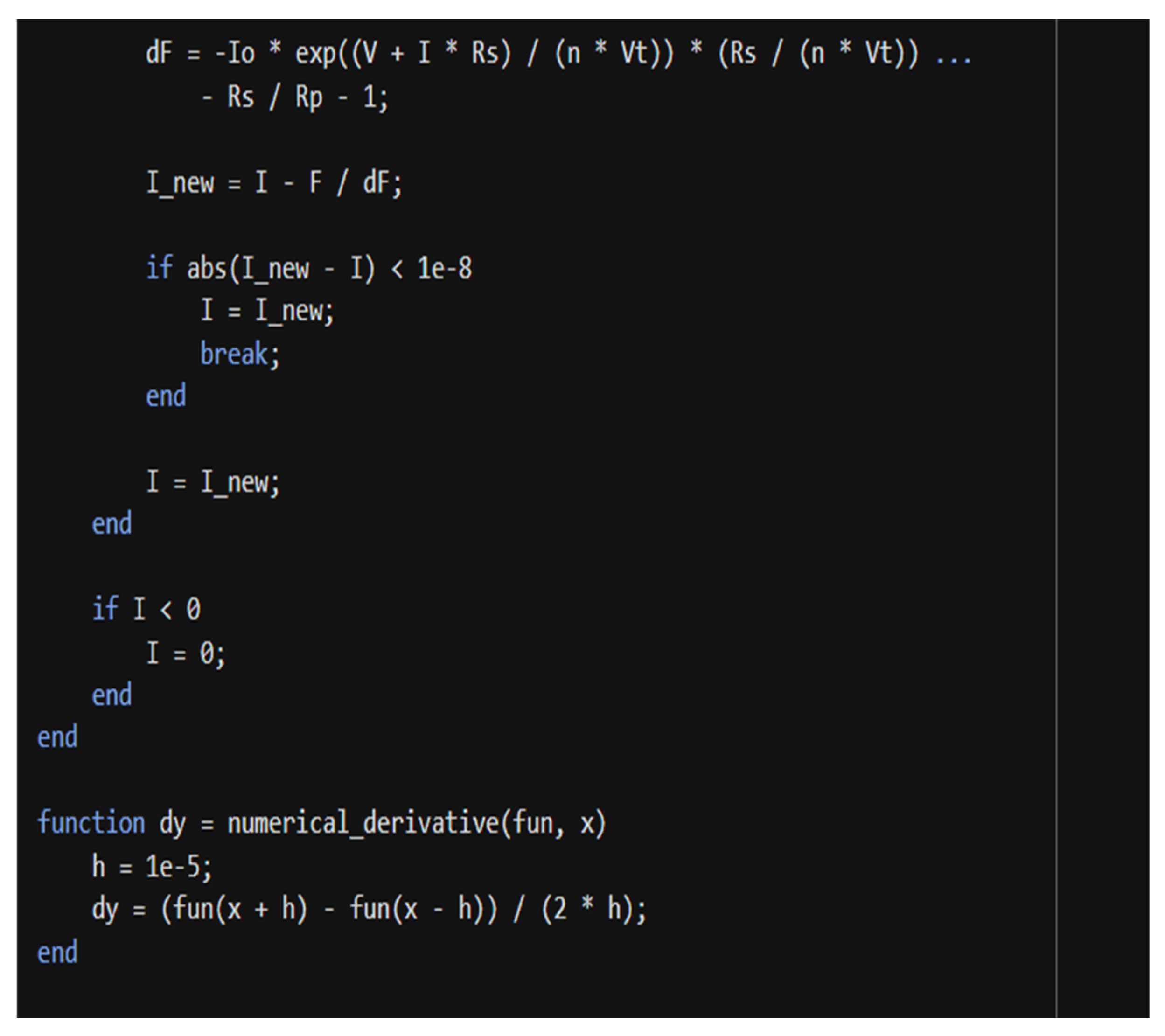
The developed MATLAB-based algorithm calculates the PV system current by iteratively solving the implicit equation based on the single-diode model. For each voltage value, the current is obtained using a Newton-Raphson-based iterative method, and the power is calculated from these values to create the P-V curve. The maximum power point is determined by taking the numerical derivative of the dP/dV function and using root-finding methods. This structure allows for the analysis of system behavior under different environmental conditions. In addition, the MATLAB code is presented in Appendix A.
In this study, Bisection, Newton-Raphson, and Secant methods were used to determine the maximum power point. These methods were implemented algorithmically in the MATLAB environment, and convergence to the maximum power point was achieved by updating the dP/dV value in each iteration [15].
Different environmental conditions were considered in the simulation study to evaluate the system performance. In this context, irradiation values were selected as 400, 700, and 1000 W/m²; and temperature values as 25°C, 40°C, and 50°C. These parameters were determined to represent the typical operating range of PV systems. In this way, the behavior of the system under different environmental conditions was analyzed comprehensively. This approach is consistent with studies in the literature on evaluating the performance of MPPT algorithms under variable operating conditions [4,6].
The graphs obtained from the simulation demonstrate the accuracy of the developed model and successfully represent the nonlinear characteristics of the PV system. Figure 1 shows the I-V characteristic of the PV system, Figure 2 shows the P-V characteristic and MPP, Figure 3 shows the I-V curves under different irradiation levels, and Figure 4 shows the P-V curves under different temperature levels. In this section, the graphs are given as simulation outputs, and a detailed analysis of these results and a comparison of the methods used will be discussed comprehensively in the next section.
6. Results and Discussion
The simulation results clearly reveal the nonlinear current-voltage and power-voltage characteristics of the PV system. Analysis of the obtained P-V curves shows that the maximum power point occurs at a unique point for each operating condition. This finding confirms that the developed model is consistent with theoretical expectations.
The results obtained under different irradiation levels reveal that the PV system current increases with increasing irradiation. This increase is directly reflected in the output power, causing the maximum power value to rise. Conversely, an increase in temperature reduces the output voltage of the PV system, causing the maximum power point to shift to lower voltage levels. This behavior can be explained by the linear dependence of the PV cell current on irradiation and the effects of temperature increase on the semiconductor material properties. The obtained findings are consistent with the PV system behaviors reported in the literature [4].
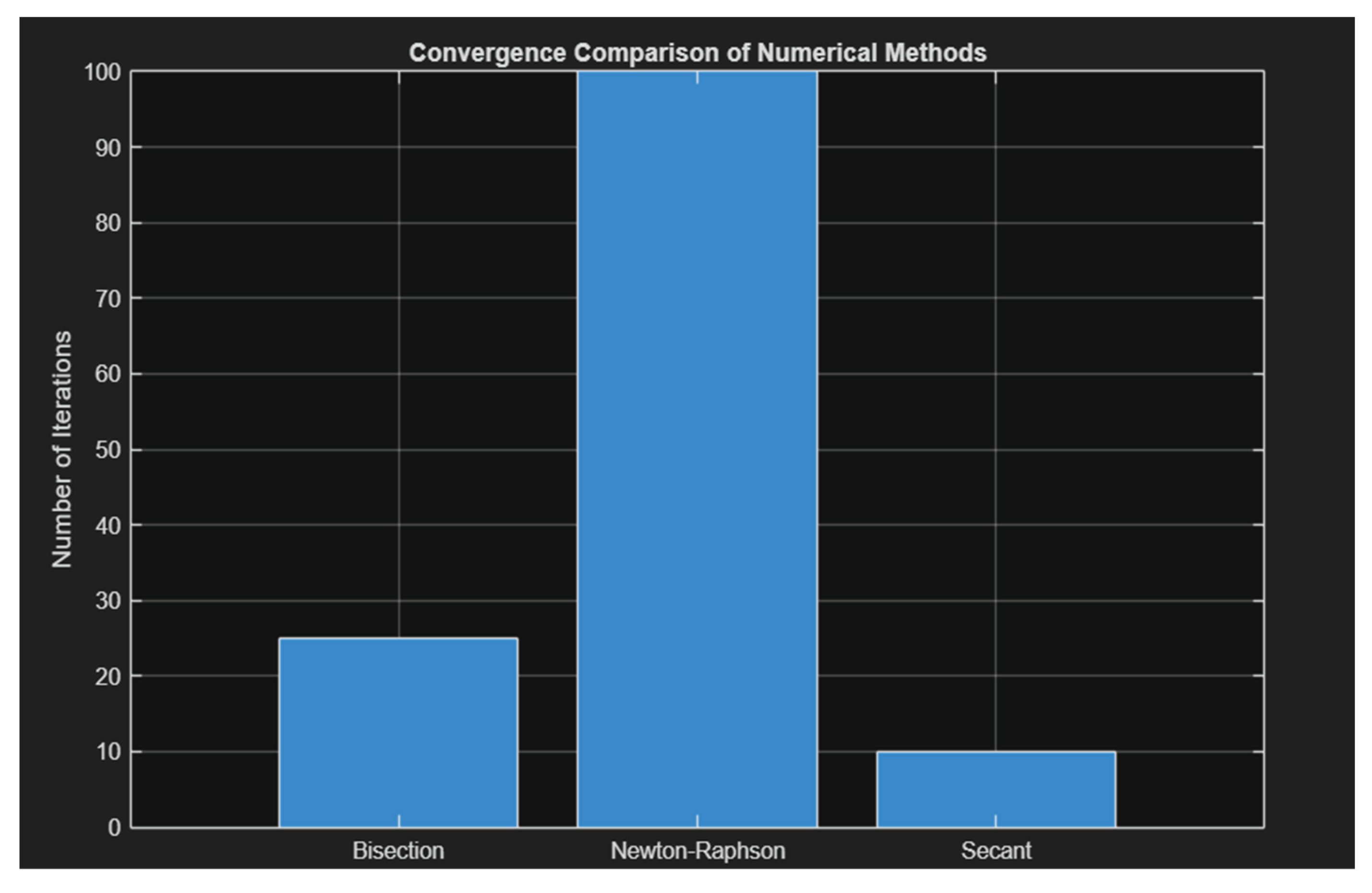
A performance comparison of the numerical methods reveals significant differences between the methods. According to the results obtained, the Secant method provides the fastest convergence with the lowest number of iterations, while the Bisection method requires a higher but predictable number of iterations. The Newton-Raphson method, on the other hand, requires more iterations compared to other methods. This situation can be explained by the sensitivity of the Newton-Raphson method to the initial value and the variability of its convergence performance depending on the derivative calculation approach [15].
Figure 5 presents the convergence comparison of the numerical methods based on the number of iterations required to reach the solution. The comparison between the methods reveals that the convergence performance strongly depends on the selected initial conditions and algorithm characteristics. According to the obtained simulation results, the Secant method achieved the lowest iteration count with 10 iterations, while the Bisection method required 25 iterations. The Newton-Raphson method reached the maximum iteration limit of 100 iterations. Although the Newton-Raphson method is theoretically known for fast convergence, its performance in this simulation decreased due to its sensitivity to the initial value and numerical derivative calculation. In contrast, the Bisection method provided stable convergence under all operating conditions, while the Secant method offered a balanced and efficient solution with a relatively low number of iterations.
The findings obtained are consistent with literature studies showing that the performance of MPPT algorithms varies depending on environmental conditions and algorithm structure [6]. In this context, it is concluded that no single method offers an optimal solution for all operating conditions, and method selection should be made considering application requirements and system conditions.
This study demonstrates that numerical methods within the scope of MPPT offer effective and applicable solutions in PV systems. In real-world applications, performance criteria such as rapid convergence or high stability may take priority depending on system requirements. Accordingly, the selection of the appropriate method should be made carefully, taking into account application conditions and system requirements.
7. Conclusions and Future Work
This study comprehensively examines the mathematical modeling of PV systems and the solution of the maximum power point tracking problem using numerical methods. Using a single-diode equivalent circuit model, the nonlinear characteristics of the PV system were represented with high accuracy, and the system performance was analyzed through simulations performed in MATLAB. The results show that the MPPT problem in PV systems can be solved effectively and reliably using numerical methods.
The findings demonstrate that numerical methods offer effective and applicable solutions in determining the maximum power point. The comparison revealed that the Secant method exhibited fast convergence behavior, the Bisection method provided a high level of stability, and the Newton-Raphson method showed sensitivity to the initial value. However, it was observed that the PV system performance varied significantly depending on environmental parameters such as irradiation and temperature.
These findings are consistent with studies reported in the literature [6], demonstrating that the performance of MPPT algorithms can vary depending on operating conditions and environmental parameters. In this context, it is revealed that a single method is not ideal for all operating conditions.
Future studies suggest developing adaptive and AI-based MPPT algorithms. These approaches are considered to have the potential to improve maximum power point tracking by providing faster convergence and higher accuracy, especially under varying environmental conditions. However, testing the system in real-time applications and validating it through experimental studies will increase the practical applicability of the results obtained.
Appendix A
MATLAB Code for PV System Modeling and MPPT Simulation
The complete MATLAB code used for modeling the PV system and applying MPPT algorithms is provided below. The code includes PV parameter definition, single-diode model implementation, I-V and P-V curve generation, maximum power point calculation, and the application of Bisection, Newton-Raphson, and Secant methods.
Figure 6.
MATLAB code for PV system parameter definition and single-diode PV model initialization.
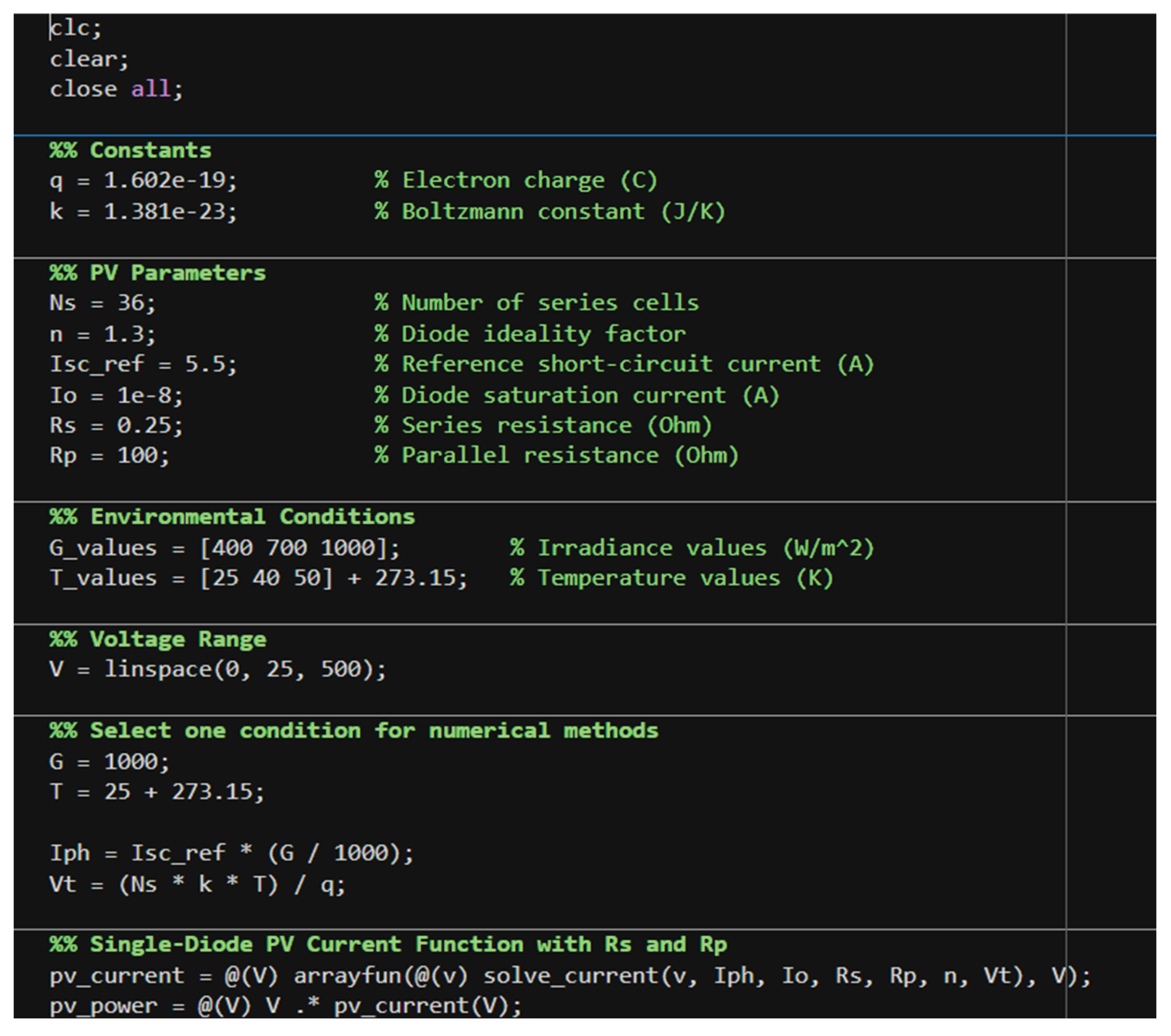
Figure 7.
MATLAB implementation of the Bisection method for maximum power point calculation.
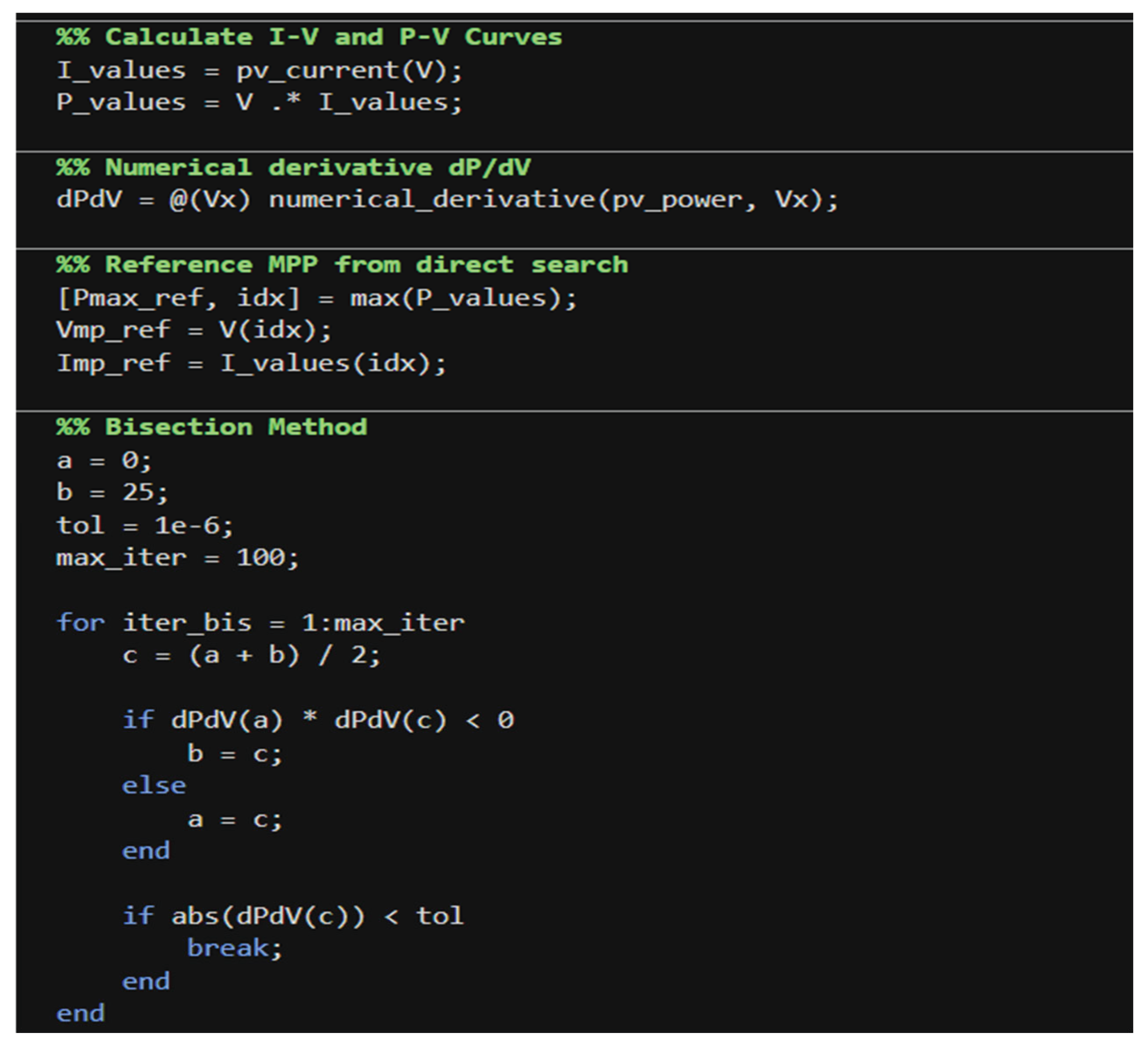
Figure 8.
MATLAB implementation of the Newton-Raphson and Secant methods for MPPT analysis.
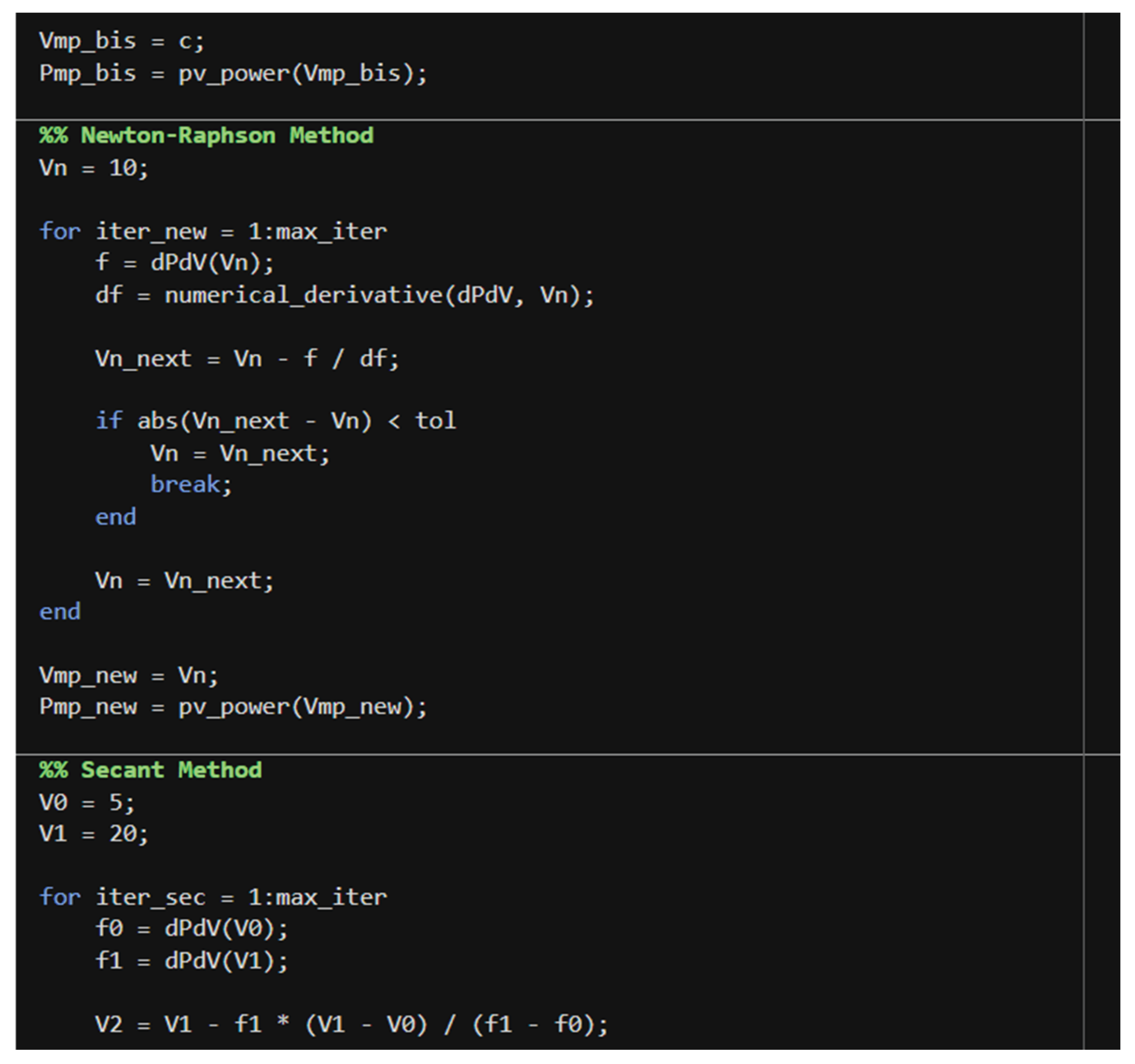
Figure 9.
MATLAB code for displaying numerical results and plotting the I-V characteristic curve.
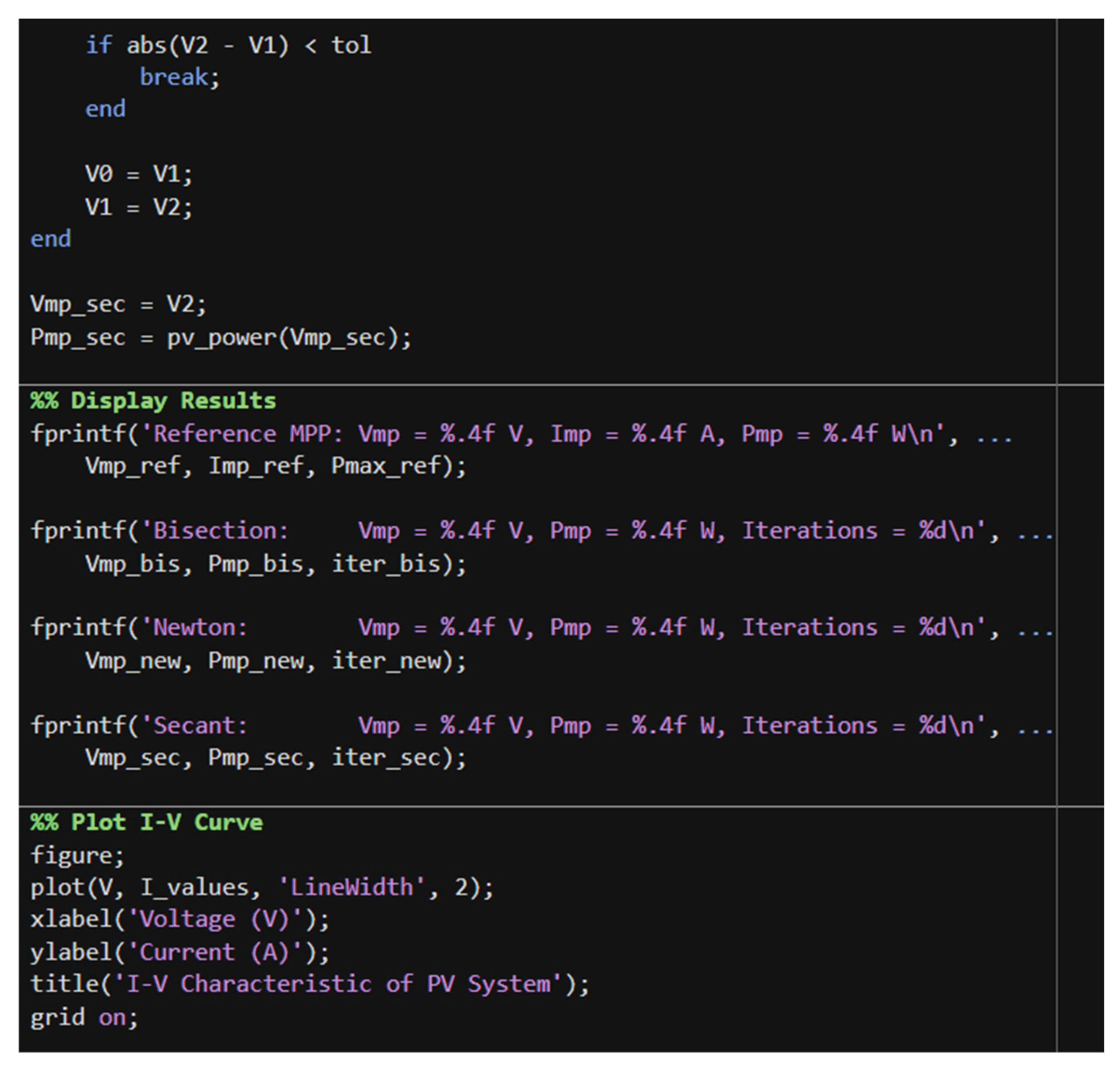
Figure 10.
MATLAB code for plotting the P-V curve, convergence comparison, and irradiance-temperature analyses.
Figure 10.
MATLAB code for plotting the P-V curve, convergence comparison, and irradiance-temperature analyses.
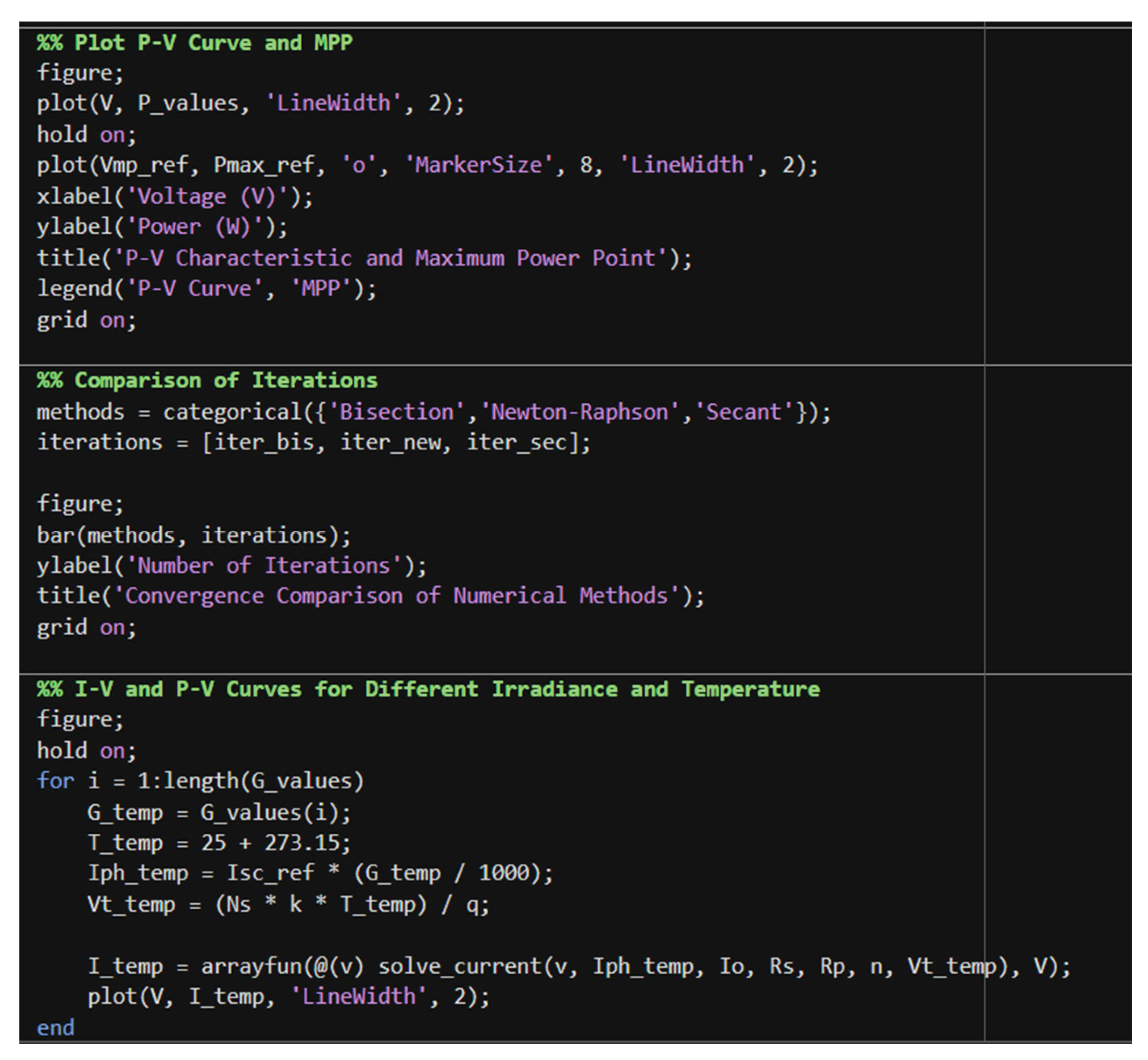
Figure 11.
MATLAB implementation of irradiance and temperature dependent I-V and P-V curve analysis.
Figure 11.
MATLAB implementation of irradiance and temperature dependent I-V and P-V curve analysis.
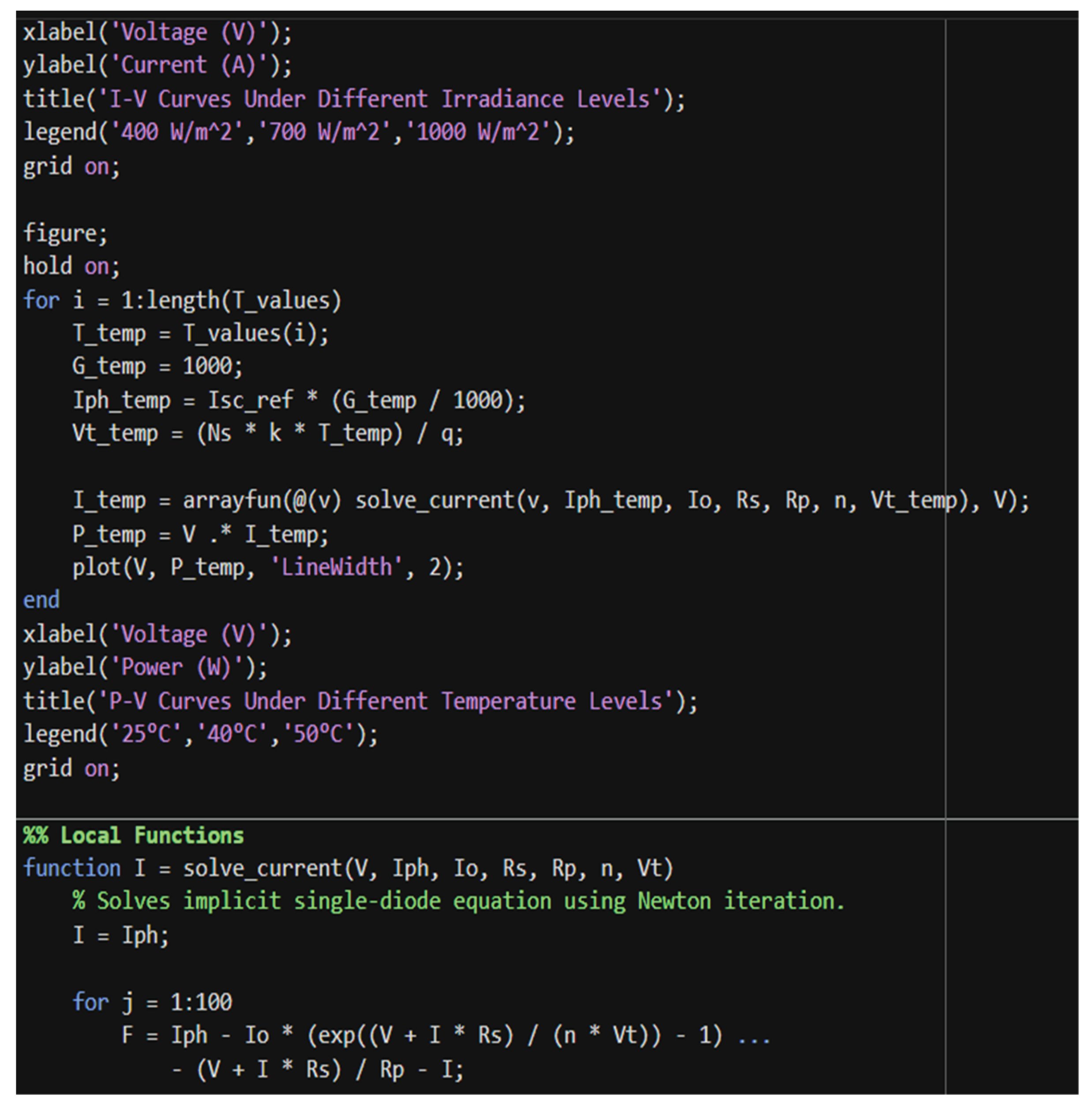
Figure 12.
MATLAB local functions used for numerical derivative calculation and PV current solution.
Figure 12.
MATLAB local functions used for numerical derivative calculation and PV current solution.
References
- H. Islam, S. Mekhilef, N. B. M. Shah, T. K. Soon, M. Seyedmahmousian, B. Horan, and A. Stojcevski, “Performance evaluation of maximum power point tracking approaches and photovoltaic systems,” Energies, vol. 11, no. 2, p. 365, 2018. [CrossRef]
- V. Salas, E. Olías, A. Barrado, and A. Lázaro, “Review of the maximum power point tracking algorithms for stand-alone photovoltaic systems,” Sol. Energy Mater. Sol. Cells, vol. 90, no. 11, pp. 1555-1578, 2006. [CrossRef]
- D. Sera, L. Mathe, T. Kerekes, S. V. Spataru, and R. Teodorescu, “On the perturb-and-observe and incremental conductance MPPT methods for PV systems,” IEEE J. Photovolt., vol. 3, no. 3, pp. 1070-1078, 2013. [CrossRef]
- K. Ishaque, Z. Salam, and G. Lauss, “The performance of perturb and observe and incremental conductance maximum power point tracking method under dynamic weather conditions,” Appl. Energy, vol. 119, pp. 228-236, 2014. [CrossRef]
- S. A. Mohamed and M. Abd El Sattar, “A comparative study of P&O and INC maximum power point tracking techniques for grid-connected PV systems,” SN Appl. Sci., vol. 1, no. 2, p. 174, 2019. [CrossRef]
- S. Lyden and M. E. Haque, “Maximum power point tracking techniques for photovoltaic systems: A comprehensive review and comparative analysis,” Renew. Sustain. Energy Rev., vol. 52, pp. 1504-1518, 2015. [CrossRef]
- K. H. Hussein, I. Muta, T. Hoshino, and M. Osakada, “Maximum photovoltaic power tracking: An algorithm for rapidly changing atmospheric conditions,” IEE Proc. Gener., Transm. Distrib., vol. 142, no. 1, pp. 59-64, Jan. 1995. [CrossRef]
- M. A. Elgendy, B. Zahawi, and D. J. Atkinson, “Assessment of the incremental conductance maximum power point tracking algorithm,” IEEE Trans. Sustain. Energy, vol. 4, no. 1, pp. 108-117, Jan. 2013. [CrossRef]
- J. Ahmed and Z. Salam, “A modified P&O maximum power point tracking method with reduced steady-state oscillation and improved tracking efficiency,” IEEE Trans. Sustain. Energy, vol. 7, no. 4, pp. 1509-1516, 2016. [CrossRef]
- A. K. Abdelsalam, A. M. Massoud, S. Ahmed, and P. N. Enjeti, “High-performance adaptive perturb and observe MPPT technique for photovoltaic-based microgrids,” IEEE Trans. Power Electron., vol. 26, no. 4, pp. 1010-1021, Apr. 2011. [CrossRef]
- M. Bahrami et al., “Hybrid maximum power point tracking algorithm with improved dynamic performance,” Renewable Energy, vol. 130, pp. 982-991, 2019. [CrossRef]
- E. Koutroulis, K. Kalaitzakis, and N. C. Voulgaris, “Development of a microcontroller-based photovoltaic maximum power point tracking control system,” IEEE Trans. Power Electron., vol. 16, no. 1, pp. 46-54, Jan. 2001. [CrossRef]
- S. Saravanan and N. Ramesh Babu, “Maximum power point tracking algorithms for photovoltaic system-A review,” Renew. Sustain. Energy Rev., vol. 57, pp. 192-204, 2016. [CrossRef]
- S. Lyden and M. E. Haque, “Maximum power point tracking techniques for photovoltaic systems: A comprehensive review and comparative analysis,” Renew. Sustain. Energy Rev., vol. 52, pp. 1504-1518, 2015. [CrossRef]
- S. C. Chapra and R. P. Canale, Numerical Methods for Engineers, 7th ed., New York, NY, USA: McGraw-Hill, 2015.
- M. G. Villalva, J. R. Gazoli, and E. R. Filho, “Comprehensive approach to modeling and simulation of photovoltaic arrays,” IEEE Trans. Power Electron., vol. 24, no. 5, pp. 1198-1208, May 2009. [CrossRef]
Figure 1.
I-V characteristic of the PV system.
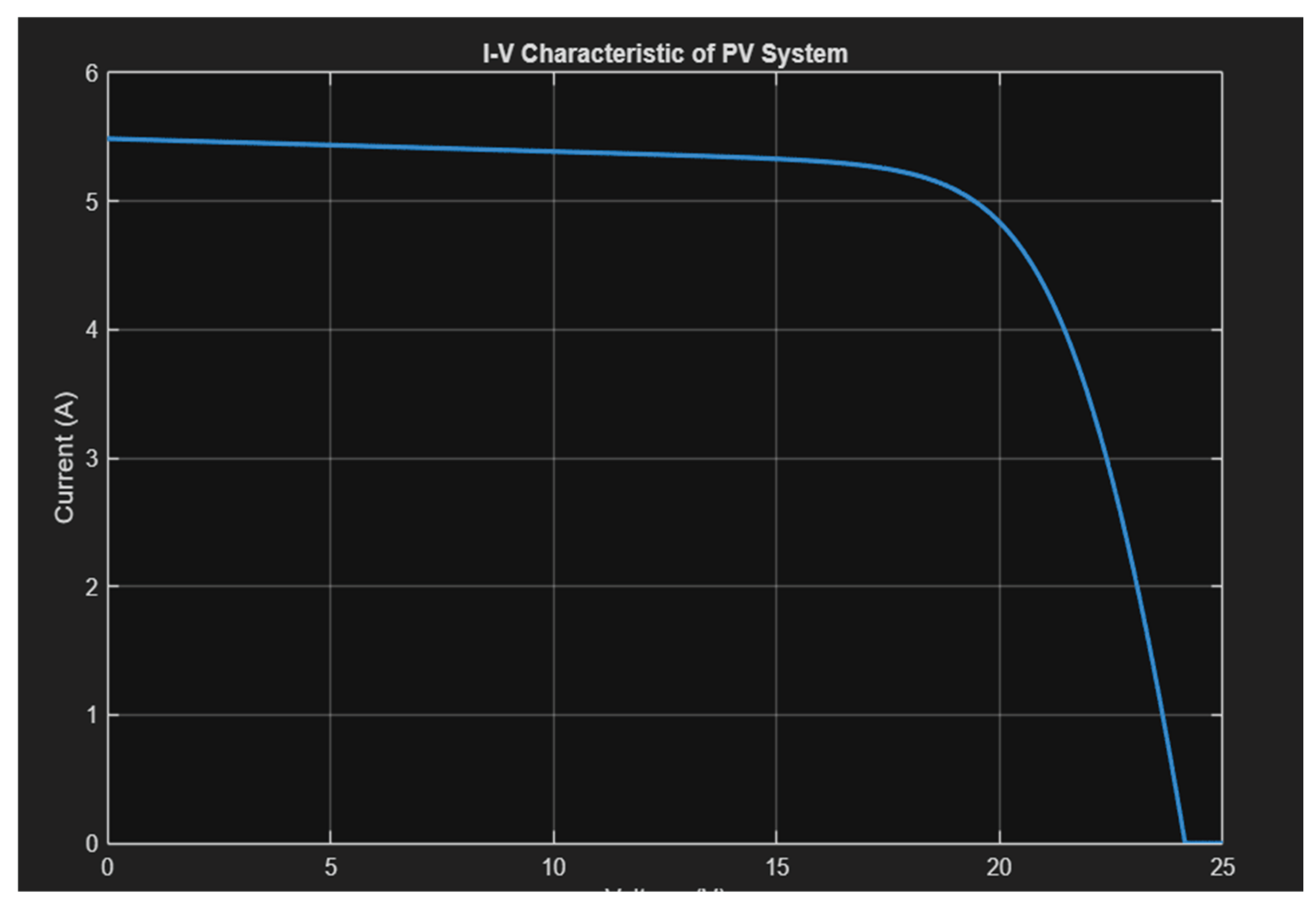
Figure 2.
P-V characteristic of the PV system and MPP.
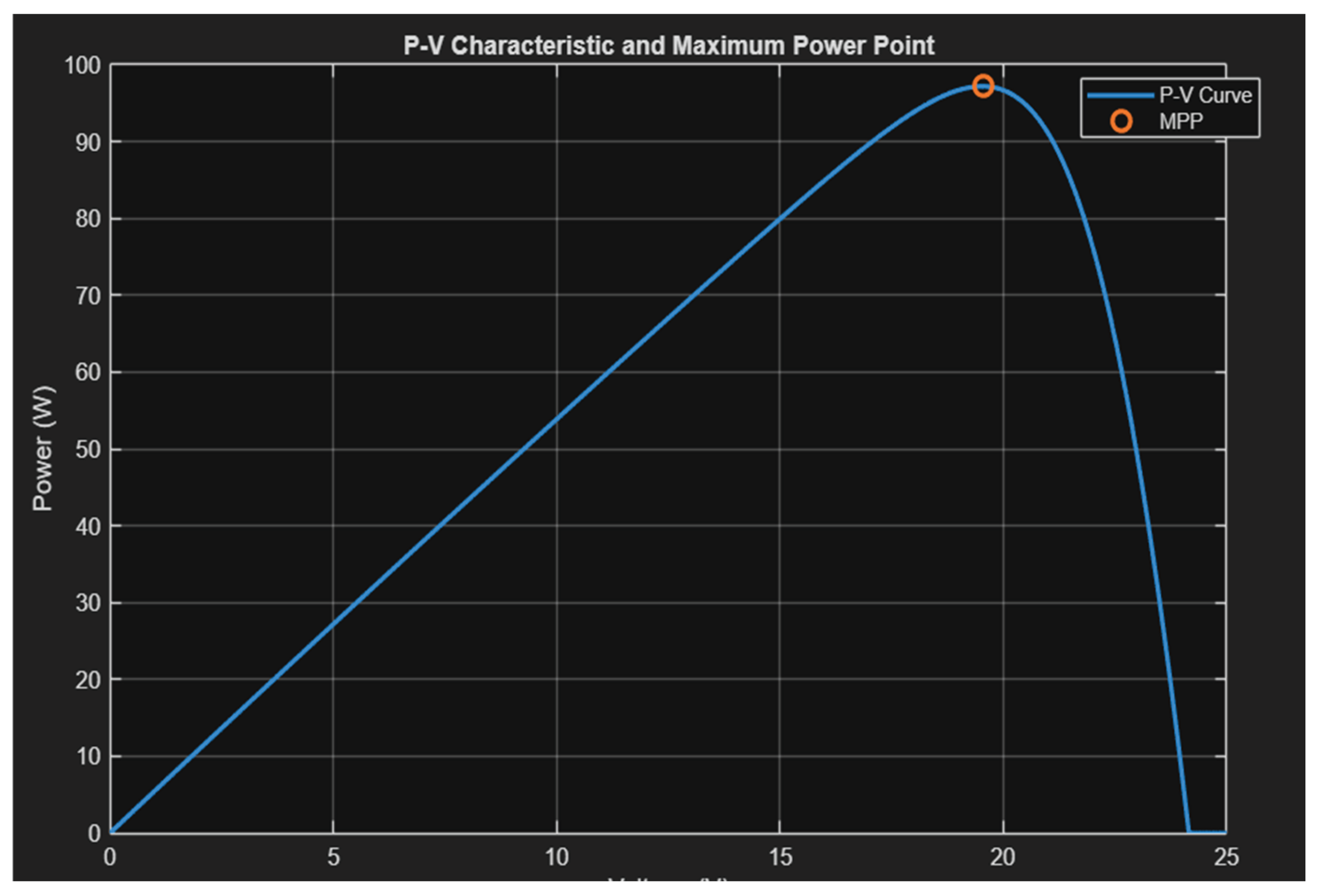
Figure 3.
I-V curves under different irradiance levels.
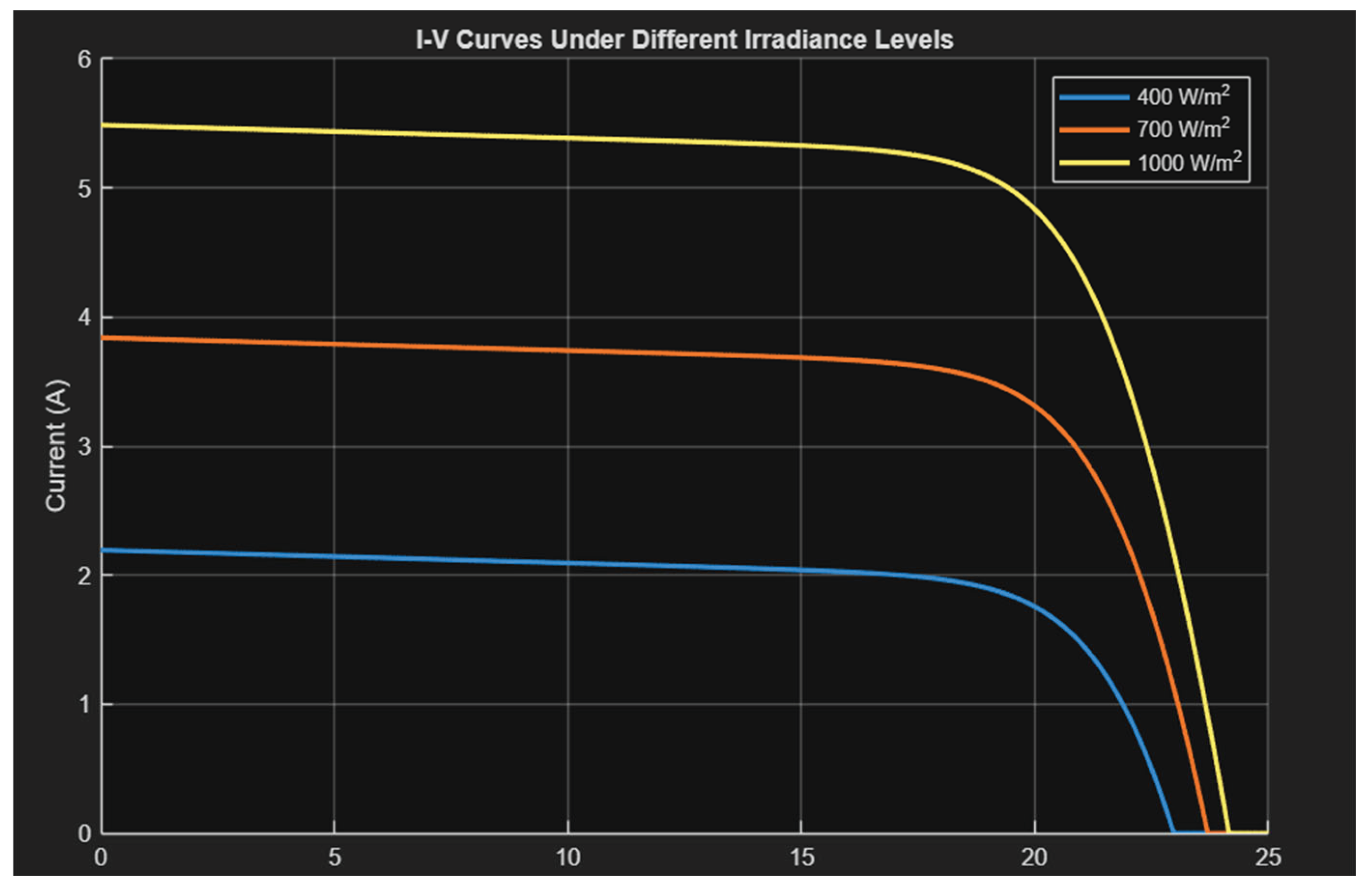
Figure 4.
P-V curves under different temperature levels.
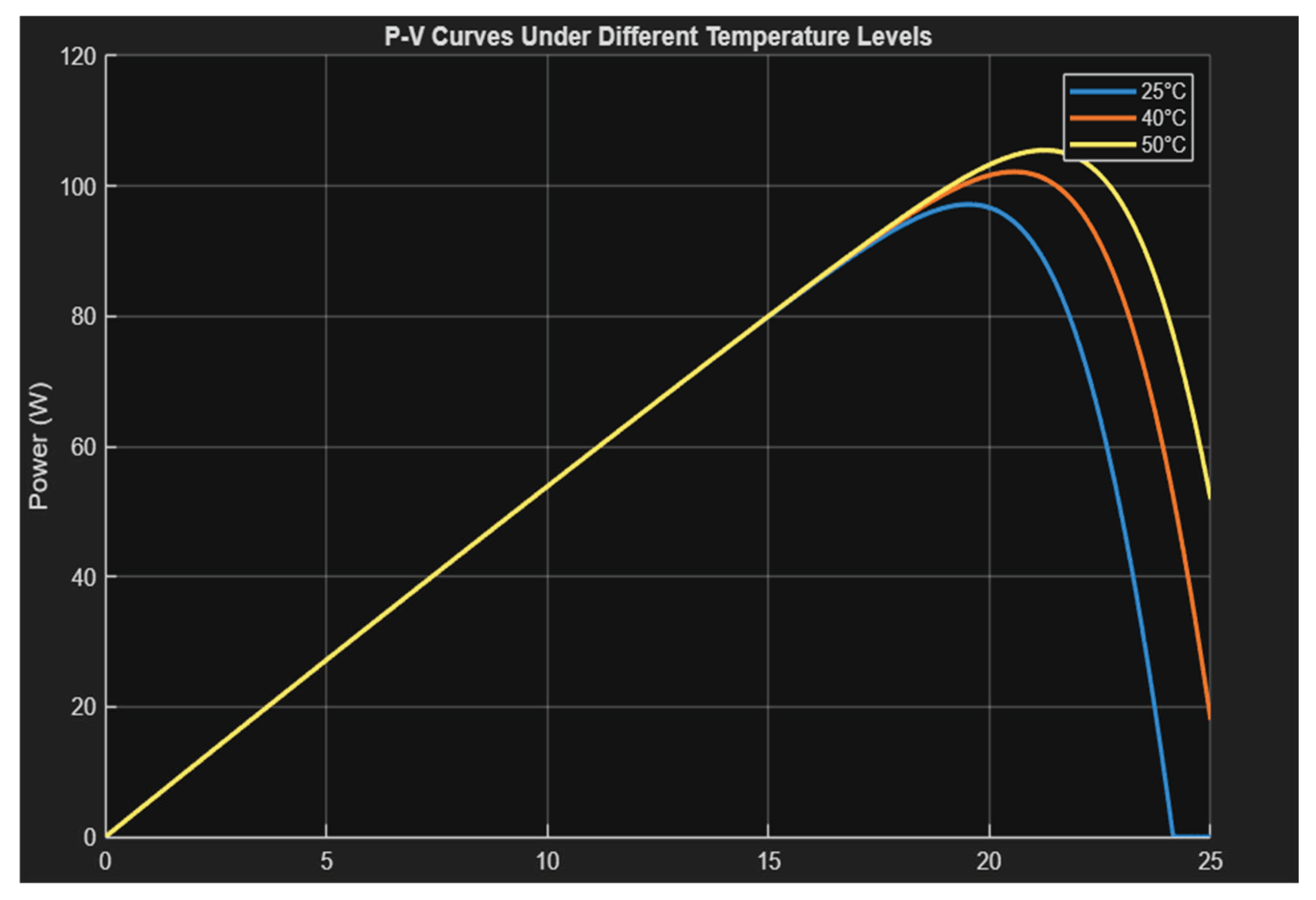
Figure 5.
Convergence comparison of Bisection, Newton-Raphson and Secant methods.
Disclaimer/Publisher’s Note: The statements, opinions and data contained in all publications are solely those of the individual author(s) and contributor(s) and not of MDPI and/or the editor(s). MDPI and/or the editor(s) disclaim responsibility for any injury to people or property resulting from any ideas, methods, instructions or products referred to in the content. |
© 2026 by the authors. Licensee MDPI, Basel, Switzerland. This article is an open access article distributed under the terms and conditions of the Creative Commons Attribution (CC BY) license (http://creativecommons.org/licenses/by/4.0/).
Copyright: This open access article is published under a Creative Commons CC BY 4.0 license, which permit the free download, distribution, and reuse, provided that the author and preprint are cited in any reuse.


