
Submitted:
20 May 2026
Posted:
21 May 2026
You are already at the latest version
Abstract
Background: Precision oncology continues to redefine cancer care by enabling promising biomarker-driven, individualized therapeutic strategies. However, concerns remain regarding and unequal global participation and advancement in precision oncology re-search especially between high-income countries (HICs) and low- and middle-income countries (LMICs). This study evaluates geographic disparities in clinical trial participa-tion underlying recent oncology drug approvals. Methods: We conducted a retrospec-tive analysis of oncology drug approvals by the U.S. Food and Drug Administration (FDA) between January 1, 2017, and December 31, 2024. Data were extracted from the FDA Oncology Approvals and Safety Notifications database. We included all approvals with tumor-agnostic or biomarker-driven indications tag. We supplement from clini-caltrials.gov and relevant clinical trial databases. Results: A total of 102 oncology drug approvals met inclusion criteria, of which 30 (29.4%) received accelerated approval. Approval trends fluctuated over time, with peaks observed in 2018 and 2020. Clinical trials supporting these approvals were predominantly conducted in HICs, which ac-counted for the majority of participating sites (>80%), whereas LMIC representation remained limited, with minimal participation from Africa, Eastern Europe, and Central Asia (< 5%). Accelerated approvals demonstrated an even narrower geographic distri-bution compared with regular approvals. Drugs supported by three or more clinical tri-als were more frequently studied in HICs than in LMICs, indicating disparities in op-portunities for multi-trial evaluation across diverse populations and biomarker-defined subgroups. Conclusion: Precision oncology drug development remains heavily concentrated in HICs, with limited participation from LMICs. This imbalance restricts equitable access to innovative therapies and limits the generalizability of clinical trial findings. Strength-ening research infrastructure, expanding access to biomarker testing, and promoting inclusive master protocol trial designs are essential to advancing global equity in preci-sion oncology.
Keywords:
precision medicine
; master protocols
; targeted therapy
; biomarkers
1. Introduction
Cancer treatment in the 21st century is increasingly characterised by treatment strategies tailored to the molecular characteristics of individual tumours. Thanks to advances in next-generation sequencing, these targeted cancer therapies, designed to selectively interfere with specific molecular targets involved in cancer growth and progression have improved outcomes across a range of malignancies for both adult and paediatric patients. In high-income countries (HICs), comprehensive genomic profiling is now routinely integrated into clinical practice, facilitating access to therapies directed against actionable alterations such as EGFR, ALK, BRAF, and NTRK (Ouma et al., 2024). Non–small cell lung cancer (NSCLC) exemplifies this paradigm shift, with multiple biomarker-defined subgroups now linked to effective targeted agents, resulting in improved survival and reduced toxicity compared with conventional chemotherapy [1].
Recent reviews have documented unprecedented growth in regulatory approvals of oncology therapeutics, driven in part by biomarker-enriched development strategies and expedited regulatory pathways. Between 2012 and 2017 alone, the FDA approved 58 new cancer medicines, 25 (43%) of which received breakthrough therapy designation[2]. A tumour specific dissection of the statistics shows that NSCLC, breast and gynaecologic cancers lead the approvals landscape.
This trend has continued through the early 2020s, with increasing approvals for tumor-agnostic indications and therapies targeting rare genomic alterations. Since 2011, NSCLC has accumulated over 30 new drug approvals, predominantly tyrosine kinase inhibitors and immune checkpoint inhibitors (Koban et al., 2024). Similarly, breast cancer saw at least 30 new indications approved between 2010 and 2020 alone[3], while gynaecologic cancers have increasingly benefited from PARP inhibitors, antibody-drug conjugates, and immunotherapy combinations. More recently, this momentum has intensified: In 2024 alone, the FDA issued more than 60 oncology approvals — including 32 precision oncology therapeutic approvals — among them the first tumor-agnostic authorization of an antibody-drug conjugate, trastuzumab deruxtecan (T-DXd), for patients with HER2-overexpressing solid tumors, and repotrectinib for NTRK fusion-positive tumors. In 2025, the FDA granted more than 50 additional oncology approvals, including novel biomarker-driven agents for HER2-mutated NSCLC and rare solid tumors.
The development of these novel treatments has been facilitated by innovative trial designs. In particular, master protocol designs—including basket, umbrella, and platform trials—have accelerated drug development by enabling the simultaneous evaluation of multiple therapies or molecular subgroups[4,5,6]. These designs have proven instrumental in bringing targeted therapies to market more efficiently and with broader international collaboration. Trials such as NCI-MATCH[7], TAPUR[8], and the ALCHEMIST[9] trials exemplify how integrating molecular screening with flexible trial architecture can expedite discovery and approval processes.
However, the globalization of precision oncology research remains uneven[10]. The development and evaluation of targeted therapies, including sponsorship and site participation in pivotal trials largely remain domiciled in high-income countries (HICs). This is unsurprising given the well-established infrastructure, regulatory capacity, and access to advanced diagnostics. In contrast, LMICs face persistent barriers, including limited access to genomic testing, underdeveloped clinical trial ecosystems, and resource constraints. Ouma et al (2025) for example demonstrate that implementation of master protocols that underpin precision medicine is geographically skewed, with disproportionate representation of LMICs [11]. Such exclusion from the precision oncology ecosystem may perpetuate therapeutic and genomic gaps that hinder the global cancer fight. This imbalance raises critical concerns regarding both the external validity of trial findings and equitable access to novel therapies.
Against this backdrop, an understanding of where LMICs stand in global targeted cancer therapy development is both timely and essential. By systematically analyzing the geographic distribution of pivotal trials supporting U.S. Food and Drug Administration (FDA) approvals for targeted oncology drugs over the past decade, this study aims to quantify LMIC participation and identify trends in global trial inclusivity.
In this study, we analyze oncology drug approvals by the U.S. FDA between 2017 and 2024, with a focus on biomarker-driven and tumor-agnostic therapies. We examine the geographic distribution of clinical trials supporting these approvals, comparing participation across HICs and LMICs. By elucidating patterns of inclusion and exclusion in precision oncology research, this work aims to inform strategies to promote more equitable global participation and ensure that advances in cancer therapeutics benefit patients worldwide.
Understanding the geographic distribution of clinical trial activity underlying precision oncology drug approvals is essential to identifying structural inequities in the global cancer research ecosystem. While prior studies have highlighted disparities in trial participation and access to cancer care, there remains a need for systematic analyses linking regulatory approvals to the geographic footprint of supporting clinical evidence. Such analysis provides critical insight into whether the benefits of precision oncology are being developed through a truly global research effort—or whether the promise of personalized cancer care risks becoming an inequitable frontier.
The remainder of this paper is organized as follows: Section 2 describes the data sources and analytical methods; Section 3 presents results of the geographic and approval-pathway analyses; Section 4 discusses findings in the context of the broader equity literature and outlines evidence-based recommendations; and Section 5 concludes with implications for global oncology policy and future research.
2. Materials and Methods
2.1. Data Source
We conducted a retrospective cross-sectional study of oncology drug approvals by the United States Food and Drug Administration (FDA) between January 1, 2017, and December 31, 2024. The analysis focused on precision oncology therapies, defined as biomarker-guided or molecularly targeted agents. Data on drug approvals were obtained from publicly available FDA sources, including Drugs@FDA and the Oncology (Cancer) / Hematologic Malignancies Approval Notifications database. Trial information relating to an approved drug was obtained from trial databases including clinicaltrials.gov and EU clinical trials register. Country income classifications were assigned according to the World Bank's fiscal year 2024 country income group classification, which categorizes economies into four tiers: low-income, lower-middle-income, upper-middle-income, and high-income countries. For this analysis, low-, lower-middle-, and upper-middle-income countries were collectively classified as low- and middle-income countries (LMICs).
2.2. Eligibility Criteria
We included all oncology drug and biologic approvals (both initial approvals and subsequent indications) within the study period that met criteria for precision oncology. Eligible therapies were defined as those with labelled indications requiring the use of a predictive biomarker, including genomic, proteomic, or other molecular markers, to guide treatment selection. We excluded non-oncology indications, cytotoxic chemotherapies without biomarker selection, supportive care agents (e.g., antiemetics, growth factors), and any approvals lacking identifiable supporting clinical trials.
2.3. Data Extraction
For each eligible approval, we extracted regulatory and trial-level data from FDA approval summaries, prescribing information, and publicly available review documents. This included drug name, approval date, approval pathway (standard vs. accelerated), indication (cancer type and biomarker), tumor-agnostic status, number of supporting pivotal trials. Pivotal clinical trials supporting each approval were identified using trial identifiers (e.g., NCT numbers) and cross-referenced with ClinicalTrials.gov. From the relevant trial databases, we extracted the following variables for each trial: study design including randomisation, endpoints, disease characteristics including biomarker classification and disease target, trial phase, sample size, country and site information, sponsors information. Two independent reviewers (LO and AO) screened all eligible approvals and extracted trial-level data. Discrepancies were resolved through discussion and consensus, with adjudication by a third reviewer (DJ) when necessary. A standardized data extraction template was used (provided in Supplementary Material Table S).
2.4. Statistical Analysis
Descriptive statistics were used to summarize characteristics of drug approvals and their supporting clinical trials. Continuous variables were reported as medians with interquartile ranges (IQRs), and categorical variables as frequencies and percentages. Analyses were stratified by country income classification, comparing HICs with LMICs (defined as low-, lower-middle-, and upper-middle-income countries). Differences in proportions were assessed descriptively; where appropriate, chi-square or Fisher’s exact tests were used to compare categorical variables.
The primary outcome was the geographic distribution of clinical trial activity supporting FDA approvals, measured by proportion of trials conducted in high-income countries (HICs) versus LMICs, representation of countries by income group, inclusion of LMIC sites in pivotal trials. Further, we looked at differences in geographic distribution between accelerated and regular approvals, number of supporting trials per approval stratified by income group participation, extent of multi-country trial participation among other analysis. All analyses were undertaken using R software (version 4.3.2; R Foundation for Statistical Computing, Vienna, Austria).
3. Results
3.1. Overview of FDA Precision Oncology Approvals
Between January 2017 and December 2024, we identified 102 FDA approvals for biomarker-driven or molecularly targeted oncology therapies. Most approved therapies were evaluated as single agents (69.6%), while combination strategies accounted for 30.4% of approvals.
These approvals involved submissions from 43 pharmaceutical companies, predominantly large multinational pharma. Big pharma including Novartis, AstraZeneca, Merck, Pfizer, Eli Lilly, Daiichi Sankyo, and Genentech accounted for nearly one third of all approvals during the study period. Joint pharmaceutical development arrangements between two or more sponsors were less common, only associated with three approvals (2.9%). Of the 102 approvals, Approximately one-third of approvals (30/102, 29.4%) were granted through the FDA accelerated approval pathway, reflecting the increasing reliance on expedited regulatory mechanisms in precision oncology.
Most approvals were supported by studies conducted primarily in adult populations (87/102, 85.3%), whereas pediatric-only approvals accounted for only 2.0% of approvals. The AG-120-C-001 trial recruited the oldest patient population, investigating previously approved Tibsovo for patients at least 75 years of age with newly diagnosed acute myeloid leukemia (AML) with a susceptible IDH1 mutation (NCT02074839). Combined adult and pediatric populations accounted for 12.7% of approvals. Pediatric only approvals increased modestly during the latter half of the study period, usually following a previous adult approval. In total, there were 15 (14.7%) pediatric-related approvals in LMICs, all of which occurred within the last 5 years, and were spread across various cancer types including solid tumors (4),acute myeloid leukemia (2),colorectal (2), glioma (2),thyroid (2),NSCLC (1), inflammatory myofibroblast tumor (1) and overgrowth spectrum (1).
The majority of approvals were for non–histology-agnostic indications (93.1%), although tissue-agnostic therapies targeting biomarkers such as NTRK fusions and mismatch repair deficiency increasingly emerged during the study period. Only 7/102 drug approvals were tumor-agnostic, all approved between 2020–2024. Immune-oncology agents constituted 41.2% of approvals, illustrating the convergence between targeted therapy and immunotherapy development
3.2. Trial Characteristics
Table 1 summarises the design features of the pivotal trials underpinning the 102 approvals. The majority of approvals were based on single-arm trial designs (97/102, 95.1%), with only 5 approvals supported by two- or three-arm randomised studies. Phase III represented the most common evidence base for approval (51.0%), although a substantial proportion of approvals relied on early-phase evidence, including Phase I/II and Phase II trials, particularly among accelerated approvals. Figure 1 further shows differences by approval type; that accelerated approvals enrolled fewer patients, run for a shorter duration but more arms under investigation.
Open-label designs were fairly common (54/102, 52.9%); More than half of all trials were unmasked (52.9%), while double-, triple-, or quadruple-masked studies remained relatively uncommon. This pattern was more pronounced among trials involving LMICs excluding China and Eastern Europe, suggesting greater reliance on simpler and potentially less resource-intensive trial infrastructures.
Progression-free survival (PFS) was the most frequently cited primary endpoint (31/102, 30.4%), followed by overall response rate (ORR) (27/102, 26.5%) and ORR with duration of response (DOR) (13/102, 12.7%). Overall survival (OS) was the primary endpoint in only 5 approvals (4.9%), underscoring the field's predominant reliance on surrogate endpoints — a pattern especially pronounced in accelerated approvals.
3.3. Temporal Trends in Targeted Therapy Approvals over Time
The number of FDA approvals fluctuated throughout the study period, with peaks in 2018 and 2020, and relative troughs in 2019 and 2021 (Figure 2). Accelerated approvals followed a similar but less pronounced pattern, ranging between 2 and 6 per year. Notably, we did not observe a sustained reduction in approvals attributable to the COVID-19 pandemic; the 2021 decline was followed by recovery in 2022 and 2023, though it remains plausible that pandemic-related disruptions to trial enrolment may yet affect future approval volumes. In contrast, regular approvals showed greater year-to-year variability, with substantial increases in 2018, 2020, and 2023. The recovery in standard approvals after 2021 may reflect, in part, the maturation of confirmatory data for previously accelerated approvals — a transition from early-phase, biomarker-driven endpoints to longer-term outcome evidence.
The increased reliance on accelerated approvals likely reflects the growing emphasis on biomarker-enriched populations, surrogate endpoints, and early-phase evidence in precision oncology. Many accelerated approvals were supported by single-arm studies using objective response rate or progression-free survival as primary endpoints, consistent with contemporary FDA regulatory strategies for therapies addressing unmet clinical need. Importantly, no evidence suggested a major shift toward broader geographic inclusion during this period. Despite increasing numbers of approvals, participation from LMICs remained consistently limited.
3.4. Geographical Distribution
Substantial geographic inequities were observed in the global distribution of clinical trial activity supporting FDA precision oncology approvals.
Across all approvals, clinical trial activity was largely domiciled in high-income countries (HICs), particularly the United States, Canada, Western Europe, Australia, and Japan. In contrast, participation from low- and middle-income countries (LMICs) remained limited and highly uneven. Figure 3 demonstrates that LMIC trial site representation remained consistently below 30% of total sites across the study period.
On average, HICs consistently accounted for more than 75% of participating trial countries, while LMIC participation remained below 30% in most years (Figure 2). Pivotal trials supporting standard approvals enrolled patients in a median of 19 countries (IQR: 14), with a median of 15 HICs and 3 LMICs per trial on average . Trials supporting accelerated approvals were substantially narrower in geographic scope: these involved a median of 13 countries (IQR 6), including only 1 LMIC (IQR 1), compared with regular approvals, which involved a median of 19 countries (Table 2, Figure 2).
The average number of participating countries per trial also differed by approval pathway. Non-accelerated approvals generally involved larger multinational trial networks, occasionally exceeding 30 participating countries. By contrast, accelerated approvals involved smaller and more geographically concentrated trial infrastructures, typically ranging between 8-16 overtime, reflecting narrower global scope (Table 2).
For accelerated approvals, LMIC participation was even more restricted, remaining below 20% in all years studied. This geographic concentration was most pronounced in Sub-Saharan Africa, Eastern Europe, and Central Asia, which were largely absent from the precision oncology trial ecosystem. Regions with moderate participation — including India, South Africa, Brazil, and Mexico — contributed primarily to standard rather than accelerated approval trials. Although modest increases in LMIC participation were observed in selected years among non-accelerated approvals, these gains were inconsistent and insufficient to substantially alter the overall imbalance.
These findings indicate that accelerated approval pathways—intended to expedite access to innovative therapies—remain disproportionately concentrated within a small number of highly resourced countries.
Figure 3.
(A) Inclusivity of LMICS in pivotal trials leading to approval of targeted oncology therapies between 2017-2024; (B) Overall geographical coverage in pivotal trials leading to regular and accelerated approvals.
Figure 3.
(A) Inclusivity of LMICS in pivotal trials leading to approval of targeted oncology therapies between 2017-2024; (B) Overall geographical coverage in pivotal trials leading to regular and accelerated approvals.
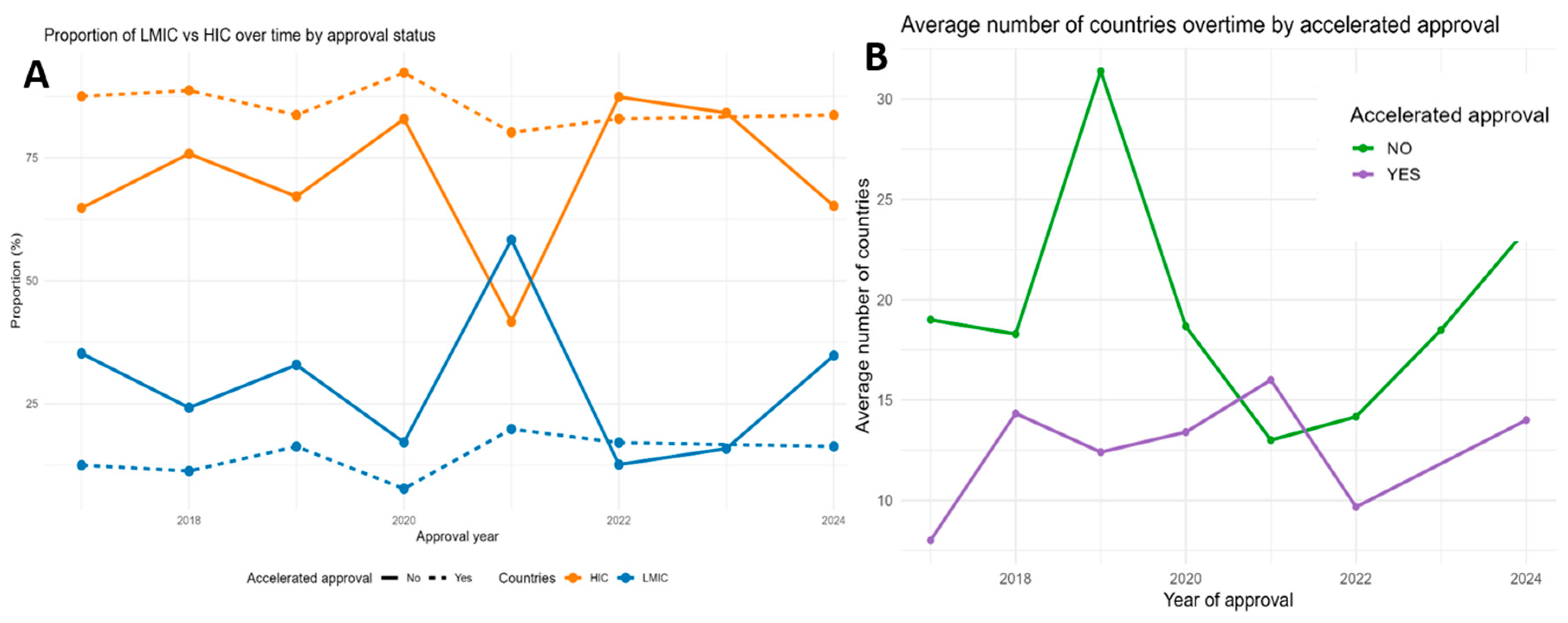
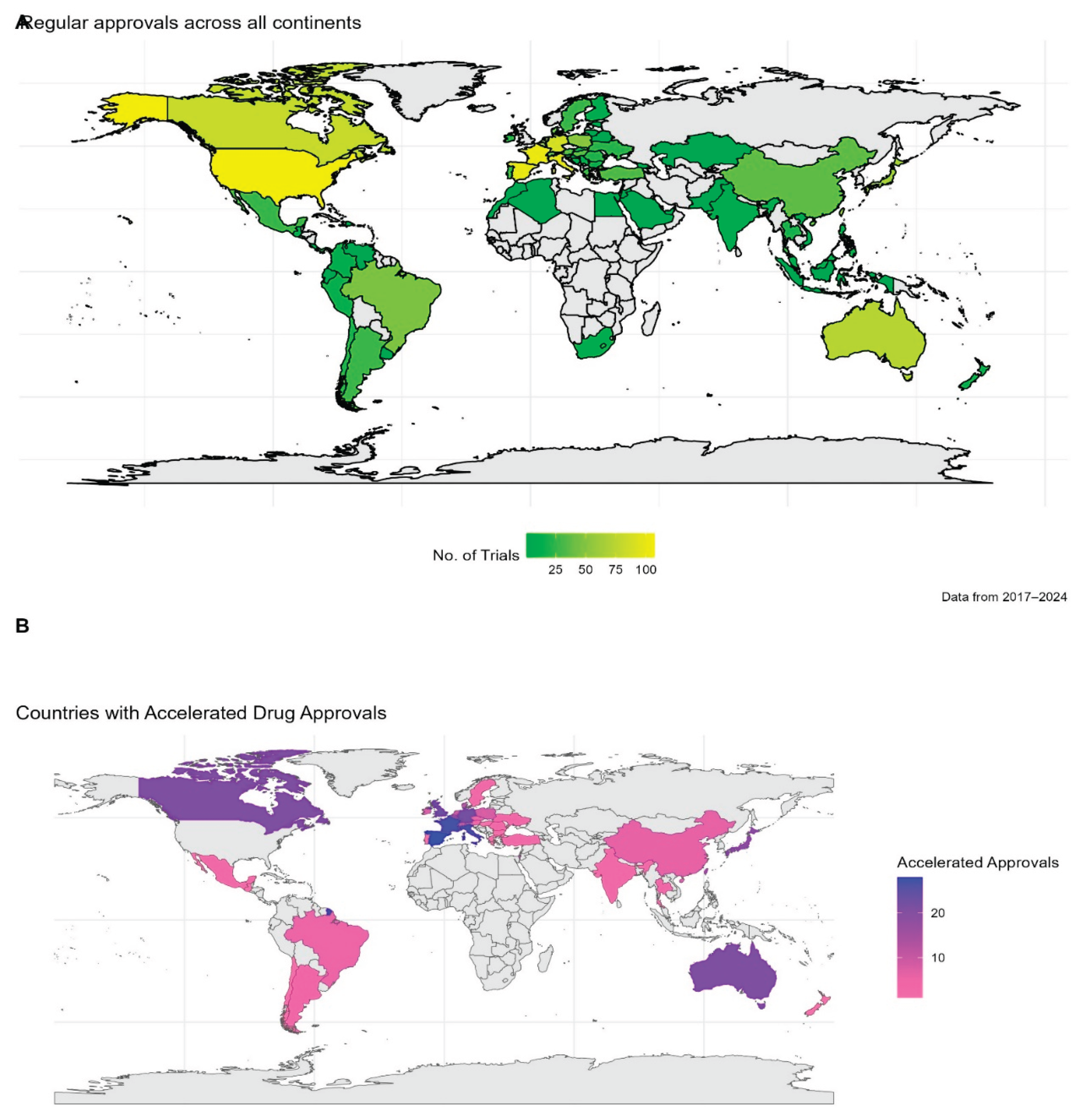
Figure 4.
Global distribution of global oncology approval maps (2017-2024) A: North America (the United States and Canada), parts of Western Europe (Germany, UK, France), Australia, and China show the highest number of trials, with some countries (USA and Germany) accounting for the majority of those conducted in high-income settings. (B) – The United States has highest number of accelerated approvals (20+), followed by Western Europe (especially France and Germany), Australia, and Japan. Most of Africa, Eastern Europe, and Central Asia show no involvement in accelerated approvals.
Figure 4.
Global distribution of global oncology approval maps (2017-2024) A: North America (the United States and Canada), parts of Western Europe (Germany, UK, France), Australia, and China show the highest number of trials, with some countries (USA and Germany) accounting for the majority of those conducted in high-income settings. (B) – The United States has highest number of accelerated approvals (20+), followed by Western Europe (especially France and Germany), Australia, and Japan. Most of Africa, Eastern Europe, and Central Asia show no involvement in accelerated approvals.
3.5. Distribution of Approvals by Cancer Type and Biomarker
FDA precision oncology approvals were heavily concentrated in cancer types prevalent in HICs (Figure 5). NSCLC accounted for the largest proportion of approvals during the study period, with more than 20 targeted therapy approvals between 2017 and 2024 (Figure 5). The predominance of NSCLC reflects its highly characterized molecular landscape, including actionable alterations involving EGFR, ALK, ROS1, KRAS, MET, RET, and BRAF. Similar molecular stratification has accelerated targeted therapy development in Breast (n=14), haematological malignancies (n=14), gastrointestinal cancers (n=11), and gynaecological cancers (n=9) that collectively accounted for a further 67% of approvals.
In contrast, cancers with disproportionate mortality burdens in LMICs—including cervical cancer, liver cancer, and infection-associated malignancies—received comparatively fewer precision oncology approvals. Cervical cancer — the fourth most common cancer in women globally and a leading cause of cancer death in Sub-Saharan Africa — received zero biomarker-driven precision oncology approvals during the study period. Hepatocellular carcinoma, the most common cancer in many parts of East Asia and Sub-Saharan Africa, received only a single approval. Rare cancers and pediatric malignancies, including gliomas and inflammatory myofibroblastic tumors, were similarly underrepresented. This mismatch between drug development priorities and global cancer epidemiology represents a striking and quantifiable inequity.
EGFR, ALK, HER2, PD-L1, BRCA, KRAS, and BRAF emerged as the most frequently targeted biomarkers. Tumour-agnostic approvals — granted across histologies based on NTRK fusions, dMMR status, BRAF V600E mutations, RET fusions, and HER2 overexpression — represented an expanding subset of approvals, though still concentrated in patients with access to comprehensive molecular profiling. Less frequently targeted biomarkers such as IDH1 and FLT3 remained confined to niche indications, reflecting gaps in drug development for rare molecular subtypes.
However, substantial disparities remain. Several cancer types prevalent in LMICs continue to lack well-established biomarkers, large-scale genomic characterization, or dedicated targeted therapy pipelines. These findings highlight the possibility that current precision oncology development priorities disproportionately reflect disease burdens and market incentives in HICs.
4. Discussion
Our paper we systematically evaluated the geographic distribution of pivotal clinical trials supporting FDA precision oncology approvals between 2017 and 2024, and reveals four principal findings. First, precision oncology drug development is overwhelmingly concentrated in high-income countries, with LMIC trial site representation consistently below 30% across the study period and below 20% for accelerated approvals. Second, this geographic concentration is most pronounced in regions bearing substantial cancer burden but contributing least to drug development — particularly Sub-Saharan Africa, Eastern Europe, and Central Asia, which are largely absent from the precision oncology trial landscape. Third, there is a striking mismatch between cancer types receiving precision oncology investment and the cancer epidemiology of LMIC populations: cancers with disproportionate LMIC burden, such as cervical and hepatocellular carcinoma, received almost no precision oncology approvals during the study period. Fourth, accelerated approval pathways — which determine which therapies reach patients earliest — are even more geographically restricted than standard pathways, producing a compounding inequity in early access to innovation.
Our findings make explicit a structural feature of precision oncology that has long been highlighted but rarely quantified: drug development priorities reflect the cancer epidemiology of high-income markets, not the epidemiology of the global cancer burden. These results emphasize that global oncology research infrastructure remains highly centralized within North America, Western Europe, and selected parts of East Asia. These regions benefit from advanced genomic medicine ecosystems, strong pharmaceutical investment, established regulatory pathways, and extensive clinical trial infrastructure. In contrast, many LMICs face persistent barriers to participation in precision oncology research, including limited access to molecular diagnostics, inadequate research funding, fragmented regulatory systems, shortages of oncology specialists, and underdeveloped trial infrastructure. [10,11]. These structural limitations reduce the ability of LMIC institutions to participate in complex biomarker-driven trials and master protocols
This misalignment is not incidental. It is the predictable outcome of a drug-development ecosystem in which target selection, trial site choice, and regulatory strategy are shaped by market size, reimbursement potential, and proximity to molecular diagnostic infrastructure — all of which are concentrated in HICs. Pharmaceutical companies logically prioritize indications and biomarkers for which there exist established testing infrastructure, regulatory familiarity, and commercial returns. The cumulative effect is a precision oncology pipeline that, while transformative for some, systematically bypasses the cancers and populations that account for the majority of global cancer mortality. This raises critical concerns about equitable access to emerging cancer therapies and the inclusion of diverse populations in the development of targeted treatments [12]
Master protocols — including basket, umbrella, and platform trial designs — offer a particularly promising mechanism for redressing the geographic inequities documented here. By consolidating multiple research questions within a single trial infrastructure and collaborative framework, master protocols can reduce the per-trial activation cost that has historically discouraged LMIC inclusion, share infrastructure, centralized molecular screening, and harmonized regulatory approaches that could theoretically lower barriers to participation for LMIC institutions [11]. The Lung-MAP[13], NCI-MATCH[14] trials provide examples of how shared infrastructure can support multi-agent, biomarker-driven evaluation at scale.
However, our findings suggest that the master protocol revolution has so far reproduced rather than disrupted geographic inequities. The benefits of these designs — efficiency, statistical power, and accelerated regulatory review — have accrued primarily to HIC-based investigators and patients. Realising the equity potential of master protocols will require deliberate design choices: pre-specified LMIC site activation targets, distributed protocol governance, harmonised regulatory frameworks across regions, and sustained investment in the molecular diagnostic and trial infrastructure that makes participation feasible.
Our finding that accelerated approval trials are even more geographically restricted than standard approval trials carries particular significance. Accelerated approval is the regulatory mechanism through which precision oncology therapies reach patients earliest — often years before full confirmatory data are available. By design, these trials are smaller, shorter, and rely on surrogate endpoints such as ORR and DOR. When these trials are also disproportionately HIC-based, the populations who gain earliest access to novel targeted therapies are systematically those least representative of the global cancer burden.
This has two compounding effects. First, LMIC patients are excluded from early-access opportunities, contributing to widening disparities in cancer outcomes. Second, the evidence base generated through accelerated approvals — which often becomes the foundation for subsequent standard approvals and global label expansions — is generated in populations that may not reflect the biomarker prevalence, comorbidity profiles, or pharmacogenomic diversity of LMIC populations. The result is a regulatory architecture that not only delays LMIC access but may also produce evidence less applicable to LMIC patients once access is eventually achieved. Elsewhere, it has been reported that LMICs often face delayed or no access to newly approved oncology drugs, a study reported that none of the LMIC trial contributors received access to a drug within one year of FDA approval, compared to 13% in HICs[15].
The implications of these findings extend across multiple domains. For regulators, our analysis underscores the need for explicit geographic equity considerations in approval decisions and post-marketing surveillance, particularly for accelerated approvals where confirmatory data depend on continued trial enrolment. For pharmaceutical sponsors, the findings support the business and ethical case for distributed clinical trial networks that span LMIC settings — networks that, once established, would enhance both the generalisability of evidence and the breadth of patient access. For funders and global health institutions, the findings highlight specific investment priorities: molecular diagnostic infrastructure, regulatory capacity-building for master protocols, and clinical trial workforce training in LMICs.
This study has several strengths. We conducted a comprehensive review of all FDA precision oncology approvals over an eight-year period and systematically linked approvals to their supporting clinical trials and geographic distributions. The study also integrates regulatory, clinical trial, and global health perspectives, providing a broad overview of inequities in precision oncology development. However, Several limitations warrant acknowledgment. Firstly, the temporal scope of 2017–2024 may not fully capture the impact of recent regulatory and infrastructure changes that could be reshaping the landscape; longer-term follow-up will be needed. Secondly, the focus on FDA although the largest approver, may not fully reflect global drug development activity, including approvals by the EMA, China's NMPA, or other regulatory agencies. Third, our analysis did not assess affordability or post-approval access to therapies, which represent distinct dimensions of the precision oncology equity question.
Although specific to oncology, these findings have broader implications for precision medicine more generally. Similar inequities are increasingly observed in rare disease therapeutics, immunology, neurology, and gene therapy development. As healthcare increasingly shifts toward biomarker-driven and genomics-based treatment paradigms, the lessons here underscore the importance of building globally inclusive innovation ecosystems capable of supporting equitable participation in emerging medical technologies.
5. Conclusions
In conclusion, precision oncology has transformed cancer therapeutics through biomarker-driven therapies, accelerated regulatory pathways, but there is need for sustained efforts to ensure LMICs and resource-limited regions are not left behind. Precision medicine, by its nature, requires diversity—in molecular, ethnic, and geographical representation—to ensure generalizable and equitable benefit.
Supplementary Materials
The following supporting information can be downloaded at the website of this paper posted on Preprints.org.
Author Contributions
Conceptualization, LO; methodology, LO and AO; software, LO.; validation, LO and DJ.; formal analysis, LO and DJ; investigation, AO and LO.; resources, LO.; data curation, AO.; writing—original draft preparation, LO and AO; writing—review and editing, LO and AO; visualization, DJ.; supervision, LO; project administration, LO;. All authors have read and agreed to the published version of the manuscript.
Funding
This research received no external funding.
Data Availability Statement
All data analyzed in this manuscript are available in the supplementary material.
Acknowledgments
None
Conflicts of Interest
The authors declare no conflicts of interest.
Abbreviations
The following abbreviations are used in this manuscript:
| LMIC | Low and middle-income country |
| HIC | High income country |
References
- Koban, M. U.; Hartmann, M.; Amexis, G.; Franco, P.; Huggins, L.; Shah, I.; Karachaliou, N. Targeted Therapies, Novel Antibodies, and Immunotherapies in Advanced Non-Small Cell Lung Cancer: Clinical Evidence and Drug Approval Patterns. Clin. Cancer Res. 2024, 30(21), 4822–4833. [Google Scholar] [CrossRef] [PubMed]
- Hwang, T. J.; Franklin, J. M.; Chen, C. T.; Lauffenburger, J. C.; Gyawali, B.; Kesselheim, A. S.; Darrow, J. J. Efficacy, Safety, and Regulatory Approval of Food and Drug Administration–Designated Breakthrough and Nonbreakthrough Cancer Medicines. J. Clin. Oncol. 2018, 36(18). [Google Scholar] [CrossRef]
- Arora, S.; Narayan, P.; Ison, G.; Berman, T.; Suzman, D. L.; Wedam, S.; Prowell, T. M.; Ghosh, S.; Philip, R.; Osgood, C. L.; et al. U.S. FDA Drug Approvals for Gynecological Malignancies: A Decade in Review. Clin. Cancer Res. 2022, 28(6), 1058–1071. [Google Scholar] [CrossRef]
- Woodcock, J.; LaVange, L. M. Master Protocols to Study Multiple Therapies, Multiple Diseases, or Both. N. Engl. J. Med. 2017, 377(1), 62–70. [Google Scholar] [CrossRef] [PubMed]
- Renfro, L. A.; Mandrekar, S. J. Definitions and Statistical Properties of Master Protocols for Personalized Medicine in Oncology. J. Biopharm. Stat. 2018, 28(2), 217–228. [Google Scholar] [CrossRef] [PubMed]
- Ouma, L. O.; Wason, J. M. S.; Zheng, H.; Wilson, N.; Grayling, M. Design and Analysis of Umbrella Trials: Where Do We Stand? Front. Med. (Lausanne). 2022, 9. [Google Scholar] [CrossRef] [PubMed]
- Flaherty, K. T.; Gray, R.; Chen, A.; Li, S.; Patton, D.; Hamilton, S. R.; Williams, P. M.; Mitchell, E. P.; John Iafrate, A.; Sklar, J.; et al. The Molecular Analysis for Therapy Choice (NCI-MATCH) Trial: Lessons for Genomic Trial Design. J. Natl. Cancer Inst. 2020, 112(10), 1021–1029. [Google Scholar] [CrossRef] [PubMed]
- Gupta, R.; Meric-Bernstam, F.; Rothe, M.; Garrett-Mayer, E.; Mangat, P. K.; D’Andre, S.; Ahn, E. R.; O’Lone, R.; Halabi, S.; Grantham, G. N.; et al. Pertuzumab Plus Trastuzumab in Patients With Colorectal Cancer With ERBB2 Amplification or ERBB2/3 Mutations: Results From the TAPUR Study. JCO Precis. Oncol. 2022, No. 6. [Google Scholar] [CrossRef]
- Gerber, D. E.; Oxnard, G. R.; Govindan, R. ALCHEMIST: Bringing Genomic Discovery and Targeted Therapies to Early-Stage Lung Cancer. Clin. Pharmacol. Ther. 2015, 97(5), 447–450. [Google Scholar] [CrossRef] [PubMed]
- Thomas, V. M. Precision Medicine in Low-and Middle-Income Countries. Int. J. Cancer Care Deliv. 2023. [Google Scholar] [CrossRef]
- Ouma, L. O.; Al-Ashmori, S.; Sarkodie, S.; Whitehead, L.; Konkoth, A. B.; Hiu, S.; Bigirumurame, T.; Kareithi, D. N.; Lozano-Kuehne, J.; Shahmandi, M.; et al. Master Protocols in Low- and Middle-Income Countries: A Review of Current Use, Limitations and Opportunities for Precision Medicine. BMJ Glob. Health 2025, 10(7), 18561. [Google Scholar] [CrossRef] [PubMed]
- Wells, J. C.; Sharma, S.; Del Paggio, J. C.; Hopman, W. M.; Gyawali, B.; Mukherji, D.; Hammad, N.; Pramesh, C. S.; Aggarwal, A.; Sullivan, R.; et al. An Analysis of Contemporary Oncology Randomized Clinical Trials from Low/Middle-Income vs High-Income Countries. JAMA Oncol. 2021, 7(3). [Google Scholar] [CrossRef] [PubMed]
- Ferrarotto, R.; Redman, M. W.; Gandara, D. R.; Herbst, R. S.; Papadimitrakopoulou, V. A. Lung-MAP-Framework, Overview, and Design Principles. Chin. Clin. Oncol. 2015, 4(3), 2–7. [Google Scholar] [CrossRef]
- Barroilhet, L.; Matulonis, U. The NCI-MATCH Trial and Precision Medicine in Gynecologic Cancers. Gynecol. Oncol. 2018, 148(3), 585–590. [Google Scholar] [CrossRef] [PubMed]
- Gyawali, B.; Rome, B. N.; Kesselheim, A. S. Regulatory and Clinical Consequences of Negative Confirmatory Trials of Accelerated Approval Cancer Drugs: Retrospective Observational Study. The BMJ 2021, 374. [Google Scholar] [CrossRef] [PubMed]
- The statements, opinions and data contained in all publications are solely those of the individual author(s) and contributor(s) and not of MDPI and/or the editor(s.
Figure 1.
A comparison of the duration, patient enrolment and number of evaluated therapies in pivotal trials of targeted therapies leading to FDA approval.
Figure 1.
A comparison of the duration, patient enrolment and number of evaluated therapies in pivotal trials of targeted therapies leading to FDA approval.
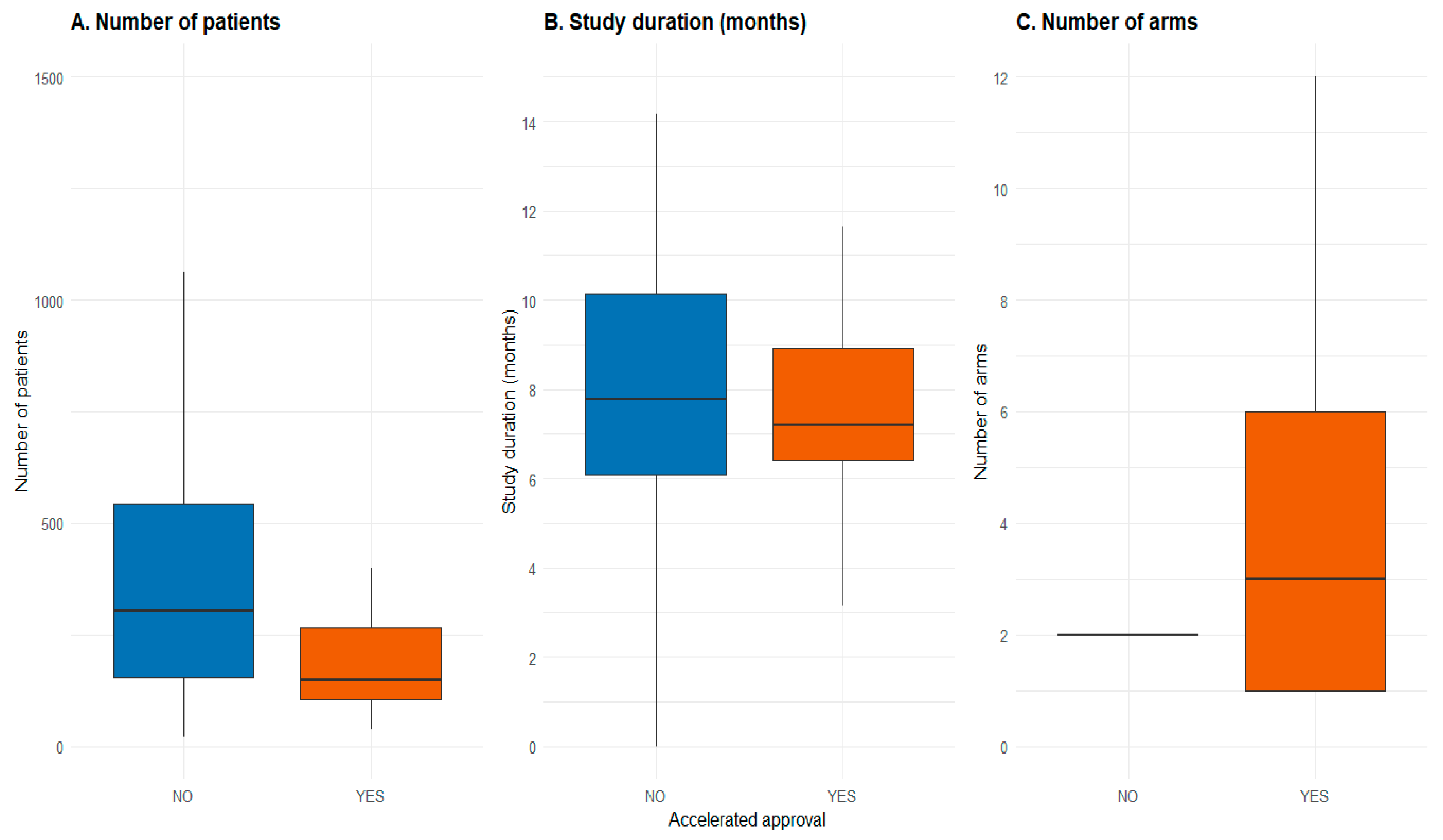
Figure 2.
Trends in oncology targeted therapy approvals over time (A) approvals stratified by accelerated versus regular approval pathways. (B) : approvals according to approval type and therapeutic strategy.
Figure 2.
Trends in oncology targeted therapy approvals over time (A) approvals stratified by accelerated versus regular approval pathways. (B) : approvals according to approval type and therapeutic strategy.
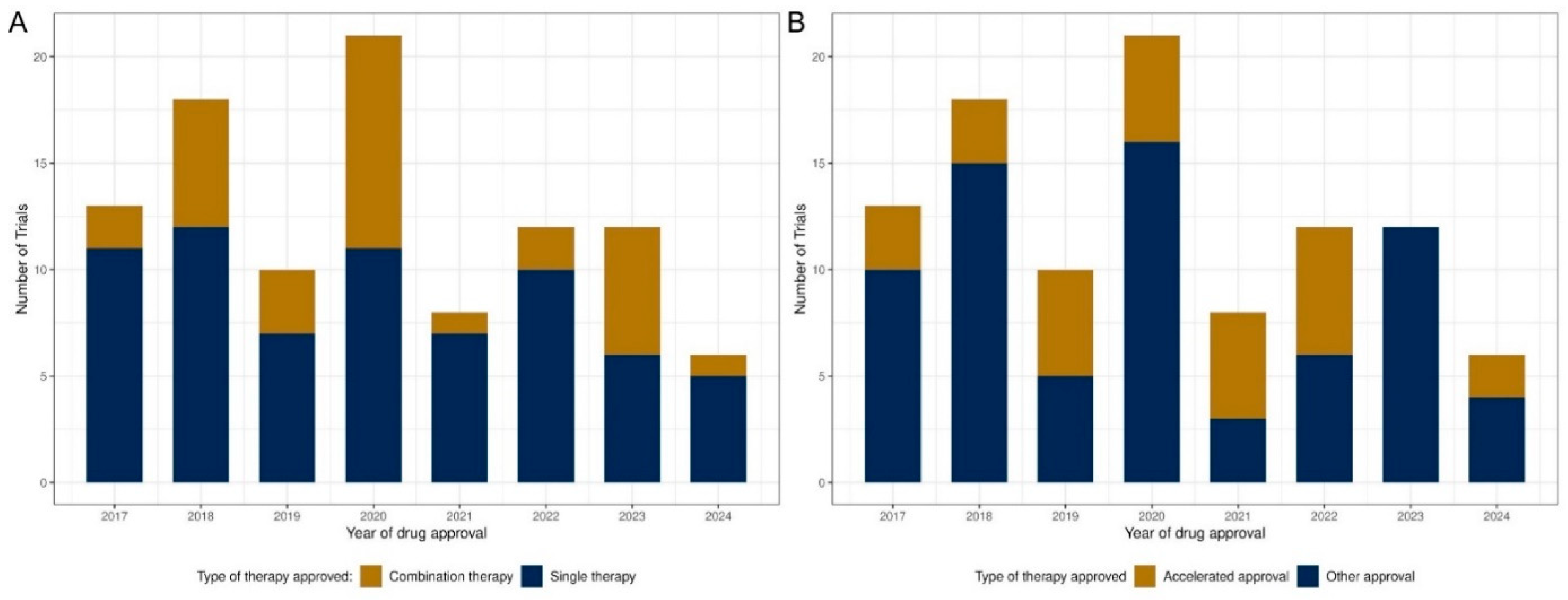
Figure 5.
(A)Total drug approvals by cancer type (2017-2024); (B) Approval of cancer types by biomarkers.
Figure 5.
(A)Total drug approvals by cancer type (2017-2024); (B) Approval of cancer types by biomarkers.
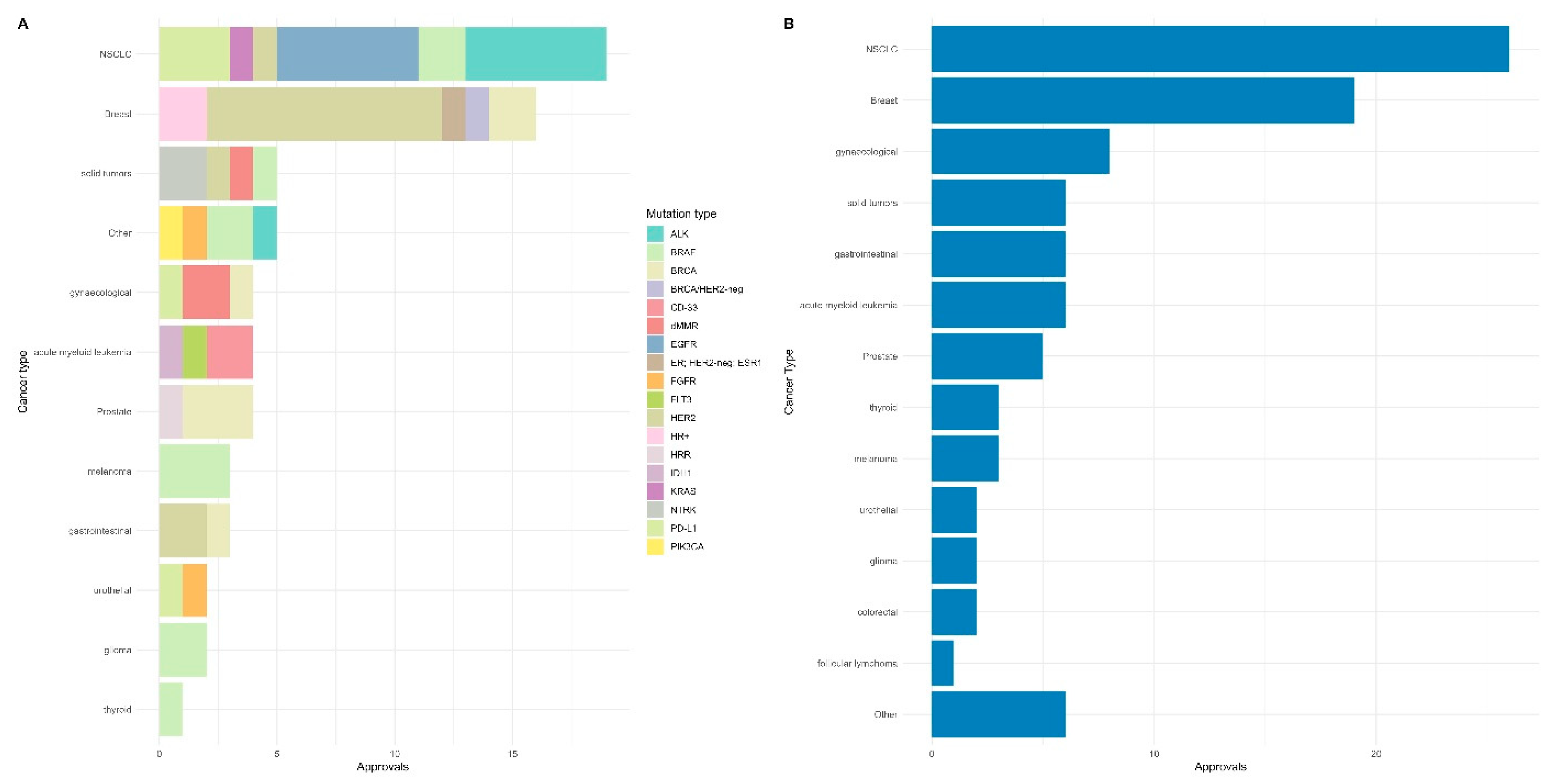

Table 1.
Characteristics of pivotal clinical trials supporting FDA precision oncology approvals 2017–2024. Each LMIC column is independent. *Approvals associated with a pivotal trial in which at least 10% 0f study sites are LMIC countries, inclusive of China and LMICs in Europe; ** Similar to previous definition except China and LMICs in Europe are excluded; *** Approvals associated with a pivotal trial recruiting in at least one LMIC country.
Table 1.
Characteristics of pivotal clinical trials supporting FDA precision oncology approvals 2017–2024. Each LMIC column is independent. *Approvals associated with a pivotal trial in which at least 10% 0f study sites are LMIC countries, inclusive of China and LMICs in Europe; ** Similar to previous definition except China and LMICs in Europe are excluded; *** Approvals associated with a pivotal trial recruiting in at least one LMIC country.
| Variable |
LMICs including China & Europe (N=57)* |
LMIC excluding China & Europe (N=86)** |
Overall LMICs*** (N=102) |
|
| Sex | Male | 4 (7.0%) | 5 (5.8%) | - |
| Female | 8 (14.0%) | 7 (8.1%) | - | |
| Both | 45 (78.9%) | 71 (82.6%) | 85 (83.3%) | |
| Unclear | - | 3 (3.5%) | 17 (16.7%) | |
| Population | Adults & Pediatric | 4 (7.0%) | 9 (10.5%) | 13 (12.7%) |
| Adults | 52 (91.2%) | 75 (87.2%) | 87 (85.3%) | |
| Paediatric | 1 (1.8%) | 2 (2.3%) | 2 (2.0%) | |
| Histology agnostic | Yes | 3 (5.3%) | 5 (5.8%) | 7 (6.9%) |
| No | 54 (94.7%) | 81 (94.2%) | 95 (93.1%) | |
|
IO Agent |
True | 21 (36.8%) | 37 (43.0%) | 42 (41.2%) |
| False | 36 (63.2%) | 49 (57.0%) | 60 (58.8%) | |
| Advanced Stage cancers | True | 11 (19.3%) | 19 (22.1%) | 20 (19.6%) |
| False | 46 (80.7%) | 67 (77.9%) | 82 (80.4%) | |
| Combination therapy | Single | 35 (61.4%) | 57 (66.3%) | 71 (69.6%) |
| Combination | 22 (38.6%) | 29 (33.7%) | 31 (30.4%) | |
| Accelerated approval | Yes | 11 (19.3%) | 24 (27.9%) | 30 (29.4%) |
| No | 46 (80.7%) | 62 (72.1%) | 72 (70.6%) | |
| Regular approval | Yes | 8 (14.0%) | 11 (12.8%) | 13 (12.7%) |
| No | 49 (86.0%) | 75 (87.2%) | 89 (87.3%) | |
| Paediatric approval | Yes | 5 (8.8%) | 11 (12.8%) | 15 (14.7%) |
| No | 52 (91.2%) | 75 (87.2%) | 87 (85.3%) | |
|
Number of trial arms |
1 | 52 (91.2%) | 84 (97.7%) | 97(95.1%) |
| 2 | 3 (5.3%) | 1 (1.2%) | 3 (2.9%) | |
| >=3 | 2 (3.5%) | 1 (1.2%) | 2 (2.0%) | |
| Phase Trial | Phase 1 | - | 6 (7.0%) | 6 (5.9%) |
| Phase 1/2 | 10 (17.5%) | 10 (11.6%) | 19 (18.6%) | |
| Phase 2 | 5 (8.8%) | 19 (22.1%) | 20 (19.6%) | |
| Phase 2/3 | 1 (1.8%) | 1 (1.2%) | 1 (1.0%) | |
| Phase 3 | 41 (71.9%) | 46 (53.5%) | 52 (51.0%) | |
| Unclear | - | 4 (4.7%) | 4 (3.9%) | |
| Masking | None | 24 (42.1%) | 48 (55.8%) | 54 (52.9%) |
| Double | 8 (14.0%) | 8 (9.3%) | 9 (8.8%) | |
| Quadruple | 7 (12.3%) | 10 (11.6%) | 10 (9.8%) | |
| Triple | 2 (3.5%) | 2 (2.3%) | 2 (2.0%) | |
| Unclear | 16 (28.1%) | 18 (20.9%) | 27 (26.5%) | |
|
Joint pharma development |
Yes | 2 (3.5%) | 2 (2.3%) | 3 (2.9%) |
| No | 55 (96.5%) | 84 (97.7%) | 99 (97.1%) | |
| Pharma sponsor | AstraZeneca | 7 (12.3%) | 8 (9.3%) | 8 (7.8%) |
| GSK | - | 3 (3.5%) | 3 (2.9%) | |
| Pfizer | 5 (8.8%) | 5 (5.8%) |
7 (6.9%) | |
| Others | 45 (78.9%) | 70 (81.4%) |
84 (82.4%) | |
|
Primary outcome |
BORR | 1 (1.8%) | 1 (1.0%) | |
| Complete remission | - | 1 (1.2%) | 1 (1.0%) | |
| Complete response rate | - | 3 (3.5%) | 3 (3.0%) | |
| Disease free survival | 4 (7.0%) | 4 (4.7%) | 4 (3.9%) | |
| EFS | - | 1 (1.2%) | 1 (1.0%) | |
| EFS; OS | - | 1 (1.2%) | 1 (1.0%) | |
| ORR; PFS | 1 (1.8%) | 1 (1.2%) | 1 (1.0%) | |
| ORR | 9 (15.8%) | 22 (25.6%) | 27 (26.5%) | |
| ORR; DOR | 5 (8.8%) | 8 (9.3%) | 13 (12.7%) | |
| OS | 5 (8.8%) | 4 (4.7%) | 5 (4.9%) | |
| OS; PFS | 2 (3.5%) | 3 (3.5%) | 3 (2.9%) | |
| PCR | 2 (3.5%) | 2 (2.3%) | 2 (2.0%) | |
| PFS | 23 (40.4%) | 27 (31.4%) | 31 (30.4%) | |
| Radiological response | - | 1 (1.2%) | 1 (1.0%) | |
| RFS | 1 (1.8%) | 1 (1.2%) | 1 (1.0%) | |
| RPFS | 4 (7.0%) | 4 (4.7%) | 4 (3.9%) | |
| Unclear | - | 3 (3.5%) | 3 (2.9%) | |
Note: **This categorisation includes a minimum 10% threshold of LMIC inclusion. Any trials including <10% of LMIC countries are excluded.
Table 2.
Country participation in pivotal trials by approval pathway and income classification.
| Approval pathway | Total countries, median (IQR) | HICs, median (IQR) | LMICs, median (IQR) |
| Standard approval | 19 (14) | 15 (8) | 3 (7) |
| Accelerated approval | 13 (6) | 10.5 (6) | 1 (1) |
HIC = high-income country; LMIC = low- and middle-income country (World Bank fiscal year 2024 classification); IQR = interquartile range.
Disclaimer/Publisher’s Note: The statements, opinions and data contained in all publications are solely those of the individual author(s) and contributor(s) and not of MDPI and/or the editor(s). MDPI and/or the editor(s) disclaim responsibility for any injury to people or property resulting from any ideas, methods, instructions or products referred to in the content. |
© 2026 by the authors. Licensee MDPI, Basel, Switzerland. This article is an open access article distributed under the terms and conditions of the Creative Commons Attribution (CC BY) license (http://creativecommons.org/licenses/by/4.0/).
Copyright: This open access article is published under a Creative Commons CC BY 4.0 license, which permit the free download, distribution, and reuse, provided that the author and preprint are cited in any reuse.


