

Submitted:
19 May 2026
Posted:
21 May 2026
You are already at the latest version
Abstract
This scoping review sought to assess the evidence base for physical activity (PA) as a potential confounder of vitamin D (vitD) status in health outcomes. Correlations between vitD and health/disease are well-documented. However, this does not always translate in vitD supplementation studies. We hypothesize that these observed relationships may be confounded by PA, especially outdoor PA, which contributes to both sun exposure and cardiorespiratory fitness. We conducted a scoping review utilizing Arksey and O’Malley’s five-stage framework and aligned with the PRISMA guidelines. Literature was searched from CINAHL, Cochrane Library, PubMed, Scopus, and SportDISCUS. After removal of duplicates and irrelevant results (N=2270), 154 articles were included, mostly published from 2011-2023 (n=124), cross-sectional (n=97), and in adults (n=106). The literature shows a strong link between PA and improved vitD status, attributable to sun exposure. However, evidence conflict on PA’s independent impact on vitD, with some studies suggesting protective effects in athletes irrespective of sunlight. This review highlights PA as a potential confounder in vitD-related health outcomes, particularly those associated with cardiorespiratory fitness. Yet, inconsistencies in study design, measurement methods, and reporting limit the ability to disentangle these relationships. Standardized reporting guidelines including measures of vitD status; details of sun exposure (time, location, UV protection, melanin concentration, etc.); PA type, duration, and setting; and sufficient details on other potential confounders within the population (adiposity, veiling, vegan diet, etc.) are urgently needed to clarify these relationships and enable effective public health strategies.
Keywords:
physical activity
; vitamin D
; sunlight
; research design
; health outcomes
; lifestyle and behavior
; methods standardization
; translational science
Introduction
Research has established correlations between vitamin D (vitD) status and a number of health outcomes and disease states ranging from bone health to immune competence; however, these relationships have not always been consistent especially when comparing observational studies, Mendelian randomization studies, and randomized controlled trials (RCTs). A recent umbrella review found that meta-analyses were consistent for observational and Mendelian randomization studies for 17 of 28 (60.7%) health outcomes including all-cause mortality.1 Only 13 (46.4%) also had consistent RCTs. Therefore, in the literature to date, the translation from observational studies to RCTs is quite inefficient, indicating a fundamental misunderstanding, confounding, or some other significant contributor that has yet to be identified.
Given that sun exposure is the primary driver of vitD status in humans (measured as serum 25-hydroxyvitamin, 25(OH)D, also known as calcidiol) and that physical activity (PA) is commonly a proxy for sun exposure in the vitD literature, conclusions about vitD-related health outcomes should consider these factors separately as well as any potential interaction. While outdoor PA will influence sun exposure and vitD status, all PA will support cardiorespiratory (CR) fitness. CR fitness strongly correlates with health span and many of the same health outcomes as vitD.2-4 Therefore, PA in any setting is a potential confounder for vitD status in health outcomes research. Sun exposure also warrants consideration beyond its impact on vitD status when assessing health outcomes given the known non-vitD-related health benefits such as resetting circadian rhythms,5-7 nitric oxide production,8-10 and stimulation of endorphins and the subsequent feeling of well-being.11-13 The magnitude of the potential confounding effects between vitD status, sun exposure, and PA on health outcomes will determine how the evidence should be interpreted as well as the appropriate public health interventions. For instance, if there is strong confounding between PA / CR fitness and vitD status for a given health outcome, then the appropriate public health intervention may be to encourage more PA with vitD supplementation and/or outdoor PA with sensible sun precautions rather than a vitD supplement alone. A recently published systematic review found that PA seems to be associated with increased vitD status but notes that stratifying PA by indoor or outdoor setting seems to have little relevance.14 This same study acknowledges the importance of exploring this issue in greater detail; conducting more rigorous research exploring possible confounders such as race, season, and geographic latitude is necessary to further unpack this issue.
As little research exists examining the relationship between vitD and possible confounders such as PA and other elements of sun exposure explicitly, we conducted a scoping review of the literature, a type of systematic synthesis of the evidence base on a given topic that is similar to a systematic review. A scoping review aims to determine the scope of knowledge rather than answer a specific question, where a systematic review may be appropriate. Thus, scoping reviews map the available evidence including research conduct.
The primary objective of this scoping review is to assess the evidence base for sun exposure and PA as potential confounders of the relationship between vitD status and related health outcomes. To this end, we review any literature that specifically seeks to measure vitD, sun exposure, and PA (likely outdoor) and to establish how these factors are defined and measured. Additionally, we investigated if interactions between these factors were considered in the literature. Therefore, we hypothesis that PA may be an unmeasured third variable that affects both the cause and the supposed effect in the observed relationship between vitD and health outcomes that may act as an effect modifier (altering the relationship) or an intermediary (meaning the relationship is spurious).
Definition of Terms
The following terms are used throughout the review. As part of the research process, the researchers (PGC, LAF, AMB, SHV) defined these terms to guide the discussion below.
- Confounding: A situation where an observed relationship between two variables (e.g., vitD and health outcomes) is influenced by a third variable (confounder, e.g., PA) associated with both the exposure (vitD) and the outcome (health outcomes). This creates the appearance of a causal relationship between the two variables when, in fact, the third variable may partly or fully explain the association. For example, PA could independently influence both vitD status (through outdoor activity and sun exposure) and health outcomes (through improved cardiovascular fitness), making it a confounder in studies linking vitD to health outcomes.
- Physical Activity (All): Any physical movement requiring energy expenditure. This term is used when research collects data on indoor and outdoor PA but does not stratify results based on type of PA.
- Physical Activity (Indoor): PA happening in enclosed spaces (e.g., gyms, athletic arenas, homes) where exposure to natural sunlight does not occur.
- Physical Activity (Outdoor): Physical activities performed outside involving natural sunlight exposure
- Physical Activity (Unspecified): Instances where PA is reported without details regarding its type or context (i.e., not clear if activity occurs indoors or outdoors).
- Spurious Relationship: A seeming causal association between two variables that is due to a third variable (confounder) influencing both. For example, the relationship between vitD status and improved health outcomes might appear causal but could be due to PA or sun exposure, not vitD itself.
- Sun Exposure: The exposure of the skin to ultraviolet (UV) radiation from sunlight. While sun exposure is necessary to photoproduce vitD, it varies in its effectiveness for vitD synthesis by time of day, season, geographic location, skin pigmentation, etc.
Methods
This scoping review is designed to follow the five-stage process as described by Arksey and O’Malley:15 A full description of our methods and justification can be found in the study protocol.16
- Identifying the Research Question
- Identifying Relevant Studies
- Study Selection
- Charting the Data
- Collecting, Summarizing, and Reporting the Data
and align with the Preferred Reporting Items for Scoping Reviews (PRISMA-ScR) Guidelines. These distinct steps are discussed in greater detail below and provide a roadmap for the scoping review protocol we present. The complete PRISMA-ScR checklist is presented in the appendix.
Step One: Identifying the Research Questions
Research Questions
Prior to conducting this scoping review, our research team published a detailed protocol to describe our process and rationale.16 Following an initial review of the literature, we identified the following three questions to guide our study.
- What correlations exist between sun exposure, PA, and vitD status?
-
How might sun exposure and regular PA improve health outcomes and/or disease conditions independently of vitD, as opposed to dependent upon vitD?
- What spurious relationships between vitD, sun exposure, and PA have been previously identified?
- What is the potential for and magnitude of confounding via a spurious relationship?
Institutional Review Board (IRB) Statement
This project did not engage any human subjects or involve a process of informed consent. This manuscript exclusively reports the results of a scoping review. Consequently, this research was not subject to review by an Institutional Review Board.
Step Two: Identifying Relevant Studies
The questions guiding this scoping review aim to clarify what is known about the role of general PA and, specifically, outdoor PA in vitD status; and to assess potential confounding factors in these relationships that require further investigation in order to better understand implications on health outcomes. A detailed discussion of our strategy development has been previously published in the scoping review protocol and is not recreated here.16 Of note, five research databases were included in this study: CINAHL, Cochrane, PubMed, Scopus, and SportDISCUS. This search was conducted in January 2023 and again in May 2026 and the entire search strategy, including the specific search strings for each database, was reviewed independently by a research library affiliated with the George Washington University Himmelfarb Health Sciences Library.
Inclusion and Exclusion Criteria
Consistent with Arksey and O’Malley’s process for conducting scoping reviews, we developed specific inclusion and exclusion criteria to ensure the relevance and appropriateness of the articles included in this study. Articles were eligible for inclusion if they were published in English, came from peer-reviewed sources, considered the role of photoproduced vitD (as opposed to dietary or supplemental sources alone), and included any identified form of PA. Articles were excluded if they were informal publications (e.g., blog posts, industry reports, or non-refereed sources), registers of clinical trials without available results (e.g., protocol papers or trials in progress), only measured dietary or supplemental vitD, or did not address PA.
In practice, while these criteria helped narrow the focus to studies relevant to our research questions, their implementation highlighted key challenges. For example, although the studies included had identified some form of PA, the specific context of PA (indoor vs. outdoor) was not uniformly reported. This inconsistency limited our ability to fully explore the relationship between outdoor PA, sun exposure, and vitD synthesis. These observations underscore the need for standardized reporting in future research to improve comparability and the robustness of evidence in this area. These criteria are also available in Table 1.
Stage Three: Study Selection
The third stage of the Arksey and O’Malley process entails the elimination of the studies irrelevant to the central research question. To determine relevance and inclusion, the research team conducted a three-phase process of review utilizing Covidence, an online tool to facilitate and organize review and analysis.
First, all titles and abstracts were screened to determine relevance given the questions guiding this study. In this first phase, two researchers reviewed each title and abstract to determine relevance. If there was not consensus among these two researchers, a senior researcher provided a final determination. Second, the researchers conducted a full-text review of each publication. In this phase, two researchers were required to review each publication to determine whether it aligns with our specific inclusion criteria following the population, intervention, comparison, and outcome (PICO) guidelines.17 Finally, the third step included data extraction of relevant information for thematic analysis. Our full PRISMA diagram is available in Figure 1 and the extraction form guiding the final step of the scoping review is available in Table 1. The full PRISMA-ScR checklist is available in the appendix and the PRISMA diagram is available as Figure 1.
Step Four: Charting the Data
As discussed above, the research team utilized the data extraction tool from Covidence. This form allowed the research team to manage the literature in a highly structured system to determine the relevance to our research questions. Table 2 provides an overview of the data extraction form the researchers employed to chart the data. This form allowed us to follow a uniform approach to reviewing the published body of knowledge.
Step Five: Collecting, Summarizing, and Reporting the Data
The final stage of this scoping review included a comprehensive review of extracted data to identify salient commonalities in the literature, areas of disagreement, and to provide answers to the study’s guiding research questions. Arksey & O’Malley15 note that this fifth step includes a number of distinct processes: 1) collecting the data in a single location, 2) summarizing the totality of the data in terms of both quantitative and qualitative results, and 3) reporting the data in a structured way. For the first step, the extracted data was exported from Covidence into Microsoft Excel for data management and content analysis. Next, we conducted two layers of analysis – the quantitative descriptive characteristics of the study and the more qualitative assessment of the results from the included studies. Throughout this process the researchers (PGC, LAF, AMB, SHV) met regularly to discuss analysis, areas of uncertainty, and to provide review of each other’s work. The final step, reporting the data, is discussed at length below.
Results
Characteristics of Included Studies
The supplemental material available online provides a comprehensive summary of the articles included in this scoping review (n=155) while Table 3, Table 4 and S1 below provide summary characteristics. Most studies are cross-sectional representing a large range of populations across the globe. The largest single country producers of research into vitD and PA were Australia (n=22) and the United States (n=21). Other studies were conducted in various European countries (n=43), countries in the Middle East (n=25), across Asia (n=22), in Central and South American countries (n=15), across Africa (n=5), and Oceania (n=2). Many studies were conducted in regions with high UVB exposure, such as Brazil and the UK. This geographical variation plays a significant role in the relationship between assumed or measured sun exposure during PA and vitD synthesis, which could be highlighted as an important factor when discussing global health recommendations.
The majority of studies included in this review were conducted on adults (n=106; 68%), followed by studies exclusively conducted with children (n=31; 20%), and few considering the health of both adults and minors (n=18; 12%). As there are likely distinct patterns in vitD status depending on age and lifestyle, this is a significant source of variation. The sample size ranged from 1 at the smallest, a single case study of a patient to 6,37018 at the largest, a cross-sectional study of data from the National Health and Nutrition Examination Survey (NHANES).18 Table 3 and Tables 3 and S1 provide a detailed overview of study characteristics, including publication year and study design; the supplementary table provides greater detail, including the study population, inclusion/exclusion criteria, sample size, vitD measurement methodology, relationships, confounding, interactions, and conclusions.
It is particularly relevant to discuss the vitD measurement methodologies used in these studies, as the accuracy and reliability of these measurements directly impact the validity of the findings. Among the reviewed studies, a variety of methods were employed to assess serum 25(OH)D, with the most common being Liquid Chromatography-Tandem Mass Spectrometry (LC-MS/MS) and Chemiluminescence Immunoassay (CLIA). LC-MS/MS, considered the gold standard due to its high specificity and ability to distinguish between different forms of vitD, was used in several studies. CLIA, valued for its practicality in clinical settings, was also frequently utilized. However, it is notable that approximately one quarter of the studies did not specify the measurement technique used. In some cases, it is possible the authors thought that the techniques in use were not immediately relevant to the study design, i.e. a review; however, these various techniques are not directly comparable. This lack of detail could potentially affect the interpretability and comparability of results across studies, highlighting the need for more consistent reporting standards in future research. This is a trend throughout the vitD literature.
Known Relationships: Vitamin D and Outdoor Physical Activity
The Impact of Vitamin D on Physical Activity
One of the primary findings from this scoping review was to establish known relationships between serum vitD status and PA. There was substantial heterogeneity in the types of physical activities studied: primarily aerobic activities19-22 such as running,18,23,24 swimming,18 dancing,21 and field sports such as soccer, basketball, and lacrosse.25-28 Most evident is the clear role that sun exposure has on maintaining sufficient vitD status (see Figure 2).23,25,29-36
The Impact of Physical Activity on Vitamin D
Additionally, sixteen studies affirmed a protective factor between outdoor PA and sufficient serum vitD (see Figure 3).17,37-51 This relationship is affirmed by studies specifically measuring vitD status among individuals who live sedentary lifestyles, all of which found that sedentary individuals experience vitD deficiency at higher rates than their active peers.52-56 Interesting, there are a small number of studies that either found no statistically significant relationship between vitD status and outdoor PA57-59 or, remarkably, found a negative relationship between vitD status and vigorous outdoor PA.60,61 In other words, these studies found that vigorous outdoor PA was associated with lower serum vitD despite a potentially increased sun exposure. However, studies did not commonly report known factors that influence cutaneous vitD synthesis and/or vitD requirements, meaning that these factors could, potentially, explain some if not all of this variation.
Several studies noted a seasonal impact on vitD status, particularly in athletes and outdoor workers, who showed higher vitD in sunnier months. Including seasonal influences can enhance the discussion on how timing of outdoor activity affects vitD status. This is an example of an important determinant of vitD photosynthesis that was not typically reported.
One significant question that remains unanswered regards the isolated role of PA in vitD status.21,26,20,61-65 Research affirms that sun exposure increases vitD, but it remains unclear if regular PA serves as a mediator for the endogenous production of vitD or related health outcomes.29,39,44,47,51,66-72 In other words, what exactly is the role of PA in vitD photoproduction and related health outcomes. Whether or not PA has a positive effect on vitD status regardless of sun exposure remains unclear.21,67,72-81 That said, a number of studies suggest that PA generally, irrespective of indoor or outdoor context, is associated with higher serum vitD.53,82-86,159 These differential findings suggest that there remains much we do not understand regarding vitD status, sun exposure, and PA and how these relate to health outcomes.
Known Health Outcomes Associated with Vitamin D
While an exploration of the health outcomes associated with vitD is beyond the scope of this study, particularly because research has long established the many health outcomes associated with vitD, we briefly note some associations that were affirmed by the literature included in this study. In particular, the literature included in this review identified that sufficient vitD status is associated with muscle strength and bone health,20,24,26,27,62,63,87-91 positive mental health outcomes,92 and reduced risk for a number of chronic health conditions including peripheral artery disease, cardiovascular disease, and cancers.93-95 VitD deficiency is associated with a number of negative health outcomes, including obesity.95-97 Some studies suggested that the observed relationship between vitD and physical activity could be spurious, meaning the improvements in health outcomes might be attributed more to physical activity and fitness rather than vitD alone.
Potential Confounding & Interaction
This scoping review helped us to identify a number of persistent confounding and interaction relationships across the published literature (see Figure 4). It remains to be seen what benefits of outdoor PA are from sun exposure and vitD status versus the overall health benefits of being highly physically active and well-conditioned (i.e., active and “in shape,” good CR fitness).17,18,32,37,68,98-103 While these terms are defined differently across publications, they typically refer to aerobic activity that increases participants’ heart-rates and lasts approximately 75-150 minutes per week, depending upon intensity. Additionally, the types of PA (e.g., strength and conditioning, aerobic exercise, etc.) and their impact on vitD status remain unknown and poorly measured.60,64,71,77,104,105 The role of various other factors impacting sun exposure such as season of data collection, geographic location, cultural norms (including dress and veiling), and sun protection use are poorly studied or controlled for in existing research.25,106-113
Figure 2.
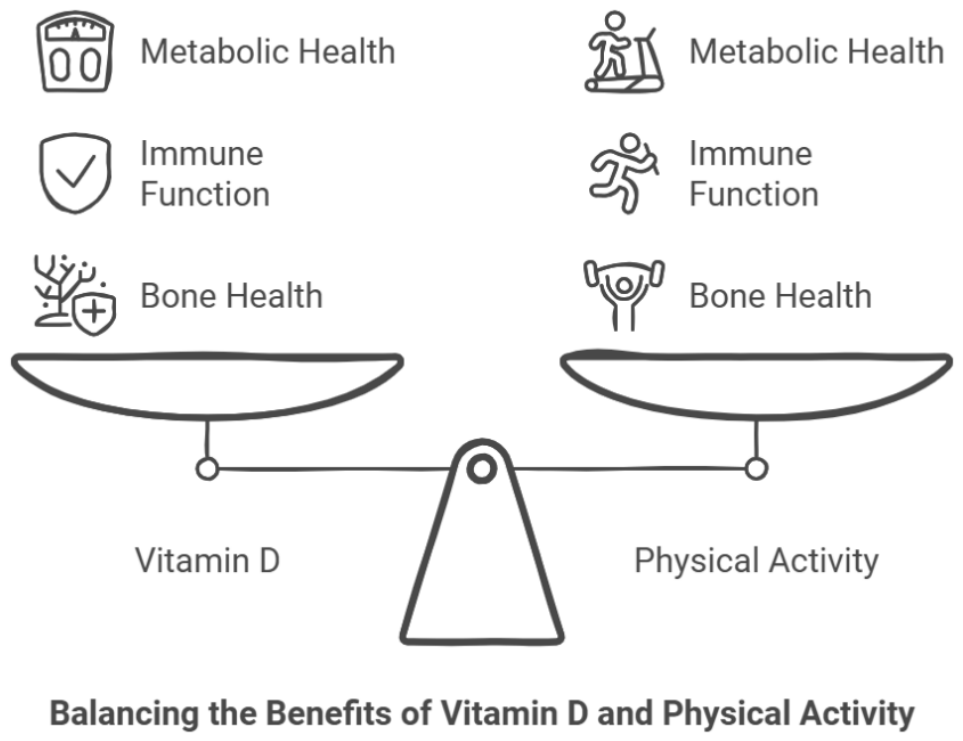
Potential Confounding and Interaction between Physical Activity, Vitamin D, and Health Outcomes The interaction between vitamin D and physical activity is complex and introduces potential confounding in studies investigating either factor’s effect on health. The positive health outcomes often associated with vitamin D, including improved bone health, reduced inflammation, better immune response, and metabolic benefits, overlap with the well-established benefits of physical activity. Consequently, studies examining vitamin D’s role in these outcomes must account for physical activity levels, particularly outdoor PA, to avoid confounding.
Figure 2.
Potential Confounding and Interaction between Physical Activity, Vitamin D, and Health Outcomes The interaction between vitamin D and physical activity is complex and introduces potential confounding in studies investigating either factor’s effect on health. The positive health outcomes often associated with vitamin D, including improved bone health, reduced inflammation, better immune response, and metabolic benefits, overlap with the well-established benefits of physical activity. Consequently, studies examining vitamin D’s role in these outcomes must account for physical activity levels, particularly outdoor PA, to avoid confounding.
Reporting Challenges
Proxy Measures and Bioavailability
Another persistent challenge is the inconsistent use of sun exposure proxy measures, which are poorly measured and controlled across the literature.56,78,88,101,103,110,114-123 In other words, researchers regularly reference sun exposure proxy measures to approximate sun exposure in place of more concrete measures. Research considers multiple mediating factors (e.g., sun exposure, PA, vitD supplementation, dietary intake) without controlling for these variables.28,49,124-127 A significant number of studies included in this review look at the role of PA and sun exposure when measuring vitD status, but there remains significant work to better understand these factors in isolation or how they might interact. Finally, the role of obesity in impacting the bioavailability of vitD is often poorly described among study participants.65,128
Inadequate Sun Exposure Measurements
One significant issue impacting vitD studies are the few mechanisms that exist to accurately and objectively measure sun exposure in study participants feasibly.38,41,73,83,88,97,99,110,113,124,129-145 Compounding the limitation regarding accurate measurements of sun exposure, most studies accept self-reported PA as a measure of participant activity levels.52,76,99,118,124,137-141,143-154 Self-reported data is subject to many biases, errors in reporting, and can lead to correspondingly poor measurements. In addition to these limitations, there are few studies that effectively establish why self-reported PA occurs indoors or outdoors.83,85,106,109,132,133,149,154-156 A small number of studies also identify the different vitD assays that exists and how various in lab protocol may skew how studies report vitD status.22,66 A number of researchers identify how these overall inconsistencies in datasets make it hard to draw meaningful conclusions.21,147,157,158
Additionally, this review highlights the lack of consistency and valid tools for measuring sun exposure during outdoor PA, a significant challenge in determining the strength of individual studies as well as the knowledge-base as a whole. The inconsistency in how these measurements are captured and reported may further limit the generalizability of our findings. That said, identifying this inconsistency was one of the primary aims of this review. In other words, the work from this review affirms the challenges in determining the magnitude of the relationship between outdoor PA / sun exposure, vitD status, and related health outcomes and calls for on-going research to identify and detangle potential confounding that exists.
Overview of Included Studies
Several studies identified potential confounding factors, particularly related to outdoor PA, as sun exposure often influences vitD synthesis. Despite the variation in study designs and objectives, most studies found a positive association between outdoor PA and improved vitD status, though the confounding effect of PA on vitD-related health outcomes remains an area for further exploration. Studies also pointed out limitations in standardization across methodologies and measurement techniques, emphasizing the need for consistent protocols in future research. Overall, the findings underscore the complexity of disentangling the effects of PA and sun exposure on vitD status, with some studies advocating for both vitD supplementation and PA with sun precautions to address insufficiency in at-risk populations.
Discussion
The findings of this scoping review highlight a significant body of literature that acknowledges the relationship between sun exposure, PA, vitD status, and various health outcomes. While the initial aim of this study was to explore potential confounders within these relationships, inconsistencies in the definitions and measurements of PA were identified during the literature review, rendering this approach impractical. Consequently, the scope of the analysis was expanded to encompass both confounders and interactions observed in the data. Accordingly, both aspects will be discussed in this review, as the complexity of these interactions and the potential for confounding remain prominent challenges in this area of research. The reviewed studies generally affirm that outdoor PA positively influences serum 25(OH)D, vitD status, through increased sun exposure, which in turn may contribute to improved health outcomes such as enhanced bone health, muscle strength, and mental well-being in addition to the benefits from PA itself. Yet, a closer examination reveals substantial variability in the study designs, methodologies, and reported outcomes across the literature.
A recurring theme in the studies included in this review is the influence of outdoor PA as a potential confounder in the relationship between vitD status and health outcomes. Given that outdoor PA not only enhances vitD status via sun exposure but also improves CR fitness and overall health and wellness, it is challenging to disentangle the independent effects of vitD from those of PA, plus those of sun exposure alone. This potential confounding effect may explain the discrepancies observed in RCTs that fail to replicate the positive associations between vitD status and health outcomes found in observational studies.
Additionally, several studies noted a protective factor associated with outdoor PA against vitD deficiency, particularly in athletic populations. However, conflicting evidence exists, with some studies reporting no significant relationship or even a negative association between vigorous outdoor PA and serum vitD status. These divergent findings underscore the need for more rigorous research to determine the precise nature of the relationship between vitD status, sun exposure, and outdoor PA, as well as the potential moderating effects of factors such as intensity and duration of PA, geographical location, and seasonal variations.
An important aspect that emerged from this review is the inconsistent and often inadequate measurement of key variables, particularly sun exposure and PA (see Figure 5).
Figure 3.
Guidance for Future Research on Vitamin D and Physical Activity Given the overlap between vitamin D and physical activity in contributing to health outcomes, future studies should prioritize standardized measures of both factors to clarify their individual and interactive effects.
Figure 3.
Guidance for Future Research on Vitamin D and Physical Activity Given the overlap between vitamin D and physical activity in contributing to health outcomes, future studies should prioritize standardized measures of both factors to clarify their individual and interactive effects.
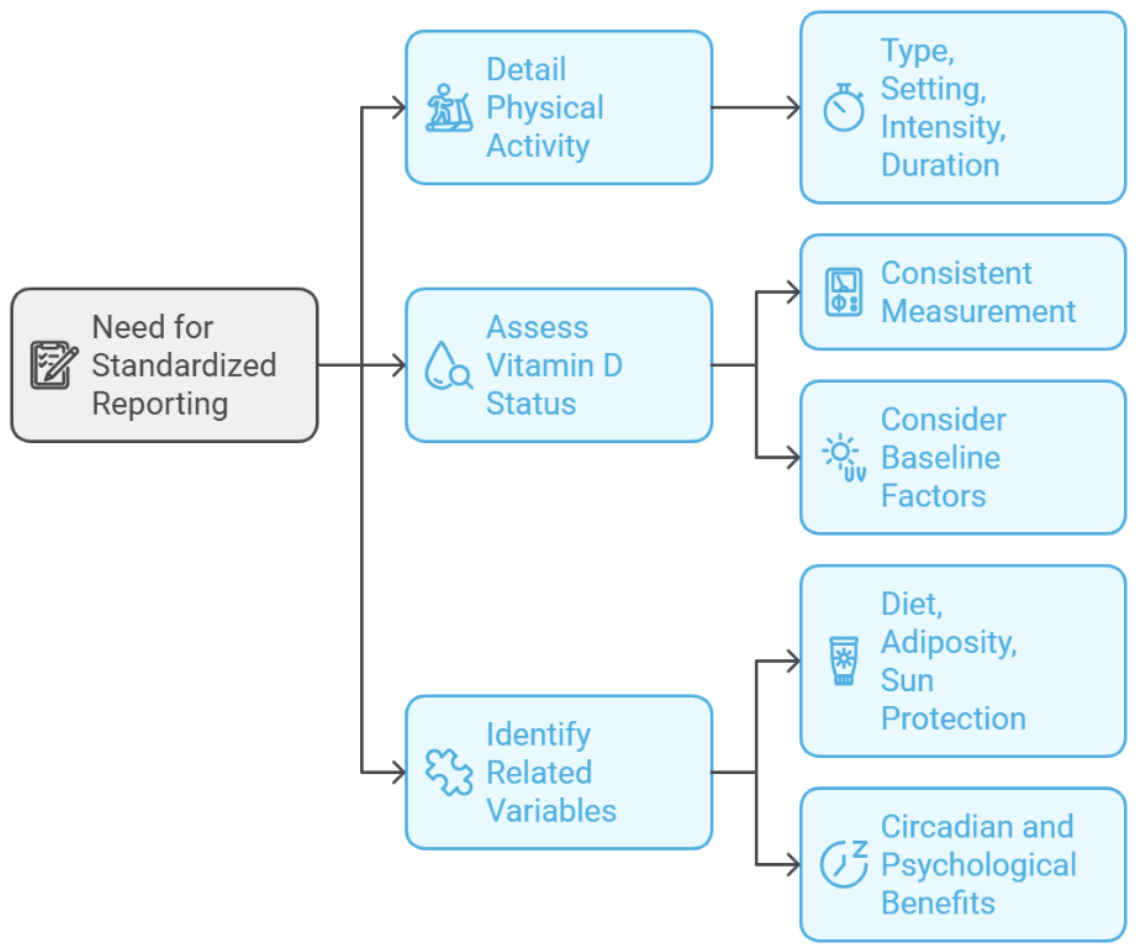
Many studies relied on self-reported PA and proxy measures of sun exposure, both of which are subject to bias and error. The lack of standardized tools and protocols for measuring these variables complicates the interpretation of study results and limits the generalizability of findings. Future research should prioritize the development and implementation of objective, validated measures of sun exposure and PA to strengthen the evidence base.
For instance, to ensure accurate assessment of vitD status in the context of PA, it is crucial to select appropriate measurement techniques for serum 25(OH)D concentrations. Liquid Chromatography-Tandem Mass Spectrometry (LC-MS/MS) is considered the gold standard for its specificity and ability to distinguish between 25(OH)D2 and 25(OH)D3, which is vital when considering different sources of vitD, such as sunlight and diet. However, the use of automated immunoassays, which are more common in clinical settings due to their convenience and cost-effectiveness, may introduce variability and limit the precision of such vitD measurements. These limitations are particularly relevant when investigating the potential confounding effect of PA on vitD status as it relates to health outcomes, as inconsistent measurements can obscure the true relationship between PA, sun exposure, vitD, and health outcomes. Therefore, employing standardized and highly accurate methods, such as LC-MS/MS, in research settings is essential for advancing our understanding of these complex interactions. However, this is typically not the case in the literature, broadly. Much of this is due to use of clinical data (either retro- or prospectively), at least in part due to insufficient funding.
The current literature also fails to adequately account for other confounding factors, such as dietary intake of vitD, use of sun protection, and variations in skin pigmentation. These factors can significantly influence vitD status and should be systematically controlled for and/or documented in future studies. Additionally, the role of obesity in altering the bioavailability of vitD remains underexplored, despite evidence suggesting that adiposity can sequester vitD and reduce its circulating concentrations.
Given these limitations, it is clear that further research is needed to better understand the interplay between PA / sun exposure, vitD status, and health outcomes. Large-scale, longitudinal studies that incorporate standardized measures of vitD, sun exposure, and PA, as well as detailed information on potential confounders and effect modifiers, are essential for advancing our knowledge in this area. Such research will not only clarify the independent and combined effects of PA and vitD on health but also inform public health recommendations aimed at optimizing vitD status and promoting overall well-being.
While there is strong mechanistic support for PA as a confounder in vitD-related health outcomes, the literature to date is fragmented and inconsistent. Standardized reporting guidelines, improved measurement tools, and a more nuanced understanding of confounding factors are critical for addressing the gaps in the current evidence base. Future research should aim to quantify the magnitude of the confounding effect of PA on vitD status and health outcomes, ultimately leading to more targeted and effective public health interventions.
Limitations
This scoping review was designed in consultation with a reference librarian and faculty members who are experts in scoping and systematic reviews; however, this study is not without limitations. There remains a possibility that the search strategy did not return all possible relevant literature given the numerous research databases that contain nutrition and PA data as well as the variety of terms used to identify and categorize PA. In other words, our search strategy may not have been sufficiently comprehensive to capture all possible literature. Additionally, our search protocol did not collect gray literature including doctoral theses, governmental reports (e.g., work from the Department of Agriculture and the Food and Drug Administration), which may limit some of the findings presented in this manuscript. Finally, our research team is entirely English-speaking with limited proficiencies in other languages. For this reason, our search was limited to articles published in English. Given this limitation, it is likely that we missed literature published in other languages.
Conclusions
This scoping review reveals conflicting information regarding the relationship between vitD status, sun exposure, and PA. While some research suggests that PA alone does not improve 25(OH)D concentrations, other studies show lower rates of vitD deficiency among athletes, even without sun exposure. Overall, the current science indicates that the relationship between vitD status and PA is largely driven by sun exposure, with limited research considering the potential confounding between the health benefits of PA and vitD separately or in combination. Mechanistic evidence supports PA as a significant confounder in the relationship between vitD and health outcomes, particularly those linked to CR fitness. However, the literature remains inconsistent in study design and data reporting, making it difficult to determine the extent of this confounding effect. Standardized reporting guidelines—incorporating detailed measures of vitD status, sun exposure, PA type and setting, and other potential confounders such as adiposity and diet—are essential to disentangle these complex relationships. Future research should focus on addressing these gaps with large-scale, well-designed studies that can quantify the confounding effects of PA on vitD status in related health outcomes. This may help explain the discrepancies between observational studies and RCTs and guide more effective public health interventions.
Author Contributions
Conceptualization, PGC and LAF; Methodology, PGC, AMB, SHV, LAF; Writing – Original Draft Preparation, PGC, AMB, SHV, LAF; Writing – Review & Editing, PGC, AMB, SHV, LAF; Supervision, LAF.
Funding
This research received no specific grant from any funding agency, commercial or not-for-profit sectors.
Declaration of Interest
The authors declare none.
Acknowledgments
The authors would like to acknowledge Thomas Harrod, Associate Director of Reference, Instruction, and Access at the George Washington University’s Himmelfarb Health Sciences Library for his generous guidance and support in developing the search strategies for this scoping review.
Appendix
Preferred Reporting Items for Systematic reviews and Meta-Analyses extension for Scoping Reviews (PRISMA-ScR) Checklist
| SECTION | ITEM | PRISMA-ScR CHECKLIST ITEM | REPORTED ON PAGE # |
| TITLE | |||
| Title | 1 | Identify the report as a scoping review. | 1 |
| ABSTRACT | |||
| Structured summary | 2 | Provide a structured summary that includes (as applicable): background, objectives, eligibility criteria, sources of evidence, charting methods, results, and conclusions that relate to the review questions and objectives. | 1 |
| INTRODUCTION | |||
| Rationale | 3 | Describe the rationale for the review in the context of what is already known. Explain why the review questions/objectives lend themselves to a scoping review approach. | 2-3 |
| Objectives | 4 | Provide an explicit statement of the questions and objectives being addressed with reference to their key elements (e.g., population or participants, concepts, and context) or other relevant key elements used to conceptualize the review questions and/or objectives. | 3 |
| METHODS | |||
| Protocol and registration | 5 | Indicate whether a review protocol exists; state if and where it can be accessed (e.g., a Web address); and if available, provide registration information, including the registration number. | 5-6 |
| Eligibility criteria | 6 | Specify characteristics of the sources of evidence used as eligibility criteria (e.g., years considered, language, and publication status), and provide a rationale. | 5 |
| Information sources* | 7 | Describe all information sources in the search (e.g., databases with dates of coverage and contact with authors to identify additional sources), as well as the date the most recent search was executed. | 6 |
| Search | 8 | Present the full electronic search strategy for at least 1 database, including any limits used, such that it could be repeated. | 7 |
| Selection of sources of evidence† | 9 | State the process for selecting sources of evidence (i.e., screening and eligibility) included in the scoping review. | 7 |
| Data charting process‡ | 10 | Describe the methods of charting data from the included sources of evidence (e.g., calibrated forms or forms that have been tested by the team before their use, and whether data charting was done independently or in duplicate) and any processes for obtaining and confirming data from investigators. | 7-8 |
| Data items | 11 | List and define all variables for which data were sought and any assumptions and simplifications made. | 7-8 |
| Critical appraisal of individual sources of evidence§ | 12 | If done, provide a rationale for conducting a critical appraisal of included sources of evidence; describe the methods used and how this information was used in any data synthesis (if appropriate). | N/A |
| Synthesis of results | 13 | Describe the methods of handling and summarizing the data that were charted. | 7-8 |
| RESULTS | |||
| Selection of sources of evidence | 14 | Give numbers of sources of evidence screened, assessed for eligibility, and included in the review, with reasons for exclusions at each stage, ideally using a flow diagram. | 6 |
| Characteristics of sources of evidence | 15 | For each source of evidence, present characteristics for which data were charted and provide the citations. | 7-9 |
| Critical appraisal within sources of evidence | 16 | If done, present data on critical appraisal of included sources of evidence (see item 12). | N/A |
| Results of individual sources of evidence | 17 | For each included source of evidence, present the relevant data that were charted that relate to the review questions and objectives. | 7-9 |
| Synthesis of results | 18 | Summarize and/or present the charting results as they relate to the review questions and objectives. | 9-11 |
| DISCUSSION | |||
| Summary of evidence | 19 | Summarize the main results (including an overview of concepts, themes, and types of evidence available), link to the review questions and objectives, and consider the relevance to key groups. | 11 |
| Limitations | 20 | Discuss the limitations of the scoping review process. | 15 |
| Conclusions | 21 | Provide a general interpretation of the results with respect to the review questions and objectives, as well as potential implications and/or next steps. | 15-16 |
| FUNDING | |||
| Funding | 22 | Describe sources of funding for the included sources of evidence, as well as sources of funding for the scoping review. Describe the role of the funders of the scoping review. | After References |
JBI = Joanna Briggs Institute; PRISMA-ScR = Preferred Reporting Items for Systematic reviews and Meta-Analyses extension for Scoping Reviews.
* Where sources of evidence (see second footnote) are compiled from, such as bibliographic databases, social media platforms, and Web sites.
† A more inclusive/heterogeneous term used to account for the different types of evidence or data sources (e.g., quantitative and/or qualitative research, expert opinion, and policy documents) that may be eligible in a scoping review as opposed to only studies. This is not to be confused with information sources (see first footnote).
‡ The frameworks by Arksey and O’Malley (6) and Levac and colleagues (7) and the JBI guidance (4, 5) refer to the process of data extraction in a scoping review as data charting.
§ The process of systematically examining research evidence to assess its validity, results, and relevance before using it to inform a decision. This term is used for items 12 and 19 instead of "risk of bias" (which is more applicable to systematic reviews of interventions) to include and acknowledge the various sources of evidence that may be used in a scoping review (e.g., quantitative and/or qualitative research, expert opinion, and policy document).
From: Tricco AC, Lillie E, Zarin W, O'Brien KK, Colquhoun H, Levac D, et al. PRISMA Extension for Scoping Reviews (PRISMAScR): Checklist and Explanation. Ann Intern Med. 2018, 169:467–473. doi: 10.7326/M18-0850.
References
- Liu, D.; Meng, X.; Tian, Q.; et al. Vitamin D and multiple health outcomes: an umbrella review of observational studies, randomized controlled trials, and Mendelian randomization studies. Adv. Nutr. 2022, 13, 1044–1062. [Google Scholar] [CrossRef] [PubMed]
- Ruegsegger, G.N.; Booth, F.W. Health benefits of exercise. Cold Spring Harb. Perspect. Med. 2018, 8, a029694. [Google Scholar] [CrossRef] [PubMed]
- Wu, Z.J.; Wang, Z.Y.; Gao, H.E.; et al. Impact of high-intensity interval training on cardiorespiratory fitness, body composition, physical fitness, and metabolic parameters in older adults: a meta-analysis of randomized controlled trials. Exp. Gerontol. 2021, 150, 111345. [Google Scholar] [CrossRef]
- Franklin, B.A.; Wedig, I.J.; Sallis, R.E.; et al. Physical activity and cardiorespiratory fitness as modulators of health outcomes: a compelling research-based case presented to the medical community. Mayo Clin. Proc. 2023, 98, 316–331. [Google Scholar] [CrossRef] [PubMed]
- Zerbini, G.; Winnebeck, E.C.; Merrow, M. Weekly, seasonal, and chronotype-dependent variation of dim-light melatonin onset. J. Pineal Res. 2021, 70, e12723. [Google Scholar] [CrossRef]
- Albrecht, U.; Ripperger, J.A. Circadian clocks and sleep: impact of rhythmic metabolism and waste clearance on the brain. Trends Neurosci. 2018, 41, 677–688. [Google Scholar] [CrossRef]
- Choi, J.H.; Lee, B.; Lee, J.Y.; et al. Relationship between sleep duration, sun exposure, and serum 25-hydroxyvitamin D status: a cross-sectional study. Sci. Rep. 2020, 10, 4168. [Google Scholar] [CrossRef]
- Pelegrino, M.T.; Paganotti, A.; Seabra, A.B.; et al. Photochemistry of nitric oxide and S-nitrosothiols in human skin. Histochem Cell Biol. 2020, 153, 431–441. [Google Scholar] [CrossRef]
- Hazell, G.; Khazova, M.; Cohen, H.; et al. Post-exposure persistence of nitric oxide upregulation in skin cells irradiated by UV-A. Sci. Rep. 2022, 12, 9465. [Google Scholar] [CrossRef]
- Liddle, L.; Monaghan, C.; Burleigh, M.C.; et al. Reduced nitric oxide synthesis in winter: a potential contributing factor to increased cardiovascular risk. Nitric Oxide 2022, 127, 1–9. [Google Scholar] [CrossRef] [PubMed]
- Zanello, S.B.; Jackson, D.M.; Holick, M.F. An immunocytochemical approach to the study of β-endorphin production in human keratinocytes using confocal microscopy. Ann. N Y Acad. Sci. 1999, 885, 85–99. [Google Scholar] [CrossRef]
- Jussila, A.; Huotari-Orava, R.; Ylianttila, L.; et al. Narrow-band ultraviolet B radiation induces the expression of β-endorphin in human skin in vivo. J. Photochem Photobiol. B 2016, 155, 104–108. [Google Scholar] [CrossRef] [PubMed]
- Fell, G.L.; Robinson, K.C.; Mao, J.; et al. Skin β-endorphin mediates addiction to UV light. Cell. 2014, 157, 1527–1534. [Google Scholar] [CrossRef] [PubMed]
- Bârsan, M.; Chelaru, V.F.; Râjnoveanu, A.G.; et al. Difference in levels of vitamin D between indoor and outdoor athletes: a systematic review and meta-analysis. Int. J. Mol. Sci. 2023, 24, 7584. [Google Scholar] [CrossRef] [PubMed]
- Arksey, H.; O’Malley, L. Scoping studies: toward a methodological framework. Int. J. Soc. Res. Methodol. 2005, 8, 19–32. [Google Scholar] [CrossRef]
- Corr, P.G.; Badawi, A.; Vu, S.; et al. Outdoor physical activity as a confounder for vitamin D status: a scoping review protocol. medRxiv. 31 Jan 2023. Available online: https://www.medrxiv.org/content/10.1101/2023.01.31.23285256v1. [CrossRef]
- Methley, A.M.; Campbell, S.; Chew-Graham, C.; et al. PICO, PICOS and SPIDER: a comparison study of specificity and sensitivity in three search tools for qualitative systematic reviews. BMC Health Serv. Res. 2014, 14, 579. [Google Scholar] [CrossRef]
- Wanner, M.; Richard, A.; Martin, B.; et al. Associations between objective and self-reported physical activity and vitamin D serum levels in the US population. Cancer Causes Control. 2015, 26, 881–891. [Google Scholar] [CrossRef]
- Rahnavard, Z.; Eybpoosh, S.; Homami, M.R.; et al. Vitamin D deficiency in healthy male population: results of the Iranian multi-center osteoporosis study. Iran. J. Public Health 2010, 39, 45–52. [Google Scholar]
- Brännström, A.; Yu, J.G.; Jonsson, P.; et al. Vitamin D in relation to bone health and muscle function in young female soccer players. Eur. J. Sport Sci. 2017, 17, 249–256. [Google Scholar] [CrossRef]
- De Rui, M.; Toffanello, E.D.; Veronese, N.; et al. Vitamin D deficiency and leisure time activities in the elderly: are all pastimes the same? PLoS ONE 2014, 9, e94805. [Google Scholar] [CrossRef]
- Mansibang, N.M.M.; Yu, M.G.Y.; Jimeno, C.A.; et al. Association of sunlight exposure with 25-hydroxyvitamin D levels among working urban adult Filipinos. Osteoporos. Sarcopenia 2020, 6, 133–138. [Google Scholar] [CrossRef]
- Allali, F.; El Aichaoui, S.; Khazani, H.; et al. High prevalence of hypovitaminosis D in Morocco: relationship to lifestyle, physical performance, bone markers, and bone mineral density. Semin Arthritis Rheum. 2009, 38, 444–451. [Google Scholar] [CrossRef]
- Hildebrand, R.A.; Miller, B.; Warren, A.; et al. Compromised vitamin D status negatively affects muscular strength and power of collegiate athletes. Int. J. Sport Nutr. Exerc Metab. 2016, 26, 558–564. [Google Scholar] [CrossRef] [PubMed]
- Fields, J.B.; Payne, D.C.; Gallo, S.; et al. Vitamin D status differs by sex, sport-season, and skin pigmentation among elite collegiate basketball players. Sports 2019, 7, 214. [Google Scholar] [CrossRef]
- Geiker, N.R.W.; Hansen, M.; Jakobsen, J.; et al. Vitamin D status and muscle function among adolescent and young swimmers. Int. J. Sport Nutr. Exerc Metab. 2017, 27, 399–407. [Google Scholar] [CrossRef] [PubMed]
- Yoon, S.; Kwon, O.; Kim, J. Vitamin D in athletes: focus on physical performance and musculoskeletal injuries. Phys. Act. Nutr. 2021, 25, 20–25. [Google Scholar] [CrossRef]
- Prafiantini, E.; Thia, M.J. The association between sun exposure, vitamin D intakes, and physical activity with vitamin D status among Indonesian adolescents: urban setting. Clin. Nutr. 2019, 38, S141. [Google Scholar] [CrossRef]
- Conrad, B.N.; Glueck, C.J. Does low serum 25-OH vitamin D interact with very strenuous physical activity, facilitating development of rhabdomyolysis? Med. Hypotheses 2013, 81, 551–552. [Google Scholar] [CrossRef] [PubMed]
- Wilson-Barnes, S.L.; Hunt, J.E.A.; Mendis, J.; et al. Relationship between vitamin D status, intake and exercise performance in UK university-level athletes and healthy inactive controls. PLoS ONE 2021, 16, e0249671. [Google Scholar] [CrossRef]
- Chee, W.S.S.; Chang, C.Y.; Arasu, K.; et al. Vitamin D status is associated with modifiable lifestyle factors in pre-adolescent children living in urban Kuala Lumpur, Malaysia. Nutrients 2021, 13, 2175. [Google Scholar] [CrossRef]
- Carrillo-Vega, M.F.; García-Peña, C.; Gutiérrez-Robledo, L.M.; et al. Vitamin D deficiency in older adults and its associated factors: a cross-sectional analysis of the Mexican Health and Aging Study. Arch. Osteoporos. 2017, 12, 8. [Google Scholar] [CrossRef] [PubMed]
- Grigoriou, E.V.; Trovas, G.; Papaioannou, N.; et al. Serum 25-hydroxyvitamin D status, quantitative ultrasound parameters, and their determinants in Greek population. Arch. Osteoporos. 2018, 13, 111. [Google Scholar] [CrossRef] [PubMed]
- Durvasula, S.; Mason, R.S.; Kok, C.; et al. Outdoor areas of Australian residential aged care facilities do not facilitate appropriate sun exposure. Aust. Health Rev. 2015, 39, 406–410. [Google Scholar] [CrossRef] [PubMed]
- Ebrahimi, M.; Khashayar, P.; Keshtkar, A.; et al. Prevalence of vitamin D deficiency among Iranian adolescents. J. Pediatr. Endocrinol. Metab. 2014, 27, 595–602. [Google Scholar] [CrossRef]
- Kopeć, A.; Solarz, K.; Majda, F.; et al. An evaluation of the levels of vitamin D and bone turnover markers after the summer and winter periods in Polish professional soccer players. J. Hum. Kinet. 2013, 38, 135–140. [Google Scholar] [CrossRef]
- Buhr, N.; Oeffinger, D.; Kryscio, R.; et al. Vitamin D status in children and adolescents: a prospective cohort study. Curr. Orthop. Pract. 2020, 31, 168–172. [Google Scholar] [CrossRef]
- Klinedinst, B.S.; Meier, N.F.; Larsen, B.; et al. Walking in the light: how history of physical activity, sunlight, and vitamin D account for body fat—a UK Biobank study. Obesity 2020, 28, 1428–1437. [Google Scholar] [CrossRef]
- Al-Othman, A.; Al-Musharaf, S.; Al-Daghri, N.M.; et al. Effect of physical activity and sun exposure on vitamin D status of Saudi children and adolescents. BMC Pediatr. 2012, 12, 92. [Google Scholar] [CrossRef]
- Delchiaro, A.; Oliveira, F.J.; Bonacordi, C.L.; et al. Evaluation of quality of life, physical activity and nutritional profile of postmenopausal women with and without vitamin D deficiency. Rev. Bras. Ginecol. Obstet. 2017, 39, 337–343. [Google Scholar] [CrossRef]
- Waschbisch, A.; Wenny, I.; Tallner, A.; et al. Physical activity in multiple sclerosis: a comparative study of vitamin D, brain-derived neurotrophic factor and regulatory T cell populations. Eur. Neurol. 2012, 68, 122–128. [Google Scholar] [CrossRef]
- Scott, D.; Blizzard, L.; Fell, J.; et al. A prospective study of the associations between 25-hydroxy-vitamin D, sarcopenia progression and physical activity in older adults. Clin. Endocrinol. (Oxf) 2010, 73, 581–587. [Google Scholar] [CrossRef] [PubMed]
- Nanri, A.; Foo, L.H.; Nakamura, K.; et al. Serum 25-hydroxyvitamin D concentrations and season-specific correlates in Japanese adults. J. Epidemiol. 2011, 21, 346–353. [Google Scholar] [CrossRef] [PubMed]
- Marwaha, R.K.; Puri, S.; Tandon, N.; et al. Effects of sports training and nutrition on bone mineral density in young Indian healthy females. Indian J. Med. Res. 2011, 134, 307–313. [Google Scholar] [PubMed]
- Camargo, M.B.; Kunii, L.S.; Hayashi, L.F.; et al. Modifiable factors of vitamin D status among a Brazilian osteoporotic population attending a public outpatient clinic. Arq. Bras. Endocrinol. Metabol. 2014, 58, 572–582. [Google Scholar] [CrossRef]
- Brodie, A.M.; Lucas, R.M.; Harrison, S.L.; et al. The AusD study: determinants of serum 25-hydroxyvitamin D concentration across a broad latitude range. Am. J. Epidemiol. 2013, 177, 894–903. [Google Scholar] [CrossRef]
- Rabufetti, A.; Milani, G.P.; Lava, S.A.G.; et al. Vitamin D status among male late adolescents living in southern Switzerland: role of body composition and lifestyle. Nutrients 2019, 11, 2727. [Google Scholar] [CrossRef]
- Lee, Y.J.; Oh, I.H.; Baek, H.J.; et al. Effects of sun exposure and dietary vitamin D intake on serum 25-hydroxyvitamin D status in hemodialysis patients. Nutr. Res. Pract. 2015, 9, 158–164. [Google Scholar] [CrossRef]
- Vallianou, N.; Bountziouka, V.; Akalestos, T.; et al. Vitamin D status and health correlates among apparently healthy participants in an urban, sunny region. Cent. Eur. J. Public Health 2012, 20, 262–269. [Google Scholar] [CrossRef]
- Aydın, C.G.; Dinçel, Y.M.; Arıkan, Y.; et al. The effects of indoor and outdoor sports participation and seasonal changes on vitamin D levels in athletes. SAGE Open Med. 2019, 7, 2050312119837480. [Google Scholar] [CrossRef]
- Maruyama-Nagao, A.; Sakuraba, K.; Suzuki, Y. Seasonal variations in vitamin D status in indoor and outdoor female athletes. BioMed Rep. 2016, 5, 113–117. [Google Scholar] [CrossRef]
- Cannell, J.J.; Hollis, B.W.; Sorenson, M.B.; et al. Athletic performance and vitamin D. Med. Sci. Sports Exerc. 2009, 41, 1102–1110. [Google Scholar] [CrossRef] [PubMed]
- Bener, A.; Al-Ali, M.; Hoffmann, G.F. Vitamin D deficiency in healthy children in a sunny country: associated factors. Int. J. Food Sci. Nutr. 2009, 60 (Suppl 5), 60–70. [Google Scholar] [CrossRef]
- Shamsi, U.; Azam, I.; Shamsi, A.; et al. Frequency and determinants of vitamin D deficiency among premenopausal and postmenopausal women in Karachi, Pakistan. BMC Womens Health 2021, 21, 194. [Google Scholar] [CrossRef]
- Sherief, L.M.; Ali, A.; Gaballa, A.; et al. Vitamin D status and healthy Egyptian adolescents: where do we stand? Medicine 2021, 100, e26661. [Google Scholar] [CrossRef]
- Al Zarooni, A.A.R.; Nagelkerke, N.; Al Marzouqi, F.I.; et al. Risk factors for vitamin D deficiency in Abu Dhabi Emirati population. PLoS ONE 2022, 17, e0264064. [Google Scholar] [CrossRef] [PubMed]
- Sari, D.K.; Tala, Z.Z.; Lestari, S.; et al. Lifestyle differences in rural and urban areas affected the level of vitamin D in women with single nucleotide polymorphism in North Sumatera. Asian J. Clin. Nutr. 2017, 9, 57–63. [Google Scholar] [CrossRef]
- Ohta, H.; Kuroda, T.; Onoe, Y.; et al. The impact of lifestyle factors on serum 25-hydroxyvitamin D levels: a cross-sectional study in Japanese women aged 19–25 years. J. Bone Min. Metab. 2009, 27, 682–688. [Google Scholar] [CrossRef]
- Nayir, T.; Aydin, C.G.; Eroğlu, A.; et al. Do regular sports activities affect vitamin D levels in young athletes? A cross-sectional study. Acta Med. Mediterr. 2017, 33, 913–919. [Google Scholar] [CrossRef]
- Mastaglia, S.R.; Seijo, M.; Muzio, D.; et al. Effect of vitamin D nutritional status on muscle function and strength in healthy women aged over sixty-five years. J. Nutr. Health Aging 2011, 15, 349–354. [Google Scholar] [CrossRef]
- Aspell, N.; Laird, E.; Healy, M.; et al. The prevalence and determinants of vitamin D status in community-dwelling older adults: results from the English Longitudinal Study of Ageing (ELSA). Nutrients 2019, 11, 1253. [Google Scholar] [CrossRef] [PubMed]
- Al-Raddadi, R.; Bahijri, S.; Borai, A.; et al. Prevalence of lifestyle practices that might affect bone health in relation to vitamin D status among female Saudi adolescents. Nutrition 2018, 45, 108–113. [Google Scholar] [CrossRef]
- Jastrzębska, J.; Skalska, M.; Radzimiński, Ł.; et al. Changes of 25(OH)D concentration, bone resorption markers and physical performance as an effect of sun exposure, supplementation of vitamin D and lockdown among young soccer players during a one-year training season. Nutrients 2022, 14, 521. [Google Scholar] [CrossRef] [PubMed]
- Allison, R.J.; Close, G.L.; Farooq, A.; et al. Severely vitamin D-deficient athletes present smaller hearts than sufficient athletes. Eur. J. Prev. Cardiol. 2015, 22, 535–542. [Google Scholar] [CrossRef]
- Scragg, R.; Holdaway, I.; Jackson, R.; et al. Plasma 25-hydroxyvitamin D3 and its relation to physical activity and other heart disease risk factors in the general population. Ann. Epidemiol. 1992, 2, 697–703. [Google Scholar] [CrossRef]
- Alloubani, A.; Akhu-Zaheya, L.; Samara, R.; et al. Relationship between vitamin D deficiency, diabetes, and obesity. Diabetes Metab. Syndr. 2019, 13, 1457–1461. [Google Scholar] [CrossRef]
- Lanteri, P.; Lombardi, G.; Colombini, A.; et al. Vitamin D in exercise: physiologic and analytical concerns. Clin. Chim. Acta 2013, 415, 45–53. [Google Scholar] [CrossRef]
- Pasco, J.A.; Henry, M.J.; Nicholson, G.C.; et al. Behavioural and physical characteristics associated with vitamin D status in women. Bone 2009, 44, 1085–1091. [Google Scholar] [CrossRef] [PubMed]
- Downs, N.J.; Schouten, P.W.; Parisi, A.V.; et al. Measurements of the upper body ultraviolet exposure to golfers: non-melanoma skin cancer risk, and the potential benefits of exposure to sunlight. Photodermatol. Photoimmunol. Photomed. 2009, 25, 317–324. [Google Scholar] [CrossRef] [PubMed]
- Berger, C.; Greene-Finestone, L.S.; Langsetmo, L.; et al. Temporal trends and determinants of longitudinal change in 25-hydroxyvitamin D and parathyroid hormone levels. J. Bone Min. Res. 2012, 27, 1381–1389. [Google Scholar] [CrossRef]
- Solarz, K.; Kopeć, A.; Pietraszewska, J.; et al. Evaluation of the levels of 25-hydroxyvitamin D3 and bone turnover markers in professional football players and physically inactive men. Physiol. Res. 2014, 63, 237–243. [Google Scholar] [CrossRef]
- Brock, K.; Wilkinson, M.; Cook, R.; et al. Associations with vitamin D deficiency in “at risk” Australians. J. Steroid Biochem Mol. Biol. 2004, 89-90, 581–588. [Google Scholar] [CrossRef] [PubMed]
- Shojaei, F.; Parastouk, S. Evaluation of serum vitamin D and calcium in pregnant women before and after exercise in patients referred to Tehran hospitals, 2014–2015. J. Pharm. Sci. Res. 2017, 9, 2138–2140. [Google Scholar]
- Looker, A.C. Do body fat and exercise modulate vitamin D status? Nutr. Rev. 2007, 65, S124–S126. [Google Scholar] [CrossRef]
- Abu Shady, M.M.; Youssef, M.M.; Salah El-Din, E.M.; et al. Predictors of serum 25-hydroxyvitamin D concentrations among a sample of Egyptian schoolchildren. ScientificWorldJournal 2016, 2016, 8175768. [Google Scholar] [CrossRef]
- Kolokotroni, O.; Papadopoulou, A.; Yiallouros, P.K.; et al. Association of vitamin D with adiposity measures and other determinants in a cross-sectional study of Cypriot adolescents. Public Health Nutr. 2015, 18, 112–121. [Google Scholar] [CrossRef] [PubMed]
- Qutubuddin, A.; Cifu, D.X.; Adler, R.A.; et al. A pilot study of vitamin D and balance characteristics in middle-aged, healthy individuals. PM R. 2010, 2, 23–26. [Google Scholar] [CrossRef]
- Al-Faris, N.A. High prevalence of vitamin D deficiency among pregnant Saudi women. Nutrients 2016, 8, 77. [Google Scholar] [CrossRef] [PubMed]
- Kimlin, M.G.; Lucas, R.M.; Harrison, S.L.; et al. Contributions of solar ultraviolet radiation exposure and other determinants to serum 25-hydroxyvitamin D concentrations in Australian adults: the AusD study. Am. J. Epidemiol. 2014, 179, 864–874. [Google Scholar] [CrossRef]
- Liu, J.; Ma, W.; Wei, L.; et al. Adult serum 25(OH)D3 in Gansu province, northwest China: a cross-sectional study. Asia Pac. J. Clin. Nutr. 2018, 27, 832–839. [Google Scholar] [CrossRef]
- Ramírez-Vick, M.; Hernández-Dávila, L.; Rodríguez-Rivera, N.; et al. Prevalence of vitamin D insufficiency and deficiency among young physicians at University District Hospital in San Juan, Puerto Rico. P R Health Sci. J. 2015, 34, 83–88. [Google Scholar]
- De-la, O.A.; Jurado-Fasoli, L.; Castillo, M.J.; et al. Effect of exercise training on 1,25(OH)2D levels: the FIT-AGEING randomized controlled trial. Sports Health 2021, 13, 19417381211050033. [Google Scholar] [CrossRef] [PubMed]
- Elsayyad, L.; Abu Asi, Y.O.; Allam, H.H.; et al. Effect of physical activity level on vitamin D in teenagers. J. Adv. Pharm. Educ. Res. 2020, 10, 93–97. [Google Scholar] [CrossRef]
- Fernandes, M.R.; Barreto, W.D.R.J. Association between physical activity and vitamin D: a narrative literature review. Rev. Assoc. Med. Bras. 2017, 63, 550–556. [Google Scholar] [CrossRef]
- Shoben, A.B.; Kestenbaum, B.; Levin, G.; et al. Seasonal variation in 25-hydroxyvitamin D concentrations in the cardiovascular health study. Am. J. Epidemiol. 2011, 174, 1363–1372. [Google Scholar] [CrossRef]
- Colao, A.; Muscogiuri, G.; Rubino, M.; et al. Hypovitaminosis D in adolescents living in the land of sun is correlated with incorrect life style: a survey study in Campania region. Endocrine 2015, 49, 521–527. [Google Scholar] [CrossRef]
- Jerome, S.P.; Sticka, K.D.; Schnurr, T.M.; et al. 25(OH)D levels in trained versus sedentary university students at 64° north. Int. J. Circumpolar Health 2017, 76, 1314414. [Google Scholar] [CrossRef]
- Kopiczko, A. Determinants of bone health in Polish women: influence of physical activity, nutrition, sun exposure and biological factors. PLoS ONE 2020, 15, e0238127. [Google Scholar] [CrossRef]
- Caroli, B.; Pasin, F.; Aloe, R.; et al. Characterization of skeletal parameters in a cohort of North Italian rugby players. J. Endocrinol. Invest. 2014, 37, 609–617. [Google Scholar] [CrossRef]
- Mason, C.; Xiao, L.; Imayama, I.; et al. Effects of weight loss on serum vitamin D in postmenopausal women. Am. J. Clin. Nutr. 2011, 94, 95–103. [Google Scholar] [CrossRef] [PubMed]
- McConda, D.B.; Boukhemis, K.W.; Matthews, L.J.; et al. Bone mineral density and vitamin D level compared to lifestyle in resident physicians. W V. Med. J. 2016, 112, 32–36. [Google Scholar] [PubMed]
- Bird, M.L.; Hill, K.D.; Robertson, I.K.; et al. Serum [25(OH)D] status, ankle strength and activity show seasonal variation in older adults: relevance for winter falls in higher latitudes. Age Ageing 2013, 42, 181–185. [Google Scholar] [CrossRef]
- Jahrami, H.; Bragazzi, N.L.; Grant, W.B.; et al. Vitamin D doses from solar ultraviolet and dietary intakes in patients with depression: results of a case-control study. Nutrients 2020, 12, 2587. [Google Scholar] [CrossRef] [PubMed]
- Gouveri, E.; Papanas, N.; Hatzitolios, A.I.; et al. Hypovitaminosis D and peripheral arterial disease: emerging link beyond cardiovascular risk factors. Eur. J. Intern Med. 2012, 23, 674–681. [Google Scholar] [CrossRef] [PubMed]
- Husain, N.E.; Suliman, A.A.; Abdelrahman, I.; et al. Serum vitamin D level, sun-exposed area, dietary factors, and physical activity as predictors of invasive breast cancer risk among Sudanese women: a case-control study. J. Fam. Med. Prim. Care 2019, 8, 1706–1714. [Google Scholar] [CrossRef]
- Corazza, P.R.P.; Tadiotto, M.C.; Michel, D.A.; et al. Low levels of physical activity are related to hypovitaminosis D in eutrophic adolescents. J. Exerc Physiol. Online 2018, 21, 158–170. [Google Scholar]
- Karampela, I.; Sakelliou, A.; Vallianou, N.; et al. Vitamin D and obesity: current evidence and controversies. Curr. Obes. Rep. 2021, 10, 162–180. [Google Scholar] [CrossRef]
- Ravinder, S.; Padmavathi, R.; Narasimman, S.; et al. Vitamin D and physical activity. Fizjoter Pol. 2020, 20, 126–131. [Google Scholar]
- Daugaard, S.; Garde, A.H.; Hansen, Å.M.; et al. Indoor, outdoor, and night work and blood concentrations of vitamin D and parathyroid hormone. Scand. J. Work Env. Health 2018, 44, 647–657. [Google Scholar] [CrossRef]
- Saki, F.; Dabbaghmanesh, M.H.; Omrani, G.R.; et al. Vitamin D deficiency and its associated risk factors in children and adolescents in southern Iran. Public Health Nutr. 2017, 20, 1851–1856. [Google Scholar] [CrossRef]
- Bartoszewska, M.; Kamboj, M.; Patel, D.R. Vitamin D, muscle function, and exercise performance. Pediatr. Clin. North Am. 2010, 57, 849–861. [Google Scholar] [CrossRef]
- Brock, K.; Huang, W.Y.; Fraser, D.R.; et al. Low vitamin D status is associated with physical inactivity, obesity and low vitamin D intake in a large US sample of healthy middle-aged men and women. J. Steroid Biochem Mol. Biol. 2010, 121, 462–466. [Google Scholar] [CrossRef]
- Abu Shady, M.M.; Youssef, M.M.; Shehata, M.A.; et al. Association of serum 25-hydroxyvitamin D with lifestyle and dietary factors in Egyptian prepubescent children. Maced. J. Med. Sci. 2015, 3, 80–84. [Google Scholar] [CrossRef]
- Shore-Lorenti, C.; Brennan, S.L.; Sanders, K.M.; et al. Shining the light on sunshine: a systematic review of the influence of sun exposure on type 2 diabetes mellitus-related outcomes. Clin. Endocrinol. 2014, 81, 799–811. [Google Scholar] [CrossRef]
- Jones, G.; Dwyer, T.; Hynes, K.L.; et al. Vitamin D insufficiency in adolescent males in Southern Tasmania: prevalence, determinants, and relationship to bone turnover markers. Osteoporos. Int. 2005, 16, 636–641. [Google Scholar] [CrossRef]
- Sun, X.; Ma, X.K.; Zhang, L.; et al. Effects of resistance training on serum 25(OH)D concentrations in young men: a randomized controlled trial. Nutr. Metab. (Lond) 2020, 17, 59. [Google Scholar] [CrossRef]
- Guo, S.; Gies, P.; King, K.; et al. Sun exposure and vitamin D status as Northeast Asian migrants become acculturated to life in Australia. Photochem Photobiol. 2014, 90, 1455–1461. [Google Scholar] [CrossRef]
- Malacova, E.; Cheang, P.R.; Dunlop, E.; et al. Prevalence and predictors of vitamin D deficiency in a nationally representative sample of adults participating in the 2011-2013 Australian Health Survey. Br. J. Nutr. 2019, 121, 894–904. [Google Scholar] [CrossRef]
- Mellati, A.A.; Sharifi, F.; Faghihzade, S.; et al. Vitamin D status and its associations with components of metabolic syndrome in healthy children. J. Pediatr. Endocrinol. Metab. 2015, 28, 641–648. [Google Scholar] [CrossRef]
- Tepper, S.; Dabush, Y.; Shahar, D.R.; et al. Vitamin D status and quality of life in healthy male high-tech employees. Nutrients 2016, 8, 366. [Google Scholar] [CrossRef]
- Krzywanski, J.; Mikulski, T.; Krysztofiak, H.; et al. Seasonal vitamin D status in Polish elite athletes in relation to sun exposure and oral supplementation. PLoS ONE 2016, 11, e0164395. [Google Scholar] [CrossRef]
- Puri, S.; Marwaha, R.K.; Agarwal, N.; et al. Vitamin D status of apparently healthy schoolgirls from two different socioeconomic strata in Delhi: relation to nutrition and lifestyle. Br. J. Nutr. 2008, 99, 876–882. [Google Scholar] [CrossRef]
- Corazza, P.R.P.; Tadiotto, M.C.; Michel, D.A.; et al. Photoprotection, solar exposure, and vitamin D in active and sedentary eutrophic adolescents. J. Exerc Physiol. Online 2017, 20, 76–87. [Google Scholar]
- Dretakis, O.E.; Tsatsanis, C.; Fyrgadis, A.; et al. Correlation between serum 25-hydroxyvitamin D levels and quadriceps muscle strength in elderly Cretans. J. Int. Med. Res. 2010, 38, 1824–1834. [Google Scholar] [CrossRef]
- Moy, F.M. Vitamin D status and its associated factors of free-living Malay adults in a tropical country, Malaysia. J. Photochem Photobiol. B 2011, 104, 444–448. [Google Scholar] [CrossRef]
- Klingberg, E.; Oleröd, G.; Konar, J.; et al. Seasonal variations in serum 25-hydroxy vitamin D levels in a Swedish cohort. Endocrine 2015, 49, 800–808. [Google Scholar] [CrossRef]
- Pritchett, K.; Pritchett, R.; Ogan, D.; et al. 25(OH)D status of elite athletes with spinal cord injury relative to lifestyle factors. Nutrients 2016, 8, 374. [Google Scholar] [CrossRef]
- Karppinen, T.; Ala-Houhala, M.; Ylianttila, L.; et al. The effect of vernal solar UV radiation on serum 25-hydroxyvitamin D concentration depends on the baseline level: observations from a high latitude in Finland. Int. J. Circumpolar Health 2017, 76, 1272790. [Google Scholar] [CrossRef]
- Hirani, V.; Cumming, R.G.; Blyth, F.M.; et al. Vitamin D status among older community-dwelling men living in a sunny country and associations with lifestyle factors: the Concord Health and Ageing in Men Project, Sydney, Australia. J. Nutr. Health Aging 2013, 17, 587–593. [Google Scholar] [CrossRef]
- Lucas, J.A.; Bolland, M.J.; Grey, A.B.; et al. Determinants of vitamin D status in older women living in a subtropical climate. Osteoporos. Int. 2005, 16, 1641–1648. [Google Scholar] [CrossRef]
- Brock, K.E.; Graubard, B.I.; Fraser, D.R.; et al. Predictors of vitamin D biochemical status in a large sample of middle-aged male smokers in Finland. Eur. J. Clin. Nutr. 2010, 64, 280–288. [Google Scholar] [CrossRef]
- Asakura, K.; Etoh, N.; Imamura, H.; et al. Vitamin D status in Japanese adults: relationship of serum 25-hydroxyvitamin D with simultaneously measured dietary vitamin D intake and ultraviolet ray exposure. Nutrients 2020, 12, 743. [Google Scholar] [CrossRef]
- Hengist, A.; Perkin, O.; Gonzalez, J.T.; et al. Mobilising vitamin D sequestered in adipose tissue in humans with exercise (VitaDEx). Nutr. Bull. 2019, 44, 25–35. [Google Scholar] [CrossRef] [PubMed]
- Michalczyk, M.M.; Gołaś, A.; Maszczyk, A.; et al. Influence of sunlight and oral D3 supplementation on serum 25(OH)D concentration and exercise performance in elite soccer players. Nutrients 2020, 12, 1311. [Google Scholar] [CrossRef]
- Goswami, R.; Saha, S.; Sreenivas, V.; et al. Vitamin D-binding protein, vitamin D status and serum bioavailable 25(OH)D of young Asian Indian males working in outdoor and indoor environments. J. Bone Min. Metab. 2017, 35, 177–184. [Google Scholar] [CrossRef]
- Song, H.R.; Kweon, S.S.; Choi, J.S.; et al. High prevalence of vitamin D deficiency in adults aged 50 years and older in Gwangju, Korea: the Dong-gu Study. J. Korean Med. Sci. 2014, 29, 149–152. [Google Scholar] [CrossRef] [PubMed]
- Moreiras, O.; Carbajal, A.; Perea, I.; et al. Influence of dietary intake and sunlight exposure on vitamin D status in an elderly Spanish group. Int. J. Vitam. Nutr. Res. 1992, 62, 303–307. [Google Scholar]
- Deschasaux, M.; Souberbielle, J.C.; Andreeva, V.A.; et al. Quick and easy screening for vitamin D insufficiency in adults: a scoring system to be implemented in daily clinical practice. Medicine 2016, 95, e2783. [Google Scholar] [CrossRef]
- Macdonald, H.M.; Mavroeidi, A.; Barr, R.J.; et al. Vitamin D status in postmenopausal women living at higher latitudes in the UK in relation to bone health, overweight, sunlight exposure and dietary vitamin D. Bone 2008, 42, 996–1003. [Google Scholar] [CrossRef]
- Mortensen, C.; Mølgaard, C.; Hauger, H.; et al. Sun behaviour and physical activity associated with autumn vitamin D status in 4–8-year-old Danish children. Public Health Nutr. 2018, 21, 3158–3167. [Google Scholar] [CrossRef]
- Ho, V.; Danieli, C.; Abrahamowicz, M.; et al. Predicting serum vitamin D concentrations based on self-reported lifestyle factors and personal attributes. Br. J. Nutr. 2018, 120, 803–812. [Google Scholar] [CrossRef]
- Bose, S.; Breysse, P.N.; McCormack, M.C.; et al. Outdoor exposure and vitamin D levels in urban children with asthma. Nutr. J. 2013, 12, 81. [Google Scholar] [CrossRef]
- Klenk, J.; Rapp, K.; Denkinger, M.; et al. Objectively measured physical activity and vitamin D status in older people from Germany. J. Epidemiol. Community Health 2015, 69, 388–392. [Google Scholar] [CrossRef] [PubMed]
- Giudici, K.V.; Fisberg, R.M.; Marchioni, D.M.; et al. Comparisons of physical activity, adipokines, vitamin D status and dietary vitamin D intake among adolescents. J. Hum. Nutr. Diet. 2017, 30, 369–377. [Google Scholar] [CrossRef]
- Kluczynski, M.A.; Lamonte, M.J.; Mares, J.A.; et al. Duration of physical activity and serum 25-hydroxyvitamin D status of postmenopausal women. Ann. Epidemiol. 2011, 21, 440–449. [Google Scholar] [CrossRef] [PubMed]
- Peeling, P.; Fulton, S.K.; Binnie, M.; et al. Training environment and vitamin D status in athletes. Int. J. Sports Med. 2013, 34, 248–252. [Google Scholar] [CrossRef] [PubMed]
- Petersen, R.A.; Damsgaard, C.T.; Dalskov, S.M.; et al. Vitamin D status and its determinants during autumn in children at northern latitudes: a cross-sectional analysis from the OPUS School Meal Study. Br. J. Nutr. 2016, 115, 239–250. [Google Scholar] [CrossRef] [PubMed]
- Cargill, J.; Lucas, R.M.; Gies, P.; et al. Validation of brief questionnaire measures of sun exposure and skin pigmentation against detailed and objective measures including vitamin D status. Photochem Photobiol. 2013, 89, 219–226. [Google Scholar] [CrossRef]
- Manicourt, D.H.; Devogelaer, J.P. Urban tropospheric ozone increases the prevalence of vitamin D deficiency among Belgian postmenopausal women with outdoor activities during summer. J. Clin. Endocrinol. Metab. 2008, 93, 3893–3899. [Google Scholar] [CrossRef]
- Bertrand, K.A.; Giovannucci, E.; Liu, Y.; et al. Determinants of plasma 25-hydroxyvitamin D and development of prediction models in three US cohorts. Br. J. Nutr. 2012, 108, 1889–1896. [Google Scholar] [CrossRef]
- Elizondo-Montemayor, L.; Ugalde-Casas, P.A.; Serrano-González, M.; et al. Serum 25-hydroxyvitamin D concentration, life factors and obesity in Mexican children. Obesity 2010, 18, 1805–1811. [Google Scholar] [CrossRef]
- Martini, L.A.; Verly, E., Jr.; Marchioni, D.M.; et al. Prevalence and correlates of calcium and vitamin D status adequacy in adolescents, adults, and elderly from the Health Survey–São Paulo. Nutrition 2013, 29, 845–850. [Google Scholar] [CrossRef]
- Ducher, G.; Kukuljan, S.; Hill, B.; et al. Vitamin D status and musculoskeletal health in adolescent male ballet dancers: a pilot study. J. Dan. Med. Sci. 2011, 15, 99–107. [Google Scholar]
- Roomi, M.A.; Farooq, A.; Ullah, E.; et al. Hypovitaminosis D and its association with lifestyle factors. Pak. J. Med. Sci. 2015, 31, 1236–1240. [Google Scholar] [CrossRef]
- Maeda, S.S.; Saraiva, G.L.; Kunii, I.S.; et al. Factors affecting vitamin D status in different populations in São Paulo, Brazil: the São Paulo Vitamin D Evaluation Study (SPADES). BMC Endocr. Disord. 2013, 13, 14. [Google Scholar] [CrossRef]
- Mendes, J.; Santos, A.; Borges, N.; et al. Vitamin D status and functional parameters: a cross-sectional study in an older population. PLoS ONE 2018, 13, e0201840. [Google Scholar] [CrossRef]
- Dawodu, A.; Kochiyil, J.; Altaye, N. Pilot study of sunlight exposure and vitamin D status in Arab women of childbearing age. East Mediterr. Health J. 2011, 17, 570–574. [Google Scholar] [CrossRef]
- Al-Ghamdi, M.A.; Lanham-New, S.A.; Kahn, J.A. Differences in vitamin D status and calcium metabolism in Saudi Arabian boys and girls aged 6 to 18 years: effects of age, gender, extent of veiling and physical activity with implications for bone health. Public Health Nutr. 2012, 15, 1845–1853. [Google Scholar] [CrossRef] [PubMed]
- Du, X.; Greenfield, H.; Fraser, D.R.; et al. Vitamin D deficiency and associated factors in adolescent girls in Beijing. Am. J. Clin. Nutr. 2001, 74, 494–500. [Google Scholar] [CrossRef]
- Flueck, J.L.; Perret, C. Vitamin D deficiency in individuals with a spinal cord injury: a literature review. Spinal Cord. 2017, 55, 428–434. [Google Scholar] [CrossRef]
- Gulvady, C.; Pingle, S.; Shanbhag, S. Incidence of vitamin B12/D3 deficiency among company executives. Indian J. Occup. Env. Med. 2007, 11, 83–85. [Google Scholar] [CrossRef]
- Maeda, S.S.; Saraiva, G.L.; Hayashi, L.F.; et al. Seasonal variation in the serum 25-hydroxyvitamin D levels of young and elderly active and inactive adults in São Paulo, Brazil: the SPADES study. Dermatoendocrinol 2013, 5, 211–217. [Google Scholar] [CrossRef]
- Fontanive, T.O.; Dick, N.R.M.; Valente, M.C.S.; et al. Seasonal variation of vitamin D among healthy adult men in a subtropical region. Rev. Assoc. Med. Bras. 2020, 66, 1431–1436. [Google Scholar] [CrossRef]
- Milagres, L.C.; Rocha, N.P.; Albuquerque, F.M.; et al. Sedentary behavior is associated with lower serum concentrations of vitamin D in Brazilian children. Public Health 2017, 152, 75–78. [Google Scholar] [CrossRef]
- Callegari, E.T.; Garland, S.M.; Gorelik, A.; et al. Predictors and correlates of serum 25-hydroxyvitamin D concentrations in young women: results from the Safe-D study. Br. J. Nutr. 2017, 118, 263–272. [Google Scholar] [CrossRef]
- Joh, H.K.; Lim, C.S.; Cho, B. Lifestyle and dietary factors associated with serum 25-hydroxyvitamin D levels in Korean young adults. J. Korean Med. Sci. 2015, 30, 1110–1120. [Google Scholar] [CrossRef]
- Haslacher, H.; Nistler, S.; Batmyagmar, D.; et al. Low vitamin D levels do not predict hyperglycemia in elderly endurance athletes (but in controls). PLoS ONE 2016, 11, e0157695. [Google Scholar] [CrossRef]
- Hall, J.T.; Ebeling, M.; Shary, J.R.; et al. Relationship between physical activity and vitamin D status in postpartum lactating and formula-feeding women. J. Steroid Biochem Mol. Biol. 2018, 177, 261–265. [Google Scholar] [CrossRef]
- Ouyang, S.; Li, Q.; Liu, Z.; Yin, Y. The relationship between physical activity levels and serum vitamin D levels varies among children and adolescents in different age groups. Front. Nutr. 2024, 11, 1435396. [Google Scholar] [CrossRef]
Figure 1.
PRISMA Diagram.
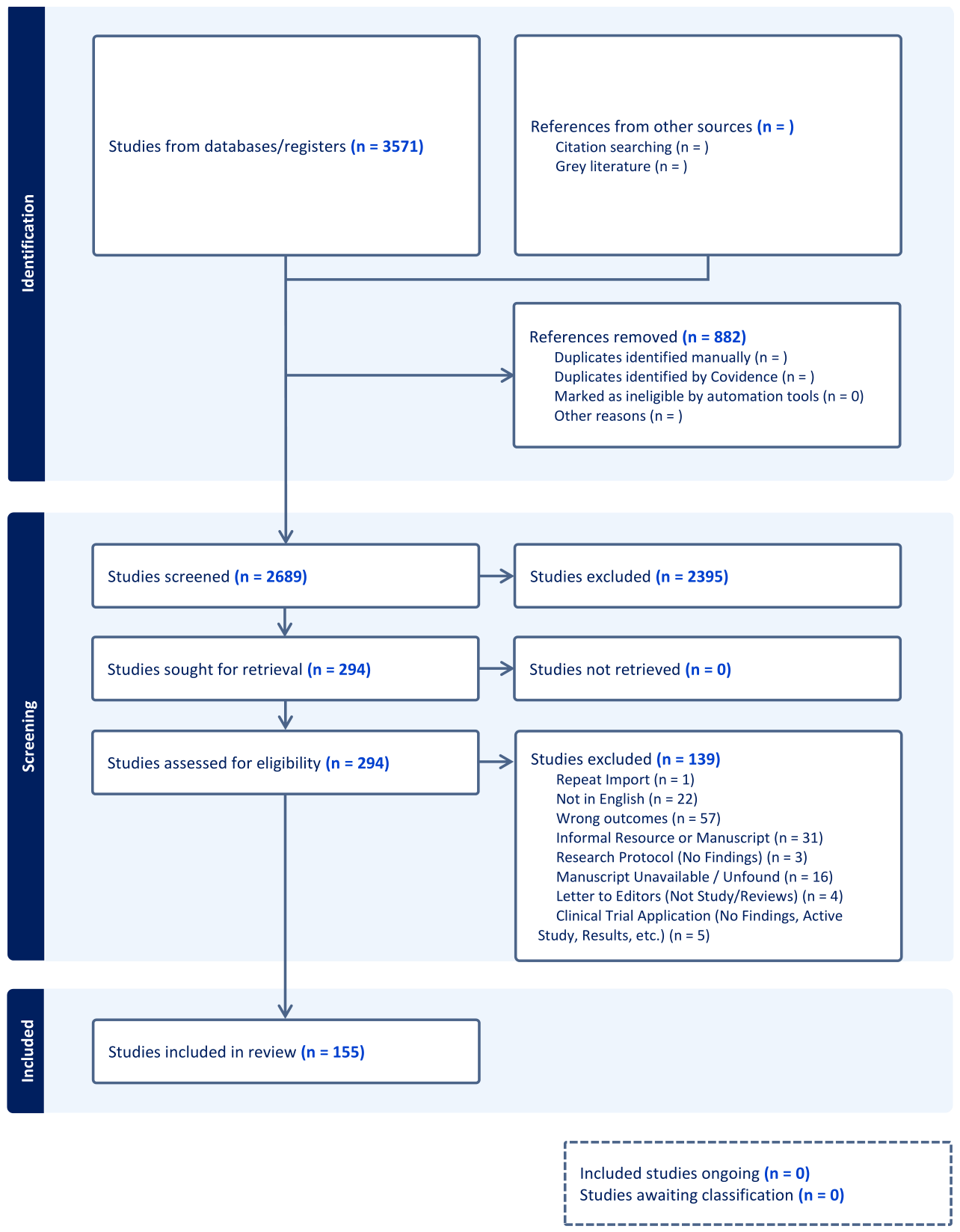
Figure 2.
The Impact of Vitamin D on Physical Activity. Vitamin D’s role in physical function and activity stems largely from its effects on musculoskeletal health, including muscle strength, balance, and reduction in injury risk, which are all essential for maintaining an active lifestyle.
Figure 2.
The Impact of Vitamin D on Physical Activity. Vitamin D’s role in physical function and activity stems largely from its effects on musculoskeletal health, including muscle strength, balance, and reduction in injury risk, which are all essential for maintaining an active lifestyle.
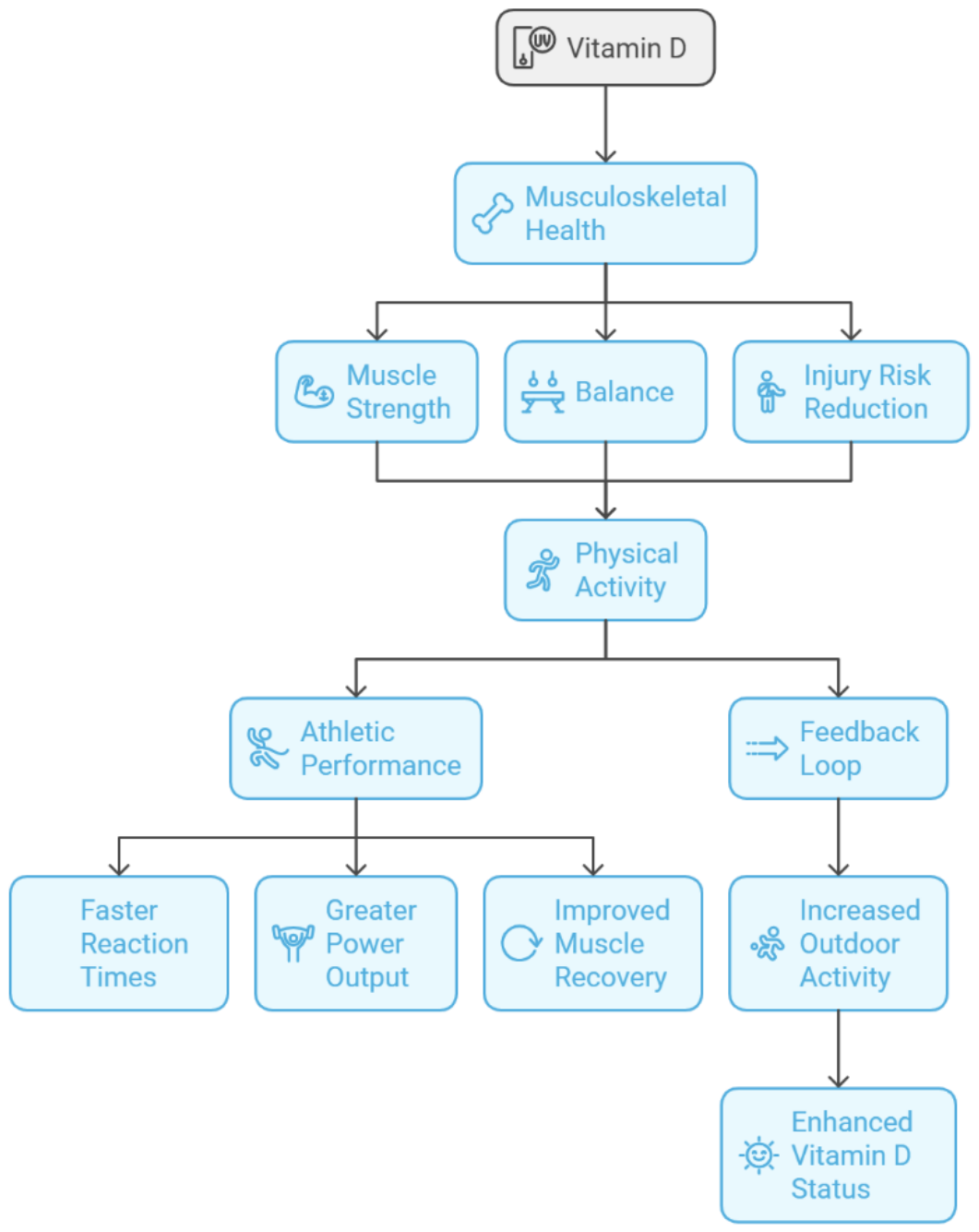
Figure 3.
The Impact of Physical Activity on Vitamin D Physical activity, especially when conducted outdoors, directly influences vitamin D status by increasing exposure to sunlight, which catalyzes the synthesis of vitamin D in the skin. Regular outdoor activities such as running, walking, cycling, or team sports significantly increase opportunities for UV exposure, enhancing vitamin D production.
Figure 3.
The Impact of Physical Activity on Vitamin D Physical activity, especially when conducted outdoors, directly influences vitamin D status by increasing exposure to sunlight, which catalyzes the synthesis of vitamin D in the skin. Regular outdoor activities such as running, walking, cycling, or team sports significantly increase opportunities for UV exposure, enhancing vitamin D production.


Table 1.
Study Inclusion and Exclusion Criteria.
| Inclusion Criteria | Exclusion Criteria |
|---|---|
|
|
|
|
|
|
|
|
Table 2.
Covidence Data Extraction Form.
| Data to Extract | Specific Material |
|---|---|
| General Data | Title |
| Authors | |
| Publication year | |
| Publication source | |
| Country | |
| Other notes | |
| Characteristics of Study | Research question(s) |
| Aim of study/Objectives | |
| Methods | |
| Study design | |
| Do you have concerns about study design (e.g., not rigorous, variables not well defined, not controlling for PA, no control group, etc.) | |
| Is primary outcome related to vitD & PA? | |
| If VitD & PA is not primary, explain inclusion rationale | |
| Is sun exposure quantified? | |
| Describe how sun exposure is discussed | |
| Study start date | |
| Study end date | |
| Funding source | |
| Potential conflicts of interest | |
| Participants | Population description |
| Inclusion criteria | |
| Exclusion criteria | |
| Recruitment methods | |
| Total n | |
| Results | Study conclusions |
| Clearly identify any relationship between vitD & PA discussed in this source | |
| Clearly identify potential confounding between vitD & PA discussed in this source (e.g. the health benefits of PA leading to a spurious or false relationship between vitD and the same health benefits) | |
| Clearly identify any other interactions between vitD & PA discussed in this source (e.g. skin color/race, veiling/religion, geography, etc.) | |
| How does this source contribute to your understanding of the issue under study? |
Table 3.
Included Study Characteristics.
| Study Characteristics | Manuscripts (N=154) |
|---|---|
| Publication Year | |
| 1992 | 2 |
| 2001 – 2005 | 4 |
| 2006 – 2010 | 24 |
| 2011 – 2015 | 53 |
| 2016 – 2020 | 58 |
| 2021 – Present | 14 |
| Study Design | |
| Case Control | 4 |
| Case Report | 1 |
| Cohort | 28 |
| Cross Sectional | 98 |
| Non-Randomized Experimental | 1 |
| Systematic Reviews | 9 |
| Randomized Control Trial | 7 |
| Prevalence | 1 |
| Text/Opinion | 2 |
| Unspecified | 4 |
Table 4.
Included Study Location (Alphabetical).
| Country | Number of Studies |
|---|---|
| Argentina | 1 |
| Australia | 22 |
| Austria | 1 |
| Bahrain | 1 |
| Belgium | 1 |
| Brazil | 12 |
| Canada | 2 |
| China | 3 |
| Cyprus | 2 |
| Denmark | 2 |
| Egypt | 3 |
| Finland | 2 |
| France | 1 |
| Germany | 3 |
| Greece | 5 |
| India | 5 |
| Indonesia | 2 |
| Iran | 6 |
| Ireland | 1 |
| Israel | 1 |
| Italy | 4 |
| Japan | 4 |
| Malaysia | 2 |
| Mexico | 2 |
| Morocco | 1 |
| Multiple Countries | 2 |
| Netherlands | 1 |
| New Zealand | 2 |
| Pakistan | 2 |
| Philippines | 1 |
| Poland | 5 |
| Portugal | 1 |
| Qatar | 2 |
| Saudi Arabia | 6 |
| South Korea | 5 |
| Spain | 2 |
| Sudan | 1 |
| Sweden | 2 |
| Switzerland | 3 |
| Tunisia | 1 |
| Turkey | 2 |
| UAE | 2 |
| UK | 5 |
| USA | 21 |
Disclaimer/Publisher’s Note: The statements, opinions and data contained in all publications are solely those of the individual author(s) and contributor(s) and not of MDPI and/or the editor(s). MDPI and/or the editor(s) disclaim responsibility for any injury to people or property resulting from any ideas, methods, instructions or products referred to in the content. |
© 2026 by the authors. Licensee MDPI, Basel, Switzerland. This article is an open access article distributed under the terms and conditions of the Creative Commons Attribution (CC BY) license (http://creativecommons.org/licenses/by/4.0/).
Copyright: This open access article is published under a Creative Commons CC BY 4.0 license, which permit the free download, distribution, and reuse, provided that the author and preprint are cited in any reuse.


