

Submitted:
18 May 2026
Posted:
19 May 2026
You are already at the latest version
Abstract
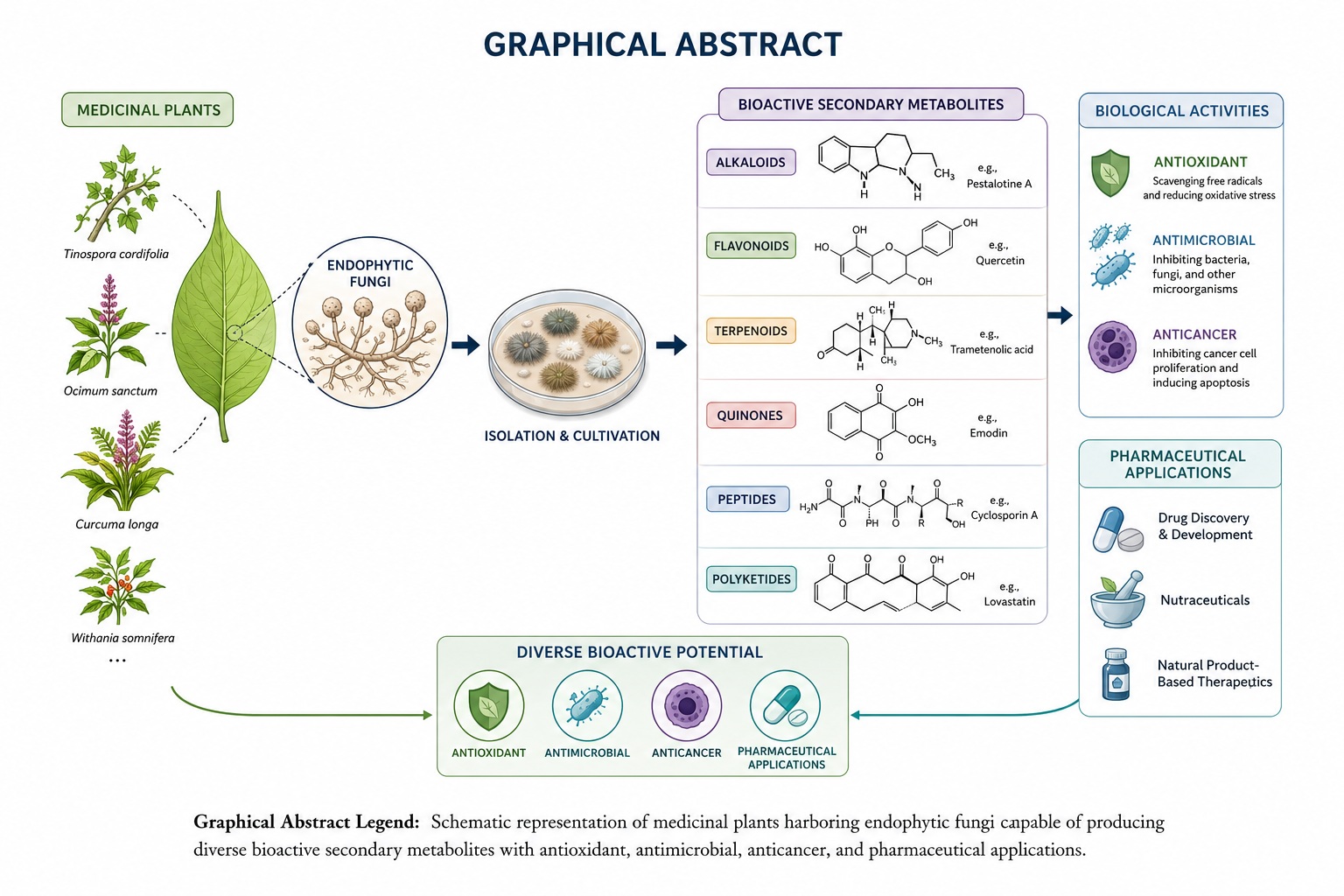
Endophytic fungi are microorganisms that reside asymptomatically within healthy plant tissues and establish complex symbiotic relationships with their host plants. In recent years, these microorganisms have gained increasing attention due to their remarkable ability to produce diverse secondary metabolites with significant biological and pharmacological activities. Numerous studies have demonstrated that endophytic fungi isolated from medicinal plants can synthesize bioactive compounds exhibiting antioxidant, antimicrobial, antiviral, anti-inflammatory, antidiabetic, and anticancer properties. Interestingly, some endophytes are capable of producing metabolites structurally similar or identical to those found in their host plants, including taxol, camptothecin, and various phenolic compounds. Compared with conventional plant extraction, endophytic fungi offer several advantages such as rapid growth, sustainable production, reduced environmental impact, and the potential for large-scale fermentation. These characteristics make endophytes promising alternative sources of natural products for pharmaceutical, cosmetic, agricultural, and industrial applications. This review summarizes the biological characteristics of endophytic fungi, methods for isolation and identification, and the major classes of bioactive compounds derived from fungal endophytes, with emphasis on their pharmacological significance and future biotechnological potential.
Keywords:
endophytic fungi
; bioactive compounds
; secondary metabolites
; medicinal plants
; pharmaceutical biotechnology
Copyright: This open access article is published under a Creative Commons CC BY 4.0 license, which permit the free download, distribution, and reuse, provided that the author and preprint are cited in any reuse.


