
Submitted:
15 May 2026
Posted:
18 May 2026
You are already at the latest version
Abstract
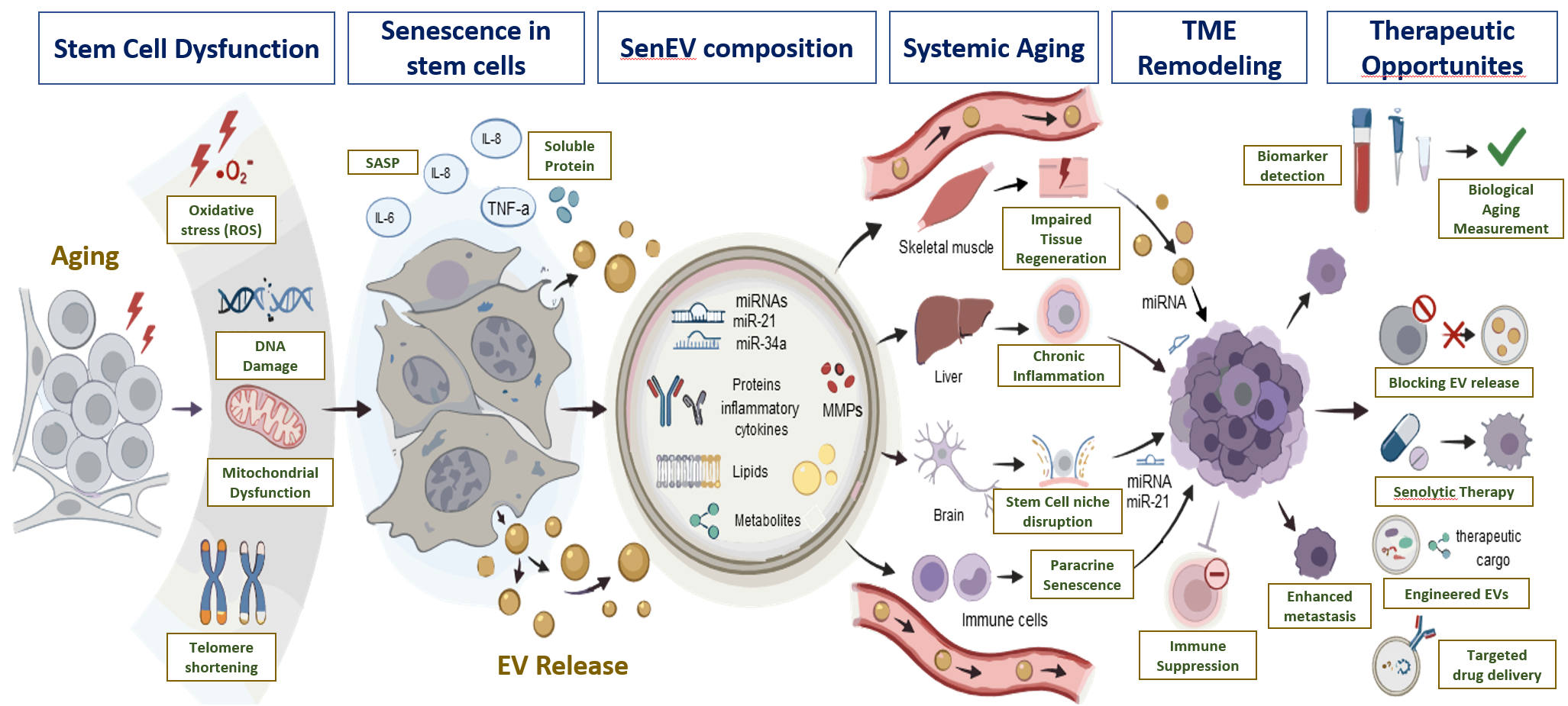
Aging causes exhaustion of stem cells (SCs), loss of regenerative potential, and thereby makes them susceptible to age-related diseases (ARDs), known as cellular senescence. Senescent stem cells (SenSCs) secrete Senescence-Associated Secretory Phenotypes (SASPs) that synergistically exacerbate inflammation. Alongside this, they secrete Senescence-Derived extracellular vesicles (SenEVs) that carry a diverse array of molecules that transmit senescence-inducing signals to distant cells and tissues throughout the body, intensifying the detrimental effects of ageing and fostering a pro-tumorigenic microenvironment (PTME). In this review, we comprehensively assess these EVs, their distinct microRNA (miRNA) landscape, protein cargo, including extracellular matrix (ECM) remodeling enzymes and inflammatory cytokines, lipid profiles, and metabolomic signatures. Critically, we elucidate how SenEVs drive systemic ageing through paracrine transmission of senescence, impairing tissue regeneration by propagating oxidative stress, disrupting stem cell niches, and contributing to organ-specific ageing. Furthermore, we discussed their role as pro-cancer factors by remodeling the tumor microenvironment (TME), as they carry oncogenic miR-21 and miR-34a, which promote immune evasion and facilitate metastatic spread. Given their pervasive influence, SenEVs offer significant therapeutic opportunities, ranging from biomarkers of biological ageing to strategies to block harmful EVs and to engineer therapeutic EVs for targeted delivery. Future directions on SenEV research should focus on standardization, single-cell EV biology, organ-specific EV mapping, multi-omics integration, and AI-driven research. This integrated perspective underscores the profound clinical and global relevance of SenEVs as innovative targets for combating cancer and ARDs.
Keywords:
senescent stem cell
; extracellular vesicles
; ageing
; cancer
; tissue regeneration
; biomarkers
; therapeutic strategies
Copyright: This open access article is published under a Creative Commons CC BY 4.0 license, which permit the free download, distribution, and reuse, provided that the author and preprint are cited in any reuse.


