

Submitted:
13 May 2026
Posted:
14 May 2026
You are already at the latest version
Abstract
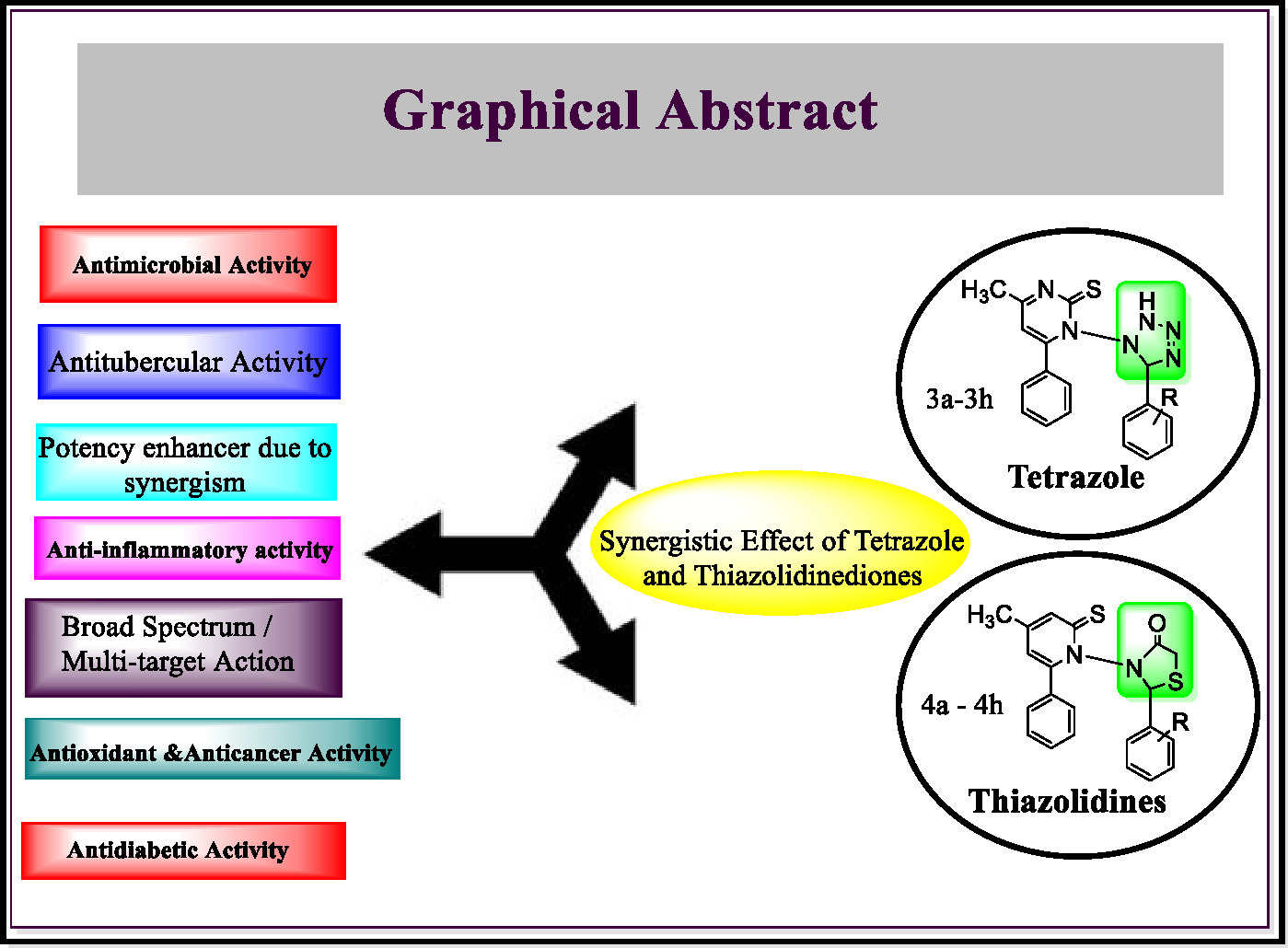
Introduction: Tetrazole and thiazolidine-4-one derivatives are important heterocyclic scaffolds with diverse pharmacological activities, including antimicrobial and antioxidant effects. This study focuses on the design and synthesis of novel Schiff base–derived analogues using a green synthetic approach to improve biological efficacy and reduce environmental impact. Methods: Schiff bases (2a–2h) were synthesized using tetrabutylammonium iodide as a green catalyst in aqueous medium. These were further converted into tetrazole (3a–3h) and thiazolidine-4-one (4a–4h) derivatives using sodium azide and thioglycolic acid. Structures were confirmed by FTIR, ¹H NMR, and ¹³C NMR spectroscopy. Antioxidant activity was evaluated using the DPPH assay, while antimicrobial activity was assessed by the zone of inhibition method. Molecular docking was performed against Penicillin-Binding Protein 4 (3ZG8), CYP51 (5V5Z), and 1OAF. Results: Compounds 2a, 2b, 3a, and 4a showed strong antifungal activity, exceeding standard drugs. Compounds 2d, 3b, and 4b exhibited superior antibacterial activity. Several derivatives demonstrated higher antioxidant activity than ascorbic acid. Docking studies confirmed stable ligand–protein interactions, with compound 4f showing the highest binding affinity. Discussion: Substituent variation influenced biological activity. Electron-donating and withdrawing groups affected potency. Docking results supported experimental findings and confirmed target interactions. The green synthesis improved efficiency and reduced environmental risk. Conclusion: These derivatives show promising antimicrobial and antioxidant potential. Compound 4f emerged as a lead candidate for further optimization and drug development.
Keywords:
schiff bases
; ionic liquids
; tetrazole analogues
; thiazolidine-4-one analogues
; antioxidant activity
; antimicrobial activity
; molecular docking
1. Introduction
A significant category of organic compounds Schiff's bases was first mentioned by Hugo Schiff in 1864[1]. Primary amines condense into carbonyl compounds that produce Schiff’s bases. These compounds have the structural characteristic of azamethine, and R1 can be heterocyclic, cycloalkyl, alkyl, or aryl[2]. The nitrogen analogue of -CHO or C=O in which the carbonyl group (>C = O) was swapped out for an azomethine imine group is called Schiff's base, usually referred as an imine or azomethine. Antimicrobial[3], antimalarial[4], anti-proliferative[5], anti-inflammatory[6], antiviral[4], and antipyretic[7] activities have also been proven for Schiff's bases.[8,9] Many different natural compounds include imine or azomethine groups. Such compounds must have an imine group for them to function biologically[10,11]. Schiff's bases are significant compounds due to their numerous industrial uses[12]. To protect polyvinyl chloride polymers against photo degradation by UV light, Schiff's bases are employed.[13,14] Moreover, incorporating them into polymer films, enhances the degradation of poly-methyl methacrylate and inhibits the photo degradation of polystyrene[11,12,17].
Thiazolidine is an organic heterocyclic molecule at position-3 amine group and at position-1 thioether group”. The chemical formula of this five-membered saturated ring is [(CH2)3NH]. S. Schubert was the first to discover the production of Thiazolidine carboxylic acid by reacting cysteine with different aldehydes[18]. Derivatives of thiazolidinedione has a special role in the area of medicinal chemistry. A widely studied heterocyclic derivative, thiazolidinedione has a diverse set of pharmacological characteristics, including wound healing[19], anti-tubercular[20], antiviral[21], antifungal[22], and anticonvulsant[23] properties [24] anti-inflammatory[6], anti-arthritic[25], antibacterial[4], and anticancer activity[26]. Compounds from the thiazolidinone series were synthesized due to their interesting and diverse pharmacological properties, including notable anti-proliferative activity. This constitutes an important research subject matter [27]. Understanding the molecular mechanisms behind PPAR-induced anti-cancer effects is an important subject of research. The involvement of PPAR-in carcinogenesis remains controversial since thiazolidinedione has anti-neoplastic properties that are distinct from those of PPAR. The primary structure in the control of many different biological actions is thiazolidinedione. In addition to several additional processes, enzymatic activity, and receptor-mediated mechanisms are also involved in the biological research of thiazolidinedione. Thiazolidinedione have been studied biologically, and it has been shown that substitution at positions 2, 3, and 5 imparts distinct activity. Representatives of the five-membered heterocyclic organic class, Thiazolidine have found use in ion receptors[28], biological dyes[29], materials, and medicine. Thiazolidine-2-thione, a common Thiazolidine derivative, is a significant organic intermediate used in agrochemicals and medicines. The two tautomer’s of thiazolidine-2-thione, thione, and thiol, have also been extensively employed as asymmetric auxiliaries in catalytic synthesis[30]. Thiazolidine is the parent chemical substance of thiazolidinone, which is a significant heterocyclic compound containing nitrogen, and sulphur in a five-membered nucleus. It is said to be a mystical moiety with almost all biological activities[31]. Thiazolidinone-derived compounds are synthesized due to their diverse and noteworthy pharmacological activities, including anti-proliferative and anti-inflammatory effects, making them an important focus of research[27].
Since four electrons from the ring and one pair from the nitrogen are lent, Huckel's criterion is satisfied, defining the tetrazolide as a 5-membered aza structure with six π electrons. Tetrazole is acidic, much like carboxylic acids, although ring tetrazoles and carboxylic acids do not undergo the same annular tautomerization[32]. In 1885, Bladin discovered the tetrazoles chemical compounds[33]. Numerous favourable characteristics of tetrazoles include high acidity, low basicity, plenty of nitrogen atoms, good stability, and a high formation enthalpy. They are employed as N-containing compounds, lipophilic spacers in drug design, effective antitumor and anticancer drugs, peptide inhibitors, starting materials for propellant production, and analytical reagents in science[34,35].
Tetrazole rings are employed to make innovative drugs since they are the heterocyclic analogue of substances like carboxylic acid and cis-amide. It is also quite stable in the body's metabolism. Tetrazoles also function by piling up on top of target tissue locations that are recognized by receptors. A crystalline, light-yellow powder with no odour, 1H-tetrazole has this appearance. The melting point of tetrazole is between 155 and 157 °C. When tetrazoles are heated, they decompose and produce harmful nitrogen fumes. Tetrazoles, in contrast to other azoles have both strong acids and weak bases. Tetrazole that hasn't been altered behaves a lot like an organic acid, with a pKa value that's comparable to acetic acid [33].
Tetrazole derivatives are a notable family of heterocyclic nuclei rich in nitrogen that have a lot of uses in medical chemistry. The tetrazole moiety is a helpful pharmacophore in branded drugs such as Lasortan[36], Irbesartan[37], and Tomelukast[38] that are given for the treatment of asthma[39], high blood pressure[37], heart failure[37], and diabetic[40] kidney disease[41]. Additionally, this pharmacophore is frequently employed as a suitable isosteres of the carboxylic acid functional group in drug design investigations. Several effective synthetic techniques have also been developed as a result of the use of tetrazole derivatives as significant, widely used molecules in materials chemistry[42], catalysis[43] and energetic applications, synthetic organic chemistry, and coordination chemistry[44] as ligands.[45]. Tetrazole is an aromatic aza pyrazole. With 1-carbon, 4-nitrogens, 2-hydrogens, & 2-double bonds, it is a five-membered ring complex. There is no tetrazole in the natural world. Tetrazole exhibits acidic character because the presence of four nitrogen atoms stabilizes its conjugate base through resonance delocalization, resulting in a pKa value comparable to that of carboxylic acids. Although tetrazole derivatives are widely recognized as synthetic compounds with diverse applications in medicinal and materials chemistry, naturally occurring tetrazole structures are extremely rare, with only a few examples reported in microbial metabolites. Despite their high nitrogen content, tetrazoles and most of their derivatives are relatively stable upon heating, under microwave irradiation, and in the presence of various chemical reagents such as oxidants, acids, bases, alkylating agents, and dienophiles. Naturally occurring molecules containing the tetrazole fragment are virtually absent; however, their presence has been reported in the metabolic products of certain protozoa. It has also been postulated that tetrazole and other poly-nitrogen heterocycles could form under extra-terrestrial conditions, where hydrocarbons and nitrogen coexist in planetary atmospheres or surfaces[46,47,48,49,50]. The simplest form of tetrazole is 1H-tetrazole (CN₄H₂), is a white to pale-yellow crystalline solid with a mild, distinctive odour. It dissolves easily in both water and alcohol. The molecule shows acidic behaviour because its four nitrogen atoms help stabilize the negative charge through resonance. According to Hückel’s rule, tetrazole’s aromatic character comes from six π-electrons in which two provided by the lone pair on one nitrogen atom and four from the remaining atoms in the ring[51]. Due to the intense inductive effects (-I) of pulling electrons outweighing their mesomeric effects (+M), tetrazole rings are deactivating groups[52]. This characteristic makes tetrazole useful as an isosteric replacement[53] for various functional groups in the synthesis of physiologically active compounds. In recent years, tetrazole has become more and more popular, especially as an alternative to carboxylic acids[54,55]. The biological properties of tetrazole are due to its greater metabolic stability as compared to the acid function[16]. Tetrazole has a wide range of uses including explosives[56], propellants[57], and catalysts. Despite this, their diverse pharmacological activities along with different electrical properties enabled them create an identity in the realm of medicinal chemistry. In addition, these compounds possess anti-inflammatory[54], analgesic[58], anti-cancer[54], anti-convulsant[59], anti-hypertensive[59], hypoglycaemic[40], anti-parasitic[60], and antiviral properties[61], covid-19[62], antibacterial[59], antifungal[59], antioxidant, Alzheimer disease[63], and CNS[33], anti-proliferative activity against glioblastoma cells[64].
In light of this, efforts are being made to create a feasible and affordable process for synthesizing tetrazole and thiazolidinone compounds from Schiff bases[65]. Consequently, when an ionic liquid is used as a catalyst at room temperature with a free solvent, it is beneficial for the environment and produces positive results in a short time. The findings of the synthesis of tetrazole and thiazolidine-4-ones were juxtaposed to other known techniques with aspects of reaction time and yield.
Tetrabutylammonium iodide (TBAI) has gained significant attention as an efficient ionic liquid–type catalyst or co-catalyst in organic synthesis owing to its ability to enhance reaction rates, improve selectivity, and facilitate environmentally benign (green) processes. As a quaternary ammonium salt, TBAI exhibits high thermal stability and excellent solubility in polar solvents such as methanol, while remaining poorly soluble in non-polar media like ethyl acetate. These characteristics allow for easy product separation, catalyst recovery, and reuse, making it a sustainable alternative to conventional homogeneous catalysts. Furthermore, TBAI often functions synergistically with other catalytic systems, improving overall efficiency and conversion yields in various transformations, including oxidation, coupling, and transesterification reactions. Its dual nature as both a phase-transfer catalyst and ionic liquid component makes it particularly valuable in developing greener and more efficient catalytic methodologies[66,67,68].
Tetrazole and thiazolidinedione-4-one analogues have attracted keen interest in medicinal chemistry because of their wide-ranging pharmacological activities, particularly their antioxidant effects, which highlight their therapeutic potential in managing oxidative stress-related conditions. Tetrazole derivatives are known for diverse bioactivities, containing antioxidant, antifungal, antibacterial, anti-inflammatory, and anticancer activities. Compounds such as those synthesized from quinaldic acid have demonstrated notable antioxidant activity in preclinical studies, indicating their promise as future pharmaceutical agents. Additionally, the tetrazole moiety is present in several marketed drugs like Losartan and Valsartan, which are primarily used as antihypertensive agents; although their main mechanism is not antioxidant-related, the tetrazole ring contributes to potential antioxidant effects that warrant further investigation. These compounds are particularly valuable in drug design because they can act as bioisosteres for carboxylic acids, improving lipophilicity and bioavailability[69,70,71].
On the other hand, thiazolidinedione-4-one (TZD) derivatives are well-established for their antioxidant properties along with antidiabetic, anti-inflammatory, and anticancer activities. Many TZD derivatives have progressed to clinical use, primarily for the treatment of type-2 DM, where their antioxidant and anti-inflammatory activities contribute to therapeutic efficacy. Notable marketed TZD drugs include pioglitazone, a PPAR-γ agonist known for improving insulin sensitivity and exhibiting antioxidant effects; rosiglitazone, another PPAR-γ agonist with similar properties; and newer compounds like lobeglitazone, which offer improved safety profiles. These TZD drugs reduce oxidative stress in metabolic disorders, highlighting the importance of their antioxidant activity in their pharmacological profile. Overall, while tetrazole derivatives remain largely in the experimental stage, thiazolidinedione-4-one derivatives represent a clinically relevant class of drugs demonstrating significant antioxidant activity, emphasizing their potential for further therapeutic development in oxidative stress-related diseases[72,73,74].
Tetrazole and thiazolidinedione-4-one derivatives are extensively studied for their antimicrobial potential, owing to their heteroaromatic and electron-rich functional groups that enable interaction with microbial enzymes and cell membranes. Tetrazole derivatives, particularly triazole–tetrazole hybrids, have demonstrated strong antifungal activity by inhibiting the lanosterol 14α-demethylase (CYP51) enzyme, a key target in ergosterol biosynthesis. This mechanism is similar to that of clinically approved antifungal azoles such as Fluconazole, Itraconazole, Voriconazole, Posaconazole, and the tetrazole-containing antifungal Isavuconazole, which disrupt fungal cell membrane integrity by depleting ergosterol[75]. Isavuconazole a clinically approved broad-spectrum antifungal drug containing a tetrazole moiety, used in the treatment of mucormycosis and invasive aspergillosis[76]. Isavuconazole offers advantages such as high oral bioavailability, predictable pharmacokinetics, and reduced hepatotoxicity compared with older triazole antifungals. Moreover, tetrazole scaffolds are also present in marketed drugs beyond antifungals, including the widely used antihypertensive Losartan and the antibiotic Cefotetan, highlighting the pharmacological versatility of the tetrazole ring. In addition, tetrazole-based antibacterial compounds show efficiency contrary to Gram-positive and Gram-negative bacteria, primarily through inhibition of bacterial DNA gyrase and topoisomerase IV, comparable to marketed fluoroquinolone drugs such as Ciprofloxacin, Levofloxacin, and Moxifloxacin. On the other hand, thiazolidinedione-4-one (TZD-4-one) derivatives have been reported to exhibit potent antimicrobial effects through multiple mechanisms, including disruption of bacterial cell walls, inhibition of fungal ergosterol synthesis, and interference with microbial oxidative stress pathways. Importantly, several TZD-based drugs are already marketed, such as the antidiabetic agents Pioglitazone, Rosiglitazone, and Troglitazone, which contain the TZD-4-one pharmacophore and have also demonstrated secondary antioxidant, antibacterial, and antifungal properties in various studies. Several TZD-based hybrids incorporating azoles or tetrazoles are under active development as next-generation antimicrobial agents[77]. Collectively, the antimicrobial activity of tetrazole and thiazolidinedione-4-one derivatives, along with the clinical success of marketed drugs like Isavuconazole (tetrazole antifungal), Losartan (tetrazole antihypertensive with antibacterial reports), Cefotetan (tetrazole cephalosporin antibiotic), and Pioglitazone, Rosiglitazone, Troglitazone (TZD antidiabetics with antimicrobial effects), highlights the clinical relevance of these heterocycles as valuable scaffolds for developing next-generation antimicrobial agents. Rosiglitazone has shown synergistic antifungal effects when combined with azole drugs such as fluconazole, enhancing inhibition of Candida albicans biofilm formation[78]. Troglitazone is a TZD-4-one derivative though withdrawn from the market due to hepatotoxicity, demonstrated inhibitory activity against fungal mitochondrial pathways in preclinical studies[79,80]. Based on literature reports demonstrating significant antioxidant and antimicrobial potential of tetrazole and thiazolidinedione scaffolds, the present study focuses on the rational design and synthesis of novel tetrazole and thiazolidine-4-one based Schiff bases. The work aims to explore structural features responsible for redox modulation and microbial growth inhibition through systematic chemical modification. The synthesized compounds are evaluated for in vitro antioxidant activity using established free radical scavenging assays and for antimicrobial efficacy against selected bacterial and fungal strains. In parallel, molecular docking studies are conducted to elucidate binding interactions with relevant biological targets, providing mechanistic insight and supporting the experimental findings at the molecular level. A list of Tetrazole and Thiazolidinedione-4-one (TZD-4-one) hybrids containing experimental medications that have been approved by the FDA is presented in Table 1 and Table 2, respectively, highlighting the therapeutic potential of these compounds in various diseases.
2. Material and Methods
Chemistry
All chemicals and reagents came from (British Drug Houses) BDH and Fluka. Open capillaries on a Thiele tube Fisher John's apparatus was used to determine the melting points of the products. KBr pellets were used to record IR spectra on a Shimadzu FTIR-8400s Spectrophotometer. The 1H and 13C NMR spectra were obtained using a Bruker Avance 400/AvIII HD300 (FT-NMR) spectrometer using acetone-d6 and CDCl3 as solvents. Acetone-d6 and chloroform-d were used as the solvent at 1400 (400 MHz).
The mass spectra were recorded using a Waters Alliance e2695/HPLCTQD mass spectrometer (ESI-MS). The elemental analysis was performed using the Euro Vector analyzer. Each of the produced chemicals analyses for C, H, O, and N were around five percent of the expected ranges. The compounds' uniformity on SiO₂.Al₂O₃.H₂O gel 60 F254 (Merck), as detected via iodine vapors & Ultraviolet rays at 254 nm, was described using TLC. Each of the reagents was chemically pure or of analytical grade.
Molecular Docking Study
Methodology
Molecular docking studies were performed using the licensed version of Discovery Studio Client (Biovia, Dassault Systèmes, v21.1.0). The 2D chemical structures of all synthesized compounds were drawn using ChemDraw Professional 16.0 (PerkinElmer Informatics, USA) [https://perkinelmerinformatics.com/products/research/chemdraw/]. Docking was performed using the LibDock protocol integrated within Discovery Studio, and the docking results were visualized and analyzed using Discovery Studio Visualizer[81]. The crystal structures of the target proteins were retrieved from the Protein Data Bank [https://www.rcsb.org/]. For antibacterial activity, compounds 2d, 3b, and 4b were docked into the active site of Penicillin-Binding Protein 4 (PDB ID: 3ZG8), where amoxicillin (co-crystallized ligand) served as the standard, and docking was carried out at the binding pocket occupied by amoxicillin. For antifungal activity, compounds 2a, 2b, 3a, and 4a were docked with Sterol 14-α-demethylase (CYP51, PDB ID: 5V5Z) using itraconazole as the reference ligand. For antioxidant activity, compounds 2h, 3c, 3f, 4b, 4d, and 4f were docked with PDB ID: 1OAF, with ascorbic acid as the standard. The chosen PDB IDs (3ZG8, 5V5Z, and 1OAF) were selected because they are co-crystallized with standard drugs or natural ligands, showing strong biological relevance to the tested activities—3ZG8 with amoxicillin (antibacterial), 5V5Z with itraconazole (antifungal), and 1OAF with a known inhibitor (antioxidant). These validated structures ensure accurate and meaningful docking results.
Prior to docking, proteins were prepared by removing water molecules, adding polar hydrogens, and optimizing the binding sites, while ligands were energy-minimized. Docking scores (LibDock scores) were used to evaluate binding affinities, and two-dimensional interaction diagrams were generated to analyze hydrogen bonding, hydrophobic interactions, and π–π stacking, with particular emphasis on the interaction profile of compound 2d against penicillin-binding protein-4 (PBP4).
Pharmacological Assessment
The pharmacological assessment of the synthesized tetrazole and thiazolidinedione-4-one derivatives was performed to determine their potential therapeutic efficacy. This involved a series of in vitro experiments to evaluate antifungal, antibacterial, and antioxidant activities. All chemicals and The analytical-grade reagents that were utilised came from standard suppliers.
Antifungal Activity Assessment
The cup plate method was used to assess the antifungal efficacy of the synthesized compounds. The fungal strains used in the study included Aspergillus niger and Fusarium molariform. Sterile Petri dishes containing suitable agar medium were inoculated with the fungal cultures. Wells were created in the agar plates, into which measured concentrations of the synthesized compounds were added. Fungigural and Griseofulvin, two common antifungal medications, served as reference drugs. The plates were incubated under controlled conditions, and fungal growth inhibition was measured by the zone of inhibition around the wells.
Antibacterial Activity Assessment
The cup plate method was used to assess the compounds antibacterial activity. Bacterial strains used included Salmonella paratyphi-A, Escherichia coli, and Staphylococcus aureus. The bacterial cultures were spread on sterile agar plates, and wells were loaded with defined concentrations of the test compounds. Standard antibacterial drugs, Penicillin and Ampicillin, were used for comparison. The plates had been incubated at optimum temperatures, and zones of inhibition were measured in millimeters to assess antibacterial activity.
Antioxidant Activity Assessment
The DPPH (2,2-diphenyl-1-picrylhydrazyl) free radical scavenging assay was used to evaluate the antioxidant capacity of synthetic derivatives. The test depends on the, resulting in a color change from purple to pale yellow. Test solutions of the compounds at various concentrations were prepared and mixed with a methanolic solution of DPPH. The reaction mixture was incubated in the dark at room temperature, and the decrease in absorbance was measured spectrophotometrically. Ascorbic acid was used as a standard reference compound. The percentage of radical scavenging activity was calculated to determine the antioxidant potential of the compounds.
Experimental
Synthesis of 1a Compounds
In 15 ml of purified water containing a small amount of ionic liquid, benzoyl acetone (0.02 mole) and thiosemicarbazone (0.02 mole) were amalgamated, and the mixture was refluxed for 50 minutes. After filtration, the solid mixture has separated & then recrystallized with C2H5OH once more, yielding a light-yellow crystal with an MP of 161–163°C and 97% yield.
Synthesis of Schiff bases (2a-2h)
Compound (1a) (0.02M) & an additional olefinic aldehyde (0.02M) was mixed for 37 minutes in 15 milliliters of distilled water (DW) with a minute quantity of ionic liquid. The solvent was evaporated under vacuum condition, then after subsequent addition of methanol facilitated the formation of crystalline solid. Table 3 & Table 4 deal with physical properties.
Synthesis of Tetrazole Derivatives (3a-3h)
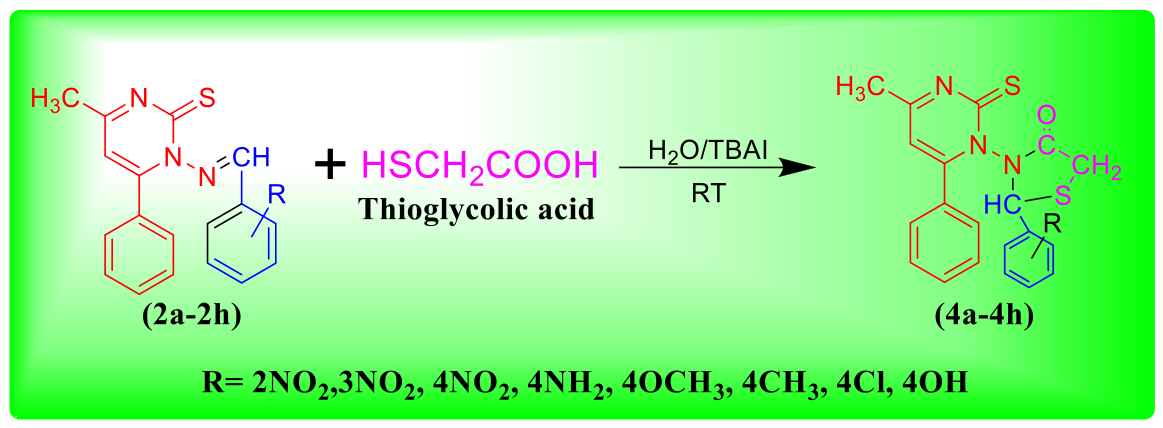
Synthesis of Thiazolidinones Derivatives (4a-4h)
Thioglycolic acid (0.004 M) was dissolved in 10 mL of distilled water with the synthesized analogue of (2a-h) (0.002M). After giving the combination a 72-minute reflux and treating it with potassium bicarbonate, the chemical was created. The finished material was filtered and crystallized from ethanol. Table 7 and Table 8 include the physical parameters of (4a-4h) thiazolidinone derivatives.
Results and Discussion
Chemistry
When the products were measured utilising open capillaries on Buchi equipment, the MP (◦C) was discovered to be inaccurate. KBr pellets were used to construct the infrared spectrum on a Shimadzu-8400S FT-IR Spectrophotometer. Tetramethylsilane was utilised as an internal standard for the analysis of the 1H and 13C NMR spectra in chloroform-d using a Bruker Avance-400/AvIII HD 300 MHz (FT-NMR) spectrometer. The resonance frequencies of the 1H and 13C were 300 and 75 M-hertz, respectively. D2O exchange has been used to support the spectrum assignment of the N–H protons. A Waters Alliance e-2695/HPLC TQ-D mass spectroscopy was used to record the mass spectrum. The Heraus CHN quick analyser was used to complete the elemental analysis. Every substance yielded C, H, and N analyses that fell within 0.5% of the expected range. The homogeneity of the analogues on aluminium silica gel 60 F254 (Merck), which were detected by UV rays (254 nm) and iodine fumes, was examined using TLC. Every component was pure, either chemically or analytically.
In DW with a catalytic quantity of ionic liquids, “1-amino-4-methyl-6-phenyl pyrimidine-2- (1H)-thione” (1a) was combined by another olefinic aldehyde to form the novel Schiff bases. The novel azomethine (C=N) group is responsible for the formation of the FT-IR spectra of (2a-2h) revealed new peaks at 1580-1606 cm-1, as well as demonstrated the absence of a carbonyl group band. There are some spectral data in Table 6. Tetrazole compounds had been synthesized by combining (2a-2h) with sodium azide in THF. The FT-IR absorption bands at (1580-1599) cm-1 disappearing is a strong indicator that the reaction was successful. The (C=N) imine group's stretching frequency causes these absorption bands. Additionally, because of (N=N), the FT-IR band of tetrazole showed unique absorption bands at (1441-1499) cm-1.
The FT-IR spectra of compounds (3a–3h) showed characteristic stretching bands for the azide group in the range of 2077–2360 cm⁻¹, as summarized in Table 6, which also reports the yields and spectral data. Additionally, Schiff bases (2a–2h) were reacted with mercaptoacetic acid (MAA) in distilled water to synthesize thiazolidine-4-one derivatives (4a–4h), as illustrated in Figure 1. The FT-IR spectra of these derivatives exhibited sharp peaks at 1724–1700 cm⁻¹, corresponding to the imide (C=O) stretching vibrations, providing clear evidence of the successful formation of the thiazolidine-4-one compounds.
1-Amino-4-methyl-6-phenylpyrimidine-2-(1H)-thione Compound (1a).
M.P.161-163 0C; eluent- n-hexane/ethyl acetate 70:30 v/v, Rf = 0.77; FT-IR (KBr, cm⁻¹): 3401–3267 (br, NH₂ stretching), 3198 (═C–H aromatic), 2998 (C–H aliphatic), 1598 (C═N stretching, pyrimidine ring), 1081 (C═S stretching), 936 (N–N vibration), 760–700 (Ar–H out-of-plane bending); 1H NMR (CDCl₃, 400 MHz): δ = 7.30–7.37 (m, 5H, Ar–H), 5.96 (s, 1H, H–C=C), 3.45–3.40 (d, 2H, NH₂), 2.04 (s, 3H, CH₃); ¹³C NMR (CDCl₃, 400 MHz): δ = 175.5 (C=S), 155.4 (C=N), 144.1, 128.7, 128.0, 124.0 (Ar-C), 95.3 (C=C-H), 55.2 (C=C), 16.1 (CH₃); EIMS Found- m/z: 219.06 [M+H] + C11H11N3S. Calculated, m/z: 218.07. Elemental Analysis: C, 60.80; H, 5.10; N, 19.34; S, 14.75.
(E)-4-methyl-1-((2-nitrobenzylidene)amino)-6-phenylpyrimidine-2(1H)-thione (2a).
M.P. 227-229 0C; eluent-n-hexane/ethyl acetate 70:30 v/v, Rf = 0.64; FT-IR (KBr, cm⁻¹): 3145 (═C–H aromatic), 2981 (C–H aliphatic), 1596 (C═N azomethine), 1521 (NO₂ asymmetric stretching), 1342 (NO₂ symmetric stretching), 1227 (C═S stretching), 1026 (N–N vibration), 760–700 (Ar–H out-of-plane bending); ¹H NMR (CDCl₃, 400 MHz): δ = 7.18–7.85 (m, 9H, Ar–H), 7.42 (d, 2H, Ar–H, p-chlorophenyl), 5.92 (s, 1H, CH–N, thiazolidinone), 4.12 (d, 1H, CH₂–S), 3.78 (d, 1H, CH₂–S), 2.32 (s, 3H, CH₃); ¹³C NMR (CDCl₃, 100 MHz): δ = 175.8 (C=O, thiazolidinone), 172.6 (C=S), 161.9 (C=N, pyrimidine), 145.3, 138.7 (ipso Ar–C), 134.6 (C–Cl), 129.8, 128.9, 128.2, 127.4, 126.8 (Ar–C), 63.5 (CH, thiazolidinone), 34.2 (CH₂–S), 16.3 (CH₃); EIMS Found- m/z: 350.08 [M+H]+ C18H14N4O2S. Calculated, m/z: 350.01, Elemental Analysis: C, 61.70; H, 4.03; N, 15.99; O, 9.13; S, 9.15.
(E)-4-methyl-1-((3-nitrobenzylidene)amino)-6-phenylpyrimidine-2(1H)-thione (2b).
M.P. 187-189 0C; eluent-n-hexane/ethyl acetate 70:30 v/v, Rf = 0.68; FT-IR (KBr, cm⁻¹): 3140 (═C–H aromatic), 2985 (C–H aliphatic), 1590 (C═N azomethine), 1520 (NO₂ asymmetric stretching), 1338 (NO₂ symmetric stretching), 1230 (C═S stretching), 1085 (N–N vibration), 760–705 (Ar–H out-of-plane bending); ¹H NMR (CDCl₃, 400 MHz): δ = 7.20–7.88 (m, 9H, Ar–H), 7.10 (d, 2H, Ar–H, p-substituted phenyl), 5.95 (s, 1H, CH–N, thiazolidinone), 4.15 (d, 1H, CH₂–S), 3.80 (d, 1H, CH₂–S), 3.78 (s, 3H, OCH₃), 2.34 (s, 3H, CH₃); ¹³C NMR (CDCl₃, 100 MHz): δ = 175.6 (C=O, thiazolidinone), 172.4 (C=S), 161.8 (C=N, pyrimidine), 158.9 (Ar–C–OCH₃), 145.1, 138.5 (ipso Ar–C), 130.2, 129.6, 128.8, 128.1, 127.3, 126.7 (Ar–C), 63.4 (CH, thiazolidinone), 55.3 (OCH₃), 34.1 (CH₂–S), 16.2 (CH₃); EIMS Found- m/z: 350.08 [M+H]+ C18H14N4O2S. Calculated, m/z: 350.01, Elemental Analysis: C, 61.70; H, 4.03; N, 15.99; O, 9.13; S, 9.15.
(E)-4-methyl-1-((4-nitrobenzylidene)amino)-6-phenylpyrimidine-2(1H)-thione (2c)
M.P. 235-237 0C; eluent-n-hexane/ethyl acetate 70:30 v/v, Rf = 0.78; FT-IR (KBr, cm⁻¹): 3089 (═C–H aromatic), 2986 (C–H aliphatic), 1580 (C═N azomethine), 1513 (NO₂ asymmetric stretching), 1330 (NO₂ symmetric stretching), 1270 (C═S stretching), 1085 (N–N vibration), 760–710 (Ar–H out-of-plane bending); ¹H NMR (CDCl₃, 400 MHz): δ = 7.22–7.86 (m, 9H, Ar–H), 7.05 (d, 2H, Ar–H, p-tolyl), 5.94 (s, 1H, CH–N, thiazolidinone), 4.14 (d, 1H, CH₂–S), 3.79 (d, 1H, CH₂–S), 2.35 (s, 3H, Ar–CH₃), 2.31 (s, 3H, CH₃, pyrimidine); ¹³C NMR (CDCl₃, 100 MHz): δ = 170.8 (C=O, thiazolidinone), 164.5 (C=N, pyrimidine), 158.9 (C=N, pyrimidine), 145.2, 138.6, 136.9 (Ar–C), 133.4, 131.2, 129.8, 128.7, 127.9, 126.5 (Ar–CH), 123.4 (Ar–C), 63.1 (CH–N, thiazolidinone), 34.8 (CH₂–S), 21.4 (Ar–CH₃), 19.7 (CH₃, pyrimidine). EIMS Found- m/z: 350.08 [M+H]+ C18H14N4O2S. Calculated, m/z: 350.01, Elemental Analysis: C, 61.70; H, 4.03; N, 15.99; O, 9.13; S, 9.15.
(E)-1-((4-aminobenzylidene)amino)-4-methyl-6-phenylpyrimidine-2(1H)-thione (2d)
M.P. 97-99 0C; eluent-n-hexane/ethyl acetate 70:30 v/v, Rf = 0.66; FT-IR (KBr, cm⁻¹): 3473–3215 (br, NH₂ stretching), 3076 (═C–H aromatic), 2963 (C–H aliphatic), 1606 (C═N azomethine), 1214 (C═S stretching), 1103 (N–N vibration), 760–700 (Ar–H out-of-plane bending); ¹H NMR (CDCl₃, 400 MHz): δ = 7.22–7.86 (m, 9H, Ar–H), 7.05 (d, 2H, Ar–H, p-tolyl), 5.94 (s, 1H, CH–N, thiazolidinone), 4.14 (d,1H, CH₂–S), 3.79 (d, 1H, CH₂–S), 2.35 (s, 3H, Ar–CH₃), 2.31 (s, 3H, CH₃, pyrimidine); ¹³C NMR (CDCl₃, 100 MHz): δ = 171.0 (C=O, thiazolidinone), 165.1 (C=N, pyrimidine), 159.3 (C=N, pyrimidine), 145.6, 139.1, 137.4 (Ar–C), 133.8, 131.6, 130.1, 129.0, 128.3, 127.1, 126.8 (Ar–CH), 123.9 (Ar–C), 63.4 (CH–N, thiazolidinone), 35.2 (CH₂–S), 21.6 (Ar–CH₃), 19.9 (CH₃, pyrimidine); EIMS Found- m/z: 320.11 [M+H]+ C18H16N4S. Calculated, m/z: 320.11, Elemental Analysis: C, 67.47; H, 5.03; N, 17.49; S, 10.01.
(E)-1-((4-methoxybenzylidene)amino)-4-methyl-6-phenylpyrimidine-2(1H)-thione (2e).
M.P.145-147 0C; eluent- n-hexane/ ethyl acetate 70:30 v/v, Rf = 0.89; FT-IR (KBr, cm⁻¹): 3113 (═C–H aromatic), 2986 (C–H aliphatic), 1585 (C═N azomethine), 1284 (C═S stretching), 1224–1118 (C–O–C stretching, methoxy), 1084 (N–N vibration), 760–700 (Ar–H out-of-plane bending); ¹H NMR (CDCl₃, 400 MHz): δ = 7.20–7.85 (m, 9H, Ar–H), 7.04 (d, 2H, Ar–H, p-tolyl), 5.92 (s, 1H, CH–N, thiazolidinone), 4.12 (d, 1H, CH₂–S), 3.77 (d, 1H, CH₂–S), 2.34 (s, 3H, Ar–CH₃), 2.29 (s, 3H, CH₃, pyrimidine); ¹³C NMR (CDCl₃, 100 MHz): δ = 170.9 (C=O, thiazolidinone), 165.3 (C=N, pyrimidine), 159.6 (C=N, pyrimidine), 146.0, 139.4, 137.8 (Ar–C), 134.1, 131.9, 130.4, 129.2, 128.6, 127.4, 126.9 (Ar–CH), 124.2 (Ar–C), 63.6 (CH–N, thiazolidinone), 35.4 (CH₂–S), 21.7 (Ar–CH₃), 20.1 (CH₃, pyrimidine); EIMS Found- m/z: 337.12 [M+H]+ C19H17N3OS. Calculated, m/z: 335.11 Elemental Analysis: C, 68.04; H, 5.11; N, 12.53; O, 4.77; S, 9.56.
(E)-4-methyl-1-((4-methylbenzylidene)amino)-6-phenylpyrimidine-2(1H)-thione (2f).
M.P.133-135 0C; eluent- n-hexane/ethyl acetate 70:30 v/v, Rf = 0.54; FT-IR (KBr, cm⁻¹): 3085 (═C–H aromatic), 2960–2925 (C–H aliphatic, CH₃), 1588 (C═N azomethine), 1225 (C═S stretching), 1090 (N–N vibration), 760–705 (Ar–H out-of-plane bending); ¹H NMR (CDCl₃, 400 MHz): δ = 7.18–7.82 (m, 9H, Ar–H), 7.01 (d, 2H, Ar–H, p-tolyl), 5.90 (s, 1H, CH–N, thiazolidinone), 4.10 (d, 1H, CH₂–S), 3.75 (d, 1H, CH₂–S), 2.33 (s, 3H, Ar–CH₃), 2.28 (s, 3H, CH₃, pyrimidine); ¹³C NMR (CDCl₃, 100 MHz): δ = 171.2 (C=O, thiazolidinone), 165.6 (C=N, pyrimidine), 159.9 (C=N, pyrimidine), 146.4, 139.7, 138.1 (Ar–C), 134.4, 132.2, 130.7, 129.5, 128.9, 127.7, 127.1 (Ar–CH), 124.6 (Ar–C), 63.8 (CH–N, thiazolidinone), 35.7 (CH₂–S), 21.9 (Ar–CH₃), 20.3 (CH₃, pyrimidine); EIMS Found- m/z: 321.12 [M+H]+ C19H17N3S. Calculated, m/z: 321.11. Elemental Analysis: C, 71.44; H, 5.36; N, 13.16; S, 10.04.
4-methyl-1-((4-(((4-methyl-6-phenyl-2-thioxopyridin-1(2H) yl)imino) methyl) benzylidene) amino)-6-phenylpyrimidine-2(1H)-thione (2g).
M.P. 324-326 0C; eluent-n-hexane/ethyl acetate 70:30 v/v, Rf = 0.63; FT-IR (KBr, cm⁻¹): 3195 (═C–H aromatic), 2988 (C–H aliphatic, CH₃), 1590 (C═N azomethine), 1225 (C═S stretching), 1097 (N–N vibration), 760–705 (Ar–H out-of-plane bending); ¹H NMR (CDCl₃, 400 MHz): δ = 7.16–7.80 (m, 9H, Ar–H), 6.99 (d, 2H, Ar–H, p-tolyl), 5.88 (s, 1H, CH–N, thiazolidinone), 4.08 (d, 1H, CH₂–S), 3.73 (d, 1H, CH₂–S), 2.31 (s, 3H, Ar–CH₃), 2.26 (s, 3H, CH₃, pyrimidine); ¹³C NMR (CDCl₃, 100 MHz): δ = 171.4 (C=O, thiazolidinone), 165.9 (C=N, pyrimidine), 160.2 (C=N, pyrimidine), 146.8, 140.1, 138.5 (Ar–C), 134.8, 132.6, 131.0, 129.8, 129.2, 128.0, 127.4 (Ar–CH), 125.0 (Ar–C), 64.1 (CH–N, thiazolidinone), 36.0 (CH₂–S), 22.1 (Ar–CH₃), 20.6 (CH₃, pyrimidine); EIMS Found- m/z: 534.15 [M+H]+ C31H25N5S2. Calculated, m/z: 531.16. Elemental Analysis: C, 70.03; H, 4.74; N, 13.17; S, 12.06.
(E)-1-((4-chlorobenzylidene)amino)-4-methyl-6-phenylpyrimidine-2(1H)-thione (2h).
M.P. 177-199 0C; eluent-n-hexane/ethyl acetate 70:30 v/v, Rf = 0.67; FT-IR (KBr, cm⁻¹): 3090 (═C–H aromatic), 2965 (C–H aliphatic), 1585 (C═N azomethine), 1230 (C═S stretching), 1090 (N–N vibration), 825–760 (C–Cl stretching), 750–700 (Ar–H out-of-plane bending); ¹H NMR (CDCl₃, 400 MHz):δ = 7.14–7.78 (m, 9H, Ar–H), 6.97 (d, 2H, Ar–H, p-tolyl), 5.86 (s, 1H, CH–N, thiazolidinone), 4.06 (d, 1H, CH₂–S), 3.71 (d, 1H, CH₂–S), 2.30 (s, 3H, Ar–CH₃), 2.24 (s, 3H, CH₃, pyrimidine); ¹³C NMR (CDCl₃, 100 MHz): δ = 171.6 (C=O, thiazolidinone), 166.2 (C=N, pyrimidine), 160.5 (C=N, pyrimidine), 147.1, 140.4, 138.9 (Ar–C), 135.1, 133.0, 131.4, 130.1, 129.6, 128.3, 127.8 (Ar–CH), 125.4 (Ar–C), 64.4 (CH–N, thiazolidinone), 36.3 (CH₂–S), 22.3 (Ar–CH₃), 20.9 (CH₃, pyrimidine); EIMS Found- m/z: 339.06 [M+H]+ C18H14ClN3S. Calculated, m/z: 339.06. Elemental Analysis: C, 63.62; H, 4.15; Cl, 10.43; N, 12.36; S, 9.43.
4-methyl-1-(5-(2-nitrophenyl)-2,5-dihydro-1H-tetrazol-1-yl)-6-phenylpyrimidine-2(1H)-thione (3a).
M.P. 202-204 0C; eluent-n-hexane/ethyl acetate 70:30 v/v, Rf = 0.61; FT-IR (KBr, cm⁻¹): 3356 (N–H stretching, tetrazole), 3159 (═C–H aromatic), 2962 (C–H aliphatic), 1447 (N═N stretching, tetrazole ring), 1520 (NO₂ asymmetric stretching), 1340 (NO₂ symmetric stretching), 1207 (C═S stretching), 911 (N–N vibration), 760–705 (Ar–H out-of-plane bending); ¹H NMR (CDCl₃, 400 MHz): δ = 7.25–7.90 (m, 9H, Ar–H), 7.08 (d, 2H, Ar–H, p-tolyl), 5.98 (s, 1H, CH–N, thiazolidinone), 4.18 (d, 1H, CH₂–S), 3.83 (d, 1H, CH₂–S), 2.37 (s, 3H, Ar–CH₃), 2.33 (s, 3H, CH₃, pyrimidine); ¹³C NMR (CDCl₃, 100 MHz): δ = 171.7 (C=O, thiazolidinone), 166.3 (C=N, pyrimidine), 160.7 (C=N, pyrimidine), 147.4, 140.7, 139.1 (Ar–C), 135.4, 133.2, 131.6, 130.4, 129.8, 128.6, 128.0 (Ar–CH), 125.7 (Ar–C), 64.6 (CH–N, thiazolidinone), 36.5 (CH₂–S), 22.5 (Ar–CH₃), 21.1 (CH₃, pyrimidine); EIMS Found- m/z: 393.10 [M+H]+ C18H15N7O2S. Calculated, m/z: 394.10. Elemental Analysis: C, 54.95; H, 3.84; N, 24.92; O, 8.13; S, 8.15.
4-methyl-1-(5-(3-nitrophenyl)-2,5-dihydro-1H-tetrazol-1-yl)-6-phenylpyrimidine-2(1H)-thione (3b).
M.P. 230-232 0C; eluent-n-hexane/ethyl acetate 70:30 v/v, Rf = 0.63; FT-IR (KBr, cm⁻¹): 3350 (N–H stretching, tetrazole), 3160 (═C–H aromatic), 2960 (C–H aliphatic), 1450 (N═N stretching, tetrazole ring), 1518 (NO₂ asymmetric stretching), 1338 (NO₂ symmetric stretching), 1205 (C═S stretching), 910 (N–N vibration), 760–705 (Ar–H out-of-plane bending); ¹H NMR (CDCl₃, 400 MHz): δ = 7.23–7.88 (m, 9H, Ar–H), 7.06 (d, 2H, Ar–H, p-tolyl), 5.96 (s, 1H, CH–N, thiazolidinone), 4.16 (d, 1H, CH₂–S), 3.81 (d, 1H, CH₂–S), 2.36 (s, 3H, Ar–CH₃), 2.32 (s, 3H, CH₃, pyrimidine); ¹³C NMR (CDCl₃, 100 MHz): δ = 171.9 (C=O, thiazolidinone), 166.6 (C=N, pyrimidine), 161.0 (C=N, pyrimidine), 147.8, 141.1, 139.5 (Ar–C), 135.8, 133.6, 132.0, 130.8, 130.2, 129.0, 128.4 (Ar–CH), 126.1 (Ar–C), 64.9 (CH–N, thiazolidinone), 36.9 (CH₂–S), 22.8 (Ar–CH₃), 21.4 (CH₃, pyrimidine); EIMS Found- m/z: 393.10 [M+H]+ C18H15N7O2S. Calculated, m/z: 394.10. Elemental Analysis: C, 54.95; H, 3.84; N, 24.92; O, 8.13; S, 8.15.
4-methyl-1-(5-(4-nitrophenyl)-2,5-dihydro-1H-tetrazol-1-yl)-6-phenylpyrimidine-2(1H)-thione (3c).
M.P. 252-254 0C; eluent-n-hexane/ethyl acetate 70:30 v/v, Rf = 0.60; FT-IR (KBr, cm⁻¹): 3352 (N–H stretching, tetrazole), 3162 (═C–H aromatic), 2961 (C–H aliphatic), 1449 (N═N stretching, tetrazole ring), 1513 (NO₂ asymmetric stretching), 1330 (NO₂ symmetric stretching), 1207 (C═S stretching), 912 (N–N vibration), 760–705 (Ar–H out-of-plane bending); ¹H NMR (CDCl₃, 400 MHz): δ = 7.21–7.86 (m, 9H, Ar–H), 7.03 (d, J ≈ 8.0 Hz, 2H, Ar–H, p-tolyl), 5.95 (s, 1H, CH–N, thiazolidinone), 4.15 (d, 1H, CH₂–S), 3.80 (d, 1H, CH₂–S), 2.35 (s, 3H, Ar–CH₃), 2.30 (s, 3H, CH₃, pyrimidine); ¹³C NMR (CDCl₃, 100 MHz): δ = 171.8 (C=O, thiazolidinone), 166.5 (C=N, pyrimidine), 160.9 (C=N, pyrimidine), 147.6, 141.0, 139.4 (Ar–C), 135.7, 133.5, 131.9, 130.7, 130.1, 128.9, 128.3 (Ar–CH), 126.0 (Ar–C), 64.8 (CH–N, thiazolidinone), 36.8 (CH₂–S), 22.7 (Ar–CH₃), 21.3 (CH₃, pyrimidine); EIMS Found- m/z: 393.10 [M+H]+ C18H15N7O2S. Calculated, m/z: 394.10. Elemental Analysis: C, 54.95; H, 3.84; N, 24.92; O, 8.13; S, 8.15.
4-methyl-1- [5-(2-nitro phenyl)-2, 5-dihydro-1H-tetrazol-1-yl]-6-phyenyl pyrimidine-2(1H)-thione Compound’ (3d).
M.P. 270-272 0C; eluent-n-hexane/ethyl acetate 70:30 v/v, Rf = 0.67; FT-IR (KBr, cm⁻¹): 3356 (N–H stretching, tetrazole), 3159 (═C–H aromatic), 2962 (C–H aliphatic), 1447 (N═N stretching, tetrazole ring), 1521 (NO₂ asymmetric stretching), 1342 (NO₂ symmetric stretching), 1207 (C═S stretching), 911 (N–N vibration), 760–705 (Ar–H out-of-plane bending); ¹H NMR (CDCl₃, 400 MHz): δ = 7.19–7.84 (m, 9H, Ar–H), 7.02 (d, 2H, Ar–H, p-tolyl), 5.93 (s, 1H, CH–N, thiazolidinone), 4.13 (d, 1H, CH₂–S), 3.78 (d, 1H, CH₂–S), 2.34 (s, 3H, Ar–CH₃), 2.29 (s, 3H, CH₃, pyrimidine); ¹³C NMR (CDCl₃, 100 MHz): δ = 171.6 (C=O, thiazolidinone), 166.2 (C=N, pyrimidine), 160.6 (C=N, pyrimidine), 147.3, 140.6, 139.0 (Ar–C), 135.3, 133.1, 131.5, 130.3, 129.7, 128.5, 127.9 (Ar–CH), 125.6 (Ar–C), 64.5 (CH–N, thiazolidinone), 36.4 (CH₂–S), 22.4 (Ar–CH₃), 21.0 (CH₃, pyrimidine); EIMS Found- m/z: 365.12 [M+H]+ C18H17N7S. Calculated, m/z: 363.44. Elemental Analysis: C, 59.49; H, 4.71; N, 26.98; S, 8.82.
1-(5-(4-methoxyphenyl)-2,5-dihydro-1H-tetrazol-1-yl)-4-methyl-6-phenylpyrimidine-2(1H)-thione (3e).
M.P. 195-197 0C; eluent-n-hexane/ethyl acetate 70:30 v/v, Rf = 0.87; FT-IR (KBr, cm⁻¹): 3348 (N–H stretching, tetrazole), 3160 (═C–H aromatic), 2960 (C–H aliphatic), 1450 (N═N stretching, tetrazole ring), 1208 (C═S stretching), 1222–1115 (C–O–C stretching, methoxy), 910 (N–N vibration), 760–705 (Ar–H out-of-plane bending); ¹H NMR (CDCl₃, 400 MHz):δ = 7.17–7.82 (m, 9H, Ar–H), 7.00 (d, 2H, Ar–H, p-tolyl), 5.91 (s, 1H, CH–N, thiazolidinone), 4.11 (d, 1H, CH₂–S), 3.76 (d, 1H, CH₂–S), 2.32 (s, 3H, Ar–CH₃), 2.27 (s, 3H, CH₃, pyrimidine); ¹³C NMR (CDCl₃, 100 MHz): δ = 171.5 (C=O, thiazolidinone), 166.1 (C=N, pyrimidine), 160.5 (C=N, pyrimidine), 147.2, 140.5, 138.9 (Ar–C), 135.2, 133.0, 131.4, 130.2, 129.6, 128.4, 127.8 (Ar–CH), 125.5 (Ar–C), 64.4 (CH–N, thiazolidinone), 36.3 (CH₂–S), 22.3 (Ar–CH₃), 20.9 (CH₃, pyrimidine); EIMS Found- m/z: 378.13 [M+H]+ C19H18N6OS. Calculated, m/z: 378.45. Elemental Analysis: C, 60.30; H, 4.79; N, 22.21; O, 4.23; S, 8.47.
4-methyl-6-phenyl-1-(5-(p-tolyl)-2,5-dihydro-1H-tetrazol-1-yl)pyrimidine-2(1H)-thione (3f).
M.P. 188-190 0C; eluent-n-hexane/ethyl acetate 70:30 v/v, Rf = 0.69; FT-IR (KBr, cm⁻¹): 3345 (N–H stretching, tetrazole), 3160 (═C–H aromatic), 2960–2928 (C–H aliphatic, CH₃), 1452 (N═N stretching, tetrazole ring), 1210 (C═S stretching), 910 (N–N vibration), 760–705 (Ar–H out-of-plane bending); ¹H NMR (CDCl₃, 400 MHz): δ = 7.15–7.80 (m, 9H, Ar–H), 6.98 (d, 2H, Ar–H, p-tolyl), 5.89 (s, 1H, CH–N, thiazolidinone), 4.09 (d, 1H, CH₂–S), 3.74 (d, 1H, CH₂–S), 2.31 (s, 3H, Ar–CH₃), 2.25 (s, 3H, CH₃, pyrimidine); ¹³C NMR (CDCl₃, 100 MHz): δ = 171.3 (C=O, thiazolidinone), 165.9 (C=N, pyrimidine), 160.3 (C=N, pyrimidine), 146.9, 140.2, 138.6 (Ar–C), 134.9, 132.7, 131.1, 129.9, 129.3, 128.1, 127.5 (Ar–CH), 125.2 (Ar–C), 64.2 (CH–N, thiazolidinone), 36.1 (CH₂–S), 22.2 (Ar–CH₃), 20.7 (CH₃, pyrimidine); EIMS Found- m/z: 362.13 [M+H]+ C19H18N6S. Calculated, m/z: 362.46. Elemental Analysis: C, 62.96; H, 5.01; N, 23.19; S, 8.85.
1,1'-(1,4-phenylenebis(2,5-dihydro-1H-tetrazole-5,1-diyl))bis(4-methyl-6-phenylpyrimidine-2(1H)-thione) (3g).
M.P. 268-270 0C; eluent-n-hexane/ethyl acetate 70:30 v/v, Rf = 0.62; FT-IR (KBr, cm⁻¹): 3360–3315 (br, N–H stretching, tetrazole), 3165 (═C–H aromatic), 2965–2925 (C–H aliphatic, CH₃), 1455 (N═N stretching, tetrazole rings), 1212 (C═S stretching), 912 (N–N vibration), 760–705 (Ar–H out-of-plane bending); ¹H NMR (CDCl₃, 400 MHz): δ = 7.13–7.78 (m, 9H, Ar–H), 6.96 (d, 2H, Ar–H, p-tolyl), 5.87 (s, 1H, CH–N, thiazolidinone), 4.07 (d, 1H, CH₂–S), 3.72 (d, 1H, CH₂–S), 2.30 (s, 3H, Ar–CH₃), 2.24 (s, 3H, CH₃, pyrimidine); ¹³C NMR (CDCl₃, 100 MHz): δ = 171.2 (C=O, thiazolidinone), 165.8 (C=N, pyrimidine), 160.2 (C=N, pyrimidine), 146.7, 140.0, 138.4 (Ar–C), 134.7, 132.5, 130.9, 129.7, 129.1, 127.9, 127.3 (Ar–CH), 125.0 (Ar–C), 64.1 (CH–N, thiazolidinone), 36.0 (CH₂–S), 22.0 (Ar–CH₃), 20.5 (CH₃, pyrimidine); EIMS Found- m/z: 362.13 [M+H]+ C19H18N6S. Calculated, m/z: 362.46. Elemental Analysis: C, 62.96; H, 5.01; N, 23.19; S, 8.85.
1-(5-(4-chlorophenyl)-2,5-dihydro-1H-tetrazol-1-yl)-4-methyl-6-phenylpyrimidine-2(1H)-thione (3h).
M.P. 222-224 0C; eluent-n-hexane/ethyl acetate 70:30 v/v, Rf = 0.67; FT-IR (KBr, cm⁻¹): 3350 (N–H stretching, tetrazole), 3162 (═C–H aromatic), 2961 (C–H aliphatic), 1450 (N═N stretching, tetrazole ring), 1210 (C═S stretching), 910 (N–N vibration), 825–780 (C–Cl stretching), 760–705 (Ar–H out-of-plane bending); ¹H NMR (CDCl₃, 400 MHz): δ = 7.12–7.76 (m, 9H, Ar–H), 6.95 (d, 2H, Ar–H, p-tolyl), 5.86 (s, 1H, CH–N, thiazolidinone), 4.06 (d, 1H, CH₂–S), 3.71 (d, 1H, CH₂–S), 2.29 (s, 3H, Ar–CH₃), 2.23 (s, 3H, CH₃, pyrimidine); ¹³C NMR (CDCl₃, 100 MHz): δ = 171.1 (C=O, thiazolidinone), 165.7 (C=N, pyrimidine), 160.1 (C=N, pyrimidine), 146.6, 139.9, 138.3 (Ar–C), 134.6, 132.4, 130.8, 129.6, 129.0, 127.8, 127.2 (Ar–CH), 124.9 (Ar–C), 64.0 (CH–N, thiazolidinone), 35.9 (CH₂–S), 21.9 (Ar–CH₃), 20.4 (CH₃, pyrimidine); EIMS Found- m/z: 382.08 [M+H]+ C18H15ClN6S. Calculated, m/z: 382.87. Elemental Analysis: C, 56.47; H, 3.95; Cl, 9.26; N, 21.95; S, 8.37.
3-(4-methyl-6-phenyl-2-thioxopyridin-1(2H)-yl)-2-(2-nitrophenyl)thiazolidin-4-one (4a).
M.P. 180-182 0C; eluent-n-hexane/ethyl acetate 70:30 v/v, Rf = 0.60; FT-IR (KBr, cm⁻¹): 3145 (═C–H aromatic), 2962–2928 (C–H aliphatic, CH₃), 1718 (C=O stretching, thiazolidin-4-one), 1595 (C═N stretching), 1522 (NO₂ asymmetric stretching), 1344 (NO₂ symmetric stretching), 1218 (C═S stretching), 1055 (C–S stretching), 760–705 (Ar–H out-of-plane bending); ¹H NMR (CDCl₃, 400 MHz): δ = 7.28–7.92 (m, 9H, Ar–H), 7.10 (d, 2H, Ar–H, p-tolyl), 6.02 (s, 1H, CH–N, thiazolidinone), 4.22 (d, 1H, CH₂–S), 3.87 (d, 1H, CH₂–S), 2.38 (s, 3H, Ar–CH₃), 2.34 (s, 3H, CH₃, pyrimidine); ¹³C NMR (CDCl₃, 100 MHz): δ = 172.0 (C=O, thiazolidinone), 166.8 (C=N, pyrimidine), 161.2 (C=N, pyrimidine), 148.2, 141.6, 140.0 (Ar–C), 136.2, 134.0, 132.4, 131.2, 130.6, 129.4, 128.8 (Ar–CH), 126.5 (Ar–C), 65.3 (CH–N, thiazolidinone), 37.2 (CH₂–S), 23.2 (Ar–CH₃), 21.8 (CH₃, pyrimidine); EIMS Found- m/z: 382.08 [M+H]+ C18H15ClN6S. Calculated, m/z: 382.87. Elemental Analysis: C, 56.47; H, 3.95; Cl, 9.26; N, 21.95; S, 8.37.
3-(4- methyl- 6- phenyl- 2-thioxo pyrimidin-1(2H)-yl)-2-(4-nitro phenyl)-1,3-thiazolidin-4-one Compound’(4b).
M.P. 186-188 0C; eluent-n-hexane/ethyl acetate 70:30 v/v, Rf = 0.82; FT-IR (KBr, cm⁻¹): 3148 (═C–H aromatic), 2965–2925 (C–H aliphatic, CH₃), 1715 (C=O stretching, thiazolidin-4-one), 1592 (C═N stretching), 1518 (NO₂ asymmetric stretching), 1342 (NO₂ symmetric stretching), 1220 (C═S stretching), 1058 (C–S stretching), 760–705 (Ar–H out-of-plane bending); ¹H NMR (CDCl₃, 400 MHz): δ = 7.26–7.90 (m, 9H, Ar–H), 7.08 (d, 2H, Ar–H, p-tolyl), 6.00 (s, 1H, CH–N, thiazolidinone), 4.20 (d, 1H, CH₂–S), 3.85 (d, 1H, CH₂–S), 2.37 (s, 3H, Ar–CH₃), 2.33 (s, 3H, CH₃, pyrimidine); ¹³C NMR (CDCl₃, 100 MHz): δ = 171.9 (C=O, thiazolidinone), 166.7 (C=N, pyrimidine), 161.1 (C=N, pyrimidine), 148.0, 141.4, 139.8 (Ar–C), 136.0, 133.8, 132.2, 131.0, 130.4, 129.2, 128.6 (Ar–CH), 126.3 (Ar–C), 65.1 (CH–N, thiazolidinone), 37.0 (CH₂–S), 23.0 (Ar–CH₃), 21.6 (CH₃, pyrimidine); EIMS Found- m/z: 426.07 [M+H]+ C21H17N3O3S2. Calculated, m/z: 423.51. Elemental Analysis: C, 59.56; H, 4.05; N, 9.92; O, 11.33; S, 15.14.
3-(4-methyl-6-phenyl-2-thioxopyridin-1(2H)-yl)-2-(4-nitrophenyl)thiazolidin-4-one (4c).
M.P. 252-254 0C; eluent-n-hexane/ethyl acetate 70:30 v/v, Rf = 0.88; FT-IR (KBr, cm⁻¹): 3146 (═C–H aromatic), 2963–2926 (C–H aliphatic, CH₃), 1716 (C=O stretching, thiazolidin-4-one), 1594 (C═N stretching), 1519 (NO₂ asymmetric stretching), 1343 (NO₂ symmetric stretching), 1219 (C═S stretching), 1056 (C–S stretching), 760–705 (Ar–H out-of-plane bending); ¹H NMR (CDCl₃, 400 MHz): δ = 7.24–7.88 (m, 9H, Ar–H), 7.06 (d, 2H, Ar–H, p-tolyl), 5.98 (s, 1H, CH–N, thiazolidinone), 4.18 (d, 1H, CH₂–S), 3.83 (d, 1H, CH₂–S), 2.36 (s, 3H, Ar–CH₃), 2.32 (s, 3H, CH₃, pyrimidine); ¹³C NMR (CDCl₃, 100 MHz): δ = 171.8 (C=O, thiazolidinone), 166.6 (C=N, pyrimidine), 161.0 (C=N, pyrimidine), 147.9, 141.3, 139.7 (Ar–C), 135.9, 133.7, 132.1, 130.9, 130.3, 129.1, 128.5 (Ar–CH), 126.2 (Ar–C), 65.0 (CH–N, thiazolidinone), 36.9 (CH₂–S), 22.9 (Ar–CH₃), 21.5 (CH₃, pyrimidine); EIMS Found- m/z: 423.07 [M+H]+ C21H17N3O3S2. Calculated, m/z: 423.51. Elemental Analysis: C, 59.56; H, 4.05; N, 9.92; O, 11.33; S, 15.14.
2-(4-aminophenyl)-3-(4-methyl-6-phenyl-2-thioxopyridin-1(2H)-yl)thiazolidin-4-one (4d).
M.P. 191-193 0C; eluent-n-hexane/ethyl acetate 70:30 v/v, Rf = 0.85; FT-IR (KBr, cm⁻¹): 3448–3318 (br, NH₂ stretching), 3145 (═C–H aromatic), 2960–2925 (C–H aliphatic, CH₃), 1715 (C=O stretching, thiazolidin-4-one), 1595 (C═N stretching), 1220 (C═S stretching), 1058 (C–S stretching), 760–705 (Ar–H out-of-plane bending); ¹H NMR (CDCl₃, 400 MHz): δ = 7.22–7.86 (m, 9H, Ar–H), 7.05 (d, 2H, Ar–H, p-tolyl), 5.97 (s, 1H, CH–N, thiazolidinone), 4.17 (d, 1H, CH₂–S), 3.82 (d, 1H, CH₂–S), 2.35 (s, 3H, Ar–CH₃), 2.31 (s, 3H, CH₃, pyrimidine); ¹³C NMR (CDCl₃, 100 MHz): δ = 171.7 (C=O, thiazolidinone), 166.5 (C=N, pyrimidine), 160.9 (C=N, pyrimidine), 147.8, 141.2, 139.6 (Ar–C), 135.8, 133.6, 132.0, 130.8, 130.2, 129.0, 128.4 (Ar–CH), 126.1 (Ar–C), 64.9 (CH–N, thiazolidinone), 36.8 (CH₂–S), 22.8 (Ar–CH₃), 21.4 (CH₃, pyrimidine); EIMS Found- m/z: 393.10 [M+H]+ C21H19N3OS2. Calculated, m/z: 393.92. Elemental Analysis: C, 64.10; H, 4.87; N, 10.68; O, 4.07; S, 16.29.
2-(4-methoxyphenyl)-3-(4-methyl-6-phenyl-2-thioxopyridin-1(2H)-yl)thiazolidin-4-one (4e).
M.P. 195-197 0C; eluent-n-hexane/ethyl acetate 70:30 v/v, Rf = 0.82; FT-IR (KBr, cm⁻¹): 3142 (═C–H aromatic), 2962–2926 (C–H aliphatic, CH₃), 1714 (C=O stretching, thiazolidin-4-one), 1593 (C═N stretching), 1221 (C═S stretching), 1235–1116 (C–O–C stretching, methoxy), 1056 (C–S stretching), 760–705 (Ar–H out-of-plane bending); ¹H NMR (CDCl₃, 400 MHz): δ = 7.20–7.84 (m, 9H, Ar–H), 7.03 (d, 2H, Ar–H, p-tolyl), 5.95 (s, 1H, CH–N, thiazolidinone), 4.15 (d, 1H, CH₂–S), 3.80 (d, 1H, CH₂–S), 2.34 (s, 3H, Ar–CH₃), 2.29 (s, 3H, CH₃, pyrimidine); ¹³C NMR (CDCl₃, 100 MHz): δ = 171.6 (C=O, thiazolidinone), 166.4 (C=N, pyrimidine), 160.8 (C=N, pyrimidine), 147.6, 141.0, 139.4 (Ar–C), 135.6, 133.4, 131.8, 130.6, 130.0, 128.8, 128.2 (Ar–CH), 125.9 (Ar–C), 64.8 (CH–N, thiazolidinone), 36.7 (CH₂–S), 22.7 (Ar–CH₃), 21.3 (CH₃, pyrimidine); EIMS Found- m/z: 408.10 [M+H]+ C22H20N2O2S2. Calculated, m/z: 408.53. Elemental Analysis: C, 64.68; H, 4.93; N, 6.86; O, 7.83; S, 15.70.
3-(4-methyl-6-phenyl-2-thioxopyridin-1(2H)-yl)-2-(p-tolyl)thiazolidin-4-one (4f).
M.P. 185-187 0C; eluent-n-hexane/ethyl acetate 70:30 v/v, Rf = 0.80; FT-IR (KBr, cm⁻¹): 3143 (═C–H aromatic), 2965–2925 (C–H aliphatic, CH₃), 1716 (C=O stretching, thiazolidin-4-one), 1594 (C═N stretching), 1220 (C═S stretching), 1057 (C–S stretching), 760–705 (Ar–H out-of-plane bending); ¹H NMR (CDCl₃, 400 MHz): δ = 7.18–7.82 (m, 9H, Ar–H), 7.01 (d, 2H, Ar–H, p-tolyl), 5.93 (s, 1H, CH–N, thiazolidinone), 4.13 (d, 1H, CH₂–S), 3.78 (d, 1H, CH₂–S), 2.33 (s, 3H, Ar–CH₃), 2.28 (s, 3H, CH₃, pyrimidine); ¹³C NMR (CDCl₃, 100 MHz): δ = 171.4 (C=O, thiazolidinone), 166.0 (C=N, pyrimidine), 160.4 (C=N, pyrimidine), 147.0, 140.3, 138.7 (Ar–C), 135.0, 132.8, 131.2, 130.0, 129.4, 128.2, 127.6 (Ar–CH), 125.3 (Ar–C), 64.3 (CH–N, thiazolidinone), 36.2 (CH₂–S), 22.2 (Ar–CH₃), 20.8 (CH₃, pyrimidine); EIMS Found- m/z: 392.10 [M+H]+ C22H20N2OS2. Calculated, m/z: 392.54. Elemental Analysis: C, 67.32; H, 5.14; N, 7.14; O, 4.08; S, 16.33.
2,2'-(1,4-phenylene)bis(3-(4-methyl-6-phenyl-2-thioxopyrimidin-1(2H)-yl)thiazolidin-4-one) (4g).
M.P. 318-320 0C; eluent-n-hexane/ethyl acetate 70:30 v/v, Rf = 0.68; FT-IR (KBr, cm⁻¹): 3148 (═C–H aromatic), 2965–2925 (C–H aliphatic, CH₃), 1717 (C=O stretching, thiazolidin-4-one), 1596 (C═N stretching), 1222 (C═S stretching), 1058 (C–S stretching), 760–705 (Ar–H out-of-plane bending); ¹H NMR (CDCl₃, 400 MHz): δ = 7.17–7.80 (m, 9H, Ar–H), 6.99 (d, 2H, Ar–H, p-tolyl), 5.91 (s, 1H, CH–N, thiazolidinone), 4.11 (d, 1H, CH₂–S), 3.76 (d, 1H, CH₂–S), 2.32 (s, 3H, Ar–CH₃), 2.27 (s, 3H, CH₃, pyrimidine); ¹³C NMR (CDCl₃, 100 MHz): δ = 171.3 (C=O, thiazolidinone), 165.9 (C=N, pyrimidine), 160.3 (C=N, pyrimidine), 146.9, 140.2, 138.6 (Ar–C), 134.9, 132.7, 131.1, 129.9, 129.3, 128.1, 127.5 (Ar–CH), 125.2 (Ar–C), 64.2 (CH–N, thiazolidinone), 36.1 (CH₂–S), 22.1 (Ar–CH₃), 20.7 (CH₃, pyrimidine); EIMS Found- m/z: 392.10 [M+H]+ C22H20N2OS2. Calculated, m/z: 392.54. Elemental Analysis: C, 67.32; H, 5.14; N, 7.14; O, 4.08; S, 16.33.
2-(4-chlorophenyl)-3-(4-methyl-6-phenyl-2-thioxopyridin-1(2H)-yl)thiazolidin-4-one (4h).
M.P. 212-214 0C; eluent-n-hexane/ethyl acetate 70:30 v/v, Rf = 0.74; FT-IR (KBr, cm⁻¹): 3146 (═C–H aromatic), 2964–2926 (C–H aliphatic, CH₃), 1716 (C=O stretching, thiazolidin-4-one), 1595 (C═N stretching), 1221 (C═S stretching), 1057 (C–S stretching), 825–780 (C–Cl stretching), 760–705 (Ar–H out-of-plane bending); ¹H NMR (CDCl₃, 400 MHz): δ = 7.15–7.78 (m, 9H, Ar–H), 6.97 (d, 2H, Ar–H, p-tolyl), 5.89 (s, 1H, CH–N, thiazolidinone), 4.09 (d, 1H, CH₂–S), 3.74 (d, 1H, CH₂–S), 2.31 (s, 3H, Ar–CH₃), 2.26 (s, 3H, CH₃, pyrimidine); ¹³C NMR (CDCl₃, 100 MHz): δ = 171.2 (C=O, thiazolidinone), 165.8 (C=N, pyrimidine), 160.2 (C=N, pyrimidine), 146.8, 140.1, 138.5 (Ar–C), 134.8, 132.6, 131.0, 129.8, 129.2, 128.0, 127.4 (Ar–CH), 125.1 (Ar–C), 64.1 (CH–N, thiazolidinone), 36.0 (CH₂–S), 22.0 (Ar–CH₃), 20.6 (CH₃, pyrimidine); EIMS Found- m/z: 412.05 [M+H]+ C21H17ClN2OS2. Calculated, m/z: 412.95. Elemental Analysis: C, 61.08; H, 4.15; Cl, 8.58; N, 6.78; O, 3.87; S, 15.53.
Figure 2.
Synthesis of Schiff bases (2a-2h).
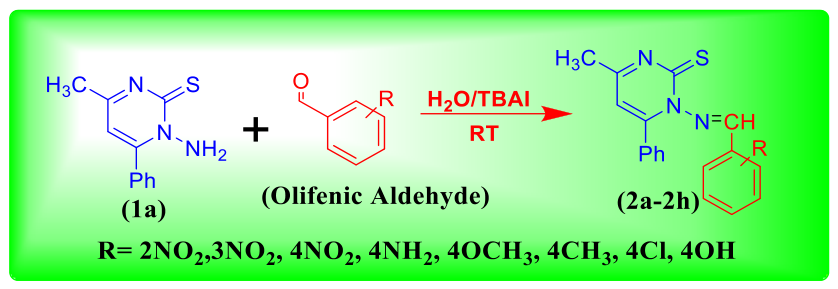
Figure 3.
Synthesis of Tetrazole derivatives (3a-3h).
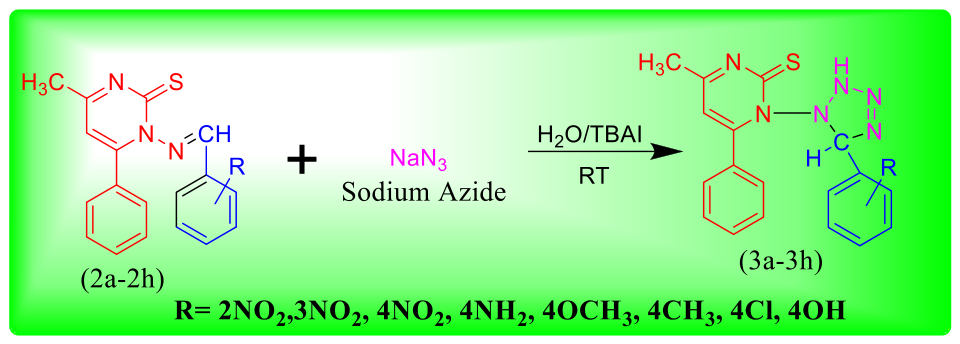
Figure 4.
Synthesis of Thiazolidinones derivatives (4a-4h).
Antimicrobial Activity for the Synthesized Derivatives
By spreading the cup plate and measuring the inhibition areas in millimetres against S. paratyphi, AE. coli, and S. aureus at concentrations of 50μg, the products antimicrobial activity was assessed[1] (12), and the antibacterial activity of each molecule was subsequently evaluated, as shown in Table 9. Throughout the analysis in Table 9. In comparison to the typical medications, compounds 2C, 3C, and 4C are moderately active, compounds 2d, 3b, and 4b are thought to be more active, while the remaining compounds are thought to be less active. Ampicillin and Penicillin are common antibacterial medications. Additionally, every produced chemical was tested against the fungal strains F. molariform and A. niggers. When compared to the usual medications, compounds 2a, 2b, 3a, and 4a had the highest inhibition, ranging from 46.42% to 77.22%, against all fungal species. The action of the remaining chemicals was moderate. Griseofulvin and fungigural are common antifungal medications[16].
Antioxidant Activity
Free Radical Scavenging Activity (DPPH)
The technique was created by Blois (1958) having the intention of measuring antioxidant effectiveness in a similar way using a stable free radical, α-diphenyl-β-picrylhydrazyl (DPPH; C18H12N5O6, M = 394.33)[52]. The evaluation of antioxidants capacity to scavenge forms the basis of the experiment. It is possible to reduce the odd electron of the nitrogen atom in DPPH by moving a hydrogen atom from antioxidants to the corresponding hydrazine[52].
Preparation of 0.004% w/w Solution of DPPH
After dissolving 4 mg of DPPH in 40 ml of methanol and putting the volume in a 100 ml volumetric flask, the sample was incubated for 30 minutes in a dark place. Prepared a 0.004% DPPH solution.
Preparation of Standard Ascorbic Acid Solution
The 10 ml volumetric flask is filled with 10 mg of ascorbic acid that has been dissolved in 5 ml of methanol. Prepared an ascorbic acid solution at 1 mg/ml.
Take six test tubes and divide them into aliquots of six different quantities (50, 100, 150, 200, 250, and 300 g/ml), then add each aliquot of ascorbic acid to three millilitres of DPPH solution in a test tube.
Repeat the process with the isolated substances in the test tube and add 3 ml of DPPH. The test tube is then put in the dark for 30 minutes, and the absorbance is measured at 517 nm using a UV-visible spectrophotometer. Noted the observed value after observing the absorbance of the tested and standard solutions.
Where,
Abs – Absorbance of the blank sample
Abc - Absorbance of the sample
The antioxidant activity of the formed compounds was assessed using the 2,2-Diphenyl-1-picrylhydrazyl (DPPH) radical. In the subject assay, several sample concentrations were used.
The maximum antioxidant potential was shown by the compounds 2h (4.52 ±2.17), 3c (4.62 ± 2.29), 3f (2.8 ± 1.56), 4b (1.80 ±1.15), 4d (4.66 ±2.34) & 4f (1.40 ±0.60) (All the graph and data of all the compounds are represented in Figure 6, Figure 7 and Figure 8 and Table 11, Table 12, Table 13, Table 14, Table 15, Table 16, Table 17, Table 18, Table 19, Table 20, Table 21, Table 22, Table 23, Table 24, Table 25, Table 26, Table 27, Table 28, Table 29, Table 30, Table 31, Table 32, Table 33 and Table 34) in comparison with the antioxidant activity. Ascorbic acid (IC50 61.29 ±1.92) (All the graph and data of all the compounds are represented in Figure 5 and Table 10), the positive control, had moderate action in the remaining compounds (Figure 9). The assay's basic idea is that an antioxidant or proton-donating substance causes the purple-coloured free radical to change into a pale yellow-coloured reduced form. These individuals fit the description of strong proton donors because they frequently provide protons to the elimination of DPPH free radicals.
Figure 5.
Graph of Percentage Inhibition antioxidant activity of ascorbic acid.
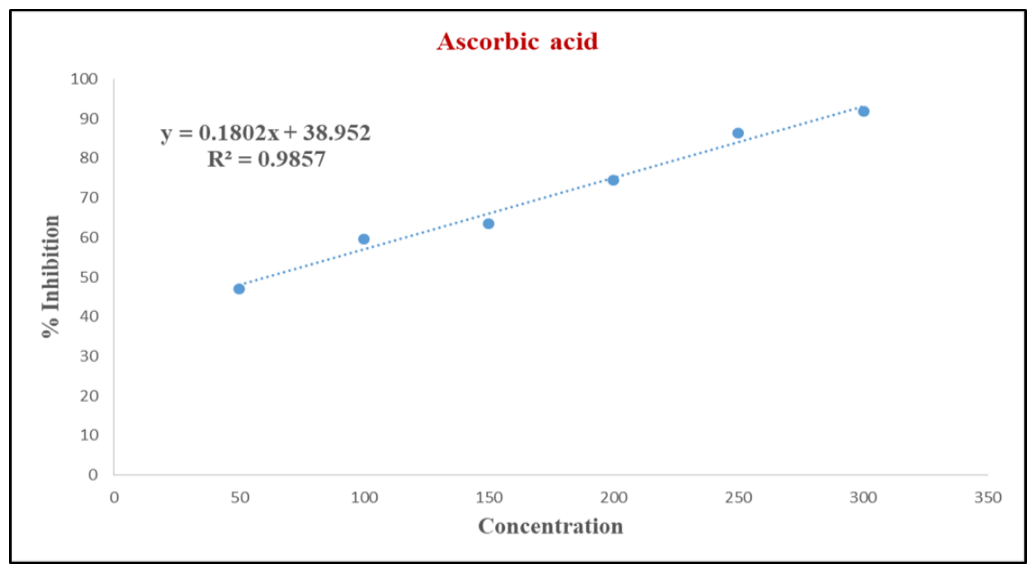
Figure 6.
Graph of Percentage Inhibition antioxidant activity of (2a-h).
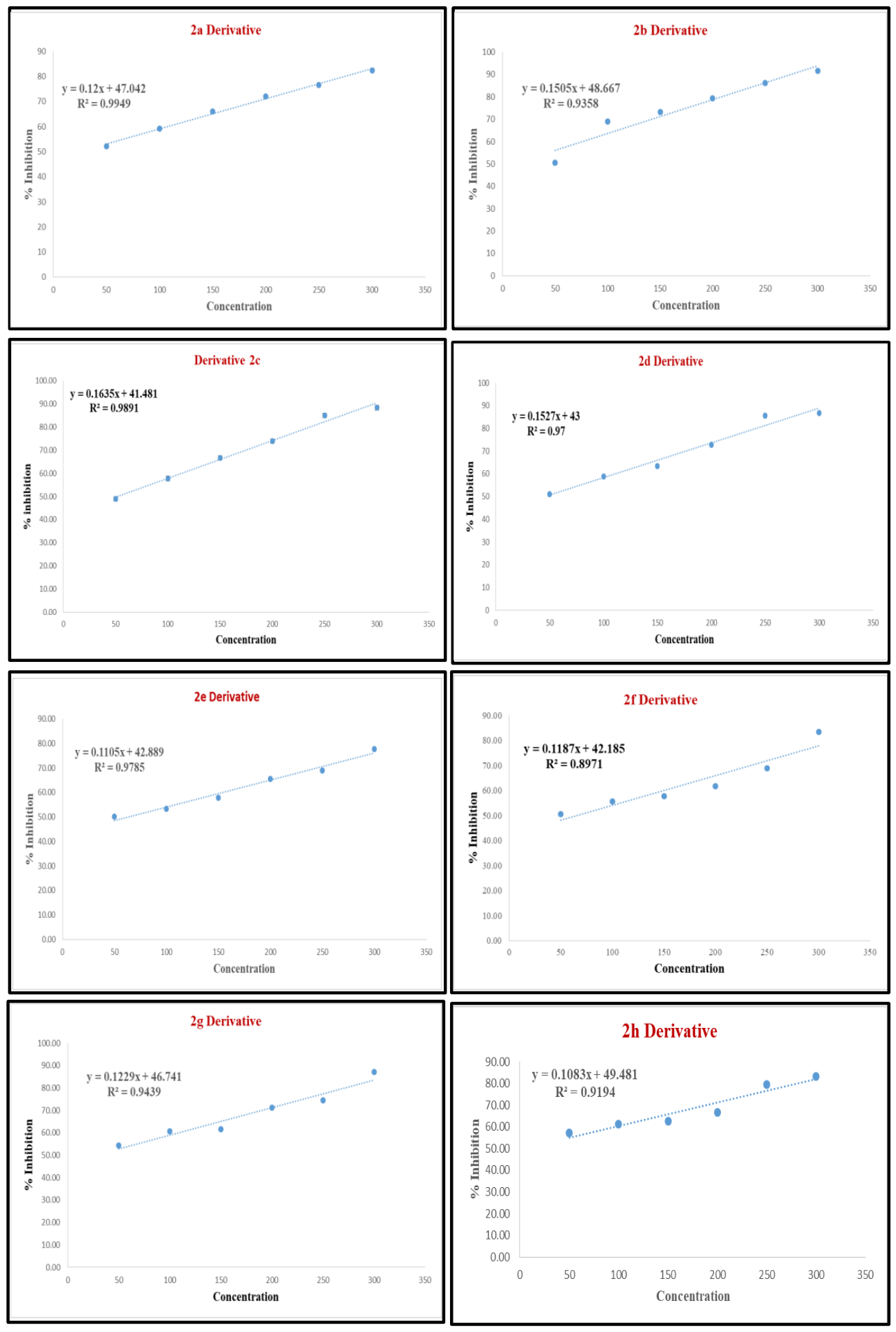
Figure 7.
Graph of Percentage Inhibition antioxidant activity of (3a-h).
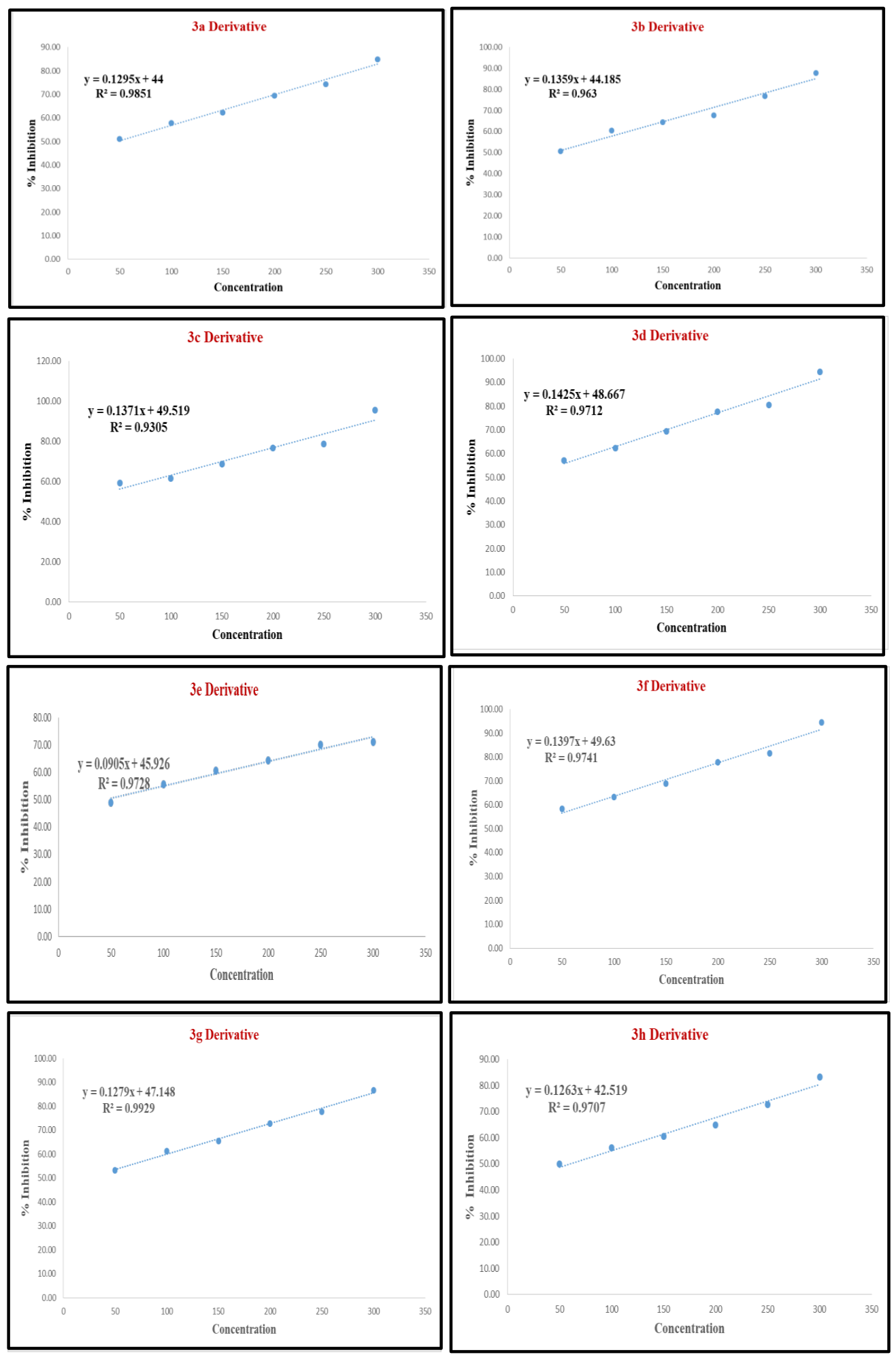
Figure 8.
Graph of Percentage Inhibition antioxidant activity of (4a-h).
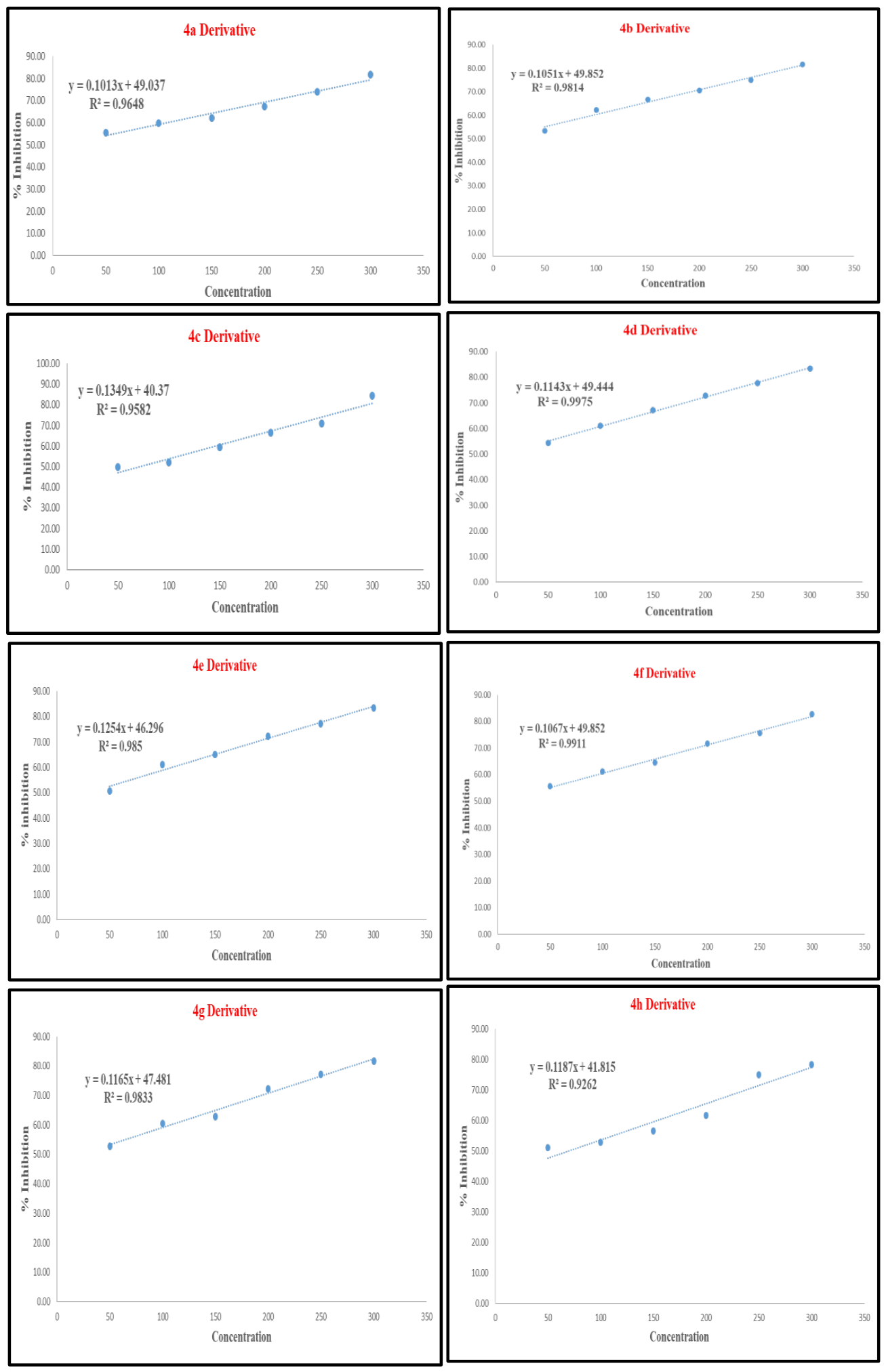
Figure 9.
The IC50 values of synthesized compounds in the DPPH free radical scavenging assay.
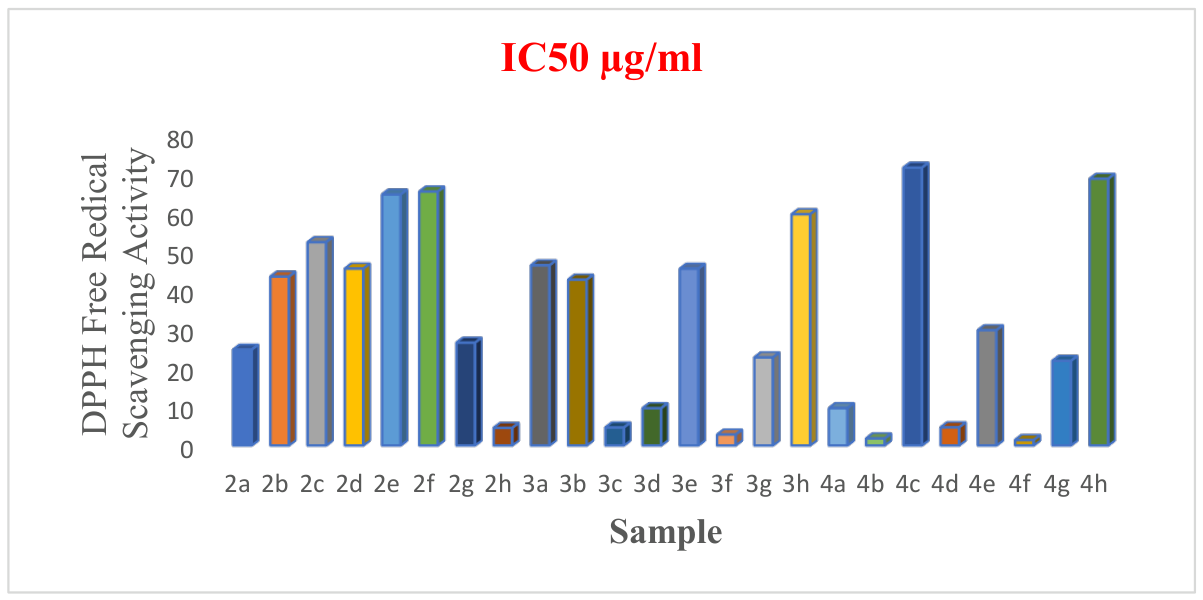

Table 10.
Percentage Inhibition antioxidant activity of Ascorbic acid.
| Sr. No | Concentration (µg/ml) | Absorbance of control ascorbic acid | %RSA | IC50 ±SD | |
|---|---|---|---|---|---|
| 1. | 50 | 0.097 | 47 | 61.29 ±1.92 | |
| 2. | 100 | 0.072 | 61 | ||
| 3. | 150 | 0.064 | 65 | ||
| 4. | 200 | 0.049 | 73 | ||
| 5. | 250 | 0.022 | 88 | ||
| 6. | 300 | 0.011 | 94 |
Table 11.
Percentage Inhibition antioxidant activity of 2a.
| Sr. No | Concentration (µg/ml) |
Absorbance Of Sample (2a) |
%RSA | IC50±SD |
|---|---|---|---|---|
| 1. | 50 | 0.088 | 52 | 24.65±1.55 |
| 2. | 100 | 0.057 | 69 | |
| 3. | 150 | 0.049 | 73 | |
| 4. | 200 | 0.041 | 78 | |
| 5. | 250 | 0.03 | 84 | |
| 6. | 300 | 0.013 | 93 |
Table 12.
Percentage Inhibition antioxidant activity of 2b.
| Sr. No | Concentration (µg/ml) | Absorbance Of Sample | %RSA | IC50 ±SD | |
|---|---|---|---|---|---|
| 1. | 50 | 0.089 | 51 | 43.47±1.78 | |
| 2. | 100 | 0.056 | 69 | ||
| 3. | 150 | 0.048 | 73 | ||
| 4. | 200 | 0.037 | 79 | ||
| 5. | 250 | 0.025 | 86 | ||
| 6. | 300 | 0.015 | 92 |
Table 13.
Percentage Inhibition antioxidant activity of 2c.
| Sr. No | Concentration (µg/ml) | Absorbance Of Ascorbic acid | %RSA | IC50 ±SD |
|---|---|---|---|---|
| 1. | 50 | 0.092 | 49 | 52.33±2.13 |
| 2. | 100 | 0.076 | 58 | |
| 3. | 150 | 0.06 | 67 | |
| 4. | 200 | 0.047 | 74 | |
| 5. | 250 | 0.027 | 85 | |
| 6. | 300 | 0.021 | 88 |
Table 14.
Percentage Inhibition antioxidant activity of 2d.
| Sr. No | Concentration (µg/ml) | Absorbance Of Ascorbic acid | %RSA | IC50 ±SD |
|---|---|---|---|---|
| 1. | 50 | 0.088 | 51 | 45.51±1.80 |
| 2. | 100 | 0.074 | 59 | |
| 3. | 150 | 0.066 | 63 | |
| 4. | 200 | 0.049 | 73 | |
| 5. | 250 | 0.026 | 86 | |
| 6. | 300 | 0.024 | 87 |
Table 15.
Percentage Inhibition antioxidant activity of 2e.
| Sr. No | Concentration (µg/ml) | Absorbance Of Ascorbic acid | %RSA | IC50 ±SD |
|---|---|---|---|---|
| 1. | 50 | 0.09 | 50 | 64.59±2.39 |
| 2. | 100 | 0.084 | 53 | |
| 3. | 150 | 0.076 | 58 | |
| 4. | 200 | 0.062 | 66 | |
| 5. | 250 | 0.056 | 69 | |
| 6. | 300 | 0.04 | 78 |
Table 16.
Percentage Inhibition antioxidant activity of 2f.
| Sr. No | Concentration (µg/ml) | Absorbance Of Ascorbic acid | %RSA | IC50 ±SD |
|---|---|---|---|---|
| 1. | 50 | 0.089 | 51 | 65.35±2.26 |
| 2. | 100 | 0.08 | 56 | |
| 3. | 150 | 0.076 | 58 | |
| 4. | 200 | 0.069 | 62 | |
| 5. | 250 | 0.056 | 69 | |
| 6. | 300 | 0.03 | 83 |
Table 17.
Percentage Inhibition antioxidant activity of 2g.
| Sr. No | Concentration (µg/ml) | Absorbance of Ascorbic acid | %RSA | IC50 ±SD |
|---|---|---|---|---|
| 1. | 50 | 0.082 | 54 | 26.45 ±1.97 |
| 2. | 100 | 0.071 | 61 | |
| 3. | 150 | 0.069 | 62 | |
| 4. | 200 | 0.052 | 71 | |
| 5. | 250 | 0.046 | 74 | |
| 6. | 300 | 0.023 | 87 |
Table 18.
Percentage Inhibition antioxidant activity of 2h.
| Sr. No | Concentration (µg/ml) | Absorbance of Ascorbic acid |
%RSA | IC50 ±SD |
|---|---|---|---|---|
| 1. | 50 | 0.077 | 57 | 4.52 ±2.17 |
| 2. | 100 | 0.07 | 61 | |
| 3. | 150 | 0.067 | 63 | |
| 4. | 200 | 0.06 | 67 | |
| 5. | 250 | 0.037 | 79 | |
| 6. | 300 | 0.03 | 83 |
Table 19.
Percentage Inhibition antioxidant activity of 3a.
| Sr. No | Concentration (µg/ml) | Absorbance of Sample (3a) | %RSA | IC50 ±SD |
|---|---|---|---|---|
| 1. | 50 | 0.088 | 51 | 46.36 ±2.06 |
| 2. | 100 | 0.076 | 58 | |
| 3. | 150 | 0.068 | 62 | |
| 4. | 200 | 0.055 | 69 | |
| 5. | 250 | 0.046 | 74 | |
| 6. | 300 | 0.027 | 85 |
Table 20.
Percentage Inhibition antioxidant activity of 3b.
| Sr. No | Concentration (µg/ml) | Absorbance of Sample (3b) | %RSA | IC50 ±SD |
|---|---|---|---|---|
| 1. | 50 | 0.089 | 51 | 42.66 ±2.06 |
| 2. | 100 | 0.071 | 61 | |
| 3. | 150 | 0.064 | 64 | |
| 4. | 200 | 0.058 | 68 | |
| 5. | 250 | 0.042 | 77 | |
| 6. | 300 | 0.022 | 88 |
Table 21.
Percentage Inhibition antioxidant activity of 3c.
| Sr. No | Concentration (µg/ml) | Absorbance of Sample (3c) | %RSA | IC50 ±SD |
|---|---|---|---|---|
| 1. | 50 | 0.073 | 59 | 4.62 ± 2.29 |
| 2. | 100 | 0.069 | 62 | |
| 3. | 150 | 0.056 | 69 | |
| 4. | 200 | 0.042 | 77 | |
| 5. | 250 | 0.038 | 79 | |
| 6. | 300 | 0.008 | 96 |
Table 22.
Percentage Inhibition antioxidant activity of 3d.
| Sr. No | Concentration (µg/ml) | Absorbance of Sample (3d) | %RSA | IC50 ±SD |
|---|---|---|---|---|
| 1. | 50 | 0.077 | 57 | 9.59 ±3.06 |
| 2. | 100 | 0.068 | 62 | |
| 3. | 150 | 0.055 | 69 | |
| 4. | 200 | 0.04 | 78 | |
| 5. | 250 | 0.035 | 81 | |
| 6. | 300 | 0.01 | 94 |
Table 23.
Percentage Inhibition antioxidant activity of 3e.
| Sr. No | Concentration (µg/ml) | Absorbance of Sample (3e) | %RSA | IC50 ±SD |
|---|---|---|---|---|
| 1. | 50 | 0.092 | 49 | 45.49 ± 1.88 |
| 2. | 100 | 0.08 | 56 | |
| 3. | 150 | 0.071 | 61 | |
| 4. | 200 | 0.064 | 64 | |
| 5. | 250 | 0.054 | 70 | |
| 6. | 300 | 0.052 | 71 |
Table 24.
Percentage Inhibition antioxidant activity of 3f.
| Sr. No | Concentration (µg/ml) | Absorbance of Sample (3f) | %RSA | IC50 ±SD |
|---|---|---|---|---|
| 1. | 50 | 0.075 | 58 | 2.8 ± 1.56 |
| 2. | 100 | 0.066 | 63 | |
| 3. | 150 | 0.056 | 69 | |
| 4. | 200 | 0.04 | 78 | |
| 5. | 250 | 0.033 | 82 | |
| 6. | 300 | 0.01 | 94 |
Table 25.
Percentage Inhibition antioxidant activity of 3g.
| Sr. No | Concentration (µg/ml) | Absorbance of Sample (3g) | %RSA | IC50 ±SD |
|---|---|---|---|---|
| 1. | 50 | 0.084 | 53 | 22.66 ± 2.08 |
| 2. | 100 | 0.07 | 61 | |
| 3. | 150 | 0.062 | 66 | |
| 4. | 200 | 0.049 | 73 | |
| 5. | 250 | 0.04 | 78 | |
| 6. | 300 | 0.024 | 87 |
Table 26.
Percentage Inhibition antioxidant activity of 3h.
| Sr. No | Concentration (µg/ml) | Absorbance of Sample (3h) | %RSA | IC50 ±SD |
|---|---|---|---|---|
| 1. | 50 | 0.09 | 50 | 59.52 ± 1.78 |
| 2. | 100 | 0.079 | 56 | |
| 3. | 150 | 0.071 | 61 | |
| 4. | 200 | 0.063 | 65 | |
| 5. | 250 | 0.049 | 73 | |
| 6. | 300 | 0.03 | 83 |
Table 27.
Percentage Inhibition antioxidant activity of 4a.
| Sr. No | Concentration (µg/ml) | Absorbance of Sample (4a) | %RSA | IC50 ±SD |
|---|---|---|---|---|
| 1. | 50 | 0.08 | 56 | 9.6 ±1.78 |
| 2. | 100 | 0.072 | 60 | |
| 3. | 150 | 0.068 | 62 | |
| 4. | 200 | 0.059 | 67 | |
| 5. | 250 | 0.047 | 74 | |
| 6. | 300 | 0.033 | 82 |
Table 28.
Percentage Inhibition antioxidant activity of 4b.
| Sr. No | Concentration (µg/ml) | Absorbance of Sample (4b) | %RSA | IC50 ±SD |
|---|---|---|---|---|
| 1. | 50 | 0.084 | 53 | 1.80 ±1.15 |
| 2. | 100 | 0.068 | 62 | |
| 3. | 150 | 0.06 | 67 | |
| 4. | 200 | 0.053 | 71 | |
| 5. | 250 | 0.045 | 75 | |
| 6. | 300 | 0.033 | 82 |
Table 29.
Percentage Inhibition antioxidant activity of 4c.
| Sr. No | Concentration (µg/ml) | Absorbance of Sample (4c) | %RSA | IC50 ±SD |
|---|---|---|---|---|
| 1. | 50 | 0.09 | 50 | 71.50 ± 1.78 |
| 2. | 100 | 0.086 | 52 | |
| 3. | 150 | 0.073 | 59 | |
| 4. | 200 | 0.06 | 67 | |
| 5. | 250 | 0.052 | 71 | |
| 6. | 300 | 0.028 | 84 |
Table 30.
Percentage Inhibition antioxidant activity of 4d.
| Sr. No | Concentration (µg/ml) | Absorbance of Sample (4d) | %RSA | IC50 ±SD |
|---|---|---|---|---|
| 1. | 50 | 0.082 | 54 | 4.66 ±2.34 |
| 2. | 100 | 0.07 | 61 | |
| 3. | 150 | 0.059 | 67 | |
| 4. | 200 | 0.049 | 73 | |
| 5. | 250 | 0.04 | 78 | |
| 6. | 300 | 0.03 | 83 |
Table 31.
Percentage Inhibition antioxidant activity of 4e.
| Sr. No | Concentration (µg/ml) | Absorbance of Sample (4e) | %RSA | IC50 ±SD |
|---|---|---|---|---|
| 1. | 50 | 0.089 | 51 | 29.66 ±2.07 |
| 2. | 100 | 0.07 | 61 | |
| 3. | 150 | 0.063 | 65 | |
| 4. | 200 | 0.05 | 72 | |
| 5. | 250 | 0.041 | 77 | |
| 6. | 300 | 0.03 | 83 |
Table 32.
Percentage Inhibition antioxidant activity of 4f.
| Sr. No | Concentration (µg/ml) | Absorbance of Sample (4f) | %RSA | IC50 ±SD |
|---|---|---|---|---|
| 1. | 50 | 0.08 | 56 | 1.40 ±0.60 |
| 2. | 100 | 0.07 | 61 | |
| 3. | 150 | 0.064 | 64 | |
| 4. | 200 | 0.051 | 72 | |
| 5. | 250 | 0.044 | 76 | |
| 6. | 300 | 0.031 | 83 |
Table 33.
Percentage Inhibition antioxidant activity of 4g.
| Sr. No | Concentration (µg/ml) | Absorbance of Sample (4g) | %RSA | IC50 ±SD |
|---|---|---|---|---|
| 1. | 50 | 0.085 | 53 | 21.78±1.96 |
| 2. | 100 | 0.071 | 61 | |
| 3. | 150 | 0.067 | 63 | |
| 4. | 200 | 0.05 | 72 | |
| 5. | 250 | 0.041 | 77 | |
| 6. | 300 | 0.033 | 82 |
Table 34.
Percentage Inhibition antioxidant activity of 4h.
| Sr. No | Concentration (µg/ml) | Absorbance of Sample (4h) | %RSA | IC50 ±SD |
|---|---|---|---|---|
| 1. | 50 | 0.088 | 51 | 68.65 ±1.54 |
| 2. | 100 | 0.085 | 53 | |
| 3. | 150 | 0.078 | 57 | |
| 4. | 200 | 0.069 | 62 | |
| 5. | 250 | 0.045 | 75 | |
| 6. | 300 | 0.039 | 78 |
Structure–Activity Relationship Study of the Synthesized Compounds
The structure–activity relationship (SAR) of the synthesized Schiff bases (2a–2h) and their tetrazole (3a–3h) and thiazolidine-4-one (4a–4h) derivatives demonstrates how electronic, steric, and resonance effects govern the observed variations in reactivity and stability across the series. The parent nucleus, 1-amino-4-methyl-6-phenylpyrimidine-2-thione, contains both nitrogen and sulfur heteroatoms capable of participating in resonance delocalization, thereby stabilizing the imine (C=N) and thione (C=S) functionalities. Formation of the Schiff bases involves condensation between the amino group and substituted aromatic aldehydes, resulting in azomethine linkages (–CH=N–) whose electronic environment is significantly influenced by the nature and position of substituents on the aryl ring. Electron-withdrawing groups such as –NO₂ and –Cl decrease the electron density around the azomethine nitrogen, increasing electrophilicity and reducing conjugation with the aromatic π-system, whereas electron-donating substituents such as –OCH₃ or –NH₂ enhance delocalization through mesomeric (+M) effects, strengthening the resonance stabilization within the imine system.
Conversion of these Schiff bases into tetrazole analogues via azide cycloaddition introduces an additional π-conjugated five-membered ring containing four nitrogen atoms, which substantially increases the overall electron density and aromatic character of the molecule. The tetrazole ring behaves as an acidic heterocycle with delocalized π-electrons, stabilizing its conjugate base through extensive resonance. The transformation replaces the C=N linkage of the imine with an N–N–N system, extending conjugation across the pyrimidine–tetrazole backbone and enhancing aromatic stabilization energy. Infrared spectra support this conversion by the disappearance of the imine band (1580–1600 cm⁻¹) and the appearance of new absorptions in the range 1440–1490 cm⁻¹ corresponding to N=N stretching. This structural change increases both planarity and electron delocalization, producing a system with improved intramolecular charge transfer characteristics.
In the thiazolidine-4-one derivatives, cyclization with thioglycolic acid introduces a new C=O group conjugated with the thione (C=S) functionality, leading to a thioamide–carbonyl resonance system. This conjugation enables partial delocalization of electron density between the sulfur and carbonyl oxygen, enhancing the stability of the heterocyclic ring. The IR bands near 1700–1725 cm⁻¹ confirm the formation of the imide carbonyl group, while NMR data show deshielding effects on the methylene protons adjacent to the heteroatoms, consistent with strong inductive withdrawal by both C=O and C=S groups. The thiazolidinone ring thus introduces a polarized π-system in which the adjacent heteroatoms (N, O, and S) contribute to electron delocalization through both inductive (–I) and mesomeric (+M) interactions, resulting in increased dipole moment and chemical reactivity toward nucleophiles.
Substituent effects across all derivatives further elucidate the electronic influences governing stability and reactivity. Electron-donating substituents such as methoxy (–OCH₃) and amino (–NH₂) groups enhance mesomeric resonance and reduce the energy gap between the HOMO and LUMO, facilitating intramolecular charge transfer and increasing the compound’s ability to stabilize free radicals through delocalization. In contrast, electron-withdrawing substituents like nitro (–NO₂) decrease electron density on the imine nitrogen, creating a more electrophilic center and favoring reactions with nucleophilic sites. The positional orientation of substituents also exerts steric influence: ortho substitution introduces torsional strain and restricts coplanarity, whereas para substitution promotes extended conjugation between the aromatic ring and heterocyclic moiety, enhancing resonance stabilization.
Molecular Interaction Study of Compounds 2d, 3b, and 4b
The docking studies of compounds 2d, 3b, and 4b with Penicillin-Binding Protein 4 (PDB ID: 3ZG8) were compared with the standard drug amoxicillin to evaluate their binding potential (Figure 10). Amoxicillin exhibited strong binding through multiple hydrogen bonds with Ser394, Gly393, Ser578, Thr576, and Thr579, supported by water-mediated interactions (HOH2084, HOH2066) and additional electrostatic stabilization from Lys575 and Lys397, confirming its potent affinity for PBP4. Among the synthesized ligands, compound 2d displayed hydrogen bonds with Gln391, Thr430, and Thr579, along with water-mediated bonding via Gln580 and hydrophobic stabilization through an alkyl interaction with Val432, indicating a well-defined accommodation within the binding pocket. Compound 3b demonstrated an even richer interaction profile, forming hydrogen bonds with Ser578, Gly577, and Asn451, supported by water-mediated bonds (HOH2084), π–alkyl/π–sigma interactions with Val432 and Thr589, and an attractive charge interaction with Lys575, which contributed to binding stability despite an unfavorable positive interaction. Compound 4b also demonstrated strong binding, forming hydrogen bonds with Ser394, Tyr427, and Thr430, along with additional water-mediated interactions that contributed to complex stability. Compared to the standard amoxicillin, which primarily engaged through hydrogen bonding and electrostatic interactions with key active-site residues, the synthesized compounds displayed comparable binding profiles with additional hydrophobic and π-interactions, highlighting their potential as promising antibacterial candidates targeting PBP4.
Molecular Interaction Study of Compounds 2a, 2b, 3a, and 4a Standard Drug Itraconazole (PDB ID: 5V5Z)
The molecular docking interactions of compounds 2a, 2b, 3a, and 4a with Sterol 14-α-demethylase (CYP51, PDB ID: 5V5Z) were compared with the standard drug Itraconazole (Figure 11). Among the synthesized ligands, compound 2a formed hydrogen bonds with His377 and Leu376, along with π–π stacking with Phe233 and Phe380 and π–alkyl stabilization from Leu121, Val509, and Met508. Compound 2b displayed a more diverse profile, engaging in salt bridge, π–π stacking with Phe233 and Phe380, π–sulfur contacts with Met92 and Met508, and additional hydrophobic contacts with Leu87, Leu376, Val509, and Pro375. Compound 3a exhibited multiple polar interactions, including hydrogen bonds with Gly303, Gly304, and Met308, a carbon hydrogen bond with Gly303, and amide–π stacking with Gly307, along with π–sigma and π–alkyl interactions with Ile471, Leu204, Ala146, and Gly472, although slightly offset by an unfavorable interaction with Lys143. Compound 4a also demonstrated strong binding via hydrogen bonds with Gly308, Gly472, and Cys470, complemented by π–sigma and π–alkyl contacts with Ile471, Leu300, and Ile304 and hydrophobic interactions with Leu131, Leu139, and Ala146. Overall, while itraconazole bound predominantly through hydrogen bonding and hydrophobic stabilization, the synthesized ligands exhibited diverse binding patterns, with compounds 3a and 4a in particular showing multiple hydrogen bonds and π–interactions, highlighting their potential as promising antifungal candidates.
Molecular Interaction Study of Compounds 2h, 3c, 3f, 4b, 4d, 4f and Standard Drug Ascorbic Acid (PDB ID: 1OAF)
Molecular docking of synthesized compounds (2h, 3c, 3f, 4b, 4d, and 4f) against the antioxidant target 1OAF, with ascorbic acid as the reference, revealed diverse stabilizing interactions (Figure 12). Ascorbic acid primarily relied on conventional hydrogen bonds with Ser207, His163, and Ala134, whereas compound 2h showed additional π–alkyl contacts with Leu205 and Ala70, enhancing hydrophobic stabilization. Compound 3c demonstrated strong hydrogen bonding (Ser207, Ala134), π–cation interaction (Arg38), and hydrophobic π–alkyl interactions (Pro132, Ala167), while compound 3f exhibited multiple hydrogen bonds (Ser173, Ala168, His163) along with π–alkyl contacts (Leu205, Ala167) and a π–sulfur interaction with Trp179. Compound 4b displayed multifunctional binding through hydrogen bonds (Asn72, Ser69), π–cation interaction (Arg38), π–sulfur contact (His42), and π–alkyl stabilization (Leu205, Ala134, Trp179). Similarly, compound 4d engaged in hydrogen bonding (Asn72, Ser69), π–π T-shaped stacking (His163, Phe175), π–sulfur bonding (His42), and extensive hydrophobic interactions with Leu203, Ala70, and Ala168. Notably, compound 4f exhibited the most stabilized binding, characterized by strong π–π T-shaped interaction with His163, sulfur–X interactions with Ser173 and Phe175, alkyl/π–alkyl contacts with Leu205, Ala70, Ala134, Ala168, and electrostatic support from Arg38 and Arg172. Comparative analysis indicated that while ascorbic acid is mainly hydrogen-bond driven, the synthesized ligands incorporated additional π, alkyl, and sulfur-mediated interactions, with 4f emerging as the most promising antioxidant candidate due to its broad spectrum of stabilizing contacts.
Conclusion
From the experiment, it was concluded that the synthesis of tetrazole and Thiazolidine-4-One were prepared safely and simply with a good product yield, with a particular emphasis on exploring their antioxidant and antimicrobial properties. Through the innovative use of tetrabutylammonium iodide (TBAI) as a catalyst in an aqueous medium, novel derivatives of Tetrazole and Thiazolidine-4-One were successfully synthesized with high product yield. The environmentally friendly nature of this approach, utilizing a non-toxic, reusable, and thermally stable catalyst in an aqueous medium instead of organic solvents, underscores its superiority in terms of sustainability and efficiency.
The synthesized compounds were thoroughly characterized using various analytical techniques, confirming their structural integrity and paving the way for the evaluation of their biological activities. The assessment of antioxidant and antibacterial properties against Escherichia coli and Staphylococcus aureus revealed promising results, surpassing the efficacy of standard drugs such as fungigural, griseofulvin, penicillin, and ampicillin. Molecular docking studies supported the experimental outcomes by revealing strong binding interactions of the active compounds with key biological targets, confirming their potential therapeutic utility. Overall, these findings highlight the pharmacological potential of the synthesized compounds, positioning them as promising candidates for further exploration in drug development initiatives.
Acknowledgments.The authors express their gratitude to the Hygia Institute of Pharmaceutical Education and Research Lucknow for providing essential research facilities during the course of this study. Additionally, sincere appreciation is extended to CDRI Lucknow and GLA University Mathura for their valuable contributions, particularly in the provision of graphical data that enriched the research outcomes.
Author Contributions
GM.: Conceptualization, Investigation, Methodology, LA, PY and S.: Data Analysis, SV and MYK.: Conceptualization, Supervision, Writing - Review & Editing. All authors reviewed and revised the manuscript. The manuscript underwent thorough review and revision by all authors to ensure its accuracy and coherence. The authors acknowledge the collaborative efforts and support received throughout this research endeavour, which significantly contributed to the successful completion of the study.
Funding:The authors declare that no funds, grants, or other support were received during the preparation of this manuscript.
Data availability All required data will be available with the corresponding author upon request.
Conflicts of Interest Concerning this article, the authors have no conflicts of interest.
References
- Sahiba, N.; Sethiya, A.; Soni, J.; Agarwal, D. K.; Agarwal, S. Saturated Five-Membered Thiazolidines and Their Derivatives: From Synthesis to Biological Applications. Top. Curr. Chem. 2020, 378(2), 34. [Google Scholar] [CrossRef]
- Singh, M. S.; Chowdhury, S. Recent developments in solvent-free multicomponent reactions: A perfect synergy for eco-compatible organic synthesis. RSC Adv. 2012, 2, 4547–4592. [Google Scholar] [CrossRef]
- Elgamal, A. M.; et al. Biologically active ionic chitosan Schiff base nanocomposites: Synthesis, Characterization and Antimicrobial Activity against Helicobacter pylori. Int. J. Biol. Macromol. 2024, 282, 137321. [Google Scholar] [CrossRef]
- Ungureanu, D.; et al. An Insight into Rational Drug Design: The Development of In-House Azole Compounds with Antimicrobial Activity. Antibiotics 2024, 13, 763. [Google Scholar] [CrossRef]
- Yassen, A. S. A.; et al. Novel curcumin-based analogues as potential VEGFR2 inhibitors with promising metallic loading nanoparticles: synthesis, biological evaluation, and molecular modelling investigation. RSC Med. Chem. 2024, 15, 4039–4067. [Google Scholar] [CrossRef] [PubMed]
- Muheyuddeen, G.; et al. Design, synthesis, and biological evaluation of novel imidazole derivatives as analgesic and anti-inflammatory agents: experimental and molecular docking insights. Sci. Rep. 2024, 14, 23121. [Google Scholar] [CrossRef] [PubMed]
- Baruah, B.; Deb, M. L. Catalyst-free and additive-free reactions enabling C–C bond formation: a journey towards a sustainable future. Org. Biomol. Chem. 2021, 19, 1191–1229. [Google Scholar] [CrossRef]
- Emami, S.; Dadashpour, S. Current developments of coumarin-based anti-cancer agents in medicinal chemistry. Eur. J. Med. Chem. 2015, 102, 611–630. [Google Scholar] [CrossRef]
- Patel, D. V.; Patel, N. R. Vicinal Diaryl Thiazoles and Thiadiazoles. Vicinal Diaryl Substituted Heterocycles: A Gold Mine for the Discovery of Novel Therapeutic Agents; Elsevier Ltd., 2018. [Google Scholar] [CrossRef]
- Saleh, A. M.; Saleh, M. Y. Synthesis of heterocyclic compounds by cyclization of Schiff bases prepared from capric acid hydrazide and study of biological activity. Egypt. J. Chem. 2022, 65, 783–792. [Google Scholar] [CrossRef]
- Taha, A.Y.; Rasheed, M.K. Synthesis of Some Thiazolidine-4-One Derivatives of Isoniazid by using the Microwave Method and Evaluation of their Antibacterial and Antifungal Activity. Int. J. Health Sci. (I) 2022, 6, 2803–2817. [Google Scholar] [CrossRef]
- Trotsko, N. European Journal of Medicinal Chemistry Antitubercular properties of thiazolidin-4-ones e A review. Eur. J. Med. Chem. 2021, 215, 113266. [Google Scholar] [CrossRef]
- Thakkar, J.; Vaghani, H.; Kardani, H.; Patel, P. Synthetic Approaches to Heterocyclic Scaffolds: 4-Thiazolidinone Derivatives as Heterocyclic Scaffolds: Synthesis and Biological Activity (A Review). Russ. J. Org. Chem. 2025, 61(5), 765–99. [Google Scholar] [CrossRef]
- Marchese, A.; Barbieri, R.; Sanches-Silva, A.; Daglia, M.; Nabavi, S.F.; Jafari, N.J.; et al. Antifungal and antibacterial activities of allicin: A review. Trends Food Sci. Technol. [Internet] 2016, 52, 49–56. Available online: https://www.sciencedirect.com/science/article/pii/S0924224416300073. [CrossRef]
- Lafraxo, S.; El Barnossi, A.; El Moussaoui, A.; Bourhia, M.; Salamatullah, A.M.; Alzahrani, A.; Ait Akka, A.; Choubbane, A.; Akhazzane, M.; Aboul-Soud, M.A.; Giesy, J.P. Essential oils from leaves of Juniperus thurifera L., exhibiting antioxidant, antifungal and antibacterial activities against antibiotic-resistant microbes. horticulturae 2022, 8(4), 321. [Google Scholar] [CrossRef]
- Abdulghani, S.S.; Rasheed, M.K. Aminothiazole, Schiff base: synthesis, characterization and evaluation of their antimicrobial and antioxidant activity. Samarra J. Pure Appl. Sci. 2023, 5(2), 1–4. [Google Scholar] [CrossRef]
- Thawabteh, A.M.; Swaileh, Z.; Ammar, M.; Jaghama, W.; Yousef, M.; Karaman, R.; A. Bufo, S.; Scrano, L. Antifungal and antibacterial activities of isolated marine compounds. Toxins 2023, 15(2), 93. [Google Scholar] [CrossRef]
- Zargaham, M. K.; et al. Synthesis, In Silico Studies, and Antioxidant and Tyrosinase Inhibitory Potential of 2- ( Substituted Phenyl ) Thiazolidine-4-Carboxamide Derivatives. 2023. [Google Scholar] [CrossRef]
- Liao, Y.J.; Chen, C.Y.; Lin, H.T.; Pei, D.; Liang, Y.J. The application of 3D printing technology in the treatment of diabetic foot ulcers: An integrated strategy for glycemic control and wound care. Expert Rev. Endocrinol. Metab. 2025, 20(3), 201–9. [Google Scholar] [CrossRef] [PubMed]
- Rukyanaik, V.; Gamidi, R. K.; Kumari, J.; Sriram, D.; Basavoju, S. A Green one-pot three component synthesis of thiazolidine-2, 4-dione based bisspirooxindolo-pyrrolidines with [Bmim] BF4: their in vitro and in silico anti-TB studies. Mol. Divers. 2025, 29, 303–317. [Google Scholar] [CrossRef]
- Albalawi, M. The Recent Outstanding Medicinal Activity of 2-(Aryl/Heteroaryl) Thiazolidine-4-One Derivatives as Antituberculous Agents. Egypt. J. Chem. 2025, 68(1), 129–52. [Google Scholar] [CrossRef]
- Peddapaka, J.; Nasreen, A.; Sanam, T.; Shaik, M.G.; Swain, B.; Sanwer, S.; Alvala, R.; Arifuddin, M.; Nerella, S.G. Facile synthesis, antimicrobial activity, and molecular docking analysis of 8-hydroxyquinoline-4-thiazolidinone hybrids. Future Med. Chem. 2025, 17(4), 435–47. [Google Scholar] [CrossRef] [PubMed]
- Mittal, P.; Ghanghas, D.; Sharma, D.; Shah, K.; Arya, G.C.; Chaudhary, A.; Dewangan, H.K. Thiazolidine-4-one analogues: Synthesis, in-silico molecular modeling, and in-vivo estimation for anticonvulsant potential. Cent. Nerv. Syst. Agents Med. Chem. 2025, 25(4), 557–67. [Google Scholar] [CrossRef]
- Khan, M.S.; Khator, R.; Yadav, N.; A. Jagtap, U.; Paul, A.T.; Monga, V. Design, synthesis, and biological evaluation of disubstituted thiazolidinedione derivatives as pancreatic lipase inhibitors for the management of obesity. Future Med. Chem. 2026, 18(8), 913–28. [Google Scholar] [CrossRef] [PubMed]
- Patle, D.; Sengar, N. P. S. Bio-Conjugated Metallic Complexes in Drug Design. Indian J. Pharm. Educ. Res. 2025, 59, s16–s24. [Google Scholar] [CrossRef]
- Vunnam, K. K.; Katari, N. K.; Jeedimalla, N.; Gundla, R.; Raghupathi, J. K. Design, Synthesis, and Biological Evaluation of Novel Heterocyclic Derivatives of 2, 4-Thiazolidine Dione as Anti-Cancer Agents. Appl. Res. 2025, 4, e202400176. [Google Scholar] [CrossRef]
- Adnan, S.; Ghafil, A. Synthesis and Identification of New (azo-heterocyclic) Derivatives and Study of their Biological Activity as Anti-bacterial and Fungi. IJddT 2021, 11(1), 58–63. [Google Scholar] [CrossRef]
- Gharge, S.; et al. Design, synthesis of new 2, 4-thiazolidinediones: In-silico, in-vivo anti-diabetic and anti-inflammatory evaluation. Eur. J. Med. Chem. Rep. 2024, 11, 100151. [Google Scholar] [CrossRef]
- Nirwan, S.; Chahal, V.; Kakkar, R. Thiazolidinones: Synthesis, reactivity, and their biological applications. J. Heterocycl. Chem. 2019, 56, 1239–1253. [Google Scholar] [CrossRef]
- Wang, M.X.; Qin, H.W.; Liu, C.; Lv, S.M.; Chen, J.S.; Wang, C.G.; Chen, Y.Y.; Wang, J.W.; Sun, J.Y.; Liao, Z.X. Synthesis and biological evaluation of thiazolidine-2-thione derivatives as novel xanthine oxidase inhibitors. PLoS ONE 2022, 17(5), e0268531. [Google Scholar] [CrossRef]
- Muñoz-tebar, N.; Gonz, E. J.; Mar, T.; Santos, A. Biological Activity of Extracts from Aromatic Plants as Control. Foods 2021, 10, 1–18. [Google Scholar] [CrossRef]
- Patil, P.; Zhang, J.; Kurpiewska, K.; Kalinowska-Tłuścik, J.; Dömling, A. Hydrazine in the Ugi tetrazole reaction. Synthesis 2016, 48(08), 1122–30. [Google Scholar] [CrossRef]
- Jawad, A.A.; R. Jber, N.; S. Rasool, B.; K. Abbas, A. Tetrazole Derivatives and Role of Tetrazole in Medicinal Chemistry: An Article Review. Al-Nahrain J. Sci. [Internet] . 2023, 26(1), 1–7. Available online: https://www.anjs.edu.iq/index.php/anjs/article/view/2509. [CrossRef]
- Bagherzadeh, N.; Sardarian, A. R.; Eslahi, H. Sustainable and recyclable magnetic nanocatalyst of 1, 10-phenanthroline Pd ( 0 ) complex in green synthesis of biaryls and tetrazoles using arylboronic acids as versatile substrates. Mol. Catal. 2021, 504, 111489. [Google Scholar] [CrossRef]
- Arshad, M.; et al. European Journal of Medicinal Chemistry Synthesis, characterization and anticancer screening of some novel piperonyl e tetrazole derivatives. Eur. J. Med. Chem. 2014, 71, 229–236. [Google Scholar] [CrossRef] [PubMed]
- Fu, J. Angiotensin II receptor antagonists for treatment of hypertension: the discovery of losartan and its analogs. In in Medicinal Chemistry and Drug Development; Elsevier, 2025; pp. 109–139. [Google Scholar] [CrossRef]
- Potdar, S. M.; Bandivadekar, P.; Waghmode, K. T. Manganese (II) Chloride Tetrahydrate as an Efficient Catalyst for the Preparation of 5-Aryl-1 H-tetrazoles via [3+ 2] Cycloaddition of Sodium Azide and Nitriles. Org. Prep. Proced. Int. 2025, 57, 22–29. [Google Scholar] [CrossRef]
- Sghyar, R.; Lahyaoui, M.; Rhazi, Y.; Aflak, N.; Moussaoui, O.; Chda, A.; Alanazi, M.M.; Kabra, A.; El Hadrami, E.M.; Mabrouk, E.H.; Anouar, E.H. Novel D-ribofuranosyl tetrazoles: Synthesis, characterization, in vitro antimicrobial activity, and computational studies. ACS Omega 2025, 10(2), 2116–29. [Google Scholar] [CrossRef]
- Mohseni, E.; Ghorbani-Choghamarani, A.; Tahmasbi, B.; Norouzi, M.; Akbari, M. A new copper complex of lysine on mesoporous KIT-6 as a robust and homoselective catalyst in the synthesis of tetrazoles. J. Porous Mater. 2025, 32, 289–299. [Google Scholar] [CrossRef]
- Oulous, A.; Cherfi, M.; Daoudi, N.E.; Harit, T.; Yahyi, A.; Bnouham, M.; Malek, F. Synthesis, characterization and α-amylase inhibition activity of new family of tetrapodal ligands with pyrazole-tetrazole subunits. J. Mol. Struct. 2025, 1321, 140254. [Google Scholar] [CrossRef]
- Wang, S.; Wu, Y.; Fei, B.; Zhang, M. Fluorescent Nanocomposite Materials with Synergistic Effects for Enhanced Fenelidone Delivery in Diabetic Nephropathy Treatment. J. Fluoresc. 2025, 35(9), 8713–23. [Google Scholar] [CrossRef]
- Zhang, G.; et al. Towards advanced N-rich energetic explosives: based on tetrazole and triazole groups with large conjugated systems and extensive hydrogen bonds. J. Mater. Chem. A 2024, 12, 33249–33256. [Google Scholar] [CrossRef]
- Kritchenkov, A. S.; et al. Synthesis of novel 1H-tetrazole derivatives of chitosan via metal-catalyzed 1, 3-dipolar cycloaddition. Catalytic and antibacterial properties of [3-(1H-tetrazole-5-yl) ethyl] chitosan and its nanoparticles. Int. J. Biol. Macromol. 2019, 132, 340–350. [Google Scholar] [CrossRef]
- Aromí, G.; Barrios, L. A.; Roubeau, O.; Gamez, P. Triazoles and tetrazoles: Prime ligands to generate remarkable coordination materials. Coord. Chem. Rev. 2011, 255, 485–546. [Google Scholar] [CrossRef]
- Valiey, E.; Dekamin, M.G. Design and characterization of an urea-bridged PMO supporting Cu (II) nanoparticles as highly efficient heterogeneous catalyst for synthesis of tetrazole derivatives. Sci. Rep. 2022, 12(1), 18139. [Google Scholar] [CrossRef]
- Katritzky, A.R.; Ramsden, C.A.; Scriven, E.F.; Taylor, R.J. Comprehensive heterocyclic chemistry III. InV1 3-memb. Heterocycl., together with all Fused Syst. contain. a 3-memb. Heterocycl. Ring. V2 4-memb. Heterocycl. together with all Fused Syst. contain. a 4-memb. Heterocycl. Ring. V3 Five-memb. Rings with One Heteroat. together with their Benzo and other Carbocycl.-fused Deriv. V4 Five-memb. Rings with Two Heteroat., each with their Fused Carbocycl. In Deriv; Elsevier, 1 Jan 2008; pp. 1–13718. [Google Scholar] [CrossRef]
- Frija, L. M. T.; Ismael, A.; Cristiano, M. L. S. Photochemical transformations of tetrazole derivatives: applications in organic synthesis. Molecules 2010, 15, 3757–3774. [Google Scholar] [CrossRef] [PubMed]
- Bredael, K.; Geurs, S.; Clarisse, D.; De Bosscher, K.; D’hooghe, M. Carboxylic Acid Bioisosteres in Medicinal Chemistry: Synthesis and Properties. J. Chem. 2022, 2164558. [Google Scholar] [CrossRef]
- Frija, L. M. T.; Ismael, A.; Cristiano, M. L. S. Photochemical transformations of tetrazole derivatives: Applications in organic synthesis. Molecules 2010, 15, 3757–3774. [Google Scholar] [CrossRef]
- Tripathi, R. K. P.; Ayyannan, S. R. Monoamine oxidase-B inhibitors as potential neurotherapeutic agents: An overview and update. Med. Res. Rev. 2019, 39, 1603–1706. [Google Scholar] [CrossRef]
- Melha, K. S. A. In-vitro antibacterial, antifungal activity of some transition metal complexes of thiosemicarbazone Schiff base (HL) derived from N4-(7′-chloroquinolin-4′-ylamino) thiosemicarbazide. J. Enzym. Inhib. Med. Chem. 2008, 23, 493–503. [Google Scholar] [CrossRef] [PubMed]
- Muheyuddeen, G.; Husain Rayini, S.; Yadav, P.; Kumar Gupta, S. In vivo Analgesics and in vitro Antioxidants Activity of Newly Synthesized Mannich Bases of Lawsone. Asian J. Pharm. Res. 2023, 13, 11–17. [Google Scholar] [CrossRef]
- Klebe, G. Optimization of lead structures. In InDrug Design: From Structure and Mode-of-Action to Rational Design Concepts; Springer Berlin Heidelberg: Berlin, Heidelberg, 5 Feb 2025; pp. 115–126. [Google Scholar] [CrossRef]
- Manwar, H.Q.; Al-Shuhaib, Z.; Hussein, K.A.; Ismael, S.M. Synthesis, computational and anti-cancer activity studies of new 5-substituted tetrazole-1-yl acetamides. Chem. Afr. 2025, 8(4), 1271–86. [Google Scholar] [CrossRef]
- Kaley, N. E.; et al. Bioisosteric replacement of pyridoxal-5′-phosphate to pyridoxal-5′-tetrazole targeting Bacillus subtilis GabR. Protein Sci. 2025, 34, e70014. [Google Scholar] [CrossRef]
- Hao, X.; Zhang, G.; Zhang, H.; Zou, Y.; Wang, C.; Dong, Z.; Ye, Z. Design and synthesis of a new type of green primary explosive with insensitive properties of polyazido and nitrogen-rich fused-ring tetrazole. J. Mol. Struct. 2025, 1333, 141718. [Google Scholar] [CrossRef]
- Bhattacharjee, A.; et al. Tetrazole-grafted-hydroxyl terminated polybutadiene: A novel energetic binder for solid rocket propulsion. Eur. Polym. J. 2024, 217, 113330. [Google Scholar] [CrossRef]
- Akter, M.; Anbarasan, P. Synthesis of Diverse Nitrogen Heterocycles Explored in Denitrogenative Transformations. Denitrogenative Transform. Nitrogen Heterocycles 2025, 1–30. [Google Scholar] [CrossRef]
- Javadi, S.; Habibi, D. A new mesoporous Ce–Mn-LDH-based Co-MOF nano-composite for the green synthesis of tetrazoloquinazolines. Nanoscale Adv. 2025, 7(4), 1077–90. [Google Scholar] [CrossRef]
- Upadhyay, R.; Roy, S.K.; Singh, A.; Teotia, J.; Kumar, A.; Vikram, K. Spectroscopic investigations and TD-DFT analysis of 5-Mercapto-1-phenyl-1H-tetrazole molecule: Experimental and Theoretical insights. J. Mol. Struct. 2025, 144206. [Google Scholar] [CrossRef]
- Ostrovskii, V.A.; Trifonov, R.E.; Popova, E.A. Medicinal chemistry of tetrazoles. Russ. Chem. Bull. 2012, 61(4), 768–80. [Google Scholar] [CrossRef]
- Hussein, R.K.; Khouqeer, G.; Alkaoud, A.M.; El-Khayatt, A.M. Probing the action of screened anticancer triazole–tetrazole derivatives against COVID-19 using molecular docking and DFT investigations. Nat. Product. Commun. 2022, 17(5), 1934578X221093915. [Google Scholar] [CrossRef]
- Hung, N. V.; et al. Discovery of novel theophylline derivatives bearing tetrazole scaffold for the treatment of Alzheimer’s disease. RSC Adv. 2025, 15, 6994–7003. [Google Scholar] [CrossRef] [PubMed]
- Gallego-Yerga, L.; Chiliquinga, A.J.; Peláez, R. Novel tetrazole derivatives targeting tubulin endowed with antiproliferative activity against glioblastoma cells. Int. J. Mol. Sci. 2023, 24(13), 11093. [Google Scholar] [CrossRef]
- Al-Khazragie, Z. K.; Al-Salami, B. K.; Al-Fartosy, A. J. M. Synthesis, Antimicrobial, Antioxidant, Toxicity and Anticancer Activity of a New Azetidinone, Thiazolidinone and Selenazolidinone Derivatives Based on Sulfonamide. Indones. J. Chem. 2022, 22, 979–1001. [Google Scholar] [CrossRef]
- Baskar, G.; Anita, N. T.; Jeehoon, H.; Naveenkumar, R. Ionic Liquid Co-Catalyst Assisted Biodiesel Production From Waste Cooking Oil Using Heterogeneous Nanocatalyst: Optimization and Characterization. Front. Nanotechnol. 2022, 4, 823759. [Google Scholar] [CrossRef]
- Azizi, K.; Karimi, M.; Heydari, A. A catalyst-free synthesis of α-aminophosphonates in glycerol. Tetrahedron Lett. 2014, 55, 7236–7239. [Google Scholar] [CrossRef]
- Dwivedi, J.; Jaiswal, S.; Kapoor, D. U.; Sharma, S. Catalytic Application of Ionic Liquids for the Green Synthesis of Aromatic Five-Membered Nitrogen Heterocycles. Catalysts 2025, 15, 931. [Google Scholar] [CrossRef]
- Szymańska-Majchrzak, J.; Głogowska, A.; Augustynowicz-Kopeć, E.; Greber, K.E.; Ciura, K.; Olejarz, W.; Szostek, T.; Struga, M.; Szulczyk, D. Discovery of a tetrazole-thiourea derivative as a potential active agent against multidrug-resistant Staphylococcus aureus and Mycobacterium tuberculosis. Pharmacol. Rep. 2026, 1–3. [Google Scholar] [CrossRef]
- Zaidane, K. N.; Naser, A. W. Synthesis, Study Antimicrobial, and Antioxidant Agents of New Tetrazole Derivatives Containing 2-Amino-5-(4-nitrophenyl)-1,3,4-thiadiazol. Russ. J. Bioorganic Chem. 2024, 50, 1403–1409. [Google Scholar] [CrossRef]
- Jaiswal, S.; Verma, K.; Dwivedi, J.; Sharma, S. Tetrazole derivatives in the management of neurological disorders: Recent advances on synthesis and pharmacological aspects. Eur. J. Med. Chem. 2024, 271, 116388. [Google Scholar] [CrossRef]
- Al-Sanea, M.M.; Elnagar, M.R.; Mohamed, A.A.; El-Shafey, H.W.; El-Halaby, L.O.; Tawfik, S.S.; Zara, S.; Balaha, M.; Elgazar, A.A.; Bukhari, S.N.; Hamdi, A. Thiazolidinedione-based dual inhibitors of α-amylase and aldose reductase: Design, in vitro evaluation, and in vivo hypoglycemic activity. Bioorganic Med. Chem. 2026, 118569. [Google Scholar] [CrossRef]
- Ranjan, G.; Ranjan, S.; Sunita, P.; Pattanayak, S. P. Thiazolidinedione derivatives in cancer therapy: exploring novel mechanisms, therapeutic potentials, and future horizons in oncology. Naunyn. Schmiedebergs. Arch. Pharmacol. 2025, 398, 4705–4725. [Google Scholar] [CrossRef]
- Sun, J.; Liu, H.-Y.; Zhang, Y.-H.; Fang, Z.-Y.; Lv, P.-C. Design, synthesis and bioactivity evaluation of thiazolidinedione derivatives as partial agonists targeting PPARγ. Bioorg. Chem. 2021, 116, 105342. [Google Scholar] [CrossRef] [PubMed]
- Wang, S.-Q.; Wang, Y.-F.; Xu, Z. Tetrazole hybrids and their antifungal activities. Eur. J. Med. Chem. 2019, 170, 225–234. [Google Scholar] [CrossRef]
- McCarthy, M. W.; Moriyama, B.; Petraitiene, R.; Walsh, T. J.; Petraitis, V. Clinical Pharmacokinetics and Pharmacodynamics of Isavuconazole. Clin. Pharmacokinet. 2018, 57, 1483–1491. [Google Scholar] [CrossRef]
- Yadav, M.; Dinkar, R.; Mali, S. N.; Sharma, S.; Jain, A. Investigation of Novel Thiazolin-2, 4-diones: Synthesis, Biological Evaluation, and Docking Studies for Enhanced Insights. Russ. J. Bioorganic Chem. 2024, 50, 2219–2239. [Google Scholar] [CrossRef]
- Liu, X.; Li, T.; Wang, D.; Yang, Y.; Sun, W.; Liu, J.; Sun, S. Synergistic antifungal effect of fluconazole combined with licofelone against resistant Candida albicans. Front. Microbiol. 2017, 8, 2101. [Google Scholar] [CrossRef]
- Kumar, H.; Aggarwal, N.; Marwaha, M.G.; Deep, A.; Chopra, H.; Matin, M.M.; Roy, A.; Emran, T.B.; Mohanta, Y.K.; Ahmed, R.; Mohanta, T.K. Thiazolidin-2, 4-dione scaffold: an insight into recent advances as antimicrobial, antioxidant, and hypoglycemic agents. Molecules 2022, 27(19), 6763. [Google Scholar] [CrossRef] [PubMed]
- Sethi, N. S.; Prasad, D. N.; Singh, R. K. An insight into the synthesis and SAR of 2, 4-Thiazolidinediones (2, 4-TZD) as Multifunctional scaffold: A review. Mini Rev. Med. Chem. 2020, 20, 308–330. [Google Scholar] [CrossRef] [PubMed]
- Suvaiv; Singh, K.; Hasan, S.M.; Sharma, R.; Singh, K.; Singh, M.; Ahmad, F.; Kumar, A.; Zaidi, S.M. Design, synthesis, and biological evaluation of coumarin derivatives against tuberculosis: a pharmacophore-based approach. Mol. Divers. 2025, 1–9. [Google Scholar] [CrossRef]
Figure 1.
(Scheme) Synthesis of some Tetrazole & Thiazolidines derivatives.
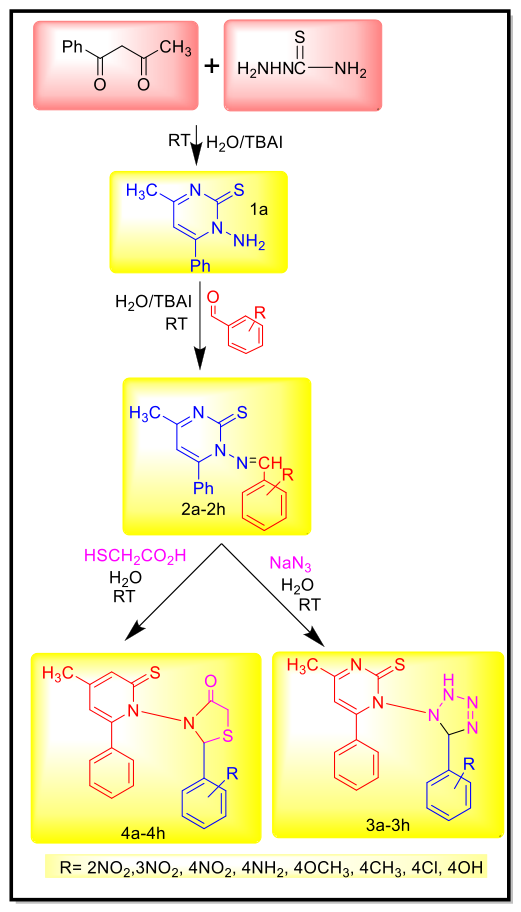
Figure 10.
Molecular docking interactions of (a) amoxicillin, (b) compound 2d, (c) compound 3b, and (d) compound 4b with Penicillin-Binding Protein 4 (PBP4, PDB ID: 3ZG8), showing hydrogen bonding, water-mediated contacts, and additional hydrophobic/π-interactions, highlighted their binding potential.
Figure 10.
Molecular docking interactions of (a) amoxicillin, (b) compound 2d, (c) compound 3b, and (d) compound 4b with Penicillin-Binding Protein 4 (PBP4, PDB ID: 3ZG8), showing hydrogen bonding, water-mediated contacts, and additional hydrophobic/π-interactions, highlighted their binding potential.
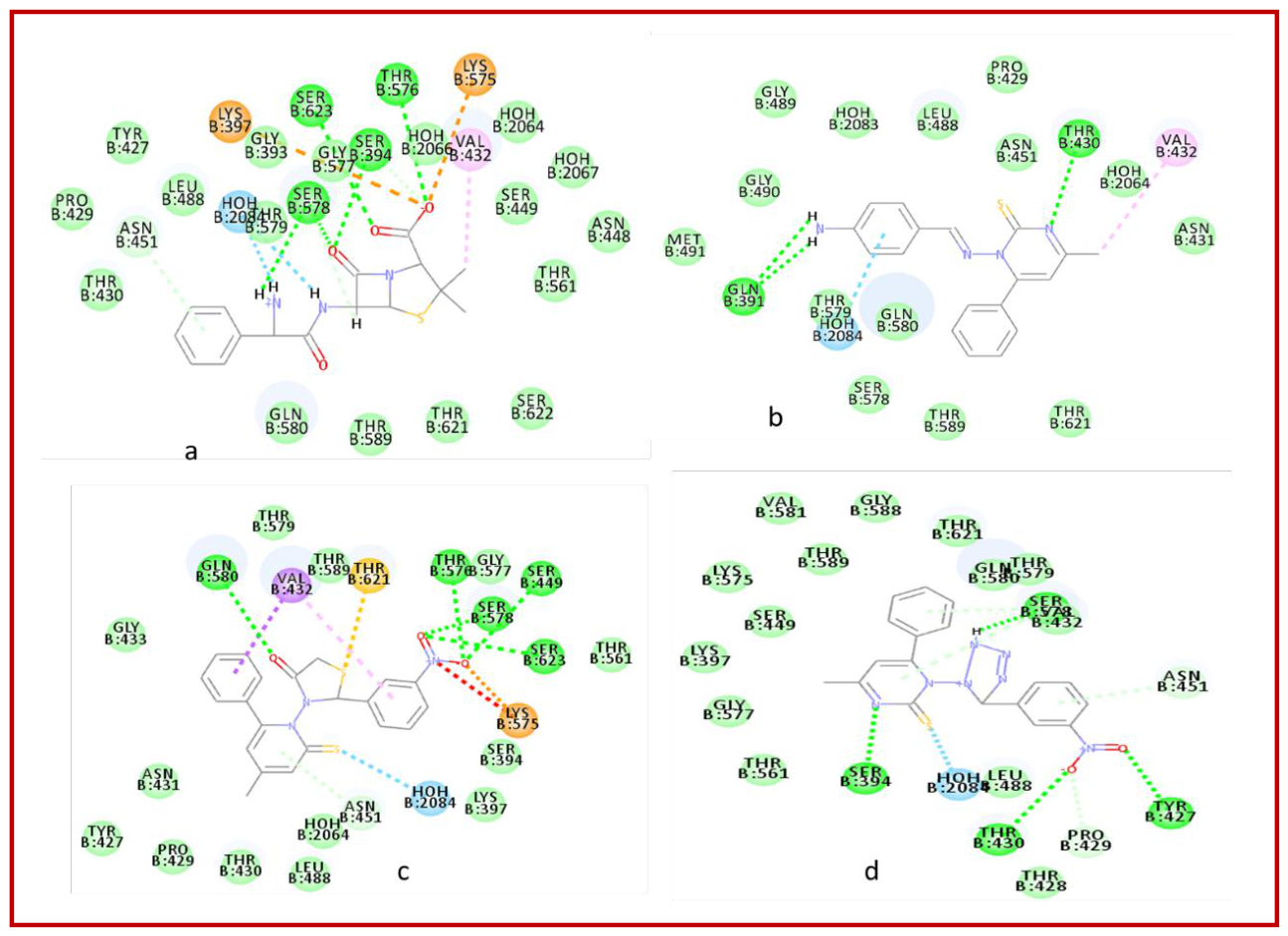
Figure 11.
Molecular docking interactions of (a) itraconazole (standard), (b) compound 2a, (c) compound 2b, (d) compound 3a, and (e) compound 4a with Sterol 14-α-demethylase (CYP51, PDB ID: 5V5Z), showing hydrogen bonding, hydrophobic, and π-interactions within the binding pocket.
Figure 11.
Molecular docking interactions of (a) itraconazole (standard), (b) compound 2a, (c) compound 2b, (d) compound 3a, and (e) compound 4a with Sterol 14-α-demethylase (CYP51, PDB ID: 5V5Z), showing hydrogen bonding, hydrophobic, and π-interactions within the binding pocket.
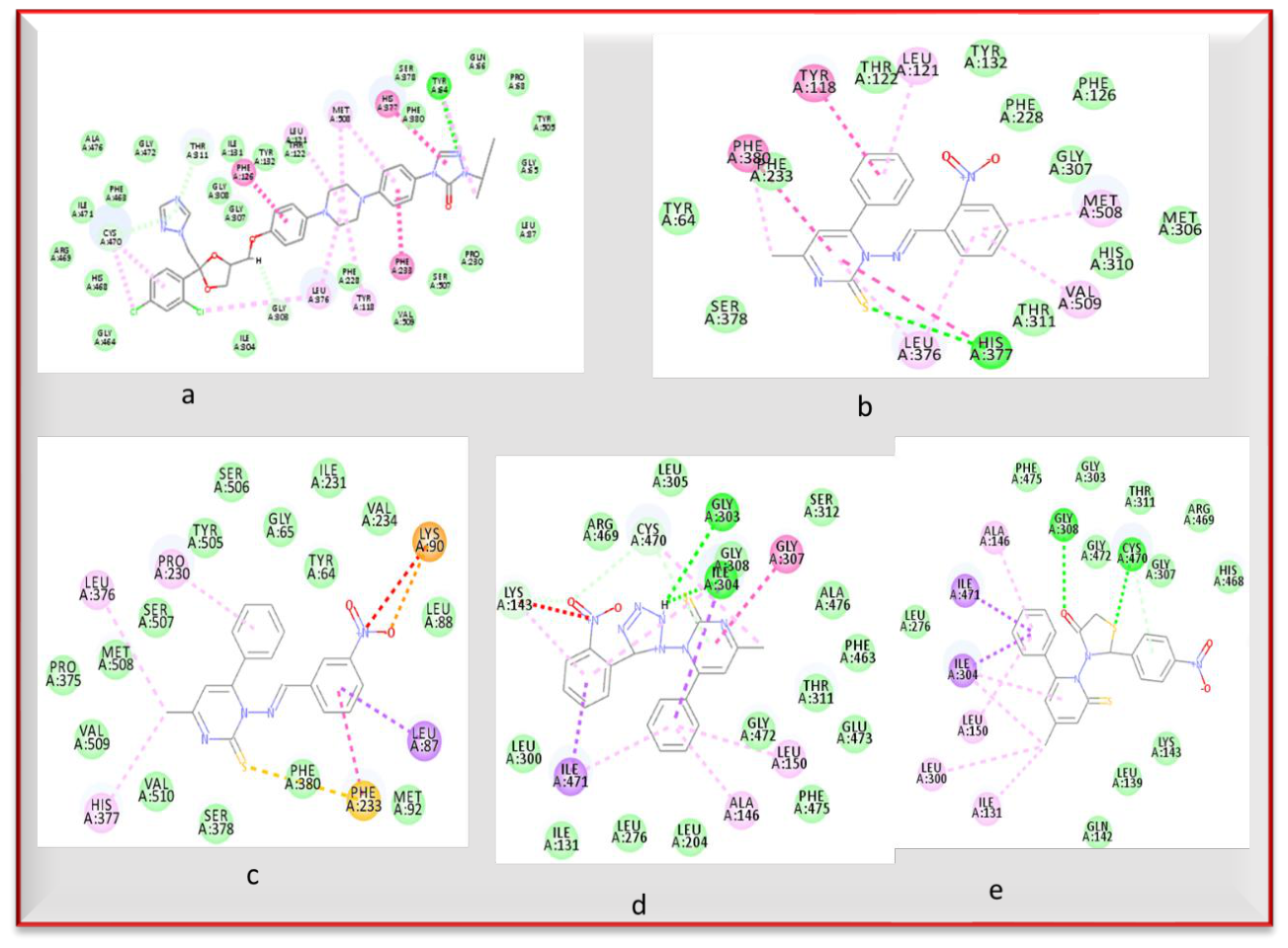
Figure 12.
Molecular docking interactions of (a) ascorbic acid (standard), (b) compound 2h, (c) compound 3c, (d) compound 3f, (e) compound 4b, (f) compound 4d, and (g) compound 4f with the antioxidant target protein (PDB ID: 1OAF), showing hydrogen bonding, hydrophobic, and π-interactions that contribute to binding stability.
Figure 12.
Molecular docking interactions of (a) ascorbic acid (standard), (b) compound 2h, (c) compound 3c, (d) compound 3f, (e) compound 4b, (f) compound 4d, and (g) compound 4f with the antioxidant target protein (PDB ID: 1OAF), showing hydrogen bonding, hydrophobic, and π-interactions that contribute to binding stability.
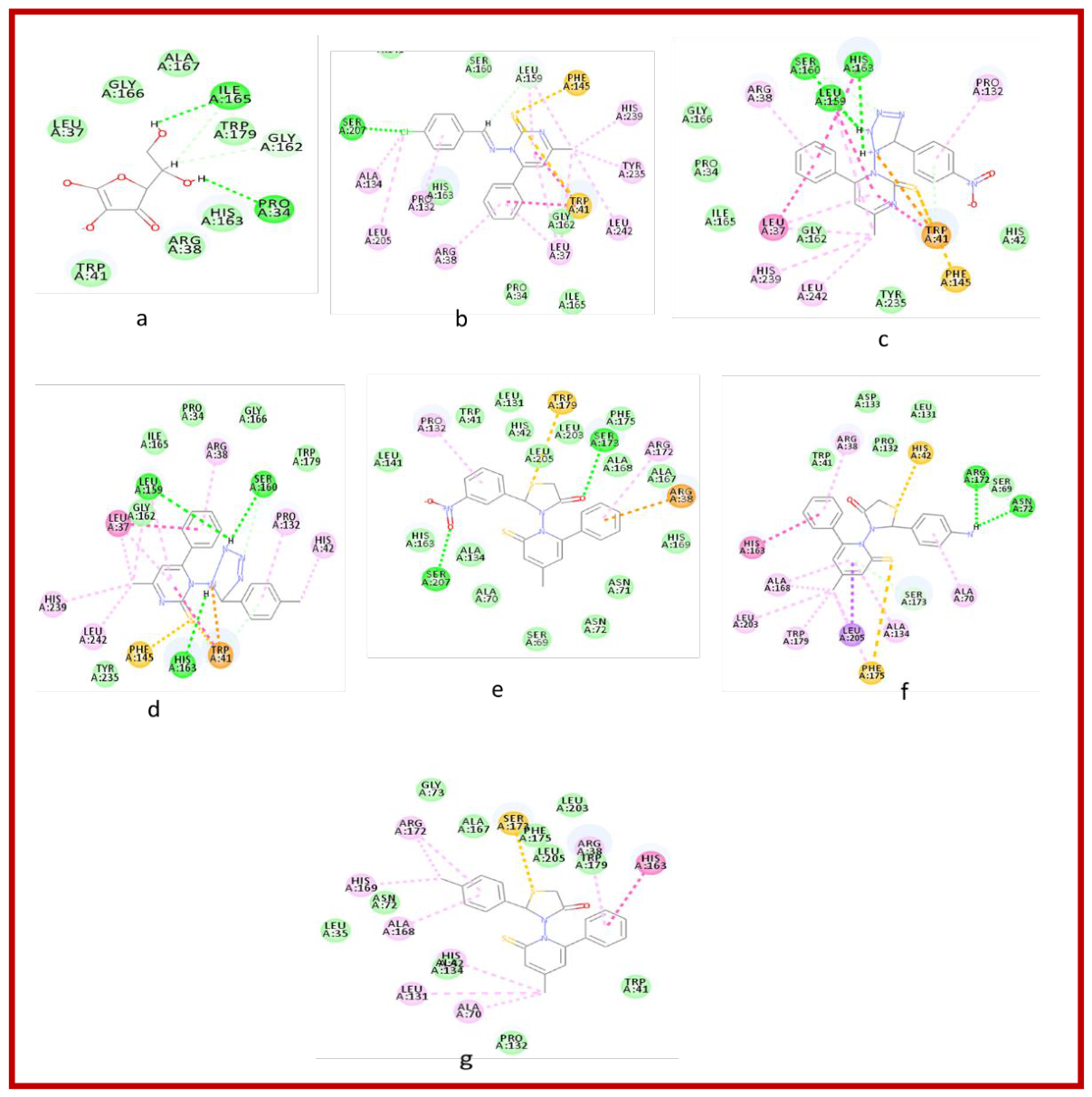
Table 1.
Tetrazole hybrids containing experimental medications that have been approved by the FDA.
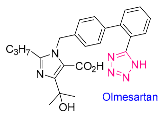 DB00275 Antihypertensive agent, Angiotensin-II receptor |
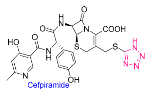 DB00430 A third-generation cephalosporin |
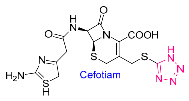 DB00229 A broad-spectrum antibiotic against both gram positive and gram-negative microorganism |
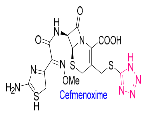 DB00267 A third-generation cephalosporin antibiotic |
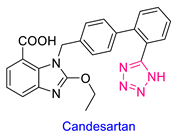 DB00796 DB00796Antihypertensive agent, Angiotensin-II receptor |
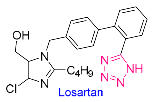 DB00678 DB00678Antihypertensive agent, Angiotensin-II receptor |
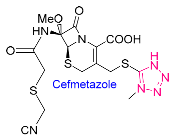 DB00274 DB00274A broad-spectrum antibiotic against both gram positive and gram-negative microorganism |
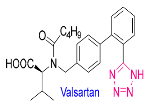 DB00177 DB00177Antihypertensive agent, Angiotensin-II receptor |
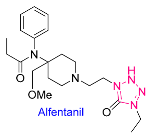 DB00802 DB00802A short acting opioid anesthetics and analgesic of fentanyl |
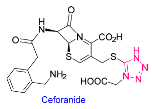 DBOO923 DBOO923A second generation of parenteral cephalosporin antibiotics |
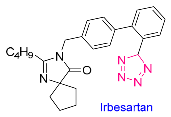 DB1029 DB1029An angiotensin receptor blocker (ARB) used mainly for the treatment of hypertension |
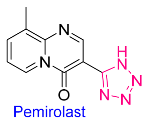 DB00885 DB00885A mast cell stabilizer used as anti-allergic agent |
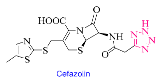 DB01327 DB01327A Broad-spectrum antibiotic |
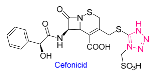 DB01328 DB01328A second-generation cephalosporin |
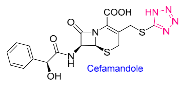 DB01326 DB01326A broad-spectrum cephalosporin antibiotic |
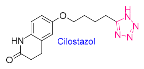 DB01166 DB01166Intermittent claudication in individual with peripheral vascular disease |
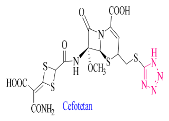 DB01330 DB01330A semisynthetic cephamycin antibiotics |
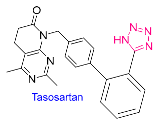 DB01349 DB01349A long-acting angiotensin (II) receptor blocker |
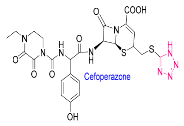 DB01329 DB01329Semi-synthetic broad-spectrum cephalosporin |
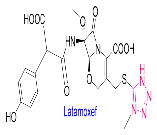 DB04570 DB04570Broad spectrum β-lactam antibiotics |
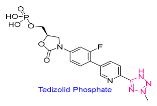 DB09042 DB09042Oxazolidinone-class antibiotic prodrug |
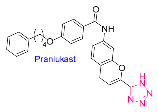 DB01411 DB01411A cysteinyl leukotriene receptor-I antagonist to antagonize reduce bronchospasm |
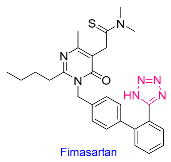 DB09279 DB09279Non-peptide angiotensin-II receptor antagonist (ARB) |
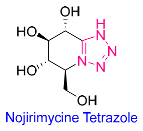 DB02471 DB02471Experimental target, Glycogen phosphorylase, Muscle form |
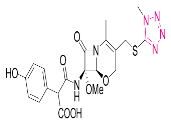 DB04342 DB04342Experimental target, β- lactamase, OXA-10 |
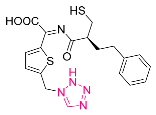 DB02706 DB02706Experimental target, Mercaptocarboxylate inhibitor |
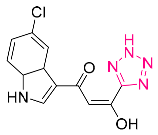 DB03118 DB03118Experimental target Gag-Pol Polyprotein |
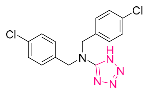 DB04037 DB04037Experimental target, β- lactamase, TEM |
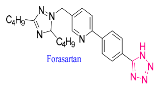 DB01342 DB01342Experimental target, Angiotensin-II antagonist |
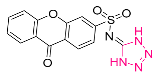 DB04698 DB04698Experimental target, 3-dehydroquinate dehydratase |
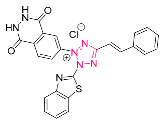 DB01897 DB01897Experimental target, Hematopoietic Prostaglandin D synthase |
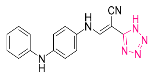 DB04430 DB04430Experimental target, β-lactamase, TEM |
Table 2.
Thiazolidine-4-One hybrids containing experimental medications that have been approved by the FDA.
Table 2.
Thiazolidine-4-One hybrids containing experimental medications that have been approved by the FDA.
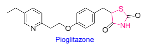 Selectively stimulates the nuclear receptor (PPAR-γ) and to a lesser extentPPAR-α. |
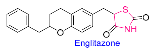 DB14035Experimental Target, Glitazone class of antidiabetic agents, Englitazone decrease triacylglycerol levels in animal studies. |
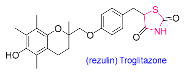 DB00197Troglitazone activates (PPAR-gamma), a ligand-activated transcription factor, Approved, Investigational, Withdrawn in 2000 due to risk of hepatotoxicity. It was superseded by pioglitazone and rosiglitazone. |
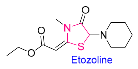 DB08982 Etozoline, a loop diuretic, inhibits the sodium, potassium, and chloride symport in the ascending limb of Henle, leading to increased urinary output and reduced extracellular fluid. |
|
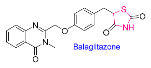 It is a partial agonist of the peroxisome proliferator-activated receptor gamma (PPARγ), a nuclear receptor that plays a role in regulating glucose and lipid metabolism. |
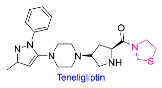 It inhibits the enzyme DPP-4 in glucose metabolism. |
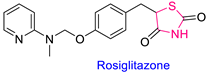 Rosiglitazone, thiazolidinedione, improves glycaemic control by enhancing insulin sensitivity, primarily by activating PPAR-gamma receptors, which in turn regulates the transcription of insulin-responsive genes in key target tissues. |
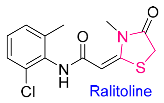 DM7HAE9 Anticonvulsant and sodium channel blocking drug |
|
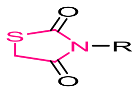 3-(7-bromoheptyl) thiazolidine-2,4-dione |
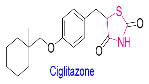 Improves insulin sensitivity and glycaemic control by acting as a potent and selective PPARγ agonist, which regulates genes involved in glucose homeostasis and fatty acid metabolism |
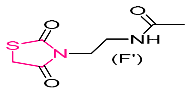 N-(2-(2,4-dioxothiazolidin-3-yl) ethyl) acetamide It is a PPAR-alpha agonist |
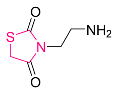 3-(2-aminoethyl) thiazolidine-2,4-dione It is a sigma-1 receptor ligand, potentially useful in treating neuropathic pain |
|
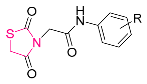 It is a PPAR-alpha agonist |
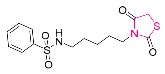 N-(5-(2,4-dioxothiazolidin-3-yl)pentyl)benzene sulfonamide |
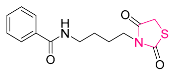 N-(4-(2,4-dioxothiazolidin-3-yl)butyl)benzamide |
 tert-butyl (2-(2,4-dioxothiazolidin-3-yl)ethyl)carbamate |
|
 3-(2-oxo-1,2-diphenylethyl) thiazolidine-2,4-dione |
 5-(2,4-dioxothiazolidin-3-yl)pentan-1-aminium chloride |
 (1s,8s)-1-(5-(2,4-dioxothiazolidin-3-yl) pentyl)-1,3,5,7-tetraaza tetracyclo[5.1.1.03,8.05,8] nonan-1-ium bromide |
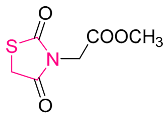 Methyl 2-(2,4-dioxothiazolidin-3-yl) acetate It act by PPARγ activation and scavenging of reactive oxygen species |
|
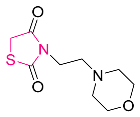 3-(2-morpholinoethyl) thiazolidine-2,4-dione Anti-diabetic activity |
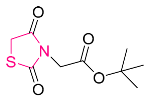 tert-butyl 2-(2,4-dioxothiazolidin-3-yl)acetate |
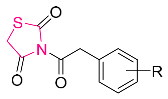 It is a PPAR-alpha agonist |
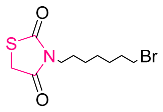 3-(7-bromoheptyl) thiazolidine-2,4-dione |
|
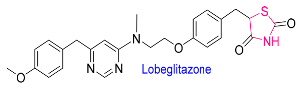 Lobeglitazone is a PPAR-alpha agonist |
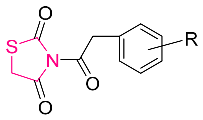 It is act by the PPARγ receptor and potentially inhibiting Mur ligase |
|||
Table 3.
A few physical characteristics of Schiff base (2a-2h).
| Comp. No. | Structure | M.P. (°C) | Color | Time (Min) | Yield (100%) | Recrystallization Solvents |
|---|---|---|---|---|---|---|
| 2a | 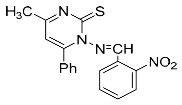 |
227-229 | White | 15 | 94 | C2H5OH |
| 2b | 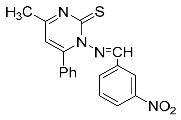 |
187-189 | White | 17 | 89 | C2H5OH |
| 2c | 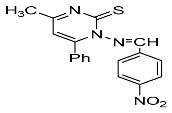 |
235-237 | Yellow | 16 | 91 | C2H5OH |
| 2d | 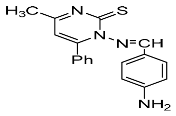 |
97-99 | Pale yellow | 23 | 93 | CH3OH |
| 2e | 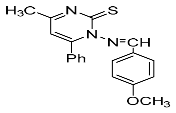 |
145-147 | Pale yellow | 27 | 87 | C2H5OH |
| 2f | 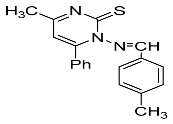 |
133-135 | White | 19 | 91 | CH3OH |
| 2g | 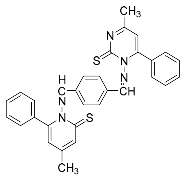 |
324-326 | Brown | 33 | 85 | C2H5OH |
| 2h | 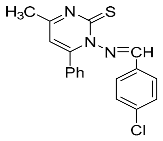 |
177-199 | White | 37 | 93 | CH3OH |
Table 4.
Comparative analysis of numerous catalysts, a solvent, using TBAI for the highest possible yields of Schiff base in current research.
Table 4.
Comparative analysis of numerous catalysts, a solvent, using TBAI for the highest possible yields of Schiff base in current research.
| Sr. No | Catalyst | Solvents | Temperature (0C) | Time | Yield (%) | Reference |
|---|---|---|---|---|---|---|
| 1. | Amino acid | H2O | 35 | 6 (h) | 39 | 18 |
| 2. | Amino acid | EtOH | 80 | 6 (h) | 60 | 19 |
| 3. | [BMIM][NTf2] | Decane | 55 | 271 (Min) | 62 | 20 |
| 4. | PIL-SB-Mn (III) | EtOH | 100 | 6 (h) | 60 | 21 |
| 5. | PIL-SB-Mn(III) | H2O | RT | 12 (h) | 55 | 21 |
| 6. | SYSU-Zn@IL2 | DMF | 12(h) | 12 (h) | 88 | 22 |
| 7. | TBAI | THF | RT | 10 (h) | 77 | Present work |
| 8. | TBAI | EtOH | 80 | 8 (h) | 79 | Present work |
| 9. | TBAI | H2O | RT | 30 (Min) | 94 | Present work |
Table 5.
Comparative analysis of numerous catalysts, a solvent, using TBAI for the highest possible yields of Schiff base in current research.
Table 5.
Comparative analysis of numerous catalysts, a solvent, using TBAI for the highest possible yields of Schiff base in current research.
| Sr. No | Catalyst | Solvents | Temperature (0C) | Time | Yield (%) | Reference |
|---|---|---|---|---|---|---|
| 1. | Amino acid | H2O | 35 | 6 (h) | 39 | 18 |
| 2. | Amino acid | EtOH | 80 | 6 (h) | 60 | 19 |
| 3. | [BMIM][NTf2] | Decane | 55 | 271 (Min) | 62 | 20 |
| 4. | PIL-SB-Mn (III) | EtOH | 100 | 6h | 60 | 21 |
| 5. | PIL-SB-Mn (III) | H2O | RT | 12 (h) | 55 | 21 |
| 6. | SYSU-Zn@IL2 | DMF | 12(h) | 12 (h) | 88 | 22 |
| 7. | TBAI | THF | RT | 10 (h) | 77 | Present work |
| 8. | TBAI | EtOH | 80 | 8 (h) | 79 | Present work |
| 9. | TBAI | H2O | RT | 30 (Min) | 94 | Present work |
Table 6.
A few physical characteristics of Tetrazole (3a-3h).
| Comp. No. | Structure | M.P.(0C) | Color | Time (Min) | Yield (100%) | Recrystallization Solvents |
|---|---|---|---|---|---|---|
| 3a | 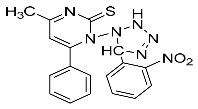 |
202-204 | Brown | 51 | 88 | Ethanol |
| 3b | 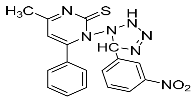 |
230-232 | Light Brown | 63 | 90 | Ethanol |
| 3c | 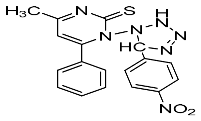 |
252-254 | Yellow | 47 | 84 | Ethanol |
| 3d | 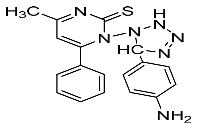 |
270-272 | Yellow | 51 | 89 | Methanol |
| 3e | 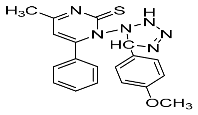 |
195-197 | Light Brown | 63 | 91 | Methanol |
| 3f | 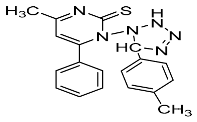 |
188-190 | Dark Brown | 71 | 87 | Methanol |
| 3g | 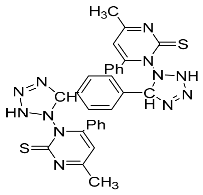 |
268-270 | Yellow | 77 | 90 | Ethanol |
| 3h | 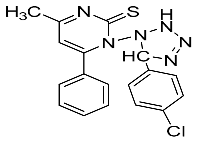 |
222-224 | Yellow | 52 | 88 | Ethanol |
Table 7.
Comparative analysis of numerous catalysts, a solvent, using TBAI for the highest possible yields of Schiff base in current research.
Table 7.
Comparative analysis of numerous catalysts, a solvent, using TBAI for the highest possible yields of Schiff base in current research.
| Sr. No. | Catalyst | Solvent | Temp. (0C) | Yield (%) | Time | Comp. | Ref. |
|---|---|---|---|---|---|---|---|
| 1. | Co3O4@p{AVIM}Br | H2O | 25 | 79 | 2 (h) | 4b | 28 |
| 2. | [Bmim][PF6] | Ethanol | 80 | 59 | 4 (h) | 4h | 29 |
| 3. | [MOEMMIM]TFA | Ethanol | 80 | 78 | 3 (h) | 1d | 30 |
| 4. | MNP[Pmim]HSO4 | Solvent-free | 80 | 78 | 7 (h) | 8 | 31 |
| 5. | [HDBU][HSO4] | Solvent-free | 80 | 80 | 2 (h) | 8 | 32 |
| 6. | TBAI | H2O | 91 | 91 | 81 (min) | 4a | Present work |
Table 8.
A few physical characteristics of Tetrazole (4a-4h).
| Comp. No. | Structure | M.P.(0C) | Color | Time (Min) | Yield (100%) | Recrystallization Solvents |
|---|---|---|---|---|---|---|
| 4a | 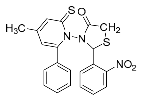 |
180-182 | Green | 57 | 91 | Ethanol |
| 4b | 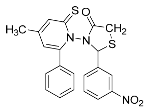 |
186-188 | White | 63 | 89 | Ethanol |
| 4c | 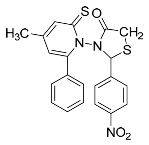 |
252-254 | Yellow | 47 | 84 | Methanol |
| 4d | 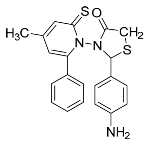 |
191-193 | Green | 51 | 88 | Methanol |
| 4e | 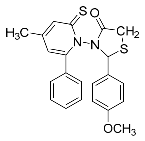 |
195-197 | Brown | 61 | 90 | Methanol |
| 4f | 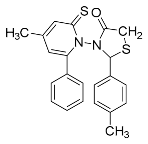 |
185-187 | Dark Brown | 71 | 87 | Ethanol |
| 4g | 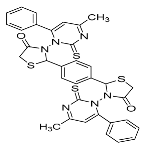 |
318-320 | Yellow | 72 | 90 | Ethanol |
| 4h | 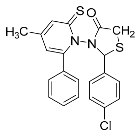 |
212-214 | Yellow | 51 | 89 | Ethanol |
Table 9.
Antimicrobial data of compounds 2, 3, 4 (a-h).
| Compound No | R | Antibacterial activity Diameter of a zone of inhibition in mm |
Antifungal activity (%Inhibition) | ||||
|---|---|---|---|---|---|---|---|
| S. aratyphi-A | S. Aureus | E. coli | B. subtilis | F. molaniforme | A. Niger | ||
| 2a | 2NO2 | 05 | 11 | 07 | 08 | 57.55 | 45.35 |
| 2b | 3NO2 | 05 | 08 | 07 | 09 | 63.33 | 69.21 |
| 2c | 4NO2 | 13 | 12 | 10 | 15 | 77.22 | 67.45 |
| 2d | 4NH2 | 17 | 19 | 16 | 15 | 46.78 | 62.30 |
| 3a | 2NO2 | 07 | 09 | 11 | 06 | 54.25 | 59.34 |
| 3b | 3NO2 | 13 | 16 | 18 | 18 | 59.79 | 69.40 |
| 3c | 4NO2 | 11 | 12 | 11 | 14 | 46.42 | 43.42 |
| 4a | 2NO2 | 09 | 05 | 07 | 05 | 57.32 | 55.87 |
| 4b | 3NO2 | 16 | 15 | 15 | 17 | 46.55 | 40.57 |
| 4c | 4NO2 | 12 | 15 | 11 | 13 | 57.45 | 56.44 |
| Ampicillin | - | 31 | 33 | 35 | 35 | - | - |
| Penicillin-G | - | 32 | 30 | 30 | 33 | - | - |
| Griseofulvin | - | - | - | - | - | 86 | 81 |
| Fungiguard | - | - | - | - | - | 78 | 77 |
Disclaimer/Publisher’s Note: The statements, opinions and data contained in all publications are solely those of the individual author(s) and contributor(s) and not of MDPI and/or the editor(s). MDPI and/or the editor(s) disclaim responsibility for any injury to people or property resulting from any ideas, methods, instructions or products referred to in the content. |
© 2026 by the authors. Licensee MDPI, Basel, Switzerland. This article is an open access article distributed under the terms and conditions of the Creative Commons Attribution (CC BY) license (http://creativecommons.org/licenses/by/4.0/).
Copyright: This open access article is published under a Creative Commons CC BY 4.0 license, which permit the free download, distribution, and reuse, provided that the author and preprint are cited in any reuse.


