

Submitted:
12 May 2026
Posted:
14 May 2026
You are already at the latest version
Abstract
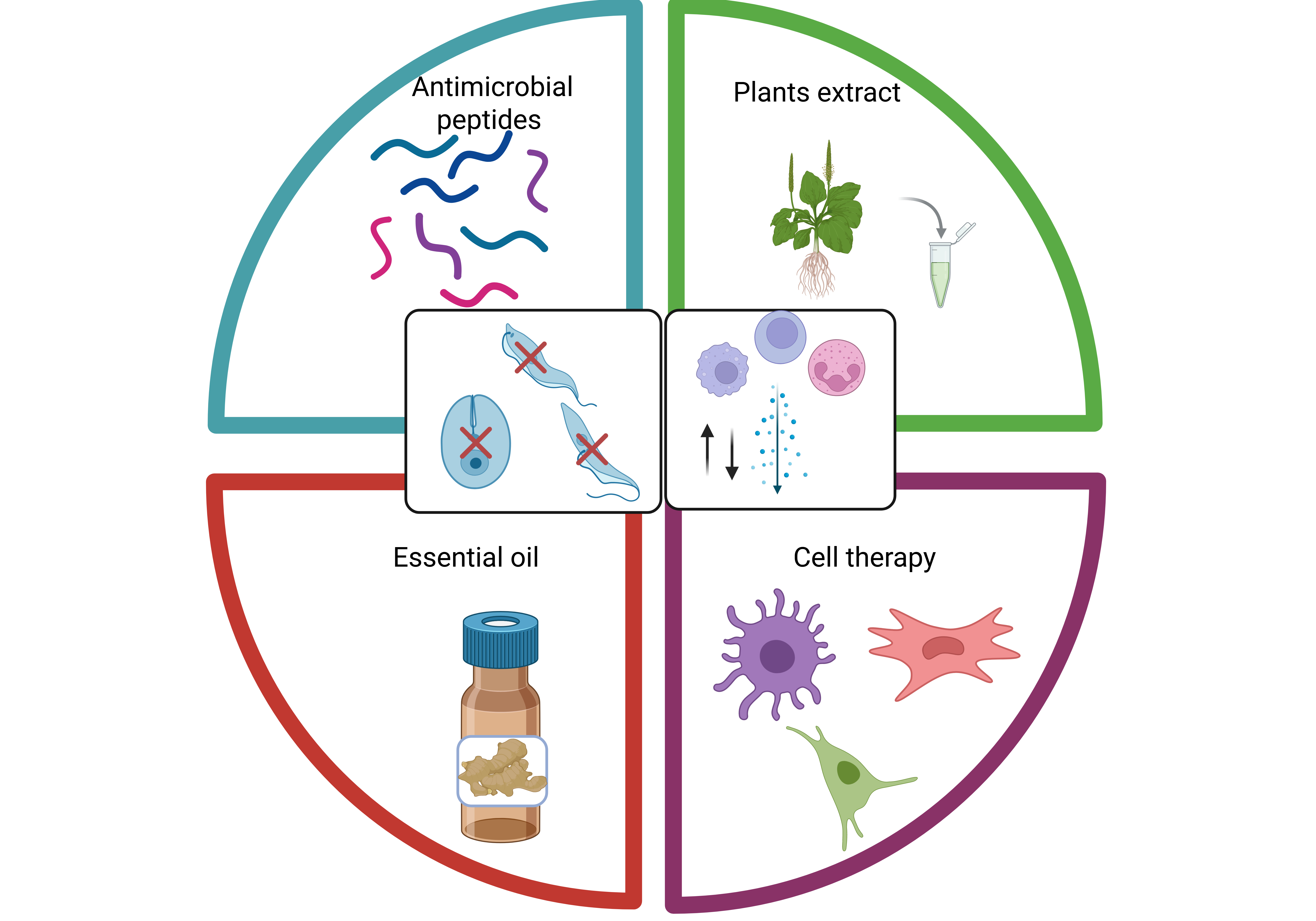
Chagas disease, caused by Trypanosoma cruzi, remains a major public health problem in Latin America and an emerging global health concern due to population mobility. Alt-hough benznidazole and nifurtimox remain the only approved antiparasitic drugs, their limited efficacy in chronic infection, prolonged treatment regimens, frequent adverse ef-fects, and variable activity across parasite strains highlight the need for new therapeutic strategies. In addition, the pathogenesis of chronic Chagas disease is driven not only by parasite persistence but also by immune-mediated tissue damage, particularly in chronic Chagas cardiomyopathy. In this review, we examine emerging therapeutic approaches that extend beyond conventional trypanocidal chemotherapy, with emphasis on plant-derived extracts, essential oils, antimicrobial peptides, and cell-based immuno-modulatory strategies. Plant compounds and essential oils have shown antiparasitic ac-tivity through mechanisms including oxidative stress induction, membrane disruption, interference with sterol biosynthesis, and mitochondrial dysfunction, while some extracts also modulate host immune responses. Antimicrobial peptides display dual potential by directly damaging parasite membranes and organelles or by reshaping infec-tion-associated inflammatory responses. In parallel, cell-based therapies such as mesen-chymal stromal cells, tolerogenic dendritic cells, and bone marrow-derived cells have demonstrated promising cardioprotective and immunoregulatory effects in experimental chronic Chagas disease. Collectively, these approaches support a multitarget therapeutic framework in which parasite-directed and host-directed interventions may complement each other. Further mechanistic studies, standardization, and translational validation will be essential to advance these candidates toward clinically useful therapies for Chagas disease.
Keywords:
Trypanosoma cruzi
; antiparasitic therapy
; natural compounds
1. Introduction
Chagas disease, caused by the kinetoplastid parasite Trypanosoma cruzi, remains one of the most important neglected tropical diseases and a persistent global public health challenge despite decades of control efforts [1]. It is estimated that more than 7 million people are currently infected worldwide, with the highest burden concentrated in Latin America, where transmission remains endemic in at least 21 countries [2]. In addition to ongoing vectorial transmission, increased population mobility has led to a growing number of autochthonous and imported cases in non-endemic regions, including North America, Europe, Asia, and Australia, further reinforcing the global relevance of Chagas disease [3]. The disease disproportionately affects socioeconomically vulnerable populations and is associated with substantial long-term healthcare and socioeconomic costs, largely driven by chronic cardiac and digestive complications [1,2].
Transmission occurs primarily through hematophagous triatomine insects of the subfamily Triatominae; however, congenital, transfusional, and oral routes also contribute to disease spread [4]. Following infection, T. cruzi establishes a complex life cycle involving both insect vectors and vertebrate hosts. Infective trypomastigotes invade nucleated host cells, escape from the parasitophorous vacuole, and differentiate into intracellular amastigotes, which replicate within the cytoplasm [5]. This intracellular lifestyle promotes long-term parasite persistence across multiple tissues and represents a central biological barrier to achieving sterile cure [6].
Clinically, T. cruzi infection progresses from an acute phase, often asymptomatic or mildly symptomatic, to a prolonged indeterminate stage characterized by low-level parasite persistence in the absence of overt disease [3,7]. Approximately 30–40% of infected individuals subsequently develop chronic Chagas disease, most commonly chronic Chagas cardiomyopathy, which constitutes the most severe manifestation and a leading cause of disease-related mortality [3]. Importantly, disease progression is primarily driven by persistent infection and host-mediated inflammatory responses rather than by high levels of circulating parasites [7].
Current treatment relies almost exclusively on the nitroheterocyclic drugs benznidazole and nifurtimox, which require activation by parasite nitroreductases to exert trypanocidal activity [8]. Although these agents achieve relatively high cure rates during acute infection, their efficacy in chronic disease remains limited [9]. Moreover, prolonged treatment regimens and frequent adverse effects—including dermatological reactions, gastrointestinal disturbances, and neurological toxicity—significantly compromise treatment adherence and clinical outcomes [10].
In addition, parasite genetic diversity represents a major obstacle to effective chemotherapy. T. cruzi is classified into multiple discrete typing units (DTUs), which differ in tissue tropism, virulence, and drug susceptibility [11,12]. Resistance to benznidazole and other investigational compounds has been associated with reduced nitroreductase expression and enhanced antioxidant defenses [13]. Together, intracellular persistence, immune-mediated tissue damage, and parasite genetic heterogeneity highlight critical limitations of current therapies and underscore the need for novel strategies capable of targeting both parasite survival mechanisms and host–parasite interactions.
Taken together, the persistent global burden of Chagas disease, its chronic and progressive clinical course, and the limited efficacy of available treatments emphasize the urgent need for alternative and complementary therapeutic approaches. In this narrative review, we provide a critical overview of emerging multitarget therapeutic strategies against T. cruzi, focusing on natural compounds, antimicrobial peptides, and immunomodulatory approaches. Increasing attention has therefore been directed toward antimicrobial peptides and other natural compounds with multitarget activity, as well as immunomodulatory strategies aimed at restoring host immune balance and combination therapies designed to enhance efficacy while reducing drug-associated toxicity [14,15,16,17]. In this review, we critically examine these emerging approaches, with emphasis on their mechanisms of action and therapeutic potential to overcome current limitations in Chagas disease management.
2. Search Strategy and Selection Criteria
A literature search was performed using major scientific databases, including PubMed, Scopus, and Web of Science. Search terms consisted of combinations of “Trypanosoma cruzi,” “Chagas disease,” “natural compounds,” “essential oils,” “antimicrobial peptides,” and “cell-based therapy,” using Boolean operators (AND/OR).
Articles published in English were considered, with priority given to recent experimental (in vitro and in vivo) and preclinical studies. Relevant review articles were also included to provide contextual background. Studies were selected based on their relevance to mechanisms of action, immunomodulatory effects, and multitarget therapeutic strategies against T. cruzi.
No formal systematic review protocol was followed, and study selection was based on the authors’ critical assessment of the literature
3. Conventional Treatment for Chagas Disease
Therapeutic options for Chagas disease remain limited, relying primarily on two nitro-derivative compounds developed more than 50 years ago: nifurtimox [3-methyl-4-(nitrofurfurylideneamino)tetrahydro-4H-1,4-thiazine-1,1-dioxide] (Nfx, Lampit®), a nitrofuran derivative, and benznidazole [N-benzyl-2-nitroimidazole acetamide] (Bnz, Rochagan®, Roche), a nitroimidazole derivative. Both nitroheterocyclic drugs contain a nitro group attached to either a furan or an imidazole ring, respectively [11,18,19]. They act as prodrugs that require activation by parasite nitroreductases (NTRs), a key step for their trypanocidal activity. This process begins with the reduction of the nitro group to a nitro anion radical catalyzed by parasite NTR enzymes [8].
Two main classes of NTRs have been identified in Trypanosoma species. Type II NTRs are flavin-containing enzymes that initiate redox cycling, generating unstable nitro radicals through interaction with molecular oxygen [20]. In contrast, Type I NTRs are flavin mononucleotide (FMN)-dependent, oxygen-insensitive enzymes that catalyze two-electron reduction reactions. This group includes enzymes such as prostaglandin F2α synthase–like reductases, as well as mitochondrial NTRs that utilize NADH or NADPH as electron donors [8,21]. The resulting reactive intermediates induce oxidative stress and cause DNA damage, ultimately impairing essential cellular processes [8,22]. Although both drugs are approved for trypanosomiasis, benznidazole exhibits a more favorable safety and tolerability profile and is generally considered the first-line treatment. It is also the only drug approved by the U.S. Food and Drug Administration (FDA) for pediatric Chagas disease in the United States [10].
Benznidazole and nifurtimox achieve cure rates of approximately 60–85% during the acute phase, as determined by parasite clearance. However, prolonged treatment is frequently associated with adverse effects. Benznidazole is linked to a broad spectrum of adverse reactions, most commonly hypersensitivity reactions, gastrointestinal intolerance, and neurological symptoms, whereas hematological toxicity is rare but potentially severe [23]. The most reported adverse effects of nifurtimox include anorexia, weight loss, and neuropsychiatric manifestations such as irritability and sleep disturbances, in addition to other nervous system symptoms [24]. These adverse events may lead to treatment discontinuation, thereby compromising therapeutic outcomes [23,24].
Resistance to benznidazole has been associated with mutations in DNA repair pathways and alterations in ergosterol biosynthesis, the latter also implicated in resistance to posaconazole, a drug investigated as adjunct therapy [25]. Additional resistance mechanisms include increased expression of antioxidant enzymes such as superoxide dismutases (SOD), which protect parasites from oxidative damage, as well as downregulation of NTR expression, leading to reduced prodrug activation [26]. Despite relatively high cure rates during acute infection, treatment effectiveness in chronic Chagas disease is substantially lower in adult patients (2–40%), particularly in endemic settings, and does not significantly prevent disease progression in individuals with established cardiomyopathy [10]. Importantly, the limited efficacy observed in chronic infection reflects the inability of current drugs to eliminate intracellular parasite reservoirs and to adequately modulate host immune responses.
Collectively, the limitations of conventional therapies—including toxicity, variable efficacy, and the emergence of drug resistance—highlight the urgent need to identify novel therapeutic targets and develop more effective treatment strategies for patients with chronic infection. In this context, natural compounds and alternative therapeutic approaches have emerged as promising avenues for the treatment of Chagas disease.
4. Emerging Therapeutic Strategies Against T. cruzi
4.1. Plant Extracts
Phytotherapy represents one of the earliest therapeutic practices worldwide, and more than 21,000 plant species are currently used medicinally according to the World Health Organization [27]. Natural products constitute a major source of drug discovery, with approximately 60% of approved drugs derived from natural product metabolites or their derivatives [28]. In this framework, numerous plant-derived compounds have demonstrated biological activity relevant to Chagas disease (Figure 1) [29].
Among these, alkaloids from the Amaryllidaceae family have shown antiparasitic activity against Plasmodium falciparum, Leishmania donovani, and T. cruzi [30,31]. In line with these findings, extracts from Amaryllidaceae species such as Crinum erubescens and Rhodophiala andicola exhibited significant anti-T. cruzi activity, with half-maximal inhibitory concentration (IC₅₀) values of approximately 6–10 ppm. Notably, these extracts were active against the intracellular amastigote stage while maintaining low cytotoxicity toward HepG2 cells (selectivity index, SI > 20) [30].
Several medicinal plants traditionally used in Mexico for the treatment of parasitic infections have also been evaluated. Methanolic extracts of Eryngium heterophyllum, Haematoxylum brasiletto, Marrubium vulgare, and Schinus molle demonstrated strong inhibition of parasite growth (88–100%), with IC₅₀ values of 11.24, 7.92, 22.66, and 16.31 μg/mL, respectively [32]. Similarly, Bidens pilosa methanolic extract and its fractions inhibited more than 90% of both epimastigote and trypomastigote stages at approximately 800 μg/mL, without significant cytotoxicity in Vero cells [33]. However, the wide variability in effective concentrations reflects the heterogeneity of plant-derived preparations, and the lack of compound isolation and in vivo validation remains a major limitation across most studies.
Beyond in vitro observations, only a limited number of studies have provided in vivo evidence together with mechanistic insights into the antitrypanosomal activity of plant-derived metabolites. Oral administration of the hydroethanolic extract of Aristeguietia glutinosa (Asteraceae) at 50 mg/kg, as well as treatment with its most active component (+)-15-hydroxy-7-labden-17-al at 30 mg/kg, significantly reduced parasitemia in a murine model of acute T. cruzi infection. These effects were associated with inhibition of parasite mitochondrial dehydrogenases and sterol biosynthesis pathways [34].
In addition to direct antiparasitic effects, increasing evidence indicates that certain plant-derived extracts can modulate host immune responses, a feature of particular relevance in Chagas disease. Extracts of Clethra fimbriata demonstrated in vitro trypanocidal activity against epimastigotes, trypomastigotes, and amastigotes of T. cruzi. The hexane extract exhibited IC₅₀/EC₅₀ values of 153.9 ± 29.5 μg/mL, 39.3 ± 7.2 μg/mL, and 45.6 ± 10.5 μg/mL, respectively. Cell death analysis using Annexin V/PI staining revealed that the extract predominantly induced early apoptosis in epimastigotes, whereas in trypomastigotes it increased the frequency of early apoptosis, late apoptosis, and necrosis [35]. Moreover, treatment was associated with low cytotoxicity and modest immunomodulatory effects on CD4⁺ and CD8⁺ T cells, including increased production of IFN-γ and TNF-α, as well as de novo expression of granzyme B and perforin. These responses may contribute to parasite clearance through iNOS activation or cytotoxic activity against infected cells [35,36].
Additional evidence of immunomodulation has been reported for other natural sources. Aqueous extracts of the microalgae Chlorella vulgaris and Tetradesmus obliquus reduced IFN-γ levels, contributing to attenuation of the inflammatory response. Furthermore, T. obliquus induced a modest increase in TNF-α production while promoting the secretion of the regulatory cytokine IL-10 [37]. Whether these effects involve the expansion or functional activation of regulatory T cells remains unclear, but such mechanisms could be relevant for limiting tissue damage during infection (Figure 1). Given the dual contribution of parasite persistence and host immune responses to Chagas disease pathogenesis, the immunological effects of these extracts warrant careful evaluation to determine whether they confer protection or exacerbate pathology.
Overall, current evidence indicates a progression from initial in vitro antiparasitic screening to the emerging recognition of in vivo efficacy and immunomodulatory properties. While these findings support the multifaceted therapeutic potential of plant-derived extracts, they also emphasize the need for rigorous characterization of active compounds, standardized formulations, and integrated studies addressing both antiparasitic activity and host immune modulation. Advancing these candidates toward translational application will require coordinated chemical, parasitological, and immunological approaches.
4.2. Essential Oils
Essential oils (EOs) are volatile, hydrophobic liquids extracted from plants and composed primarily of terpenes and terpenoids, along with phenylpropanoids. They exhibit a broad spectrum of biological activities, including antimicrobial, anti-inflammatory, antiulcer, antioxidant, antiviral, and antiparasitic effects [38]. Their pharmacological properties are strongly influenced by plant chemotype, extraction method, and chemical stability, as these factors critically determine essential oil composition and bioactivity [39,40].
The antimicrobial activity of essential oils involves multiple complementary mechanisms, including disruption of membrane integrity leading to increased permeability and leakage of intracellular contents, impairment of energy metabolism through ATP depletion and respiratory inhibition, induction of oxidative stress via reactive oxygen species (ROS) generation, and interference with quorum sensing and biofilm formation, ultimately resulting in cell death [41]. In the context of parasitic infections, these effects have been associated with oxidative stress induction, enhanced lipid peroxidation, and subsequent membrane destabilization, leading to severe cellular damage in parasites (Figure 2) [42].
Clove essential oil (Syzygium aromaticum L.) has demonstrated potent in vitro activity against epimastigote and bloodstream trypomastigote forms of T. cruzi. Using steam-distilled oils characterized by GC and GC–MS, clove EO exhibited IC₅₀ values of 99.5 µg/mL for epimastigotes and 57.5 µg/mL for trypomastigotes, representing the highest activity among the essential oils evaluated. Treatment with clove EO and its major constituent, eugenol, induced pronounced ultrastructural alterations, predominantly affecting the parasite nucleus, as revealed by scanning and transmission electron microscopy [43].
Notably, Cinnamomum verum essential oil exhibits greater antiparasitic potency. This oil reduced epimastigote viability with an IC₅₀ of 24.13 µg/mL after 24 h of exposure, while metacyclic trypomastigotes showed even higher susceptibility (IC₅₀ = 5.05 µg/mL). Importantly, significant activity was also observed against intracellular amastigotes within infected Vero cells (IC₅₀ = 20 µg/mL), supporting its relevance against clinically pertinent parasite stages and highlighting stage-dependent differences in susceptibility [44]. Oregano essential oil also demonstrated in vitro trypanocidal activity, inhibiting epimastigote growth (IC₅₀/24 h = 175 μg/mL) and inducing lysis of bloodstream trypomastigotes (IC₅₀/24 h = 115 μg/mL) after 24 h of exposure [45].
Evidence from in vivo studies further supports the therapeutic potential of essential oils. Clove and ginger essential oils reduced parasitemia and parasite burden in experimental T. cruzi infection, although a reduction in mortality was observed only in animals treated with ginger essential oil [46]. Fractions derived from Lippia alba essential oils, rich in citral, caryophyllene oxide, and limonene, exhibited trypanocidal efficacy comparable to benznidazole and provided additional cardioprotective effects in a chronic experimental model, including attenuation of cardiac dilation and improved histopathological architecture [47]. In vitro studies using T. cruzi-infected macrophages further demonstrated that these fractions, alone or in combination with benznidazole, exert immunomodulatory effects characterized by reduced production of pro-inflammatory mediators such as IFN-γ and TNF-α, along with increased IL-4 levels [48]. These findings may partially explain the cardioprotective effects observed in vivo and highlight the potential of essential oils to modulate host–parasite interactions.
Taken together, essential oils exhibit relevant trypanocidal activity and, in selected cases, cardioprotective and immunomodulatory effects in experimental Chagas disease; however, variability in chemical composition remains a major barrier to reproducibility across studies. Their progression toward clinical application is further limited by the lack of standardization and insufficient pharmacokinetic and toxicological characterization. Advancing these compounds will require the use of chemically defined fractions, reproducible methodologies, and rational integration with existing therapies to improve efficacy and translational potential.
4.3. Antimicrobial Peptides
Antimicrobial peptides (AMPs) are typically short, cationic molecules characterized by an amphipathic structure, generally ranging from 10 to 50 amino acids in length and exhibiting net positive charges that facilitate interactions with microbial membranes; however, substantial variability exists in their size, charge, and mechanisms of action [49,50]. AMPs display potent and broad-spectrum antimicrobial activity against bacteria, yeasts, fungi, viruses, and parasites. Their activity is primarily driven by electrostatic interactions with negatively charged microbial membrane surfaces, leading to membrane disruption through pore formation or peptide aggregation, ultimately resulting in osmotic lysis [51,52].
In protozoan parasites, AMPs have been shown to alter membrane fluidity and interfere with the function of membrane-associated proteins. In T. cruzi, these peptides exert microbicidal effects through the activation of multiple cell death pathways, including plasma membrane permeabilization, mitochondrial dysfunction, and parasite lysis (Figure 3) [53]. Adade et al. (2013) demonstrated that melittin induces autophagy in epimastigotes (IC₅₀ = 2.44 ± 0.23 μg/mL), whereas in trypomastigotes it triggers apoptosis (LD₅₀ = 0.14 ± 0.05 μg/mL), highlighting stage-dependent susceptibility, although the underlying molecular mechanisms remain unclear [54].
Other peptides, such as temporizin and hemocyanin-derived peptides, have been reported to induce necrotic cell death. Epimastigotes treated with temporizin at its IC₅₀ (16.8 µM) exhibited mitochondrial dysfunction, nuclear alterations, and an increased number of reservosomes [55]. In contrast, hemocyanin-derived peptides promote reactive oxygen species (ROS) production and membrane pore formation, both hallmarks of necrotic cell death [56]. Despite these observations, the downstream signaling pathways triggered by peptide-induced damage remain only partially characterized.
Recent studies on cruzioseptin CZS-5 have reported potent and selective activity against T. cruzi epimastigotes (IC₅₀ ≈ 4.7 µM), associated with membrane permeabilization via toroidal pore formation. This mechanism is supported by DNA leakage assays, ultrastructural analyses, and molecular dynamics simulations. Complementary metabolomic profiling further revealed secondary effects on glycerophospholipid metabolism, oxidative stress, and parasite energy pathways [57]. Similarly, the bacteriocin AS-48, produced by Enterococcus species, exhibits activity against Trypanosoma and Leishmania. In T. brucei, AS-48 is internalized through the flagellar pocket and demonstrates low toxicity in Vero cells along with resistance to exopeptidases. Its trypanocidal activity is associated with ROS production and mitochondrial depolarization [58].
Human α-defensin 1 displays potent trypanocidal activity against infective stages of T. cruzi, primarily mediated by membrane pore formation, resulting in loss of membrane integrity and subsequent nuclear and mitochondrial DNA fragmentation. This effect is concentration-dependent, antibody-blockable, and requires an intact parasite membrane potential, supporting a pore-dependent mechanism of action. Ultrastructural analyses further revealed extensive membrane disorganization and intracellular damage following peptide entry, ultimately reducing parasite infectivity in human epithelial cells [59].
In addition to their direct antiparasitic effects, some peptides exert significant immunomodulatory functions. The divergent effects of vasoactive intestinal peptide (VIP) reported across experimental and clinical studies can be explained by differences in disease stage and biological context. In murine models of acute T. cruzi infection, exogenous VIP acts as a therapeutic immunomodulator by attenuating Th1 responses, reducing IFN-γ and IL-2 levels, and increasing IL-4 production [60]. Although this shift does not significantly affect parasitemia, it effectively limits cardiac inflammation and tissue damage. Conversely, in patients with chronic Chagas cardiomyopathy, reduced endogenous VIP levels are associated with increased IL-17 expression and progressive cardiac dysfunction [61]. In this setting, decreased VIP reflects the loss of a regulatory mechanism, favoring sustained Th17-driven immunopathology rather than parasite control. These findings highlight the context-dependent role of peptides in modulating host–parasite interactions.
In this context, antimicrobial peptides exhibit a wide functional spectrum in T. cruzi infection, encompassing direct trypanocidal activity and modulation of host immune responses. While many peptides induce parasite death through membrane disruption and mitochondrial dysfunction, others primarily influence disease outcome by shaping infection-associated immunopathology without directly affecting parasitemia. This functional duality highlights their therapeutic potential, but also underscores the need for deeper mechanistic characterization, standardization, and in vivo validation to determine their stage-specific efficacy and translational applicability in Chagas disease
4.4. Cell-Based Immunomodulatory Strategies for Chronic Chagas Cardiomyopathy
Approximately 30–40% of individuals infected with T. cruzi progress to the chronic phase of Chagas disease, developing cardiac, digestive, or neurological manifestations, with chronic Chagas cardiomyopathy (CCM) representing the most severe and life-threatening outcome [62]. In patients with advanced CCM, heart transplantation remains the only intervention capable of substantially improving survival and quality of life [63]. However, its clinical applicability is markedly constrained by high costs, limited donor availability [64], and the requirement for lifelong immunosuppression in the context of persistent infection, which increases the risk of T. cruzi reactivation [65]. Consequently, heart transplantation is feasible for only a small subset of patients, underscoring a critical unmet need for therapeutic strategies capable of modifying disease progression rather than merely replacing the failing heart.
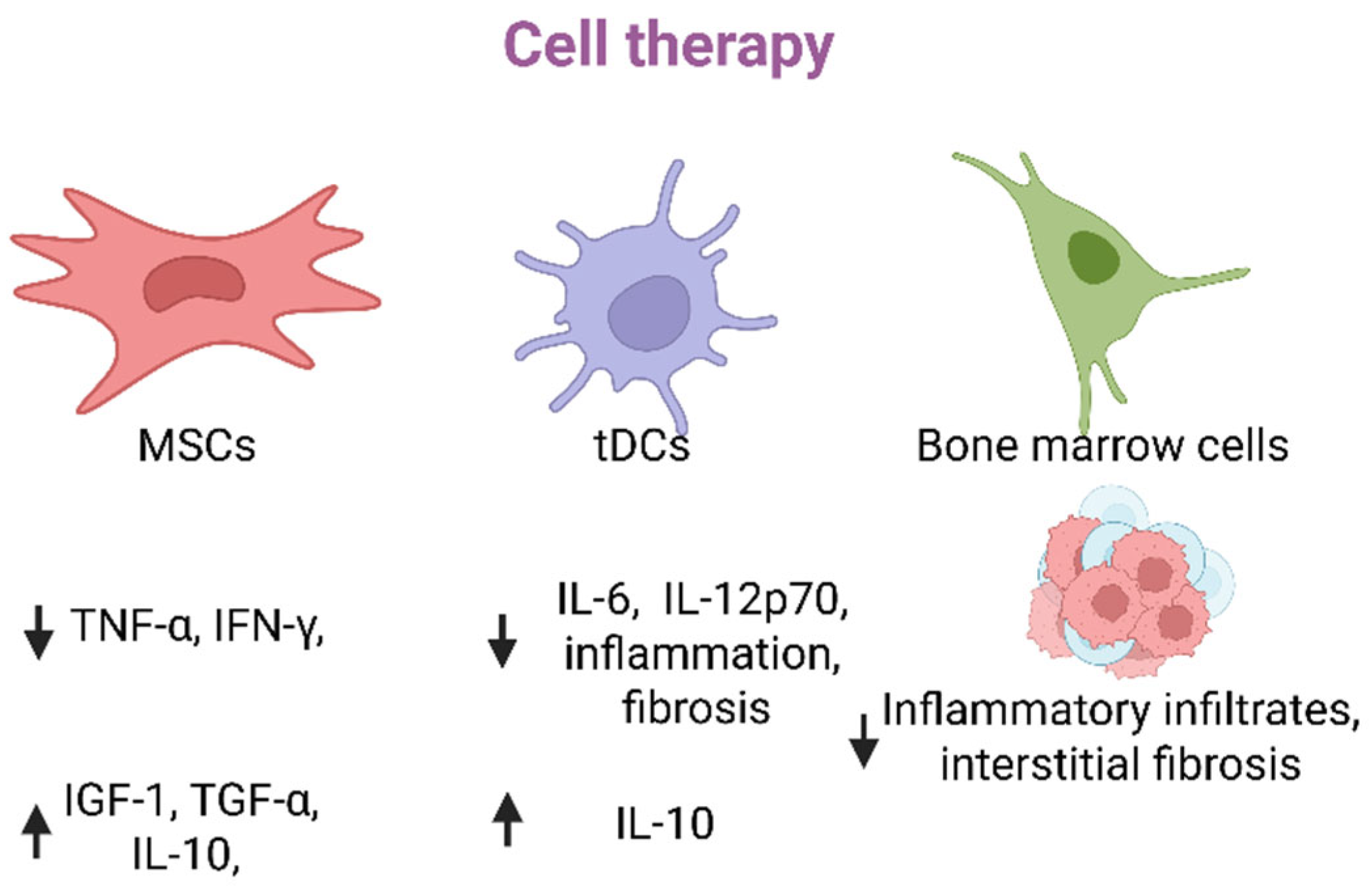
Within this framework, cell-based therapies have emerged as promising disease-modifying approaches for heart failure, aiming to promote myocardial regeneration, improve cardiac function, and reverse adverse ventricular remodeling [66,67]. Unlike conventional pharmacological therapies, which have limited capacity to reverse the structural myocardial damage associated with chronic Chagas cardiomyopathy, regenerative strategies such as stem cell therapy have been proposed as alternative therapeutic approaches [68]. These therapies offer the possibility of intervening earlier in the disease course and may potentially delay or prevent the need for heart transplantation. Accordingly, several experimental studies in Chagas disease have explored the therapeutic potential of different cell populations, including mesenchymal stem cells (MSCs), bone marrow–derived mononuclear cells, and dendritic cells (Figure 4) [67,68].
Among these strategies, MSCs have received considerable attention due to their combined regenerative and immunomodulatory properties. Accumulating evidence indicates that MSCs secrete a broad repertoire of bioactive factors capable of reshaping the inflammatory microenvironment characteristic of Chagas disease in both acute and chronic stages. These cells also promote the secretion of pro-regenerative and immunomodulatory mediators such as insulin-like growth factor-1 (IGF-1), which contribute to tissue repair and modulation of inflammatory responses in cardiac and skeletal muscle [69]. During early infection, administration of adipose tissue-derived mesenchymal stromal cells (ASCs) has been shown to reduce parasite burden, attenuate myocardial fibrosis, and prevent right ventricular dilation, effects associated with increased production of the anti-inflammatory cytokine IL-10 [70].
In chronic models of T. cruzi infection, MSCs isolated from cardiac tissue significantly reduced myocardial inflammatory infiltrates and downregulated TNF-α expression, while increasing TGF-β levels in cardiac tissue, supporting an immunomodulatory mechanism of action [71]. Notably, cell-tracking studies using nanoparticle-labeled MSCs demonstrated that only a small fraction of administered cells localized to the heart, whereas the majority preferentially homed to peripheral organs such as the liver, lungs, and spleen. Despite this limited cardiac engraftment, treated animals exhibited reduced ventricular dilation, supporting the concept that MSC-mediated benefits are primarily driven by indirect or paracrine mechanisms rather than direct cardiomyocyte replacement [68]. Additional studies using adipose-derived MSCs have also reported reductions in myocardial inflammation and fibrosis in chronic experimental Chagas cardiomyopathy [72]. These findings are consistent with the broadly recognized immunomodulatory and reparative properties of MSCs, which involve paracrine interactions with immune cells and the production of regulatory mediators such as TGF-β and IL-10 during tissue repair and regeneration [73].
Further enhancement of these therapeutic effects has been achieved through MSC priming strategies. MSCs engineered to overexpress granulocyte colony-stimulating factor (G-CSF) induced a more pronounced reduction in myocardial inflammation and fibrosis, accompanied by decreased levels of IFN-γ and TNF-α and a sustained increase in IL-10 production [74]. Collectively, these findings position MSC-based therapies as promising disease-modifying strategies for chronic Chagas cardiomyopathy, acting primarily through immunomodulation and attenuation of pathological cardiac remodeling.
These observations highlight immunomodulation as a central mechanism underlying the therapeutic effects of MSC-based interventions and provide a conceptual bridge to strategies that more directly target immune regulation. In this context, tolerogenic dendritic cells (tDCs) have emerged as a complementary and mechanistically aligned approach to controlling immune-mediated myocardial damage in chronic Chagas cardiomyopathy. Compared with mature myeloid dendritic cells (mDCs), tDCs are characterized by reduced production of IL-6 and IL-12p70 and enhanced secretion of IL-10, resulting in impaired T-cell activation and proliferation. Functionally, tDCs promote the expansion of FoxP3⁺ regulatory T cells, reinforcing immune tolerance. Consistent with this profile, administration of tDCs in murine models of chronic T. cruzi infection significantly reduced myocardial inflammation and interstitial fibrosis, leading to attenuation of adverse cardiac remodeling and disease progression [75,76].
Within this same immunomodulatory paradigm, bone marrow–derived cells (BMCs) have also demonstrated significant therapeutic potential in experimental models of chagasic cardiomyopathy. In murine systems, transplanted BMCs were shown to migrate to the heart, where they markedly reduced inflammatory infiltrates and interstitial fibrosis through mechanisms associated, at least in part, with apoptosis of inflammatory cells. Importantly, these effects were sustained for up to six months following transplantation [77]. Moreover, longitudinal assessment by cardiac magnetic resonance imaging demonstrated that BMC therapy induced regression of right ventricular dilation, with structural improvements maintained for several months post-treatment, indicating a durable attenuation of adverse cardiac remodeling [78].
Building on this robust preclinical evidence, early translational efforts advanced toward clinical evaluation using autologous bone marrow–derived mononuclear cells, given their accessibility and established safety profile. Initial clinical reports of intracoronary BMC infusion in patients with advanced chagasic cardiomyopathy documented improvements in left ventricular ejection fraction, ventricular dimensions, and functional capacity shortly after treatment, supporting both feasibility and short-term therapeutic benefit. These findings were subsequently reinforced by pilot clinical studies in patients with severe heart failure due to Chagas disease, in which intracoronary administration of autologous BMCs was well tolerated and Vilas associated with sustained improvements in cardiac function, functional class, and quality of life at mid-term follow-up [79,80].
Taken together, these experimental and early clinical findings support a unifying model in which distinct cell-based therapies MSCs, tolerogenic dendritic cells, and bone marrow derived cells, converge on the modulation of immune-driven mechanisms that sustain myocardial inflammation and fibrosis in chronic Chagas cardiomyopathy. Rather than relying on durable myocardial engraftment or direct cardiomyocyte replacement, these approaches primarily exert their therapeutic effects through paracrine signaling, immune regulation, and attenuation of pathological cardiac remodeling. This conceptual convergence provides a strong translational rationale for the development of optimized cellular strategies, including cell priming, immune conditioning, or combinatorial approaches, aimed at enhancing the durability and specificity of immunomodulatory effects. Such strategies hold promise for redefining cell therapy as a disease-modifying intervention capable of slowing or halting progression toward end-stage heart failure in patients with chronic Chagas cardiomyopathy.
5. Conclusions
Chagas disease remains a complex and unresolved global health challenge, particularly in its chronic phase, where parasite persistence, immune-mediated tissue damage, and the genetic heterogeneity of T. cruzi limit the effectiveness of conventional trypanocidal therapy. Although benznidazole and nifurtimox remain the cornerstone of treatment, their reduced efficacy in chronic infection, frequent adverse effects, and limited ability to halt disease progression in a substantial proportion of patients underscore the urgent need for alternative and complementary therapeutic strategies.
Accumulating preclinical evidence supports the potential of antimicrobial peptides, plant-derived compounds, essential oils, and cell-based therapies as promising approaches capable of targeting multiple aspects of Chagas disease pathogenesis, including parasite survival, host immune dysregulation, and tissue remodeling. These strategies offer the advantage of multitarget activity and, in some cases, immunomodulatory or regenerative effects that may complement parasite-directed chemotherapy. However, most available data remain restricted to in vitro studies or experimental models, and several critical barriers to clinical translation persist, including variability in compound composition, limited pharmacokinetic and toxicological characterization, and the lack of robust clinical trials.
From a clinical perspective, advancing these emerging therapies will require the integration of parasite-targeted and host-directed strategies, supported by rigorous standardization, mechanistic validation, and well-designed translational studies. Bridging the gap between experimental findings and clinical application will be essential to improve therapeutic outcomes, not only by enhancing parasite clearance but also by modulating chronic inflammation and preventing irreversible organ damage. Ultimately, such advances have the potential to redefine the therapeutic landscape of Chagas disease and address longstanding unmet clinical needs in affected populations.
Author Contributions
Conceptualization, B.E.B-L, J.Z-C, A.F-P; software, B.E.B-L, J.Z-C, validation, A.F-P, K.J-Y, A.C-R and O.R-L. ; formal analysis, BEB-L, JZ-C, AF-P; investigation, A.F-P, K.J-Y, A.C-R, O.R-L, J.Z-C and B.E.B-L; data curation, BEB-L, J.Z.C; writing—original draft preparation, A.F-P, K.J-Y, A.C-R, O.R-L, J.Z-C and B.E.B-L.; writing—review and editing, A.F-P, K.J-Y, A.C-R, O.R-L, J.Z-C and B.E.B-L; supervision, J.Z-C, B.E.B-L; funding acquisition, B.E.B-L. All authors have read and agreed to the published version of the manuscript.
Funding
The APC was funded by Research Division of the Faculty of Medicine of the National Autonomous University of Mexico.
Institutional Review Board Statement
Not applicable.
Informed Consent Statement
Not applicable.
Acknowledgments
The authors would like to thank Dr. Brenda Rosario Sandoval Meza, part of the Medical Translation Area at the Research Division, Faculty of Medicine, Universidad Nacional Autónoma de México for translating and proofreading this paper.
Conflicts of Interest
The authors declare no conflicts of interest.
Abbreviations
The following abbreviations are used in this manuscript:
| DTUs | Discrete Typing Units |
| NTR | Nitroreductases |
| FMN | Flavin mononucleotide |
| FDA | Food and Drug Administration |
| SOD | Superoxide dismutase |
| IC50 | Half-maximal inhibitory concentration |
| EC50 | Maximal effective concentration |
| iNOS | Inducible nitric oxide synthase |
| ROS | Reactive Oxygen Species |
| CCC | Chronic Chagas cardiomyopathy |
| MSCs | Mesenchymal stem cells |
| ASCs | Adipose tissue-derived mesenchymal stromal cells |
| BMCs | Bone marrow–derived cells |
| mDCs | Mature myeloid dendritic cells |
| tDCs | Tolerogenic dendritic cells |
References
- Cucunubá, Z.M.; Gutiérrez-Romero, S.A.; Ramírez, J.D.; Velásquez-Ortiz, N.; Ceccarelli, S.; Parra-Henao, G.; et al. The epidemiology of Chagas disease in the Americas. Lancet Reg. Health Am. 2024, 37, 100881. [Google Scholar] [CrossRef]
- World Health Organization. Chagas disease (American trypanosomiasis) [Internet]. Geneva: World Health Organization; 2025 [cited 2026 Feb 12]. Available from: https://www.who.int/news-room/fact-sheets/detail/chagas-disease-(american-trypanosomiasis). Geneva.
- Lidani, K.C.F.; Andrade, F.A.; Bavia, L.; Damasceno, F.S.; Beltrame, M.H.; Messias-Reason, I.J.; et al. Chagas disease: from discovery to a worldwide health problem. Front Public Health 2019, 7, 166. [Google Scholar] [CrossRef] [PubMed]
- Velásquez-Ortiz, N.; Ramírez, J.D. Understanding the oral transmission of Trypanosoma cruzi as a veterinary and medical foodborne zoonosis. Res. Vet. Sci. 2020, 132, 448–461. [Google Scholar] [CrossRef] [PubMed]
- Ferri, G.; Edreira, M.M. All roads lead to cytosol: Trypanosoma cruzi multi-strategic approach to invasion. Front Cell Infect. Microbiol. 2021, 11, 634793. [Google Scholar] [CrossRef]
- Kratz, J.M.; Gonçalves, K.R.; Romera, L.M.; Moraes, C.B.; Bittencourt-Cunha, P.; Schenkman, S.; et al. The translational challenge in Chagas disease drug development. Mem. Inst. Oswaldo Cruz 2022, 117, e200501. [Google Scholar] [CrossRef]
- Bonney, K.M.; Luthringer, D.J.; Kim, S.A.; Garg, N.J.; Engman, D.M. Pathology and pathogenesis of Chagas heart disease. Annu Rev. Pathol. 2019, 14, 421–447. [Google Scholar] [CrossRef]
- Dattani, A.; Drammeh, I.; Mahmood, A.; Rahman, M.; Szular, J.; Wilkinson, S.R. Unraveling the antitrypanosomal mechanism of benznidazole and related 2-nitroimidazoles: from prodrug activation to DNA damage. Mol. Microbiol. 2021, 116(2), 674–689. [Google Scholar] [CrossRef] [PubMed]
- García-Huertas, P.; Cardona-Castro, N. Advances in the treatment of Chagas disease: promising new drugs, plants and targets. BioMed Pharmacother. 2021, 142, 112020. [Google Scholar] [CrossRef]
- Crespillo-Andújar, C.; Comeche, B.; Hamer, D.H.; Arevalo-Rodriguez, I.; Alvarez-Díaz, N.; Zamora, J.; et al. Use of benznidazole to treat chronic Chagas disease: an updated systematic review with a meta-analysis. PLoS Negl. Trop. Dis. 2022, 16(5), e0010386. [Google Scholar] [CrossRef]
- Sacks, D.; Baxter, B.; Campbell, B.C.V.; Carpenter, J.S.; Cognard, C.; Dippel, D.; et al. Multisociety consensus quality improvement revised consensus statement for endovascular therapy of acute ischemic stroke. Int. J. Stroke 2018, 13(6), 612–632. [Google Scholar] [CrossRef]
- Queiroga, T.B.D.; Pereira, N.S.; da Silva, D.D.; Andrade, C.M.; de Araújo Júnior, R.F.; Brito, C.R.D.N.; et al. Virulence of Trypanosoma cruzi strains is related to the differential expression of innate immune receptors in the heart. Front Cell Infect. Microbiol. 2021, 11, 696719. [Google Scholar] [CrossRef]
- Lima, D.A.; Gonçalves, L.O.; Reis-Cunha, J.L.; Guimarães, P.A.S.; Ruiz, J.C.; Liarte, D.B.; et al. Transcriptomic analysis of benznidazole-resistant and susceptible Trypanosoma cruzi populations. Parasit. Vectors 2023, 16(1), 167. [Google Scholar] [CrossRef]
- Stan, D.; Enciu, A.M.; Mateescu, A.L.; Ion, A.C.; Brezeanu, A.C.; Stan, D.; et al. Natural compounds with antimicrobial and antiviral effect and nanocarriers used for their transportation. Front Pharmacol. 2021, 12, 723233. [Google Scholar] [CrossRef]
- Alam, M.; Bano, N.; Ahmad, T.; Sharangi, A.B.; Upadhyay, T.K.; Alraey, Y.; et al. Synergistic role of plant extracts and essential oils against multidrug resistance and Gram-negative bacterial strains producing extended-spectrum β-lactamases. Antibiotics 2022, 11(7), 855. [Google Scholar] [CrossRef]
- Shen, L.; Luo, H.; Fan, L.; Tian, X.; Tang, A.; Wu, X.; et al. Potential immunoregulatory mechanism of plant saponins: a review. Molecules 2023, 29(1), 113. [Google Scholar] [CrossRef] [PubMed]
- Duarte-Mata, D.I.; Salinas-Carmona, M.C. Antimicrobial peptides’ immune modulation role in intracellular bacterial infection. Front Immunol. 2023, 14, 1119574. [Google Scholar] [CrossRef]
- Duschak, V.G.; Paniz Mondolfi, A.E.; Benaim, G. Editorial: Chagas disease novel drug targets and treatments. Front Cell Infect. Microbiol. 2023, 13, 1199715. [Google Scholar] [CrossRef]
- Rojo, G.; Castillo, C.; Duaso, J.; Liempi, A.; Droguett, D.; Galanti, N.; et al. Toxic and therapeutic effects of nifurtimox and benznidazole on Trypanosoma cruzi ex vivo infection of human placental chorionic villi explants. Acta Trop. 2014, 132, 112–118. [Google Scholar] [CrossRef] [PubMed]
- Mejia, A.M.; Hall, B.S.; Taylor, M.C.; Gómez-Palacio, A.; Wilkinson, S.R.; Triana-Chávez, O.; et al. Benznidazole resistance in Trypanosoma cruzi is a readily acquired trait that can arise independently in a single population. J. Infect. Dis. 2012, 206(2), 220–228. [Google Scholar] [CrossRef]
- Scarim, C.B.; Jornada, D.H.; Machado, M.G.; Ferreira, L.G.; dos Santos, J.L.; Chung, M.C.; et al. Current advances in drug discovery for Chagas disease. Eur. J. Med. Chem. 2018, 155, 824–838. [Google Scholar] [CrossRef] [PubMed]
- Hall, B.S.; Bot, C.; Wilkinson, S.R. Nifurtimox activation by trypanosomal type I nitroreductases generates cytotoxic nitrile metabolites. J. Biol. Chem. 2011, 286(15), 13088–13095. [Google Scholar] [CrossRef]
- Molina, I.; Salvador, F.; Sánchez-Montalvá, A.; Posada, E.; Serre, N.; Treviño, B.; et al. Toxic profile of benznidazole in patients with chronic Chagas disease: risk factors and comparison of the product from two different manufacturers. Antimicrob. Agents Chemother. 2015, 59(10), 6125–6131. [Google Scholar] [CrossRef]
- Berenstein, A.J.; Falk, N.; Moscatelli, G.; Moroni, S.; González, N.; García-Bournissen, F.; et al. Adverse events associated with nifurtimox treatment for Chagas disease in children and adults. Antimicrob. Agents Chemother. 2021, 65(2), e01135-20. [Google Scholar] [CrossRef] [PubMed]
- Campos, M.C.; Phelan, J.; Francisco, A.F.; Taylor, M.C.; Lewis, M.D.; Pain, A.; et al. Genome-wide mutagenesis and multidrug resistance in American trypanosomes induced by the front-line drug benznidazole. Sci. Rep. 2017, 7(1), 14407. [Google Scholar] [CrossRef]
- Ochoa-Martínez, P.; López-Monteon, A.; López-Domínguez, J.; Manning-Cela, R.G.; Ramos-Ligonio, A. Expression analysis of thirteen genes in response to nifurtimox and benznidazole in Mexican isolates of Trypanosoma cruzi by digital PCR. Acta Parasitol. 2025, 70(1), 15. [Google Scholar] [CrossRef]
- Anand, U.; Jacobo-Herrera, N.; Altemimi, A.; Lakhssassi, N. A comprehensive review on medicinal plants as antimicrobial therapeutics: potential avenues of biocompatible drug discovery. Metabolites 2019, 9(11), 258. [Google Scholar] [CrossRef] [PubMed]
- Ji, H.F.; Li, X.J.; Zhang, H.Y. Natural products and drug discovery: can thousands of years of ancient medical knowledge lead us to new and powerful drug combinations in the fight against cancer and dementia? EMBO Rep. 2009, 10(3), 194–200. [Google Scholar] [CrossRef]
- Izumi, E.; Ueda-Nakamura, T.; Dias Filho, B.P.; Veiga Júnior, V.F.; Nakamura, C.V. Natural products and Chagas' disease: a review of plant compounds studied for activity against Trypanosoma cruzi. Nat. Prod. Rep. 2011, 28(4), 809–823. [Google Scholar] [CrossRef]
- Martínez-Peinado, N.; Cortes-Serra, N.; Tallini, L.R.; Pinazo, M.J.; Gascon, J.; Bastida, J.; et al. Amaryllidaceae plants: a potential natural resource for the treatment of Chagas disease. Parasit. Vectors 2021, 14(1), 337. [Google Scholar] [CrossRef]
- Nair, J.J.; van Staden, J. Antiprotozoal alkaloid principles of the plant family Amaryllidaceae. Bioorg Med. Chem. Lett. 2019, 29(20), 126642. [Google Scholar] [CrossRef] [PubMed]
- Molina-Garza, Z.J.; Bazaldúa-Rodríguez, A.F.; Quintanilla-Licea, R.; Galaviz-Silva, L. Anti-Trypanosoma cruzi activity of 10 medicinal plants used in northeast Mexico. Acta Trop. 2014, 136, 14–18. [Google Scholar] [CrossRef]
- Cázares-Jaramillo, G.E.; Molina-Garza, Z.J.; Luna-Cruz, I.E.; Solís-Soto, L.Y.; Rosales-Encina, J.L.; Galaviz-Silva, L. In vitro anti-Trypanosoma cruzi activity of methanolic extract of Bidens pilosa and identification of active compounds by gas chromatography-mass spectrometry analysis. Parasites Hosts Dis. 2023, 61(4), 405–417. [Google Scholar] [CrossRef]
- Varela, J.; Serna, E.; Torres, S.; Yaluff, G.; de Bilbao, N.I.; Miño, P.; et al. In vivo anti-Trypanosoma cruzi activity of hydro-ethanolic extract and isolated active principles from Aristeguietia glutinosa and mechanism of action studies. Molecules 2014, 19(6), 8488–8502. [Google Scholar] [CrossRef]
- Pardo-Rodriguez, D.; Lasso, P.; Mateus, J.; Mendez, J.; Puerta, C.J.; Cuéllar, A.; et al. A terpenoid-rich extract from Clethra fimbriata exhibits anti-Trypanosoma cruzi activity and induces T cell cytokine production. Heliyon 2022, 8(3), e09182. [Google Scholar] [CrossRef]
- Castañeda, J.S.; Suta-Velásquez, M.; Mateus, J.; Pardo-Rodriguez, D.; Puerta, C.J.; Cuéllar, A.; Robles, J.; Cuervo, C. Preliminary chemical characterization of ethanolic extracts from Colombian plants with promising anti - Trypanosoma cruzi activity. Exp. Parasitol. 2021, 223, 108079. [Google Scholar] [CrossRef] [PubMed]
- da Silva Júnior, J.N.; Oliveira, K.K.D.S.; Silva, A.C.D.; Lorena, V.M.B.; Marques, D.A.V.; Bezerra, R.P.; et al. Microalgae extracts modulates the immune response in Trypanosoma cruzi-infected human cells. Cytokine 2024, 179, 156621. [Google Scholar] [CrossRef]
- Masyita, A.; Mustika Sari, R.; Dwi Astuti, A.; Yasir, B.; Rahma Rumata, N.; Emran, T.B.; et al. Terpenes and terpenoids as main bioactive compounds of essential oils, their roles in human health and potential application as natural food preservatives. Food Chem. X 2022, 13, 100217. [Google Scholar] [CrossRef] [PubMed]
- Crescente, G.; Cascone, G.; Sorrentino, A.; Volpe, M.G.; Boscaino, F.; Moccia, S. Influence of extraction techniques on chemical composition, antioxidant and antifungal activities of Mentha spicata L. essential oil: a comparative study of microwave-assisted hydrodistillation and steam distillation. Food Biosci. 2025, 69, 106939. [Google Scholar] [CrossRef]
- Nabavi, S.M.; Marchese, A.; Izadi, M.; Curti, V.; Daglia, M.; Nabavi, S.F. Plants belonging to the genus Thymus as antibacterial agents: from farm to pharmacy. Food Chem. 2015, 173, 339–347. [Google Scholar] [CrossRef]
- Falleh, H. Demystifying the power of essential oils: a review of their antibacterial properties and potential as natural food preservatives. EXCLI J. 2025, 24, 828–850. [Google Scholar] [CrossRef] [PubMed]
- Luna, E.C.; Luna, I.S.; Scotti, L.; Monteiro, A.F.M.; Scotti, M.T.; de Moura, R.O.; et al. Active essential oils and their components in use against neglected diseases and arboviruses. Oxid. Med. Cell Longev. 2019, 2019, 6587150. [Google Scholar] [CrossRef]
- Santoro, G.F.; Cardoso, M.G.; Guimarães, L.G.; Mendonça, L.Z.; Soares, M.J. Trypanosoma cruzi: activity of essential oils from Achillea millefolium L., Syzygium aromaticum L. and Ocimum basilicum L. on epimastigotes and trypomastigotes. Exp. Parasitol. 2007, 116(3), 283–290. [Google Scholar] [CrossRef]
- Azeredo, C.M.; Santos, T.G.; Maia, B.H.; Soares, M.J. In vitro biological evaluation of eight different essential oils against Trypanosoma cruzi, with emphasis on Cinnamomum verum essential oil. BMC Complement Altern. Med. 2014, 14, 309. [Google Scholar] [CrossRef]
- Santoro, G.F.; das Graças Cardoso, M.; Guimarães, L.G.; Salgado, A.P.; Menna-Barreto, R.F.; Soares, M.J. Effect of oregano (Origanum vulgare L.) and thyme (Thymus vulgaris L.) essential oils on Trypanosoma cruzi (Protozoa: Kinetoplastida) growth and ultrastructure. Parasitol. Res. 2007, 100(4), 783–790. [Google Scholar] [CrossRef]
- Sarto, M.P.M.; Lucas da Silva, H.F.; de Souza Fernandes, N.; de Abreu, A.P.; Zanusso Junior, G.; de Ornelas Toledo, M.J. Essential oils from Syzygium aromaticum and Zingiber officinale, administered alone or in combination with benznidazole, reduce the parasite load in mice orally inoculated with Trypanosoma cruzi II. BMC Complement Med. Ther. 2021, 21(1), 77. [Google Scholar] [CrossRef]
- Quimbaya Ramírez, J.J.; González Rugeles, C.I.; Stashenko, E.E.; Mantilla Hernández, J.C.; Díaz Galvis, M.L.; García Sánchez, L.T. In vivo protection against chagasic cardiomyopathy progression using trypanocidal fractions from Lippia alba (Verbenaceae) essential oils. Ind. Crops Prod. 2021, 167, 113553. [Google Scholar] [CrossRef]
- Quintero, W.L.; Moreno, E.M.; Pinto, S.M.L.; Sanabria, S.M.; Stashenko, E.; García, L.T. Immunomodulatory, trypanocide, and antioxidant properties of essential oil fractions of Lippia alba (Verbenaceae). BMC Complement Med. Ther. 2021, 21(1), 187. [Google Scholar] [CrossRef]
- Su, M.; Su, Y. Recent advances in amphipathic peptidomimetics as antimicrobial agents to combat drug resistance. Molecules 2024, 29(11), 2492. [Google Scholar] [CrossRef] [PubMed]
- Mohammed, E.H.M.; Lohan, S.; Ghaffari, T.; Gupta, S.; Tiwari, R.K.; Parang, K. Membrane-active cyclic amphiphilic peptides: broad-spectrum antibacterial activity alone and in combination with antibiotics. J. Med. Chem. 2022, 65(23), 15819–15839. [Google Scholar] [CrossRef]
- Kim, S.H.; Min, Y.H.; Park, M.C. Antimicrobial peptides: current status, mechanisms of action, and strategies to overcome therapeutic limitations. Microorganisms 2025, 13(11), 2574. [Google Scholar] [CrossRef]
- Kocagoz, T.; Temur, B.Z.; Unubol, N.; Acikel Elmas, M.; Kanlidere, Z.; Cilingir, S.; et al. Protease-resistant, broad-spectrum antimicrobial peptides with high antibacterial and antifungal activity. Life 2025, 15(2), 242. [Google Scholar] [CrossRef]
- Rojas-Pirela, M.; Kemmerling, U.; Quiñones, W.; Michels, P.A.M.; Rojas, V. Antimicrobial peptides (AMPs): potential therapeutic strategy against trypanosomiases? Biomolecules 2023, 13(4), 599. [Google Scholar] [CrossRef]
- Adade, C.M.; Oliveira, I.R.; Pais, J.A.; Souto-Padrón, T. Melittin peptide kills Trypanosoma cruzi parasites by inducing different cell death pathways. Toxicon 2013, 69, 227–239. [Google Scholar] [CrossRef]
- Souza, A.L.; Faria, R.X.; Calabrese, K.S.; Hardoim, D.J.; Taniwaki, N.; Alves, L.A.; et al. Temporizin and temporizin-1 peptides as novel candidates for eliminating Trypanosoma cruzi. PLoS ONE 2016, 11(7), e0157673. [Google Scholar] [CrossRef] [PubMed]
- Monteiro, M.L.; Lima, D.B.; Menezes, R.R.P.P.B.; Sampaio, T.L.; Silva, B.P.; Serra Nunes, J.V.; et al. Antichagasic effect of hemocyanin derived from antimicrobial peptides of Penaeus monodon shrimp. Exp. Parasitol. 2020, 215, 107930. [Google Scholar] [CrossRef] [PubMed]
- Osorio-Méndez, J.F.; Pardo-Rodriguez, D.; Rocha-Roa, C.; Toro, L.J.; Muñoz-Tabares, L.; Recalde-Reyes, D.P.; et al. Exploring the mechanisms of action of the antimicrobial peptide CZS-5 against Trypanosoma cruzi epimastigotes: insights from metabolomics and molecular dynamics. Parasit. Vectors 2025, 18(1), 208. [Google Scholar] [CrossRef]
- Martín-Escolano, R.; Cebrián, R.; Martín-Escolano, J.; Rosales, M.J.; Maqueda, M.; Sánchez-Moreno, M.; et al. Insights into Chagas treatment based on the potential of bacteriocin AS-48. Int. J. Parasitol. Drugs Drug Resist. 2019, 10, 1–8. [Google Scholar] [CrossRef]
- Madison, M.N.; Kleshchenko, Y.Y.; Nde, P.N.; Simmons, K.J.; Lima, M.F.; Villalta, F. Human defensin alpha-1 causes Trypanosoma cruzi membrane pore formation and induces DNA fragmentation, which leads to trypanosome destruction. Infect. Immun. 2007, 75(10), 4780–4791. [Google Scholar] [CrossRef] [PubMed]
- Higyno, P.M.; Mendes, P.F.; Miranda, M.B.; Pereira, D.E.; Mota, A.P.; Nogueira Kde, O.; et al. Vasoactive intestinal peptide reduces the inflammatory profile in mice infected with Trypanosoma cruzi. Exp. Parasitol. 2015, 159, 72–78. [Google Scholar] [CrossRef]
- Pereira, F.B.; Dutra, W.O.; Gollob, K.J.; Reis, E.A.; Oliveira, A.L.G.; Rocha, M.O.D.C.; et al. Vasoactive intestinal peptide degradation might influence interleukin-17 expression in cardiac chagasic patients. Rev. Inst. Med. Trop. Sao Paulo 2018, 60, e57. [Google Scholar] [CrossRef]
- Frade, A.F.; Guérin, H.; Nunes, J.P.S.; Silva, L.F.S.E.; Roda, V.M.P.; Madeira, R.P.; et al. Cardiac and digestive forms of Chagas disease: an update on pathogenesis, genetics, and therapeutic targets. Mediat. Inflamm. 2025, 2025, 8862004. [Google Scholar] [CrossRef]
- Nunes, M.C.P.; Bern, C.; Clark, E.H.; Teixeira, A.L.; Molina, I. Clinical features of Chagas disease progression and severity. Lancet Reg. Health Am. 2024, 37, 100832. [Google Scholar] [CrossRef]
- Silva, A.M.D.; Ferreira Júnior, M.A.; Cardoso, A.I.Q.; Ivo, M.L.; Almeida, J.P.F.; Melo, R.D.S. Costs related to obtaining organs for transplantation: a systematic review. Transpl. Rev. 2022, 36(4), 100724. [Google Scholar] [CrossRef]
- Gray, E.B.; La Hoz, R.M.; Green, J.S.; Vikram, H.R.; Benedict, T.; Rivera, H.; et al. Reactivation of Chagas disease among heart transplant recipients in the United States, 2012-2016. Transpl. Infect. Dis. 2018, 20(6), e12996. [Google Scholar] [CrossRef]
- Campos de Carvalho, A.C.; Goldenberg, R.C.; Jelicks, L.A.; Soares, M.B.; Dos Santos, R.R.; Spray, D.C.; et al. Cell therapy in Chagas disease. Interdiscip. Perspect. Infect. Dis. 2009, 2009, 484358. [Google Scholar] [CrossRef]
- de Carvalho, K.A.; Abdelwahid, E.; Ferreira, R.J.; Irioda, A.C.; Guarita-Souza, L.C. Preclinical stem cell therapy in Chagas disease: perspectives for future research. World J. Transplant. 2013, 3(4), 119–126. [Google Scholar] [CrossRef] [PubMed]
- Jasmin; Jelicks, L.A.; Koba, W.; Tanowitz, H.B.; Mendez-Otero, R.; Campos de Carvalho, A.C.; et al. Mesenchymal bone marrow cell therapy in a mouse model of Chagas disease: where do the cells go? PLoS Negl. Trop. Dis. 2012, 6(12), e1971. [Google Scholar] [CrossRef]
- Silva, D.N.; Souza, B.S.F.; Azevedo, C.M.; Vasconcelos, J.F.; de Jesus, P.G.; Feitoza, M.S.; et al. IGF-1-overexpressing mesenchymal stem/stromal cells promote immunomodulatory and proregenerative effects in chronic experimental Chagas disease. Stem Cells Int. 2018, 2018, 9108681. [Google Scholar] [CrossRef]
- Mello, D.B.; Ramos, I.P.; Mesquita, F.C.; Brasil, G.V.; Rocha, N.N.; Takiya, C.M.; et al. Adipose tissue-derived mesenchymal stromal cells protect mice infected with Trypanosoma cruzi from cardiac damage through modulation of anti-parasite immunity. PLoS Negl. Trop. Dis. 2015, 9(8), e0003945. [Google Scholar] [CrossRef] [PubMed]
- Silva, D.N.; de Freitas Souza, B.S.; Azevedo, C.M.; Vasconcelos, J.F.; Carvalho, R.H.; Soares, M.B.; et al. Intramyocardial transplantation of cardiac mesenchymal stem cells reduces myocarditis in a model of chronic Chagas disease cardiomyopathy. Stem Cell Res. Ther. 2014, 5(4), 81. [Google Scholar] [CrossRef] [PubMed]
- Larocca, T.F.; Souza, B.S.; Silva, C.A.; Kaneto, C.M.; Alcantara, A.C.; Azevedo, C.M.; Castro, M.F.; Macambira, S.G.; Soares, M.B.; Ribeiro-dos-Santos, R. Transplantation of adipose tissue mesenchymal stem cells in experimental chronic chagasic cardiopathy. Arq. Bras. Cardiol. 2013, 100(5), 460–468. [Google Scholar] [CrossRef]
- Harrell, C.R.; Djonov, V.; Volarevic, V. The cross-talk between mesenchymal stem cells and immune cells in tissue repair and regeneration. Int. J. Mol. Sci. 2021, 22(5), 2472. [Google Scholar] [CrossRef]
- Silva, D.N.; Souza, B.S.F.; Vasconcelos, J.F.; Azevedo, C.M.; Valim, C.X.R.; Paredes, B.D.; et al. Granulocyte-colony stimulating factor-overexpressing mesenchymal stem cells exhibit enhanced immunomodulatory actions through the recruitment of suppressor cells in experimental Chagas disease cardiomyopathy. Front Immunol. 2018, 9, 1449. [Google Scholar] [CrossRef]
- Santos, E.S.; de Aragão-França, L.S.; Meira, C.S.; Cerqueira, J.V.; Vasconcelos, J.F.; Nonaka, C.K.V.; et al. Tolerogenic dendritic cells reduce cardiac inflammation and fibrosis in chronic Chagas disease. Front Immunol. 2020, 11, 488. [Google Scholar] [CrossRef] [PubMed]
- Santos, E.S.; Silva, D.K.C.; Dos Reis, B.P.Z.C.; Barreto, B.C.; Cardoso, C.M.A.; Ribeiro Dos Santos, R.; et al. Immunomodulation for the treatment of chronic Chagas disease cardiomyopathy: a new approach to an old enemy. Front Cell Infect. Microbiol. 2021, 11, 765879. [Google Scholar] [CrossRef] [PubMed]
- Soares, M.B.; Lima, R.S.; Rocha, L.L.; Takyia, C.M.; Pontes-de-Carvalho, L.; de Carvalho, A.C.; et al. Transplanted bone marrow cells repair heart tissue and reduce myocarditis in chronic chagasic mice. Am. J. Pathol. 2004, 164(2), 441–447. [Google Scholar] [CrossRef]
- Goldenberg, R.C.; Jelicks, L.A.; Fortes, F.S.; Weiss, L.M.; Rocha, L.L.; Zhao, D.; et al. Bone marrow cell therapy ameliorates and reverses chagasic cardiomyopathy in a mouse model. J. Infect. Dis. 2008, 197(4), 544–547. [Google Scholar] [CrossRef]
- Vilas-Boas, F.; Feitosa, G.S.; Soares, M.B.; Pinho-Filho, J.A.; Mota, A.; Almeida, A.J.; et al. Bone marrow cell transplantation to the myocardium of a patient with heart failure due to Chagas' disease. Arq. Bras. Cardiol. 2004, 82(2), 184–185. [Google Scholar] [CrossRef]
- Vilas-Boas, F.; Feitosa, G.S.; Soares, M.B.; Pinho-Filho, J.A.; Mota, A.C.; Almeida, A.J.; et al. Bone marrow cell transplantation in Chagas' disease heart failure: report of the first human experience. Arq. Bras. Cardiol. 2011, 96(4), 325–331. [Google Scholar] [CrossRef]
Figure 1.
Dual mechanisms of plant-derived compounds against T. cruzi: direct antiparasitic activity and host immune modulation. (A) Plant-derived molecules such as (+)-15-hydroxy-7-labden-17-al exert direct antiparasitic effects on T. cruzi, including inhibition of parasite sterol biosynthesis and mitochondrial dehydrogenase activity, leading to reduced parasite viability. Additionally, other phytotherapeutic agents, such as C. fimbriata, have been reported to induce apoptotic and necrotic pathways in the parasite. (B) Beyond their direct parasiticidal activity, plant-derived compounds can also modulate host immune responses by influencing the balance between Th1 effector mechanisms and regulatory pathways. For example, extracts of C. fimbriata have been associated with enhanced Th1 responses, including increased IFN-γ and TNF-α production and cytotoxic CD8⁺ T-cell activity. In contrast, extracts from microalgae such as T. obliquus may promote regulatory responses, characterized by increased IL-10 production, potentially contributing to the establishment of a regulatory immune microenvironment. These combined effects ultimately influence infection outcome by shaping the balance between parasite clearance and host tissue damage. Created with BioRender.com.
Figure 1.
Dual mechanisms of plant-derived compounds against T. cruzi: direct antiparasitic activity and host immune modulation. (A) Plant-derived molecules such as (+)-15-hydroxy-7-labden-17-al exert direct antiparasitic effects on T. cruzi, including inhibition of parasite sterol biosynthesis and mitochondrial dehydrogenase activity, leading to reduced parasite viability. Additionally, other phytotherapeutic agents, such as C. fimbriata, have been reported to induce apoptotic and necrotic pathways in the parasite. (B) Beyond their direct parasiticidal activity, plant-derived compounds can also modulate host immune responses by influencing the balance between Th1 effector mechanisms and regulatory pathways. For example, extracts of C. fimbriata have been associated with enhanced Th1 responses, including increased IFN-γ and TNF-α production and cytotoxic CD8⁺ T-cell activity. In contrast, extracts from microalgae such as T. obliquus may promote regulatory responses, characterized by increased IL-10 production, potentially contributing to the establishment of a regulatory immune microenvironment. These combined effects ultimately influence infection outcome by shaping the balance between parasite clearance and host tissue damage. Created with BioRender.com.
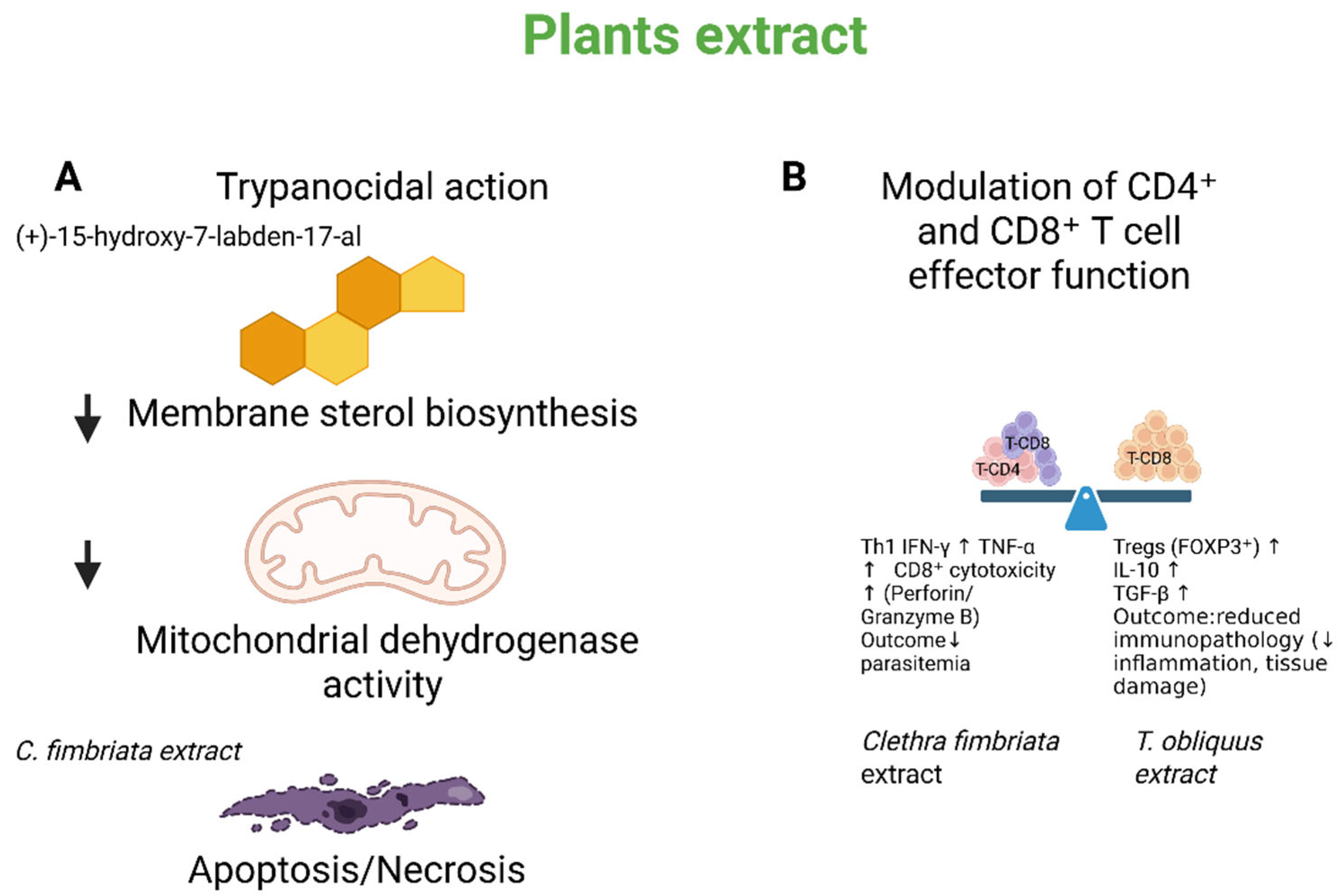
Figure 2.
Antiparasitic and immunomodulatory effects of essential oils during T. cruzi infection.(A) Essential oils exert direct antiparasitic activity both in vitro and in vivo by inducing oxidative stress, leading to parasite lysis. Due to their high lipophilicity and ability to permeate cellular membranes, these compounds can act intracellularly, particularly by disrupting mitochondrial function and promoting mitochondrial membrane depolarization. (B) In addition to their direct parasiticidal effects, certain essential oils display immunomodulatory properties. In vitro studies using T. cruzi–infected macrophages have shown that fractions derived from Lippia alba essential oil, alone or in combination with benznidazole, reduce pro-inflammatory mediators such as IFN-γ and TNF-α while increasing IL-4 production. This immunoregulatory profile may contribute to the cardioprotective effects and improved histopathological architecture observed in chronic experimental Chagas disease. Created with BioRender.com.
Figure 2.
Antiparasitic and immunomodulatory effects of essential oils during T. cruzi infection.(A) Essential oils exert direct antiparasitic activity both in vitro and in vivo by inducing oxidative stress, leading to parasite lysis. Due to their high lipophilicity and ability to permeate cellular membranes, these compounds can act intracellularly, particularly by disrupting mitochondrial function and promoting mitochondrial membrane depolarization. (B) In addition to their direct parasiticidal effects, certain essential oils display immunomodulatory properties. In vitro studies using T. cruzi–infected macrophages have shown that fractions derived from Lippia alba essential oil, alone or in combination with benznidazole, reduce pro-inflammatory mediators such as IFN-γ and TNF-α while increasing IL-4 production. This immunoregulatory profile may contribute to the cardioprotective effects and improved histopathological architecture observed in chronic experimental Chagas disease. Created with BioRender.com.
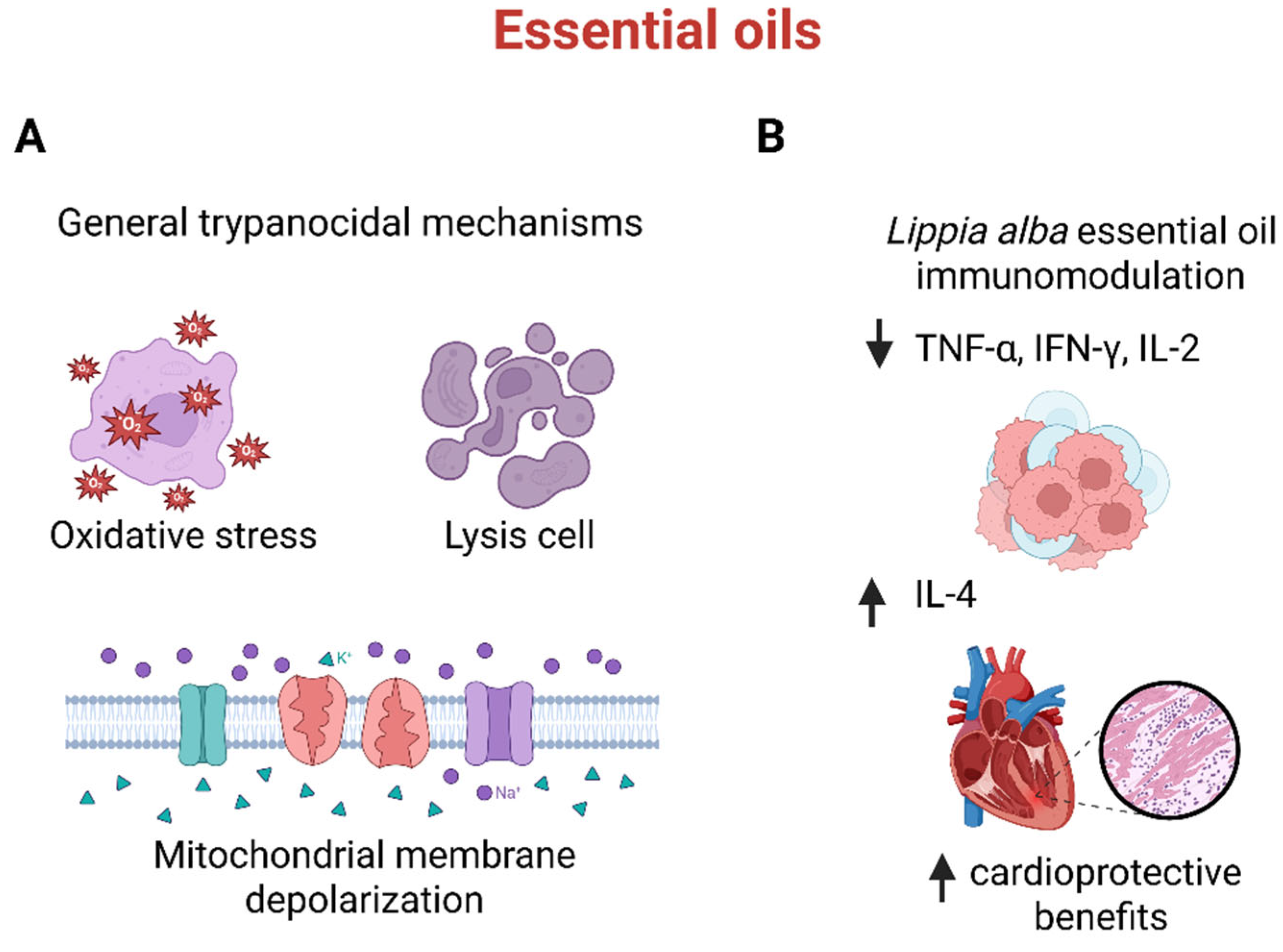
Figure 3.
Anti-Trypanosoma mechanisms mediated by antimicrobial and immunomodulatory peptides. Antimicrobial peptides (AMPs) exert antiparasitic activity through multiple complementary mechanisms. The bacteriocin AS-48 induces intracellular reactive oxygen species (ROS) overproduction, leading to mitochondrial membrane depolarization, bioenergetic failure, and parasite death. Human α-defensin 1 promotes membrane pore formation, resulting in loss of membrane integrity and subsequent nuclear and mitochondrial DNA fragmentation. Melittin exhibits stage-dependent effects, inducing autophagy in epimastigotes and apoptosis in trypomastigotes. Beyond direct parasiticidal activity, vasoactive intestinal peptide (VIP) modulates host immune responses during acute Trypanosoma cruzi infection by attenuating Th1 responses (reduced IFN-γ and IL-2) and promoting IL-4 production, thereby reshaping the inflammatory environment. Created with BioRender.com.
Figure 3.
Anti-Trypanosoma mechanisms mediated by antimicrobial and immunomodulatory peptides. Antimicrobial peptides (AMPs) exert antiparasitic activity through multiple complementary mechanisms. The bacteriocin AS-48 induces intracellular reactive oxygen species (ROS) overproduction, leading to mitochondrial membrane depolarization, bioenergetic failure, and parasite death. Human α-defensin 1 promotes membrane pore formation, resulting in loss of membrane integrity and subsequent nuclear and mitochondrial DNA fragmentation. Melittin exhibits stage-dependent effects, inducing autophagy in epimastigotes and apoptosis in trypomastigotes. Beyond direct parasiticidal activity, vasoactive intestinal peptide (VIP) modulates host immune responses during acute Trypanosoma cruzi infection by attenuating Th1 responses (reduced IFN-γ and IL-2) and promoting IL-4 production, thereby reshaping the inflammatory environment. Created with BioRender.com.
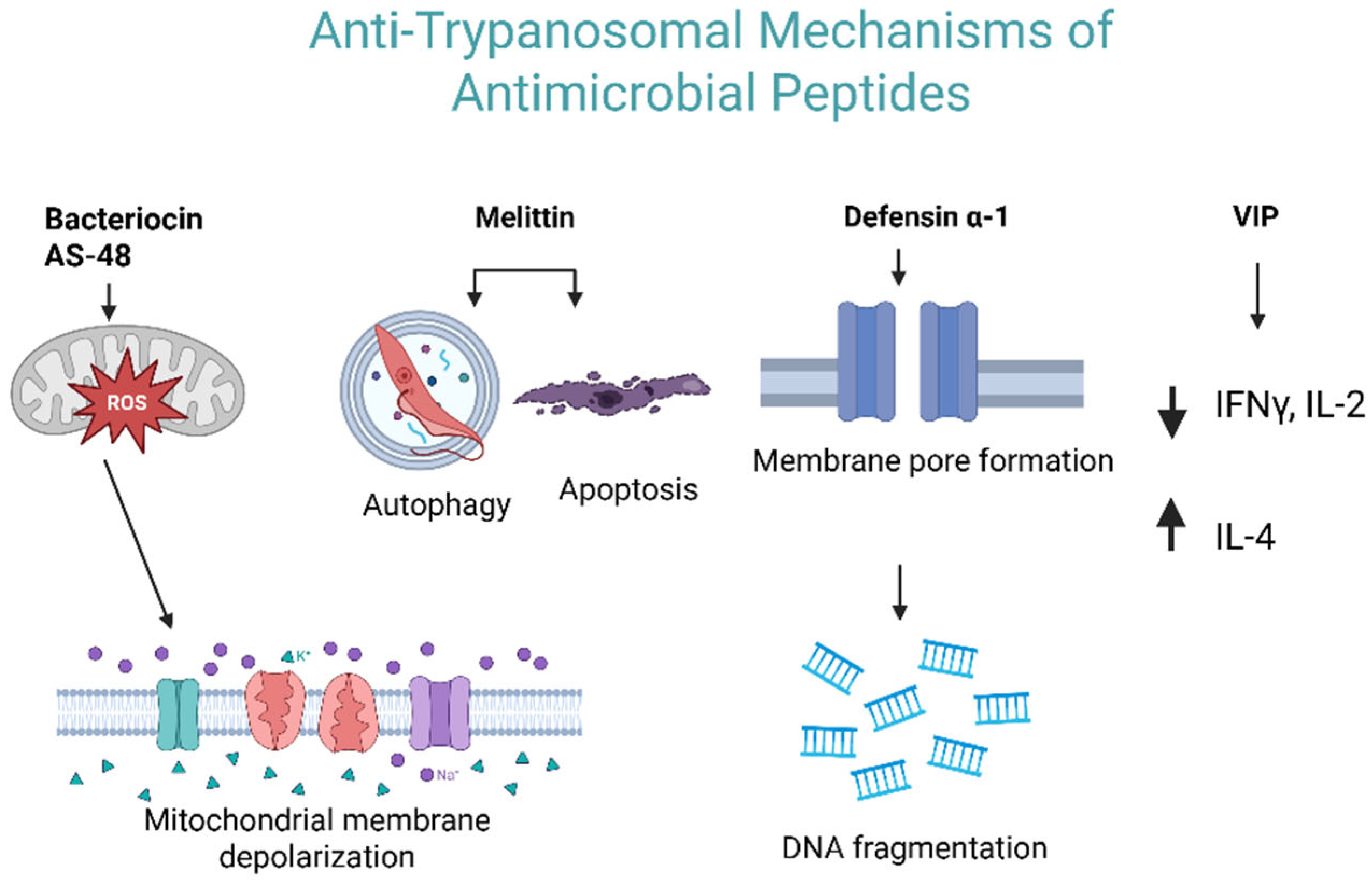
Figure 4.
Immunomodulatory and regenerative mechanisms of cell-based therapies in chronic Chagas cardiomyopathy. Mesenchymal stem cells (MSCs) modulate the cardiac inflammatory microenvironment and promote tissue repair by reducing pro-inflammatory cytokines and increasing anti-inflammatory mediators such as IL-10. Tolerogenic dendritic cells enhance immune regulation by increasing IL-10 production and promoting the expansion of regulatory T cells (Tregs), thereby limiting myocardial inflammation and fibrosis. Bone marrow mononuclear cells attenuate inflammatory infiltrates and interstitial fibrosis in experimental Chagas cardiomyopathy. Created with BioRender.com.
Figure 4.
Immunomodulatory and regenerative mechanisms of cell-based therapies in chronic Chagas cardiomyopathy. Mesenchymal stem cells (MSCs) modulate the cardiac inflammatory microenvironment and promote tissue repair by reducing pro-inflammatory cytokines and increasing anti-inflammatory mediators such as IL-10. Tolerogenic dendritic cells enhance immune regulation by increasing IL-10 production and promoting the expansion of regulatory T cells (Tregs), thereby limiting myocardial inflammation and fibrosis. Bone marrow mononuclear cells attenuate inflammatory infiltrates and interstitial fibrosis in experimental Chagas cardiomyopathy. Created with BioRender.com.
Disclaimer/Publisher’s Note: The statements, opinions and data contained in all publications are solely those of the individual author(s) and contributor(s) and not of MDPI and/or the editor(s). MDPI and/or the editor(s) disclaim responsibility for any injury to people or property resulting from any ideas, methods, instructions or products referred to in the content. |
© 2026 by the authors. Licensee MDPI, Basel, Switzerland. This article is an open access article distributed under the terms and conditions of the Creative Commons Attribution (CC BY) license (http://creativecommons.org/licenses/by/4.0/).
Copyright: This open access article is published under a Creative Commons CC BY 4.0 license, which permit the free download, distribution, and reuse, provided that the author and preprint are cited in any reuse.