

Submitted:
12 May 2026
Posted:
13 May 2026
You are already at the latest version
Abstract
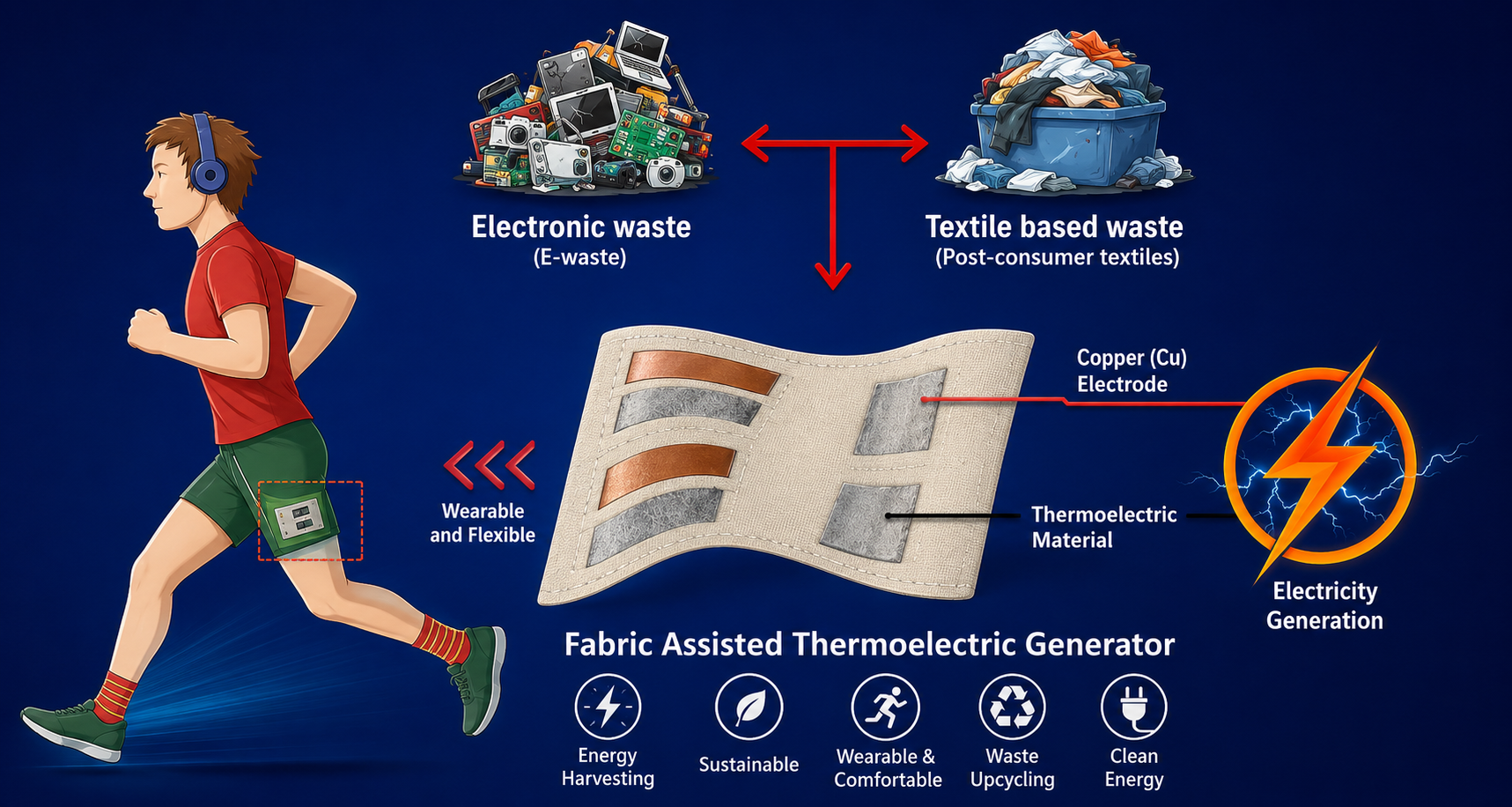
Wearable electronic textiles (e-textiles) are increasingly being explored for healthcare, sports, military, and smart wearable applications, creating a growing demand for sustainable and flexible energy harvesting systems. In this study, a cost-effective and ultra-flexible textile-assisted thermoelectric generator (TEG) was developed using recycled electronic and textile waste materials. Discarded copper and aluminum foils recovered from electronic waste were integrated into a recycled woven fabric composed of 70% cotton, 28% polyester, and 2% elastane to fabricate the wearable thermoelectric device. The fabricated system demonstrated a measurable thermoelectric response, producing a maximum output voltage of 180.75 mV under a temperature difference (ΔT) of 5.82 K. The results demonstrate the feasibility of utilizing waste-derived conductive materials and recycled textiles for flexible thermoelectric energy harvesting applications. In addition to its lightweight and wearable structure, the developed device highlights the potential of sustainable smart textile systems for low-power wearable electronics and self-powered sensing applications. This work contributes to the advancement of environmentally sustainable smart textiles by combining waste reutilization, wearable energy harvesting, and flexible electronic integration within a single textile platform. Future research may focus on improving thermal contact efficiency, long-term durability, output stability, and scalable fabrication strategies for practical wearable energy harvesting applications.
Keywords:
e-textiles
; thermoelectric generator
; energy harvesting technology
; e-waste
; textile fabric waste
; temperature gradient
1. Introduction
Thermoelectric energy harvesting has emerged as a promising strategy for developing sustainable and self-powered wearable technologies capable of converting ambient and body heat into electrical energy. The growing global demand for green energy systems and portable electronics has accelerated research into wearable energy harvesting technologies that can reduce dependence on conventional batteries while improving device sustainability and operational lifetime [1]. Various self-powered approaches, including solar, piezoelectric, triboelectric, and thermoelectric systems, have been extensively investigated for wearable applications due to their capability to harvest renewable energy from the surrounding environment and human activities [2,3,4,5,6]. Among these technologies, thermoelectric generators (TEGs) have attracted considerable attention because of their ability to continuously convert temperature gradients into electrical energy without requiring moving components [7].
The operating principle of thermoelectric energy harvesting is based on the Seebeck effect, in which a temperature difference across conductive or semiconductive materials generates an electrical potential difference. This phenomenon enables the direct conversion of thermal energy into electrical energy through carrier diffusion induced by temperature gradients [8,9]. In wearable applications, thermoelectric systems can utilize the temperature difference between the human body and the surrounding environment to produce electrical output suitable for low-power electronic devices [10]. Owing to their silent operation, structural simplicity, and continuous energy harvesting capability, flexible textile-integrated TEGs have become increasingly attractive for next-generation wearable electronics and smart textile systems.
Several studies have explored textile-based thermoelectric systems using different materials and fabrication approaches. In 2015, Yong Du et al. developed a textile-based TEG using PEDOT:PSS-coated polyester fabrics that generated 4.3 mV under a 75.2 K temperature difference [9]. Although the study demonstrated the feasibility of textile-integrated thermoelectric systems, the use of petroleum-derived conductive polymers and silver-based conductive components raises concerns regarding sustainability, scalability, and fabrication cost. Subsequently, Lu et al. fabricated silk-based thermoelectric fabrics using Bi2Te3 and Sb2Te3 coatings, producing 10 mV under a 35 K temperature gradient [11]. However, the dependence on heavy-metal-based thermoelectric materials presents environmental and recyclability limitations. Siddique et al. further demonstrated flexible textile TEGs printed on polyester substrates using p- and n-type thermoelectric materials interconnected with silver wires [12]. Despite achieving measurable electrical output, the system relied on expensive and non-biodegradable materials. Recent developments have focused on improving flexibility and wearable integration. Jae Ah Lee et al. developed a three-dimensional thermoelectric fabric by coating polyester yarns with thermoelectric materials, while Ting Zhang et al. reported crystalline thermoelectric fibers with enhanced mechanical stability for flexible applications [13,14]. Yue Hou et al. later introduced ultra-flexible fabric-assisted thermoelectric generators integrated with elastic textile substrates capable of maintaining performance under mechanical deformation [1]. In addition, copper iodide (CuI) thin films deposited on cotton and polyester fibers demonstrated the feasibility of textile-based thermoelectric energy harvesting, producing 2.9 mV under a 50 K temperature gradient [16]. Although CuI-based textile systems exhibit potential for wearable integration, the relatively low electrical output under large temperature differences highlights ongoing limitations in thermoelectric efficiency for flexible textile platforms. Despite these advancements, many reported systems still rely on costly inorganic thermoelectric materials, complex fabrication processes, rigid structural components, or environmentally hazardous substances that may limit large-scale sustainable implementation. Simultaneously, the rapid growth of electronic waste (e-waste) has become a significant global environmental concern. The increasing demand for electronic devices, accelerated further during the COVID-19 pandemic, has substantially increased global e-waste generation [18,19]. According to recent reports, global e-waste production reached 53.6 million metric tons in 2019 and is projected to increase considerably in the coming decades [20]. The improper disposal of electronic materials containing toxic substances and heavy metals poses serious environmental and public health risks. Consequently, sustainable strategies for reutilizing waste-derived materials in advanced functional systems have gained increasing research attention [17].
Despite substantial progress in wearable thermoelectric systems, a significant research gap remains in the development of sustainable textile-assisted thermoelectric generators utilizing recycled electronic and textile waste materials. Most existing textile-based thermoelectric studies primarily focus on maximizing electrical performance using expensive inorganic semiconductors, conductive polymers, or complex fabrication techniques [9,21]. In addition, conventional thermoelectric generators typically employ rigid bulk p- and n-type thermoelectric modules, which restrict flexibility and wearable adaptability [22]. The integration of flexible thermoelectric systems into textile platforms therefore remains a considerable technical challenge [23].
Accordingly, this study presents a sustainable and cost-effective fabric-assisted thermoelectric system developed using waste-derived textile and electronic materials for wearable energy harvesting applications. The proposed approach emphasizes low-cost fabrication, material reutilization, flexibility, and environmental sustainability while demonstrating the feasibility of integrating recycled functional materials into smart textile platforms. Furthermore, this work supports several United Nations Sustainable Development Goals (SDGs), including affordable and clean energy (SDG 7), industry innovation and infrastructure (SDG 9), and responsible consumption and production through circular economy-oriented waste reutilization strategies [24,25].
2. Materials and Methods
2.1. Materials
The fabrication of the fabric-assisted thermoelectric generator (TEG) utilized copper foil recovered from non-functional lithium-ion batteries and aluminum foil collected from electronic waste (e-waste). Textile waste generated from the apparel manufacturing industry was used as the substrate material. The fabric composition consisted of 70% cotton, 28% polyester, and 2% elastane. Polyvinyl acetate (PVA) resin was employed as an adhesive and binding agent during device fabrication. Textile fabrics were selected as the supporting substrate due to their lightweight structure, flexibility, and non-conductive properties, which are advantageous for wearable thermoelectric applications. In addition, textile substrates provide mechanical adaptability and comfort, enabling potential integration into wearable electronic systems. Although both natural and synthetic textile materials can be utilized in flexible thermoelectric devices, natural fiber-containing textiles are considered advantageous from a sustainability perspective because of their partial biodegradability and reduced environmental impact. The selection of recycled electronic and textile waste materials was primarily motivated by sustainability, cost-effectiveness, and circular economy considerations. The proposed approach emphasizes the reutilization of waste-derived materials for the development of flexible and environmentally conscious wearable energy-harvesting systems.
2.2. Design and Prototype Development of the Fabric-Assisted TEG
The fabrication process of the fabric-assisted thermoelectric generator involved the integration of copper and aluminum foil strips into a textile substrate. Copper foil strips and aluminum foil strips with dimensions of 95 mm × 14 mm were utilized during device construction. The aluminum electrode strips had dimensions of 31 mm × 54 mm. The thicknesses of the copper and aluminum foils were approximately 0.03 mm and 0.02 mm, respectively. The textile substrate was prepared with dimensions of 130 mm × 142 mm. The fabric possessed a mass per unit area of 250 g/m2 and a thickness of approximately 0.5 mm. Prior to fabrication, all foil strips were manually cleaned using detergent solution at 50 °C for 30 min and subsequently dried using a heat dryer to remove surface contaminants. Figure 1a illustrates the schematic configuration of the thermoelectric generator before textile integration. In the proposed design, the textile fabric served as a flexible structural support for the conductive foil components while maintaining mechanical flexibility suitable for wearable applications. The flexibility of the textile substrate is important for improving wearer comfort and enabling conformity to curved body surfaces during movement. Copper foil strips were initially integrated into the front surface of the textile substrate using a manual weaving and piercing technique. Subsequently, aluminum foil strips were incorporated into the fabric using the same approach. A spacing distance of approximately 12.5 mm was maintained between adjacent copper and aluminum foil strips to prevent direct contact and ensure structural separation.
On the reverse side of the fabric, the copper and aluminum foil strips were interconnected through an overlapping woven configuration, as illustrated in Figure 1b. The conductive strips were aligned primarily along the warp direction of the fabric structure. Additional aluminum foil strips were incorporated to establish electrical interconnections between the conductive pathways. Polyvinyl acetate resin was applied to improve structural stability and adhesion between the conductive layers and textile substrate. The conductive foil strips extending from the front surface to the reverse side of the fabric were subsequently connected using aluminum foil film to establish the electrode structure of the device. This fabrication procedure was repeated symmetrically on the opposite side of the textile substrate, resulting in the formation of two primary electrode regions on the back surface of the fabric. The completed prototype, shown in Figure 1c, represents a flexible fabric-assisted thermoelectric generator designed for wearable energy harvesting applications. The device operates by utilizing the temperature difference between the human body and the surrounding environment to generate measurable electrical output through thermoelectric energy conversion.
3. Results and Discussion
3.1. Output Performance of Fabric-Assisted TEG
Figure 2a–c displayed the three-dimensional visualization of the developed fabric-assisted thermoelectric generator (TEG). The device was designed using a flexible sandwich-structured textile configuration intended for wearable energy harvesting applications. Human arm contact was used as the thermal source for evaluating the thermoelectric response of the device. Two individual subjects, identified as Subject 1 and Subject 2, participated in the preliminary performance evaluation. During the experiment, the fabricated TEG was brought into contact with the skin surface, and the generated electrical potential difference was measured using a digital multimeter (UNI-T UT33D). The experiment involved non-invasive surface-level thermal contact only and did not involve medical intervention or collection of personal biological data. The experimental results demonstrate a clear voltage-based response derived from the thermal gradient. However, the present study primarily focuses on voltage-based proof-of-concept thermoelectric response evaluation; detailed electrical power characterization and impedance analysis remain subjects for future investigation.
A time-dependent variation in electrical potential difference was observed for both subjects. Subject 1 exhibited a maximum measured voltage of 222 mV at 11 s and a minimum voltage of 95 mV at 1 s, as shown in Figure 3a. In contrast, Subject 2 demonstrated an initial voltage of 90 mV, which gradually decreased to 61 mV at 19 s. The fluctuations in electrical output may be associated with variations in skin temperature, heat transfer conditions, contact pressure, and surrounding environmental factors. Human skin temperature can vary depending on metabolic activity, blood circulation, physical movement, and ambient conditions, which may influence thermoelectric response behavior in wearable systems [26]. To account for temporal fluctuations, the root mean square (RMS) average voltage values were calculated. The RMS voltage values for Subject 1 and Subject 2 were determined to be 180.75 mV and 72.30 mV, respectively.
The body temperatures of the experimental subjects and the surrounding environmental temperature were measured using digital thermometers. Subject 1 exhibited a body temperature of 310.32 K, while the surrounding temperature was recorded as 304.5 K, resulting in a temperature difference (ΔT) of 5.82 K. Under these conditions, the measured RMS voltage output was 180.75 mV. Similarly, Subject 2 exhibited a body temperature of 309.87 K with the same environmental temperature, resulting in a temperature difference of 5.37 K and an RMS voltage output of 72.30 mV. The corresponding values are summarized in Table 1.
The experimental results demonstrated that increased temperature difference was associated with higher measured voltage output, as illustrated in Figure 3b, confirming the positive relationship between thermal gradient and thermoelectric voltage generation in wearable energy harvesting systems [28]. Thermoelectric systems generally exhibit enhanced electrical response under larger thermal gradients due to increased carrier diffusion and thermally induced charge transport [27]. The decrease in temperature difference from 5.82 K to 5.37 K corresponded to a reduction in measured voltage output from 180.75 mV to 72.30 mV, indicating a positive relationship between thermal gradient and electrical response. The thermoelectric behavior of conductive materials is commonly evaluated using the thermoelectric figure of merit (ZT), expressed in Equation (1),
In this equation, where σ represents electrical conductivity, S denotes the Seebeck coefficient, κ represents thermal conductivity, and T is the absolute temperature [21]. The Seebeck effect describes the generation of electrical potential difference resulting from a temperature gradient across conductive materials [8]. The Seebeck effect formula, which can be expressed by an Equation (2),
ΔV represents the measured voltage difference and ΔT denotes the applied temperature difference. Based on the measured voltage response and thermal gradient, the estimated Seebeck-related responses for Subject 1 and Subject 2 were calculated as 31.06 mV/K and 13.46 mV/K, respectively. These values represent the effective voltage response of the developed prototype under the experimental conditions rather than the intrinsic Seebeck coefficient of an individual thermoelectric material. The observed variation between subjects may be associated with differences in skin temperature distribution, contact conditions, and heat transfer behavior. When the temperature difference decreased to 5.37 K, the Seebeck effect similarly decreased to 13.46 mV/K, as shown in Figure 3c. The potential difference (ΔV) generated by the Seebeck effect is linearly proportional to the temperature difference (ΔT) between the two junctions of the thermocouple. However, for larger temperature ranges, this relationship becomes non-linear [8] Variations in human body temperature led to diverse outcomes in the Seebeck effect, reflecting individual differences among subjects (Figure 3d). The theoretical maximum thermodynamic efficiency of thermal energy conversion can be estimated using Carnot efficiency, that can be expressed by an Equation (3),
Here, Thot represented the human body temperature, and Tcold represented the environmental temperature. The estimated Carnot efficiencies for Subject 1 and Subject 2 were 1.88% and 1.73%, respectively. The slightly higher thermal gradient observed for Subject 1 contributed to the comparatively higher theoretical thermodynamic efficiency (Figure 3e). These findings suggest that larger temperature differences between the human body and the surrounding environment may enhance the thermoelectric response of wearable textile-based energy harvesting systems [29].
In addition to thermal gradient effects, the flexible textile architecture may also contribute to device adaptability and conformal skin contact during wearable operation. The woven conductive structure enabled intimate contact between the conductive pathways and textile substrate, which may assist thermal transfer across the device surface. Furthermore, the utilization of lightweight textile materials and flexible metallic foils contributed to the mechanical adaptability of the developed system, supporting potential wearable integration.
3.2. Flexibility Analysis of Fabric-Assisted TEG
Mechanical flexibility is an important requirement for wearable textile-based electronic systems because the devices must conform to curved body surfaces and tolerate deformation during human movement. In this study, the flexibility of the fabric-assisted TEG was achieved through the combined utilization of textile substrates and flexible conductive foil materials. The developed prototype maintained structural integrity during multiple deformation conditions, including folding, rolling, twisting, and bending, as illustrated in Figure 4a–d. No visible structural failure or significant detachment of conductive components was observed during these qualitative flexibility evaluations. The textile substrate provided mechanical support while simultaneously preserving the flexibility of the conductive network structure.
Figure 4e demonstrates the free-form adaptability of the developed TEG structure, indicating its ability to conform to irregular surfaces while maintaining flexibility characteristics similar to conventional textile materials. In addition, Figure 4f illustrates the attachment of the device to a human arm, demonstrating its potential applicability for wearable energy harvesting applications. The incorporation of textile materials contributed significantly to the lightweight and deformable characteristics of the device. Compared with rigid conventional thermoelectric modules, textile-assisted structures may provide improved wearer comfort, mechanical adaptability, and integration capability for future wearable electronic systems. However, long-term mechanical durability and repeated cyclic deformation analysis remain important future research directions for evaluating the practical applicability of the developed prototype.
3.3. Comparative Analysis of the Fabric-Assisted TEG with Previously Reported Textile-Based TEG Systems
Recent advancements in wearable thermoelectric systems have involved a wide range of flexible materials, including conductive polymers, inorganic thermoelectric compounds, hybrid composites, and textile-integrated conductive structures [30]. Table S1 compares the developed fabric-assisted TEG with several previously reported textile-based thermoelectric systems. The developed device generated an RMS voltage output of 180.75 mV under a temperature difference of 5.82 K. Several previously reported textile-based thermoelectric systems required substantially larger temperature gradients to achieve comparable electrical outputs. For example, Jae Ah Lee et al. reported a textile-based thermoelectric structure generating approximately 0.8 mV under a 66 K temperature gradient using p-type and n-type yarn structures [13]. Similarly, Yue Hou et al. developed ultra-flexible fabric-assisted thermoelectric generators producing 111.49 mV under a 33.24 K temperature difference. [1]. In another study, CuI thin films deposited on cotton and polyester fabrics generated approximately 2.9 mV under a 50 K temperature gradient [16].
Although direct performance comparisons between different thermoelectric systems should be interpreted cautiously due to variations in materials, device architectures, testing environments, thermal contact conditions, and measurement methodologies, the developed fabric-assisted TEG demonstrated measurable voltage generation under relatively small temperature differences. The observed thermoelectric response may be associated with the conductive foil configuration, flexible textile integration, and effective thermal interaction between the human body and the surrounding environment.
In contrast to many previously reported textile thermoelectric systems that rely on expensive inorganic semiconductors, complex fabrication techniques, or non-recyclable materials, the proposed device emphasizes sustainability, low-cost fabrication, and waste-derived material utilization. The incorporation of recycled textile and electronic waste materials highlights the potential for environmentally conscious wearable energy harvesting systems aligned with circular economy principles.
Nevertheless, the present study primarily demonstrates a proof-of-concept wearable textile-assisted thermoelectric system. Additional investigations involving electrical current characterization, power density analysis, long-term stability testing, thermal conductivity measurements, and cyclic durability evaluation are necessary for comprehensive performance assessment and future practical implementation.
4. Conclusions
This study demonstrated the development of a flexible fabric-assisted thermoelectric generator (TEG) utilizing recycled electronic and textile waste materials for wearable energy harvesting applications. The developed prototype generated a maximum root mean square (RMS) voltage response of 180.75 mV under a temperature difference of 5.82 K during human body-based testing conditions. The experimental results confirmed that the electrical response of the device increased with increasing thermal gradient between the human body and the surrounding environment. The proposed TEG structure incorporated copper and aluminum foil strips recovered from electronic waste together with apparel cutting waste as the textile substrate, emphasizing sustainability, material reutilization, and cost-effective fabrication. The integration of conductive foil structures into a flexible textile platform demonstrated the feasibility of developing wearable thermoelectric systems using waste-derived materials. In addition, the textile-assisted structure exhibited flexibility under folding, rolling, twisting, and bending conditions, indicating its potential suitability for wearable smart textile applications. Compared with many previously reported textile-based thermoelectric systems that rely on expensive inorganic thermoelectric materials and complex fabrication processes, the present study focused on a simplified and environmentally conscious fabrication strategy using recycled materials. The developed device therefore highlights the potential of combining wearable energy harvesting with circular economy-oriented waste reutilization approaches. Nevertheless, the present work primarily represents a proof-of-concept wearable thermoelectric textile system and these Further investigations involving electrical current characterization, power density analysis, long-term operational stability, cyclic mechanical durability, thermal conductivity analysis, and optimized thermal contact engineering are required for comprehensive performance evaluation and practical implementation. Future research may focus on improving thermoelectric response through optimized conductive architectures, enhanced interfacial thermal transfer, scalable fabrication techniques, and integration into multifunctional wearable smart textile systems [31],. The findings of this study provide a foundation for the continued development of sustainable and flexible textile-based energy harvesting technologies for next-generation wearable electronics.
Supplementary Materials
The following supporting information can be downloaded at the website of this paper posted on Preprints.org. https://doi.org/10.5281/zenodo.20097286.
Author Contributions
A.U.A.K.: Conceptualization, investigation, methodology, formal analysis, and writing—original draft. N.N.: Conceptualization, investigation, methodology, formal analysis, and writing—original draft. A.K.S.: Resources. Z.T.B.: Data Analysis. A.B.: Supervision and writing—review and editing. A.M.M.: Writing—Review and Editing. Authorship must be limited to those who have contributed substantially to the work reported. All authors have read and agreed to the published version of the manuscript.
Funding
This research received no external funding.
Data Availability Statement
All data analyzed during this study are included in this published article and its Supplementary Materials. The datasets are fully represented in the graphs and tables provided, and no additional data is available.
Acknowledgments
During the preparation of this manuscript, the authors used Gemini Pro and ChatGPT 5.2 for grammatical checking. The authors have reviewed and edited the output and take full responsibility for the content of this publication.
Conflicts of Interest
The authors declare no conflicts of interest.
References
- Hou, Y.; et al. ‘Whole Fabric-Assisted Thermoelectric Devices for Wearable Electronics’. Adv. Sci. 2021, 9, 2103574. [Google Scholar] [CrossRef] [PubMed]
- Shaikh, F.K.; Zeadally, S. ‘Energy harvesting in wireless sensor networks: A comprehensive review’. Renew. Sustain. Energy Rev. 2016, 55, 1041–1054. [Google Scholar] [CrossRef]
- Energy harvesting from walking motion of a humanoid robot using a piezoelectric composite | Request PDF’, ResearchGate, Accessed: Jan. 22, 2026. [Online]. Available online: https://www.researchgate.net/publication/307917118_Energy_harvesting_from_walking_motion_of_a_humanoid_robot_using_a_piezoelectric_composite.
- ‘Energy harvesting: A review of recent developments | Request PDF’, ResearchGate, Aug. 2025. [CrossRef]
- ‘Human and environmental analysis of wearable thermal energy harvesting—ScienceDirect’. Accessed: Jan. 22, 2026. [Online]. Available online: https://www.sciencedirect.com/science/article/abs/pii/S0196890417303060.
- ‘Emergency and Work | Springer Nature Link’. Accessed: Jan. 22, 2026. [Online]. Available online: https://link.springer.com/chapter/10.1007/978-1-4419-7384-9_10.
- ‘Nanowires as Building Blocks to Fabricate Flexible Thermoelectric Fabric: The Case of Copper Telluride Nanowires | Request PDF’, ResearchGate, Aug. 2025. [CrossRef]
- ‘(PDF) Simple Demonstration of the Seebeck Effect’. Accessed: Jan. 22, 2026. [Online]. Available online: https://www.researchgate.net/publication/228844038_Simple_Demonstration_of_the_Seebeck_Effect.
- ‘S-EPMC4372730—Thermoelectric fabrics: toward power generating clothing.—OmicsDI’. Accessed: Jan. 22, 2026. [Online]. Available online: https://www.omicsdi.org/dataset/biostudies-literature/S-EPMC4372730.
- Snyder, G.J.; Toberer, E.S. ‘Complex thermoelectric materials’. Nat. Mater. 2008, 7, 105–114. [Google Scholar] [CrossRef] [PubMed]
- ‘Silk fabric-based wearable thermoelectric generator for energy harvesting from the human body—ScienceDirect’. Accessed: Jan. 22, 2026. [Online]. Available online: https://www.sciencedirect.com/science/article/abs/pii/S0306261915014889.
- Siddique, A.R.M.; Rabari, R.; Mahmud, S.; Van Heyst, B. ‘Thermal energy harvesting from the human body using flexible thermoelectric generator (FTEG) fabricated by a dispenser printing technique’. Energy 2016, 115, 1081–1091. [Google Scholar] [CrossRef]
- Q. Wu and J. Hu, ‘A novel design for a wearable thermoelectric generator based on 3D fabric structure’, Smart Mater. Struct., vol. 26, Mar. 2017. [CrossRef]
- T. Zhang et al., ‘High-performance, flexible, and ultralong crystalline thermoelectric fibers’, Nano Energy, vol. 41, pp. 35–42, Nov. 2017. [CrossRef]
- Y. Jung et al., ‘Wearable solar thermoelectric generator driven by unprecedentedly high temperature difference’, Nano Energy, vol. 40, Sep. 2017. [CrossRef]
- Bahk, J.-H.; Fang, H.; Yazawa, K.; Shakouri, A. ‘Flexible thermoelectric materials and device optimization for wearable energy harvesting’. J. Mater. Chem. C 2015, 3, 10362. [Google Scholar] [CrossRef]
- B. Dev, M. A. Rahman, T. Tazrin, M. Islam, A. Datta, and D. Rahman, ‘Investigation of Mechanical Properties of Nonwoven Recycled Cotton/PET Fiber--Reinforced Polyester Hybrid Composites’, Macromol. Mater. Eng., vol. 309, Apr. 2024. [CrossRef]
- ‘Health consequences of exposure to e-waste: a systematic review—The Lancet Global Health’. Accessed: Jan. 23, 2026. [Online]. Available online: https://www.thelancet.com/journals/langlo/article/PIIS2214-109X(13)70101-3/fulltext.
- Vishwakarma, S.; et al. ‘E-waste in Information and Communication Technology Sector: Existing scenario, management schemes and initiatives’. Environ. Technol. Innov. 2022, 27, 102797. [Google Scholar] [CrossRef]
- ‘(PDF) Challenges and Opportunities in the Management of Electronic Waste and Its Impact on Human Health and Environment’. Accessed: Jan. 23, 2026. [Online]. Available online: https://www.researchgate.net/publication/367267038_Challenges_and_Opportunities_in_the_Management_of_Electronic_Waste_and_Its_Impact_on_Human_Health_and_Environment.
- ‘(PDF) Thermoelectric Textile Materials’, in ResearchGate. [CrossRef]
- Park, K.; Lee, T.; Ko, Y.; Cho, Y.; Park, C.; Kim, H. ‘High-Performance Thermoelectric Fabric Based on a Stitched Carbon Nanotube Fiber’. ACS Appl. Mater. Interfaces 2021, 13. [Google Scholar] [CrossRef] [PubMed]
- ‘A Highly Integrable Thermoelectric Fiber | Request PDF’, ResearchGate. [CrossRef]
- Anastas, P.; et al. ‘The Power of the United Nations Sustainable Development Goals in Sustainable Chemistry and Engineering Research’. ACS Sustain. Chem. Eng. 2021, 9, 8015–8017. [Google Scholar] [CrossRef]
- Kynčlová, P.; Upadhyaya, S.; Nice, T. ‘Composite index as a measure on achieving Sustainable Development Goal 9 (SDG-9) industry-related targets: The SDG-9 index’. Appl. Energy 2020, 265, 114755. [Google Scholar] [CrossRef]
- Tabaie, Z.; Omidvar, A. ‘Human body heat-driven thermoelectric generators as a sustainable power supply for wearable electronic devices: Recent advances, challenges, and future perspectives’. Heliyon 2023, 9, e14707. [Google Scholar] [CrossRef] [PubMed]
- He, W.; Guo, R.; Liu, S.; Zhu, K.; Wang, S. ‘Temperature gradient characteristics and effect on optimal thermoelectric performance in exhaust power-generation systems’. Appl. Energy 2020, 261, 114366. [Google Scholar] [CrossRef]
- ‘(PDF) Design of a Wearable Thermoelectric Generator for Harvesting Human Body Energy’. Accessed: Jan. 23, 2026. [Online]. Available online: https://www.researchgate.net/publication/311998407_Design_of_a_Wearable_Thermoelectric_Generator_for_Harvesting_Human_Body_Energy.
- ‘The Human Body as a Portable Power Source’. Accessed: Jan. 23, 2026. [Online]. Available online: http://large.stanford.edu/courses/2018/ph240/gruebele2/.
- Yang, S.; Qiu, P.; Chen, L.; Shi, X. ‘Recent Developments in Flexible Thermoelectric Devices’. Small Sci. 2021, 1, 2100005. [Google Scholar] [CrossRef] [PubMed]
- ‘Development of the Smart Jacket Featured with Medical, Sports, and Defense Attributes using Conductive Thread and Thermoelectric Fabric’. Accessed: Jan. 23, 2026. [Online]. Available online: https://www.mdpi.com/2673-4591/30/1/18.
Figure 1.
Fabric-assisted TEG fabrication and prototype: (a) Schematic Diagram of TEG without textile fabric, (b) Weaving Technique of Foil Strips into Textile Fabric, (c) Final prototype of fabric-assisted TEG.
Figure 1.
Fabric-assisted TEG fabrication and prototype: (a) Schematic Diagram of TEG without textile fabric, (b) Weaving Technique of Foil Strips into Textile Fabric, (c) Final prototype of fabric-assisted TEG.
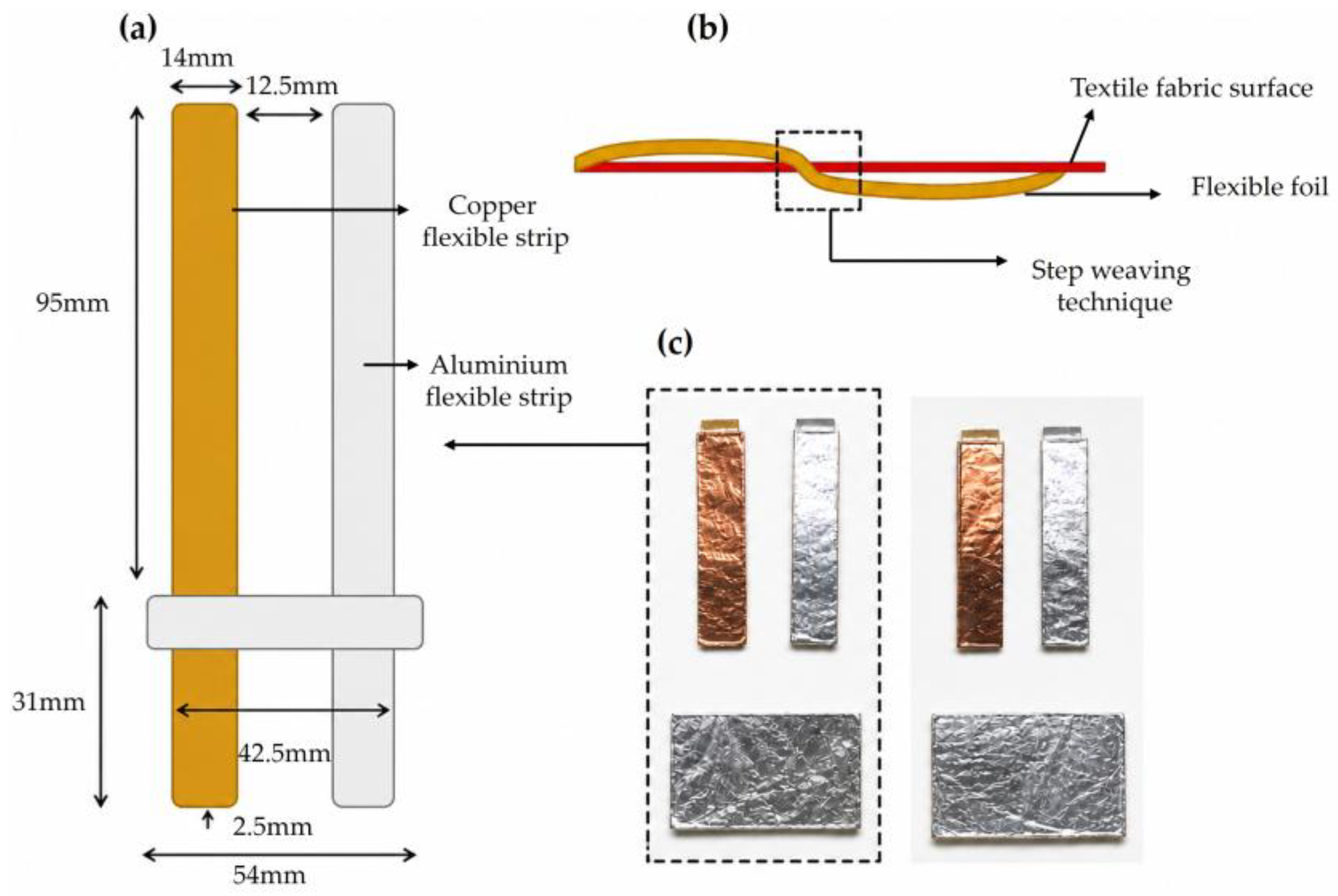
Figure 2.
3D visualization of fabric-based flexible TEG: (a) Face view; (b) Side view; (c) Back view.
Figure 2.
3D visualization of fabric-based flexible TEG: (a) Face view; (b) Side view; (c) Back view.
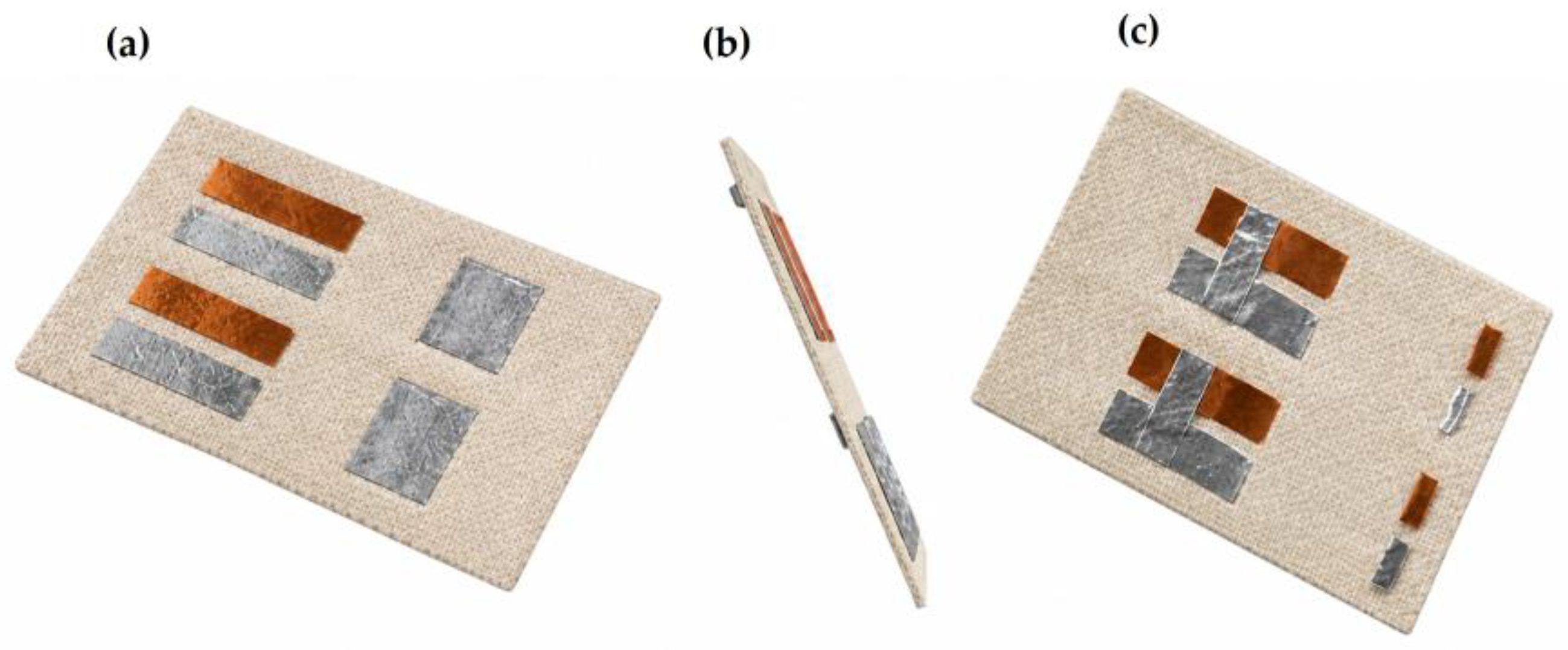
Figure 3.
Thermoelectric response characteristics of the fabric-assisted TEG: (a) temporal variation of electrical potential difference; (b) relationship between potential difference and Seebeck effect; (c) relationship between temperature difference and Seebeck effect; (d) theoretical Carnot efficiency variation; (e) Seebeck effect according to human body.
Figure 3.
Thermoelectric response characteristics of the fabric-assisted TEG: (a) temporal variation of electrical potential difference; (b) relationship between potential difference and Seebeck effect; (c) relationship between temperature difference and Seebeck effect; (d) theoretical Carnot efficiency variation; (e) Seebeck effect according to human body.
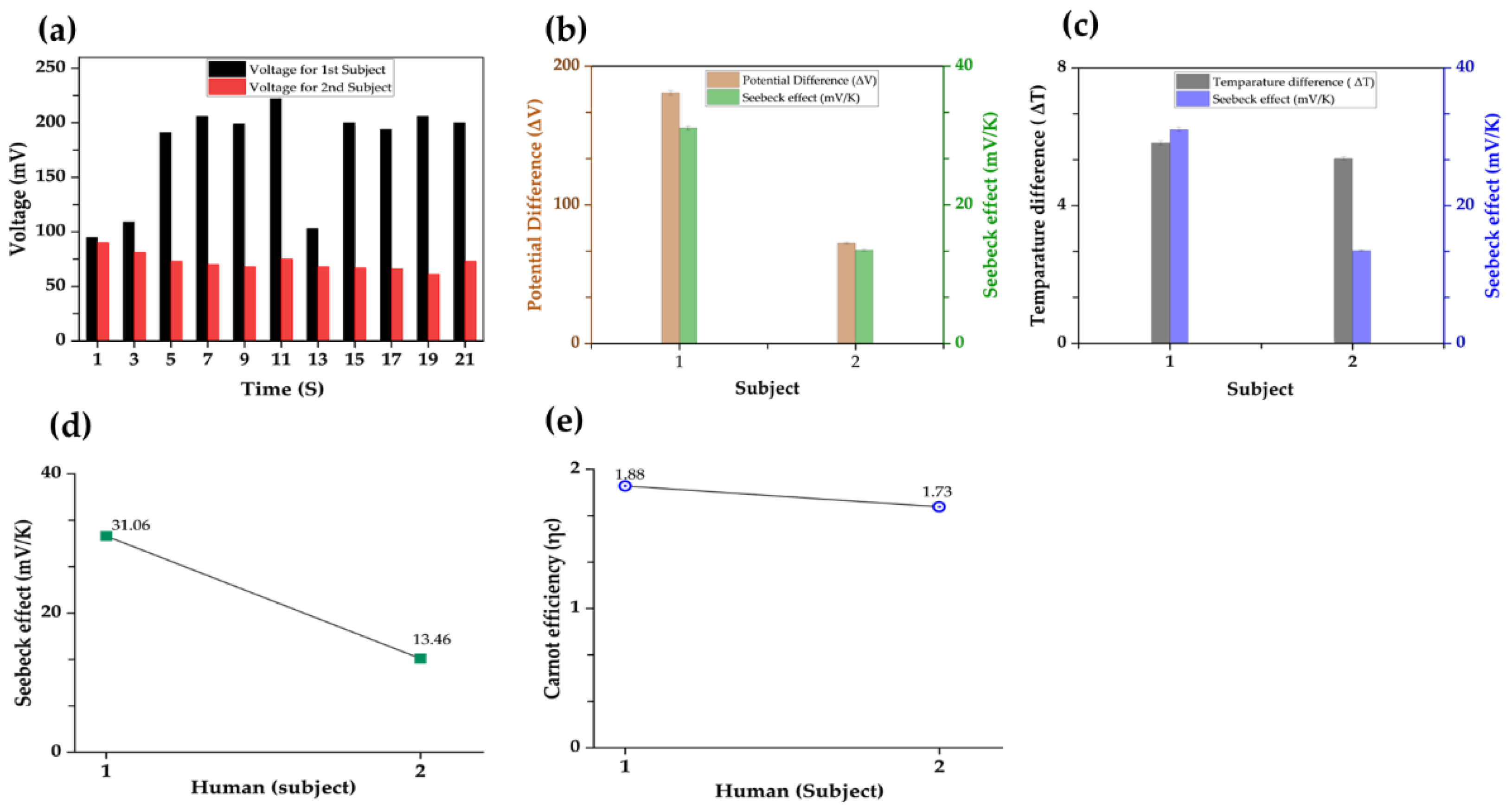
Figure 4.
Flexibility analysis of the fabric-assisted TEG: (a) folding configuration; (b) rolling condition; (c) twisting condition; (d) bending condition; (e) free-surface adaptability; (f) wearable demonstration on human arm.3.3. Comparative Analysis in Output Voltage of Fabric-Assisted TEG with various Textiles based TEGs.
Figure 4.
Flexibility analysis of the fabric-assisted TEG: (a) folding configuration; (b) rolling condition; (c) twisting condition; (d) bending condition; (e) free-surface adaptability; (f) wearable demonstration on human arm.3.3. Comparative Analysis in Output Voltage of Fabric-Assisted TEG with various Textiles based TEGs.
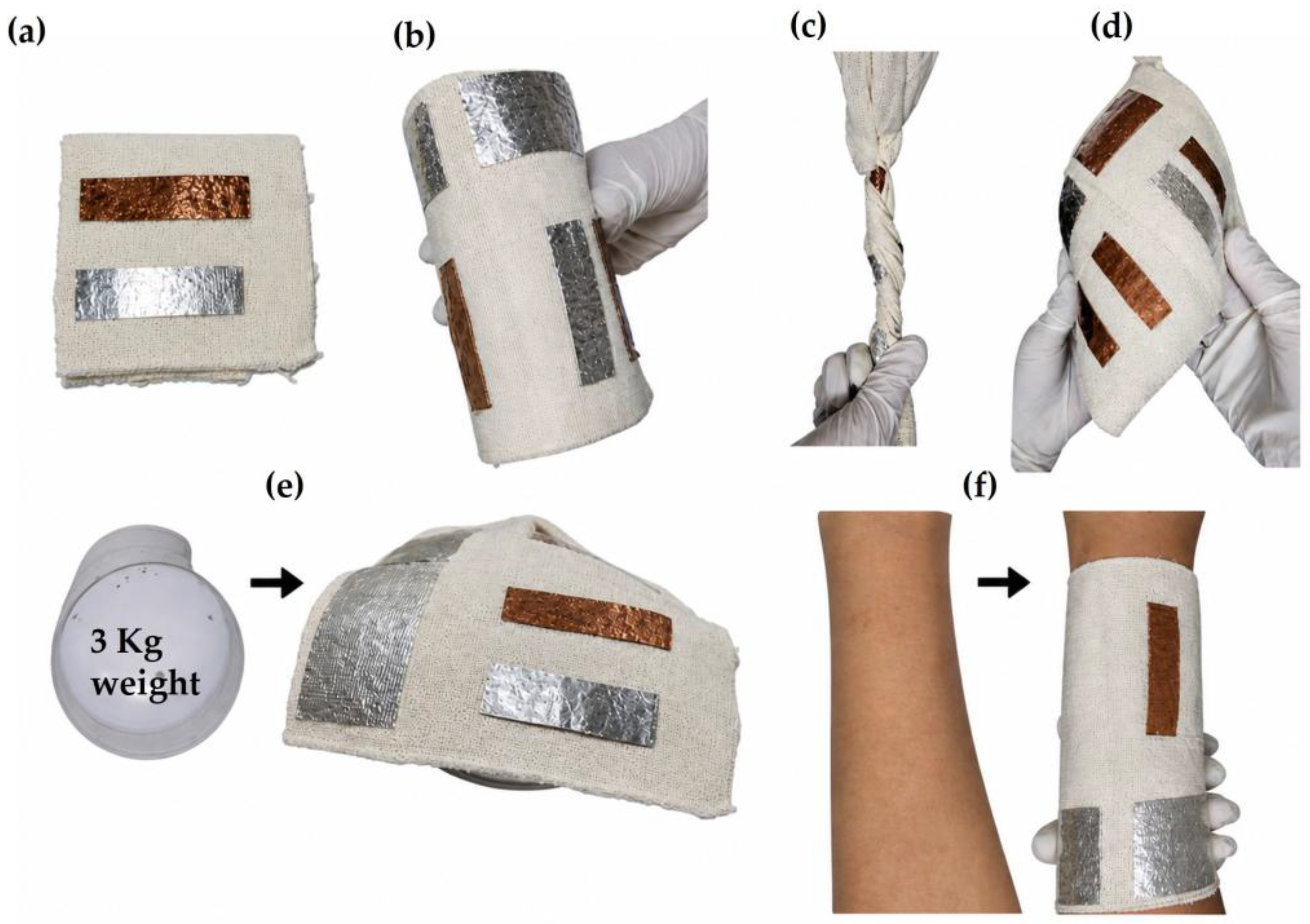

Table 1.
Temperature difference and RMS voltage response of the fabric-assisted TEG.
|
Human
(Subject) |
Temperature Difference
(ΔT) |
Potential difference
(ΔV) |
|---|---|---|
| Subject 1 | 5.82 K | 180.75 mV |
| Subject 2 | 5.37 K | 72.30 mV |
Disclaimer/Publisher’s Note: The statements, opinions and data contained in all publications are solely those of the individual author(s) and contributor(s) and not of MDPI and/or the editor(s). MDPI and/or the editor(s) disclaim responsibility for any injury to people or property resulting from any ideas, methods, instructions or products referred to in the content. |
© 2026 by the authors. Licensee MDPI, Basel, Switzerland. This article is an open access article distributed under the terms and conditions of the Creative Commons Attribution (CC BY) license (http://creativecommons.org/licenses/by/4.0/).
Copyright: This open access article is published under a Creative Commons CC BY 4.0 license, which permit the free download, distribution, and reuse, provided that the author and preprint are cited in any reuse.


