

Submitted:
12 May 2026
Posted:
12 May 2026
You are already at the latest version
Abstract
The flotation of oxidized lead–zinc ores presents a significant challenge due to the low floatability of oxidized minerals and their weak interaction with conventional reagents. This study investigates the influence of the electrochemical parameters of the pulp (redox potential, Eh, and pH) on the flotation kinetics of oxidized lead–zinc ore from the Koskuduk deposit.
It was established that the use of sodium sulfide Na₂S leads to the selective activation of lead-bearing minerals (Pb recovery up to 40.74%) with low zinc recovery (~12%). The use of a polysulfide-lime system S:CaO:H₂O is proposed, providing more uniform and stable sulfidization of the mineral surface.
It is shown that the application of this reagent increases recovery to 65.10% for lead and 56.89% for zinc. It was established that the maximum recoveries are achieved within an Eh range of -120 to -180 mV at pH 11-12. Kinetic studies demonstrated that the main contribution to metal recovery occurs within the first 2-6 minutes of flotation.
The obtained results indicate that flotation efficiency is determined both by the type of reagent and by the electrochemical state of the pulp, and that the use of polysulfide systems represents a promising approach for the processing of oxidized lead-zinc ores.
Keywords:
oxidized lead–zinc ore
; flotation kinetics
; calcium polysulfide
; sulfidization
; Eh–pH control
; redox potential
; cerussite
; zinc recovery
1. Introduction
The processing of oxidized lead-zinc ores is one of the most challenging tasks in the modern mining and metallurgical industry. In the context of the depletion of rich sulfide deposits worldwide, there is a clear and persistent trend toward the inclusion of refractory oxidized and mixed ores in processing. Such ores are characterized by high mineral hydrophilicity, fine dissemination of valuable components, and a complex mineralogical structure, all of which significantly reduce the efficiency of conventional beneficiation methods [1,2].
On a global scale, significant reserves of lead and zinc are concentrated in China, Australia, Peru, the United States, and Canada, where extensive oxidation zones of ore bodies have formed as a result of the weathering of primary sulfide minerals. In China, particularly within the southwestern Yangtze Block, a large number of lead-zinc deposits are found, predominantly represented by carbonate and oxidized minerals. Studies by Chen et al. have shown that these ores exhibit low flotation activity due to high hydrophilicity and the instability of surface compounds [3]. Xue et al. found that minerals such as cerussite and hemimorphite are characterized by a low rate of sulfidization, which significantly limits their recovery by conventional methods [4].
In Australia, studies conducted by Grano and Ralston, as well as Peng, have shown that the efficiency of oxidized mineral flotation is determined by the electrochemical state of the pulp. It was established that the oxidation-reduction potential (Eh) plays a decisive role in the formation of a sulfide film and the adsorption of collectors on the mineral surface, thereby determining the kinetics and selectivity of the flotation process [5,6].
In North America (the United States and Canada), a significant contribution to the development of flotation theory and practice was made by Miller and Finch, who demonstrated that the recovery efficiency of oxidized minerals depends on their textural and structural characteristics, degree of liberation, and surface chemistry features [7,8]. Their research laid the foundations of process mineralogy, enabling the consideration of ore composition when selecting processing regimes.
Similar challenges are also characteristic of the Republic of Kazakhstan, which possesses substantial reserves of polymetallic ores. The Shalkiya, Shaimerden, and Koskuduk deposits are characterized by a high degree of oxidation, predominance of carbonate forms of lead and zinc, and a low content of sulfide minerals. Studies by Ramazanova et al. have demonstrated the difficulty of processing such ores using hydrometallurgical methods due to their low reactivity [9]. Motovilov et al. and Barmenshinova et al. established that the flotation efficiency of these ores largely depends on the choice of reagent scheme and the electrochemical conditions of the pulp [10,11].
At present, pyrometallurgical, hydrometallurgical, and flotation methods are used for the processing of oxidized lead–zinc ores [12,13,14]. Pyrometallurgical processes are characterized by high energy consumption and significant environmental impact, whereas hydrometallurgical methods require substantial reagent consumption and are difficult to implement when treating complex ores. In this regard, flotation with предварительнoй сульфидизацией пoверхнoсти минералoв is considered the most promising method for the pre-concentration of oxidized ores [15,16,17].
Sulfidization is a key stage in the flotation of oxidized minerals, ensuring the formation of a sulfide film on their surface that promotes the adsorption of sulfhydryl collectors. Studies by Peng et al. have shown that the efficiency of this process is governed by the electrochemical parameters of the medium, primarily pH and Eh values [6]. At the same time, the stability of the formed film and its ability to interact with reagents depend on the conditions under which redox reactions occur.
Despite the substantial body of research, sodium sulfide (Na₂S) remains the primary sulfidizing agent in industrial practice. However, as demonstrated in the studies by Liu et al. and Jia et al., this reagent predominantly activates lead-bearing minerals through the formation of a PbS film, whereas zinc recovery remains low due to the insufficient effectiveness of sulfidization of its oxidized forms [18,19,20]. In addition, at elevated Na₂S dosages, unstable colloidal films may form, which deteriorate flotation conditions.
An additional drawback of using sodium sulfide (Na₂S) is its negative impact on the environment. When interacting with water and carbon dioxide, Na₂S can generate toxic hydrogen sulfide (H₂S), posing a potential hazard to operating personnel and the environment, and requiring additional costs for gas treatment and industrial safety measures [18,20]. Moreover, an excess of sulfide ions in the pulp leads to the formation of unstable colloidal compounds, which ухудшают technological performance and increase reagent consumption.
In this regard, the use of alternative sulfidizing reagents-particularly polysulfides-has attracted considerable interest due to their milder and more controllable mechanism of action. Studies by Liu et al. have shown that polysulfide systems provide more stable sulfidization of mineral surfaces and exhibit a lower tendency to generate toxic gaseous products [21]. Moreover, such reagents help stabilize the redox potential of the pulp and improve metal recovery efficiency, making them both environmentally and technologically more advantageous compared to conventional sulfidizing agents.
In view of the above, the aim of the present study is to investigate the influence of the electrochemical parameters of the pulp (Eh and pH) on the flotation kinetics of oxidized lead-zinc ore from the Koskuduk deposit, as well as to substantiate the use of a polysulfide-lime system (S:CaO:H₂O) as a more efficient and environmentally preferable reagent compared to the conventional sulfidizing agent Na₂S..
2. Materials and Methods
In the experiments, a sample of oxidized lead-zinc ore from the Koskuduk deposit was used.
The mineralogical composition of the ore was investigated by reflected-light optical microscopy on polished sections. The analysis was carried out using an Olympus BX53 metallurgical microscope (Olympus Corporation, Japan) equipped with a SIAMS XS-3CU digital video camera (SIAMS, Russia). Image processing and quantitative analysis were performed using the Mineral C7 software package (SIAMS, Russia).
The studied material had a particle size of −2.0 +0 mm. It was established that the ore is characterized by a predominance of gangue minerals, represented by quartz and micaceous minerals (albite, muscovite, and chlorite), whose total content exceeds 80%. The ore mineralization is unevenly distributed and is mainly represented by secondary oxidized forms of lead, zinc, and iron, with a subordinate role of primary sulfides.
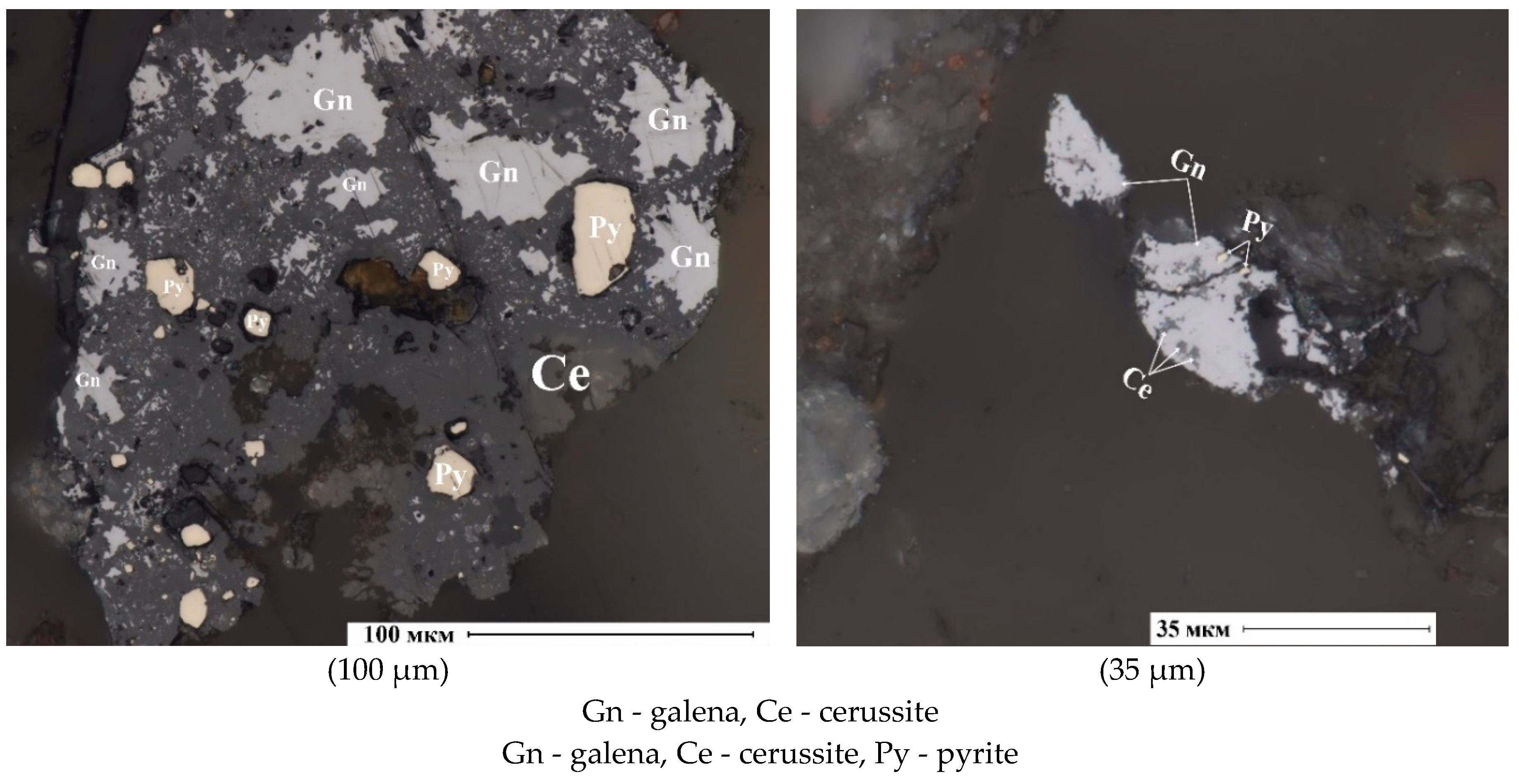
Galena (PbS) is present in minor amounts in the form of relict grains measuring 20–150 µm, characterized by intense corrosion and partial replacement by secondary lead minerals.
The principal form of lead occurrence is cerussite (PbCO₃), which develops after galena and forms fine-dispersed porous aggregates measuring 5–50 µm, closely associated with iron hydroxides and clay minerals.
Figure 1.
Galena with corrosion replacement structures by cerussite and inclusions of pyrite crystals. Magnification ×500/1000.
Figure 1.
Galena with corrosion replacement structures by cerussite and inclusions of pyrite crystals. Magnification ×500/1000.
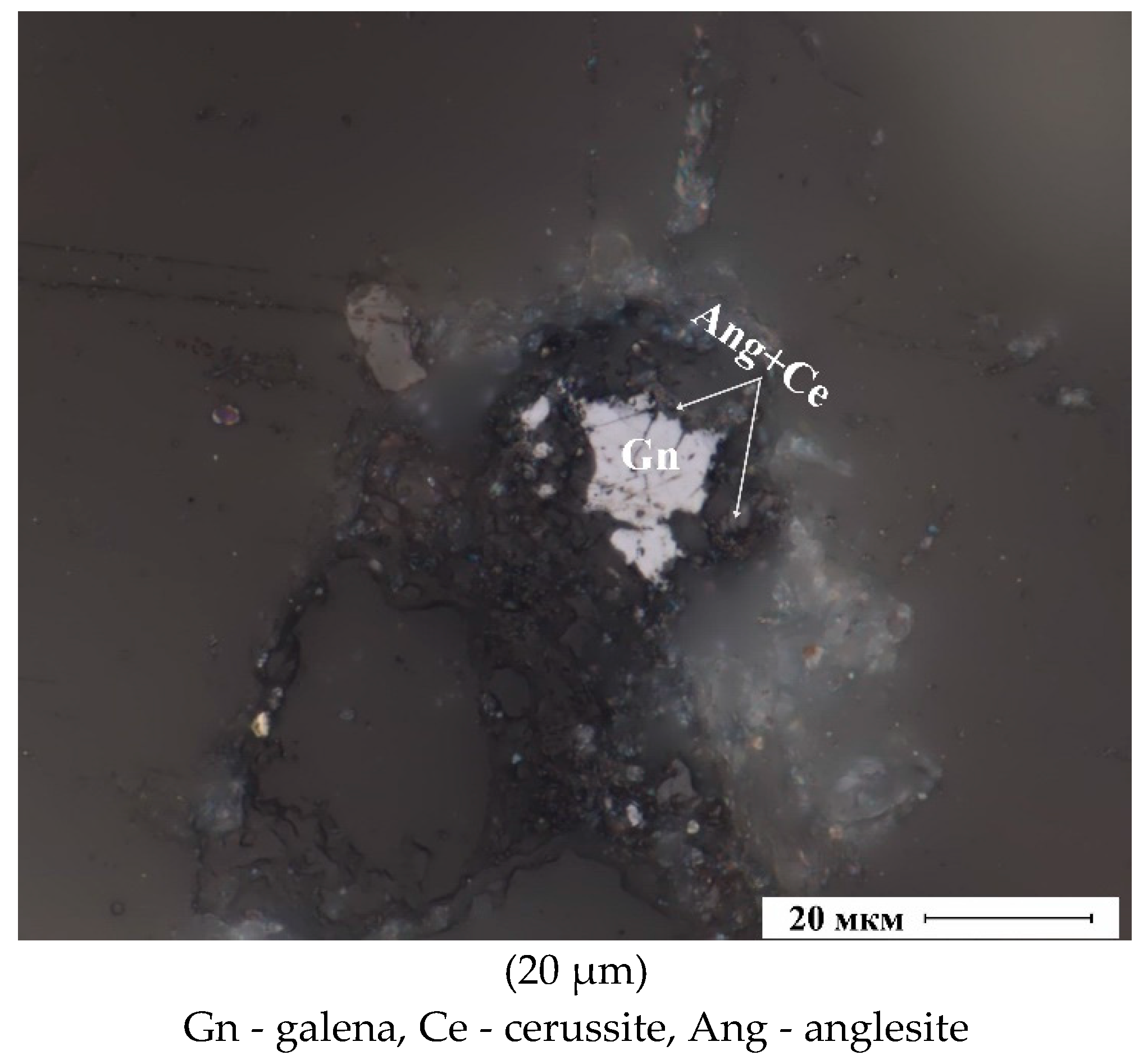
Anglesite (PbSO₄) is identified in subordinate amounts and develops together with cerussite after galena. It forms thin rims, veinlets, and micro-scale replacement zones measuring <1-5-30 μm. Anglesite is often localized along fractures and grain boundaries of galena, indicating its formation at a later stage of supergene processes.
Figure 2.
Anglesite develops together with cerussite after galena. Magnification ×1000.
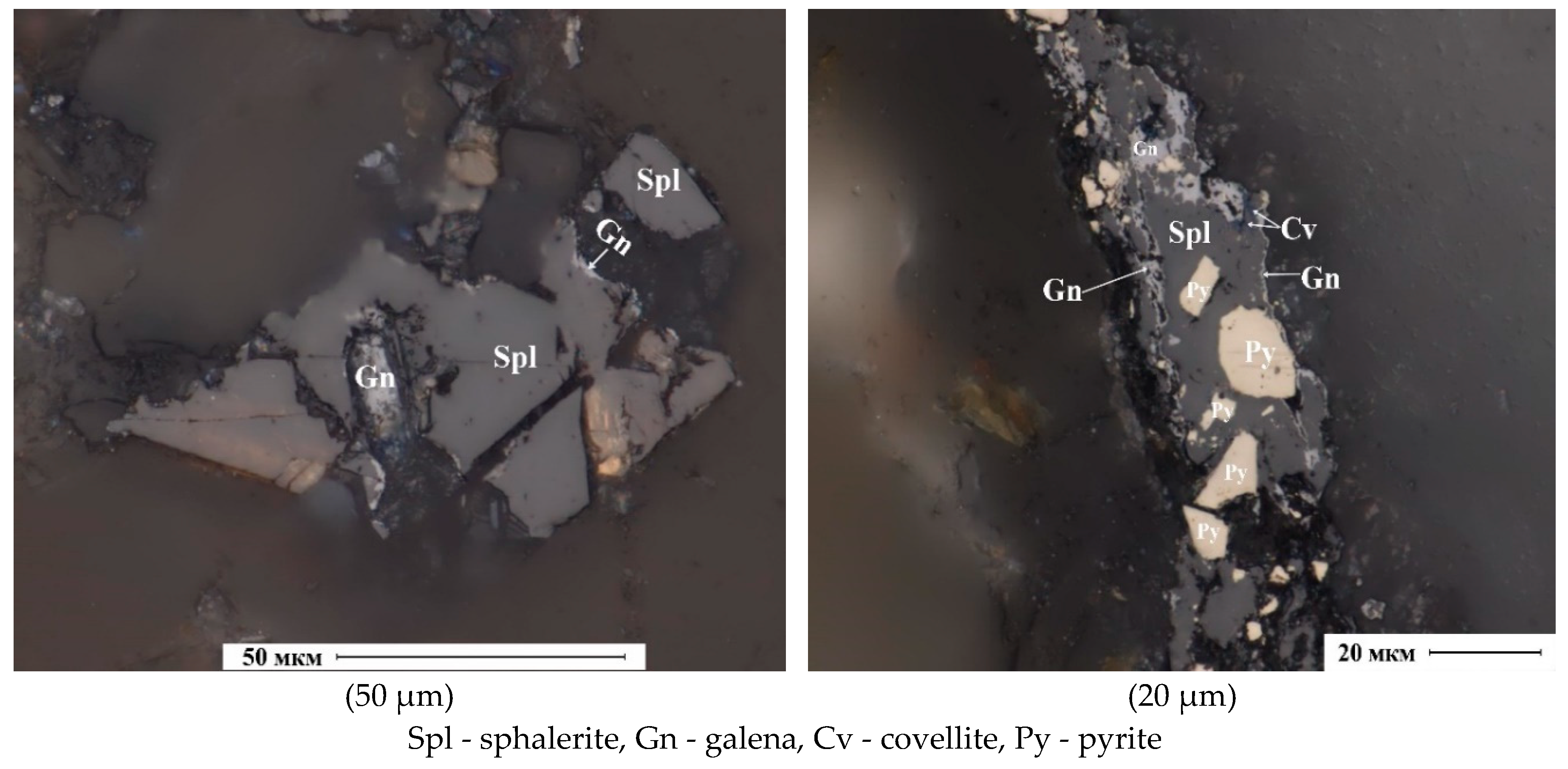
Sphalerite (ZnS) occurs as isolated relict grains measuring 3-70 μm, strongly corroded and almost completely destroyed during supergene processes.
Figure 3.
Sphalerite is corroded by poorly identifiable oxidized zinc phases, locally replaced by covellite, and occurs in close association with galena and pyrite. Magnification ×1000.
Figure 3.
Sphalerite is corroded by poorly identifiable oxidized zinc phases, locally replaced by covellite, and occurs in close association with galena and pyrite. Magnification ×1000.
The bulk of zinc is represented by finely dispersed oxidized forms that do not form independent mineral phases and are distributed within a clay-iron matrix.
The chemical composition of the original ore was determined by inductively coupled plasma optical emission spectrometry (ICP-OES) using an Agilent 725ES spectrometer (Agilent Technologies, USA) after preliminary acid digestion of the samples.
According to ICP-OES data, the chemical composition of the studied ore is characterized by the following major components (wt.%): SiO₂ - 32.39; Al₂O₃ - 7.09; K₂O - 4.39; CaO - 1.26; TiO₂ -0.72; MnO - 0.35; P₂O₅ - 0.46.
The content of valuable components is (wt.%): Zn - 0.56; Pb - 0.58; Cu - 0.023; Fe - 9.02. The sulfur content is 0.28 wt.%. Trace elements are present in minor amounts (wt.%): As - 0.014; Mo - 0.002; Bi - 0.003; Cr - 0.008; Ni - 0.002; Sn - 0.002; V - 0.01; W - 0.021; Ba - 0.042; Sr - 0.021; Rb - 0.030.
The phase chemical analysis of the studied ore was carried out using sequential selective leaching, which allows determination of the forms of occurrence of lead, zinc, and iron depending on their chemical stability. The method is based on stepwise extraction of metal compounds using reagents with different dissolving capacities, enabling the separation of water-soluble, oxidized, sulfide, and refractory forms.
For iron, the Fe²⁺ and Fe³⁺ forms were additionally determined, allowing the degree of ore oxidation to be assessed. Element concentrations in the solutions were measured by ICP-OES, and the relative proportions of the forms were calculated as percentages of the total elemental content.

Table 1.
Results of the chemical phase analysis of the oxidized ore from the Koskuduk deposit.
| Name of components | Content | ||
| Absolute, % | Relative, % | ||
| Forms of zinc occurrence | |||
| - Oxidized | 0.21 | 37.53 | |
| - Sulfides | 0.07 | 12.61 | |
| - Refractory (poorly soluble) | 0.28 | 49.86 | |
| Total | 0.56 | 100.0 | |
| Forms of lead occurrence | |||
| - Oxygen-containing | 0.39 | 66.58 | |
| - Galena | 0.09 | 16.05 | |
| - Residual forms | 0.10 | 17.37 | |
| Total | 0.58 | 100.0 | |
| Forms of iron occurrence | |||
| - Sulfides | <0.04 | - | |
| - Ferrous iron Fe²⁺ | 4.49 | 49.77 | |
| - Ferric iron Fe3+ | 4.53 | 50.23 | |
| Total | 9.02 | 100.0 | |
The obtained results indicate a high degree of ore oxidation and the predominance of finely dispersed and sorbed forms of lead and zinc, closely associated with iron hydroxides and clay minerals. Such modes of occurrence significantly reduce the degree of mineralogical liberation and complicate the recovery of valuable components by direct flotation.
The low proportion of sulfide forms explains the limited effectiveness of conventional flotation methods and justifies the need for sulfidization treatment, as well as optimization of pulp electrochemical parameters, including pH and redox potential (Eh).
Reagents. The reagents were added sequentially with prior pulp conditioning. The total conditioning time was 3 minutes. In the first stage, a sulfidizing agent (S:CaO:H₂O) was introduced into the pulp in order to form a sulfide film on the surface of oxidized minerals. This was followed by the addition of a collector-potassium butyl xanthate (Kx, 100 g/t)-which ensured hydrophobization of the activated surface. In the final stage, the frother T-92 was added at a dosage of 10 g/t.
The sample was ground in a laboratory ball mill MShL-7 (Mechanobr-Technica, Saint Petersburg, Russia). A 1 kg sample with a particle size of −2 +0 mm was used as the feed material. Grinding was carried out under wet conditions at a solids content of 60% in the pulp, which corresponds to industrial processing conditions.
The grinding time was 10 minutes. This value was determined based on preliminary grindability tests of the ore and ensured the required fineness of grinding-68.54% of the -0.071 mm size fraction.
Flotation tests were carried out on a laboratory flotation machine VEKTiS with a 3 L cell volume. The pulp was prepared at a solids content of 30% by mass (ore specific gravity: 2.70 g/cm³).
The aeration unit of the flotation machine is of the pneumatic-mechanical type. Pulp mixing was carried out using an impeller rotating at a speed of 1700 rpm. The froth product was removed using a froth scraper at a rotation speed of 3 rps.
Air was supplied to the flotation zone at a pressure of not less than 5 bar. The air flow rate was up to 10 NL/min, while the specific air consumption was at least 0.8 m³/(m²·min), which ensured the formation of a stable froth layer.
Flotation tests were carried out at a pulp temperature of 26 °C.
Control of pH and redox potential (Eh, ORP) during laboratory flotation tests was carried out using a potentiometric method. A HI 1230 combined electrode (Hanna Instruments, Woonsocket, Rhode Island, USA; pH range 0-14) was used for pH measurement, while a HI 3131 electrode (Hanna Instruments, USA; ORP range ±399.9 mV) was used for ORP determination. ORP values were recorded after reagent addition and prior to the start of pulp aeration..
3. Results
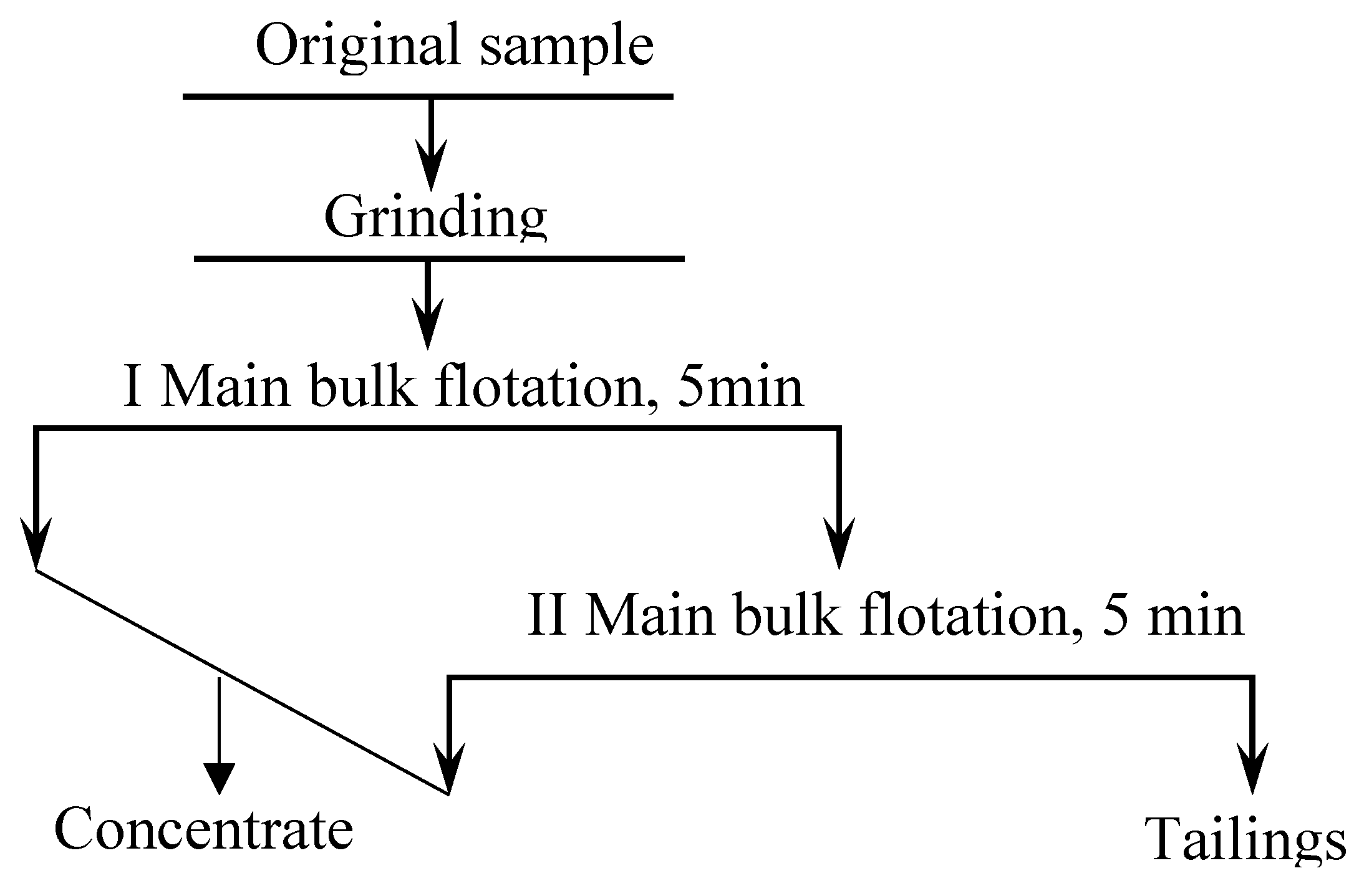
Taking into account the mineralogical composition of the studied ore and the predominance of oxidized forms of lead and zinc, a laboratory flotation flowsheet was developed, including grinding, main flotation, and scavenger flotation stages (shown in Figure 5). The use of a two-stage scheme is justified by the need to improve the recovery of finely dispersed and refractory particles. This is supported by a number of studies, which demonstrate that flotation of oxidized lead–zinc ores requires prior sulfidization and multi-stage circuits to enhance the recovery of valuable components [15,16,17].
Figure 5.
Experimental procedure scheme.
Comparison of the flotation results presented in Table 2 shows that the nature of the sulfidizing agent has a determining influence on the recovery of valuable components from the oxidized lead-zinc ore of the Koskuduk deposit. In the base experiment without the use of a sulfidizing agent, the total recovery of Zn and Pb was 12.35% and 17.30%, respectively, confirming the low efficiency of direct flotation of the studied ore.
When Na₂S is used at a dosage of 500 g/t, lead recovery increases to 40.74%, whereas zinc recovery remains almost unchanged at 12.82%. This indicates that Na₂S predominantly activates lead-bearing minerals, primarily cerussite and other oxygen-containing lead phases, through the formation of a PbS film, which promotes xanthate adsorption [18]. At the same time, the effect of Na₂S on zinc-bearing minerals is limited, since the formation of ZnS does not always lead to improved floatability without additional activation [19].
Figure 6.
Effect of sulfidizer type and dosage on recovery.
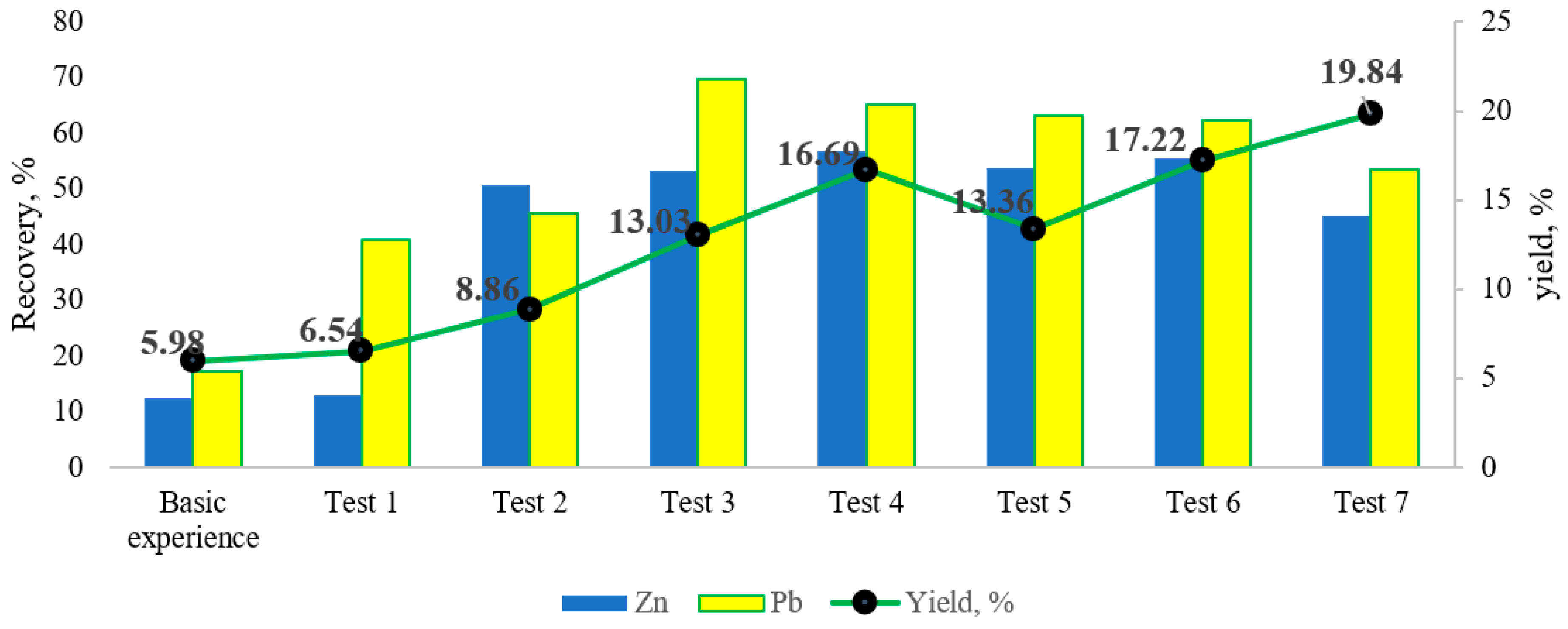
A different trend is observed when using the polysulfide–lime reagent S:CaO:H₂O. In all experiments with this reagent, the recovery of both zinc and lead increases significantly compared not only with the base experiment but also with the case of Na₂S application. Thus, at a ratio of 1:0.5:8.5, Zn and Pb recoveries reach 50.76% and 45.71%, respectively, while at a ratio of 2:1:17 they increase to 53.37% and 69.79%, respectively. The maximum zinc recovery of 56.89% is obtained at a ratio of 3:1.5:25.5, whereas lead recovery under these conditions is 65.10%.
To provide a clearer representation of the combined effect of electrochemical parameters, a flotation regime map (Eh-pH diagram) was constructed (Figure 7). The diagram illustrates the relationship between redox potential, pH of the medium, and the recovery of zinc and lead.
The results showed that the highest recovery values are achieved within a specific electrochemical range corresponding to Eh values from -120 to -180 mV and pH 11-12. This region is characterized as optimal for the sulfidization of oxidized mineral surfaces and subsequent collector adsorption.
Outside this region, a significant decrease in recovery is observed. In particular, under strongly reducing conditions (Eh ≈ −320 mV), corresponding to the use of Na₂S, a marked increase in lead recovery is observed, while zinc recovery remains low. This confirms the selective action of Na₂S toward lead-bearing minerals.
This result is consistent with literature data, according to which Na₂S effectively sulfidizes the surface of oxidized lead minerals with the formation of a PbS film, promoting xanthate adsorption and increasing lead recovery [20]. At the same time, the efficiency of sulfidization for zinc-bearing minerals is significantly lower, since their surface is characterized by a smaller number of active sites and requires additional activation by heavy metal ions [22].
Kinetics of Flotation
Flotation kinetic studies were carried out to evaluate the effect of process time on the recovery of valuable components. Concentrate was collected in fractions at 2–3-minute intervals, which made it possible to monitor the dynamics of metal recovery over time.
From the data in Table 3, it follows that the main recovery of zinc and lead occurs during the first minutes of flotation (3.85%), while the grades of zinc and lead in the concentrate were 3.96% and 4.38%, respectively. After the 8th minute, the difference in the recovery of copper and concentrate yield decreases. Figure 8. shows the dependence of flotation rate on time.
Figure 8 shows the trajectory of changes in the redox potential and pulp pH during flotation. It was established that at the initial stage of the process (2–6 min), Eh values range from -175 to -157 mV at pH 11.6-11.8, which corresponds to optimal flotation conditions.
As flotation time increases, a shift in Eh toward less negative values (up to -120 mV) is observed, accompanied by a slight decrease in pH, which is accompanied by a reduction in the recovery rate of valuable components.
4. Discussion
The sulfidization of oxidized lead and zinc mineral surfaces is a heterogeneous process involving chemical and electrochemical reactions at the phase interface. For lead minerals, in particular cerussite (PbCO₃), the process can be described by the following reaction:
PbCO3 + S2- → PbS + CO32- [18]
The formation of a PbS sulfide film ensures hydrophobization of the surface and promotes the adsorption of sulfhydryl collectors. As shown in the work of Li et al. [19], this process proceeds with the formation of a core–shell PbCO₃/PbS structure, which significantly enhances the floatability of the mineral.
For zinc-bearing minerals, such as smithsonite (ZnCO₃), the sulfidization process proceeds less efficiently and can be described by the following reaction:
ZnCO3 + S2- → ZnS + CO32- [19,22]
However, as noted in the work of Jia et al. [22], the resulting ZnS film is less stable and requires additional activation, which explains the low zinc recovery when Na₂S is used.
The use of calcium polysulfide (CaSx) alters the sulfidization mechanism due to the involvement of polysulfide ions (Sx²⁻), which are capable of forming more stable surface compounds:
PbCO3 + Sx2- → PbS + Sx-12- + CO32-
ZnCO3 + Sx2- → ZnS + Sx-12- + CO32- [21]
In contrast to Na₂S, polysulfide systems provide a more uniform coating of mineral surfaces and reduce the likelihood of forming colloidal reaction products. In addition, as shown in the works of Peng et al. [6] and Liu et al. [21], such systems contribute to the stabilization of the redox potential (Eh), creating favorable conditions for the formation of a stable sulfide film.
Thus, the increased recovery of lead and zinc when using calcium polysulfide is attributed to the combined effect of more efficient surface sulfidization and stabilization of the pulp electrochemical regime.
5. Conclusions
It was established that the use of sodium sulfide (Na₂S) in the flotation of oxidized lead-zinc ore results in the selective activation of lead (up to 40.74% recovery) with low zinc recovery, which limits its application for the processing of complex ores.
It was shown that the use of the polysulfide-lime system S:CaO:H₂O oбеспечивает more efficient and uniform sulfidization of mineral surfaces, which makes it possible to increase recovery to 65.10% for Pb and 56.89% for Zn.
It was determined that the optimal flotation conditions correspond to the Eh range of −120 to −180 mV and pH 11-12, at which the maximum degree of sulfidization and collector adsorption is achieved.
It was established that flotation kinetics are governed by the dynamics of changes in the electrochemical state of the pulp, with the main contribution to metal recovery occurring during the first 2-6 minutes of the process.
The obtained results confirm that the use of polysulfide systems and control of Eh-pH parameters is an effective approach for improving metal recovery from oxidized lead-zinc ores.
Author Contributions
Conceptualization, G.M. and A.M.; methodology, T.T.; formal analysis, L.S.; investigation, A.M.; data curation, A.M.; writing—original draft preparation, G.M.; writing—review and editing, G.M.; project administration, A.M. and K.R. All authors have read and agreed to the published version of the manuscript.
Funding
The work was carried out within the framework of the grant project AR 23489765, funded by the Committee of Science of the Ministry of Education and Science of the Republic of Kazakhstan.
Data Availability Statement
The original contributions presented in the study are included in the article, further inquiries can be directed to the corresponding authors.
Conflicts of Interest
The authors state that the study was conducted in the absence of any commercial or financial relationships that could be interpreted as a potential conflict of interest.
References
- Abkhoshk, E.; Jorjani, E.; Al-Harahsheh, M.S.; Rashchi, F.; Naazeri, M. Review of the hydrometallurgical processing of non-sulfide zinc ores. Hydrometallurgy 2014, 149, 153–167. [Google Scholar] [CrossRef]
- Nayak, A.; Jena, M.S.; Mandre, N.R. Beneficiation of Lead–Zinc Ores—A Review. Miner. Process. Extr. Metall. Rev. 2022, 43, 564–583. [Google Scholar] [CrossRef]
- Chen, Y.; Sun, Y.; Han, Y. Efficient flotation separation of lead–zinc oxide ores: A review. Green. Smart Min. Eng. 2024, 1, 175–189. [Google Scholar] [CrossRef]
- Xue, J.; Qu, Y.; Chen, Y.; Zhang, C.; Bu, X. Sulfide flotation of cerussite using novel reagents. Miner. Eng. 2023, 198, 108087. [Google Scholar] [CrossRef]
- Yu, A.; Ding, Z.; Yuan, J.; Feng, Q.; Wen, S.; Bai, S. Process mineralogy and flotation optimization of oxidized Pb–Zn ore. Minerals 2023, 13, 1167. [Google Scholar] [CrossRef]
- Peng, Y.; Wang, B.; Gerson, A. The effect of electrochemical potential on flotation. Int. J. Miner. Process. 2012, 102–103, 141–149. [Google Scholar] [CrossRef]
- Miller, J.D.; Wan, R.Y.; He, Y. Surface chemistry and flotation of oxide minerals. Int. J. Miner. Process. 2005, 75, 1–17. [Google Scholar] [CrossRef]
- Finch, J.A.; Dobby, G.S. Column Flotation; Pergamon Press: Oxford, UK, 1990. [Google Scholar]
- Ramazanova, R.A.; Seraya, N.V.; Bykov, R.A. Features of oxidized zinc ore processing. Metallurgist 2016, 60, 629–634. [Google Scholar] [CrossRef]
- Motovilov, I.Y.; Telkov, S.A.; Barmenshinova, M.B.; Omar, R.S.; Adilzhan, Z. Gravity–flotation beneficiation of oxidized lead–zinc ore. MIAB 2025, 9, 126–142. [Google Scholar] [CrossRef]
- Mambetaliyeva, A.; Tussupbekova, T.; Sabirova, L.; Makasheva, G.; Rysbekov, K.; Barmenshinova, M. Study of oxidative–reductive potential changes in the enrichment of oxidized polymetallic ores. Appl. Sci. 2025, 15, 6091. [Google Scholar] [CrossRef]
- Chen, A.; Zhao, Z.; Jia, X.; Long, S.; Huo, G.; Chen, X. Alkaline leaching of zinc from hemimorphite ore. Hydrometallurgy 2009, 97, 228–232. [Google Scholar] [CrossRef]
- Xie, Y.; Xie, S.; Chen, X.; Gui, W.; Yang, C.; Caccetta, L. Predictive model for iron precipitation. Hydrometallurgy 2015, 151, 62–72. [Google Scholar] [CrossRef]
- Lan, Z.Y.; Lai, Z.N.; Zheng, Y.X.; Lv, J.F.; Pang, J.; Ning, J.L. Recovery of Zn and Pb by sulfidation roasting–leaching. J. Cent. South Univ. 2020, 27, 37–51. [Google Scholar] [CrossRef]
- Önal, G.; Bulut, G.; Gül, A.; Kangal, O.; Perek, K.T.; Arslan, F. Flotation of oxide lead–zinc ores. Miner. Eng. 2005, 18, 279–282. [Google Scholar] [CrossRef]
- Pereira, C.A.; Peres, A.E.C. Reagents in flotation of zinc oxide ores. Miner. Eng. 2005, 18, 275–277. [Google Scholar] [CrossRef]
- Zheng, Y.X.; Liu, W.; Qin, W.Q. Sulfidation roasting of lead and zinc carbonates. J. Cent. South Univ. 2015, 22, 1635–1642. [Google Scholar] [CrossRef]
- Li, J.; Liu, S.; Liu, D.; Liu, R.; Liu, Z.; Jia, X.; Chang, T. Sulfidization mechanism of cerussite. Miner. Eng. 2020, 153, 106400. [Google Scholar] [CrossRef]
- Jia, K.; Feng, Q.; Zhang, G.; Shi, Q.; Luo, Y.; Li, C. Hemimorphite flotation mechanism. Int. J. Miner. Metall. Mater. 2018, 25, 849–860. [Google Scholar] [CrossRef]
- Xie, H.; Sun, R.; Wu, J.; Feng, D.; Gao, L. Sulfidization flotation of lead oxide ore. Minerals 2020, 10, 95. [Google Scholar] [CrossRef]
- Liu, R.; Pei, B.; Liu, Z.; Wang, Y.; Li, J.; Liu, D. Improved Understanding of the Sulfidization Mechanism in Amine Flotation of Smithsonite: An XPS, AFM and UV–Vis DRS Study. Minerals 2020, 10, 370. [Google Scholar] [CrossRef]
- Jia, Kai; Feng a, Qiming; Zhang, Guofan; Shi, Qing; Chang, Ziyong. Understanding the roles of Na2S and Pb(II)in the flotation of hemimorphite. Miner. Eng. 2017, Volume 111, 167–173. [Google Scholar] [CrossRef]
Figure 7.
Flotation regime map (Eh-pH) of the oxidized lead-zinc ore from the Koskuduk deposit.
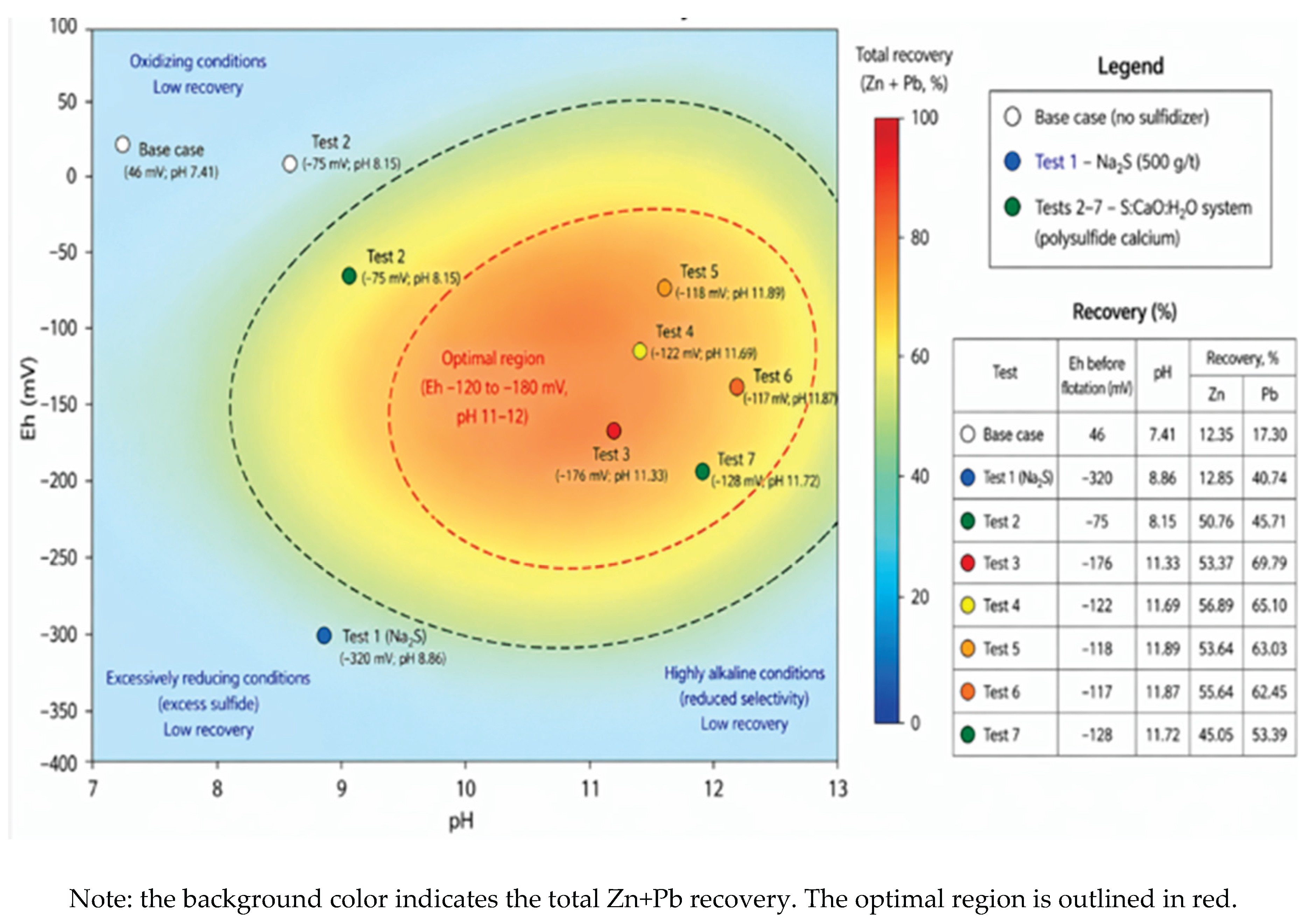
Figure 8.
Changes in electrochemical parameters (Eh–pH) during flotation over time.
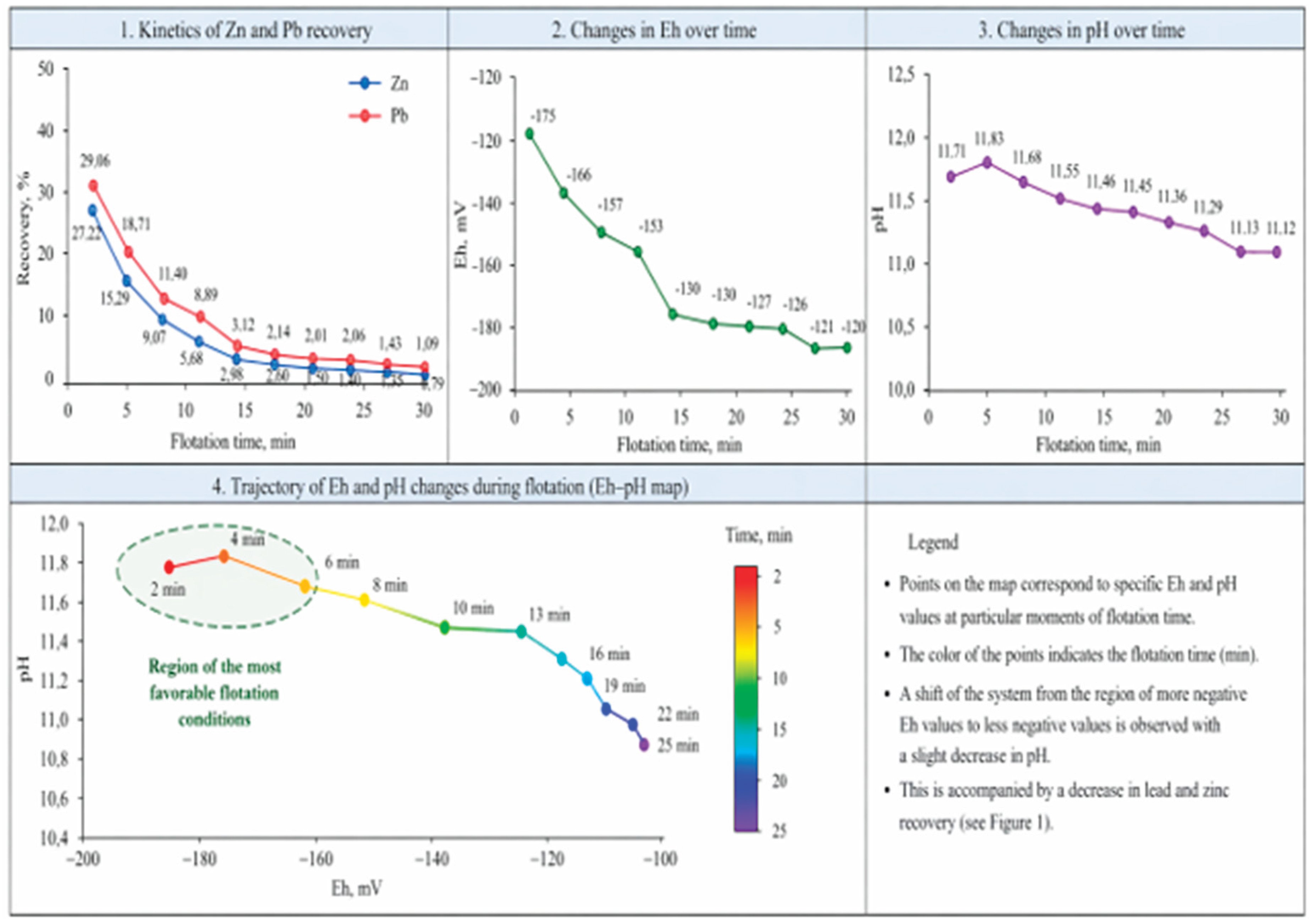
Table 2.
Qualitative and quantitative indicators of the main flotation concentrates depending on the sulfidizing agent dosage.
Table 2.
Qualitative and quantitative indicators of the main flotation concentrates depending on the sulfidizing agent dosage.
| Dosage of S:CaO:H₂O, g/kg | Product | Yield, % | Grade, % | Recovery, % | ||
| Zn | Pb | Zn | Pb | |||
| Base experiment | ||||||
| 0 | Concentrate 1 | 3,18 | 0,69 | 0,98 | 3,90 | 5,39 |
| Concentrate 2 | 2,80 | 1,69 | 2,46 | 8,45 | 11,91 | |
| ∑ (Total) | 5,98 | 1,16 | 1,68 | 12,35 | 17,30 | |
| Tailings | 94,02 | 0,52 | 0,51 | 87,65 | 82,70 | |
| Feed (initial sample) | 100,00 | 0,56 | 0,58 | 100,0 | 100,0 | |
| Test 1 | ||||||
| Na2S - 500 g/t | Concentrate 1 | 2,89 | 1,50 | 7,18 | 7,75 | 35,73 |
| Concentrate 2 | 3,65 | 0,78 | 0,80 | 5,11 | 5,01 | |
| ∑ (Total) | 6,54 | 1,10 | 3,61 | 12,85 | 40,74 | |
| Tailings | 93,46 | 0,52 | 0,37 | 87,15 | 59,26 | |
| Feed (initial sample) | 100,0 | 0,56 | 0,58 | 100,0 | 100,0 | |
| Test 2 | ||||||
| 1:0.5:8.5 | Concentrate 1 | 5,43 | 4,74 | 4,27 | 45,94 | 40,02 |
| Concentrate 2 | 3,43 | 0,79 | 0,96 | 4,82 | 5,69 | |
| ∑ (Total) | 8,86 | 3,21 | 2,99 | 50,76 | 45,71 | |
| Tailings | 91,14 | 0,30 | 0,35 | 49,24 | 54,29 | |
| Feed (initial sample) | 100,0 | 0,56 | 0,58 | 100,0 | 100,0 | |
| Test 3 | ||||||
| 2:1:17 | Concentrate 1 | 9,70 | 2,87 | 3,61 | 49,66 | 60,39 |
| Concentrate 2 | 3,33 | 0,62 | 1,64 | 3,71 | 9,41 | |
| ∑ (Total) | 13,03 | 2,29 | 3,11 | 53,37 | 69,79 | |
| Tailings | 86,97 | 0,30 | 0,20 | 46,63 | 30,21 | |
| Feed (initial sample) | 100,0 | 0,56 | 0,58 | 100,0 | 100,0 | |
| Test 4 | ||||||
| 3:1.5:25.5 | Concentrate 1 | 12,14 | 2,34 | 2,84 | 50,82 | 59,41 |
| Concentrate 2 | 4,55 | 0,75 | 0,72 | 6,07 | 5,68 | |
| ∑ (Total) | 16,69 | 1,91 | 2,26 | 56,89 | 65,10 | |
| Tailings | 83,31 | 0,29 | 0,24 | 43,11 | 34,90 | |
| Feed (initial sample) | 100,0 | 0,56 | 0,58 | 100,0 | 100,0 | |
| Test 5 | ||||||
| 4:2:34 | Concentrate 1 | 7,88 | 3,38 | 4,16 | 47,60 | 56,52 |
| Concentrate 2 | 5,48 | 0,62 | 0,69 | 6,04 | 6,50 | |
| ∑ (Total) | 13,36 | 2,25 | 2,74 | 53,64 | 63,03 | |
| Tailings | 86,64 | 0,30 | 0,25 | 46,36 | 36,97 | |
| Feed (initial sample) | 100,0 | 0,56 | 0,58 | 100,0 | 100,0 | |
| Test 6 | ||||||
| 5:2,5:42,5 | Concentrate 1 | 8,78 | 2,99 | 3,54 | 46,91 | 53,68 |
| Concentrate 2 | 8,43 | 0,58 | 0,60 | 8,74 | 8,76 | |
| ∑ (Total) | 17,22 | 1,81 | 2,10 | 55,64 | 62,45 | |
| Tailings | 82,78 | 0,30 | 0,26 | 44,36 | 37,55 | |
| Feed (initial sample) | 100,0 | 0,56 | 0,58 | 100,0 | 100,0 | |
| Test 7 | ||||||
| 6:3:51 | Concentrate 1 | 15,29 | 1,45 | 1,82 | 39,57 | 47,90 |
| Concentrate 2 | 4,55 | 0,67 | 0,70 | 5,48 | 5,50 | |
| ∑ (Total) | 19,84 | 1,27 | 1,56 | 45,05 | 53,39 | |
| Tailings | 80,16 | 0,38 | 0,34 | 54,95 | 46,61 | |
| Feed (initial sample) | 100,0 | 0,56 | 0,58 | 100,0 | 100,0 | |
Table 3.
Qualitative and quantitative indicators of the bulk concentrate depending on the main flotation time.
Table 3.
Qualitative and quantitative indicators of the bulk concentrate depending on the main flotation time.
| Product | Yield, % | Content, % | Recovery, % | |||
| Zn | Pb | Zn | Pb | |||
| 1st fraction | 3.85 | 3.96 | 4.38 | 27.22 | 29.06 | |
| 2nd fraction | 2.56 | 3.34 | 4.24 | 15.29 | 18.71 | |
| 3rd fraction | 2.66 | 1.91 | 2.49 | 9.07 | 11.40 | |
| 4th fraction | 2.45 | 1.30 | 2.11 | 5.68 | 8.89 | |
| 5th fraction | 1.92 | 0.87 | 0.94 | 2.98 | 3.12 | |
| 6th fraction | 2.50 | 0.58 | 0.50 | 2.60 | 2.14 | |
| 7th fraction | 1.48 | 0.57 | 0.79 | 1.50 | 2.01 | |
| 8th fraction | 1.87 | 0.45 | 0.64 | 1.49 | 2.06 | |
| 9th fraction | 2.70 | 0.28 | 0.31 | 1.35 | 1.43 | |
| 10th fraction | 0.76 | 0.58 | 0.83 | 0.79 | 1.09 | |
| ∑1-10 fractions | 22.745 | 1.67 | 2.04 | 67.97 | 79.91 | |
| Tailings | 77.255 | 0.23 | 0.15 | 32.031 | 20.09 | |
| Feed (initial sample) | 100.0 | 0.56 | 0.58 | 100.0 | 100.0 | |
Disclaimer/Publisher’s Note: The statements, opinions and data contained in all publications are solely those of the individual author(s) and contributor(s) and not of MDPI and/or the editor(s). MDPI and/or the editor(s) disclaim responsibility for any injury to people or property resulting from any ideas, methods, instructions or products referred to in the content. |
© 2026 by the authors. Licensee MDPI, Basel, Switzerland. This article is an open access article distributed under the terms and conditions of the Creative Commons Attribution (CC BY) license (http://creativecommons.org/licenses/by/4.0/).
Copyright: This open access article is published under a Creative Commons CC BY 4.0 license, which permit the free download, distribution, and reuse, provided that the author and preprint are cited in any reuse.


