

Submitted:
11 May 2026
Posted:
12 May 2026
You are already at the latest version
Abstract
Coastal zones are facing rising exposure to climate-related hazards alongside intensifying human pressures, which highlights the need for robust tools to assess vulnerability. This study uses a GIS-based Coastal Vulnerability Index (CVI) to quantify and map relative vulnerability along ~13 km of shoreline in Al Hoceima Bay (northern Morocco). The proposed CVI integrates eight geological and physical indicators, including geomorphology, shoreline erosion and accretion rates, coastal slope, elevation, natural habitats, relative sea-level rise, significant wave height, and tidal range. Spatial analyses were performed using remote sensing data, historical records, field measurements, and Geographic Information Systems (GIS). The analysis reveals that 37% of the shoreline is categorized as high vulnerability, 44% is moderate, and 19% is low. Highly vulnerable sectors are primarily associated with low elevations, gentle coastal slopes, sandy beach systems, limited natural habitat protection, and proximity to river mouths. These findings demonstrate that the applied CVI provides a rapid and cost-effective framework for identifying priority areas for coastal management and climate adaptation. The proposed approach offers valuable decision-support insights for sustainable coastal planning in Al Hoceima Bay and other Mediterranean coastal environments characterized by limited data availability.
Keywords:
coastal vulnerability index (CVI)
; coastal risk assessment
; GIS-based analysis
; shoreline erosion
; climate change adaptation
; coastal management
1. Introduction
Coastal vulnerability describes the degree of exposure of coastal areas and sensitive to marine-related hazards., including shoreline erosion, sea-level rise and the increasing the severity of storm events, driven by the interaction between climate change and human activities. Coastal zones constitute dynamic transition environments between land and sea, characterized by high ecological diversity, the provision of valuable ecosystem services, and dense human settlement. An estimated 40% of the global population lives within 100 km of coastal areas, highlighting the critical importance of coastal areas for human settlement, economic activities, and cultural values [1]. However, coastal zones are increasingly subjected to multiple stresses arising from the convergence of natural processes and intensified human activities, including urban development, deforestation, and environmental pollution. The interaction of these stressors can substantially reduce the capacity of coastal systems to cope with and recover from environmental disturbances [2]. Accordingly, the IPCC highlights coastal environments as highly vulnerable areas at the forefront of climate-change impacts, especially sea-level rise, which threatens infrastructure, livelihoods, and settlements [3].
Understanding coastal vulnerability is therefore fundamental for effective coastal management, as it supports the identification of areas at risk and enhances the capacity to manage the challenges associated with living and working in coastal environments. To this end, several analytical tools have been developed, among which the Coastal Vulnerability Index (CVI) has gained widespread recognition. The CVI was introduced as a means to examine the relative susceptibility of coastal zones to various hazards and to support the formulation of appropriate adaptation and mitigation strategies [4]. This framework generally combines variables including geomorphology, wave exposure, sea-level change rates, and, in certain applications, socio-economic indicators, thereby enabling a comprehensive evaluation of coastal risk [5]. The CVI approach has been extensively applied, tested, and validated across diverse coastal settings worldwide, demonstrating its usefulness in identifying vulnerable coastal pathways and informing policy agendas aimed at reducing vulnerability and enhancing coastal resilience[6].
At the global scale, coastal vulnerability assessment plays a critical role in efforts to safeguard coastal ecosystems, protect human lives, and maintain economic stability under climate change pressures. ools such as the CVI facilitate the prioritization of management actions, guide resource allocation, and promote sustainable coastal management by systematically identifying vulnerable areas [7]. With ongoing sea-level rise and the growing frequency and severity of coastal storms, emphasize the need for comprehensive and spatially explicit vulnerability assessments is expected to become even more pronounced. In this context, international cooperation and investment in coastal resilience are essential, as highlighted by the United Nations Sustainable Development Goals, particularly Goal 14, which targets the conservation and sustainable use of marine and coastal resources. Effective management and policymaking grounded in robust vulnerability analysis thus represent a key pathway for addressing future coastal challenges. The Moroccan coastline, and Al Hoceima Bay in particular, presents a complex scenario shaped by the interaction of natural coastal processes and increasing human activities. Characterized by diverse geological and geomorphological features, the Moroccan Mediterranean coast is increasingly threatened by shoreline erosion, sea-level rise, and the intensification of storm events, trends that are further amplified by climate change [8]. Al Hoceima Bay is especially exposed to these pressures, placing marine biodiversity and socio-economic activities dependent on fisheries and tourism at risk. Additional stressors, including urban expansion, overfishing, and other economic activities, further burden the coastal and marine ecosystems. Moreover, the bay’s geographical location within a seismically active region increases the complexity of coastal risk dynamics[9]. Addressing these challenges requires strategic and integrated coastal management approaches to ensure long-term sustainability and to preserve both ecological and socio-economic values. Adaptation strategies, including coastal zone management planning and ecosystem conservation efforts, are therefore essential to reduce the compounded effects of natural vulnerability and anthropogenic pressures [10].
The Coastal Vulnerability Index (CVI) has become an indispensable tool for evaluating vulnerability in coastal regions. Developed as a comprehensive metric, the CVI integrates multiple factors, such as geomorphology, sea-level rise, storm events, and human activity to provide an integrated understanding of coastal vulnerability. By quantifying these factors, the CVI enables researchers, policymakers, and coastal managers to identify areas most at risk from coastal hazards and to prioritize resources for adaptation and mitigation efforts. Beyond identifying vulnerable regions, the CVI also supports the development of targeted strategies focused on reinforcing resilience and sustainability in coastal communities [11]. As a widely adopted framework, the CVI continues to serve a major role in guiding coastal management practices worldwide and in supporting long-term coastal resilience under changing environmental conditions [12].
Previous studies have established a strong foundation for the implementation of the CVI in different coastal contexts. Research by [6] demonstrated the value of integrating environmental, biophysical, and socio-economic indicators to address coastal risk, while [13] developed a more detailed CVI approach that incorporates projected climate scenarios to assess future susceptibility. [14] applied the CVI to highlight the specific vulnerabilities of small island developing states, whereas [15] conducted a comprehensive CVI-based assessment along the Indian coastline to identify high-risk areas and inform coastal management. More recently, [16] combined the CVI with other assessment models to evaluate coastal risk under climate change and sea-level rise scenarios, and [17] demonstrated its application along the U.S. Gulf Coast with a focus on conservation priorities and infrastructure resilience. In the Mediterranean context, [18] proposed an innovative approach integrating machine learning techniques to predict coastal vulnerability along the Tangier–Tetouan coast of Morocco using multiple vulnerability predictors. Collectively, these studies highlight the CVI as a flexible and multifaceted framework for coastal protection and shoreline adaptation planning.
Despite the wide application of the Coastal Vulnerability Index in coastal settings worldwide, its implementation in Mediterranean coastal environments of North Africa remains limited, particularly in data-scarce regions characterized by complex geomorphology and combined natural and anthropogenic pressures. Many previous assessments have relied on generalized indicators or large-scale analyses that may not adequately capture local coastal dynamics and management priorities. In the case of Al Hoceima Bay, a region exposed to shoreline instability, riverine influences, and increasing coastal development, a localized and physically focused vulnerability assessment is still lacking. This study addresses this gap by applying a GIS-based CVI tailored to the specific geological and physical characteristics of Al Hoceima Bay, providing a spatially explicit vulnerability framework to support informed coastal management and climate adaptation planning.
2. Study Area
Al Hoceima Bay is situated along the central part of Morocco’s northern Mediterranean coastline. The bay is framed by two major headlands, with Cape Quilates marking the eastern boundary and Cape Maure (Ras Al Abed) defining the western limit. The investigated coastal stretch exceeds 40 km in length and comprises more than 15 km of relatively narrow sandy beaches. This sector also includes one of the largest alluvial floodplains along the Moroccan Mediterranean coast, mainly built by sediment contributions from the Rhis and Nekor rivers. (Figure 1).
The city of Al Hoceima is located along the western margin of the bay. This part of the coastline is characterized by steep cliffs exceeding 100 m in height, locally interrupted by small pocket beaches developed at the base of abrupt rock faces within a carbonate limestone ridge. Geologically, this sector forms part of the Bokoya massif, composed predominantly of Triassic–Liassic carbonate formations and Jurassic sequences overlain by condensed marly Paleogene deposits [19].
In contrast, the eastern portion of the bay, extending from Laazib to Cape Quilates, exhibits a more rugged and elevated shoreline morphology. This sector is associated with the Ras Tarf and Ketama shale units and displays a markedly irregular coastal configuration. On the western flank of the bay, the coastal terrain gradually transitions into a foothill zone, characterized by the presence of several alluvial cones that extend toward the broader floodplain.
The cliffed coastal sector and the alluvial plain are separated by an approximately 15 km-long stretch of sandy beach. Except for the easternmost beaches, which are mainly composed of small stones and coarse detrital material, most beaches within the bay are dominated by fine sand and silt deposits.
The coastal zone of Al Hoceima Bay contains some of the lowest-lying shoreline sectors along the Moroccan Mediterranean coast, rendering it particularly vulnerable to storm events and sea-level rise (SLR). Moreover, Al Hoceima’s limited capacity for inland urban expansion, imposed by its complex topography, has led to increased development pressure along the coastline and within the floodplains of the Rhis and Nekor rivers. In addition, the coastal zone represents a major tourist destination and constitutes a vital economic asset for the Al Hoceima region. The combination of low coastal elevations, growing human occupation, and high socio-economic value highlights the urgent need for a comprehensive coastal vulnerability assessment in this area.
3. Material and Methods
The CVI and Its Components
In this study, coastal vulnerability was assessed using a set of eight indicators representing the main geological and physical controls on shoreline response. These indicators include geomorphology, natural habitat, coastal slope, coastal elevation, relative sea-level change, shoreline erosion/accretion rates, significant wave height, and tidal range. All datasets were collected, processed, and analyzed within a Geographic Information System (GIS) environment to ensure spatial consistency and analytical integration (Table 1).
For each variable, historical and spatial datasets were organized into attribute tables, and vulnerability scores were assigned following the adopted CVI methodology. Each indicator was ranked on a five-class scale ranging from very low (1) to very high (5) vulnerability, based on an equal division of the observed value range (Table 2). The CVI indicators were grouped into two principal categories: geological variables and physical variables.
Geological variables:
Geomorphology: Geomorphology describes the spatial distribution and relative stability of coastal landforms, such as cliffs, sandy beaches, and rocky shores, and reflects their exposure to erosional processes. Different geomorphological units exhibit varying levels of resistance to marine forcing depending on their material composition, morphology, and environmental setting. In the study area, sandy beaches extend for more than 13 km and constitute a dominant geomorphological feature influencing coastal vulnerability (Figure 3).
Coastal slope is a key parameter for assessing shoreline susceptibility to inundation and landward retreat. Steep coastlines are generally less affected by sea-level rise, whereas gently sloping coastal profiles are more vulnerable to extensive flooding and erosion. Accordingly, lower slope values were classified as higher vulnerability classes, while steeper slopes were considered less vulnerable. Slope values derived for the study area range between 0% and 15% (Figure 2).
Shoreline erosion and accretion rates were used to quantify long-term shoreline dynamics and to identify zones experiencing net retreat or advancement. Shoreline positions from 1984 to 2022 were analyzed using the Digital Shoreline Analysis System (DSAS) extension within ArcGIS, developed by the U.S. Geological Survey [20]. DSAS computes shoreline change statistics based on a reference baseline from which transects are generated perpendicular to the shoreline [21]. Each transect intersects multiple shoreline positions, allowing the calculation of shoreline change rates.
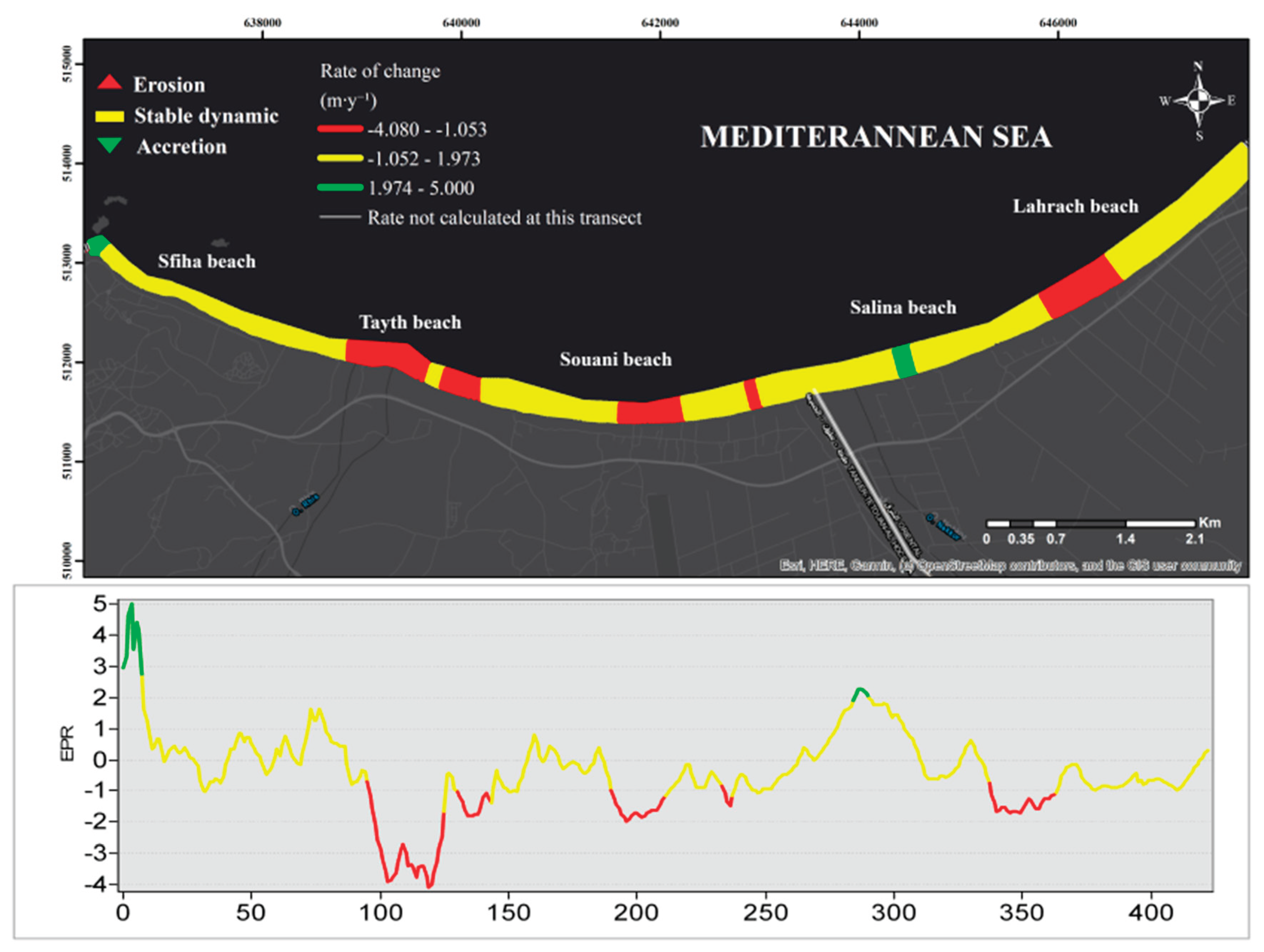
Shoreline change was quantified using the End Point Rate (EPR) method, which estimates change rates by dividing the distance between the earliest and most recent shoreline positions by the corresponding time interval (Equation 1). The EPR approach was selected for its computational simplicity and its suitability for long-term shoreline analysis when temporal data are limited [22]. Positive EPR values indicate shoreline accretion, whereas negative values indicate erosion (Figure 4).
Figure 3.
Geomorphology of the study area (C, D, E, and F).
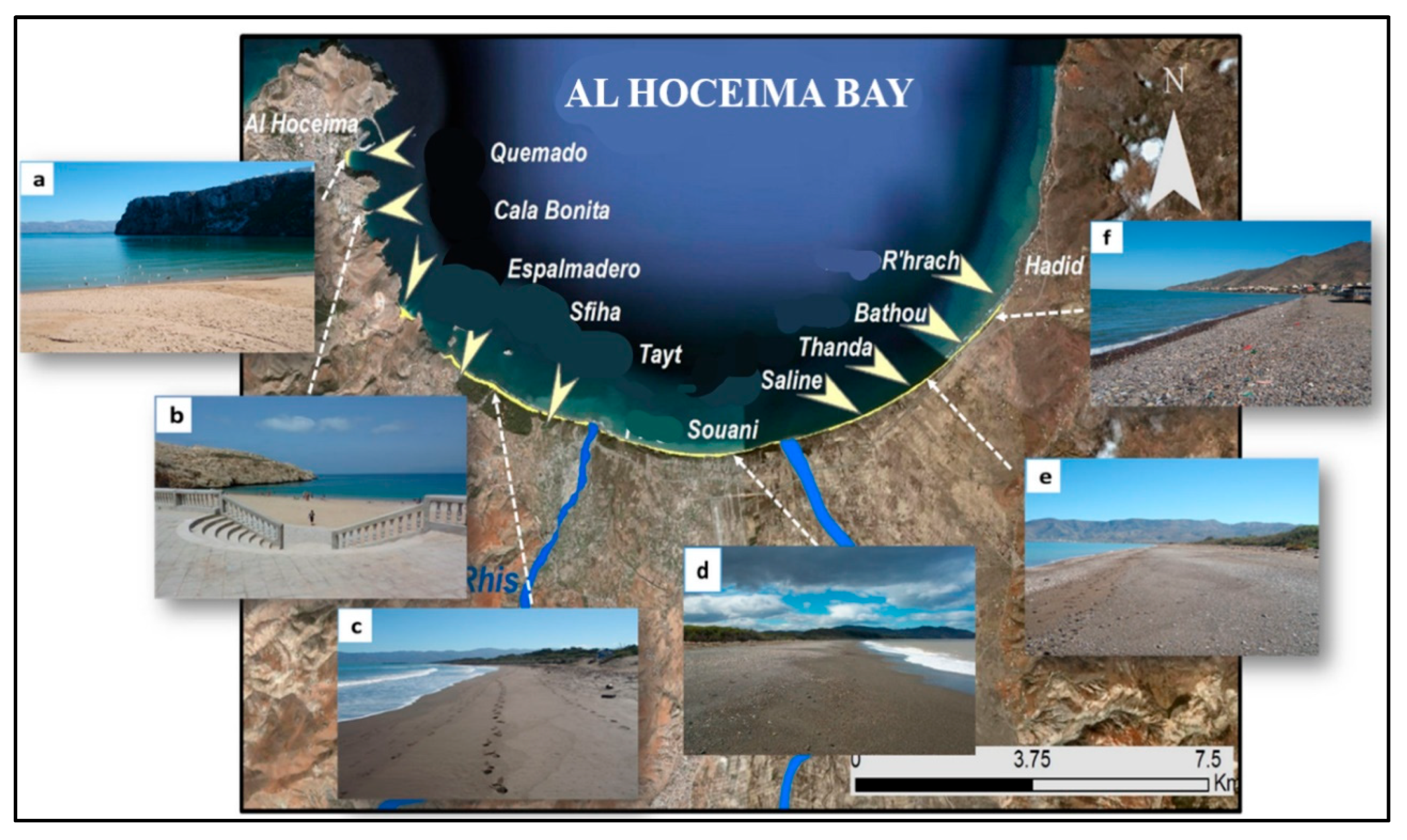
Figure 4.
Shoreline evolution of the study area using the End Point Rate (EPR).
Elevation:
Coastal elevation represents the vertical distance of land surfaces relative to mean sea level and constitutes a key factor in assessing vulnerability to inundation. Higher elevations are typically linked to lower flood risk, while low-lying coastal areas are more exposed to sea-level rise, storm surges, and extreme marine events [23]. Elevation data are also important for evaluating the potential transformation of coastal land into wetlands and for assessing the exposure of built infrastructure to rising sea levels [24]. In this study, a Digital Elevation Model (DEM) was generated from a GNSS-based topographic survey conducted along the coastline (Figure 2).
Natural habitat:
Natural coastal ecosystems, such as low dunes, coastal forests, and coral reefs, play a key role in mitigating coastal hazards by dissipating wave energy and stabilizing sediments. These habitats function as natural buffers that mitigate erosion and flooding processes, thereby enhancing coastal resilience[18].The preservation and restoration of such ecosystems are therefore essential components of sustainable coastal management strategies, particularly in regions experiencing increasing storm intensity and sea-level rise.
Physical variables:
Sea Level Rise (SLR) :
Sea-level rise affects both coastal ecosystems and human settlements through increased inundation and shoreline retreat. The primary drivers of sea-level rise are the melting of polar and glacial ice and the thermal expansion of ocean waters. Relative sea-level change refers to variations in mean sea level recorded by coastal tide gauges over extended periods. Areas experiencing higher sea-level rise rates are considered more vulnerable because of the increased likelihood of permanent or recurrent flooding [25].In this study, a relative sea-level rise rate of 2.5 mm·yr⁻¹ was adopted based on previously published estimates for the region [18].
Tidal range:
Tidal range represents the vertical difference between mean high tide and mean low tide and results from the combined gravitational effects of the Moon and the Sun. Tidal dynamics influence sediment transport, shoreline morphology, flood risk, ecological distribution, and water quality. Larger tidal ranges can enhance erosion by increasing the vertical zone of wave action, whereas smaller tidal ranges tend to concentrate wave energy near the base of the shoreline, potentially limiting the rate of coastal [5]. Within the CVI framework, vulnerability is generally considered lowest under high tidal range conditions and highest under low tidal range conditions.[25]
Wave height:
Significant wave height is commonly described as the average height of the upper one-third of waves measured from crest to trough and serves as an indicator of wave energy influencing coastal sediment dynamics. Wave energy increases proportionally with the square of wave height, making higher waves more effective agents of beach erosion and sediment redistribution. In contrast, lower wave heights generally exert a reduced impact on shoreline morphology. Wave data for the study area, covering the period from 1984 to 2022, were obtained from the Puertos del Estado database (Melilla port station).
CVI calculations
The Coastal Vulnerability Index for Al Hoceima Bay was calculated using a standard formulation that integrates the ranked values of the selected indicators (Equation 2). The CVI was computed as the square root of the geometric mean of the individual parameter rankings, ensuring equal weighting of all variables.
Where:
a = Geomorphology, b = Coastal slope, c = Shoreline erosion/accretion rates, d = Coastal elevation, e = Natural habitat, f = Relative sea-level change, g = Mean significant wave height, h = Mean tide
4. Results and Discussion
GIS tools were employed to process and integrate multi-source coastal datasets. The analyzed shoreline was discretized into 424 assessment points to ensure sufficient spatial resolution for capturing localized variability in coastal vulnerability. The geomorphological assessment reveals a predominance of moderate to very high vulnerability conditions along most segments of Al Hoceima Bay. Coastal slope values range from 1.24% to 18.67%, with the majority of the coastline characterized by gently sloping profiles that are inherently more susceptible to inundation and shoreline retreat.
Shoreline dynamics between 1984 and 2022 were quantified using DSAS within the ArcGIS environment (Figure 4). Based on End Point Rate (EPR) values, shoreline change was classified into erosion (< −1.052 m·y⁻¹), stable dynamic conditions (−1.052 to +1.97 m·y⁻¹), and accretion (> +1.97 m·y⁻¹). The analysis indicates that 22% of the coastline experienced net erosion over the 38-year period, whereas 74% remained relatively stable and only 4% exhibited accretional behavior. The highest erosion rates were recorded near the mouth of Oued Rhis, reaching approximately −4.08 m·y⁻¹, highlighting this sector as a critical hotspot of shoreline retreat. In contrast, localized accretion was observed at Sfiha Beach, with maximum rates of approximately +5 m·y⁻¹. Western sections of Sfiha and Lharch beaches exhibited comparatively stable shoreline positions, showing only minor temporal fluctuations. Accretion zones were mainly concentrated at Salina and Sfiha beaches, while Souani Beach displayed moderate erosion rates averaging −1.00 m·y⁻¹.
Physical vulnerability parameters show marked spatial contrasts across the study area. Relative sea-level change consistently corresponds to low vulnerability classes, whereas the mean tidal range is classified as very high vulnerability along the entire coastline. Mean significant wave height remains within low vulnerability classes, indicating that wave energy alone is not the dominant driver of spatial vulnerability patterns. Coastal elevation values range from 0.1 m to 2.23 m, placing extensive coastal sections within highly vulnerable elevation thresholds. Natural habitats are consistently classified as high vulnerability, reflecting their limited extent and reduced protective function along the bay.
The integrated Coastal Vulnerability Index (CVI) values range between 49 and 100 and were classified into five vulnerability categories (Figure 5). The resulting spatial distribution indicates that approximately 37% of the coastline (about 5 km) falls within the high vulnerability class, while 44% (approximately 5.5 km) is classified as moderately vulnerable. Low vulnerability conditions are restricted to 19% of the coastline (around 2.5 km). High vulnerability zones are predominantly concentrated along the western sector of Al Hoceima Bay, particularly along the Sfiha coastline and in proximity to the Nekor River mouth (Figure 6), where low elevation, gentle slopes, and narrow beach widths coincide.
The spatial distribution of coastal vulnerability observed in Al Hoceima Bay reflect the strong influence of geomorphological configuration and sedimentary processes on shoreline stability. Narrow rocky and sandy beaches, particularly along the western sector of the bay, exhibit heightened vulnerability due to their limited capacity to dissipate wave energy. Beach widths ranging between 5 and 40 m substantially reduce the buffering effect against wave attack, thereby intensifying erosion at the toe of carbonate cliffs and along adjacent shoreline segments.
The regressive shoreline trend observed over more than three decades indicates a persistent imbalance in the sediment budget of the bay. Al Hoceima Bay functions as a semi-closed sedimentary cell historically sustained by fluvial inputs from the Nekor and Rhis rivers. However, the establishment of the MBK dam on the Nekor River in 1981 has significantly reduced sediment supply to the coastal system, contributing to sediment starvation and progressive shoreline retreat. Similar patterns have been reported in other Mediterranean coastal systems where upstream river regulation disrupts natural sediment delivery to the coast.
Anthropogenic pressures further amplify natural vulnerability processes. Increasing tourism, urban expansion, and post-earthquake reconstruction have intensified coastal occupation, often at low elevations and in close proximity to dynamic shoreline zones. Although individual anthropogenic activities may not directly induce abrupt morphological changes, their cumulative interaction with natural coastal processes accelerates shoreline instability and reduces system resilience.
High CVI values identified near the Nekor River mouth and east of Souani are primarily driven by the convergence of low coastal elevations (<1 m), gentle slopes (<4%), proximity to fluvial systems, and degraded natural habitats. These areas are particularly exposed to compound flooding driven by both marine forcing and river discharge during high-energy events. The dominance of geomorphology, tidal range, natural habitat condition, and coastal slope as discriminating factors underscores the importance of locally adapted vulnerability assessments that capture site-specific coastal dynamics rather than relying solely on generalized large-scale indices.
In light of ongoing climate change, the vulnerability patterns highlighted in this study emphasize the urgent need for targeted coastal management strategies in Al Hoceima Bay. Illegal sand extraction from beaches, dunes, and alluvial floodplains, combined with rapid tourism development and urban growth, has weakened natural coastal defenses and increased exposure to coastal hazards. Integrating the CVI framework into coastal planning can support evidence-based decision-making by prioritizing high-risk sectors for intervention, promoting nature-based solutions, and guiding sustainable coastal development under future sea-level rise and storm surge scenarios.

Table 2.
Vulnerability categories.
| Category | CVI Values |
| Very Low | 40–56.56 |
| Low | 56.56-63.24 |
| Moderate | 63.24–70.71 |
| High | 70.71–80 |
| Very High | >80 |
5. Coastal Management and Adaptation Implications
The spatial distribution of coastal vulnerability identified in Al Hoceima Bay provides direct and actionable insights for coastal management and climate change adaptation planning. High and moderate vulnerability zones, particularly along the western sector of the bay and near the Nekor River mouth, should be prioritized for targeted intervention due to the convergence of low elevations, gentle slopes, sediment deficit, and intense human pressure. In these areas, conventional hard engineering solutions alone may not offer long-term resilience, highlighting the importance of integrated management approaches that combine structural measures through the implementation of nature-based solutions.
The enhancement and conservation of natural protective features, such as dunes, beach systems, and nearshore habitats, represent a critical adaptation pathway to enhance coastal resilience and reduce exposure to erosion and flooding. In parallel, regulating sand extraction activities and controlling urban expansion in low-lying and dynamically active coastal zones are essential to avoid additional degradation of sediment budgets and natural buffering capacity. The CVI framework developed in this study can act as a decision-support framework for land-use planning, zoning regulations, and the prioritization of adaptation investments under current and future climate scenarios.
Moreover, the GIS-based vulnerability database generated through this assessment offers a flexible and updatable platform that can be integrated into regional coastal monitoring programs. As higher-resolution remote sensing data and hydrodynamic information become available, the framework can be refined to support scenario-based planning for sea-level rise and extreme events. By embedding CVI-based assessments within broader Integrated Coastal Zone Management (ICZM) strategies, decision-makers can enhance proactive risk reduction, promote sustainable coastal development, and strengthen long-term resilience of Mediterranean coastal environments similar to Al Hoceima Bay.
6. Conclusion:
This study demonstrates the effectiveness of a GIS-based Coastal Vulnerability Index (CVI) as a practical and robust tool for identifying spatial patterns of coastal vulnerability in data-scarce Mediterranean environments such as Al Hoceima Bay. By integrating eight geological and physical indicators, the proposed framework offers a coherent evaluation of coastal exposure to erosion, inundation, and climate-related hazards.
The results highlight that more than one-third of the studied coastline is subject to high vulnerability, with critical hotspots concentrated along low-lying, gently sloping coastal segments near river mouths and intensively developed areas. These findings underscore the dominant role of geomorphology, sediment dynamics, and coastal configuration in shaping vulnerability patterns, rather than hydrodynamic forcing alone.
From a management perspective, the CVI-based mapping offers a decision-support framework that enables the prioritization of high-risk coastal sectors for intervention, supports sustainable land-use planning, and informs adaptation strategies under ongoing climate change. The approach is particularly valuable for regions where detailed hydrodynamic data are limited, allowing rapid and cost-effective vulnerability screening.
Finally, the methodology developed in this study can be readily transferred to other Moroccan and North African coastal settings with similar environmental characteristics. Future research integrating higher-resolution datasets and dynamic modeling is expected to further enhance the predictive capacity of CVI-based assessments and strengthen their role in long-term coastal resilience planning.
References
- Holly Reed, “United Nations Expert Group Meeting for the Review and Appraisal of Population and Development and Its Contribution To the Follow-Up and,” no. October, pp. 1–7, 2018.
- S. Hallegatte, C. Green, R. J. Nicholls, and J. Corfee-Morlot, “Future flood losses in major coastal cities,” Nat. Clim. Chang., vol. 3, no. 9, pp. 802–806, 2013. [CrossRef]
- IPCC, “Part A: Global and Sectoral Aspects. (Contribution of Working Group II to the Fifth Assessment Report of the Intergovernmental Panel on Climate Change),” Clim. Chang. 2014 Impacts, Adapt. Vulnerability., p. 1132, 2014, [Online]. Available: https://www.ipcc.ch/pdf/assessment-report/ar5/wg2/WGIIAR5-FrontMatterA_FINAL.pdf.
- V. Gornitz, T. W. White, and R. M. Cushman, “Vulnerability of the U.S. to future sea level rise,” Coast. Zo. Proc. Symp. Coast. Ocean Manag., vol. 3, pp. 2354–2368, 1991.
- E. R. Thieler and E. S. Hammar-Klose, “National Assessment of Coastal Vulnerability to Sea-Level Rise,” Open-File Rep. 00-179, p. 1, 1999.
- S. McLaughlin, J. Andrew, and G. Cooper, “A multi-scale coastal vulnerability index: A tool for coastal managers?,” Environ. Hazards, vol. 9, no. 3, pp. 233–248, 2010. [CrossRef]
- P. P. Wong et al., “Chapter 5: Coastal Systems and Low-Lying Areas,” Ipcc Wgii Ar5, no. October 2013, pp. 1–85, 2013.
- G. Anfuso, J. Á. M. del Pozo, and D. Nachite, “Coastal vulnerability in the Mediterranean sector between fnideq and M’Diq (North of Morocco),” Comptes Rendus L’Academie Bulg. des Sci., vol. 63, no. 4, pp. 561–570, 2010.
- Y. Hahou, N. Jabour, D. Oukemeni, M. El Wartiti, and C. Nakhcha, “The earthquake of 26 may 1994, AI Hoceima, Morocco: Intensity distribution and macroseismic epicenter,” Seismol. Res. Lett., vol. 75, no. 1, pp. 46–53, 2004. [CrossRef]
- Ali Agoumi, “Issues and Analysis from Developing Countries and Countries with Economies in Transition Vulnerability of North African Countries to Climatic Changes Adaptation and Implementation Strategies,” Int. Inst. Sustain. Dev. IISD Winnipeg, p. 14, 2003, [Online]. Available: http://www.iisd.org/cckn/pdf/north_africa.pdf. p. 14.
- Y. Li, Z. Tang, L. Cao, and X. Liu, “Assessing Hazard Vulnerability, Habitat Conservation, and Restoration for the Enhancement of Mainland China’s Coastal Resilience,” Earth’s Futur., vol. 6, no. 3, pp. 326–338, 2018. [CrossRef]
- Y. Zhang et al., “Coastal vulnerability to climate change in China’s Bohai Economic Rim,” Environ. Int., vol. 147, p. 106359, 2021, doi: 10.1016/j.envint.2020.106359. [CrossRef]
- V. M. Gornitz, R. C. Daniels, T. W. White, and K. R. Birdwell, “The Development of a Coastal Risk Assessment Database: Vulnerability to Sea-Level Rise in the U.S. Southeast,” J. Coast. Res., no. ArticleType: research-article / Issue Title: Special Issue No. 12. COASTAL HAZARDS: PERCEPTION, SUSCEPTIBILITY AND MITIGATION / Full publication date: 1994 / Copyright © 1994 Coastal Education & Research Foundation, Inc., pp. 327–338, 1994.
- E. A. Pendleton, E. R. Thieler, and S. J. Williams, “Importance of coastal change variables in determining vulnerability to sea- and lake-level change,” J. Coast. Res., vol. 26, no. 1, pp. 176–183, 2010. [CrossRef]
- A. Arun Kumar and P. D. Kunte, “Coastal vulnerability assessment for Chennai, east coast of India using geospatial techniques,” Nat. Hazards, vol. 64, no. 1, pp. 853–872, 2012. [CrossRef]
- S. Torresan, E. Furlan, A. Critto, M. Michetti, and A. Marcomini, “Egypt’s Coastal Vulnerability to Sea-Level Rise and Storm Surge: Present and Future Conditions,” Integr. Environ. Assess. Manag., vol. 16, no. 5, pp. 761–772, 2020. [CrossRef]
- M. V. Bilskie et al., “Dynamic simulation and numerical analysis of hurricane storm surge under sea level rise with geomorphologic changes along the northern Gulf of Mexico,” Earth’s Futur., vol. 4, no. 5, pp. 177–193, 2016. [CrossRef]
- Y. Fannassi et al., “Prediction of coastal vulnerability with machine learning techniques, Mediterranean coast of Tangier-Tetouan, Morocco,” Estuar. Coast. Shelf Sci., vol. 291, no. July, p. 108422, 2023. [CrossRef]
- O. Azzouz, B. El Fellah, A. Chalouan, and B. B. Cala, “Processus de glissement dans le Massif de Bokoya (Rif interne, Maroc) : exemple de Cala Bonita Landslide process in the Bokoya Massif (Internal Rif, Morocco) : example of the.”.
- A. Luijendijk, G. Hagenaars, R. Ranasinghe, F. Baart, G. Donchyts, and S. Aarninkhof, “The State of the World’s Beaches,” Sci. Rep., vol. 8, no. 1, pp. 1–11, 201. [CrossRef]
- S. P. Leatherman, “Coastal Geomorphic Responses to Sea Level Rise: Galveston Bay, Texas,” Greenh. Eff. Sea Lev. Rise, pp. 151–178, 198. [CrossRef]
- E. R. Thieler, E. . Himmelstoss, J. . Zichichi, and A. Ergul, “DSAS 4.0 Installation Instructions and User Guide,” U.S. Geol. Surv. Open-File Rep. 2008-1278, vol. 3, pp. 291–294, 2009, [Online]. Available: http://pubs.usgs.gov/of/2008/1278/. Available online: http://pubs.usgs.gov/of/2008/1278/.
- J. G. Titus and C. Richman, “Maps of lands vulnerble to sea level rise: Modeled elevations along the US Atlantic and Gulf coasts,” Clim. Res., vol. 18, no. 3, pp. 205–228, 2001. [CrossRef]
- G. McGranahan, D. Balk, and B. Anderson, “The rising tide: Assessing the risks of climate change and human settlements in low elevation coastal zones,” Environ. Urban., vol. 19, no. 1, pp. 17–37, 2007. [CrossRef]
- A. Parthasarathy and U. Natesan, “Coastal vulnerability assessment: a case study on erosion and coastal change along Tuticorin, Gulf of Mannar,” Nat. Hazards, vol. 75, no. 2, pp. 1713–1729, 2015. [CrossRef]
- K. Abdou, E. Sp, and C. C. Titre, “Contribution au développement d’outils scientifiques d’aide à la Gestion Intégrée des Zones Côtières (GIZC) dans le contexte du changement climatique : Cas du littoral d’Al Hoceima,” vol. 212, no. 0, 2013.
Figure 1.
Location of Al Hoceima Bay.
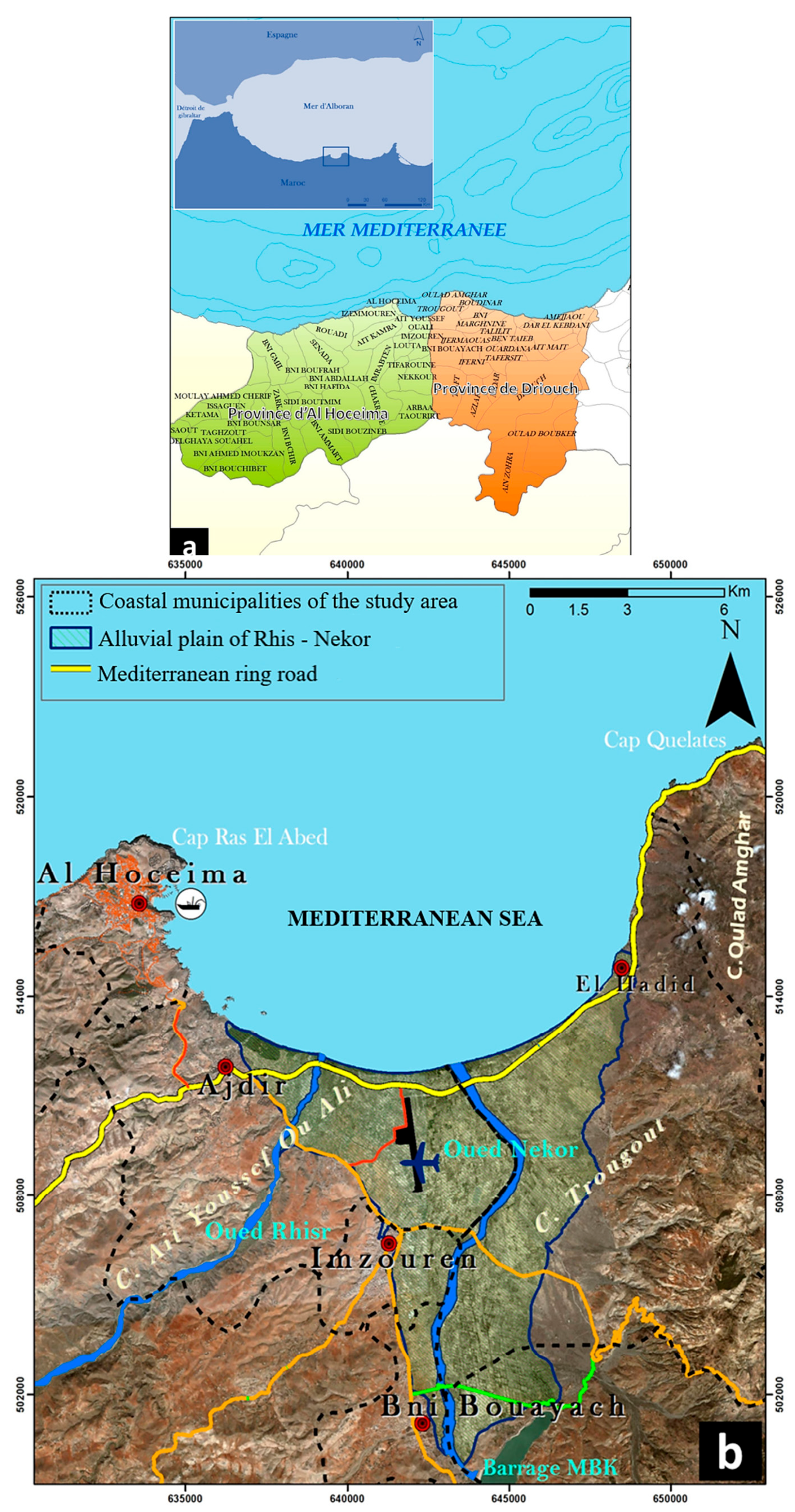
Figure 2.
DEM and Slope of the study area.
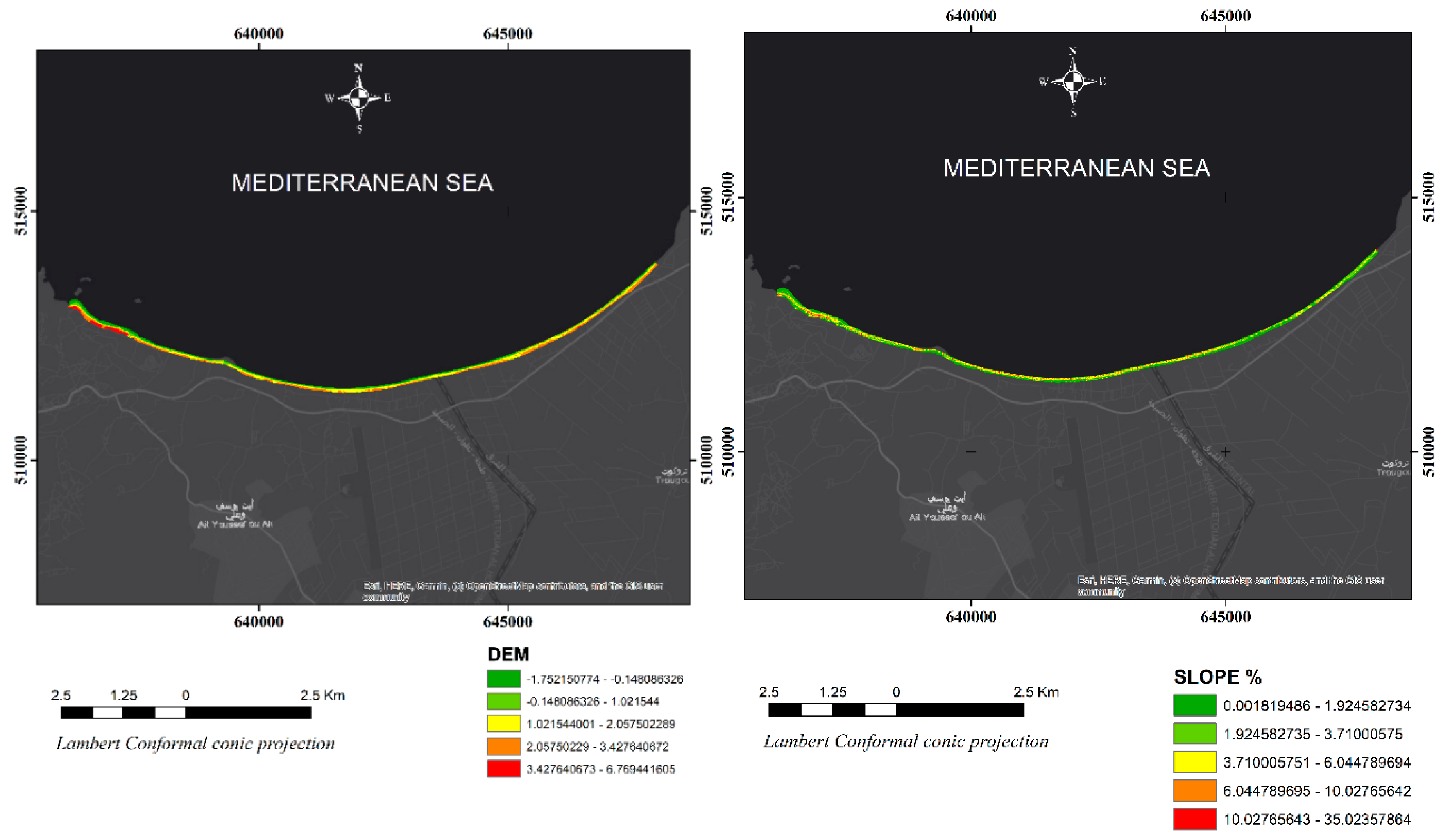
Figure 5.
CVI results for the study area.
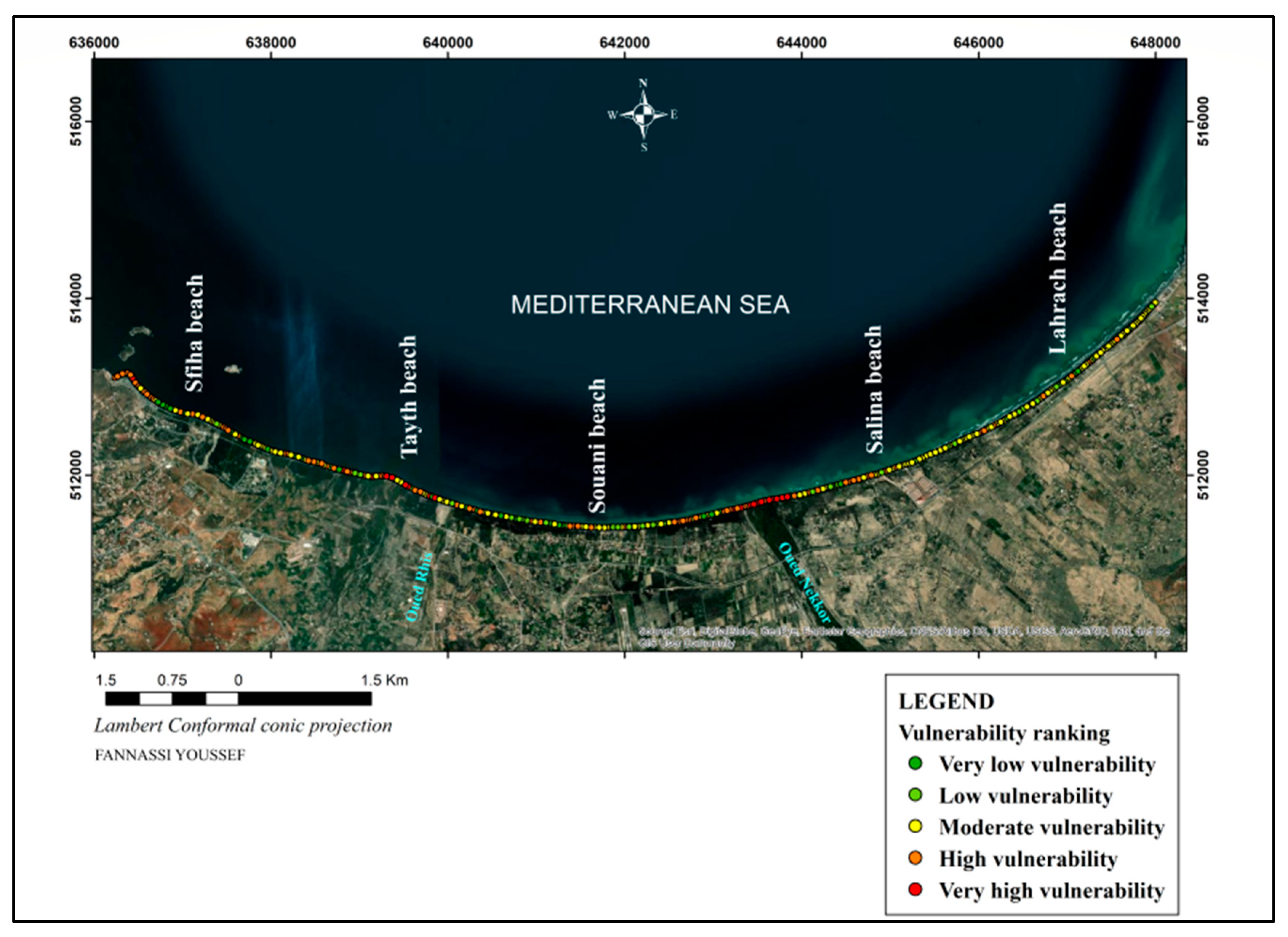
Figure 6.
High vulnerability in the mouth of the Nekkor River.
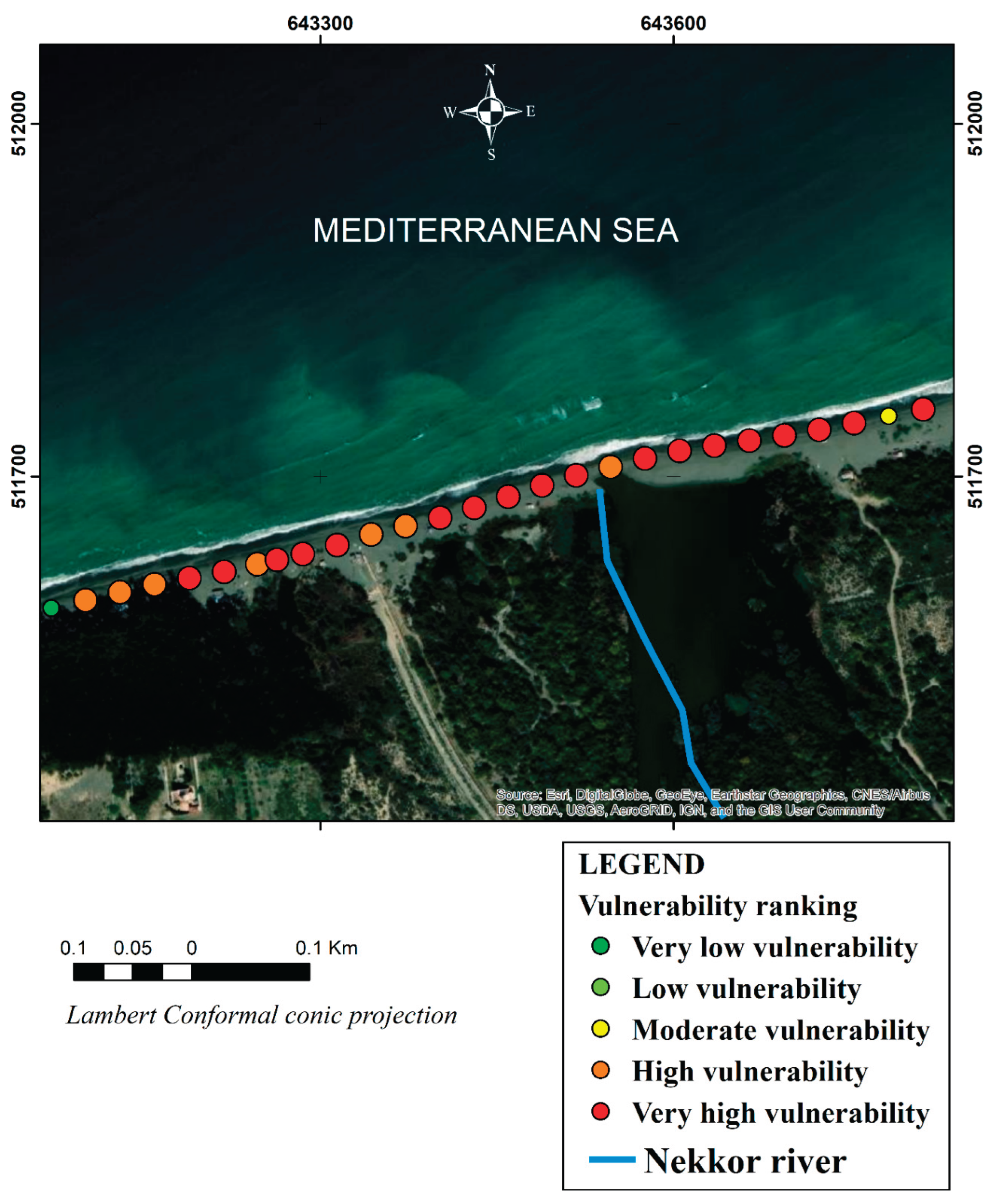
Table 1.
Data sources.
| Parameters | Reference data | Time period |
| Sea level rise | PSMSL (http://www.psmsl.org/) | — |
| Shoreline change rate | Satellite Imagery | 1984 2022 |
| Coastal slope | DEM | 2022 |
| Coastal Elevation | Topographic survey by GNSS | 2022 |
| Tidal range | Previous studies | __ |
| Mean wave height | Public Agency Puertos del Estado (Melilla port station) (http://www.puertos.es/) |
1984-2022 |
| Geomorphology | Field Knowledge | 2022 |
| Natural habitat | Bibliographic research [26] | 2013 |
Table 2.
Coastal vulnerability classes (V. Gornitz 1991).
| Parameters | Very Low (1) | Low (2) | Moderate (3) | High (4) | Very high (5) |
| Geomorphology | Rocky, high cliff; Seawalls | Medium Cliff, indented coast, small seawalls | Low cliff, beachrocks | Cobble beach; estuary; lagoon; bluff |
Sand beach |
| Elevation | >6 | 4 – 6 | 3 – 4 | 1 – 3 | <1 |
| Natural Habitats | Coral reef; Mangrove; Coastal Forest | High dune; marsh | Low dune | Seagrass; Kelp | No habitat |
| Sea Level Change (mm/yr) | <0.5 | 0.5 – 1.5 | 1.5 – 2.5 | 2.5 – 3.5 | >3.5 |
| Mean Wave height (m) | <0.3 | 0.3 – 0.6 | 0.6 to 1 | 1 to 2 | >2 |
| Slope % | >18 | 11 – 18 | 7 – 11 | 3 – 7 | <3 |
| Mean Tide range (m) | >5 | 3.5 – 5 | 2 – 3.5 | 1 – 2 | <1 |
| Shoreline erosion/ accretion(m/yr) | >2 | 1 – 2 | -1 to 1 | -2 to -1 | <-2 |
Disclaimer/Publisher’s Note: The statements, opinions and data contained in all publications are solely those of the individual author(s) and contributor(s) and not of MDPI and/or the editor(s). MDPI and/or the editor(s) disclaim responsibility for any injury to people or property resulting from any ideas, methods, instructions or products referred to in the content. |
© 2026 by the authors. Licensee MDPI, Basel, Switzerland. This article is an open access article distributed under the terms and conditions of the Creative Commons Attribution (CC BY) license (http://creativecommons.org/licenses/by/4.0/).
Copyright: This open access article is published under a Creative Commons CC BY 4.0 license, which permit the free download, distribution, and reuse, provided that the author and preprint are cited in any reuse.


