

Submitted:
30 April 2026
Posted:
05 May 2026
You are already at the latest version
Abstract
Neurodegenerative disease comprises a variety of progressive disorders that target the brain and central nervous system. These disorders are characterized by the rapid degeneration of neurons and neurological functions that lead to motor impairment and the deterioration of the quality of life of an individual. Currently, the traditional interior design solutions are static and often fail to adapt to the changing needs of patients with progressive neurological conditions. This is where technology, particularly augmented reality offers new possibilities to combat these conditions and make life easier for the patients. Therefore, this review assimilates the application of augmented reality in the field of healthcare, especially with regard to neurodegenerative diseases. The objective of the research was to understand how augmented reality could assist in the treatment or alleviation of patients suffering from such diseases. Most neuro-degenerative diseases cannot really be cured, so doctors end up prescribing medication and tasks that help a little but not really make the condition of the patients any better. The possibility of using augmented reality technology is highlighted not only for the patients but also for their caregivers. The various applications of AR including, rehabilitation therapy, cognitive therapy, and remote monitoring are also discussed. Therefore, augmented reality facilitates a shift in therapy from a static clinic- based approach to a more dynamic-interactive model.
Keywords:
neurodegenerative diseases
; augmented reality
; assistive technology
; cognitive impairment
; smart-living spaces
; exergaming
; motor diseases
; healthcare innovation
1. Introduction
Neurodegenerative disease is a name that encompasses a variety of progressive disorders that target the brain and central nervous system. These disorders are characterized by the rapid degeneration of neurons and neurological functions that lead to motor impairment and the deterioration of the quality of life of an individual. Unlike other neurological disorders, neurodegenerative disorders are chronic and irreversible, causing intellectual impairment.
Some of the most common neurodegenerative disorders include Alzheimer’s disease, Parkinson’s disease, Dementia, and some types of cerebral palsy [1]. Individuals suffering from these disorders suffer from memory loss, confusion, motor impairment, loss of balance, loss of coordination, and poor decision-making abilities. With the progression of the disorder, even the simplest of everyday tasks such as cooking, recognizing objects, moving around in familiar spaces, and remembering to take medication becomes a daunting task. The loss of independence has dire consequences not only for the patient but also for the caregiver.
In recent years, there has been an increasing focus on the importance of the physical environment in dealing with neurological disorders. The environment that people live in, such as homes and care centers, has a direct impact on how patients respond to their environment. Inadequately designed interiors can lead to confusion, anxiety, and accidents, especially for those patients with memory loss and motor impairments. Well-designed interiors, on the other hand, can lead to a sense of safety and independence. However, the traditional interior design solutions are static and often fail to adapt to the changing needs of patients with progressive neurological conditions.
This is where technology, particularly augmented reality offers new possibilities to combat these conditions and make life easier for the patients. Augmented reality (AR) enhances real world environments by overlaying digital information such as visual cues, reminders, warnings or guidance. In the context of neurology, AR can transform everyday spaces into supportive, patient- friendly interactive environments [2]. AR can help patients with neurodegenerative diseases with their daily tasks, guide them step by step, point out key objects, and alert them to potential dangers in familiar environments. By filling the gap between physical space and digital support, AR has the potential to enhance design in the creation of spaces that support neurological care. Advances in interior design technology can enable the development of homes/centres that support patients with neurodegenerative diseases [1]. By incorporating the use of voice support, light signals, and simple augmented reality instructions in daily spaces. Voice support can help the patient to take their medicines or cook step by step. Augmented reality instructions can help the patient to label objects (such as “kettle” or “switch off stove”) and light signals can help to gently guide the patient to the bathroom at night [1].
Interiors with well designed tools can reduce confusion, support daily activities while not overwhelming the person. These spaces can quietly assist with routine tasks, mobility and hazard prevention while also making the individual feel independent and at ease. In this way, technology-enabled interiors can move beyond being just “well-designed spaces” and instead become environments that actively support neurological care in everyday life. This direction connects closely with existing research on augmented reality in neurology and introduces the different applications of AR technology and explains how AR technology has been used to a large extent to assist in rehabilitation, especially for movement disorders where patients need frequent motor training and exercise [1]. The paper also highlights how relatively fewer AR systems have been developed for use in degenerative diseases and how most of the existing systems have been developed to assist only in day-to-day activities. Along with this, the authors have explained the difficulties of usability, cognitive overload, and the difficulty of developing AR systems for the elderly and cognitively impaired patients. This paper is written based on these findings to explain how AR technology can be effectively integrated into interior spaces so that homes and care centers can become safer and more supportive for patients with neurodegenerative diseases. Ultimately, the aim is to understand how design and AR-based assistive cues together can improve daily functioning, independence, and quality of life.
2. Methodology
The article was compiled using the databases such as Google Scholar, Web of Science, Scopus, IEEE Xplore, and ScienceDirect and a scoping review was concluded.
2.1. Understanding Neurodegenerative Diseases and the Role of Augmented Reality
Augmenting Care: Technology Steps into Neurology
Neurological disorders are even more challenging to treat because they focus on the brain and central nervous system, which is responsible for controlling all functions in the human body. Over the years, treatment has evolved from just using medication to rehabilitation and assistive technology [3]. However, many traditional treatment approaches are still repetitive, tiring, and not relevant to real-life situations, which often results in patients becoming less engaged. A review paper reveals that traditional approaches to treating neurological disorders are time-consuming, boring, and may not be relevant to real-life situations, causing patients to become less interested and motivated during treatment [1].
AR started gaining popularity in treating neurological disorders because it provides an opportunity to improve the real world rather than just replacing it. One of the most meaningful contributions of AR is its ability to support existing treatments rather than replace them. In rehabilitation, AR is often combined with exercises to form interactive experiences known as exergames or serious games. These systems allow patients to perform repetitive movements in a more engaging and motivating way while receiving immediate feedback. Such approaches are especially helpful for motor recovery, where consistency and repetition are crucial. Based on the analysis in the literature review, exergaming has become a popular rehabilitation strategy, as it makes repetitive physical training more enjoyable and AR systems are predominantly used for motor disorders and physical therapy [1].
2.2. Designing Supportive Environments for Parkinson’s Using Augmented Reality
Parkinson’s disease is a progressive neurodegenerative disorder that mainly impacts the movement, balance, and coordination of a patient. Among the most disabling symptoms of Parkinson’s disease is freezing of gait (FOG), in which patients experience an inability to move their legs forward when they actually want to walk. This problem becomes even more problematic during turning movements and is a major cause of falls. Freezing of gait is described as an episodic reduction or absence of forward movement when there is an intention to walk, and both freezing and turning are linked to falls [4].
To overcome issues related to gait and turning in patients with Parkinson’s disease, researchers have tried to use AR technology as a cueing tool in rehabilitation. In a study, researchers utilized the Microsoft HoloLens smart glasses to offer AR cues for the turning tasks of patients with Parkinson’s disease as shown in figure 1 [4]. The difference in the application of the AR technology in comparison to the static cues of the floor markers or the verbal cues is that it allows the patients to have goal-oriented cues for the turning tasks within the field of view. It is a significant improvement in the rehabilitation of Parkinson’s disease as it allows the integration of the movement cues in the real world. In the study, 16 patients with Parkinson’s disease and symptoms of freezing of gait performed a 180-degree turn using the visual cues of the AR technology of the HoloLens. The holographic spheres were utilized as cues for the turning direction [4].
Figure 1.
Diagrammatic representation of how HoloLens-based augmented reality provides visual cues and real-time feedback to help Parkinson’s patients improve movement and gait during rehabilitation. A) An avatar demonstrates physical therapy exercises on the DART platform. B) A user wearing an augmented reality headset follows along with the program. C) The headset records and analyzes user progress for clinician review [5].
Figure 1.
Diagrammatic representation of how HoloLens-based augmented reality provides visual cues and real-time feedback to help Parkinson’s patients improve movement and gait during rehabilitation. A) An avatar demonstrates physical therapy exercises on the DART platform. B) A user wearing an augmented reality headset follows along with the program. C) The headset records and analyzes user progress for clinician review [5].
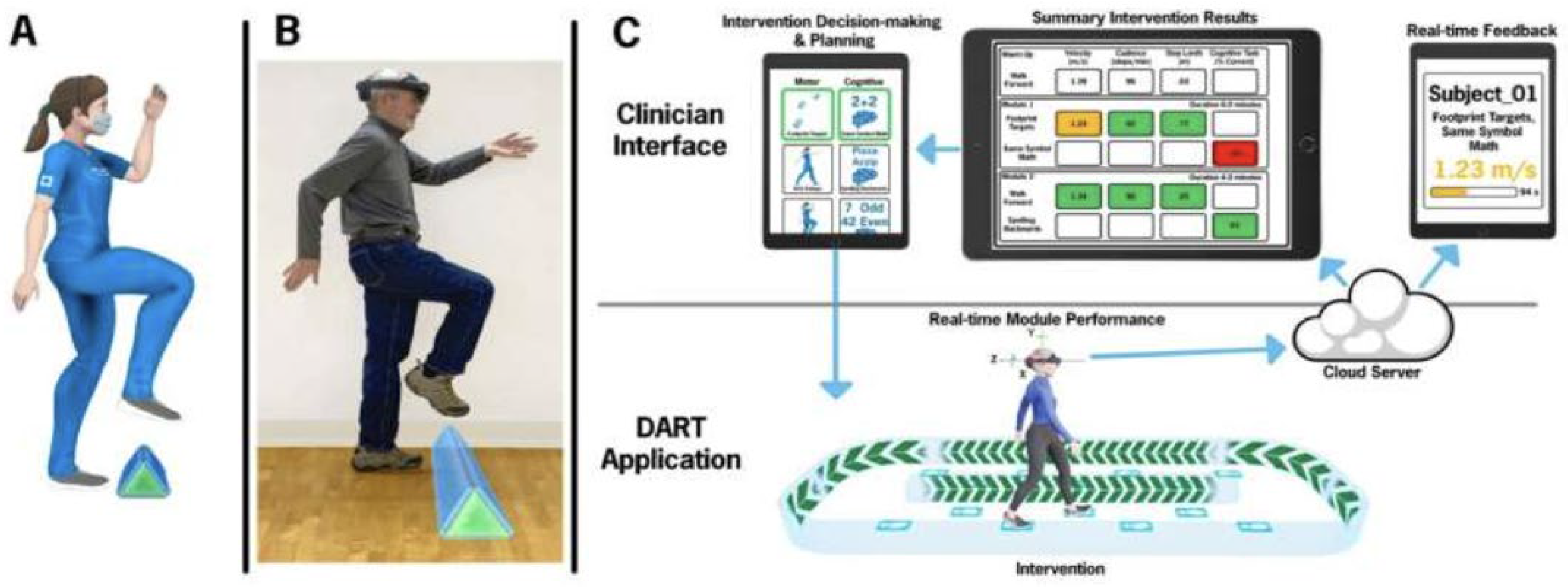
While AR cueing shows potential, the findings suggest that its effectiveness depends heavily on design and implementation. In this study, AR visual cues did not reduce freezing episodes when compared to no cues and were less effective than auditory cues. Nevertheless, movement patterns such as the rate of turning and the degree of variability in steps were still affected by AR, implying that it has the ability to impact movement patterns despite the fact that it does not directly impact the symptoms of the patient. This further proves the role of AR as a supplementary tool that can be utilized in the improvement of movement patterns as well as offer insights into the biomechanics of the patient. The results showed that AR cues did not reduce freezing frequency or duration and that auditory cues performed better, although AR affected turning kinematics such as reduced angular velocity and increased movement variability [4].
2.3. Augmented Reality for Dementia-Friendly Spaces
Alzheimer's disease is one of the most common causes of dementia. Of the various challenges a patient of Alzheimer’s might face is that of losing his/her independence. As their memory declines, they find it difficult to carry out everyday routines, where things are kept, or even how to carry out simple procedures or identify familiar things. At some point, caregivers may attempt to make the living space easier for the patient to move around by leaving notes on cupboards or rearranging the space so that things are easier to find. Dementia is a major cause of dependency in everyday activities and places a significant burden on families. Despite the fact that the majority of people want to live in their own homes, dementia causes problems in this area because of the decline in cognitive ability and safety issues that may arise [6]. This, therefore, shows that care for people suffering from Alzheimer’s cannot be limited to medical care, but there is a need to consider how the living space can be used to aid the patient.
Since many of these difficulties emerge within everyday living spaces, researchers have increasingly begun exploring how technology can help transform homes into more supportive environments. In a study on assistive technologies, it has been found that smart living environments that incorporate AR, multimodal systems, and smart home technologies including HoloLens-based reminder systems and voice-assisted smart homes like Alexa. These can aid in the functioning and reduce feelings of isolation, and enable people suffering from Alzheimer’s and dementia to continue living in their own environments [6]. Following this line of thought, augmented reality is being researched and used, not just in a medical setting, but in a living environment, providing guidance in real space. It has been increasingly used in the field of neurology, providing rehabilitation and task-related support, and improving the patient experience by incorporating digital cues into familiar environments [1,7]. At the same time, AR is also receiving attention in terms of cognitive assistance, not just physical rehabilitation. The cognitive assistance such as real-time memory overlays and step-by-step task guidance applications provided by AR-based cognitive systems has been found to have higher user engagement and sensitivity in comparison to conventional "paper-based" approaches, where individuals can still stay connected to the real world [8].
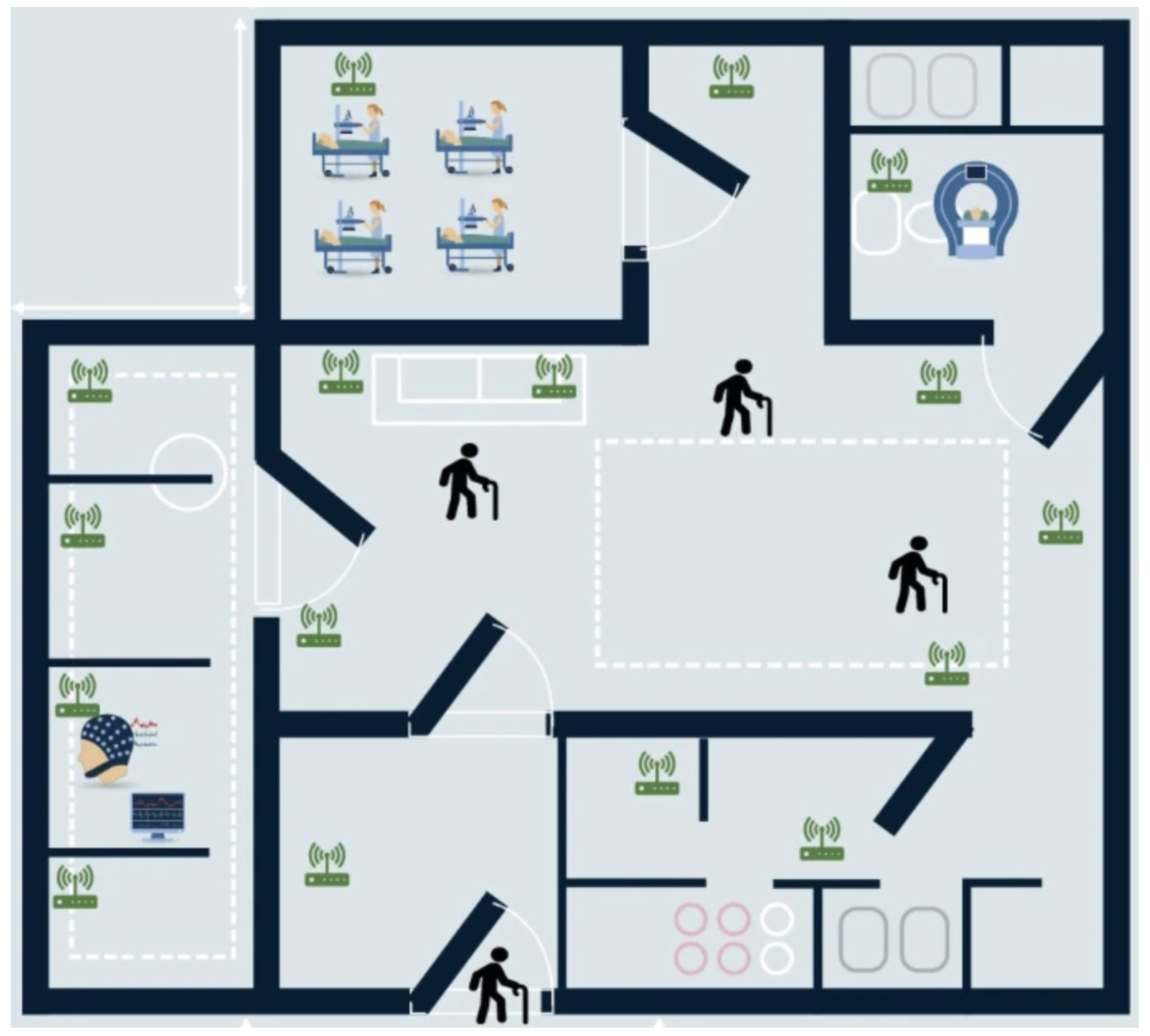
Furthermore, the research on AR-based navigation systems also indicates the importance of the application of visual information in real spaces to reduce cognitive overload, thus again highlighting the importance of AR in assisting individuals in navigating spaces safely. The AR-based navigation systems (such as indoor wayfinding tools like NavCog and AR arrow-based guidance systems as shown in figure 2) incorporate virtual information into the physical space to assist individuals in navigating the space without losing focus on the real world [9].
AR is considered rather very helpful in Alzheimer's care as it can provide support in subtle and non-intrusive ways without making the patient feel overwhelmed. AR-based systems have also been proven to enhance the engagement of users, as well as their sensitivity in identifying cognitive problems, compared to conventional approaches. In this case, the AR navigation system includes the use of virtual information that can be superimposed on the physical surroundings of the users. This enables the users to navigate their surroundings without focusing their attention on the navigation [9]. Taken collectively, all these findings indicate that AR-supported interiors can transcend medical-specific applications and move into the domain of everyday living spaces, helping in navigation, cognition, and other activities in a discreet and non-intrusive manner.
Figure 2.
Diagrammatic representation of a smart indoor navigation system designed for Alzheimer’s patients, using sensors and assistive technology to help them move safely and independently within a care environment [10].
Figure 2.
Diagrammatic representation of a smart indoor navigation system designed for Alzheimer’s patients, using sensors and assistive technology to help them move safely and independently within a care environment [10].
2.4. Augmented Reality–Enabled Interior Design for Cerebral Palsy and Huntington’s Disease Rehabilitation
Creating spaces for Cerebral Palsy and Huntington’s patients requires moving away from the conventional therapy room and creating spaces that promote movement and engagement. Cerebral Palsy, for instance, affects motor skills, including balance, coordination, and upper-limb movements, which make activities like reaching, walking, and standing upright difficult for patients. Instead of relying on repetitive exercise, augmented reality allows these movements to be practiced daily within real spaces through playful and interactive tasks that makes one happy and motivated. Augmented reality–based interventions significantly improved upper extremity function and balance in children with spastic hemiplegic cerebral palsy following structured AR game sessions [11]. Instead of separating rehabilitation from daily life, this approach allows homes or therapy spaces to be designed around movement where AR cues guide the body while familiar surroundings provide comfort and safety. High usability, strong motivation, positive emotional responses, and high user acceptance of children with cerebral palsy and brain injuries in immersive AR exergames indicate their potential for rehabilitation in real-world situations [12]. For interior designers, this implies designing spaces that are open and flexible, facilitating areas for safe movements to conduct activities in a natural way using AR technology. There is a need to support a similar environment for people suffering from Huntington’s disease, which affects their independence over time, including gradual changes in their movements, thinking, and behavior. There is no cure for this disease, and efforts are directed to support them in maintaining their functions and quality of life.
Similarly, the application of virtual reality and computer-based rehabilitation strategies has been found to be feasible and potentially beneficial for individuals with Huntington’s disease, where positive effects on motor performance, cognitive involvement, and awareness of everyday activities were observed [13]. In addition to rehabilitation strategies, research is now being conducted to find the potential benefits of artificial intelligence in the earlier identification of individuals suffering from Huntington’s disease by analyzing patterns in clinical data, genetics, and brain imaging. Machine learning and deep learning algorithms are found to possess a strong potential in the automated diagnosis of Huntington’s disease by analyzing patterns in clinical data, genetics, and imaging data [14]. When these ideas are applied to the design of spaces, it suggests the possibility of spaces that can change over time, incorporating AR guidance with intelligent systems that can respond to the constantly shifting physical and cognitive needs of the users. Spaces such as the kitchens, hallways, or activity spaces can function as supportive spaces where individuals can engage in the normal activities of life with gentle visual guidance, movement prompts, and immediate feedback. These studies illustrate that AR spaces can function as silent partners in care. By incorporating AR spaces and intelligent spaces thoughtfully, homes can move from spaces that are merely passive backdrops for life to spaces that are active, caring spaces for individuals with cerebral palsy and Huntington’s disease.
3. Reality Check: When Augmented Care Meets Ethical Care
While the potential of the technology in assisting patients with neurodegenerative diseases like Alzheimer’s, Parkinson’s, Cerebral Palsy and Huntington’s disease is extremely promising, there are ethical considerations that cannot be overlooked. AR technology, like other types of extended reality, can be fun for patients and help them get better [2]. This is very important when patients find traditional ways of recovering boring and uninteresting. AR-based healthcare systems also help with many medical areas, such as rehabilitation, remote diagnosis, telemedicine, and monitoring in real time [15]. As a result, they help make care better, more efficient, and faster for patients [16]. The engaging experience offered by the AR technology, like other extended reality technologies, is found to be dangerous for patients, as research indicates that patients are likely to face disorienting experiences like cybersickness, [17] especially in cases where patients are likely to face problems like impaired cognition and altered realities. The immersive nature of the extended reality technology is found to cause problems like motion sickness, information overload, and increased emotional responses, [18] due to the immersive nature of the technology [19].
Ethical issues also become more complex in terms of informed consent because it is difficult to obtain informed consent from a patient when their mental capacity is impaired [17]. This is important because a majority of AR/VHR technology users in healthcare settings, such as those in critical conditions or cognitively impaired, are identified as vulnerable populations that require special ethical considerations in the deployment of new technology in their care [20]. Furthermore, AR systems handle very sensitive information, leading to ethical issues concerning data security and ownership [3]. This is because current laws were not designed to protect immersive technology in real-time. The personal information gathered from AR/VHR technology users, such as behavioral patterns, physiological responses, and location information, is also a threat to data security because it can be abused or shared without permission if security systems are not put in place to protect it [18].
Lastly, there is the problem of the expensive and scarce nature of AR technology. This also brings in issues of ethics in terms of disparities and inequalities in health care, [3], where there is a possibility of marginalizing certain classes of people and only allowing those with well-funded health care to access it. The use of AR and VR technology in health care also comes with its own problems in terms of costs, [21], as it may add to the costs of health care in certain cases. It is therefore important to ensure that there are regulations on how to handle this problem in order to ensure a balance between technology and patient autonomy, dignity, and safety, [17].
Governments are now putting in place specific regulations to ensure that augmented reality is used in an ethical and safe way in healthcare environments. In different countries, such as the United States, as well as in different regions such as Europe, specific guidelines have been put in place to ensure that such technologies are used in an ethical way. In the United States, for example, the Food and Drug Administration (FDA) regulates AR-based medical applications under its Software as a Medical Device (SaMD) approach, which ensures that such technologies are safe, accurate, and risk management-friendly before they are used on patients [22]. In Europe, AR technologies that handle patient data must adhere to the General Data Protection Regulation (GDPR), which is very strict on data privacy, consent, and transparency [22]. In the context of India as well, the evolving regulations such as the Digital Personal Data Protection Act, 2023, along with the provisions of the Information Technology Act, highlight the issue of data protection and the responsible use of digital health technologies as well. These regulations highlight the need for the healthcare providers and developers of such technologies to effectively communicate with the patient regarding the use of such AR technologies in their treatment and the storage of their personal information as well [23]. Furthermore, the guidelines highlight the importance of such technologies in supporting the judgment of the medical professionals and ensuring that the human element is central in the process of making decisions as well [23].
Augmented reality technology has the potential to revolutionize the treatment and rehabilitation of patients with neurodegenerative diseases. Current solutions are designed to improve the engagement of patients, the efficacy of therapy, and the accuracy of treatment. Interactive technology helps patients improve their cognitive and motor skills [24]. AR technology also plays a critical role in assisting doctors and other medical experts. It provides doctors with the ability to better understand and visualize the body and the complex conditions associated with it, which makes it easier to diagnose and treat patients [25]. AR technology also plays a significant role in reducing the anxiety of patients and improving the efficacy of treatment by providing patients with an immersive and engaging experience [26].
Considering the future, AR technology has a lot to offer in the management of neurodegenerative diseases with even more advanced, tailored, and data-driven approaches. The future of AR technology may involve the integration of artificial intelligence and machine learning capabilities to provide predictive diagnostics and tailored treatments based on patient-level data [24]. Furthermore, advancements in wearable AR technology, along with other extended reality devices, may provide the possibility of continuous monitoring and rehabilitation from a distance, thus making treatments more accessible, especially in resource-constrained environments [25]. Nevertheless, to take advantage of the vast potential of AR technology in managing neurodegenerative diseases, some of the limitations, including its integration with other systems, need to be addressed [26]. AR technology, therefore, has a lot to offer in the management of neurodegenerative diseases, bridging the gap between technology and patient-centric approaches.
4. Conclusions
This paper explored the role of AR in healthcare. It has been observed that the utilization of AR technology helps to provide a safer and more comfortable environment for those people who have been diagnosed with neurodegenerative diseases. Based on the literature survey, it has been observed that neurodegenerative diseases affect cognitive and motor abilities, making life activities tough and limiting a patient's independence. Conventional treatment approaches are helpful but repetitive and do not match actual conditions.
AR can be a complementary element in the treatment of neurologic disorders through its capacity to improve real-world environments instead of replacing them. The improvement of treatment with AR is evidenced from the enhancement of rehabilitation sessions with the use of exergames to helping with movement problems with people suffering from Parkinson’s disease using visual information. With regard to dementia and Alzheimer’s disease, the creation of supportive environments with the help of AR entails the provision of memory support, navigation support, and activities for individuals to complete tasks and perform independently in their environment. This trend is also seen in cases of cerebral palsy and Huntington’s disease where individuals become motivated to move and engage.
In addition, other parameters have also been discussed, including, access to techniques, affordability of the technology, privacy concerns, feasibility and how AR can be developed in such a way that it would be suitable for the most vulnerable population groups. These aspects illustrate the idea that although AR brings about many advantages, it needs to be used responsibly.
As far as future prospects in this area are concerned, there seems to be a huge scope for development and advancement of AR in association with artificial intelligence, data analysis, and wearables. AR has the ability to make health care systems much more predictive and personalized. With further developments in this field, the scope of AR will grow further.
Author Contributions
Conceptualized and written: Aanya Mehra; Review, editing and supervision: Ananta Ganjoo.
Funding
This research received no external funding.
Conflicts of Interest
The authors declare no conflict of interest.
References
- Farooq, M. S.; Zahid, Z.; Omer, U.; Tehseen, R.; Alvi, A.; Farooq, U.; Atal, Z. Applications of Augmented Reality in Neurology: Architectural Model and Guidelines. IEEE Access 2022, 10, 102804–102830. [Google Scholar] [CrossRef]
- Hariharan, V.; Pk, M. P. K.; Rajanandh, M. G.; Kumari, P. M. P. Extended Reality in Revolutionizing Neurological Disease: A New Era for Chronic Condition Treatment. Cureus 2024, 16(8). [Google Scholar] [CrossRef] [PubMed]
- Anene, J. I.; Sharma, A.; Sharma, A.; Fatima, I.; Kancherla, N.; Ponnada, S. C.; et al. Exploring the Potential of Artificial Intelligence (AI) and Augmented Reality (AR) in Neurological Disease Management: A Narrative Review. Cureus 2025, 17(6). [Google Scholar] [CrossRef] [PubMed]
- Janssen, S.; van Steveninck, J. de Ruyter; Salim, H. S.; Cockx, H. M.; Bloem, B. R.; Heida, T.; Van Wezel, R. J. The Effects of Augmented Reality Visual Cues on Turning in Place in Parkinson’s Disease Patients with Freezing of Gait. Front. Neurol. 2020, 11, 185. [Google Scholar] [CrossRef]
- Cleveland Clinic. Using Augmented Reality to Make Parkinson’s Disease Physical Therapy More Accessible. MedicalXpress. 18 September 2023. Available online: https://medicalxpress.com/news/2023-09-augmented-reality-parkinson-disease-physical.html.
- Zanwar, P.; Heyn, P. C.; McGrew, G.; Raji, M. Assistive Technology Megatrends to Support Persons with Alzheimer’s Disease and Related Dementias Age in Habitat. In Proceedings of the Workshop on Human-Habitat for Health; 2018; pp. 1–9. [Google Scholar]
- Taghian, A.; Abo-Zahhad, M.; Sayed, M. S.; Abd El-Malek, A. H. Virtual and Augmented Reality in Biomedical Engineering. Biomed. Eng. Online 2023, 22(1), 76. [Google Scholar] [CrossRef]
- do Nascimento, L. G. G.; Correia, W. F. M.; Campos, F.; van Gisbergen, M. S.; Barros, M. D. L. N.; Lins, A.; Teixeira, J. M. X. Augmented Reality for Cognitive Screening in Neurodegenerative Diseases: A Ten-Year Systematic Review. J. Braz. Comput. Soc. 2025, 31(1), 742–760. [Google Scholar] [CrossRef]
- Zhao, Y.; Gagnon, H.; Stefanucci, J.; Creem-Regehr, S.; Bodenheimer, B. A Systematic Review of the Use of Augmented Reality in Pedestrian Navigation. ACM Comput. Surv. 2025, 58(5), 1–32. [Google Scholar] [CrossRef]
- Biswas, M.; Rahman, A.; Kaiser, M. S.; Al Mamun, S.; Mizan, K. S. Ebne; Islam, M. S.; Mahmud, M. Indoor Navigation Support System for Patients with Neurodegenerative Diseases. In International Conference on Brain Informatics; Springer International Publishing: Cham, 2021; pp. 411–422. [Google Scholar]
- Malick, W. H.; Butt, R.; Awan, W. A.; Ashfaq, M.; Mahmood, Q. Effects of Augmented Reality Interventions on the Function of Upper Extremity and Balance in Children with Spastic Hemiplegic Cerebral Palsy: A Randomized Clinical Trial. Front. Neurol. 2022, 13, 895055. [Google Scholar] [CrossRef]
- Balloufaud, M.; Boujut, A.; Marie, R.; Okassa, M. B. M.; Fourcade, L.; Hamonet-Torny, J.; Perrochon, A. User Experience of a Custom Augmented Reality-Based Exergame for Children with Cerebral Palsy and Acquired Brain Injuries. 2025. [Google Scholar] [CrossRef]
- Maggio, M. G.; Billeri, L.; Cardile, D.; Quartarone, A.; Calabrò, R. S. The Role of Innovation Technology in the Rehabilitation of Patients Affected by Huntington’s Disease: A Scoping Review. Biomedicines 2024, 12(1), 39. [Google Scholar] [CrossRef]
- Ganesh, S.; Chithambaram, T.; Krishnan, N. R.; Vincent, D. R.; Kaliappan, J.; Srinivasan, K. Exploring Huntington’s Disease Diagnosis via Artificial Intelligence Models: A Comprehensive Review. Diagnostics 2023, 13(23), 3592. [Google Scholar] [CrossRef]
- Muntian, L. Virtual and Augmented Reality in Healthcare Management Mechanisms for Maintaining Public Health: Literature Overview. Ukr. J. Med. Biol. Sports 2025, 10(3), 36–50. [Google Scholar]
- Ara, J.; Karim, F. B.; Alsubaie, M. S. A.; Bhuiyan, Y. A.; Bhuiyan, M. I.; Bhyan, S. B.; Bhuiyan, H. Comprehensive Analysis of Augmented Reality Technology in Modern Healthcare System. Int. J. Adv. Comput. Sci. Appl. 2021, 12(6), 840–849. [Google Scholar] [CrossRef]
- Goulet, M. H.; Dellazizzo, L.; Goyer, S.; Dollé, S.; Hudon, A.; Phraxayavong, K.; et al. What Are the Ethical Issues Surrounding Extended Reality in Mental Health? A Scoping Review of the Different Perspectives. Behav. Sci. 2025, 15(10), 1431. [Google Scholar] [CrossRef]
- Slater, M.; Gonzalez-Liencres, C.; Haggard, P.; Vinkers, C.; Gregory-Clarke, R.; Jelley, S.; et al. The Ethics of Realism in Virtual and Augmented Reality. Front. Virtual Real. 2020, 1, 1. [Google Scholar] [CrossRef]
- Ray, S.; Tawar, S.; Singh, N.; Singh, G. Transition toward Technological Transformation: Challenges of Implementing Virtual Reality and Augmented Reality in the Health Sector. J. Mar. Med. Soc. 2024, 26(2), 161–164. [Google Scholar] [CrossRef]
- Bruno, R. R.; Wolff, G.; Wernly, B.; Masyuk, M.; Piayda, K.; Leaver, S.; et al. Virtual and Augmented Reality in Critical Care Medicine: The Patient’s, Clinician’s, and Researcher’s Perspective. Crit. Care 2022, 26(1), 326. [Google Scholar] [CrossRef]
- Ray, J.; Kumar, S.; Pandey, S.; Akram, S. V. The Role of Augmented Reality and Virtual Reality in Shaping the Future of Health Psychology. In Proceedings of the 3rd International Conference on Pervasive Computing and Social Networking (ICPCSN); IEEE, 2023; pp. 1604–1608. [Google Scholar]
- Evans, J. White Pap. IEEE Glob. Initiat. Ethics Ext. Real. (XR) Report: Extended Reality (XR) Ethics Med. 2022, 1–31.
- Werner, L.; Brey, P.; Henschke, A. Augmented Reality and Ethics: Key Issues. Virtual Real. 2025, 29(3), 122. [Google Scholar] [CrossRef]
- Siddiqui, M. Faizan; Jabeen, S.; Alwazzan, A.; Vacca, S.; Dalal, L.; Al-Haddad, B.; et al. Integration of Augmented Reality, Virtual Reality, and Extended Reality in Healthcare and Medical Education: A Glimpse into the Emerging Horizon in LMICs-A Systematic Review. J. Med. Educ. Curric. Dev. 2025, 12, 23821205251342315. [Google Scholar]
- Iqbal, A. I.; Aamir, A.; Hammad, A.; Hafsa, H.; Basit, A.; Oduoye, M. O.; et al. Immersive Technologies in Healthcare: An In-Depth Exploration of Virtual Reality and Augmented Reality in Enhancing Patient Care, Medical Education, and Training Paradigms. J. Prim. Care Community Health 2024, 15, 21501319241293311. [Google Scholar] [CrossRef] [PubMed]
- Moawad, G. N.; Elkhalil, J.; Klebanoff, J. S.; Rahman, S.; Habib, N.; Alkatout, I. Augmented Realities, Artificial Intelligence, and Machine Learning: Clinical Implications and How Technology Is Shaping the Future of Medicine. J. Clin. Med. 2020, 9(12), 3811. [Google Scholar] [CrossRef] [PubMed]
Disclaimer/Publisher’s Note: The statements, opinions and data contained in all publications are solely those of the individual author(s) and contributor(s) and not of MDPI and/or the editor(s). MDPI and/or the editor(s) disclaim responsibility for any injury to people or property resulting from any ideas, methods, instructions or products referred to in the content. |
© 2026 by the authors. Licensee MDPI, Basel, Switzerland. This article is an open access article distributed under the terms and conditions of the Creative Commons Attribution (CC BY) license (http://creativecommons.org/licenses/by/4.0/).
Copyright: This open access article is published under a Creative Commons CC BY 4.0 license, which permit the free download, distribution, and reuse, provided that the author and preprint are cited in any reuse.


