
Submitted:
29 April 2026
Posted:
30 April 2026
You are already at the latest version
Abstract
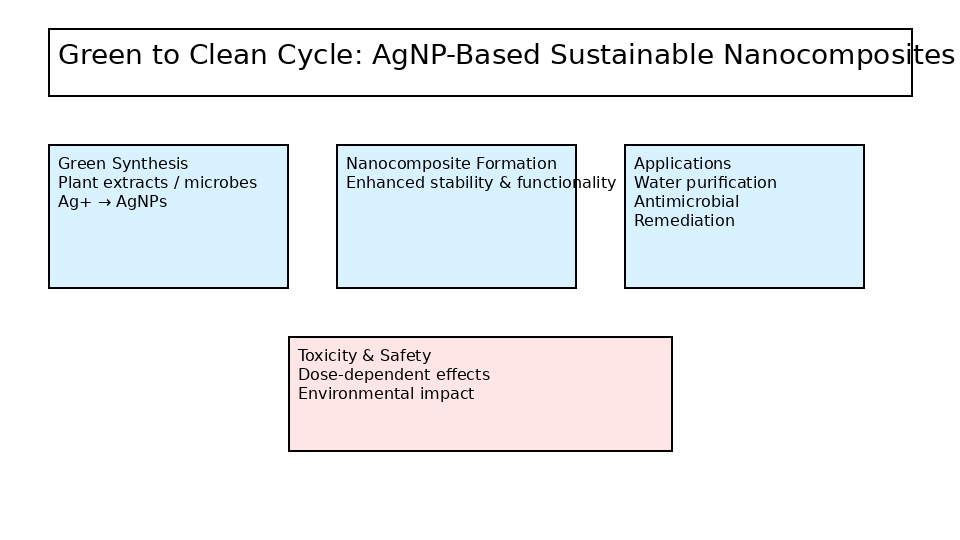
Silver nanoparticles (AgNPs) have attracted significant attention due to their remarkable antimicrobial, antibacterial, and catalytic properties, enabling widespread applications in consumer products, biomedical fields, and environmental systems. Conventional chemical and physical synthesis routes, however, often involve toxic reagents and generate hazardous byproducts, raising environmental and health concerns. In response, green synthesis approaches employing biological entities such as plant extracts, bacteria, and fungi have emerged as sustainable and eco-friendly alternatives. These methods utilize natural reducing and stabilizing agents, minimizing toxicity while enhancing biocompatibility. This review comprehensively examines green-mediated synthesis strategies for AgNP-based composites, highlighting their physicochemical properties and functional performance. Additionally, the potential toxicity and environmental implications of AgNPs are critically discussed. Particular emphasis is placed on their applications in environmental remediation, including water purification, pollutant degradation, and antimicrobial treatments. Overall, green-synthesized AgNP composites offer a promising pathway toward sustainable nanotechnology for environmental pollution control.
Keywords:
silver nanoparticles (AgNPs)
; green-mediated
; green synthesis
; antimicrobial activity
; toxicity
Copyright: This open access article is published under a Creative Commons CC BY 4.0 license, which permit the free download, distribution, and reuse, provided that the author and preprint are cited in any reuse.


