
Submitted:
29 April 2026
Posted:
30 April 2026
You are already at the latest version
Abstract
Tropospheric over-the-horizon (OTH) propagation is a prominent research hotspot in the field of radar countermeasure and reconnaissance. Clarifying the variation law of its impacts on radar emitter signatures is the critical prerequisite for over-the-horizon radar emitter recognition (RER) in complex electromagnetic environments. In recent years, the relevant theories and practical applications of tropospheric OTH propagation mechanism and RER have been continuously improved. However, existing studies have not yet achieved in-depth integration of the two fields, nor systematically sorted out the influence mechanism and variation law of OTH propagation on radar emitter signatures. On this basis, this paper starts from the mechanism and models of tropospheric OTH propagation, conducts the analysis of emitter signal characteristics through the channel characteristics of propagation, and systematically reviews the research achievements in this field. Finally, this paper summarizes the technical bottlenecks and improvement strategies for RER in OTH scenarios, and aims to provide a theoretical and technical reference for promoting the integration of OTH transmission and RER technologies.
Keywords:
troposphere
; over-the-horizon propagation
; signal characteristics
; radar emitter recognition
1. Introduction
Modern warfare has undergone a comprehensive shift from platform-centric warfare to information-centric warfare, where electromagnetic spectrum dominance has emerged as the core strategic supremacy determining the outcome of battlefield engagements, with its priority even surpassing that of air superiority and maritime superiority. Radar countermeasure reconnaissance, especially passive Radar Emitter Recognition (RER) technology, serves as the core capability underpinning Electronic Support Measures (ESM) and Electronic Intelligence (ELINT) systems. Unlike active detection systems, passive RER systems do not actively emit electromagnetic waves, and thus feature exceptional covertness, anti-jamming capability, and battlefield survivability.
Over-the-Horizon (OTH) propagation refers to non-line-of-sight propagation of electromagnetic waves achieved through effects such as diffraction, refraction, scattering, and reflection by the Earth’s surface, atmosphere, or other propagation media, under the condition that no direct line-of-sight propagation path exists between the transmitter and the receiver. According to the dominant propagation mechanism and medium, OTH propagation is generally categorized into ground wave diffraction propagation, ionospheric propagation, tropospheric propagation, and relay propagation via space relay platforms. Among these, tropospheric OTH propagation mainly relies on refraction, scattering, and anomalous atmospheric refraction structures in the troposphere, enabling electromagnetic waves to break through the constraints of the Earth’s curvature and radar line-of-sight limits. It can realize signal transmission and target detection over long distances, and boasts the advantages of low probability of interception (LPI), large transmission capacity, excellent confidentiality, and strong anti-jamming capability, thus holding significant military application value in fields including long-range radar detection, maritime target surveillance, passive detection, and electronic reconnaissance [1].
Radar signals serve as the physical carrier of radar emitter characteristics, carrying all valuable information including the model characteristics and individual unintentional modulation characteristics of the radar emitter. Through intercepted radar signals, core tasks such as emitter sorting, model identification, individual fingerprint extraction, and threat level assessment can be accomplished. The vast majority of research on traditional RER technologies is based on the ideal channel assumption of “line-of-sight distortion-free transmission”, which presupposes that the characteristics of the radar signal intercepted by the receiver are consistent with those of the signal transmitted by the transmitter, and only extracts inter-pulse and intra-pulse features from the intercepted signal with the sole consideration of noise influence. However, in tropospheric OTH transmission scenarios, electromagnetic waves will undergo severe channel distortion after tropospheric turbulent scattering or multipath refraction in atmospheric ducts. This distortion directly causes the core signal features relied on by RER technologies to suffer distortion or even complete failure, resulting in a sharp degradation in the recognition accuracy of RER algorithms in OTH scenarios, which renders them completely unable to meet the practical combat application requirements in highly adversarial battlefield environments. Therefore, systematically investigating the influence mechanism and distortion law of tropospheric OTH transmission on radar signal characteristics, and exploring robust radar emitter features in OTH channels, are of extremely important theoretical value and engineering guidance significance for subsequent RER tasks in OTH scenarios.
With the changes in battlefield environments and the increasing demand for radar countermeasure and reconnaissance, numerous experts and scholars have devoted themselves to the research on tropospheric over-the-horizon propagation and carried out various experiments, mainly including tests on propagation loss and fading characteristics, and various diversity reception experiments. Reference[1]focuses on reviewing the experiments and achievements of tropospheric radio wave propagation; Reference [2] focuses on summarizing the research history and application of atmospheric duct; Reference [3] expounds the influence of atmospheric refraction on radar accuracy and puts forward ideas for correcting atmospheric refraction errors, which was published in 2016; Reference [4] summarizes the latest research progress related to atmospheric refraction, focusing on the measurement and calculation of atmospheric refraction itself with methods mostly applied in the optical field; Reference [5] focuses on the achievements of artificial intelligence in atmospheric duct, covering all elements including atmospheric duct inversion. Radar emitter recognition technology is also a research hotspot in the field of electronic countermeasures, and its integration with deep learning has provided new ideas for research in this field. Reference [6] elaborates on the mechanism and new methods of RER in detail; Reference [7] focuses on the combination of Specific Emitter Identification (SEI) and artificial intelligence; Reference [8] places more emphasis on the extraction methods of SEI features.
It can be found from review literatures in recent years that there are abundant research results on the channel characteristics of tropospheric propagation, and the application of radar emitter recognition is developing rapidly. However, the integration of the two fields is not close, the relevant achievements are scattered, and there is still a lack of corresponding review papers.
The main contributions of this paper are summarized as follows:
1) This paper systematically reviews, for the first time, the influence mechanisms and research progress concerning the effects of tropospheric over-the-horizon propagation on signal features related to radar emitter recognition. It thereby fills a gap in existing review studies at the intersection of tropospheric over-the-horizon propagation and radar emitter recognition.
2) Following a full-chain logic from propagation mechanisms to recognition applications, this paper establishes a comprehensive research framework for radar emitter recognition in over-the-horizon scenarios, clarifying the research context and intrinsic connections between these two intersecting fields.
3) This paper systematically summarizes the key research challenges in radar emitter recognition under over-the-horizon scenarios and proposes corresponding improvement strategies and future research directions, providing theoretical references and technical guidance for engineering applications in this field.
The structure of this paper is arranged as follows: Section 1 expounds the mechanism of tropospheric over-the-horizon propagation for radar emitters; Section 2 summarizes the tropospheric over-the-horizon propagation models; Section 3 analyzes the characteristics of over-the-horizon propagation; Section 4 summarizes and analyzes the signatures required for radar emitter recognition; Section 5 points out the research dilemmas and improvement ideas, hoping to promote the further integration of tropospheric over-the-horizon propagation theory and radar emitter research.
2. Mechanism of Tropospheric Over-the-Horizon Propagation for Radar Emitters
Radio waves with frequency greater than or equal to the VHF band can interact with atmospheric inhomogeneities and gradual stratification during tropospheric propagation, resulting in two special propagation phenomena: one is the re-radiation phenomenon of radio waves, and the other is the super-refraction phenomenon. Among them, tropospheric re-radiation is defined as tropospheric scattering, while tropospheric atmospheric super-refraction can form atmospheric ducts under specific meteorological conditions, trapping radio waves in the “duct” for propagation. The composite propagation mechanism of tropospheric OTH propagation is shown in Figure 1. Tropospheric scattering and atmospheric duct are the main physical mechanisms and basic conditions for realizing tropospheric OTH propagation [2]. Reference [9] analyzes the mechanism of offshore microwave OTH propagation and summarizes the OTH propagation experiments.
In the actual battlefield environment, the passive detection party cannot distinguish whether the received data is specifically transmitted through scattering or a certain type of atmospheric duct, which can be considered as the result of the combined effect of the two. The mechanism of tropospheric OTH propagation is the basis for studying the changes of radar signal characteristics after tropospheric OTH propagation, and provides theoretical support for RER with OTH systems.
2.1. Mechanism of Tropospheric Scattering
Affected by the comprehensive effect of the ground and the atmosphere, the troposphere contains a large number of inhomogeneities or irregular air fluids. The shape, density, velocity, motion direction and other characteristics of these scatterers undergo random temporal and spatial changes, and their refractive index is different from that of the surrounding medium [10]. When radio waves irradiate the scatterers, induced charges are excited on the surface of the scatterers to generate secondary radiation, which forms tropospheric scattering and enables all-weather and uninterrupted OTH propagation. At present, the mechanism of tropospheric scattering is still based on the generalized scattering theoretical model proposed by Academician Zhang Minggao. This model divides scattering into three categories: turbulent incoherent scattering, incoherent reflection from irregular layers, and coherent reflection from stable layers.
1) The turbulent incoherent scattering theory** holds that troposcatter over-the-horizon propagation originates from atmospheric turbulence in the troposphere. The multiscale eddy structures generated by turbulent motion form a large number of local inhomogeneities with randomly distributed dielectric constants. The scatterers located within the “common volume” of the transmitting and receiving antenna beams interact with the incident radio waves and can be equivalently regarded as dipoles, which reradiate part of the electromagnetic energy into regions beyond the line of sight. Since the scatterers formed by turbulence move randomly and are mutually independent, the scattered components are superimposed incoherently at the receiving end.
2) The incoherent reflection theory of irregular layers** suggests that, at the boundaries of meteorological transition zones, abrupt changes in atmospheric temperature, humidity, and pressure lead to the formation of sharp-gradient layers, or irregular layers, in the atmospheric refractive index. These layers differ in shape and intensity, are highly irregular, and vary continuously with meteorological conditions. Such stratified structures do not possess stable spatial forms and may change rapidly as atmospheric conditions evolve. They can produce incoherent reflections of incident radio waves, thereby providing additional energy components for over-the-horizon propagation. This theory can explain the occasional enhancement of scattering signal levels in meteorologically complex regions at middle and low latitudes.
3) The coherent reflection theory of stable layers** argues that when persistent and smooth stable stratifications, such as inversion layers, occur in the troposphere, thin-layer structures with dielectric constants varying nonlinearly with height may be formed. Multiple thin layers within the common volume coherently reflect radio waves, and the received field for over-the-horizon propagation is formed through coherent superposition, including both the amplitude and phase relationships among different components. This theory can explain the persistent and significant enhancement of signal levels observed in long-distance over-the-horizon scattering links.
In actual measurement and simulation experiments, the atmospheric refractive index structure constant, modified atmospheric refractivity, vertical gradient of refractivity, and atmospheric refractive index are the key parameters to be focused on. The specific symbols used in different literatures may vary, which will not be elaborated here. Existing studies hold that tropospheric scattering OTH propagation is mainly based on the turbulent incoherent scattering theory [11], which is also the most complete in current research. However, a single theory is difficult to cover all tropospheric scattering propagation phenomena and experimental data. It can be considered that the actual propagation is the result of the combined effect of the above three mechanisms.
Limited by the uncertainty of tropospheric atmospheric turbulence, the difficulty in tropospheric scattering research lies in that the dynamic changes of the tropospheric atmospheric space environment will alter the radio wave propagation characteristics, resulting in different propagation phenomena and effects. There are not only many random disturbance factors and unpredictable atmospheric parameters, but also the problem that extreme weather may lead to the inapplicability of physical models. These uncertainties will affect the long-term stability and reliability of measured data and restrict the generalization ability of the model [12].
Therefore, since Reynolds initiated modern turbulence research in 1883, the academic community has still mainly stayed at the stage of discussing the basic characteristics of turbulence, and has not established a universal theoretical system for turbulence. In mainstream research, turbulence is only used as the physical cause to explain phenomena such as tropospheric scattering OTH propagation and amplitude flicker of received signals, and the relevant analysis is still limited to the statistical law fitting of observation results. There is still a lack of quantitative analysis of the necessary and sufficient conditions for the occurrence of turbulence, and it is also impossible to accurately characterize the influence degree of turbulence on radar propagation characteristics when it is modeled as a “refractive index irregular continuous/discontinuous distribution structure” [10]. In addition, the essence of turbulent motion is anisotropy, and it presents macroscopic isotropic characteristics only under the random superposition effect of clustered turbulence. The quantitative identification method for anisotropic and isotropic models of tropospheric turbulence is a problem to be solved in further research.
2.2. Mechanism of Tropospheric Atmospheric Duct
Tropospheric atmospheric duct is a special super-refraction atmospheric layered structure formed in the troposphere, especially in the tropospheric atmospheric boundary layer. Electromagnetic waves can propagate beyond the line of sight with low loss by being trapped in the duct layer [13,14].
Atmospheric ducts have different classification methods according to different mechanisms. For example, according to the formation mechanism, they can be divided into evaporation duct, advection duct, subsidence duct, radiation cooling duct and other types; according to the duct height, they can be classified into evaporation duct, surface duct, and elevated duct [5], and the latter classification is adopted in most studies.
Evaporation ducts are tropospheric atmospheric ducts formed by the sharp decrease in atmospheric humidity with height caused by water vapor evaporation over large water surfaces. They exhibit pronounced diurnal variation. Air temperature, relative humidity, and wind speed are the key factors influencing variations in evaporation duct height (EDH). Meteorological conditions characterized by low relative humidity and high wind speed are favorable for seawater evaporation. However, the influence of air temperature on EDH depends on wind speed conditions: under high wind speed, air temperature is positively correlated with EDH, whereas under low wind speed, the two are negatively correlated.
Surface ducts and elevated ducts are both special atmospheric stratification structures formed by temperature inversion, or by the combined effects of temperature inversion and a sharp decrease in humidity with height. The main difference between them lies in their altitude: elevated ducts generally occur at higher altitudes than surface ducts.The main characteristic parameters of duct research focus on the atmospheric duct height, atmospheric duct thickness and atmospheric duct strength, which are the basis for a series of studies such as judging the ability to constrain electromagnetic waves and the changes of various characteristics of electromagnetic waves. The formation mechanism of the duct is elaborated in detail in References [2,5] and [15], which will not be expanded here.
Compared with surface duct and elevated duct, evaporation duct has the highest occurrence probability and relatively highest application value. Therefore, the research on ducts mainly focuses on evaporation duct, and there are many classical models for evaporation duct. The classical models of evaporation duct are listed in Table 1.
Tropospheric refractivity is a key indicator of atmospheric duct, and its distribution characteristics with atmospheric height are usually represented by the tropospheric refractivity profile. The surface refractivity and tropospheric refractivity profile data are mostly obtained by converting meteorological sounding data and ground observation data from meteorological stations [16]. The range of atmospheric refraction gradient is given in Table 2, and the schematic diagram is shown in Figure 2. The tropospheric refractivity profile is often used to analyze the change of refractivity in different heights or layers in the troposphere. However, due to the complexity of the tropospheric state, the refractive index structure of the evaporation duct in the actual marine environment usually shows extremely strong inhomogeneity. Reference [26] analyzes the disturbance effect of anisotropic turbulence on atmospheric refractivity, and the obtained model has higher accuracy. It is a necessary item to improve the accuracy by incorporating the anisotropic turbulence effect into the consideration factors.
In terms of empirical models, the main tropospheric refractivity profile models in engineering applications include: linear model, exponential model, piecewise model and Hopfield model, etc. [27,28]. For different radio wave frequencies, the influence degree of refractivity is different, and there are absorption peaks in the atmospheric medium. The higher the frequency, the greater the atmospheric absorption attenuation. Therefore, in the quantitative calculation and theoretical analysis of tropospheric radio wave propagation characteristics, it is necessary to introduce the atmospheric complex refractive index to fully describe the dual effects of refraction and absorption of the atmospheric medium on electromagnetic waves.
3. Over-the-Horizon Propagation Models for Radar Emitters
The propagation path of radar signals is the basis for analyzing the meteorological environment of signal propagation and the influence of OTH propagation. Tropospheric propagation models mainly include Parabolic Equation (PE) model, Ray Tracing (RT) model, and empirical and semi-empirical models.
Empirical and semi-empirical models are not derived from the first-principles solution of Maxwell’s equations. Instead, they are built upon a large body of field-measured propagation loss data, and establish the regression relationship between propagation loss and its influencing factors (including propagation distance, operating frequency, meteorological parameters, and antenna height) via mathematical statistical fitting.
Specifically, pure empirical models adopt black-box fitting and rely entirely on the statistical laws of measured data. By contrast, semi-empirical models introduce partial constraints from propagation mechanisms into the fitting framework, and implement decoupled modeling for the loss terms corresponding to physical mechanisms such as atmospheric duct trapping and tropospheric scattering. This design preserves the ease of implementation in engineering applications while improving the generalization ability of the models.
The core underlying assumption of this category of models is the statistical stationarity of the atmospheric propagation environment. That is, the fitting parameters of the models are calibrated based on long-term, large-scale field measurements of meteorological and propagation characteristics, and the models can only yield predictions of the probability distribution of propagation loss in a statistical sense (e.g., annual mean and monthly mean transmission loss).
Accordingly, in conventional marine environments with high data coverage and strong scenario consistency, empirical and semi-empirical models enable rapid and cost-effective propagation loss prediction without the need for complex numerical calculations and real-time meteorological inputs. However, for sudden, non-stationary atmospheric duct events, as well as scenarios not covered by the training data (such as extreme meteorological conditions and special sea areas), the prediction accuracy of the models will deteriorate significantly.
To address the issue of insufficient generalization ability of pure empirical models, Reference [29] proposes a new semi-empirical annual mean transmission loss prediction model, and provides a prediction method for path loss including tropospheric scattering and atmospheric duct. Reference [30] presents a semi-empirical tropospheric scattering loss prediction model, and the measured data show that the model has good stability.
RT model is established on the basis of Geometrical Optics theory and Fermat’s principle under the high-frequency approximation. When the wavelength of the radar electromagnetic wave is far smaller than the characteristic scale of the propagation environment, Maxwell’s equations can be simplified to the geometrical optics approximation. Under this approximation, the propagation of the electric wave can be equivalent to the transmission behavior of numerous independent rays, whose propagation trajectories strictly follow Fermat’s principle — that is, a ray always propagates along the path where the optical path takes the extremum.
Based on Fermat’s principle, the Eikonal equation that describes the ray trajectory can be derived. Through the numerical solution of the Eikonal equation, complete parameters of each ray, including propagation path, amplitude, phase, time delay and incident angle, can be obtained, which constitutes the core modeling logic of the RT model. Accordingly, the RT model is mostly applied in scenarios where parameters such as channel delay spread and propagation angle need to be estimated.
Reference [31] models the radio wave propagation path using a ray tracing algorithm based on Taylor series approximation, and quantitatively analyzes the delay characteristics of different ducts. Reference [32] points out that based on the Hamiltonian canonical form, the ray tracing problem can also be transformed into the numerical solution of the extended Hamiltonian equations in phase space.
PE model is derived from the Helmholtz equation under time-harmonic field conditions, and achieves dimension reduction of the second-order partial differential equation via the parabolic approximation.
The key to its solution lies in the forward parabolic approximation: under the assumption that the radar electromagnetic wave propagates primarily in the forward horizontal direction, and the variation of the field in the vertical direction is far slighter than that in the horizontal direction, the Helmholtz equation can be decomposed into forward and backward propagation operators. By neglecting the backward scattering component, the original second-order elliptic partial differential equation is transformed into a first-order parabolic partial differential equation, enabling the stepwise iterative solution of the propagation field.
This mechanistic feature enables the PE model to effectively simulate arbitrary inhomogeneous variations of atmospheric refraction in both horizontal and vertical directions, calculate the impacts of complex atmospheric environments on the amplitude and phase of radio wave propagation, and be well suited for the numerical simulation of atmospheric duct and tropospheric scattering propagation, while achieving an optimal balance between computational accuracy and computational efficiency. The PE model can be applied to solve radio wave propagation problems in large-scale complex environments, and is currently the mainstream model for tropospheric radio wave propagation [11].
With the in-depth research on the parabolic equation model, the two-way parabolic equation [33], three-dimensional parabolic equation algorithm [34], and parabolic equation algorithm integrated with wavelet transform have been proposed [35], which can achieve higher accuracy in path prediction. Reference [36] models the radio wave propagation under inhomogeneous evaporation duct conditions using the odd-even split Fourier transform algorithm based on the three-dimensional parabolic equation, which greatly improves the performance evaluation of OTH radar. Reference [37] derives the forward parabolic equation in cylindrical coordinates, and predicts the propagation characteristics of radio waves in space through orthogonal mode excitation and split-step Fourier transform. This method can effectively evaluate the effective detection range and detection performance of marine environment radar.
In addition, a variety of innovative methods have emerged in the research field: odd-even decomposition method, three-dimensional high-order parabolic equation method [38], PE-PO hybrid method [39], Alternating Direction Implicit (ADI) method, bending coefficient improved ADI-PE method [40], Alternating Direction Decomposition (ADD) split-step Fourier algorithm [41,42], etc. These algorithms can only approximate the propagation path as much as possible, and cannot achieve absolutely accurate prediction. The atmospheric refractivity distortion caused by the temporal and spatial changes of the marine environment is also an important condition restricting the reliability of the parabolic equation prediction model.
Reference [43] introduces an improved fractal sea surface model into marine propagation prediction, and establishes a propagation model through the two-way PE method, which can be used to characterize the influence of atmospheric duct effect on radio wave propagation. Reference [44] constructs a new radio wave propagation model combining the parabolic equation and an adaptive absorption window with angular spectrum regulation, which can be used to solve the radio wave propagation problem in a three-dimensional atmospheric duct environment. Reference [45] derives the three-dimensional two-way parabolic approximate solution of the wave equation. Reference [46] proposes a new Greene approximate wide-angle parabolic equation (WAPE) radio wave prediction model based on non-local boundary condition (NLBC), which is suitable for the prediction of electromagnetic wave propagation characteristics in long-distance complex tropospheric environments. Reference [47] constructs a radar echo signal simulation model based on the Semi-Deterministic Facet Scattering Model-Shooting and Bouncing Ray (SDFSM-SBR) method. Among them, the simulation and analysis process of forward propagation also has reference significance for analyzing the changes of radar signal characteristics.
4. Research on Propagation Channel Characteristics of Radar Emitters
OTH propagation will introduce large transmission loss due to its long propagation distance. Reference [48] analyzes the total transmission loss of radar OTH reconnaissance based on tropospheric scattering. Reference [49] constructs a Weather Forecast-Enabled tropospheric Scattering Path Loss Channel Model (WPE) with the parabolic equation (PE) as the core, which can characterize the influence of turbulence on tropospheric scattered radio wave propagation and predict tropospheric transmission loss more accurately. Reference [50] proposes an improved Advanced Propagation Model considering Free-Space propagation (IAPMFS), which achieves more accurate prediction of path loss.
OTH propagation will introduce significant propagation delay, resulting in the destruction of the coherence of the inter-pulse echo phase, the damage to the consistency of intra-pulse modulation characteristics, and the contamination of the inherent intra-pulse characteristics of the transmitter. Tropospheric delay cannot be eliminated by multi-frequency combination, and is usually compensated by empirical models [51]. Reference [52] compares various existing tropospheric delay models. Reference [53] establishes a time-varying envelope model of tropospheric delay residual error using extreme value analysis based on the geographical and seasonal variation characteristics of the residual error after model correction. Reference [12] calculates tropospheric time delay by combining tropospheric ray tracing and numerical weather model, and verifies the influence of troposphere on signal propagation. Reference [54] improves the estimation algorithm for tropospheric scattering slant delay. Existing compensation methods can only compensate for large-scale and slow-varying delay components, and have very limited compensation effect on small-scale, intra-pulse and fast-varying turbulent components.
When the same signal arrives at the receiving end through different paths, the received signal is the superposition of multiple copies in the time domain [5], resulting in fading characteristics of amplitude/power, phase offset and delay dispersion. The multipath effect of tropospheric scattering has a more serious impact than that of atmospheric duct effect. In addition, the random motion of tropospheric turbulent scatterers and the dynamic changes of the duct layer atmosphere will lead to Doppler shift and spectrum broadening of the radar received signal. The interference caused by the superposition of multiple signals puts forward very high requirements for the signal processing module. Therefore, in engineering, it is necessary to use high-sensitivity receivers and perform signal processing such as diversity reception.
Relatively speaking, atmospheric duct is more stable than tropospheric scattering, and the characteristics such as polarization, inter-pulse and intra-pulse modulation basically remain stable, while tropospheric scattering has a significant impact on these characteristics, showing randomness, time-varying and frequency selectivity. The changes of radar signal characteristics, whether conventional characteristics, inter-pulse and intra-pulse characteristics, intentional modulation or unintentional modulation, have a very significant impact on radar emitter recognition.
The difficulty in atmospheric duct research lies in analyzing the influence of trapped refraction on radar signal propagation. The boundary conditions involved in this type of refraction are relatively complex, requiring the use of sophisticated numerical methods and modeling techniques. Atmospheric duct height and transmission distance are important factors for the change of radar signal characteristics. Reference [55] analyzes the influence of rough sea surface on electromagnetic wave propagation loss in evaporation duct environment. Reference [56] deeply studies the influence of inhomogeneous evaporation duct conditions on electromagnetic wave propagation characteristics. Reference [57] analyzes the relationship between signal strength and evaporation duct height. Reference [58] gives the modified radar equation under evaporation duct, and analyzes the radar detection performance based on measured data. Reference [59] studies the influence of evaporation duct on radar OTH jamming, which has high reference value for the field of radar countermeasures. Reference [60] analyzes the influence of atmospheric duct on radar detection area according to the attenuation of radar electromagnetic wave propagation. Reference [61] analyzes the detection characteristics of radar from the perspective of the influence of atmospheric duct on electromagnetic wave propagation. Reference [62] analyzes the abnormal sea surface echo of weather radar during an atmospheric duct process, which has reference value for studying the influence of atmospheric duct on radar sea surface echo.
Tropospheric scattering is more complex than atmospheric duct. The non-stationary and non-laminar complex atmospheric structure in the troposphere is usually attributed to turbulent fluid, and statistical characteristic analysis is carried out using the structure function or spectral function in the random field theory, which can better evaluate the overall statistical characteristics of the scattering link. However, this method ignores the discontinuous characteristics of the “junction area” between randomly moving fluids, as well as the continuous change characteristics inside the randomly flowing fluids.
Optimization can be carried out from two aspects: one is to incorporate the interlayer reflection of the turbulent interface and the continuous gradient scattering inside the turbulence into a unified engineering model; the other is to combine deep learning technology, use the measured link data and meteorological sounding data to fit the nonlinear correction term of the multi-mode coupling effect, replacing the traditional linear empirical correction term. To explore the omnidirectional propagation characteristics of radar waves on the sea surface, Reference [63] introduces the turbulent scattering cross section, refractive turbulence structure constant and radar equation based on the PE equation, and simulates the detection performance of radar. At present, there are few published literatures on the analysis of radar OTH propagation signal characteristics based on tropospheric scattering, which is an aspect that needs in-depth research in the follow-up.
5. Analysis of Radar Emitter Signal Signatures
Radar Emitter Recognition (RER), referred to as emitter recognition, originated in the 1940s. It identifies the radar model, signal waveform, radar individual and working state by intercepting radar signals, extracting characteristic parameters [64], database comparison and classification recognition. It is a key technology in the field of electronic countermeasures, and can provide strong support for threat analysis and warning of electronic countermeasure systems in complex environments.
A research hotspot in RER includes radar specific emitter identification (SEI), which needs to solve the problem that emitters can still be correctly distinguished when they have the same type and parameters. RER focuses on the conventional characteristics, inter-pulse characteristics and intentional intra-pulse modulation of radar, such as LFM, NLFM, BPSK, FSK, etc. In contrast, SEI focuses more on Unintentional Modulation On Pulse (UMOP) [25]. Although current RER research is no longer limited to conventional characteristics [65], the studies are all based on reconnaissance within the line-of-sight range, assuming that the radar signatures remain basically unchanged during transmission.
The framework of emitter recognition is relatively mature, as shown in Figure 3. First, after the passive reconnaissance party receives the radar radio frequency (RF) signal, it performs preprocessing such as denoising and screening to purify the data. Second, feature extraction is performed on the pulse data, which is divided into conventional features, inter-pulse features and intra-pulse features. Among them, intra-pulse features can be further divided into intentional modulation and unintentional modulation, and intra-pulse unintentional modulation is the individual signature [66,67], which is only related to the physical layer characteristics of the equipment. Finally, the required feature data is compared with the database, and different recognition methods are adopted for identification.
Conventional Features, Inter-Pulse Features and Intra-Pulse Features focus on different indicators, and several representative indicators are listed in Table 3. With the increasing complexity of radar systems and modulation methods, more and more corresponding recognition technologies have emerged, developing towards multi-dimensional and multi-domain directions [8]. Polarization, as one of the basic attributes of pulses, is usually classified into conventional features; if there is inter-pulse polarization coding or agility, it is further classified into inter-pulse features. It should be noted that tropospheric scattering will lead to depolarization effect, which requires the introduction of channel polarization compensation and other technologies.
Current research mainly focuses on the impacts of tropospheric OTH propagation: multipath effect, Doppler spread, and fading effect, which will greatly change various signatures of radar emitters and reduce the accuracy and efficiency of recognition. Therefore, studying the distortion law of radar emitter signatures and retaining the features with high stability is extremely important for RER. The comments on the influence of tropospheric OTH propagation on various signatures are as follows:
- 1)
- Conventional Features
The influence of tropospheric OTH propagation on conventional features is reflected in the deviation of measured values at the receiving end [70], decreased estimation accuracy [71], fading phenomenon [72] and broadening phenomenon [73], etc. The influence of atmospheric duct is usually systematic deviation, which can be corrected by modeling [74], while the scattered signal is non-stationary with low signal-to-noise ratio (SNR) [70], and can only be analyzed qualitatively [75]. Reference [72] constructs the fading model of received signals in tropospheric scattering scenarios based on the analytical method of scattering transfer function, which can be used in the tropospheric scattering passive sensing scenario of non-cooperative emitters, and the experimental results have confirmed its effectiveness for the performance of OTH passive detection.
- 2)
- Inter-Pulse Features
Inter-Pulse FeaturesPulse Repetition Interval (PRI) [76]is an important inter-pulse feature [77], and the PRI pattern contains richer and more condensed structural information of radar pulse trains [78]. With the increasing complexity of radar models, the PRI modulation types of radar signals are also more diversified [68]. The timing law of PRI sequence is greatly affected by pulse missing and false pulses [79]. The multipath effect leads to serious damage to the timing law of PRI sequence and the failure of sequence integrity, and the modulation law of complex PRI is more difficult to recover after being disturbed [78], which is the core influence of OTH propagation on inter-pulse features. In OTH scenarios, the noise and interference are severe with extremely low SNR, making it difficult to extract PRI features. The interval characteristics of staggered and sliding PRI are covered by random errors, and the non-stationary characteristics of the intercepted signal further aggravate the difficulty of inter-pulse feature extraction [70].
- 3)
- Intra-Pulse Features
Intra-Pulse FeaturesIntra-pulse features are extremely sensitive to channel distortion. Specifically, for pulse signals with phase coding system, multipath time delay and time-varying channel will cause random disturbance of the intra-pulse phase of the received signal [70], destroying its inherent correlation structure. This mismatch will further lead to the broadening of correlation peaks, the rise of side lobes and the reduction of processing gain, thereby reducing the discrimination of intra-pulse features and recognition accuracy, and weakening the separability of individual difference features of emitters.
For frequency-modulated pulse signals, time-varying multipath and frequency selective fading will lead to uneven amplitude-frequency response and nonlinear phase-frequency response of the channel, thereby reducing the reliability of instantaneous frequency trajectory estimation and frequency point decision. At the same time, Doppler spread will not only reduce the pulse compression performance, but also cause spectrum expansion and decreased time-frequency focusing, further raising the requirements for intra-pulse feature extraction.
Compared with the above single modulation, the recognition of composite modulation has higher requirements for the channel. It relies on the stable maintenance and joint decision of multiple modulation dimensions at the same time, and the failure of the modulation law in any dimension will greatly reduce the recognition accuracy. It is worth noting that the negative impact of channel distortion will be further amplified in extremely low SNR scenarios. At this time, the fine features of intra-pulse modulation themselves are submerged by additive noise, and the random distortion introduced by the OTH propagation channel will further destroy the inherent law of the features, eventually making it difficult to extract intra-pulse features accurately and stably.
Reference [67] proposes a clustering algorithm combining inter-pulse parameters and intra-pulse bispectrum features, which is verified by real data to initially reduce the impact of multipath effect. Reference [80] proposes an evaluation method for intra-pulse features in complex electromagnetic environments, which can provide a reference for how to select different features for recognition in different environments.
Since the amplitude of unintentional modulation features is weaker and they are more sensitive to hardware details and channel disturbances, it is usually more difficult to extract them stably under OTH low SNR conditions. According to the manifestation of the signal, they can be divided into transient features and steady-state features [8]. Under line-of-sight conditions, the difficulties faced by SEI itself are: the duration of the transient process is short, while the steady-state fingerprint features are “hidden” deeper between the data and noise, making it more difficult to extract [8].
The OTH condition is harsher than the line-of-sight condition, and radar reconnaissance receivers usually adopt wideband receivers, which makes the intercepted signal have serious defects due to the inclusion of a large amount of out-of-band noise, seriously affecting subsequent signal recognition and parameter estimation [69]. The features are more susceptible to non-ideal complex channel conditions with greater noise impact. Under extremely low SNR, the inherent fingerprint features are basically covered by channel noise, making extraction difficult [73]. For the passive reconnaissance receiver, the unintentional modulation features of the radar may come from the changes of the transmitter itself with device aging, or be affected by the OTH channel. At present, it is impossible to distinguish the influence of the two only by the received radar signal, and the internal mechanism still needs further research.
Under the OTH system, the phenomena such as multipath effect, Doppler spread, fading and random phase shift are more serious than those under line-of-sight. To meet the recognizable requirements for target recognition of non-cooperative radar emitters, long-term signal accumulation must be carried out [71]. In engineering, since tropospheric scattering occurs more stably than atmospheric duct, tropospheric scattered signals are more practical to realize passive detection of OTH targets (such as non-cooperative radars) [72]. Current research mostly focuses on signal aliasing and low SNR scenarios, studying how to perform signal sorting and parameter estimation, and still needs in-depth research on the internal mechanism of channel influence on intra-pulse features.
6. Conclusions
At present, the research on atmospheric ducts, especially evaporation ducts, is relatively mature, and the influence of evaporation ducts on radar signal signatures can be corrected by systematic modeling. Next, the research focus of OTH radar emitter recognition should be expanded from a single evaporation duct scenario to a complex tropospheric propagation environment. However, there are still the following problems: 1) The academic community has not thoroughly studied the influence of tropospheric scattering on radar signatures; 2) For the signal samples received by passive reconnaissance, it is currently impossible to distinguish the action interval of scattering and atmospheric duct or the corresponding distortion effect, and an integrated theoretical system has not yet been formed; 3) The laboratory environment cannot meet the simulation conditions of OTH propagation, and field experiments have high requirements for weather and other factors, with uncontrollable meteorological conditions, great difficulty in multi-variable isolation, poor experimental repeatability, and lack of sufficient, high-confidence labeled measured data support.
Therefore, it requires the common development and interdisciplinary integration of multiple professional research fields such as meteorology, oceanography, remote sensing, electromagnetic wave theory and technology [2], as well as more field experiments to promote development with measured data. After unifying the theoretical system of tropospheric OTH propagation, if a software system can be developed to interface with the meteorological system, real-time input of corresponding tropospheric meteorological parameters, such as turbulent volume, atmospheric duct height and thickness, can be converted into real-time channel conditions. The propagation attenuation and characteristic changes of radar signals can be calculated through the radar signal propagation model, which can greatly solve the experimental and simulation problems, and also greatly promote the research work of tropospheric OTH propagation.
For the passive reconnaissance party without prior information of the transmitter, the improvement ideas are as follows: 1) Upgrade the hardware of the receiving end, such as adopting a wide-band, low noise figure multi-channel digital array receiver; 2) Construction and optimization of parameter signature database; 3) Detection of tropospheric propagation environment, real-time measurement of atmospheric refractivity profile, meteorological parameters and duct characteristic parameters around the site, and accurate construction of tropospheric propagation model; 4) Transformation of research path. The traditional research subject is the transmitter. The structure of the transmitter is simplified first, and it is assumed that each device does not interfere with each other. Simplified modeling is carried out, and individual differences are verified by experimental results. However, it cannot be fully proved that the differences come from the constructed model, and it is difficult to apply to OTH scenarios. Therefore, the research subject can be transformed. Since the individual differences are all contained in the signal, the transmitter can be regarded as a “black box”, and the individual differences of the transmitter can be inversely deduced from the signal itself. From current experiments, it has been proved that this method can further improve the individual recognition performance [1]; 5) Technical level, such as adopting diversity technology, anti-fading, anti-depolarization, etc. The correction ideas for tropospheric scattering are anti-random distortion, SNR improvement and fast fading suppression; the correction ideas for atmospheric duct are modeling correction, systematic deviation removal and multi-mode effect separation. There are corresponding optimal algorithms for specific problems, and the research on algorithms with both adaptability and optimality for the above specific problems is still in the initial stage as a whole.
It is worth mentioning that the integration and application of artificial intelligence has become the development mode of various fields. Tropospheric atmospheric turbulence is difficult to observe with severe temporal and spatial changes, and academic research is still in the stage of statistical analysis of data using statistics and optimization of various algorithms under simulation conditions. Therefore, intelligent optimization algorithms such as deep learning can well fit the research on radar emitter signal characteristics of OTH systems, and great breakthroughs have been made in the back-end radar emitter recognition research in terms of effect. How to migrate the algorithm models in the field of artificial intelligence to the field of OTH propagation, with good interpretability, and then establish the relationship between interpretability and signal characteristics, is worthy of in-depth research and exploration.
Author Contributions
For research articles with several authors, a short paragraph specifying their individual contributions must be provided. The following statements should be used “Conceptualization,Liu, Y.Z. and Ma, C.S.; investigation, Liu, Y.Z.and Ma, C.S; data curation, Liu, Y.Z.; formal analysis, Li, D.Q. and Zhang, Q.D.; resources, Liu, Y.Z.; writing—original draft preparation, Liu, Y.Z.; writing—review and editing, Li, S.Y.; visualization, Liu, Y.Z.; supervision, Li, S.Y.; funding acquisition, Li, H.K.All authors have read and agreed to the published version of the manuscript.
Funding
This research was funded by Hubei Provincial Natural Science Foundation of China, grant number 2024AFB966. The APC was funded by the same project.
Data Availability Statement
No new data were created or analyzed in this study.
Conflicts of Interest
The authors declare no conflicts of interest. The funders had no role in the design of the study; in the collection, analyses, or interpretation of data; in the writing of the manuscript; or in the decision to publish the results.:
Abbreviations
The following abbreviations are used in this manuscript:
| ADI | Alternating Direction Implicit |
| ADD | Alternating Direction Decomposition |
| BPSK | Binary Phase Shift Keying |
| DOA | Direction Of Arrival |
| ESM | Electronic Support Measures |
| ELINT | Electronic Intelligence |
| FSK | Frequency Shift Keying |
| IAPMFS | Improved Advanced Propagation Model considering Free-Space propagation |
| LFM | Linear Frequency Modulation |
| NLBC | Non-Local Boundary Condition |
| NLFM | Non-Linear Frequency Modulation |
| OTH | Over-the-Horizon |
| PA | Power Amplitude |
| PE | Parabolic Equation |
| PRF | Pulse Repetition Frequency |
| PRI | Pulse Repetition Interval |
| PSK | Phase Shift Keying |
| PW | Pulse Width |
| RF | Radio Frequency |
| RER | Radar Emitter Recognition |
| RT | Ray Tracing |
| SDFSM-SBR | Semi-Deterministic Facet Scattering Model-Shooting and Bouncing Ray |
| SEI | Specific Emitter Identification |
| SNR | Signal-to-Noise Ratio |
| TOA | Time Of Arrival |
| UMOP | Unintentional Modulation On Pulse |
| VHF | Very High Frequency |
| WAPE | Wide-Angle Parabolic Equation |
| WPE | Weather Forecast-Enabled tropospheric Scattering Path Loss Channel Model |
References
- Zhao, Z.W. Research and Prospect of Tropospheric Radio Wave Propagation. Chinese Journal of Radio Science 2023, 38, 1. [CrossRef]
- Kang, S.F. Research and Prospect of Over-the-Horizon Propagation Technology Based on Tropospheric Atmospheric Ducts. Chinese Journal of Radio Science 2023, 38, 1. [CrossRef]
- Zhang, Y.; Gan, L.P. Current Status and Prospects of Research on Atmospheric Refraction Error Correction. Journal of Henan Normal University (Natural Science Edition) 2016, 44, 45–52. [CrossRef]
- Li, Y.; Jing, X.; Qin, L.A.; Cheng, Y.L.; Wang, G.Y.; Hou, Z.H. Research Progress on the Effects of Atmospheric Refraction and Correction Techniques. Chinese Optics 2025, 18, 1–16. [CrossRef]
- Wu, J.J. Review of Progress in Tropospheric Duct Research and Applications of Artificial Intelligence. Chinese Journal of Radio Science 2026, 41, 17–41. [CrossRef]
- Liu, S.T.; Zhao, S.; Wang, H.Y. New Progress in Radar Emitter Identification Technology. Journal of China Academy of Electronics and Information Technology 2022, 17, 523–533. [CrossRef]
- Shi, Y.; Zhang, W.B.; Zhu, M.Z.; Wang, L.; Xu, S.J. Review of Individual Radar Emitter Identification. Journal of Electronics & Information Technology 2022, 44, 2216–2229. [CrossRef]
- Sun, L.T.; Huang, Z.T.; Wang, X.; Wang, F.H.; Li, B.G. Review of Feature Extraction Methods for Emitter Fingerprints. Journal of Radars 2020, 9, 1014–1031. [CrossRef]
- Liu, C.G.; Xiong, D.A.; Duan, K.Y.; Hu, W.T.; Cao, L.F.; Huang, L.F.; Guo, X.M.; Wang, H.G. Experimental Study on Maritime Microwave Over-the-Horizon Propagation. Chinese Journal of Radio Science 2022, 37, 214–221.
- Li, G.J. Research on the Mechanism of VHF Over-the-Horizon Multimode Coupling Propagation. Chinese Journal of Radio Science 2025, 40, 611. [CrossRef]
- Chen, T.L.; Feng, J.; Yu, H.X.; Liao, C. Modeling and Analysis of Troposcatter Communication Channels Based on the Parabolic Equation Method. Chinese Journal of Radio Science 2023, 38, 1082–1089. [CrossRef]
- Ding, J.; Chen, J.; Wang, J.; Zhang, Y. Characteristic Differences in Tropospheric Delay between Nevada Geodetic Laboratory Products and NWM Ray-Tracing. GPS Solut 2023, 27, 47. [CrossRef]
- Dinc, E.; Akan, O.B. Channel Model for the Surface Ducts: Large-Scale Path-Loss, Delay Spread, and AOA. IEEE Trans. Antennas Propagat. 2015, 63, 2728–2738. [CrossRef]
- Wang, H.; Yang, M.; Ai, B.; He, R.; Gao, Z.; Gong, Y.; Li, Y.; Shi, G. Investigating Electromagnetic Wave Propagation in Evaporation Ducts Using the Parabolic Equation Method.; IEEE: Yueyang, China, May 23 2025; pp. 1–7.
- Zhang, C.; Zhang, L.J.; Wang, H.G.; Han, J.; Guo, X.M. Calculation of Maritime Turbulent Fluxes and Evaporation Duct Height and Correlation Analysis. Chinese Journal of Radio Science 2020, 35, 832–840. [CrossRef]
- Jeske, H. State and Limits of Prediction Methods of Radar Wave Propagation Conditions Over Sea. In Modern Topics in Microwave Propagation and Air-Sea Interaction; Zancla, A., Ed.; D. Reidel Publishing Company: Dordrecht, The Netherlands, 1973; Pp 130–148.
- Rotheram, S. Radiowave Propagation in the Evaporation Duct. Marconi Rev. 1974, 37 (192), 18–40.
- Patterson, W. L. Comparison of Evaporation Duct and Path Loss Models. Radio Sci. 1985, 20 (5), 1061–1068.
- Liu, W. T.; Katsaros, K. B.; Businger, J. A. Bulk Parameterization of Air-Sea Exchanges of Heat and Water Vapor Including the Molecular Constraints at the Interface. J. Atmos. Sci. 1979, 36 (9), 1722–1735.
- Paulus, R. A. Practical Application of an Evaporation Duct Model. Radio Sci. 1985, 20 (4), 887–896.
- Musson-Genon, L.; Gauthier, S.; Bruth, E. A Simple Method to Determine Evaporation Duct Height in the Sea Surface Boundary Layer. Radio Sci. 1992, 27 (5), 635–644.
- Babin, S. M.; Young, G. S.; Carton, J. A. A New Model of the Oceanic Evaporation Duct. J. Appl. Meteor. 1997, 36 (3), 193–204.
- Babin, S. M.; Dockery, G. D. LKB-Based Evaporation Duct Model Comparison with Buoy Data. J. Appl. Meteor. 2002, 41 (4), 434–446.
- Liu, C.G.; Huang, J.Y.; Jiang, C.Y.; Lin, F.J. Calculation of Maritime Evaporation Duct Profiles Using Pseudo-Refractivity and Similarity Theory. Acta Electronica Sinica 2001, 970–972.
- Gok, G.; Alp, Y.K.; Arikan, O. A New Method for Specific Emitter Identification with Results on Real Radar Measurements. IEEE Trans.Inform.Forensic Secur. 2020, 15, 3335–3346. [CrossRef]
- Xu, Q.J.; Yan, M.B.; Song, H.B.; Xing, Y.Z. Study of the PJ Model of Evaporation Ducts Based on Atmospheric Turbulence Effects. Journal of Ocean Technology 2023, 42, 20–28.
- Dong, X.; Yang, L.; Zhu, Q.; Guo, C.; Zhao, Z.; Lin, L. A Method of Retrieving Tropospheric Refractivity above Ocean Surface Using GNSS.; December 2018; pp. 1–4.
- Zhang, G.T.; Wang, H.; Zhu, Q.L.; Dong, X. Design and Verification of a Refined Correction System for Radio-Wave Atmospheric Refraction Error. Chinese Journal of Radio Science 2023, 38, 1074–1081.
- Li, L.; Wu, Z.-S.; Lin, L.-K.; Zhang, R.; Zhao, Z.-W. Study on the Prediction of Troposcatter Transmission Loss. IEEE Trans. Antennas Propagat. 2016, 64, 1071–1079. [CrossRef]
- Wei, P.; Du, X.; Yu, H.; Liu, J. Troposcatter Transmission Loss Subsectoin Model. IEEE International Symposium On Antennas and Propagation & Usnc/ursi National Radio Science Meeting 2017, 817–818. [CrossRef]
- Dong, X.; Ci, Y.; Sheng, W.G.; Sun, F.; Zhu, Q.L. Influence of Atmospheric Ducts on the Accuracy of Differential Time Delay in Passive Localization. Chinese Journal of Radio Science 2020, 35, 847–855. [CrossRef]
- Li, J.W.; Li, H.M.; Guo, L.X.; Jiang, X.L. Research on Ionospheric Point-to-Point Propagation Based on Ray Tracing. Chinese Journal of Radio Science 2024, 39, 91–99.
- Ozgun, O.; Sahin, V.; Erguden, M.E.; Apaydin, G.; Yilmaz, A.E.; Kuzuoglu, M.; Sevgi, L. PETOOL v2.0: Parabolic Equation Toolbox with Evaporation Duct Models and Real Environment Data. Computer Physics Communications 2020, 256, 107454. [CrossRef]
- Zhang, X.; Sood, N.; Siu, J.K.; Sarris, C.D. A Hybrid Ray-Tracing/Vector Parabolic Equation Method for Propagation Modeling in Train Communication Channels. IEEE Trans. Antennas Propagat. 2016, 64, 1840–1849. [CrossRef]
- Bonnafont, T.; Douvenot, R.; Chabory, A. A Local Split-step Wavelet Method for the Long Range Propagation Simulation in 2D. Radio Science 2021, 56, e2020RS007114. [CrossRef]
- Ji, H.; Guo, L.; Zhang, Y.; Nie, T.; Wei, Y.; Zhang, J.; Li, Q.; Guo, X.; Zhang, Y. Numerical Modeling of Electromagnetic Wave Propagation in Spatially-Varying Evaporation Duct Conditions via 3D Parabolic Equation Method. Front. Mar. Sci. 2025, 12, 1611884. [CrossRef]
- Wang, L.Y.; Deng, X.C.; Liao, C.; Yang, J.T.; Feng, J. Study of Maritime Radar Coverage Based on a Cylindrical-Coordinate Parabolic Equation. Chinese Journal of Radio Science 2022, 37, 162–167.
- Wu, X.; Li, Z.; Liang, Z.; Long, Y. Higher Order FD-Padé Scheme for 3-D Parabolic Equation in Radio-Wave Propagation. Antennas Wirel. Propag. Lett. 2023, 22, 1251–1255. [CrossRef]
- Yu, H.X.; Feng, J.; Ouyang, Q.X.; Liao, C. Electromagnetic Scattering of Electrically Large Targets in a Marine Atmospheric Duct Environment Based on the PE-PO Hybrid Method. Chinese Journal of Radio Science 2025, 40, 29–36.
- Liu, Y.; Zeng, Z.; Liu, X.; He, Z. Wave Propagation Modeling in Curved Tunnels with Three-Dimensional ADI-PE Method.; December 7 2020; pp. 1–3.
- Zhou, L.; Liao, C.; Xiong, X.; Zhang, Q.; Zhang, D. An Alternative Direction Decomposition Scheme and Error Analysis for Parabolic Equation Model. IEEE Trans. Antennas Propagat. 2017, 65, 2547–2557. [CrossRef]
- Liu, J.; He, Z.; Ding, D.; Chen, R. Wave Propagation Analysis by Using the Three-Dimensional ADD-Based Two-Way Parabolic Equation Method.; November 28 2021; Vol. volume1, pp. 1–3.
- Tang, L.J.; Wang, K. Study of Radio Wave Propagation in the Marine Environment Based on the Two-Way Finite-Difference Parabolic Equation Method. Chinese Journal of Radio Science 2020, 35, 404–413. [CrossRef]
- Wang, Q.M.; Feng, J.; Ouyang, Q.X.; Tang, B.; Liao, C. A Parabolic Equation Radio Wave Propagation Model Based on an Improved Absorbing Window. Chinese Journal of Radio Science 2025, 40, 736–742.
- El Ahdab, Z.; Akleman, F. Radiowave Propagation Analysis with a Bidirectional 3-D Vector Parabolic Equation Method. IEEE Trans. Antennas Propagat. 2017, 65, 1958–1966. [CrossRef]
- Guo, Q.; Li, Z.H.; Zhu, Q.Q.; Long, Y.L. Wide-Angle Parabolic Equation Radio Wave Prediction Model Based on Global Transparent Boundary Conditions. Chinese Journal of Radio Science 2019, 34, 473–478. [CrossRef]
- Hou, G.; Dong, C.; Meng, X.; Luo, Y.; Guo, L. Study on the Over-the-Horizon Radar-Echo-Signal Modeling of the Maritime Target in Tropospheric Atmospheric Duct. IEEE Trans. Antennas Propagat. 2025, 73, 3231–3241. [CrossRef]
- Wu, B.D.; Li, D. Analysis of Over-the-Horizon Passive Detection Range Based on Troposcatter. Shipboard Electronic Countermeasure 2014, 37, 10–13. [CrossRef]
- Liao, X.; Zhang, Q.; Sun, B.; Zheng, X. Weather Forecast-Enabled Tropospheric Scattering Path Loss Modeling for over-the-Horizon Maritime Communications. IEEE Trans. Antennas Propagat. 2026, 74, 1916–1928. [CrossRef]
- Xu, W.; Zhang, H.; Yang, K.; Zhang, L.; Yu, T. An Improved Advanced Propagation Model Considering Free-Space Propagation in Evaporation Duct Environment. Antennas Wirel. Propag. Lett. 2025, 24, 4730–4734. [CrossRef]
- Fan, H.P. Two-Step Estimation Method for Tropospheric Delay Considering Mapping Function Errors. Acta Geodaetica et Cartographica Sinica 2019, 48, 286. [CrossRef]
- Yang, L.; Wang, J.; Li, H.; Balz, T. Global Assessment of the GNSS Single Point Positioning Biases Produced by the Residual Tropospheric Delay. Remote Sensing 2021, 13, 1202. [CrossRef]
- Rózsa, S.; Ambrus, B.; Juni, I.; Ober, P.B.; Mile, M. An Advanced Residual Error Model for Tropospheric Delay Estimation. GPS Solut 2020, 24, 103. [CrossRef]
- Wu, W.Y.; Zhong, F.P.; Wang, W.P.; Chen, X.H.; Zhu, D. Real-Time Estimation of Low-Elevation Scattering Slant Delay Based on Improved Ray Tracing. Journal of Electronics & Information Technology 2019, 41, 2366–2372.
- Song, G.; Qiu, Z.; Wang, B.; Fan, C.; Jiang, Y.; Xu, J. Effect of Rough Sea Surface on Electromagnetic Wave Propagation in Evaporation Duct Environment.; October 23 2024; pp. 1–4.
- Nie, T.; Ji, H.; Wei, Y.; Guo, L. Research on the Propagation Characteristics of Electromagnetic Waves in Non-Uniform Evaporation Duct at Sea Based on Three-Dimensional Parabolic Equation.; April 21 2024; pp. 1–8.
- Guo, X.; Zhao, D.; Zhang, L.; Wang, H.; Kang, S.; Lin, L. C Band Transhorizon Signal Characterisations in Evaporation Duct Propagation Environment over Bohai Sea of China. IET Microwaves Antenna & Prop 2019, 13, 407–413. [CrossRef]
- Yan, Z.Y.; Zhang, L.J.; Wang, H.G.; Zhu, Q.L.; Lin, F.J. Measurement of Evaporation Duct Environment and Analysis of Radar Detection Performance. Radar Science and Technology 2017, 15, 301–305.
- Yan, Z.Y.; Wang, H.G.; Zhang, L.J. Influence of Evaporation Ducts on Over-the-Horizon Interference to Shipborne Radar. Modern Radar 2018, 40, 73–77. [CrossRef]
- Li, J.X.; Mo, S.; Wu, X.D. Study on Penetration Methods for Stealth Aircraft in Atmospheric Duct Environments. Aeronautical Manufacturing Technology 2015, 66–69. [CrossRef]
- Li, H.Y.; Feng, W.Q.; Sun, X.J.; Song, Y. Considerations on the Operational Impact of Atmospheric Ducts on Airborne Anti-Radiation Missiles. Winged Missiles Journal 2017, 64–68. [CrossRef]
- Zhang, H.; Wang, H.G.; Li, J.R. Analysis of Over-the-Horizon Sea-Surface Echoes from Weather Radar during an Atmospheric Duct Event. Chinese Journal of Radio Science 2022, 37, 505–511.
- Zhao, Q.; Yang, L.-X.; Guo, X.-M.; Zhu, D.; Zhang, Y.-S.; Wei, Y.-W.; Li, Q.-L. Study of the Deterministic Transmission Loss Prediction Model for Troposcatter. IEEE Trans. Antennas Propagat. 2023, 71, 6859–6868. [CrossRef]
- Tang, P.; Xu, Y.T.; Li, J.H.; Wang, Y.; Li, K.; Liu, J.; Ding, G.R. Dynamic Analysis of the Development of Non-Cooperative Emitter Identification Technology. Journal of Data Acquisition and Processing 2020, 35, 1033–1048. [CrossRef]
- Zhu, D.; Tang, S.T.; Tian, T. Radar Emitter Identification of Complex Systems Based on Fusion of Inter-Pulse and Intra-Pulse Features. Modern Defense Technology 2026.
- Lu, Z.; Gong, Y. Main Challenges and Countermeasures for Radar Emitter Identification Technology. National Defense Science & Technology 2017, 38, 24–27. [CrossRef]
- Wang, H.Y.; Zhang, Q.Y.; Cheng, W.H.; Dong, J.M.; Liu, X.J. Research Progress in Modulation Recognition and Parameter Estimation of LPI Radar Signals. Systems Engineering and Electronics 2024, 46, 1908–1924.
- Shi, R.; Wu, C. Review of Radar Pulse Signal Sorting Technology Based on PRI Information. Telecommunication Engineering 2020, 60, 112–120.
- Wei, Y.S.; Xu, Z.Y. Review of Discontinuous-Spectrum Radar Signal Design. Journal of Radars 2022, 11, 183–197.
- Wang, M.; Wang, Z.; Cheng, Z.; Chen, J. Target Detection for a Kind of Troposcatter Over-the-horizon Passive Radar Based on Channel Fading Information. IET Radar Sonar & Navi 2018, 12, 407–416. [CrossRef]
- Bao, Q.L.; Wang, S.; Pan, J.M.; Zhu, X. Analysis of Key Technologies for Non-Cooperative Radar Emitter Target Detection Systems. Chinese Journal of Radio Science 2020, 35, 496–503. [CrossRef]
- Wang, M.; Wang, Z.; Wang, J.; Cheng, Z. Fading Correlation Modelling for Troposcatter Microwave Propagation in Array Antenna Detection Applications. IET Microwaves Antenna & Prop 2017, 11, 833–843. [CrossRef]
- Yang, M.; Liu, C.; Jin, R.; Zhang, E. Simulation and Analysis of the Effects of Tropospheric Scattering Channel on Signal Waveforms.; IEEE Computer Society, September 2010; pp. 1–4.
- Wang, W. Study on Over-the-Horizon Propagation Mechanisms at the Low End of the VHF Band. Radio Communications Technology 2007, 7–9.
- Wang, M.N.; Wang, Z.; Cheng, Z. Troposcatter OTH Passive Sensing with Cohen’s Class Distribution Based on an Equal-Slope Hough Transform.; September 2017; pp. 437–440.
- Xie, M.; Huang, J.; Zhao, C.; Hu, D.X.; Zhu, J.D. Radar Signal Sorting Method against Anti-Reconnaissance Deceptive Jamming. Journal of Radars (Chinese and English) 2026.
- Sharma, P.; Sarma, K.K. PRI Modulation Classification in EW Systems Using Deep Learning.; Deka, J.K., Robi, P.S., Sharma, B., Eds.; Springer Science and Business Media Deutschland GmbH: Guwahati, India, 2024; Vol. 1061, pp. 453–462.
- Yuan, S.; Kang, S.-Q.; Shang, W.-X.; Liu, Z.-M. Reconstruction of Radar Pulse Repetition Pattern via Semantic Coding of Intercepted Pulse Trains. IEEE Trans. Aerosp. Electron. Syst. 2023, 59, 394–403. [CrossRef]
- Liu, J.C.; Yan, B.; Zhao, C.L.; Zhou, W.Z. Recognition of Radar Pulse Repetition Interval Modulation Types Based on Multiple Features. Modern Defense Technology 2025, 53, 129–139.
- Wang, C.Y.; Ling, Q.; Yan, W.J. A Radar Emitter Classification Method Based on Fusion of Inter-Pulse and Intra-Pulse Features. Journal of Naval Aviation University 2025, 40, 278–284.
Figure 1.
Composite Propagation Mechanism of Tropospheric Over-the-Horizon Propagation.
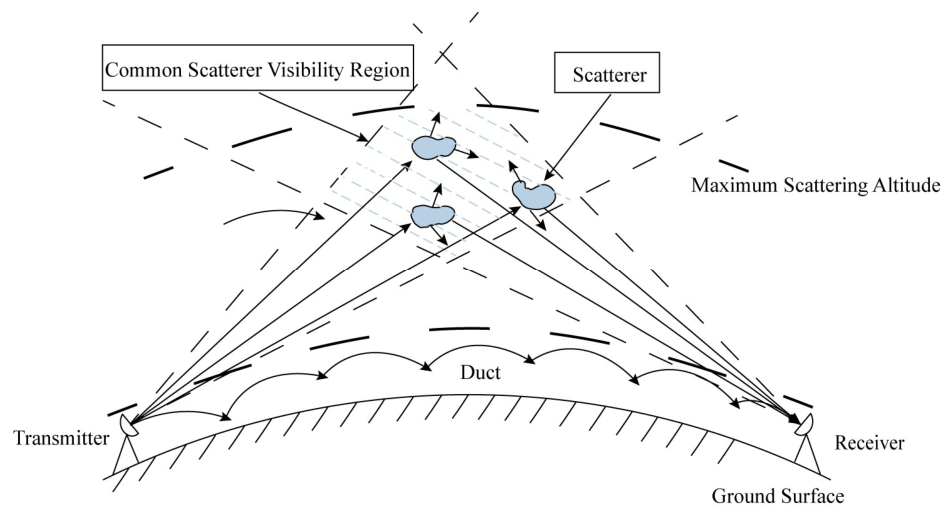
Figure 2.
Tropospheric Atmospheric Refraction.
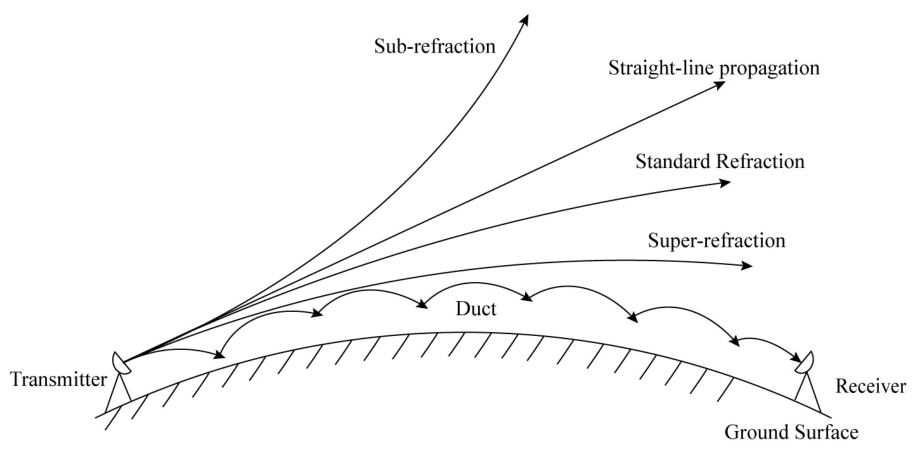
Figure 3.
Emitter Recognition Framework.
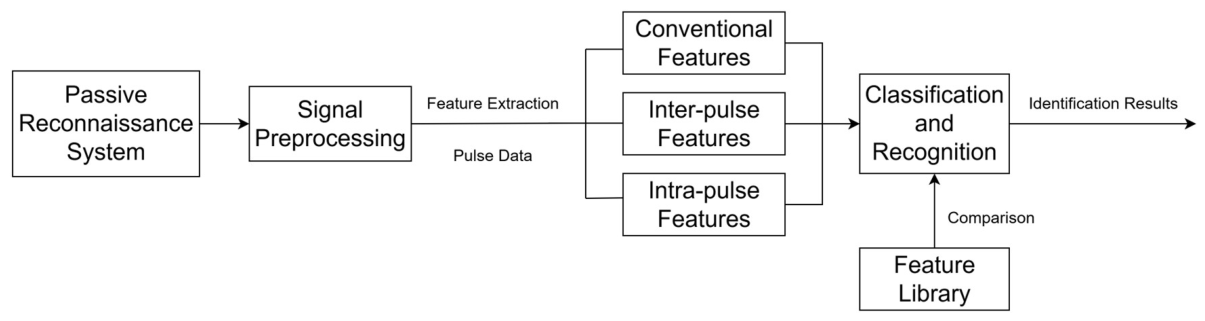

Table 1.
Classical Models of Evaporation Duct.
| Model | References |
| Jeskes model, Rothera model, Fairall model, LKB model, PJ model, MGB model, BYC model, NPS model, pseudo-refractive index model, NWA model, multi-parameter model,RSHMU model, etc. |
1973:[16];1974:[17];1985:[18]; 1979:[19];1985:[20];1992:[20]; 1997:[21];2002:[22]; 2001:[23];1984:[24]; 2003:[24];2007:[25]; |
Table 2.
Atmospheric Refraction Gradient.
| Layer Type | N1 Gradient (N unit/km) | M2Gradient (M unit/km) |
| Duct | N/dz≤-157 | M/dz≤0 |
| Super-refraction | -157<dN/dz≤-79 | 0<dM/dz≤78 |
| Standard Refraction | -79<dN/dz≤0 | 78<dM/dz≤157 |
| Sub-refraction | dN/dz>0 | dM/dz>157 |
1 N is the refractive index. 2 M is the modified refractive index.
Table 3.
Classification of Radar Signatures.
| Classification | Indicators |
| Conventional Features | RF, PW, PRF, PA, DOA, TOA, etc |
| Inter-Pulse Features | Fixed PRI, Staggered PRI, Jittered PRI, Sliding PRI, Grouped PRI, etc. [68] |
| Intra-Pulse Features | Intentional modulation: LFM, NLFM, FSK, PSK, composite modulation, etc. [67,69] |
| Unintentional modulation: local oscillator phase noise, transmitter switching transient characteristics, amplitude-phase characteristics of filters, etc. [7] |
Disclaimer/Publisher’s Note: The statements, opinions and data contained in all publications are solely those of the individual author(s) and contributor(s) and not of MDPI and/or the editor(s). MDPI and/or the editor(s) disclaim responsibility for any injury to people or property resulting from any ideas, methods, instructions or products referred to in the content. |
© 2026 by the authors. Licensee MDPI, Basel, Switzerland. This article is an open access article distributed under the terms and conditions of the Creative Commons Attribution (CC BY) license.
Copyright: This open access article is published under a Creative Commons CC BY 4.0 license, which permit the free download, distribution, and reuse, provided that the author and preprint are cited in any reuse.


