

Submitted:
29 April 2026
Posted:
30 April 2026
You are already at the latest version
Abstract
Introduction: Survival at high altitudes depends on efficient energy resource management, where hypobaric hypoxia acts as a metabolic accelerator, altering thermodynamic efficiency and increasing basal caloric cost. This study compared variations in resting energy expenditure (REE) and physical activity energy expenditure (PAEE) in permanent residents of an altitudinal gradient that includes the cities of Lima (154 m), Arequipa (2,335 m), Puno (3,827 m), and La Rinconada (5,100 m). Methodology: One hundred and forty-one healthy subjects aged 18 to 38 years were evaluated using photoplethysmography (PPG) to estimate REE and PAEE, the latter after a 6-minute walk test (6MWT). Hemoglobin (Hb), hematocrit (Hct), and oxygen saturation (SpO2) levels were also analyzed as indicators of physiological status and acclimatization. Results: A progressive and significant increase in REE and PAEE was observed proportional to altitude, with the highest values recorded in La Rinconada. It was determined that for every 1% decrease in SpO2, REE increased by approximately 1,286 kcal. Despite the high metabolic cost at altitude, the distance covered in the 6MWT did not vary significantly between cities, demonstrating a greater biological effort for the same mechanical workload. At extreme altitudes, men exhibited a significantly higher PAEE than women (50.60 ± 10.17 kcal vs. 40.78 ± 5.21 kcal). Furthermore, hemoglobin levels above 18 g/dL were associated with an exponential increase in caloric expenditure due to blood hyperviscosity. Conclusions: Living at critical altitudes induces a state of systemic hypermetabolism primarily regulated by SpO2 deficit. The findings suggest a metabolic threshold near 2,500 m, above which energy efficiency declines sharply. The observed sexual dimorphism suggests a possible hormonal effect on total energy expenditure (TEE) behavior.
Keywords:
excessive erythrocytosis
; hypoxia
; high altitude
; resting energy expenditure
; physical activity
1. Introduction
Human survival and performance in high-altitude environments depend on the efficient management of energy resources [1]. Total energy expenditure (TEE), comprised of basal metabolism, thermogenesis, and energy expenditure from physical activity, represents the "currency" with which the organism negotiates its adaptation to the environment [2,3]. In young and active populations, the metabolic system possesses remarkable plasticity; however, when subjected to extreme variations in barometric pressure, homeostatic mechanisms must prioritize the maintenance of vital functions, which often results in altered thermodynamic efficiency and an increase in the caloric cost of daily tasks [4,5].
Exposure to altitude introduces hypobaric hypoxia as a disruptive factor in metabolic efficiency [6,7]. By decreasing the partial pressure of oxygen (PO₂) and oxygen saturation (SpO2), the body activates a cascade of adaptive responses mediated by the sympathetic nervous system and persistent adrenergic stimulation [8,9]. This response, while necessary to preserve organ function, significantly increases the basal metabolic cost due to the increased cardiorespiratory workload [10]. In this scenario, hypoxia could act as an "accelerator" of energy expenditure, which has positioned altitude as a critical natural model for studying metabolic adaptability and its influence on the control of chronic pathologies linked to energy balance, such as obesity and insulin resistance [11,12].
A determining factor in the magnitude of these adaptations is the hematological profile and the length of residence [13]. While some high-altitude populations have developed genetic adaptations to optimize oxygen transport [7], the Andean phenotype typically exhibits a response characterized by excessive erythrocytosis (EE) [14]. This increase in red blood cell mass (RBC) and hemoglobin (Hb) raises blood viscosity and alters nutrient kinetics, generating a differential impact on the caloric expenditure of permanent residents [10]. Analyzing this phenomenon across different levels (from low altitude (0–2,000 m) to high altitude (>3,000 m)) would allow us to observe how SpO2 and hematological compensation modulate the efficiency with which the body uses its energy reserves both at rest and during low exertion [15].
Despite advances in altitude physiology, knowledge about energy expenditure at the limits of human tolerance remains limited, especially in young populations with active lifestyles. La Rinconada (5,100 m) offers a unique setting worldwide for evaluating this metabolic cost under chronic severe hypoxia [7,16]. Therefore, this study aims to compare the variations in resting energy expenditure (REE) and physical activity energy expenditure (PAEE) assessed by the 6-minute walk test (6MWT) [17] in residents of four cities with extreme altitude gradients: Lima (154 m), Arequipa (2,335 m), Puno (3,827 m), and La Rinconada (5,100 m).
2. Materials and Methods
- - STUDY POPULATION: The study population consisted of 141 healthy subjects: 70 women and 71 men. 40 subjects (20 women and 20 men) were from Lima, 40 from Arequipa, 42 from Puno, and 19 from Rinconada, all between 18 and 38 years of age. All participants had resided in their respective study sites for more than one year. All met the inclusion criteria, were apparently healthy, and passed the evaluation. Before participating, each participant signed an informed consent form, in accordance with the international ethical principles for research involving human subjects. The subjects resided in their respective locations for a minimum of one year, thus ensuring chronic exposure to the hypoxic conditions characteristic of each altitude. Participants met the previously established inclusion criteria, including the absence of known pathologies and the ability to successfully complete the standardized evaluation.
- - PROCEDURE:
The assessments were conducted in a controlled environment between 8:00 and 10:00 a.m. [18]. Similar environmental conditions were maintained in all study cities, with participants wearing light clothing. Specifically, the ambient temperature was kept between 10 and 20 °C, and the terrain was completely flat.
To ensure the reliability of the results, strict requirements were verified. A moderate level of physical activity was required, with vigorous exercise prohibited for 24 hours prior to the assessment and moderate exercise prohibited for at least 2 hours before the evaluation. A 5- to 6-hour fast was mandatory to minimize the thermic effect of food, and complete abstinence from stimulants (caffeine, nicotine) and alcohol was required for 12 to 24 hours [19,20]. Finally, to ensure stability in oxygen consumption (VO2) and reduce emotional stress, patients underwent a 10- to 20-minute acclimatization period of absolute rest in a quiet environment before proceeding with the measurement. [21].
To estimate the level of habitual physical activity (sedentary, light, moderate, or intense), the short version of the International Physical Activity Questionnaire (IPAQ) was administered, selecting for the study those classified as having moderate physical activity [22,23]. Body weight was recorded using a Tanita BC 545N segmental body analysis scale (Tanita, Tokyo, Japan), which employs the bioelectrical impedance method [24]. Height was measured with a DETECTO 2391 stadiometer (Cardinal/Detecto Scale, Webb City, MO, USA). [25].
To determine hemoglobin (Hb) and hematocrit (Hct) levels, blood samples were obtained from the middle fingertip. A capillary puncture was performed using a sterile lancet, and the first two drops were discarded to avoid errors. The third drop was then collected to fill the microcuvette. Hb levels were assessed using a portable Hb 201+ hemoglobinometer (HemoCue AB, Ängelholm, Sweden) employing the azidimethemoglobin method within a measurement range of 0 to 25.6 g/dL. Hct measurements were performed using a Hemata Stat II microcentrifuge (EKF Diagnostics, Boerne, TX, EE. UU.).
To measure chronotropic response (CR) and physical exertion, the Kalenji HR500 smartwatch was used, worn on the right wrist in contact with the skin (Decathlon, Villeneuve-d’Ascq, France). The 6-minute walk test (6MWT) was used as the physical exertion measure, following the American Thoracic Society (ATS) protocol, where participants covered the greatest possible distance on a 60-meter obstacle-free course [26], and energy expenditure was recorded immediately after completion. The watch uses a PPG sensor for continuous heart rate (HR) monitoring at the wrist. Energy expenditure (EE) estimation is based on the linear relationship between HR and VO2 during constant aerobic load activities [27]. For kilocalorie calculation, the device’s algorithm combines the chronotropic response with the subject’s anthropometric variables (age, sex, weight, and height) to estimate basal metabolic rate and energy expenditure from physical activity [27].
Vital signs were measured before and after REE and PAEE measurements. Systolic and diastolic blood pressure (SBP and DBP) and heart rate (HR) were measured using a Riester Ri-Champion adult digital upper arm sphygmomanometer (Rudolf Riester GmbH, Germany), with a measurement range of 30 to 280 mm Hg and an HR range of 40 to 200 beats per minute. SpO2 was measured using a Nellcor® Oximax® N-65 portable pulse oximeter (DigiCare Biomedical, Boynton Beach, FL, USA) with a saturation resolution of 1% and an HR range of 30 to 235 beats per minute.
- - STATISTICAL ANALYSIS: The normality of the data was determined using the Kolmogorov-Smirnov test. Student’s t-test, ANOVA, and Kruskal-Wallis tests were used to establish differences between groups or conditions. Measures of central tendency and dispersion were calculated for each variable, as well as linear regression analysis (Pearson). Statistical processing was performed using the Python statistical package, version 3.0.
- - ETHICAL ASPECTS: Each procedure and the usefulness of the results were explained in detail so that the subjects could sign an informed consent authorizing the respective measurements.
- - This study followed the guidelines of the Declaration of Helsinki on research involving human subjects and was approved by the USMP ethics committee with the International Registry Federalwide Assurance (FWA) for the Protection of Human Subjects for International No. 00015320. U.S. Department of Health and Human Services (HHS) Registration of an Institutional Review Board (IRB) IRB No. 00003251.
3. Results
The subjects studied showed similar anthropometric characteristics (Table 1), with a slight increase in age as altitude increased. Regarding Body Mass Index (BMI), overweight was only observed in the city at 5100 m, while weight was normal in the other cities. (Table 1)
Regarding oxygenation and oxygen transport parameters, a progressive and statistically significant decrease in SpO₂ was found with increasing altitude (p < 0.001). Conversely, Hb concentration showed a progressive and significant increase (p < 0.001) directly related to altitude of residence. (Table 2)
Regarding hemodynamic variables, significant changes in mean arterial pressure (MAP) were observed as a function of altitude (p = 0.012). After an initial decrease at moderate altitudes (Arequipa at 2,335 m and Puno at 3,827 m), MAP reached its maximum at the high altitude of La Rinconada (5,100 m). (Table 2)
The HR showed a similar and highly significant response (p = 0.000). After an initial increase in Arequipa (2,335 m) to 2,335 m and a slight fluctuation in Puno (3,827 m), the HR reached its maximum point at high altitude, La Rinconada (5,100 m). (Table 2)
Physical activity levels, assessed using the IPAQ questionnaire, classified the entire sample into the light or moderate intensity categories, registering values below 1400 METs. (Table 3) When the results were stratified by sex, it was observed that men presented slightly higher levels of physical activity than women. However, in both groups, the values remained constant regardless of the city of residence, showing no statistically significant differences associated with altitude (p = 0.997). (Table 3)
The relationship between heart rate (HR) and energy expenditure was analyzed in two different states: resting and physical activity. Overall, a strong (R = 0.613) and statistically significant (p < 0.001) positive relationship was found between resting HR and energy expenditure during physical activity (EEA); this means that as resting HR increases, so does EEA. The Beta coefficient of 0.957 indicates that for every 1 beat per minute (bpm) increase in resting HR, resting energy expenditure increases by approximately 0.957 kcal (Figure 1). When stratified by sex, this association remained constant and significant in both women (R = 0.62; β = 0.97) and men (R = 0.61; β = 0.96), being very similar between the two groups. The slopes of the regression line are almost identical. In women, an increase of 1 bpm in resting HR is associated with an increase of 0.972 Kcal in caloric expenditure, while in men it is 0.962 Kcal, suggesting that the physiological mechanism linking both variables operates similarly in both groups.
Regarding the PAEE, a moderate to strong, positive, and significant relationship was also found with the HR measured during exertion (R = 0.64; p < 0.001). The Beta coefficient of 0.51 indicates that for every 1 bpm increase during physical activity, there is an increase of 0.51 kcal. This response was consistent by sex, with strong correlations in women (R = 0.72; β = 0.49) and men (R = 0.61; β = 0.54), which reinforces HR as a robust predictor of PAEE in this population. (Figure 2).
The ANOVA analysis revealed a significant main effect of altitude (city) on energy expenditure. Regarding REE, the Tukey HSD post-hoc test showed that residents of La Rinconada had the highest mean values, differing significantly from those of Arequipa, Lima, and Puno (p<0.001). (Table 4) A significant difference was also observed between Arequipa and Lima (p=0.018), but no significant differences were found between Arequipa and Puno (p=0.86), nor between Lima and Puno (p=0.12). (Figure 3).
A similar pattern was observed in the PAEE (F = 27.448; p < 0.001), indicating its distinct behavior across cities. Tukey’s post-hoc analysis revealed that residents of La Rinconada exhibited the highest PAEE, significantly exceeding residents of all lower altitudes, while no significant differences were observed between Arequipa and Lima (p = 0.052). (Figure 6) Notably, despite the increased metabolic cost and cardiac effort, reflected in a significantly higher post-activity heart rate at altitude (107.63 bpm in La Rinconada vs. 92.08 bpm in Lima), no significant differences were found in the distance covered in the 6MWT between cities (p = 0.830) (Table 5). This suggests that performing the same physical workload at extreme altitude requires a substantially greater biological effort.
When evaluating the impact of sex on energy expenditure (EE) within each city, specific differences related to altitude were found. In Arequipa (2,335 m), women had a significantly higher EE (33.05 ± 9.91 kcal) than men (25.30 ± 11.54 kcal; p = 0.029). However, no significant differences were recorded at rest in Lima, Puno, and La Rinconada (Table 4).
Conversely, under conditions of physical activity in extreme hypoxia (La Rinconada), a significant difference was observed (p = 0.018), with males showing a substantially higher energy expenditure (50.60 ± 10.17 kcal) compared to females (40.78 ± 5.21 kcal) for the same physical stimulus. In the other cities, energy expenditure per activity showed no differences related to sex (Table 5).
A positive, albeit weak, relationship was identified between Hb levels and energy expenditure (R = 0.29). Overall, REE increased by approximately 1.69 kcal for every 1 g/dL increase in Hb (p < 0.001). This association was more pronounced in men (R = 0.393; β = 2.480) than in women (R = 0.274; β = 1.771) (Figure 4). Similarly, Hb correlated moderately with PAEE (R = 0.43; p < 0.001; β = 1.81), with a similar response between sexes (Women: R = 0.46; Men: R = 0.45) (Figure 7).
Conversely, SpO2 showed a significant negative relationship with REE. For every 1% increase in SpO2, REE decreased by approximately 1,286 kcal (R = -0.54; p < 0.001), with the correlation being stronger in men (R = -0.590) than in women (R = -0.488) (Figure 5). Under physical activity conditions, SpO2 explained 33.1% of the variability in PAEE (R2 = 0.331; p < 0.001), with a regression coefficient of -0.99, indicating that for every unit increase in SpO2, caloric expenditure decreased by approximately one unit, confirming that lower blood oxygenation levels are consistently linked to greater metabolic effort during exercise (Figure 8). When stratified by sex, this inverse association was found to be stronger in the group of men (R = -0.64) compared to that of women (R = -0.46) (Figure 8)
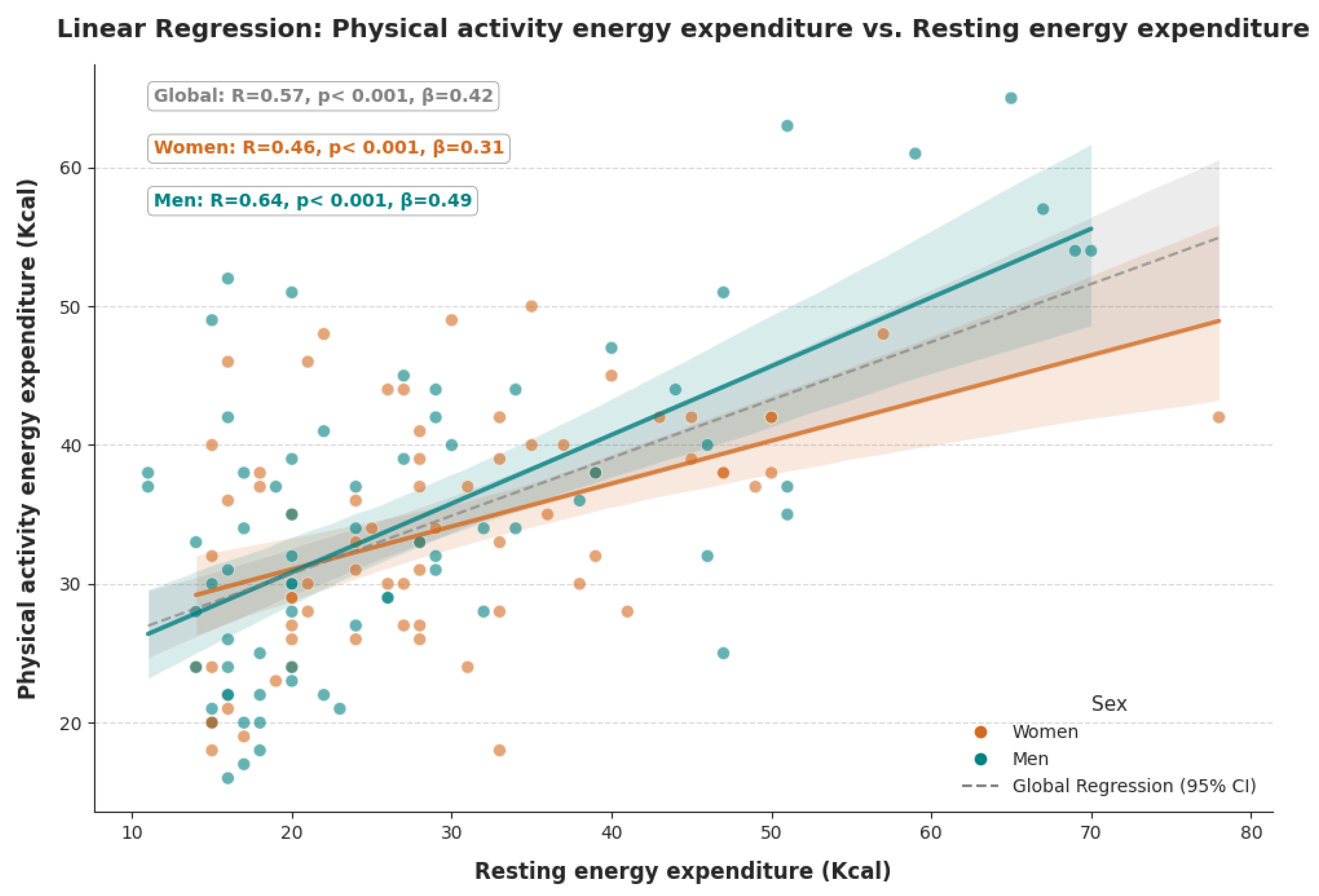
Finally, the relationship between REE and PAEE was analyzed as a function of altitude. A moderate (R = 0.57) and statistically significant (p < 0.001) positive correlation was found, indicating that subjects with higher resting metabolic rates also tend to exhibit higher energy expenditure during exertion. (Figure 9) These results suggest the existence of a common metabolic base influenced by the altitude environment that affects both physiological states independently of the level of effort performed.
Figure 5.
Linear Regression of Resting energy expenditure vs. SpO2, Stratified by Sex. The scatter plot with linear regression analysis illustrates the inverse relationship between REE (kcal, Y-axis) and peripheral oxygen saturation (SpO2%, X-axis). Data and trends are presented stratified by sex: Women (orange) and Men (turquoise), along with an overall regression (gray dotted line). The statistical parameters (R2, p-value, and μ) are detailed in the information boxes above. A moderate and statistically significant negative correlation is observed in all groups (p < 0.001). This association is slightly stronger in the men’s group (R2 = -0.59) compared to the women’s group (R2 = -0.49). The shaded areas around the lines represent the 95% confidence intervals (95% CI).
Figure 5.
Linear Regression of Resting energy expenditure vs. SpO2, Stratified by Sex. The scatter plot with linear regression analysis illustrates the inverse relationship between REE (kcal, Y-axis) and peripheral oxygen saturation (SpO2%, X-axis). Data and trends are presented stratified by sex: Women (orange) and Men (turquoise), along with an overall regression (gray dotted line). The statistical parameters (R2, p-value, and μ) are detailed in the information boxes above. A moderate and statistically significant negative correlation is observed in all groups (p < 0.001). This association is slightly stronger in the men’s group (R2 = -0.59) compared to the women’s group (R2 = -0.49). The shaded areas around the lines represent the 95% confidence intervals (95% CI).
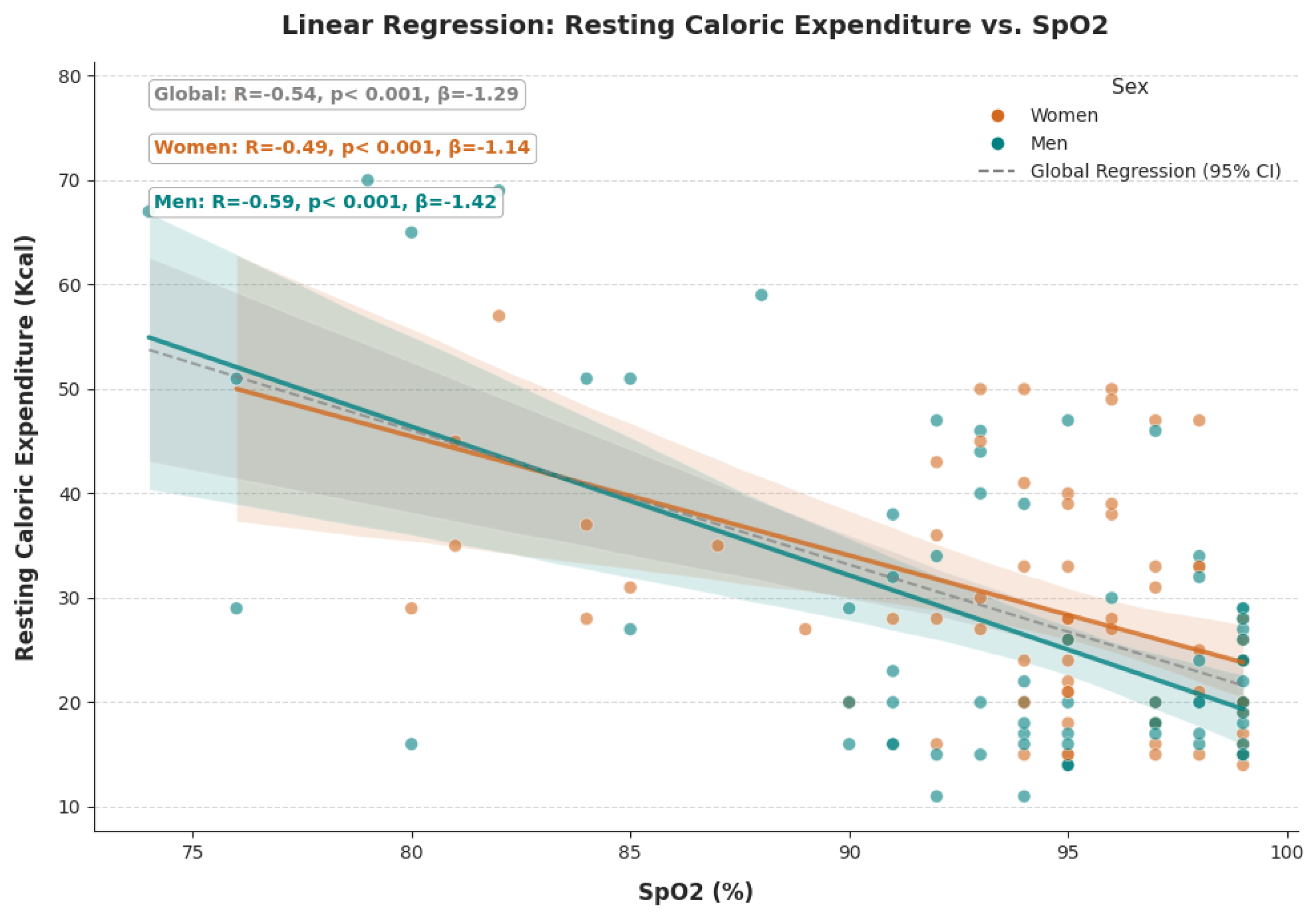
Figure 6.
Comparison of Physical activity energy expenditure Across Cities Ranked by Altitude. The boxplot details the PAEE (kcal/day, Y-axis) in subjects from four cities at increasing altitudes (X-axis): La Rinconada, Puno, Arequipa, and Lima. The visualization combines the density of the distribution (violin) with measures of central tendency and dispersion (boxes). PAEE is significantly higher in the highest-altitude city, La Rinconada (45.9 kcal/day), compared to the others. The letters above each violin (a, c, b, b) indicate the results of multiple comparisons; cities that do not share a letter show statistically significant differences (p < 0.05). It is worth noting that, under these conditions, Arequipa (32.0 kcal/day) and Lima (27.4 kcal/day) did not show significant differences from each other (both marked with the letter "b").
Figure 6.
Comparison of Physical activity energy expenditure Across Cities Ranked by Altitude. The boxplot details the PAEE (kcal/day, Y-axis) in subjects from four cities at increasing altitudes (X-axis): La Rinconada, Puno, Arequipa, and Lima. The visualization combines the density of the distribution (violin) with measures of central tendency and dispersion (boxes). PAEE is significantly higher in the highest-altitude city, La Rinconada (45.9 kcal/day), compared to the others. The letters above each violin (a, c, b, b) indicate the results of multiple comparisons; cities that do not share a letter show statistically significant differences (p < 0.05). It is worth noting that, under these conditions, Arequipa (32.0 kcal/day) and Lima (27.4 kcal/day) did not show significant differences from each other (both marked with the letter "b").
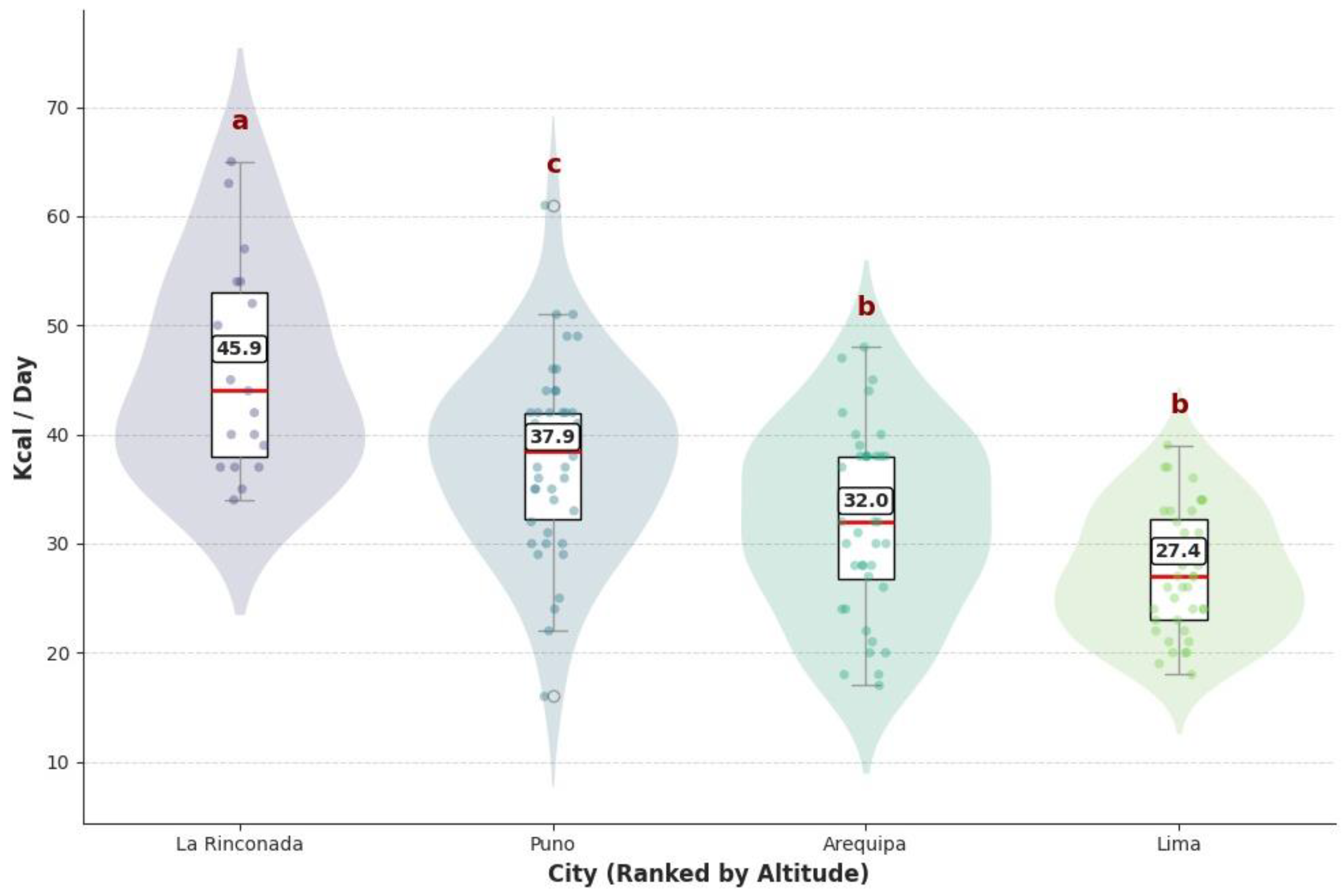
Figure 7.
Linear Regression of Physical activity energy expenditure vs. Hemoglobin, Stratified by Sex.The scatter plot with linear regression analysis shows the relationship between exercise-induced caloric expenditure (EIE) (kcal, Y-axis) and hemoglobin (Hb) levels (g/dL, X-axis). Results are stratified by sex: Women (orange) and Men (turquoise), along with an overall regression (gray dotted line). The statistical tables above indicate a significant positive correlation in all groups (p < 0.001). It is observed that higher Hb concentrations are associated with increased caloric expenditure during exercise, with fairly similar correlation coefficients (R) between sexes (R = 0.46 in women and R = 0.45 in men). The shaded areas around the trend lines represent the 95% confidence intervals (95% CI).
Figure 7.
Linear Regression of Physical activity energy expenditure vs. Hemoglobin, Stratified by Sex.The scatter plot with linear regression analysis shows the relationship between exercise-induced caloric expenditure (EIE) (kcal, Y-axis) and hemoglobin (Hb) levels (g/dL, X-axis). Results are stratified by sex: Women (orange) and Men (turquoise), along with an overall regression (gray dotted line). The statistical tables above indicate a significant positive correlation in all groups (p < 0.001). It is observed that higher Hb concentrations are associated with increased caloric expenditure during exercise, with fairly similar correlation coefficients (R) between sexes (R = 0.46 in women and R = 0.45 in men). The shaded areas around the trend lines represent the 95% confidence intervals (95% CI).
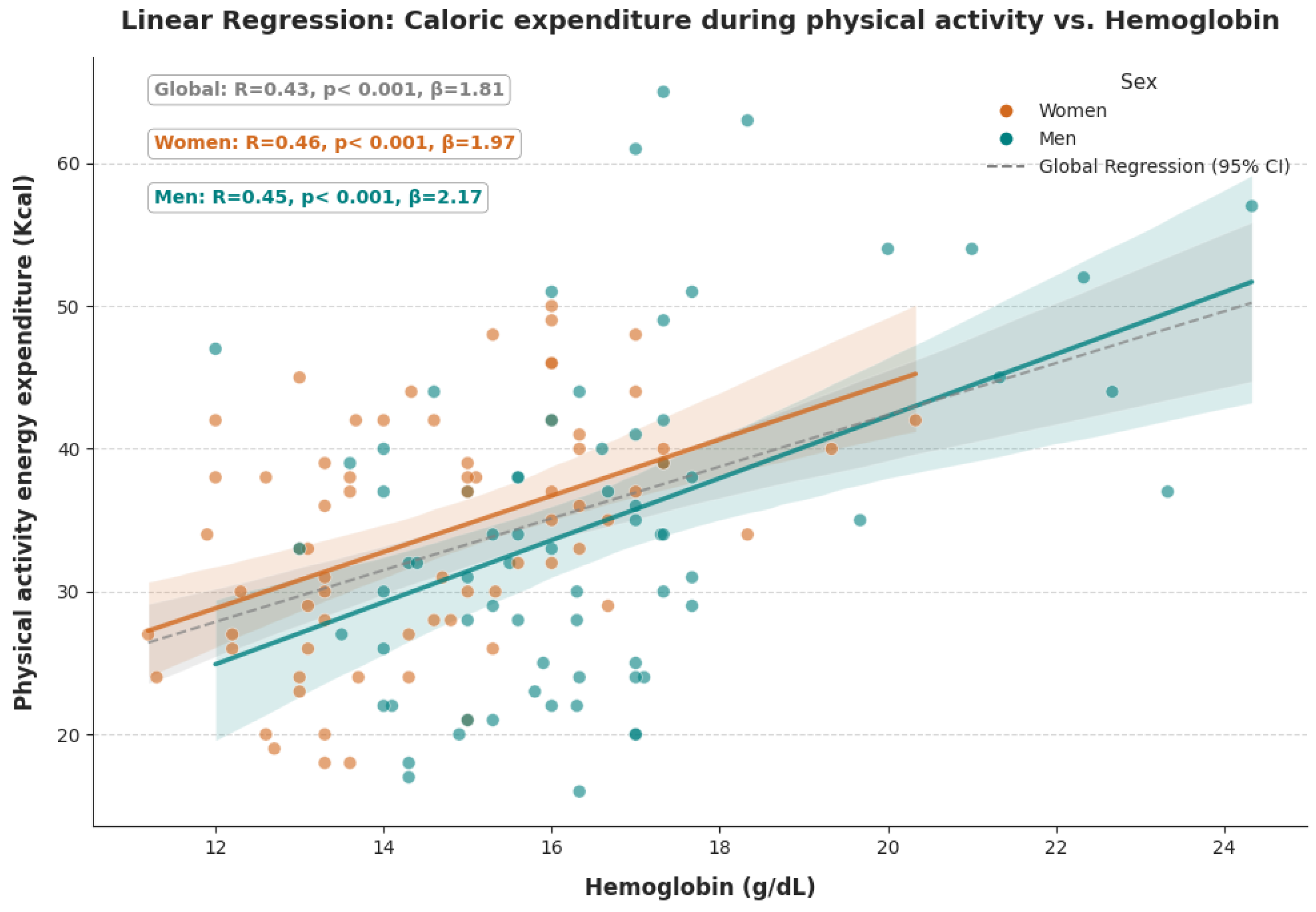
Figure 8.
Linear Regression of Physical activity energy expenditure vs. SpO2, Stratified by Sex. The scatter plot with linear regression analysis illustrates the inverse relationship between PAEE (kcal, Y-axis) and peripheral oxygen saturation (SpO2%), X-axis. Data are stratified by sex: Women (orange) and Men (turquoise), along with an overall regression (gray dotted line). The statistical tables above detail the regression parameters: a statistically significant negative correlation (p < 0.001) is observed in all groups. This association is stronger in the men’s group (R = -0.64) compared to the women’s group (R = -0.46). The shaded areas around the lines represent the 95% confidence intervals (95% CI).
Figure 8.
Linear Regression of Physical activity energy expenditure vs. SpO2, Stratified by Sex. The scatter plot with linear regression analysis illustrates the inverse relationship between PAEE (kcal, Y-axis) and peripheral oxygen saturation (SpO2%), X-axis. Data are stratified by sex: Women (orange) and Men (turquoise), along with an overall regression (gray dotted line). The statistical tables above detail the regression parameters: a statistically significant negative correlation (p < 0.001) is observed in all groups. This association is stronger in the men’s group (R = -0.64) compared to the women’s group (R = -0.46). The shaded areas around the lines represent the 95% confidence intervals (95% CI).
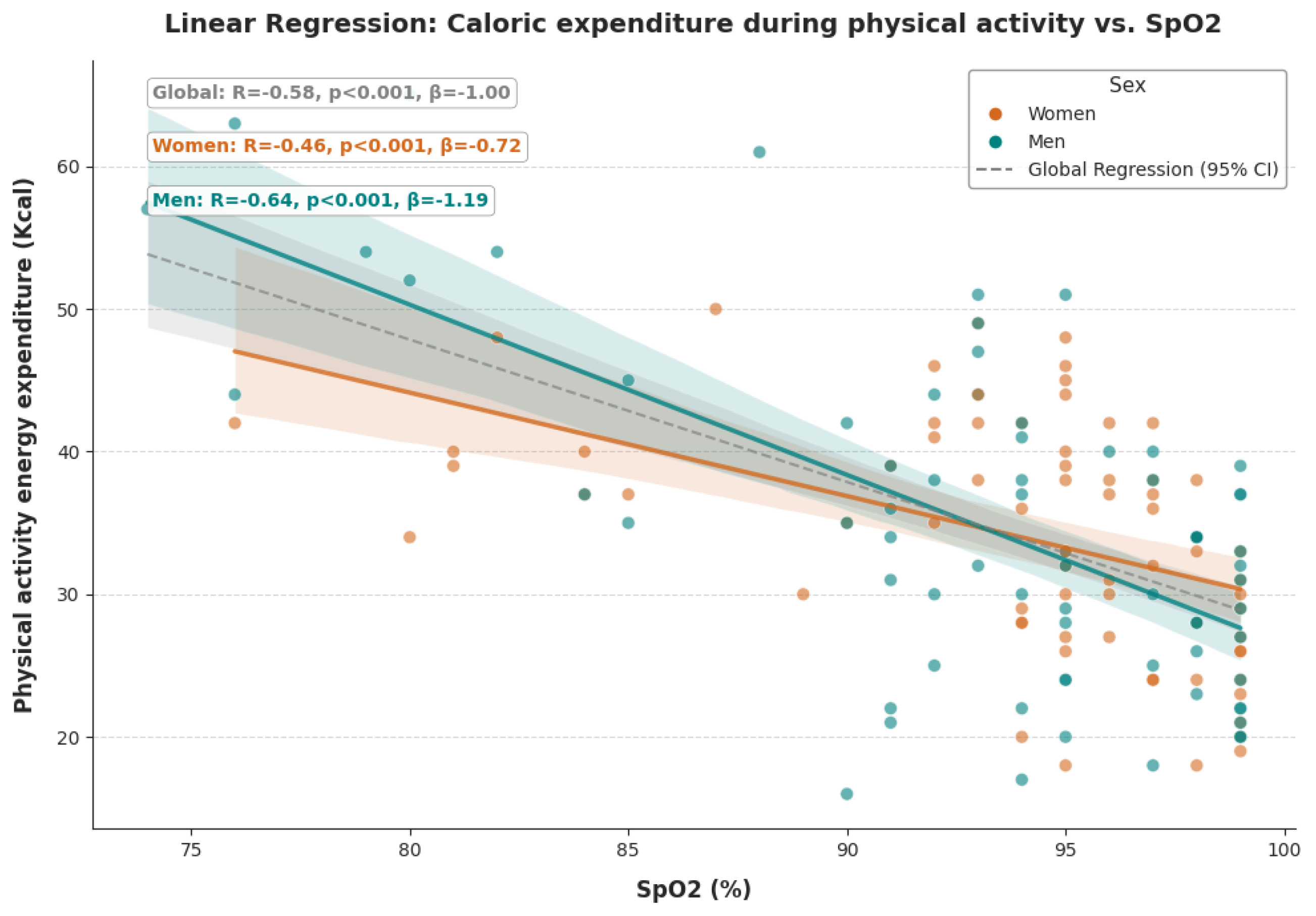
Figure 9.
Linear Regression of Resting vs. Physical activity energy expenditure. The scatter plot with a fitted regression line analyzes the relationship between energy expenditure (kcal, x-axis) and annual energy expenditure (kcal, y-axis). Data are stratified by sex: Women (orange) and Men (turquoise), along with an overall regression (gray dotted line). The analysis shows a moderate positive Pearson correlation (r = 0.57) with high statistical significance (p < 0.001). The dotted line represents the linear fit. The shaded areas around the lines represent the 95% confidence intervals (95% CI).
Figure 9.
Linear Regression of Resting vs. Physical activity energy expenditure. The scatter plot with a fitted regression line analyzes the relationship between energy expenditure (kcal, x-axis) and annual energy expenditure (kcal, y-axis). Data are stratified by sex: Women (orange) and Men (turquoise), along with an overall regression (gray dotted line). The analysis shows a moderate positive Pearson correlation (r = 0.57) with high statistical significance (p < 0.001). The dotted line represents the linear fit. The shaded areas around the lines represent the 95% confidence intervals (95% CI).
4. Discussion
This study represents the first effort to comparatively evaluate individuals residing in diverse hypoxic environments to determine variations in REE and PAEE as a function of altitude. The sample included apparently healthy subjects of both sexes, rigorously matched to mitigate confounding factors that could bias the observed metabolic results.
A key objective in the initial phase was to achieve anthropometric homogeneity among the cities evaluated; the analysis revealed that residents of La Rinconada (5,100 m) were, on average, older and had a higher BMI compared to the group at sea level (Lima) (Table 1). These demographic differences reflect the ecological and population realities of high-altitude mining settlements in the Andes, influenced by labor migration and living conditions. Thus, age and body composition could influence TEE since basal metabolism and mechanical efficiency are affected, and physiologically REE tends to decrease with age, our data showed a counterintuitive result, where the oldest group (La Rinconada) exhibited significantly higher energy expenditure [16,28]. This finding strongly suggests that the thermodynamic impact of severe chronic hypoxia is so potent that it not only cancels out but reverses the expected physiological decline in basal metabolism associated with age. Consequently, ambient PO2 could be positioned as the main metabolic stressor, surpassing the influence of conventional demographic factors.
SpO2 and Hb values fluctuated significantly depending on the hypoxic environment, representing an expected physiological response to the reduction in the partial pressure of inspired oxygen (PIO2) (Table 2). At extreme altitudes such as La Rinconada (5,100 m), the nonlinear relationship between altitude and barometric pressure intensifies this state of tissue hypoxia and, consequently, the baseline physiological load [29,30,31].
Although these variations have been extensively studied, there are still no standardized reference ranges for high-altitude populations [29,32]. This limitation hinders physiological assessment in these environments, so the values obtained in the present study could contribute to establishing useful parameters for clinical and physiological interpretation in high-altitude regions.
As an adaptive counterpart, a significant increase in Hb concentration (P < .001) was observed, aimed at optimizing oxygen transport in hypoxic environments [30,33] (Table 2). Our results demonstrate that, in response to a decrease in SpO2, a compensatory increase in CBR occurs; specifically, the analysis suggests that Hb can rise approximately 1 g/dL compared to high-altitude levels (3,800 m), a critical response to preserve oxygen supply to vital systems [33]. However, concentrations above 19 g/dL, such as those identified in residents of La Rinconada, exceed the threshold for EE [34]. This condition exponentially increases blood viscosity and alters hemodynamic stability, which could raise the baseline physiological effort and constitute a central mechanism for the detected hypermetabolism [35].
The observed statistical significance (P < 0.001) suggests that the evaluated population experiences a physiological burden proportional to the hypoxic gradient, supporting the relationship between SpO₂, Hb, and variations in energy expenditure previously described in this study [36]. (Table 2)
The variations found in MAP are physiologically explained by the stimulation of peripheral chemoreceptors by severe hypoxemia, inducing a sustained vasoconstrictor sympathetic discharge [9,37]. (Table 2) This state of sympathetic hyperactivity not only raises MAP to ensure tissue perfusion under extreme conditions, but also acts as a highly thermogenic factor by directly stimulating cellular oxygen consumption, contributing significantly to the hypermetabolism observed in the sample [38].
The internal validity of these findings is strengthened by the rigorous control of habitual physical activity levels using the short version of the IPAQ questionnaire [23]. By ensuring that the entire sample belonged to light or moderate activity categories, the volume of chronic training was neutralized as a confounding factor, a variable that usually alters REE and PAEE regardless of altitude [22,39]. (Table 3) Therefore, it is possible to state that the marked metabolic dimorphism observed at 5,100 m does not derive from variations in lifestyle, but rather represents an intrinsic physiological response dictated by chronic exposure to severe hypoxia.
The central purpose of this research is to compare REE and PAEE in four cities with contrasting altitudes. Since Energy Expenditure was estimated using photoplethysmography (PPG), a method that derives energy expenditure directly from HR and is widely used routinely to measure caloric expenditure, a prior correlation analysis was considered essential to confirm the consistency of the data in our study population [40]. Our results show that, under basal conditions, the relationship between HR and REE is positive and highly significant (R = 0.61; p < 0.001), maintaining remarkable consistency in both sexes (Figure 1 and Figure 2). This strong association justifies the use of HR as a robust predictor of resting metabolism, supporting the premise that values compared across altitudes accurately reflect the baseline metabolic load of the subjects [41].
When evaluating energy expenditure during exertion, the correlation (R = 0.590) was slightly lower than at rest, an expected variability due to factors such as movement efficiency and stroke volume during exercise [27] (Figure 1 and Figure 2). However, the significance achieved allows us to consider these measurements as a valid approximation for the comparative purposes of this study [42].
A progressive and significant increase in REE was observed in direct relation to the altitude gradient, reaching maximum values in the La Rinconada cohort (Table 4 and Figure 3). These findings are consistent with the literature that associates hypoxic environments with higher basal metabolic activity, which paradoxically contributes to a lower prevalence of metabolic syndrome in these populations. [43,44].
Physiologically, this increase in REE is attributed to the metabolic demands imposed by acclimatization, including increased resting ventilation, a process in which basal metabolism acts as a direct contributor [45]. At the cellular level, chronic hypoxia induces the activation of hypoxia-inducible factor (HIF-1α), triggering metabolic reprogramming toward less efficient pathways, which raises the caloric exchange required to preserve cell viability [46]. In high-Andean populations, homeostasis is maintained through sustained activation of the sympathoadrenal system [9]. This autonomic hyperactivity correlates with significantly lower glucose and cholesterol levels, suggesting that extreme hypoxia and blood hyperviscosity act as a "calorie sink" that facilitates a persistent negative energy balance [47,48,49,50]. This phenomenon responds to the need to intensify glucose metabolism to compensate for the tissue oxygen deficit [51,52].
A critical finding is the marked increase in PAEE at altitudes above 5100 m (Table 5 and Figure 6). The parity observed between Lima and Arequipa (P = 0.052) suggests the existence of an "altitude metabolic threshold" (~2500 m), below which basal compensatory mechanisms are sufficient to maintain an energy cost similar to sea level [7]. However, upon crossing this threshold, thermodynamic efficiency decreases and the cost of movement increases dramatically, with multiple responses, including cardiovascular effects due to a massive adrenergic response that accelerates substrate consumption during exertion [9,37,53,54]. Similar to the resting state, there is also greater activation of glycolytic pathways mediated by HIF-1α [55].
Regarding sex variations in resting energy expenditure (REE) across the four cities evaluated, the analysis revealed a pattern of metabolic parity between sexes at most altitude levels (Table 4). With the exception of Arequipa, no significant differences were recorded between men and women in Lima, Puno, or La Rinconada (Table 4). This absence of sexual dimorphism coincides with studies conducted on natives of the Peruvian Andes, where other adaptive parameters show similar behaviors between genders [56,57]. The exception observed in Arequipa (p = 0.029), where women showed higher expenditure compared to men, could be attributed to sociocultural or body composition variables specific to that subsample rather than a biological factor of altitude [58]. Studies at altitude suggest that hormonal factors and variability in resting ventilation could influence these gender discrepancies [59,60]. However, our findings identify a physiological tipping point at La Rinconada (5100 m), where males showed a substantially higher energy expenditure than females (50.60 ± 10.17 kcal vs. 40.78 ± 5.21 kcal; P = 0.018) (Table 5). This divergence suggests that extreme hypoxia disrupts the metabolic parity observed at lower altitudes, as also described in previous studies. [61] Conversely, the relative energy stability observed in women at La Rinconada suggests greater metabolic efficiency under extreme stress. It is proposed that estrogens exert a protective effect on mitochondrial function, promoting more efficient lipid oxidation and less reliance on inefficient glycolytic pathways compared to men. The explanation lies in the heightened erythropoietic response of men, who exhibit higher Hb levels that generate blood hyperviscosity, increasing peripheral resistance and myocardial workload during exercise, in addition to a more pronounced sympathoadrenal response and a greater respiratory effort [62,63,64,65]. This additional mechanical effort translates directly into higher caloric expenditure in response to the same physical stimulus. Conversely, the relative energy stability observed in women in La Rinconada suggests greater metabolic efficiency under extreme stress. In addition to possessing a greater capacity for energy conservation, it is suggested that estrogens exert a protective effect on mitochondrial function and promote better utilization of fatty acids as an energy substrate [66,67].
After establishing the behavior at different altitudes, it is imperative to analyze the role of hemoglobin (Hb), which is the main substrate for systemic oxygen transport. Although Hb is essential for mitochondrial oxidative phosphorylation and basal metabolism, our findings revealed a statistically weak correlation with resting energy expenditure (R = 0.29) (Figure 4). This discrepancy suggests that the primary biological determinant of resting energy expenditure (REE) is not the isolated hematologic profile, but rather fat-free mass, which dictates the demands that the hematologic system must meet [65,68,69]. However, despite this weak correlation, the positive and statistically significant relationship (P < .001) between Hb levels and REE (Figure 4) indicates that the compensatory hematologic effort in response to hypoxia has a quantifiable metabolic impact. The increase in basal metabolic rate (BMR), a key adaptive response to reduced PO2 at extreme altitudes, induces a state of hyperviscosity that imposes a direct mechanical overload on the myocardium. This condition requires an increase in cardiac work and ventricular wall tension to preserve peripheral perfusion against a denser fluid, which raises basal caloric expenditure [65].
When segmented by sex, a steeper regression slope was observed in males (β = 2.480) compared to females (β = 1.771) (Figure 4). This biological sexual dimorphism is attributed to the fact that men inherently possess greater proportions of muscle mass and are influenced by testosterone, which synergistically stimulates protein synthesis and erythropoiesis [69]. This physiological coupling strengthens the link between oxygen transport and basal metabolism in males, increasing their sensitivity to Hb fluctuations in high-altitude Andean regions [70]. It is noteworthy that caloric expenditure experiences an exponential increase in subjects with Hb concentrations above 18 g/dL, which reinforces our hypothesis that EE acts as an energy efficiency factor. [49].
Despite the significance of the data, the weak nature of the overall correlation (R = 0.29) underscores that Hb is only one of several factors modulating caloric expenditure. Other components, such as mitochondrial oxygen utilization efficiency or hypoxia-induced ventilatory variability, play critical roles in the energy balance of high-altitude residents [59].
Similarly, the moderate (R = 0.43) and statistically significant (P < .001) positive correlation between Hb levels and PAEE (Figure 7) underscores the close relationship between oxygen-carrying capacity (CaO2) and systemic metabolic dynamics during movement. From the perspective of the gas transport law, Hb concentration acts as the critical determinant of CaO2 to peripheral tissues. During physical activity, optimized oxygen availability facilitates a more vigorous metabolic flux in the electron transport chain, increasing VO2 and substrate oxidation [71,72]. However, at extreme altitudes such as La Rinconada (>5100 m), this compensatory mechanism becomes an additional metabolic burden. Our coefficient β = 1.81 (Figure 7) indicates that, for every 1 g/dL increase in Hb, the metabolic cost of physical exertion increases by an average of 1.81 kcal.
Physiologically, this is explained by the fact that the increase in Hct raises peripheral vascular resistance, forcing the myocardium to exert a greater force of contraction to pump blood with high viscosity. This mechanical effort, added to the massive release of catecholamines described above, accelerates oxidative metabolism to compensate for the lower thermodynamic efficiency. [65,73]. Stratified analysis revealed that this relationship is more pronounced in men, who have significantly higher baseline Hb levels than women at all altitudes assessed (e.g., 18.36 ± 1.34 g/dL vs. 14.51 ± 1.09 g/dL at 3800 m). Since blood viscosity increases exponentially with Hct, men reach a threshold where the cardiac output required to maintain flow during exercise is less efficient [64].
Conversely, in our cohort, an inverse but moderate (R = -0.541) and highly significant (P < .001) relationship was identified between SpO2 and REE (Figure 5). Specifically, the decrease in SpO2 was associated with an increase in metabolic consumption, explaining 29.2% of the observed variability in caloric expenditure (Figure 5). This finding is consistent with the physiology of hypobaric hypoxia, where the reduction in oxygen bioavailability at the tissue level compromises the efficiency of oxidative processes, forcing the body to increase REE to sustain ATP synthesis [34].
At the molecular level, the reduction in SpO2 primarily activates HIF-1α. HIF-1α promotes a metabolic reprogramming toward anaerobic glycolysis to preserve ATP production; however, this pathway is inherently less efficient and raises basal energy demand [55,74]. At extreme altitudes, such as at La Rinconada (>5100 m), severe hypoxia could further induce the expression of uncoupling proteins (UCPs) in mitochondria, favoring non-shivering thermogenesis and consequently increasing REE. [75].
From a quantitative perspective, a 1% reduction in SpO2 was found to be associated with a 1,286 kcal increase in REE, which would reflect the activation of the sympathetic nervous system, which not only increases HR and ventilation, but also accelerates basal metabolism to counteract hypoxic stress [9,64].
It is relevant to highlight the stronger correlation in males (R = -0.590) compared to females (R = -0.488) (Figure 5). This difference could be mediated by the interaction of sex hormones with erythropoiesis, mitochondrial function, and chemoreceptor sensitivity [35,66].
Similarly, during physical activity, the negative and statistically significant association identified with SpO₂ (P < .001) (Figure 8) demonstrates the high metabolic cost of physiological compensation during exercise in hypobaric hypoxia. Our findings suggest that arterial oxygenation explains 33.1% of the variability in PAEE (R2 = 0.331), with a regression coefficient of -0.998. This figure suggests an almost linear "compensation cost"; for each percentage point decrease in saturation, the body incurs a proportional increase in metabolic expenditure to preserve physical performance and cell viability [76].
Physiologically, this phenomenon translates into a loss of biological efficiency. The higher PAEE observed in high-altitude residents is not due to a greater capacity for muscular work, but rather to a waste of energy invested in autonomic compensatory processes. In response to hypoxemia, the body intensifies the work of the respiratory muscles (tachypnea) and raises the heart rate, an effort that consumes additional energy even under the same mechanical workload observed at sea level [77]. The SpO2 deficit is detected by peripheral chemoreceptors, generating immediate responses in highly dependent systems such as the cardiovascular and nervous systems, triggering a massive release of catecholamines (adrenaline and noradrenaline). It has been documented that in extreme altitude environments, such as La Rinconada, adrenaline concentrations can increase by up to 99% [78,79].
The consistency of this relationship suggests that, even in native subjects with robust hematological adaptations, such as the compensatory increase in Hb, SpO₂ remains the main regulator of metabolic effort at extreme altitude gradients. While other factors such as mechanical efficiency or ambient temperature contribute to energy balance, arterial oxygen deficit would act as the critical stressor that prevents homeostatic failure at the expense of an increase in caloric exchange [11].
Regarding the relationship between REE and PAEE, our cohort identified a positive and statistically significant correlation (P < .001) (Figure 9). This finding confirms that basal metabolism acts as a physiological "floor" determining the magnitude of energy expenditure during exertion. This linear relationship suggests that the metabolic load imposed by altitude is systemic in nature, indicating that subjects with high basal requirements exhibit lower thermodynamic efficiency during exertion.
Under hypobaric hypoxia, the body is in a state of persistent hypermetabolism due to the constant activation of chemoreceptors and the consequent increase in respiratory and cardiac work [79]. Therefore, any physical activity is superimposed on a previously stressed energy base, where the cost of compensatory vital functions is added to the mechanical work, raising the total cost of biological transport [80].
This state of sympathetic alertness, mediated by an exacerbated adrenergic response and the stabilization of HIF-1 α, imposes a caloric "penalty" that makes any physical action at critical altitudes significantly more costly [46,55].
Limitations
The main technical limitation of this study lies in the estimation of Energy Expenditure (EE) using PPG via wearable technology (Kalenji HR500), a method that derives EE from the linear relationship between HR and VO2. While indirect calorimetry is the gold standard for absolute metabolic accuracy, its implementation in fieldwork at 5,100 m presents almost insurmountable logistical barriers [81]. Although PPG sensors can be sensitive to motion artifacts or variations in skin perfusion, the literature recognizes that these devices have high reliability for measuring trends in HR and relative physiological effort in hard-to-reach environments [82]. By using the same instrument for all subjects under controlled temperature and terrain conditions, inter-device bias was minimized, allowing the observed differences in EE to reflect real and systemic physiological effort in the face of extreme hypoxia.
5. Conclusions
This research shows that chronic residence at extreme altitudes is associated with a state of adaptive hypermetabolism, evidenced by a progressive and statistically significant increase in both at REE and PAEE. The results indicate La Rinconada (5,100 m) as a particularly critical physiological point, where the metabolic cost reaches its maximum expression and differs clearly from populations residing at low and moderate altitudes. This pattern suggests that severe hypobaric hypoxia emerges as the main metabolic determinant in these environments, with the capacity to overcome the influence of traditional biological variables, such as age, in modulating energy expenditure.
The progressive decrease in oxygen saturation, accompanied by a compensatory increase in hemoglobin along the altitudinal gradient, while reflecting the sustained activation of adaptive mechanisms designed to preserve tissue oxygenation, simultaneously implies a continuous increase in cardiovascular and metabolic demand. In this context, the significant increase in heart rate and mean arterial pressure observed at extreme altitudes suggests persistent sympathetic activation, characteristic of the physiological acclimatization process. The positive association between REE and PAEE suggests the presence of a common metabolic basis modulated by the hypoxic environment. This finding reinforces the idea that altitude acts as a physiological stressor capable of globally modifying the energy economy of the human body.
Taken together, the results suggest that residents at extreme altitudes operate under a regime of relatively reduced physiological efficiency, in which the body prioritizes functional stability and survival at the expense of increased energy expenditure. Beyond their descriptive value, these findings expand our understanding of human metabolic plasticity under conditions of chronic hypoxia and provide a relevant basis for future research focused on the nutritional and clinical management of populations living in high-altitude environments.
Author Contributions
Conceptualization: MY, GV, IHZ, SCT; methodology: GV, MY, IHZ, RKPF; formal analysis: IHZ, MY, GV, SCT, KPB, MACC; investigation: MY, IHZ, KPB, JMMV, TMCR, STFC, MSAA; resources: I.H.Z. MACC, CACC, MACA, MEBI; data curation: IHZ, KPB, CACC, MACA, MEBI, RKFP. writing original draft preparation: IHZ, MY, GV, SCT, MSAA.; writing review and editing: MACC, KPB, RRRA.; visualization: IHZ, KPB, RRRA, MEBI ; supervision: IHZ, GV; project administration: IHZ; funding acquisition: IHZ. All authors have read, reviewed, and agreed to the published version of the article.
Funding
M.Y. is supported by the National Institute of Health National Heart Lung and Blood grant R00 HL164888.
Acknowledgments
We thank the study participants for their time and willingness to collaborate.
Conflicts of Interest
The authors declare no conflicts of interest.
References
- Aj, M. Energy metabolism and the high-altitude environment. Exp. Physiol. 2016, 101(1). [Google Scholar] [CrossRef] [PubMed]
- Pa, M. Impact of energy intake and exercise on resting metabolic rate. Sports Med. Auckl. NZ;PubMed 1990, 10(2). [Google Scholar] [CrossRef] [PubMed]
- Pontzer, H. Energy Expenditure in Humans and Other Primates: A New Synthesis*. Annu Rev. Anthropol. 2015, 44((Volume 44), 169–87. [Google Scholar] [CrossRef]
- Katsoulakos, N.M.; Kaliampakos, D.C. What is the impact of altitude on energy demand? A step towards developing specialized energy policy for mountainous areas. Energy Policy 2014, 71, 130–8. [Google Scholar] [CrossRef]
- Gao, S.; Yang, L.; Li, Y.; Liu, S.; Zhang, H.; Arens, E.; et al. Metabolic rate in children and adolescents: Tabulate values for common activities and comparisons with standards and adult values. Build. Environ. 2023, 244, 110804. [Google Scholar] [CrossRef]
- Nemkov, T.; Sun, K.; Reisz, J.A.; Yoshida, T.; Dunham, A.; Wen, E.Y.; et al. Metabolism of Citrate and Other Carboxylic Acids in Erythrocytes As a Function of Oxygen Saturation and Refrigerated Storage. Front Med. 2017, 4. [Google Scholar] [CrossRef]
- Sánchez, C.A.R.; Pardo-Rodriguez, D.; Mancera-Soto, E.; León, L.; Paulucio, D.; D’Alessandro, A.; et al. Metabolic insights into hypoxia adaptation in adolescent athletes at different altitudes: a cross-sectional study. Front Mol. Biosci. 2025, 12. [Google Scholar] [CrossRef]
- Sander, M. Does the Sympathetic Nervous System Adapt to Chronic Altitude Exposure? Adv. Exp. Med. Biol.;PubMed 2016, 903, 375–93. [Google Scholar] [CrossRef] [PubMed]
- Swenson, E.R. Sympathetic Nervous System Activation and Vascular Endothelial Function With Chronic Hypoxia. Circ. Res. 2020, 127(2), 247–8. [Google Scholar] [CrossRef] [PubMed]
- Dünnwald, T.; Gatterer, H.; Faulhaber, M.; Arvandi, M.; Schobersberger, W. Body Composition and Body Weight Changes at Different Altitude Levels: A Systematic Review and Meta-Analysis. In Front Physiol.; PubMed Central, 16 Apr 2019; Volume 10. [Google Scholar] [CrossRef] [PubMed] [PubMed Central]
- Allen, P.E.; Akinwumi, A.D.; Kroeze, E.G.; Leigh, P.Y.; Ramirez, S.N.; Smart, G.L.; et al. Going High to Keep Body Mass Low: How Post-Exercise Exposure to a Simulated High Altitude Influences Energy Balance—A Proof-of-Concept Pilot Study. Obesities 2024, 4(2), 169–82. [Google Scholar] [CrossRef]
- Viscor, G.; Corominas, J.; Carceller, A. Nutrition and Hydration for High-Altitude Alpinism: A Narrative Review. In Int J Environ Res Public Health; PubMed; PubMed Central, 11 Feb 2023; Volume 20, 4. [Google Scholar] [CrossRef] [PubMed] [PubMed Central]
- Yu, T.; Tan, C.; Zhou, C.; Hu, L.; Wang, X.; Ran, Q.; et al. Metabolic alterations in erythrocytes associated with long-term hypoxia at high altitude. BMC Genom. 2025, 26(1), 940. [Google Scholar] [CrossRef] [PubMed Central]
- Beall, C.M. Two routes to functional adaptation: Tibetan and Andean high-altitude natives. Proc. Natl. Acad. Sci. U S A 2007, 104 Suppl 1(Suppl 1), 8655–60. [Google Scholar] [CrossRef] [PubMed Central]
- West, J.; Schoene, R.; Luks, A.; Milledge, J. High Altitude Medicine and Physiology 5E, 5th ed.; CRC Press: London, 2012; p. 584 p. [Google Scholar] [CrossRef]
- Champigneulle, B.; Brugniaux, J.V.; Stauffer, E.; Doutreleau, S.; Furian, M.; Perger, E.; et al. Expedition 5300: limits of human adaptations in the highest city in the world. J. Physiol. 2024, 602(21), 5449–62. [Google Scholar] [CrossRef]
- Caffrey, D.; Miranda, J.J.; Gilman, R.H.; Davila-Roman, V.G.; Cabrera, L.; Dowling, R.; et al. A cross-sectional study of differences in 6-min walk distance in healthy adults residing at high altitude versus sea level. Extrem. Physiol. Med. 2014, 3, 3. [Google Scholar] [CrossRef] [PubMed] [PubMed Central]
- Lloyd, M.; Prakash, B.A.; Zhao, L.; Ni, G.; Ru, Y.; Vasudevan, S.R. Circadian rhythms in metabolism and mental health: a reciprocal regulatory network with implications for metabolic and neuropsychiatric disorders. Curr. Opin. Physiol. 2025, 45, 100836. [Google Scholar] [CrossRef]
- Compher, C.; Frankenfield, D.; Keim, N.; Roth-Yousey, L.; Evidence Analysis Working Group. Best practice methods to apply to measurement of resting metabolic rate in adults: a systematic review. J. Am. Diet. Assoc.;PubMed 2006, 106(6), 881–903. [Google Scholar] [CrossRef] [PubMed]
- Miles-Chan, J.L.; Dulloo, A.G.; Schutz, Y. Fasting substrate oxidation at rest assessed by indirect calorimetry: is prior dietary macronutrient level and composition a confounder? In Int J Obes; PubMed, Jul 2015; Volume 39, 7, pp. 1114–7. [Google Scholar] [CrossRef] [PubMed]
- Blasco Redondo -, Raquel. Gasto energético en reposo. Métodos de evaluación y aplicaciones. Rev. Esp. Nutr. COMUNITARIA 2015, (2), 243–51. [Google Scholar] [CrossRef]
- Cortés, O.L.; Moreno, K.; Alvarado, P.; Povea, C.; Lloyd, M.; Dennis, R. Inactivity and Its Associated Factors in Adults Scheduled for Noncardiac Surgery: The PAMP Phase I Study. Rehabil. Nurs. 2018, 43(2), 81–7. [Google Scholar] [CrossRef]
- Craig, C.L.; Marshall, A.L.; Sjöström, M.; Bauman, A.E.; Booth, M.L.; Ainsworth, B.E.; et al. International physical activity questionnaire: 12-country reliability and validity. Med. Sci. Sports Exerc.;PubMed 2003, 35(8), 1381–95. [Google Scholar] [CrossRef] [PubMed]
- BC-545N [Internet]. 2026. Available online: https://tanita.es/bc-545n.
- Balanza Digital Adulto. Auromed [Internet]. 24 Mar 2026. Available online: https://auromed.pe/producto/balanza-mecanica-adulto-2391-detecto/.
- ATS Committee on Proficiency Standards for Clinical Pulmonary Function Laboratories. ATS statement: guidelines for the six-minute walk test. Am. J. Respir. Crit. Care Med.;PubMed 2002, 166(1), 111–7. [Google Scholar] [CrossRef] [PubMed]
- Keytel, L.; Goedecke, J.; Noakes, T.; Hiiloskorpi, H.; Laukkanen, R.; van der Merwe, L.; et al. Prediction of energy expenditure from heart rate monitoring during submaximal exercise. J. Sports Sci. 2005, 23(3), 289–97. [Google Scholar] [CrossRef] [PubMed]
- Bosy-Westphal, A.; Eichhorn, C.; Kutzner, D.; Illner, K.; Heller, M.; Müller, M.J. The age-related decline in resting energy expenditure in humans is due to the loss of fat-free mass and to alterations in its metabolically active components. In J Nutr.; PubMed, Jul 2003; Volume 133, 7, pp. 2356–62. [Google Scholar] [CrossRef] [PubMed]
- De Sio, S.; Nieto, H.; Gogia, C.; Sanità, D.; Balladore, F.; Mandolesi, D. Working over 5,000 m: medical check-up. Ann. Ig. Med. Prev. E Comunita;PubMed 2016, 28(3), 233–42. [Google Scholar] [CrossRef] [PubMed]
- Merz, T.M.; Pichler Hefti, J. Humans at extreme altitudes. In BJA Educ.; PubMed Central, Dec 2021; Volume 21, 12, pp. 455–61. [Google Scholar] [CrossRef] [PubMed] [PubMed Central]
- Savioli, G.; Ceresa, I.F.; Gori, G.; Fumoso, F.; Gri, N.; Floris, V.; et al. Pathophysiology and Therapy of High-Altitude Sickness: Practical Approach in Emergency and Critical Care. J. Clin. Med. 2022, 11(14), 3937. [Google Scholar] [CrossRef] [PubMed] [PubMed Central]
- Mairbäurl, H.; Kilian, S.; Seide, S.; Muckenthaler, M.U.; Gassmann, M.; Benedict, R.K. The Increase in Hemoglobin Concentration With Altitude Differs Between World Regions and Is Less in Children Than in Adults. HemaSphere 2023, 7(4), e854. [Google Scholar] [CrossRef] [PubMed Central]
- Mathew, T.M.; Sharma, S. High-Altitude Oxygenation. In StatPearls [Internet]; StatPearls Publishing: Treasure Island (FL), 2026; Available online: http://www.ncbi.nlm.nih.gov/books/NBK539701/. [PubMed]
- Hancco, I.; Bailly, S.; Baillieul, S.; Doutreleau, S.; Germain, M.; Pépin, J.L.; et al. Excessive Erythrocytosis and Chronic Mountain Sickness in Dwellers of the Highest City in the World. Front Physiol. 2020, 11. [Google Scholar] [CrossRef] [PubMed]
- Podgorski, T. Hemodynamics and Hemorheology. In Biological Flow in Large Vessels [Internet]. ISTE; Deplano, V., Fullana, J.M., Verdier, C., Eds.; 2022; pp. 1–41. Available online: https://hal.science/hal-03761120.
- Li, Z.; Xiao, J.; Li, C.; Li, X.; Ren, D. Correlation between hematological indicators in acclimatized high-altitude individuals and acute mountain sickness. In PeerJ;PubMed; PubMed Central, 16 Dec 2024; Volume 12, p. e18738. [Google Scholar] [CrossRef] [PubMed] [PubMed Central]
- Yu, B.H.; Mills, P.J.; Ziegler, M.G.; Dimsdale, J.E. Sympathetic and respiratory responses to hypoxia in essential hypertension. Clin. Exp. Hypertens. PubMed. 1999, 21(3), 249–62. [Google Scholar] [CrossRef] [PubMed]
- Simpson, L.L.; Busch, S.A.; Oliver, S.J.; Ainslie, P.N.; Stembridge, M.; Steinback, C.D.; et al. Baroreflex control of sympathetic vasomotor activity and resting arterial pressure at high altitude: insight from Lowlanders and Sherpa. J. Physiol. 2019, 597(9), 2379–90. [Google Scholar] [CrossRef]
- BaiQuan, Y.; Meng, C.; Congqing, Z.; XiaoDong, W. The effects and post-exercise energy metabolism characteristics of different high-intensity interval training in obese adults. Sci. Rep. 2025, 15(1), 13770. [Google Scholar] [CrossRef] [PubMed]
- Schrack, J.A.; Zipunnikov, V.; Goldsmith, J.; Bandeen-Roche, K.; Crainiceanu, C.M.; Ferrucci, L. Estimating Energy Expenditure from Heart Rate in Older Adults: A Case for Calibration. In PLoS ONE; PubMed Central, 30 Apr 2014; Volume 9, 4. [Google Scholar] [CrossRef] [PubMed] [PubMed Central]
- Silva, D.A.S.; de Lima, T.R.; Tremblay, M.S. Association between Resting Heart Rate and Health-Related Physical Fitness in Brazilian Adolescents. BioMed Res. Int. 2018, 2018, 3812197. [Google Scholar] [CrossRef] [PubMed Central]
- Seo, Y.; Lee, Y.; Lee, D.T. Comparing Heart Rate and Heart Rate Reserve for Accurate Energy Expenditure Prediction Against Direct Measurement. Int. J. Env. Res. Public Health 2025, 22(10), 1539. [Google Scholar] [CrossRef]
- Levine, B.D.; Stray-Gundersen, J. “Living high-training low”: effect of moderate-altitude acclimatization with low-altitude training on performance. J. Appl. Physiol. 1997, 83(1), 102–12. [Google Scholar] [CrossRef] [PubMed]
- Raberin, A.; Burtscher, J.; Citherlet, T.; Manferdelli, G.; Krumm, B.; Bourdillon, N.; et al. Women at Altitude: Sex-Related Physiological Responses to Exercise in Hypoxia. In Sports Med; PubMed Central, Feb 2024; Volume 54, 2, pp. 271–87. [Google Scholar] [CrossRef] [PubMed] [PubMed Central]
- Hoher, J.A.; Zimermann Teixeira, P.J.; Hertz, F.; da S Moreira, J. A comparison between ventilation modes: how does activity level affect energy expenditure estimates? JPEN J. Parenter. Enter. Nutr. PubMed. 2008, 32(2), 176–83. [Google Scholar] [CrossRef] [PubMed]
- Murray, A.J.; Montgomery, H.E.; Feelisch, M.; Grocott, M.P.W.; Martin, D.S. Metabolic adjustment to high-altitude hypoxia: from genetic signals to physiological implications. Biochem Soc. Trans. PubMed. 2018, 46(3), 599–607. [Google Scholar] [CrossRef] [PubMed]
- Cheng, J.; Luo, Y.; Yang, L.; Li, Y.; Zhang, F.; Zhang, X.; et al. The association between living altitude and serum leptin concentrations in native women. Front Endocrinol. 2023, 14, 1107932. [Google Scholar] [CrossRef] [PubMed Central]
- Miron, N.; Tirosh, O. Cholesterol Prevents Hypoxia-Induced Hypoglycemia by Regulation of a Metabolic Ketogenic Shift. In Oxid Med Cell Longev.; PubMed Central, 2019; Volume 2019, p. 5829357. [Google Scholar] [CrossRef] [PubMed] [PubMed Central]
- Vilca Coaquira, K.M.; Rojas Chambilla, R.A.; Tejada Flores, J.; Tintaya Ramos, H.O.; Quispe Trujillo, M.M.; Quispe Humpiri, S.A.; et al. Lower glycemia levels in subjects with excessive erythrocytosis during the oral glucose tolerance test living in conditions of severe hypoxia. Front Physiol. 2024, 15, 1387132. [Google Scholar] [CrossRef] [PubMed] [PubMed Central]
- Wang, J.; Liu, S.; Sun, L.; Kong, Z.; Chai, J.; Wen, J.; et al. Association of attenuated leptin signaling pathways with impaired cardiac function under prolonged high-altitude hypoxia. In Sci Rep.; PubMed Central, 3 May 2024; Volume 14, 1, p. 10206. [Google Scholar] [CrossRef] [PubMed] [PubMed Central]
- Koufakis, T.; Karras, S.N.; Mustafa, O.G.; Zebekakis, P.; Kotsa, K. The Effects of High Altitude on Glucose Homeostasis, Metabolic Control, and Other Diabetes-Related Parameters: From Animal Studies to Real Life. High Alt. Med. Biol.;PubMed 2019, 20(1), 1–11. [Google Scholar] [CrossRef] [PubMed]
- Zila-Velasque, J.P.; Grados-Espinoza, P.; Challapa-Mamani, M.R.; Sánchez-Alcántara, F.; Cedillo-Balcázar, J.; CS, A.D.; et al. Prevalence of metabolic syndrome and its components according to altitude levels: a systematic review and meta-analysis. Sci. Rep. 2024, 14(1). [Google Scholar] [CrossRef]
- Bärtsch, P.; Gibbs, J.S.R. Effect of Altitude on the Heart and the Lungs. Circulation 2007, 116(19), 2191–202. [Google Scholar] [CrossRef] [PubMed]
- Hill, N.E.; Stacey, M.J.; Woods, D. Energy at High Altitude. BMJ Mil. Health 2011, 157(1), 43–8. [Google Scholar] [CrossRef] [PubMed]
- Flood, D.; Lee, E.S.; Taylor, C.T. Intracellular energy production and distribution in hypoxia. J. Biol. Chem. 2023, 299(9), 105103. [Google Scholar] [CrossRef] [PubMed]
- Bernedo-Itusaca, M.E.; Vilca-Coaquira, K.M.; Calisaya-Huacasi, Á.G.; Cosi-Cupi, M.R.; Leqque-Santi, S.R.; Cutipa-Tinta, S.; et al. Physical Activity and Pain Perception in Residents Under Conditions of Chronic Hypoxia. Oxygen 2025, 5(3), 11. [Google Scholar] [CrossRef]
- Cabre, H.E.; Marlatt, K.L.; Fernández-Verdejo, R.; Beyl, R.; Redman, L.M.; Ainslie, P.N.; et al. Sex Differences in Measures of Energy Expenditure and Body Composition in Young, Middle-Aged, and Older Adults. Curr. Dev. Nutr. 2026, 10(1), 107614. [Google Scholar] [CrossRef]
- Wheatley, C.M.; Snyder, E.M.; Johnson, B.D.; Olson, T.P. Sex differences in cardiovascular function during submaximal exercise in humans. SpringerPlus 2014, 3, 445. [Google Scholar] [CrossRef] [PubMed Central]
- Grift, G.O.; Dunsford, J.R.; Dhaliwal, J.K.; Dominelli, P.B.; Molgat-Seon, Y. Sex differences in the work of breathing during exercise are independent of forced vital capacity in healthy adults. Exp. Physiol. 2025, 110(12), 2036–48. [Google Scholar] [CrossRef]
- Oliveira, A.L.M.B.; Rodrigues, G.D.; Silva, B.M.; Rohan, P.; de, A.; Soares, P.P.; da, S. Sex differences in cardiorespiratory control under hypoxia: the roles of oxygen desaturation and hypoxic exposure time. Front Cardiovasc Med. 2025, 12. [Google Scholar] [CrossRef]
- Abe, T.; Fujita, S.; Nakajima, T.; Sakamaki, M.; Ozaki, H.; Ogasawara, R.; et al. Effects of Low-Intensity Cycle Training with Restricted Leg Blood Flow on Thigh Muscle Volume and VO2MAX in Young Men. In J Sports Sci Med.; PubMed Central, 1 Sep 2010; Volume 9, 3, pp. 452–8. [Google Scholar] [PubMed] [PubMed Central]
- Edmunds, J.S.; Ivie, C.L.; Ott, E.P.; Jacob, D.W.; Baker, S.E.; Harper, J.L.; et al. Sex differences in the effect of acute intermittent hypoxia on respiratory modulation of sympathetic activity. Am. J. Physiol.-Regul. Integr. Comp. Physiol.;PubMed 2021, 321(6), R903. [Google Scholar] [CrossRef] [PubMed]
- Luzier, A.B.; Nawarskas, J.J.; Añonuevo, J.; Wilson, M.F.; Kazierad, D.J. The effects of gender on adrenergic receptor responsiveness. J. Clin. Pharmacol.;PubMed 1998, 38(7), 618–24. [Google Scholar] [CrossRef] [PubMed]
- Onslev, J.; Jacobson, G.; Narkowicz, C.; Backer, V.; Kalsen, A.; Kreiberg, M.; et al. Beta2-adrenergic stimulation increases energy expenditure at rest, but not during submaximal exercise in active overweight men. Eur. J. Appl. Physiol.;PubMed 2017, 117(9), 1907–15. [Google Scholar] [CrossRef] [PubMed]
- Sloop, G.D.; Pop, G.; Weidman, J.J.; St. Cyr, J.A. Hormonal Control of Blood Viscosity. In Cureus; PubMed; PubMed Central; Volume 16, 2, p. e55237. [CrossRef] [PubMed] [PubMed Central]
- Horiuchi, M.; Kirihara, Y.; Fukuoka, Y.; Pontzer, H. Sex differences in respiratory and circulatory cost during hypoxic walking: potential impact on oxygen saturation. In Sci Rep.; PubMed Central, 2 Jul 2019; Volume 9, p. 9550. [Google Scholar] [CrossRef] [PubMed] [PubMed Central]
- Tarnopolsky, M.A. Sex differences in exercise metabolism and the role of 17-beta estradiol. Med. Sci. Sports Exerc;PubMed 2008, 40(4), 648–54. [Google Scholar] [CrossRef] [PubMed]
- Haas, J.D.; Brownlie, T. Iron Deficiency and Reduced Work Capacity: A Critical Review of the Research to Determine a Causal Relationship. J. Nutr. 2001, 131(2), 676S–690S. [Google Scholar] [CrossRef]
- Johnstone, A.M.; Murison, S.D.; Duncan, J.S.; Rance, K.A.; Speakman, J.R. Factors influencing variation in basal metabolic rate include fat-free mass, fat mass, age, and circulating thyroxine but not sex, circulating leptin, or triiodothyronine2. Am. J. Clin. Nutr. 2005, 82(5), 941–8. [Google Scholar] [CrossRef]
- Santosa, S.; Khosla, S.; McCready, L.K.; Jensen, M.D. Effects of estrogen and testosterone on resting energy expenditure in older men. In Obes Silver Spring Md.; PubMed Central, Dec 2010; Volume 18, 12, pp. 2392–4. [Google Scholar] [CrossRef] [PubMed] [PubMed Central]
- Korivi, M.; Ghanta, M.K.; Nuthalapati, P.; Natesh, N.S.; Tang, J.; Bhaskar, L. Influence of Exercise on Oxygen Consumption, Pulmonary Ventilation, and Blood Gas Analyses in Individuals with Chronic Diseases. Life 2025, 15(8), 1255. [Google Scholar] [CrossRef]
- Suppan, E.; Pichler, G.; Binder-Heschl, C.; Schwaberger, B.; Urlesberger, B. Three Physiological Components That Influence Regional Cerebral Tissue Oxygen Saturation. In Front Pediatr; PubMed Central, 13 Jun 2022; Volume 10. [Google Scholar] [CrossRef] [PubMed] [PubMed Central]
- Eldeeb, R.; Khalil, M.; Jallo, M.; Ellao, J.A.; Kamal, T.F. Association Between Hemoglobin Levels, Anemia, and Blood Pressure in Hypertensive Adults: A Retrospective Study. BioMed Pharmacol. J. [Internet] 2025 Dec 30 [cited 2026 Mar 24, 18(4), 3234–42. Available online: https://biomedpharmajournal.org/vol18no4/association-between-hemoglobin-levels-anemia-and-blood-pressure-in-hypertensive-adults-a-retrospective-study/. [CrossRef]
- Scott, C. Misconceptions about Aerobic and Anaerobic Energy Expenditure. J. Int. Soc. Sports Nutr. 2005, 2(2), 32–7. [Google Scholar] [CrossRef] [PubMed Central]
- Kang, G.S.; Kim, Y.E.; Oh, H.R.; Jo, H.J.; Bok, S.; Jeon, Y.K.; et al. Hypoxia-inducible factor-1α-deficient adipose-tissue macrophages produce the heat to mediate lipolysis of white adipose tissue through uncoupling protein-1. Lab Anim. Res. 2024, 40, 37. [Google Scholar] [CrossRef] [PubMed] [PubMed Central]
- Mazzeo, R.S. Physiological Responses to Exercise at Altitude: An Update. Sports Med. 2008, 38(1), 1–8. [Google Scholar] [CrossRef]
- H Kallet, R.; Branson, R.D.; Lipnick, M.S. Respiratory Drive, Dyspnea, and Silent Hypoxemia: A Physiological Review in the Context of COVID-19. Respir. Care 2022, 67(10), 1343–60. [Google Scholar] [CrossRef]
- León-Velarde, F.; Richalet, J.P.; Chavez, J.C.; Kacimi, R.; Rivera-Chira, M.; Palacios, J.A.; et al. Hypoxia- and normoxia-induced reversibility of autonomic control in Andean guinea pig heart. J. Appl. Physiol. 1996, 81(5), 2229–34. [Google Scholar] [CrossRef]
- Zoccal, D.B.; Vieira, B.N.; Mendes, L.R.; Evangelista, A.B.; Leirão, I.P. Hypoxia sensing in the body: An update on the peripheral and central mechanisms. In Exp Physiol.; PubMed Central, 30 Nov 2023; Volume 109, 4, pp. 461–9. [Google Scholar] [CrossRef] [PubMed] [PubMed Central]
- Murphy, B.T.; O’Halloran, K.D. Champions of the mountains: superior aerobic performance in Tibetans is not due to enhanced cardiopulmonary traits. J. Physiol. 2024, 602(16), 3865–6. [Google Scholar] [CrossRef]
- De Waele, E.; Honore, P.M.; Spapen, H.D. New generation indirect calorimeters for measuring energy expenditure in the critically ill: a rampant or reticent revolution? Crit. Care 2016, 20, 138. [Google Scholar] [CrossRef] [PubMed] [PubMed Central]
- Fuller, D.; Colwell, E.; Low, J.; Orychock, K.; Tobin, M.A.; Simango, B.; et al. Reliability and Validity of Commercially Available Wearable Devices for Measuring Steps, Energy Expenditure, and Heart Rate: Systematic Review. JMIR MHealth UHealth 2020, 8(9), e18694. [Google Scholar] [CrossRef] [PubMed] [PubMed Central]
Figure 1.
Linear Regression of Resting Energy Expenditure vs. Resting Heart Rate, Stratified by Sex. The scatter plot with overlaid regression lines shows the relationship between REE (kcal, Y-axis) and resting heart rate (bpm, X-axis). The lines and data are stratified by sex: Women (orange) and Men (turquoise), along with an overall regression line (gray dotted line). The text boxes above provide detailed statistics for each group, including the correlation coefficient (R), p-value (p), and regression slope (β). Positive and statistically significant correlations were observed in all groups (p < 0.001). The shading around the regression lines indicates the 95% confidence intervals (95% CI).
Figure 1.
Linear Regression of Resting Energy Expenditure vs. Resting Heart Rate, Stratified by Sex. The scatter plot with overlaid regression lines shows the relationship between REE (kcal, Y-axis) and resting heart rate (bpm, X-axis). The lines and data are stratified by sex: Women (orange) and Men (turquoise), along with an overall regression line (gray dotted line). The text boxes above provide detailed statistics for each group, including the correlation coefficient (R), p-value (p), and regression slope (β). Positive and statistically significant correlations were observed in all groups (p < 0.001). The shading around the regression lines indicates the 95% confidence intervals (95% CI).
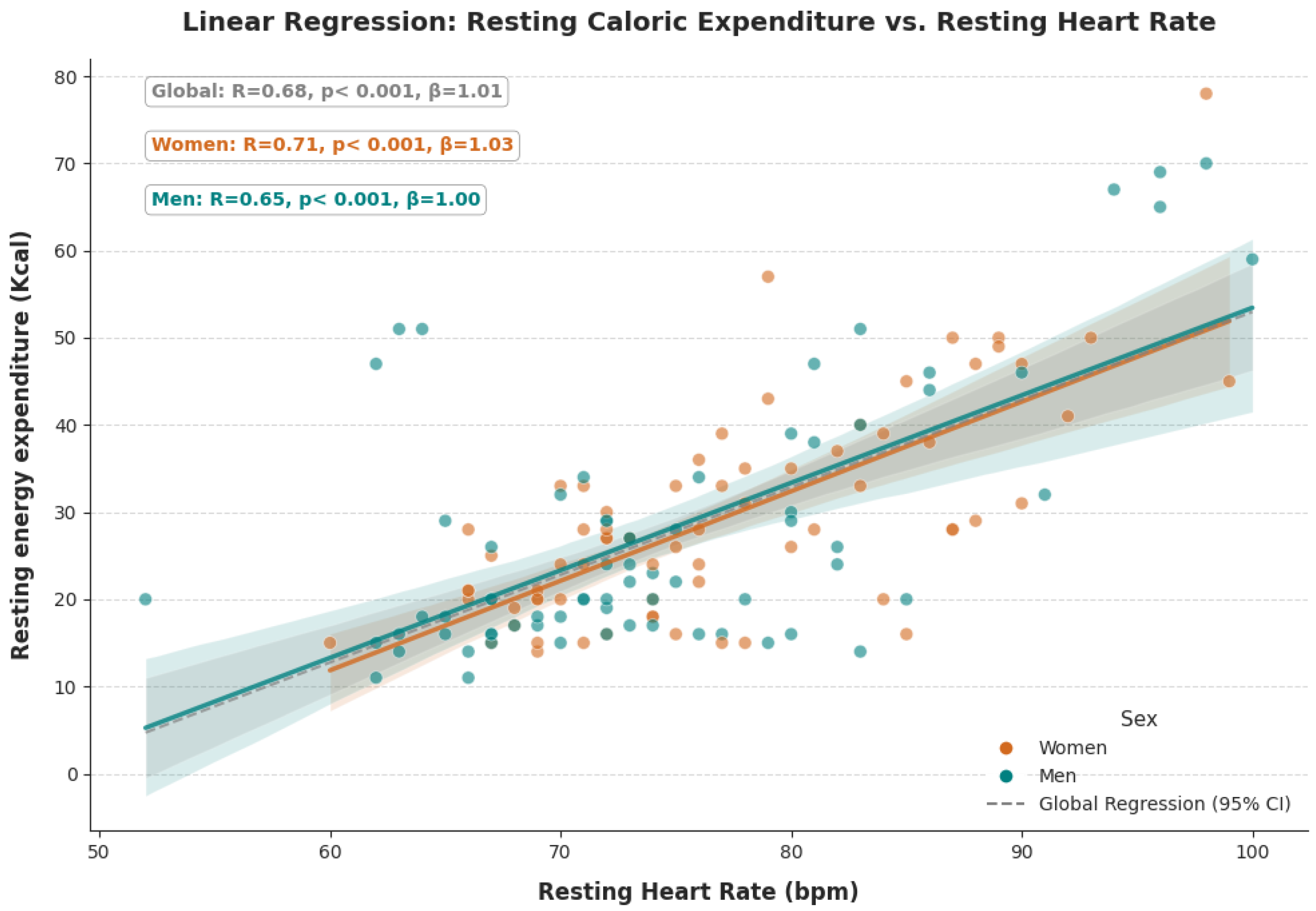
Figure 2.
Linear Regression of Physical activity energy expenditure vs. Heart Rate During Physical Activity, Stratified by Sex. The scatter plot with regression lines illustrates the relationship between energy expenditure (kcal, Y-axis) and heart rate (bpm, X-axis) during exercise. Data and trends are stratified by sex: Women (orange) and Men (turquoise), in addition to an overall regression (gray dotted line). The statistical parameters—correlation coefficient (R), p-value, and regression slope (β)—are detailed in the text boxes above. A significant positive correlation is observed in all groups (p < 0.001), with a stronger association in the women’s group (R = 0.72) than in the men’s group (R = 0.61). The shaded areas around the lines represent the 95% confidence intervals (95% CI).
Figure 2.
Linear Regression of Physical activity energy expenditure vs. Heart Rate During Physical Activity, Stratified by Sex. The scatter plot with regression lines illustrates the relationship between energy expenditure (kcal, Y-axis) and heart rate (bpm, X-axis) during exercise. Data and trends are stratified by sex: Women (orange) and Men (turquoise), in addition to an overall regression (gray dotted line). The statistical parameters—correlation coefficient (R), p-value, and regression slope (β)—are detailed in the text boxes above. A significant positive correlation is observed in all groups (p < 0.001), with a stronger association in the women’s group (R = 0.72) than in the men’s group (R = 0.61). The shaded areas around the lines represent the 95% confidence intervals (95% CI).
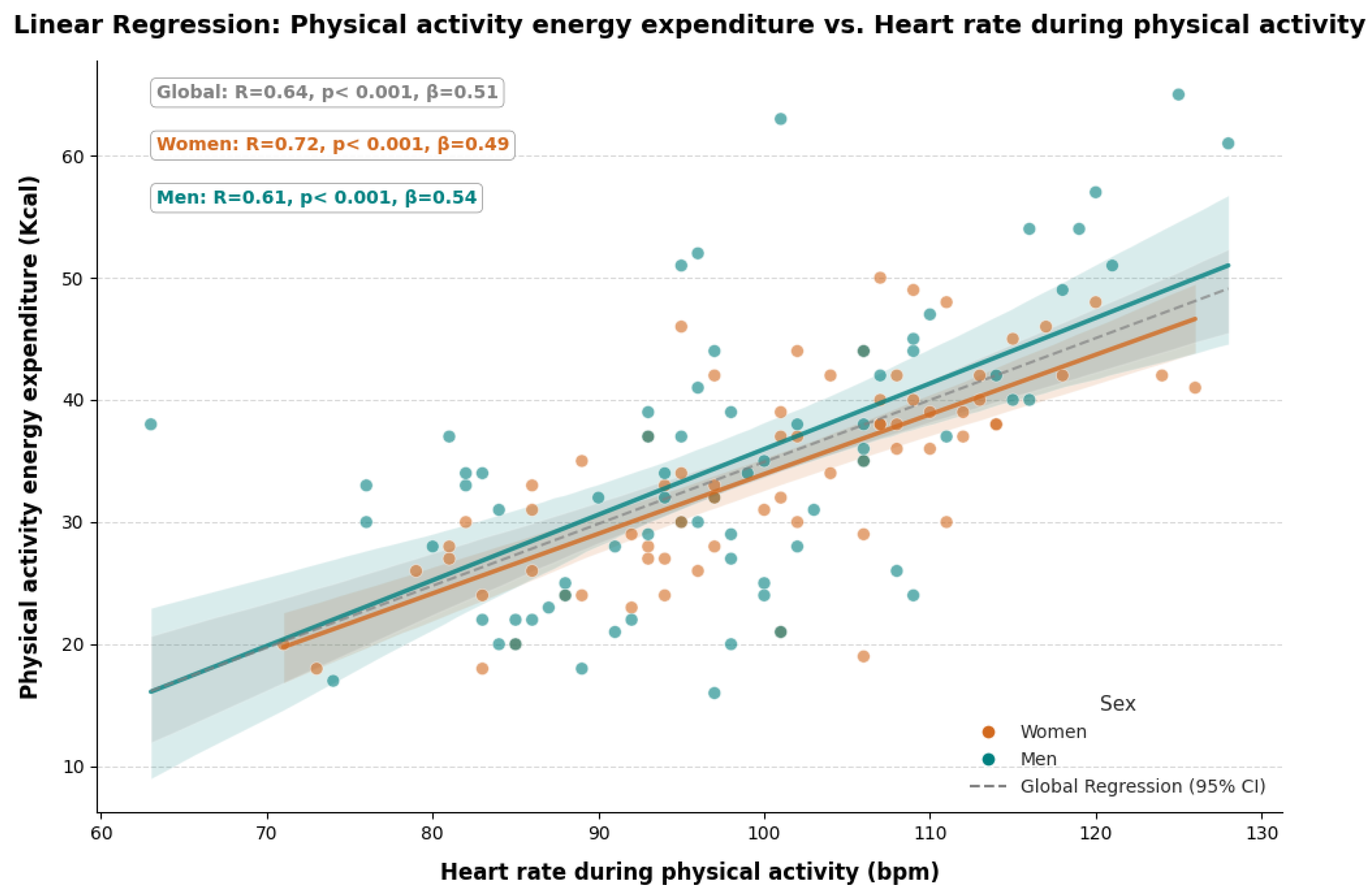
Figure 3.
Comparison of Resting energy expenditure Across Cities Categorized by Altitude. The boxplot compares resting energy expenditure (REE) (kcal/day, Y-axis) among four cities ranked by altitude (X-axis): La Rinconada, Puno, Arequipa, and Lima. The visualization combines distribution density (violin) with measures of central tendency and dispersion (boxes). A clear trend is observed: higher altitude is associated with higher resting energy expenditure, with La Rinconada (45.8 kcal/day) significantly higher than Lima (21.5 kcal/day). The letters above each distribution (a, bc, b, c) represent the results of a multiple comparisons test; different letters indicate statistically significant differences (p < 0.05) between groups.
Figure 3.
Comparison of Resting energy expenditure Across Cities Categorized by Altitude. The boxplot compares resting energy expenditure (REE) (kcal/day, Y-axis) among four cities ranked by altitude (X-axis): La Rinconada, Puno, Arequipa, and Lima. The visualization combines distribution density (violin) with measures of central tendency and dispersion (boxes). A clear trend is observed: higher altitude is associated with higher resting energy expenditure, with La Rinconada (45.8 kcal/day) significantly higher than Lima (21.5 kcal/day). The letters above each distribution (a, bc, b, c) represent the results of a multiple comparisons test; different letters indicate statistically significant differences (p < 0.05) between groups.
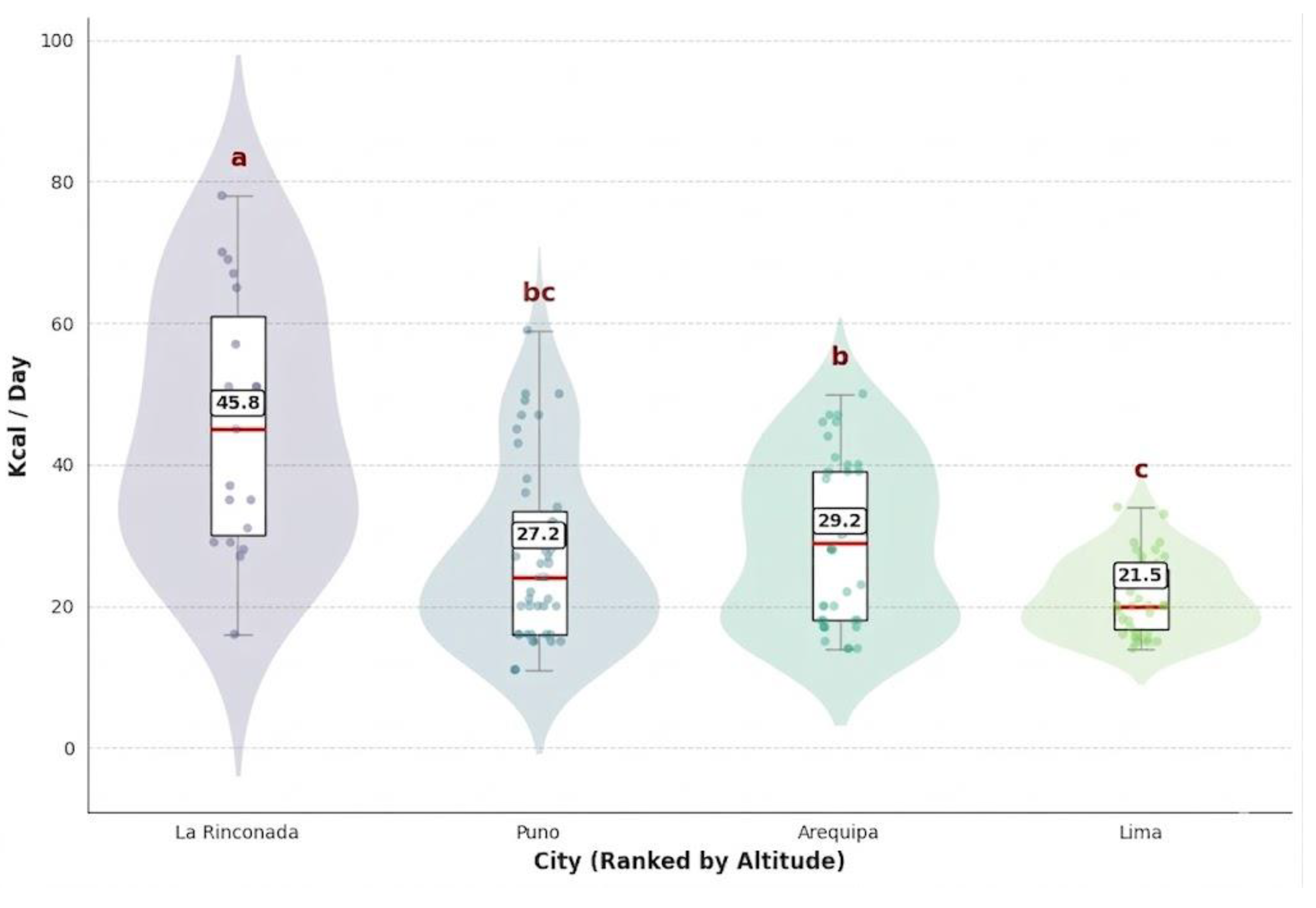
Figure 4.
Linear Regression of Resting energy expenditure vs. Hemoglobin Levels, Stratified by Sex. The scatter plot with linear regression analysis shows the association between REE (kcal, Y-axis) and Hb levels (g/dL, X-axis). Data are stratified by sex: Women (orange) and Men (turquoise), along with an overall regression line (gray dotted line). The information boxes above detail the correlation coefficient (R), significance level (p), and regression slope (β). A positive and statistically significant correlation is observed in all groups (p < 0.001), although the strength of the association is more pronounced in men (R = 0.39) than in women (R = 0.27). The shaded areas represent the 95% confidence intervals (95% CI).
Figure 4.
Linear Regression of Resting energy expenditure vs. Hemoglobin Levels, Stratified by Sex. The scatter plot with linear regression analysis shows the association between REE (kcal, Y-axis) and Hb levels (g/dL, X-axis). Data are stratified by sex: Women (orange) and Men (turquoise), along with an overall regression line (gray dotted line). The information boxes above detail the correlation coefficient (R), significance level (p), and regression slope (β). A positive and statistically significant correlation is observed in all groups (p < 0.001), although the strength of the association is more pronounced in men (R = 0.39) than in women (R = 0.27). The shaded areas represent the 95% confidence intervals (95% CI).
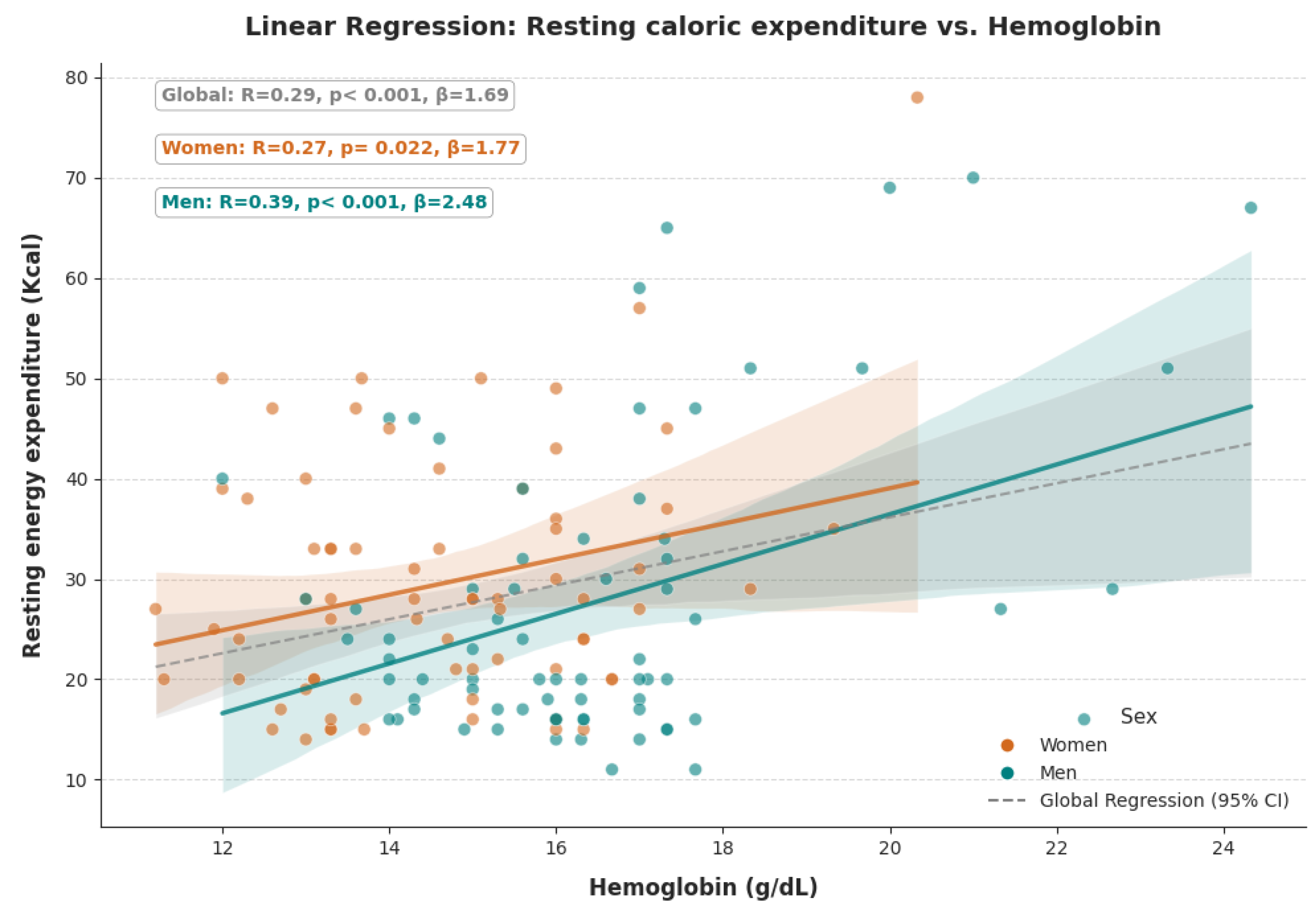

Table 1.
Anthropometric variables of participants according to their altitude of residence. The average age and BMI can be seen at different altitudes.
Table 1.
Anthropometric variables of participants according to their altitude of residence. The average age and BMI can be seen at different altitudes.
| Lima | Arequipa | Puno | La Rinconada | |
| Age (years) | 21.00 ± 2.00 | 23.00 ± 2.00 | 24.00 ± 2.00 | 31.00 ± 5.00 |
| BMI (kg/m2) | 24.50 ± 2.80 | 25.20 ± 2.50 | 24.30 ± 3.50 | 27.00 ± 5.00 |
kg, kilograms; m, meters; BMI, body-mass-index.
Table 2.
Physiological variables of participants according to altitude.
| Lima | Arequipa | Puno | La Rinconada | p value | |
| SpO2 (%) | 98.40 ± 0.90 | 95.20 ± 1.90 | 92.60 ± 2.40 | 81.10 ± 3.70 | 0.001* |
| Hb (g/dl) | 14.10 ± 1.50 | 14.50 ± 1.30 | 16.30 ± 1.20 | 19.40 ± 2.10 | 0.001* |
| HR (bpm) | 70.38 ± 5.60 | 78.50 ± 8.40 | 75.24 ± 9.08 | 82.84 ± 10.59 | 0.000* |
| MAP (mmHg) | 85.84 ± 9.43 | 80.22 ± 11.56 | 81.71 ± 8.73 | 88.04 ± 11.24 | 0.012* |
*, statistically significant (p < 0.05); SpO2, oxygen saturation; Hb, hemoglobin; HR, heart rate; MAP, mean arerial pressure; mmHg; p value, level of statistical significance.
Table 3.
Median Metabolic Equivalent of Task (MET-minutes/week) by Gender and Altitude across Four Peruvian Cities (IPAQ Results).
Table 3.
Median Metabolic Equivalent of Task (MET-minutes/week) by Gender and Altitude across Four Peruvian Cities (IPAQ Results).
| SEX |
Lima Median (IR) |
Arequipa Median (IR) |
Puno Median (IR) |
La Rinconada Median (IR) |
P value |
| Men | 1040 (850 – 1,250) | 1,060 (870 – 1,230) | 1,050 (840 – 1,260) | 1,030 (860 – 1,240) | 0.997 |
| Women | 940 (750 – 1100) | 950 (760 – 1,120) | 930 (740 – 1,130) | 960 (770 – 1,100) |
IR, interquartile range; P value, level of statistical significance.
Table 4.
Comparison of Resting Energy Expenditure (kcal/day) by Sex and Altitude across Four Cities.
Table 4.
Comparison of Resting Energy Expenditure (kcal/day) by Sex and Altitude across Four Cities.
| City |
Women (Mean ± Std) |
Men (Mean ± Std) |
P value (T-test) |
p value global |
| Lima | 20.75 ± 5.22 | 22.20 ± 5.40 | 0.393 |
0.001* |
| Arequipa | 33.05 ± 9.91 | 25.30 ± 11.54 | 0.029* | |
| Puno | 29.29 ± 11.62 | 25.05 ± 13.27 | 0.278 | |
| La Rinconada | 41.67 ± 16.35 | 49.60 ± 19.44 | 0.348 |
*, statistically significant (p < 0.05); p value, level of statistical significance.
Table 5.
Comparison of Energy Expenditure during physical activity (kcal/day) by Sex and Altitude across Four Cities.
Table 5.
Comparison of Energy Expenditure during physical activity (kcal/day) by Sex and Altitude across Four Cities.
| City |
6 MWT | HR after physical activity | Energy expenditure during physical activity |
|||||
| Distance | p | HR | p | Women (Mean ± Std) | Men (Mean ± Std) | P-value | p-global | |
| Lima | 339.8 ± 20.1 |
0.830 |
92.08 ± 9.34 |
0.001* |
26.65 ± 5.15 | 28.20 ± 6.11 | 0.391 |
0.001* |
| Arequipa | 342.1 ± 14.8 | 97.70 ± 13.60 | 33.25 ± 8.11 | 30.80 ± 8.69 | 0.363 | |||
| Puno | 338.5 ± 18.2 | 102.43 ± 11.97 | 38.76 ± 5.83 | 37.00 ± 10.89 | 0.518 | |||
| La Rinconada | 340.2 ± 15.5 | 107.63 ± 9.75 | 40.78 ± 5.21 | 50.60 ± 10.17 | 0.018* | |||
*, statistically significant (p < 0.05); p value, level of statistical significance.
Disclaimer/Publisher’s Note: The statements, opinions and data contained in all publications are solely those of the individual author(s) and contributor(s) and not of MDPI and/or the editor(s). MDPI and/or the editor(s) disclaim responsibility for any injury to people or property resulting from any ideas, methods, instructions or products referred to in the content. |
© 2026 by the authors. Licensee MDPI, Basel, Switzerland. This article is an open access article distributed under the terms and conditions of the Creative Commons Attribution (CC BY) license (http://creativecommons.org/licenses/by/4.0/).
Copyright: This open access article is published under a Creative Commons CC BY 4.0 license, which permit the free download, distribution, and reuse, provided that the author and preprint are cited in any reuse.


