

Submitted:
29 April 2026
Posted:
29 April 2026
You are already at the latest version
Abstract
Urban street lighting remains a significant source of energy consumption in cities, largely due to static operation and limited responsiveness to real-time conditions. This inefficiency increases operational costs and environmental impact, especially in rapidly urbanizing regions. To address this issue, this study investigates IoT-enabled smart street lighting as an adaptive and data-driven solution within smart city frameworks. The work focuses on the growing body of research in this domain and examines its evolution, technical structure, and emerging environmental role. The study aims to provide a structured synthesis that connects research trends with system-level design, while highlighting the transition from energy-focused systems to multifunctional urban platforms. A bibliometric-driven and thematic review approach is adopted. A dataset of 151 publications was analyzed using Bibliometrix and Biblioshiny tools to extract trends, collaboration patterns, and research themes. This analysis is complemented by a qualitative evaluation of system architectures, sensing technologies, communication models, and control strategies. The findings indicate a sustained annual growth rate of 14.87% and a highly collaborative research landscape, with an average of 3.97 authors per study. The results also reveal that energy efficiency remains the dominant focus, while environmental integration is emerging but still underrepresented. The study further identifies key gaps related to scalability, sensor reliability, and the lack of standardized evaluation metrics. The outcomes provide a comprehensive roadmap for future research and support the development of scalable, intelligent, and sustainable lighting systems. The proposed insights are applicable to urban environments globally, particularly in regions seeking cost-effective and energy-efficient infrastructure solutions.
Keywords:
urban infrastructure optimization
; wireless sensor networks
; environmental monitoring nodes
; energy-aware systems
; real-time decision systems
; sustainable urban technologies
1. Introduction
Urbanization is accelerating across both developed and developing regions. This rapid growth places increasing pressure on energy systems and urban infrastructure [1]. Public services such as street lighting contribute significantly to urban electricity consumption [2]. In many cities, street lighting accounts for a considerable portion of municipal energy use [3]. Traditional lighting systems operate based on fixed schedules and constant illumination levels [4]. They do not respond to real-time conditions such as traffic flow, pedestrian activity, or environmental visibility [5]. As a result, these systems often provide unnecessary lighting during low-demand periods. This leads to energy waste, higher operational costs, and increased environmental impact [6,7]. The inefficiency of conventional street lighting has therefore become a critical issue in the context of sustainable urban development [8,9]. Cities are now seeking intelligent solutions that can reduce energy consumption while maintaining safety and service quality [10,11].
The Internet of Things (IoT) offers a practical pathway for transforming conventional lighting systems into adaptive and intelligent networks [12,13]. IoT enables real-time data collection, communication, and automated decision-making through interconnected devices [14,15,16]. In smart street lighting systems, sensors play a central role in capturing environmental and operational conditions. Motion sensors detect the presence of pedestrians and vehicles [17,18]. Ambient light sensors measure surrounding illumination levels. These inputs allow lighting systems to adjust intensity dynamically instead of operating at fixed levels [19,20]. Microcontrollers process the sensor data locally or transmit it to centralized platforms for further analysis [21]. Communication technologies enable coordination between distributed lighting units and control systems [22]. This integration supports real-time monitoring and remote management. It also improves system reliability and reduces maintenance costs [23]. As a result, IoT-based lighting systems are widely recognized as a key component of smart city infrastructure. They provide both energy savings and operational flexibility [24,25,26,27].
Recent developments indicate that the role of smart street lighting is expanding beyond energy optimization [28,29]. Modern systems are increasingly designed as multi-functional platforms that integrate environmental sensing capabilities [30]. Sensors such as DHT11 and MQ135 are used to monitor temperature, humidity, and air quality [31]. This integration allows street lighting infrastructure to function as a distributed sensing network [32,33]. Each lighting unit becomes a node that contributes to environmental data collection. This approach enhances the value of existing infrastructure without requiring additional installations [34,35]. It supports continuous monitoring of urban conditions and enables data-driven decision-making. Such systems can provide insights into environmental quality, weather conditions, and pollution levels [36,37]. This shift reflects a broader transformation in smart city design, where infrastructure systems are expected to serve multiple functions simultaneously [38,39]. However, the current literature shows that energy efficiency remains the dominant focus. Environmental integration is often treated as a secondary feature rather than a core system component [40,41,42]. In addition, many studies address individual technical aspects in isolation. Some focus on sensor technologies, while others emphasize communication protocols or control algorithms [43]. This fragmented approach limits the understanding of how different system components interact and affect overall performance.
Despite the growing number of studies, several research gaps remain. There is a lack of comprehensive reviews that combine quantitative bibliometric analysis with detailed technical synthesis. Existing review papers often focus on either technology classification or application scenarios [10,30,33]. Few studies provide a unified framework that connects research trends with system-level design. In addition, the evolution of smart street lighting systems is not clearly structured. The transition from static systems to adaptive and context-aware solutions is often discussed without a consistent classification. This makes it difficult to identify technological progress and emerging research directions. Furthermore, the integration of environmental sensing into lighting systems is not systematically analyzed. While some studies demonstrate its feasibility, its role in improving system intelligence and sustainability is not fully explored [44,45]. To address these limitations, this study presents a bibliometric-driven and thematic review of IoT-enabled smart street lighting systems. The review integrates quantitative analysis of research activity with qualitative evaluation of system architectures and environmental integration. It aims to (i) analyze research trends and collaboration patterns using bibliometric indicators, (ii) examine energy-efficient architectures and their key components, (iii) evaluate the evolution of environmental integration in smart lighting systems, and (iv) identify critical gaps and propose a strategic roadmap for future research. The novelty of this work lies in linking bibliometric evidence with system-level analysis, while explicitly highlighting the transition from energy-focused lighting systems to multifunctional, environmentally aware urban infrastructure.
2. Materials and Methods
This review follows a structured approach that combines bibliometric analysis with thematic synthesis. The process includes three main stages: data collection, data visualization, and analytical classification of the selected studies (Figure 1).
2.1. Data Collection
The dataset was collected from the Scopus database to ensure coverage of peer-reviewed and high-quality publications [46]. The search focused on studies related to IoT-based smart street lighting and energy-efficient urban systems. A Boolean search query was defined to capture the relevant literature: ("IoT" OR "Internet of Things") AND ("smart street lighting" OR "smart lighting system" OR "intelligent street lighting" OR "adaptive street lighting") AND ("smart city" OR "energy efficiency" OR "sustainability" OR "energy saving"). The search was limited to publications written in English. It included journal articles and conference papers. The time range was selected to reflect recent developments in the field, with emphasis on studies published between 2016 and 2026. This period captures the rapid growth of IoT applications in urban infrastructure. After retrieving the initial results, duplicate records were removed. Irrelevant studies were excluded based on title and abstract screening. Studies that did not focus on smart street lighting or lacked technical contribution were also excluded. The final dataset includes publications that provide system design, implementation, or evaluation of IoT-based lighting solutions.
2.2. Data Visualization
The bibliometric analysis was performed using the Bibliometrix package and its graphical interface, Biblioshiny [47]. These tools enable quantitative analysis of scientific literature and support visualization of research trends. The collected dataset was imported into Biblioshiny for processing. Several bibliometric indicators were generated. These include publication trends, author collaboration patterns, and keyword co-occurrence networks. The analysis focuses on identifying research growth, collaboration structures, and thematic evolution. Three main types of visual outputs were produced. First, a bibliometric overview summarizes the dataset in terms of publication volume, authorship, and citation patterns. Second, a collaboration network map illustrates relationships between countries and research groups. Third, a keyword co-occurrence analysis highlights dominant research topics and emerging themes. These visualizations provide a quantitative basis for understanding the structure of the field. Additionally, the bibliometric results can help identify research concentration areas and reveal underexplored topics [48].
2.3. Analytical Overview of the Studies
Following the bibliometric analysis, the selected studies were examined through a qualitative synthesis. The objective was to identify common design patterns, technological choices, and research trends. The studies were classified into two main domains. The first domain focuses on energy-efficient architectures. It includes system design, sensing technologies, microcontroller platforms, communication protocols, and control algorithms. The second domain focuses on environmental integration [49]. It includes environmental sensing, context-aware control, and sustainability considerations. Within each domain, studies were grouped based on their technical characteristics. For example, energy-related studies were analyzed in terms of sensing mechanisms and control strategies. Environmental studies were examined based on the type of sensors used and their integration with lighting systems [50]. This classification supports a structured discussion of the literature. It allows comparison between different approaches and highlights the evolution of system design. It also provides the foundation for identifying research gaps and future directions.
3. Bibliometric Analysis
The bibliometric results reveal a clear expansion of research activity in IoT-enabled smart street lighting over the period 2016–2026. As shown in Figure 2, the dataset includes 151 documents distributed across 135 sources, with a total of 563 contributing authors. The annual growth rate reaches 14.87%, which indicates a sustained and accelerating research interest in this field. The relatively low number of single-authored documents (4) and the average of 3.97 co-authors per document suggest that this research area is highly collaborative. This trend aligns with the multidisciplinary nature of smart street lighting systems, which require expertise in embedded systems, communication networks, and energy management [51]. The average citation rate of 15.54 per document reflects a moderate but consistent academic impact. At the same time, the average document age of 3.93 years confirms that the field is still evolving, with most contributions being recent. These observations indicate that IoT-based street lighting is transitioning from an emerging topic to a structured research domain with growing maturity [33].
The global collaboration network presented in Figure 3 provides further insight into how this field is developing geographically. The map shows that research activity is not limited to a single region but is distributed across multiple continents. However, the intensity of collaboration varies. A noticeable concentration appears in regions such as South Asia and parts of Europe, where stronger collaboration links are visible. In contrast, other regions show weaker or more isolated participation. The presence of international collaboration links indicates that knowledge exchange is active, but it is not yet uniformly distributed. This uneven distribution suggests that some countries play a more central role in shaping research directions, while others contribute at a more localized level. The collaborative structure reflects the global relevance of energy-efficient lighting and smart city applications. It also highlights the need for broader international integration to ensure balanced technological development [52]. Compared with other IoT domains, where collaboration networks are often more dense, the observed structure suggests that smart street lighting research is still consolidating its global research community.
The keyword co-occurrence analysis in Figure 4 offers a clear representation of the dominant research themes within the field. The most prominent terms include “internet of things,” “energy efficiency,” “street lighting,” and “smart city.” This confirms that the research focus is strongly centered on energy optimization within urban infrastructure. The frequent appearance of terms such as “lighting fixtures,” “lighting systems,” and “light emitting diodes” indicates that hardware-level efficiency remains a key concern. At the same time, the presence of terms like “automation,” “energy utilization,” and “energy conservation” reflects an increasing interest in intelligent control strategies rather than static lighting solutions. Notably, environmental-related terms such as “air quality” appear with lower prominence. This suggests that environmental integration is still a secondary focus compared with energy efficiency. However, its presence within the keyword network indicates a growing research direction [53]. These findings support the observation that the field is evolving from basic lighting control toward more integrated smart city applications. The keyword structure also shows a strong overlap between IoT technologies and energy management concepts, which confirms that smart street lighting research is positioned at the intersection of digital infrastructure and sustainability [54].
4. Energy-Efficient Architectures
The synthesis of the reviewed studies shows that energy efficiency in IoT-based smart street lighting is achieved through coordinated system design rather than isolated components. Table 1 presents the dominant architectural patterns, linking technical choices with their functional roles and reported impact on energy optimization.
4.1. IoT Reference Architectures
The reviewed studies consistently rely on layered IoT architectures to structure system operation. The three-layer and five-layer models dominate current implementations. These models separate sensing, communication, and application processes into distinct layers, which improves system clarity and scalability. Studies such as [33,55] show that layered architectures support efficient data flow and simplify integration between devices and cloud platforms. However, the results indicate that architecture alone does not directly reduce energy consumption. Its role is indirect. It enables coordination between sensing and control modules. Systems built on well-defined architectures demonstrate better synchronization between input data and lighting decisions. This leads to more stable and responsive behavior under dynamic conditions. Compared with unstructured designs, layered architectures provide better support for real-time adaptation and system expansion. This finding aligns with previous IoT surveys, where structured architectures are considered essential for managing heterogeneous smart city systems [60]. Therefore, the architecture should be viewed as an enabling layer for energy efficiency rather than a direct contributor.
4.2. Sensor Technology Ecosystem
The sensor layer shows a clear dominance of motion and light sensing technologies. PIR sensors are widely used for detecting human or vehicle movement, while LDR sensors measure ambient light intensity. Studies such as [56] confirm that these sensors are the primary drivers of energy savings. They allow lighting systems to operate only when needed. This eliminates unnecessary illumination during idle periods. Environmental sensors such as DHT11 and MQ135 appear in more recent systems. These sensors measure temperature, humidity, and air quality. Their role is different. They do not directly reduce energy consumption. Instead, they provide contextual data that can support advanced control strategies. The results show that systems relying on PIR and LDR achieve immediate energy reduction, while environmental sensing adds long-term value [61]. This creates a two-level sensor ecosystem. The first level is operational and directly linked to energy control. The second level is contextual and supports system intelligence. This distinction is important when evaluating system performance. It also reflects a broader shift toward multifunctional smart units in urban infrastructure.
4.3. Microcontroller and Edge Platforms
The analysis shows that low-cost microcontrollers dominate the implementation of smart street lighting systems. Platforms such as ESP8266 and Arduino are widely used due to their low power consumption and ease of deployment [57,58]. These devices provide sufficient processing capability for real-time control. The results also highlight a strong trend toward edge processing. Decisions are increasingly made locally rather than in centralized cloud systems. This reduces communication overhead and improves response time. Studies using NodeMCU-based systems demonstrate efficient real-time control with minimal latency [62]. In contrast, higher-end platforms such as Raspberry Pi are used when additional processing is required. However, they introduce higher power consumption. The comparison suggests that lightweight microcontrollers offer a better balance between performance and efficiency. Edge computing emerges as a key factor in energy optimization. It minimizes unnecessary data transmission and supports faster decision-making. This confirms that processing location is a critical design parameter in smart lighting systems.
4.4. Communication Protocol Landscape
Communication technologies play a significant role in system efficiency [55]. The reviewed studies show a diverse set of protocols, including Wi-Fi, ZigBee, LoRaWAN, and MQTT-based communication. Wi-Fi is widely adopted due to its accessibility and compatibility with existing infrastructure [63]. However, it consumes more power compared with other options. ZigBee is frequently used in wireless sensor networks due to its low power consumption and support for mesh topology. LoRaWAN appears in large-scale deployments where long-range communication is required with minimal energy usage [64]. MQTT is used as a lightweight protocol for data exchange, reducing communication overhead. The results show that protocol selection depends on deployment scale and system requirements. No single protocol is optimal for all scenarios. Systems that optimize communication frequency and use lightweight protocols achieve better energy performance. This finding is consistent with previous studies on IoT communication efficiency. It highlights that communication design is a critical factor in large-scale smart city applications [65].
4.5. Three Generations of Energy Efficiency
The reviewed literature reveals a clear progression in energy-saving strategies [33]. The first generation of systems relies on static lighting. Lamps operate continuously at full intensity. This approach results in high energy consumption. The second generation introduces sensor-based control. Lighting is activated based on motion or ambient light conditions. Studies such as show that this approach significantly reduces energy usage. The third generation introduces adaptive systems [66]. These systems adjust lighting dynamically using multiple inputs. They may include environmental data and predictive models. Advanced systems discussed in [67] demonstrate higher efficiency through adaptive dimming and intelligent scheduling. The results show that each generation improves upon the previous one. The transition from static to adaptive systems represents the most significant improvement. However, this transition also increases system complexity. Adaptive systems require reliable sensing and stable communication. This trade-off between complexity and efficiency is a key observation in the literature [68].
4.6. Adaptive Dimming Algorithms
Adaptive dimming algorithms are the main mechanism for achieving energy savings. Most reviewed systems use rule-based or threshold-based control strategies [59]. These strategies adjust lighting intensity based on sensor input. For example, light intensity increases when motion is detected and decreases during inactivity. Studies such as [69] show that even simple rule-based approaches can achieve significant energy reduction. More advanced systems implement multi-level dimming rather than binary control. This allows smoother transitions and better energy optimization. The results indicate that finer control leads to better performance. However, it also requires accurate sensor data and proper calibration. Despite these improvements, most systems still rely on predefined rules. The use of predictive or learning-based algorithms remains limited. This suggests that adaptive dimming is still an evolving research area [70].
The results confirm that energy-efficient smart street lighting is a system-level outcome. It depends on the interaction between architecture, sensing, processing, communication, and control. Each component contributes differently [71]. Sensors and control algorithms have a direct impact. Architecture and communication play supporting roles. The literature shows a clear shift toward adaptive and integrated systems. However, many implementations still rely on simple and cost-effective solutions. This reflects practical constraints in real-world deployment. The findings highlight the importance of balanced system design. Efficiency is achieved when all components operate in coordination rather than isolation [72].
5. Environmental Integration
The reviewed studies show a clear transition from energy-focused lighting systems toward environmentally aware urban infrastructure. Environmental integration is no longer treated as an optional extension. It is becoming a defining feature of modern smart street lighting systems. Table 2 summarizes how environmental functions are incorporated into lighting systems and how they influence system performance and sustainability outcomes.
5.1. From Single-Purpose to Multi-Functional Nodes
The reviewed literature shows a clear transition from lighting-only systems to multi-functional smart nodes [33]. Early systems focused on replacing conventional lamps with LED technology. These systems improved energy efficiency but remained limited in functionality. Studies such as [75] confirm that early designs did not incorporate sensing or data-driven control. In contrast, recent systems integrate sensing, communication, and processing within the same unit. Research in [76] demonstrates that street lighting infrastructure is increasingly used as a distributed sensing network. This transformation allows each lighting pole to operate as an independent smart node. The results indicate that this shift improves system utility without requiring additional infrastructure. It reduces deployment cost and supports scalable monitoring. However, it also increases system complexity. Data management and interoperability become critical challenges [77]. Despite these issues, the transition toward multi-functional nodes is consistent across recent studies. It reflects the broader evolution of smart city systems toward integrated and data-driven infrastructure.
5.2. Environmental Sensing Technologies
Environmental sensing technologies form the technical foundation of integration [73]. The reviewed studies show a strong reliance on low-cost sensors such as DHT11 and MQ135. These sensors are widely used for measuring temperature, humidity, and air quality [78]. Their adoption is driven by affordability and ease of deployment. The results indicate that environmental sensing is often implemented alongside lighting control systems rather than as standalone platforms. This integration allows continuous monitoring without significant additional energy consumption. However, the literature highlights a key limitation [79]. Low-cost sensors provide approximate measurements and require calibration for reliable use. Studies focusing on sensor performance emphasize that accuracy can vary under different environmental conditions. Despite this limitation, large-scale deployment of such sensors remains practical. The emphasis shifts from precision to spatial coverage. This approach allows systems to detect environmental trends rather than exact values. The findings suggest that environmental sensing is becoming a standard component in smart lighting systems, even though its data quality still requires improvement [80].
5.3. Context-Aware Lighting Control
The integration of environmental sensing enables context-aware lighting control [74]. This represents a significant advancement over traditional sensor-based systems. In context-aware systems, lighting decisions are influenced by multiple environmental parameters. Studies such as [81] show that lighting intensity can be adjusted based on visibility conditions, including fog and humidity levels. This approach improves safety while maintaining energy efficiency. The results indicate that context-aware systems provide more balanced performance compared with simple motion-based control. They adapt to real-world conditions rather than predefined rules. Research in [82] highlights the importance of combining multiple sensor inputs to improve system responsiveness. However, these systems require reliable data and stable communication. This increases system complexity and computational requirements. Despite these challenges, the adoption of context-aware control is increasing. It reflects a shift toward intelligent infrastructure that responds dynamically to environmental changes [83].
5.4. Global Deployment Case Studies
The reviewed deployment cases show that environmental integration is being implemented in real-world scenarios [32]. Several studies report installations in urban areas, campuses, and transportation networks. These deployments confirm the feasibility of integrated systems under practical conditions. The results also reveal regional differences in system design. In densely populated areas, systems focus on air quality monitoring and pollution detection [84]. In less dense environments, the focus shifts toward energy efficiency and traffic-based control. The collaboration patterns observed in global research support this variation. Studies from different regions adopt different priorities based on local needs. However, all deployments share a common objective. They aim to improve system efficiency while providing additional environmental insight. The findings indicate that environmental integration is not limited to experimental research. It is becoming part of practical smart city solutions [28].
5.5. Sustainability Impact Quantification
Sustainability remains the central motivation for environmental integration [57]. The reviewed studies consistently report energy savings as the primary measurable outcome. Adaptive lighting systems reduce energy consumption compared with conventional systems. However, environmental benefits are less frequently quantified. The results show that most studies focus on energy metrics while treating environmental data as supplementary information [85]. This creates a gap in sustainability assessment. While systems collect data on air quality and environmental conditions, few studies translate this data into measurable impact. Some research attempts to link environmental monitoring with public health and pollution management. However, these efforts are still limited and lack standardized evaluation frameworks [86]. The findings suggest that sustainability assessment should expand beyond energy savings. It should include environmental and social indicators. This will provide a more comprehensive evaluation of smart street lighting systems. The current limitation highlights an important direction for future research [33].
The results confirm that environmental integration is reshaping the role of smart street lighting systems. The field is moving from isolated energy-saving solutions toward integrated urban sensing platforms. Multi-functional nodes, environmental sensing, and context-aware control are key elements of this transformation [87]. At the same time, challenges related to sensor accuracy, system complexity, and evaluation metrics remain unresolved. Despite these limitations, the trend is clear. Environmental integration enhances system value and supports broader smart city objectives. It complements energy efficiency rather than replacing it. The combination of both aspects defines the next stage of development in IoT-based smart street lighting systems [10].
6. Critical Gaps and Strategic Roadmap
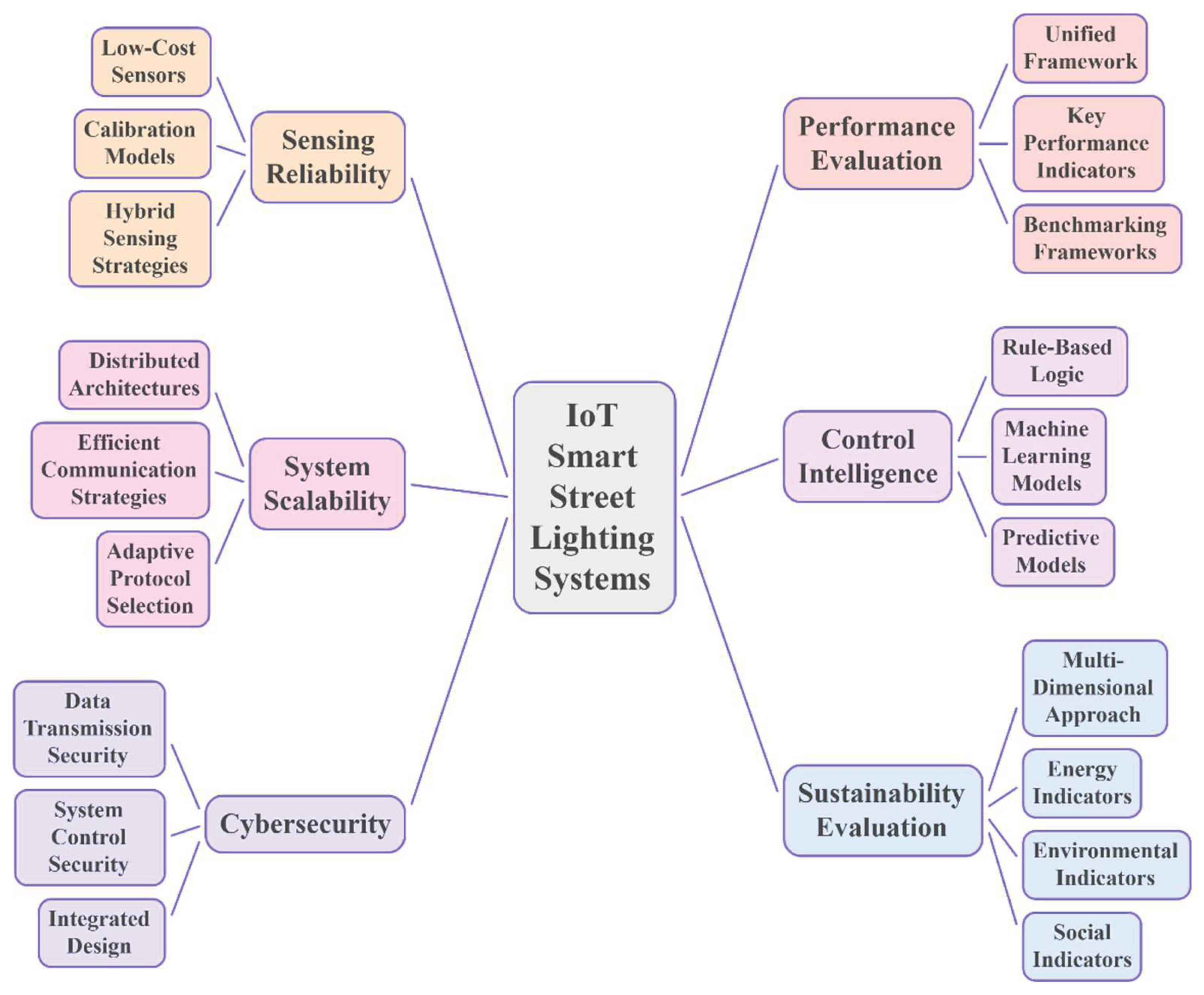
The results of the reviewed studies show that IoT-based smart street lighting systems have reached a functional level but have not yet achieved full system maturity [32]. Several limitations appear consistently across the literature. These limitations are not isolated. They are interconnected and affect system performance, scalability, and long-term sustainability. The first major gap relates to sensing reliability. Most implementations depend on low-cost sensors such as DHT11 and MQ135 for environmental monitoring [88]. These sensors are easy to deploy and cost-effective. However, their measurements are often unstable under varying environmental conditions. Studies on sensor behavior confirm that calibration is rarely addressed in practical deployments. This creates uncertainty in environmental data and limits its use in decision-making [89]. As a result, environmental integration remains partially underutilized. Systems collect data, but they do not fully exploit it. This finding suggests that future research must focus on calibration models and hybrid sensing strategies. Combining low-cost sensors with reference measurements or correction algorithms can improve data quality without increasing system cost significantly [90]. Another critical gap appears in performance evaluation. The reviewed studies report energy savings using different assumptions and calculation methods. There is no unified framework for measuring system performance [91]. This makes it difficult to compare results across studies. Some systems report energy reduction based on dimming levels, while others use simplified consumption models. The absence of standardized metrics reduces the credibility of reported improvements. It also limits the ability to assess system efficiency at scale. This issue has been highlighted in previous surveys, where the lack of benchmarking frameworks is identified as a barrier to technology adoption [92]. A structured evaluation model based on key performance indicators is therefore required. Such a model should include energy consumption, response time, communication reliability, and environmental impact. Without this standardization, the field will remain fragmented [93].
The second group of gaps relates to system scalability, intelligence, and security. Most reviewed systems are implemented in controlled environments such as campuses or pilot zones [94]. These environments do not represent the complexity of real urban systems. When scaling to city-level deployment, new challenges emerge. These include network congestion, data management, and maintenance overhead [95]. Current architectures are not always designed to handle such complexity. This explains why many systems remain at the prototype stage. The results indicate that scalable design requires distributed architectures and efficient communication strategies [96]. Protocol selection also plays a critical role. While Wi-Fi is commonly used, it is not suitable for large-scale deployments due to its power consumption and limited range. Alternative solutions such as LoRaWAN and ZigBee offer advantages, but they introduce trade-offs in latency and bandwidth [97]. This confirms that communication design must be adaptive and context-dependent. Another limitation appears in control intelligence. Most systems rely on rule-based logic. These rules are simple and effective for basic operation. However, they cannot adapt to complex or dynamic urban conditions [98]. The literature suggests that machine learning and predictive models can improve system performance [99]. These models can anticipate traffic patterns, weather changes, and environmental variations [100]. Despite this potential, their implementation remains limited. This gap indicates a disconnect between theoretical research and practical deployment. In addition, cybersecurity is often overlooked. Many systems prioritize functionality and energy efficiency while neglecting security mechanisms. This creates vulnerabilities in data transmission and system control. In smart city environments, such vulnerabilities can have serious consequences [101]. Therefore, security must be integrated into system design from the beginning. It should not be treated as an optional feature. Finally, sustainability evaluation remains incomplete. Most studies focus on energy savings as the primary indicator of success. Environmental benefits are discussed but rarely quantified [102]. Social impact is almost completely ignored. This creates a narrow view of system performance. The results suggest that sustainability should be assessed using a multi-dimensional approach [103]. Energy, environmental, and social indicators should be combined into a unified framework. This will provide a more realistic evaluation of system impact. Overall, the findings indicate that the field is transitioning from isolated technical solutions to integrated urban systems. The strategic roadmap must therefore focus on three directions. First, improve system reliability through better sensing and calibration. Second, enhance system intelligence using data-driven approaches. Third, develop comprehensive evaluation frameworks that reflect real-world performance. These directions are essential for moving from experimental systems to large-scale smart city deployment [104].
Figure 5.
Critical gaps and strategic roadmap for IoT smart street lighting.
7. Conclusions
This study presented a bibliometric-driven and thematic review of IoT-enabled smart street lighting systems, with a focus on energy-efficient architectures and environmental integration. The analysis combined quantitative bibliometric evaluation with qualitative synthesis of system components and design approaches. The findings confirm that research in this field is expanding steadily and is characterized by strong collaboration and multidisciplinary contributions. The review shows that energy efficiency remains the primary driver of system design, supported by adaptive control, sensing technologies, and edge-based processing. At the same time, environmental integration is emerging as a complementary function, where lighting infrastructure evolves into multi-functional sensing platforms. However, this integration is still limited by sensor accuracy and lack of standardized evaluation methods. The study also highlights that most systems remain at small-scale deployment stages, with scalability, communication efficiency, and system intelligence identified as key challenges.
The impact of this research lies in providing a structured understanding of how smart street lighting systems are evolving from isolated technical solutions into integrated urban infrastructure. It clarifies the interaction between architectural design, sensing, and control mechanisms. It also highlights the importance of combining energy and environmental perspectives within a unified framework. These insights support decision-makers and researchers in designing more efficient and scalable systems. For future work, several directions are recommended. Sensor calibration and hybrid sensing models should be developed to improve data reliability. Advanced data-driven and predictive control methods should be integrated to enhance system intelligence. In addition, standardized performance metrics are required to enable fair comparison across studies. Finally, future research should adopt multi-dimensional sustainability assessment frameworks that include energy, environmental, and social indicators. These steps are essential for enabling large-scale deployment and ensuring long-term impact in smart city applications.
Author Contributions
Conceptualization, A.F.M., A.A.A., N.F.O. and A.B.; methodology, A.F.M. and H.S.R.; software, A.F.M. and A.B.; validation, A.F.M., A.A.A., N.F.O. and H.S.R.; formal analysis, A.F.M. and H.S.R.; investigation, A.F.M., A.A.A., N.F.O. and A.B.; resources, A.F.M., A.A.A., N.F.O. and A.B.; data curation, A.F.M., A.B. and H.S.R.; writing—original draft preparation, A.F.M., A.A.A., and N.F.O.; writing—review and editing, A.B. and H.S.R.; visualization, A.F.M., A.A.A., N.F.O. and H.S.R.; supervision, A.A.A. and N.F.O. All authors have read and agreed to the published version of the manuscript.
Funding
This research received no external funding.
Data Availability Statement
No new data were created or analyzed in this study.
Conflicts of Interest
The authors declare that they have no known competing financial interests or personal relationships that could have appeared to influence the work reported in this paper.
References
- Raihan, A.; Rashid, M.; Voumik, L.C.; Akter, S.; Esquivias, M.A. The Dynamic Impacts of Economic Growth, Financial Globalization, Fossil Fuel, Renewable Energy, and Urbanization on Load Capacity Factor in Mexico. Sustain. 2023, 15. [CrossRef]
- Nadweh, S.; Mohammed, N.; Konstantinou, C.; Ahmed, S. Operational Performance Assessment of PV-Powered Street Lighting: A Comparative Study of Different Machine Learning Prediction Models. IEEE Access 2025, 13, 135232–135253. [CrossRef]
- Bachanek, K.H.; Tundys, B.; Wiśniewski, T.; Puzio, E.; Maroušková, A. Intelligent Street Lighting in a Smart City Concepts—a Direction to Energy Saving in Cities: An Overview and Case Study. Energies 2021, 14. [CrossRef]
- Zhuang, Y.; Hua, L.; Qi, L.; Yang, J.; Cao, P.; Cao, Y.; Wu, Y.; Thompson, J.; Haas, H. A Survey of Positioning Systems Using Visible LED Lights. IEEE Commun. Surv. Tutorials 2018, 20, 1963–1988. [CrossRef]
- Hwang, S.; Lee, Z.; Kim, J. Real-Time Pedestrian Flow Analysis Using Networked Sensors for a Smart Subway System. Sustain. 2019, 11. [CrossRef]
- Achar, T.E.; Rekha, C.; Shreyas, J. Smart Automated Highway Lighting System Using IoT: A Survey. Energy Informatics 2024, 7. [CrossRef]
- Sholanke, A.; Fadesere, O.; Elendu, D. The Role of Artificial Lighting in Architectural Design: A Literature Review. IOP Conf. Ser. Earth Environ. Sci. 2021, 665. [CrossRef]
- Zielinska-Dabkowska, K.M.; Bobkowska, K. Rethinking Sustainable Cities at Night: Paradigm Shifts in Urban Design and City Lighting. Sustain. 2022, 14. [CrossRef]
- Pardo-Bosch, F.; Blanco, A.; Sesé, E.; Ezcurra, F.; Pujadas, P. Sustainable Strategy for the Implementation of Energy Efficient Smart Public Lighting in Urban Areas: Case Study in San Sebastian. Sustain. Cities Soc. 2022, 76. [CrossRef]
- Mishra, P.; Singh, G. Energy Management Systems in Sustainable Smart Cities Based on the Internet of Energy: A Technical Review. Energies 2023, 16. [CrossRef]
- Chen, Y.; Ardila-Gomez, A.; Frame, G. Achieving Energy Savings by Intelligent Transportation Systems Investments in the Context of Smart Cities. Achiev. Energy Savings by Intell. Transp. Syst. Investments Context Smart Cities 2016. [CrossRef]
- Chui, K.T.; Lytras, M.D.; Visvizi, A. Energy Sustainability in Smart Cities: Artificial Intelligence, Smart Monitoring, and Optimization of Energy Consumption. Energies 2018, 11. [CrossRef]
- Almihat, M.G.M.; Kahn, M.T.E.; Aboalez, K.; Almaktoof, A.M. Energy and Sustainable Development in Smart Cities: An Overview. Smart Cities 2022, 5, 1389–1408. [CrossRef]
- Louis, J.; Dunston, P.S. Integrating IoT into Operational Workflows for Real-Time and Automated Decision-Making in Repetitive Construction Operations. Autom. Constr. 2018, 94, 317–327. [CrossRef]
- Kang, K.D. A Review of Efficient Real-Time Decision Making in the Internet of Things. Technologies 2022, 10. [CrossRef]
- Al-Atawi, A.A. Enhancing Data Management and Real-Time Decision Making with IoT, Cloud, and Fog Computing. IET Wirel. Sens. Syst. 2024, 14, 539–562. [CrossRef]
- Haque, T.S.; Rahman, M.H.; Islam, M.R.; Razzak, M.A.; Badal, F.R.; Ahamed, M.H.; Moyeen, S.I.; Das, S.K.; Ali, M.F.; Tasneem, Z.; et al. A Review on Driving Control Issues for Smart Electric Vehicles. IEEE Access 2021, 9, 135440–135472. [CrossRef]
- Kiraz, M.; Sivrikaya, F.; Albayrak, S. A Survey on Sensor Selection and Placement for Connected and Automated Mobility. IEEE Open J. Intell. Transp. Syst. 2024, 5, 692–710. [CrossRef]
- Pandharipande, A.; Newsham, G.R. Lighting Controls: Evolution and Revolution. Light. Res. Technol. 2018, 50, 115–128. [CrossRef]
- Madias, E.N.D.; Doulos, L.T.; Kontaxis, P.A.; Topalis, F. V. Multicriteria Decision Aid Analysis for the Optimum Performance of an Ambient Light Sensor: Methodology and Case Study. Oper. Res. 2022, 22, 1333–1361. [CrossRef]
- Khalifeh, A.; Mazunga, F.; Nechibvute, A.; Nyambo, B.M. Microcontroller Unit-Based Wireless Sensor Network Nodes: A Review. Sensors 2022, 22. [CrossRef]
- Rehman, S.U.; Ullah, S.; Chong, P.H.J.; Yongchareon, S.; Komosny, D. Visible Light Communication: A System Perspective—Overview and Challenges. Sensors (Switzerland) 2019, 19. [CrossRef]
- Jayawardane, K.M.W.O. V.; Induwara, M.S.; Gunathilaka, H.H.C.; Fernando, M.M.N.; Weerasinghe, W.M.K.N.B.; Wijewardhana, U.L. Overview on Data Handling , Task Management and Communication Optimization Strategies in Internet of Medical Things ( IoMT ). TechRxiv Prepr. 2025, 21.
- Kantaros, A.; Zacharia, P.; Drosos, C.; Papoutsidakis, M.; Pallis, E.; Ganetsos, T. Smart Infrastructure and Additive Manufacturing: Synergies, Advantages, and Limitations. SSRN Electron. J. 2025. [CrossRef]
- Kuru, K.; Ansell, D. TCitySmartF: A Comprehensive Systematic Framework for Transforming Cities into Smart Cities. IEEE Access 2020, 8, 18615–18644. [CrossRef]
- Majhi, A.A.K.; Mohanty, S. A Comprehensive Review on Internet of Things Applications in Power Systems. IEEE Internet Things J. 2024, 11, 34896–34923. [CrossRef]
- Mohammad, N.; Muhammad, S.; Bashar, A.; Khan, M.A. Formal Analysis of Human-Assisted Smart City Emergency Services. IEEE Access 2019, 7, 60376–60388. [CrossRef]
- Lanfranchi, G.; Crupi, A.; Cesaroni, F. Internet of Things (IoT) and the Environmental Sustainability: A Literature Review and Recommendations for Future Research. Corp. Soc. Responsib. Environ. Manag. 2025, 32, 7648–7670. [CrossRef]
- Mehrabi, A.; Nunna, H.S.V.S.K.; Dadlani, A.; Moon, S.; Kim, K. Decentralized Greedy-Based Algorithm for Smart Energy Management in Plug-in Electric Vehicle Energy Distribution Systems. IEEE Access 2020, 8, 75666–75681. [CrossRef]
- Abdulhussain, S.H.; Mahmmod, B.M.; Alwhelat, A.; Shehada, D.; Shihab, Z.I.; Mohammed, H.J.; Abdulameer, T.H.; Alsabah, M.; Fadel, M.H.; Ali, S.K.; et al. A Comprehensive Review of Sensor Technologies in IoT: Technical Aspects, Challenges, and Future Directions. Computers 2025, 14. [CrossRef]
- Easterline, L.M.; Putri, A.A.Z.R.; Atmaja, P.S.; Dewi, A.L.; Prasetyo, A. Smart Air Monitoring with IoT-Based MQ-2, MQ-7, MQ-8, and MQ-135 Sensors Using NodeMCU ESP32. Procedia Comput. Sci. 2024, 245, 815–824. [CrossRef]
- Rosa, G.J.M.; Afonso, J.M.S.; Gaspar, P.D.; Soares, V.N.G.J.; Caldeira, J.M.L.P. Detecting Wear and Tear in Pedestrian Crossings Using Computer Vision Techniques: Approaches, Challenges, and Opportunities. Information 2024, 15, 169. [CrossRef]
- Khemakhem, S.; Krichen, L. A Comprehensive Survey on an IoT-Based Smart Public Street Lighting System Application for Smart Cities. Franklin Open 2024, 8. [CrossRef]
- Kouah, S.; Saighi, A.; Ammi, M.; Naït Si Mohand, A.; Kouah, M.I.; Megías, D. Internet of Things-Based Multi-Agent System for the Control of Smart Street Lighting. Electron. 2024, 13. [CrossRef]
- Alsamrai, O.; Redel-Macias, M.D.; Dorado, M.P. Real-Time Intelligent Monitoring of Outdoor Air Quality in an Urban Environment Using IoT and Machine Learning Algorithms. Appl. Sci. 2025, 15. [CrossRef]
- Dinmohammadi, F.; Farook, A.M.; Shafiee, M. Improving Energy Efficiency in Buildings with an IoT-Based Smart Monitoring System. Energies 2025, 18. [CrossRef]
- Anik, S.M.H.; Gao, X.; Meng, N.; Agee, P.R.; McCoy, A.P. A Cost-Effective, Scalable, and Portable IoT Data Infrastructure for Indoor Environment Sensing. J. Build. Eng. 2022, 49. [CrossRef]
- Kumar Das, D. Exploring the Symbiotic Relationship between Digital Transformation, Infrastructure, Service Delivery, and Governance for Smart Sustainable Cities. Smart Cities 2024.
- Serrano, W. Digital Systems in Smart City and Infrastructure: Digital as a Service. Smart Cities 2018, 1, 134–154. [CrossRef]
- Cambini, C.; Congiu, R.; Jamasb, T.; Llorca, M.; Soroush, G. Energy Systems Integration: Implications for Public Policy. Energy Policy 2020, 143. [CrossRef]
- Ness, D.A.; Xing, K. Toward a Resource-Efficient Built Environment: A Literature Review and Conceptual Model. J. Ind. Ecol. 2017, 21, 572–592. [CrossRef]
- Zhu, J.; Fan, C.; Shi, H.; Shi, L. Efforts for a Circular Economy in China: A Comprehensive Review of Policies. J. Ind. Ecol. 2019, 23, 110–118. [CrossRef]
- De Lima, C.; Belot, D.; Berkvens, R.; Bourdoux, A.; Dardari, D.; Guillaud, M.; Isomursu, M.; Lohan, E.S.; Miao, Y.; Barreto, A.N.; et al. Convergent Communication, Sensing and Localization in 6g Systems: An Overview of Technologies, Opportunities and Challenges. IEEE Access 2021, 9, 26902–26925. [CrossRef]
- Ahmad, S.; Miskon, S.; Alabdan, R.; Tlili, I. Towards Sustainable Textile and Apparel Industry: Exploring the Role of Business Intelligence Systems in the Era of Industry 4.0. Sustain. 2020, 12. [CrossRef]
- Magableh, A.A.; Audeh, A.Y.; Ghraibeh, L.L.; Akour, M.; Albahri, A.S. Sustainability and Information Systems in the Context of Smart Business: A Systematic Review. Systems 2024, 12. [CrossRef]
- Snousy, M.G.; Abouelmagd, A.R.; Alexakis, D.E.; Helmy, H.M.; Moustafa, Y.M.; Negm, A.; Weiss, E.; Weiss, R.; Ismail, E.; Sakr, S.M.; et al. Dark Fermentative Biohydrogen Production: Bibliometric Trends, Techno-Economic Insights, Emerging Challenges, and Sustainable Pathways. Int. J. Hydrogen Energy 2025, 186. [CrossRef]
- Aria, M.; Cuccurullo, C. Bibliometrix: An R-Tool for Comprehensive Science Mapping Analysis. J. Informetr. 2017, 11, 959–975. [CrossRef]
- Mejia, C.; Wu, M.; Zhang, Y.; Kajikawa, Y. Exploring Topics in Bibliometric Research Through Citation Networks and Semantic Analysis. Front. Res. Metrics Anal. 2021, 6. [CrossRef]
- Muneer, B.; Palazzi, V.; Alimenti, F.; Mezzanotte, P.; Roselli, L. A Way Towards Energy Autonomous Wireless Sensing for EV Battery Management System. IEEE J. Microwaves 2025, 5, 555–571. [CrossRef]
- Li, T.; Liu, Q.; Zhou, X. Practical Human Sensing in the Light. GetMobile Mob. Comput. Commun. 2017, 20, 28–33. [CrossRef]
- Gagliardi, G.; Lupia, M.; Cario, G.; Tedesco, F.; Gaccio, F.C.; Lo Scudo, F.; Casavola, A. Advanced Adaptive Street Lighting Systems for Smart Cities. Smart Cities 2020, 3, 1495–1512. [CrossRef]
- Adeleke, O.J.; Jovanovich, K.D.; Ogunbunmi, S.; Samuel, O.; Kehinde, T.O. Comprehensive Exploration of Smart Cities: A Systematic Review of Benefits, Challenges, and Future Directions in Telecommunications and Urban Development. IEEE Sensors Rev. 2025, 2, 228–245. [CrossRef]
- Centobelli, P.; Cerchione, R.; Esposito, E. Environmental Sustainability and Energy-Efficient Supply Chain Management: A Review of Research Trends and Proposed Guidelines. Energies 2018, 11. [CrossRef]
- Basilico, P.; D’Adamo, I.; Del Giudice, M.; Di Santo, F.; Gastaldi, M.; Passarelli, F.; Uricchio, A.F. Sustainable Schools and Knowledge Management: Driving Urban and Social Transitions for Sustainable Development. Sustain. Dev. 2026, 34, 915–935. [CrossRef]
- Chiradeja, P.; Yoomak, S. Development of Public Lighting System with Smart Lighting Control Systems and Internet of Thing (IoT) Technologies for Smart City. Energy Reports 2023, 10, 3355–3372. [CrossRef]
- Vadi, S. Design and Implementation of an IoT-Enabled Smart Street Lighting System for Energy-Efficient Urban Infrastructure. Sensors 2025, 25, 5579.
- Gaikwad, P.V.; Kanase, O.; Bardekar, V.; Joshi, M.; Kotangle, M.; Jadhav, M. Optimizing Urban Street Lighting: A Smart Approach Using IOT. Int. J. Res. Appl. Sci. Eng. Technol. 2023, 11, 1494–1499. [CrossRef]
- Malatesh, S.H.; Khan, M.D.S.; Preetham, K.A.; Nelwade, R.S.; M, S.B. IoT-Enabled Smart Street Lighting System with Traffic Density Control. 2025, 11, 8802–8805.
- Gharate, Y.; Lahane, P.; Patil, V. “Iot-Based Street Light Monitoring System.” Int. J. Creat. Res. Thoughts 2025, 13, 2320–2882.
- Calegari, R. et al., “Logic-Based Technologies for Intelligent Systems: State of the Art and Perspectives”, Information, 2020. 11(3), 1-29.
- Wu, L.; Wang, Y. A Low-Power Electric-Mechanical Driving Approach for True Occupancy Detection Using a Shuttered Passive Infrared Sensor. IEEE Sens. J. 2019, 19, 47–57. [CrossRef]
- Moharam, M.H.; Ashraf, K.; Alaa, H.; Ahmed, M.; El-Hakim, H.A. Real-Time Detection of Wi-Fi Attacks Using Hybrid Deep Learning Models on NodeMCU. Sci. Rep. 2025, 15. [CrossRef]
- Jung, J.; Moon, H.C.; Kim, J.; Kim, D.; Toh, K.A. Wi-Fi Based User Identification Using In-Air Handwritten Signature. IEEE Access 2021, 9, 53548–53565. [CrossRef]
- Rosa, R. La; Boulebnane, L.; Pagano, A.; Giuliano, F.; Croce, D. Towards Mass-Scale IoT with Energy-Autonomous LoRaWAN Sensor Nodes. Sensors 2024, 24. [CrossRef]
- Alhilal, A.Y.; Finley, B.; Braud, T.; Su, D.; Hui, P. Street Smart in 5G: Vehicular Applications, Communication, and Computing. IEEE Access 2022, 10, 105631–105656. [CrossRef]
- Biswas, P.; Rashid, A.; Biswas, A.; Nasim, M.A. Al; Chakraborty, S.; Gupta, K.D.; George, R. AI-Driven Approaches for Optimizing Power Consumption: A Comprehensive Survey. Discov. Artif. Intell. 2024, 4. [CrossRef]
- Khan, M.N.; Rahman, H.U.; Almaiah, M.A.; Khan, M.Z.; Khan, A.; Raza, M.; Al-Zahrani, M.; Almomani, O.; Khan, R. Improving Energy Efficiency with Content-Based Adaptive and Dynamic Scheduling in Wireless Sensor Networks. IEEE Access 2020, 8, 176495–176520. [CrossRef]
- Suslu, B.; Ali, F.; Jennions, I.K. Understanding the Role of Sensor Optimisation in Complex Systems. Sensors 2023, 23. [CrossRef]
- Walczyk, G.; Ożadowicz, A. Digital Twin-Based Simulation of Smart Building Energy Performance: BIM-Integrated MATLAB/Simulink Framework for BACS and SRI Evaluation. Energies 2026, 19. [CrossRef]
- Amirabadi, M.A.; Nezamalhosseini, S.A.; Kahaei, M.H.; Chen, L.R. A Comprehensive Survey on Machine and Deep Learning for Optical Communications. IEEE Access 2025, 13, 88794–88846. [CrossRef]
- Ikpehai, A. Cross-Layer Energy Efficiency of Plc Systems for Smart Grid Applications. 2017.
- Ștefan, A.M.; Rusu, N.R.; Ovreiu, E.; Ciuc, M. Empowering Healthcare: A Comprehensive Guide to Implementing a Robust Medical Information System—Components, Benefits, Objectives, Evaluation Criteria, and Seamless Deployment Strategies. Appl. Syst. Innov. 2024, 7. [CrossRef]
- Dhoke, S.; Jadhav, S.; Jasturkar, M.; Baile, M.; Wankhade, A. Smart Street Lighting Using Iot. Int. Res. J. Mod. Eng. Technol. Sci. 2024. [CrossRef]
- Gopinath, T.; Ph.D., D.P. maria john, Iot Based Smart Street Light System. Iarjset 2024, 11. [CrossRef]
- Baggio, G.; Bassett, D.S.; Pasqualetti, F. Data-Driven Control of Complex Networks. Nat. Commun. 2021, 12. [CrossRef]
- Alvarez, R.; Duarte, F.; Frenchman, D.; Ratti, C. Sensing Lights: The Challenges of Transforming Street Lights into an Urban Intelligence Platform. J. Urban Technol. 2022, 29, 25–40. [CrossRef]
- Albouq, S.S.; Sen, A.A.A.; Almashf, N.; Yamin, M.; Alshanqiti, A.; Bahbouh, N.M. A Survey of Interoperability Challenges and Solutions for Dealing With Them in IoT Environment. IEEE Access 2022, 10, 36416–36428. [CrossRef]
- Saini, J.; Dutta, M.; Marques, G. Sensors for Indoor Air Quality Monitoring and Assessment through Internet of Things: A Systematic Review. Environ. Monit. Assess. 2021, 193. [CrossRef]
- Hussain, T.; Min Ullah, F.U.; Muhammad, K.; Rho, S.; Ullah, A.; Hwang, E.; Moon, J.; Baik, S.W. Smart and Intelligent Energy Monitoring Systems: A Comprehensive Literature Survey and Future Research Guidelines. Int. J. Energy Res. 2021, 45, 3590–3614. [CrossRef]
- Ullo, S.L.; Sinha, G.R. Advances in Smart Environment Monitoring Systems Using Iot and Sensors. Sensors (Switzerland) 2020, 20. [CrossRef]
- Shaheen, H.I.; Yang, B.; Zuo, Y.; Vašak, M.; Lešić, V. Model Predictive Control for Adaptive Energy-Efficient Street Lighting: A Comprehensive Framework and Case Study. IEEE Trans. Ind. Electron. 2025. [CrossRef]
- Trigka, M.; Dritsas, E. Wireless Sensor Networks: From Fundamentals and Applications to Innovations and Future Trends. IEEE Access 2025, 13, 96365–96399. [CrossRef]
- Diaz, R.A.C.; Ghita, M.; Copot, D.; Birs, I.R.; Muresan, C.; Ionescu, C. Context Aware Control Systems: An Engineering Applications Perspective. IEEE Access 2020, 8, 215550–215569. [CrossRef]
- Munir, S.; Mayfield, M.; Coca, D.; Jubb, S.A. Structuring an Integrated Air Quality Monitoring Network in Large Urban Areas – Discussing the Purpose, Criteria and Deployment Strategy. Atmos. Environ. X 2019, 2. [CrossRef]
- Clarence Tolliver; Alexander Ryota Keeley; Shunsuke Manag Green Bonds for the Paris Agreement and Sustainable Development Goals. Environ. Res. Lett. 2020, 14.
- Gianquintieri, L.; Caiani, E.G. State-of-Art in Studying the Public Health Effects of Heat: A Literature Review. Glob. Challenges 2025, 9. [CrossRef]
- Santoso, F. AI-Driven Energy-Efficient UAV-Assisted 6G Communications: A Comprehensive Survey and Research Roadmap. IEEE Open J. Commun. Soc. 2026. [CrossRef]
- Hemal, M.M.; Saha, S.; Nur, K. An IoT and Machine Learning-Driven Advanced Greenhouse Farming System for Precision Agriculture. Int. J. Comput. Digit. Syst. 2025, 18. [CrossRef]
- Müller, K.; Ruhland, T.; Guimarães, C.; Kaiser, J.; Franchi, N. Firefly: Probabilistic Edge-Driven Task Offloading for Real-Time DTN-IoT Using Time-Series Foundation Models. IEEE Open J. Commun. Soc. 2026. [CrossRef]
- Huber, R.; D’Onofrio, C.; Devaraju, A.; Klump, J.; Loescher, H.W.; Kindermann, S.; Guru, S.; Grant, M.; Morris, B.; Wyborn, L.; et al. Integrating Data and Analysis Technologies within Leading Environmental Research Infrastructures: Challenges and Approaches. Ecol. Inform. 2021, 61. [CrossRef]
- Mousa, H.H.H.; Mahmoud, K.; Lehtonen, M. A Comprehensive Review on Recent Developments of Hosting Capacity Estimation and Optimization for Active Distribution Networks. IEEE Access 2024, 12, 18545–18593. [CrossRef]
- Amadi, R.S.; Kayes, A.S.M.; Pardede, E.; Chowdhury, M.J.M.; Ahmed, K. A Comprehensive Review of Risk Assessment Frameworks in Blockchain Applications: Research Gaps and Key Lessons. IEEE Access 2025, 13, 131347–131377. [CrossRef]
- Hasanabadi, B.; Troxell, G.W.; Conrad, S.A. Enhancing Infrastructure Resilience in Service Utilities through Embedding Versatility in System Architecture. Syst. Res. Behav. Sci. 2026. [CrossRef]
- Fortes, S.; Santoyo-Ramón, J.A.; Palacios, D.; Baena, E.; Mora-García, R.; Medina, M.; Mora, P.; Barco, R. The Campus as a Smart City: University of Málaga Environmental, Learning, and Research Approaches. Sensors (Switzerland) 2019, 19. [CrossRef]
- Hahn, D.; Munir, A.; Behzadan, V. Security and Privacy Issues in Intelligent Transportation Systems: Classification and Challenges. IEEE Intell. Transp. Syst. Mag. 2021, 13, 181–196. [CrossRef]
- Masud, M.T.; Keshk, M.; Moustafa, N.; Linkov, I.; Emge, D.K. Explainable Artificial Intelligence for Resilient Security Applications in the Internet of Things. IEEE Open J. Commun. Soc. 2025, 6, 2877–2906. [CrossRef]
- Seferagić, A.; Famaey, J.; De Poorter, E.; Hoebeke, J. Survey on Wireless Technology Trade-Offs for the Industrial Internet of Things. Sensors (Switzerland) 2020, 20. [CrossRef]
- Calegari, R.; Ciatto, G.; Denti, E.; Omicini, A. Logic-Based Technologies for Intelligent Systems: State of the Art and Perspectives. Inf. 2020, 11. [CrossRef]
- Laalaoui, Y.; El Assaoui, N.; Ouahine, O.; Nguyen, T.T.; Saqr, A.M. Hybrid Ensemble Learning for TWSA Prediction in Water-Stressed Regions: A Case Study from Casablanca–Settat Region, Morocco. Hydrology 2026, 13, 53. [CrossRef]
- Ruhul Amin Khalil; Ziad Safelnasr; Naod Yemane; Mebruk Kedir; Atawulrahman Shafiqurrahman; NASIR SAEED Advanced Learning Technologies for Intelligent Transportation Systems: Prospects and Challenges. IEEE Open J. Veh. Technol. 2024, 5, 397–427.
- Liu, R.; Luan, T.H.; Qu, Y.; Xiang, Y.; Gao, L.; Zhao, D. Internet of Digital Twin: Framework, Applications, and Enabling Technologies. IEEE Commun. Surv. Tutorials 2026, 28, 3870–3910. [CrossRef]
- Zhang, M.; Zhao, Q.; Li, C.; Fang, W.; Tong, Z. A Lightweight Certificateless Identity Authentication Protocol Using SM2 Algorithm and Self-Secured PUF for IoT. Sensors 2026, 26, 2640. [CrossRef]
- Pant, R.R.; Zeng, C.; Wang, G.; Qaiser, F.U.R.; Awasthi, M.P.; Bishwakarma, K.; Zhang, Q.; Saqr, A.M. Hydrogeochemistry and Water Quality in the Transboundary Koshi Basin, Central Himalayas. J. Mt. Sci. 2026, 23, 559–582. [CrossRef]
- Latré, S.; Leroux, P.; Coenen, T.; Braem, B.; Ballon, P.; Demeester, P. City of Things: An Integrated and Multi-Technology Testbed for IoT Smart City Experiments. IEEE 2nd Int. Smart Cities Conf. Improv. Citizens Qual. Life, ISC2 2016 - Proc. 2016. [CrossRef]
Figure 1.
A schematic drawing of the research methodology.
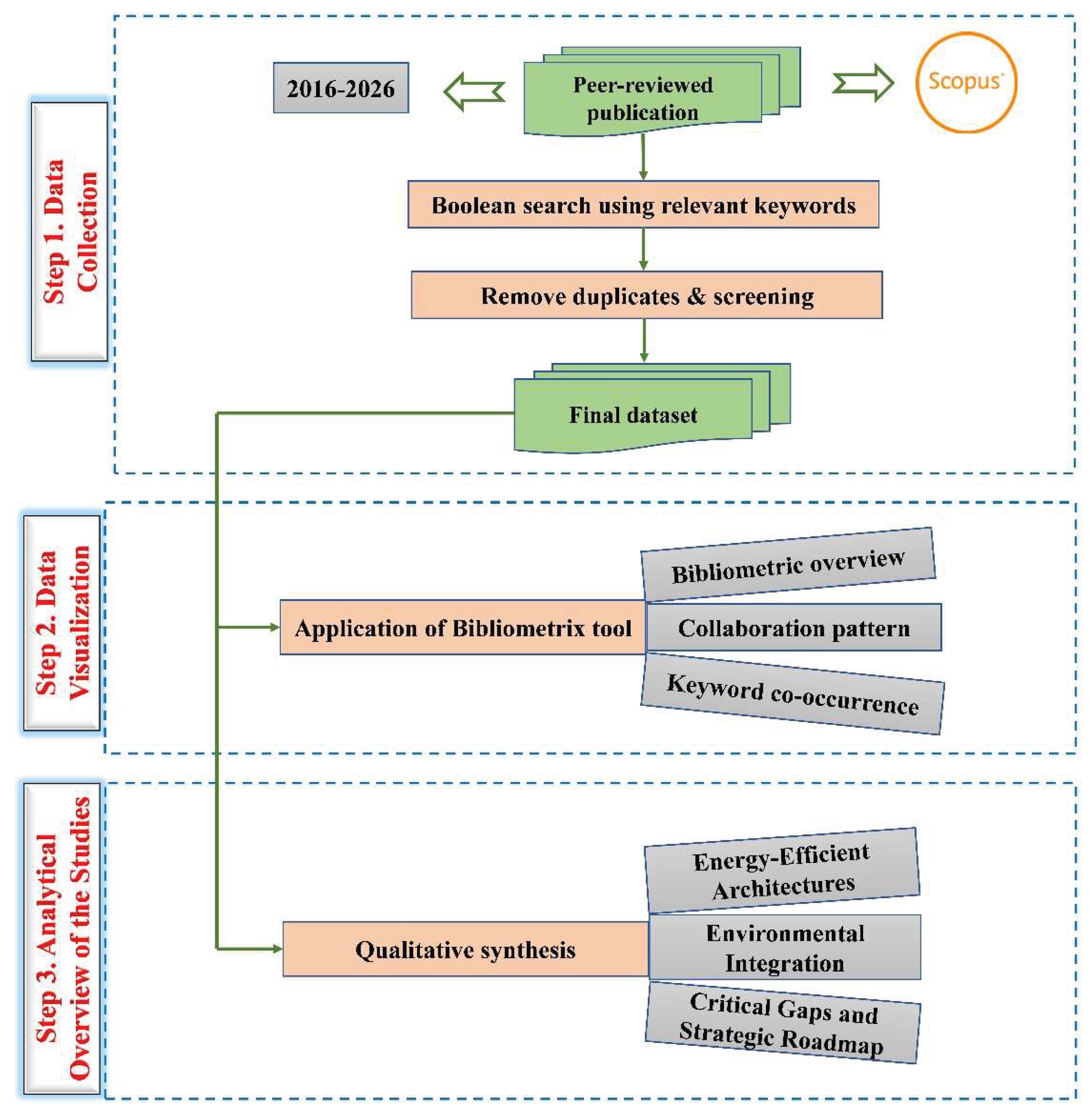
Figure 2.
Bibliometric overview of IoT smart street lighting research (2016-2026).
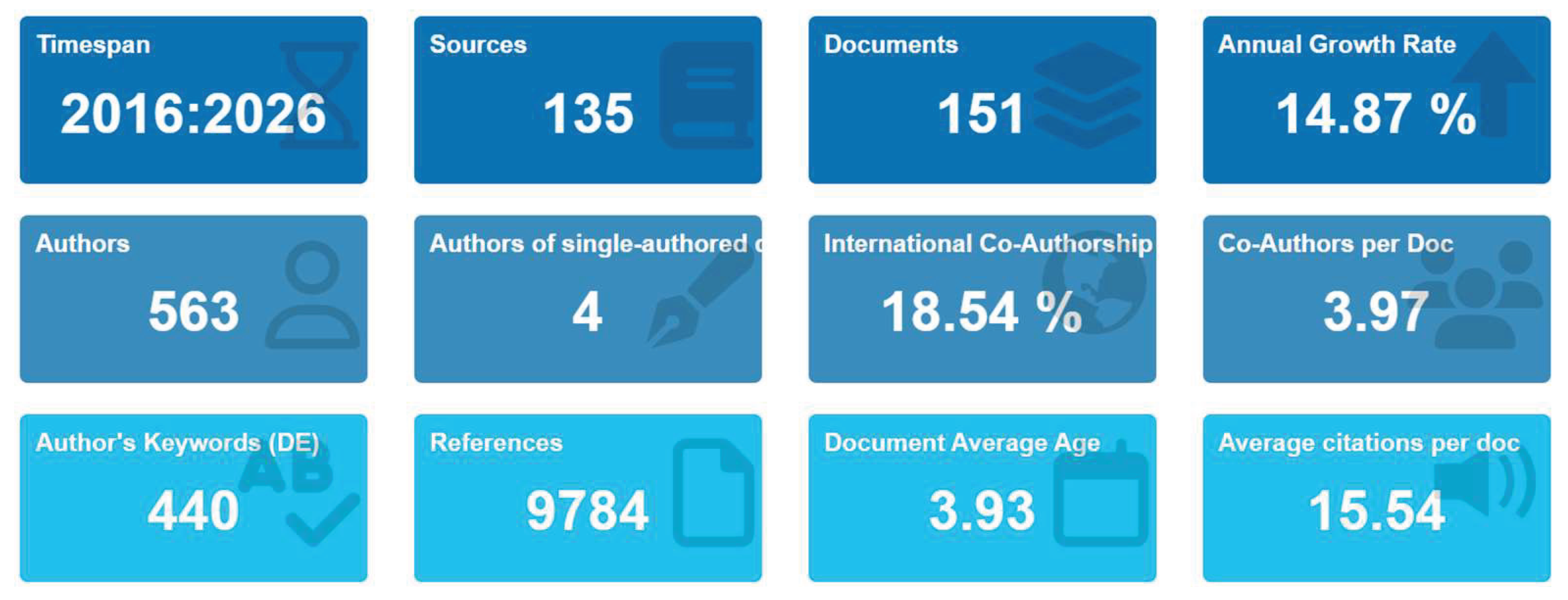
Figure 3.
Global research collaboration network in IoT smart street lighting (2016-2026).
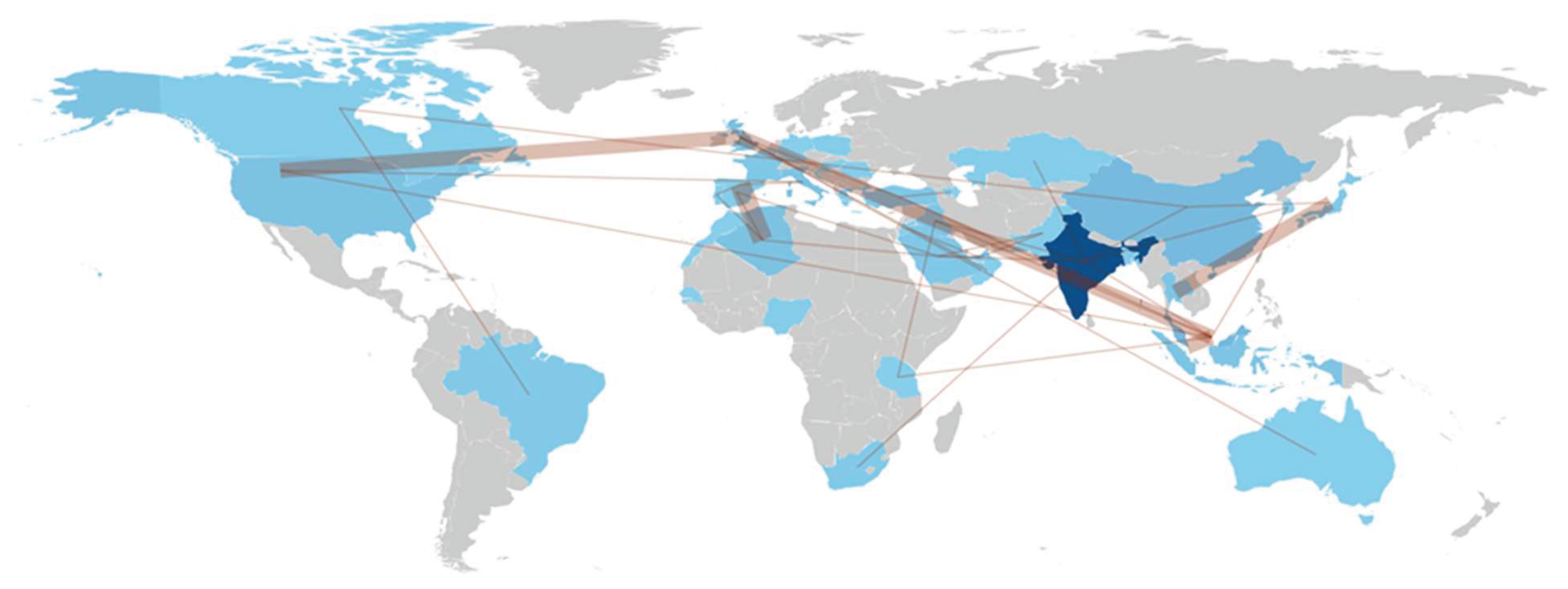
Figure 4.
Global research collaboration network in IoT smart street lighting (2016-2026).
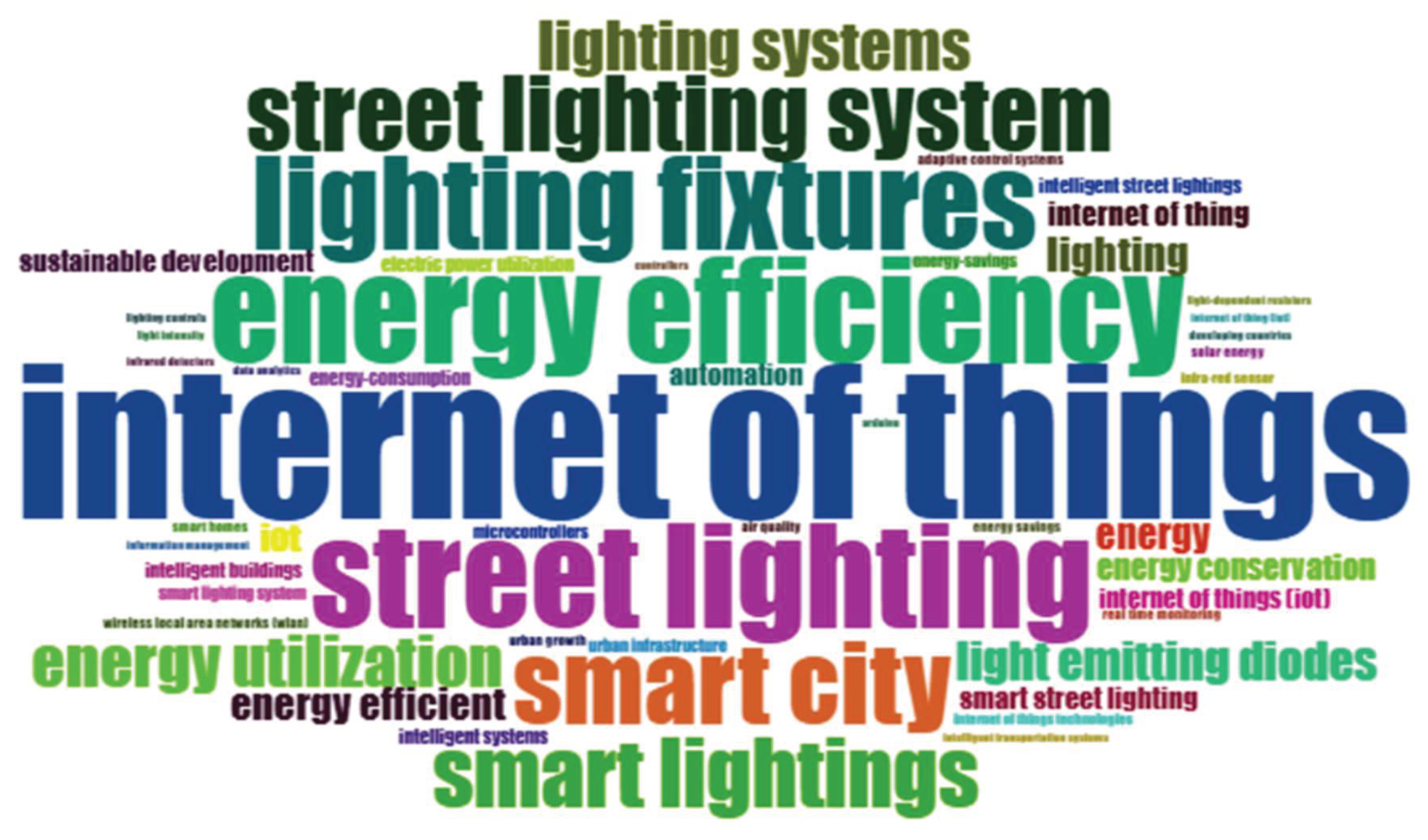

Table 1.
Dominant architectural components, technologies, and representative studies in IoT-based smart street lighting.
Table 1.
Dominant architectural components, technologies, and representative studies in IoT-based smart street lighting.
| Layer / Component | Common Technologies | Functional Role | Energy Impact | Representative Studies |
|---|---|---|---|---|
| IoT Architecture | 3-layer, 5-layer models | Structured data flow and system coordination | Indirect | [33,55] |
| Sensors | PIR, LDR, DHT11, MQ135 | Motion, light, environmental sensing | Direct | [56] |
| Microcontrollers / Edge | ESP8266, Arduino, Raspberry Pi | Local processing and control | Direct | [57,58] |
| Communication Protocols | Wi-Fi, ZigBee, LoRaWAN, MQTT | Data transmission and system connectivity | Conditional | [55] |
| Energy Strategies | Static → Sensor-based → Adaptive | Evolution of lighting control | High | [33] |
| Control Algorithms | Rule-based, threshold, adaptive logic | Dynamic dimming and decision-making | High | [59] |
Table 2.
Environmental integration patterns, sensing technologies, and sustainability roles in IoT-based smart street lighting.
Table 2.
Environmental integration patterns, sensing technologies, and sustainability roles in IoT-based smart street lighting.
| Integration Level | Technologies Used | Functional Role | System Impact | Representative Studies |
|---|---|---|---|---|
| Lighting-only systems | LED + basic control | Illumination control only | Low | [33] |
| Lighting + motion sensing | PIR, LDR | Adaptive lighting based on activity | Medium | [73] |
| Lighting + environmental sensing | DHT11, MQ135, gas sensors | Air quality and weather monitoring | Medium–High | [74] |
| Multi-functional smart nodes | Hybrid sensor networks + IoT cloud | Integrated lighting, sensing, and analytics | High | [32] |
| Context-aware systems | Multi-sensor + control algorithms | Environment-driven lighting decisions | High | [57] |
Disclaimer/Publisher’s Note: The statements, opinions and data contained in all publications are solely those of the individual author(s) and contributor(s) and not of MDPI and/or the editor(s). MDPI and/or the editor(s) disclaim responsibility for any injury to people or property resulting from any ideas, methods, instructions or products referred to in the content. |
© 2026 by the authors. Licensee MDPI, Basel, Switzerland. This article is an open access article distributed under the terms and conditions of the Creative Commons Attribution (CC BY) license (http://creativecommons.org/licenses/by/4.0/).
Copyright: This open access article is published under a Creative Commons CC BY 4.0 license, which permit the free download, distribution, and reuse, provided that the author and preprint are cited in any reuse.


