

Submitted:
29 April 2026
Posted:
29 April 2026
You are already at the latest version
Abstract
Caveolae are specialized plasma membrane microdomains whose structure and signaling functions are highly sensitive to nutritional status. They operate as dynamic, metabolically responsive units whose stability depends on membrane cholesterol, sphingolipids, fatty acid composition, and insulin regulated metabolic cues. Dietary lipids, glucose availability, amino acid balance, and micronutrient dependent antioxidant defenses all influence caveolar assembly, membrane curvature, and caveolin expression. Saturated fats, hyperglycemia, and oxidative stress destabilize caveolae by altering lipid packing, promoting caveolin mislocalization, and increasing lipid and protein oxidation. In contrast, unsaturated fatty acids, antioxidant vitamins, polyphenols, and adequate zinc and selenium support membrane fluidity, redox balance, and caveolar integrity. Dietary patterns exert integrated effects: Western style diets impair caveolin 1 expression and endothelial structure, whereas Mediterranean and plant based diets enhance lipid handling and insulin sensitivity, conditions favorable for maintaining functional caveolae. Caveolae also act as nutrient sensing platforms that coordinate insulin receptor signaling, nitric oxide production, and lipid uptake, amplifying the systemic impact of nutritional perturbations. Disruption of caveolae contributes to metabolic disease by impairing adipocyte lipid storage, endothelial nitric oxide signaling, and skeletal muscle glucose uptake. Understanding how nutrition modulates caveolae provides a mechanistic link between diet and metabolic health and highlights membrane targeted nutritional strategies as potential therapeutic approaches.
Keywords:
caveolae
; caveolin-1
; nutrition
; membrane lipids
; oxidative stress
; metabolic syndrome
; insulin resistance
; dietary patterns
Introduction
Caveolae are highly specialized plasma membrane microdomains that act as central platforms for signal transduction, lipid regulation, and cellular mechanoprotection. They are defined structurally by flask-shaped invaginations enriched in cholesterol, sphingolipids, and the scaffolding protein caveolin, with caveolin-1 predominating in metabolically active tissues.
Current evidence demonstrates that caveolae are not static membrane features but dynamic, metabolically responsive structures whose stability and singling capacity depend critically on their lipid environment. Cholesterol availability, fatty acid composition, and insulin-driven metabolic cues all modulate caveolar assembly, membrane curvature, and protein recruitment.
Consequently, caveolae are now understood as nutritionally sensitive membrane domains whose architecture and function adapt to fluctuations in metabolic state, linking cellular nutrient status directly to membrane signaling and lipid homeostasis[1]. This review synthesizes current evidence on how dietary components, ranging from macronutrient composition to micronutrient availability, modulate caveolae integrity, and cellular and systemic metabolic homeostasis.
1. Lipid Composition as a Primary Determinant of Caveolae Stability
The structural integrity of caveolae is critically determined by the lipid composition of the plasma membrane. Cholesterol and sphingolipids constitute the biophysical framework of these domains, supporting membrane curvature and enabling caveolin oligomerization. Because this lipid environment is highly sensitive to dietary inputs, nutritional status exerts a direct influence on caveolar stability[2,3].
Diets enriched in saturated fatty acids reduce membrane fluidity and promote rigid lipid packing, conditions that impair caveolar dynamics. Excess saturated fatty acids, particularly palmitate, can trigger caveolin-1 mislocalization, enhance its degradation, and ultimately lead to caveolae flattening or loss[4]. In contrast, monounsaturated and polyunsaturated fatty acids (PUFAs), including omega-3 fatty acids, increase membrane fluidity and may help preserve caveolar architecture[5]. These effects arise from PUFA-driven remodeling of phospholipid composition and redistribution of cholesterol within the plasma membrane.
Cholesterol intake itself introduces a functional paradox. Although sufficient cholesterol is required for caveolae formation and maintenance, excessive dietary cholesterol could increase blood concentrations, and disrupt intracellular lipid trafficking and promote aberrant raft coalescence, potentially destabilizing caveolar domains[6].
Overall, the balance of dietary lipids, rather than their absolute abundance, appears essential for maintaining caveolar structure and function.
2. Glucose and Insulin Signaling: Metabolic Inputs to Caveolae Function
Caveolae function as essential membrane platforms that organize insulin receptors and facilitate downstream signaling[7]. Consequently, nutritional and metabolic states that modify glucose availability or insulin sensitivity exert direct and measurable effects on caveolar integrity.
Chronic exposure to elevated glucose levels, as occurs in overnutrition and diabetes, promotes oxidative stress and the formation of advanced glycation end-products, both of which can damage caveolin-1 and associated structural proteins[8]. Hyperinsulinemia, a hallmark of insulin-resistant states, may transiently increase caveolae formation as a compensatory mechanism to enhance insulin receptor signaling, and sustained hyperinsulinemia ultimately contributes to caveolar dysfunction through receptor desensitization, impaired signaling fidelity, and alterations in membrane lipid composition[9].
In contrast, caloric restriction and improved glycemic control are associated with reduced oxidative stress and improved lipid handling[10], conditions that would be expected to support caveolin expression and caveolar function, although direct evidence for enhanced caveolar stability has not yet been demonstrated.
3. Protein and Amino Acid Availability: Structural and Regulatory Roles
Protein nutrition influences caveolae both structurally and through its effects on cellular signaling pathways. Caveolins and cavins are protein components whose synthesis depends on adequate amino acid availability. Because these proteins are essential structural determinants of caveolae, conditions that reduce protein synthesis, such as severe protein malnutrition, would be expected to impair caveolin expression and diminish caveolar abundance. Although direct evidence for this specific nutritional effect is limited, recent studies demonstrate that caveolin deficiency itself disrupts membrane integrity and perturbs key metabolic signaling pathways[1]. Chronic elevation of leucine and other branched-chain amino acids, as seen in high-protein or imbalanced diets, may contribute to metabolic stress[11] and indirectly impair caveolae through insulin resistance and lipid dysregulation.
4. Micronutrients and Antioxidant defense: Protecting Caveolar Integrity
Micronutrients, particularly those with antioxidant properties, are essential for maintaining caveolae integrity under conditions of metabolic stress. Oxidative damage is a key mechanism by which caveolae are disrupted[12], as reactive oxygen species (ROS) can oxidize lipids and proteins within these domains.
Vitamins such as vitamin E, a lipid-soluble antioxidant, play a protective role in membrane microdomains by preventing lipid peroxidation[13], a process that is particularly damaging to cholesterol-rich structures such as caveolae. Vitamin C and dietary polyphenols enhance cellular antioxidant defense systems, reducing oxidative stress and lipid peroxidation[14]. Because caveolin-1 is highly sensitive to redox imbalance, these antioxidants can indirectly preserve caveolin function, and polyphenols may additionally modulate caveolin-1 expression and caveolar structure[15].
Minerals such as zinc and selenium are essential cofactors for antioxidant enzymes including superoxide dismutase and glutathione peroxidase. Deficiencies in these micronutrients impair endogenous antioxidant defenses and exacerbate oxidative stress[16], conditions that would be expected to destabilize lipid-rich membrane microdomains such as caveolae.
5. Dietary Patterns and Systemic Effects on Caveolae
Beyond individual nutrients, overall dietary patterns exert integrated effects on caveolae integrity. Western-style diets, characterized by high saturated fat and refined sugar intake, induce lipotoxicity, oxidative stress, and insulin resistance, the metabolic disturbances known to destabilize caveolae. Experimental models of Western-diet feeding demonstrate altered caveolin-1 expression, impaired endothelial integrity, and disrupted caveola-associated membrane structures[17], supporting the concept that such diets compromise caveolar function in metabolic tissues.
In contrast, Mediterranean[18] and plant-based[19] diets, which are rich in unsaturated fats, fiber, and antioxidants, improve lipid profiles, reduce inflammation, and enhance insulin sensitivity, the metabolic conditions that are known to support caveolin-1 function and favor the maintenance of stable, functional caveolae.
Fasting and intermittent energy restriction activate autophagy and promote membrane remodeling through AMPK–mTOR signaling and ketone-mediated adaptive pathways[20]. Although direct evidence for caveolin regulation is limited, these interventions enhance cellular maintenance processes that would be expected to support caveolin stability and caveolar function, suggesting a protective effect on caveolae.
6. Caveolae as Nutrient Sensors and Mediators
An emerging concept is that caveolae themselves act as nutrient sensors. Changes in membrane lipid composition, energy status, and hormonal signals are integrated at caveolar sites, influencing downstream signaling pathways[1].
Caveolae modulate insulin receptor signaling, endothelial nitric oxide production, and lipid uptake via CD36[7]. Consequently, nutritional perturbations that disrupt caveolar structure can have amplified effects on cellular function, ultimately contributing to systemic metabolic dysregulation.
7. Pathophysiological Implications
Disruption of caveolae integrity is increasingly recognized as a contributing factor in metabolic diseases, including obesity, type 2 diabetes, and cardiovascular disease. Nutritional factors that impair caveolae may therefore act as upstream drivers of these conditions.
In adipocytes, caveolae loss impairs lipid storage capacity and promotes ectopic fat deposition[21]. In endothelial cells, disruption of caveolae or caveolin-1 impairs eNOS regulation and nitric oxide signaling, a mechanism strongly implicated in vascular dysfunction[22]. In skeletal muscle, caveolae, particularly those enriched in caveolin-3, play a critical role in organizing insulin signaling and facilitating glucose uptake[1]. Disruption of caveolar structure impairs these processes and contributes to reduced insulin sensitivity and disturbed cell metabolism.
Understanding how nutrition modulates caveolae opens new therapeutic possibilities. Strategies that target membrane composition through dietary interventions, together with pharmacological approaches[23], may help restore caveolae function and improve metabolic outcomes.
8. Future Directions and Research Gaps
Despite growing evidence, several gaps remain. The precise molecular mechanisms linking specific nutrients to caveolae remodeling are not fully understood. Interactions between different dietary components, as well as individual variability in response to nutrition, require further investigation.
Advanced imaging and lipidomics technologies are expected to provide deeper insights into caveolae dynamics in vivo. Translational studies are also needed to determine whether dietary modulation of caveolae can be effectively harnessed in clinical practice.
Conclusions
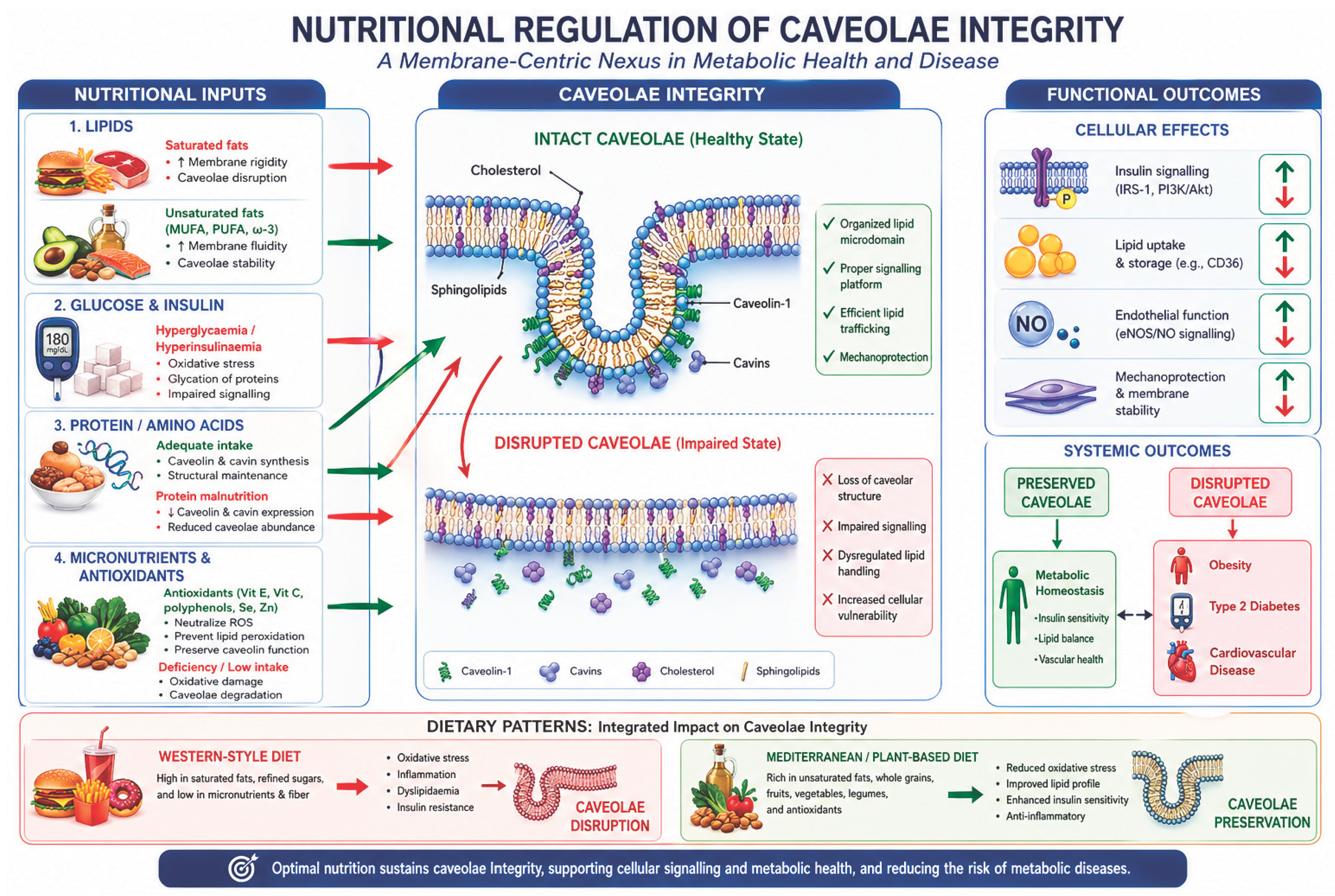
Caveolae integrity is highly sensitive to nutritional inputs, with lipids, glucose, protein, and micronutrients all playing critical roles. Dietary patterns that promote balanced lipid composition, reduce oxidative stress, and support metabolic homeostasis are essential for maintaining functional caveolae. Given their central role in cellular signaling and metabolic regulation, caveolae represent a compelling link between nutrition and disease, offering promising avenues for prevention and therapeutic intervention in metabolic disorders (Figure 1).
Finding
Not applicable.
Conflicts of interest
The author declares no conflicts of interest.
References
- Stea, D.M.; D’Alessio, A. Caveolae: Metabolic Platforms at the Crossroads of Health and Disease. Int. J. Mol. Sci. 2025, Vol. 26. [Google Scholar] [CrossRef] [PubMed]
- Wu, Y.; Lim, Y.W.; McMahon, K.A.; Martel, N.; Rae, J.; Lo, H.P.; et al. Pro-ferroptotic lipids as key control points for caveola formation and disassembly. Cell. Rep. [Internet] 2025, 44(6), 115789. Available online: https://www.sciencedirect.com/science/article/pii/S2211124725005601. [CrossRef] [PubMed]
- Zeng, W.; Cai, N.; Liu, J.; Liu, K.; Lin, S.; Yang, X.; et al. Caveolin-1 deficiency Improved Glucose Metabolism via Modulation of Beta-cell Autophagy on High-Fat-Diet Mice. J. Biol. Chem. [Internet] Available from. 2026. [Google Scholar] [CrossRef] [PubMed]
- Carpentier, M.; Omrane, M.; Shaaban, R.; Träger, J.; El Khallouki, N.; Le Lay, S.; et al. Seipin Governs caveolin-1 trafficking through modulating sphingolipid-glycerolipid balance. Cell. Rep. [Internet] Available from. 2025, 44(10). [Google Scholar] [CrossRef] [PubMed]
- Lee-Okada, H.C.; Xue, C.; Yokomizo, T. Recent advances on the physiological and pathophysiological roles of polyunsaturated fatty acids and their biosynthetic pathway. Biochim Biophys. Acta-Mol. Cell. Biol. Lipids [Internet] 2025, 1870(1), 159564. Available online: https://www.sciencedirect.com/science/article/pii/S1388198124001148. [CrossRef] [PubMed]
- Warda, M.; Tekin, S.; Gamal, M.; Khafaga, N.; Çelebi, F.; Tarantino, G. Lipid rafts: novel therapeutic targets for metabolic, neurodegenerative, oncological, and cardiovascular diseases. Lipids Health Dis. [Internet] Available from. 2025, 24(1), 147. [Google Scholar] [CrossRef] [PubMed]
- zheng, Zhang W. An association of metabolic syndrome constellation with cellular membrane caveolae. Pathobiol. Aging Age-Relat. Dis. 2014, 4(1). [Google Scholar] [CrossRef] [PubMed]
- Russo, P.; Sirangelo, I.; Siani, A. Dietary Advanced Glycation End Products (dAGEs): Pathogenesis and nutritional strategies for health longevity-A critical view. Nutr. Metab. Cardiovasc Dis. [Internet] Available from. 2026, 36(5). [Google Scholar] [CrossRef] [PubMed]
- Parton, R.G.; Kozlov, M.M.; Lundmark, R. A lipid-centric view of endocytosis by caveolae. Nat Cell Biol [Internet]. Available from. 2026. [CrossRef]
- Russo, L.; Babboni, S.; Andreassi, M.G.; Daher, J.; Canale, P.; Del Turco, S.; et al. Treating Metabolic Dysregulation and Senescence by Caloric Restriction: Killing Two Birds with One Stone? Antioxidants 2025, Vol. 14, 99. [Google Scholar] [CrossRef] [PubMed]
- Mei, J.; Yang, F.; yuan; Gong, Q. Branched-chain amino acids and insulin resistance in type 2 diabetes: from metabolic dysregulation to therapeutic targets. Front Endocrinol (Lausanne) [Internet]. 2026, Volume 16. Available online: https://www.frontiersin.org/journals/endocrinology/articles/10.3389/fendo.2025.1643231.
- Wu, Y.; Lim, Y.W.; Stroud, D.A.; Martel, N.; Hall, T.E.; Lo, H.P.; et al. Caveolae sense oxidative stress through membrane lipid peroxidation and cytosolic release of CAVIN1 to regulate NRF2. Dev. Cell. 2023, 58(5). [Google Scholar] [CrossRef] [PubMed]
- Canner, S.W.; Zhu, F.; Feller, S.E.; Wassall, S.R. A Role for Lipid-Lipid Interactions in Vitamin E’s Function as a Membrane Antioxidant. Biophys. J. [Internet] Available from. 2019, 116(3), 227a. [Google Scholar] [CrossRef]
- Kalogerakou, T.; Antoniadou, M. The Role of Dietary Antioxidants, Food Supplements and Functional Foods for Energy Enhancement in Healthcare Professionals; Antioxidants, 2024; Vol. 13. [Google Scholar]
- Terao, J. Caveolae and caveolin-1 as targets of dietary polyphenols for protection against vascular endothelial dysfunction. J. Clin. Biochem Nutr. 2024, 75(1), 7–16. [Google Scholar] [CrossRef] [PubMed]
- de Oliveira, A.R.S.; Cruz, K.J.C.; Morais, J.B.S.; dos Santos, L.R.; de Sousa Melo, S.R.; Fontenelle, L.C.; et al. Magnesium, selenium and zinc deficiency compromises antioxidant defense in women with obesity. BioMetals [Internet] Available from. 2024, 37(6), 1551–63. [Google Scholar] [CrossRef] [PubMed]
- Liu, I.F.; Lin, T.C.; Wang, S.C.; Yen, C.H.; Li, C.Y.; Kuo, H.F.; et al. Long-term administration of Western diet induced metabolic syndrome in mice and causes cardiac microvascular dysfunction, cardiomyocyte mitochondrial damage, and cardiac remodeling involving caveolae and caveolin-1 expression. Biol. Direct 2023, 18(1). [Google Scholar] [CrossRef] [PubMed]
- Detopoulou, P.; Antonopoulou, S.; Douvogianni, P.; Demopoulos, C.A. The Mediterranean Diet and Cardiovascular Protection: Biochemical Mechanisms with Emphasis on Platelet-Activating Factor; Nutrients, 2026; Vol. 18. [Google Scholar]
- López-Moreno, M.; Fresán, U. Do the Health Benefits of the Mediterranean Diet Increase with a Higher Proportion of Whole Plant-Based Foods? Curr. Nutr. Rep. [Internet] Available from. 2025, 14(1), 52. [Google Scholar] [CrossRef] [PubMed]
- Vergara Nieto, Á.A.; Diaz, A.H.; Hernández, M.; Sagredo, D. A Narrative Review about Metabolic Pathways, Molecular Mechanisms and Clinical Implications of Intermittent Fasting as Autophagy Promotor. Curr. Nutr. Rep. [Internet] Available from. 2025, 14(1), 78. [Google Scholar] [CrossRef] [PubMed]
- Briand, N.; Prado, C.; Mabilleau, G.; Lasnier, F.; Le Lièpvre, X.; Covington, J.D.; et al. Caveolin-1 Expression and Cavin Stability Regulate Caveolae Dynamics in Adipocyte Lipid Store Fluctuation. Diabetes [Internet] Available from. 2014, 63(12), 4032–44. [Google Scholar] [CrossRef] [PubMed]
- Hwej, A.S.; Alsharif, M.; Al-Ferjani, A.; Kennedy, S. Regulation of NO Synthesis by Caveolin-1: A Review of Its Importance in Blood Vessels, Perivascular Adipose Tissue and in Atherosclerosis; Applied Biosciences, 2026; Vol. 5, p. 11. [Google Scholar]
- Zhang, W.Z. Chapter 7 - Pharmacologically targeting caveolae in metabolic diseases; de Oliveira MRBTPT in, M.D., Ed.; Academic Press, 2026; pp. 127–39. Available online: https://www.sciencedirect.com/science/article/pii/B9780443273704000123.
Figure 1.
illustrates the nutritional regulation of caveolae integrity and its impact on metabolic health. Key dietary components, lipids, glucose and insulin, proteins, and micronutrients, are shown to differentially modulate caveolar structure and function. Saturated fats and hyperglycemia promote caveolae disruption, whereas unsaturated fats, adequate protein intake, and antioxidant micronutrients support membrane stability and caveolin/cavin integrity. The central panel depicts intact versus disrupted caveolae and associated molecular changes in membrane organization. The right panel summarizes downstream effects on insulin signaling, lipid handling, endothelial function, and mechanoprotection, leading to either metabolic homeostasis or disease states including obesity, type 2 diabetes, and cardiovascular disease.
Figure 1.
illustrates the nutritional regulation of caveolae integrity and its impact on metabolic health. Key dietary components, lipids, glucose and insulin, proteins, and micronutrients, are shown to differentially modulate caveolar structure and function. Saturated fats and hyperglycemia promote caveolae disruption, whereas unsaturated fats, adequate protein intake, and antioxidant micronutrients support membrane stability and caveolin/cavin integrity. The central panel depicts intact versus disrupted caveolae and associated molecular changes in membrane organization. The right panel summarizes downstream effects on insulin signaling, lipid handling, endothelial function, and mechanoprotection, leading to either metabolic homeostasis or disease states including obesity, type 2 diabetes, and cardiovascular disease.
Disclaimer/Publisher’s Note: The statements, opinions and data contained in all publications are solely those of the individual author(s) and contributor(s) and not of MDPI and/or the editor(s). MDPI and/or the editor(s) disclaim responsibility for any injury to people or property resulting from any ideas, methods, instructions or products referred to in the content. |
© 2026 by the author. Licensee MDPI, Basel, Switzerland. This article is an open access article distributed under the terms and conditions of the Creative Commons Attribution (CC BY) license.
Copyright: This open access article is published under a Creative Commons CC BY 4.0 license, which permit the free download, distribution, and reuse, provided that the author and preprint are cited in any reuse.


