

Submitted:
28 April 2026
Posted:
28 April 2026
You are already at the latest version
Abstract
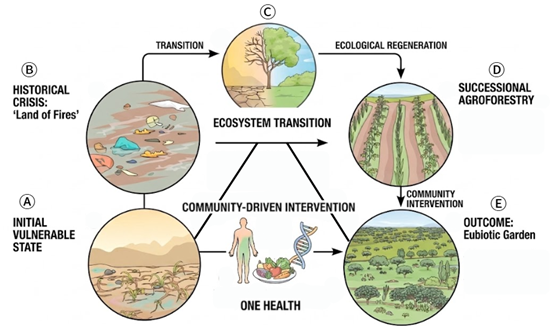
Quantitative results demonstrate that the 4D stratified model significantly improved soil quality and vertical structural complexity; vegetation density increased from 5 to 35 plants/m², while species richness exhibited a fourfold increase. Beyond biophysical restoration, the intervention catalyzed a "narrative inversion," transitioning the site from a stigmatized wasteland to a socio-ecological hub that fosters collaborative health literacy and community resilience. By integrating agroecological practices with the EcoFoodFertility clinical framework, the project illustrates the potential of localized interventions to function as "preventive infrastructures" within a One Health paradigm. The findings suggest that SAFS represents a scalable laboratory for territorial re-signification, offering transferable insights for aligning ecological restoration with social innovation in degraded peri-urban landscapes, in accordance with Nature-Based Solutions (NBS) and European Green Deal objectives.
Keywords:
Land of Fires
; peri-urban agroforestry
; successional agroforestry systems
; territorial re-signification
; social innovation
; ecological regeneration
; One Health
; collaborative health literacy
; regenerative agriculture
; community resilience
1. Introduction
Ecological and socio-economic Ecological and socio-economic processes are inextricably linked within urban ecosystems, forming complex multi-scale spatial structures that dictate overall ecosystem functioning. In the field of urban landscape ecology, aligning sustainable land-use patterns with social equity is considered a primary objective for global development [1]. This balance is particularly precarious in the urban-rural fringe, where environmental degradation frequently intersects with institutional neglect and social vulnerability. In contemporary Europe, few areas exemplify this socio-environmental fragmentation as starkly as the "Terra dei Fuochi" (Land of Fires) in Southern Italy. Since the 1990s, this region has been systematically impacted by illegal waste disposal and toxic fires, sparking a public health crisis that demands urgent transdisciplinary research and innovative policy frameworks [2]. The environmental pressure in this area has disproportionately affected vulnerable demographics, establishing a direct link between localized pollution and negative health outcomes [3]. Recent biomonitoring has confirmed the alarming presence of Potentially Toxic Elements (PTEs)—such as arsenic and mercury—across both industrial and agricultural landscapes [4].
However, the crisis extends beyond biophysical contamination, catalyzing a profound process of territorial stigmatization. This "toxic scandal" has eroded consumer trust and devalued local agricultural heritage, creating a socio-economic ripple effect that penalizes honest producers [5]. To counter these dynamics, regenerative interventions must go beyond simple soil remediation; they require a "transdisciplinary bridge" that integrates ecological health with social capital [6]. While the European Green Deal and the Nature-Based Solutions (NBS) framework provide a macro-scale roadmap for biodiversity restoration [7,8], there is a critical knowledge gap regarding how community-led agroforestry can facilitate territorial re-signification in highly stigmatized contexts.
This study addresses this gap by analyzing the establishment of the "Orto Eubiotico" in Sant’Anastasia (Naples). Located in one of the most symbolic epicenters of the Land of Fires, the Orto Eubiotico represents a pioneering application of a Successional Agroforestry System (SAFS) in a contaminated peri-urban setting. By integrating six years of longitudinal field observations (2019–2025) with qualitative narratives, this research evaluates how the transition from a degraded site to a multifunctional "socio-ecological infrastructure" can trigger a narrative inversion. The findings demonstrate that small-scale, localized interventions can function as "preventive infrastructures," reversing territorial stigma and fostering collaborative health literacy in alignment with the One Health paradigm.
2. Theoretical Framework
2.1. Agroecological and Agroforestry Transition in Urban Landscapes
Agroecology is understood as a systemic approach that integrates ecological principles into urban and peri-urban landscapes, emphasizing biodiversity, resilience, and knowledge co-production between scientific and local actors. Within this framework, agroforestry systems—defined as the intentional integration of woody perennials with crops and/or livestock—are recognized as multifunctional land-use strategies that enhance ecosystem services, improve soil functionality, and support climate adaptation at the landscape scale [10,11].
2.2. Successional Agroforestry Systems (SAFS): Spatial and Structural Complexity
Successional Agroforestry Systems (SAFS), or dynamic agroforestry, represent an advanced regenerative model based on ecological succession theory. These systems replicate natural forest dynamics by organizing plant species in complex temporal and spatial layers. Early-stage species modify environmental conditions facilitating the establishment of more complex plant communities [14,15].
2.3. Socio-Ecological Transition and Landscape Governance
Ecological regeneration is increasingly understood as a socio-ecological process rather than a purely biophysical one.
Social ecology theory conceptualizes environmental systems as interconnected ecological and socio-political structures, where degradation reflects broader governance dynamics and multi-scale spatial interactions [19,20]. In this perspective, regeneration involves strengthening social capital and collaborative landscape management. Such transdisciplinary exploration has been shown to foster empowerment and civic engagement, especially in vulnerable territories [21,22,23,24,25,26]. Urban agroecology frames these agricultural spaces as multifunctional nodes that integrate the urban tissue with its surrounding environment [27,28,29].
2.4. Subsection Sparial and Policy Dimension of Territorial Sustainability
From a socio-spatial perspective, regeneration entails the reconfiguration of territorial meanings and landscape identity. Space is a socially produced construct shaped by everyday practices [30]. In the context of urban landscape ecology, the ultimate goal of building sustainable ecosystems is to ensure the global sustainable development of human society.
In stigmatized territories, ecological regeneration challenges dominant narratives of degradation through new spatial organizations.
2.5. Conceptual Framework: Spatially Explicit Socio-Ecological Transitions
This study is grounded in an integrated socio-ecological framework that links agroecological transition, successional agroforestry dynamics, and urban landscape ecology. The framework conceptualizes agroforestry systems as multifunctional socio-ecological infrastructures where ecological processes and social dynamics co-evolve across different scales [34,35]. Specifically, the analysis is structured around three interconnected theoretical domains: urban landscape ecology and spatial production, which conceptualize land as a socially produced and continuously reshaped space determined by multi-scale spatial organizations [36]; Agroecological and agroforestry transition frameworks, which highlight the role of diversified land-use systems in enhancing ecosystem services and resilience at the urban-rural fringe [37,38]; Successional agroforestry theory, which explains ecosystem development through vertical and horizontal stratification, enhancing system self-organization [39,40,41].
3. Materials and Methods
3.1. Study Area and Spatial Context
The study was conducted in the municipality of Sant’Anastasia (Campania Region, Southern Italy), a strategic node located at the eastern margin of the so-called “Land of Fires”, Terra dei Fuochi. This area is historically affected by illegal waste disposal and socio-environmental degradation [42,43]. The research focused on a private peri-urban plot of approximately 4,000 m², representing a typical experimental unit at the urban-rural interface, characterized by fragmented land use and urban expansion pressure.
Prior to the intervention (2019), the site exhibited clear indicators of landscape-scale degradation, including severe soil compaction and reduced vegetation cover. From a landscape ecology perspective, these conditions represented a disruption of ecosystem functioning and a loss of connectivity between the urban tissue and the surrounding environment. The agroforestry intervention was monitored over a six-year period (2019–2025), enabling the observation of multi-scale spatial dynamics associated with system evolution.
3.2. Research Design: A Transdisciplinary Spatially Explicit Approach
This study employs a longitudinal, exploratory case study approach. Following transdisciplinary landscape ecology principles, our methodology integrates prolonged field observations with qualitative narratives to capture the interactions of the urban tissue with its surrounding environment. To ensure analytical rigor, data were analyzed using the Gioia Methodology [44], integrated with Reflexive Thematic Analysis (TA) [45]. This dual approach ensures a transparent and rigorous bridge between raw empirical evidence and higher-order theoretical dimensions. Methodological rigor was established through data triangulation—cross-verifying longitudinal field notes (monthly observations) with iterative semi-structured interviews conducted with purposively sampled key informants (n=5). These informants, including agronomists and local activists directly involved in the site’s evolution, were interviewed periodically over the six-year period to capture the shifting perceptions and the narrative transition of the territory. The small sample size is compensated for by the depth and longitudinal consistency of the data, ensuring what is known in qualitative research as information power and prolonged engagement.
Figure 1.
Transdisciplinary research design, longitudinal timeline (2019–2025), and data analysis framework based on the Gioia methodology. The flowchart illustrates the sequential development of the study across three distinct phases. Horizontal arrows indicate temporal progression, while vertical and divergent arrows show methodological causalities and data generation pathways. The diagram demonstrates how the six-year longitudinal study moves from initial site setup and SAFS activation (Phase 1, 2019–2020) through a six-year dual-track ecological and social monitoring producing disparate qualitative data (Phase 2, 2020–2023). Finally, the framework details the crucial dynamic of Phase 3 (2024–2025): data triangulation and the systematic analytical cascade of the Gioia methodology, which moves inductively from specific 1st-order empirical evidence to 2nd-order analytical themes, culminating in aggregate dimensions that define the final predictive model for socio-ecological regeneration.
Figure 1.
Transdisciplinary research design, longitudinal timeline (2019–2025), and data analysis framework based on the Gioia methodology. The flowchart illustrates the sequential development of the study across three distinct phases. Horizontal arrows indicate temporal progression, while vertical and divergent arrows show methodological causalities and data generation pathways. The diagram demonstrates how the six-year longitudinal study moves from initial site setup and SAFS activation (Phase 1, 2019–2020) through a six-year dual-track ecological and social monitoring producing disparate qualitative data (Phase 2, 2020–2023). Finally, the framework details the crucial dynamic of Phase 3 (2024–2025): data triangulation and the systematic analytical cascade of the Gioia methodology, which moves inductively from specific 1st-order empirical evidence to 2nd-order analytical themes, culminating in aggregate dimensions that define the final predictive model for socio-ecological regeneration.
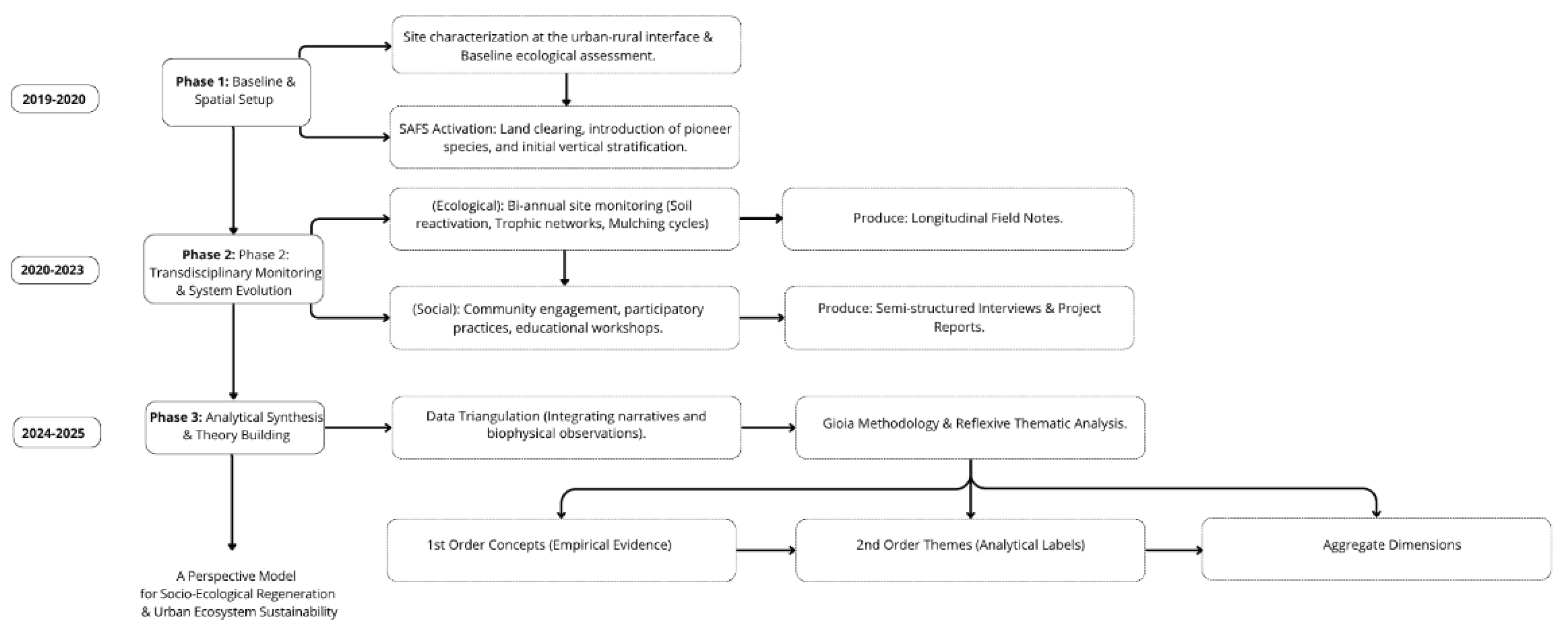
The coding process moved from 1st-order concepts (derived from informants' original terminology and field observations) to 2nd-order themes (theory-centric labels), finally clustering into aggregate dimensions that define the socio-ecological transition. This systematic coding path, mapping the transition from site-specific evidence to broader dimensions of territorial sustainability, is synthesized in Table 1.
3.3. Agroforesty System Implementation: Modeling Spatial Patterns
The intervention followed a three-phase chronosequential design based on the principles of Successional Agroforestry Systems (SAFS). This approach prioritized the creation of complex, multi-scale spatial organizations to restore ecological connectivity in the degraded urban-rural fringe [30,33].
Phase 1: succession activation and vertical stratification (2020–2021). The project initiated with the introduction of fast-growing pioneer species to establish an initial vertical canopy. This phase aimed at creating a primary spatial pattern capable of generating rapid biomass, shading the highly compacted soil, and initiating microclimate regulation.
Phase 2: soil reactivation and horizontal connectivity (2022–2023). The focus shifted to the promotion of below-ground biodiversity through systematic "pruning and mulching" cycles. This phase deliberately managed the horizontal spatial distribution of organic matter to build a protective surface layer, mitigate topsoil degradation, and foster extensive subterranean fungal networks.
Phase 3: functional integration and 4D system maturation (2024–2025). The final phase marked the transition toward a mature, multifunctional agroecosystem where productive fruit trees and herbaceous crops were fully integrated into the forest structure. The resulting 4D stratified forest—where time and ecological succession act as the fourth dimension—represents a novel socio-spatial organization that actively ensures the long-term sustainability and resilience of the peri-urban ecosystem.
3.4. Quantitative Indicators of Transition
To complement the qualitative findings, a set of simplified quantitative indicators was integrated into the monitoring framework. Ecological recovery was assessed through annual field-based observations (2019–2025), including: (i) Vegetation density (plants/m²) via random quadrat sampling (n=10); (ii) Species richness (total count); (iii) Soil surface coverage (%); and (iv) Frequency of bioindicator species (e.g., earthworms). Social impact was tracked through participation-based metrics, including the annual number of events and average participant turnout.
4. Results
4.1. Ecological Regeneration
Between 2019 and 2025, the study site underwent a progressive ecological transformation, evolving from degraded peri-urban soil conditions into a structurally diversified 4D agroforestry system. This transition is visually documented in the Figure 2.
4.1.1. Soil Quality and Functional Reactivation
Field observations and longitudinal monitoring revealed a significant shift in soil functionality. The transition from "Ecosystem stress" (visible in the bare and compacted soil of Figure 2a) to "Nutrient cycle internalization" (as conceptualized in Table 1) was characterized by the following qualitative indicators:
1. Organic matter accumulation: the continuous deposition of pruning residues and plant litter created a stable protective mulch layer, visible in the mature stages of the project (Figure 2 e-f), which significantly reduced soil exposure and surface thermal stress.
2. Structural improvement: observations evidenced increased soil aggregation, enhanced porosity, and a transition toward darker soil coloration, suggesting a build-up of humic fractions compared to the baseline stage (Figure 2 a-b).
3. Functional recovery: increased moisture retention and biological activity (e.g., presence of earthworms and fungal networks) were recorded, consistent with regenerative agroecosystem dynamics [46].
4.1.2. Vegetation Structure and Vertical Stratification
The system progressively transitioned from an open, managed plot to a complex, multi-layered vegetation structure. By Phase 3, the integration of herbaceous, shrub, sub-canopy, and canopy layers was complete, optimizing vertical spatial resource use (Figure 2 e-f). The emergence of spontaneous understory vegetation and a high density of diverse botanical species (self-organizating processes) suggest the activation of self-organizing ecological processes typical of mature SAFS [47]. The 4D stratified forest model demonstrated increased internal resource efficiency compared to the initial nursery management phase.
4.1.3. Biomass Cycling and Input Reduction
Between 2019 and 2025, the study site underwent a progressive ecological transformation, evolving from degraded peri-urban soil conditions into a structurally diversified 4D agroforestry system. This transition is visually documented in the Figure 2. Biomass production and recycling became progressively internalized within the system. While the intermediate phase (Figure 2 c-d) required external nursery stock, the later stages (2024–2025) exhibited: closed-loop nutrient cycling (e.g. pruning residues and plant litter were systematically retained on-site as mulch, contributing to autonomous soil fertilization) and reduced dependency (such as, visible shift from intensive management to a more autonomous, self-regulating structure, indicating increased ecological resilience [48,49].
4.2. Integration with Health-Oriented Frameworks
Beyond its biophysical functions, the agroforestry system was strategically integrated with health-oriented research frameworks, acting as a spatial infrastructure for preventive health. This integration is operationalized through its alignment with the EcoFoodFertility approach, a biomonitoring and prevention model that explores the complex interactions between environmental exposure, dietary patterns, and human reproductive health [50,51,52,53]. Within this transdisciplinary framework, the regenerated urban-rural fringe directly supports the local production of plant-based foods consistent with Mediterranean dietary patterns, which are inherently characterized by a high intake of vegetables and protective bioactive compounds.
Because the successional design entirely eliminates the need for synthetic inputs, the garden functions as a natural buffer; scientific evidence indeed suggests that organically and agroecologically managed systems are associated with higher concentrations of antioxidant compounds and a drastic reduction in pesticide residues compared to conventional production [54,55,56]. Overall, this functional integration demonstrates how localized spatial interventions can operate at the critical intersection of landscape regeneration and public health, effectively transforming a stigmatized territory into a preventive health strategy that links ecosystem functioning with broader human well-being.
4.3. Community Engagement and Socio-Territorial Impact
The agroforestry initiative developed a strong community-oriented dimension, functioning simultaneously as a productive system and a transdisciplinary educational platform. Project activities—ranging from agroforestry training sessions and participatory planting initiatives to nutritional education programs and food preparation workshops—promoted environmental awareness and knowledge exchange. These collaborative practices significantly contributed to the strengthening of local social capital, as evidenced by the increasing involvement of the local population.
Specifically, between 2023 and 2025, the site evolved into a central socio-ecological hub, hosting an average of two open debates and participatory workshops per month.
The impact of these initiatives is reflected in the steady growth of attendance: while early-stage meetings typically involved a small core of 5 to 8 participants, the mature phase of the project (2024–2025) saw a substantial scale-up, with events regularly attracting over 30 citizens, students, and activists.
Beyond its biophysical functions, this visible transformation of the landscape triggered a profound shift in local perception, effectively counteracting the negative narratives and socio-economic stigma historically associated with the "Land of Fires."
By fostering active community participation, the regeneration process operated at both ecological and socio-symbolic levels. This shift provided empirical evidence for a successful territorial re-signification, where the spatial configuration of the Agroforestry system enhanced the perceived value, collective identity, and resilience of the place [57,58].
4.4. Quantitative Validation of the Transition
Quantitative trends confirm the biophysical and social shift observed during the longitudinal study. Vegetation density (plants/m²) was estimated through random quadrat sampling (n = 10 per year), counting all individual plants including herbaceous, shrub, and tree seedlings with visible above-ground biomass.
The data show that vegetation density increased from approximately 5 plants/m² in 2019 to over 35 plants/m² in 2025, while species richness expanded from 10 to over 40 species. Soil coverage improved from 15% to over 90%, coinciding with the systematic recording of earthworms in 80% of sampled plots by 2025. Socially, engagement scaled from 3 annual activities with 5–8 participants to over 20 events per year with an average turnout exceeding 30 individuals.
These metrics provide a measurable backbone to the qualitative aggregate dimensions of Ecological self-organization and territorial re-signification, validating the effectiveness of the agroforest as a multifunctional infrastructure.
5. Discussion
The findings of this longitudinal study suggest that peri-urban successional agroforestry systems (SAFS) can function as multifunctional socio-ecological infrastructures. In the specific context of the investigated agroforest, the integration of ecological restoration, social innovation, and territorial re-signification indicates that such systems transcend mere productive functions. They act as transdisciplinary interventions where biophysical processes and social dynamics co-evolve through a complex four-dimensional (4D) spatio-temporal organization.
From an ecological perspective, the transition from "Ecosystem Stress" toward internalized nutrient cycles supports the hypothesis that SAFS models may address some limitations of conventional restoration in degraded urban fringes. The documented qualitative improvements in soil structure and vegetation stratification within the agroforest reflect a trajectory of managed ecological succession. Unlike traditional monocultural reforestation, this stratified model appears to optimize resource efficiency by mimicking natural forest dynamics. This provides a potential strategy for soil recovery in peri-urban environments characterized by fragmented management and limited institutional maintenance.
The impact of this intervention, however, extends beyond biophysical outcomes, highlighting the role of the agroforest as a platform for social learning. In territories affected by deep environmental stigma and institutional mistrust, such as the "Land of Fires," the visible landscape transformation facilitated what we define as a "Narrative Inversion." This shift from a degraded plot to a productive agroforestry system aligns with landscape ecology theories stating that physical landscape structures are inextricably linked to cultural perception. The observed growth in community participation suggests that the agroforest acted as a catalyst for territorial re-signification, transitioning from a symbol of "toxic degradation" toward a "socio-ecological hub" where collective identity is reclaimed through regenerative practices.
A significant contribution of this work is the functional link between agroecological transition and the circular health framework of the EcoFoodFertility project. Aligning the agroforest with preventive health strategies positions the site as a potential "preventive infrastructure." By fostering collaborative health literacy and providing access to agroecologically managed food, the intervention addresses socio-ecological vulnerabilities at their root. This suggests that peri-urban agroforestry is not only an agronomic choice but a strategic component of the One Health approach, linking soil health to human well-being and reproductive resilience.
From a governance perspective, these findings highlight the potential of agroforestry as a Nature-Based Solution (NBS) within European frameworks such as the Green Deal. While the capacity to integrate food security, biodiversity, and social cohesion makes this a relevant model for post-degraded landscapes, some caution is required regarding generalizability.
Despite the rigor of the longitudinal approach, this study is subject to limitations. As an exploratory single-case study, the results are context-specific and should be viewed as a transferable model rather than a universal solution. Furthermore, while biophysical proxies (e.g., earthworm frequency and vegetation density) indicate functional recovery within the agroforestry system, they do not replace high-resolution biogeochemical analyses.
Future research should integrate these qualitative narratives with quantitative measurements of carbon sequestration and heavy metal immobilization to further validate the biophysical efficacy and scalability of the agroforest model in other contaminated Mediterranean contexts.
Author Contributions
Conceptualization, F.M. and L.M.; methodology, M.L.C., F.M. and A.D.R.G.; software, M.L.C.; validation, L.M. and M.L.C.; formal analysis, M.L.C., F.M. and A.D.R.G.; investigation, F.M., A.D.R.G. and L.M.; resources, L.M.; data curation, M.L.C. and F.M.; writing—original draft preparation, A.D.R.G. and F.M.; writing—review and editing, M.L.C. and L.M.; visualization, L.M.; supervision, L.M., F.M. and M.L.C.; project administration, L.M.; funding acquisition, L.M. All authors have read and agreed to the published version of the manuscript.
Funding
This research received no external funding.
Institutional Review Board Statement
Ethical review and approval were waived for this study due to its nature as a qualitative analysis of socio-ecological perceptions. The study did not involve clinical trials or invasive procedures, and all participant data were treated anonymously.
Informed Consent Statement
Informed consent was obtained from all subjects involved in the study.
Data Availability Statement
The data on which this study is based are available on request from the corresponding author. The data are not publicly available due to privacy and ethical restrictions regarding the qualitative narratives and personal locations involved in the study.
Acknowledgments
The authors would like to thank all participants who took part in the interviews and contributed their time and perspectives to this study. We are also grateful to the local community involved in the project for their continuous engagement and support throughout the research process. Special thanks are extended to the project founders and collaborators for facilitating access to the study site and providing logistical and historical information about the initiative.
Conflicts of Interest
The authors declare no conflict of interest.
Abbreviations
The following abbreviations are used in this manuscript:
| SAFS | Successional Agroforestry Systems |
| 4D | Four-Dimensional (Spatial-Temporal) |
| NBS | Nature-Based Solutions |
| TA | Reflexive Thematic Analysis |
| PTEs | Potentially Toxic Elements |
| 2D | Two-Dimensional |
References
- Kotowska, D.; Báldi, A.; Dobosy, P.; Felföldi, T. Aligning land use with sustainability: Context-sensitive pathways forward. J. Environ. Manag. 2025, 394, 127252. [Google Scholar] [CrossRef]
- Alberti, P. The “land of fires”: Epidemiological research and public health policy during the waste crisis in Campania, Italy. Heliyon 2022, 8, e12331. [Google Scholar] [CrossRef]
- Cafieri, S.; Feoli, F. Ageing and pollution in the “Terra dei Fuochi”. RIEDS-Riv. Ital. Di Econ. Demogr. E Stat. 2023, 77, 44–54. [Google Scholar] [CrossRef]
- Maresca, V.; Postiglione, A.; Siciliano, A.; et al. Biomonitoring of potentially toxic elements at two differentially anthropized areas of the “Land of Fires” (Southern Italy). Sci. Total Environ. 2025, 977, 179399. [Google Scholar] [CrossRef]
- Cembalo, L.; Caso, D.; Carfora, V.; et al. The “Land of Fires” toxic waste scandal and its effect on consumer food choices. Int. J. Environ. Res. Public Health 2019, 16, 165. [Google Scholar] [CrossRef]
- Schreefel, L.; Schulte, R.P.O.; De Boer, I.J.M.; Schrijver, A.P.; Van Zanten, H.H.E. Regenerative agriculture—the soil is the base, but the culture is the key. Curr. Opin. Environ. Sustain. 2020, 47, 100–108. [Google Scholar]
- European Commission. The European Green Deal. COM(2019) 640 final; Brussels, Belgium, 2019. [Google Scholar]
- Pantera, A.; Mosquera-Losada, M.R.; Herzog, F.; Den Herder, M. Agroforestry and the environment. Agrofor. Syst. 2021, 95, 767–774. [Google Scholar] [CrossRef]
- Mlambo, D.; Yashmita-Ulman; Álvarez-Álvarez, P.; Chavan, S.B. Editorial: Agroforestry for biodiversity and ecosystem services. Front. For. Glob. Change 2025, 8, 1616451. [Google Scholar] [CrossRef]
- Cigler, T.; Sacher, R.; Hentgen, J.; Horneber, H.O.; Norgrove, L.; Csuzdi, C. Successional agroforestry versus monoculture in citrus cultivation – a pilot study in the Argolic Plain, Greece. EURAF 2024 Book of Abstracts, Brno, Czech Republic, 28–31 May 2024. [Google Scholar]
- Mosquera-Losada, M.R.; Santos, M.G.S.; Gonçalves, B.; et al. Agroforestry as a sustainable land use option. Eur. J. Agron. 2022, 138, 126543. [Google Scholar]
- Torralba, M.; Fagerholm, N.; Burgess, P.J.; Moreno, G.; Plieninger, T. Do European agroforestry systems enhance biodiversity and ecosystem services? A meta-analysis. Agric. Ecosyst. Environ. 2016, 230, 150–161.[31] Verma, K.; Sharma, P.; Bhardwaj, D.R.; Sharma, V.; Thakur, P. Towards a greener future: Scaling up agroforestry for global sustainability. Green Low-Carbon Econ. 2024, 2, 15–28.
- Verma, K.; Sharma, P.; Bhardwaj, D.R.; Sharma, V.; Thakur, P. Towards a greener future: Scaling up agroforestry for global sustainability. Green. Low.-Carbon Econ. 2024, 2, 15–28. [Google Scholar] [CrossRef]
- Goetsch, E. Natural Succession of Species in Agroforestry and in Soil Recovery; AS-PTA: Rio de Janeiro, Brazil, 1992. [Google Scholar]
- Connell, J.H.; Slatyer, R.O. Mechanisms of succession in natural communities and their role in community stability and organization. Am. Nat. 1977, 111*, 1119–1144. [Google Scholar] [CrossRef]
- Nair, P.K.R. Agroforestry systems. For. Ecol. Manag. 1991, 45, 5–29. [Google Scholar] [CrossRef]
- Pinheiro-Alves, R.; Carvalho, A.M.D.; Timoteo, L.G.; Sampaio, J.A.G.; Hoffmann, M.R.; Coser, T.R.; Bielefeld Nardoto, G. Carbon and nitrogen dynamics in a successional agroforestry system in the Neotropics. J. Biotechnol. Biodivers. 2021, 9, 131–141. [Google Scholar] [CrossRef]
- Mosquera-Losada, M.R.; Santos, M.G.S.; Gonçalves, B.; Ferreiro-Domínguez, N.; Castro, M.; Rigueiro-Rodríguez, A.; González-Hernández, M.P.; Fernández-Lorenzo, J.L.; Romero-Franco, R.; Aldrey-Vázquez, J.A.; et al. Policy challenges for agroforestry implementation in Europe. Front. For. Glob. Change 2023, 6, 1127601. [Google Scholar] [CrossRef]
- Acconciamessa, L. Corte europea e Terra dei fuochi: La tutela pratica ed effettiva del diritto alla vita in caso di esposizione a fonti di inquinamento. Diritti Um. E Dirit. Int. 2025, 19, 343–371. [Google Scholar]
- Bookchin, M. From Urbanization to Cities: Toward a New Politics of Citizenship; Cassell: London, UK, 1995. [Google Scholar]
- Dal Borgo, A.; Bocchi, S.; Capocefalo, A.; et al. Agroforestry for the city: Farmscaping the urban fringe through transformative and participatory action research in Milan. Agrofor. Syst. 2025, in press. [Google Scholar] [CrossRef]
- Journal of Environmental Management. Regenerative farming as climate action. J. Environ. Manag. 2023, 335, 117425.
- Peeters, J.; Willems, B.; Jacobs, S.; Martin, G. Regenerative agriculture in the 2020s: A global review of soil, climate, productivity, and socio-economic evidence (2020–2025). Front. Sustain. Food Syst. 2025, 9, 45–62. [Google Scholar]
- Arnstein, S.R. A ladder of citizen participation. J. Am. Inst. Plan. 1969, 35, 216–224. [Google Scholar] [CrossRef]
- Cornwall, A. Unpacking “participation”: Models, meanings and practices. Community Dev. J. 2008, 43, 269–283. [Google Scholar] [CrossRef]
- Seyfang, G.; Smith, A. Grassroots innovations for sustainable development: Towards a new theoretical framework. Environ. Politics 2007, 16, 584–603. [Google Scholar] [CrossRef]
- FAO Regional Office for Europe and Central Asia. Managing Natural Resources Sustainably and Preserving Biodiversity in a Changing Climate; FAO Regional Priority Programme, 2024. [Google Scholar]
- Specht, K.; Zoll, F.; Siebert, R. Urban agriculture: Social, environmental and economic benefits beyond food production. Glob. Food Secur. 2022, 34, 100651. [Google Scholar]
- Dudek, A.; Rosa, M. Regenerative agriculture as a sustainable system of food production: Concepts, conditions, perceptions and initial implementations in Poland, Czechia and Slovakia. Sustainability 2023, 15, 15721. [Google Scholar] [CrossRef]
- Lefebvre, H. The Production of Space; Blackwell: Oxford, UK, 1991. [Google Scholar]
- European Commission. The European Green Deal. COM(2019) 640 final; Brussels, Belgium, 2019. [Google Scholar]
- European Commission. Horizon Europe – The Framework Programme for Research and Innovation 2021–2027; Brussels, Belgium, 2021. [Google Scholar]
- Presidenza del Consiglio dei Ministri. Piano Nazionale di Ripresa e Resilienza (PNRR); Roma, Italy, 2021. [Google Scholar]
- Bookchin, M. From Urbanization to Cities: Toward a New Politics of Citizenship; Cassell: London, UK, 1995. [Google Scholar]
- Folke, C. Resilience: The emergence of a perspective for social–ecological systems analyses. Glob. Environ. Change 2006, 16, 253–267. [Google Scholar] [CrossRef]
- Mosquera-Losada, M.R.; Santos, M.G.S.; Gonçalves, B.; Ferreiro-Domínguez, N.; Castro, M.; Rigueiro-Rodríguez, A.; González-Hernández, M.P.; Fernández-Lorenzo, J.L.; Romero-Franco, R.; Aldrey-Vázquez, J.A.; et al. Agroforestry as a sustainable land use option. Eur. J. Agron. 2022, 138, 126543. [Google Scholar]
- Franco, R.; Aldrey-Vázquez, J. A.; Sobrino, C. C.; García-Berrios, J. J.; Santiago-Freijanes, J. J. Policy challenges for agroforestry implementation in Europe. Front. For. Glob. Change 2023, 6, 1127601. [Google Scholar]
- Torralba, M.; Fagerholm, N.; Burgess, P.J.; Moreno, G.; Plieninger, T. Do European agroforestry sstems enhance biodiversity and ecosystem services? A meta-analysis. Agric. Ecosyst. Environ. 2016, 230, 150–161. [Google Scholar] [CrossRef]
- Milz, J.; Jacobi, J.; Velasquez, F.; Schneider, M. Four-dimensional agriculture: Successional agroforestry for ecological and socio-economic resilience building. In Proceedings of the Tropentag 2011: Development on the Margin, Hamburg, Germany, 5–7 October 2011. [Google Scholar]
- Peneireiro, F.M.; Pires, A.R.K. Successional agroforestry systems: principles and methods for a regenerative agriculture. In Agroforestry Systems: Experiences and Lessons; CATIE: Turrialba, Costa Rica, 2014; pp. 112–125. [Google Scholar]
- Maggi, E.; Bertocci, I.; Vaselli, S.; Benedetti-Cecchi, L. Connell and Slatyer’s models of succession in the biodiversity era. Ecology 2011, 92, 1399–1406. [Google Scholar] [CrossRef]
- De Feo, G.; Ferrara, P. The history of the waste management crisis in the Campania region of Italy. Waste Manag. 2014, 34, 2686–2695. [Google Scholar]
- Munafò, M.; Congedo, L.; Luti, T.; Tabilio di Camati, S. Land consumption and urban expansion in Italy: Trends and indicators. ISPRA Report, 2023. [Google Scholar]
- Gioia, D.A.; Corley, K.G.; Hamilton, A.L. Seeking Qualitative Rigor in Inductive Research: Notes on the Gioia Methodology. Organ. Res. Methods 2013, 16, 15–31. [Google Scholar] [CrossRef]
- Byrne, D. A worked example of Braun and Clarke’s approach to reflexive thematic analysis. Qual. Quant. 2022, 56, 1391–1412. [Google Scholar] [CrossRef]
- Lal, R. Soil organic matter. Agron. J. 2020, 112, 3265–3277. [Google Scholar] [CrossRef]
- Gliessman, S.R. Agroecology: Researching the Ecological Basis for Sustainable Agriculture; Springer: New York, NY, USA, 1990. [Google Scholar]
- Altieri, M.A.; Nicholls, C.I.; Henao, A.; Lana, M.A. Agroecology and the design of climate resilient farming systems. Agron. Sustain. Dev. 2015, 35, 869–890. [Google Scholar] [CrossRef]
- Senanayake, R. Analog forestry: an introduction; Monash University: Melbourne, Australia, 1987. [Google Scholar]
- Montano, L.; Iannuzzi, L.; Rubes, J.; Avolio, C.; Pistos, C.; Gatti, A.; Raimondo, S.; Notari, T. EcoFoodFertility – Environmental and food impact assessment on male reproductive function. Andrology 2014, 2 (Suppl. 2), 69. [Google Scholar]
- Bergamo, P.; Volpe, M.G.; Lorenzetti, S.; Mantovani, A.; Notari, T.; Cocca, E.; Cerullo, S.; Di Stasio, M.; Cerino, P.; Montano, L. Human semen as an early, sensitive biomarker of environmental exposure of healthy men living in highly polluted areas: A pilot biomonitoring study of trace elements in blood and semen and relationship with sperm quality and RedOx status. Reprod. Toxicol. 2016, 66, 1–9. [Google Scholar] [CrossRef]
- Montano, L.; Bergamo, P.; Andreassi, M.G.A.; Lorenzetti, S. The role of human semen as an early and reliable tool of environmental impact assessment on human health. In Spermatozoa - Facts and Perspectives, InTechOpen; 2018; ISBN 978-1-78923-171-7. [Google Scholar]
- Montano, L. Medeubiotics: Building resilience against environmental pollutants through agroecology, organic Mediterranean diet and eubiotics to protect ecosystem, soil and human health. In Abstract Book of the Centennial Celebration and Congress of the International Union of Soil Sciences; Florence, Italy, 19–21 May 2024; ID ABS WEB 138251. [Google Scholar]
- Montano, L.; Maugeri, A.; Volpe, M.G.; Micali, S.; Mirone, V.; Mantovani, A.; Navarra, M.; Piscopo, M. Mediterranean diet as a shield against male infertility and cancer risk induced by environmental pollutants: A focus on flavonoids. Int. J. Mol. Sci. 2022, 23, 1568. [Google Scholar] [CrossRef]
- Corsetti, V.; Notari, T.; Montano, L. Effects of the low-carb organic Mediterranean diet on testosterone levels and sperm DNA fragmentation. Curr. Res. Food Sci. 2023, 7, 100636. [Google Scholar] [CrossRef]
- Santonastaso, M.; Mottola, F.; Iovine, C.; Genualdo, V.; Montano, L.; Piscopo, M.; Palmieri, I.; Rocco, L. Protective effects of anthocyanin and α-tocopherol against titanium dioxide nanoparticle-induced DNA damage in human sperm cells. Expo. Health 2025, Volume 17(Issue 2), 523–535. [Google Scholar] [CrossRef]
- Pretty, J. Social capital and the collective management of resources. Science 2003, 302, 1912–1914. [Google Scholar] [CrossRef]
- Nassauer, J.I. Culture and changing landscape structure. Landsc. Ecol. 1995, 10, 229–237. [Google Scholar] [CrossRef]
- Berkes, F. Evolution of co-management: Role of knowledge generation, bridging organizations and social learning. J. Environ. Manag. 2009, 90, 1692–1702. [Google Scholar] [CrossRef]
- Mooney, H.A. Ecosystem Functioning and Human Well-Being: An Ecological Perspective. Annu. Rev. Ecol. Syst. 2002, 33, 1–21. [Google Scholar]
Figure 2.
Chronosequence of the experimental site’s spatial evolution (2019–2025). (a, b) Baseline stage (2019–2020): Initial conditions characterized by high soil compaction and ecosystem stress. (c, d) Implementation phase (2021–2023): Introduction of Successional Agroforestry (SAFS) layers and nursery management. (e, f) Mature establishment (2024–2025): Structural complexity showing 4D stratification (vertical layers + temporal evolution) and high biomass accumulation.
Figure 2.
Chronosequence of the experimental site’s spatial evolution (2019–2025). (a, b) Baseline stage (2019–2020): Initial conditions characterized by high soil compaction and ecosystem stress. (c, d) Implementation phase (2021–2023): Introduction of Successional Agroforestry (SAFS) layers and nursery management. (e, f) Mature establishment (2024–2025): Structural complexity showing 4D stratification (vertical layers + temporal evolution) and high biomass accumulation.
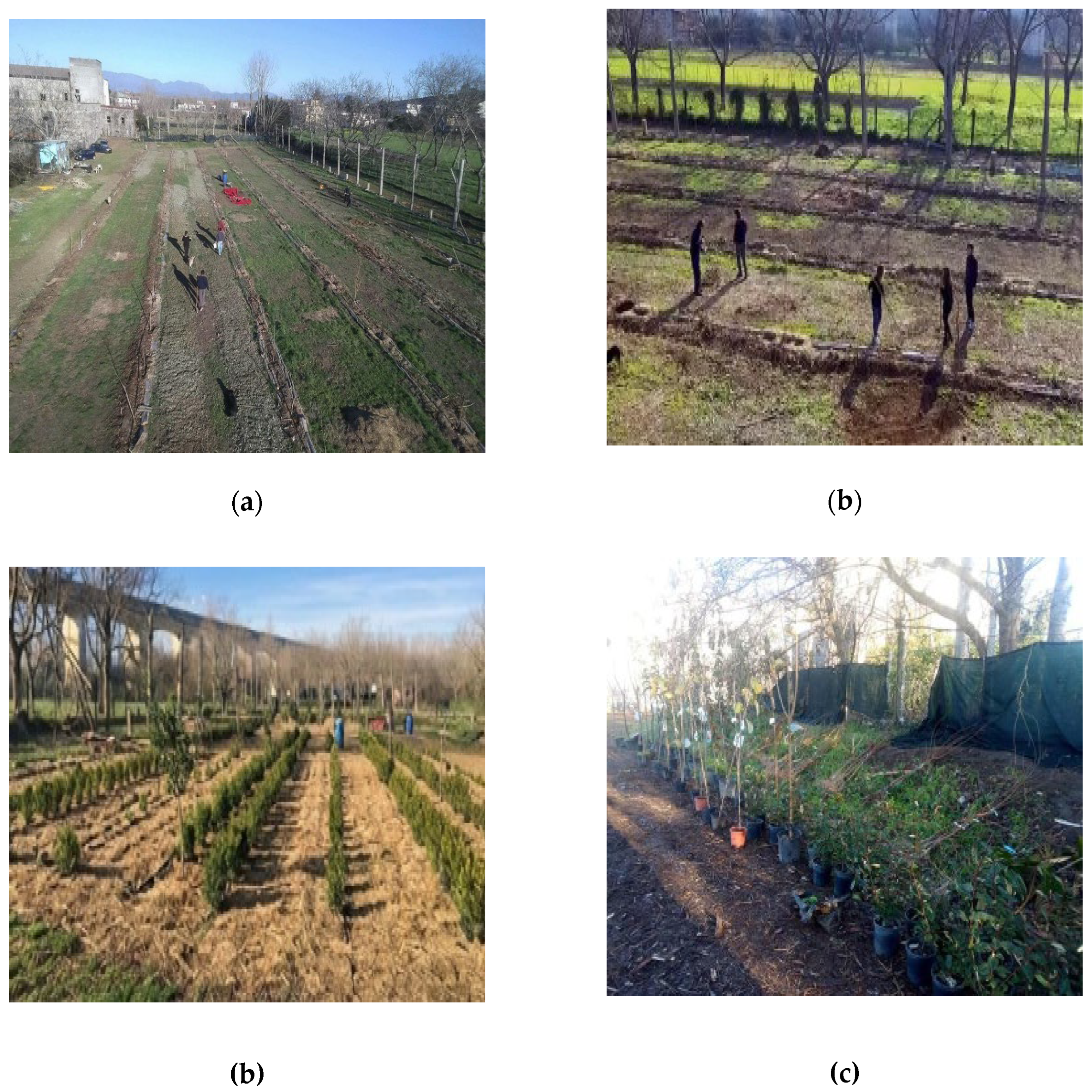
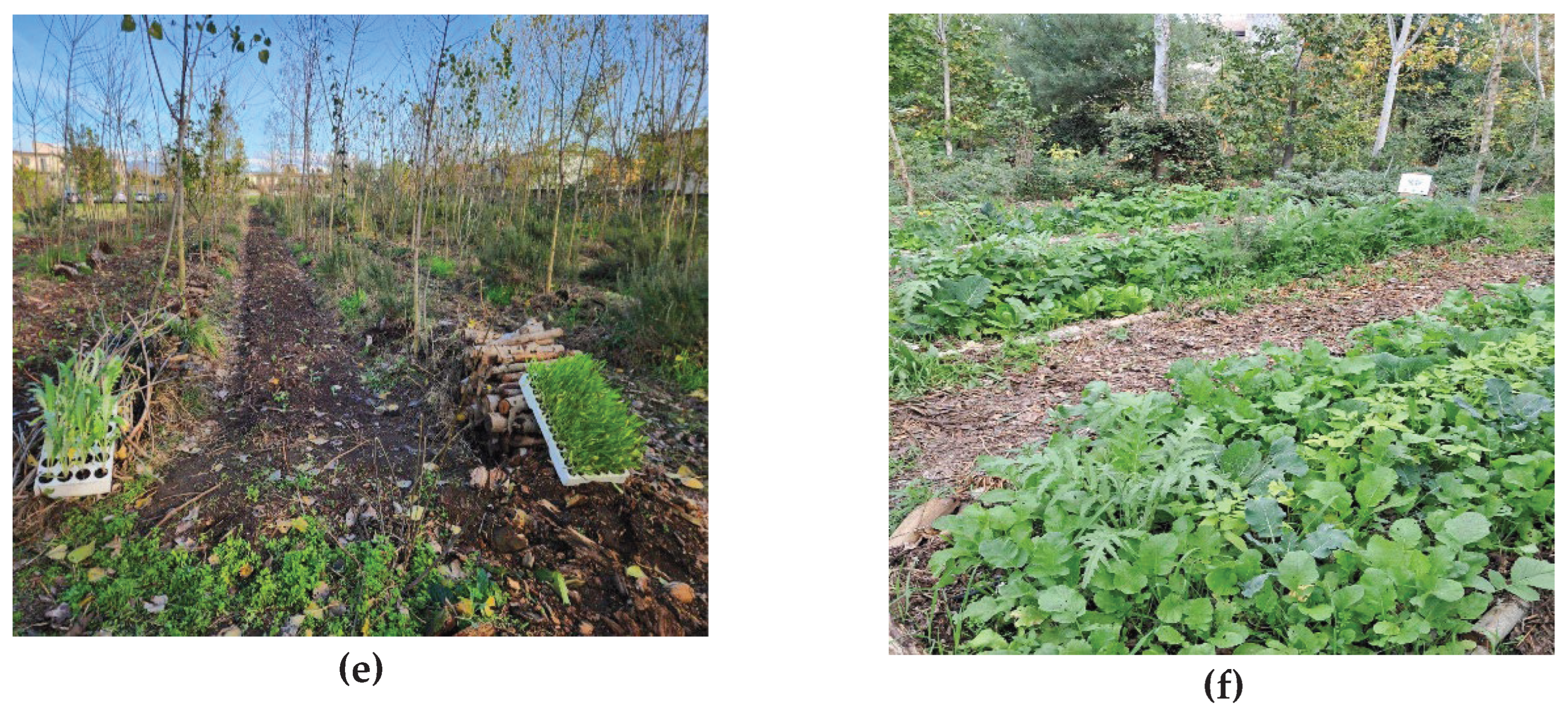

Table 1.
Thematic Coding Path: triangulating field evidence and narratives. The data structure (Table 1) illustrates the inductive-deductive process used to ensure qualitative rigor. By mapping field evidence to aggregate dimensions, we highlight how spatial patterns (e.g., vertical stratification) and social narratives (e.g., stigma reversal) converge to define the sustainability of the peri-urban ecosystem.
Table 1.
Thematic Coding Path: triangulating field evidence and narratives. The data structure (Table 1) illustrates the inductive-deductive process used to ensure qualitative rigor. By mapping field evidence to aggregate dimensions, we highlight how spatial patterns (e.g., vertical stratification) and social narratives (e.g., stigma reversal) converge to define the sustainability of the peri-urban ecosystem.
| Data source | 1st Order concepts (representative evidence) | 2nd Order themes (analytical label) | Aggregate dimensions |
|---|---|---|---|
| Field notes (2019-2020) | High mortality of initial saplings; soil crusting prevents water infiltration. | Ecosystem stress | Ecological Self-Organization |
| Field notes (2024-2025) | Presence of Lumbricus terrestris and complex fungal networks under the mulch layer. | Trophic complexity | Ecological self-organization |
| Interview (Agronomist) |
"We no longer need external compost; the system started feeding itself through succession." | Nutrient Cycle internalization | Ecological self-organization |
| Field observations | Evolution from a 2D monoculture-like plot to a 4D stratified forest (herbaceous to canopy) | Vertical stratification | Ecological self-organization |
| Interview (Local Activist) | "People once referred to this area as the 'Land of Fires'; today, students and citizens visit the agroforest to engage in participatory practices (e.g. communal pruning, farm-to-table cooking workshops, and regenerative cultivation).” | Narrative inversion & Stigma reversal | Territorial resignification |
| Field observations | Distribution of pesticide-free agroforestry vegetables to the local community | Preventive Food systems | Collaborative health literacy |
| Project reports | Integration of traditional farming knowledge with successional agroforestry theories. | Knowledge co-production | Collaborative health literacy |
Disclaimer/Publisher’s Note: The statements, opinions and data contained in all publications are solely those of the individual author(s) and contributor(s) and not of MDPI and/or the editor(s). MDPI and/or the editor(s) disclaim responsibility for any injury to people or property resulting from any ideas, methods, instructions or products referred to in the content. |
© 2026 by the authors. Licensee MDPI, Basel, Switzerland. This article is an open access article distributed under the terms and conditions of the Creative Commons Attribution (CC BY) license (http://creativecommons.org/licenses/by/4.0/).
Copyright: This open access article is published under a Creative Commons CC BY 4.0 license, which permit the free download, distribution, and reuse, provided that the author and preprint are cited in any reuse.


