

Submitted:
27 April 2026
Posted:
28 April 2026
You are already at the latest version
Abstract
This systematic literature review examines the long-standing problem of the tragedy of the commons within the field of public administration. Through a synthetic evaluation of institutional diagnostic and organizational analysis tools, this study deconstructs the traditional dichotomy between centralized state control and local self-governance. The findings reveal a critical interpretive gap: the lack of a coherent theoretical framework for the active, architectural role of the state. To fill this gap, the article develops a synthetic conceptual framework that redefines public administration not as a direct manager or an absent observer, but as an architect of multilevel, polycentric governance systems. This role involves providing institutional support, ensuring access to reliable information, managing cross-scale linkages, and guaranteeing conflict resolution. This approach shifts the focus from a search for a single solution toward the design of resilient institutional ecologies.
Keywords:
tragedy of the commons
; public administration
; polycentric governance
; institutional design
; collective action
; Elinor Ostrom
1. Introduction
The management of collective resources is one of the foundational puzzles in political economy and the theory of collective action. From natural resources like forests and groundwater to digital goods such as knowledge and open-source data, the ability of societies to sustain and wisely use their common assets is inextricably linked to their prosperity and resilience. At the heart of this challenge lies the phenomenon that Garrett Hardin (1968) described as the “tragedy of the commons”. This refers to a situation where multiple individuals use a shared, depletable resource, such as a forest or a fishery. Each person, thinking logically and individually, tries to maximize their own personal gain. However, when this logic is followed by everyone, it inevitably leads to the destruction or complete depletion of the resource, ultimately harming everyone. This paradox, termed “individual rationality producing collective failure,” arises when a series of decisions that are rational at the individual level culminates in a collectively disastrous outcome. For example, it is perfectly rational for a fisherman to catch as many fish as possible to increase his profit, but when all fishermen do the same, fish stocks collapse and everyone suffers. This fundamental tension has shaped the debate in policy and academic circles for decades, placing public administration at the center of the search for solutions.
The traditional response to this dilemma has historically oscillated between two poles: the privatization of the resource, turning it into private property, and the imposition of centralized, coercive control by the state (command-and-control). In practice, however, both of these approaches have often proven inadequate, or even detrimental. Privatization, for instance, can lead to social inequalities and exclude many people from accessing the resource. On the other hand, central state control often ignores specific local conditions and undermines the rules that communities may have already developed. It also tends to be a rigid and inefficient system, especially when dealing with complex, constantly changing situations. This false dilemma was upended by the groundbreaking research of Elinor Ostrom (2008). Ostrom demonstrated with real-world evidence that communities are often perfectly capable of developing their own sophisticated rules and self-management systems to ensure the long-term sustainability of their common resources. Her work, therefore, radically shifted the focus of the conversation. Instead of searching for a single, universal solution (a panacea) the research turned to analyzing the specific institutional conditions that make successful cooperation among people possible.
Even after this significant shift in thinking, public administration in practice often seems trapped by the original problem. On one hand, state-led efforts to impose top-down solutions, for instance in environmental protection, frequently fail. This happens either because they provoke a backlash from local communities or because they inadvertently create worse conditions. For example, a central decision might nullify the informal, unwritten rules of a community, leaving a resource completely unprotected and open to unchecked exploitation by anyone (Dietz et al., 2002). On the other hand, even when local communities succeed in creating effective management rules on their own, their systems are often very fragile. They can easily collapse under external pressures, such as the intervention of powerful economic interests or when national-level decisions undermine local efforts. Without the protection and support of a broader formal framework, these local models remain exposed (Basurto & Ostrom, 2009). Thus, the role of the state remains an unresolved issue, lacking a clear theoretical answer. It can neither be the all-powerful enforcer imposing solutions by force, as Hardin envisioned, nor a simple, passive supporter that merely assists local communities. In reality, public administration itself is not a neutral, external referee but a player within the system, an endogenous actor. Precisely because it is part of the system, it is often its own conflicting policies or regulatory gaps that contribute to creating the problem. A classic example of this role is when a state's agricultural policy subsidizes farmers to extract more water, while at the same time its environmental policy tries to limit water consumption to protect aquifers (Cole et al., 2013).
1.1. Framework, Definitions, and Theoretical Position
For the purposes of this analysis, the tragedy of the commons is defined as a collective action dilemma in which unregulated access to a common-pool resource (where exclusion is difficult or impossible) incentivizes rational individual over-exploitation, leading to the resource's depletion. Public administration is understood as the set of state structures, institutions, and processes responsible for designing and implementing public policy. Polycentric governance describes a system where multiple, independent yet interacting centers of decision-making operate at different scales to govern a resource or a policy sector (Ostrom, 2017).
Our core position is as follows: addressing the problem of the “tragedy of the commons” today requires a new understanding of the role of public institutions as architects of institutional ecologies. In practical terms, this means that state institutions are called upon to shift their focus from the direct management of resources to the design and support of an enabling environment of rules and cooperation. Within this framework, multiple and diverse groups (such as local communities, businesses, or scientific bodies) can act autonomously and collaborate effectively.
This conceptual shift is critical. Today, major challenges, from the management of aquifers (McWhinnie, 2009) and climate change (Paavola, 2011) to the rules of the digital world (Almeida et al., 2020), are inherently complex. They do not have a single decision-making center but many (polycentric) and extend across different levels, from the local to the international. When public administration ignores this complexity, it causes what we call “administrative pathologies”, that is, dysfunctional governance patterns that arise from the very design of administrative interventions. The application of a simplistic, one-size-fits-all solution to a complex problem frequently generates new and more severe issues at a systemic level.
Figure 1 provides a diagrammatic representation of this fundamental tension and the proposed synthetic resolution. The depiction of Polycentric Self-Governance (Ostrom) focuses on the role of local institutions, while also acknowledging their interdependence with higher levels of governance.
The existing literature, particularly through Ostrom's work on polycentric governance, has extensively analyzed both the failures of central control and the potential of self-management. However, while this work recognizes the importance of linkages between governance levels, it has not fully systematized the specific architectural functions that state actors must perform to actively support these polycentric systems. Institutional diagnosis usually focuses either on state failure or the failure of local authorities, overlooking the structural mismatch that occurs when rules at the central level conflict with or undermine local regulations.
1.2. Knowledge Gap and Rationale
The central research gap this study addresses is the incomplete theorization of the state's role within polycentric governance frameworks for the commons. While Ostrom's work highlighted the vulnerabilities of both centralized control (state failure) and isolated self-organization (community failure), it left largely unexplored the nature of the functions that state institutions perform to support local systems. The broader governance literature has already identified the critical third role of the state as an orchestrator. Theories such as “meta-governance” and “collaborative governance” describe the state not as the direct manager, but as the actor that shapes the conditions (“governs self-governance”) for successful collaboration among multiple actors. However, while these frameworks correctly identify the general orientation, they often remain at a high level of abstraction. They fail to specify the concrete, distinct, and verifiable functions the state must perform to address the unique challenges of managing common-pool resources. This article aims to fill that gap by developing an “Architectural Model” that specifies the particular meta-governance functions necessary for the sustainability of polycentric commons management systems. This approach overlooks a third, critical capability that aligns with newer theories like Collaborative Governance: public institutions acting as catalysts and orchestrators. This means that state mechanisms do not unilaterally provide the solution, but rather shape the right conditions for a combination of different local solutions to function successfully. A closer look at the literature reveals a significant imbalance in our knowledge. On one hand, we know very well which rules allow a local community to successfully self-manage its resources (Ostrom, 2007). On the other hand, we lack an equally robust theory for the “rules about rules” (meta-rules). These are the principles that determine how the basic rules can be created, implemented, and changed. For instance, a rule might define a fishing limit, while a “rule about rules” defines who has the right to establish and modify that limit. These are the guidelines public administration should follow so that its interventions protect and strengthen local systems, rather than inadvertently undermining them.
This structural distance between regulatory design and practical application constitutes a systemic divergence: a fundamental mismatch between intended and actual outcomes. The phenomenon is not merely a series of isolated failures, but the result of a foundational conceptual inadequacy. Public administration often fails not because it is inherently incompetent, but because it tries to solve a polycentric problem with monocentric tools. For example, imposing a single national regulation for fisheries can destroy dozens of different, locally adapted management systems, creating a de facto open-access situation that worsens overfishing (Sarker, 2013). The gap, therefore, is not just academic but deeply practical, as the absence of a suitable conceptual framework leads to recurring policy failures.
1.3. Objective, Innovation, and Research Questions
To address the identified gap, the main objective of this study is to theorize the role of “Public Administration as an Architect” of polycentric systems. The original contribution of the article lies in identifying and classifying, through a systematic review, four distinct architectural functions that are necessary for the sustainability and resilience of self-governing systems. Consequently, the research does not focus on whether the state should intervene, but on how it ought to design its interventions to catalyze, rather than undermine, effective collective action.
To achieve this objective, the study answers the following research questions:
RQ1: What architectural functions must public institutions perform to support local communities in managing their common resources without displacing them?
RQ2: What architectural role can public institutions play in managing cross-scale linkages and mitigating the negative externalities that arise from local governance solutions?
2. Theoretical Framework
To interpret the deeper mechanisms that cause the “tragedy of the commons” to be a recurring issue in public administration, this study relies on a central analytical tool: the Institutional Analysis and Development (IAD) framework, originally developed by Elinor Ostrom and her colleagues. The IAD framework was selected for its efficacy in systematically untangling the complex, multilevel relationships between actors, institutional rules, and the physical environment. It is important to emphasize that the IAD does not offer ready-made, predetermined solutions for every problem. It functions more like a diagnostic tool, helping us understand precisely how the rules of a system influence the incentives and behaviors of individuals, ultimately leading to the specific outcomes we observe.
2.1. Presentation and Foundation of the Theory
The IAD framework is a methodological and conceptual tool that allows for the systematic analysis of different institutional arrangements. Its central unit of analysis is the “action arena”, which consists of “actors” and the “action situation”. Actors make decisions based on a set of rules that influence the structure of the action situation (e.g., who can participate, what actions are allowed, what information is available, how costs and benefits are distributed). The ontological assumptions of the framework are that institutions (the rules of the game) are of central importance for understanding human behavior and that individuals act with “bounded rationality”, trying to achieve their goals within the constraints set by institutions and available information.
For this study, the choice of the IAD framework is based on three key reasons. First, it allows us to “break down” a complex problem like the tragedy of the commons into its basic components: who participates, what are the rules of the game, and what are the characteristics of the resource itself. This enables us to systematically examine how the rules and institutions that govern it are structured. Second, the framework is inherently comparative. It helps us analyze why different systems of rules lead to different outcomes, even under similar conditions. Third, and most importantly for our study, the framework operates on multiple levels simultaneously. It recognizes that the rules that apply at a local level, such as a community's unwritten rules for using a resource, are influenced and shaped by rules at higher levels, like national legislation. This approach is what allows us to examine the role of public administration as an “architect” of the entire system. By leveraging this very logic (that we can view rules at different levels as a single, interconnected system) we can precisely identify the contradictions and points of friction between, for example, local and national rules.
2.2. Mechanisms and Relationships
The IAD framework highlights critical mechanisms that explain collective failure. The tragedy of the commons, seen through this lens, is not merely the result of greed but of a specific institutional structure where individual incentives are not aligned with the collective good. The key mechanisms leading to the tragedy include high uncertainty (actors do not know if others will cooperate), the absence of credible commitments (there are no guarantees that agreements will be honored), and the lack of effective monitoring and sanctioning mechanisms.
The theory posits that actors will manage to overcome the collective action dilemma when the expected benefits of cooperation outweigh the perceived costs of organizing and adhering to the rules. Here, a critical point of institutional bottleneck is identified, where imperfections in the institutional structure, such as high transaction costs and a lack of trust, impede cooperation. Public administration, through its interventions, can either drastically reduce these costs (e.g., by providing legal recognition to local agreements, offering impartial scientific information) or dramatically increase them (e.g., by creating bureaucratic hurdles, ignoring local knowledge). The framework also reveals feedback loops: successful cooperation builds trust and social capital, which in turn reduces the cost of future cooperation. Conversely, failure and broken agreements erode trust, making each subsequent attempt at cooperation more difficult and expensive. One of the limitations of the theory is its relatively lesser emphasis on power asymmetries, although later extensions have attempted to incorporate this factor.
2.3. Theoretical Contribution and Methodological Alignment
The theoretical contribution of this study lies in the extension and specification of the IAD framework for analyzing the specific role of public administration as an institutional architect. While Ostrom focused primarily on the emergence of self-governance, our analysis uses the same framework to answer RQ1 by identifying the critical functions that state institutions must perform at the higher levels of multilevel governance. These functions (e.g., providing a conflict resolution arena, collecting and disseminating information, legally reinforcing local institutions) are not direct management interventions but actions that change the parameters of the “action situation” for local actors, making cooperation more likely.
The theory aligns perfectly with the methodology of the systematic review, serving as the coding framework for the synthesis. Specifically, the IAD provides the analytical categories used for the thematic synthesis of the 105 reviewed studies. Our analysis will systematically map the findings along the central axes of the IAD: (a) the characteristics of the actors, (b) the physical characteristics of the common-pool resource, and crucially, (c) the rules-in-use at the three levels defined by the IAD, operational rules, collective-choice rules, and constitutional-choice rules. This structured process allows us to move from a simple description of the findings to a structured, causal interpretation of administrative pathologies, linking the observed outcomes to specific institutional arrangements.
3. Methodology
This study adopts the methodology of a Systematic Literature Review (SLR) with the aim of theory-building. While traditional SLRs typically synthesize empirical results, this review employs the methodology to construct a new conceptual framework. This approach was chosen over a traditional narrative review to ensure the transparent and reproducible identification, evaluation, and synthesis of the entire relevant body of literature, thereby reducing the risk of researcher selection bias and grounding the proposed model in the broadest possible range of theoretical discussions. This rigor is crucial for theory construction, as it mitigates the risk of bias from a selective reading of the literature.
The methodological approach was designed and implemented by strictly following the PRISMA 2020 (Preferred Reporting Items for Systematic Reviews and Meta-Analyses) guidelines. The adoption of the PRISMA framework ensures transparency, systematicity, and reproducibility in the search, selection, and synthesis process, enhancing the validity and reliability of the review's findings.
3.1. Search and Selection Process
The search strategy was designed to achieve comprehensive coverage of the academic literature. The search was conducted over two days, August 14-15, 2025, and included four major electronic databases: Scopus, Web of Science, Semantic Scholar, and Google Scholar (with the assistance of AI tools from Google Labs to optimize the relevance of results). Search terms were combined using Boolean operators to maximize precision. The primary search string used in the Scopus database, and adapted accordingly for the others, was as follows:
TITLE-ABS-KEY ((“tragedy of the commons” OR “commons dilemma”) AND (“public administration” OR “governance” OR “public policy” OR “collective action” OR “Ostrom”))
The initial search yielded a total of 902 records, as detailed in Table 1.
The study selection process, from initial identification to final inclusion, is depicted in the PRISMA flow diagram (Figure 2). After the initial identification of 902 articles, 14 duplicate records were removed, leaving 888 unique studies for screening. In the first stage, titles and abstracts were screened, during which 738 articles were excluded. The main reasons for exclusion at this stage were: (a) a lack of focus on public administration or governance (n=412), (b) a focus on purely biological or psychological mechanisms without policy implications (n=221), and (c) non-primary research, such as editorials or book reviews (n=105). Subsequently, 150 articles were assessed for eligibility at the full-text level. Of these, 45 articles were excluded after a thorough reading for the following reasons: (a) absence of a clear link to public administration or policy institutions (n=18), (b) exclusive focus on behavioral experiments without analysis of policy consequences (n=12), (c) descriptive case studies without theoretical contribution (n=9), and (d) insufficient methodological rigor (n=6). Ultimately, 105 studies were included in the qualitative synthesis of this review, the full list of which is provided in Appendix A.
3.2. Inclusion and Exclusion Criteria
To ensure the relevance and quality of the body of included studies, clear inclusion and exclusion criteria were established in advance. These criteria were applied consistently during the screening and eligibility assessment stages. The primary inclusion criterion was a direct focus of the study on the theory or empirical application of the tragedy of the commons within the context of public administration, governance, or public policy. Emphasis was placed on articles published in peer-reviewed journals, books, and book chapters. Studies not written in English, as well as editorials or book reviews that did not present original analysis, were excluded. Table 2 summarizes the criteria that guided the selection process.
3.3. Descriptive Mapping of the Body of Studies
Prior to the qualitative synthesis, a descriptive mapping of the 105 included studies was conducted to outline the key characteristics of the research output in the field. This process is purely methodological in nature and aims to document the distribution of research over time, across scientific fields, and geographically, without engaging in interpretive analysis.
Temporal Distribution of Studies
The temporal distribution of publications, as shown in Figure 3, indicates a growing engagement with the topic over the last two decades, with a peak in research output during the 2010-2014 period and a consistently high level of production thereafter.
Distribution by Scientific Field
Analysis of the scientific journals and publication sources reveals the interdisciplinary nature of the topic. As depicted in Figure 4, the studies primarily originate from the fields of Public Administration and Policy, Environmental Science and Economics, as well as General Theory and Interdisciplinary Studies.
Geographic Distribution
The geographic focus of the studies varies, with a significant portion being theoretical or global/conceptual in nature. Among the empirical studies, a concentration of cases from North America and Europe is observed, as shown in Figure 5.
The descriptive mapping above does not have an interpretive character; it serves exclusively as evidence of the systematic nature of the review, documenting the structure and origin of the analyzed material.
3.4. Data Extraction and Thematic Analysis
For the analysis of the 105 studies, an inductive thematic analysis approach was followed. Initially, open coding of the full text of each article was performed, during which key arguments, theoretical contributions, methodological frameworks, and empirical findings were identified and recorded. These codes were then grouped and synthesized into a set of descriptive themes, which accurately capture the content of the existing literature. In the final stage, the descriptive themes were further analyzed and synthesized into higher-level analytical themes. The transition from descriptive to analytical themes was achieved through a process of constant comparative method, where underlying relationships, contradictions, and theoretical patterns among the coded data were identified, thus offering an interpretive perspective.
3.5. Quality Assessment and Reliability Check
Each included study underwent a quality assessment by two independent researchers using a standardized evaluation tool with eight criteria. These criteria covered the clarity of the research purpose, the rigor of the methodology, and the significance of the contribution to the field. The studies were categorized into three quality levels (High, Medium, Low) based on their overall scores. The detailed methodology and results of the quality assessment are provided in Appendix A.
To check the reliability of the coding and assessment process, an inter-rater reliability check was conducted. Three statistical indicators were calculated: Cohen's Kappa, the Pearson Chi-Square statistic, and the Pearson's R correlation coefficient. The values for Kappa (mean = 0.94) and Pearson's R (mean = 0.96) indicated almost perfect agreement, while the Chi-Square value was statistically significant (p < 0.001) for all items, confirming that the agreement was not due to chance. The detailed results of the reliability check are located in Appendix B.
3.6. Linking Thematic Levels
The structure of the thematic analysis, which connects the three analytical themes with the seven descriptive themes that emerged from the analysis, is presented in Table 3. This table illustrates the hierarchical relationship between the thematic levels and provides indicative bibliographic references for each descriptive theme, offering a map of the architecture of the review's findings.
4. Results
The qualitative synthesis of the 105 studies included in this review is organized around the three analytical themes that emerged: the conceptual foundation of the tragedy and its critiques, the drivers and mechanisms of commons dilemmas, and finally, the solutions and forms of governance. The following presentation synthesizes the findings from the literature across these three analytical themes, which emerged from the inductive coding, providing a structured foundation for the subsequent development of the architectural model.
4.1. Quality Assessment of the Studies
The quality assessment of the studies revealed a body of research that is predominantly of high and medium quality. The risk of bias within the studies was primarily associated with the selective presentation of case studies (selection bias) in some qualitative research, where authors focused on either particularly successful or failed examples of commons management. Among the studies, a geographical bias was observed, with an overrepresentation of studies from North America and Europe, as was also noted in the descriptive mapping. Furthermore, a significant number of studies were theoretical in nature, which limits the generalizability of findings without empirical validation. However, the adoption of diverse methodological approaches (quantitative, qualitative, mixed-methods) and the interdisciplinary nature of the field contribute to reducing the overall risk of bias, offering a multifaceted view of the phenomenon.
4.2. Thematic Findings (Synthesis)
The synthesis of the 105 studies, analyzed through the categories of the IAD framework, reveals the following key patterns:
The first analytical theme, Conceptualizing the Tragedy (A1), essentially concerns the definition of the “action arena” itself. The literature (D1) clarifies that Hardin's (1968) scenario describes a situation of open access, that is, an action arena with no rules-in-use. In contrast, the work of Ostrom and subsequent studies (D2) analyze common-property systems, which are defined precisely by the existence of sophisticated operational rules and collective-choice rules developed by the actors themselves. The critique of the State-Market dichotomy highlights that the focus should be on the nature of the rules, not on a simplistic choice between property regimes.
The second analytical theme, Drivers and Mechanisms of Commons Dilemmas (A2), investigates the causes of negative outcomes. At the actors level (D3), the literature shows how characteristics like bounded rationality, cognitive biases, and behavioral models (e.g., low trust) lead to strategies of overexploitation, even when rules exist. At the rules level (D4), the findings systematically identify institutional failures. Here, the IAD is particularly illuminating: the tragedy arises from (a) poorly designed or non-existent operational rules (e.g., unclear resource boundaries, extraction rules that do not match the resource's physical characteristics), (b) ineffective collective-choice rules that prevent the adaptation of operational rules, and (c) conflicting constitutional-choice rules (e.g., different national laws that undermine each other).
The third analytical theme, Governance and Solutions for the Commons (A3), maps the institutional arrangements that lead to positive outcomes. Self-governance (D5) refers to the ability of actors to create and enforce their own operational and collective-choice rules. Its success, as the literature shows, depends on the alignment of these rules with the local characteristics of the actors and the resource. Polycentric and multilevel governance (D6) is the most advanced institutional arrangement. Here, analysis through the IAD reveals the importance of vertical and horizontal interdependencies between different action arenas. Positive outcomes emerge when constitutional-choice rules (e.g., national legislation, treaties) provide a framework that legitimizes and supports, rather than undermines, collective-choice and operational rules at the local level. The extension to new domains (D7) simply confirms the analytical power of the IAD, as problems in the digital space or health can be similarly analyzed as mismatches between actors, resource characteristics, and the rules governing their use.
5. Discussion: From Analysis to the Synthesis of an Architectural Model
The systematic synthesis of the literature reveals a fundamental tension that defines the field. On one hand, the critique of Hardin's original, monolithic model is now universally accepted, highlighting the rich variety of institutional arrangements that can avert the tragedy of the commons (Theme A1). On the other hand, this very complexity creates a new, higher-level puzzle for public administration: how to navigate and coordinate this polycentric landscape without resorting to the oversimplified solution of central control (Theme A3). The present discussion bridges this gap by proceeding from the analytical synthesis of the findings to the development of a conceptual framework that resolves this theoretical tension.
5.1. From Thematic Findings to the Architectural Model: An Inductive Synthesis
The systematic analysis confirmed our initial argument: the literature clearly describes both the failure of the state-as-manager (D2, D4) and the success, but also the inherent vulnerability, of the community-as-self-manager (D5). Simultaneously, the analysis of polycentric governance (D6) leaves a critical gap concerning the design of institutions that effectively connect the different levels of decision-making. The tragedy of the commons, therefore, arises not just from failure at a single level, but from the structural inadequacy of the overall system.
To bridge this gap, this article proceeds from analysis to synthesis. The transition from the descriptive thematic findings (D) to the proposed Architectural Model is not arbitrary; it is the product of a transparent, inductive process. The model systematizes the solutions implied in the literature, grouping them into four distinct but interconnected architectural functions. Each function represents a synthetic answer to specific problems identified in the thematic findings. This process is mapped as follows:
Providing Institutional Scaffolding: This function is synthesized as a response to the tension between the effectiveness of local self-governance (D5: Self-Governance and the Role of Local Institutions) and the critique of the simplistic State-Market dichotomy (D2: Critiques of the State-Market Dichotomy). Finding D5 shows that local communities create effective rules but are vulnerable. Finding D2 shows that neither central control nor a complete absence of the state is a solution. The inductive synthesis leads to the conclusion that the state's role is not to impose rules but to create the legal “scaffolding” that recognizes, legitimizes, and protects local rules, making them binding and secure.
Conflict Mediation: This function arises directly from the analysis of systemic failures (D4: Systemic and Institutional Failures) and the challenges of polycentric governance (D6: Polycentric and Multilevel Governance). The literature demonstrates that in systems with multiple actors and overlapping jurisdictions (D6), conflicts are inevitable, and the absence of resolution mechanisms is a primary cause of cooperation breakdown (D4). Therefore, a critical architectural function is the creation of accessible, neutral, and low-cost “arenas” for dialogue and resolution.
Ensuring the Flow of Reliable Information: This function responds to problems identified at both the individual behavioral level (D3: Individual-Level Behavioral and Cognitive Drivers) and the systemic level (D4: Systemic and Institutional Failures). The findings show that bounded rationality and cognitive biases (D3), combined with asymmetric or unreliable information (D4), prevent sound decision-making and fuel distrust. The synthetic solution is the provision of commonly accepted, credible, and accessible data by a public body, which reduces transaction costs and builds cooperation on a shared understanding of reality.
Management of Cross-Scale Linkages & Backstop Enforcement: This fourth, most complex function synthesizes findings from multiple themes. It stems from the need for coordination in polycentric systems (D6), the application of the theory to new, complex domains with cross-border impacts (D7: Application of Commons Theory to New Domains), and the response to systemic failures (D4). The literature shows that local solutions can create externalities or fail in the face of powerful external rule-breakers. The architectural function here is the management of these cross-scale linkages and the provision of a final guarantor (a backstop enforcer) that intervenes when local mechanisms are insufficient.
This inductive process transforms the scattered findings of the literature into a coherent, functional framework. The resulting Architectural Model is not just a classification but a diagnostic tool that explains why commons governance systems succeed or fail.
This framework, therefore, complements and systematizes existing theoretical discussions, engaging in a dialogue with related contemporary models that recognize the supportive role of the state. The proposed “Architectural Model” converses with and complements other relevant frameworks. For instance, while the State-Reinforced Self-Governance approach emphasizes the importance of state support and the Institutional Collective Action (ICA) framework (Feiock) analyzes the conditions for cooperation, our model offers a specific typology of the discrete functions that this state support must entail. It functions, in other words, as a more specialized diagnostic tool for identifying specific institutional gaps. It does not focus on a single form of support but classifies the distinct and necessary architectural functions that are essential for the viability of any polycentric system.
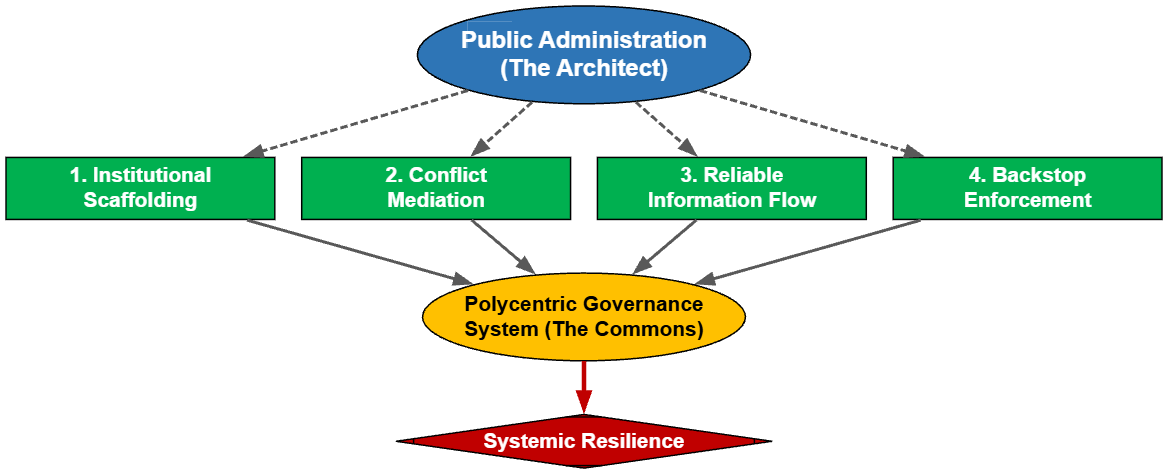
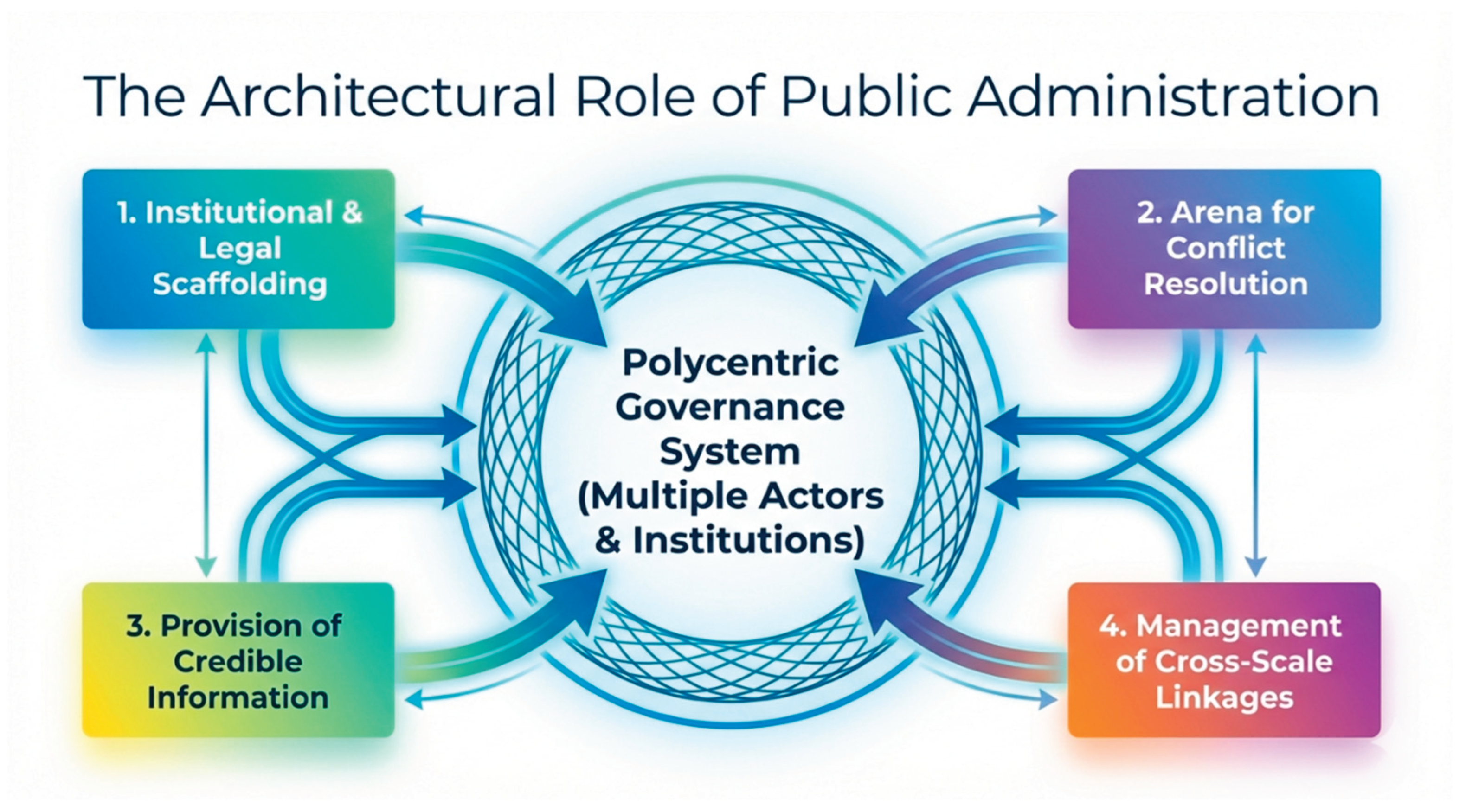
These functions are not managerial but architectural: they do not concern the direct allocation of the resource, but the shaping of the framework of rules and incentives within which other actors make their decisions. The four critical architectural functions are:
- Providing Institutional Scaffolding. As local institutions are effective but often informal (D5), state actors must, instead of replacing them, provide the legal and regulatory infrastructure (recognition, protection) that reduces enforcement costs and increases legal certainty (Sarker, 2013).
- Creating Conflict Mediation Mechanisms. In polycentric systems with multiple actors (D6), conflicts are inevitable. This architectural function involves creating neutral, accessible, and low-cost mechanisms (e.g., mediation bodies, independent committees) for resolving disputes (Mansbridge, 2014).
- Ensuring the Flow of Reliable Information. The lack of commonly accepted data is a key driver of the tragedy (D4). Specialized public agencies (e.g., scientific institutes, statistical services) perform the architectural function of producing, certifying, and disseminating impartial information, which is essential for making informed decisions.
- Management of Cross-Scale Linkages & Backstop Enforcement. Local solutions can create negative externalities or fail. The appropriate public institutions must act as ultimate guarantors (backstop enforcers), intervening when internal mechanisms fail and managing cross-scale linkages to ensure the overall coherence of the system (Armitage, 2008).
This model extends Ostrom's work by assigning specific state institutions clear and active roles within a polycentric system. While Ostrom recognized the importance of government actors (Ostrom, 2008), this model systematically theorizes these specific architectural functions, a role that is implied but not fully analyzed in her original work (Sarker & Blomquist, 2019).
Figure 6.
The Conceptual Framework of Public Administration as an Architect of Polycentric Systems.
The table below compares the three models (Traditional, Self-Governance, Architectural) to highlight their key differences (state of the art comparison).

Table 4.
A Comparative Analysis of Governance Models for the Commons.
| Feature | Hardin's Model (Coercion) | Ostrom's Model (Self-Governance) | Architectural Model (Polycentric Architect) |
|---|---|---|---|
| Primary Role of the State | Direct Manager / Enforcer | Minimal / Facilitator | Architect / Enabler / Guarantor |
| Core Problem Definition | Individual greed / Lack of control | Collective action failure / High transaction costs | Systemic institutional misalignment / Lack of coordination |
| Key Mechanism | Centralized command-and-control | Locally devised rules and norms | Design of multi-level institutional ecology |
| Unit of Analysis | The individual rational actor | The community / Action arena | The entire polycentric system |
| Assumed Outcome | Tragedy averted by coercion | Tragedy averted by cooperation | Systemic resilience through institutional design |
5.2. Political Preconditions and Limitations of the Architectural Model
The implementation of the architectural model is not a technocratic exercise but a deeply political process. The effectiveness of the four functions depends on critical political and institutional preconditions. The provision of “impartial” information or “neutral” conflict resolution mechanisms is not a given. Powerful economic or political actors may attempt to influence or “capture” (regulatory capture) the organizations responsible for these functions to serve their own interests.
Therefore, the successful application of the model requires strong institutional guarantees of transparency, accountability, and citizen participation. For example, the “Information Flow” function presupposes the existence of independent scientific bodies, protected from political interference. Correspondingly, the “Conflict Resolution Arenas” must be designed with rules that ensure equal access and voice for the weakest groups. Acknowledging these political challenges does not invalidate the model's value, but it underscores that “architecture” pertains not only to the design of rules but also to the design of mechanisms to protect those rules from being instrumentalized.
5.3. Theoretical Foundation, Dialogue, and Contribution
The Architectural Model offers a significant contribution by building upon the IAD framework while simultaneously engaging in a critical dialogue with broader governance theories, specializing them for the field of the commons.
First, the model extends the IAD framework. While the IAD provides the analytical tools to understand how rules at multiple levels affect action, the Architectural Model focuses on who designs the “rules of the game” (meta-rules) and how. It shifts the focus from the mere analysis of existing systems to the intentional design of institutional environments. In this way, it responds to the critique that commons theory is often “anti-state” by showing that the presence of capable and intelligently designed state institutions is not an obstacle but a necessary precondition for the resilience of polycentric systems.
Second, the model is more defined and offers greater specificity compared to the theory of meta-governance. Meta-governance correctly describes the role of the state as a “meta-governor” that “steers” self-organizing networks rather than commanding hierarchies. However, it often remains at a macro-level of abstraction. The Architectural Model operationalizes this general idea: it transforms the abstract role of the “meta-governor” into a specific, analytically distinct, and empirically testable typology of four functions (Institutional Scaffolding, Conflict Mediation, Information Flow, Backstop Enforcement). It provides, in other words, a diagnostic tool at the meso-level that allows for the evaluation of the institutional architecture of a commons governance system, a level of specificity that is often absent in general meta-governance frameworks.
Third, the model complements and deepens the approaches of collaborative governance and orchestration. These theories correctly focus on the processes of facilitation, dialogue, and consensus-building among actors. The Architectural Model recognizes the importance of these processes (especially through the Conflict Mediation function) but adds two critical dimensions that are often under-theorized: (a) the “hard” institutional infrastructure of Providing Institutional Scaffolding, which gives legal force to local agreements, and (b) the role of the state as a final guarantor (Backstop Enforcement), which is essential when collaborative mechanisms fail or are threatened by powerful external actors. Consequently, our model proposes that sustainable cooperation is based not only on goodwill and facilitation but also on a solid, intelligently designed institutional architecture that protects it.
Overall, our proposal does not replace these theories but synthesizes and specializes them. It offers a new conceptual language and a practical analytical framework, translating the general principles of meta-governance into a specific set of architectural functions necessary for the resilient governance of the common good.
6. The Analytical Value of the Architectural Model: A Comparative Application
To demonstrate the interpretive power of the framework and its utility as a diagnostic tool, the model is applied to reinterpret two cases that emerged during the literature review and present diametrically opposed outcomes. These cases do not constitute new empirical research but are used as illustrative applications to highlight the model's analytical value. The analysis will show that the difference in outcome (success in the Maine lobster fishery management, failure in the Guarani Aquifer management) is not adequately explained by the presence or absence of local action alone, but by the presence or absence of the four critical architectural functions performed by public institutions.
6.1. A Case of Success: The Maine Lobster Fishery Management
The case of the Maine lobster fishery is a classic example of averting the tragedy. For decades, local communities of fishermen had developed informal rules and clearly defined sea territories, limiting access and regulating fishing effort. The key to success, however, was not simply the existence of these rules but the way state institutions interacted with them. Here, the function of Institutional Scaffolding is evident. The state of Maine did not impose its own centralized management system, which would have nullified local knowledge and provoked resistance. Instead, it provided legal recognition and formalization to the existing, informal local institutions, turning local agreements into legally binding rules. This “institutional scaffolding” drastically reduced enforcement costs and increased legal certainty for the fishermen, giving them confidence that their conservation efforts would not be undermined.
Simultaneously, the Information Flow was not a one-way process from the state to the users. Instead, a collaborative model was developed where state biologists and scientists worked closely with fishermen to collect data and monitor the health of the stocks. This co-production of knowledge bridged the gap between scientific and local, experiential knowledge, creating a shared and credible picture of the resource's condition and increasing trust in the institutions, as fishermen saw their own data being incorporated into official assessments.
Regarding Conflict Mediation, the state again acted architecturally. Instead of taking on the role of the sole arbiter, it established local and regional management councils where representatives of the fishermen and the state participated. These councils served as accessible and low-cost “arenas” for resolving disputes, negotiating changes to the rules, and managing tensions, thereby preventing the escalation of conflicts and strengthening the legitimacy of the system. Finally, the function of Backstop Enforcement was crucial. While day-to-day monitoring and enforcement were largely carried out by the communities themselves, the state, through its coast guard, provided the ultimate guarantee against major external violators or organized illegal fishing that local communities could not handle. The credible presence of this final guarantor reinforced the security of local fishermen that the rules applied to everyone, making their own cooperation viable. The success in Maine, therefore, was not simply a victory for “self-organization” but the result of a sophisticated polycentric system where state institutions precisely performed the four architectural functions, creating a resilient environment within which local governance could thrive.
6.2. A Case of Failure: The Management of the Guarani Aquifer
In stark contrast is the case of the Guarani Aquifer, one of the world's largest underground water reserves, which extends beneath Argentina, Brazil, Paraguay, and Uruguay. Here, the tragedy of the commons arises from a complete architectural void. Institutional Scaffolding is practically non-existent. Despite efforts, there is no single, binding transboundary treaty that regulates the use of the aquifer in a comprehensive manner. National laws are uncoordinated and often conflicting, while local management efforts, where they exist, lack any legal recognition at the cross-border level. This lack of a common institutional “scaffolding” makes any national or local initiative extremely vulnerable, as there is no guarantee that other countries will not proceed with over-extraction.
The Information Flow is equally problematic. Hydrological data are collected fragmentarily by each country, with different methodologies, and are often not shared transparently. The absence of a commonly accepted, independent scientific body that would provide reliable, consolidated data on the state of the aquifer as a whole perpetuates uncertainty, distrust, and conflicting national narratives about the resource. This information gap prevents the formation of a common understanding of the problem, which is a prerequisite for any collective action.
Furthermore, there is a complete absence of an institutionalized Conflict Mediation mechanism. Disputes over water use or the impacts of pollution cannot be resolved in an accessible, technical arena. Instead, they must be addressed through slow, politicized, and high-cost diplomatic channels, which are entirely unsuitable for the ongoing management of a dynamic resource. Finally, the function of Backstop Enforcement is inherently impossible in the international system, as there is no supranational authority that can impose sanctions on a country that violates a potential agreement. This lack of a credible final guarantor makes any agreement fragile and strengthens the incentive for preemptive overexploitation. The failure to manage the Guarani, therefore, is not due to the “irrationality” of its users, but to the structural failure to create the necessary architectural institutions at a transnational level.
6.3. Conclusions from the Comparison
The comparison of these two cases demonstrates the analytical power of the proposed model. In Maine, success emerged because public institutions acted as architects, providing support, information, resolution mechanisms, and guarantees, allowing the local community to effectively manage its resource. In the case of the Guarani, the problem lies precisely in the absence of this architect, leaving the actors in an institutional vacuum that makes the tragedy almost inevitable.
7. Conclusion
7.1. Limitations and Future Research
This study, as a conceptual contribution based on a systematic review, has inherent limitations that also define the scope for future research. Primarily, the “Architectural Model” is a theoretical construct that has not been subjected to empirical validation. Future research should operationalize the four architectural functions into measurable indicators and examine their relationship with the resilience of commons management systems, using comparative case studies or quantitative analyses (e.g., through QCA methodology). Second, the model's emphasis on the functional dimension may understate the influence of political factors, such as power asymmetries that allow for the “regulatory capture” of architectural institutions. Further research could examine the political conditions under which architectural support turns into disguised control, answering RQ2.
Despite these limitations, the study's strengths include the systematic mapping of a broad and interdisciplinary field and the development of an original, synthetic framework that bridges the gap between the theory of the commons and the theory of public administration. The remaining gaps open specific avenues for research. Future research should focus on the operationalization of the Architectural Model. This includes developing specific indicators to assess each of the four architectural functions, as well as conducting comparative case studies that examine how the presence or absence of these functions affects the outcomes of commons governance in practice. Furthermore, exploring the conditions under which architectural support is at risk of becoming a form of disguised central control (RQ2) is a critical area for further investigation.
Future research must focus on the empirical validation and refinement of the Architectural Model. A multi-method approach is proposed: (a) Qualitative Comparative Analysis (QCA) on a medium-N sample of cases (N=20-30) can test the necessary and sufficient conditions that constitute the architectural functions. (b) Comparative case studies using in-depth process tracing can uncover the causal mechanisms linking architectural functions to outcomes. (c) Agent-based modeling could explore the dynamic interactions between governance levels under different institutional arrangements. These approaches will transform the theoretical model into a rigorously testable set of hypotheses.
Additionally, investigating the conditions under which architectural support is at risk of becoming disguised central control is a critical area for further research, answering the question of “when” these functions fail or are instrumentalized.
7.2. Implications and Future Directions
The practical implications of the developed framework are significant. For policymakers, the model proposes a fundamental shift in mindset: from trying to find the “right” solution to creating the “right” environment within which the stakeholders themselves can find their own, adapted solutions. This implies the need to develop new administrative skills, such as mediation, institutional design, and systems analysis, instead of the traditional skills of command and control.
Recommendations for future research focus on the empirical testing of the model's hypotheses. Studies could be designed to assess, for example, whether state investment in independent information-providing bodies (Function 3) has a greater impact on the sustainability of common-pool resources than investment in more enforcement mechanisms. Linking with evaluation frameworks like GRADE (Grading of Recommendations, Assessment, Development and Evaluations), which is widely used in medicine to assess the quality of evidence, could help in systematically evaluating the certainty of evidence for the effectiveness of each of the four architectural functions. Ultimately, this article does not offer a final answer but a new map for navigating one of the most enduring and pressing problems of public governance. Consequently, the proposed Architectural Model provides a new analytical framework, shifting the debate from the dilemma of “to intervene or not” to an understanding of the specific institutional functions that are necessary to foster resilient, polycentric systems for governing the common good.
Conflicts of Interest
The authors declare no conflicts of interest.
References
- Almeida, V.; Filgueiras, F.; Gaetani, F. Digital governance and the tragedy of the commons. IEEE Internet Comput. 2020, 24(4), 41–46. [Google Scholar] [CrossRef]
- Armitage, D. Governance and the commons in a multi-level world. Int. J. Commons 2008, 2(1), 7–32. Available online: https://www.jstor.org/stable/26522988. [CrossRef]
- Basurto, X.; Ostrom, E. Beyond the tragedy of the commons. Econ. Delle Fonti Di Energ. E Dell'ambiente 2009, 52(1), 35–60. Available online: https://ssrn.com/abstract=1304688. [CrossRef]
- Cole, D. H.; Epstein, G.; McGinnis, M. D. Digging deeper into Hardin's pasture: The complex institutional structure of 'the tragedy of the commons'; SSRN, 2013; Available online: https://ssrn.com/abstract=2361177.
- Dietz, T.; Dolsak, N.; Ostrom, E.; Stern, P. C. The drama of the commons. In The drama of the commons; Ostrom, E., Dietz, T., Dolsak, N., Stern, P. C., Stonich, S., Weber, E. U., Eds.; National Academy Press, 2002; pp. 3–35. [Google Scholar]
- Feiock, R. C. Institutional collective action framework. Policy Stud. J. 41 2013, 397–425. [Google Scholar] [CrossRef]
- Hardin, G. The tragedy of the commons. Science 1968, 162(3859), 1243–1248. Available online: http://www.jstor.org/stable/1724745. [CrossRef] [PubMed]
- Mansbridge, J. The role of the state in governing the commons. Environ. Sci. Policy 36 2014, 8–10. [Google Scholar] [CrossRef]
- McWhinnie, S. F. The tragedy of the commons in international fisheries: An empirical examination. J. Environ. Econ. Manag. 2009, 57(3), 321–333. [Google Scholar] [CrossRef]
- Ostrom, E. A diagnostic approach for going beyond panaceas. Proceedings of the National Academy of Sciences of the United States of America 2007, 104(39), 15181–15187. Available online: http://www.jstor.org/stable/25449110. [CrossRef] [PubMed]
- Ostrom, E. Tragedy of the commons. In The new Palgrave dictionary of economics; Durlauf, S. N., Blume, L. E., Eds.; Palgrave Macmillan, 2008. [Google Scholar] [CrossRef]
- Ostrom, E. Polycentric systems for coping with collective action and global environmental change. In Global justice; Routledge, 2017; pp. 423–430. [Google Scholar]
- Paavola, J. Climate change: The ultimate tragedy of the commons. In Property in land and other resources; Cole, D. H., Ostrom, E., Eds.; Lincoln Institute of Land Policy, 2011; pp. 417–434. [Google Scholar]
- Sarker, A. The role of state-reinforced self-governance in averting the tragedy of the irrigation commons in Japan. Public Adm. 91 2013, 727–743. [Google Scholar] [CrossRef]
- Sarker, A.; Blomquist, W. Addressing misperceptions of Governing the Commons. J. Institutional Econ. 2019, 15(2), 281–301. [Google Scholar] [CrossRef]
Figure 1.
Conceptual diagram illustrating the dichotomy between traditional solutions and the synthetic approach of public administration as an architect of polycentric systems.
Figure 1.
Conceptual diagram illustrating the dichotomy between traditional solutions and the synthetic approach of public administration as an architect of polycentric systems.
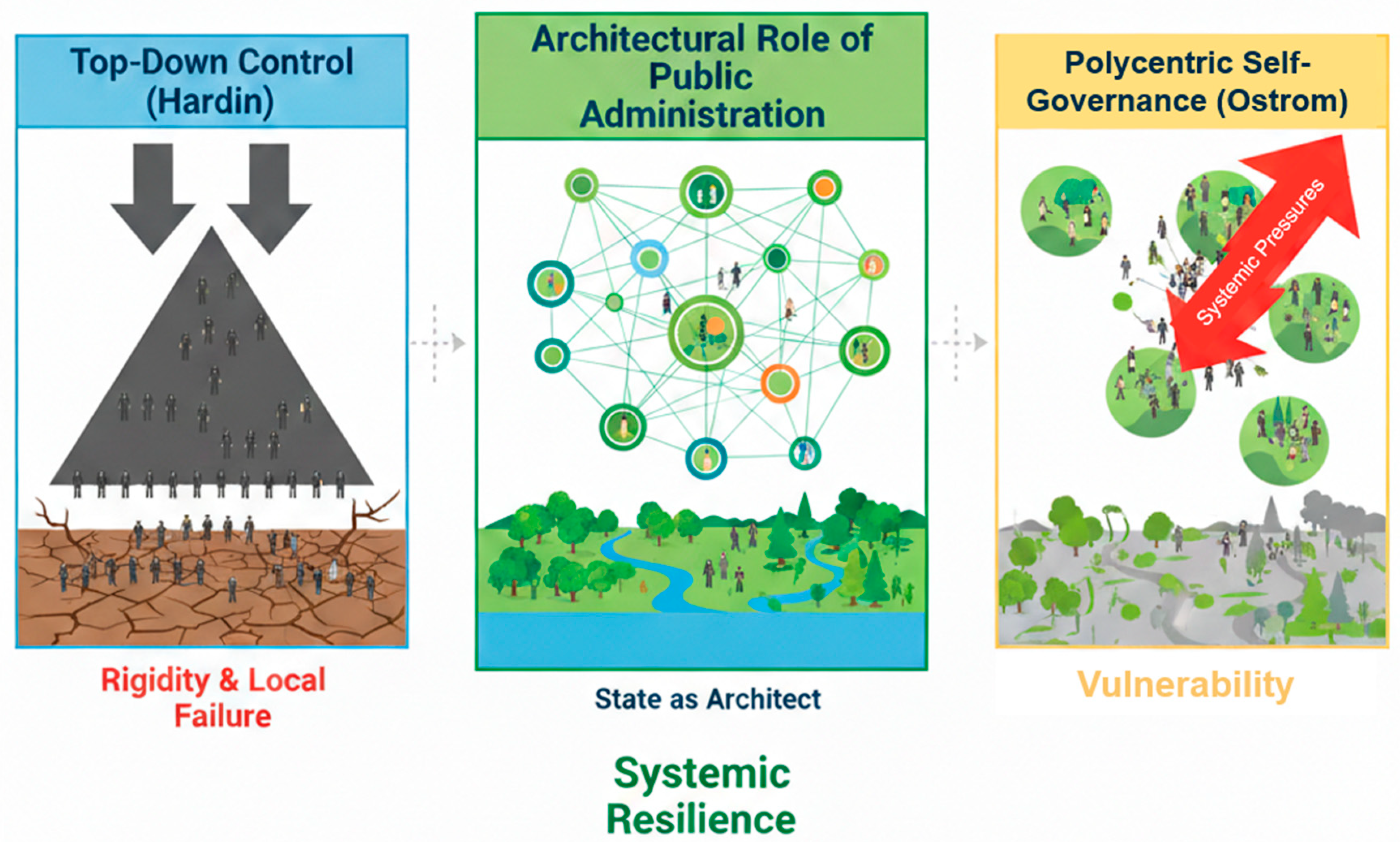
Figure 2.
PRISMA flow diagram of the study selection process.
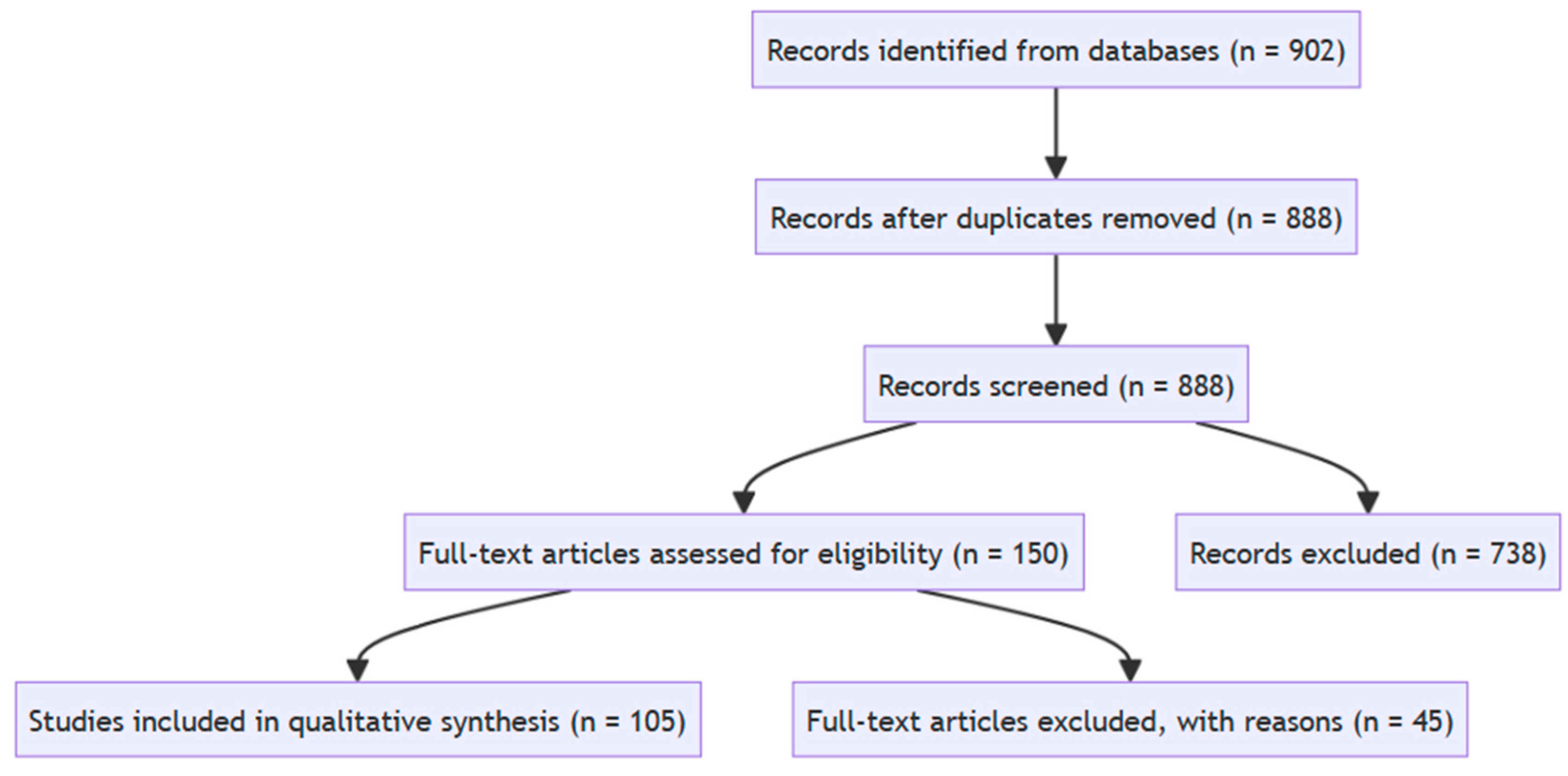
Figure 3.
Distribution of Included Studies by Publication Period.
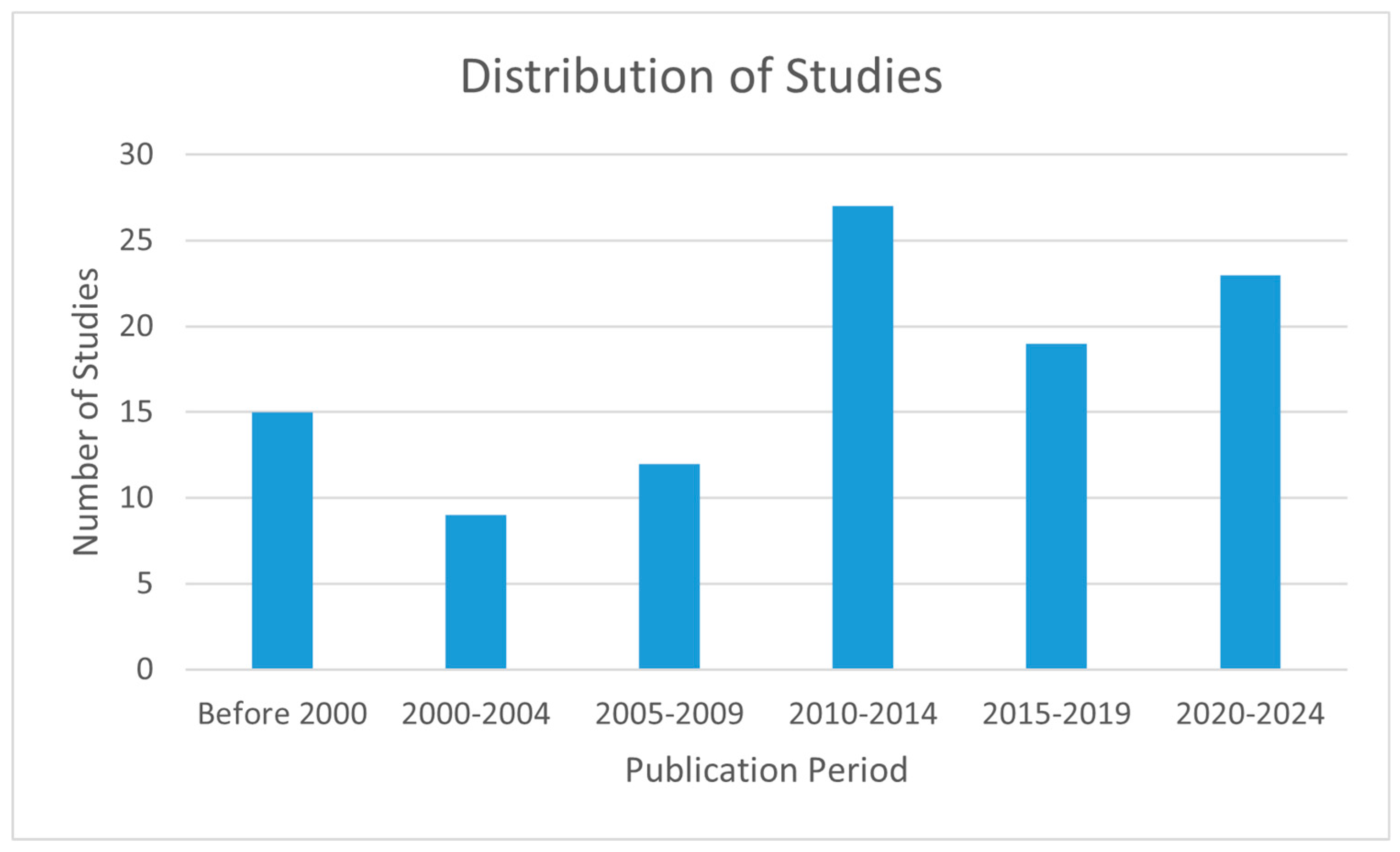
Figure 4.
Distribution of Included Studies by Scientific Field.
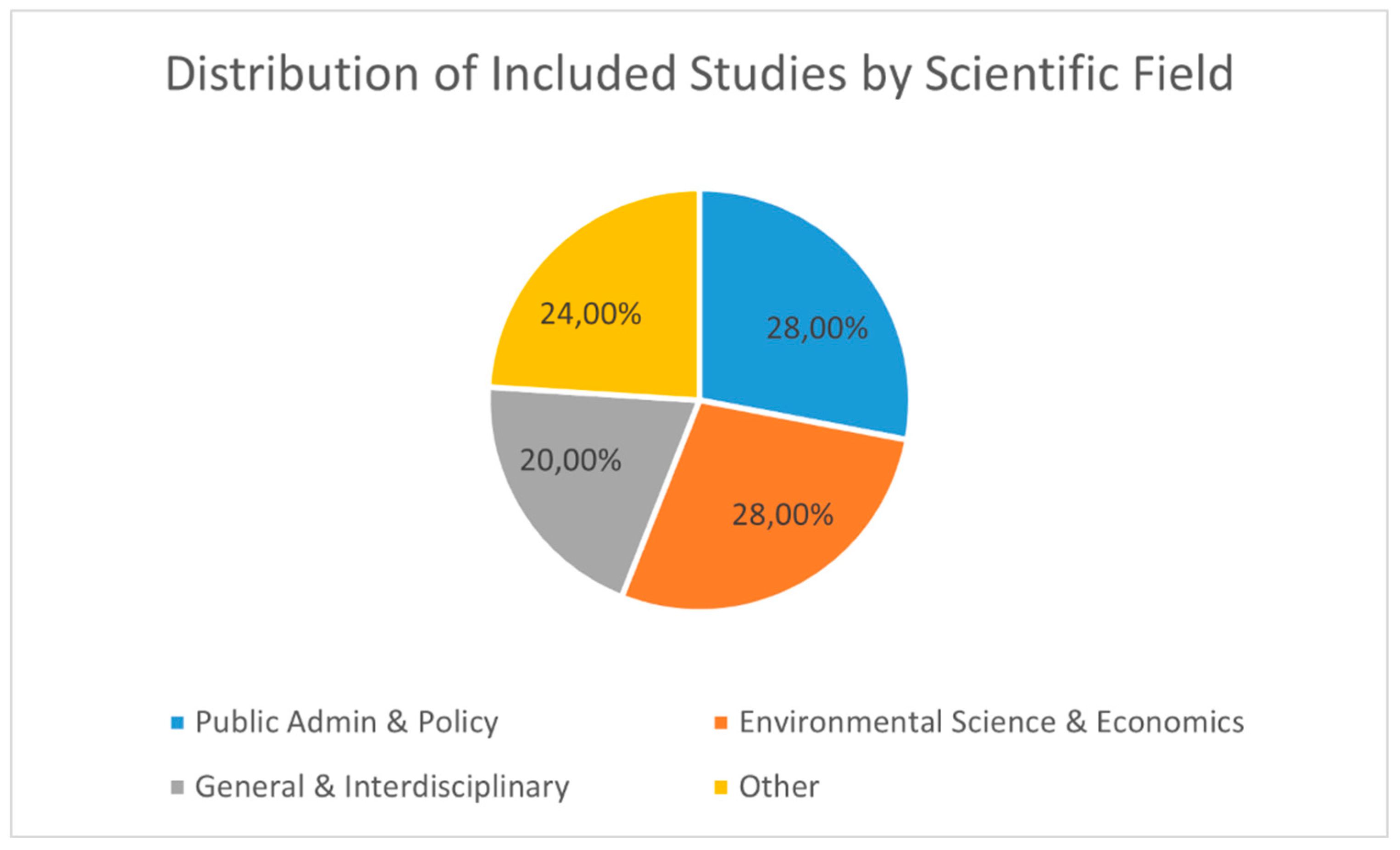
Figure 5.
Geographic Focus of Included Studies.
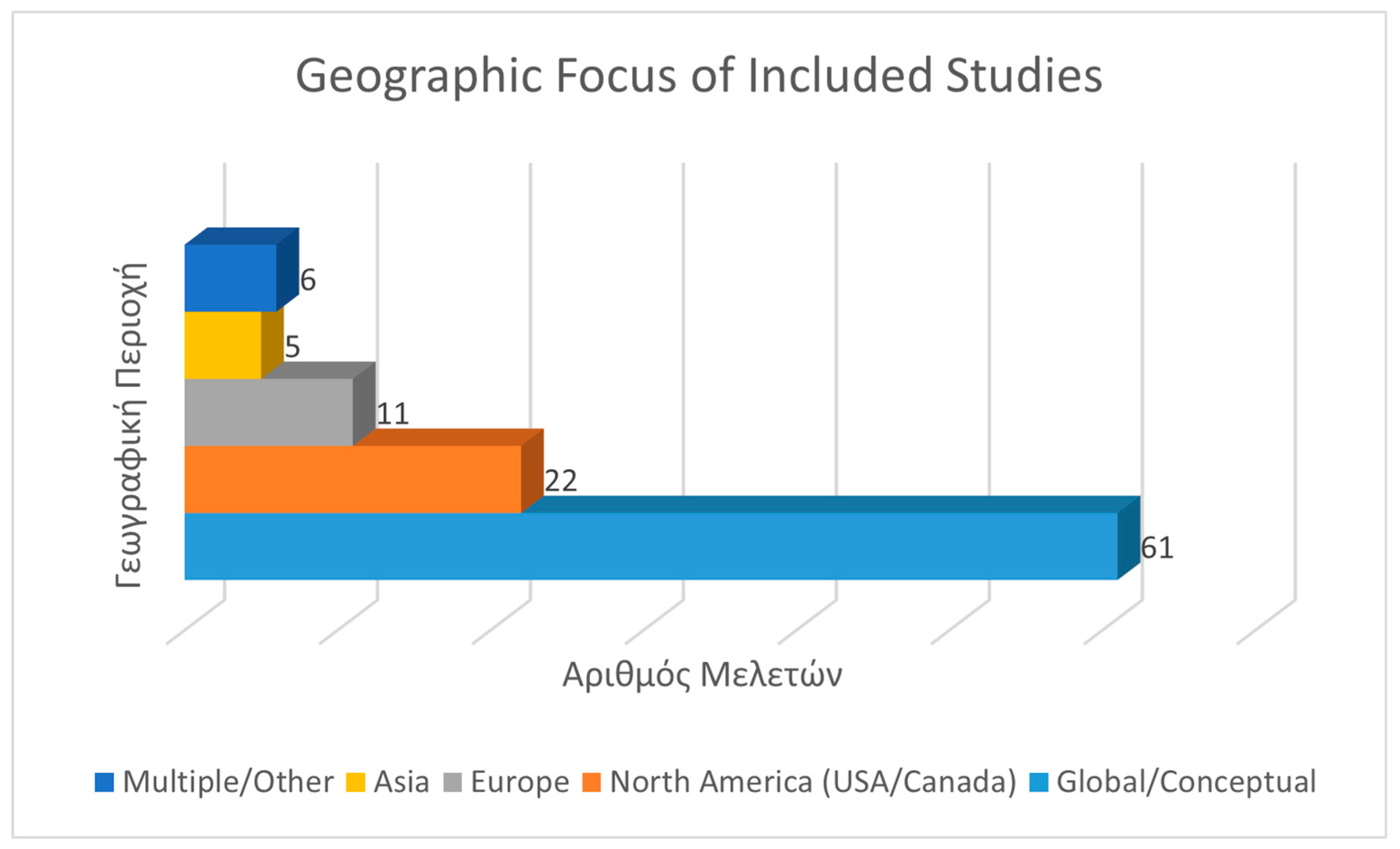
Table 1.
Records identified from database searches.
| Database | Date of Search | Search String Used | Results (n) |
|---|---|---|---|
| Scopus | 15/8/2025 | TITLE-ABS-KEY ( “tragedy of the commons” OR “commons dilemma” ) AND ( “governance” OR “public policy” OR “collective action” OR “institutional analysis” OR “Ostrom” ) | 127 |
| Web of Science | 15/8/2025 | TS=((“tragedy of the commons” OR “common pool resource*”) AND (“govern*” OR “policy” OR “institution*” OR “collective action”)) | 118 |
| Semantic Scholar | 15/8/2025 | (“tragedy of the commons” OR “commons dilemma”) AND (“public administration” OR “governance” OR “polycentricity” OR “environmental policy”) | 94 |
| Google Scholar + Google Labs | 15/8/2025 | allintitle: “tragedy of the commons” OR “the commons” AND (governance OR policy OR Ostrom OR collective action) - AI-assisted relevance sorting/filtering applied. | 563 |
| Total | 902 |
Table 2.
Inclusion and Exclusion Criteria for the Study Selection.
| Criteria | Inclusion | Exclusion |
|---|---|---|
| Focus | Study directly addresses the “tragedy of the commons” or “commons dilemma” in the context of public administration, governance, or public policy. | Study focuses on commons dilemmas outside the public administration/policy domain (e.g., purely biological or psychological without policy implications). |
| Publication Type | Peer-reviewed journal articles, books, book chapters, and peer-reviewed conference proceedings. | Editorials, book reviews, unpublished manuscripts, dissertations, non-peer-reviewed content. |
| Language | Published in English. | Published in any language other than English. |
| Accessibility | Full-text of the study is accessible. | Full-text is not available or cannot be retrieved. |
| Timeframe | No restriction on publication date to capture the concept's evolution. | N/A |
Table 3.
Thematic Analysis Linking Analytical and Descriptive Themes with Indicative References.
| Analytical Theme | Descriptive Theme | References (APA) |
|---|---|---|
| A1: Conceptualizing the Tragedy: Foundational Models and Critiques | D1: Hardin's Foundational Thesis and its Misinterpretations | (Lloyd, 2007), (Meyerson, 1998), (Feeny et al., 1990), etc |
| D2: Critiques of the State-Market Dichotomy and the Open-Access Fallacy | (Dietz et al., 2002), (Cole et al., 2013), (Fisher, 2019), etc | |
| A2: Drivers and Mechanisms of Commons Dilemmas | D3: Individual-Level Behavioral and Cognitive Drivers | (Fehr & Leibbrandt, 2011), (Barclay, 2004), (Gross & De Dreu, 2019), etc |
| D4: Systemic and Institutional Failures | (McWhinnie, 2009), (Lloyd, 2007), (Mundo et al., 2022), (Brook, 2001), etc | |
| A3: Governance and Solutions for the Commons | D5: Self-Governance and the Role of Local Institutions | (Mansbridge, 2014), (Flanagan, 2014), (Schlager & López-Gunn, 2006), etc |
| D6: Polycentric and Multilevel Governance | (Aderinto et al., 2020), (Armitage, 2008), (Mansbridge, 2014), etc | |
| D7: Application of Commons Theory to New Domains | (Grinell & Rabin, 2013), (Wilson et al., 2020), (Almeida et al., 2020), etc |
Disclaimer/Publisher’s Note: The statements, opinions and data contained in all publications are solely those of the individual author(s) and contributor(s) and not of MDPI and/or the editor(s). MDPI and/or the editor(s) disclaim responsibility for any injury to people or property resulting from any ideas, methods, instructions or products referred to in the content. |
© 2026 by the authors. Licensee MDPI, Basel, Switzerland. This article is an open access article distributed under the terms and conditions of the Creative Commons Attribution (CC BY) license (http://creativecommons.org/licenses/by/4.0/).
Copyright: This open access article is published under a Creative Commons CC BY 4.0 license, which permit the free download, distribution, and reuse, provided that the author and preprint are cited in any reuse.