

Submitted:
28 April 2026
Posted:
28 April 2026
You are already at the latest version
Abstract
Previous studies by the authors and others have shown that ultra-high performance concrete (UHPC) is an ideal printing material for 3D concrete printing (3DCP). However, its high carbon emissions may limit its application in 3DCP. As a solution, this study reports the development of a 3D-printed low-carbon UHPC using limestone calcined clay cement (LC3), denoted as 3DP-LC3-UHPC. The fresh and hardened properties of 3DP-LC3-UHPC were evaluated and compared with those of conventional 3D-printed UHPC using Portland cement (3DP-PC-UHPC). Conventionally mold-cast mixtures were also prepared for comparison. Fresh properties included flowability, setting time, rheological properties, extrudability, and buildability. Hardened properties included compressive strength and flexural performance in different directions. The effect of two curing regimes (heat- and ambient temperature-curing) on hardened properties was also investigated. The results showed that 3DP-LC3-UHPC possessed higher dynamic yield stress, plastic viscosity, and thixotropy recovery, and exhibited satisfactory extrudability and buildability. The 3DP-LC3-UHPC achieved compressive strengths of 130.4-169.4 MPa and flexural strengths of 26.9-30.6 MPa, depending on the testing direction. Environmental and cost assessments confirmed that 3DP-LC3-UHPC reduces carbon dioxide emissions, embodied energy, and cost by about 25%, 10%, and 9%, respectively, compared to 3DP-PC-UHPC. Overall, the findings demonstrate that 3DP-LC3-UHPC is a sustainable and cost-effective alternative to conventional 3DP-PC-UHPC.
Keywords:
3D concrete printing
; limestone calcined clay cement
; ultra-high performance concrete
; rheological properties
; mechanical properties
; environmental footprint
1. Introduction
Three-dimensional concrete printing (3DCP) is an emerging construction method where concrete is extruded from a nozzle to build structures layer by layer, guided by a digital model [1]. 3DCP holds significant potential to improve economic efficiency, support sustainable development, and offer geometrical freedom within the construction industry [2,3,4]. However, three main challenges, namely reinforcement, durability, and high carbon emissions, were recognized to be tackled before 3DCP can be widely used in the industry [3,4,5].
Due to the complication of layer-by-layer continuous extrusion of concrete during the printing process, 3DCP has difficulty incorporating conventional steel rebar as reinforcement [5]. Reinforcement should be added in a way that aligns with the automated nature of 3DCP, with no or minimal interruption of the printing process. The layer-by-layer deposition process also leads to weak interlayer bonds, which may compromise the durability of the printed structure [2,3,4]. As a solution to tackle both these challenges, the authors recently developed a 3D-printed ultra-high performance concrete (3DP-UHPC) [6,7,8]. The high flexural and tensile strengths, toughness, and deflection-hardening and multiple cracking behavior of the 3DP-UHPC significantly decrease the reliance on conventional steel rebar, while the excellent durability of UHPC due to its dense microstructure enhances the long-term durability of printed structures [9].
However, the developed 3DP-UHPC utilizes a high amount of Portland cement (PC) (840 kg/m3) [6,7,8]. A typical mold-cast UHPC mixture generally uses 8001000 kg/m3 of PC, which is 22.5 times higher than normal strength concrete (about 400 kg/m3) [10]. The manufacture of PC is the third largest source of carbon emissions, responsible for approximately 10% of the total carbon emissions in the world [11]. Apart from the high carbon footprint, the high amount of PC used in 3DP-UHPC not only leads to its high cost but also can result in high autogenous shrinkage and heat of hydration [10].
To tackle the above challenges, the authors recently developed eco-friendly 3DP-UHPCs, in which 60 wt.% of PC was replaced by either 60 wt.% fly ash or 60 wt.% ground granulated blast-furnace slag (GGBS), or 30 wt.% and 30 wt.% GGBS [12]. However, the increasingly low availability of fly ash and GGBS in the UK, and more broadly in Europe [13] requires the use of other low-carbon binders, such as limestone calcined clay cement (LC3), to develop low-carbon 3DP-UHPCs.
According to Scrivener et al. [13], a combination of limestone and calcined clay can replace part of the clinker content in PC production. Incorporating the ‘LC3-50’ formulation proposed by Scrivener et al. [13,14], which replaces 50% of PC with 15% limestone, 30% calcined clay, and 5% gypsum, into the 3DP-UHPC mixture can significantly reduce its carbon emissions, as calcined clay requires a much lower calcination temperature (700–800 °C) compared to cement clinker production (around 1450 °C). Meanwhile, the costs can also be potentially reduced due to the relatively lower price and large availability of limestone and clay minerals [15,16].
Although the use of LC3 in mold-cast UHPC has been studied by previous researchers [17,18,19], to the best of the authors’ knowledge, no published work has yet reported the development of 3DP-UHPC incorporating LC3. Therefore, this paper aims to fill this research gap by using LC3 to develop a low-carbon 3DP-UHPC. A key challenge of this study is to replace PC with LC3 in the proposed low-carbon 3DP-UHPC, without compromising the mechanical properties and printability of the composite.
2. Mixture Proportions and Materials
Table 1 presents the mixture proportions of PC-based UHPC (PC-UHPC) and LC3-based UHPC (LC3-UHPC) investigated in this study. The binder used in PC-UHPC was composed of PC and silica fume, while the binder used in LC3-UHPC was composed of PC, limestone powder, calcined clay, gypsum, and silica fume. The silica fume content was constant, equal to 25 wt.% in both binders. However, in the binder used in LC3-UHPC, 50 wt.% of PC was replaced with 15 wt.% limestone powder, 30 wt.% calcined clay, and 5 wt.% gypsum, following the ‘LC3-50’ formulation recommended by Scrivener et al. [13].
The PC used was CEM I 52.5N Blue Circle PROCEM, supplied by Tarmac, which complies with CEM I requirements of BS EN 197-1 [20]. The silica fume used was undensified, containing over 90% silica by mass, which was supplied by Elkem. The limestone powder used was a high-purity, finely ground calcium carbonate powder produced by Omya UK Limited, conforming to the requirements of BS 7979 [21]. The calcined clay used was made from a kaolinite-rich clay with 55.7% kaolinite content by Liapor GmbH & Co. KG., Hallerndorf, Germany [22]. The gypsum used was a micronized, high-purity material containing at least 99% calcium sulphate dihydrate, produced by Saint-Gobain Formula. Two types of sieve-graded silica sand were used, classified based on their particle size distributions (see Figure 1) and referred to as “coarser” and “finer” sands. Figure 1 shows the particle size distributions of all granular materials used in the study. A polycarboxylate ether (PCE)-based superplasticizer (SP) supplied by Master Builders Solutions UK Ltd. was used to control workability. A nano clay (NC) in the form of a highly purified hydrous magnesium aluminosilicate was incorporated as a rheology-modifying admixture. The chemical compositions of materials measured by X-ray fluorescence (XRF) are reported in Table 2. Copper-coated straight steel fibers were incorporated at a fixed dosage of 2% by volume. Table 3 presents properties of the steel fibers reported by the supplier.
The proportions of PC, silica fume, and sands in PC-UHPC were determined using the modified Andreasen and Andersen model [23] by optimizing the packing density of dry granular particles (see Equation (1)).
where is the particle size (µm), represents a fraction of the total solids that are smaller than size , is the maximum particle size (µm), is the minimum particle size (µm), and is the distribution modulus, which is suggested in the range of 0.22 to 0.25 for concrete with a large amount of cementitious materials [24,25]. This study utilized according to Arunothayan et al. [6] and Yu et al. [24]. and were respectively 1.5 mm and 0.1 μm. The proportions of ingredients were iteratively calculated by minimizing the residual sum of squares (RSS) between the target distribution, , which was derived from Eq. (1), and the actual particle size distribution, at discrete particle sizes, as defined in Eq. (2). The optimization ensured that the resulting granular composition closely matched the ideal grading curve, thereby improving the overall performance of the UHPC mix. The target curve and the composite particle size distribution of the PC-UHPC and LC3-UHPC matrices are presented in Figure 2.
3. Experimental Methods
3.1. Mixing Process
The same mixing protocol was followed for both mixtures. The binder ingredients and sands were first dry mixed in a 20-liter planetary mixer for 1 min. Approximately 95 wt.% of the water was then added to the mixture and mixed for 2 min at low speed. Subsequently, the SP was mixed with the remaining water and added to the mixture, and the mixing continued for 7 min at low speed, followed by 4 min at medium speed to achieve a flowable and uniform mixture. Then, the steel fibers were gradually added and mixed for 3 min at low speed, followed by 1 min at medium speed to ensure uniform fiber dispersion. Finally, nano clay was added and mixed for 1 min at low speed and 2 min at medium speed to adjust the rheological properties for 3D printing.
3.2. Casting and Printing Procedures
A custom-made gantry 3D concrete printer equipped with an auger extruder was used in this study, having a print volume of about 1.2 m (width) × 1.2 m (length) × 0.5 m (height). A detachable circular nozzle with a 30 mm diameter was attached to the extruder outlet. Solid slabs measuring 270 mm × 245 mm and 240× 245 mm in cross section were printed (see Figure 3). The 270 mm × 245 mm slabs consisted of five layers, while the 240 × 245 mm slabs were made of six layers. Each layer was 10 mm thick. The feed rate (movement speed) of the printer was 1000 mm/min. The extrusion rate was controlled by adjusting the auger rotation speed, ensuring the filament width was 30 mm, equal to the nozzle diameter. For comparison purposes, fresh mixtures were also cast into cubic and prismatic molds with the same dimensions to prepare conventionally mold-cast specimens. It should be noted that nano clay was not used for preparing the mold-cast specimens.
3.3. Curing Procedures
In this study, the mold-cast specimens were subjected to both heat-curing and ambient-temperature curing regimes for comparison, while the printed specimens were subjected only to heat curing. After the completion of the printing and casting processes, all printed slabs and cast specimens were covered with plastic sheets and kept at room temperature (23 ± 3 °C) for 24 hours. The five-layer printed slabs were then cut into 40 mm × 40 mm × 160 mm prisms, while the six-layer printed slabs were cut into 50 mm cubes. All sides of the extracted cubes and prisms were cut to ensure flat surfaces for testing. The printed cubes and prisms were then immersed in water in a sealed container at room temperature for another 24 hours. Subsequently, the sealed container was then transferred to an oven for heat curing at 90 °C for 48 hours. The sealed container was then removed from the oven and left at room temperature for an additional 72 hours. The total curing period was 7 days before mechanical testing of the printed specimens. The cast specimens were de-molded after 24 hours and followed the same procedure for the heat-curing regime. However, for the ambient-temperature curing, the cast specimens after demolding were immersed in a water tank for 27 days at room temperature. The total curing period was 28 days before mechanical testing of the cast specimens subjected to the ambient-temperature curing regime.
3.4. Testing Methods
3.4.1. Fresh Properties
The flow table tests were conducted in accordance with ASTM C1437 [26] to measure the flowability of fresh composite mixtures (containing fibers). Two orthogonal diameters of the mixture flow were measured before and after 25 drops of the flow table.
The initial setting times of the mold-cast and 3D-printed composite mixtures (containing fibers) were measured. A sliding probe with a minimum length of 45 mm and a diameter of 1.13 ± 0.05 mm was carefully lowered into the fresh composite mixtures, and the penetration depth was recorded. The initial setting time was defined as the time at which the distance between the needle tip and the base plate was 6 ± 3 mm.
To evaluate extrudability and buildability, hollow columns measuring 100 mm × 100 mm in cross section were printed. Each layer was made of a single filament 30 mm in width and 10 mm in thickness. The rectangular layers were printed continuously without delay. The mixture was considered to have ‘satisfactory’ extrudability if continuous extrusion without blockage, segregation, bleeding, or filament tearing was observed. If the printed hollow columns showed no excessive vertical distortion or collapse up to a 20-layer height (200 mm), the mixture was considered to have ‘satisfactory’ buildability.
An RSX-SST rotational rheometer by AMETEK Brookfield was used to determine the dynamic yield stress, plastic viscosity, and structural recovery of fresh printable composite mixtures (containing fibers and nano clay). A four-blade vane probe, measuring 40 mm in length and 20 mm in diameter, was mounted on the rheometer to achieve a cylindrical geometry. A beaker with a capacity of 0.5 L was used as the rheometer vessel. Hysteresis tests were performed to determine the dynamic yield stress and plastic viscosity, with the detailed procedure described in [27,28]. As shown in Figure 4a, the rotational velocity of the vane accelerated linearly from 0 rpm to 30 rpm in 2 min and then decelerated linearly to 0 rpm in another 2 min. The structural recovery behavior, which is also referred to as the thixotropic property, of mixtures was measured in compliance with the method proposed by Li et al. [29]. The corresponding rheological testing protocol is presented in Figure 4b. As described in previous studies [30], the dynamic yield stress () and plastic viscosity () were determined through regression analysis of the stable portion of the downward flow curve within the shear rate range of 12 to 30 , based on the Bingham model (see Eq. (3)). The correlation coefficients (R2) for both mixtures were found to be > 0.9837, indicating a good fit of the model.
3.4.2. Hardened Properties
The 50 mm cube specimens were tested under compression at a load rate of 0.6 MPa/s. The printed cubes were tested in three directions (see Figure 5). At least three printed cubes were tested for each direction. At least three mold-cast cubes were also tested for comparison. The prismatic specimens (40 mm × 40 mm × 160 mm) were tested under flexure using a three-point bending test setup with a span of 120 mm under a displacement rate of 0.5 mm/min. The printed specimens were tested in three directions (see Figure 5). At least three printed prisms were tested for each direction. At least three mold-cast prisms were also tested for comparison.
4. Results and Discussion
4.1. Fresh Properties
4.1.1. Initial Setting Time
As shown in Table 4, the initial setting times of the cast and printed LC3-UHPC mixtures were 37% and 21% shorter than those of the PC-UHPC mixtures, respectively. This indicates that the incorporation of calcined clay and limestone powder accelerates early hydration and structural buildup [13]. This shorter setting time of the LC3-UHPC mixture also aligns with the results of rheological behavior (see Section 4.1.3), where the LC3-UHPC mixture exhibited stronger flocculation and higher thixotropy [31,32].
Comparing setting times of printed and cast mixtures, it was found that the printed mixtures containing nano clay showed higher setting times than the cast mixtures (without nano clay). This is true in both LC3-UHPC and PC-UHPC mixtures. The incorporation of nano clay promotes water adsorption, which enhances floc strength and leads to the formation of a structured particle network. This process increases the yield stress and reduces particle mobility within the suspension [33,34]. The resulting structural build-up may increase the tortuosity of the pore structure and, consequently, potentially hinder ionic transport in the pore solution. Scrivener et al. [35] identified limited ion supply (e.g., silicate species) and reduced availability of growth sites as key factors restricting C-S-H development, indicating that constrained ionic transport can delay the nucleation and growth of hydration products. Therefore, the structural modifications induced by nano clay may reduce the overall hydration rate, postpone the formation of a continuous hydration-controlled skeleton, and ultimately retard the initial setting time.
4.1.2. Flowability
As shown in Table 4, the cast and printed LC3-UHPC mixtures exhibited larger spread diameters both before and after dropping the flow table than the PC-UHPC mixtures. The spread diameter before dropping the flow table is significantly influenced by the mixture’s static yield stress, but not by its viscosity [36]. Thus, the higher spread diameters of the LC3-UHPC mixtures before dropping the flow table may indicate their lower static yield stress compared to the PC-UHPC mixtures.
The spread diameter after dropping the flow table indicates how the mixture flows once it has been disturbed. The larger spread diameters, after dropping the flow table, of the LC3-UHPC mixtures may appear contradictory to the higher dynamic yield stress and plastic viscosity measured for LC3-UHPC compared to PC-UHPC (see Section 4.1.3) [32,37]. However, it is necessary to note that the 25 drops of the flow table induce a rapid, high-shear deformation in which the mixture transitions into a shear-thinning regime. Under such conditions, the LC3-UHPC mixture benefits from its stronger shear-thinning response and greater thixotropic breakdown, releasing previously immobilized water and reducing internal resistance, allowing the LC3-UHPC mixture to flow more than the PC-UHPC mixture once shear is applied [31,38]. Thus, the larger spread diameters after dropping the flow table observed in the LC3-UHPC mixtures are due to their greater susceptibility to shear-induced structural degradation.
4.1.3. Rheological Properties
The results of the rheological properties of fresh printable composite mixtures (containing fibers and nano clay) are shown in Figure 6, and the quantitative values are reported in Table 5. The dynamic shear stress of the 3DP-LC3-UHPC mixture was 40% higher than that of 3DP-PC-UHPC. This indicates that 3DP-LC3-UHPC exhibits higher resistance to initiating flow compared to 3DP-PC-UHPC. The plastic viscosity also exhibited a similar trend; the plastic viscosity of the 3DP-LC3-UHPC mixture was 11% higher than that of 3DP-PC-UHPC. This indicates that after starting the flow, the 3DP-LC3-UHPC mixture has higher resistance to flow [31]. According to previous studies [32,39], the incorporation of calcined clay into the mixture increases the flocculation strength. This effect is attributed to the finer particle size (see Figure 1) and higher specific surface area of calcined clay, which promotes the absorption of free water and the formation of localized regions with reduced water availability. Consequently, particle–particle interactions are intensified, leading to stronger flocculation and, in turn, higher yield stress and plastic viscosity in LC3 mixtures. In addition, the presence of limestone at certain dosages contributes to a filler effect that can further increase the plastic viscosity [31,40].
As shown in Figure 6, the 3DP-LC3-UHPC mixture exhibited a recovery rate of 58.6%, which is slightly higher than that of the 3DP-PC-UHPC mixture (51.5%). In general, immediately following the initial contact between the binder and water, the incorporation of supplementary cementitious materials leads to an increase in thixotropy [31]. More specifically, in LC3 mixtures, calcined clay plays a crucial role in promoting shear-thinning behavior, enhancing the thixotropy of the materials. However, at later ages, typically after 30 to 60 min, this effect diminishes as the influence of hydration reactions becomes dominant [41]. It has also been reported that the thixotropy of PC-based binder systems is primarily associated with the formation of C-S-H gels and colloidal flocculation. In contrast, the thixotropy of LC3 binder systems originates from the colloidal particle characteristics of calcined clays. The surface-static properties of calcined clays, resulting from the ion release upon contact with water, enhance water retention within their layered microstructure, resulting in distinct and variable rheological behaviors [38].
It is worth noting that the dynamic yield stresses observed in this study are significantly higher than the typical values reported for fresh UHPC mixtures (10–100 Pa) [42]. This is attributed to the incorporation of nano clay in the 3DP-LC3-UHPC and 3DP-PC-UHPC mixtures, which is known to significantly increase yield stress and thixotropy due to its high surface area and water absorption capacity, leading to increased interparticle flocculation and structural build-up [43]. Previous studies have reported that the addition of nano clay can increase the yield stress of cementitious materials by more than 60% [44] and, in some cases, several times depending on the dosage and dispersion method [45].
4.1.4. Extrudability and Buildability
Figure 7 presents the photos taken from the hollow columns printed using 3DP-PC-UHPC and 3DP-LC3-UHPC mixtures, respectively. All 20 layers were continuously extruded on top of each other without blockage, segregation, bleeding, or filament tearing; therefore, it can be said that both mixtures exhibited ‘satisfactory’ extrudability. In addition, no collapse or noticeable deformation at the bottom layers was observed; therefore, it can be said that both mixtures exhibited ‘satisfactory’ buildability. The total heights of the printed PC-UHPC and LC3-UHPC columns were measured to be 196 mm and 198 mm, respectively. It is also essential to note that the buildability limit of the developed mixtures was not limited to 20 layers. The reason for printing 20 layers was simply the limit imposed by the volume of the mixer used in this study. In other words, the volume of one batch of fresh mixtures prepared in this study was enough to print only 20 layers. More than 20 layers could be printed by using the batch mixing method or a bigger mixer.
4.2. Hardened Properties
4.2.1. Cast Mixtures Under Different Curing Regimes
Figure 8 presents the compressive and flexural strengths of mold-cast PC-UHPC and LC3-UHPC mixtures under different curing regimes. It was found that the compressive and flexural strengths of the cast LC3-UHPC mixture were slightly lower than those of the PC-UHPC mixture under both curing regimes. Under the heat-curing regime, the average compressive and flexural strengths of cast LC3-UHPC specimens were about 6% and 2% lower than those of PC-UHPC, respectively. Similarly, under the ambient temperature-curing regime, the average compressive and flexural strengths of cast LC3-UHPC specimens were about 11% and 9% lower than those of PC-UHPC, respectively.
The slight reduction in the strength of the cast LC3-UHPC specimens may be attributed to the combined incorporation of calcined clay and limestone powder into the UHPC matrix, which induces synergistic interactions among cement clinker, calcined clay, limestone powder, and gypsum, extending beyond their individual effects. These interactions are highly dependent on the level of clinker replacement. In the LC3 system, limestone powder serves as a nucleation site, enhancing early hydration of both calcined clay and clinker (particularly C3S), and reacts with aluminate phases and calcium hydroxide to form hemicarbonate and monocarbonate, thereby stabilizing ettringite [19,46]. Although calcined clay engages in pozzolanic reactions with calcium hydroxide (CH), leading to the formation of additional hydration products such as calcium silicate hydrate (C-S-H), calcium aluminate hydrate (C-A-H), and calcium aluminosilicate hydrate (C-A-S-H), which contribute to pore refinement, its benefits can be somewhat offset by its drawbacks depending on its content. Notably, the high-water absorption capacity of calcined clay negatively influences the hydration kinetics of the fresh mixture, thereby diminishing its overall mechanical performance [47]. Owing to these synergies, LC3 mixtures with clinker replacement levels below 30% exhibit strength comparable to or exceeding that of 100% PC mixtures. However, at clinker replacement levels above 30%, the dilution effect and excess calcined clay reduce strength. This explains the slight reduction in the strength of the cast LC3-UHPC mixture developed in this study with 50% clinker replacement.
Comparing the curing regimes, it was found that, as expected, heat curing enhanced the compressive and flexural strengths of both cast PC-UHPC and LC3-UHPC mixtures. The average compressive and flexural strengths of the heat-cured cast PC-UHPC specimens were about 10% and 17% higher than those of the ambient temperature-cured specimens, respectively. The average compressive and flexural strengths of the heat-cured cast LC3-UHPC specimens were about 16% and 26% higher than those of the ambient temperature-cured specimens, respectively. It is well-established that in UHPC mixtures, the heat-curing regime accelerates the reaction rates, thereby increasing the strength [9,10].
4.2.2. Printed Mixtures Under Heat-Curing Regime
Figure 9 presents the compressive and flexural strengths of the printed specimens in different directions compared with their cast counterparts under the heat-curing regime.
As expected, both 3DP-PC-UHPC and 3DP-LC3-UHPC mixtures exhibited anisotropic mechanical properties depending on the testing direction. Similar anisotropic behavior was reported in the literature for different types of printed fiber-reinforced concretes [7,12,48,49]. The extent and pattern of anisotropy depend on several factors, such as printing configuration (e.g., printing speed, nozzle geometry, dimensions of filaments), rheology of printing material, and type and dosage of fibers [7,12,49].
As shown in Figure 9(a), the following pattern was observed for the compressive strength of both PC-UHPC and LC3-UHPC mixtures: Z-direction > Y-direction Cast > X-direction. The highest compressive strength observed in the Z-direction can be attributed to the gravitational compaction of the deposited filaments. The lowest compressive strength observed in the X-direction is because the highest number of filaments’ interfaces existed in this direction. The weak inter-filament bonding and the potential formation of directional porosity and micro-voids between filaments contributed to the lowest strength in this direction. Comparing the type of binder, the compressive strength of the 3DP-LC3-UHPC specimens tested in X-, Y-, and Z-directions was 13%, 8%, and 17% lower, respectively, than that of 3DP-PC-UHPC counterparts.

As shown in Figure 9(b), the flexural strength also exhibited anisotropic behavior. The following pattern was observed for the flexural strength of both PC-UHPC and LC3-UHPC mixtures: Z-direction > Y-direction > X-direction Cast. It is well established that in printed UHPCs, fibers mainly align in the printing direction [7]. Therefore, the higher flexural strength in Z- and Y-directions is because in these directions the fibers were mainly aligned perpendicular to the applied load, effectively resisting the tensile forces. The higher flexural strength in the Z-direction than the Y-direction can be due to the gravitational compaction of the deposited filaments in the Z-direction. The lower flexural strength in the X-direction is because, in this direction, the fibers were mainly aligned parallel to the flexural crack planes. Comparing the type of binder, the flexural strength of the 3DP-LC3-UHPC specimens tested in X-, Y-, and Z-directions was comparable, 14% and 11% lower, respectively, than that of 3DP-PC-UHPC counterparts.
Figure 10 presents representative flexural stress vs mid-span deflection curves for 3DP-PC-UHPC and 3DP-LC3-UHPC specimens in different directions, along with their cast counterparts. Regardless of the type of binder, the flexural performance of 3DP-PC-UHPC and 3DP-LC3-UHPC specimens in the Y- and Z-directions was superior to that of the cast specimens. However, the printed specimens in the X-direction exhibited inferior performance, showing deflection softening behavior with a significant drop in load after peak load. As mentioned above, these are due to the alignment of fibers depending on the testing direction.
Comparing the type of binder, it can be said that the flexural performance of the LC3-UHPC was generally inferior to that of the PC-UHPC, especially in the cast specimens, as well as the printed specimens in the Y- and Z-directions. In fact, some of the cast LC3-UHPC specimens showed deflection-softening behavior, while the maximum flexural strength of cast LC3-UHPC was comparable to that of cast PC-UHPC (see Figure 9(b)). The inferior flexural performance of the LC3-UHPC may be attributed to the extensive use of calcined clay, which leads to the simultaneous consumption of CH along with silica fume, resulting in insufficient pozzolanic reaction. In addition, the formation of carboaluminate phases (with relatively low strength) due to reactions with limestone may have also contributed to the reduction in fiber-matrix interfacial bond and flexural performance [16]. Similar results were reported by [50] and [18], who reported that the tensile performance of cast LC3-UHPC specimens was inferior to that of cast PC-UHPC specimens. In fact, Mank [50] reported that some of their cast LC3-UHPC specimens exhibited strain-softening behavior.
Table 6 presents the fracture energy of PC-UHPC and LC3-UHPC calculated from the area under the flexural stress-deflection curves up to 0.9 mm deflection. The fracture energy of both PC-UHPC and LC3-UHPC showed similar anisotropic behavior, with the following pattern: Z-direction Y-direction > Cast > X-direction. Comparing the type of binder, the fracture energy of the 3DP-LC3-UHPC in the Y- and Z-directions was about 20% lower than that of 3DP-PC-UHPC. This is because, as mentioned before, the maximum flexural strength of 3DP-LC3-UHPC in the Y- and Z-directions was 14% and 11% lower, respectively, than that of 3DP-PC-UHPC counterparts.
4.3. Environmental Footprints and Cost Comparisons
Table 7 presents the mixture proportions of 3DP-PC-UHPC and 3DP-LC3-UHPC, along with the life-cycle inventory data and cost of each ingredient. It should be noted that only the material production phase was considered in this section. Figure 11 presents the carbon dioxide emissions, embodied energy, and cost associated with the production of a unit volume of each mixture. The carbon dioxide emissions, embodied energy, and cost associated with the production of a unit volume of the 3DP-LC3-UHPC mixture were about 25%, 10%, and 9%, respectively, lower than those of the 3DP-PC-UHPC mixture. Therefore, the 3DP-LC3-UHPC mixture developed in this study is a sustainable and cost-effective alternative to the conventional 3DP-PC-UHPC mixture.
As shown in Figure 11, considering the individual contribution of different ingredients to environmental footprints, it can be stated that in both mixtures, PC was the primary contributor, followed by steel fibers. In the 3DP-PC-UHPC mixture, PC was responsible for approximately 44% of the total embodied energy and 68% of the carbon emissions. However, in the 3DP-LC3-UHPC mixture, PC was responsible for 24% of the total embodied energy and 45% of the carbon emissions. When it comes to the cost of each mixture, steel fiber was one of the primary contributors, responsible for around 22% and 24% of the costs of the 3DP-PC-UHPC and 3DP-LC3-UHPC mixtures, respectively. Therefore, replacing manufactured steel fiber with recycled tire steel fiber can be a promising approach to further reduce the cost and environmental footprint of UHPC.
5. Conclusions
This study reports the fresh and hardened properties of a 3D-printed low-carbon UHPC made of LC3, denoted as LC3-UHPC. The results were compared with conventional 3D-printed UHPC made of Portland cement, denoted as PC-UHPC. The following conclusions are drawn:
- The printed mixtures containing nano clay showed higher setting times than the cast mixtures (without nano clay). This is true in both LC3-UHPC and PC-UHPC mixtures.
- The initial setting times of the cast and printed LC3-UHPC mixtures were 37% and 21% shorter than those of the PC-UHPC mixtures, respectively.
- The cast and printed LC3-UHPC mixtures exhibited larger spread diameters both before and after dropping the flow table than the PC-UHPC mixtures.
- The dynamic shear stress and plastic viscosity of the printed LC3-UHPC mixture were 40% and 11% higher, respectively, than those of the printed PC-UHPC mixture. The printed LC3-UHPC mixture exhibited a recovery rate of 58.6%, which was higher than that of the printed PC-UHPC mixture (51.5%).
- The compressive and flexural strengths of the cast LC3-UHPC mixture were 2%-11% lower than those of the PC-UHPC mixture under both curing regimes.
- The compressive strength of the printed LC3-UHPC specimens tested in X-, Y-, and Z-directions was 13%, 8%, and 17% lower, respectively, compared to that of printed PC-UHPC counterparts. The flexural strength of the printed LC3-UHPC specimens tested in X-, Y-, and Z-directions was comparable, 14% and 11% lower, respectively, compared to that of printed PC-UHPC counterparts.
- The fracture energy of PC-UHPC and LC3-UHPC mixtures showed similar anisotropic behavior, with the following pattern: Z-direction ≈ Y-direction > Cast > X-direction. The fracture energy of the 3DP-LC3-UHPC in the Y- and Z-directions was about 20% lower than that of 3DP-PC-UHPC
- The environmental impact and cost calculations revealed a significant advantage of replacing 50% of Portland cement with LC3 in printed UHPC, lowering carbon emissions by 25%, embodied energy by 10%, and cost by 9%.
Acknowledgments
The authors greatly acknowledge the support provided by the Royal Society International Exchanges Award 2023 (IES\R3\233378). For the purpose of open access, the authors have applied a Creative Commons Attribution (CC BY) license to any Author Accepted Manuscript version arising. The authors also greatly acknowledge the “University of Sheffield Institutional Open Access Fund” for covering the article publishing charge for open access publication. The authors also greatly acknowledge Professor Viktor Mechtcherine (TU Dresden, Germany) for supplying the calcined clay used in this study.
References
- Sanjayan, J.G.; Nematollahi, B. 3D Concrete Printing for Construction Applications. 3D Concr. Print. Technol. Constr. Build. Appl. 2019, 1–11. [Google Scholar]
- Buswell, R.A.; Leal de Silva, W.R.; Jones, S.Z.; Dirrenberger, J. 3D printing using concrete extrusion: A roadmap for research. Cem. Concr. Res. 2018, 112, 37–49. [Google Scholar] [CrossRef]
- Bos, F.; Wolfs, R.; Ahmed, Z.; Salet, T. Additive manufacturing of concrete in construction: potentials and challenges of 3D concrete printing. Virtual Phys. Prototyp. 2016, 11(3), 209–225. [Google Scholar] [CrossRef]
- De Schutter, G.; Lesage, K.; Mechtcherine, V.; Nerella, V.N.; Habert, G.; Agusti-Juan, I. Vision of 3D printing with concrete - Technical, economic and environmental potentials. Cem. Concr. Res. 2018, 112, 25–36. [Google Scholar] [CrossRef]
- Mechtcherine, V.; Buswell, R.; Kloft, H.; Bos, F.P.; Hack, N.; Wolfs, R.; Sanjayan, J.; Nematollahi, B.; Ivaniuk, E.; Neef, T. Integrating reinforcement in digital fabrication with concrete: A review and classification framework. In Cement & Concrete Composites; 2021; p. 119. [Google Scholar]
- Arunothayan, A.R.; Nematollahi, B.; Ranade, R.; Bong, S.H.; Sanjayan, J. Development of 3D-printable ultra-high performance fiber-reinforced concrete for digital construction. Constr. Build. Mater. 2020, 257. [Google Scholar] [CrossRef]
- Arunothayan, A.R.; Nematollahi, B.; Ranade, R.; Bong, S.H.; Sanjayan, J.G.; Khayat, K.H. Fiber orientation effects on ultra-high performance concrete formed by 3D printing. Cem. Concr. Res. 2021, 143. [Google Scholar] [CrossRef]
- Arunothayan, A.R.; Nematollahi, B.; Khayat, K.H.; Ramesh, A.; Sanjayan, J.G. Rheological characterization of ultra-high performance concrete for 3D printing. In Cement & Concrete Composites; 2023; p. 136. [Google Scholar]
- Du, J.; Meng, W.; Khayat, K.H.; Bao, Y.; Guo, P.; Lyu, Z.; Abu-obeidah, A.; Nassif, H.; Wang, H. “New development of ultra-high-performance concrete (UHPC),” Composites. Part B. Engineering 2021, 224. [Google Scholar]
- Shi, C.; Wu, Z.; Xiao, J.; Wang, D.; Huang, Z.; Fang, Z. A review on ultra high performance concrete: Part I. Raw materials and mixture design. Constr. Build. Mater. 2015, 101, 741–751. [Google Scholar] [CrossRef]
- Ritchie, H.; Roser, M. “CO2 and Greenhouse Gas Emissions, Our World in Data, 2020,” Cement Data Sheet, Mineral commodity summaries 2020; USGS, 2020. [Google Scholar]
- Arunothayan, A.R.; Nematollahi, B.; Ranade, R.; Khayat, K.H.; Sanjayan, J.G. Digital fabrication of eco-friendly ultra-high performance fiber-reinforced concrete. Cem. Concr. Compos. 2022, 125. [Google Scholar] [CrossRef]
- Scrivener, K.; Martirena, F.; Bishnoi, S.; Maity, S. Calcined clay limestone cements (LC3). Cem. Concr. Res. 2018, 114, 49–56. [Google Scholar] [CrossRef]
- Scrivener, K.; Avet, F.; Maraghechi, H.; Zunino, F.; Ston, J.; Hanpongpun, W.; Favier, A. Impacting factors and properties of limestone calcined clay cements (LC3). Green. Mater. 2019, 7(1), 3–14. [Google Scholar] [CrossRef]
- Zunino, F.; Martirena, F.; Scrivener, K. Limestone calcined clay cements (LC3). ACI Mater. J. 2021, 118(3), 49–60. [Google Scholar] [CrossRef]
- Chen, Y.; He, S.; Zhang, Y.; Wan, Z.; Çopuroğlu, O.; Schlangen, E. 3D printing of calcined clay-limestone-based cementitious materials. Cem. Concr. Res. 2021, 149. [Google Scholar] [CrossRef]
- Luan, C.; Wang, J.; Zhou, Z. Synergic effect of triethanolamine and C-S-H seeding on early hydration of the limestone calcined clay cement in UHPC. Constr. Build. Mater. 2023, 400. [Google Scholar] [CrossRef]
- Guo, D.; Guo, M.; Xing, F.; Zhou, Y.; Huang, Z.; Cao, W. Using limestone calcined clay cement and recycled fine aggregate to make ultra-high-performance concrete: Properties and environmental impact. Constr. Build. Mater. 2023, 394. [Google Scholar] [CrossRef]
- Wang, J.; Huang, Y. Mechanical properties and hydration of ultra-high-performance seawater sea-sand concrete (UHPSSC) with limestone calcined clay cement (LC3). Constr. Build. Mater. 2023, 376. [Google Scholar] [CrossRef]
- Cement - Composition, specifications and conformity criteria for common cements. BS EN 197-1; British Standards Document. 2019.
- BS 7979; Specification for limestone fines for use with Portland cement. British Standards Online, 2016.
- Wang, L.; Ur Rehman, N.; Curosu, I.; Zhu, Z.; Beigh, M.A.B.; Liebscher, M.; Chen, L.; Tsang, D.C.W.; Hempel, S.; Mechtcherine, V. On the use of limestone calcined clay cement (LC3) in high-strength strain-hardening cement-based composites (HS-SHCC). Cem. Concr. Res. 2021, 144. [Google Scholar] [CrossRef]
- Reitz, W. Predictive process control of crowded particulate suspensions by J. E. Funk and D. R. Dinger. Mater. Manuf. Process. 1998, 13(5). [Google Scholar] [CrossRef]
- Yu, R.; Spiesz, P.; Brouwers, H.J.H. Mix design and properties assessment of ultra-high performance fibre reinforced concrete (UHPFRC). Cem. Concr. Res. 2014, 56, 29–39. [Google Scholar] [CrossRef]
- Hunger, M. An integral design concept for ecological self-compacting concrete. PhD thesis Eindhoven University of Technology, Eindhoven, the Netherlands, 2010. [Google Scholar]
- ASTM C1437; “Standard test method for flow of hydraulic cement mortar”. 2007.
- Bong, S.H.; Xia, M.; Nematollahi, B.; Shi, C. Ambient temperature cured ‘just-add-water’ geopolymer for 3D concrete printing applications. Cem. Concr. Compos. 2021, 121. [Google Scholar] [CrossRef]
- Bong, S.H.; Nematollahi, B.; Nerella, V.N.; Mechtcherine, V. Method of formulating 3D-printable strain-hardening alkali-activated composites for additive construction. Cem. Concr. Compos. 2022, 134. [Google Scholar] [CrossRef]
- Li, H.; Tan, Y.J.; Leong, K.F.; Li, L. 3D bioprinting of highly thixotropic alginate/methylcellulose hydrogel with strong interface bonding. ACS Appl. Mater. Interfaces 2017, 9(23), 20086–20097. [Google Scholar] [CrossRef]
- Zhang, J.; Su, Y.; Zhang, C.; Li, M.; Zhu, X.; Zhang, Y.; Tsang, D.C.W. Alterations in rheo-viscoelastic properties of cement composites with biochar incorporation as bio-based admixture. Constr. Build. Mater. 2024, 439. [Google Scholar] [CrossRef]
- Muzenda, T.R.; Hou, P.; Kawashima, S.; Sui, T.; Cheng, X. The role of limestone and calcined clay on the rheological properties of LC3. Cem. Concr. Compos. 2020, 107. [Google Scholar] [CrossRef]
- Ferreiro, S.; Herfort, D.; Damtoft, J.S. Effect of raw clay type, fineness, water-to-cement ratio and fly ash addition on workability and strength performance of calcined clay - Limestone Portland cements. Cem. Concr. Res. 2017, 101, 1–12. [Google Scholar] [CrossRef]
- Tregger, N.A.; Pakula, M.E.; Shah, S.P. Influence of clays on the rheology of cement pastes. Cem. Concr. Res. 2010, 40(3), 384–391. [Google Scholar] [CrossRef]
- Kawashima, S.; Hou, P.; Corr, D.J.; Shah, S.P. Modification of cement-based materials with nanoparticles. Cem. Concr. Compos. 2013, 36(1), 8–15. [Google Scholar] [CrossRef]
- Scrivener, K.L.; Juilland, P.; Monteiro, P.J.M. Advances in understanding hydration of Portland cement. Cem. Concr. Res. 2015, 78(Part A), 38–56. [Google Scholar] [CrossRef]
- Wallevik, J.E. Relationship between the Bingham parameters and slump. Cem. Concr. Res. 2006, 36(7), 1214–1221. [Google Scholar] [CrossRef]
- Li, R.; Lei, L.; Sui, T.; Plank, J. Effectiveness of PCE superplasticizers in calcined clay blended cements. Cem. Concr. Res. 2021, 141. [Google Scholar] [CrossRef]
- Hou, P.; Muzenda, T.R.; Li, Q.; Chen, H.; Kawashima, S.; Sui, T.; Yong, H.; Xie, N.; Cheng, X. Mechanisms dominating thixotropy in limestone calcined clay cement (LC3). Cem. Concr. Res. 2021, 140. [Google Scholar] [CrossRef]
- Canbek; Xu, Q.; Mei, Y.; Washburn, N.R.; Kurtis, K.E. Predicting the rheology of limestone calcined clay cements (LC3): Linking composition and hydration kinetics to yield stress through Machine Learning. Cem. Concr. Res. 2022, 160(C). [Google Scholar] [CrossRef]
- Qian, Y.; Ma, S.; Kawashima, S.; De Schutter, G. Rheological characterization of the viscoelastic solid-like properties of fresh cement pastes with nanoclay addition. Theor. Appl. Fract. Mech. 2019, 103. [Google Scholar] [CrossRef]
- Kawashima, S.; Chaouche, M.; Corr, D.J.; Shah, S.P. Rate of thixotropic rebuilding of cement pastes modified with highly purified attapulgite clays. Cem. Concr. Res. 2013, 53, 112–118. [Google Scholar] [CrossRef]
- Khayat, K.H.; Meng, W.; Vallurupalli, K.; Teng, L. Rheological properties of ultra-high-performance concrete — An overview. Cem. Concr. Res. 2019, 124. [Google Scholar] [CrossRef]
- Qian, Y.; De Schutter, G. Enhancing thixotropy of fresh cement pastes with nanoclay in presence of polycarboxylate ether superplasticizer (PCE). Cem. Concr. Res. 2018, 111, 15–22. [Google Scholar] [CrossRef]
- Kaushik, S.; Sonebi, M.; Amato, G.; Perrot, A.; Das, U.K. Influence of nanoclay on the fresh and rheological behaviour of 3D printing mortar. 3rd Int. Congr. Mater. Struct. Stab. 2022, 58, 1063–1068. [Google Scholar] [CrossRef]
- Douba, A.; Ma, S.; Kawashima, S. Rheology of fresh cement pastes modified with nanoclay-coated cements. In Cement & Concrete Composites; 2022; p. 125. [Google Scholar]
- Vaasudevaa, B.V.; Dhandapani, Y.; Santhanam, M. Performance evaluation of limestone-calcined clay (LC2) combination as a cement substitute in concrete systems subjected to short-term heat curing. Constr. Build. Mater. 2021, 302. [Google Scholar] [CrossRef]
- Huang, W.; Kazemi-Kamyab, H.; Sun, W.; Scrivener, K. Effect of replacement of silica fume with calcined clay on the hydration and microstructural development of eco-UHPFRC. Mater. Des. 2017, 121, 36–46. [Google Scholar] [CrossRef]
- Ma, G.; Li, Z.; Wang, L.; Wang, F.; Sanjayan, J. Mechanical anisotropy of aligned fiber reinforced composite for extrusion-based 3D printing. Constr. Build. Mater. 2019, 202, 770–783. [Google Scholar] [CrossRef]
- Le, T.T.; Austin, S.A.; Lim, S.; Buswell, R.A.; Law, R.; Gibb, A.G.F.; Thorpe, T. Hardened properties of high-performance printing concrete. Cem. Concr. Res. 2012, 42(3), 558–566. [Google Scholar] [CrossRef]
- Mank, E. Development of UHPC with limestone calcined clay cement (LC3) binder – A feasibility study. ProQuest Diss. Theses 2023. [Google Scholar]
- Cement Sustainability Initiative (WBSCD). Performance data, cement industry energy and CO2 performance; World Business Council for Sustainable Development: Geneva, Switzerland, 2008; pp. 14–33. [Google Scholar]
- Habert, G.; Roussel, N. Study of two concrete mix-design strategies to reach carbon mitigation objectives. Cem. Concr. Compos. 2009, 31(6), 397–402. [Google Scholar] [CrossRef]
- Huang, X.; Ranade, R.; Li, V.C. Feasibility study of developing green ECC using iron ore tailings powder as cement replacement: materials innovations for sustainable infrastructure. J. Mater. Civ. Eng. 2013, 25(7), 923–931. [Google Scholar] [CrossRef]
- Habert, G.; d’Espinose de Lacaillerie, J.B.; Roussel, N. An environmental evaluation of geopolymer based concrete production: Reviewing current research trends. J. Clean. Prod. 2011, 19(11), 1229–1238. [Google Scholar] [CrossRef]
- Scrivener, K.L.; John, V.M.; Gartner, E.M. Eco-efficient cements: Potential economically viable solutions for a low-CO2 cement-based materials industry. Cem. Concr. Res. 2018, 114, 2–26. [Google Scholar] [CrossRef]
- Hammond, G. P.; Jones, C. I. Inventory of Carbon & Energy (ICE) Version 2.0. Sustainable Energy Research Team (SERT). 2011. [Google Scholar]
- Yang, E.H.; Yang, Y.; Li, V.C. Use of high volumes of fly ash to improve ECC mechanical properties and material greenness. ACI Mater. J. 2007, 104(6), 620–628. [Google Scholar] [CrossRef] [PubMed]
- Wills, B.A.; Finch, J.A. Wills’ mineral processing technology: An introduction to the practical aspects of ore treatment and mineral recovery; Butterworth-Heinemann, 2015. [Google Scholar]
- Suer, J.; Traverso, M.; Jäger, N. Review of life cycle assessments for steel and environmental analysis of future steel production scenarios. Sustainability 2022, 14(21). [Google Scholar] [CrossRef]
- Chen, C.; Habert, G.; Bouzidi, Y.; Jullien, A. Environmental impact of cement production: detail of the different processes and cement plant variability evaluation. J. Clean. Prod. 2010, 18(5), 478–485. [Google Scholar] [CrossRef]
- Habert, G.; Denarié, E.; Šajna, A.; Rossi, P. Lowering the global warming impact of bridge rehabilitations by using Ultra high performance fibre reinforced concretes. Cem. Concr. Compos. 2013, 38, 1–11. [Google Scholar] [CrossRef]
- Luukkonen, T.; Abdollahnejad, Z.; Yliniemi, J.; Mastali, M.; Kinnunen, P.; Illikainen, M. Alkali-activated soapstone waste - Mechanical properties, durability, and economic prospects. Sustain. Mater. Technol. 2019, 22. [Google Scholar] [CrossRef]
- Chen, G.; Zheng, D.; Chen, Y.; Lin, J.-X.; Lao, W.; Guo, Y.; Chen, Z.; Lan, X. Development of high performance geopolymer concrete with waste rubber and recycle steel fiber: A study on compressive behavior, carbon emissions and economical performance. Constr. Build. Mater. 2023, 393. [Google Scholar] [CrossRef]
Figure 1.
Particle size distributions of materials. Note: PSD of silica fume is given by the supplier.
Figure 1.
Particle size distributions of materials. Note: PSD of silica fume is given by the supplier.
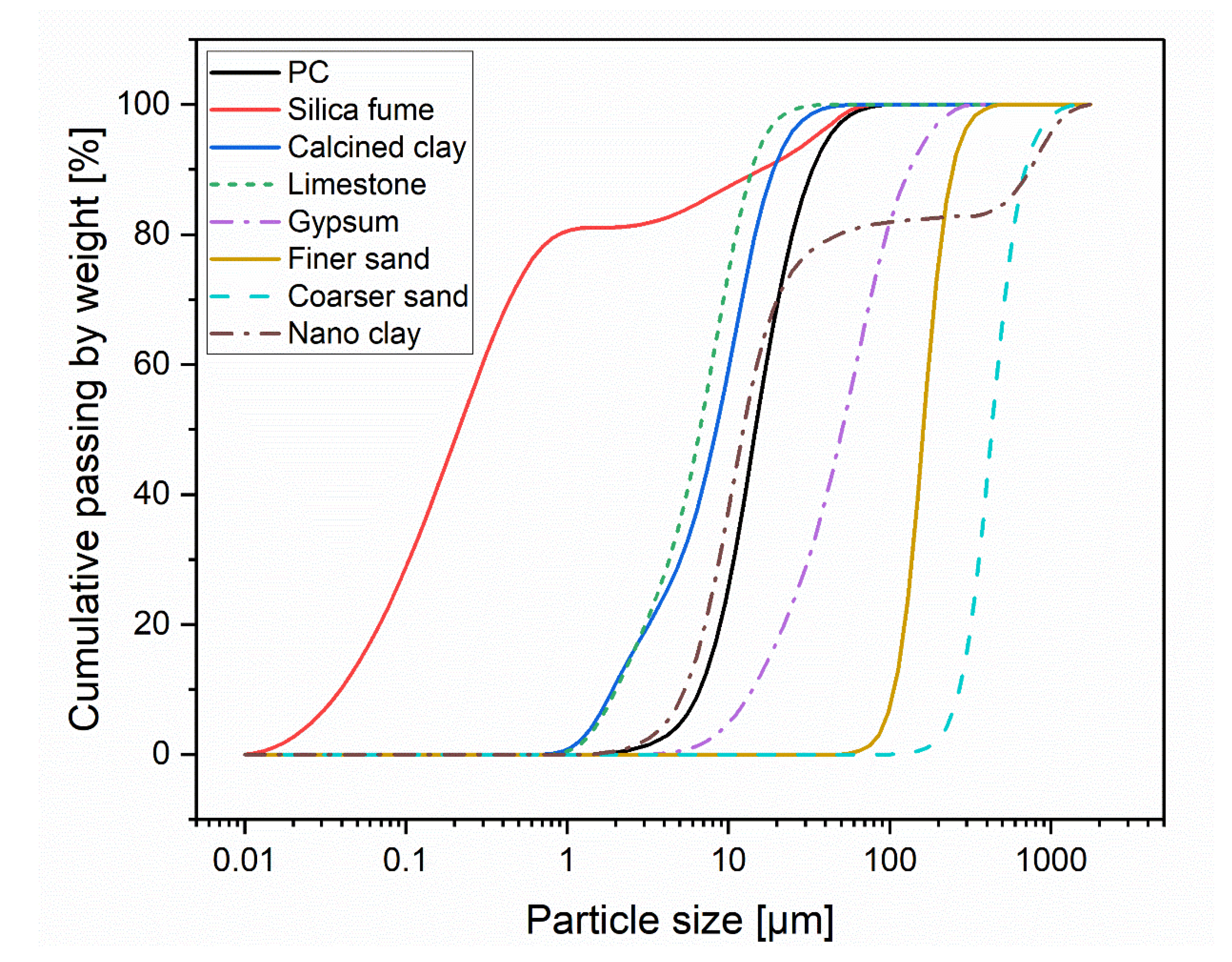
Figure 2.
PC-UHPC and LC3-UHPC mix design curves vs. modified A&A target curve.
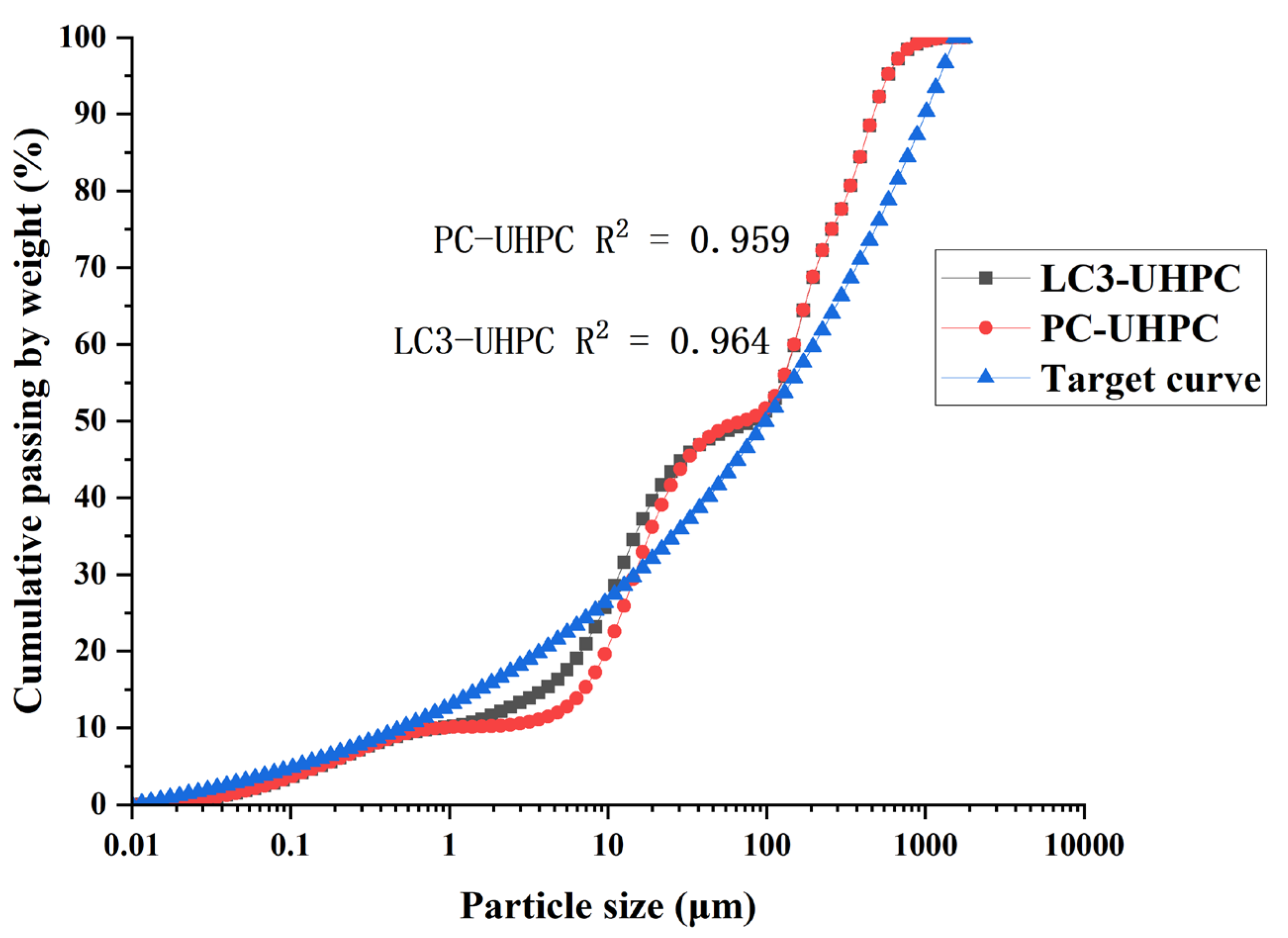
Figure 3.
A typical 3D-printed LC3-UHPC slab.
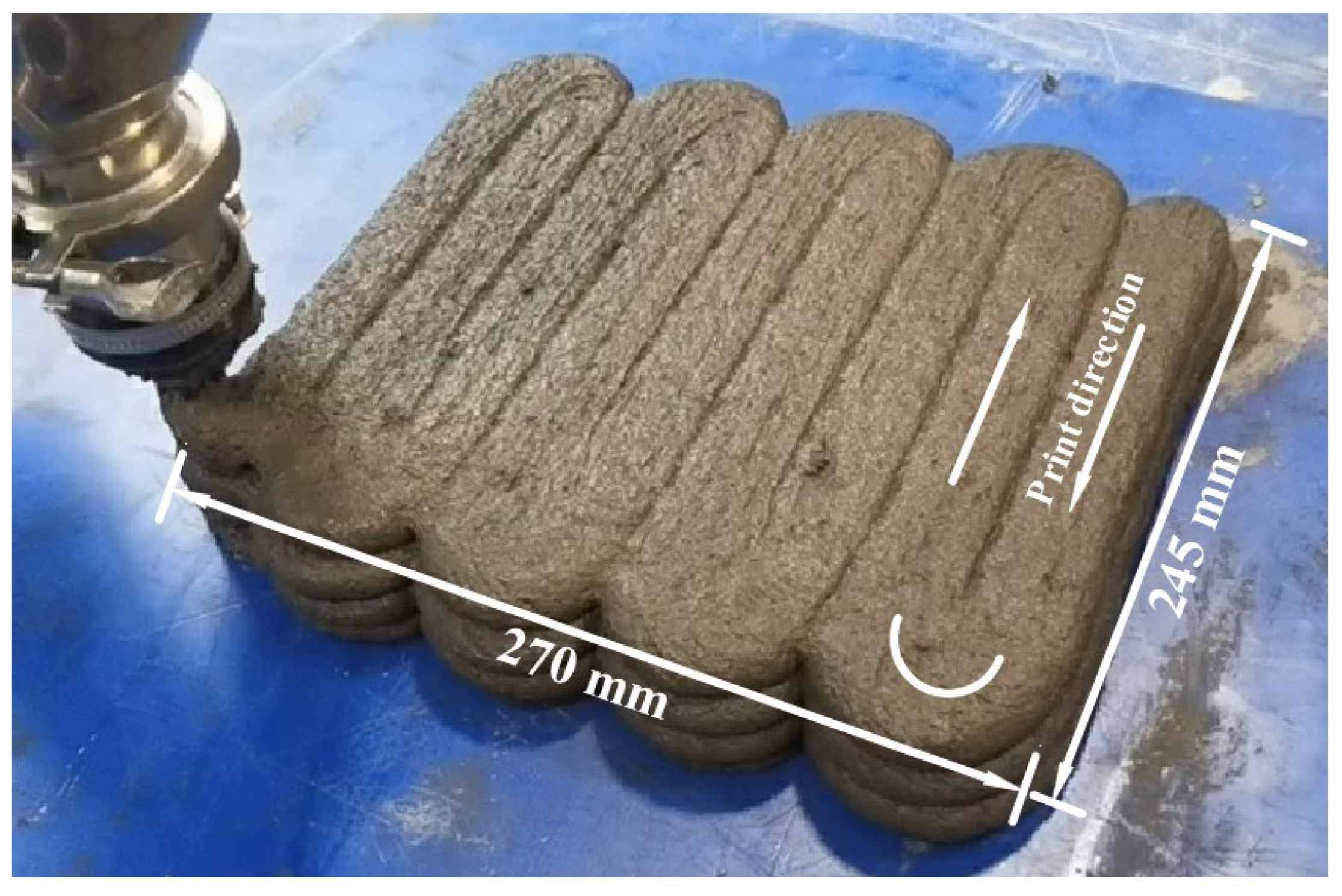
Figure 4.
Rheological testing protocols for (a) hysteresis test and (b) structural recovery test [27].
Figure 4.
Rheological testing protocols for (a) hysteresis test and (b) structural recovery test [27].
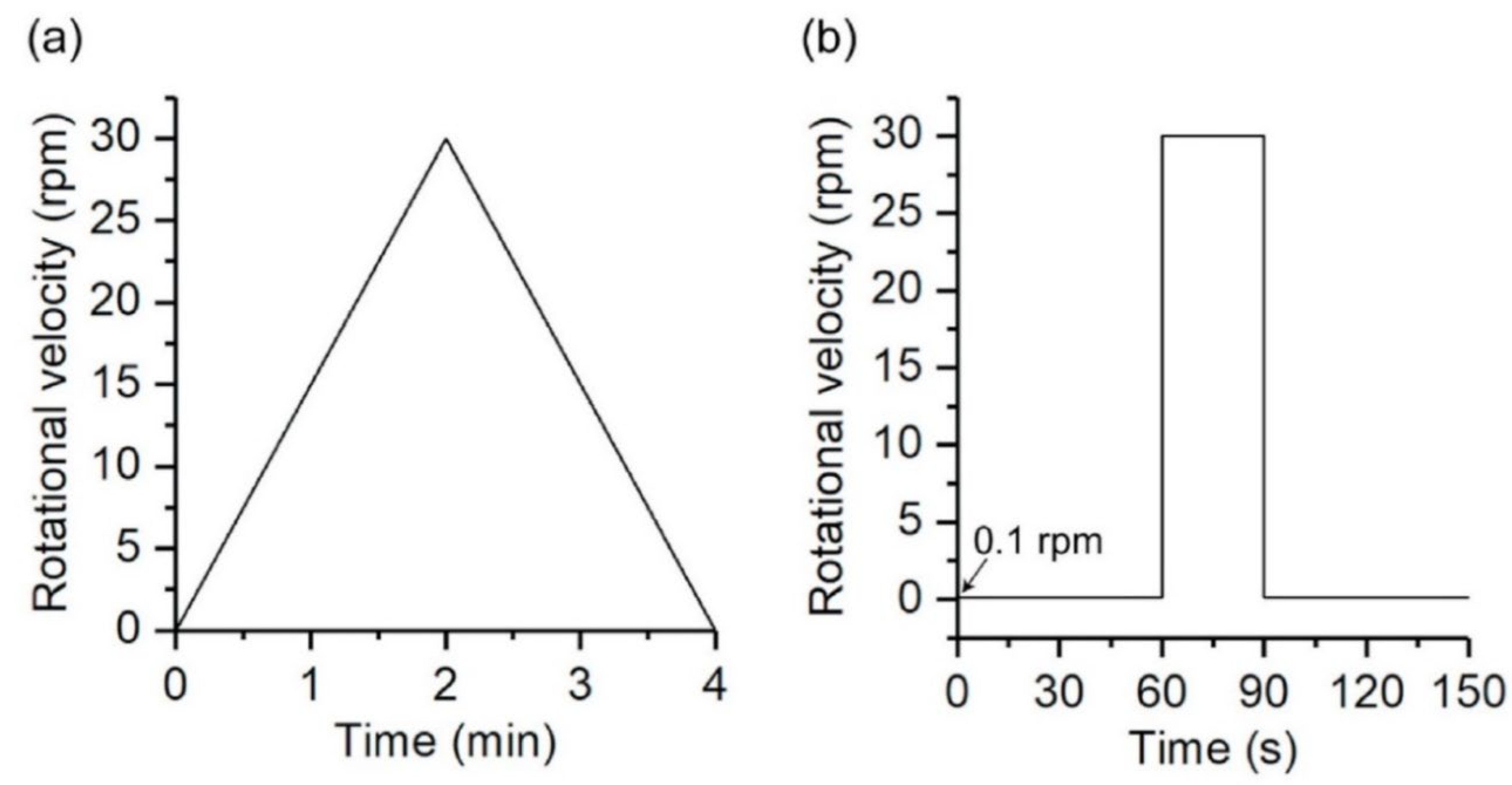
Figure 5.
Testing directions of the printed specimens.
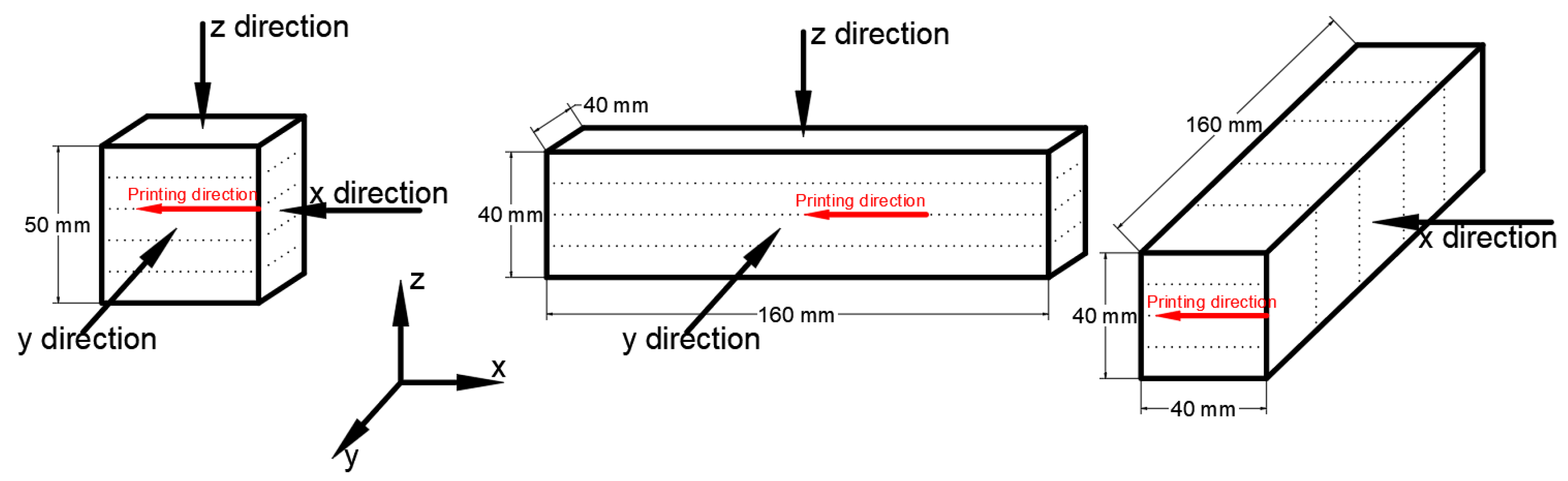
Figure 6.
Rheological properties of fresh printable composite mixtures (containing fibers and nano clay).
Figure 6.
Rheological properties of fresh printable composite mixtures (containing fibers and nano clay).
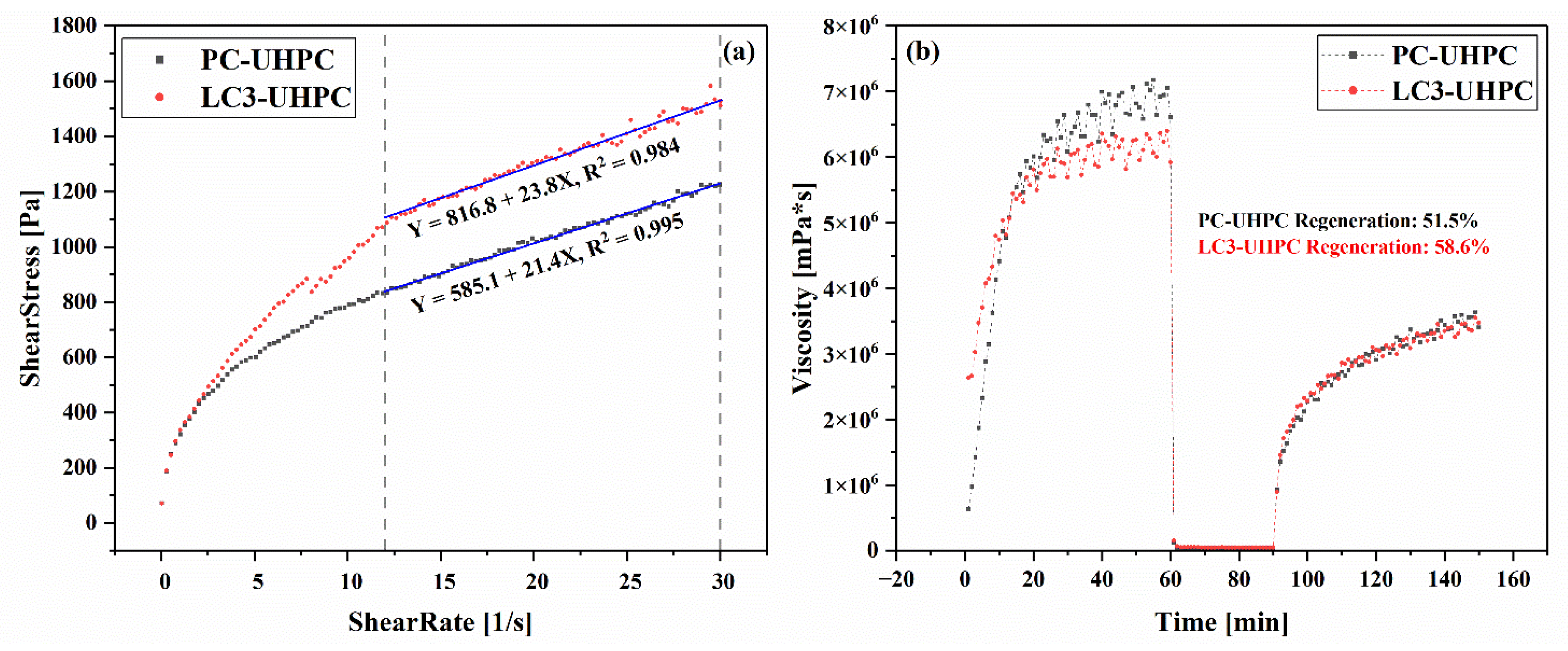
Figure 7.
The 20-layer printed hollow columns for the buildability test: (a) 3DP-PC-UHPC and (b) 3DP-LC3-UHPC.
Figure 7.
The 20-layer printed hollow columns for the buildability test: (a) 3DP-PC-UHPC and (b) 3DP-LC3-UHPC.
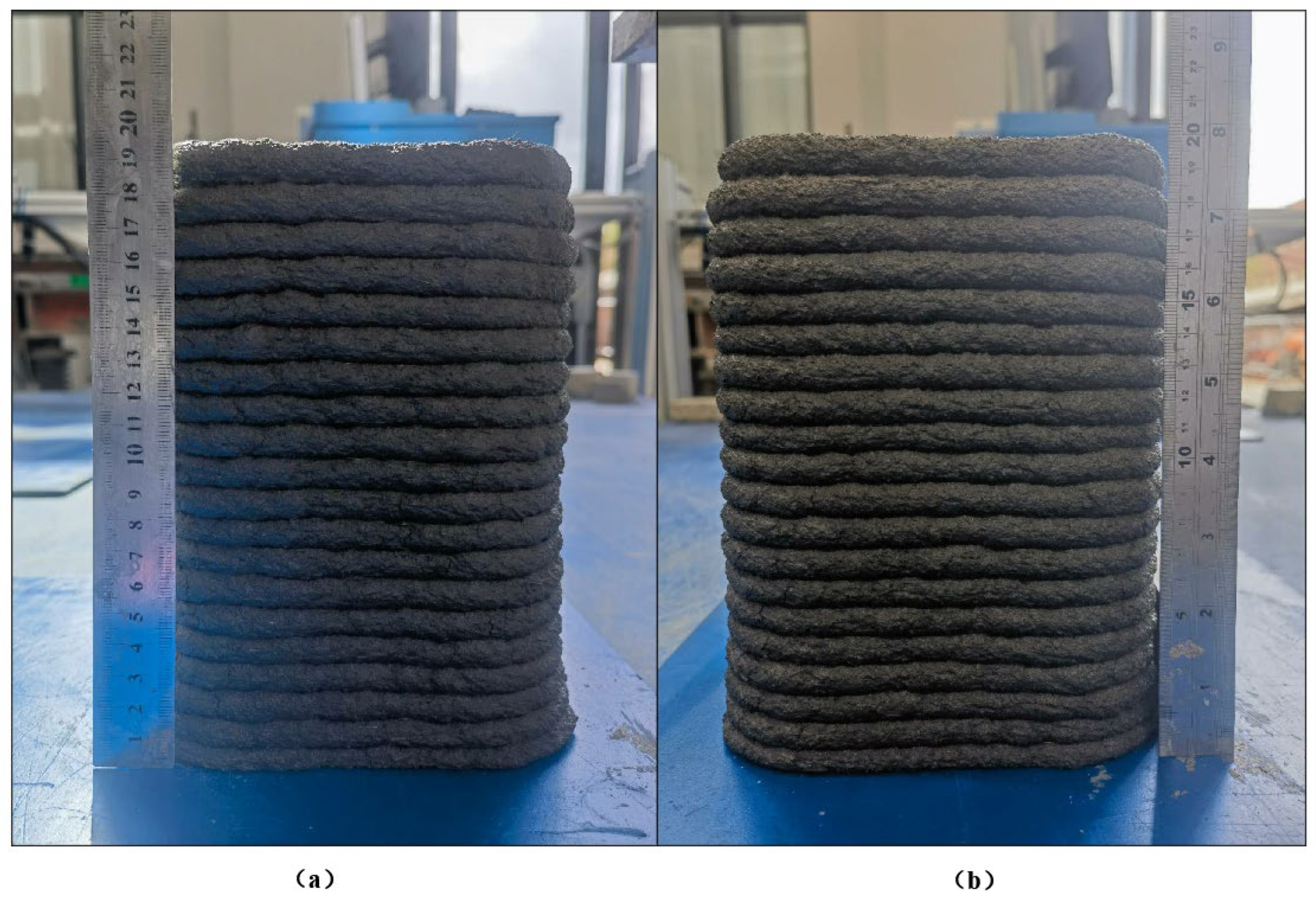
Figure 8.
Hardened properties of the cast mixtures under different curing regimes: (a) compressive strength and (b) flexural strength.
Figure 8.
Hardened properties of the cast mixtures under different curing regimes: (a) compressive strength and (b) flexural strength.
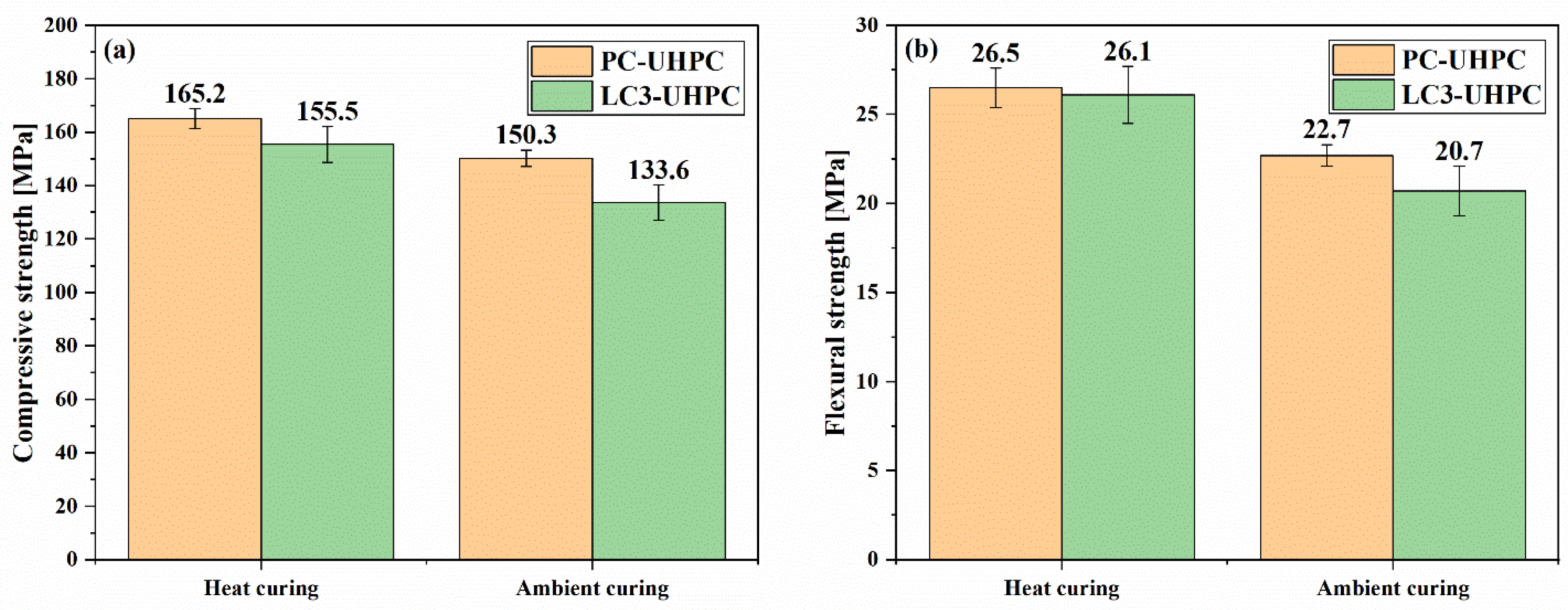
Figure 9.
(a) Compressive strength and (b) flexural strength of the printed mixtures under the heat-curing regime.
Figure 9.
(a) Compressive strength and (b) flexural strength of the printed mixtures under the heat-curing regime.
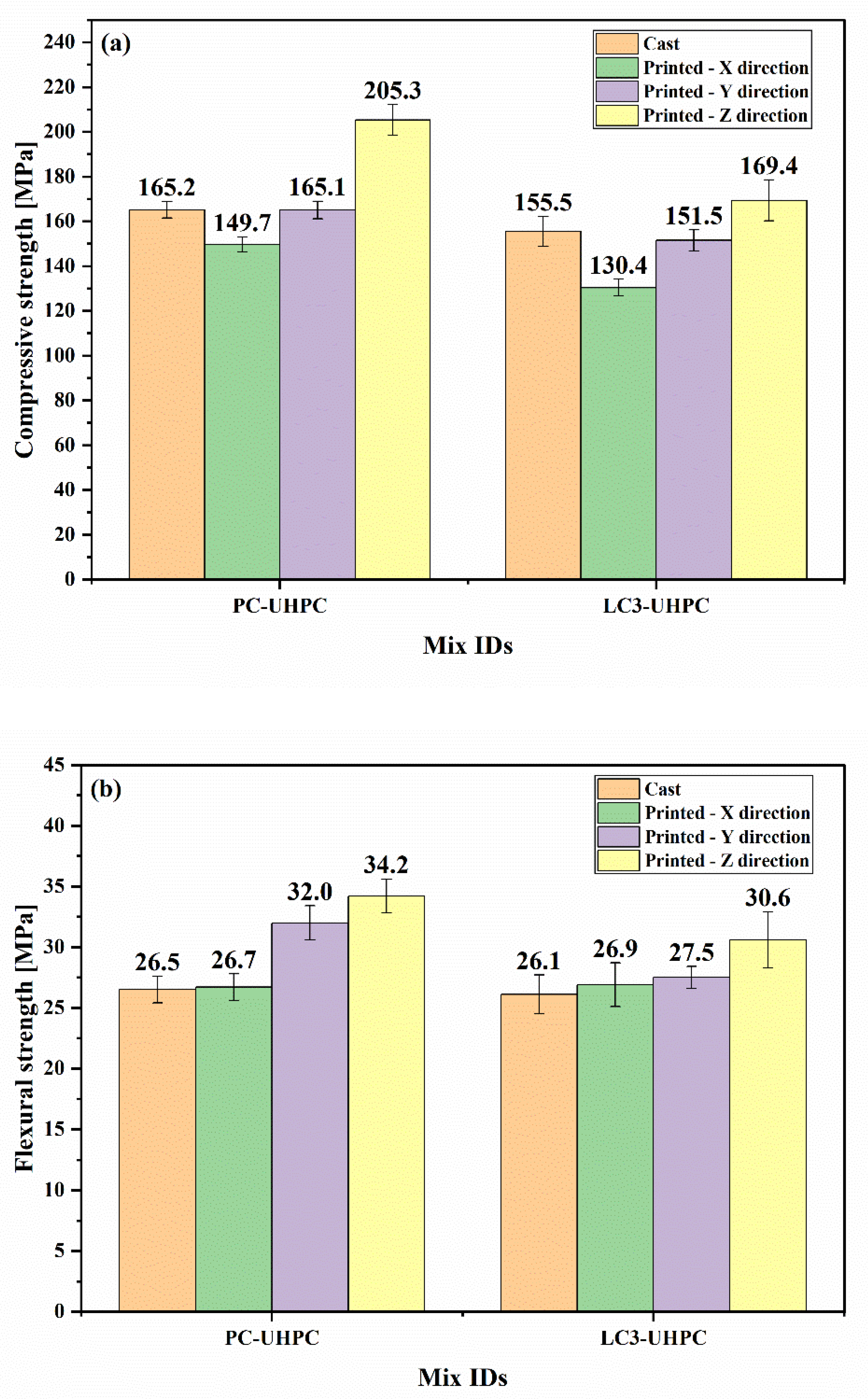
Figure 10.
Representative flexural stress vs. mid-span deflection curves: (a) PC-UHPC, (b) LC3-UHPC.
Figure 10.
Representative flexural stress vs. mid-span deflection curves: (a) PC-UHPC, (b) LC3-UHPC.
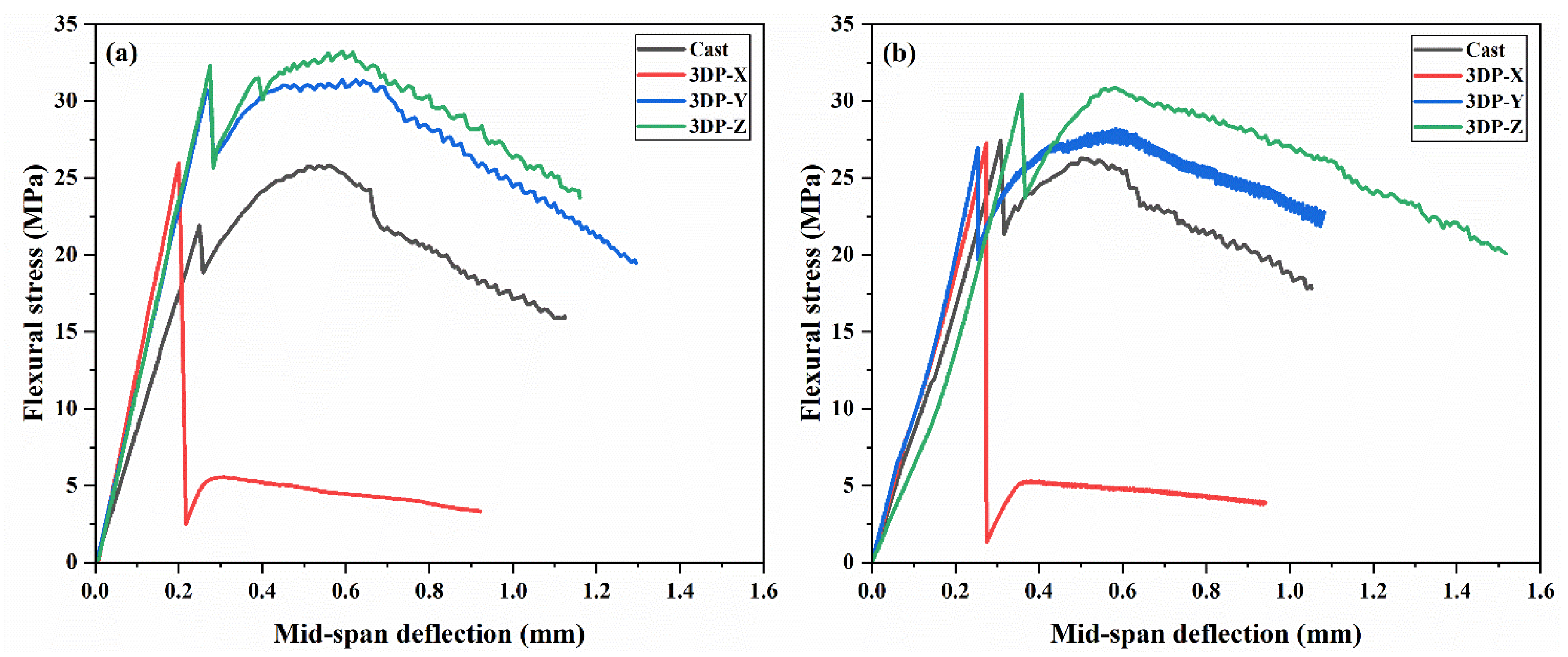
Figure 11.
(a) CO2 emissions, (b) embodied energy, and (c) cost associated with production of 3DP-PC-UHPC and 3DP-LC3-UHPC.
Figure 11.
(a) CO2 emissions, (b) embodied energy, and (c) cost associated with production of 3DP-PC-UHPC and 3DP-LC3-UHPC.
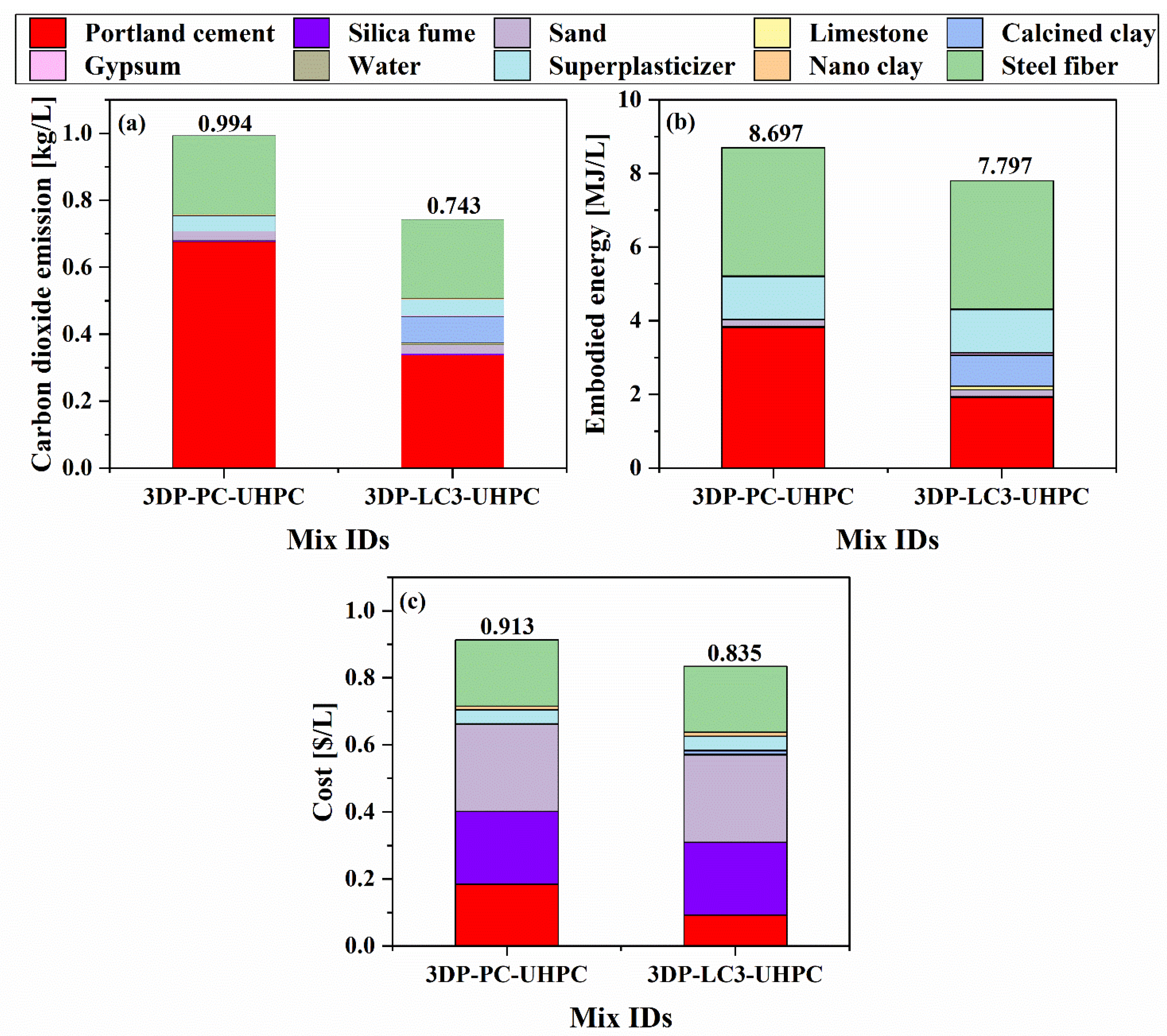

Table 1.
Mixture proportions of PC-UHPC and LC3-based UHPC.
| Mix ID | Binder | Sand | Water | SP | NC* | Steel fiber | |||||
|---|---|---|---|---|---|---|---|---|---|---|---|
| PC | LP | CC | Gypsum | Silica fume | Finer sand | Coarser sand | |||||
| PC-UHPC | 0.75 | 0 | 0 | 0 | 0.25 | 0.50 | 0.50 | 0.17 | 0.03 | 0.0025 | 2% |
| LC3-UHPC | 0.375 | 0.1125 | 0.225 | 0.0375 | 0.25 | 0.50 | 0.50 | 0.17 | 0.03 | 0.0025 | 2% |
Notes: All values are mass ratios of the binder mass, except fiber content (volume fraction). PC denotes Portland cement, LP denotes limestone powder, CC denotes calcined clay, SP denotes superplasticizer, and NC denotes nano clay. * Nano clay was not used in the conventional mold-casting mixtures.
Table 2.
Chemical compositions of materials (wt.%).
| Oxides | Portland cement | Silica fume | Calcined clay | Limestone | Coarser sand | Finer sand | Nano clay |
|---|---|---|---|---|---|---|---|
| CaO | 68.41 | 0.16 | 5.39 | 96.00 | 0.96 | 0.28 | 3.57 |
| SiO2 | 16.44 | 95.33 | 51.47 | 2.11 | 87.19 | 92.47 | 64.11 |
| Al2O3 | 4.34 | 0.60 | 23.22 | 0.53 | 2.90 | 3.03 | 11.90 |
| Fe2O3 | 3.82 | 0.24 | 9.56 | 0.15 | 2.49 | 0.92 | 6.33 |
| SO3 | 4.43 | 0.16 | 2.31 | 0.0058 | 0.28 | 0.00 | 0.12 |
| Na2O | 0.00 | 0.00 | 0.09 | 0.00 | 0.00 | 0.00 | 0.15 |
| K2O | 0.51 | 1.92 | 3.19 | 0.09 | 3.52 | 2.50 | 0.96 |
| MgO | 1.19 | 0.18 | 3.09 | 0.36 | 0.00 | 0.00 | 10.93 |
| TiO2 | 0.28 | 0.00 | 1.12 | 0.00 | 0.35 | 0.23 | 0.67 |
| Others | 0.58 | 1.41 | 0.56 | 0.75 | 2.31 | 0.57 | 1.26 |
Table 3.
Properties of steel fibers.
| Diameter (mm) | Length (mm) | Density (g/cm3) | Tensile strength (MPa) |
|---|---|---|---|
| 0.2 ± 10% | 6 ± 10% | 7.85 | 2850 ± 5% |
Table 4.
Flowability and initial setting time results.
| Mix ID | Initial setting time (min) | Spread diameter (mm) | ||
|---|---|---|---|---|
| Before drop | After drop | |||
| PC-UHPC | Mold-cast | 215 | 136 | 164 |
| 3D-printed | 235 | 101 | 135 | |
| LC3-UHPC | Mold-cast | 135 | 143 | 168 |
| 3D-printed | 185 | 116 | 151 | |
Table 5.
Rheological properties of the fresh printable composite mixtures (containing fibers and nano clay).
Table 5.
Rheological properties of the fresh printable composite mixtures (containing fibers and nano clay).
| Mix ID | Dynamic yield stress [Pa] | Plastic viscosity [Pa.s] | Correlation coefficient (R2) | Thixotropic recovery [%] |
|---|---|---|---|---|
| 3DP-PC-UHPC | 585.1 | 21.4 | 0.9951 | 51.5 |
| 3DP-LC3-UHPC | 816.8 | 23.8 | 0.9837 | 58.6 |
Table 6.
Fracture energy of PC-UHPC and LC3-UHPC.
| Mix ID | Cast (kJ/m2) | X-direction (kJ/m2) | Y-direction (kJ/m2) | Z-direction (kJ/m2) |
|---|---|---|---|---|
| PC-UHPC | 3.72 ± 0.14 | 1.27 ± 0.46 | 5.01 ± 0.42 | 5.22 ± 0.15 |
| LC3-UHPC | 3.71 ± 0.18 | 1.26 ± 0.12 | 4.01 ± 0.57 | 4.19 ± 0.43 |
Table 7.
Mixture proportions of 3D-printed UHPCs, life cycle inventory data, and cost of each ingredient.
Table 7.
Mixture proportions of 3D-printed UHPCs, life cycle inventory data, and cost of each ingredient.
| Ingredients | 3DP-PC-UHPC (kg/m3) | 3DP-LC3-UHPC (kg/m3) | Embodied energy (MJ/kg) | CO2 emissions (kg/kg) | Cost (USD/metric ton) |
|---|---|---|---|---|---|
| Portland cement | 795 | 397.5 | 4.8a | 0.85a | 232j |
| Silica fume | 265 | 265 | 0.10b | 0.014b | 819k |
| Sand | 1060 | 1060 | 0.175c | 0.026c | 246k |
| Limestone powder | - | 119.3 | 0.85d | 0.035d | 20.1l |
| Calcined clay | - | 238.5 | 3.5e | 0.33e | 40.5l |
| Gypsum | - | 39.7 | 1.8f | 0.10f | 40.3l |
| Water | 180 | 180 | - | - | 2k |
| Superplasticizer | 31.8 | 31.8 | 36.76g | 1.48g | 1293m |
| Nano clay | 2.65 | 2.65 | 5.6h | 1.50h | 4409n |
| Steel fiber | 157 | 157 | 22.2i | 1.50i | 1259m |
a Adopted from Cement Sustainability Initiative (WBSCD) [51]. b Adopted from Habert and Roussel [52]. c Derived from Huang et al. [53]. d Derived from Habert et al. [54]. e Derived from Scrivener et al. [55]. f Estimated from the data of Hammond and Jones [56]. g Derived from Yang et al. [57]. h The value of embodied energy was based on the “Clay, General” dataset of ICE [56], with conservative adjustment for ultrafine grinding energy [58]. The value of carbon emissions was adopted from [12]. i Estimated from Suer et al. [59]. j Derived from Chen et al. [60]. k Derived from Habert et al. [61]. l Derived from Luukkonen et al. [62]. m Adopted from Chen et al. [63]. n Was obtained from a major commercial supplier in the UK.
Disclaimer/Publisher’s Note: The statements, opinions and data contained in all publications are solely those of the individual author(s) and contributor(s) and not of MDPI and/or the editor(s). MDPI and/or the editor(s) disclaim responsibility for any injury to people or property resulting from any ideas, methods, instructions or products referred to in the content. |
© 2026 by the authors. Licensee MDPI, Basel, Switzerland. This article is an open access article distributed under the terms and conditions of the Creative Commons Attribution (CC BY) license.
Copyright: This open access article is published under a Creative Commons CC BY 4.0 license, which permit the free download, distribution, and reuse, provided that the author and preprint are cited in any reuse.


