
Submitted:
24 April 2026
Posted:
28 April 2026
You are already at the latest version
Abstract
The downtime and maintenance associated with the failure of a wind turbine gearbox can be significant, leading to high repair costs. Currently, when warning signals are received through the condition-monitoring system, wind farms typically perform maintenance on the gearbox to ensure continued operation. However, reducing power not only leads to an imbalance between the life of the transmission system and the amount of electricity generated, but also reduces revenue; Moreover, it faces the dilemma of being unable to accurately grasp the health status of the gear transmission system, which increases the difficulty of life extension. To address the above issues, this study proposes a gearbox life extension strategy based on wind turbine control methods. This approach breaks through the limitation of traditional methods where damage assessment is decoupled from operating conditions, and transforms the previous research status where life and power generation optimization were treated as separate entities. And the effectiveness of the life extension strategy was validated using actual operating data from China. The results demonstrated that the proposed strategy could extend the gearbox's life and enhance total power generation.
Keywords:
wind turbine gearbox
; multi-source information fusion
; remaining useful life prediction
; life extension
1. Introduction
Wind energy, as a renewable energy source, is a major development trend in the global transition toward green and low-carbon energy. For wind turbines designed to run for long periods of time, their operational and maintenance costs can account for approximately 30% of their total expenses [1]. Moreover, the wind turbine gearbox itself can have the longest downtime and greatest economic impact because of faults [2]. Consequently, numerous wind farms have implemented condition-monitoring systems that provide early fault warnings before the transmission chain of the wind turbine fails. After receiving a warning signal, wind farms usually perform maintenance immediately, even though the gearboxes may continue to operate at reduced output levels. Given that wind farms are often situated in remote locations, ongoing maintenance for minor faults in a single gearbox can significantly elevate overall operational and maintenance costs. Therefore, accurately assessing the health of wind turbine gearboxes, effectively predicting their remaining useful life (RUL), and establishing a scientific life extension strategy are crucial for enhancing operational efficiency, reducing operating costs, and increasing revenue.
An accurate understanding of the RUL of the wind turbine transmission chain is crucial for analyzing their safety and economic viability following life extension efforts. Recently, advancements in big data technology have made data-driven methods for RUL a prominent area of research, leading to the integration of emerging technologies such as deep learning, virtual reality, and digital twins in fault prediction [3,4,5] the RUL prediction [6,7,8] of wind turbine gearboxes. Laker et al. [9] incorporated external environmental variables including wind speed and ambient temperature into their analysis framework, enabling a more comprehensive assessment of gearbox operational states by accounting for the impact of environmental factors. Chen et al. [10] addressed the computational inefficiency issue in traditional fault diagnosis models by developing a novel diagnostic approach. Zhang et al. [11] proposed an improved machine learning algorithm specifically optimized for fault prediction tasks. Another study by Zhang et al. [12] leveraged deep learning techniques to process and analyze gearbox acoustic signals, presenting an intelligent diagnostic method that can accurately identify fault patterns from complex sound data.
With the rise of digital twin technology, its application in wind turbine gearbox fault diagnosis has become a research hotspot. Pujana et al. [13] proposed a hybrid model-based methodology integrated with digital twin systems. Zhou et al. [14] constructed a digital twin model dedicated to gearbox damage monitoring, taking vibration signals as the core monitoring data source to achieve real-time tracking of gearbox damage evolution. Liu et al. [15] focused on the wind turbine drive system and developed a digital twin-based fault diagnosis method. Leon Medina et al. [16] systematically reviewed the current application status of digital twin technology in wind turbine gearbox fault diagnosis. Xu et al. [17] combined digital twin technology with multi-source data fusion strategies, proposing an innovative intelligent early warning method that integrates data from sensors, maintenance records, and environmental monitoring to improve the timeliness and accuracy of fault warning. Wang et al. [18,19] adopted long short-term memory (LSTM) to construct a gearbox condition monitoring model, fusing multi-source operational data to achieve accurate characterization and prediction of gearbox operational states.
Currently, several wind turbines across the globe have entered the later stages of their life, making research on life extension a burgeoning field. Numerous studies have demonstrated that life extension can significantly enhance wind farm revenues. Ziegler et al. [20,21] reviewed recent developments in the life extension of onshore wind turbines in European countries, addressing technical, economic, and legal issues. Rosemeier et al. [22] analyzed the impact of blade life extension on overall power generation. Yeter et al. [23,24] determined optimal solutions for life extension management of offshore wind farms from an economic perspective. Nga et al. [25] proposed a framework with two extremes to assess the technical and economic feasibility of life extension in wind farms, while Leite et al. [26] conducted a technical and economic analysis on the life extension of a wind farm.
These studies primarily focus on macro analyses of feasibility and economic implications, lacking specific methods for life extension of wind turbines. Consequently, significant gaps remain in practical engineering applications, and research on specific methods for life extension is limited. Wang et al. [27] proposed a method for prolonging gearbox RUL by reducing wind turbine power output, and analyzed the impact of pitch angle control strategy on life extension. Kipchirchirchir et al. [28] proposed an adaptive RUL control strategy of blade. Zeng et al. [29] conducted a life extension analysis on the blades of wind turbines and optimized the accuracy of the model based on particle swarm optimization algorithm.
Overall, current research on wind turbine life extension is still nascent, primarily focusing on macro-level feasibility and economic issues and rarely analyzing the effects of life extension strategies on RUL. There has been little quantification of the relationship between life extension methods and RUL, and the disconnect between the two can easily lead to difficulties in applying the obtained strategies in practical engineering applications.
In response to the identified issues, a practical life extension strategy was proposed that involves adjusting the speed and pitch angle of wind turbine gearboxes, the impact of different control strategies on the RUL of wind turbine gearboxes was quantified. By optimizing the control strategy of wind turbine gearboxes under different operating conditions, the life extension of the gearbox has been achieved, and the power generation of the wind farm has also been increased. extending the RUL of wind turbine gearboxes and increasing the power generation of wind turbines. Finally, providing support for the application of life extension strategies of wind turbine gearboxes in practical wind farms.
The innovation of this study lies in establishing a quantitative relationship between the RUL and power generation of wind turbine gearboxes. a dynamic equilibrium between RUL and power generation is attained, which breaks through the inherent limitation of traditional approaches that treat RUL and power generation as disjoint metrics. Consequently, this research realizes the synchronous optimization of operational safety and economic efficiency of wind turbine systems.
The remainder of this paper is organized as follows: Section 2 outlines the methods employed in this study, including the TL-LSTM model for RUL calculation, life extension strategies, and optimization techniques. Section 3 discusses the impact of the life extension strategy on both RUL and power generation. Finally, Section 4 concludes the study and suggests directions for future research.
2. Methods
2.1. Preprocessing of the Data
The data used were actual SCADA data collected from 2 MW wind turbine gearboxes in three wind farms in Northeast China, with a sampling interval of 1 min and a collection time of 3 months. The signals in the wind turbine gearbox were mainly of the following types:
- 1)
- Temperature signals: Including the temperature of the gearbox oil pool, the inlet oil temperature of the gearbox, and the temperature at the rear end of the high-speed shaft (HSS) of the gearbox. These signals reflect the health status of the wind turbine gearbox.
- 2)
- Environmental signals: Environmental temperature and wind speed, among others. These signals are typically used as external excitations for wind turbine gearboxes and are directly related to the operating status of the gearbox.
- 3)
- Other signals related to the operating status of the gearbox, including the power, torque, and oil pressure, among others.
Because of the similarity of information carried by certain signals in the SCADA system, to avoid overfitting and affecting the accuracy of the model, this study selected a portion of the SCADA signals as the state evaluation indicator for the wind turbine gearbox, as shown in Table 1.
Moreover, we selected a set of signals as prediction signals to predict the evaluation indicators. Considering the accuracy of the prediction and the difficulty of training the model, the signals obtained in this study, which were mainly influenced by external excitation, are summarized in Table 2. The quality of data directly determines the accuracy and universality of the model. However, actual data often contain numerous missing values and noise, rendering them unsuitable for direct model training. Therefore, it is necessary to screen and standardize the obtained data. Once standardized and cleaned, the DAE-PCA method was employed to perform feature fusion on the multi-source data from the gearbox.
Figure 1 shows the structure of the DAE-PCA method, which was used to reduce the dimensionality of the data and highlight its features after reconstructing the data using the DAE.
2.2. RUL Prediction Model
Due to the limited amount of data at the end of the lifecycle in the actual operating data of wind turbine gearboxes, it is necessary to expand the data sample with simulated data. Transfer learning (TL) can effectively handle the problem of limited fault samples in wind turbine gearboxes. This study combined TL with the LSTM network to develop a state prediction model for a wind turbine gearbox, utilizing interval-valued PCA to determine the RUL threshold. In this study, the source domain of TL consisted of simulation data for wind turbine gearboxes obtained using COMSOL software, with the source task focused on predicting the state of the simulated gearbox. The target domain comprised data from actual operating wind turbine gearboxes, and the target task was to predict their state. This study uses Maximum Mean Discrepancy (MMD) to achieve approximation between source domain data and target domain data. Figure 2 shows a flowchart of the TL-LSTM model. First, an LSTM model is constructed using sufficient data from the source task. The extracted features are then transferred to the target task model through TL. Finally, based on the target task data, the model is fine-tuned using the maximum mean difference. The data used was divided into training and testing sets in a 7:3 ratio.
Table 3 lists the upper and lower limits of the evaluation index in the SCADA system. These limits are built into the SCADA system; once the evaluation indicators reach the threshold, the wind turbine automatically shuts down. Therefore, based on these upper and lower limits, the threshold of the RUL can be calculated using the interval PCA method.
For sample x, calculating the median of each parameter yields the midpoint matrix:

where  denotes the intermediate value of the jth parameter in the ith vector.
denotes the intermediate value of the jth parameter in the ith vector.The midpoint principal components can be obtained by performing PCA on the above matrix:
where denotes the value of parameter j on the kth principal component, and vjk is the kth eigenvector of Kc (hypermatrix on n-dimensional vector space composed of all interval observation vectors).
The threshold for each principal component can be expressed as follows:

By comparing the state predicted by the LSTM-TL model with the threshold determined using the interval PCA method, the RUL for the wind turbine gearboxes can be effectively predicted.
2.3. Life Extension Strategy Based on Different Control Strategies
Zamzoum et al. [30] showed that the RUL of wind turbine gearboxes was inversely proportional to the load and speed. Therefore, reducing the output power of a wind turbine gearbox could reduce its load and achieve the goal of extending its RUL. Currently, wind farms use two different control strategies to change the operating status of wind turbines, thereby reducing the output power of the wind turbine gearboxes.
- (1)
- Variable-speed control: The relationship between the wind turbine power and main shaft speed at the same wind speed is shown in Figure 3. In the figure, the Pout curve represents the optimal output power curve of the wind turbine, whereas the purple, green, and blue curves represent the variations in the output power with the main shaft speed at wind speeds of v1, v2, and v3. When the wind turbine operates at point A1, if the wind speed increases from v3 to v2, the aerodynamic power suddenly increases, and the operating point of the wind turbine changes to point A2. However, owing to inertia, the main shaft speed cannot change suddenly; therefore, the output power remains constant. Subsequently, because the output power is less than the aerodynamic power, the main shaft speed gradually increases until the aerodynamic power is equal to the output power—that is, point A3 is the new operating point of the wind turbine at a wind speed of v2. Consequently, when the wind speed and pitch angle remain constant, decreasing or increasing the main shaft speed of the wind turbine can reduce the output power. For example, to reduce the output power of the wind turbine from P1 (point A4) to P2, the spindle speed must be increased at point B or decreased at point C.
- (2)
- Pitch control: The relationship between the output power of the wind turbines and the main shaft speed under the same wind speed conditions but different pitch angles is shown in Figure 4.
Here, the Pout curve represents the output power of the wind turbine. The purple, green, and blue curves represent the power curves with different pitch angles (β1 < β2 < β3). From the figure, it is evident that in the case of a constant wind speed, to reduce power, it is only necessary to increase the pitch angle. For example, if the pitch angle can be increased from β1 to β3, the working status of the wind turbines will follow the route change of A → C → B to achieve the goal of reducing power, owing to inertia.
2.4. Optimization Method for Life Extension Strategy
Typical of industrial machinery, wind turbines require the calculation of their economic feasibility after life extension. The main factor affecting their economic efficiency before and after power reduction while keeping their operational and maintenance strategies unchanged is the change in power generation [31]. Consequently, it is necessary to calculate the power generation and optimize the life extension strategy. This study calculated power generation based on the IEC 61400-12-1 standard and used the PSO algorithm to optimize the life extension strategy. Figure 5 shows a flowchart of the particle swarm optimization process, the specific steps of which can be summarized as follows:
- Initialize the position and velocity of each particle as well as the individual and global optimal positions.
- Calculate the adaptability of each particle.
- If the fitness value of the current particle is better than that of the individual optimal solution, the individual optimal position and velocity of the particle are updated.
- If the fitness value of the current particle is better than that of the global optimal solution, the global optimal position is updated.
- Update the position and velocity of the particles.
- Check whether the termination conditions are satisfied, such as reaching the maximum number of iterations and the global optimal solution. If the termination condition is met, the algorithm ends; otherwise, it returns to Step 2 to continue iterating.
After adjustment and optimization, the objective set in this study was to maximize power generation. The maximum number of iterations was limited to 1,000, with an inertia weight of 0.8. Both the self-learning and group learning factors were set to 3. The initial population size was 50, and the lower and upper limits for particle velocity were set to -1 and 1, respectively.
3. Results and Discussion
3.1. Accuracy of RUL Prediction Model
It was necessary to verify the accuracy of the RUL prediction model before discussing its implications for wind turbine operations. First, the RUL of 100 wind turbine gearboxes within 30 d could be calculated. Based on the length of their RUL, these 100 gearboxes were divided into 30 groups, with the RUL of the ith group of gearboxes being (i – 1, i) days. Figure 6 shows the accuracy of the RUL prediction—that is, the ratio of the predicted result to the actual value. It can be seen that after adding the TL module, the accuracy of prediction is significantly improved. Notably, the prediction accuracy gradually decreases with an extension of the predicted time. This is due to the increasing effects of uncertainty factors (such as temperature and wind speed changes, among others). However, the accuracy of the proposed method is over 86%, which is similar to the result of Zhao et al. [32], making the proposed method suitable for RUL prediction.
Select two specific gearboxes for analysis, as shown in Figure 7, where PC denotes the principal component calculated using the LSTM-TL and PCA methods. Th is the threshold calculated using the C-PCA method. As shown in the figure, when using TL-LSTM, the predicted RUL of the first gearbox was 243.4 hours, and the expected RUL of the second gearbox was 77.5 hours. When using LSTM, the predicted RUL of the first gearbox was 243.4 hours, and the predicted RUL of the second gearbox was 77.5 hours. By reviewing the fault log, the actual RUL of the first gearbox was determined to be 261.2 h. The actual RUL of the second gearbox was 73.1 h. The above results further demonstrate that adding TL module can increase the accuracy of RUL prediction.
3.2. RUL of Wind Turbine Gearboxes After Life Extension
(1) Variable-speed control: Owing to fluctuations in wind speed, increasing the spindle speed to reduce power can stabilize the operating state of the wind turbine gearbox after power reduction. Figure 8 shows the changes in the RUL of the wind turbine gearbox after life extension considering variable-speed control when the spindle speed was 1200 rpm. The results show that the original RUL of the wind turbine gearbox was 139.6 h. Using variable-speed control to reduce power to 90%, 80%, and 70% of the original power, the RUL increased to 161.9, 193.1, and 218.7 h, respectively. Compared to the low-speed stage, the RUL of the wind turbine gearbox improved considerably. This is because, during the medium-speed stage, the operating state of the wind turbine gearbox changes more before and after power reduction.
The figure also shows that during the performance degradation stage, the main components initially decrease for a period before showing an increase. This behavior occurs because, after the power of the wind turbine gearbox decreases, its operating state transitions slowly to a low-power state. Subsequently, as faults develop, its performance gradually degrades.
The RUL of the wind turbine gearbox changed when the power was reduced to 10% of the original power, as shown in Figure 9(a). As the actual power decreased, the RUL of the wind turbine gearbox gradually increased, and the magnitude of the increase gradually increased. When the power was reduced to 50%, the RUL suddenly increased; when the power was reduced to 10%, the RUL exceeded 600 h.
The variation in the RUL of the wind turbine gearbox with spindle speed is shown in Figure 9(b). From the graph, it is evident that speed has a major impact on the RUL. When the spindle speed was approximately 1200 rpm, the power of the wind turbine gearbox was at its maximum, and at this time, the RUL of the wind turbine gearbox was at its minimum, at 139.7 h. It is evident that as the spindle speed decreases or increases, the power of the wind turbine gearbox gradually decreases, and its RUL gradually increases; when the spindle speed increases to the cutting speed, the RUL of the wind turbine gearbox is approximately 400 h. When the spindle speed is reduced to 100 rpm, the RUL reaches its maximum, approximately 625 h.
(2) Pitch control: Figure 10 shows the RUL of the same wind turbine gearbox after life extension considering pitch control. The figure shows that the original RUL of the wind turbine gearbox was 139.6 h. When the power was reduced to 80% and 70% of the original power, the RUL increased to 183.7 and 213.3 h, respectively. Compared to variable-speed control, pitch control increases the RUL by reducing the power. This is because the pitch system of wind turbines is mechanically controlled, resulting in a pitch delay and a longer operating time at high power. From the graph, it is evident that in terms of the principal component changes, they all decrease initially before increasing, but it takes less time to decrease by the same degree.
The change in the RUL of the wind turbine gearbox when the power was reduced to 10% is shown in Figure 11(a). From the graph, it is evident that as the output power decreases, the RUL of the wind turbine gearbox gradually increases, with the magnitude of the increase gradually rising. When the output power was reduced to 10%, the RUL approached 600 h. However, compared with variable-speed control, the increase in pitch-control RUL is reduced. The variation in the RUL with pitch angle is shown in Figure 11(b). From the figure, it is evident that the pitch angle has a considerable impact on the RUL—that is, as the pitch angle increases, the RUL of the wind turbine gearbox also gradually increases. When the pitch angle is 75°, the RUL reaches approximately 582 h.
3.3. Optimization of Life Extension Strategy for Wind Turbine Gearboxes
From the above analysis, it is evident that, in both the medium- and high-speed stages, variable-speed control should be chosen considering the RUL. However, owing to the lag in pitch control, the average operating power of the wind turbines is higher when pitch control is considered. Consequently, when considering power generation, it is necessary to compare and analyze the two strategies.
- (1)
- Variable-speed control: The power generation of the wind turbine gearbox based on the variable-speed control life extension strategy is shown in Figure 12. From the figure, it is evident that the power generation of wind turbines increases after life extension. a Comparing different power levels, the power generation increases as the output power is reduced until the actual power of the wind turbine gearbox reaches 70% of its original capacity. At this point, power generation reaches its maximum before declining with further reductions in power. In terms of varying wind speeds, power generation increases with wind speed until the rated wind speed is reached. Specifically, at a wind speed of 10 m/s, power generation achieves its maximum before decreasing with further increases in wind speed.
The variations in power generation at wind speeds of 10 m/s (less than the rated wind speed) and 12 m/s (exceeding the rated wind speed) at different power levels are shown in Figure 13. The figures show that the maximum power generation is achieved at 70% of the original power at wind speeds of 10 and 12 m/s. However, when the wind speed was 12 m/s, the increase in power generation was only 7% of the original power generation. From the figure, it is evident that when considering variable-speed control, the influence of wind speed on the optimal life extension strategy is relatively small. Regardless of the wind speed, maximum power generation always occurs when the power is 70% of the original power.
- (2)
- Pitch control: The power generation results for the wind turbine gearbox based on the pitch control life extension strategy are shown in Figure 14. From the graph, it is evident that when comparing different powers, the result is the same as the variable-speed control, and the optimal power of the wind turbine gearbox is approximately 70% of the original power. Comparing different wind speeds, the result was the same as that of the variable-speed control, and the wind speed at maximum power generation was 10 m/s.
The variations in power generation at wind speeds of 10 m/s (less than the rated wind speed) and 12 m/s (exceeding the rated wind speed) at different power levels are shown in Figure 15. The figure shows that at wind speeds of 10 and 12 m/s, the power generation reached its maximum at 70% of the original power. When the wind speed was 10 m/s, the increase in power generation was 7.2% of the original power generation. When the wind speed was 12 m/s, the increase in the power generation was 7.1% of the original power generation. Compared with the variable-speed control, the increase in power generation was larger. This is because the wind turbine operates at full power when the wind speed exceeds 10 m/s. Although the RUL of the wind turbine gearbox based on pitch control is shorter, the average power during operation is higher, and more power can be obtained during a short period at high power. Moreover, from Figure 15(a) and Figure 15(b), it is evident that when considering pitch control, the influence of wind speed on the optimal life extension strategy is also relatively small. Regardless of the wind speed, the maximum power generation always occurs when the power is 70% of the original power.
In summary, considering power generation, the lower the power of the wind turbine gearbox, the better; however, the power needs to be selected based on the operating status of the gearbox. The optimal operating power for the wind power gearbox in this study was 70% of the original power. When the wind speed is lower than the rated wind speed, the variable-speed control should be selected. At a wind speed of 10 m/s, the maximum power generation increment was 7.3% of the original power generation. When the wind speed is greater than the rated wind speed, pitch control should be selected.
3.4. The Results of the Other Two Wind Farms
The power generation after life extension of two other wind farms using the proposed method was also analyzed. The results of one of the wind farms are shown in Figure 22. It can be seen that the trend of power generation at the second wind farm was similar to that of the first wind farm. The maximum increase in power generation and operating conditions of the other two wind farms are shown in Table 4 and Table 5. In the other two wind farms, the operating conditions for maximum power generation are the same as the first wind farm. The maximum increase in power generation, however, was only 7.53% and 7.78%.
4. Conclusions
Not all wind turbine failures necessitate an immediate shutdown. If the health status of wind power gearboxes can be accurately assessed, their RUL can be effectively predicted, allowing for the establishment of a scientific life extension strategy. This approach aims to enhance operational efficiency, reduce operating costs, and increase revenue. This study proposed a life extension strategy for wind turbine gearboxes by changing the rotational speed and pitch angle, and it examined the impact of two control strategies on RUL and power generation under different operating conditions. The conclusions can be summarized as follows:
- A life extension strategy for wind turbine gearboxes was proposed by adjusting the wind turbine's rotational speed and pitch angle, and the impact of these factors on the RUL of the wind turbine gearbox was analyzed. The results demonstrated that, with a constant pitch angle, the RUL of the wind turbine gearbox gradually increases as the spindle speed decreases or increases. Conversely, at a constant rotational speed, the RUL of the wind turbine gearbox rises as the pitch angle increases.
- The impact of the two control strategies on the RUL of wind turbine gearboxes under different operating conditions was analyzed. The results showed that two control strategies could increase the RUL of wind turbine gearboxes, with variable-speed control being the most effective. For the wind turbine gearbox investigated in this study, when the power was reduced to 10% of the original value, the RUL was extended by approximately 500 h.
- The impact of a wind turbine gearbox life extension strategy on power generation was examined. The results indicated that the proposed life extension strategy could enhance wind turbine power generation. The optimal actual operating power for the wind turbine gearbox in this study was determined to be 70% of the original power. When 4 m/s < vw < 10.8 m/s, variable-speed control should be selected. When the wind speed was 10 m/s, the maximum increase in power generation is occurring. When 10.8 m/s < vw, pitch control should be selected. At a wind speed of 12 m/s, the maximum increase in the power generation was occurring.
This study proposes a life extension strategy for wind turbine gearboxes based on the control strategy of wind turbines, which optimizes the power generation of wind turbines and has important guiding significance for the operation and maintenance of wind farms. In future research, further research can be conducted on the following aspects:
- Analyze the wind turbines in other regions and obtain more general conclusions
- This article only proposes a life extension strategy for wind power gearboxes. Future research can combine the existing foundation of the research group to expand the object to the transmission chain.
Acknowledgments
This work was supported by the National Key R&D Program of China [Grant Number 2023YFB4203100], the Talent Introduction Projects of Xihua University [Grant Number Z242063] and the National Natural Science Foundation of China (Youth Program) [Grant Number 52205136]. The funders had no role in the study design, collection, analysis, or interpretation of data, writing of the manuscript, or decision to submit the article for publication.
Declaration of Generative AI in Scientific Writing
In this work, we acknowledge the use of generative AI tools to assist in writing assistance.
References
- Wu, C.-W.; Chen, M. Early anomaly detection in wind turbine bolts breaking problem—Methodology and application. Proc. IEEE 3rd Int. Conf. Big Data Anal. (ICBDA), Mar. 2018; pp. 402–406. [Google Scholar]
- Gan, M.; Wang, C. Construction of hierarchical diagnosis network based on deep learning and its application in the fault pattern recognition of rolling element bearings. Mech. Syst. Signal Process. 2016, 72, 92–104. [Google Scholar] [CrossRef]
- Wang, Y.; Sun, W.; Liu, L.; Wang, B.; Bao, S.; Jiang, R. Fault Diagnosis of Wind Turbine Planetary Gear Based on a Digital Twin. Appl. Sci. 2023, 13, 4776. [Google Scholar] [CrossRef]
- Guo, R.; Wang, Y.; Zhang, H. Remaining Useful Life Prediction for Rolling Bearings Using EMD-RISI-LSTM[J]. IEEE Trans. Instrum. Meas. 2021, PP(99), 1–1. [Google Scholar] [CrossRef]
- Behera, S.; Misra, R.; Sillitti, A. Multiscale deep bidirectional gated recurrent neural networks based prognostic method for complex non-linear degradation systems. Inf. Sci. 2021, 554, 120–144. [Google Scholar] [CrossRef]
- Wang, Z.; Gao, P.; Chu, X. Remaining useful life prediction of wind turbine gearbox bearings with limited samples based on prior knowledge and PI-LSTM. Sustainability 2022, 14, 12094. [Google Scholar] [CrossRef]
- Xiang, S.; Qin, Y.; Luo, J.; Pu, H. Spatiotemporally multidifferential processing deep neural network and its application to equipment remaining useful life prediction. IEEE Trans. Ind. Inform. 2022, 18, 7230–9. [Google Scholar] [CrossRef]
- Wang, Z.; Gao, P.; Chu, X. Remaining Useful Life Prediction of Wind Turbine Gearbox Bearings with Limited Samples Based on Prior Knowledge and PI-LSTM. Sustainability 2022, 14, 12094. [Google Scholar] [CrossRef]
- Laker, R.; Horbury, T.S.; Woodham, L.D.; Bale, S.D.; Matteini, L. Coherent deflection pattern and associated temperature enhancements in the near-Sun solar wind. Mon. Not. R. Astron. Soc. 2024, 527(4), 10440–10447. [Google Scholar] [CrossRef]
- Chen, W.H.; Zhou, H.T.; Xia, M. AttCWKAN: A Novel Convolution Weighted Kolmogorov-Arnold Networks With Attention Mechanism for Wind Turbine Gearbox Fault Diagnosis. IEEE Trans. Instrum. Meas. 2025, 74, 3550612. [Google Scholar] [CrossRef]
- Zhang, M.; Wei, J.J.; Sui, Z.L.; Xu, K.; Yuan, W.Y. Temperature Prediction and Fault Warning of High-Speed Shaft of Wind Turbine Gearbox Based on Hybrid Deep Learning Model. J. Mar. Sci. Eng. 2025, 13(7), 1337. [Google Scholar] [CrossRef]
- Zhang, X.J.; Jia, F.X.; Chen, Y.Y. Fault Diagnosis of Wind Turbine Gearbox Based on Mel Spectrogram and Improved ResNeXt50 Model. Appl. Sci.-Basel 2025, 15(15), 8563. [Google Scholar] [CrossRef]
- Pujana, A.; Esteras, M.; Perea, E.; Maqueda, E.; Calvez, P. Hybrid-Model-Based Digital Twin of the Drivetrain of a Wind Turbine and Its Application for Failure Synthetic Data Generation. Energies 2025, 16(2), 861. [Google Scholar] [CrossRef]
- Zhou, Y.D.; Zhou, J.X.; Cui, Q.W.; Wen, J.M.; Fei, X. Digital twin-driven online intelligent assessment of wind turbine gearbox. Wind Energy 2024, 27(8), 797–815. [Google Scholar] [CrossRef]
- Liu, H.; Sun, W.L.; Bao, S.H.; Xiao, L.F.; Jiang, L. Research on key technology of wind turbine drive train fault diagnosis system based on digital twin. Appl. Sci.-Basel 2024, 14(14), 5991. [Google Scholar] [CrossRef]
- Leon-Medina, J.X.; Tibaduiza, D.A.; Parés, N.; Pozo, F. Digital twin technology in wind turbine components: A review. Intell. Syst. With Appl. 2025, 26, 200535. [Google Scholar] [CrossRef]
- Xu, T.T.; Zhang, X.D.; Sun, W.L. Intelligent Fault Warning Method for Wind Turbine Gear Transmission System Driven by Digital Twin and Multi-Source Data Fusion. Appl. Sci.-Basel 2025, 15(15), 8655. [Google Scholar] [CrossRef]
- Wang, Y.L.; Zhu, C.C.; Li, Y.; Tan, J.J. Maximizing the total power generation of faulty wind turbines via reduced power operation. Energy Sustain. Dev. 2021, 65, 36–44. [Google Scholar] [CrossRef]
- Wang, Y.L.; Zhu, C.C.; Li, Y.; Tan, J.J. The effect of reduced power operation of faulty wind turbines on the total power generation for different wind speeds. Sustain. Energy Technol. Assess. 2021, 45, 101178. [Google Scholar] [CrossRef]
- Ziegler, L.; Gonzalez, E.; Rubert, T.; et al. Lifetime extension of onshore wind turbines: A review covering Germany, Spain, Denmark, and the UK. Renew. Sustain. Energy Rev. 2018, 28(1), 1261–1271. [Google Scholar] [CrossRef]
- Ziegler, L.; Muskulus, M. Fatigue reassessment for lifetime extension of offshore wind monopile substructures. J. Phys. Conf. Ser. 2016, 753, 9201. [Google Scholar] [CrossRef]
- Rosemeier, M.; Saathoff, M. Assessment of a rotor blade extension retrofit as a supplement to the lifetime extension of wind turbines. Wind Energy Sci. 2020, 5(3), 897–909. [Google Scholar] [CrossRef]
- Yeter, B.; Garbatov, Y. Optimal Life Extension Management of Offshore Wind Farms Based on the Modern Portfolio Theory. Oceans-Switzerland 2021, 2(3), 566–82. [Google Scholar] [CrossRef]
- Yeter, B.; Garbatov, Y.; Soares, C.G. Analysis of Life Extension Performance Metrics for Optimal Management of Offshore Wind Assets. J. Offshore Mech. Arct. Eng.-Trans. Asme 2022, 144(5). [Google Scholar] [CrossRef]
- Nag, U.; Sharma, S.K.; Padhi, S.S. Evaluating value requirement for Industrial Product-Service System in circular economy for wind power-based renewable energy firms. J. Clean. Prod. 2022, 340. [Google Scholar] [CrossRef]
- Leite, G.D.P.; Weschenfelder, F.; Farias, J.G.D.; Ahmad, M.K. Economic and sensitivity analysis on wind farm end-of-life strategies. Renew. Sustain. Energy Rev. 2022, 160. [Google Scholar] [CrossRef]
- Wang, Y.L.; Zhu, C.C.; Zhu, Y.C.; Luo, X.H. Life extension of wind turbine gearboxes based on pitch control[J]. Results Eng. 2025, 27, 106264. [Google Scholar] [CrossRef]
- Kipchirchir, E.; Do, M.H.; Njiri, J.G.; Soeffker, D. Prognostics-based adaptive control strategy for lifetime control of wind turbines. Wind Energy Sci. 2023, 8(4), 575–88. [Google Scholar] [CrossRef]
- Zeng, S.; Feng, Z.; Bai, X.; Ma, Q.; An, Z. A novel wind turbine blade life extension assessment model considering stiffness degradation. J. Fail. Anal. Prev. 2024, 24(4), 2006–2013. [Google Scholar] [CrossRef]
- Zamzoum, O.; Derouich, A.; Motahhir, S.; El Mourabit, Y.; El Ghzizal, A. Performance analysis of a robust adaptive fuzzy logic controller for wind turbine power limitation. J. Clean. Prod. 2020, 265, 121659. [Google Scholar] [CrossRef]
- Kerres, B.; Fischer, K.; Madlener, R. Economic Evaluation of Maintenance Strategies for Wind Turbines: a Stochastic Analysis. IET Renew. Power Gener. 2015, (9), 766–774. [Google Scholar] [CrossRef]
- Zhao, Y.; Li, D.; Dong, A.; et al. Fault prognosis of wind turbine generator using SCADA data. In Proceedings of the NAPS 2016—48th North American Power Symposium, Denver, CO,USA, 18–20 September 2016; pp. 1–6. [Google Scholar]
Figure 1.
Feature fusion based on the DAE-PCA method.
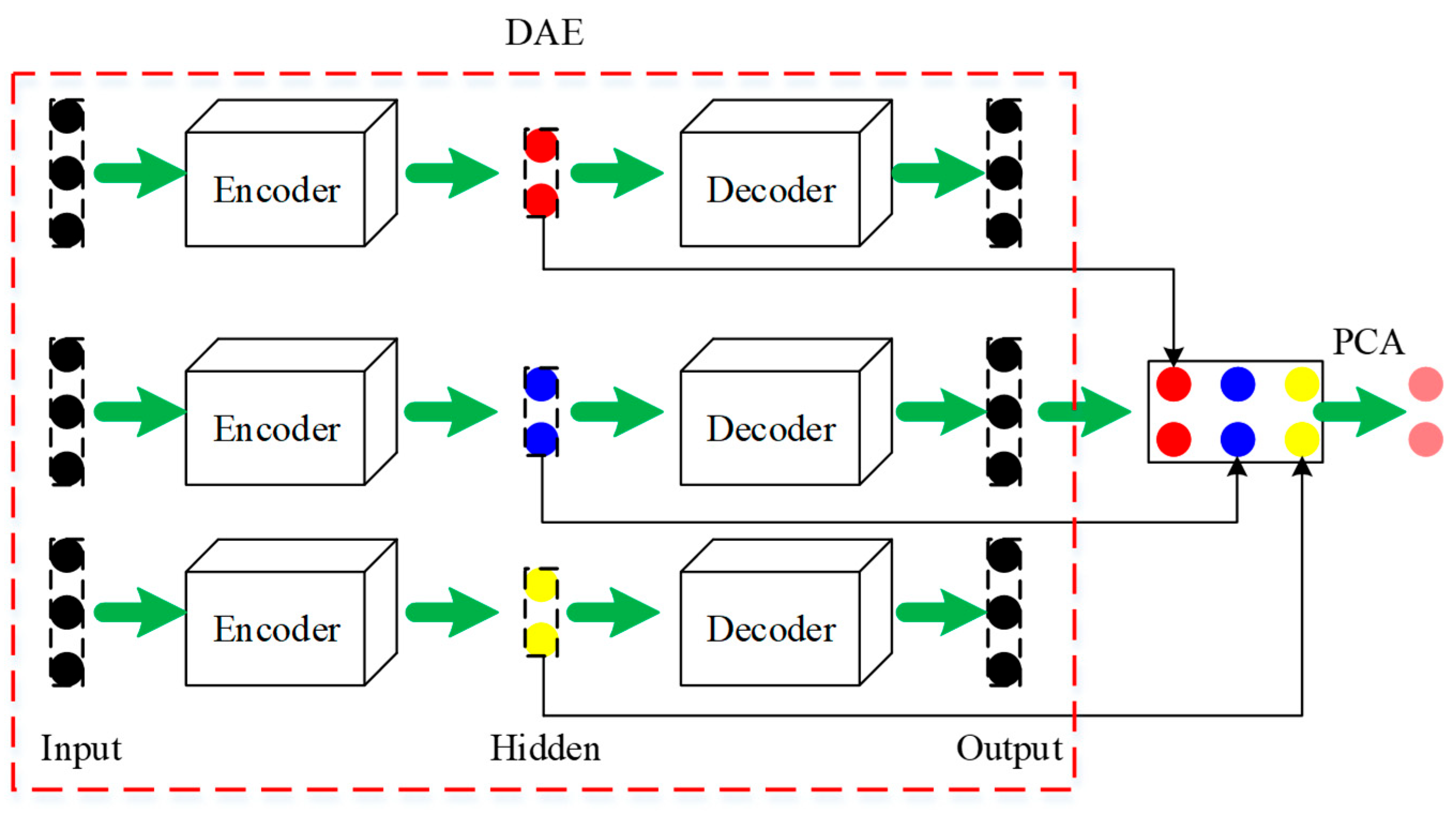
Figure 2.
Flow chart of TL-LSTM model.
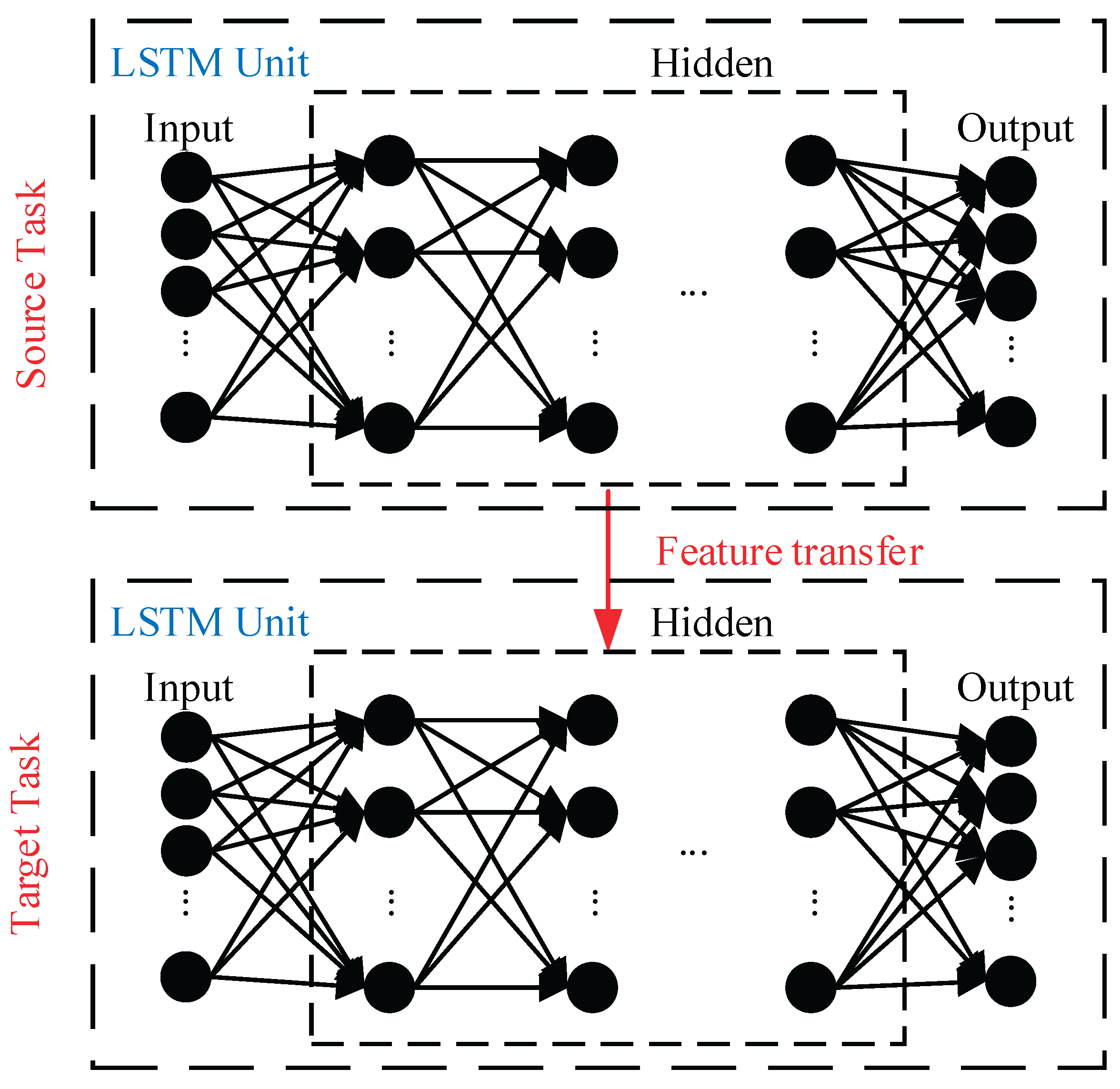
Figure 3.
Variable-speed control principle of a wind turbine.
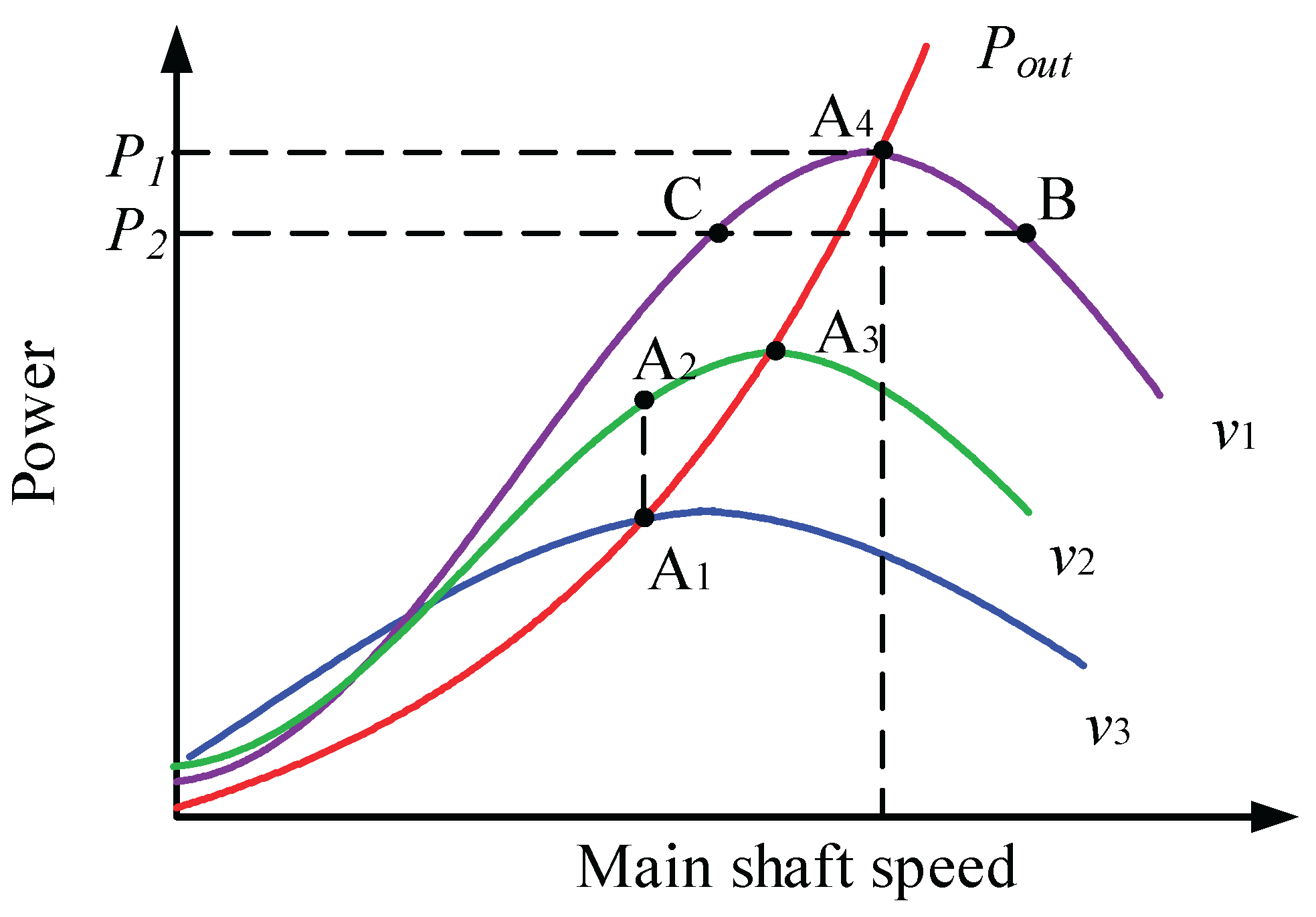
Figure 4.
Pitch control principle of a wind turbine.
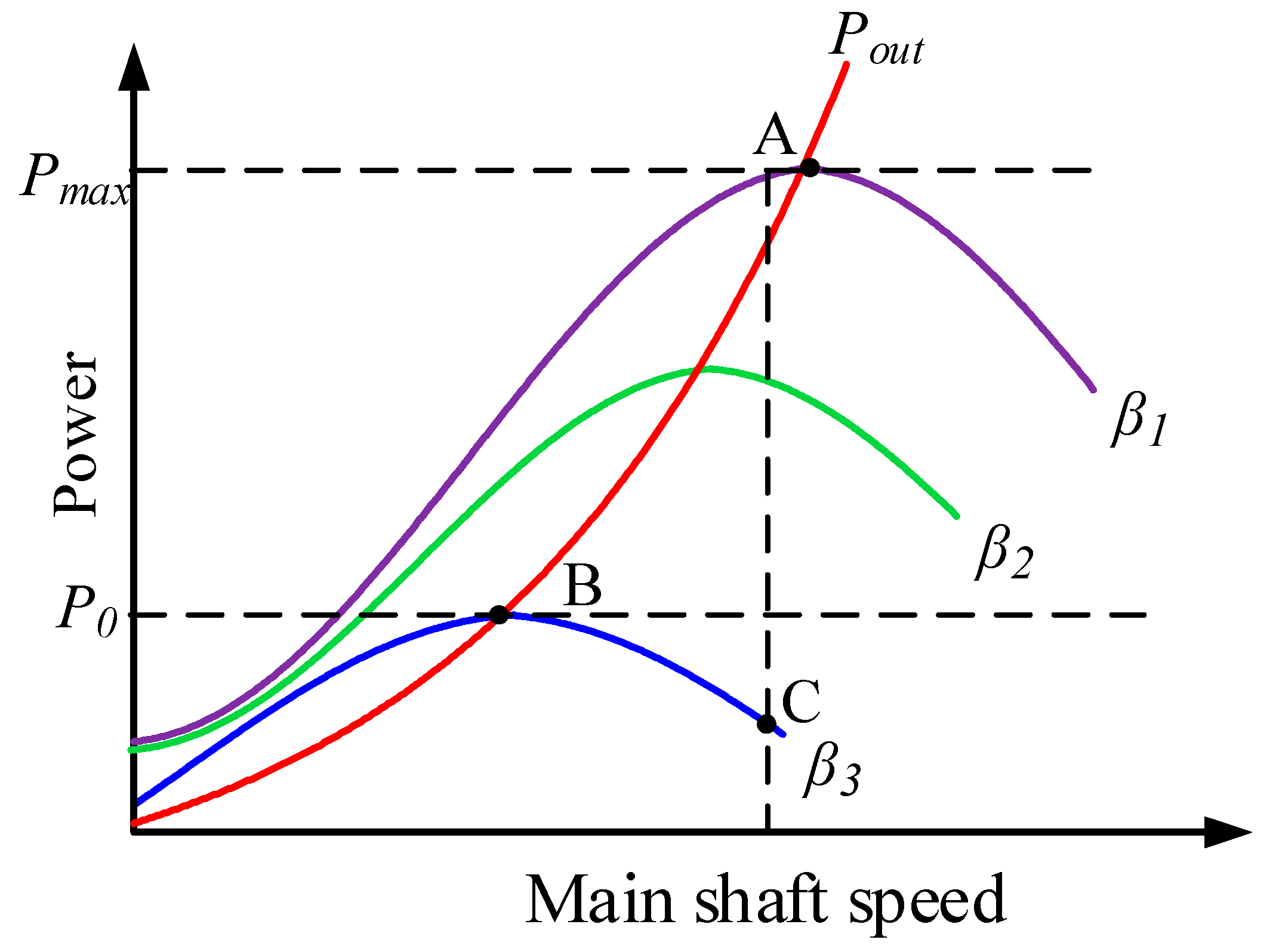
Figure 5.
Flow chart of particle swarm optimization process.
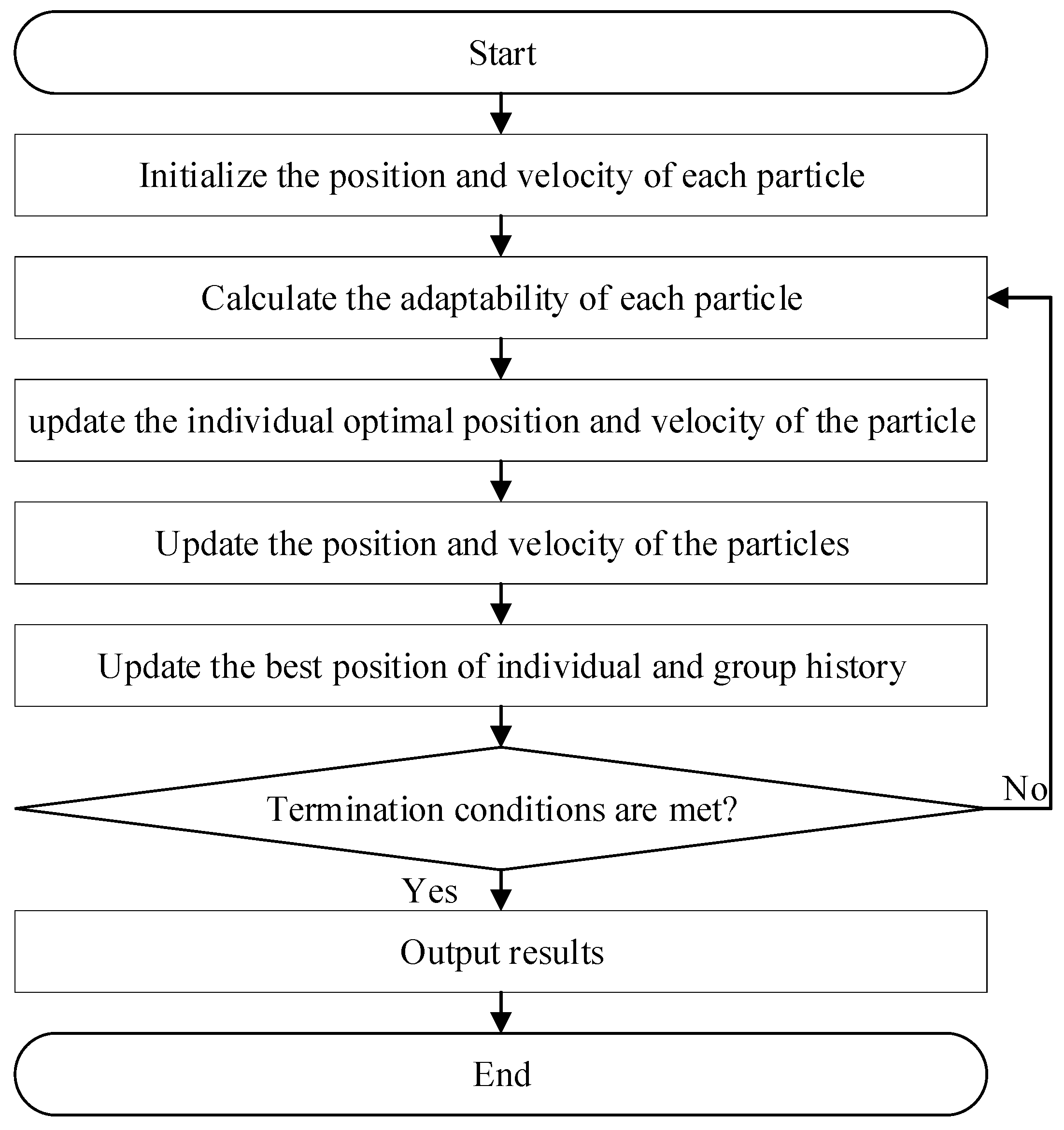
Figure 6.
RUL prediction of wind turbine gearboxes.
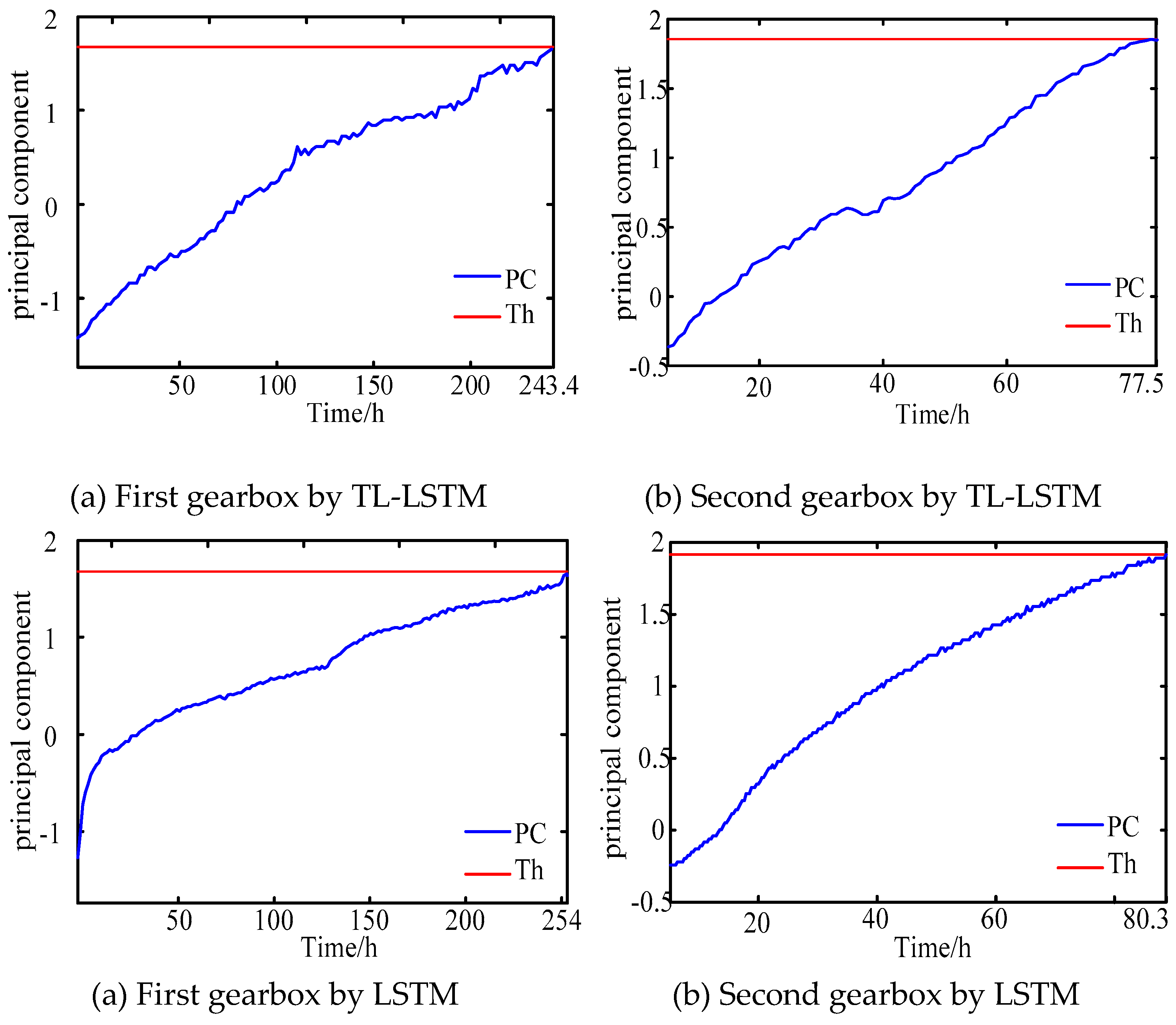
Figure 7.
Results of RUL prediction.
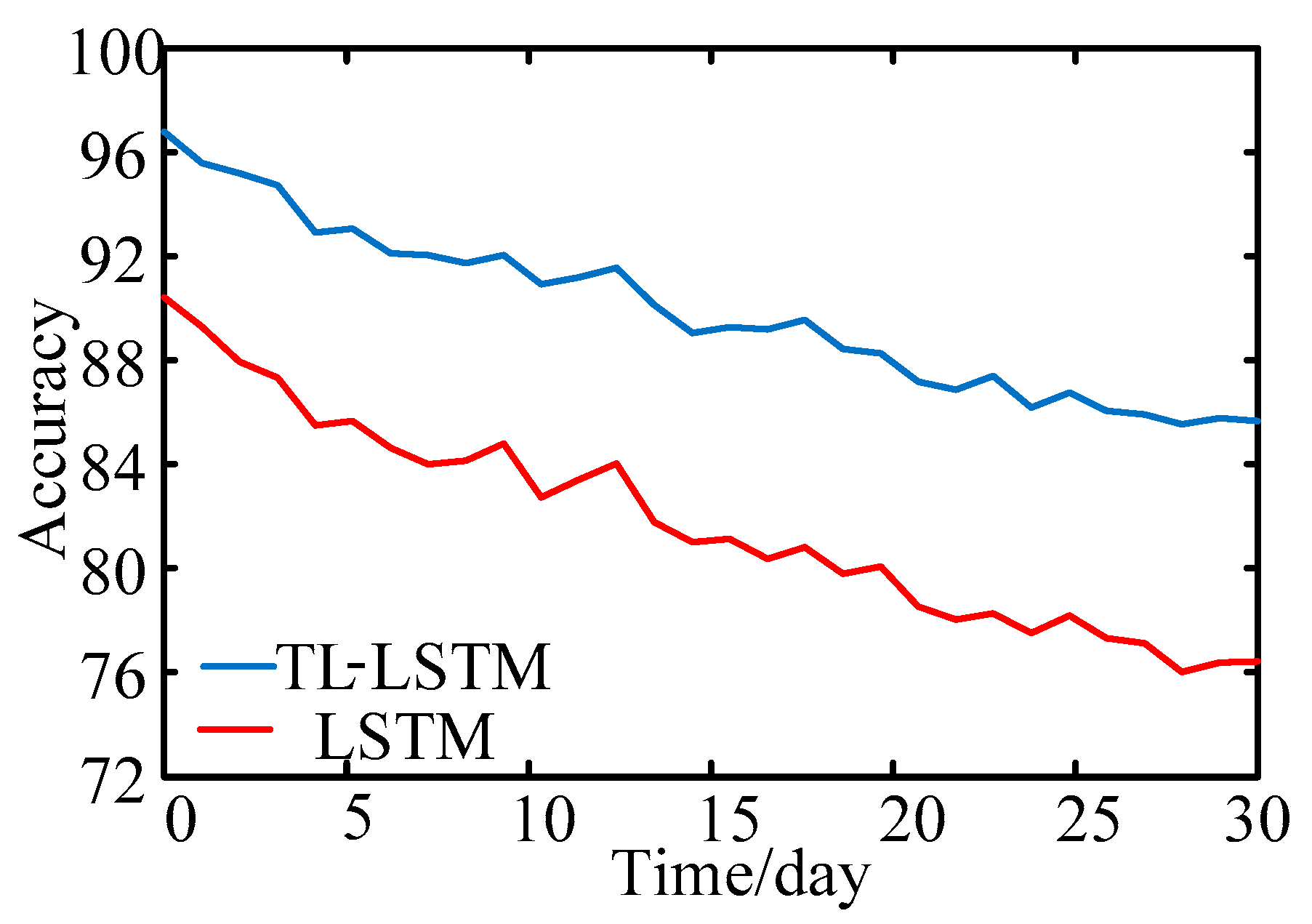
Figure 8.
RUL of wind turbine gearbox considering variable-speed control.
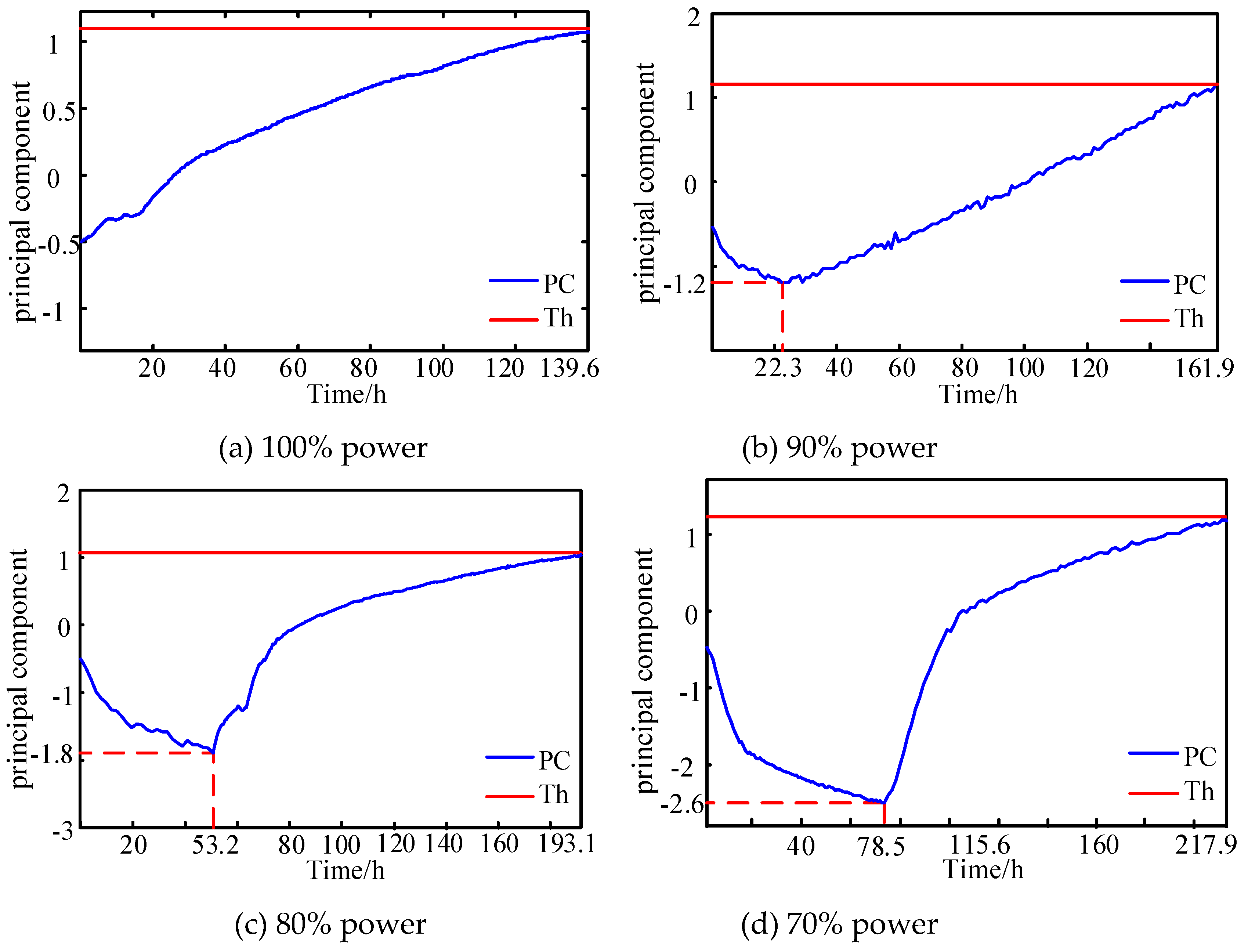
Figure 9.
Changes in RUL of the gearbox considering variable-speed control.
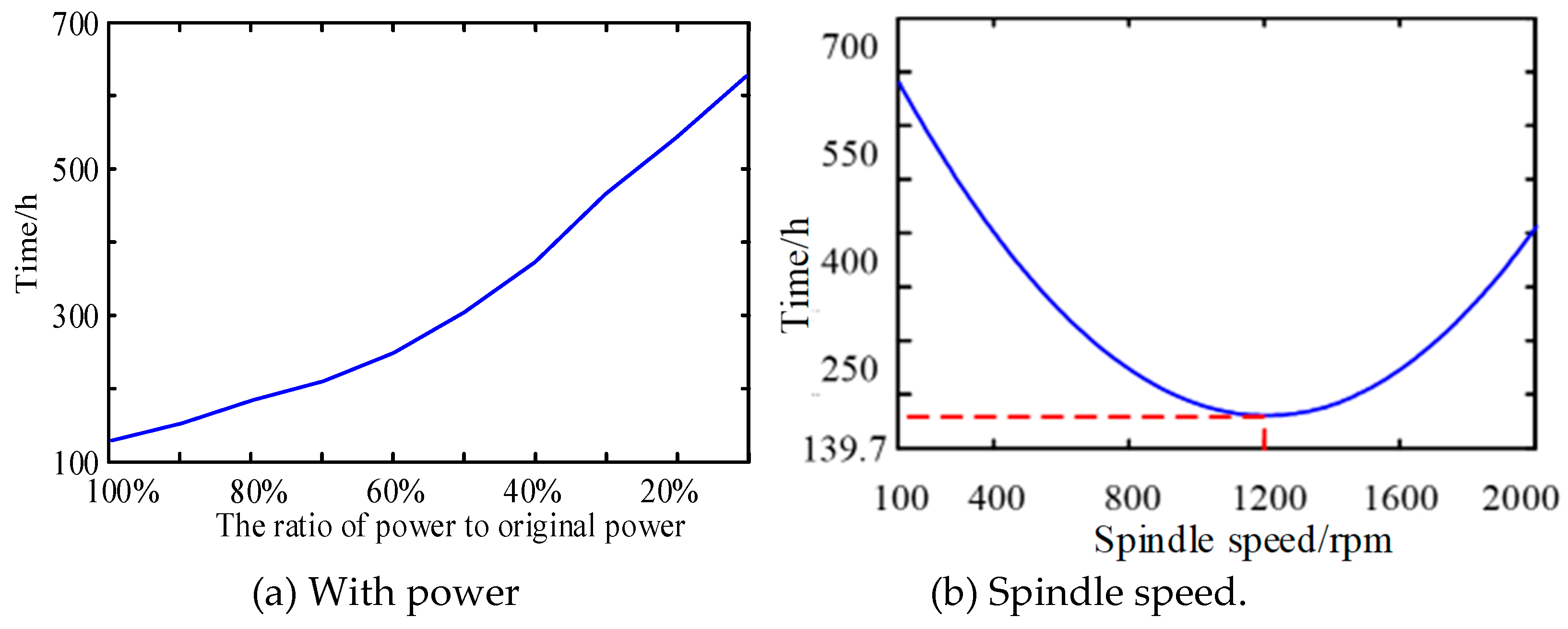
Figure 10.
RUL of wind turbine gearbox considering pitch control.
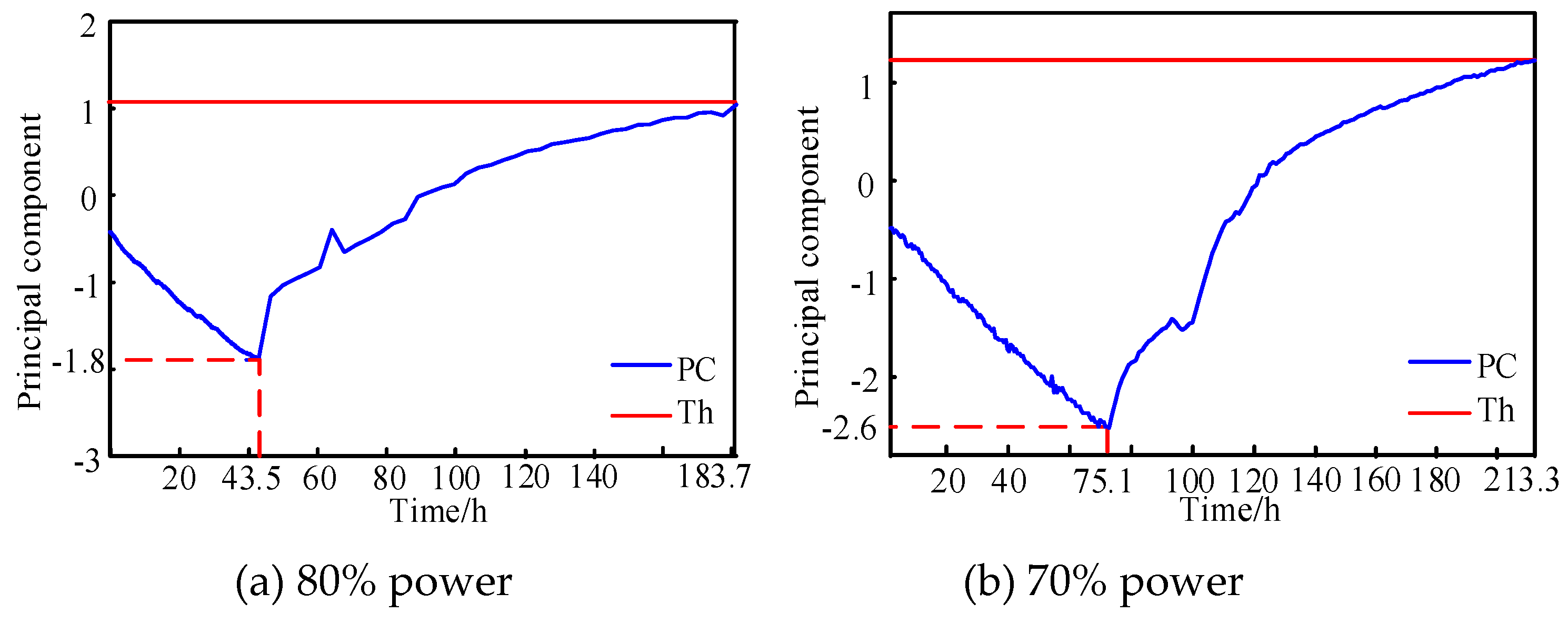
Figure 11.
Changes in RUL of gearbox considering pitch control.
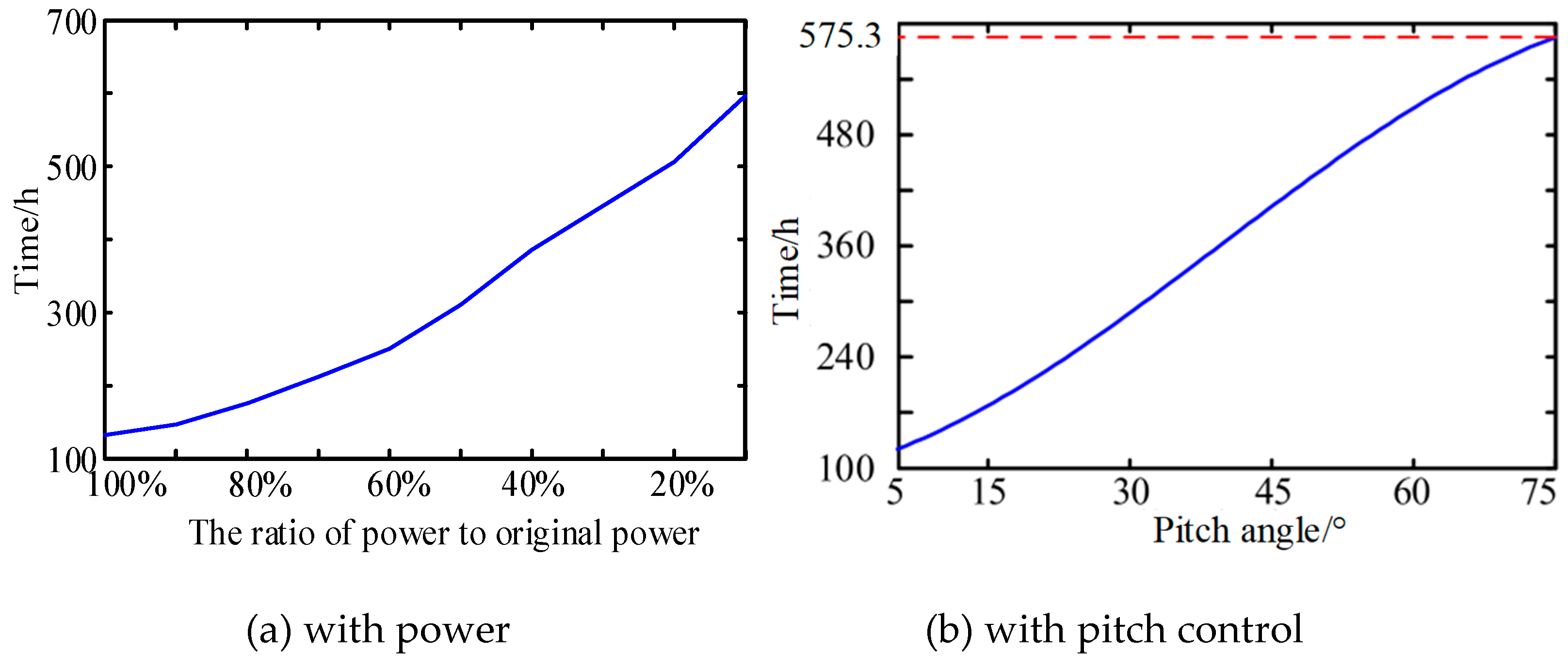
Figure 12.
Power generation of variable-speed control.
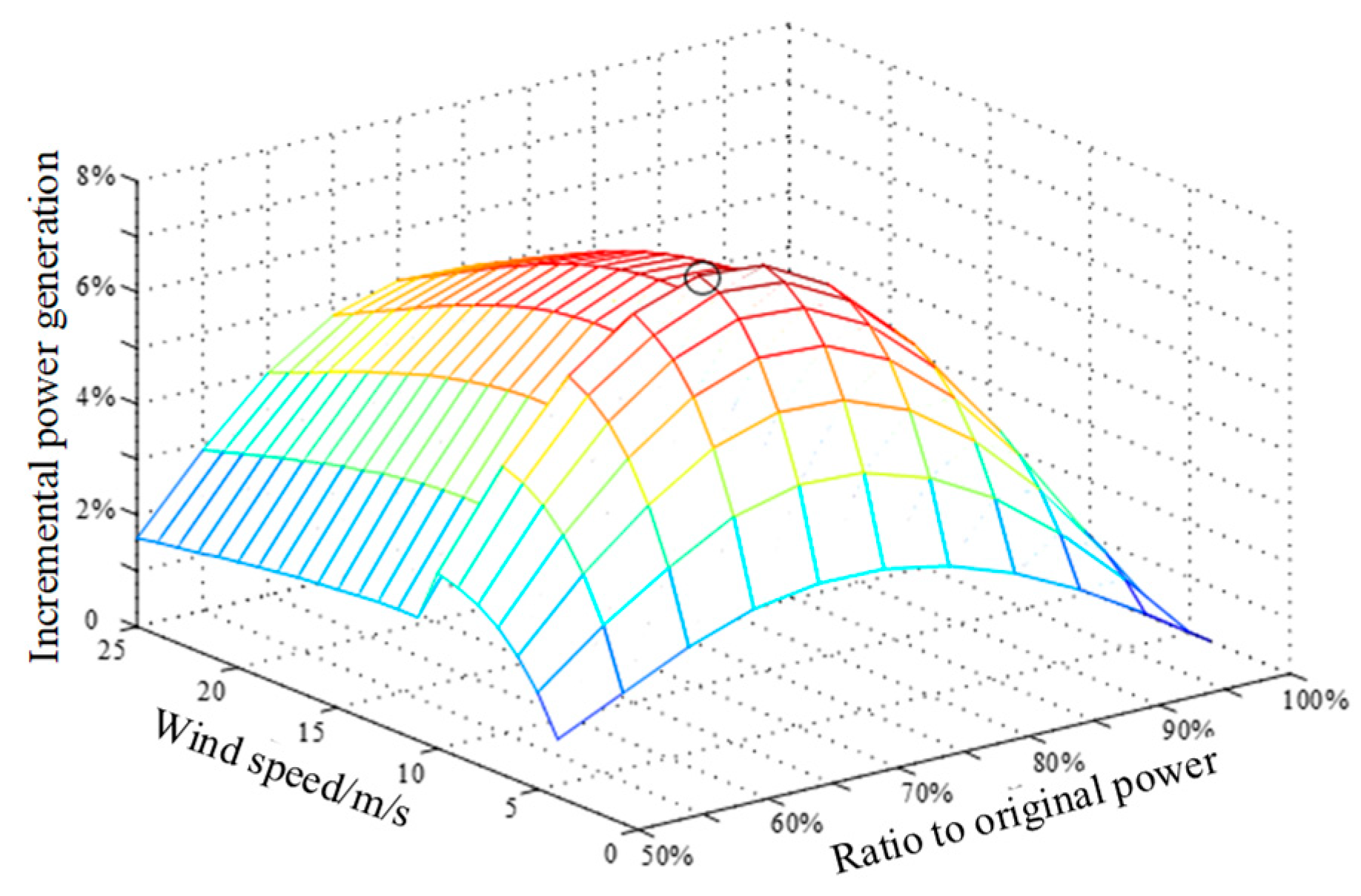
Figure 13.
Power generation of variable-speed control under different power.
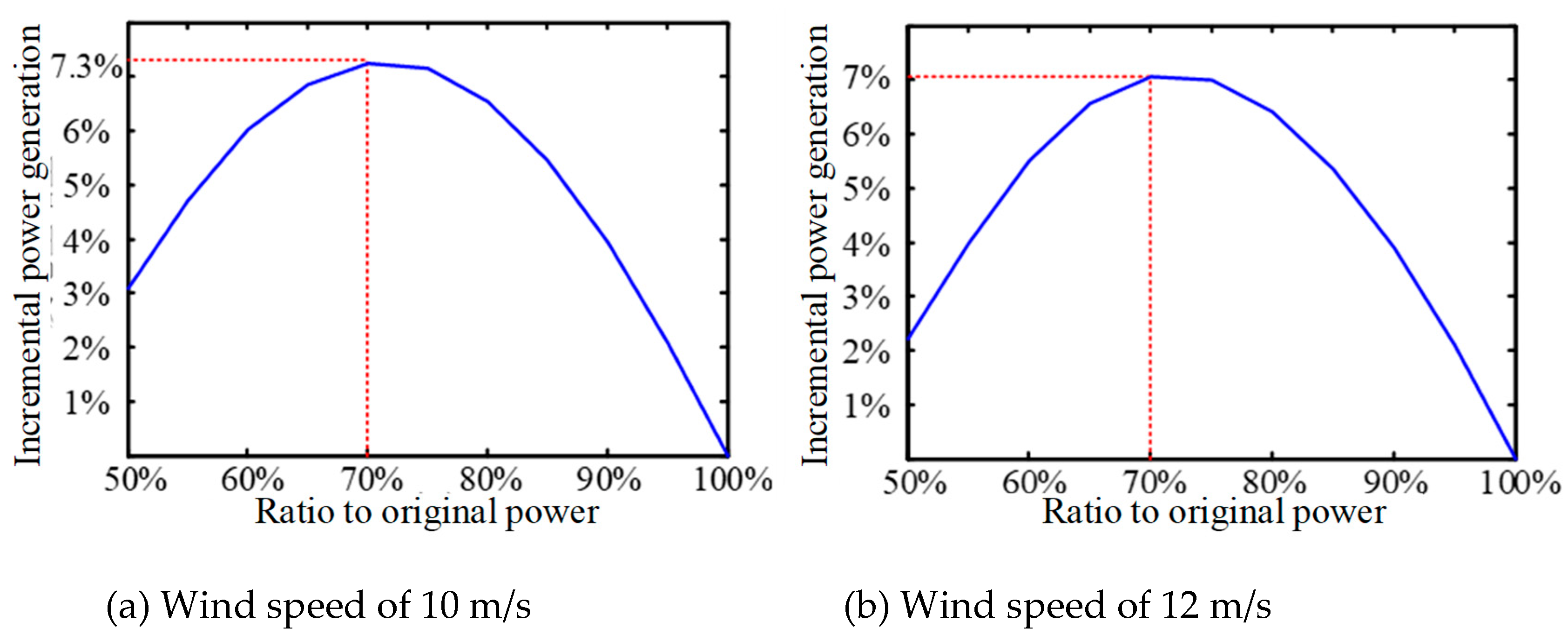
Figure 14.
Power generation of pitch control.
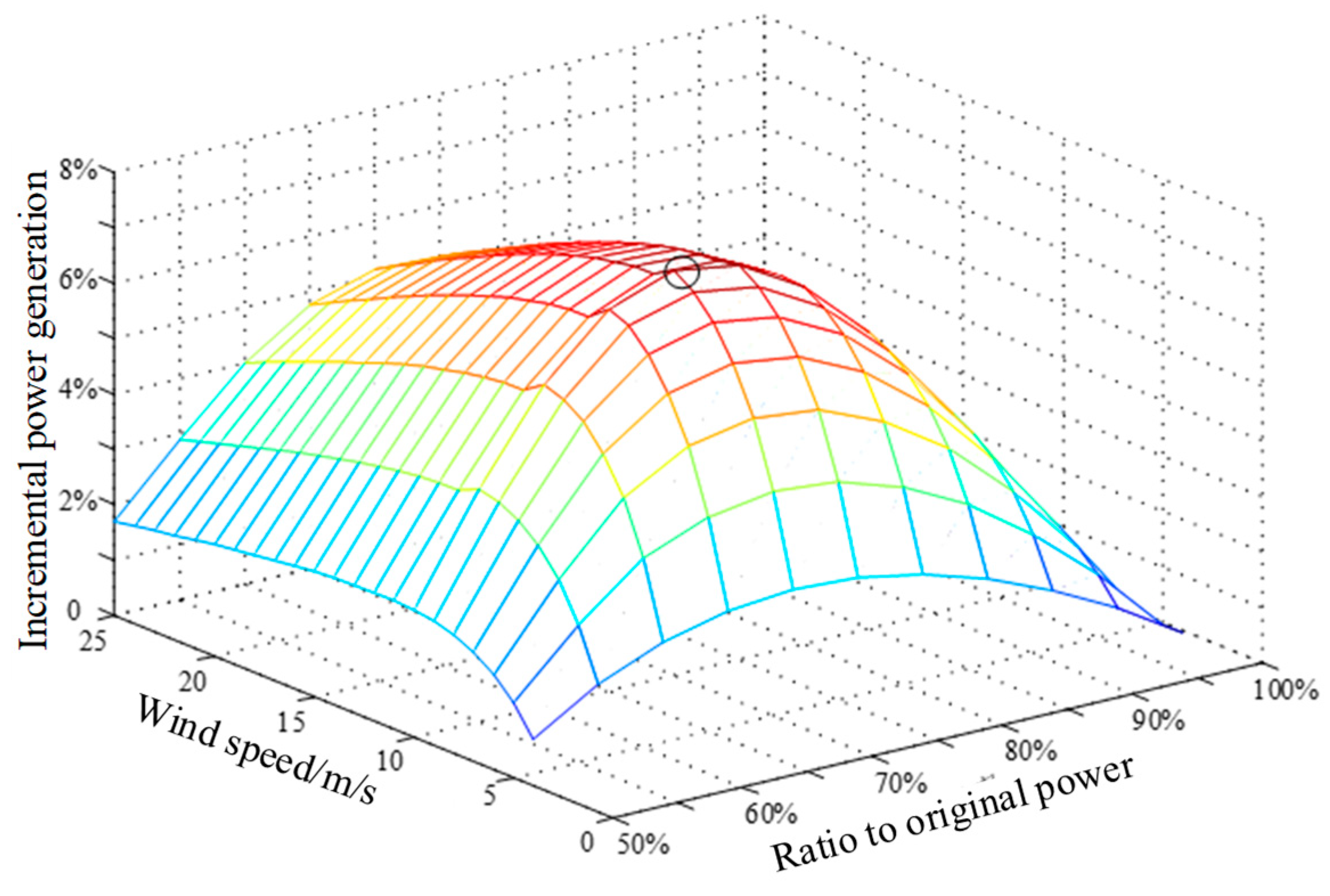
Figure 15.
Power generation of pitch control under different power.
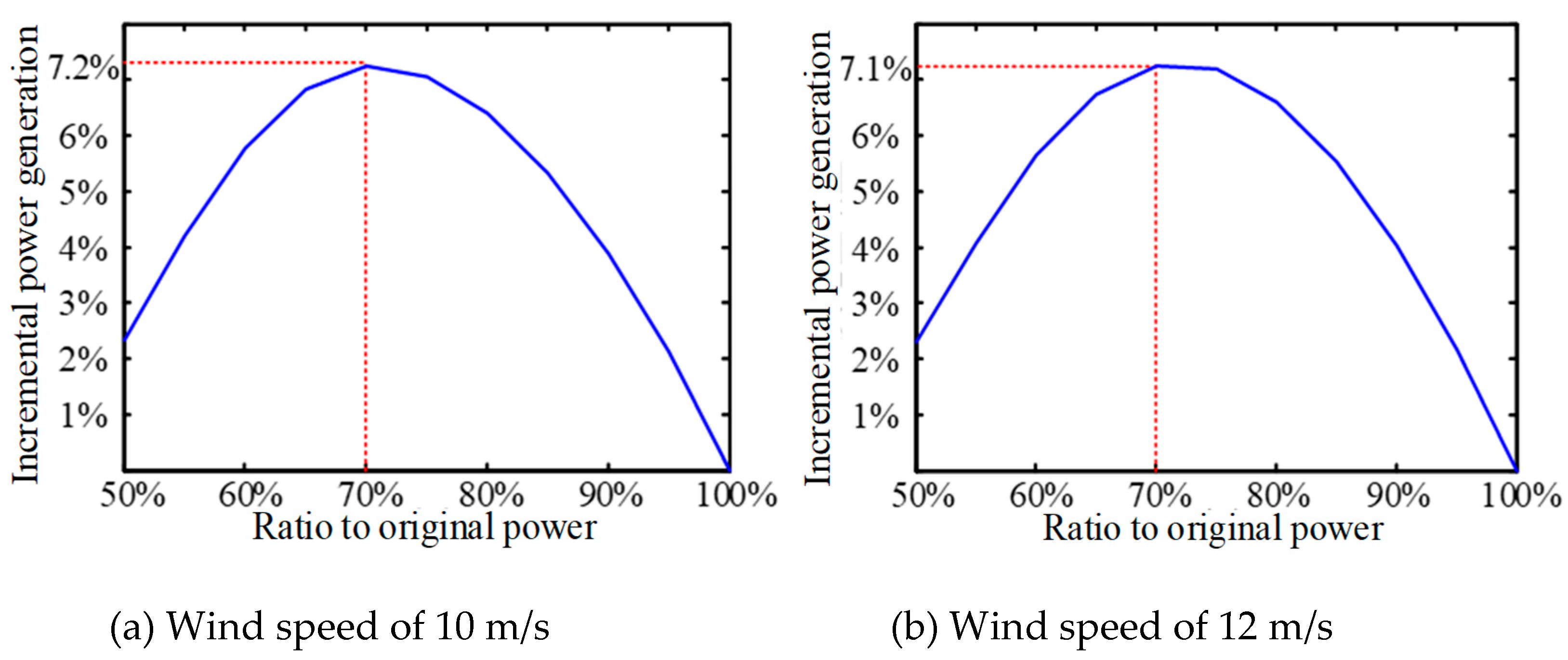
Figure 22.
The power generation result of the second wind farm.
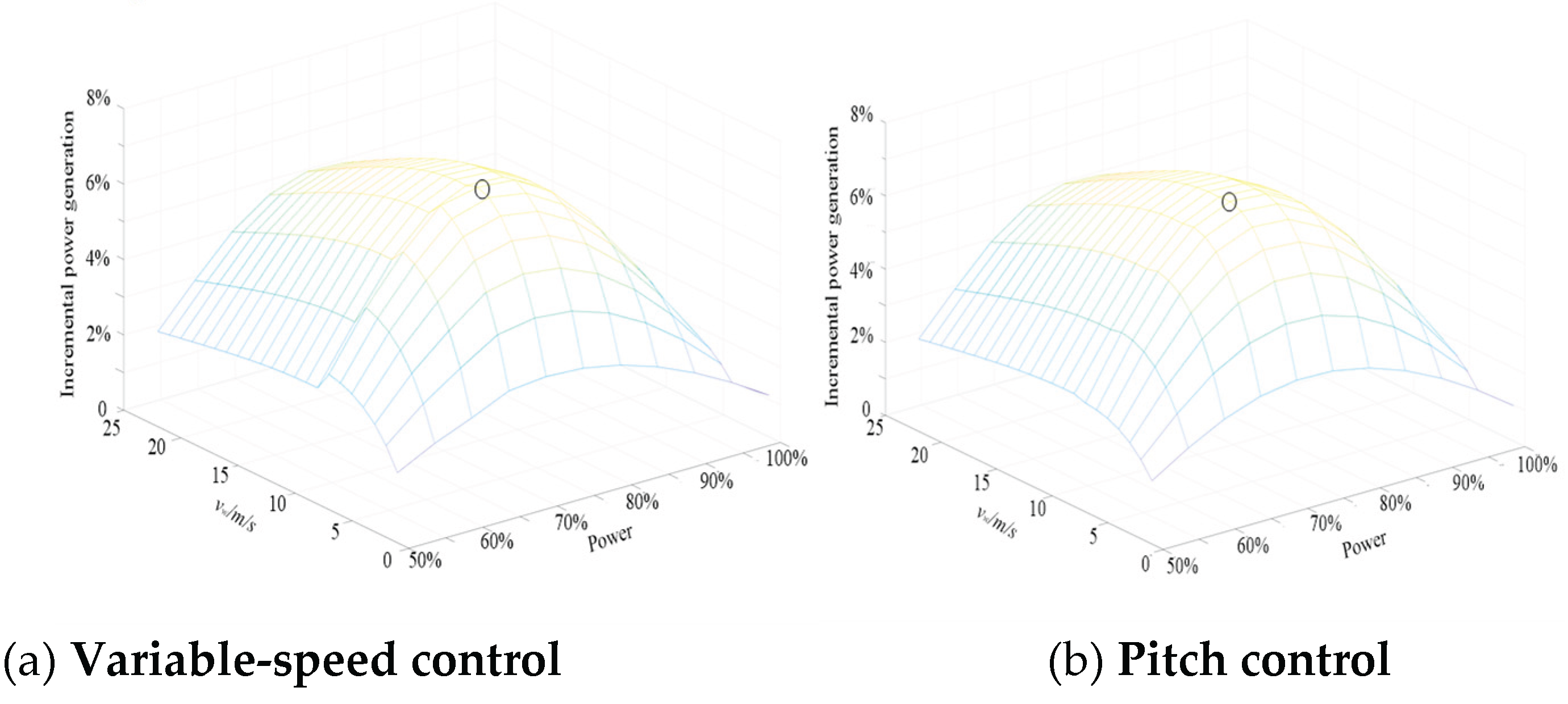

Table 1.
Wind turbine gearbox evaluation index.
| No. | Signal | Notation | Unit |
|---|---|---|---|
| 1 | Rear-end temperature of HSS | Tr | ℃ |
| 2 | Rear bearing temperature of HSS | Trb | ℃ |
| 3 | Gearbox oil temperature | To | ℃ |
| 4 | Output power | P | kW |
| 5 | Spindle speed | n | rpm |
| 6 | Generator inlet oil pressure | Fi | bar |
Table 2.
Signals used for evaluation indicators prediction.
| No. | Signal | Notation | Unit |
|---|---|---|---|
| 1 | Gearbox inlet oil temperature | Ti | ℃ |
| 2 | Environment temperature | Te | ℃ |
| 3 | Wind speed | vw | m/s |
| 4 | Rotor speed | vr | Rpm |
| 5 | Outlet pressure of gearbox oil pump | Fo | bar |
Table 3.
Range of wind turbine gearbox evaluation index.
| Signal | Lower limits | Upper limits |
|---|---|---|
| P | 0 | 2200 kW |
| n | 0 | 2000 rpm |
| To | Te | 85 ℃ |
| Tr | Te | 100 ℃ |
| Trb | Te | 95 ℃ |
| Fi | 0.25 bar | 0.8 bar |
Table 4.
The power generation result of the second wind farm.
| Control Strategy | Wind speed range | Maximum increase in power generation | Wind speed | Ratio to original power |
|---|---|---|---|---|
| Variable-speed control | vw <10.8 m/s | 7.42% | 10 m/s | 0.7 |
| 10.8 m/s < vw | 7.33% | 12 m/s | 0.7 | |
| Pitch control | vw <10.8 m/s | 7.36% | 10 m/s | 0.7 |
| 10.8 m/s < vw | 7.34% | 10 m/s | 0.7 |
Table 5.
The power generation result of the third wind farm.
| Control Strategy | Wind speed range | Maximum increase in power generation | Wind speed | Ratio to original power |
|---|---|---|---|---|
| Variable-speed control | vw <10.8 m/s | 7.15% | 10 m/s | 0.7 |
| 10.8 m/s < vw | 7.01% | 12 m/s | 0.7 | |
| Pitch control | vw <10.8 m/s | 7.12% | 10 m/s | 0.7 |
| 10.8 m/s < vw | 7.17% | 10 m/s | 0.7 |
Disclaimer/Publisher’s Note: The statements, opinions and data contained in all publications are solely those of the individual author(s) and contributor(s) and not of MDPI and/or the editor(s). MDPI and/or the editor(s) disclaim responsibility for any injury to people or property resulting from any ideas, methods, instructions or products referred to in the content. |
© 2026 by the authors. Licensee MDPI, Basel, Switzerland. This article is an open access article distributed under the terms and conditions of the Creative Commons Attribution (CC BY) license (http://creativecommons.org/licenses/by/4.0/).
Copyright: This open access article is published under a Creative Commons CC BY 4.0 license, which permit the free download, distribution, and reuse, provided that the author and preprint are cited in any reuse.


