
Submitted:
27 April 2026
Posted:
28 April 2026
You are already at the latest version
Abstract
In the context of the transformation of urban construction from incremental expansion to inventory renewal, the reuse of industrial remnants has gradually shifted from the issue of spatial transformation to that of scene construction. Taking Tianjin as the research object, based on the scene theory framework, by comprehensively applying kernel density spatial analysis and network comment text mining methods, the research is conducted from two levels: spatial structure and public perception. The study found that the three main models of industrial park, museum, and commercial area have significant differences in spatial distribution and accessibility conditions; the network comment analysis further indicates that public perception shows structural differences in the dimensions of neighborhood environment, appropriateness of objects, activities, and values, which essentially stem from the transmission effect of spatial structure on behavior and experience, and then through influencing activity frequency and population structure, shaping differentiated scenes such as "creative life", "consumption leisure", and "historical culture". At the same time, different models generally have problems such as superficial cultural expression, entertainment-oriented experience, and insufficient value recognition. Based on this, a scenario-based renewal strategy oriented towards mechanism optimization is proposed, providing theoretical basis and practical paths for the spatial translation and cultural regeneration of industrial remnants.
Keywords:
industrial relic renewal
; scene theory
; spatial mechanism
; kernel density analysis
; network text analysis
1. Introduction
1.1. Background and Issues
In the context of China's urban construction shifting from incremental expansion to inventory renewal, the protection and reuse of industrial remnants have gradually become the core issue of urban development. The protection of industrial remnants has gradually expanded from the initial single-heritage-based protection to the overall protection of industrial remnants [1]. As an important carrier of urban industrial memories and local culture, industrial remnants not only face the dual pressures of protection and development, but also exhibit a trend of transforming from production spaces to consumption spaces during the renewal process. Tianjin, as a typical industrial city, has undergone significant transformation under the "retreat of secondary industries and advancement of tertiary industries" policy, with a large number of industrial remnants being renovated into industrial parks, commercial areas, and cultural venues, forming distinct spatial reconfiguration and consumption-oriented development characteristics.
The theory of scenes originated from the work of Clark T. N. Clark, who examined the transformation of urban development drivers in post-industrial societies. In The City as an Entertainment Machine, Clark argued that urban growth increasingly depends on cultural consumption rather than traditional production factors, and that amenities—such as cultural facilities, leisure spaces, and lifestyle services—play a decisive role in shaping urban competitiveness [2].Subsequently, Clark formally introduced the concept of “scenes” in his 2007 study, conceptualizing them as structured combinations of amenities, activities, and symbolic meanings that collectively influence social life and spatial attractiveness [3]. Later, Daniel Silver and other scholars expanded this framework by incorporating neighborhood structure, social interaction, and cultural values, contributing to a more systematic analytical model. The publication of Scenescapes: How Qualities of Place Shape Social Life marked the maturation of the theory, shifting its focus from macro-level cultural economy to the micro-level interplay between space, behavior, and meaning [4].Following its theoretical consolidation, the theory of scenes has been widely applied in diverse urban contexts. Jang and Byun applied the concept to Seoul, constructing a multi-dimensional scene framework to analyze how urban environments shape place identity and cultural values [5]. Shaker and Rath explored café culture as a form of urban scene, revealing the relationship between consumption spaces and socio-economic restructuring [6]. Similarly, Ngelramónzapata-Moya et al. validated the applicability of scene theory in Spain, particularly in understanding cultural exposure and lifestyle patterns [7].More recent studies have extended the theory to emerging urban issues. For instance, Meng introduced scene theory into healthy community planning, proposing a multi-layered system integrating spatial design, behavioral guidance, and operational strategies to address the imbalance between physical space construction and social practice [8]. These studies indicate that scene theory is evolving from a cultural-economic perspective into a comprehensive framework for spatial analysis and urban governance.n recent years, scene theory has increasingly been applied to the regeneration of industrial heritage and the transformation of creative industrial parks. Zhu et al. identified cultural activity scenes and location conditions as key determinants of user satisfaction in the regeneration of old factory-based creative parks [9]. Zhang et al. explored scene-based conservation strategies for hydropower industrial heritage, emphasizing the role of behavioral guidance and value construction in enhancing public engagement [10]. Zhang et al. further developed a scene perception framework encompassing physical, social, and cultural dimensions, using text mining techniques to capture emotional responses and spatial experience patterns [11].
To address these gaps, this study focuses on industrial heritage sites in Tianjin and introduces scene theory to construct an integrated analytical framework linking elements, mechanisms, and strategies. By combining spatial analysis with multi-source data on user perception, the research aims to reveal the underlying spatial mechanisms of scene formation and interaction. Furthermore, it proposes targeted regeneration strategies for creative industrial parks, contributing to both theoretical advancement and practical guidance in the context of urban regeneration and stock-based development.
2. Theoretical Foundation and Methods
2.1. Scene Theory
The Scene Theory was initially proposed by Professor Terry Clark from the University of Chicago and his research team. This theory is based on consumption and takes urban convenience and comfort as the premise. It views space as a social hybrid composed of consumption symbols and cultural values. It supplements the traditional urban theory centered on production and human capital, emphasizing the role of consumption in the post-industrial society, and reveals the generation logic of urban spatial vitality through five core elements: neighborhood, comfort items, activities, people, and values (Figure 1). The continuous operation of scenes is based on the nurturing and feedback mechanism between objective structure and subjective cognitive system, ultimately becoming the cultural driving force for urban growth and development [12,13]. In the post-industrial society, it guides scholars to shift their theoretical perspectives, moving from production to consumption. It regards individuals (residents and workers) within different social symbols or ties (neighborhood relationships, class, community, etc.) as consumers. Its value judgment has further expanded to three levels: authenticity, drama, and legitimacy, to measure local identity, perceptual experience, and social identity in scene creation[14].
Authenticity refers to whether the true nature of the elements is recognized. The authenticity of a scene is reflected in the expression of local characteristics in the spirit of the place, with the core being to shape local identity and present real things; drama refers to how the elements are presented and recognized. The drama of a scene focuses on how space brings about perceptual pleasure; legitimacy is not about whether it adheres to the legal bottom line, but rather the degree to which an individual recognizes and accepts the values and behavioral norms carried by the space, and is further sought for identification and enhancement based on feelings and experiences [15,16].
Industrial heritage renewal and scenes are interrelated. The park builds specific scenes through the consumption and entertainment facilities composed of various elements; scenes showcase their charm and cultural value orientation (Figure 2). Its mechanism of action is that scenes create specific scenes through the space carrying comfortable objects and organizing the organization of people, attracting diverse groups of people to participate in activities and consumption, promoting consumption practices and economic development, and thereby further promoting the selection of comfortable objects and attracting gathering activities of the crowd. From the mechanism level, the formation of scenes does not occur independently but is based on spatial location and transportation conditions, influencing the accessibility and stay behavior of people, thereby shaping the frequency of activities and interaction patterns, and ultimately transforming into a specific value identification in public perception. Therefore, the various elements in the scene theory can be understood as different links in the "location - activity - perception - value" chain, which provides a unified explanatory framework for the empirical analysis of industrial heritage renewal in the following text.
2.2. Data Sources and Research Methods
2.2.1. Data Source
The data of this study mainly consist of two types: The first type is the spatial data of industrial remnants and their renewal projects in Tianjin, which was obtained through on-site investigations, government public information, and related literature compilation, and was vectorized in the ArcGIS platform; the second type is the public perception data. Four typical cases were selected: the Cotton 3 Creative District, Jinmao Plaza Shopping Center, and Tianjin Post Museum. The text of online comments from platforms such as Xiaohongshu and Ctrip in the past two years (2023 - 2025) were collected using the Octopus Collector. After removing duplicates, excluding advertisements and invalid information, 362 valid comments, 311 valid comments, and 343 valid comments were obtained respectively, serving as the sample for subsequent analysis.
2.2.2. Research Methods
In terms of spatial analysis, based on the ArcGIS platform, a kernel density analysis was conducted on industrial remnants and renewal projects to identify their spatial clustering characteristics; combined with the buffer analysis method, multi-scale distance zones (0–2 km, 2–5 km, 5–10 km) were constructed centered on Tianjin Station to reveal the distribution patterns of industrial remnants; at the same time, road network and rail transit data were overlaid to comprehensively interpret the regional transportation accessibility, thereby analyzing the relationship between spatial structure and renewal intensity.
In terms of text analysis, the ROST CM6 software was used to process the network comment data. Firstly, through word segmentation and frequency statistics, high-frequency keywords were extracted, and combined with the scene theory, they were classified into four dimensions: neighborhood environment, appropriateness of objects, activities, and values; secondly, based on the sentiment dictionary, sentiment analysis was conducted on the comment text, dividing the text into three categories: positive, neutral, and negative, to quantify the public evaluation tendency; finally, by constructing a word co-occurrence matrix, a semantic network diagram was generated, and core nodes were selected based on word frequency and co-occurrence intensity as thresholds, thereby identifying the association structure between different scene elements.
Sentiment analysis is an in-depth analysis of subjective texts, uncovering the implicit emotional tendencies in the texts, and based on this, making detailed divisions of sentiment attitudes, thereby understanding the emotional connotations of the texts [6]. The sentiment classification is based on the built-in sentiment dictionary of ROST CM6. By weighting and calculating the polarity and intensity of sentiment words in the text, the overall sentiment tendency of the text is comprehensively determined (Figure 3). Among them, a sentiment score greater than 0 is judged as positive, less than 0 as negative, and close to 0 as neutral, reflecting the overall perception differences of the public towards different renewal models.
In semantic network analysis, a keyword co-occurrence matrix is constructed to statistically calculate the frequency of words appearing together in the same context, and a network structure diagram is generated based on this. The density and intensity of the connections between nodes reflect the semantic association degree between words, thereby revealing the intrinsic connections among different scene elements in public perception.
3. Overview of the Renewal of Industrial Remnants in Tianjin
3.1. The Current Situation of Industrial Relic Renewal
In recent years, the scale of industrial heritage renewal projects in Tianjin has been continuously expanding. The following is a list of industrial heritage reutilization in Tianjin based on the actual development situation of the city and relevant literature records, totaling 35 sites (Table 1 and Figure 4). The main development models for the renovation of industrial heritage include museums, industrial parks, commercial areas, offices, etc.
The original Tianjin Foreign Trade Carpet Factory was transformed into Tianjin Iku Creative Industrial Park, U-CLUB Upstream Opening, Huaxia Town Meiya Creative Cultural Park and other subsequent parks. However, the number of enterprises that have moved in has been significantly reduced, and the economic performance has not been satisfactory. Currently, these parks have been demolished and rebuilt. Due to issues such as economic development and enterprise relocation, the operation of projects like Blue Flying Goose and Second Square City is also not satisfactory at present.
3.2. Spatial Distribution Characteristics of Industrial Remnants Renewal Areas
The spatial distribution of industrial remnants in Tianjin (Figure 5a) shows that it generally exhibits a significant central concentration feature, mainly distributed in traditional old industrial areas such as Hebei District, Hedong District and Heping District, and forming typical clusters in areas like Sanjie Machinery, Kailuan Mining Bureau and Jiefang North Road. At the same time, industrial remnants are distributed in a band-like pattern along the river and its tributaries, reinforcing the axial development feature.
The distribution of industrial heritage renewal projects (Figure 5b) reveals that the existing renewal projects generally continue the original industrial remnants layout in space and further concentrate towards the urban center area (with Tianjin Station as the core), presenting a "centeral reinforcement" redevelopment feature. In contrast, industrial remnants in the urban periphery are mostly in an idle or low-efficiency utilization state, reflecting the dependence of the renewal process on location conditions and market mechanisms.
From the perspective of spatial distribution (Figure 6a), a distinct hierarchical differentiation is formed around the central urban area: the 0–5 km zone represents the historical core type, mainly featuring modern industrial remnants; the 5–10 km zone is the main urban heavy industry type, mostly consisting of large-scale industrial areas formed during the early days of the People’s Republic of China. This structure essentially reflects the temporal and spatial process of the evolution of Tianjin’s industry from the traditional river-side industry to the heavy chemical industry system of the main urban area.
The analysis of transportation accessibility (Figure 6b) reveals the spatial differentiation mechanism of industrial heritage renewal: the central urban area, relying on a well-developed rail transit and road system, has higher accessibility and the ability to gather people, thus making it easier to achieve functional transformation and value enhancement; while the peripheral areas, due to insufficient public transportation coverage and low efficiency of external connections, have significantly insufficient renewal and movement driving forces. This coupling relationship of “high accessibility – high renewal intensity” and “low accessibility – low utilization efficiency” has become an important reason for the current imbalance in the spatial distribution of industrial heritage renewal. It reflects the dependence of the renewal process on location conditions and market mechanisms. The underlying logic is that the higher transportation accessibility in the central area enhances the population aggregation ability and spatial usage frequency, thereby strengthening the development intensity and utilization efficiency of renewal projects.
In the updated projects, the industrial park model predominates (Figure 7a). The projects are in line with the industrial relic layout, and under policy guidance, a significant spatial aggregation has been formed in Hebei District and has spread to the areas along the Haihe River. The museum model (Figure 7b) is relatively scattered, mostly located in the original factory areas with smaller scales. The public welfare attribute of this model only affects a few to be located in the core urban area. The business model (Figure 7c) is highly concentrated in the city center and waterfront areas, especially densely distributed along the Haihe River. This reflects the significant influence of the economic value of the location and transportation accessibility on the selection of the site. In the process of replacing the functions of industrial relics with business models, in some cities with better economic development and higher regional land prices, through the renovation and reuse of the internal and external spaces of old industrial buildings, suitable spatial forms for commercial use are divided and reorganized to meet the new usage requirements [17]. This reflects the significant influence of the economic value of the location and transportation accessibility on the selection of the site. The spatial differentiation of different update models is essentially the result of the influence of location conditions on the organizational mode of activities and population structure, and then affects their scene characteristics and value expression. The internal mechanism lies in that location conditions, by influencing transportation accessibility and the reachability range of the population, further determine the frequency of activities and the intensity of space use, thereby influencing the selection of update models and the development intensity.
4. Analysis of Online Comment Data
The Internet serves as an important information carrier, providing new channels for public expression and feedback on urban space experiences. These data differ from traditional questionnaire data. The advantage lies in the absence of a fixed evaluation framework, which means that the evaluation information provided by users is highly diverse and extensible, and the amount of information available for analysis is much greater than that of traditional evaluation methods [18]. The frequent words appearing in online comments are not random; rather, they are the result of the spatial location and functional configuration influencing the structure of the user population and activity types, thereby further shaping the public’s focus of attention and evaluation dimensions.
4.1. Word Frequency Word Cloud Analysis
By using the “word frequency analysis function” in the ROST CM6 software, the top 50 words of the three updated projects were extracted and a word cloud was generated for visualization. This can more intuitively and vividly reflect the public’s perception, evaluation and attention level towards the updated projects. The larger the font size, the higher the frequency and importance of the keyword.
4.1.1. Cotton 3 Creative District
From the word cloud (Figure 8), it can be seen that in the online comments of the Cotton 3 Creative District, words such as “coffee, market, district, photography” have a relatively high frequency. This indicates that the visitors’ main purposes are leisure, social interaction and visual experience. The key words cover environmental elements such as “park, Haihe River”, characteristics of industrial remnants such as “cotton mill, skateboarding”, as well as activity forms such as “photography, exhibition”, reflecting the public’s comprehensive perception of the spatial environment and experience content.
The high-frequency words are analyzed and summarized according to four dimensions: “neighborhood environment, suitability for use, activities, and values” (Table 2):
Neighborhood environment: The geographical location adjacent to the Haihe River, with the term “Haihe River” appearing 24 times to emphasize its geographical advantages, and words such as parking, weekend, and outdoor reflect the public’s concern for accessibility, openness, and spatial friendliness.
Suitability for use: The street integrates dining, retail, leisure, and family-friendly facilities, forming a composite consumption landscape.
Activities: Frequent mentions of taking photos,chick-in, and exhibitions indicate the vitality of it as a public cultural space; activities such as playing, playing in water, and traveling show the rich variety of activities and their ability to attract people to visit.
Values: The public’s references to elements such as cotton mills and industries highlight the continuation of historical memory and cultural value in the heritage renewal.
4.1.2. Jinmao Plaza
From the word cloud (Figure 9), it can be seen that in the online comments of Jinmaohui, words such as “playing with children”, “food”, and “weekend” have a relatively high frequency, indicating that it mainly attracts families with leisure and consumption activities. The key words cover location elements like “the Haihe River” and “the subway”, spatial facilities such as “factory buildings”, “Starbucks”, and “square”, as well as cultural impressions like “handmade book market” and “industrial style”.
The high-frequency words are analyzed and summarized according to four dimensions: “neighborhood environment, suitability for use, activities, and values” (Table 3):
Neighborhood environment: The comments mainly focus on location factors such as Haihe River and transportation factors such as Liujue Road, subway, and parking, reflecting its excellent accessibility and core location advantages;
Suitability for use: Mentioning space functions such as food, shopping malls, and entertainment, indicating the diversity and comprehensiveness of commercial renewal;
Activities: Activities such as playing with children, weekends, traveling, free activities, and Check-in reflect that the space supports various space activities, highlighting its vitality as a combined consumption and leisure space;
Values: The public pays attention to elements such as “factory buildings, industrial style”, while also mentioning a few trendy and popular elements, indicating that during the renewal process, industrial memories are integrated with modern design, shaping a unique place identity.

Table 3.
High-frequency Word List of Online Comments in Jinmaohui (Top 50).
| Dimensions | High-frequency words | Word frequency | High-frequency words | Word frequency | High-frequency words | Word frequency | High-frequency words | Word frequency |
| Neighborhood environment | Haihe River | 41 | Liuwei Road | 25 | Subway | 21 | Place | 19 |
| Parking lot | 12 | Underground | 11 | Line 4 | 10 | Facilities | 9 | |
| Map | 7 | |||||||
| Adaptability | Jinmaohui | 135 | Delicious food | 42 | Mall | 40 | Square | 22 |
| Starbucks | 20 | Factory building | 11 | Indoor | 9 | Slide | 9 | |
| Bookstore | 7 | Amusement park | 7 | Fountain | 7 | Park | 6 | |
| Activity | Taking the kids for a walk | 45 | Weekend | 41 | Play | 32 | Free | 28 |
| Check-in | 27 | Take a photo | 15 | Have fun | 13 | Eating and drinking | 8 | |
| Daily routine | 8 | Handmade | 7 | Playing with water | 6 | |||
| Values | Notebook Market | 23 | First thermal power plant | 19 | Industrial style | 18 | Architecture | 17 |
| Renovation | 16 | Design | 11 | Reserve | 9 | Culture | 8 | |
| Power generation | 8 | Popularity | 7 | Treasure | 7 | Online celebrity | 6 | |
| Style | 6 |
4.1.3. Tianjin Postal Museum
From the word cloud (Figure 10), it can be seen that “museum, building, history, Great Dragon stamps, stamping” are among the frequently used words, indicating that the public mainly focuses on historical cultural experiences and interactive activities. The key words include location elements such as “Jiefang North Road, Jinwan Square”, as well as typical activities such as “stamping, checking in, visiting”.
The high-frequency words are summarized and analyzed according to four dimensions: “neighborhood environment, suitability for objects, activities, and values” (Table 4):
Neighborhood environment: Located in the core area of the historical district, with a dense concentration of cultural attractions around, and the location and transportation advantages are prominently displayed;
Suitability for objects: After the building renovation, it takes into account both display functions and spatial experience, with rich stamp and cultural relic exhibitions, strengthening the attribute of cultural dissemination;
Activities: Stamping, visiting, and checking in have become the main interaction forms, enhancing public participation and cultural identity;
Values: By preserving historical sites such as “The Qing Dynasty Postal Tianli Bureau” and integrating modern display technologies, a cultural scene where tradition and modernity coexist has been formed, highlighting the cultural continuity and educational significance of heritage renewal.
4.2. Sentiment Analysis
The emotional analysis results obtained using the ROST CM6 software (Figure 11) show that the negative emotions accounted for the highest proportion (15.5%) in the Cotton 3 Creative District. Although Jinmaohui and Tianjin Postal Museum received mostly positive evaluations, their overall emotional scores did not reach the ideal level (approximately 0.6), indicating that there are differences in tourists’ perceptions.
The author conducted a classification analysis of the neutral and negative evaluations in the emotional characteristics of three typical cases (Table 5). The results showed that they mainly focused on insufficient spatial functions, shallow cultural expression, monotonous activity content, and low recognition of the heritage. This reflects the gap between the public’s expectations for spatial experience and cultural presentation during use.
In terms of the neighborhood environment and adaptability, since the main renovation methods applied in the renovation of industrial remnants are the renovation of the exterior structure, space renovation, landscape structure and architectural ornaments [19], it can also be found from the above evaluation table that the spatial temperament of the original industrial sites has been weakened in different renovation modes.
In terms of activities, the current activity organization in the renewal of industrial remnants generally has a structural feature of “low interaction, weak experience, weak culture, and strong display”, and has not yet formed an activity system that can support continuous scene production.
In terms of values, it is necessary to enhance the in-depth exploration of local history. Industrial heritage and industrial culture are interdependent and mutually promoting [20]. Through the extraction and re-expression of industrial cultural elements, the cultural recognition and local expression of different renewal modes should be strengthened.
4.3. Social Semantic Network Analysis
The author utilized the “Social Network” and “Semantic Network Analysis” functions of the ROST CM6 software to conduct visual processing on the segmented comment texts, thereby generating a semantic network diagram (Figure 12).
Based on the analytical framework of the scene theory, the author conducted a semantic network comparison study on three typical industrial heritage renewal cases - the Cotton 3 Creative District, Jinmaohui Shopping Center, and Tianjin Post Museum - from four dimensions: neighborhood environment, appropriateness of objects, activities, and values.
In the dimension of neighborhood environment, the Cotton 3 relies on the renewal of the waterfront area along the Haihe River to present a livable urban street atmosphere; Jinmaohui is located at a transportation hub, highlighting commercial accessibility and convenience; the Post Museum is situated in the old urban area, strengthening the connection between history and urban memory. The three cases correspond to the "creative life scene", "consumer-oriented scene", and "historical atmosphere scene" respectively.
In the dimension of appropriateness of objects, the Cotton 3 forms multiple business types through factory renovation and has strong spatial flexibility; Jinmaohui focuses on shopping, food, and family-friendly leisure, highlighting the consumption experience; the Post Museum uses exhibition space to carry knowledge and educational functions.
In the dimension of activities, the Cotton 3 mainly features interactive activities such as taking photos, posting, and markets, reflecting public nature and participation; Jinmaohui's activities focus on family-oriented consumption; the Post Museum mainly features visits and learning, leaning towards static experience.
In the dimension of values, the Cotton 3 represents creativity and youth culture, Jinmaohui reflects urban leisure and consumption vitality, and the Post Museum emphasizes historical inheritance and cultural memory.
In summary, the three cases respectively shaped "creative life scene", "consumer leisure scene", and "historical atmosphere scene", reflecting the diverse paths of industrial heritage renewal in lifestyle shaping, commercial orientation, and cultural inheritance, and also providing references for subsequent renewal design regarding environment, function, behavior, and value orientation.
5. Conclusions and Strategic Recommendations
Based on the comprehensive analysis of spatial distribution and network comment data, it can be observed that the renewal of industrial relics in Tianjin has formed three typical models: creative industrial parks, commercial development, and museum exhibitions, under the chain mechanism of "location conditions - transportation accessibility - activity organization - scene perception - value recognition". The embedded positions of these different models in the spatial structure vary, resulting in differences in activity intensity and experience methods, ultimately leading to the differentiation of public perception and cultural identification.
From the perspective of the mechanism, location conditions determine the capital entry and development intensity of the renewal, transportation accessibility affects the efficiency of inbound flow, activity organization level directly shapes the frequency of space usage, and scene perception and cultural expression jointly constitute the basis for value recognition. The resulting phenomenon is not a simple type difference, but rather a "scene production mechanism differentiation" constrained by the spatial structure. The three renewal models respectively present different structural tendencies: the creative industrial park relies on the industrial belt in the middle and near suburbs and waterfront spaces to form a "lifecentric scene generation mechanism", commercial development relies on the high accessibility of the core area to form a "consumption-driven scene reinforcement mechanism", and museum exhibitions are based on the integrity of historical relics to form a "culture authenticity-led mechanism". These three models respectively strengthen the daily life nature, consumption experience, and historical narrative, but also respectively expose structural problems such as commercial bias, cultural symbol weakening, and insufficient interaction vitality.
Therefore, the key to industrial relic renewal does not lie in functional supplementation of different types, but in reconstructing the "space - activity - perception - recognition" collaborative relationship at the overall level, that is, optimizing spatial accessibility to enhance the efficiency of population import, strengthening activity organization to enhance the continuous usage intensity, and enhancing the recognizability of cultural expression to promote the generation of value recognition.
At the strategic level, it should shift from optimizing a single model to a systematic collaborative orientation: first, through optimizing transportation and location connections to enhance the overall accessibility and networked connection of industrial relics; second, by implanting activity mechanisms to enhance the continuity of space usage and public participation; third, by extracting and re-presenting industrial cultural elements to strengthen the cultural recognition and local expression of different renewal models. Forming differentiated but coordinated renewal paths in different spatial layers, thereby promoting the transformation of industrial relics from material space renewal to cultural scene reproduction.
In conclusion, this study starts from the coupling relationship between spatial structure and perception feedback, verifies the explanatory power of the scene theory in the research of industrial relic renewal, and reveals the mediating transmission path between "spatial structure - activity mechanism - cultural recognition", providing a structural analysis framework for the scene-based renewal of existing industrial spaces.
Author Contributions
Conceptualization, Y.H. and J.W.; methodology, Y.H. and B.G.; software, J.W.and B.G.; data curation, J.W.; writing—original draft preparation, Y.H. and B.G.; writing—review and editing, Y.H.; visualization, J.W.; All authors have read and agreed to the published version of the manuscript.
Funding
Please add: This research was funded by the Hebei Social Science Fund Project, grant number HB22YS004.
Data Availability Statement
The original contributions presented in this study are included in the article/supplementary material. Further inquiries can be directed to the corresponding author(s).
Conflicts of Interest
The authors declare no conflicts of interest.
References
- Deng, Y.Y.; Li, H.; Chang, J. Research on the planning method system of industrial heritage land renewal assisted by digital technology. Modern Urban Research 2024, 9, 45–50, 81.
- Clark, T.N. Urban amenities: Lakes, opera, and juice bars: Do they drive development? In The City as an Entertainment Machine; Emerald Group Publishing Limited: Bingley, UK, 2004; pp. 103–140.
- Clark, T.N. Making culture into magic: How can it bring tourists and residents? International Review of Public Administration 2007, 12, 47–66. [CrossRef]
- Silver, D.; Clark, T.N. Scenescapes: How Qualities of Place Shape Social Life; University of Chicago Press: Chicago, IL, USA.2016; ISBN 978-0-226-35699-0.
- Jang, W.; Byun, M. Urban scenes and place identity: The case of Seoul. Journal of Social Science 2012, 14, 1–23.
- Shaker, R.; Rath, J. The coffee scene and urban middle-class practices. City, Culture and Society 2019, 17, 1–7. [CrossRef]
- Navarro-Yáñez, C.J.; Mateos-Mora, C.; Ngelramónzapata-Moya. Cultural scenes, the creative class and development in Spanish municipalities. European Urban and Regional Studies 2014, 21, 301–317. [CrossRef]
- Meng, D.; Xu, L.Q. Place-making in healthy communities using the theory of scenes. Journal of South Architecture 2024, 1, 1–10.
- Zhu, Y.Z.; Li, B.J.; Zhang, Q.R.; et al. Influencing factors of satisfaction in the regeneration of old industrial factory cultural parks in Guangzhou. Industrial Construction 2022, 52, 77–84.
- Zhang, M.; Li, S.Y.; Tang, Y.Y.; et al. Research on conservation and regeneration of hydropower industrial heritage from the perspective of scene theory: A case study of Rangdu Power Plant in Chongqing. Industrial Construction 2024, 54, 105–112.
- Zhang, R.; He, Q.; Liu, J.J.; et al. Construction of scene perception dimension framework and improvement strategies for third-line industrial heritage in China. Planners 2024, 40, 32–40.
- Silver, D.; Clark, T.N. A theory of scenes. In Scenescapes: How Qualities of Place Shape Social Life; University of Chicago Press: Chicago, IL, USA, 2016; pp. 29–69. [CrossRef]
- Silver, D.; Clark, T.N. Scenescapes: How qualities of place shape social life. University of Chicago Press 2016. [CrossRef]
- Silver, D.; Clark, T.N. The power of scenes: Quantities of amenities and qualities of places. Cultural Studies 2015, 29, 425–449. [CrossRef]
- Silver, D.; Clark, T.N.; Navarro-Yáñez, C.J. Scenes: Social context in an age of contingency. Social Forces 2010, 88, 2293–2324. [CrossRef]
- Wu, C.; Wilkes, R.; Silver, D.; Clark, T.N. Current debates in urban theory from a scale perspective: Introducing a scenes approach. Urban Studies 2019, 56, 1487–1497. [CrossRef]
- Hahm, Y.; Yoon, H.; Choi, Y. The effect of built environments on the walking and shopping behaviors of pedestrians: A study with GPS experiment in Sinchon retail district in Seoul, South Korea. Cities 2019, 89, 1–13. [CrossRef]
- Alantari, H.S.; Currim, I.S.; Deng, Y.; Singh, S. An empirical comparison of machine learning methods for text-based sentiment analysis of online consumer reviews. International Journal of Research in Marketing 2022, 39, 1–19. [CrossRef]
- Ma, Y.; Roosli, R.; Cao, Z.; Zhang, X.; Gai, Y.; Ma, Z. From isolation to integration: A methodological review of adaptive reuse in industrial heritage buildings. Energy and Buildings 2025, 348, 116474. [CrossRef]
- Zhang, J.J.; Tweed, C. Research on industrial heritage renewal from the perspective of industrial culture inheritance: A case study of the United Kingdom. Architectural Journal 2019, 7, 94–98.
Figure 1.
Elements of scene theory.
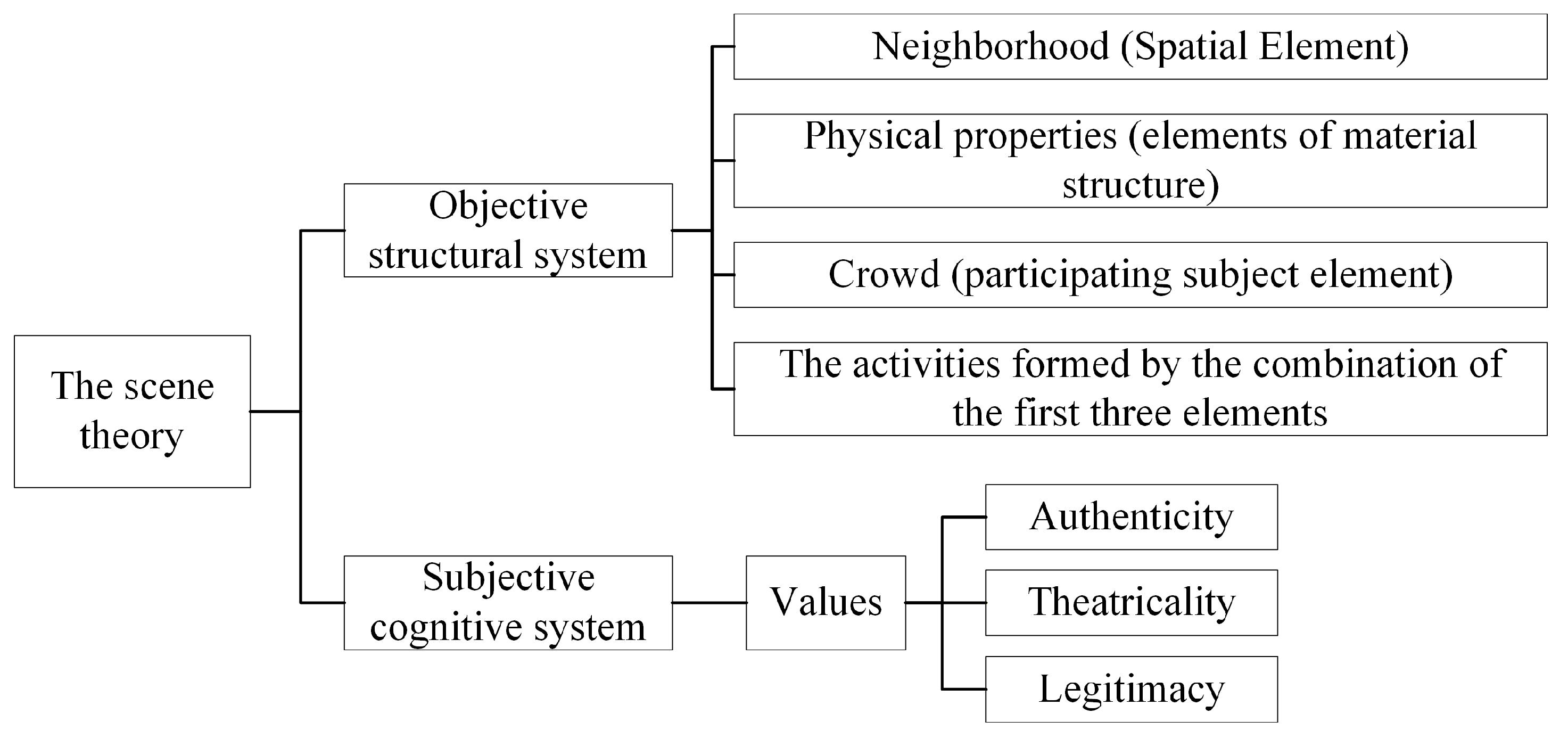
Figure 2.
The relationship between Scene Theory and industrial heritage renewal.
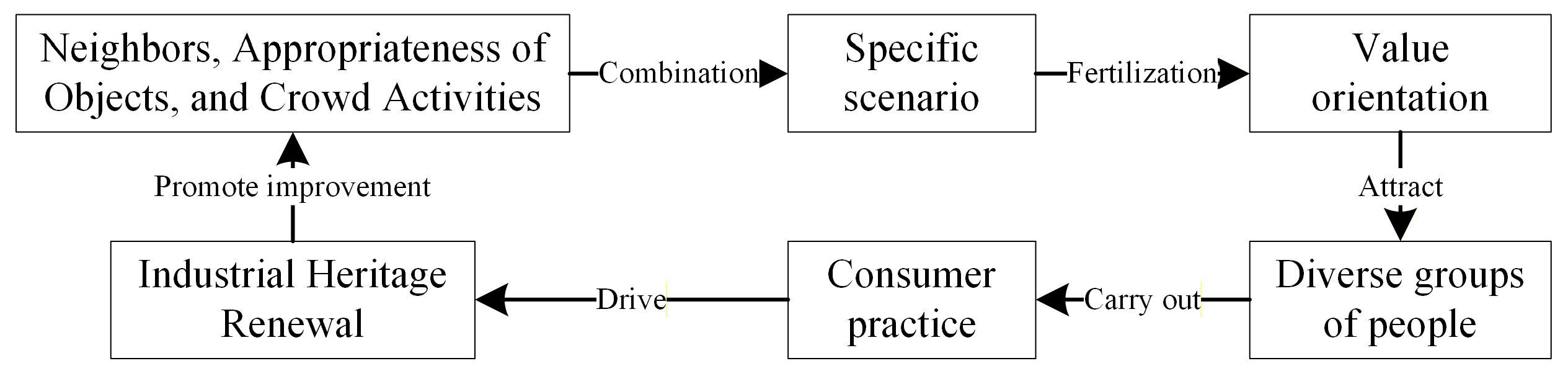
Figure 3.
ROST CM6 Sentiment Analysis Flowchart.

Figure 4.
Distribution Map of the Current Status of Industrial Remnants Renewal in Tianjin.
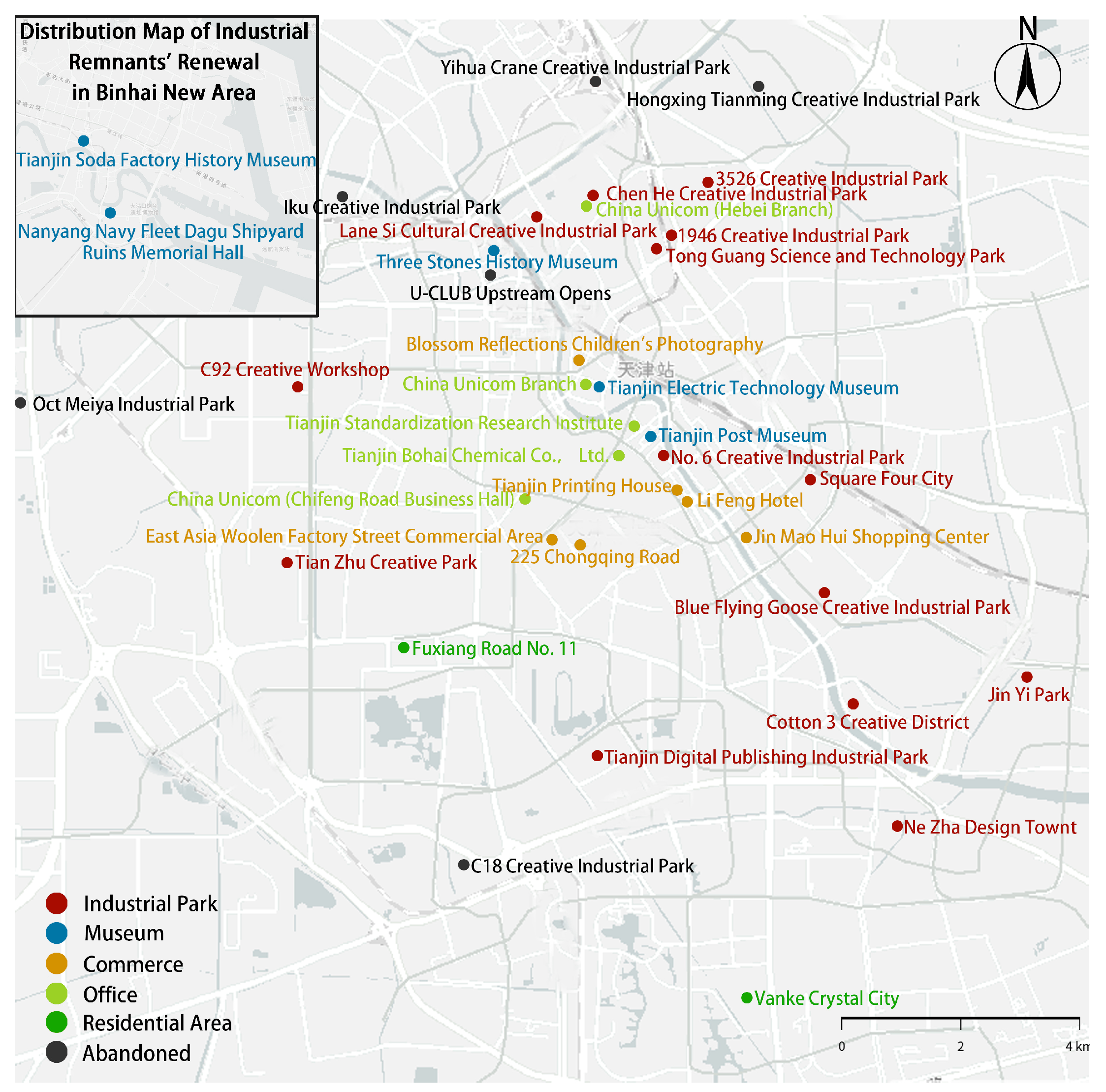
Figure 5.
Kernel density analysis. (a)Distribution of industrial relics (b)Industrial relic renewal project (including those that have been abandoned).
Figure 5.
Kernel density analysis. (a)Distribution of industrial relics (b)Industrial relic renewal project (including those that have been abandoned).
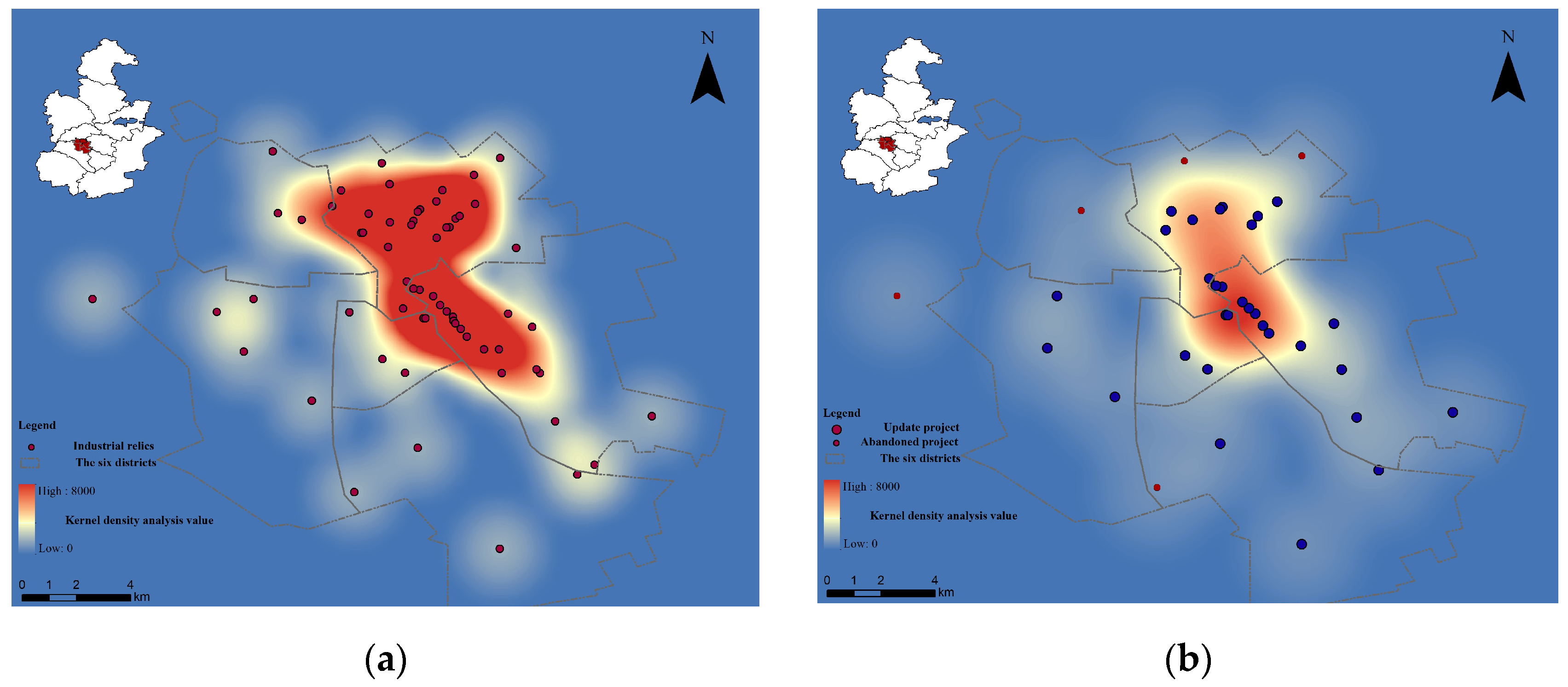
Figure 6.
Spatial distribution characteristics of industrial relic renewal. (a)Distribution of industrial relics; (b)Industrial relic renewal project.
Figure 6.
Spatial distribution characteristics of industrial relic renewal. (a)Distribution of industrial relics; (b)Industrial relic renewal project.
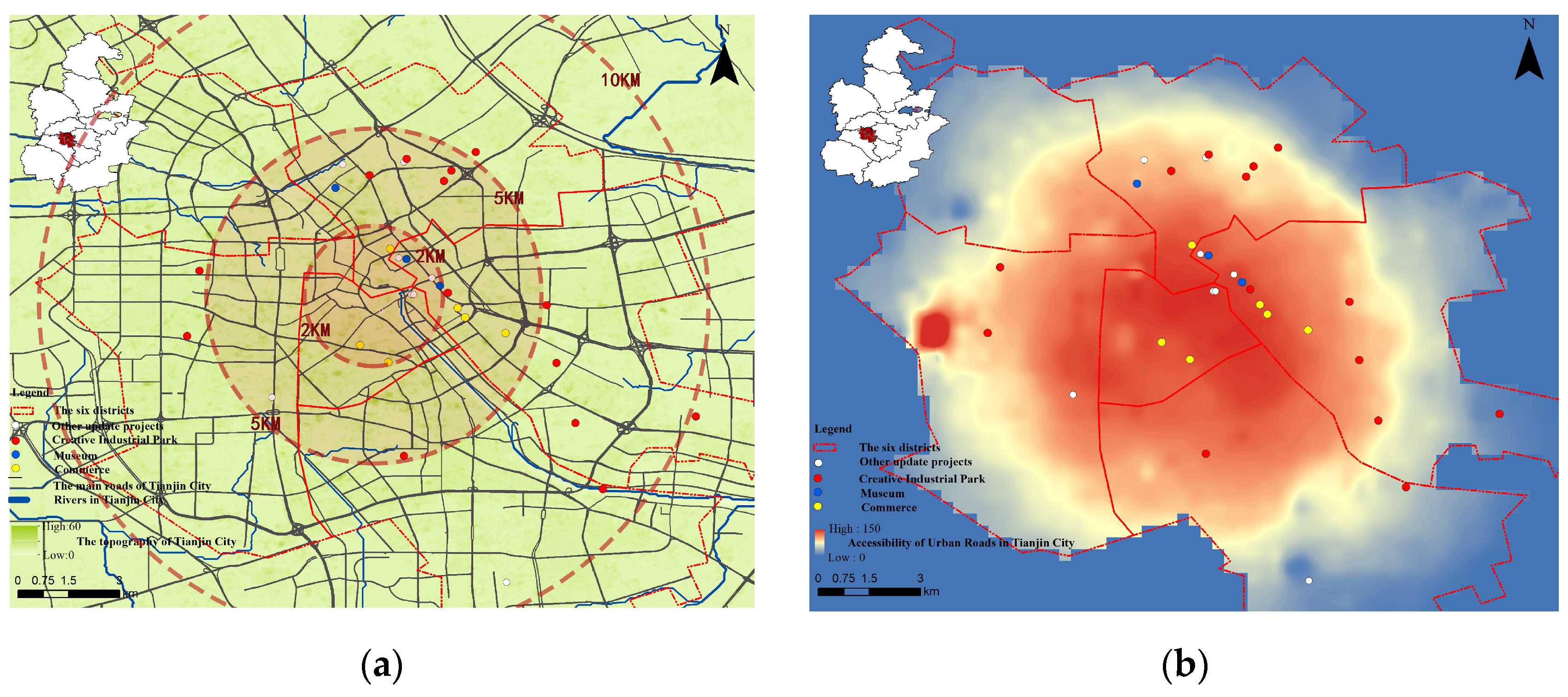
Figure 7.
Analysis of kernel density for various types of industrial heritage updates. (a) Industrial park; (b) Museum; (c) Commerce.
Figure 7.
Analysis of kernel density for various types of industrial heritage updates. (a) Industrial park; (b) Museum; (c) Commerce.
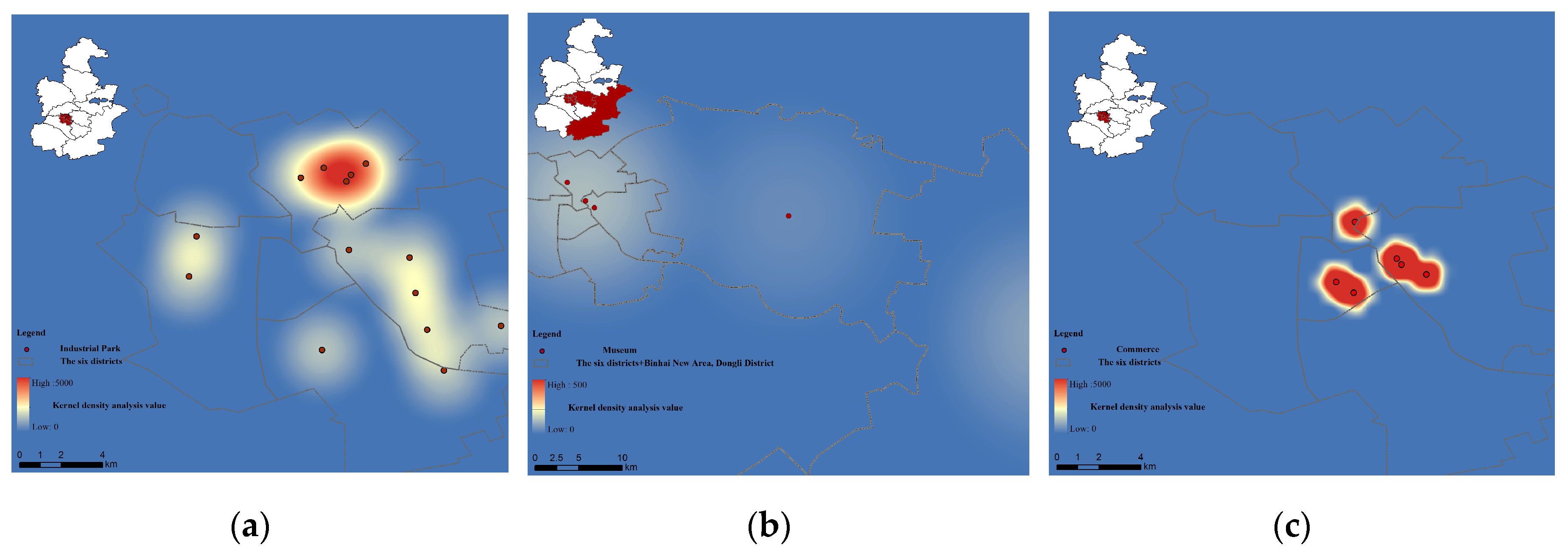
Figure 8.
Cotton 3 Creative District Network Comment Word Cloud.
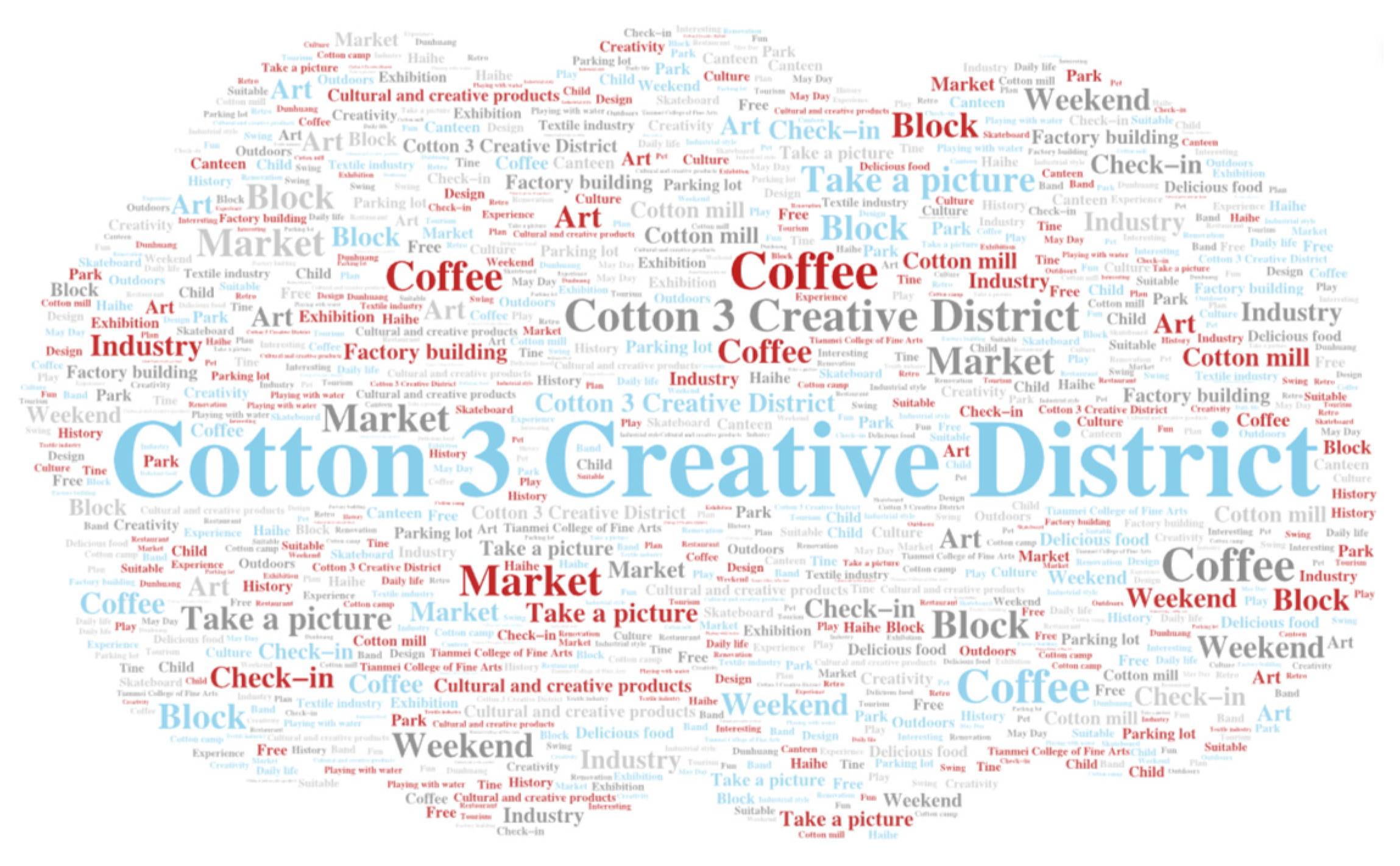
Figure 9.
Jinmaohui Network Comment Word Cloud Chart.
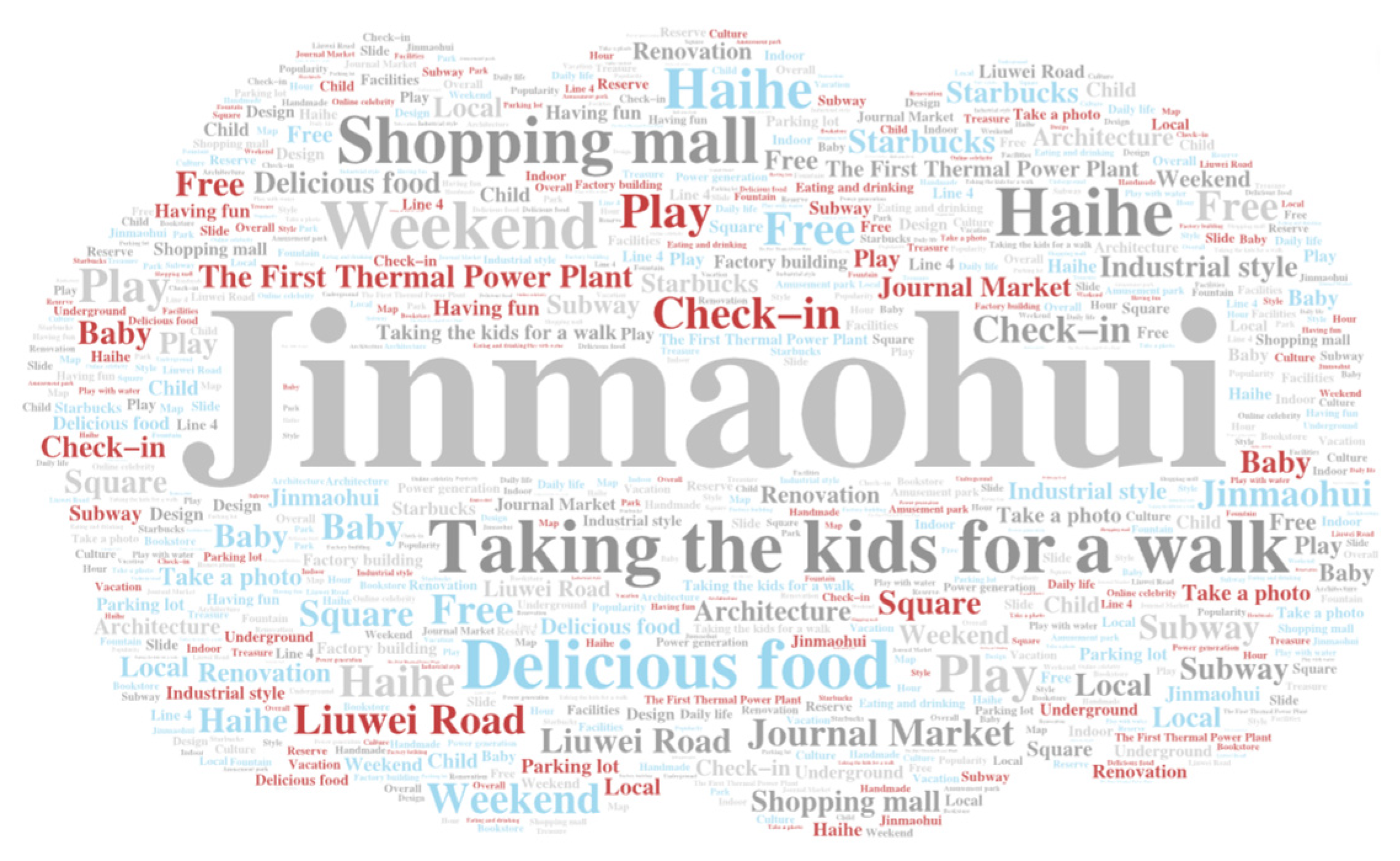
Figure 10.
Tianjin Postal Museum Network Comment Word Cloud Chart.
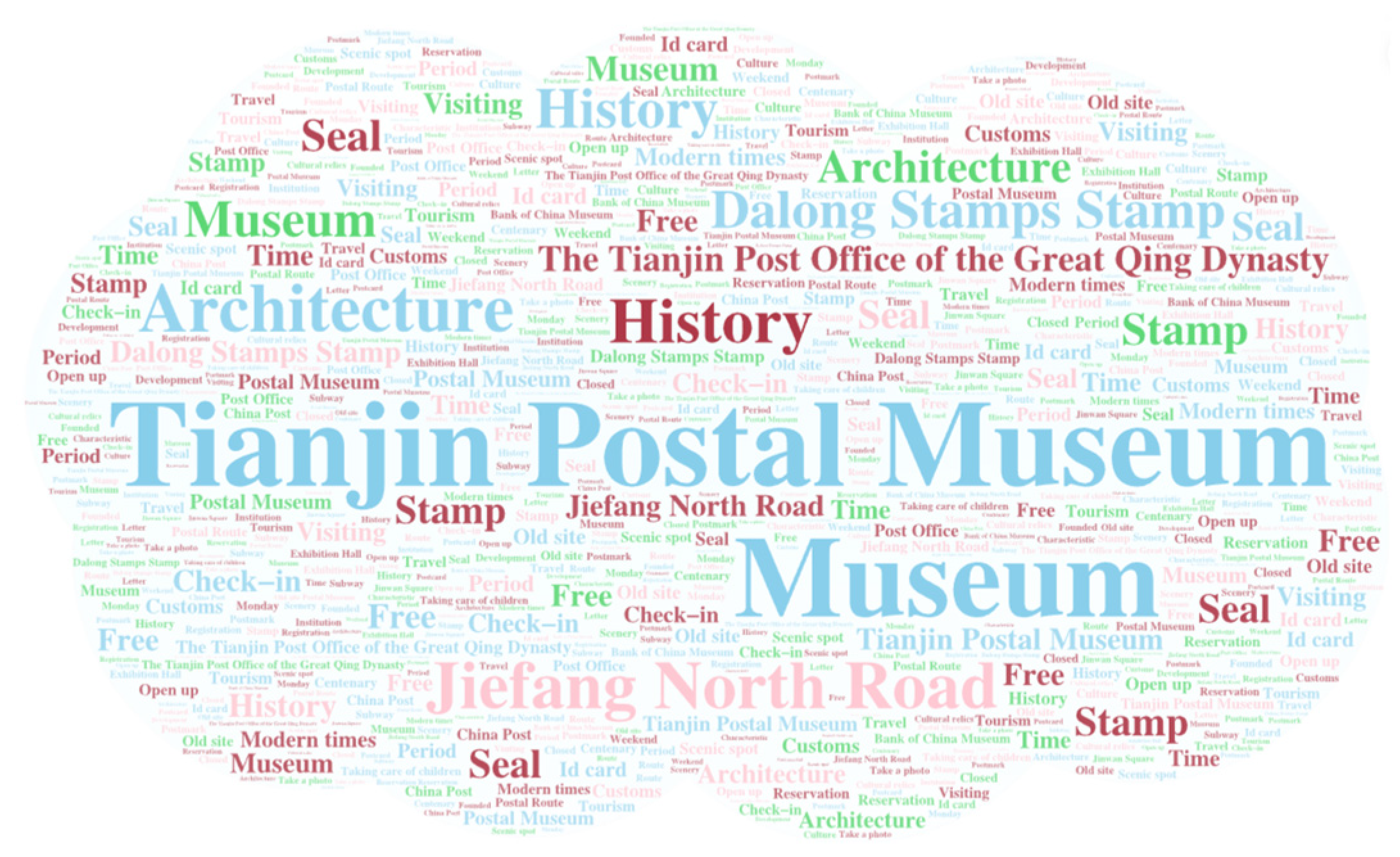
Figure 11.
Comparison chart of the sentiment results of the review text.
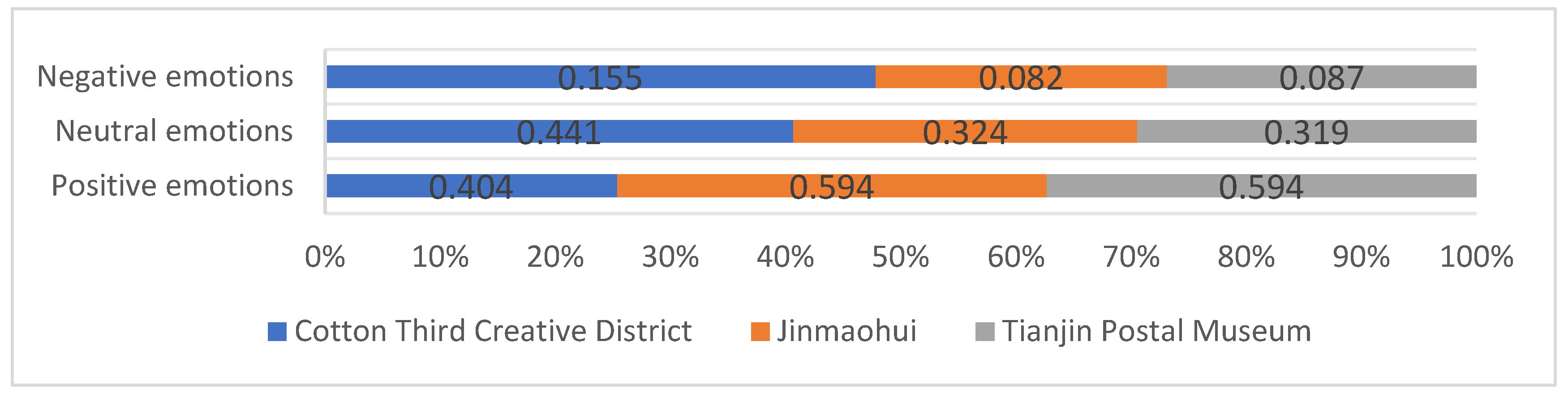
Figure 12.
Comment data semantic network diagram. (a) Cotton 3 Creative District; (b) Jinmaohui; (c) Tianjin Postal Museum.
Figure 12.
Comment data semantic network diagram. (a) Cotton 3 Creative District; (b) Jinmaohui; (c) Tianjin Postal Museum.
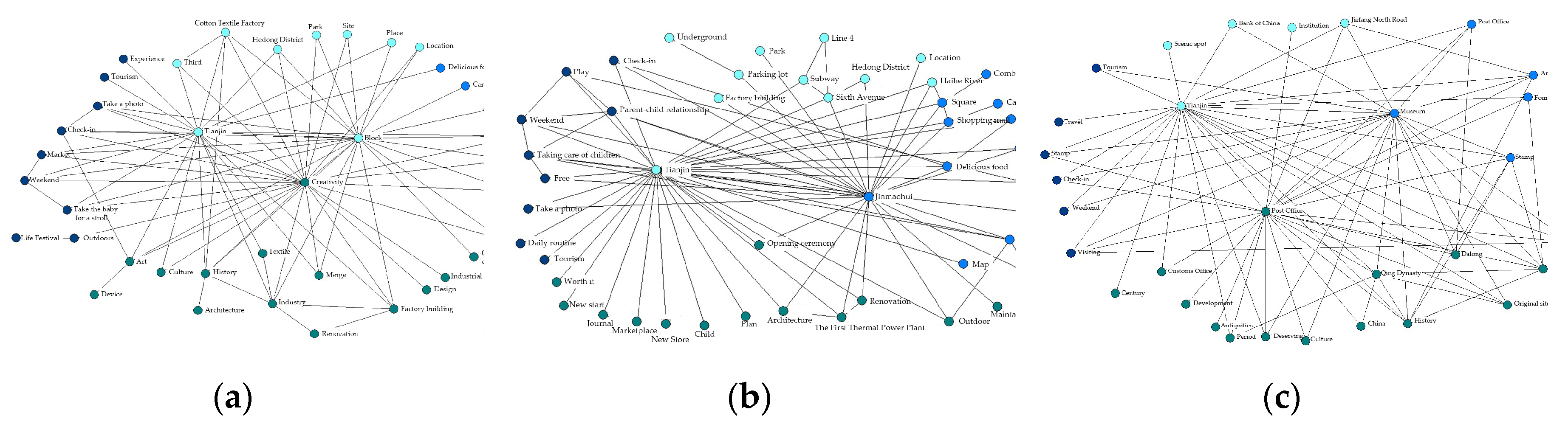
Table 1.
Statistical Table of the Current Status of Industrial Remnants Renewal in Tianjin.
| Original Name | Development Model | Current Situation |
| Bishang Tianjin Electric Trolley and Electric Light Co., Ltd. Former Site | Museum | Tianjin Electric Technology Museum |
| Old Site of Qing Dynasty Post Office | Museum | Tianjin Post Museum |
| Old Site of Fujuxing Machinery Factory | Museum | Three Stones History Museum |
| Old Site of Dagu Shipyard | Museum | Nanyang Navy Fleet Dagu Shipyard Ruins Memorial Hall |
| Watch Production Line of Haioo Watch Industry | Museum | Haioo Watch Museum |
| Tianjin Soda Factory | Museum | Tianjin Soda Factory History Museum |
| Tianjin Third Cotton Textile Factory | Industrial Park | Tianjin Cotton 3 Creative District |
| Tianjin First Machine Tool Factory Main Plant | Industrial Park | Jin Yi Park |
| Blue Flying Goose | Industrial Park | Blue Flying Goose Creative Industrial Park |
| Wood Four Site | Industrial Park | Square Four City |
| Tianjin Internal Combustion Engine Magnet Motor Factory | Industrial Park | Chen He Creative Industrial Park |
| Original State-owned 721 Factory | Industrial Park | Tong Guang Science and Technology Park |
| Tianjin Textile Machinery Factory | Industrial Park | 1946 Creative Industrial Park |
| People's Liberation Army 3526 Factory Site | Industrial Park | 3526 Creative Industrial Park |
| Tianjin Rubber Four Factory | Industrial Park | Lane Si Cultural Creative Industrial Park |
| Former warehouse of Jardine Matheson | Industrial Park | No. 6 Creative Industrial Park |
| Tianjin Art Printing Factory | Industrial Park | Tianjin Digital Publishing Industrial Park |
| Bohai Radio Factory | Industrial Park | Ne Zha Design Town |
| Tianjin Tractor Manufacturing Factory | Industrial Park | Tian Zhu Creative Park |
| Tianjin Instrument Factory | Industrial Park | C92 Creative Workshop |
| Hanque Salt Field Traditional Salt Production Area | Park | Tianjin Changlu Sea Salt Cultural Tourism Area |
| Ear Gate | Park | Ear Gate Park |
| Transport Department Materials Storage and Transportation General Office Tianjin Storage Office Site | Commerce | Blossom Reflections Children's Photography |
| Original Xiang Sheng Apartment Building | Commerce | Li Feng Hotel |
| East Asia Woolen Textile Co., Ltd. Site | Commerce | East Asia Woolen Factory Street Commercial Area |
| Metallurgical Group Logistics Co., Ltd. | Commerce | 225 Chongqing Road |
| Original Tianjin Printing House | Commerce | Tianjin Printing House |
| Tianjin Electricity Company Co., Ltd. Site | Commerce | Jin Mao Hui Shopping Center |
| Tianjin Glass Factory | Residential Area | Vanke Crystal City |
| Tianjin Watch Factory | Residential Area | Fuxiang Road No. 11 |
| Tianjin Telephone Sixth Bureau Site | Office | China Unicom (Hebei Branch) |
| Tianjin Telephone Fourth Bureau Site | Office | China Unicom Branch |
| Original French Engineering Bureau | Office | Tianjin Standardization Research Institute |
| Original Tianjin Telegraph Bureau Building | Office | China Unicom (Chifeng Road Business Hall) |
| Jiulong Precious Salt Company Site | Office | Tianjin Bohai Chemical Co., Ltd. |
Table 2.
High-frequency Word List of Online Comments in Mian 3 Creative District (Top 50).
| Dimensions | High-frequency words | Word frequency | High-frequency words | Word frequency | High-frequency words | Word frequency | High-frequency words | Word frequency |
| Neighborhood environment | Cotton 3 Creative District | 162 | Park | 28 | Parking lot | 27 | Haihe River | 24 |
| Outdoors | 23 | |||||||
| Adaptability | Coffee | 80 | Block | 60 | Weekend | 53 | Factory building | 34 |
| Delicious food | 27 | Canteen | 26 | Free | 26 | Outdoor | 23 | |
| Time | 21 | Skateboard | 21 | Tian Mei Academy | 19 | Swing | 16 | |
| Cotton Camp | 16 | Pet | 14 | Restaurant | 13 | |||
| Activity | Take a photo | 56 | Check-in | 45 | Exhibition | 25 | Playing | 19 |
| Playing with water | 16 | Plan | 15 | Tourism | 14 | |||
| Values | Art | 47 | Cultural and creative | 47 | Industry | 45 | Cotton mill | 39 |
| Creativity | 25 | History | 23 | Culture | 23 | Design | 21 | |
| Textile | 21 | Fit for | 20 | Daily routine | 18 | Experience | 18 | |
| Band | 18 | Suitable Interesting | 16 | Dunhuang | 15 | Fun | 15 | |
| Retro | 14 | Renovation | 14 | Industrial style | 13 |
Table 3.
High-frequency Word List of Online Comments in Tianjin Postal Museum (Top 50).
| Dimensions | High-frequency words | Word frequency | High-frequency words | Word frequency | High-frequency words | Word frequency | High-frequency words | Word frequency |
| Neighborhood environment | Jiefang North Road | 95 | Scenic spot | 25 | Bank of China Museum | 20 | Scenery | 17 |
| Subway | 17 | Institution | 17 | Jinwan Square | 16 | |||
| Adaptability | Museum | 161 | Architecture | 97 | Stamp | 64 | Time | 45 |
| Postal Museum | 36 | Identity Card | 36 | Open | 27 | Post Office | 27 | |
| Attraction | 25 | China Post | 24 | Closed museum | 22 | Monday | 18 | |
| Exhibition hall | 18 | Registration | 16 | |||||
| Activity | Seal | 64 | Check-in | 47 | Visiting | 45 | Tourism | 29 |
| Travel | 26 | Reservation | 25 | Weekend | 24 | Take the baby for a stroll | 18 | |
| Route | 17 | Take a photo | 16 | |||||
| Values | History | 89 | Dalong Stamps | 76 | Qing Dynasty Postal Bureau | 55 | Free | 53 |
| Modern times | 38 | Customs | 35 | Old site | 33 | Culture | 21 | |
| Post route | 21 | Century | 21 | Development | 18 | Postmark | 18 | |
| Establishment | 17 | Antiquities | 16 | Characteristics | 16 | Letter | 15 | |
| Daily stamp | 14 | Postcard | 13 |
Table 5.
Emotional Expression Evaluation Form.
| Dimensions | Cotton3Creative District | Jinmaohui Shopping Center | Tianjin Post Museum | |
| Neighborhood environment | The surrounding public facilities are insufficient, and the neighborhood environment is somewhat messy; in the comments, there is the mention of “excessive commercial atmosphere” | The exterior façade renovation has weakened the historical identification, and the comments state that “it’s impossible to discern the industrial heritage”. The traffic organization and facilities for parents and children are insufficient. | The atmosphere of the historical district is quite good, but some comments indicate that “excessive embellishment” has been applied, which has weakened the authenticity. | |
| Adaptability | The functions are diverse, but the commercial formats are homogeneous; comments indicate “lack of distinctive stores and a monotonous experience”. | The consumption experience is superior to the cultural experience, but the children’s activity area lacks complementary facilities; there is a neutral feedback of “it’s just a shopping mall” in the comments. | It mainly features exhibitions, but the interactivity is insufficient; the comments focus on “monotonous collection of exhibits” and “strong visiting ability but poor playability”. | |
| Activity | There are frequent markets and exhibitions, but the trend of “checking in” is quite obvious; there are feedbacks such as “Just walk around and leave” in the comments. | The event was mainly focused on commercial promotions and lacked cultural activities; comments mentioned “There were no special activities.” | The form of the event was monotonous and visitor-oriented; most of the comments were “It was educational, but not very fun.” | |
| Values | Authenticity | The comments pointed out that “the lack of narrative about textile culture and workers’ lives” led to insufficient cultural authenticity, presenting a “superficial artistic atmosphere”. | The comments also mentioned that “the external façade recognition is low” and “the value of industrial remnants is concealed”, with authenticity mainly remaining at a “symbolic utilization” level, making it difficult to identify industrial culture. | Some users reported “insufficient interaction” and “the exhibition was rather dull”, although the authenticity was strong, it still appeared “monotonous” in terms of the experience. |
| Theatricality | Some criticisms point out that “commercialization is excessive and the atmosphere is chaotic”, which makes the drama overly formalized and lacks deep cultural impact. | The user pointed out that “the functional circulation was unreasonable” and “the supporting facilities were insufficient”, which weakened the integrity of the theatrical experience. | The absence of immersive interaction and entertainment design leads to the feeling among young people and families that the “playability is insufficient” and the dramatic tension is weak. | |
| Legitimacy | Some comments “the atmosphere leans towards entertainment consumption” failed to fully meet the public’s legitimate expectations for industrial heritage as a “cultural asset”. | The insufficient protection of the heritage weakened the public’s recognition of its legitimacy as a “cultural renovation project”, and it was more often regarded as an “ordinary shopping mall”. | Some comments mentioned “insufficient maintenance of facilities” and “limited exhibition areas”, and failed to fully meet the public’s expectations for a “modern museum” in terms of service and supporting facilities. | |
Disclaimer/Publisher’s Note: The statements, opinions and data contained in all publications are solely those of the individual author(s) and contributor(s) and not of MDPI and/or the editor(s). MDPI and/or the editor(s) disclaim responsibility for any injury to people or property resulting from any ideas, methods, instructions or products referred to in the content. |
© 2026 by the authors. Licensee MDPI, Basel, Switzerland. This article is an open access article distributed under the terms and conditions of the Creative Commons Attribution (CC BY) license (http://creativecommons.org/licenses/by/4.0/).
Copyright: This open access article is published under a Creative Commons CC BY 4.0 license, which permit the free download, distribution, and reuse, provided that the author and preprint are cited in any reuse.


