

Submitted:
24 April 2026
Posted:
28 April 2026
You are already at the latest version
Abstract
This article examines territorial injustice and the challenges of the post-extractive transition facing Poza Rica, Mexico, a city that has historically been central to the country’s oil production. Drawing on models of restorative justice and perspectives on urban metabolism, we analyse how seven decades of intensive oil extraction (1930–2000) have left a legacy of abandoned infrastructure, contaminated soil and deep socio-spatial inequalities. The case study reveals that 49.5% of wells in the Tampico-Misantla basin remain in operational limbo, exposing 2,955 inhabitants per km² to toxic emissions, whilst 98% of the city’s urban expansion (1997–2016) has encroached upon former extraction sites. We argue that restorative justice, in this context, requires not only financial compensation, but the effective restitution of a safe and healthy territory through the systematic remediation of abandoned industrial sites and community-led governance. By analysing remediation opportunities, including the case of Bicentennial Park, the geothermal reuse of abandoned wells and proposals for metropolitan planning, we demonstrate how post-extractive transitions can transform ‘sacrifice zones’ into assets for urban resilience. Community mobilisation in neighbourhoods such as Las Gaviotas and Independencia emerges as the key driver of empowerment and restoration, challenging historical neglect by state and corporate actors.
Keywords:
restorative justice
; environmental justice
; extractivism
; post-extractive transitions
; brownfield remediation
1. Introduction
Poza Rica, a city located in the state of Veracruz, Mexico (Figure 1), is a prime example of the socio-environmental contradictions associated with oil-dependent urbanisation. From the discovery of the Poza Rica 2 well in 1930 until the mid-20th century, this city served as the ‘Oil Capital of Mexico’, accounting for an average of 70% of national crude oil production between 1946 and 1956. However, this extraordinary extraction of wealth took place without a commensurate investment in urban infrastructure, environmental protection or long-term planning for the inevitable decline in production. Today, Poza Rica faces a profound territorial crisis linked to a landscape saturated with abandoned wells, contaminated soil and a population density of approximately 2,955 inhabitants per km², living atop inactive oil infrastructure whose location and condition are often unknown even to the residents themselves.
The concept of ‘sacrifice zones’ as territories systematically subjected to degradation to enable the extraction of resources for the benefit of distant recipients, has been gaining analytical prominence in studies of critical geography and environmental justice (Malin & Ryder, 2019). Poza Rica illustrates this reality well, where the metabolic demands of national industrialisation were met through the systematic subordination of local environmental health and urban quality of life. The 1925 Petroleum Law gave explicit priority to hydrocarbon extraction at the expense of all other land uses, legally sanctioning the displacement of farming communities and the imposition of industrial risks on urban populations. This legal framework established a ‘territorial injustice’ as the structural denial of communities’ rights to safe and dignified living environments, in favour of extractive accumulation.
As global energy transitions gather pace and oil production declines in mature basins, towns such as Poza Rica face pressing questions about their post-extractive future. How can territories burdened by the environmental debts accumulated through extraction be restored? What forms of justice (distributive, procedural, restorative) are appropriate for communities that drove national development but have inherited only its toxic waste? Recent studies on post-extractive transitions emphasise that moving beyond dependence on fossil fuels requires not only technological substitution, but fundamental transformations in urban governance and in the relationship between communities and their territories (Hazrati & Heffron, 2021; Huang et al., 2018).
Despite the growing attention paid to environmental justice, spatial justice, extractivism and post-extractive urban transitions, research has largely focused on energy transitions at the macro level, technological substitution or economic restructuring, devoting less effort to the territorial dimension of restoration in cities historically structured around fossil fuel extraction. In particular, there remains a lack of integrated analytical frameworks that link the principles of restorative justice with spatial remediation strategies and community-led governance in post-extractive urban contexts. Furthermore, empirical studies analysing medium-sized oil-dependent cities in Latin America remain scarce, despite their significant exposure to long-term environmental liabilities and socio-spatial inequalities.
This study addresses this gap by analysing Poza Rica, Mexico, as a critical case through which restorative justice, environmental remediation and post-extractive urban transformation can be analysed as interconnected territorial processes.
Thus, this article asks how can restorative justice be operationalised as a territorial strategy in post-extractive oil cities, and what does the case of Poza Rica reveal about the role of remediation and community-led governance in that process?
This research contributes to these debates by examining Poza Rica as a case study of restorative justice and post-extractive urban transition. We argue that addressing the city’s historical debt requires three interlinked strategies: (i) the systematic remediation of abandoned and contaminated industrial sites to restore ecosystem services and public use; (ii) economic reconversion that redirects extractive infrastructure towards sustainable activities, including geothermal energy and innovation clusters; and (iii) community-led governance that places affected populations at the centre of decision-making and resource allocation.
Drawing on frameworks of restorative justice that emphasise material restitution over purely compensatory approaches (Heffron et al., 2024), we demonstrate how Poza Rica’s abandoned infrastructure can be transformed from liabilities into assets for urban resilience. Figure 2 shows the ground-breaking ceremony for a multi-purpose uses ground on the site of a disused oil well in the Cazones neighbourhood of this city, with council staff in conversation with the local ward representative.
By conceptualising remediation, reconversion and participatory governance as mechanisms of metabolic repair, this article contributes to sustainability debates on how post-extractive cities can move from environmental liability to territorial regeneration.
The analysis proceeds as follows. Section 2 develops our theoretical framework, synthesizing literatures on restorative justice, environmental justice, extractivism, post-extractive transitions, and brownfield remediation. Section 3 outlines our case study methodology and data sources. Section 4 presents the empirical analysis of Poza Rica's territorial injustice, remediation opportunities, and restoration pathways. Section 5 discusses implications for public use recovery, governance reform, and economic reconversion. Section 6 concludes by emphasizing community mobilization as the essential driver of restorative justice in post-extractive contexts.
2. Theoretical Framework
2.1. Restorative Justice in Urban Extractive Contexts
Originally intended for the sphere of criminal justice, restorative justice is now gaining traction as a means to tackle the repercussions of environmental destruction and resource exploitation. Unlike distributive justice, which is all about fairly sharing benefits and burdens, or procedural justice, which highlights the importance of fair decision-making processes, restorative justice zeroes in on mending harm and rebuilding relationships among affected communities, institutions, and the environment (Heffron et al., 2024). In terms of resource mining, this stance realizes that matters like ecological degradation, health ramifications, and community unrest cannot simply be rectified through economic reimbursement.
Hazrati and Heffron (2021) claim that restorative justice is a crucial framework for planning energy transitions, especially in areas where communities have faced unfair environmental and social repercussions. The study emphasizes the necessity of reconsidering fossil fuel infrastructure not solely as valuable resources but instead as persistent obligations that require attention through remediation and restitution. This change in viewpoint puts affected communities at the forefront of determining suitable compensation methods and future land use.
In urban extraction settings, like Poza Rica, restorative justice entails material restitution processes that convert polluted land into safe, productive spaces. The actions we take must surpass just symbolic gestures or financial payouts, requiring real steps like restoring the land, removing destructive buildings, and revitalizing the environment. Such movements empower local populations to reclaim their land and revitalize key social and environmental responsibilities.
Empirical studies underscore the importance of linking ecological restoration with social equity. Ruete et al. (2025), in their analysis of the restoration of the Matanza-Riachuelo River in Argentina, demonstrate that effective restoration processes must address both environmental degradation and the social inequalities that have shaped exposure to risk. Their findings highlight that restoration initiatives can also create opportunities to rebuild trust between communities, governments and the responsible institutions.
Taken together, these perspectives justify restorative justice as a territorial process that integrates environmental remediation, institutional accountability and community participation. In post-extractive urban contexts, restoration therefore represents not only environmental recovery, but also the reconstruction of more equitable relationships between society and the territory.
2.2. Environmental Justice and Territorial Inequality
Research into environmental justice has extensively documented how environmental harms are unevenly distributed according to social class, race and geographical location, with marginalised communities being disproportionately exposed to pollution, toxic waste and industrial risks (Malin & Ryder, 2019). In Latin America, these inequalities are strongly linked to extractive industries, such as mining, oil and agribusiness, which generate negative environmental externalities whilst exporting the economic benefits to other locations (Greyl et al., 2012). This spatial pattern reinforces territorial inequality, understood here as the systematic concentration of environmental risks in communities and areas of exploitation.
Malin and Ryder (2019) emphasise that environmental justice in extractive contexts must address not only unequal exposure to environmental risks, but also the social and political conditions that limit communities’ ability to influence decisions affecting their territories. In oil-producing regions, these inequalities persist long after production has declined, as contaminated landscapes and obsolete infrastructure remain in place without adequate resources for remediation or economic transition, or a sufficient effort to imagine new futures post-extraction.
These conditions reflect the overlapping environmental damage that manifests itself gradually over time, often escaping public attention despite having lasting impacts on health and livelihoods. In Poza Rica, the presence of a large number of inactive wells in densely populated areas illustrates how long-term exposure to low-level emissions can generate persistent risks that are difficult to regulate or remediate through conventional approaches. Figure 3 shows the location of an abandoned well in the city, thanks to the extensive survey and mapping work carried out by the Observatory of Urban and Sustainable Architecture (OURBE).
The utility of urban metabolism as a foundational concept is also evident in the analysis of environmental justice, when mapping the distribution of resources, infrastructure and environmental services within the urban landscape. Peña et al. (2022) demonstrate how this approach can reveal patterns of unequal access to environmental amenities, such as green spaces and urban vegetation, particularly in low-income neighbourhoods, given that the World Health Organisation recommends ensuring between 10 and 15 m² of green space per person as a minimum standard for access in urban areas (WHO, 2017).This perspective is particularly relevant for understanding Poza Rica, where decades of prioritising extraction over thoughtful urban planning have resulted in significant deficits in environmental quality, including limited tree cover and unequal access to green infrastructure (Santillán et al., 2020).
Taken together, these perspectives highlight that environmental justice in extractive cities must be understood not merely as a matter of pollution control, but as a broader issue of territorial inequality requiring long-term remediation and the spatial redistribution of environmental resources.
2.3. Extractivism and Urban Metabolism
Extractivism, understood as the intensive exploitation of natural resources primarily for export, has profoundly shaped patterns of urbanisation in Latin America. Beyond its economic aspects, extractivism has resulted in a mode of territorial organisation that subordinates local ecosystems, communities and governance structures to the imperatives of resource exploitation (Medina, 2023). Consequently, cities associated with extraction are not merely sites of production, but spatial systems structured around the circulation of materials, energy and labour.
Perspectives on urban metabolism offer a useful lens for understanding how extractive activities reorganise these flows over time. In oil-producing regions, cities such as Poza Rica function as operational hubs where crude oil is extracted, processed and transported, whilst environmental burdens, such as contaminated water, degraded soils, hazardous traffic and toxic emissions, accumulate locally. These metabolic patterns generate enduring spatial configurations that persist even after production has declined.
Medina (2023) describes these dynamics as interconnected circuits linking extraction zones to national and global economic systems. Within these circuits, urban areas absorb the negative externalities of extraction whilst exporting value abroad, thereby reinforcing patterns of territorial inequality. Over time, this process generates enduring spatial arrangements that limit future development options and reinforce dependence on extractive industries.
This condition is particularly evident in what Hein (2018) describes as ‘oil landscapes’, that is, urban environments shaped physically and culturally by oil infrastructure and associated practices. In cities historically dependent on oil production, infrastructure networks, employment patterns and collective identities become closely linked to extraction, creating strong path dependencies that persist even when economic conditions change. These dependencies help explain why transitions away from fossil fuel-based economies are socially and spatially complex, rather than purely technical.
From a wider ecological perspective, extractive urbanisation can be understood as generating a form of metabolic disruption between natural systems and urban development. Long-term extraction disrupts ecological cycles, degrades environmental functions and gradually distorts the relationships between communities and their territories. Addressing these disruptions requires more than the dismantling of infrastructure; it demands processes of ecological restoration and territorial reconnection that enable cities to transition towards more sustainable forms of urban metabolism.
This perspective argues that post-extractive transitions should be understood not merely as economic restructuring, but as processes of spatial and ecological remediation. In this sense, urban metabolism offers a conceptual bridge between extractive pasts and restorative futures, linking environmental remediation to broader transformations in urban governance and territorial development.
2.4. Post-Extractive Urban Transitions
Post-extractive transitions refer to the processes through which regions move beyond their dependence on resource extraction towards more diversified and sustainable urban systems. These transitions involve interlinked changes in economic structures, infrastructure systems, governance mechanisms and environmental conditions, particularly in regions shaped by long-term fossil fuel production (Huang et al., 2018). Rather than representing mere technological changes, post-extractive transitions require a coordinated socio-territorial transformation that addresses both environmental legacies and socio-economic restructuring.
Huang et al. (2018) propose the ‘Dimensions of Urban Energy Transitions’ (DUET) framework, which highlights the interdependence between urban processes and energy systems. Their work demonstrates that successful transitions depend on coordinated changes in infrastructure networks, governance institutions, economic activities and social practices. In post-extractive contexts, remediation efforts must therefore be integrated with economic diversification and institutional reform, rather than being treated as isolated technical interventions.
In the local context in which we are working, post-mining areas can be transformed into sustainable urban infrastructure, taking into account the interdependence of urban processes and the need for communal spaces. This approach facilitates the reuse of these spaces, minimises historical environmental risks and also reveals the potential to generate social and economic benefits, helping to revitalise commercial activity in neighbouring areas.
Empirical studies further illustrate the socio-economic complexity of these transitions. Ge et al. (2018) show that population stability and economic diversification are key to preventing decline in oil-dependent cities, whilst Habba (2022) emphasises the importance of phased and adaptive rehabilitation strategies that respond to changing local conditions. These approaches suggest that gradual and flexible interventions may be more effective than rigid long-term master plans, particularly in contexts where pollution levels and economic conditions vary significantly.
Recent research also highlights the role of ecological regeneration in supporting post-extractive transformation. Arquillo et al. (2024) demonstrate how former industrial areas can be redesigned as ecological infrastructure capable of restoring environmental functions, such as water filtration, supporting biodiversity and climate regulation. These strategies are in line with emerging approaches that treat remediated brownfield sites not merely as clean sites, but as assets that contribute to long-term urban resilience.
Taken together, these perspectives suggest that post-extractive transitions should be understood as integrated territorial processes combining remediation, economic reconversion and governance reform. This integrated perspective is particularly relevant for cities such as Poza Rica, where environmental degradation, economic dependence and infrastructural legacies are closely intertwined.
2.5. Brownfield Remediation as Spatial Justice
The remediation and reuse of abandoned and contaminated industrial sites are increasingly being recognised as a matter of spatial justice, rather than merely a technical or economic issue. Such sites often impose disproportionate environmental and health burdens on low-income communities, limiting access to safe housing, green spaces and economic opportunities (Terrazas, 2023). In this sense, remediation becomes a mechanism for combating historical inequalities and restoring communities’ rights to healthy environments.
Studies conducted in Latin American cities highlight how contaminated sites contribute to the persistence of urban inequality. Terrazas (2023) demonstrates that abandoned industrial sites in Ciudad Juárez restrict land use and concentrate environmental risks in already vulnerable neighbourhoods. Effective remediation therefore requires not only technical solutions, but also clear legal responsibilities, sustainable public funding and community participation in determining future land uses.
These findings are directly applicable to Poza Rica, where a lack of clarity regarding responsibility for abandoned wells and insufficient funding have allowed pollution to persist for decades. The concentration of inactive wells can be seen in Figure 4, which shows that a large part of the municipal area contains wells classified as inactive or in operation.
The spatial analysis also reveals unequal patterns in the regeneration of abandoned industrial areas. Vasques (2009) demonstrates that regeneration in São Paulo tends to prioritise centrally located sites with higher market value, whilst peripheral areas remain contaminated and receive little investment. This spatial selectivity reinforces existing inequalities, suggesting that remediation policies should explicitly incorporate environmental justice objectives, rather than relying exclusively on market-driven regeneration.
Large-scale remediation projects also demonstrate the technical feasibility of transforming contaminated industrial sites into productive urban infrastructure. The rehabilitation of the former 18 de Marzo Refinery in Bicentennial Park, Mexico City, represents a significant precedent, involving the remediation of 55 hectares of land contaminated with hydrocarbons using bioremediation and soil treatment technologies (Shaw, 2004). This case illustrates both the technical capacity required for large-scale restoration and the importance of sustained institutional support.
Recent international examples further highlight the potential for integrating remediation with heritage preservation and urban regeneration. Savchuk et al. (2024) describe the revitalisation of the abandoned Nadvirnya refinery in Ukraine, where rehabilitation strategies combined environmental clean-up with the adaptive reuse of industrial structures. Similarly, Wendel et al. (2009) demonstrate that the successful rehabilitation of former industrial zones in Santa Cruz, Bolivia, depends on aligning environmental remediation with broader urban development objectives.
Taken together, these studies emphasise that the remediation of brownfield sites should be understood as a long-term territorial process that integrates technical, institutional and social dimensions. In post-extractive cities, remediation is not merely an environmental intervention, but a mechanism for addressing territorial inequality and enabling new forms of urban development.
3. Methodology
This study adopts a qualitative case study approach to analyse territorial injustice and the challenges of post-extractive transition in Poza Rica, Mexico. The case study methodology is particularly well-suited to investigating complex and context-dependent phenomena, in which the boundaries between the phenomenon and the context are not clearly defined (Yin, 2018). Poza Rica represents a ‘critical case’ (Flyvbjerg, 2006) of post-extractive urban transition: it is a city whose identity, economy and physical form have been profoundly shaped by oil extraction, and which now faces the environmental and social legacies of that history as production declines.
Our analysis draws on multiple data sources to build a comprehensive understanding of Poza Rica’s extractive legacy and opportunities for restoration:
Primary Sources:
- i.
- Metropolitan Program for the Poza Rica-Tuxpan Metropolitan Zone (PMZMPR), which provides detailed analysis of urban expansion patterns, environmental conditions, infrastructure deficits, and strategic planning proposals
- ii.
- Technical reports from the Agency for Safety, Energy and Environment (ASEA) documenting well conditions, contamination levels, and regulatory requirements in the Tampico-Misantla basin
- iii.
- Mexican environmental regulations including NOM-138-SEMARNAT/SSA1-2012 (hydrocarbon limits in soil) and NOM-147 (heavy metal standards)
- iv.
- Documentation of the Parque Bicentenario remediation project in Mexico City, serving as a comparative reference for large-scale petroleum brownfield transformation
- v.
- Regional academic sources: OURBE
Secondary Sources:
- i.
- Scholarly literature on restorative justice, environmental justice, extractivism, post-extractive transitions, and brownfield remediation (see Section 2)
- ii.
- Media reports and community testimonies documenting resident experiences of living with petroleum infrastructure and organizing for remediation
- iii.
- Spatial data on urban expansion (1997-2016), well locations, and population density
The study was carried out in three phases. Firstly, we documented the historical production of territorial injustice in Poza Rica, examining how legal frameworks, planning decisions and corporate practices subordinated urban development to the imperatives of oil resource exploitation. This historical perspective lays the foundations for understanding current conditions as the result of systematic and deliberate choices, rather than as inevitable consequences.
Secondly, we analysed current conditions across three dimensions: (i) the spatial distribution of abandoned infrastructure and contamination; (ii) the population’s exposure to environmental risks; and (iii) deficiencies in urban environmental quality, including green spaces and basic services. This analysis is based primarily on the technical reports of the PMZMPR and ASEA to quantify the scale of the environmental debt.
Finally, we examine pathways to restoration, including remediation technologies, economic reconversion strategies and governance reforms proposed in the PMZMPR and other planning documents. We assess these proposals in the light of international precedents (in particular the Bicentennial Park) and the academic literature on post-extractive transitions, to evaluate their feasibility and alignment with the principles of restorative justice.
Throughout this analysis, we have paid close attention to the voices of the community and to mobilisation efforts, recognising that affected populations possess crucial knowledge about environmental conditions and must be at the heart of recovery processes. Although this article does not include original ethnographic research, we have drawn on documented community testimonies and organising activities to understand how residents experience and resist territorial injustice.
In addition to highlighting empirical gaps in the literature on post-extractive cities, this study’s methodological contribution lies in the integration of territorial analysis, planning frameworks and case-based restorative justice theory. These integrated methodologies remain relatively uncommon in studies on post-extractive urban transitions, which often focus in isolation on technical remediation or socio-political dimensions.
This study does have a few limitations, though. To begin with, we don’t have access to detailed data on contamination at specific sites in Poza Rica, which makes it tough to evaluate remediation costs and technical needs accurately. Furthermore, a dearth of detailed research exists concerning health results for inhabitants situated near oil operations, even though there are personal testimonies indicating considerable repercussions. Furthermore, our analysis of community mobilization relies on secondary sources instead of being directly involved in the organizing efforts. Even with these limitations, the evidence we do have gives us a strong foundation for examining territorial injustice and figuring out recovery pathways in Poza Rica.
Table 1 summarises the main sources used in the case study, the type of evidence they provide, their role in the analysis, and their principal limitations. This structure helps clarify how the study triangulates planning documents, regulatory data, spatial evidence, academic literature, and secondary community-based sources.
These sources were analysed through qualitative document analysis and spatial interpretation. Rather than treating each source as self-sufficient evidence, the study triangulates them to identify convergent patterns of territorial injustice, environmental liability, and potential pathways for restorative intervention.
4. Case analysis: Poza Rica's Extractive Legacy and Restoration Pathways
4.1. Territory as the Foundation of Historical Injustice
Poza Rica's territorial configuration embodies a profound historical injustice: the abrupt transformation of Totonac agricultural lands into an industrial extraction zone that prioritized capital accumulation over urban planning, environmental protection, and community well-being. This transformation was legally sanctioned by the 1925 Petroleum Law, which explicitly granted hydrocarbon extraction priority over all other land uses. This legal framework established the conditions for what Besil (2024) terms "socio-spatial reconfiguration" driven by extractive enclaves (systematic reorganization of territory to serve extraction imperatives regardless of consequences for existing communities and ecosystems).
The discovery of the Poza Rica 2 well in 1930 catalyzed "vertiginous" and disordered growth that subordinated all urban planning principles to extraction logistics. Between 1946 and 1956, the Poza Rica district sustained national development by contributing an average of 70% of Mexico's crude oil production. Yet this extraordinary contribution generated no symmetric investment in urban infrastructure, environmental protection, or long-term planning. Instead, the wealth extracted from beneath Poza Rica flowed to Mexico City and international markets, while the city itself developed as a chaotic agglomeration of worker housing, industrial facilities, and service infrastructure with minimal attention to livability or sustainability (Contreras & Acosta, 2012).
4.1.1. Urban Development and Risk Exposure
The most visible manifestation of territorial injustice is the spatial relationship between urban settlement and petroleum infrastructure. Between 1997 and 2016, Poza Rica's urban footprint expanded by 98%, growing over former petroleum reserve areas that once buffered extraction sites from residential zones. With a population density of approximately 2,955 inhabitants per km², the city has literally "swallowed" hundreds of wells that were previously isolated (Figure 5). This expansion occurred without systematic assessment of subsurface conditions or infrastructure locations, producing neighborhoods where homes directly adjoin well valves and high-pressure pipelines (Landa, 2016).
Residents of colonias including La Granja, Floresta, Chapuntepec and Las Gaviotas describe living atop a "time bomb," experiencing constant vibrations from underground pipelines whose precise locations and conditions are often unknown even to the residents themselves. The key issues, describe in social network, contributing to this "time bomb" include: Fugitive Emissions and Leaks (Residents experience constant fear of leaks, with reports of oil residue and dangerous fumes in the air); Lack of Maintenance (many wells are considered inactive or abandoned by PEMEX (Petróleos Mexicanos), yet they still pose environmental hazards and safety risks); Environmental and Natural Disasters (the area is susceptible to flooding from the Cazones River, which has previously inundated these neighborhoods, dispersing oil residues and contaminating homes); Proximity to Hazards (the rapid, often unplanned expansion of the city over the last century has placed residents in direct contact with pipelines and well). As seismic attributes enable the oolitic facies of the San Andrés Formation to be delineated with greater precision, as demonstrated by the analysis of seismic attributes applied to the Tampico-Misantla Basin (Rosales Rodríguez et al., 2024) shown in Figure 6.
This uncertainty exacerbates material risks, as residents are unable to assess their own exposure to risk or take protective measures, given that basic information on underground infrastructure remains inaccessible. As documented by Chilingar et al. (2005) in their historical analysis of urban oil fields in the Los Angeles Basin, this pattern of residential development overactive and abandoned oil infrastructure creates persistent risks to public health and limits future land-use options.
The implications in terms of environmental justice are significant. The working-class neighbourhoods of Poza Rica suffer concentrated exposure to oil-related risks, whilst lacking access to environmental amenities. The city’s tree cover, at 0.13 trees per inhabitant, falls far short of the recommended 0.33, and green spaces are unevenly distributed, with wealthier areas enjoying better access to parks and vegetation (Santillán et al., 2020). This pattern mirrors what Peña et al. (2022) identified in Mexico City: systematic environmental inequality in which vulnerable communities face both greater exposure to risks and reduced access to environmental benefits.
4.1.2. The Operational Limbo of Infrastructure
Perhaps the most insidious dimension of territorial injustice is the vast inventory of infrastructure in operational limbo. In the Tampico-Misantla basin, approximately 49.5% of wells are classified as "inactive," remaining in a state of technical abandonment without undergoing legally required permanent closure procedures. Only 2.7% of wells in the region meet modern standards for permanent plugging and abandonment. These inactive wells function as potential chimneys for toxic gases including hydrogen sulfide, creating ongoing health hazards in densely populated areas without operators assuming responsibility for remediation (Masters, 1971).
Evans et al. (1997) document similar conditions in the Los Angeles Basin, where inadequate well abandonment practices have created long-term environmental and safety hazards. Their analysis emphasizes that proper well abandonment is technically complex and expensive, requiring careful assessment of subsurface conditions, selection of appropriate plugging materials and techniques, and long-term monitoring. The high proportion of improperly abandoned wells in Poza Rica suggests systematic failure by operators and regulators to fulfill these responsibilities, effectively transferring costs and risks from corporations to communities.
This infrastructure limbo exemplifies what Nixon (2011, as discussed in environmental justice literature) terms "slow violence": environmental harm that occurs gradually and invisibly, escaping public attention even as it profoundly damages health and livelihoods. Unlike dramatic industrial accidents that generate immediate media coverage and regulatory response, the chronic low-level emissions from improperly abandoned wells produce health impacts that are difficult to attribute to specific sources and thus challenging to address through conventional regulatory frameworks.
4.1.3. Historical Debt and the Sense of Abandonment
There exists a deeply rooted social perception, described in newspapers and social networks, that the state "left the city alone" after decades of extraction. This perception is grounded in material reality: despite contributing 70% of national crude production during the critical mid-20th century industrialization period, Poza Rica received minimal investment in social infrastructure. Today, with production declining, the population inherits only environmental liabilitie, contaminated soils, toxic air, inadequate water supply, while two in every five inhabitants live in some degree of poverty.
This pattern reflects what Heynen et al. (2024) analyze as the need for reparations in urban extractive contexts that is the recognition that certain communities have been systematically exploited to generate wealth for others, and that justice requires not merely cessation of harm but active restitution. In Poza Rica, restorative justice cannot be limited to financial compensation but must involve material transformation as the returning to the community the right to safe, healthy territory through systematic remediation of spaces that once served exclusively industrial purposes (Landa, 2016). Figure 7 shows an example of one such area already in use by the community.
The historical debt is both material and symbolic. Materially, it consists of contaminated soils, abandoned infrastructure, and inadequate urban services. Symbolically, it represents the denial of Poza Rica's residents' right to urban life, their right to inhabit a city designed for human flourishing rather than resource extraction. As Malin and Ryder (2019) emphasize, environmental justice in extractive contexts must address not only immediate environmental exposures but also the political marginalization and economic dependence that prevent communities from determining their own futures.
4.2. Deactivated Infrastructure as Restorative Opportunity
Poza Rica’s transition to a post-extractive future requires a fundamental rethinking, as decommissioned infrastructure must be reimagined, transforming it from liabilities into opportunities for social reparation. This rethinking is in line with the principles of restorative justice, which emphasise the transformation of harm into healing (Heffron et al., 2024). Remediation, that is, the technical process of eliminating or reducing contaminants to safe levels, becomes the mechanism through which the territory recovers ecosystem services and is returned to public use, materially expressing the community’s right to reclaim spaces long held by the extractive industry.
4.2.1. The Parque Bicentenario Precedent
The transformation of the former 18 de Marzo Refinery in Mexico City into Bicentennial Park represents the most significant precedent in Mexico for the large-scale regeneration of abandoned industrial sites in the oil sector. The site faced serious environmental problems, including soil contaminated with hydrocarbons, BTEX compounds (benzene, ethylbenzene, toluene and xylenes) and lead sludge extending to a depth of 9 metres. In 2006, the authorities approved a comprehensive plan to remediate 55 hectares and approximately 3 million m³ of contaminated soil (Shaw, 2004).
The remediation employed advanced techniques adapted to different types of contamination and urban contexts. Bio-piles, engineered systems that use microorganisms to degrade heavy hydrocarbons, were used in deeply contaminated areas. Bio-ventilation, which enhances the natural biodegradation of lighter petroleum fractions through a controlled air flow, was prioritised for areas close to residential zones, as it allows for in situ treatment without massive excavations that would disrupt surrounding communities. The park opened in 2010, thereby demonstrating that the technical capacity exists to transform severely contaminated oil sites into valuable urban infrastructure.
The case of Bicentennial Park offers crucial lessons for Poza Rica. Firstly, it demonstrates that, with the right methods and sufficient resources, the large-scale remediation of land contaminated by hydrocarbons is technically feasible in the Mexican context. Secondly, it illustrates the importance of sustained political commitment, as the project required coordination between various government agencies and the maintenance of funding throughout political transitions. Thirdly, it reveals the transformative potential of remediation, as the conversion of a ‘sacrifice zone’ into a large urban park has led to significant improvements in environmental quality and the quality of life of surrounding communities, giving concrete expression to the principles of restorative justice.
4.2.2. Restoration Potential and Metropolitan Planning
For Poza Rica, restorative justice is inscribed in strategies outlined in the Metropolitan Program for the Poza Rica-Tuxpan Metropolitan Zone (PMZMPR). The program identifies urgent needs to increase the Urban Green Space Index (IVU), noting that while the city meets WHO recommendations for square meters of green space per inhabitant, the number of trees per inhabitant (0.13) falls far below recommended levels (0.33). This deficit reflects decades of prioritizing extraction over urban environmental quality.
The PMZMPR proposes several strategic interventions that align with restorative justice principles:
Metropolitan Park Creation. A proposed Metropolitan Park between the Cazones River and the Los Laureles and Lázaro Cárdenas colonias would function as a "green lung" and recreation area. This intervention would address both environmental deficits (inadequate green space) and social needs (limited recreation facilities), demonstrating how remediation can serve multiple justice objectives simultaneously. As Wendel et al. (2009) emphasize, brownfield redevelopment is most successful when it integrates environmental cleanup with broader urban development goals.
Degraded Space Recovery. The PMZMPR establishes rehabilitation of sports fields and vacant lots near wells, including "El Volcán" and "Las Gaviotas" fields that currently exhibit deficient infrastructure conditions. These sites represent opportunities for incremental remediation that addresses community-identified priorities while building momentum for larger interventions. This approach converge with Habba's (2022) emphasis on adaptive strategies that respond to community needs rather than imposing comprehensive master plans.
Ecological Reserves. The program identifies polygons requiring priority environmental restoration to serve as buffer zones between urban areas and active industrial infrastructure. One such area north of the Prensa Nacional colonia would provide ecological services as air filtration, water absorption and biodiversity habitat, while reducing residents' exposure to industrial emissions. This proposal reflects emerging recognition that remediated brownfields can function as ecological infrastructure that enhances urban resilience (Arquillo et al., 2024).
4.2.3. Technical Viability for Restoration
The application of proven remediation technologies makes territorial restoration technically feasible in Poza Rica. Thermal desorption, already successfully employed in the Poza Rica region (Humapa-Cab-Tajín section) to treat soils with high crude saturation, enables rapid, effective restoration of heavily contaminated sites. This ex-situ technique heats contaminated soil to volatilize petroleum compounds, which are then captured and treated, leaving clean soil that can be returned to the site.
Bio-ventilation is highlighted as the preferred technique for densely populated urban zones because it enables in situ treatment without massive excavations that would further disrupt residents' lives. This method enhances natural biodegradation by injecting air into contaminated subsurface zones, stimulating microbial activity that breaks down petroleum compounds. While slower than thermal desorption, bio-ventilation is less disruptive and more cost-effective for sites with moderate contamination levels.
The technical feasibility of remediation is well established, with the main obstacles lying in political and financial issues rather than technological ones. As Terrazas (2023) points out in his analysis of the abandoned industrial areas of Ciudad Juárez, effective remediation requires a clear attribution of responsibility to polluters, adequate public funding where those responsible cannot be identified or compelled to act, and regulatory frameworks that mandate clean-up rather than merely encouraging it. In Poza Rica, establishing these conditions requires addressing PEMEX’s historical evasion of remediation responsibilities and ensuring sustained public investment in land restoration.
4.2.4. From Sacrifice Zone to Social Asset
The transformation of disused infrastructure into spaces for community use, leisure and ecological restoration is more than just a technical remediation; it becomes an act of social justice. By converting abandoned infrastructure into spaces for social interaction, the state begins to settle its historical debt to a population that has lived surrounded by ‘tangible toxicity’ for decades, without enjoying the benefits of the wealth extracted from beneath their feet. In the Poza Rica context, such transformations would give a more concrete territorial expression to restorative justice, particularly if remediation priorities were defined with affected neighbourhoods.
The concept of the ‘right to the city’ (Lefebvre, 1968/1996, as applied by Heynen et al., 2024) is particularly appropriate for this case. The residents of Poza Rica were denied the right to inhabit a city designed for human prosperous rather than for resource extraction. The remediation and transformation of oil-contaminated wasteland into public facilities are beginning to restore this right, allowing residents to reclaim territory long monopolised by extraction and to reimagine their city’s future beyond oil.
4.3. Pathways for Restoration and Social Remuneration
Social remuneration for Poza Rica after nearly a century of petroleum extraction must be understood not as mere monetary compensation but as structural investment in health, economy, and territorial autonomy. This process requires technical strategies that transform environmental problems into social assets, guided by restorative justice principles that center affected communities in determining appropriate remedies.
4.3.1. Mandatory Environmental Remediation and Legal Responsibility
Restorative justice demands that operators, specifically PEMEX, assume direct and objective responsibility for damages caused by extraction. According to the Agency for Safety, Energy and Environment (ASEA), remediation is not optional but consists of mandatory measures to reduce contaminants to levels safe for human health and the environment. This regulatory framework provides legal foundation for convincing remediation, though enforcement has historically been inadequate.
Compliance with Mexican environmental standards is essential for establishing safe cleanup levels. NOM-138-SEMARNAT/SSA1-2012 establishes maximum permissible limits for hydrocarbons in soil, while NOM-147 regulates heavy metals including lead and arsenic. These standards provide objective criteria for assessing when remediation is complete, preventing operators from claiming cleanup is adequate when contamination remains at hazardous levels.
For densely populated urban areas, technical sources recommend in situ technologies like bio-ventilation that minimize disruption to residents. In cases of emergency or high saturation, ex-situ thermal desorption enables rapid restoration, though at higher cost and with greater temporary disruption. The choice of remediation technology should be made through participatory processes that weigh technical effectiveness, cost, disruption to residents, and timeline, ensuring that affected communities have voice in decisions affecting their territories.
The challenge lies in enforcement. As Greyl et al. (2012) document in their analysis of corporate liability and environmental justice strategies in the oil sector, petroleum companies have historically evaded responsibility for environmental damages through legal maneuvering, political influence, and exploitation of weak regulatory capacity. In Poza Rica, compelling PEMEX to fulfill remediation obligations requires sustained pressure from multiple directions as community organizing, regulatory enforcement, legal action, and political mobilization. The restorative justice framework provides moral and conceptual foundation for these efforts by framing remediation not as corporate charity but as legal and ethical obligation.
4.3.2. Economic Reconversion and Energy Transition
Deactivated infrastructure represents "underutilized opportunity" for diversifying Poza Rica's economy and reducing dependence on crude oil. Economic reconversion strategies must address both the material infrastructure of extraction and the economic structures that have made the city dependent on petroleum-related employment.
Geothermal Potential. In the Tampico-Misantla basin, repurposing closed wells for geothermal projects offers promising opportunities. Many wells reach depths exceeding 2,000 meters and encounter temperatures above 100°C, making them potentially suitable for geothermal energy generation or industrial thermal processes. This repurposing would mitigate technical abandonment costs while generating sustainable electricity, transforming liabilities into productive assets (Bhaskaran et al., 2025).
Bhaskaran et al. (2025) provide a comprehensive framework for assessing and filtering hydrocarbon wells for geothermal repurposing, emphasizing that many abandoned petroleum wells possess characteristics suitable for geothermal applications. Their analysis suggests that systematic assessment of Poza Rica's inactive wells could identify candidates for geothermal conversion, providing both environmental benefits (proper well closure, clean energy generation) and economic opportunities (employment in geothermal operations, reduced energy costs). This strategy exemplifies how post-extractive transitions can build on existing infrastructure rather than requiring complete abandonment and replacement.
The Escolín Case. The Escolín Petrochemical Complex, inactive since 2007, is identified as a strategic node for comprehensive reuse planning. Proposals envision transforming it into an Innovation, Science and Technology Cluster or a Logistics Park, leveraging its strategic location and existing infrastructure to attract new industries and services that replace extractive activities. This transformation would require significant investment in remediation, infrastructure upgrading, and workforce retraining, but could catalyze broader economic diversification.
The Escolín case illustrates challenges and opportunities in post-extractive economic reconversion. As Ge et al. (2018) demonstrate, successful transitions in petroleum-dependent cities require maintaining population stability through economic diversification and green infrastructure investment. Simply closing extractive facilities without creating alternative employment generates economic collapse and population loss, undermining any possibility of restoration. The Escolín transformation must therefore be conceived as part of a broader economic development strategy that creates viable alternatives to petroleum employment while remediating environmental damages.
4.3.3. Citizen Participation and Metropolitan Governance
Territorial restoration will only achieve legitimacy if accompanied by horizontal, less hierarchical governance structures that center affected communities in decision-making. The creation of the Metropolitan Subcommission and the Metropolitan Consultative Council (CCM) represents important institutional innovations, incorporating representatives from academia, private sector, and civil society alongside government officials (albeit with limitations in terms of decision-making).
Social Auditing - Governance mechanisms must enable citizens to participate in risk scenario development and environmental remediation monitoring. This "social auditing" function ensures that technical decisions reflect community knowledge and priorities rather than solely expert or bureaucratic judgment. As community mobilization in Poza Rica demonstrates, residents possess crucial knowledge about environmental conditions, infrastructure locations, and health impacts that formal assessments often miss. Institutionalizing this knowledge through participatory governance structures enhances both the effectiveness and legitimacy of restoration efforts.
Financing Instruments - The Metropolitan Program proposes creating a Metropolitan Environmental Board (JUMAP) and issuing "Green Bonds" to finance sanitation infrastructure and renewable energy projects, ensuring that restoration benefits are equitably distributed across the population. Green bonds (debt instruments specifically designated for environmental projects) have emerged as important mechanisms for financing sustainability transitions in Latin American cities. Their use in Poza Rica would signal commitment to environmental restoration while potentially attracting international investment in post-extractive transition.
The governance reforms proposed in the PMZMPR align with scholarly emphasis on participatory approaches to post-extractive transitions. Huang et al. (2018) argue that successful urban energy transitions require coordinated changes across multiple domains including governance institutions, and that top-down planning without community engagement typically fails to address local needs and priorities. In Poza Rica, where decades of exclusion from decision-making have generated deep mistrust of government and corporate actors, participatory governance is not merely desirable but essential for restoration efforts to gain community support and legitimacy.
4.3.4. Materialization of Restorative Justice
Through these interconnected strategies (mandatory remediation, economic reconversion, and participatory governance) restorative justice materializes in Poza Rica's transition from "sacrifice zone" to a pole of energy innovation and urban resilience. Petroleum infrastructure ceases to be a threat and becomes instead the foundation for economic recovery and environmental restoration. This transformation requires sustained commitment, adequate resources, and genuine power-sharing with affected communities, but offers the possibility of finally repaying the historical debt accumulated through seven decades of extraction.
5. Discussion
5.1. Metabolic Repair Model
To put the study’s findings into context, we believe it is important to draw up a conceptual framework that can aid in the discussion of the results. Figure 8 attempts to do just that, considering the idea of a metabolic repair model to be particularly suitable.
This conceptual model synthesizes the transition from extractive urban metabolism to regenerative territorial systems. It illustrates how historical extractive practices generate a metabolic rift characterized by environmental degradation and social fragmentation, which can be addressed through restorative interventions including remediation, participatory governance, and economic reconversion, ultimately enabling regenerative urban metabolisms.
Within this framework, the following subsections examine the key restorative domains identified in the metabolic repair model. Section 5.2 discusses public use recovery as a central component of ecological and spatial remediation. Section 5.3 addresses economic reconversion as a mechanism for restructuring urban metabolism and section 5.4 examines community mobilization as the socio-political force that enables and sustains restorative interventions.
5.2. Ecological Remediation and Public Use Recovery
The recovery of public use of territories long monopolized by petroleum extraction represents a fundamental dimension of restorative justice in Poza Rica. For decades, vast areas of the city have been effectively privatized by extraction activities, with residents excluded from spaces that could serve recreational, ecological, or productive functions. The Metropolitan Program's proposals for parks, sports fields, and ecological reserves constitute efforts to reverse this privatization and restore community access to territory.
However, public use recovery faces significant challenges. First, contamination levels at many sites may require years of remediation before they are safe for unrestricted public access. Interim uses during remediation, such as restricted-access ecological restoration areas, may be necessary, requiring clear communication with communities about timelines and safety considerations. Second, determining appropriate post-remediation uses requires genuine community participation rather than top-down planning. Different neighborhoods may prioritize different uses, some may need sports facilities, others green space, still others community gardens or cultural centers, and these preferences should guide remediation planning.
The governance structures proposed in the PMZMPR, particularly the Metropolitan Consultative Council and Metropolitan Environmental Board, provide institutional mechanisms for community participation in these decisions. However, their effectiveness will depend on several factors: whether community representatives have genuine decision-making power or merely advisory roles; whether adequate resources are provided for community capacity-building to enable meaningful participation; and whether participation processes are accessible to marginalized residents who may face barriers of time, language, or political exclusion.
Ruete et al.'s (2025) analysis of the Matanza-Riachuelo River restoration in Argentina offers relevant lessons. They find that while participatory governance structures were formally established, power imbalances between government agencies, corporations, and community organizations limited communities' actual influence over decisions. Effective participation required sustained organizing, legal advocacy, and alliance-building to ensure that community voices were not merely heard but actually shaped outcomes. For Poza Rica, this suggests that formal governance reforms must be accompanied by support for community organizing and legal capacity to ensure that participation translates into genuine power-sharing.
These interventions operate as mechanisms of ecological repair within the urban metabolism, restoring ecosystem functions and enabling the reactivation of degraded territories for public use.
5.3. Economic Reconversion Beyond Petroleum
Economic reconversion, the transition from petroleum-dependent to diversified economic structures, is essential for Poza Rica's post-extractive future. Without viable alternative employment, the city faces economic collapse and population loss that would undermine any possibility of restoration. Yet economic reconversion faces formidable challenges in contexts of petroleum dependence, where decades of extraction have created path dependencies in employment, skills, infrastructure, and political-economic relationships.
The geothermal repurposing of abandoned wells represents one promising avenue for economic reconversion that builds on existing infrastructure and workforce skills. Petroleum workers possess technical knowledge of drilling, subsurface geology, and well operations that is directly transferable to geothermal energy development. This skills transferability is crucial for ensuring that economic transition does not simply abandon petroleum workers but provides pathways into new sectors. As Hazrati and Heffron (2021) emphasize, just transitions must address the employment and livelihood impacts on workers and communities dependent on fossil fuel industries, ensuring that transition does not reproduce the injustices it seeks to address.
The Escolín Petrochemical Complex transformation into an innovation cluster or logistics park represents a more ambitious reconversion strategy. This approach seeks to leverage Poza Rica's strategic location and existing infrastructure to attract entirely new economic activities. However, such transformations face significant challenges. Innovation clusters typically require highly educated workforces, research institutions, and venture capital, resources that may be limited in Poza Rica. Logistics parks require excellent transportation infrastructure and proximity to major markets. Careful feasibility analysis is needed to ensure that reconversion proposals are realistic rather than aspirational.
García's (2012) analysis of urban sustainability and energy transition emphasizes that successful transitions require institutional capacity that may not exist in petroleum-dependent regions. Decades of petroleum dominance often produce institutional monocultures where government agencies, educational institutions, and business organizations are all oriented toward extraction, lacking capacity for economic diversification. Building this capacity, through education reform, institutional development, and attraction of new actors, is a long-term process that must begin immediately even as remediation proceeds.
The risk of "green gentrification" must also be considered. As Arquillo et al. (2024) note in their analysis of the Santa Cruz Refinery ecological design, remediation and greening of former industrial sites can increase property values and attract wealthier residents, potentially displacing existing communities. In Poza Rica, remediation planning must include affordable housing protections, anti-displacement measures, and preferential hiring of local residents in remediation and redevelopment projects to ensure that restoration benefits existing communities rather than facilitating their displacement.
Economic reconversion functions as a mechanism for restructuring material and energy flows within the urban metabolism, reducing dependence on fossil-based infrastructures.
5.4. Participatory Governance and Community Mobilization
Community mobilization emerges from this analysis as the essential driver of restorative justice in Poza Rica. Without sustained pressure from affected communities, neither government agencies nor PEMEX would prioritise remediation and restoration. The mobilisation of residents in the affected neighbourhoods, including Las Gaviotas, Independencia, and La Rueda, manifested through street blockades, formal legal demands, and organized protests, has forced authorities to acknowledge contamination and begin addressing it. Community mobilization functions through four interconnected mechanisms in driving restoration:
- i.
- Sociopolitical Pressure and Accountability - Mobilization breaks governmental and corporate inertia by generating public awareness and political pressure. Without community consciousness about contamination, it is impossible to generate the pressure necessary to compel remediation or enforce regulations. In Poza Rica, direct actions including avenue blockades forced intervention by authorities who had previously ignored residents' concerns. Formal legal demands transformed social dissatisfaction into juridical instruments for reparation, demonstrating how mobilization can leverage multiple pressure points simultaneously.
- ii.
- Empirical Knowledge and Risk Identification - Communities provide "historical memory" and empirical knowledge essential for understanding damages that technical studies may overlook. Residents are first to detect infrastructure failures, such as vibrations from supposedly "inactive" underground pipelines that continue threatening homes. This experiential knowledge is crucial for creating accurate risk maps and prioritizing remediation sites. As Baum (2016) documents in analyzing neighborhood perceptions of proximal industries in Florida, residents' subjective experiences of environmental hazards often identify risks that objective technical assessments miss, making community knowledge essential for comprehensive environmental justice.
- iii.
- Institutionalization of Vigilance (Social Auditing) - Mobilization evolves from episodic protests to participation in formal oversight bodies, ensuring that restoration processes are socially just rather than merely technical. The creation of Citizen Observatories and community representation on the Metropolitan Environmental Board (JUMAP) enables ongoing monitoring of resource allocation and remediation decisions. This "social auditing" function prevents corruption, ensures accountability, and maintains pressure for continued progress even as political attention shifts.
- iv.
- Identity Reclamation and Empowerment - Restorative justice aims not only at environmental cleanup but also at social reconciliation and healing of communities historically marginalized by extraction. Programs for peace education and non-violence seek to empower residents as "social subjects" capable of transforming ruined environments into liveable, claimable spaces. Grant et al. (2024) argues that protection and reforestation of urban green areas are more efficient when performed by communities themselves than when dependent exclusively on government agencies, suggesting that community empowerment enhances both social justice and environmental outcomes.
The concept of "bottom-up" policy implementation (Neira, 2022) is particularly relevant for understanding community mobilization's role in restorative justice. Neira argues that restorative justice policies are most effective when driven by affected communities rather than imposed by authorities, because community-driven processes ensure that restoration addresses actual harms and priorities rather than bureaucratic or political agendas. In Poza Rica, this suggests that the most effective restoration strategies will be those that emerge from community demands and organizing rather than top-down planning.
Community mobilization represents the socio-political metabolism that sustains restorative processes, ensuring accountability and long-term institutional learning. However, community mobilization faces significant challenges. Organizing requires time, resources, and skills that may be limited in impoverished communities where residents work long hours and face multiple stressors. Repression and co-optation by authorities can undermine organizing efforts. Divisions within communities, along lines of employment in petroleum industry, length of residence, or political affiliation, can fragment mobilization. Supporting community organizing through resources, legal assistance, and alliance-building with external actors (NGOs, academics, sympathetic officials) is essential for sustaining mobilization over the long timeframes required for comprehensive restoration.
Importantly, community mobilization establishes feedback mechanisms that prevent the re-emergence of extractive logics, enabling adaptive learning and long-term resilience within the urban metabolism.
5.5. Toward Regenerative Urban Metabolism and Metabolic Justice
The integration of ecological remediation, economic restructuring and participatory governance demonstrates that the post-extractive transition is not merely a technical process, but a transformation of the urban metabolism itself. From this perspective, restorative interventions function as mechanisms of metabolic repair, reactivating ecological functions, restructuring material flows and enabling more equitable forms of territorial governance.
This integrated approach suggests the emergence of what might be described as metabolic justice, understood as the restoration of balanced ecological, economic and social relations in territories historically shaped by extractive activities. In Poza Rica, this process can be observed not only through soil remediation and the reuse of infrastructure, but also through the reconstitution of territorial rights, allowing communities to reclaim space and participate in decisions that affect their daily lives.
The metabolic remediation model developed in this study provides a framework for understanding post-extractive cities as dynamic systems undergoing long-term transformation, rather than isolated remediation projects. In Poza Rica, the convergence of environmental restoration, economic diversification and sustained community mobilisation illustrates how extractive landscapes can evolve into more regenerative urban systems, capable of supporting ecological resilience and social equity.
More broadly, this synthesis highlights that restorative justice, when implemented through coordinated territorial strategies, becomes a continuous process of institutional learning and adaptation. Rather than representing a final outcome, regenerative urban metabolism should be understood as an evolving process, shaped by ongoing environmental remediation and community participation.
6. Conclusion
Poza Rica's trajectory from "Petroleum Capital of Mexico" to its current condition of productive decline and environmental crisis reveals a historical debt that transcends simple economics. This analysis demonstrates that the wealth extracted over seven decades left as its primary legacy a fragmented territory and vast infrastructure inventory in operational limbo. Restorative justice in this context cannot be achieved through financial compensation alone but requires material restitution as the return of safe, healthy, productive territory to future generations.
6.1. Overcoming Abandonment
The perception that the state and operators "left the city alone" after resource exhaustion is grounded in material reality. The presence of nearly 80% of infrastructure in technical abandonment in the Tampico-Misantla basin is not merely administrative failure but a form of slow violence that exposes populations to constant risks of methane and hydrogen sulfide emissions in densely populated zones. This abandonment reflects systematic prioritization of extraction over community welfare, legally sanctioned by frameworks that granted petroleum activities priority over all other land uses.
Addressing this abandonment requires confronting PEMEX's historical evasion of remediation responsibilities and establishing robust regulatory enforcement. As Greyl et al. (2012) document, compelling corporate accountability in the petroleum sector requires sustained pressure from multiple directions: community organizing, legal action, regulatory enforcement, and political mobilization. The restorative justice framework provides moral and conceptual foundation for these efforts by framing remediation as legal and ethical obligation rather than corporate charity.
6.2. Restoration as Reparation
The transformation of degraded spaces into urban assets, whether metropolitan parks, innovation clusters at the former Escolín complex, or geothermal energy projects, represents the material form of repaying extractive debt. This paradigm shift removes infrastructure from its role as "invisible threat" and makes it the foundation for a new resilient, diversified economy. The Parque Bicentenario precedent demonstrates technical feasibility, while the Metropolitan Program provides institutional framework for systematic restoration.
However, restoration requires more than technical interventions. As Hazrati and Heffron (2021) emphasize, restorative justice in energy transitions demands changing perspectives on fossil fuels from assets to liabilities, and centering affected communities in determining appropriate remedies. In Poza Rica, this means that remediation planning must be driven by community priorities rather than bureaucratic or corporate agendas, and that economic reconversion must provide viable alternatives for petroleum workers rather than simply abandoning them.
6.3. Community Mobilization as Essential Driver
This study's conclusion is reinforced by growing civil society mobilization. Residents of historically affected and vulnerable colonias including Las Gaviotas, Independencia, and La Rueda have organized protests and prepared formal community legal demands. These demands focus specifically on toxic waste cleanup, urban infrastructure clearance, and governmental support for dignified reconstruction of lives. This mobilization serves as a vital case study, demonstrating that restorative justice in Poza Rica will be driven by bottom-up governance where citizens act as monitors and motors of environmental remediation.
The four mechanisms through which mobilization drives restoration (sociopolitical pressure, empirical knowledge contribution, institutionalized vigilance, and identity reclamation) reveal that community organizing is not peripheral to restoration but constitutes its essential foundation. Without sustained community pressure, neither technical capacity nor financial resources will be deployed for remediation. Supporting and amplifying community mobilization through legal assistance, capacity-building, and alliance-building with external actors is therefore not merely desirable but essential for achieving restorative justice.
6.4. Future Directions
Poza Rica's future depends on its capacity to reconvert its industrial landscape. By guaranteeing the right to healthy environment and urban beauty, the city can finally overcome its purely extractive past. True reparation lies in ensuring that future generations inherit not merely petroleum's "rubble" but rather a resilient territory capable of sustaining life and prosperity beyond the shadow of fossil fuel industry.
This requires sustained commitment across multiple domains: adequate funding for comprehensive remediation; robust regulatory enforcement compelling corporate accountability; participatory governance that centers affected communities in decision-making; economic development strategies that create viable alternatives to petroleum employment; and support for community organizing as the essential driver of restoration. While the challenges are formidable, the combination of technical feasibility (as demonstrated by Parque Bicentenario), institutional frameworks (as provided by the Metropolitan Program), and community mobilization (as evidenced by ongoing organizing) suggests that restorative justice in Poza Rica is achievable.
The Poza Rica case offers broader lessons for post-extractive transitions globally. As petroleum production declines in mature basins worldwide, numerous cities face similar challenges of abandoned infrastructure, contaminated landscapes, and communities bearing environmental debts from extraction that powered distant development. The restorative justice framework developed here, emphasizing material restitution, community-centered governance, and transformation of liabilities into assets, provides conceptual tools for addressing these challenges. Future research should examine comparative cases of post-extractive urban transitions, assess the effectiveness of different remediation and governance approaches, and document the long-term outcomes of community-driven restoration efforts.
Ultimately, Poza Rica's struggle for territorial restoration represents a fundamental question of justice, whether communities that powered national development through their environmental sacrifice will be abandoned to live with toxic legacies, or whether the state and corporations will fulfill their obligations to restore what was damaged. The answer to this question will be determined not by technical capacity or financial resources, both of which exist, but by political will, which can only be generated and sustained through community mobilization and solidarity.
References
- Arquillo, F. V., Fernández-Tabales, A., & Rodríguez-Mateos, J. C. (2024). Ecological design for urban regeneration in industrial metropolitan areas: The Santa Cruz Refinery case. Urban Science, 8(3), 114. [CrossRef]
- Baum, N. M. (2016). Baum, L. (2016). Neighborhood perceptions of proximal industries in Progress Village, FL (Master's thesis, University of South Florida). Avalialble on https://digitalcommons.usf.edu/etd/6180/.
- Besil, A. (2024). Petróleo, desplazamiento forzado y ciudad. (Re)configuración socioespacial de Barrancabermeja, Colombia, 2000-2018. Economía, Sociedad y Territorio, 24(72). [CrossRef]
- Bhaskaran, V., Holley, E., & Dahi Taleghani, A. (2025). Repurposing hydrocarbon wells: A geothermal assessment and filtering framework. SPE Western Regional Meeting. [CrossRef]
- Chilingar, G. V., Buryakovsky, L. A., Eremenko, N. A., & Gorfunkel, M. V. (2005). Environmental hazards posed by the Los Angeles Basin urban oilfields: An historical perspective of lessons learned. Environmental Earth Sciences, 47(2), 302-317. [CrossRef]
- Contreras, M. L. M., & Acosta, J. A. C. (2012). El nacimiento del paisaje petrolero en la región de Poza Rica [Veracruz], México. Labor e Engenho, 6(4), 1-10.
- Evans, J. P., Willingham, T. O., & Hurst, S. (1997). Well abandonment in the Los Angeles Basin: A summary of current requirements, practices and problems. SPE Western Regional Meeting. [CrossRef]
- Flyvbjerg, B. (2006). Five misunderstandings about case-study research. Qualitative Inquiry, 12(2), 219-245.
- García, E. (2012). Páez, A. (2009). Sostenibilidad urbana y transición energética: Un desafío institucional. México. Available on: http://habitat. aq. upm. es/suyte/oc. pdf .
- Ge, J., Polhill, J. G., Craig, T., Liu, J., & Gibb, S. (2018). From oil wealth to green growth: An empirical agent-based model of recession, migration and sustainable urban transition. Environmental Modelling and Software, 105, 152-165. [CrossRef]
- González, J. A., Hernández, M. L., & Pérez, R. C. (2017). Dinámica de uso de suelo e índice verde en Poza Rica, Veracruz. Revista Mexicana de Ciencias Forestales, 8(41), 40–58. Instituto Nacional de Investigaciones Forestales, Agrícolas y Pecuarias (INIFAP). Recuperado de: https://cienciasforestales.inifap.gob.mx/index.php/forestales/article/view/648/1835.
- Grant, A., Edge, S., Millward, A. A., Roman, L. A., & Teelucksingh, C. (2024). Centering community perspectives to advance recognitional justice for sustainable cities: lessons from urban forest practice. Sustainability, 16(12), 4915.
- Greyl, L., Vegni, S., Natalicchio, M., Cure, S., Ferretti, J., & Giorgetta, S. (2012). Greyl, L., Ojo, G. U., Certomà, C., Greco, L., & Ogbara, N. (2013). Digging deep the oil world: corporate liability and environmental justice strategies. EJOLT Report, 9, 1-73.
- Habba, M. (2022). Adaptive strategies for former oil port areas. In Sustainable Development and Planning XI (pp. 289-300). WIT Press. [CrossRef]
- Hazrati, M., & Heffron, R. J. (2021). Conceptualising restorative justice in the energy transition: Changing the perspectives of fossil fuels. Energy Research and Social Science, 78, 102115. [CrossRef]
- Heffron, R. J., McCauley, D., & Rubens, G. Z. (2024). The rise of restorative justice in the energy sector. In Energy Justice and Energy Law (pp. 47-68). Springer. [CrossRef]
- Hein, C. (2018). Oil spaces: The global petroleumscape in the Rotterdam/The Hague area. Journal of Urban History, 44(5), 887-929. [CrossRef]
- World Health Organization (2017). Urban Green spaces and health: A review of evidence. Copenhagen: WHO Regional Office for Europe. Recuperado de: https://www.who.int/europe/publications/i/item/9789289052923.
- Heynen, N., Aiello, D., Keegan, C., & Luke, N. (2024). The case for reparations, urban political ecology, and the Black right to urban life. Antipode, 56(1), 8-29.
- Huang, P., Castán Broto, V., & Liu, Y. (2018). Interdependence between urban processes and energy transitions: The Dimensions of Urban Energy Transitions (DUET) framework. Environmental Innovation and Societal Transitions, 28, 35-45. [CrossRef]
- Landa, M. S. (2016). Crude residues: The workings of failing oil infrastructure in Poza Rica, Veracruz, Mexico. Environment and Planning A: Economy and Space, 48(4), 718-735.
- Lefebvre, H. (1996). The right to the city. In E. Kofman & E. Lebas (Trans. & Eds.), Writings on cities (pp. 63-181). Blackwell. (Original work published 1968).
- Malin, S. A., & Ryder, S. S. (2019). Environmental justice and natural resource extraction: Intersections of power, equity and access. Environmental Sociology, 5(2), 109-116. [CrossRef]
- Masters, R.L. (1971). Air Pollution - Human Health Effects. In: McCormac, B. (eds) Introduction to the Scientific Study of Atmospheric Pollution. Springer, Dordrecht. [CrossRef]
- Medina, M. (2023). Circuits of extraction and the metabolism of urbanisation. In Commodity frontiers and global capitalist expansion(pp. 157-176). Manchester University Press. [CrossRef]
- Neira, O. (2022). Implementación de políticas públicas de abajo hacia arriba (bottom up): Plan de acción para una justicia restaurativa. Perspectivas IMTA, 21, 1-12. [CrossRef]
- Nixon, R. (2011). Slow violence and the environmentalism of the poor. Harvard University Press.
- Observatorio Urbano y de Arquitectura Sustentable (OURBE). (2023). Plano de ubicación de pozos petroleros en colonias de Poza Rica, Veracruz. Pozo CV7. Universidad Veracruzana. https://www.uv.mx/pozarica/ourbe/.
- Peña, L. D., Pellicer-Martínez, F., & Martínez-Paz, J. M. (2022). Advancing urban metabolism studies through GIS data: Resource flows, open space networks, and vulnerable communities in Mexico City. Journal of Industrial Ecology, 26(4), 1369-1384. [CrossRef]
- Rosales Rodríguez, J., Valdés Suárez, D., & Grajales Nishimura, J. M. (2024). Análisis de atributos sísmicos para delimitar las facies oolíticas de la Formación San Andrés del Jurásico Superior (Kimmeridgiano), en el sur de la cuenca Tampico-Misantla, México. Revista Mexicana de Ciencias Geológicas, 41(2), 145–162. [CrossRef]
- Ruete, M., Crojethovich, A., & Natenzon, C. E. (2025). In the name of justice: The case of riverine dwellers and the restoration of the Matanza Riachuelo River, Argentina. Journal of Latin American Geography, 24(2), 9-32. [CrossRef]
- Santillán Fernández, A., Gómez Cruz, I. J., Emiliano Terrazas, C., Vera López, J., Rivera Hernández, B., & Bautista Ortega, J. (2020). Dynamics of land use and green index in Poza Rica, Veracruz. Revista mexicana de ciencias forestales, 11(57), 153-173.
- Savchuk, N., Hnes, I., & Kovalchuk, S. (2024). Revitalization of the abandoned territory of the Nadvirnya refinery plant. Architectural Studies, 86, 168-177. [CrossRef]
- Secretaría de Desarrollo Social del Estado de Veracruz. (2021). Programas de Zonas Metropolitanas. Dirección General de Desarrollo Urbano y Ordenamiento Territorial. Recuperado de: https://www.veracruz.gob.mx/desarrollosocial/direccion-general-de-desarrollo-urbano-y-ordenamiento-territorial_/programas-de-zonas-metropolitanas/.
- Shaw, J. (2004). Undoing the past: Reclaiming a contaminated site within an urban residential neighbourhood. SPE International Conference on Health, Safety, and Environment in Oil and Gas Exploration and Production. [CrossRef]
- Terrazas, M. (2023). Remediación del suelo contaminado en vacíos urbanos de antiguo uso industrial en Ciudad Juárez, Chihuahua. Academia XXII, 14(27), 108-129. [CrossRef]
- Vasques, A. R. (2009). Geotecnologias nos estudos sobre brownfields: Identificação de brownfields em imagens de alta resolução espacial e análise da dinâmica de refuncionalização de antigas áreas fabris em São Paulo [Doctoral dissertation, Universidade de São Paulo]. [CrossRef]
- Wendel, H. E. W., Downs, J. A., & Mihelcic, J. R. (2009). Evaluating the social, economic, and environmental drivers of urban brownfields redevelopment in Santa Cruz, Bolivia. International Conference on Urban Regeneration and Sustainability, 321-330. [CrossRef]
- Yin, R. K. (2018). Case study research and applications: Design and methods (6th ed.). SAGE Publications.
Figure 1.
Poza Rica Metropolitan Area. Source: Authors adapted from SEDESOL (2026).
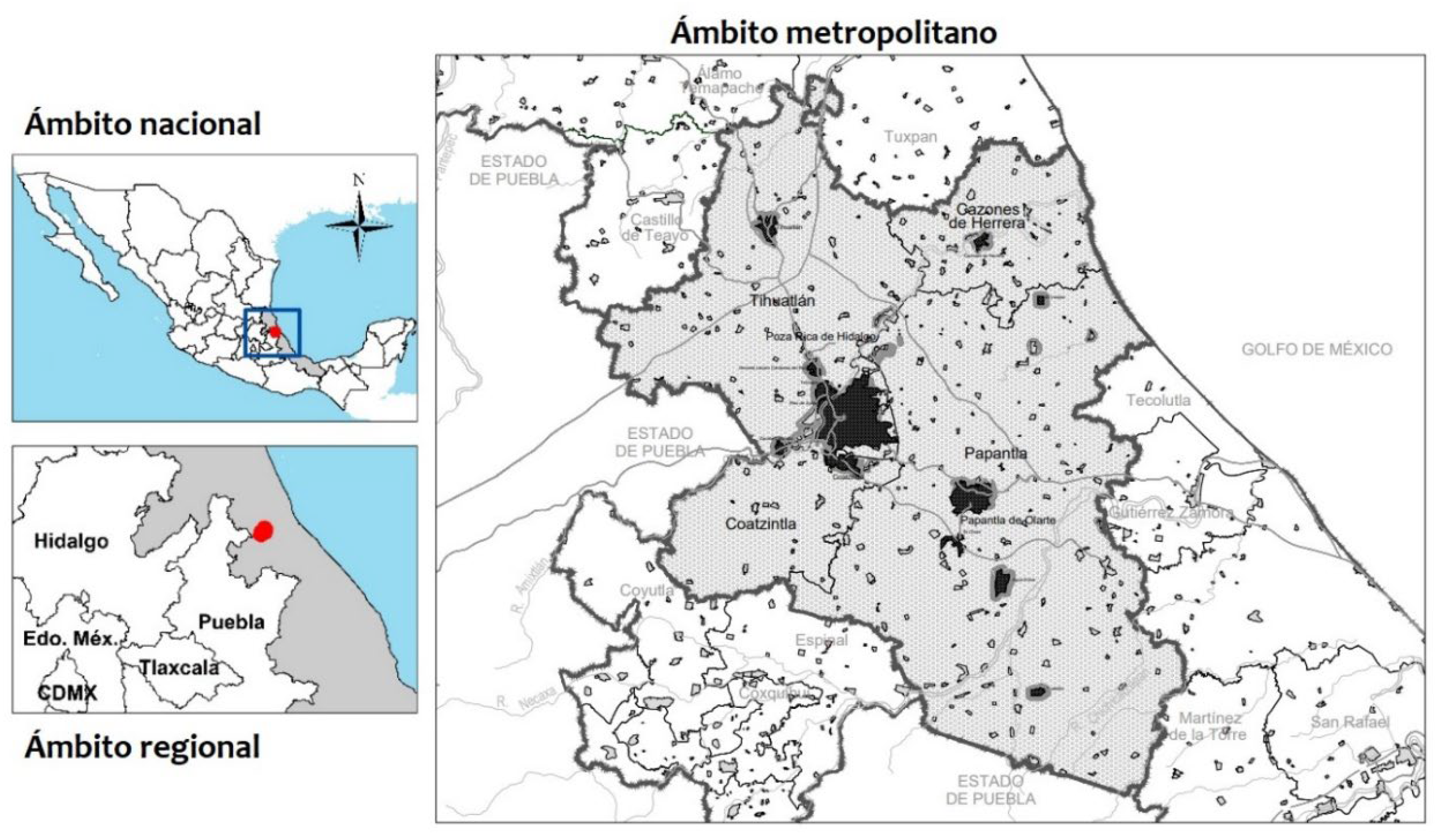
Figure 2.
Reactivating disused wells. Town hall staff overseeing work that has begun on a disused oil well in the Cazones neighbourhood, Poza Rica, Veracruz. Source: Authors.
Figure 2.
Reactivating disused wells. Town hall staff overseeing work that has begun on a disused oil well in the Cazones neighbourhood, Poza Rica, Veracruz. Source: Authors.
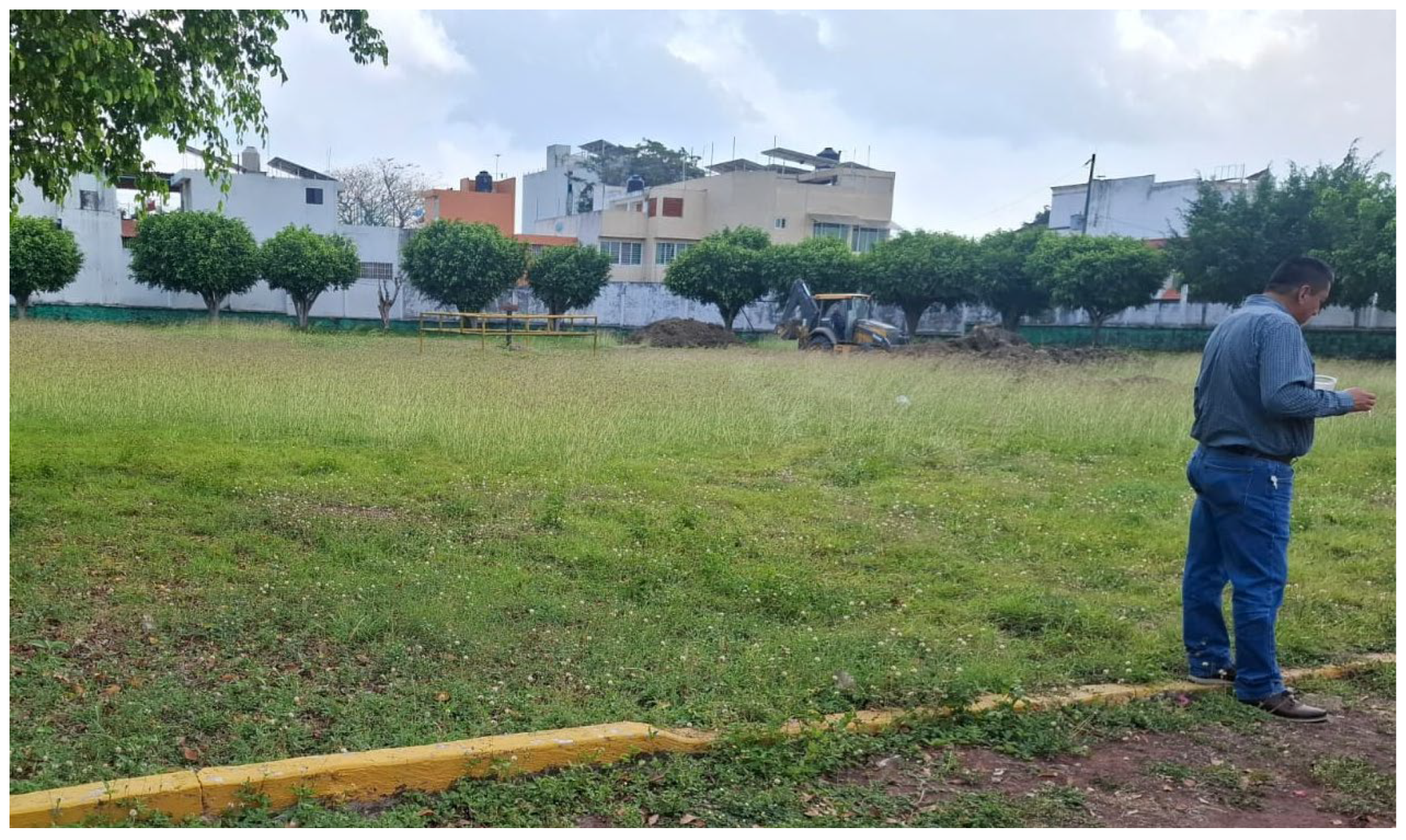
Figure 3.
Well 504 in the neighbourhoods of Poza Rica. Source: Observatorio Urbano y de Arquitectura Sustentable (OURBE), 2023. https://www.uv.mx/pozarica/ourbe/.
Figure 3.
Well 504 in the neighbourhoods of Poza Rica. Source: Observatorio Urbano y de Arquitectura Sustentable (OURBE), 2023. https://www.uv.mx/pozarica/ourbe/.
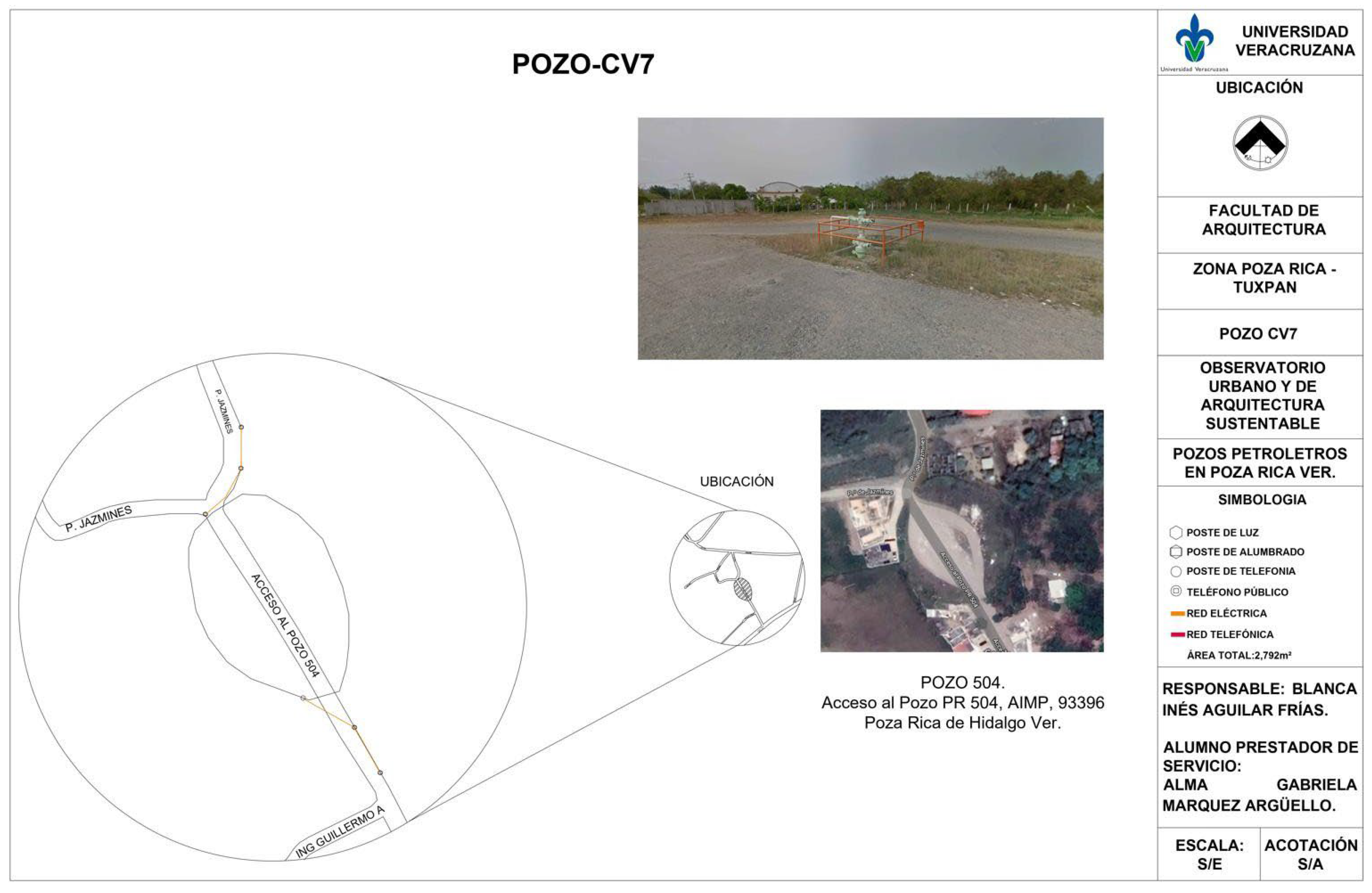
Figure 4.
Map of wells in the neighbourhoods of Poza Rica. Source: Carto critica. (2026, 18 de abril). Acessed in https://mapa.cartocritica.org.mx/ , on 2026, 18 april).
Figure 4.
Map of wells in the neighbourhoods of Poza Rica. Source: Carto critica. (2026, 18 de abril). Acessed in https://mapa.cartocritica.org.mx/ , on 2026, 18 april).
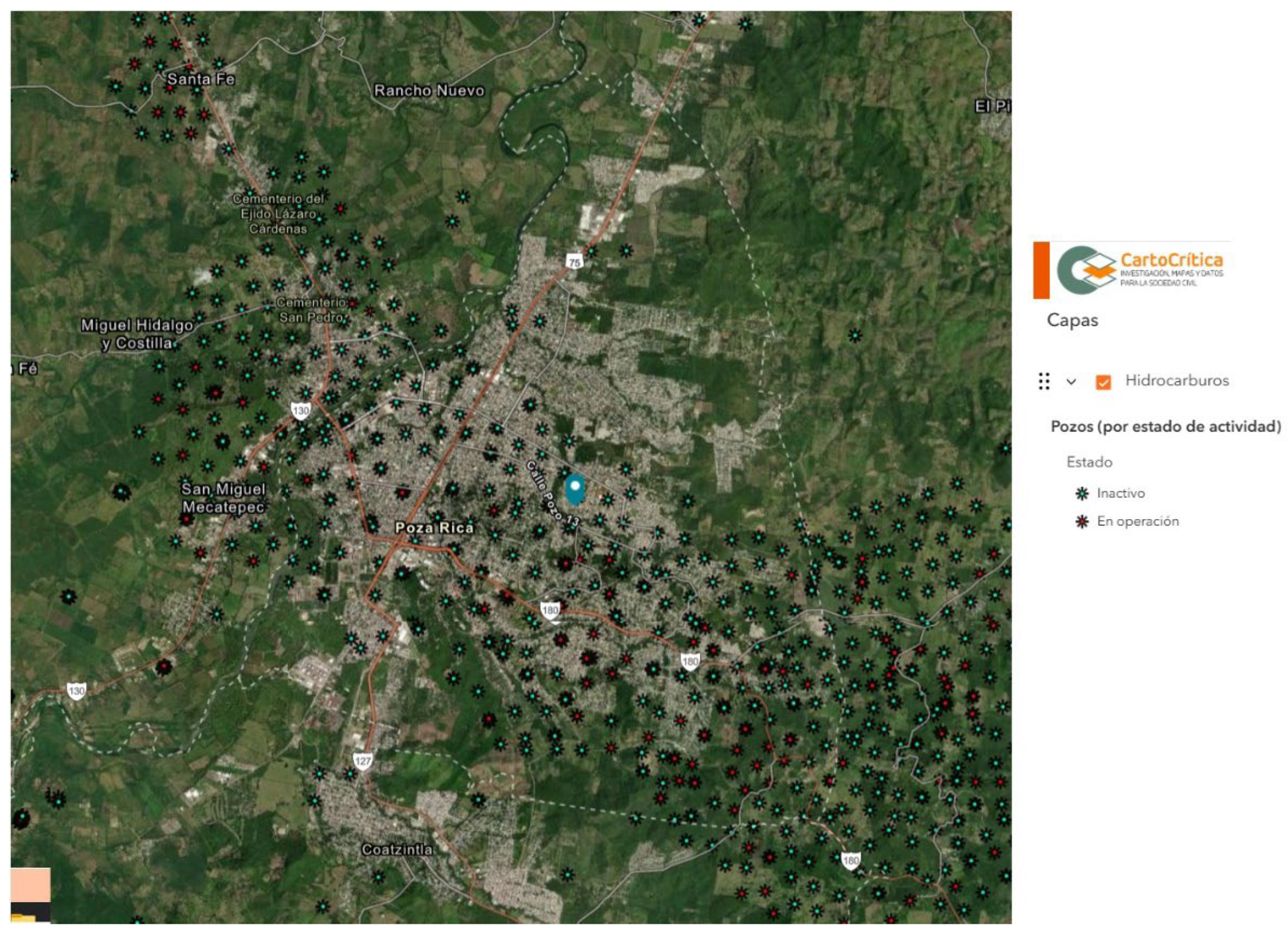
Figure 5.
The disused wells have gradually been incorporated into the city, becoming spaces that are highly sought after by the public. Source: Authors.
Figure 5.
The disused wells have gradually been incorporated into the city, becoming spaces that are highly sought after by the public. Source: Authors.
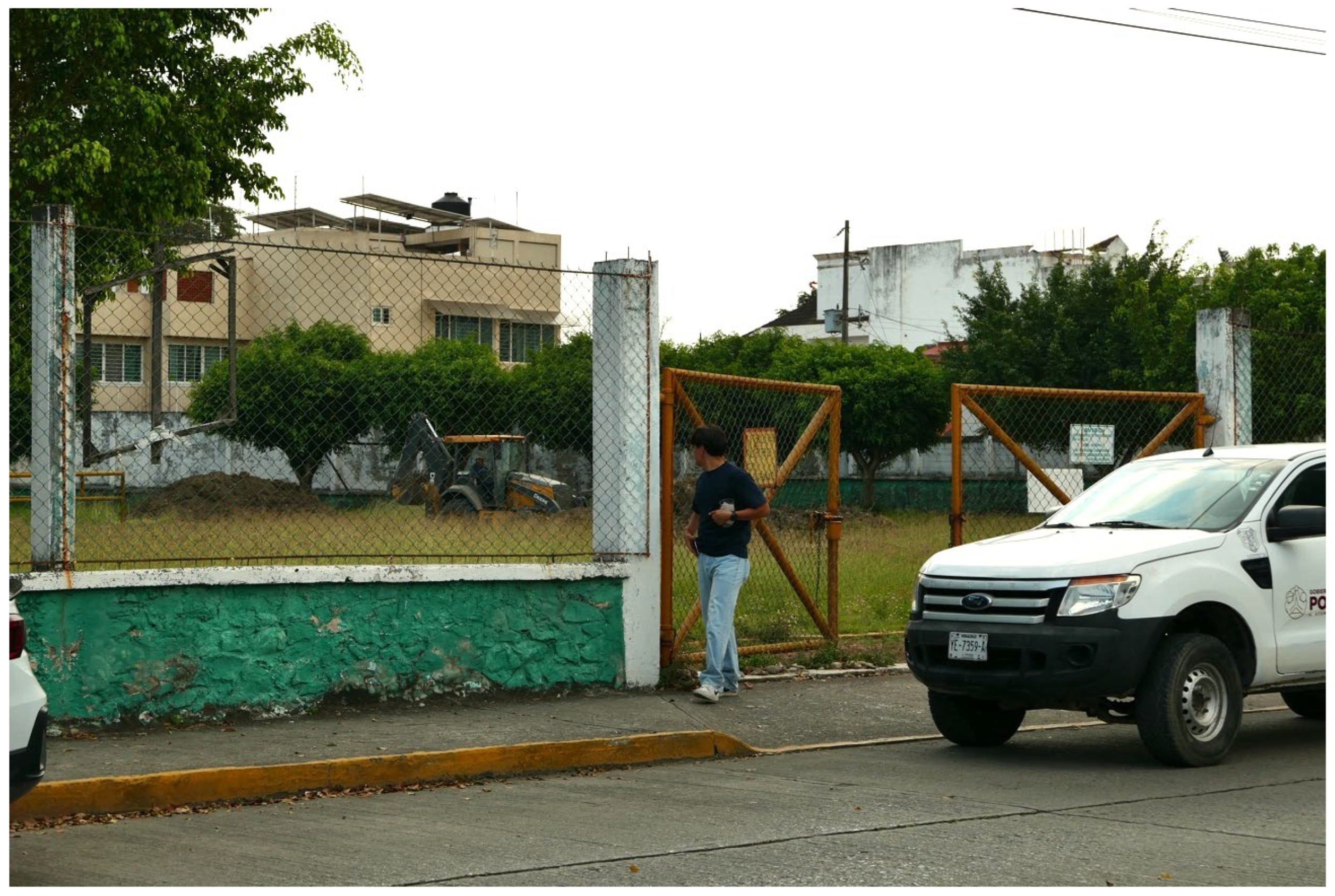
Figure 6.
Ubicación de los campos petroleros que cortan la formación de San Andrés y una franja pasa por el centro de Poza Rica. Source: Rosales Rodríguez, J. et al. (2024).
Figure 6.
Ubicación de los campos petroleros que cortan la formación de San Andrés y una franja pasa por el centro de Poza Rica. Source: Rosales Rodríguez, J. et al. (2024).
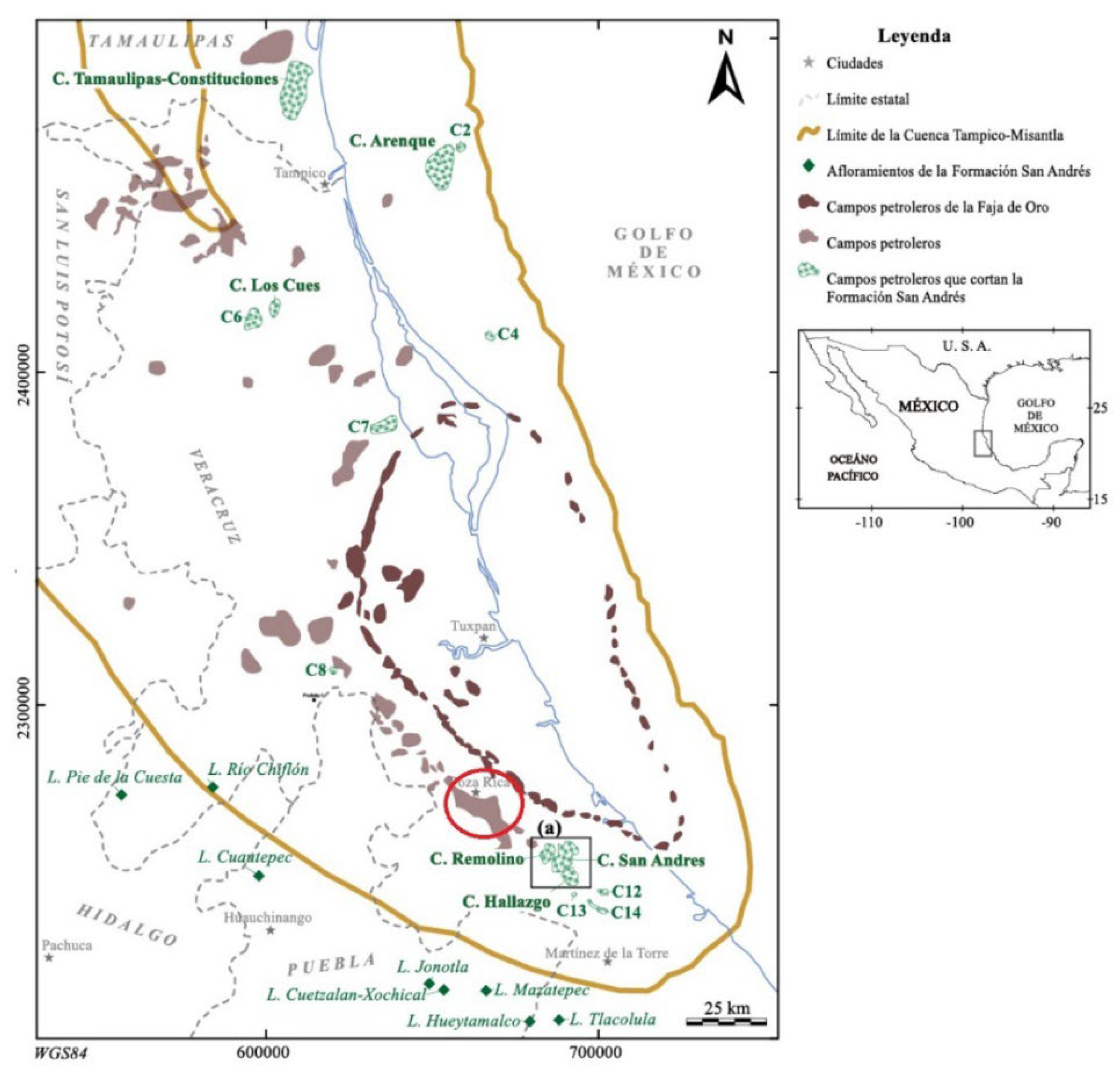
Figure 7.
An old oil well that has been converted for use by the neighbourhood. Source: Authors.
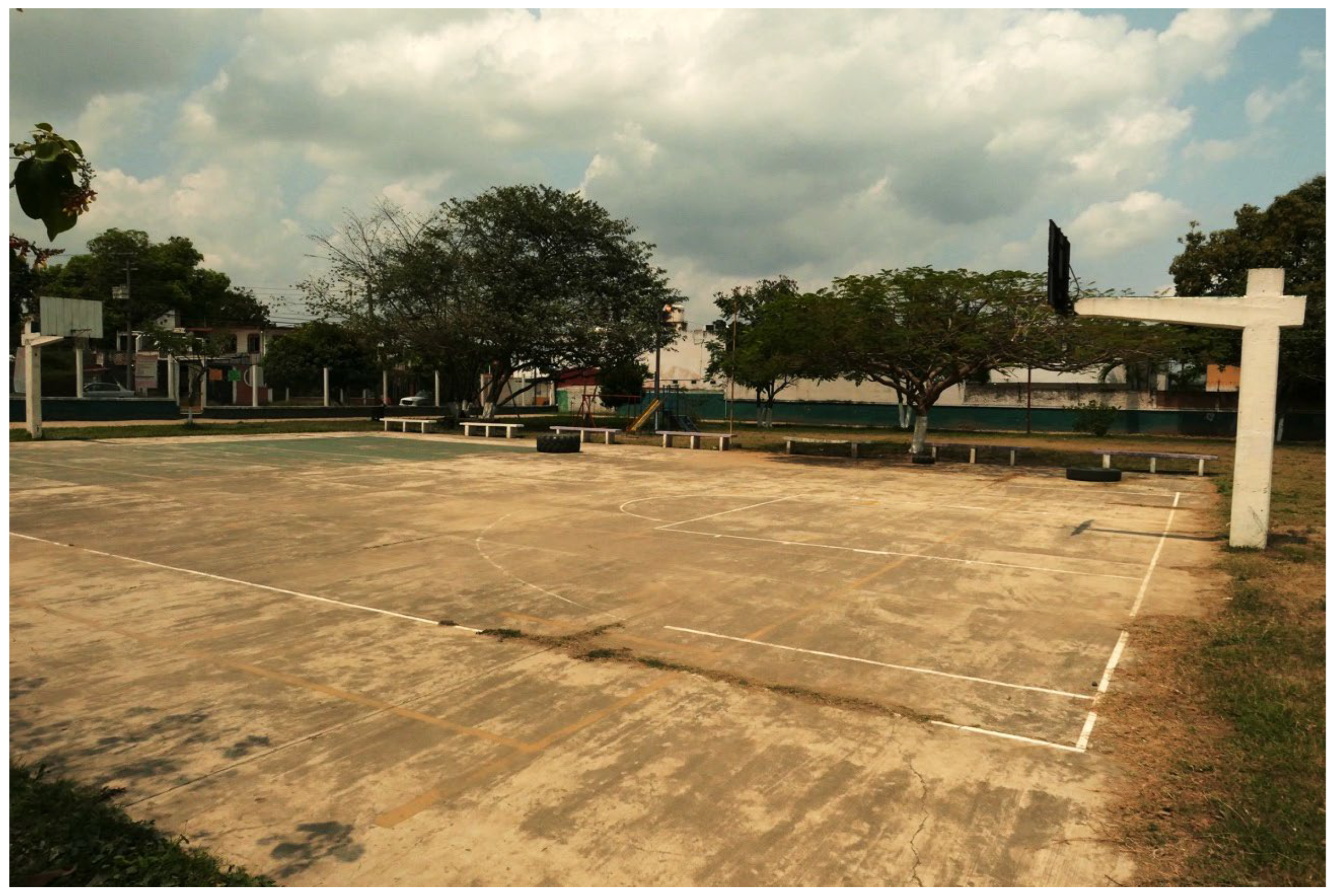
Figure 8.
Metabolic repair model for post-extractive urban transition. Source: Authors.
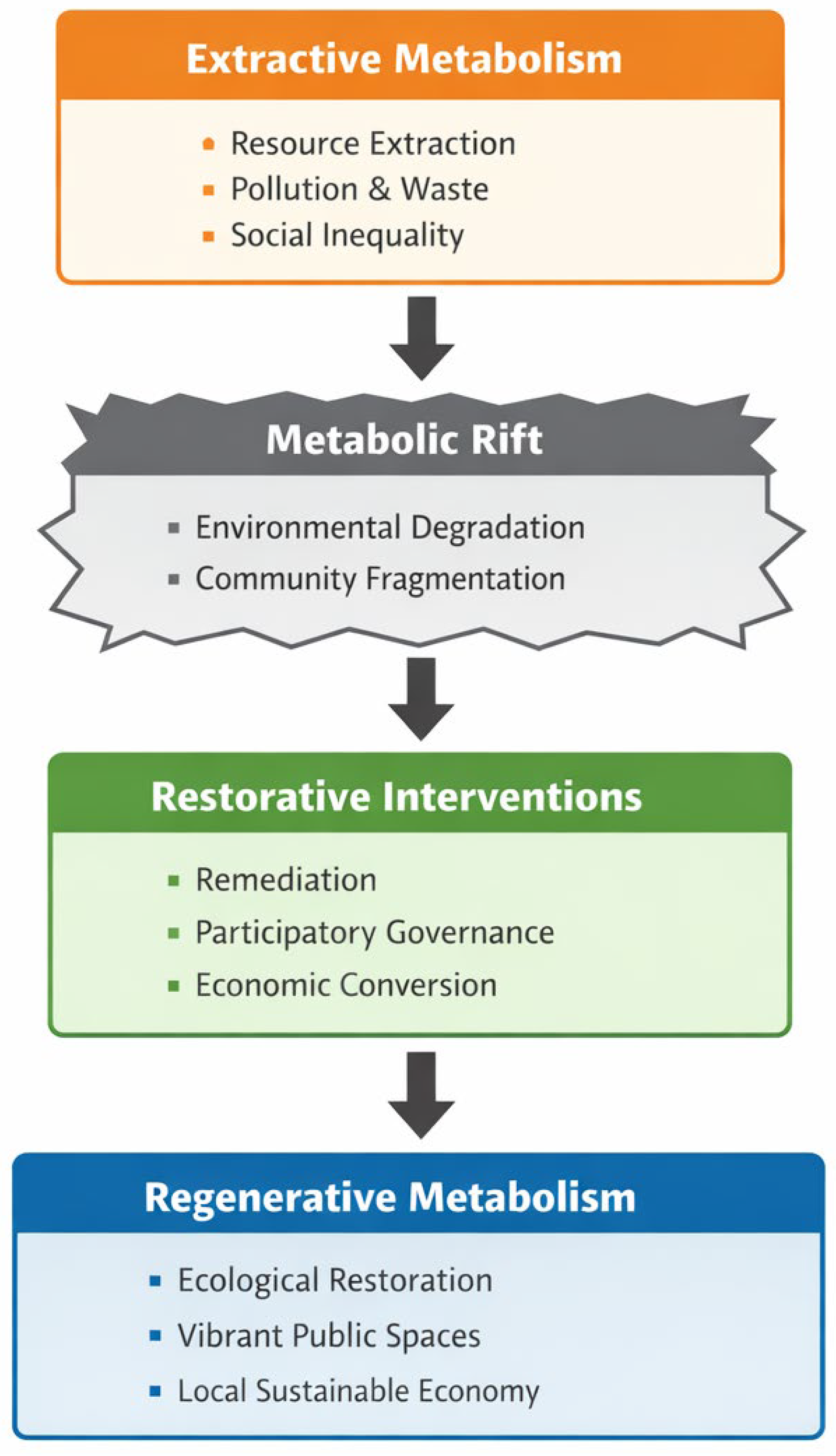

Table 1.
General overview of the of the material used as sources.
| Source | Type of data | Analytical function | Main limitation |
|---|---|---|---|
| Metropolitan Program for the Poza Rica–Tuxpan Metropolitan Zone (PMZMPR) | Planning and policy document; urban expansion data; environmental and infrastructure diagnostics; strategic proposals | Used to identify urban growth patterns, green space deficits, metropolitan planning priorities, and proposed restoration/reconversion strategies | Programmatic document; proposals may reflect planning intentions rather than implemented measures |
| Agency for Safety, Energy and Environment (ASEA) technical reports | Regulatory and technical information on well status, environmental liabilities, contamination risks, and remediation requirements | Used to assess the scale of inactive or abandoned oil infrastructure and the regulatory basis for remediation obligations | Publicly available data are incomplete and may not provide site-specific contamination levels |
| Mexican environmental regulations, including NOM-138-SEMARNAT/SSA1-2012 and NOM-147 | Legal and technical standards for hydrocarbons and heavy metals in contaminated soils | Used to establish the regulatory thresholds and criteria for environmental remediation | Standards define permissible limits but do not, by themselves, ensure enforcement or implementation |
| OURBE and CartoCrítica spatial data | Mapping of oil wells, urban areas, and affected neighbourhoods | Used to spatially relate oil infrastructure, urban expansion, and residential exposure | Spatial data require cross-validation with official records and field verification |
| Parque Bicentenario documentation | Comparative remediation precedent; technical and institutional information on petroleum brownfield transformation | Used as a national reference case to assess the technical feasibility of large-scale petroleum-site remediation in Mexico | Context differs from Poza Rica in terms of scale, institutional capacity, funding, and land ownership |
| Scholarly literature on restorative justice, environmental justice, extractivism, post-extractive transitions, and brownfield remediation | Conceptual and comparative academic sources | Used to construct the theoretical framework and interpret Poza Rica as a case of territorial injustice and post-extractive transition | Literature is uneven across regions; medium-sized Latin American oil cities remain underrepresented |
| Media reports and documented community testimonies | Qualitative evidence on residents’ perceptions, mobilisation, risk experiences, and claims for remediation | Used to incorporate community perspectives and identify perceived risks, demands, and forms of mobilisation | Secondary evidence; does not replace original ethnographic research or systematic interviews |
| Spatial data on urban expansion, population density, well locations, and green infrastructure | Quantitative and cartographic indicators | Used to describe the relationship between urbanisation, environmental risk exposure, and territorial inequality | Indicators may come from different years, scales, and methodologies, requiring cautious interpretation |
Disclaimer/Publisher’s Note: The statements, opinions and data contained in all publications are solely those of the individual author(s) and contributor(s) and not of MDPI and/or the editor(s). MDPI and/or the editor(s) disclaim responsibility for any injury to people or property resulting from any ideas, methods, instructions or products referred to in the content. |
© 2026 by the authors. Licensee MDPI, Basel, Switzerland. This article is an open access article distributed under the terms and conditions of the Creative Commons Attribution (CC BY) license.
Copyright: This open access article is published under a Creative Commons CC BY 4.0 license, which permit the free download, distribution, and reuse, provided that the author and preprint are cited in any reuse.


