Submitted:
26 April 2026
Posted:
27 April 2026
You are already at the latest version
Abstract
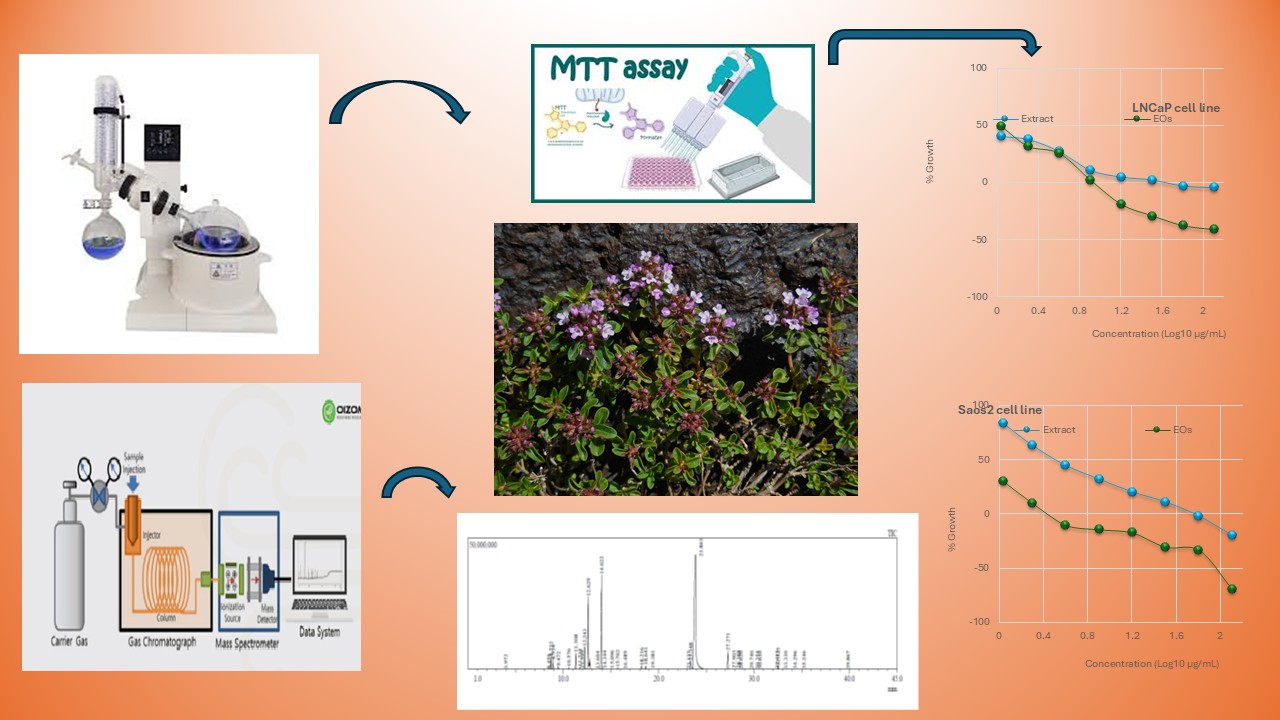
Objectives: This study aimed to investigate the phytochemical content of the endemic plant Thymus fedtschenkoi var. handelii (Ronniger) Jalas and, for the first time, to examine its anticancer potential on various cancer cell lines. Methods: The plant was collected from natural habitat and the essential oils (EOs) composition was analyzed using GC-MS. The anticancer efficacy and cytotoxicity of plant extracts and the EOs were evaluated using 3-(4,5-dimethylthiazol-2-yl)-2,5-diphenyltetrazolium bromide (MTT) and lactate dehydrogenase (LDH) methods on lung (A549, Calu1, H1650), bone (SW1353, MG63, Saos2), prostate (PC3, DU145, LNCaP) and brain (A172, B35, C6) cancer cell lines, as well as normal cell lines (Beas2B, FL, HC). Results: The main components of the EOs were determined to be high amounts of carvacrol (51.12%), γ-gamma-terpinene (16.87%), and p-cymene (14.76%). Both the extract (GI50: 1.10–3.28 µg/mL) and the EOs (GI50: 1.05–2.03 µg/mL) exhibited strong antiproliferative activity. However, EOs demonstrated markedly superior growth suppression, with TGI values of 1.97–9.19 µg/mL, whereas the extract required substantially higher concentrations (110.6–261.5 µg/mL). The LC50 values of all samples exceeded 500 µg/mL in all cell lines tested, indicating that the natural compounds predominantly had a cytostatic effect. Normal cells showed comparable reduced sensitivity, supporting selectivity. Morphological analyses further confirmed treatment-induced cellular alterations consistent with antiproliferative and apoptotic processes. Overall, EOs emerged as the most potent fraction, combining low TGI values with moderate cytotoxicity, indicating strong therapeutic potential. Conclusions: The potent and selective antiproliferative activity of T. fedtschenkoi var. handelii may hold significant therapeutic potential in the pharmaceutical industry.