
Submitted:
27 April 2026
Posted:
27 April 2026
You are already at the latest version
Abstract
The present study assessed heavy metal and microbial contamination in soil and groundwater around a municipal solid waste dumpsite in Zomba, Malawi. The potential ecological and health risks to communities were also examined. The results revealed that wet season groundwater had elevated total coliforms (20900 CFU/100 mL), Escherichia coli (3300 CFU/100 mL), Staphylococcus aureus (2500 CFU/100 mL), and Vibrio cholerae (5900 CFU/100 mL), which were significantly higher than the permissible limits of the Malawi Standards. In water samples, heavy metals, in-cluding Chromium (0.011–0.14 mg/L) and Cadmium (0. 07 – 041 mg/L), raise concern. In the soil samples, the Lead concentration ranged from 0.16 to 224.05 mg/kg, the Copper ranged from 3.03 to 94.86 mg/kg, the Cadmium concentration varied between the BDL and 0.89 mg/kg, Arsenic ranged from the BDL to 1.88 mg/kg, and the Cr varied between 0.07 and 0.91 mg/kg. Further-more, the cancer risk assessment indicated that all sampling points had CR levels greater than 1 × 10⁻³ for adults, with 40% of the sampling points showing elevated CR levels for infants and chil-dren, highlighting the cancer risk from Cd exposure, especially among vulnerable populations.
Keywords:
dumpsite
; groundwater
; heavy metals
; health risk
; microbial contamination
1. Introduction
Municipal solid waste (MSW) dumpsites have long been considered the primary cause of environmental contamination and among the greatest dangers to soil and groundwater supplies[1]. According to [2], environmental contamination stems from unwanted substances in air, soil, and water that exceed permissible limits. Solid waste output has increased because of industrialization and population growth, and it is now a major global issue [3]. Additionally, rising living standards, population growth rates associated with increased levels of commercialization, and urbanization in towns and cities worldwide, including in Malawi, are contributing to the growing problem of MSW generation in cities and metropolitan regions, leading to environmental pollution in air, soil, and water [4]. MSW comprises domestic, commercial, industrial, and medical waste, such as batteries, food waste, paints, oil, and other e-waste. In most developing countries, a large portion of this trash is dumped in open, unhygienic, non-engineered dumpsites without segregation [5]. Soil, groundwater, and surface water pollution are the main environmental effects of dumpsite leachates, as they become contaminated by pathogens and many heavy metals seep out of the disposal [6,7]. MSW provides nutrients to most bacteria and fungi found at dumpsites. Some of these bacteria are pathogens that proliferate by using nutrients in MSW for growth and survival [8]. Additionally, waste provides a conducive environment for pathogen growth and survival. Some of these pathogens find their way to dumpsites from medical waste and domestic waste. These microbes can percolate into groundwater through dumpsite leachate and contaminate the groundwater.
Previous studies have shown that there is a noticeable amount of heavy metals and pathogens in MSW, which ultimately percolate into the soil and contaminate groundwater [9,10,11,12] As a result, one of the main sources of heavy metal and microbial contamination in the environment is MSW. Depending on its age, MSW composition, and location, a dumpsite might contain varying kinds and amounts of heavy metals. Some heavy metals are essential micronutrients at trace concentrations but become toxic at higher concentrations. At trace concentrations, several heavy metals function as nutrients necessary for many physiological processes. For example, elements such as zinc (Zn), manganese (Mn), iron (Fe), and copper (Cu) are regarded as micronutrients and are essential to human health and plants. However, many heavy metals can be harmful to human beings and the environment, especially if they are present in large amounts or in certain chemical forms. Arsenic (As), chromium (Cr), lead (Pb), cadmium (Cd), and other dangerous heavy metals are among them. Heavy metals can bioaccumulate and persist in the environment for long periods, and they can enter aquatic systems through a variety of pathways [12,13].
Rapid urbanization, industrialization, and commercialization in Zomba city have led to a surge in solid waste generation, necessitating the establishment of an MSW dumpsite for waste disposal. However, the proximity of this dumpsite to residential areas due to encroachment presents a significant threat to public and environmental health. The continual disposal of untreated and non-segregated MSW at dumpsites contributes to increases in heavy metal concentrations and microbial contamination in the soil and groundwater around MSW dumpsite areas [13,14]. The increase in agricultural activities in the vicinity of dumpsites has increased the transfer of heavy metals into the human food chain. Heavy metals from the soil and groundwater are absorbed by plants around dumpsites. These contaminants can accumulate in plants, which the animals and residents of nearby communities subsequently eat [11]. This poses a health risk to people in surrounding communities. A previous study conducted by [15] revealed high levels of cadmium, copper, and zinc in plants growing adjacent to the Zomba MSW dumpsite, raising concerns about the potential migration of contaminants into the soil and groundwater. However, the study did not have enough samples for Cr, Cd, and Pd to perform a statistical analysis and draw plausible conclusions. The study also did not examine microbial contamination in the soil or groundwater around the Zomba dumpsite. The challenge is that Cr and Cd (similar to other metals) cause harm to the environment and human beings even at lower concentrations [4]. While this study offered important insights into the ecological impacts of dumpsite leachates concerning heavy metals, a critical gap remains in understanding the recent degree of heavy metal and microbial contamination in the soil and groundwater within and outside the Zomba MSW dumpsite. Despite evidence of heavy metal and microbial contamination at MSW dumpsites in other regions, an integrated study combining both contaminants around the Zomba MSW dumpsite is lacking. Furthermore, given the reliance of nearby communities on groundwater sources for domestic purposes, there is a need to assess the heavy metal and microbial contamination of the soil and groundwater around the Zomba MSW dumpsite. The aims of the present study, therefore, were to assess the presence and distribution of pathogens in the soil and groundwater around the dumpsite, investigate the concentrations of heavy metals in the soil and groundwater around the dumpsite, and evaluate the potential ecological and health risks posed by heavy metal contamination in the soil and groundwater surrounding the dumpsite.
2. Materials and Methods
2.1. Description of the Study Area
Zomba district, which is situated at coordinates 15.37660 S and 35.33570 E, is one of Malawi’s four cities. Covering an area of 828 km2, it is home to a population of approximately 34,878 individuals, as per the 2018 census conducted by the Malawi National Statistics Office. Within Zomba city, a diverse range of businesses are operational, including those involved in plastics, glass, batteries, electrical wires and cables, and 13 operational filling stations. Zomba boasts a significant artisan population that offers services such as welding, brazing, sheet metal work, and electrical services to the public. Additionally, residents continually generate substantial quantities of used consumer products, including electronics, light bulbs, house dust, paints, lead foils, and other items. These wastes find their way into the MSW dumpsite. The Zomba MSW dumpsite was established 61 years ago (1963) and is still operational. The dumpsite is located along M3 Road at a place called 5 miles (Figure 1).
2.2. Climate
The study area experiences an average temperature of 21.1 °C, with a minimum temperature of 11.5 °C and a maximum temperature of 28 °C to 30 °C. The region is characterized by a tropical climate with three distinct seasons: cold dry, hot wet, and wet season, which span from April to July, August to October, and November to March, respectively. The elevation of the area varies from 1,500 feet to 7000 feet above sea level, and the annual rainfall ranges from 600 mm to 1500 mm (Zomba District Assembly, 2009).
2.3. Collection and Preservation of Water and Soil Samples
Both heavy metal and microbial analyses were conducted to provide an integrated assessment of contamination around the Zomba MSW dumpsite. There are seven permanent wells and two functional boreholes within and around the dumpsite. However, purposive sampling was used to sample 4 wells and 2 boreholes based on distance from the dumpsite to capture spatial variability in both heavy metal and microbial contamination, as shown in Table 1. Water and soil samples were collected in both the wet season (March 28, 2024) and the dry season (August 13, 2024) following standard methods described by [16]. Grab sampling was used to collect water samples from wells for both chemical and microbial analysis. A rope was tied to the neck of the sampling bottle, with a mass attached. The bottle was gently lowered into the well and immersed in the water. For boreholes, water samples were collected from the nozzle after the borehole was pumped. Before sample collection, each borehole was flushed for 30 seconds to discharge stagnant water and ensure the collection of fresh groundwater. The bottle was immediately closed tightly after sample collection. For the chemical analysis of the water samples, 2 mL of nitric acid (NHO3) was added soon after sampling to ensure that all heavy metals were preserved. Sterilized sample bottles were used to collect water samples for microbial analysis. Soil samples were collected via a handheld auger with a standard diameter of 20 cm. Samples were collected at a depth of 0 – 20 cm by downward pressure rotation of the auger in the anticlockwise direction. Approximately 500 grams of soil were collected at each sampling point and kept in polyethylene Ziploc bags. Thereafter, the samples were placed in a cooler box containing ice blocks and transported to the University of Malawi Chemistry Laboratory and the Malawi University of Business and Applied Science (MUBAS) Microbiology Laboratory for analysis.
2.4. Physicochemical Analysis of Water Samples
All physical parameters were measured in situ. Water samples were analyzed following the method described by [16]. A digital pH meter (pH-8414 pH/mV °C meter) was used to measure the temperature and pH, whereas a digital EC/TDS meter (HACH MP-4 model) was used to determine the EC and TDS. Heavy metals (As, Cd, Cr, Cu, and Pb) were determined via an AAS Agilent 200 series AA with an SPS AA 240 autosampler, according to the standard methods of [16].
2.5. Microbial Analysis of Water Samples
All the water and soil samples were analyzed for Escherichia coli (E. coli), total coliform bacteria, Staphylococcus aureus (S. aureus), Shigella, Salmonella, and Vibrio cholerae (V. cholera). The membrane filtration technique was used to determine the number of E. coli in the water and soil samples, as described by [17]. The determination of Salmonella in the samples was performed via the ISO 6569:2002 (E) protocol. The ISO 21872-2 protocol was used to identify V. cholerae.
2.5.1. Determination of Total Coliform and E. coli
The determination of total coliform and E. coli used the filter unit, incubator, pipette, nutrient agar, petri dishes, autoclave, and membrane lauryl sulphate broth.
2.5.2. Preparation of Lauryl Sulphate Broth
A mass of 7.62 grams of the powder was first weighed and dissolved using 100 mL of de-ionized water. The resultant dispersion was dispensed into a final container of 10 mL Durham tubes. The containers were placed in an autoclave for about 15 minutes at a temperature of 120 °C. After autoclaving, the contents were allowed to cool.
2.5.3. Procedure for Microbial Analysis
2.5.3.1. Sample Serial Dilutions and Pour Plating Procedures
The funnel's inner surface was first sterilized. The process required to pass it via a flame and cool it soon after removal. The cooling involved rinsing it properly with distilled water. Thereafter, the membrane filters were placed over the porous plate of the funnel base. This was done using sterilized forceps, carefully handled. To ensure the homogeneous distribution of the bacteria, the samples were vigorously shaken. After that, exactly 10 mL of the sample was introduced into the filter using a pipette, and then 100 mL of distilled water was added. Under a partial vacuum, the samples were filtered. Carefully using sterilized forceps, upon the completion of the filtration phase, the membrane filters were removed from the funnel and then placed in the broth in the Petri dishes. The dishes were then incubated at a temperature of 37 °C to determine the total coliform. For E. coli, incubation was performed at a temperature of 44 °C. The incubation process was set for 24 hours.
2.5.4. Determination of Salmonella
The determination of Salmonella in the samples was done using the ISO 6569:2002 (E) protocol. The method used sterile Petri dishes, nutrient agar, VBR agar, nutrient broth, McCartney bottles, hotplate, autoclave, conical flasks, measuring cylinder, mutton cloth, stirring rod, balance, distilled water, and test tubes.
2.5.4.1. Media Preparation
The VBR agar was weighed, dissolved in distilled water, and boiled on the hot plate. About 10 -15 cm of the molten media was distributed into McCartney bottles, autoclaved at 120 °C for 15 minutes, and cooled afterward in a water bath to 45 °C. Peptone water was then prepared, and exactly 9 mL was pipetted into the test tube, sterilized, and finally cooled at room temperature. Exactly 225 mL of distilled water was sterilized in 250 mL glass sampling bottles and was left to cool at room temperature.
2.5.4.2. Sample preparation
Aseptically, 1 mL of the sample was transferred from the original sample bottle into serial dilution tubes containing 9 mL of sterile distilled water, and serial dilutions were prepared up to 10-3. Then 1 mL of inoculum was transferred aseptically from 10-1, 10-2, and 10-3 into sterile petri dishes labelled 10-1, 10-2, and 10-3, respectively (1 mL from each tube into respective sterile petri dish). The Petri dishes were labelled appropriately. After that, molten agar was aseptically transferred from McCartney tubes into the Petri dishes. To avoid contamination, the mouths of the tubes were passed through the Bunsen burner flame, rotating the tubes whilst they were in the flame for not more than a few seconds. To ensure that the procedure was done aseptically, the lids of the petri dishes were tilted using the left hand just enough to allow the introduction of the mouth of the bacteriological tube. The agar was quickly poured into the petri dish, making sure that the tube did not touch the sides of the dish or lid. Then immediately, the tubes were withdrawn, and the lid was closed. After that, the petri dish containing the sample and the agar was gently rotated several times to ensure that the sample and agar were thoroughly mixed. Then, the plates were left to set. Lastly, the plates were incubated at 37 °C for 24 hours in an inverted position to prevent any condensation from falling onto the agar surface. After 24 hours, the cultures in the incubator were removed, and all the colonies were counted on VBR plates as Salmonella and reported as CFU/100 mL.
2.5.5. Determination of Vibrio cholerae
ISO 21872-2 was used to determine V. cholerae. Thiosulphate citrate bile salt sucrose agar (TCBS) was used selectively to isolate, identify, and enumerate V. cholerae. Alkaline peptone water, Thiosulphate-citrate-bile salts-sucrose agar (TCBS), and nutrient agar No. 2 were also used in the determination of V. cholerae.
2.5.5.1. Sample Preparation
The surfaces of the bottles containing the samples were disinfected with ethanol. The samples were then thoroughly mixed by vigorous shaking to achieve uniform distribution. The samples were then filtered through a sterile membrane filter and placed in 50 mL of alkaline peptone water and incubated at 37 °C for 24 hours.
2.5.6. Observation
Suspension colonies of V. cholerae on TCBS appeared as opaque yellow coloured with smooth, slightly raised, round margins, as shown in Figure 10A. On SS agar, Salmonella colonies appeared as blue–green or green with black centers, whereas Shigella colonies appeared as red or pink without black centers. E. coli appeared pink-red with surrounding precipitate, and S. aureus had a golden yellow colour with smooth and convex colonies.
2.6. Preparation and Determination of Heavy Metals in the Soil Samples
The soil samples were prepared according to the method described by [16]. The samples were prepared by removing any visible debris or plant materials, drying them in an oven at 105 °C for 24 hours, and subsequently grinding them into a fine powder via a motor and pestle. The soil samples were then sieved through a 2 mm sieve. Exactly 1 g of the soil sample was weighed into a well-cleaned bottom flask and transferred into a digestion vessel. A mixture of strong acids, typically a combination of 10 ml of nitric acid (55% HNO3) and 20 ml of perchloric acid (70% HClO4), was added to the digestion vessel. The digestion vessel was then placed on the hotplate until all the brown fumes were exhausted. The digestion of the samples was considered complete when the contents in the digestion tube turned into a pure white liquid. The digested samples were subsequently allowed to cool. Thereafter, the digested samples were transferred quantitatively into a well-cleaned and well-labeled 100 ml volumetric flask and diluted with distilled water to the mark for AAS analysis. All samples were analyzed in triplicates.
2.7. Data Analysis
The data were recorded in MS Excel to obtain the mean concentrations of each parameter. IBM SPSS version 22.0 was used to analyze the data, where ANOVA was used to test whether there was a significant difference in the mean concentration of heavy metals and microbial contamination among the sampling points, as well as sample type (soil and groundwater). The Pearson correlation coefficient was used to test the relationships between parameters. The significance level was set at p = 0.05.
2.9. Human Health Risk Assessment of Drinking Water
A human health risk (HHR) assessment was performed to evaluate any health hazards suffered by the residents around the dumpsite as a result of exposure to heavy metals. Heavy metals primarily enter the human body through ingestion [18]. Therefore, the rate of pollutant ingestion into the human body through drinking water was evaluated by calculating the chronic daily intake (CDI), hazard quotient (HQ), hazard index (HI), and carcinogenic risk (CR).
2.9.1. Chronic Daily Intake
The CDI was calculated via the following equation:
where “C” is the measured concentration of the contaminant in the water (mg/L), “IR” is the rate at which a person drinks water (2 L/day for adults, 1.5 L/day for children, and 0.8 L/day for infants), “ED” is the duration of exposure in years (40 years for adults, 10 years for children, and 1.0 year for infants), “EF” is the exposure frequency in days (d) (365 days), “BW” is the average body weight in kg (70 kg for adults, 20 kg for children, and 10 kg for infants), and “AT” is the average time (14,600 days for adults, 3650 days for children, and 365 days for infants), according to [18].
2.9.2. Hazard Quotient
The adverse effects of exposure to heavy metals as noncarcinogenic pollutants were evaluated via HQ, which was calculated as follows:
where RfD is the reference dosage (0.0005 mg/kg/day for Cd, 0.04 for Cu, and 0.3 for Cr) [18].
2.9.3. Hazard Index
The following equation was used to determine the Cd, Cr, and Cu HI values, defined as the sum of the HQs of these measured parameters.
If HQ > 1, carcinogenic health impacts are said to potentially exist, whereas HQ < 1 indicates none. Similarly, HI < 1 indicates a nonexistent or minimal risk of adverse noncancerous health, whereas HI > 1 denotes a high risk. Chronic risk (HQ or HI) is categorized as negligible (where HQ or HI < 0.1), low (where 0.1 ≤ HQ or HI < 1), medium (where 1 ≤ HQ or HI < 4), or high (where HQ or HI ≥ 4) [18].
2.9.4. Carcinogenic Risk
In the case of exposure to carcinogens, the CR estimates a person’s lifetime risk of developing any cancer, which is calculated via the following formula:
where “SF” (0.38 mg/kg/day for Cd and 0.5 mg/kg/day for Cr VI) is the cancer slope factor [18]. The “CR” is described as ranging from very low (where CR < 1 × 10⁻⁶) to very high (where CR > 1 × 10⁻³).
3. Results
3.1. Physicochemical Parameters of Water Samples
The physical characteristics of the groundwater samples collected in both the wet and dry seasons are summarized in Table 2. The pH values ranged from 5.55 ± 0.04 to 7.29 ± 0.03, the temperature varied between 24.67 ± 0.06 and 28.60 ± 0.10 °C, the TDS ranged from 46.16 ± 0.04 to 1366.33 ± 2.08 mg/L, and the EC varied from 74.41 ± 0.61 to 1965.00 ± 3.00 μS/cm. The values are compared with the World Health Organization (WHO) and Malawi Standard (MS) maximum allowable levels. All temperature measurements in the current study's two seasons fell below the WHO-recommended threshold of 30 °C. High-temperature drinking water compromises the palatability of the water.
3.2. Chemical Parameters of Water Quality
Table 3 presents the mean concentrations of selected heavy metals in water samples collected from various sites during both the wet and dry seasons. Cd ranged from BDL to 0.08 ± 0.00 mg/L, Cr ranged from BDL to 0.41 ± 0.03 mg/L, Cu ranged from BDL to 0.24 ± 0.01 mg/L, and As and Pb were not detected in water samples from all sampling points in both the wet and dry seasons. Therefore, all samples complied with the WHO and MS requirements for As and Pb in drinking water, indicating no health risk from these elements. The concentrations of Cd, Cr, and Cu in the groundwater samples either fall below the WHO and MS requirements or slightly exceed the required standards. Cd complied with the WHO and MS standards for all the water samples collected in the wet season, whereas the values at sampling points W1 and W3 in the dry season were slightly higher than the standards.
3.3. Microbial Characteristics of the Water Samples
The results for microbial characteristics in both seasons are presented in Table 4. The number of total coliform bacteria ranged from 0 to 20900 CFU/100 mL, the number of Salmonella bacteria ranged from 0 to 4 CFU/100 mL, V. cholerae bacteria varied between 2 and 12300, the number of E. coli bacteria ranged from 0 to 3400, and the number of Shigella bacteria varied from 0 to 1100 CFU/100 mL. The presence of E. coli in water serves as a crucial indicator of microbial contamination, indicating the presence of pathogenic organisms in drinking water and the potential health risks to consumers. The presence of E. coli in groundwater indicates water pollution with fecal matter. The MS and the WHO recommend 0 CFU/100 mL maximum limits for total coliform bacteria, V. cholerae, Salmonella, and E. coli.
3.4. Chemical Characteristics of the Soil Samples
The mean concentrations of the heavy metals in the soil samples are summarized in Table 5. As levels were generally low, ranging from BDL to 1.88 ± 0.04 (mg/kg), Cu presented the highest variation, with concentrations ranging from 3.03 ± 0.13 mg/kg to 94.86 ± 0.37 mg/kg; Cd ranged from BDL to 0.89 ± 0.01 mg/kg; Cr levels varied from 0.03 ± 0.00 mg/kg; and Pb concentrations consistently fell between BDL and 224.05 ± 5.7 mg/kg. The results indicate that the metal loads from the dumpsite soils were generally greater than those from the control area (P5, 2200 m from the dumpsite), except for Pb and As, which were not detected in any of the soil control samples during either the wet or dry season.
Table 6 presents the results of the microbial quality of the soil samples. In the wet season, total coliform ranged from 2 to 101 CFU/100 g, E. coli varied from 0 to 58 CFU 100 g, Salmonella ranged from 0 to 2 CFU /100 g, S. aureus varied from 14 to 84 CFU /100 g, and V. cholerae ranged from 0 to 28 CFU /100 g. while in dry season, the total coliform ranged from 24 to 290 CFU/100 g, E. coli varried from 0 to 39 CFU 100 g Salmonella was 0 CFU /100 g, Shigella ranged from 0 to 2 CFU /100 g, S. aureus varried from 8 to 119 CFU /100 g, and V. cholerae ranged from 0 to 1 CFU /100 g. The coliform, E. coli, and S. aureus concentrations were substantially higher in the wet season than in the dry season.
4. Discussion
4.1. Physicochemical Parameters of Water Samples
The result of the present study shows that most sampling points comply with the established MS and WHO for physiochemical parameters. W1 during the wet season and B1 during both wet and dry seasons presented acidic pH values that were outside the acceptable range of 6.5 - 9.5. The modest acidity of water poses a health risk to users in terms of cooking, cleaning, drinking, bathing, and other domestic duties. In contrast, in a similar study conducted in Nigeria by [19], reported that the water from all the sampling points was acidic (pH ranging from 4.48 to 4.77). All the groundwater samples from both wet and dry seasons and all the sampling points complied with the WHO threshold of 1500 μS/cm and an MS of 3500 μS/cm for EC. Sulfate, sodium, calcium, and magnesium all affect EC [20]. In this study, the electrical conductivity of the samples was moderate, indicating that the dissolved salt content (Sulfate, sodium, calcium, and magnesium) of the water was within the allowable range for safe drinking. Similarly, all the groundwater samples from all the sampling points in both wet and dry seasons met the WHO and MS threshold limits for TDS.
TDS is a measure of the presence of low impurities and is composed of inorganic salts and trace amounts of organic matter dissolved in water [21]. Therefore, based on Table 5, the groundwater from all the sampling points may be classified as freshwater. Similarly, a study conducted in Brazil and Algeria by [22] and [23], respectively, reported very low TDSs (TDSs ranging from 0 to 1) compared with the findings of the present study. This could be attributed to non-industrial waste, which leads to less saline leachate and heavy run fall or continued flushing, which could dilute the underground water, resulting in low EC and TDS. However, the EC, TDS, and pH results reported in the current study agree with the research data from dumpsites and landfills across Africa, Asia, and Latin America, analyzed by [24], who reported that they were all within the WHO maximum permissible limits. Similarly, the EC, TDS, and pH results reported in this study are consistent with the results reported in a similar study conducted by [25], who also reported that they were all within the WHO's maximum permissible limits.
4.2. Chemical Parameters of Water Quality
Continuous and prolonged (or lifetime) exposure to Cd, even at relatively low concentrations, is a health risk, and above 0.020 mg/L, kidney damage may result [24]. Cr in all the water samples from both seasons was slightly above the maximum permissible limits of the WHO and MS. Cr was detected at all the sampling points in the wet season; however, it was detected only at points W1, W2, and W3 during the dry season. This may be attributed to seasonal differences, as rainfall promotes the percolation of leachates containing Cr into the ground and contaminates groundwater. In both seasons and at all sampling points, Cu was detected only in samples collected from W1, W2, and W3. Wells 1, 2, and 3, which were closest to the dumpsite, consistently showed high heavy metal contamination, confirming the influence of dumpsite leachates. All the values recorded were below the maximum permissible limits set by the WHO and MS of 2.0 mg/L. The results of the present study are inconsistent with those of a study conducted in Algeria by [23], who reported that the concentrations of Cu and Cr were below the WHO maximum permissible limits. Similarly, the findings of this study for Pb and As are also in agreement with the findings of a similar study conducted in Sierra Leone by [26], who reported that Pb and As were below detectable levels at all sampling points. In contrast to the findings of this study, a similar study conducted in Iran by [27] reported that Cr and Cd were below detectable levels in all groundwater samples collected from all the wells in the study area. This could be due to the nature of the waste disposed of or the use of a dumpsite with leachate collection mechanisms, which could prevent groundwater contamination. This could also be due to soil texture, which could similarly affect the percolation of leachates to the groundwater.
4.3. Microbial Characteristics of the Water Samples
The results of this study show high microbial contamination in most water sampling points in both seasons, as shown in Table 4. Wells 1, 2, 3, and 4, and borehole 1 were located 0 – 300 m from the dumpsite and had relatively high bacterial concentration as compared to B2, and the bacterial densities at these sampling points could be attributed to the seepage of leachate into the groundwater and proximity to the pit latrine [28]. Only the control sampling point (Borehole 2), located 2200 m away from the dumpsite, consistently produced samples that met the WHO and MS limits (0 bacterial colonies) in both seasons. Wells 1, 2, and 3, which are closest to the dumpsite, consistently show high microbial contamination, confirming the influence of dumpsite leachates.
Most sampling points presented high microbial contamination in the rainy season compared with the dry season, which was highly likely attributed to the movement of microbes through the percolation of contaminated leachate into the groundwater. The sources of microbial contamination in groundwater include leachate from waste disposal sites and natural sources (the natural presence of microbes in soil infiltration into groundwater) [29]. Therefore, the study revealed that, except for borehole 2, all water samples from all the sampling points during both seasons were mostly bacteriologically polluted and, thus, a possible source of exposure to waterborne diseases. The findings of the present study corroborate those of a previous study conducted in Malawi by [28], which also identified fecal coliform units at 5 groundwater sampling points in the study area. The presence of fecal coliform units was attributed to the proximity to pit latrines. A similar study was conducted in Nigeria by [29] reported relatively higher total coliform and fecal coliform concentrations in groundwater samples than in the present study. The difference in the contamination levels could be due to the nature and type of solid waste disposed of at the dumpsite. Diapers, hospital waste, sanitary products, and decomposable organic compounds can contribute to the higher total and fecal coliform contamination in groundwater
4.4. Pearson Correlation Analysis of Physicochemical and Microbial Parameters of Water Samples
Strong positive correlations between microbiological indicators such as total coliform bacteria, E. coli, Shigella, S. aureus, and V. cholerae and physicochemical parameters such as pH, temperature, TDS, EC, and heavy metals (Cr, Cd, and Cu) are shown in the wet season correlation matrix in Table 5. V. cholerae (r = 0.761) and total coliform bacteria (r = 0.837) were strongly correlated with pH, indicating that pH influences microbial activity and may even create ideal conditions for pathogen survival [30]. Similarly, heavy metals such as Cr have strong positive relationships with pH, temperature, TDS, and EC, and the majority of the microbiological indicators (r > 0.700). This relationship with microbiological parameters may indicate the same sources of contamination [31]. According to [31], a smaller effect of Cu contamination on microbial proliferation may be indicated by moderate correlations, such as those between Cu and E. coli (r = 0.748). Poor bioavailability or some modest functions in ecosystem dynamics may cause, for example, Cd to have limited mobility or influence during the wet season [32].

Table 5.
Correlation matrix for physicochemical and microbial parameters in water samples (wet season).
Table 5.
Correlation matrix for physicochemical and microbial parameters in water samples (wet season).
| pH | Temp | TDS | EC | Cr | Cd | Cu | Coliform | E. coli | Shigella | S. aureus | V. cholera | |
| pH | 1 | |||||||||||
| Temp | .638** | 1 | ||||||||||
| TDS | .723** | .938** | 1 | |||||||||
| EC | .717** | .936** | 1.000** | 1 | ||||||||
| Cr | .718** | .966** | .970** | .968** | 1 | |||||||
| Cd | 0.374 | 0.306 | 0.244 | 0.245 | 0.244 | 1 | ||||||
| Cu | .599** | .923** | .832** | .830** | .921** | 0.342 | 1 | |||||
| Coliform | .837** | .843** | .933** | .929** | .930** | 0.110 | .771** | 1 | ||||
| E. coli | .714** | .829** | .887** | .882** | .907** | 0.043 | .748** | .968** | 1 | |||
| Shigella | .805** | .938** | .974** | .972** | .978** | 0.251 | .859** | .971** | .937** | 1 | ||
| S. aureus | .732** | .820** | .909** | .908** | .924** | 0.047 | .819** | .944** | .902** | .910** | 1 | |
| V. cholerae | .761** | .934** | .987** | .985** | .972** | 0.215 | .823** | .964** | .936** | .993** | .903** | 1 |
**. The correlation is significant at the 0.01 level (2-tailed).
Table 6 shows a correlation matrix for the physicochemical and microbial parameters of the water samples (dry season). During the dry season, a weaker correlation is typically exhibited than that in the wet season, thus reflecting reduced run-off and contamination pathways. However, the notable correlation between copper and microbial indicators implies that some contamination sources consistently contribute to pollution throughout both seasons. This persistence source could be a continuous point source (dumpsite). The correlation, such as that of Cr with temperature (r = 0.316), indicates that seasonal variations may reduce the impact of chromium or its interaction with other parameters. Weak correlations, such as those between cadmium and the microbiological parameter r = 0.200, imply that cadmium has little impact, possibly because of its restricted solubility or low quantity. These findings indicate that although seasonal dryness hinders the mobility or capability of some contaminants, resulting in weaker correlations, it also concentrates some other pollutants, thus maintaining a strong correlation [33].
Table 6.
Correlation matrix for physicochemical and microbial parameters in the water samples (dry season).
Table 6.
Correlation matrix for physicochemical and microbial parameters in the water samples (dry season).
| pH | Temp | TDS | EC | Cr | Cd | Cu | Coliform | E. coli | Salmonella | Shigella | S. aureus | V. cholera | ||
| pH | 1 | |||||||||||||
| Temp | .565* | 1 | ||||||||||||
| TDS | .613** | 0.073 | 1 | |||||||||||
| EC | .619** | 0.091 | 1.000** | 1 | ||||||||||
| Cr | .316 | 0.196 | -0.418 | 0.415 | 1 | |||||||||
| Cd | .344 | .840** | -0.024 | 0.005 | 0.287 | 1 | ||||||||
| Cu | .608** | .899** | -0.093 | 0.079 | .565* | .835** | 1 | |||||||
| Coliform | .743** | .886** | 0.346 | 0.365 | 0.145 | .705** | .771** | 1 | ||||||
| E. coli | .405 | .770** | 0.030 | 0.049 | 0.017 | .500* | .578* | .852** | 1 | |||||
| Salmo | .747** | .881** | 0.352 | 0.370 | 0.140 | .715** | .778** | .975** | .821* | 1 | ||||
| Shigella | .742** | .890** | 0.330 | 0.349 | 0.151 | .716** | .788** | .980** | .837* | .999** | 1 | |||
| S. aureus | .761** | .918** | 0.227 | 0.244 | 0.276 | .712** | .863** | .970** | .837* | .975** | .981** | 1 | ||
| V. cholerae | .803** | .877** | 0.338 | 0.357 | 0.251 | .691** | .806** | .984** | .813* | .982** | .985** | .983** | 1 | |
| *. Correlation is significant at the 0.05 level (2-tailed). | ||||||||||||||
| **. Correlation is significant at the 0.01 level (2-tailed). | ||||||||||||||
4.5. Chemical Characteristics of the Soil Samples
The Pb and Cd are anthropogenic metals that are usually not abundant in upper-layer soils without external interference [34]. High concentration levels of these metals in the soil are most of the time due to human activities. The concentration of Cd in the two locations under study exhibited a distinct pattern from that of the other heavy metals, as indicated in Table 7. Both dumpsite and control sites had Cd levels below the USEPA regulatory limit of 1.4 mg/kg. The results of the present study found that Cu concentrations in the sampled soils are below the critical values defined by the WHO, except for point 1 during the dry season, which is above normal. The elements that delay copper availability include organic matter, soil texture, and parent material [12]. The concentration of Cr at the dumpsite (P1) was marginally higher than that at the control site, but all concentrations were still below the critical allowable level of 50 mg/kg for soil. Waste products such as lead, chromium batteries, colored polythene bags, discarded plastics, and empty paint containers may be sources of Cr in soils. [35,36]. The results of this study are relatively higher than those of a similar study conducted in Nigeria by [37], who reported that all heavy metal concentrations were between those of BDL and 0.880 mg/kg at both active and abandoned dumpsites. This could be attributed to the type of waste disposed of at both dumpsites. The results of the present study contradict those of [38], who reported that the average cadmium concentration was relatively high in the areas closest to dumpsites in Niger's solid waste disposal sites. In contrast to the findings of the present study, [35] reported higher Cu, Pb, and Cd concentration levels in Abidjan, Côte d’Ivoire, than in our study. The higher concentration could be due difference in weather, the parent rock materials, and the type of waste disposed of at the dumpsite. High temperatures increase the heavy metal mobility through leaching. Whereas the parental rock can influence the availability of certain heavy metals through natural weathering. Similarly, a study conducted in China by [36] reported higher Cd, Cu, Cr, As, and Pb content than those reported in the present study. The lower heavy metal concentration in the present study could be attributed to the low industrialization levels of Malawi, as industries contribute significantly to heavy metal pollution.
4.6. Microbial Characteristics of the Soil Samples
Table 8 presents the results of the microbial quality of the soil samples. The coliform, E. coli, and S. aureus concentrations were substantially greater in the wet season than in the dry season. The seasonal pattern aligns with a study conducted in Chileka Township, Blantyre City, Malawi, by [39], which revealed relatively high levels of microbial contamination in water and soil across all the sampling points during the dry season. This could be attributed to the nature of the waste disposed of at the dumpsite, such as diapers, kitchen waste, sanitary products, and fruit and vegetable waste. The absence of Salmonella at all sampling points during the dry season could be due to a lack of direct contamination sources. Improved run-off from dumpsite surfaces and soil moisture retention, both of which foster ideal circumstances for microbial growth and dispersal, could be responsible for the increased microbial presence during the wet season [20,40].
4.7. Pearson Correlation Analysis of the Chemical and Microbial Parameters of the Soil Samples
The microbiological parameters and some heavy metals were strongly positively correlated, as shown in Table 9. For example, Pb, Cd, Cr, Cu, and As have strong positive correlations with microbiological parameters (r > 0.800). A strong positive correlation was also detected between all the heavy metals and all the microbiological parameters (r > 0.800). These correlations indicate that sources of pollution, including agricultural or industrial waste, supply nutrients and metals that support the survival of microorganisms [41]. The correlations, such as those between copper and E. coli (r = 0.917), could indicate interactions that are restricted by the availability of Cu or site-specific soil characteristics [42]. The correlation between arsenic and Salmonella (r = 0.900) implies that Salmonella may be less vulnerable to stressors associated with arsenic or may need alternative conditions to flourish [42]. Stronger connections are explained by leaching and microbial transport caused by high soil moisture during the wet season, whereas weaker correlations are caused by varying pollutant bioavailability or microbiological adaptability [43].
There was a strong correlation between soil samples and microbiological indicators such as V. cholerae (r = 0.912) and Pb and As (r = 0.999) during the dry season (Table 10). These patterns point to long-term sources of contamination, such as pesticides or untreated waste, which support the accumulation of metals and the survival of pathogens. Although Cd contributes to contamination, its impact on microbial proliferation may be location specific on the basis of moderate correlations, such as those between Cd and total coliforms (r = 0.848). The weak correlation may be a result of Shigella's low sensitivity to Cr stress or fluctuations in Cr bioavailability, as is the case with Shigella and Cr (r = 0.202). Dry conditions concentrate contaminants in the soil, influencing some relationships while reducing the mobility or ecological relevance of others [41].
4.8. Suitability of Water for Human and Agricultural Use
4.8.1. Human Health Risk Assessment
The HHR assessment was performed by calculating the hazard index (HI) (Eq. 3) for Cd, Cr, and Cu and the carcinogenic risk (CR) (Eq. 4) for Cd. The risk assessment data are summarized in Table 11. The HIs for Cd and Cu at sampling points W4, B1, and B2 in both seasons for adults, children, and infants were greater than 1, suggesting that these elements individually pose risks to the local community. The HI for all sampling points in all seasons exceeded the critical value of 1, indicating potential non-carcinogenic health effects. These results suggest that the groundwater surrounding the dumpsite in Zomba is not safe for drinking due to the presence of the aforementioned metals for all demographic groups. Among these findings, the HI values for infants and children were greater than those for adults at all sampling points in both the wet and dry seasons, indicating that infants and children are more vulnerable to noncarcinogenic health risk than adults are. The risk was highest in the wet season when the rainfall is likely to increase the leaching of heavy metals into the groundwater. The findings of the present study are consistent with the findings reported by [39], who reported HIs >1 for infants, children, and adults for at least 30% of the groundwater samples in Chileka, indicating the existence of a noncarcinogenic risk. Similarly, [44] reported that HI values for urban children and adults in Bangladesh ranged from 9.65 - 24.91, with mean values of 19.38 + 6.96 and 4.13 -- 10.67, respectively, indicating that both targeted demographic groups in the study faced substantial noncarcinogenic health risks. These results are also in agreement with those of [45], who reported higher HI values of metals for both children and adults in water samples, indicating greater noncarcinogenic health risks (HI > 1). In this present study, HQ was detected in the order of Cd > Pb > Cr > Cu for both adults and children. These metals contributed greatly to the elevated HI values according to the order. The Cd metal greatly contributed to the higher HI values for infants, children, and adults in the present study. However, these findings are in disagreement with those of [46], who reported that the HQ values for Cd, Cu, Zn, and Fe at most of the sampling points in both the wet and dry seasons for children and adults were less than 1, suggesting that these elements individually posed no risks to the local community. The difference could be due to the difference in the study area, where the present study was conducted near the dumpsite, where groundwater contamination is highly likely to occur due to leachate percolation, whereas [46] conducted a study to evaluate the naturally occurring level of metals on islands where anthropogenic activities were not reported.
This study, further revealed a CR associated with cadmium exposure of above 1 × 10⁻³ for adults at all the sampling points in the wet season as well as for infants and children at W2 and B2 in the wet season, as well as for WI and W3 during the dry season, suggesting that there is a high risk of developing cancer during their lifetime owing to cadmium exposure by all the demographic groups in the study area. These findings are in accordance with those of [46], who reported CR values above the recommended range of CRs of 10–4 and 10–6 for nickel and cadmium for both children and adults. Similarly, these findings are consistent with those reported by [39] who also observed low to moderate (CR ranged between 0.00 and 0 – 0.005) for infants and children.
5. Conclusions
This study assessed heavy metal and microbial contamination in the soil and groundwater around the Zomba municipal solid waste dumpsite in Malawi. The results revealed that both the water and soil samples from the wet and dry seasons were contaminated. The water from the boreholes and wells was found to be unsafe for drinking, mainly because of heavy metal and bacterial contamination. The groundwater quality during both seasons was largely satisfactory with respect to physicochemical parameters when compared against MS and WHO guidelines, except at a few sampling points. In both seasons, As and Pb were not detected at any of the sampling points. However, Cd and Cr were found to be slightly above the permissible limits, posing a serious threat to the health of consumers. The concentrations of heavy metals in soils were higher than the WHO permissible limits. Therefore, it can be presumed that the uncontrolled disposal of all categories of solid waste at the open dumpsite resulted in soil and groundwater pollution. The human health risk assessment revealed HI values ˃ 1 for all the age groups at all the sampling points and across all the seasons, indicating noncarcinogenic risk. Similarly, all the sampling points in the dry season had CRs ˃ 1 × 10⁻³ for adults, and 40% of the sampling points in both the wet and dry seasons for infants and children presented higher CR values, suggesting the risk of developing cancer during their lifetime due to Cd exposure. On the basis of the findings of the present study, reducing the rate of pollution and the scope of future pollution issues are recommended. The soil in the research region requires various remediation technologies, such as phytoremediation, which uses plants to clean the environment. The Zomba town municipality should construct a sanitary landfill to replace the present municipal solid waste dumpsite and reduce its negative impact on the surrounding environment. The findings of the current study prompt urgent action by the Ministry of Water Resources and Sanitation, through the groundwater division, in collaboration with the Zomba City Council, to secure safe water alternatives for nearby communities.
Supplementary Materials
The following supporting information can be downloaded at: https://www.mdpi.com/article/doi/s1, Figure S1: Geology of the study area.; Figure S2: Water sampling technique used at borehole (A) and sterilization technique used (B), Figure S3: V. cholerae colonies on TCBS agar (A) and black colonies for Salmonella on SS agar and pink colonies for Shigella on SS agar (B). Table S1: Microbial water sample results (wet season), Table S2: Physical parameters (water), Table S3: Heavy metal water sample results (wet season), Table S4: Microbial soil sample results (wet season), Table S5: Heavy metal soil sample results (Wet season), Table S6: Microbial Soil Samples Results (dry season) Table S7: Heavy Metal Soil Samples Results (dry season). Table S8: Physiochemical water sample results (dry season), Tables S9: Microbial Water Sample Results (dry season),.
Author Contributions
Conceptualization, E.N.K, C.C.K. and U.C.M.; methodology, E.N.K and C.C.K.; validation, E.N.K.; formal analysis, E.N.K.; investigation, E.N.K.; resources, E.K.K and C.CK.; data curation, E.N.K.; writing—original draft preparation, E.NK.; writing—review and editing, E.N.K, C.C.K and U.C.M.; visualization, C.C.K and U.C.M.; supervision, C.C.K.; project administration, E.N.K, C.C.K. and U.C.M. All authors have read and agreed to the published version of the manuscript.
Funding
This research received no external funding.
Data availability statement
the original contributions presented in this study are included in the article/supplementary materials. Further inquiries can be directed to the corresponding author.
Acknowledgments
We acknowledge administrative support from the Department of Physics and Biochemical Sciences under the School of Applied Sciences and Technology of Malawi University of Business and Applied Sciences.
Conflicts of Interest
The authors declare no conflicts of interest.
Abbreviations
The following abbreviations are used in this manuscript:
| ADD AT As CDI Cd CR Cr ED EF HI HHR RfD IR HQ BW MS MSW WHO |
Average Daily Dose Average Time Arsenic Chronic Daily Intake Cadmium Carcinogenic Risk Chromium Duration of Exposure Exposure Frequency Hazard Index Human Health Risk Reference Dosage Rate at which a person drinks water Hazard Quotient Body Weight Malawi Standard Municipal Solid Waste World Health Organization |
References
- M. Sarma Bora et al., Pollution and health risk assessment of toxic metals in solid waste dumping site soil and its impact on groundwater: a case study, Int. J. Environ. Anal. Chem., vol. 103, no. 3, pp. 612–632, Feb. 2023. [CrossRef]
- P. Zhang et al., Water Quality Degradation Due to Heavy Metal Contamination: Health Impacts and Eco-Friendly Approaches for Heavy Metal Remediation, Toxics, vol. 11, no. 10, Sep. 2023. [CrossRef]
- Z. Kazemi, M. Hesami Arani, M. Panahande, M. Kermani, and Z. Kazemi, Chemical quality assessment and health risk of heavy metals in groundwater sources around Saravan landfill, the northernmost province of Iran, Int. J. Environ. Anal. Chem., vol. 103, no. 18, pp. 6577–6595, Dec. 2023. [CrossRef]
- R. S. Malikula, C. C. Kaonga, H. W. Mapoma, F. G. Thulu, and P. Chiipa, Heavy metals and nutrients loads in water, soil, and crops irrigated with effluent from WWTPs in Blantyre City, Malawi, Water, vol. 14, no. 1, p. 121, 2022.
- S. W. Rashid, D. M. S. Shwan, and K. A. Rashid, Physicochemical Characterization and Evaluation of Seasonal Variations of Landfill Leachate and Groundwater Quality around Tanjaro Open Dump Area of Sulaymaniyah City, Kurdistan, Iraq, J. Chem., vol. 2022, no. 1, p. 8574935, 2022. [CrossRef]
- L. F. M. Rebellon, Waste Management: An Integrated Vision. BoD – Books on Demand, 2012.
- M. Sarma Bora et al., Pollution and health risk assessment of toxic metals in solid waste dumping site soil and its impact on groundwater: a case study, Int. J. Environ. Anal. Chem., vol. 103, no. 3, pp. 612–632, Feb. 2023. [CrossRef]
- Uzoigwe, C. I., & Agwa, O. K. (2012). Microbiological quality of water collected from boreholes sited near refuse dumpsites in Port Harcourt, Nigeria. African Journal of Biotechnology, 11(13), 3135–3139. [CrossRef]
- F. Afolabi, G. C. Adeyinka, O. O. Ajibola, and B. F. Bakare, Comparative assessment of heavy metal contamination of abandoned and active dumpsite of Osun waste management, Ejigbo Road, Osogbo, Osun State, Nigeria, Int. J. Environ. Anal. Chem., vol. 103, no. 20, pp. 8739–8755, Dec. 2023. [CrossRef]
- R. S. Malikula, C. C. Kaonga, H. W. T. Mapoma, F. G. D. Thulu, and P. Chiipa, Heavy Metals and Nutrients Loads in Water, Soil, and Crops Irrigated with Effluent from WWTPs in Blantyre City, Malawi, Water, vol. 14, no. 1, Jan. 2022. [CrossRef]
- N. Mherzi, F. Lamchouri, M. Y. Lakhloufi, A. Zalaghi, and H. Toufik, Biological treatment of leachate from the uncontrolled landfill: evaluation of toxicity and heavy metals reduction, Chem. Ecol., vol. 39, no. 5, pp. 459–483, May 2023. [CrossRef]
- M. Sarma Bora et al., Pollution and health risk assessment of toxic metals in solid waste dumping site soil and its impact on groundwater: a case study, Int. J. Environ. Anal. Chem., vol. 103, no. 3, pp. 612–632, Feb. 2023. [CrossRef]
- Z. Kazemi, M. Hesami Arani, M. Panahande, M. Kermani, and Z. Kazemi, Chemical quality assessment and health risk of heavy metals in groundwater sources around Saravan landfill, the northernmost province of Iran, Int. J. Environ. Anal. Chem., vol. 103, no. 18, pp. 6577–6595, Dec. 2023. [CrossRef]
- A. A. Ameloko and E. A. Ayolabi, Geophysical assessment for vertical leachate migration profile and physicochemical study of groundwater around the Olusosun dumpsite Lagos, south-west Nigeria, Appl. Water Sci., vol. 8, no. 5, p. 142, Sep. 2018. [CrossRef]
- Orvestedt, S. (2015). Waste management and impact on people’s health when cultivating on sites contaminated with heavy metals-Minor field study made in Zomba, Malawi. http://stud.epsilon.slu.se. Available: https://www.google.com/search?q [Accessed: Feb. 22, 2026].
- APHA_Standard Methods for the Examination of Water and Wastewater (1).
- US Environmental Protection Agency (2002) Method 1604. Total Coliforms and Escherichia coli in Water by Membrane Filtration Using a Simultaneous Detection Technique (MI Medium). Rept. Mo. EPA 821-R-02-024, Environmental Protection Agency, Washington, D.C. Available: https://www.scirp.org/reference/referencespapers?referenceid=1418604 [Accessed: Feb. 28, 2026].
- United States Environmental Protection Agency (USEPA) (2011). Exposure Factors Handbook, Final ed., (EPA/600/R-09/052F). Washington, D.C., U.S. Environmental Protection Agency. Available: https://www.scirp.org/reference/referencespapers?referenceid=2736489 [Accessed: Feb. 28, 2026].
- J. N. Onwualu-John and M. U. Uzoegbu, Physicochemical Characteristics and Heavy Metals Level in Groundwater and Leachate around Solid Waste Dumpsite at Mbodo, Rivers State, Nigeria., J. Appl. Sci. Environ. Manag., vol. 26, no. 12, p. 2107, Dec. 2022. [CrossRef]
- R. Benaddi, Y. Ferkan, A. Bouriqi, and N. Ouazzani, Impact of landfill leachate on groundwater quality–a comparison between three different landfills in Morocco, J. Ecol. Eng., vol. 23, no. 11, pp. 89–94, 2022.
- D. Abiriga, L. S. Vestgarden, and H. Klempe, “Groundwater contamination from a municipal landfill: Effect of age, landfill closure, and season on groundwater chemistry, Sci. Total Environ., vol. 737, p. 140307, 2020.
- D. de C. S. Bacha et al., Evaluation of the contamination of the soil and water of an open dump in the Amazon region, Brazil.,” 2021, Accessed: Feb. 28, 2026. [Online]. Available: https://www.cabidigitallibrary.org/doi/full/10.5555/20210318608.
- H. Kada, A. Demdoum, F. Baali, H. Aouati, and H. D. Eddine, Heavy metal contamination and exposure risk assessment via drinking groundwater in Ain Azel territory, north-eastern Algeria, Sustain. Water Resour. Manag., vol. 8, no. 5, p. 163, Oct. 2022. [CrossRef]
- Vaccari, M., Tudor, T., & Vinti, G. (2019). Characteristics of leachate from landfills and dumpsites in Asia, Africa and Latin America: an overview. Waste Management, 95, 416–431. [CrossRef]
- G. Badmus, Y. Ajiboye, O. Ogungbemi, A. Jita, and O. Adenuga, Assessment of groundwater quality, irrigation suitability, and health risks from radon and heavy metals near Ilokun dumpsite, Ado-Ekiti, Nigeria, J. Water Health, vol. 22, pp. 1725–1742, Sep. 2024. [CrossRef]
- Sankoh, A. A., Amara, J., Komba, T., Laar, C., Sesay, A., Derkyi, N. S., & Frazer-williams, R. (2023). Seasonal assessment of heavy metal contamination of groundwater in two major dumpsites in Sierra Leone. Cogent Engineering, 10(1). Available: https://www.google.com/search?q [Feb. 28, 2026]. [CrossRef]
- Javahershenas, M., Nabizadeh, R., Alimohammadi, M., & Mahvi, A. H. (2022). The effects of Lahijan landfill leachate on the quality of surface and groundwater resources. International Journal of Environmental Analytical Chemistry, 102(2), 558–574. [CrossRef]
- E. Vunain, C. Nkhuzenje, J. Mwatseteza, and S. Sajidu, Groundwater quality assessment from Phalombe Plain, Malawi, 2019.
- H. A. Emmanuel-Akerele and F. I. Peter, Microbial and physico-chemical assessment of soil and water around waste dump sites in Lagos, Int. J. Appl. Biol., vol. 5, no. 1, pp. 37–82, 2021.
- A. Kashtanjeva, I. Vehapi, K. Kurteshi, and M. Paçarizi, Determining the Physico-Chemical and Microbiological Parameters of the Water Quality in the Batllava Lake, Kosovo, J. Ecol. Eng., vol. 23, no. 9, 2022. https://yadda.icm.edu.pl/baztech/element/bwmeta1 [Accessed: Feb. 28, 2026].
- N. Khatoon, A. H. Khan, M. Rehman, and V. Pathak, Correlation study for the assessment of water quality and its parameters of Ganga River, Kanpur, Uttar Pradesh, India, IOSR J. Appl. Chem., vol. 5, no. 3, pp. 80–90, 2013.
- R. Saxena et al., Correlation coefficient for physico-chemical parameters to assess the quality of tannery effluents at Kanpur. 2024. Available: http://nanobioletters.com/wp-content/uploads/2024/06/LIANBS131.047.pdf [Accessed: Feb. 28, 2026].
- Y. El Mourabit, A. Assabbane, and M. Hamdani, Study of correlations between microbiological and physicochemical parameters of drinking water quality in El kolea city (Agadir, Morocco): Using multivariate statistical methods, J Mater Env. Sci, vol. 11, no. 2, pp. 310–317, 2020.
- M. N. Ifeoma, N. Nwawuike, F. N. Chidimma, A. O. Okereke, U. I. Asomugha, E. E. Eches, Spatial Assessment of Some Selected Heavy Metals and Soil Physicochemical Properties in Open Dumpsites in Owerri North Nigeria., African Journal of Environment and Natural Science Research (AJENSR). Available: https://abjournals.org/ajensr/papers/volume [Accessed: Feb. 28, 2026].
- N. S. Soumahoro, N. L. B. Kouassi, K. M. Yao, E. K. Kwa-Koffi, A. M. Kouassi, and A. Trokourey, Impact of municipal solid waste dumpsites on trace metal contamination levels in the surrounding area: a case study in West Africa, Abidjan, Cote d’Ivoire, Environ. Sci. Pollut. Res., vol. 28, no. 24, pp. 30425–30435, Jun. 2021. [CrossRef]
- Y. Pu et al., Pollution Characteristics and Risk Assessment of Heavy Metals in the Soil of a Municipal Solid Waste Landfill Site, Soil Sediment Contam. Int. J., vol. 34, no. 6, pp. 1116–1133, Aug. 2025. [CrossRef]
- F. Afolabi, G. C. Adeyinka, O. O. Ajibola, and B. F. Bakare, Comparative assessment of heavy metal contamination of abandoned and active dumpsite of Osun waste management, Ejigbo Road, Osogbo, Osun State, Nigeria, Int. J. Environ. Anal. Chem., vol. 103, no. 20, pp. 8739–8755, Dec. 2023. [CrossRef]
- E. O. Igwe, C. O. Ede, P. N. Nnabo, and S. N. Ukpai, “Impact of heavy metals dispersion on water supplies around Oshiri and Ishiagu mine districts of Southern Benue Trough, Nigeria,” Model. Earth Syst. Environ., vol. 7, no. 3, pp. 2015–2030, Sep. 2021. [CrossRef]
- G. D. Dzinjalamala et al., Human health risk assessment of microbial contamination and trace metals in water and soils of Chileka Township, Blantyre, Malawi, Discov. Environ., vol. 2, no. 1, p. 62, Jun. 2024. [CrossRef]
- I. A. Simon-Oke, O. O. Oladele, and O. E. Dada, Microorganisms in Soil and Groundwater of Epe and Laje Solid Waste Dumpsites in Ondo Town, Nigeria., J. Appl. Sci. Environ. Manag., vol. 27, no. 2, 2023, Available: https://search.ebscohost.com/login.aspx?direct [Accessed: Feb. 28, 2026].
- A. Arthur and D. Okae-Anti, Variations in Soil Physico-Chemical Properties as Influenced by Landuse in a Toposequence, J. Geosci. Environ. Prot., vol. 10, no. 8, pp. 98–121, 2022.
- D.-H. Jeong, Y.-B. Yun, H.-J. Son, Y. Um, J.-H. Song, and J. Kim, Correlation analysis of soil microbial communities and physicochemical properties with growth characteristics of Sageretia thea across different habitats, Plants, vol. 13, no. 23, p. 3310, 2024.
- P. Heepngoen, A. Thoumazeau, M.-S. Renevier, K. Sajjaphan, F. Gay, and A. Brauman, Relationships between physico-chemical, biological and functional approaches for soil quality assessment. A case study along a gradient of disturbance, Eur. J. Soil Biol., vol. 104, p. 103300, 2021.
- A. Ghosh, S. Kumar, and J. Das, Impact of leachate and landfill gas on the ecosystem and health: Research trends and the way forward towards sustainability, J. Environ. Manage., vol. 336, p. 117708, 2023.
- H. T. Abadi, T. Alemayehu, and B. A. Berhe, Heavy metal’s pollution health risk assessment and source appraisal of groundwater and surface water in Irob catchment, Tigray, Northern Ethiopia, Appl. Water Sci., vol. 14, no. 9, p. 201, Aug. 2024. [CrossRef]
- M. Rahman et al., Groundwater contamination and health risk evaluation of naturally occurring potential toxic metals of Hatiya Island, Bangladesh, J. Ecol. Eng., vol. 23, no. 6, 2022, Available: https://yadda.icm.edu.pl/baztech/element/bwmeta1. [Accessed: Feb. 28, 2026].
Figure 1.
Map showing the study area, Zomba, Malawi.
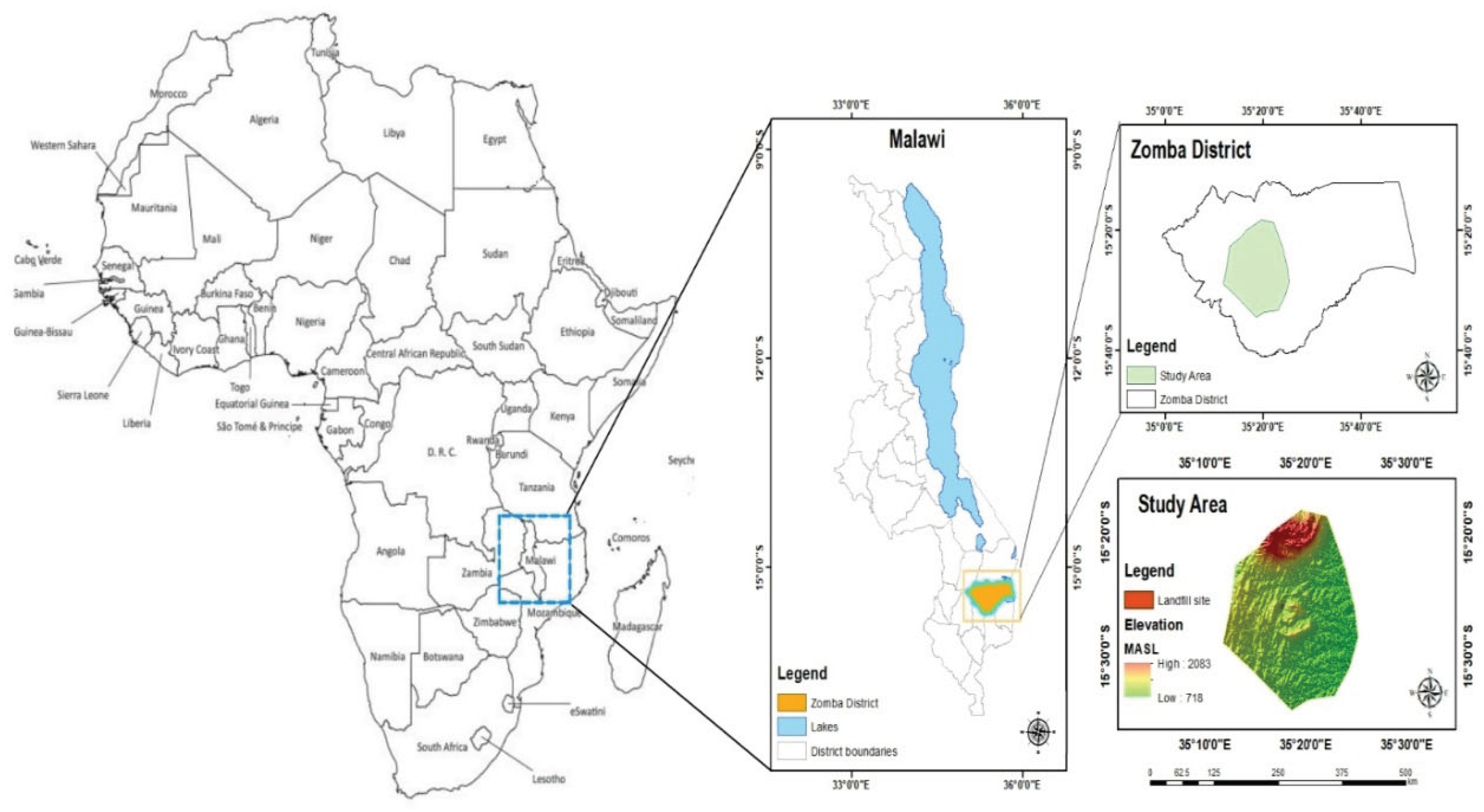
Table 1.
Distance of Soil and Groundwater Sampling Points from the Dumpsite.
| Soil sampling point | Calculated distance from the dumpsite | Borehole and well | Calculated distance from the dumpsite |
| Sampling point 1 | At the centre of the dumpsite | Well 1 | Within the dumpsite (6 m from the north east corner of the dumpsite |
| Sampling point 2 | 50 m | Well 2 | 120 m |
| Sampling point 3 | 150 m | Borehole 1 | 140 m |
| Sampling point 4 | 300 m | Well 3 | 170 m |
| Sampling point 5 | 2200 m (control sampling point) | Well 4 | 260 m |
| Borehole 2 | 2200 m (control water sampling point) |
Table 2.
Physical characteristics of the water samples.
| Sample ID | Wet Season | Dry Season | ||||||||||
| Temperature (°C) |
Ph | TDS (mg/L) |
EC (µs/cm) |
Temperature (°C) |
pH | TDS (mg/L) |
EC (µs/cm) |
|||||
| WI | 28.60 ± 0.10a | 7.25 ± 0.02a | 1366.33 ± 2.08a | 1965.00 ± 3.00a | 28.20 ±0.24a | 7.29 ± 0.03a | 155.13 ± 0.01c | 311.13 ± 0.00b | ||||
| W2 | 25.20 ± 0.52b | 6.33 ± 0.02c | 46.16 ± 0.04f | 74.41 ± 0.61f | 25.43b ± 0.59 | 6.38 ± 0.02c | 47.73 ± 0.02f | 93.23 ± 0.06f | ||||
| W3 | 25.23 ± 0.12b | 5.75 ± 0.01d | 247.80 ± 0.30b | 385.70 ± 1.15b | 25.40 ± 0.10b | 5.63 ± 0.08d | 81.81 ± 0.02d | 164.61 ± 0.01d | ||||
| W4 | 23.83 ± 0.06d | 6.59 ± 0.05b | 66.44 ± 0.05e | 107.70 ± 0.10e | 23.70 ± 0.10d | 6.56 ± 0.06b | 156.32 ± 0.02b | 310.13 ± 0.06c | ||||
| B1 | 24.70 ± 0.26c | 5.57 ± 0.03e | 109.40 ± 0.20d | 176.07 ± 0.10d | 24.70 ± 0.26c | 5.55 ± 0.04d | 58.80 ± 0.01e | 118.13 ± 0.06e | ||||
| B2 | 24.67 ± 0.06c | 6.28 ± 0.01c | 197.37 ± 0.46c | 311.10 ± 0.10c | 24.70 ± 0.10c | 6.36 ± 0.1c | 181.27 ± 0.07a | 357.32 ± 0.03a | ||||
| WHO MS |
- - |
6.5 - 8.5 6 - 9.5 |
1000 2000 |
1000 3500 |
- - |
6.5 - 8.5 6 - 9.5 |
1000 2000 |
1000 3500 |
||||
Notes: Mean ± standard deviation (n = 3). Means within the same row bearing the same superscript letter were not significantly different (p < 0.05). W1 to W 4 means Well 1 to Well 5 and B1 to B2 means Borehole 1 to Borehole 2, EC means Electrical Conductivity, and TDS means Total Dissolved Solids.
Table 3.
Chemical parameters related to water quality.
| Wet Season | Dry Season | |||||||||
| ID | As (mg/L) |
Cd (mg/L) |
Cr (mg/L) |
Cu (mg/L) |
Pb (mg/L) |
As (mg/L) |
Cd (mg/L) |
Cr (mg/L) |
Cu (mg/L) |
Pb (mg/L) |
| WI | BDL | 0.013 ± 0.00a | 0.41 ± 0.03a | 0.24 ± 0.01a | BDL | BDL | 0.08 ± 0.00a | 0.08 ± 0.00a | 0.19 ± 0.00a | BDL |
| W2 | BDL | 0.014 ± 0.00a | 0.13 ± 0.01b | 0.12 ± 0.01b | BDL | BDL | 0.02 ± 0.00c | 0.02 ± 0.00c | 0.12 ± 0.01b | BDL |
| W3 | BDL | 0.012 ± 0.00a | 0.14 ± 0.00b | 0.07 ± 0.00c | BDL | BDL | 0.06 ± 0.00b | 0.06 ± 0.00b | 0.07 ± 0.00c | BDL |
| W4 | BDL | 0.012 ± 0.00a | 0.08 ± 0.00c | BDL | BDL | BDL | BDL | BDL | BDL | BDL |
| B1 | BDL | 0.011 ± 0.00a | 0.08 ± 0.00c | BDL | BDL | BDL | BDL | BDL | BDL | BDL |
| B2 WHO MS |
BDL 0.01 0.01 |
0.014 ± 0.02a 0.03 0.01 |
0.07 ± 0.00c 0.003 - |
BDL 2.0 2.0 |
BDL 0.05 0.01 |
BDL 0.01 0.01 |
BDL 0.03 0.01 |
BDL 0.003 - |
BDL 2.0 2.0 |
BDL 0.05 0.01 |
Note: Mean ± standard deviation (n = 3). Means within the same row bearing the same superscript letter were not significantly different (p < 0.05), and BDL: Below detectable limit, W1 to W 4 means Well 1 to Well 5 and B1 to B2 means Borehole 1 to Borehole 2, WHO means World Health Organization, MS means Malawi Standard.
Table 4.
Microbial water quality results from the wet season and dry season.
| Wet | Season | Dry | Season | |||||||||||
| Total Coliform CFU/100 mL |
E. coli CFU/100 mL |
Salmonella CFU/100 mL |
Shigella CFU/100 mL |
S. aureus CFU/100 mL |
V. cholerae CFU/100 mL |
Total Coliform CFU/100 mL |
E. coli CFU/100 mL |
Salmonella CFU/100 mL |
Shigella CFU/100 mL |
S aureus CFU/100 mL |
V cholerae CFU/100 mL |
|||
| WI | 20900 | 3300 | 0 | TNTC | 2500 | 5900 | TNTC | 3400 | 400 | TNTNC | TNTC | 12300 | ||
| W2 | 1700 | 700 | 0 | 900 | 200 | 0 | 1000 | 300 | 0 | 1100 | TNTC | 1300 | ||
| W3 | 1300 | 500 | 0 | 200 | 900 | 0 | 1900 | 100 | 0 | 200 | 0 | 0 | ||
| W4 | 6000 | 1100 | 0 | 400 | 800 | 0 | 5700 | 0 | 0 | 0 | 0 | 1300 | ||
| B1 | 1400 | 1000 | 0 | 0 | 100 | 200 | 9800 | 2000 | 0 | 1200 | 0 | 200 | ||
| B2 | 0 | 0 | 0 | 0 | 0 | 0 | 0 | 0 | 0 | 0 | 0 | 0 | ||
| MS | <1 | <1 | <10 | <1 | <1 | <1 | <1 | <1 | <10 | <1 | <1 | <1 | ||
B1 to B2 = Borehole 1 to Borehole 2; MS = Malawi standard; TNTC = Two numerous to count; W1 to Well 4= Well 1 to Well 4; CFU = Colony-forming units.
Table 5.
Chemical parameters of the soil.
| Wet Season | Dry Season | |||||||||
| ID | As (mg/kg) |
Cd (mg/kg) |
Cr (g/kg) |
Cu (g/kg) |
Pb (mg/kg) |
As (mg/kg) |
Cd (mg/kg) |
Cr (mg/kg) |
Cu (mg/kg) |
Pb (mg/kg) |
| P1 | 0.14 ± 0.00a | 0.89 ± 0.01a | 0.91 ± 0.14a | 24.76 ± 0.23a | 57.85 ± 0.55a | 1.88 ± 0.04a | 0.43 ± 0.01b | 0.51 ± 0.01b | 94.86 ± 0.37a | 224.05 ± 5.7a |
| P2 | 0.06 ± 0.00 | 0.49 ± 0.01b | 0.56 ± 0.05b | 11.69 ± 0.42b | 23.96 ± 0.49b | 0.42 ± 0.02b | 0.63 ± 0.10b | 0.55 ± 0.01a | 60.65 ± 0.99b | 54.76 ± 0.74b |
| P3 | BDL | 0.44 ± 0.01c | 0.22 ± 0.02c | 14.04 ± 0.23c | 5.72 ± 0.19c | 0.03 ± 0.00c | 0.09 ± 0.01c | 0.19 ± 0.01c | 12.94 ± 0.43c | 2.24 ± 0.10c |
| P4 | BDL | 0.14 ± 0.01e | 0.14 ± 0.05cd | 4.39 ± 0.34d | 0.51 ± 0.01d | BDL | BDL | 0.19 ± 0.01c | 8.04 ± 0.37d | 0.16 ± 0.00d |
| P5 | BDL | 0.16 ± 0.01d | 0.07 ± 0.00d | 3.03 ± 0.13e | 0.05 ± 0.00d | BDL | BDL | 0.03 ± 0.00d | 4.93 ± 0.39e | BDL |
Notes: Mean ± standard deviation (n = 3). Means within the same row bearing the same superscript letter were not significantly different (p < 0.05). P1 to P5 are sampling points within 0 to 2200 m from the dumpsite BDL: Below detectable limit.
Table 6.
Microbial characteristics of the soil samples.
| Wet | Season | Dry | Season | ||||||||||
| Coliform CFU/100 g |
E. coli CFU/100 g |
Salmonella CFU/100 g |
Shigella CFU/100 g |
S. aureus CFU/100 g |
V. cholerae CFU/100 g |
Coliform CFU/100 g |
E. coli CFU/100 g |
Salmonella CFU/100 g |
Shigella CFU/100 g |
S. aureus CFU/100 g |
V. cholerae CFU/100 g |
||
| P1 | 101 | 58 | 2 | 39 | 84 | 28 | 290 | 39 | 0 | 2 | 119 | 1 | |
| P2 | 24 | 10 | 0 | 3 | 43 | 6 | 225 | 31 | 0 | 0 | 68 | 1 | |
| P3 | 15 | 8 | 0 | 1 | 30 | 1 | 121 | 31 | 0 | 0 | 19 | 0 | |
| P4 | 12 | 2 | 0 | 2 | 24 | 0 | 102 | 3 | 0 | 0 | 22 | 0 | |
| P5 | 2 | 0 | 0 | 4 | 14 | 0 | 24 | 0 | 0 | 1 | 8 | 0 |
P1 to P5 = Soil sampling point 1 to Soil sampling point 5, TNTC = Two numerous to count; CFU = Colony Forming Units.
Table 9.
Correlation matrix for chemical and microbial parameters in the soil (wet season).
| Pb | Cd | Cr | Cu | As | T. Coliform | E. coli | Salmonella | Shigella | S. aureus | ||
| Pb | 1 | ||||||||||
| Cd | .954** | 1 | |||||||||
| Cr | .968** | .935** | 1 | ||||||||
| Cu | .906** | .983** | .880** | 1 | |||||||
| As | .994** | .921** | .961** | .858** | 1 | ||||||
| Total Coliform | .967** | .921** | .903** | .907** | .949** | 1 | |||||
| E. coli | .960** | .929** | .899** | .917** | .935** | .995** | 1 | ||||
| Salmonella | .918** | .855** | .829** | .844** | .900** | .979** | .984** | 1 | |||
| Shigella | .918** | .844** | .821** | .822** | .907** | .972** | .976** | .997** | 1 | ||
| S. aureus | .985** | .957** | .963** | .933** | .969** | .974** | .966** | .917** | .907** | 1 | |
| **. Correlation is significant at the 0.01 level (2-tailed). | |||||||||||
Table 10.
Correlation matrix for chemical and microbial parameters in soil (dry season).
| Lead | Cd | Cr | Cu | As | Coliform | E. coli | Shigella | S. aureus | V. cholerea | ||
| Lead | 1 | ||||||||||
| Cadmium | .599* | 1 | |||||||||
| Chromium | .710** | .947** | 1 | ||||||||
| Copper | .934** | .843** | .902** | 1 | |||||||
| Arsenic | .999** | .579* | .694** | .926** | 1 | ||||||
| Coliform | .853** | .848** | .956** | .955** | .844** | 1 | |||||
| E. coli | .668** | .740** | .792** | .779** | .663** | .860** | 1 | ||||
| Shigella | .807** | 0.164 | 0.202 | .602* | .816** | 0.389 | 0.239 | 1 | |||
| S. aureus | .958** | .785** | .879** | .992** | .952** | .955** | .752** | .630* | 1 | ||
| V. cholera | .785** | .959** | .951** | .950** | .769** | .912** | .724** | 0.408 | .915** | 1 | |
| *. Correlation is significant at the 0.05 level (2-tailed). | |||||||||||
| **. Correlation is significant at the 0.01 level (2-tailed). | |||||||||||
Table 11.
HHR assessment of water samples around the Zomba MSW dumpsite.
| Wet Season | Dry Season | ||||||
| Adults | Children | Infants | Adults | Children | Infants | ||
| HI range | 14.48-70.48 | 21.80-105.07 | 20.9 –111.89 | 4.80-17.20 | 12.50-43.13 | 13.3-46.15 | |
| CR range | 0.00130-0.0120 | 0.00037-0.00399 | 0.000039-0.00043 | 0-0.00087 | 0-0.00228 | 0-0.00243 |
HI: Hazard Index; CR: Carcinogenic risk, HI ≤ 1 denotes no health risk to humans; HI > 1 denotes a higher level of hazard; CR < 1 × 10⁻⁶ denotes a very low risk of developing cancer in a lifetime; CR > 1 × 10⁻³ denotes a very high risk of developing cancer in a lifetime.
Disclaimer/Publisher’s Note: The statements, opinions and data contained in all publications are solely those of the individual author(s) and contributor(s) and not of MDPI and/or the editor(s). MDPI and/or the editor(s) disclaim responsibility for any injury to people or property resulting from any ideas, methods, instructions or products referred to in the content. |
© 2026 by the authors. Licensee MDPI, Basel, Switzerland. This article is an open access article distributed under the terms and conditions of the Creative Commons Attribution (CC BY) license (http://creativecommons.org/licenses/by/4.0/).
Copyright: This open access article is published under a Creative Commons CC BY 4.0 license, which permit the free download, distribution, and reuse, provided that the author and preprint are cited in any reuse.


