
Submitted:
26 April 2026
Posted:
27 April 2026
You are already at the latest version
Abstract
Kindergarten toilet design critically influences children's autonomy, hygiene behaviours, and psychological well-being. Yet comparative architectural evaluations in conflict-affected and developing regions remain scarce, particularly in Iraq, where facilities typically adhere only to minimum regulatory standards. This study develops and applies a structured evaluation framework to assess child-centred innovation in kindergarten toilet facilities, identifying design weaknesses and opportunities to inform architects, policymakers, and implementing institutions. The study evaluated ten kindergartens in Erbil using a literature-derived framework comprising four domains: Autonomy & Functionality, Health & Hygiene, Safety & Comfort, and Aesthetics & Sustainability, operationalised through 14 quantitative indicators and assessed via a five-point scoring rubric. Data sources included architectural drawings and systematic on-site observations. Overall innovation scores ranged from 3.1 to 4.3 (scale 1-5). While basic safety requirements were universally met, significant deficiencies emerged in inclusive design (accessible fixtures present in only 3/10 facilities, 30%), advanced hygiene technologies (sensor-activated fixtures in only 2/10, 20%), and aesthetic-environmental quality (mean score 2.4/5). Higher-performing facilities demonstrated closer classroom-toilet proximity (≤ 6m vs. >15m), distributed rather than centralised layouts, and integrated child-scale fixtures. Current kindergarten toilet design in Erbil achieves functional adequacy but consistently fails to deliver inclusivity, technological innovation, and spatial quality. Policy revision beyond minimum compliance toward child-centred performance standards is urgently required.
Keywords:
toilet
; kindergarten
; children’s health
; architecture design
1. Introduction
Sanitary facilities in kindergartens fundamentally support children’s health, independence, and daily routines, yet they remain among the most overlooked components of educational architecture. For young children, toilets are not only service spaces but environments that directly influence hygiene habits, autonomy, emotional comfort, and perceptions of safety. Researchers demonstrate that well-designed kindergarten sanitary facilities foster children’s self-care skills, mitigate health risks, and support overall well-being by providing environments that are appropriately scaled, hygienic, safe, and psychologically supportive [1,2].
Despite the growing body of international literature, the design of kindergarten toilet facilities in many developing and transitional contexts continues to be evaluated primarily through regulatory compliance rather than architectural performance. According to the Directorate of Education in Erbil, the city hosts approximately 215 registered kindergartens serving over 18,000 children aged 3-6 years (Directorate of Education Erbil). Despite this substantial population, no systematic architectural evaluation of kindergarten sanitary facilities has been conducted in the past decade. In Iraq, kindergarten sanitary design is largely governed by Ministry of Education (MoE) standards that focus on quantitative requirements, such as fixture numbers and gender separation [3]. While these regulations ensure minimum functional provision, they give limited attention to qualitative dimensions, including spatial configuration, child autonomy, inclusivity, supervision, and environmental experience. As a result, whether contemporary kindergarten toilets in Erbil embody child-centred design principles and innovative architectural practices remains largely undocumented.
Previous studies on educational sanitary design have demonstrated a gradual shift from viewing school toilets as purely functional spaces toward recognising their broader social, behavioural, and psychological implications [4]. Research increasingly underscores the importance of factors such as classroom proximity, child-scaled fixtures, hygiene-enhancing technologies, balanced supervision that preserves privacy, and aesthetically engaging environments in encouraging children to use toilets confidently and independently [5,6]. However, much of this work is conceptual or policy-oriented, and relatively few studies employ systematic, comparative methods to assess how these principles are implemented across multiple real-world kindergarten projects within a single local context.
In the Iraqi and Kurdistan Region context, this gap is particularly pronounced. Existing research tends to focus on general school infrastructure, WASH (Water, Sanitation, and Hygiene) provision, or regulatory deficiencies, with limited architectural analysis of design quality at the spatial and operational levels [7]. Moreover, comparative, design-focused evaluations of kindergarten toilets (especially those that move beyond compliance to examine innovation) are notably absent [2]. Consequently, empirical evidence remains insufficient to inform architects, planners, and policymakers about the performance of current kindergarten sanitary facilities and the areas in which targeted design improvements are most needed.
This study addresses this gap by conducting a comparative, performance-based evaluation of toilet facilities in ten kindergartens in Erbil. By examining multiple cases within a shared climatic, cultural, and institutional context, the research isolates architectural design decisions as the primary source of variation in performance. Building on international literature, the study adopts a structured evaluation framework organised around four key dimensions: Autonomy & Functionality, Health & Hygiene, Safety & Comfort, and Aesthetics & Sustainability. These dimensions are operationalised through measurable indicators and assessed using a standardised five-point scoring rubric. This study addresses three research questions:
(1) To what extent do current kindergarten toilet facilities in Erbil exceed minimum regulatory compliance in supporting child-centred design principles?
(2) Which design domains exhibit the greatest performance variation across facilities?
(3) What measurable indicators differentiate high-performing from low-performing kindergarten toilet designs?
The primary aim of this research is to evaluate the extent to which kindergarten toilet designs in Erbil move beyond minimum regulatory compliance to support child-centred innovation. Specifically, the study seeks to: (1) develop a context-sensitive architectural evaluation framework for kindergarten sanitary facilities; (2) compare the performance of toilet designs across ten kindergarten case studies; and (3) identify recurring strengths, deficiencies, and opportunities for improving inclusivity, hygiene, and spatial quality. Through this approach, the research contributes empirical evidence and a transferable evaluative method that can inform future design practice and policy development for early childhood educational environments in Iraq and comparable contexts. Comparative case study methodology was selected because it enables the isolation of architectural design decisions as the primary independent variable while controlling regulatory framework, climate, and cultural context- conditions uniformly shared across Erbil’s kindergartens
2. Literature Review
2.1. Evolution of Sanitary Design in Educational Environments
Historically, sanitary facilities in educational buildings were treated as purely functional service spaces, designed to meet basic hygiene requirements with minimal consideration of user experience or spatial quality. Before the late twentieth century, kindergarten and school toilets were typically evaluated according to fixture counts, plumbing efficiency, and ease of maintenance, rather than their impact on children’s health, behaviour, or psychological comfort [1]. Early concerns surrounding school toilets primarily focused on cleanliness and disease prevention, as evidenced by studies in the 1990s that documented unsanitary conditions and associated health risks among children [4]. These findings prompted calls for improved maintenance and hygiene standards, but have not yet been translated into comprehensive design innovation.
Since the early 2000s, research has increasingly recognised school toilets as spaces with significant social and behavioural implications. Studies have shown that many children avoid using school toilets due to inadequate conditions, limited privacy, unpleasant odours, and concerns about bullying, leading to adverse health outcomes such as urinary tract infections and constipation [8,9]. In response, initiatives such as the United Kingdom’s Bog-Standard campaign emphasised the need for enforceable benchmarks addressing cleanliness, ventilation, privacy, and accessibility [10]. During this period, international organisations increasingly framed school sanitation within the broader WASH agenda, positioning toilets as integral to safe and supportive learning environments rather than secondary technical provisions [11].
Over the past decade, scholarly discourse has increasingly shifted toward innovation-driven and child-centred approaches to sanitary design. Contemporary literature draws on ergonomics, environmental psychology, and inclusive design, emphasising that kindergarten toilets should not only ensure hygiene and safety but also promote children’s autonomy, dignity, and emotional well-being. This shift reflects a broader recognition that spatial quality, technological integration, and visual character can meaningfully influence children’s willingness to use toilet facilities and their capacity to develop independent hygiene habits.
2.2. Child-Centred Design Principles in Kindergarten Toilets
Central to recent scholarship is the concept of child-centred design, which prioritises children’s physical dimensions, cognitive abilities, and behavioural patterns in architectural decision-making. In the context of kindergarten toilets, autonomy and functionality are widely recognised as critical design objectives. Research demonstrates that child-sized fixtures, intuitive layouts, and short travel distances from classrooms significantly enhance children’s ability to use toilets independently, thereby reinforcing self-esteem and reducing accidents [12,13]. Autonomy-supportive environments are particularly important in early childhood, where daily routines play a formative role in habit formation and psychosocial development [14].
Health and hygiene represent another core dimension of child-centred sanitary design. Numerous studies emphasise the importance of easily cleanable materials, adequate ventilation, and sufficient handwashing facilities in preventing the spread of infectious diseases among young children [15]. More recently, attention has turned to the role of technology in enhancing hygiene practices. Hands-free faucets, sensor-activated flush systems, and touchless soap dispensers are increasingly promoted as effective measures for reducing germ transmission, particularly in post-pandemic educational environments [16]. However, the adoption of such technologies remains uneven, especially in resource-constrained settings.
Safety and comfort are equally emphasised in literature, reflecting the vulnerability of young children in wet and enclosed spaces. Design recommendations consistently highlight non-slip flooring, rounded edges, adequate lighting, and clear sightlines that allow indirect teacher supervision without compromising children’s privacy [17,18]. Studies suggest that a balanced relationship between supervision and privacy is essential for encouraging toilet use while safeguarding children’s sense of dignity and security.
2.3. Inclusivity, Aesthetics, and Sustainability in Educational Sanitary Design
Beyond basic functionality, contemporary research increasingly advocates for inclusive and emotionally supportive toilet environments. Inclusive design principles stress the necessity of accommodating children with physical disabilities through accessible stalls, sufficient manoeuvring space, and appropriate fixtures [10,13]. Despite the availability of international guidelines, empirical studies indicate that accessibility remains inconsistently implemented in educational toilets, often treated as an optional rather than essential design component.
Aesthetic quality has also emerged as a significant, though often underestimated, factor in kindergarten toilet design. Research suggests that playful colours, natural light, and visually engaging elements can reduce anxiety, foster positive associations, and encourage regular toilet use among young children [9]. Nevertheless, aesthetics is frequently deprioritised due to budget constraints or the perception that toilets are purely utilitarian spaces. As a result, many kindergarten toilets remain visually neutral or institutional, missing opportunities to support children’s emotional comfort.
Sustainability has become an increasingly prominent concern in sanitary design literature, particularly within the context of global water scarcity and environmental responsibility. Studies highlight the potential of low-flow fixtures, water-efficient systems, and natural lighting strategies to reduce environmental impact while maintaining hygiene standards [19]. High-profile initiatives such as the Gates Foundation’s Reinvent the Toilet Challenge have demonstrated the feasibility of innovative, resource-efficient sanitation technologies [20]. However, the translation of such innovations into everyday educational settings (especially in developing contexts) remains limited.
2.4. Operationalising Design Quality and the Research Gap
A growing body of literature underscores the need to move beyond descriptive or policy-based discussions toward systematic, performance-based evaluation of educational toilet design. Scholars increasingly advocate for frameworks that translate abstract principles (such as autonomy, hygiene, safety, and aesthetics) into measurable architectural indicators, enabling comparative analysis across multiple facilities [21]. Such approaches allow researchers to identify patterns of success and deficiency, providing evidence-based guidance for design improvement (Table 1).
Recent systematic reviews have highlighted persistent gaps in educational sanitation research. McMichael found that only 12% of school WASH studies included architectural design variables as primary outcomes, with most focus on infrastructure availability rather than spatial quality [22]. In the Iraqi and Kurdistan Region context, research on school sanitation has largely focused on infrastructure deficits, WASH access, or regulatory compliance, with limited attention to architectural design quality or innovation [7,23,24]. Comparative, design-focused studies examining multiple kindergarten toilets within a shared local context are particularly scarce. Consequently, there is a lack of empirical data to assess how effectively child-centred and innovative design principles are implemented in practice.
This study responds directly to this gap by applying a structured, performance-based evaluation framework to ten kindergarten toilet facilities in Erbil. By synthesising international design principles with local architectural analysis, the research contributes to the emerging literature on child-centred sanitary design and provides context-specific insights that can inform future policy, design practice, and academic inquiry.
3. Method and Material
3.1. Research Design and Approach
This study adopts a comparative, evaluative research design to assess the architectural performance of kindergarten toilet facilities in Erbil. A qualitative–quantitative mixed approach is employed, combining systematic on-site observation with structured scoring to translate qualitative design characteristics into comparable numerical values. This approach enables the evaluation of spatial and operational design quality while allowing for cross-case comparison within a shared cultural, climatic, and regulatory context.
Rather than assessing compliance with minimum standards alone, the research emphasises performance-based evaluation, focusing on how effectively toilet designs support child autonomy, hygiene, safety, comfort, and environmental quality. By examining multiple kindergartens designed and constructed under similar institutional frameworks, the study isolates architectural design decisions as the principal variable influencing performance outcomes.
The empirical component of the research is based on ten kindergarten buildings located within the city of Erbil. The selected cases represent a range of public and private institutions and were chosen according to the following criteria:
- Functioning kindergartens serving children aged approximately 3–6 years.
- Availability of permanent, in-building toilet facilities designated for children.
- Variation in architectural layout, age of construction, and spatial organisation.
- Accessibility for on-site observation and documentation.
All case studies operate under the same regional regulations issued by the Ministry of Education, ensuring a consistent regulatory baseline. This controlled context allows differences in toilet performance to be attributed primarily to architectural design quality rather than policy variation.
3.2. Evaluation Framework and Domains
The evaluation framework was developed through a synthesis of international literature on child-centred educational design and school sanitation. Based on this review, four primary evaluation domains were defined:
- Autonomy & Functionality: assessing the extent to which toilet spaces support independent use by children through ergonomic design, spatial clarity, and proximity.
- Health & Hygiene: evaluating design features that promote cleanliness, disease prevention, and hygienic behaviour.
- Safety & Comfort: examining physical safety, environmental comfort, and the balance between supervision and privacy.
- Aesthetics & Sustainability: considering visual quality, inclusivity, and environmentally responsible design strategies.
Each domain was operationalised through a set of observable architectural indicators derived directly from the literature (Table 2), enabling consistent assessment across all case studies.
3.3. Data Collection and Scoring
Data were collected through systematic field observations conducted within each kindergarten. The observation process focused on spatial configuration, fixture dimensions, material selection, lighting, ventilation, safety features, and overall environmental quality of the toilet facilities. Observations were documented using standardised evaluation sheets to ensure consistency and reduce observer bias (Figure 1).
Where permitted, photographic documentation was used to support observational records and facilitate later cross-case comparison. No personal data was collected, and children were not photographed or directly involved in the research process, ensuring ethical compliance.
To translate qualitative observations into comparable results, a five-point scoring rubric was applied to each indicator within the four evaluation domains. Scores ranged from 1 (very poor performance) to 5 (excellent performance), reflecting the degree to which design features aligned with child-centred and innovative design principles. The four evaluation domains and 14 indicators were derived from a systematic literature review and subjected to expert review by three architects specialising in educational design (15+ years’ experience each). Experts rated each indicator for relevance and clarity on a 4-point scale (1=irrelevant to 4=highly relevant). All indicators achieved mean scores ≥3.5, with a Content Validity Index (CVI) of 0.92. The evaluation instrument was piloted in two kindergartens not included in the final sample. Pilot results informed refinement of indicator wording and scoring anchors to eliminate ambiguity. On-site observations were conducted without prior notification to minimise any bias. Photographic documentation was reviewed by two independent researchers to verify observational records. Scoring calibration was performed by three experts: two licensed architects with a minimum of 10 years of kindergarten design experience in Erbil, and one early childhood education specialist. Each expert independently rated 30% of the indicators (randomly selected) using the five-point rubric. Final scores for each indicator represent the mean of the three expert ratings.
For each kindergarten, individual indicator scores were aggregated to produce mean scores for each domain. These domain scores were then compared across all ten case studies to identify performance patterns, strengths, and recurring deficiencies. Comparative analysis enabled the identification of both exemplary design practices and common design gaps within the local context.
4. Case Studies
4.1. Case 1: Public Kindergarten (Standardised Prototype)
The kindergarten’s toilet design demonstrates a strong level of innovation and child-centred planning (Figure A1). Positioned directly off the main corridor, the facilities provide efficient access from classrooms and reduce transition time. The fixture ratio of approximately 1:20–25 complies with MoE standards and, combined with fully child-scaled fixtures, effectively supports independent use. Hygiene and safety performance are notably high, with sensor-based faucets and flush systems minimising contact and improving cleanliness. Appropriate materials and ventilation further contribute to a clean, well-maintained environment. Indirect sightlines allow discreet supervision while preserving comfort and privacy (Table 3). Aesthetically, the toilets are well integrated into the child-friendly courtyard, enhancing the overall spatial experience. However, inclusive design remains limited: only one enlarged cubicle is provided, with unclear accessibility specifications. Sustainability measures, such as water-saving fixtures, are also lacking.
Overall, Kindergarten 1 achieves a strong innovation score, reflecting effective functional planning and child-focused design, with minor deficiencies in accessibility and sustainability.
4.2. Case 2: Public Kindergarten (Standardised Prototype)
The toilet design in kindergarten 2 is functional but demonstrates less innovation compared to kindergarten 1. The centrally located sanitary facilities block supports reasonable layout efficiency, providing convenient access for both children and staff (Figure A2). The fixture ratio meets MoE requirements, and multiple child-sized toilets ensure adequate capacity. However, inclusive design is only minimally addressed, with a single wider cubicle that lacks emphasis and clear accessibility detailing. Hygiene performance is adequate but limited, as the facility relies solely on manual fixtures and does not incorporate hands-free technologies. In contrast, material quality and ventilation are strong, contributing to good cleanliness and odour control. Safety and comfort are well supported through observable supervision, non-slip flooring, and appropriate lighting. Aesthetically, the sanitary facilities are utilitarian and lack playful or child-engaging elements, while sustainability is weak due to the absence of water-saving fixtures or other environmentally conscious features.
Overall, Kindergarten 2 achieves an average level of innovation: it is a competent and functional design but offers limited advancement in inclusivity, hygiene technology, aesthetics, and sustainability (Table 4).
4.3. Case 3: Public Kindergarten (Standardised Prototype)
Kindergarten 3 employs a centralised toilet block with a fixture ratio of 1:25, offering adequate capacity but reduced spatial efficiency, as all classrooms rely on a single facility. While the layout provides acceptable convenience, children in more distant classrooms face longer travel distances (Figure A3). All fixtures are appropriately child-scaled, and inclusivity is a notable strength: the presence of an oversized accessible cubicle with direct corridor access represents a clear improvement over the minimum standard. Teachers’ toilets are located outside the kindergarten area, maintaining functional separation between staff and children. The design meets essential hygiene requirements through appropriate materials and ventilation, though it lacks advanced technological features. Safety provisions are moderate, with only indirect supervision available, while comfort is supported by non-slip flooring and adequate lighting. Aesthetic treatment remains neutral, with limited emphasis on engaging or child-friendly design elements, and no sustainability measures are evident.
Kindergarten 3 demonstrates solid functional performance, with strong accessibility as its notable attribute. However, the absence of technological and sustainable enhancements positions it as a conventional rather than innovative toilet design (Table 5).
4.4. Case 4: Private Kindergarten (Transitional Design)
Kindergarten 4 demonstrates a high level of design innovation through a distributed toilet layout comprising multiple small toilet blocks located adjacent to classroom clusters (Figure A4). This arrangement minimises travel distance, reduces congestion, and supports efficient access during both class and play periods. All fixtures are child-size and consistently applied across blocks, promoting independent use, while several blocks include enlarged cubicles to accommodate children with disabilities. Teachers’ facilities are provided and generally separated from children’s toilets, although full separation is not consistently achieved across all blocks. The design performs well in health and hygiene, incorporating hands-free sensor fixtures, hygienic finishes, and adequate ventilation to support cleanliness and air quality. Safety and comfort are reinforced through proximity to classrooms, indirect supervision, non-slip flooring, and sufficient lighting. Aesthetically, the sanitary blocks are integrated into the campus through colour-coded themes that enhance spatial identity and child engagement. Although sustainability measures such as water-saving fixtures are limited, the overall design reflects significant innovation in spatial organisation and hygiene technology.
Overall, Kindergarten 4 achieves a strong innovation score, demonstrating notable advancements in accessibility, distribution efficiency, and hygiene-enhancing technology, creating a positive and supportive daily environment for children. (Table 6).
4.5. Case 5: Private Kindergarten (Transitional Design)
Kindergarten 5 receives an average overall innovation score, primarily due to limitations in inclusivity and spatial efficiency. The sanitary facilities block is located at one end of the wing, resulting in long travel distances for some classrooms and reducing layout efficiency (Figure A5). While the fixture ratio meets the MoE minimum requirement of 1:25, the centralised configuration is less suitable for young children who require quick and convenient access. A significant limitation is the complete absence of an accessible toilet, indicating non-compliance with contemporary inclusive design standards. Although the fixtures are child-sized and simple to use, the lack of accommodations for children with disabilities represents a major design gap. The sanitary facilities meet only basic hygiene and safety expectations. Manual fixtures, standard materials, and conventional ventilation are provided, but no innovative technologies are incorporated. Supervision is also limited, as the toilet is not directly visible from classroom areas, requiring additional teacher oversight. Non-slip flooring and adequate lighting contribute positively to safety, but the space lacks child-friendly aesthetic features and does not include any sustainability measures such as water-saving fittings.
Overall, Kindergarten 5 provides functional but minimum-standard toilet facilities. Key improvements include adding an accessible toilet, relocating or supplementing toilet blocks to improve proximity to classrooms, and upgrading hygiene and sustainability features to better support child-centred and inclusive design (Table 7).
4.6. Case 6: Private Kindergarten (Transitional Design)
Kindergarten 6 features a toilet block positioned alongside a shared playroom, serving multiple classrooms within the kindergarten. The fixture ratio meets the MoE guideline of 1:25, although shared use may create congestion during peak periods (Figure A6). While the block is conveniently located for the playroom, it is less accessible for more distant classrooms, resulting in moderate layout efficiency. All fixtures are child-scaled, and the symmetrical layout supports intuitive use. The inclusion of an oversized accessible cubicle strengthens the design’s inclusivity, despite access being internal rather than independently located. Separate staff toilets near the lounge ensure appropriate teacher facilities. Hygiene and safety performance is adequate: the toilets use standard plumbing, appropriate materials, and sufficient ventilation, supporting cleanliness and acceptable air quality. Supervision is moderate, with visibility from the playroom enabling oversight, though not all classrooms have direct sightlines. Non-slip flooring, good artificial lighting, and access to daylight help promote comfort and safety for young children. Aesthetically, the design is neutral with limited child-focused elements, and sustainability performance is low due to the absence of water- or energy-saving features.
Overall, Kindergarten 6 achieves an average innovation score. Its key strength lies in the provision of an accessible toilet, distinguishing it from facilities lacking inclusive features. Improving spatial distribution or incorporating enhanced hygiene technologies could further strengthen its functionality and child-centred performance. (Table 8).
4.7. Case 7: Private Kindergarten (Design-Oriented)
Kindergarten 7 features two symmetrical toilet blocks serving separate classroom clusters, enhancing accessibility and supporting children’s autonomy. The fixture provision complies with Ministry of Education ratios, and all fixtures are child-scaled, facilitating independent use (Figure A7). The decentralised layout places toilets close to classrooms, improving circulation efficiency and reducing waiting times. Inclusivity is a notable strength, with an accessible cubicle provided and independently accessed from the corridor, exceeding basic regulatory requirements. However, the absence of dedicated staff toilets compromises staff privacy and hygiene, negatively affecting overall functional performance. Hygiene standards are adequately met through conventional materials and ventilation, although advanced hygiene technologies and sustainability measures are not incorporated. Supervision is facilitated through proximity and clear access points, contributing to safety and comfort. Aesthetic treatment remains neutral, with limited child-focused expression.
Overall, the design achieves a moderate level of innovation, driven primarily by its dual-block configuration and inclusive layout. While effective in supporting autonomy, accessibility, and safety, the toilet facilities would benefit from dedicated staff amenities and enhanced technological and sustainable features (Table 9).
4.8. Case 8: Private Kindergarten (Design-Oriented)
Kindergarten 8 features a two-level layout with separate toilet facilities on each floor, improving accessibility and reducing child-to-toilet ratios. All fixtures are appropriately scaled for children, and the vertical distribution allows convenient access from classrooms without requiring stair use (Figure A8). However, a major limitation is the absence of dedicated accessible toilets, as no disability-friendly stalls are provided, representing a significant gap in inclusive design. Separate staff toilets are included, ensuring privacy and appropriate staff facilities. The toilet design meets basic health and hygiene standards through conventional manual fixtures, tiled finishes, and adequate natural ventilation and daylight. Toilets are located near classrooms on each floor, facilitating supervision and supporting safety and comfort. Non-slip flooring and good lighting further enhance usability. Aesthetic treatment remains minimal, with limited child-oriented design elements, and sustainability measures such as low-flow fixtures are not evident.
This case achieves an average innovation score. The design supports multi-story functionality and children’s independence but demonstrates limited innovation, with inclusivity and sustainability representing key areas for improvement. (Table 10).
4.9. Case 9: Private Kindergarten (Design-Oriented)
Kindergarten 9 employs a centralised sanitary facilities block serving the kindergarten section, which meets basic functional requirements but offers limited design advantages. The fixture provision is adequate, and all fixtures are appropriately child-scaled, supporting independent use (Figure A9). However, the centralised layout requires classrooms to converge at a single location, reducing spatial efficiency. A major limitation is the absence of an accessible toilet for children with disabilities, representing a clear gap in inclusive design. In contrast, the provision of a separate staff toilet reflects good practice in staff–child facility separation. The sanitary facilities design demonstrates minimal innovation, relying on conventional manual fixtures, standard tiled finishes, and basic ventilation strategies. Safety and comfort are adequately addressed through visible entrances that allow indirect supervision, along with non-slip flooring and sufficient lighting. Aesthetic quality remains utilitarian, with no child-oriented design features, and sustainability considerations such as water-saving fixtures are absent.
Overall, Kindergarten 9 reflects a compliance-driven approach that satisfies minimum standards but falls short of contemporary child-centred, inclusive, and innovative toilet design principles. (Table 11).
4.10. Case 10: Retrofitted Kindergarten
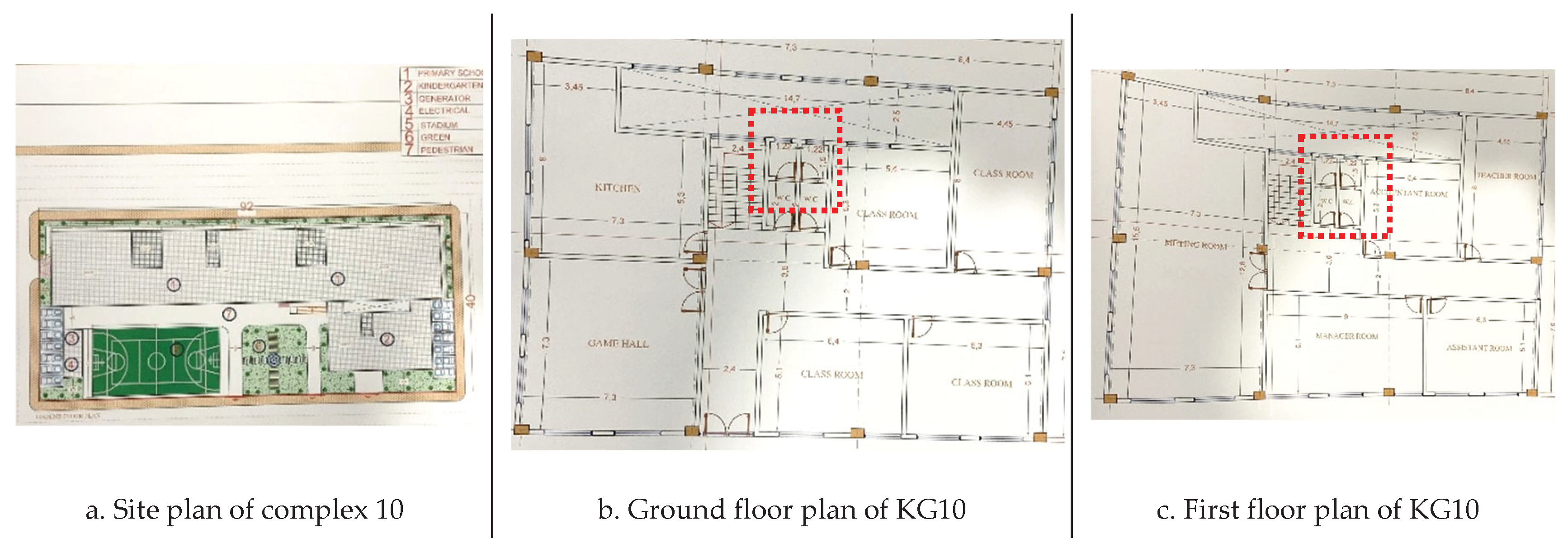
Kindergarten 10 is a small facility that demonstrates a relatively low level of innovation and functional performance. The toilet provision consists of only two child-sized toilet cubicles, which are likely insufficient for the user population and may result in congestion and overuse (Figure A10). Although the toilets are centrally located among classrooms and support straightforward self-use, the limited fixture count significantly constrains capacity. A critical gap is the absence of an accessible toilet, representing a clear failure to address the needs of children with mobility impairment. A separate staff toilet is provided, appropriately addressing staff requirements. The toilet design meets only basic health and hygiene standards through conventional materials and adequate ventilation, without incorporating advanced hygiene technologies. Safety and comfort are moderate, supported by visible entrances, non-slip flooring, and sufficient lighting, although direct supervision from classrooms is limited. Aesthetic quality is minimal, and sustainability measures such as water-saving fixtures are absent.
This case reflects a compliance-driven and under-resourced approach, with insufficient capacity and a lack of inclusivity underscoring the need for improved planning focused on child-centred, inclusive, and scalable sanitary facilities design. (Table 12).
5. Results
The evaluation of ten kindergarten sanitary facilities shows general compliance with basic standards, including universal use of child-sized fixtures that support independent use. Layout performance varied considerably: kindergartens such as KG1, KG4, and KG7 scored highly due to their proximity to classrooms, whereas KG5 and KG10 performed poorly because of distant or inefficient placements (Table 13). Only about 30% of the cases provided accessible stalls, indicating limited attention to inclusivity and inconsistency with contemporary design guidelines. These findings highlight the importance of spatial proximity and accessible features in promoting autonomy and equitable use.
All facilities met fundamental hygiene requirements, with strong performance in material quality and ventilation. However, only two kindergartens adopted sensor-activated fixtures, revealing a substantial gap in the application of post-COVID hygiene innovations. Sanitary facilities relying on manual fixtures scored lower due to higher sanitation risks and reduced support for independent, hygienic routines. Future upgrades should prioritise cost-effective technologies aligned with current global health standards.
Table 14 presents aggregated domain scores across all ten kindergartens. Safety & Comfort achieved the highest mean score (M=3.86, SD=0.38, range: 3.0-4.0), followed by Autonomy & Functionality (M=3.43, SD=0.63, range: 2.4-4.3). Health & Hygiene showed moderate performance (M=3.20, SD=0.75, range: 2.0-4.0), while Aesthetics & Sustainability scored lowest (M=2.42, SD=0.58, range: 1.7-3.3). Between-domain differences were statistically significant (Friedman test: χ2=18.45, df=3, p<0.001).
The coefficient of variation (CV) indicates that Aesthetics & Sustainability and Health & Hygiene exhibited the greatest performance heterogeneity across facilities, while Safety & Comfort was most consistent.
Safety performance was consistently strong across all cases. All kindergartens provided non-slip flooring and adequate lighting, achieving high safety scores. Nonetheless, variation existed in supervision: approximately half of the facilities allowed unobtrusive monitoring, while the rest provided only moderate oversight. Although privacy was maintained through individual cubicles, the absence of occupancy indicators suggests potential for further improvement. Adopting child-centred supervision guidelines could enhance both comfort and safety.
Aesthetic and sustainability outcomes were notably weak. Most toilets were utilitarian, lacking engaging or child-friendly design elements, which led to low aesthetic scores. Exceptions included KG1 and KG8, which incorporated more thoughtful visual features. Sustainability was similarly limited, with none of the kindergartens employing water-saving fixtures—an issue misaligned with international WASH priorities. Overall, while functionality and safety were generally satisfactory, deficits in inclusivity, aesthetics, and sustainability underscore the need for updated design standards that prioritise both well-being and long-term environmental performance (Figure 2).
Innovative sanitary design in kindergartens is multifaceted, emphasising not only technology but also thoughtful space planning, inclusivity, and safety. Successful designs, such as KG4 and KG7, enhance children’s independence and dignity, while deficiencies like those in KG10 result in health risks and access issues. Best practices for kindergarten toilet design include sufficient child-sized fixtures, accessibility, hygiene-promoting features, strategic placement, welcoming environments, and playful elements. Study results indicate that exceeding minimum design standards correlates with improved usability. Limitations include the lack of direct user feedback and varying cultural expectations regarding privacy. Despite advancements, significant opportunities for further innovation remain, with appropriate toilet access being a critical need for children’s well-being. Together, architects and educators can create supportive environments that benefit children’s everyday experiences in kindergarten.
6. Discussion
Comparison of ten Erbil kindergartens reveals notable differences in toilet design innovations, evaluated across four primary dimensions. Safety and Comfort received high ratings, approximately 4 out of 5, attributable to the implementation of fundamental safety protocols. Autonomy and Functionality exhibited variability; institutions with readily accessible, child-sized facilities demonstrated superior scores, whereas those with remote toilet locations received only “fair” ratings, roughly 3 out of 5. Health and Hygiene ratings were inconsistent; one school attained excellent scores through the incorporation of sophisticated features, while others received moderate evaluations. Aesthetics and Sustainability were generally rated poorly, averaging between 2 and 3 out of 5, reflecting a lack of decorative elements and environmentally conscious design. Consequently, innovation scores across the schools ranged from approximately 3.1 to 4.3, thereby indicating considerable variation in the implementation of child-focused designs.
Variations in kindergarten contexts within Erbil yield disparate innovation results, with facility type and age exerting a significant influence. Kindergartens that are privately financed or of more recent construction tend to demonstrate greater innovation, particularly in the realms of technology and design. This pattern is exemplified by KG4, the sole kindergarten incorporating modern sensor fixtures. Conversely, older public facilities frequently exhibit non-compliance with current design standards; for instance, only three out of ten provide wheelchair-accessible toilets, thereby exposing deficiencies in inclusive design adherence despite existing policy directives. Public kindergartens generally satisfy the Ministry of Education’s minimum requirements, whereas private institutions frequently surpass these standards through improved aesthetics and child-focused features. Consequently, the observed disparities underscore that kindergarten toilet design innovation is contingent upon available resources, the age of the building, and the progression of design guidelines.
The assessment of kindergarten toilet designs indicates that while safety and functionality are generally upheld, as evidenced by the provision of child-sized amenities, non-slip flooring, and private stalls in all participating schools, inclusivity presents a significant challenge. Specifically, only a minority, approximately 30%, of the surveyed institutions adequately accommodate children with disabilities. Moreover, the incorporation of advanced hygiene and sustainability features is notably deficient, with the majority of schools relying on conventional fixtures. The aesthetic quality of these environments is also lacking, resulting in uninspiring settings, and certain layouts are poorly conceived, thereby detrimentally affecting children’s comfort and autonomy. Consequently, despite the fulfilment of fundamental requirements, substantial enhancements in innovation, inclusivity, and aesthetics are essential to more effectively promote children’s well-being.
The research findings offer several recommendations for improving child-friendly toilet design within Erbil’s kindergartens. Foremost among these are: 1) the incorporation of inclusive designs, including wheelchair-accessible facilities, to ensure the needs of children with disabilities are met; 2) the enhancement of layouts to facilitate independent access for children, ideally placing toilets within 6–9 meters of classrooms and maintaining a suitable child-to-toilet ratio; 3) the adoption of hygiene technologies, such as sensor faucets and automatic flushers, to mitigate germ transmission; 4) the prioritization of aesthetics through the use of vibrant colors and playful designs to foster welcoming environments that reduce stress; and 5) the integration of sustainable practices, including water-saving fixtures and solar tube lighting, to exemplify environmental stewardship. Policymakers and administrators are encouraged to update guidelines and secure funding for retrofitting existing facilities, thereby supporting children’s health and autonomy while fostering positive development.
Limitations
Five key limitations should be noted. First, the cross-sectional design captures conditions at a single point in time and does not reflect maintenance quality or usage patterns. Second, the small sample size (n = 10), while suitable for qualitative comparison, limits statistical generalizability to Erbil’s 215 kindergartens. Third, the absence of child and teacher feedback means the assessment reflects design intent rather than user experience, which may differ substantially. Fourth, although expert-reviewed, the evaluation framework has not been externally validated against child health or behavioural outcomes. Finally, comparisons between public and private facilities are confounded by differences in building age and renovation history, with public kindergartens being substantially older.
Author Contributions
Conceptualization, N.A.-Q. and A.A.; methodology, A.A.; software, A.A.; validation, N.A.-Q. and A.A.; formal analysis, A.A.; investigation, A.A.; resources, N.A.-Q. and A.A.; data curation, N.A.-Q. and A.A.; writing—original draft preparation, N.A.-Q.; writing—review and editing, N.A.-Q.; visualization, A.A.; supervision, , N.A.-Q.; project administration, A.A.; funding acquisition, A.A. All authors have read and agreed to the published version of the manuscript.
Funding
This research received no external funding.
Institutional Review Board Statement
Not applicable.
Informed Consent Statement
Not applicable.
Data Availability Statement
The authors confirm that the data supporting the findings of this study are available within the article.
Acknowledgements
The researchers express gratitude to all kindergarten administrations, their teaching staff, and employees, for their assistance during the investigation and data gathering process.
Conflicts of Interest
The authors declare no conflicts of interest.
Appendix A
Figure A1.
Case 1.
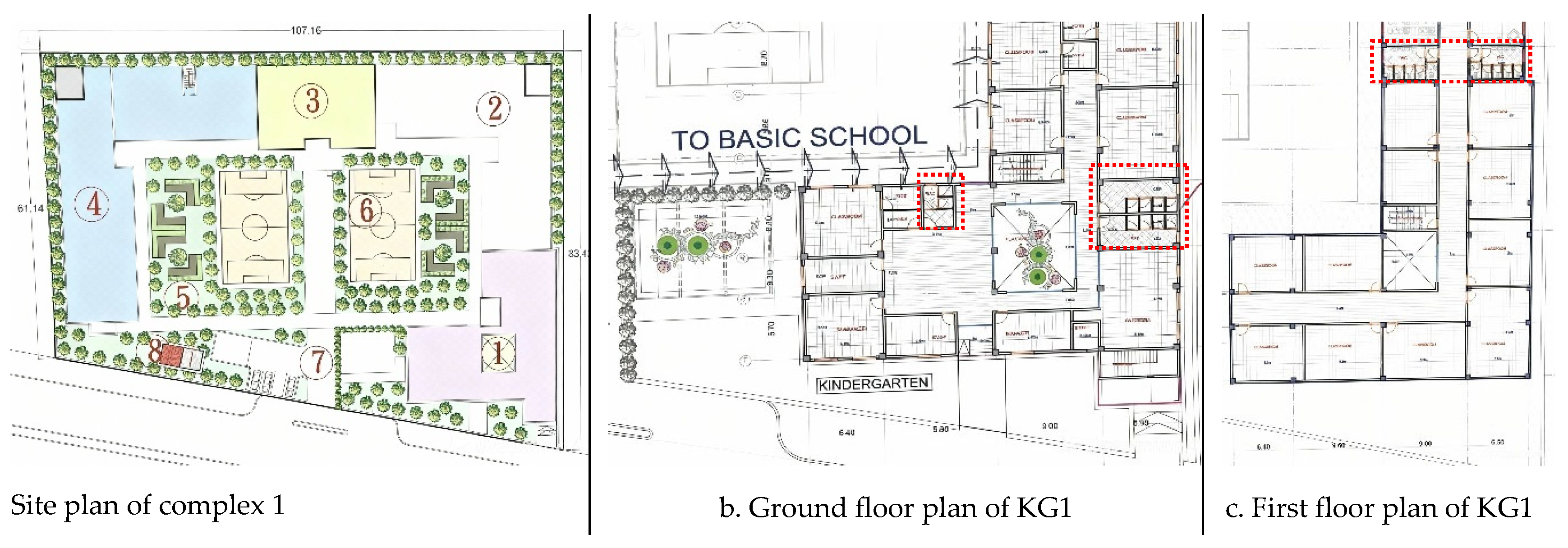
Figure A2.
Case 2.
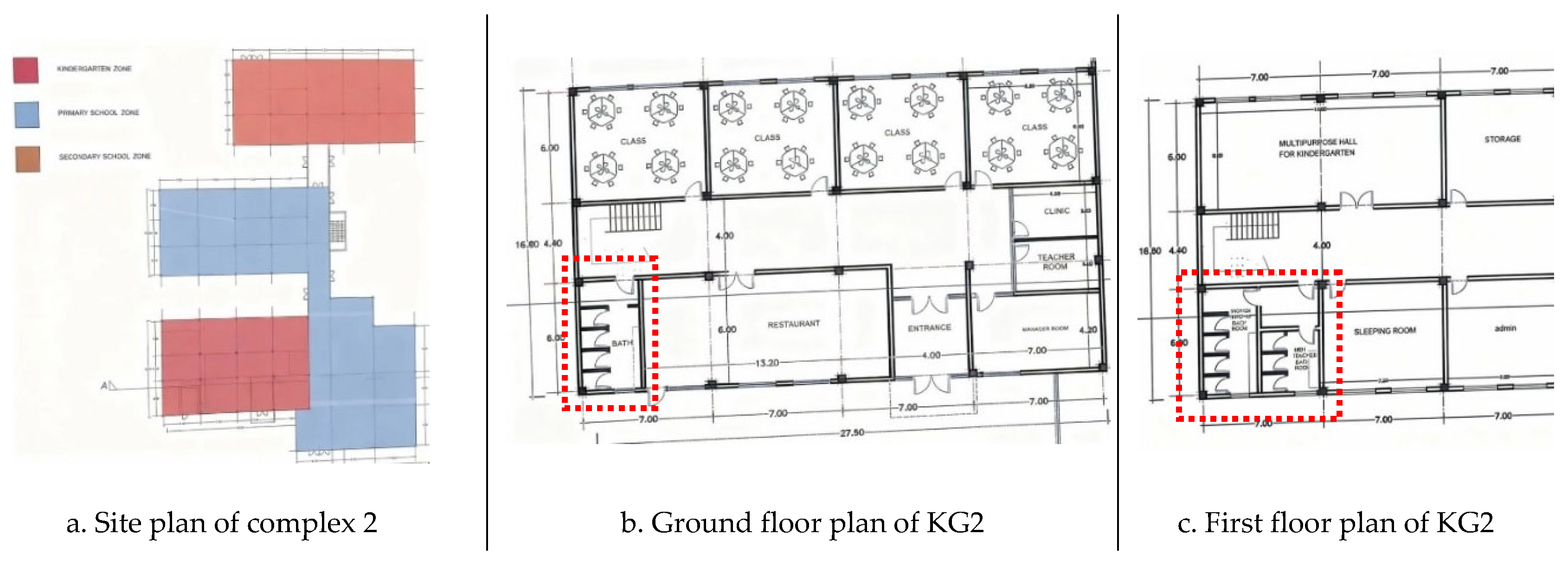
Figure A3.
Case 3.
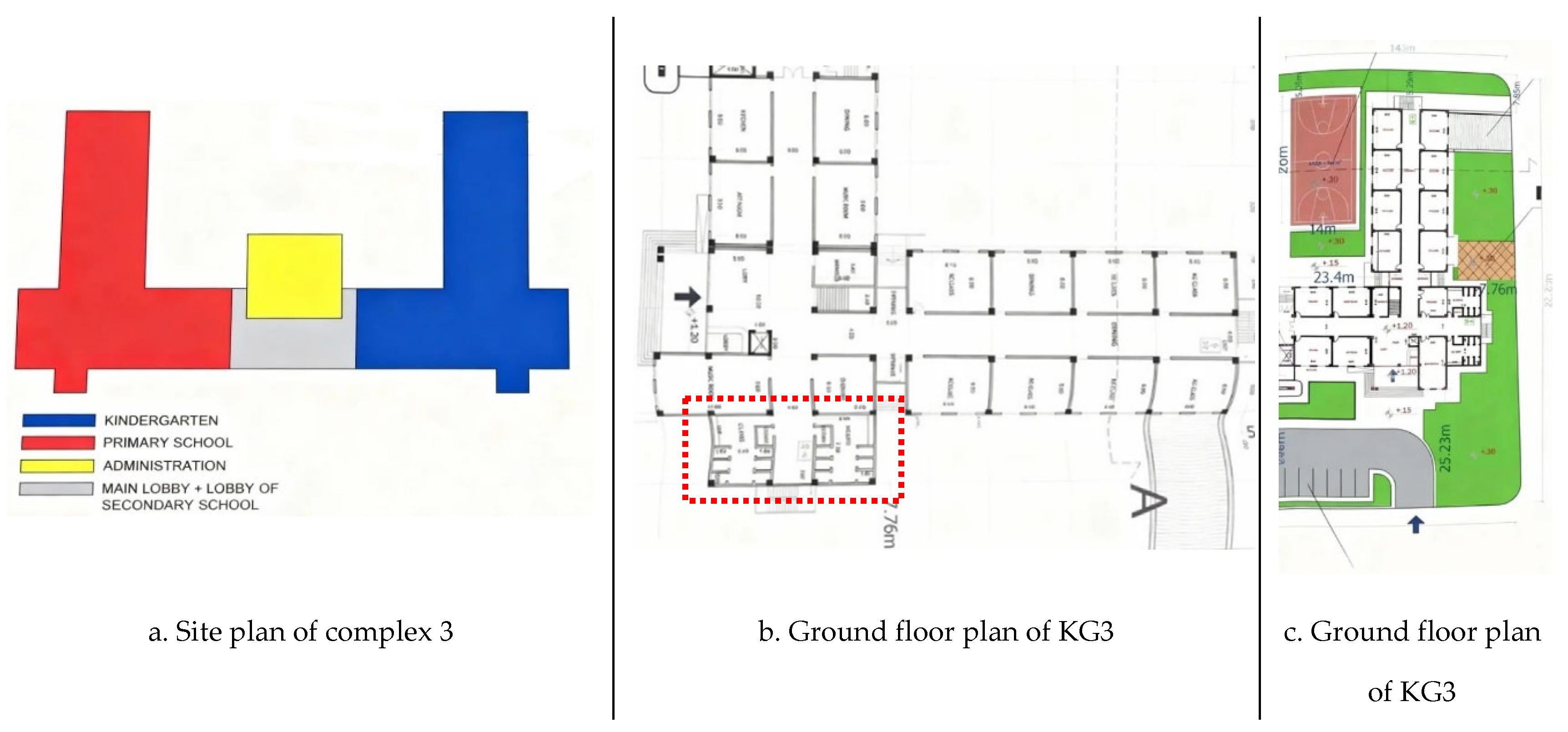
Figure A4.
Case 4.
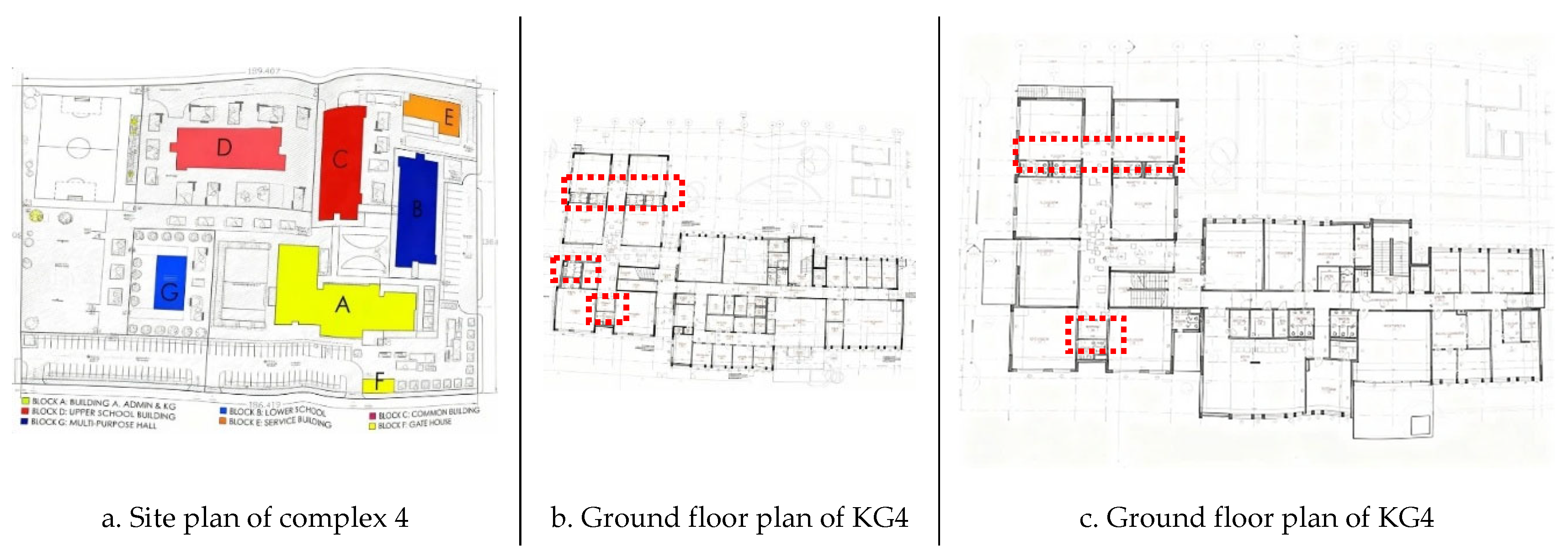
Figure A5.
Case 5.
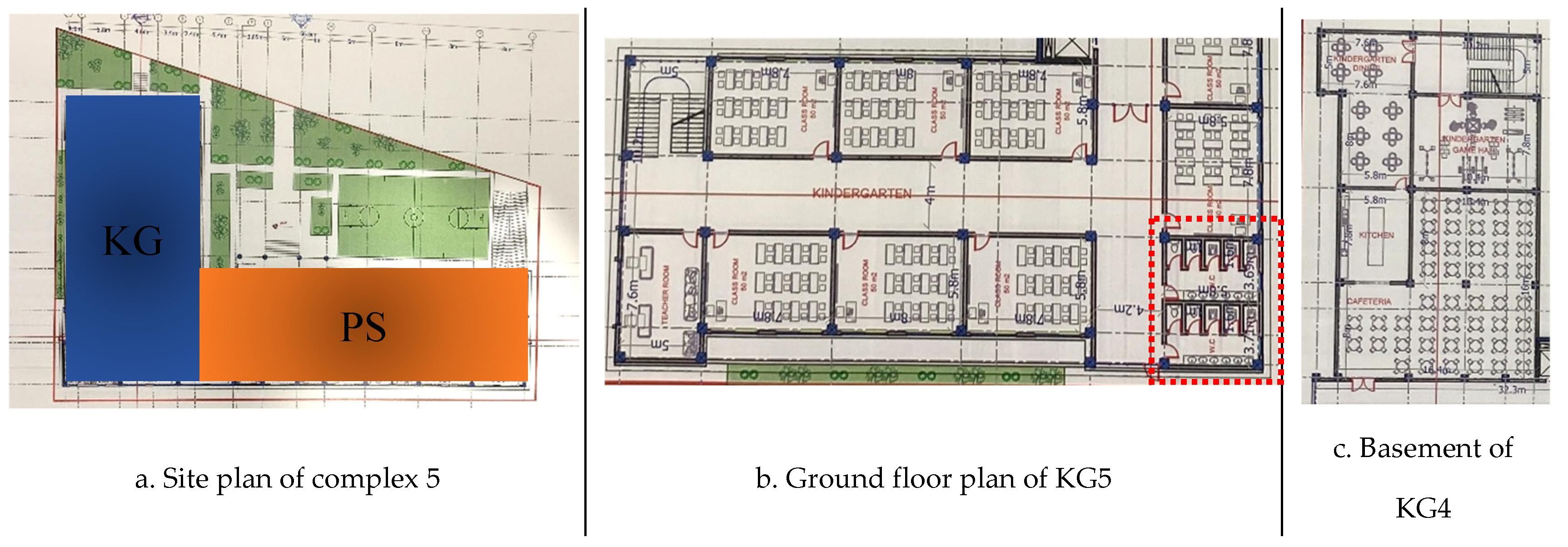
Figure A6.
Case 6.
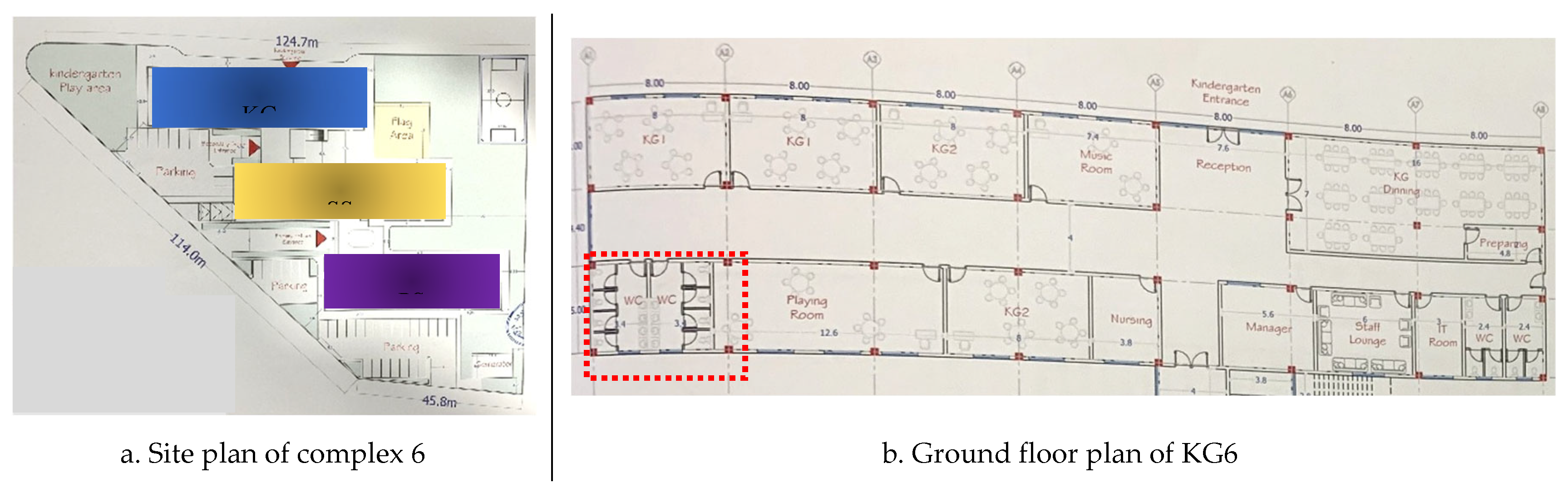
Figure A7.
Case 7.
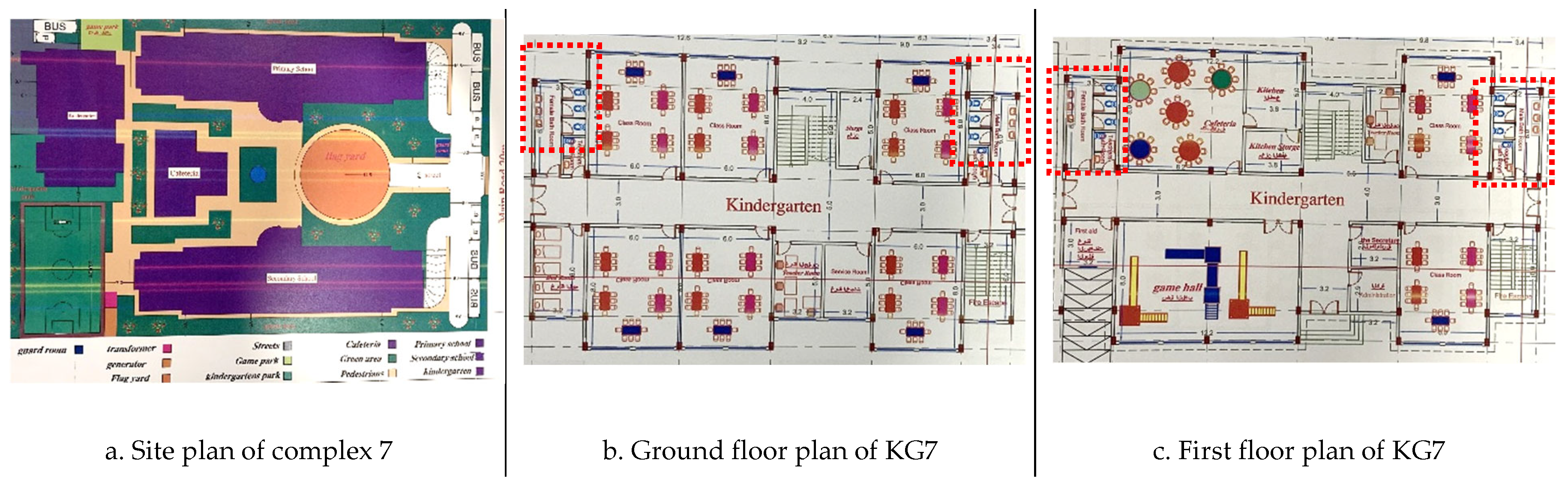
Figure A8.
Case 8.
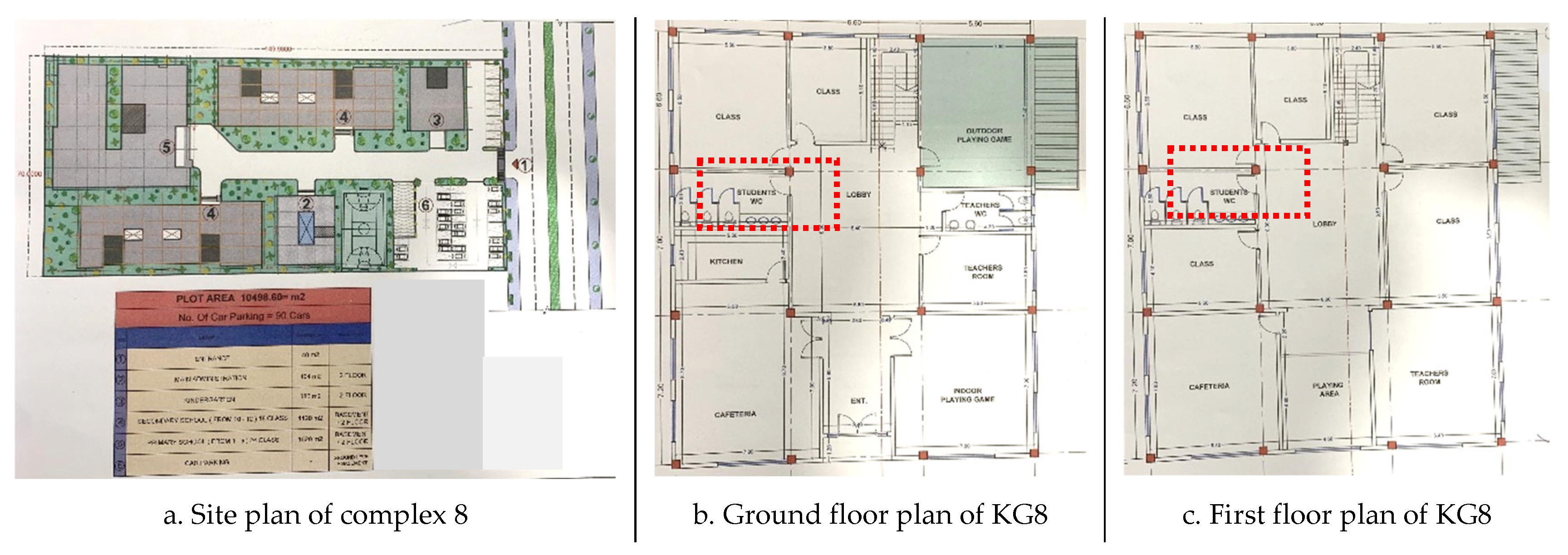
Figure A9.
Case 9.
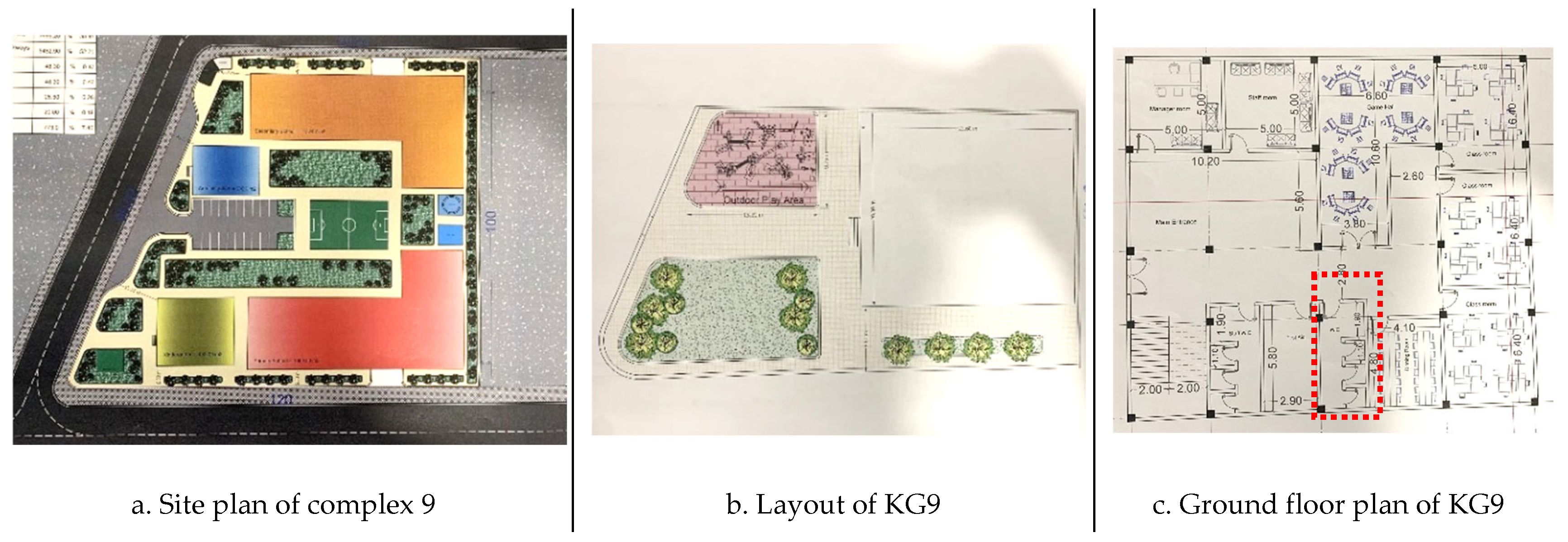
Figure A10.
Case 10.
References
- Dudek; Contreras, M.; Fernandez, Javier; Zancan, Roberto. Intimacy Exposed: Toilet, Bathroom, Restroom. In Spector Books; Schools and Kindergartens: A design manual; Springer Science & Business Media, 2007; Vol. 1, ISBN 978-3-95905-583-3. [Google Scholar]
- Jaglarz, A. Child-Friendly Kindergarten Bathrooms—Design Ideas. In Advances in Human Factors, Sustainable Urban Planning and Infrastructure. AHFE 2017. Advances in Intelligent Systems and Computing; Charytonowicz, J., Ed.; Springer: Cham, 2018; vol 600. [Google Scholar] [CrossRef]
- Ministry of Education (MoE). Child Friendly Schools Standards for Kurdistan Region; Kurdistan Government Publication: Erbil, 2012. [Google Scholar]
- Vernon, S.; Lundblad, B.; Hellstrom, A.L. Children’s experiences of school toilets present a risk to their physical and psychological health. Child Care Health Dev. (2003) 29(1), 47–53. [CrossRef] [PubMed]
- Shove, E. Converging Conventions of Comfort, Cleanliness and Convenience. Journal of Consumer Policy 2003, 26, 395–418. [Google Scholar] [CrossRef]
- Charytonowicz, J.; Jaglarz, A. Ergonomic formation of hygienic-sanitary spaces in consideration of health, safety and well-being of children. In International Conference on Applied Human Factors and Ergonomics. Advances in Intelligent Systems and Computing; Springer: Cham, 2017; Volume 600, pp. 64–76. [Google Scholar] [CrossRef]
- World Vision Iraq (WVI). Investing in WASH is investing in education. Available online: https://www.wvi.org/opinion/view/investing-wash-investing-education. (accessed on 25/1/2026).
- Low, L.; Williams, R.; Camenga, R.; Hebert-Beirne, J.; Brady, S.; Newman, K.; James, S.; Hardacker, T.; Nodora, J.; Linke, E.; Burgio, L. Prevention of Lower Urinary Tract Symptoms Research Consortium Focus Group Study of Habits, Attitudes, Realities, and Experiences of Bladder Health. J Adv Nurs. 2019, 75, 3111–3125. [Google Scholar] [CrossRef]
- Jaglarz, A. Child-Friendly Kindergarten Bathrooms-Design Ideas. In Advances in Human Factors, Sustainable Urban Planning and Infrastructure. Advances in Intelligent Systems and Computing; Charytonowicz, J., Ed.; Springer: Cham (2017), 2018; vol 600, pp. 149–160. [Google Scholar] [CrossRef]
- Maguire, M.; Nicolle, C.; Galley, M. Review of state of knowledge regarding the safety, access and usability needs of children with disabilities. Loughborough University Report. 2007. Available online: https://hdl.handle.net/2134/16555.
- Water, sanitation and hygiene standards for schools in low-cost settings; Adams, J., Bartram, J., Sims, J., Chartier, Y., Eds.; World Health Organization, 2009; ISBN 978 92 4 154779 6. [Google Scholar]
- Westberg, J. Designing preschools for an independent and social child: visions of preschool space in the Swedish welfare state. Early Years 2021, 41(5), 458–475. [Google Scholar] [CrossRef]
- Nakua, E.; Yarfi, C.; Ashigbi, E. Wheelchair accessibility to public buildings in the Kumasi metropolis, Ghana. African Journal of Disability 2017, 6(1), 1–8. [Google Scholar] [CrossRef] [PubMed]
- Baumeister, R.; Campbell, J.; Krueger, J.; Vohs, K. Does High Self-esteem Cause Better Performance, Interpersonal Success, Happiness, or Healthier Lifestyles? Psychological Science in the Public Interest 2003, 4(1), 1–44. [Google Scholar] [CrossRef] [PubMed]
- Bloomfield, S. F.; Exner, M.; Signorelli, C.; Nath, K. J.; Scott, E. A. The chain of infection transmission in the home and everyday life settings, and the role of hygiene in reducing the risk of infection. International scientific forum on home hygiene (2012). Available online: http://www.ifhhomehygiene.org/IntegratedCRD.nsf/IFH_Topic_Infection_Transmission?OpenForm (accessed on 20/1/2026).
- Naragatti, S.; Vadiraj, H. Scientific Evidence-Based Cleanliness: Empowering Environment and Harmony in Society. International Journal of Innovative Science and Research Technology (2023) 8, 2456–2165. [CrossRef]
- Capo, K.; Espinoza, L.; Khadam-Hir, J.; Paz, D. Creating safe spaces for children’s voices to be heard: Supporting the psychosocial needs of children in times of trauma. Journal of Early Childhood Teacher Education (2019) 40(1), 19–30. [CrossRef]
- Mitton, M.; Nystuen, C. Residential Interior Design: A Guide to Planning Spaces, 4th Ed ed; John Wiley & Sons, 2021. [Google Scholar]
- Deng, H.; Ismail, M.; Sulaiman, R. Exploring the impact of biophilic design interventions on children’s engagement with natural elements. Sustainability 2025, 17(7), 3077. [Google Scholar] [CrossRef]
- Moulik, S. Toilet for the Future. The World Bank, Water Global Practice. 2012. Available online: https://blogs.worldbank.org/en/water/gates-foundation-awards-toilet-for-the-future. (accessed on 12/1/2026).
- Liu, W.; Ma, Q. Research on the Design of Children’s Toilet Seats in the Third Bathroom Based on User Needs. 2024 5th International Conference on Intelligent Design Xi’an, China, 2024; pp. 46–55. [Google Scholar] [CrossRef]
- McMichael, C. Water, Sanitation and Hygiene (WASH) in Schools in Low-Income Countries: A Review of Evidence of Impact. International Journal of Environmental Research and Public Health 2019, 16, 359. [Google Scholar] [CrossRef] [PubMed]
- Kazem, H.; Al-Kazzaz, D. Design Guidelines and Standards for Iraqi Schools-The Future Prospects. International Journal of Sustainable Development and Planning 2022, 17(7), 2287–2295. [Google Scholar] [CrossRef]
- Alramdhan, S. The reasons for the failure of a number of child-friendly schools and the extent of their application of standards in Iraq. International Journal of Literacy and Education 2022, 2(1), 44–56. [Google Scholar]
Figure 1.
Research Procedure.
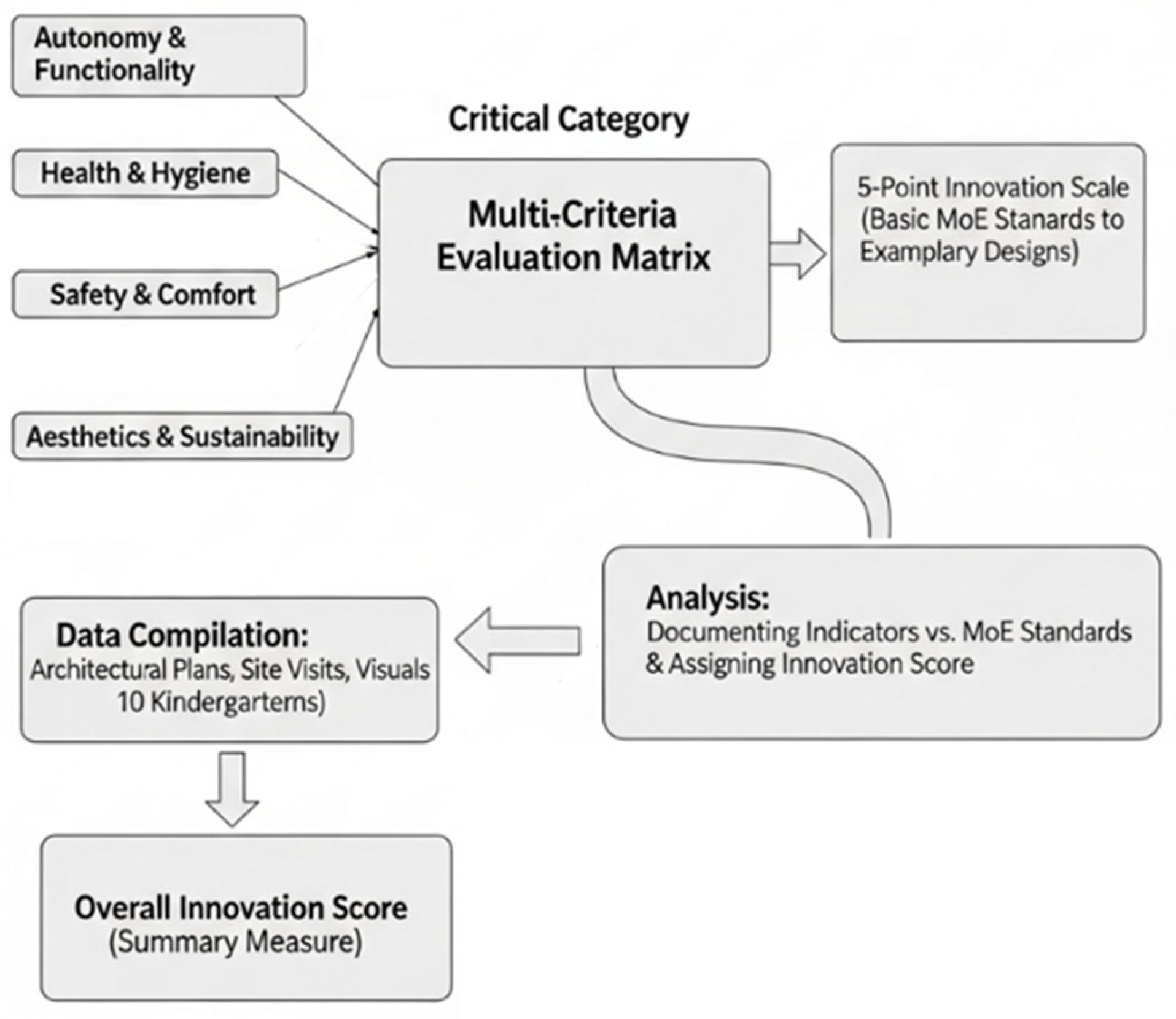
Figure 2.
Selected Examples of Sanitary Facility and Washroom Spatial Design in Kindergartens.
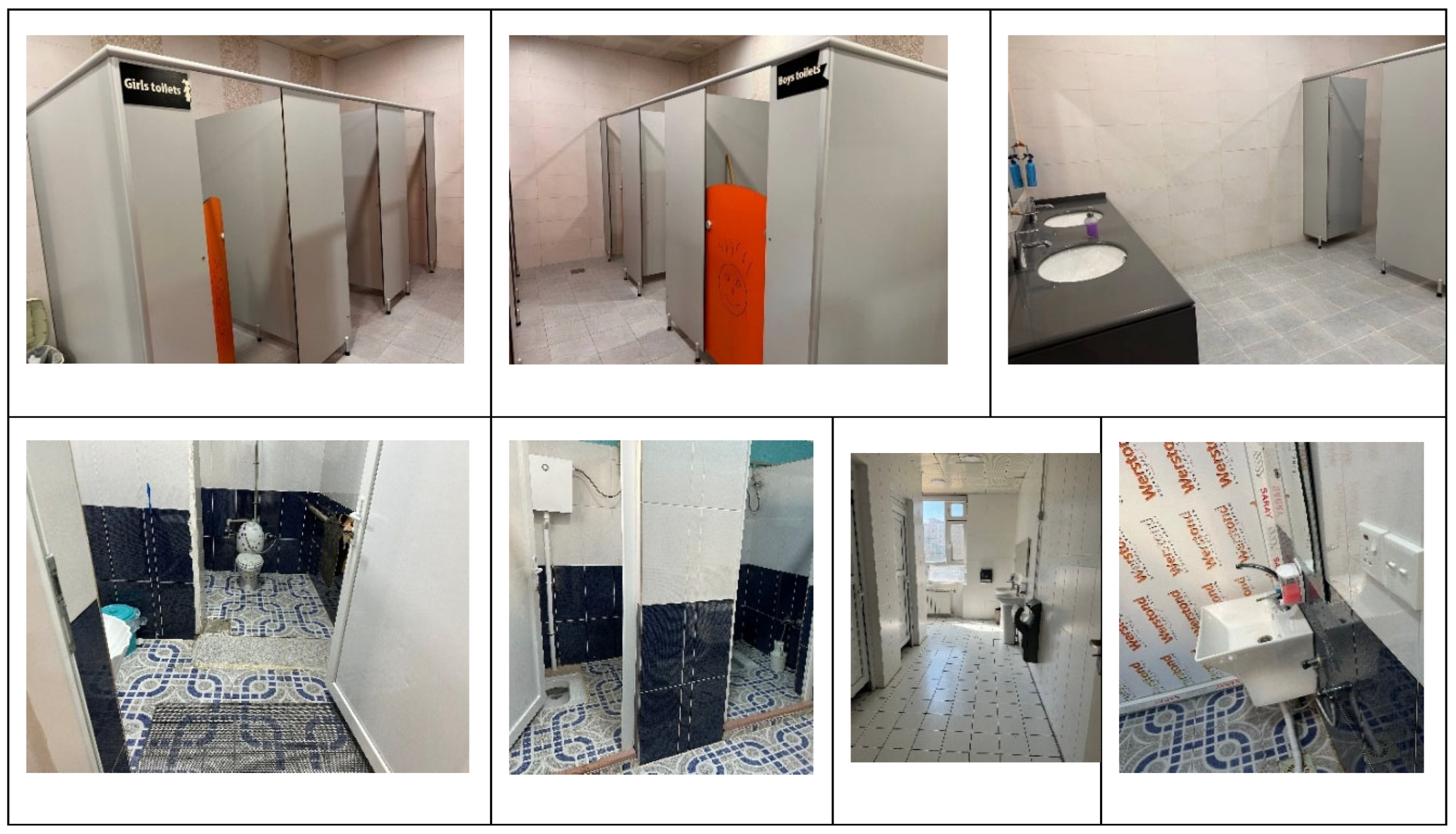

Table 1.
Summary of the literature concerning kindergartens’ toilets (table by authors according to the corresponding sources).
Table 1.
Summary of the literature concerning kindergartens’ toilets (table by authors according to the corresponding sources).
| Evaluation Domain | Core Literature Themes | Key Design Indicators Derived from Literature | Representative Sources |
|---|---|---|---|
| Autonomy & Functionality | Child-centred design; independence in early childhood; ergonomics; spatial efficiency | • Child-scaled toilets and sinks• Intuitive layout and circulation• Proximity to classrooms• Ease of use without adult assistance | [1,12,13,14] |
| Health & Hygiene | WASH standards; disease prevention; hygiene behaviour; sanitation technology | • Adequate handwashing stations• Ventilation and odor control• Easy-to-clean materials• Touchless / sensor-based fixtures | [4,11,15,16] |
| Safety & Comfort | Child safety; supervision vs. privacy; environmental psychology; accident prevention | • Non-slip flooring• Rounded edges and safe materials• Adequate lighting• Visual supervision without privacy loss | [8,17,18] |
| Aesthetics & Sustainability | Emotional well-being; inclusive design; environmental responsibility; resource efficiency | • Child-friendly colors and graphics• Natural lighting• Accessibility for children with disabilities• Water-saving fixtures and sustainable materials | [10,18,19] |
Table 2.
Evaluation categories and subcategories, indicators and standards.
| Evaluation Category | Indicator | Standard (MoE) | |
|---|---|---|---|
|
Autonomy & Functionality |
Fixture Ratio | Toilets per child count | 1:25 |
| Fixture Sizing | Child-sized fixtures | 100% child-accessible | |
| Layout Efficiency | Workflow/Convenient access | Convenient access | |
| Self-Use Ease | Dispensers, handles, etc. | Easy to use for a 4-year-old | |
| Disabled Fixture | Toilets per child | One toilet | |
| Teachers Fixture Ratio | Toilets per teacher count | 1:10 | |
| Health & Hygiene | Technology Use | Hands-free faucets, flushes | Manual operation |
| Materials | Wall/Floor Material Type | Impervious surfaces | |
| Ventilation | Air quality / ACH / Window | Main fan per set of toilets | |
| Safety & Comfort | Supervision | Staff sightlines from the play area | Adequate visibility |
| Flooring | Non-slip material use | Non-slip required | |
| Lighting Quality | Natural & artificial light | Min lux levels required | |
|
Aesthetics & Sustainability |
Aesthetics | Colours, views, integration | N/A (subjective) |
| Sustainability | Water-saving technology | N/A (unless mandated) | |
Table 3.
Case 1 Evaluation.
| Evaluation Category | Facility Data/Observation | Score (1–5) | Description | |
|---|---|---|---|---|
| Autonomy &Functionality | Fixture Ratio | Multiple WC cubicles within each kindergarten toilet block; ratio appears compliant for typical KG classroom capacity | 4 | Toilets grouped near classrooms reduce shared-use pressure |
| Fixture Sizing | All fixtures appear scaled for children; no adult WC shown inside KG blocks | 4 | Indicates child-centred sanitary design | |
| Layout Efficiency | Toilets directly accessible from kindergarten circulation zones | 5 | Excellent proximity; minimises transition time and accidents | |
| Self-Use Ease | Simple cubicle layout, short reach distances implied | 4 | Supports independence without staff assistance | |
| Disabled Fixture | One larger cubicle is visible, allocated for inclusive use | 3 | Inclusive intent present but not fully detailed | |
| Teachers Fixture Ratio | Separate staff sanitary facilities are provided elsewhere on the plan | 3 | Teachers are not sharing the children’s toilets | |
| Health & Hygiene | Technology Use | Sensor-based / hands-free fixtures provided | 4 | Enhances hygiene, reduces contact, |
| Materials | Tiled wet areas implied by WC zoning | 4 | Appropriate hygienic material strategy | |
| Ventilation | Placed on exterior walls; mechanical ventilation is likely | 4 | Proper ventilation strategy inferred | |
| Safety & Comfort | Supervision | Entrances visible from classroom corridors | 4 | Enables indirect supervision without intrusion |
| Flooring | Wet-area flooring is assumed non-slip | 4 | Standard safety compliance for kindergarten | |
| Lighting Quality | External wall placement allows daylight + artificial lighting | 4 | Reduces fear and improves comfort for children | |
| Aesthetics & Sustainability | Aesthetics | Toilets integrated into child-friendly courtyard-oriented blocks | 4 | Harmonised with the overall KG spatial configuration |
| Sustainability | No explicit low-flow or reuse systems shown | 2 | Sustainability is not emphasised | |
| Overall Innovation Score (Average) | 4.0 | Strong functional, child-centred, and hygiene-driven | ||
Table 4.
Case 2 Evaluation.
| Evaluation Category | Facility Data/Observation | Score (1–5) |
Description | |
|---|---|---|---|---|
| Autonomy &Functionality | Fixture Ratio | Each WC block includes multiple cubicles serving adjacent classrooms | 4 | Adequate distribution supports daily kindergarten demand |
| Fixture Sizing | Cubicle dimensions and layout indicate child-scale fixtures | 4 | Appropriate sizing encourages independent use | |
| Layout Efficiency | Toilets positioned directly off the main circulation corridor | 4 | Central access reduces walking distance but is slightly less direct than in Case 01 | |
| Self-Use Ease | Straightforward linear cubicle layout | 4 | Simple, legible configuration aids autonomy | |
| Disabled Fixture | One wider cubicle is identifiable within the WC block | 3 | Inclusive provision is present but not emphasised | |
| Teachers Fixture Ratio | Teachers’ WC is likely separated or shared with the admin zone | 3 | Functional but not explicitly differentiated in drawings | |
| Health & Hygiene | Technology Use | No sensor-based systems indicated | 2 | Meets minimum requirement only |
| Materials | Wet zones clearly defined; tile finishes implied | 4 | Hygienic material logic consistent with standards | |
| Ventilation | Toilets placed along the external wall with potential ventilation | 4 | Good air-quality strategy inferred | |
| Safety & Comfort | Supervision | WC entrances are visible from the corridor and near the classrooms | 4 | Enables indirect monitoring by teachers |
| Flooring | Wet-area zoning implies slip-resistant flooring | 4 | Standard kindergarten safety compliance | |
| Lighting Quality | External wall access allows daylight + artificial lighting | 4 | Enhances comfort and reduces fear for children | |
| Aesthetics & Sustainability | Aesthetics | Functional but utilitarian WC integration | 3 | Less spatial/visual integration than courtyard-based layouts |
| Sustainability | No indication of low-flow or reuse systems | 2 | Sustainability is not explicitly addressed | |
| Overall Innovation Score (Average) | 3.6 | Strong functional clarity; moderate innovation level | ||
Table 5.
Case 3 Evaluation.
| Evaluation Category | Facility Data/Observation | Score (1–5) |
Description | |
|---|---|---|---|---|
| Autonomy &Functionality | Fixture Ratio | Centralised WC block serving kindergarten classrooms; ratio appears compliant | 3 | Adequate capacity, but less distributed than in other cases |
| Fixture Sizing | Fixtures scaled appropriately for kindergarten users | 4 | Supports independent child use | |
| Layout Efficiency | Access via internal circulation corridor | 3 | Functional but not directly classroom-adjacent | |
| Self-Use Ease | Simple linear cubicle arrangement | 4 | Clear and legible for children | |
| Disabled Fixture | One oversized cubicle with independent external access from the corridor | 5 | Strong, inclusive-design solution exceeding minimum standards | |
| Teachers Fixture Ratio | Teachers’ toilets are located outside the kindergarten WC zone | 3 | Functional separation, moderate convenience | |
| Health & Hygiene | Technology Use | Manual fixtures only | 2 | No technological innovation |
| Materials | Tiled wet areas are clearly defined | 4 | Hygienic and durable material strategy | |
| Ventilation | WC block positioned near the external wall | 4 | Adequate ventilation inferred | |
| Safety & Comfort | Supervision | Entrances visible from the corridor, not directly from classrooms | 3 | Indirect supervision only |
| Flooring | Wet zones are assumed to use non-slip finishes | 4 | Meets safety requirements | |
| Lighting Quality | Daylight access plus artificial lighting | 4 | Enhances comfort and safety | |
| Aesthetics & Sustainability | Aesthetics | Functionally integrated, limited experiential quality | 3 | Neutral visual impact |
| Sustainability | No water-saving systems indicated | 2 | Sustainability not emphasized | |
| Overall Innovation Score (Average) | 3.6 | Inclusive design improves overall performance | ||
Table 6.
Case 4 Evaluation.
| Evaluation Category | Facility Data/Observation | Score (1–5) |
Description | |
|---|---|---|---|---|
| Autonomy &Functionality | Fixture Ratio | Multiple WC blocks are distributed across different building blocks (A–E) | 5 | Good capacity through spatial distribution rather than centralisation |
| Fixture Sizing | WC cubicles appear scaled for children across all highlighted zones | 5 | Consistent child-oriented fixture design | |
| Layout Efficiency | Toilets embedded within or immediately adjacent to classroom clusters | 4 | Reduced travel distance; efficient daily use | |
| Self-Use Ease | Repetitive and legible WC layouts across blocks | 4 | Familiarity improves independence | |
| Disabled Fixture | Larger cubicles identifiable in selected WC blocks | 4 | Inclusive provision is present, but not always independently accessed | |
| Teachers Fixture Ratio | Staff toilets are distributed within administrative/teaching blocks | 3 | Adequate but not fully segregated in all blocks | |
| Health & Hygiene | Technology Use | Hands-free / sensor-based fixtures implemented | 4 | Improves hygiene and reduces contact; exceeds the minimum MoE standard |
| Materials | Wet areas clearly defined, tiling implied throughout | 4 | Good hygiene across campus | |
| Ventilation | WC blocks are mostly aligned with external walls | 4 | Strong ventilation strategy due to dispersion | |
| Safety & Comfort | Supervision | WC entrances are visible from corridors and classroom clusters | 4 | Balanced privacy and supervision |
| Flooring | Wet zones assumed to be slip-resistant | 4 | Consistent safety compliance | |
| Lighting Quality | Many WC blocks benefit from external daylight | 4 | Improved comfort and child confidence | |
| Aesthetics & Sustainability | Aesthetics | Sanitary blocks integrated within colour-coded building identity | 4 | Strong visual coherence across campus |
| Sustainability | No explicit water-saving strategies shown | 2 | Sustainability not a design priority | |
| Overall Innovation Score (Average) | 4.3 | Spatial distribution + hygiene technology enhance innovation | ||
Table 7.
Case 5 Evaluation.
| Evaluation Category | Facility Data/Observation | Score (1–5) |
Description | |
|---|---|---|---|---|
| Autonomy &Functionality | Fixture Ratio | Single WC block serving the entire kindergarten wing | 3 | Capacity is likely compliant but spatially concentrated |
| Fixture Sizing | Fixtures scaled for kindergarten users | 4 | Supports independent child use | |
| Layout Efficiency | WC block located at the corridor end | 3 | Longer walking distance for some classrooms | |
| Self-Use Ease | Simple cubicle layout | 4 | Clear and legible for children | |
| Disabled Fixture | No dedicated accessible/disabled WC provided | 1 | Does not meet inclusive design expectations or universal access principles | |
| Teachers Fixture Ratio | Teachers use shared or staff-area toilets | 3 | Functionally acceptable | |
| Health & Hygiene | Technology Use | Manual fixtures only | 2 | No technological enhancement |
| Materials | Wet zones are clearly defined, tiling implied | 4 | Hygienic material selection | |
| Ventilation | WC block located on the external façade | 4 | Adequate ventilation inferred | |
| Safety & Comfort | Supervision | WC entrances are visible only from the corridor | 3 | Indirect supervision |
| Flooring | Slip-resistant flooring assumed | 4 | Meets safety standards | |
| Lighting Quality | External walls allow daylight + artificial lighting | 4 | Comfortable environment | |
| Aesthetics & Sustainability | Aesthetics | The WC block is functionally integrated only | 3 | Limited child-centric design expression |
| Sustainability | No water-saving features indicated | 2 | Sustainability not addressed | |
| Overall Innovation Score (Average) | 3.1 | The inclusivity gap significantly affects the innovation score | ||
Table 8.
Case 6 Evaluation.
| Evaluation Category | Facility Data/Observation | Score (1–5) |
Description | |
|---|---|---|---|---|
| Autonomy &Functionality | Fixture Ratio | One WC block serving KG1, KG2, and activity spaces | 3 | Capacity appears compliant but spatially centralised |
| Fixture Sizing | Cubicles and basins are scaled appropriately for KG users | 4 | Supports independent child use | |
| Layout Efficiency | The WC block is located adjacent to the playing room | 3 | Functional but uneven distance from some classrooms | |
| Self-Use Ease | Simple, mirrored cubicle layout | 4 | Clear spatial logic enhances autonomy | |
| Disabled Fixture | One clearly oversized accessible WC integrated within the WC block | 4 | Inclusive design achieved, though access is internal rather than independent. | |
| Teachers Fixture Ratio | Teachers use a separate WC near the staff lounge | 3 | Acceptable functional separation | |
| Health & Hygiene | Technology Use | Manual fixtures only | 2 | No technological innovation |
| Materials | Wet areas are clearly zoned; tiled finishes are implied | 4 | Hygienic and durable material strategy | |
| Ventilation | WC block placed on the external façade | 4 | Adequate ventilation potential | |
| Safety & Comfort | Supervision | WC entrances are visible from the corridor near the playing room | 3 | Indirect supervision |
| Flooring | Slip-resistant flooring | 4 | Meets safety requirements | |
| Lighting Quality | External walls allow daylight + artificial lighting | 4 | Improves comfort and reduces anxiety | |
| Aesthetics & Sustainability | Aesthetics | WC block functionally integrated; limited expressive design | 3 | Neutral visual impact |
| Sustainability | No low-flow or reuse systems indicated | 2 | Sustainability not emphasized | |
| Overall Innovation Score (Average) | 3.4 | Inclusivity improves overall performance | ||
Table 9.
Case 7 Evaluation.
| Evaluation Category | Facility Data/Observation | Score (1–5) |
Description | |
|---|---|---|---|---|
| Autonomy &Functionality | Fixture Ratio | An adequate number of cubicles is provided relative to kindergarten capacity | 4 | Meets (MoE) requirement with spatial efficiency |
| Fixture Sizing | All fixtures scaled to kindergarten users | 4 | Supports independent child use | |
| Layout Efficiency | WC is located adjacent to the circulation corridor | 4 | Minimises travel distance and disruption | |
| Self-Use Ease | Simple handles and a clear cubicle layout | 4 | Encourages autonomy | |
| Disabled Fixture | One oversized cubicle with independent external access from the corridor | 2 | Strong, inclusive-design solution exceeding minimum standards | |
| Teachers Fixture Ratio | Separating teachers’ toilet provided; staff share general one WC facilities | 3 | Does not meet the recommended staff-specific provision | |
| Health & Hygiene | Technology Use | Manual fixtures only | 2 | Basic compliance |
| Materials | Tiled wet areas | 4 | Hygienic and durable | |
| Ventilation | External wall placement enables ventilation | 4 | Good environmental quality | |
| Safety & Comfort | Supervision | WC entrance visible from the corridor | 4 | Balanced privacy and monitoring |
| Flooring | Slip-resistant flooring in wet zones | 4 | Safety-compliant | |
| Lighting Quality | Daylight + artificial lighting | 4 | Improves comfort | |
| Aesthetics & Sustainability | Aesthetics | WC is integrated within the KG design language | 4 | Harmonized spatially |
| Sustainability | No water-saving systems indicated | 2 | Sustainability not emphasized | |
| Overall Innovation Score (Average) | 3.4 | Inclusive design offsets staff-facility limitations | ||
Table 10.
Case 8 Evaluation.
| Evaluation Category | Facility Data/Observation | Score (1–5) | Description | |
|---|---|---|---|---|
| Autonomy &Functionality | Fixture Ratio | The WC layout appears child-oriented | 4 | Supports child autonomy |
| Fixture Sizing | WC positioned off lobby/circulation | 4 | Clear access from classrooms | |
| Layout Efficiency | Simple cubicle sequence and direct entry | 4 | Legible for children | |
| Self-Use Ease | No dedicated accessible/disabled WC identified | 1 | Inclusivity gap | |
| Disabled Fixture | Teachers WC is labelled near the Teachers Room | 4 | Good staff/child separation | |
| Teachers Fixture Ratio | Manual fixtures only | 2 | Minimum compliance | |
| Health & Hygiene | Technology Use | Wet areas defined; tile implied | 4 | Hygienic finish |
| Materials | WC appears on façade edge | 4 | Adequate ventilation potential | |
| Ventilation | WC entry visible from lobby/circulation | 4 | Indirect supervision possible | |
| Safety & Comfort | Supervision | Wet zones assumed non-slip | 4 | Safety-compliant expectation |
| Flooring | External adjacency supports daylight + artificial | 4 | Comfort improved | |
| Lighting Quality | Functionally integrated, limited child-themed expression shown | 3 | Neutral character | |
| Aesthetics & Sustainability | Aesthetics | No low flow/reuse shown | 2 | Sustainability not addressed |
| Sustainability | The WC layout appears child-oriented | 4 | Supports child autonomy | |
| Overall Innovation Score (Average) | 3.5 | Strong planning + staff separation, but WC capacity + inclusivity reduce performance. | ||
Table 11.
Case 9 Evaluation.
| Evaluation Category | Facility Data/Observation | Score (1–5) | Description | |
|---|---|---|---|---|
| Autonomy &Functionality | Fixture Ratio | Child capacity not stated in drawings (ratio cannot be confirmed) | 3 | Score set to “moderate” because a provision exists, but compliance cannot be proven without enrollment/capacity data. |
| Fixture Sizing | Fixtures appear child-scale in layout | 4 | Supports independent use | |
| Layout Efficiency | WC accessed from the circulation near the classrooms | 3 | Accessible but not directly inside the classroom cluster | |
| Self-Use Ease | Simple cubicle arrangement | 4 | Legible and child-friendly circulation | |
| Disabled Fixture | No clearly dedicated accessible/disabled WC visible | 1 | Inclusive design gap | |
| Teachers Fixture Ratio | A separate teachers’ WC appears to be provided near the staff zone | 4 | Good staff/child separation (if confirmed on plan) | |
| Health & Hygiene | Technology Use | Manual fixtures only | 2 | Basic compliance |
| Materials | Wet area zoning implies tiling | 4 | Hygienic finish strategy | |
| Ventilation | WC on exterior wall, ventilation potential | 4 | Likely adequate ventilation | |
| Safety & Comfort | Supervision | WC entrance visible from the corridor | 3 | Indirect supervision |
| Flooring | Non-slip is assumed for wet zones | 4 | Standard safety compliance | |
| Lighting Quality | External adjacent supports daylight | 4 | Comfort improved | |
| Aesthetics & Sustainability | Aesthetics | Functionally integrated, not expressive | 3 | Neutral |
| Sustainability | No low flow/reuse indicated | 2 | Not addressed | |
| Overall Innovation Score (Average) | 3.2 | Score reflects inclusive gap + uncertainty in capacity-based compliance | ||
Table 12.
Case 10 Evaluation.
| Evaluation Category | Facility Data/Observation | Score (1–5) | Description | |
|---|---|---|---|---|
| Autonomy &Functionality | Fixture Ratio | The student WC block contains only 2 WC cubicles; the total student number is not indicated in the drawings | 2 | Likely underprovided for a kindergarten unless enrollment is very low |
| Fixture Sizing | The WC layout and proportions appear suitable for children | 4 | Appropriate scale for KG users | |
| Layout Efficiency | Student WC is located centrally between classrooms | 3 | Reasonable access but centralised dependency | |
| Self-Use Ease | Simple cubicle layout with direct access | 4 | Clear and legible for children | |
| Disabled Fixture | No dedicated oversized/accessible WC identified | 1 | Inclusive design requirement not met | |
| Teachers Fixture Ratio | A separate teachers’ WC is clearly provided | 4 | Good functional separation from student toilets | |
| Health & Hygiene | Technology Use | Manual fixtures only | 2 | Basic compliance |
| Materials | Wet areas clearly defined, tiling implied | 4 | Hygienic and durable finishes | |
| Ventilation | WC blocks placed on façade edges | 4 | Adequate ventilation potential | |
| Safety & Comfort | Supervision | WC entrance visible from the corridor | 3 | Indirect supervision only |
| Flooring | Non-slip flooring is assumed in wet zones | 4 | Safety-compliant assumption | |
| Lighting Quality | External adjacency allows daylight | 4 | Improves comfort and confidence | |
| Aesthetics & Sustainability | Aesthetics | WC integrated functionally, not expressively | 3 | Neutral architectural role |
| Sustainability | No low-flow or reuse systems indicated | 2 | Sustainability not addressed | |
| Overall Innovation Score (Average) | 3.1 | Functional but limited by capacity & inclusive gaps | ||
Table 13.
Comparative evaluation ratings for kindergartens.
| Case | Type | Fixture Ratio (Toilet: Child) | Hands-Free Tech. (Y/N) | Accessible WC (Y/N) | Autonomy Score (1-5) | Hygiene Score (1-5) | Safety Score (1-5) | Aesthetics Score (1-5) | Overall Innovation Score (Avg 1–5) |
|---|---|---|---|---|---|---|---|---|---|
| KG1 | Pub. | ~1:20–25 | Y | Y | 4.0 | 4.0 | 4.0 | 3.8 | 4.0 |
| KG2 | Pub. | ~1:25 | N | N | 3.6 | 3.2 | 4.0 | 2.8 | 3.6 |
| KG3 | Pub. | ~1:25 | N | Y | 3.4 | 3.2 | 3.6 | 2.8 | 3.6 |
| KG4 | Pri. | ~1:20–25 | Y | Y | 4.2 | 4.0 | 4.0 | 4.0 | 4.3 |
| KG5 | Pri. | >1:25 | N | N | 3.2 | 3.2 | 3.6 | 2.4 | 3.1 |
| KG6 | Pri. | ~1:25 | N | Y | 3.4 | 3.2 | 3.6 | 2.6 | 3.4 |
| KG7 | Pri. | ~1:20–25 | N | Y | 3.6 | 3.2 | 4.0 | 2.8 | 3.4 |
| KG8 | Pri. | ~1:25 | N | N | 3.6 | 3.2 | 4.0 | 2.6 | 3.5 |
| KG9 | Pri. | ~1:25 | N | N | 3.2 | 3.2 | 3.6 | 2.4 | 3.2 |
| KG10 | Pri. | <1:25 | N | N | 3.0 | 3.2 | 3.6 | 2.4 | 3.1 |
Note: Innovation Score = unweighted mean of four domain scores. Accessible WC indicates the presence of ≥1 disability-accessible toilet cubicle.
Table 14.
Comparative evaluation ratings for kindergartens.
| Domain | Mean | SD | Min | Max | CV (%) |
|---|---|---|---|---|---|
| Autonomy & Functionality | 3.43 | 0.63 | 2.4 | 4.3 | 18.4 |
| Health & Hygiene | 3.20 | 0.75 | 2.0 | 4.0 | 23.4 |
| Safety & Comfort | 3.86 | 0.38 | 3.0 | 4.0 | 9.8 |
| Aesthetics & Sustainability | 2.42 | 0.58 | 1.7 | 3.3 | 24.0 |
Disclaimer/Publisher’s Note: The statements, opinions and data contained in all publications are solely those of the individual author(s) and contributor(s) and not of MDPI and/or the editor(s). MDPI and/or the editor(s) disclaim responsibility for any injury to people or property resulting from any ideas, methods, instructions or products referred to in the content. |
© 2026 by the authors. Licensee MDPI, Basel, Switzerland. This article is an open access article distributed under the terms and conditions of the Creative Commons Attribution (CC BY) license (http://creativecommons.org/licenses/by/4.0/).
Copyright: This open access article is published under a Creative Commons CC BY 4.0 license, which permit the free download, distribution, and reuse, provided that the author and preprint are cited in any reuse.


