
Submitted:
24 April 2026
Posted:
27 April 2026
You are already at the latest version
Preprints on COVID-19 and SARS-CoV-2
Abstract
This study aims to present a series of cases reports of- knee arthritis occurring following COVID-19 RNA vaccination and to examine the potential role of these Spike protein-based RNA vaccines in the development of this arthritis. Although musculoskeletal disorders have been reported in connection with COVID-19 vaccines, post-vaccination arthritis is not yet listed. Given the different and specific mechanisms of Spike protein-based RNA vaccines and viral vector-based DNA vaccines, we report 7 cases that question the role of COVID-19 vaccines in the onset of early or late-onset knee arthritis observed following one or more injections. All patients (5 early onset and 2 late-onset cases) were examined in the same department and underwent a comprehensive assessment to investigate the usual causes of unilateral or bilateral oligoarthritis; none of them had a previous predisposition to rheumatic disease. No inflammatory rheumatic disease was detected, nor did any develop after a follow-up period of at least 24 months. A double-check of medical histories (both prior to and following diagnosis) was carried out by consulting the general medical database for all patients described. Post-vaccination serological monitoring of blood and synovial fluid to detect the presence of anti-spike antibodies has been requested for all patients and a synovial biopsy was performed in four of them. All patients showed improvement following low-dose prednisolone treatment within two months, but in some patients the symptoms persist. Anti-Spike antibody levels were found to be elevated in blood and synovial fluid samples from all patients. Synovial biopsies reveal chronic histiocytic (CD68+) and plasmocytic infiltration (CD3+) accompanied by neovascularisation. The similar timeline, progression and clinical manifestations of this knee arthritis might suggest a pathogenic role for the spike protein and/or an overproduction of anti-spike antibodies following mRNA vaccination.
Keywords:
arthritis
; RNA vaccine
; COVID 19
Introduction
The vaccine was the most common public health measure to control the global COVID-19 pandemic. Most of the vaccines used in Europe and North America are mRNA-based (BNT162b2 and mRNA-1273), and even DNA vaccines (ChAdOx1 nCoV-19) were also administered. A mass vaccination campaign has been launched in Belgium with 73% (n = 8480618) and 70,9% (n = 8198260) of the population vaccinated with the 1st and 2d dose as of August 31, 2021 [1,2]. This vaccination program was completed by the administration of 3rd, 4th, 5th, and 6th doses. Although multicentre surveillance reports have not established a causal link between mRNA vaccines and chronic inflammatory arthritis, myalgia and arthralgia have been frequently reported [3]. A few articles have addressed the subject drawing parallels with the side effects induced by attenuated or inactivated vaccines. Some rheumatological cases have been documented [4,5], occurring rapidly after administration of one or more doses and only two case reports specifically concerning knee arthritis that developed after vaccination have been published [6,7].
Recent report examines clinical rheumatological manifestations occurring more than 6 months after COVID vaccination [8]. Based on previous literature on the subject, we investigated the biological and pathological characteristics of knee arthritis that developed following COVID-19 vaccination in 7 patients. In addition, many questions regarding the control mechanisms governing the quantity and quality of foreign protein production by the endoplasmic reticulum and Golgi apparatus in humans remain unresolved [9]. Moreover, there is a lack of data regarding the actual duration of vaccine mRNA translation and the production of the Spike protein. Given the novel characteristics of the mechanism underlying Spike protein RNA vaccines or viral vector DNA vaccines, we are investigating the role of these COVID-19 vaccines in the onset of early and late-onset knee arthritis observed following one or more injections.
General patients ‘description and study cases report design This clinical study was approved by Saint-Jean Hospital's ethics committee by Belgian Law regarding the use of medical data, which is available upon request. All patients have given their consent to the use of their medical data and had to pay for the anti-spike protein serological tests, which are not covered by the Belgian National Health Service. We report 7 cases of bilateral or unilateral knee arthritis developing in previously 5 healthy individuals shortly after vaccination with RNA-based vaccines encoding the spike protein of SARS-CoV-2 (BNT162b2, Pfizer, Moderna) and 2 other healthy patients with late onset arthritis. The clinical features of the patients are summarized in table1. Between Day 1 and 60 after vaccination, 5 patients developed acute bilateral or unilateral arthritis in his/her knee(s) without rash, conjunctivitis, or preceding diarrhea or urethritis. We also report 2/7 cases having the same clinical and biological symptoms more than 6 months after the last booster. All patients were examined in the same department and underwent a comprehensive work-up to investigate all potential causes of knee arthritis. Imaging to detect joint lesions consistent with other forms of rheumatism proved negative. An MRI scan of the knee performed on patients 1, 3, 4 and 6 confirmed synovitis without joint erosion. No other rheumatic inflammatory disease occurred after a follow-up of more than 24 months. None of the patients suffered from psychiatric disorders or were taking any psychotropic medication that might have influenced the medical history. The absence of rheumatic disease history or autoimmune disease predisposition was confirmed by permitted access to the Belgian general medical database. None of the patients tested positive for autoantibodies such as ANCA (anti-neutrophil cytoplasmic antibodies), ANA (anti-nuclear antibodies), RF (rheumatoid factor) or ACPA (anti-citrullinated peptide antibodies). A post-vaccination serological follow-up was requested for all patients, including blood and synovial fluid samples, to search for anti-Spike antibodies. 4 of those patients have accepted a synovial biopsy of the knee by arthroscopy, 3 before any treatment and one after (case7). The laboratory results are presented in Table 2. None of the subjects had a suspicion of viral infection at the time of diagnosis, as confirmed by diverse sampling collected during the check up and the follow-up. Facing this unusual presentation, we chose to treat the patients with oral low dose of methylprednisolone (16mg /d reduced to 8mg after 2 weeks) and 4 of them by intra-articular injection of 80mg of methylprednisolone after a complete check-up. IgG anti-spike antibody was determined on LIAISON XL (DiaSorin S.p.A., Saluggia, Italy) using the SARS-CoV-2 Trimerics IgG reagent (DiaSorin S.p.A.). Measurement range was from 4.81 to >2080 BAU/mL, with a cut-off of 33.8 BAU/ml. According to the company, a value of 520 BAU/mL or more correlates with a high neutralizing capacity of the antibodies. The same technique was also used to determine the level of synovial fluid anti-spike antibodies, even though it was initially validated on the plasma sample. The same comment applies to the salivary PCR performed on the articular fluid of patient 4. None of knee arthritis patients received additional vaccine injections after experiencing arthritis.
Detailed Patients ‘Description
Case 1: Mrs. 1 is a 65-year-old Caucasian woman who consulted for both knees, as synovitis appeared 1 day after an RNA vaccine booster (BNT162b2), following 2 doses of DNA vaccine (2 ChadOx1). Treated for high blood pressure and diabetes, she had no history of articular disease. The first blood analysis revealed a very high level of anti-Spike antibodies accompanied by an elevated SR(90mm/h)/CRP(65mg/l). A diagnosis of post-vaccine reactive arthritis was evoked after a complete medical check-up. A low dose of oral methylprednisolone (16 mg/d reduced to 8 mg/d) improved the patient with disappearing synovitis within 15 days, SR and CRP fell to normal values, but the level of anti-Spike antibodies grew to >2080 BAU/ml. One month later, she developed left knee synovitis with SR 31 mm/h (NV < 20) and CRP 5 mg (NV < 5). The articular fluid analysis showed the presence of anti-Spike antibodies at 270 BAU/ml and some white cells. Three months later, a second articular fluid analysis revealed a higher level of anti-Spike antibodies at 456 BAU/ml, SR 16 mm/h, CRP 6 mg/l, and anti-Spike antibodies at 1680 BAU/ml in the concomitant blood sample. The patient was once again successfully treated with 8 mg of methylprednisolone per day. The dose was reduced to 4 mg per day for two months. The absence of any further episodes of arthritis was confirmed at a follow-up appointment more than two years later.
Case 2: Mr. 2 is a 61-year-old Caucasian without a medical history except for a controlled diabetes and high blood pressure. He consulted for both knees and ankles arthritis appearing 1 day after a 3rd dose of RNA vaccine (2 BNT162b2 followed by 1 mRNA-1273), associated with elevated SR and CRP. Anti-Spike antibodies >2080 BAU/ml were confirmed three times (13, 17, and 25 months post-last vaccine). Synovial fluid analysis showed anti-Spike antibodies >2080 BAU/ml, and a second time, 1190 BAU/ml. The patient improved with 16 mg of methylprednisolone; after two years of follow-up, he is now required to take between 4 and 8 mg a day in the event of a new flare-up of knee arthritis.
Case 3: Mr. 3 is a 51-year-old African black with no significant medical history apart from treatment for high blood pressure. He consulted for both knees, with arthritis appearing 1 month after a single booster of the RNA vaccine (BNT162b2), following 2 doses of the DNA vaccine (2 doses of ChadOx1). Initial elevated SR(113mm/h) and CRP(94mg/l) and synovitis were accompanied by a high level of anti-Spike antibodies (20 and 24 months post-last vaccine). After a full check-up excluding all rheumatic and reactive diseases, an arthroscopy of the right knee and synovial biopsies were performed (figure1 A, B). Synovial fluid analysis showed anti-Spike antibodies >2080 BAU/ml and a second time at 126 BAU/ml IGG. The patient improved with 16 mg of methylprednisolone. After more than two years of follow-up, a daily dose of 4 mg of methylprednisolone remains necessary to control chronic synovitis of the knee.
Case 4: Mr. 4 is an 85-year-old healthy Caucasian man who is not taking any medication at time of the first consultation. He presented with arthritis of the left knee which developed two months after the second dose of the mRNA vaccine (BNT162b2). A slight initial elevation in ESR (16 mm/h, normal range < 11) and synovitis were accompanied by anti-Spike antibodies > 2,080 BAU/ml (9 and 21 months after the last injection). Arthroscopy of the left knee and a synovial biopsy were performed (Figure 1 C, D). Analysis of the synovial fluid revealed anti-Spike antibodies > 2,080 BAU/ml. The COVID-19 PCR test of the synovial fluid was negative. 8 mg of methylprednisolone was administered over two months without satisfactory improvement, and the patient received an intra-articular injection of 80 mg of Depo-methylprednisolone. Follow-up was discontinued as the patient left Belgium to return to his country of origin. A review of his electronic medical record confirmed that he had not attended any appointments relating to rheumatic conditions. Mr 4 returned in Belgium two years later for an assessment regarding dementia
Case 5: Mr. 5 is a 51-year-old healthy Caucasian who consulted for left knee arthritis that appeared more than 6 months after the 3rd dose of RNA vaccine (mRNA-1273). Initial slight elevation of SR (30mm/h) with normal CRP and synovitis was accompanied by anti-Spike antibodies >2080 BAU/ml (13 months post-last vaccine) in both blood and synovial fluid. Mr 5 was previously diagnosed and treated as Spondyloarthropathy (SPA) by another rheumatologist because of the clinic of mono arthritis and the presence of HLA B27+. At the time of his first consultation in our department, this patient had not received any treatment for 3.5 months. Each cause of knee arthritis was investigated through a full biological examination, accompanied by adequate imaging (sacroiliac joints MRI) to exclude SPA or any other rheumatic disease. Synovial fluid analysis showed anti-Spike antibodies >2080 BAU/ml without inflammatory findings. The patient refused to be treated with corticosteroids. A two-year follow-up via the online portal for the electronic general medical record revealed no recurrence or development of any rheumatic disease.
Case 6: Mr. 6 is a 69-year-old Caucasian male with a healthy medical history. He consulted for acute right knee arthritis that appeared shortly after a 4th RNA vaccine booster (BNT162b2). The patient was previously treated for ankle bi-arthritis diagnosed more than 6 months after the 1st dose of RNA vaccine (2 ChadOx1 n CoV-19 followed by BNT162b2) with full recovery after taking 8mg methylprednisolone treatment a day within 3 weeks. Initial slight elevation of CRP(9mg/l) with normal SR(10mm/h) and ankle synovitis was accompanied by a moderate elevation of anti-Spike antibodies (8- and 11-months post-DNA vaccine). Anti-Spike antibodies >2080 BAU/ml were observed 6 weeks post-4th RNA vaccine. Synovial fluid analysis showed anti-Spike antibodies at 1425 BAU/ml without inflammatory findings. An arthroscopy with synovial biopsy revealed a lympho-plasmocytic infiltration with lymphocyte aggregates. Treatment with 8 mg of methylprednisolone, gradually reduced to 4 mg per day, led to an improvement in the patient’s condition until he made a full recovery, as confirmed at the final follow-up consultation 22 months after the onset of symptoms. No other rheumatic conditions were identified during the initial assessment or during follow-up
Case 7: Mrs. 7 is a 31-year-old Caucasian woman who consulted for right knee and left wrist synovitis that appeared more than 6 months after a 4th RNA vaccine booster (3 BNT162b2 followed by 1 mRNA-1273). Blood analysis revealed anti-Spike antibodies >2080 BAU/ml, accompanied by a mild elevation of SR (13mm/h NV<11) and CRP(6mg/l NV<5). Synovial fluid analysis revealed anti-Spike antibodies >2080 BAU/ml and elevated white cells (3500/mm3 ) with 69% lymphocytes and 20% monocytic and macrophage cells. The patient decided to be followed at another hospital. A synovial biopsy revealed chronic histiocyte (CD68+)-plasmocytic (CD3+) infiltration with neovascularization.
Results
Of the 7 patients (median age, 51 [51–85] years), 2 are Women, 5 are Men, 6 self-identified as White, and 1 as African Black. Each patient's medical history reveals that, to 5/7patients, knee arthritis appeared between 1 day to 2 months after RNA vaccines' second or third dose. 2 patients have been first vaccinated by a DNA vaccine (Astra Zeneca) and developed knee arthritis after an RNA vaccine booster. 2/7 patients developed the same knee symptoms more than 6 months after the last vaccine. We did not find any clinical or biological differences between short- and long-latency patients (patients’ description: Table 1, Table 2). High levels of anti-Spike antibodies in the blood samples were observed at the time of diagnosis and remain high in all investigated patients more than 12 months post-last RNA vaccination without intercurrent viral infection during the follow-up. The synovial fluid analyses reveal surprisingly high levels of anti-Spike antibodies (6/7 patients) without blood contamination post-puncture and no inflammatory findings in 5 of them. The synovial tissue biopsies show the same pattern for the four patients analysed (Figure 1). No viral particles were detected under the electron microscope in two cases (patients 3 and 4) who showed no particular patterns, except for a thickening of the capillary vessel walls. Biopsy (figue 1) reveals chronic synovitis in each sample, characterized by a perivascular T-lymphocyte infiltrate. A macrophagic reaction is also described in the sample of patient 2. 5/7 patients were regularly followed up at consultation.
Discussion
We report an unusual aspect of knee arthritis that began within a short delay after vaccination, or in two cases, after a long-term interval between vaccination and rheumatic features. The articular symptoms involve the knees (7/7) and both ankles for 2/7 cases. None of those patients met clinical criteria or symptoms related to rheumatoid arthritis, spondyloarthropathy, crystal-induced arthritis, post-infectious disease, or sarcoidosis [10]. We also exclude reactive arthritis, which usually occurs 1-4 weeks after a sexually transmitted or gastrointestinal infection. Only A few cases of acute arthritis or dactylitis after SARS-CoV-2 infection have been reported [11] including post viral infection knee’s arthritis. We ruled out any Covid-19 infection at the time of diagnosis, and no viral particles were detected by electron microscopy. Several studies have reported musculoskeletal symptoms that may be linked to the Covid vaccine. A national French survey evokes a vaccine causation to polymyalgia and giant cell arteritis [12]. Joint and muscle pain are referenced as a very frequent adverse event to nearly 50% of Japanese cases [13]. Previously, we reported specific courses of ankle arthritis cases with high levels of anti-Spike antibodies who experienced bilateral ankle arthritis after vaccination and after a booster, supporting the diagnosis of reactive arthritis [14]. Late-onset rheumatic symptoms, including knee arthritis linked to the COVID-19 RNA vaccine, have also been reported recently in association with high levels of anti-Spike antibodies in the blood [8]. The biological and clinical similarities between these 7 patients, as the 5 short-delay and 2 long-term post-vaccine, argue to some common pathogenic mechanisms related to Covid -19 vaccination. Biological findings are uncommon, as evidenced by the absence of an inflammatory response in the synovial fluid in 5 out of 7 patients and the detection of anti-Spike antibodies in the synovial fluid without an increase in white blood cell count (except for patient 2) or blood contamination. However, in this series of cases of knee arthritis, the laboratory findings which show consistently elevated levels of anti-Spike proteins in the blood and synovial fluid and the patients’ clinical course do not correspond to the usual observations regarding post-vaccination or reactive arthritis. The anatomopathological description matches that of exudative synovitis and vascular dilatation [15]. There are very few published studies on biopsies performed following Covid-19 vaccination. However, myocardium histopathological examination of patients who died from post vaccine Covid-19 myocarditis reveals the presence of a cellular infiltrate composed of CD3+ lymphocytes and CD68+ macrophages, which were also found in the synovial tissue of the two cases analysed [16,17]. Those findings suggest an articular response to a general inflammatory process, even though 3/7 cases had no elevated blood SR and/or CRP. High levels of anti-Spike antibodies have also been reported in other clinical presentations attributed to side effects of Covid-19 vaccination, as described in young patients who developed post-vaccination myocarditis, particularly where significant amounts of Spike protein were present [18]. Even though the average age of our patients is higher (59 years), we can also attribute an unexpected presence of high levels of anti-Spike IGG antibodies at the time of diagnosis and during follow-up. Normally, the level of anti-Spike antibodies must decline after the 3rd month post second or 3rd vaccine dose [19,20]. An anti-spike antibody titre exceeding 2,080 BAU/ml in patients with knee arthritis appears to be an indicator of this joint-related adverse event. The synovial biopsy, revealing lymphocyte T CD3+ and macrophages CD68+ synovitis with perivascular aggregates, is also questioned due to the absence of inflammatory white cells in the synovial fluid (5/7 patients). The electron microscopy analysis does not show viral particles or protein aggregates, which might be related to the negativity of the unique PCR test performed on the synovial fluid. Ethically, a synovial biopsy of the knee of a healthy vaccinated patient could not be carried out. Of course, because it is not yet published, one of the weakness of this observation is the use of a blood technique to measure the binding activity units of anti-spike antibodies in the articular fluid and a salivary PCR technique to search viral infection. However, as synovial fluid is an ultrafiltrate of plasma, we used this technique. The repeatability and consistency of the results from anti-Spike protein IgG assays could contribute to the validation of this serological technique, although further studies are required for it to be considered a diagnostic tool. In this case, the negative PCR test result is confirmed by the normal findings and the absence of viral particles on electron microscopy. We found no clinical, biological or pathological differences between the various cases, whether they occurred shortly after or more than six months after Covid-19 vaccination. This calls into question the pathophysiological hypotheses attributing these effects to Covid-19 vaccination via the production of the spike protein and/or the overproduction of anti-spike antibodies. Knowing that spike protein has a high affinity to fix ACE2 Receptor, Toll R2, and R4 receptors [21,22,23] implicated in pro-inflammatory cytokine production, we hypothesize that hyper-immunization against Spike protein reflects an overproduction of spike protein. One could also envisage an antibody-dependent enhancement (ADE) effect of anti-Spike antibodies [21,22] on the CD32 receptor, which also represents a hypothetical pathway in the pro-inflammatory process. Another hypothesis could involve epitope mimicry of the spike protein [24] with several human proteins, leading to the production of autoantibodies that may trigger a pro-inflammatory response. A recent study has shed light on the complex immune mechanisms involved in heart damage following Covid-19 vaccination. In this study, acute cardiac injury development after mRNA vaccines appears to be mediated by distinct immune components, including molecular mimicry, T-cell receptor affinity, and importantly a specific tissue homing imprinting [25]. Thus, uncontrolled production of the spike protein — both in terms of quantity and quality — could lead to the abnormal production of anti-spike antibodies, which, together, would promote the onset of various diseases through complex mechanisms, as described in the literature, in predisposed individuals. This could help to reconcile the clinical, biological and pathological findings observed in these seven patients
Conclusion
These forms of knee's arthritis, characterised by high levels of anti-spike antibodies in the blood and joint fluid, and presenting with a similar microscopic profile and clinical picture, might be linked to prolonged production of the spike protein, which may trigger a common joint inflammatory process, whether rapid or delayed. These clinical observations encourage us to continue our research to clarify the pathophysiological mechanisms involved.
Author Contributions
Golstein Marc Alexandre: conceptualization, investigation, writing original draft, review and Editing, methodology Morcillo Daniel: investigation, validation, writing-review Secco Léo-Paul: investigation, visualization. Mekkaoui Leila: investigation, writing-review Galant Christine: investigation, visualization, supervision Steinfeld Serge Daniel: investigation, validation, writing-review, supervision.
Funding
the research received no external funding.
Institutional Review Board Statement
OM 072, Ethics Committee Clinique Saint-Jean, 27/06/2022.
Informed Consent Statement
informed consent was obtained from all subjects involved in the study.
Data Availability Statement
anonymous medical data are available on request.
References
- Polak, F.P.; Thomas, S.J.; Kitchin, N.; Absalon, J.; Gurtman, A.; Lockhart, S.; et al. Safety and Efficacy of the BNT162b2 mRNA Covid-19 Vaccine. N Engl. J. Med. 2020, 383, 2603–2615. [Google Scholar] [CrossRef]
- Baden, L.R.; El Sahly, H.M.; Essink, B.; Kotloff, K.; Frey, S.; Novak, R.; et al. Efficacy and Safety of the mRNA-1273 SARS-CoV-2 Vaccine. N Engl. J. Med. 2021, 384, 403–416. [Google Scholar] [CrossRef]
- Nazar, W.; Romantowski, J.; Nazar, G.; Niedoszytk, M.; Braun-Dullaeus, R.; Daniłowicz-Szymanowicz, L. Serious Adverse Drug Reactions associated with anti-SARS-CoV-2 vaccines and their reporting trends in the Eudra Vigilance database. Sci. Rep. 2025, 15, 18582. [Google Scholar] [CrossRef]
- Unal Enginar, A. Arthritis following Covid-19 vaccination: report of two cases. Int. Immunopharmacol. 2021, 101, 108256. [Google Scholar] [CrossRef] [PubMed]
- Chen, C.-C.; Chen, C.-J. new onset inflammatory arthritis after Covid-19vaccination: A systematic review. Int. J. Rheum. Dis. 2022, 00, 1–11. [Google Scholar]
- Ana, Q.-J.; Qin, D.-A.; Pei, J.-X. Reactive arthritis after Covid-19 vaccination. Hum. Vaccine Immunother. 2021, 17, 2954–2956. [Google Scholar] [CrossRef] [PubMed]
- Vanaskova E, Kelbich P, Novotny T; reactive synovitis of the k; 2022;00:1–4. Knee joint after Covid-19 vaccination: the first ultrastructural analysis of synovial fluid; int J Rheum Dis; 2022;00:1-4. [CrossRef]
- Golstein, M.-A. post-covid19 vaccine hyperproduction of anti-Spike antibodies and rheumatological manifestations. Vaccines 2025, 13, 1028. [Google Scholar] [CrossRef]
- Sun, Z.; Brodsky, J.L. Protein quality control in the secretory pathway. J. Cell. Biol. 2019, 218, 3171–3187. [Google Scholar] [CrossRef]
- Abhishek, A.; de Pablo, P.; Cader, M.Z.; Buckley, C.D.; Raza, K.; Filer, A. Diagnostic outcomes associated with ankle synovitis in early inflammatory arthritis: a cohort study. Clin. Exp. Rheumatol. 2014, 32, 533–538. [Google Scholar]
- Pal, A.; Roongta, R.; Mondal, S.; Sinha, D.; Sinhamahapatra, P.; Ghosh, A.; Chattopadhyay, A. Does post-COVID reactive arthritis exist? Experience of a tertiary care centre with a review of the literature. Rheumatol. Clin. 2023, 19, 67–73. [Google Scholar]
- Jarrot, P.-A.; Mirouse, A.; Ottaviani, S. Polymyalgia rheumatica and giant cell arteritis following COVID-19 vaccination: Results from a nationwide survey. Hum. Vaccines Immunother. 2024, 20, 2334084. [Google Scholar] [CrossRef] [PubMed]
- Tokumasu, K.; Fujita-Yamashita, M.; Sunada, N.; Sakurada, Y.; Yamamoto, K.; Nakano, Y.; Matsuda, Y.; Otsuka, Y.; Hasegawa, T.; Hagiya, H.; Honda, H.; Otsuka, F. Characteristics of Persistent Symptoms Manifested after SARS-CoV-2 Vaccination: An Observational Retrospective Study in a Specialized Clinic for Vaccination-Related Adverse Events. Vaccines 2023, 11, 1661. [Google Scholar] [CrossRef]
- Golstein, M.A.; Fagnard, O.; Steinfeld, S.D. Reactive arthritis after Covid 19 vaccination: 17 cases. Rheumatology 2023, 62, 3706–3709. [Google Scholar] [CrossRef]
- Soroosh, S.G.; et al. synovial biopsy for establishing a definite diagnosis in undifferentiated chronic knee mono arthritis. BMC Musculoskelet. Disord. 2023, 24–23, 1–7. [Google Scholar] [CrossRef]
- de Sousa, P.M.B.; Silva, E.A.; Campos, M.A.G.; Lages, J.S.; da Graça Carvalhal Frazao Correa, R.; Silva, G.E.B. Fatal Myocarditis Following COVID-19 mRNA immunization: A Case Report and Differnetiel Diagnosis Review. Vaccines 2024, 12, 194. [Google Scholar] [CrossRef]
- Schwab, C.; Domke, L.M.; Hartmann, L.; Stenzinger, A.; Longerich, T.; Schirmacher, P. Autopsy-based histopathological characterization of myocarditis after anti-SARS-CoV-2-vaccination. Clin. Res. Cardiol. 2023, 112, 431–440. [Google Scholar] [CrossRef]
- Yonker, L.M.; Swank, Z.; Bartsch, Y.C.; Burns, M.D.; Kane, A.; Boribong, B.; et al. Circulating Spike Protein Detected in Post-COVID-19 mRNA Vaccine Myocarditis. Circulation 2023, 47, 867–876 jan4. [Google Scholar] [CrossRef]
- Khoury, J.; Najjar-Debbiny, R.; Hanna, A.; JabbourA, *!!! REPLACE !!!*; Abu Ahmad, Y.; Saffuri, A.; et al. Vaccine long term immune decline and breakthrough infections. Vaccine 2021, 39, 6984–6989. [Google Scholar] [CrossRef] [PubMed]
- Sousa Silva, M.F.; Matias Dinelly Pinto, A.C.; de Cassia Evangelista de Oliveira, F.; Freire Caetano, L.; Montenegro de Carvalho Araujo, F.; Gambim Fonseca, M.H. Antibody response 6 months after booster dose of Pfizer in previous recipients of CoronaVac. J. Med. Virol. 2022, 1–6. [Google Scholar] [CrossRef]
- Crowley, S.D.; Rudemiller, N.P. Immunologic Effects of Renin-Angiotensin System. J. Am. Soc. Nephrol. 2017, 28, 1350–1361. [Google Scholar] [CrossRef] [PubMed]
- Aboudounya, M.M.; Heads, R.J. COVID-19 and Toll-Like Receptor 4 (TLR4): SARS-CoV-2 May Bind and Activate TLR4 to Increase ACE2 Expression, Facilitating Entry and Causing Hyperinflammation. Mediat. Inflamm. 2021, 2021, 8874339. [Google Scholar] [CrossRef]
- Cosentino, M.; Marino, F. understanding the pharmacology of Covid-19 mRNA vaccines: playing dice with Spike? Int. J. Mol. Sci. 2022, 23, 10881. [Google Scholar] [CrossRef]
- Wang, S.-F.; Tseng, S.-P.; Yen, C.-H.; Yang, J.-Y.; Tsao, C.-H.; Shen, C.-W.; Chen, K.-H.; Liu, F.-T.; Liu, W.-T.; Chen, Y.-M.A.; Huang, J.C. Antibody-dependent SARS coronavirus infection is mediated by antibodies against spike proteins. Biochem Biophys. Res. Commun. 2014, 451, 208–214. [Google Scholar] [CrossRef]
- Hasan, A.; Al-Mullab, M.R.; Abubakerc, J.; Al-Mulla, F. Early insight into antibody-dependent enhancement after SARS-CoV-2 m RNA vaccination. Hum. VACCINES Immunother. 2021, 17, 4121–4125. [Google Scholar] [CrossRef] [PubMed]
- Timofeeva, A.M.; Aulova, K.S.; Mustaev, E.A.; Nevinsky, G. Sars-Cov-2 Spike protein and molecular mimicry: an immunoinformatic screen for cros-reactive autoantigen candidates. Int. J. Mol. Sci. 2025, 26, 8793. [Google Scholar] [CrossRef] [PubMed]
- Silvia Fanti , PhD; Carlene Dyer , PhD; Inga J.na Ingimarsd.ttir , MD, PhD; Daniel Harding , MD, PhD; Guosu Wang, MSc;Antonio D’Amati, MD, PhD; Eriomina Shahaj, PhD; Adalbjorg .r Sigurbergsd.ttir, MD; Helga Th.rsd.ttir, MD;Oddný Brattberg Gunnarsd.ttir , MD; Stavroula Kanoni , PhD; Paul Wright , MPharm; John Martin , MD; Jamie Chorlton, PhD;Zoe Hollowood , PhD; Siggeir Fannar Brynj.lfsson , PhD; Bjorn R.nar L.dv.ksson , MD, PhD; Egle Solito , PhD; Serena Bert, PhD; Jack M. Keane, MRes; Saidi A. Mohiddin, MD†; M. Paula Longhi, PhD†; Federica M. Marelli-Berg, MD, PhD†; Combined Adaptive Immune Mechanisms Mediate Cardiac Injury After COVID-19Vaccination. Circulation 2025, 152, 1485–1500. [CrossRef]
Figure 1.
Pathological aspects of knee arthropathy. Case 3 figure 1 A. hematoxylin eosin staining, x 25 magnification Case 3 figure 1 B. hematoxylin eosin staining, x 85 magnification) Case 4 figure 1 C. hematoxylin eosin staining, x 25) showing eosinophilic fibrinoid material (dark arrows), vascular proliferation (orange arrows), mononuclear cells (blue arrows).Case 4 figure 1 D., immunohistochemistry performed with anti-CD68 antibody showing histiocytic infiltrate (magnification x 85) Blue arrow macrophage infiltrate Orange arrow vascular proliferation Black arrow fibrinoid appearance.
Figure 1.
Pathological aspects of knee arthropathy. Case 3 figure 1 A. hematoxylin eosin staining, x 25 magnification Case 3 figure 1 B. hematoxylin eosin staining, x 85 magnification) Case 4 figure 1 C. hematoxylin eosin staining, x 25) showing eosinophilic fibrinoid material (dark arrows), vascular proliferation (orange arrows), mononuclear cells (blue arrows).Case 4 figure 1 D., immunohistochemistry performed with anti-CD68 antibody showing histiocytic infiltrate (magnification x 85) Blue arrow macrophage infiltrate Orange arrow vascular proliferation Black arrow fibrinoid appearance.
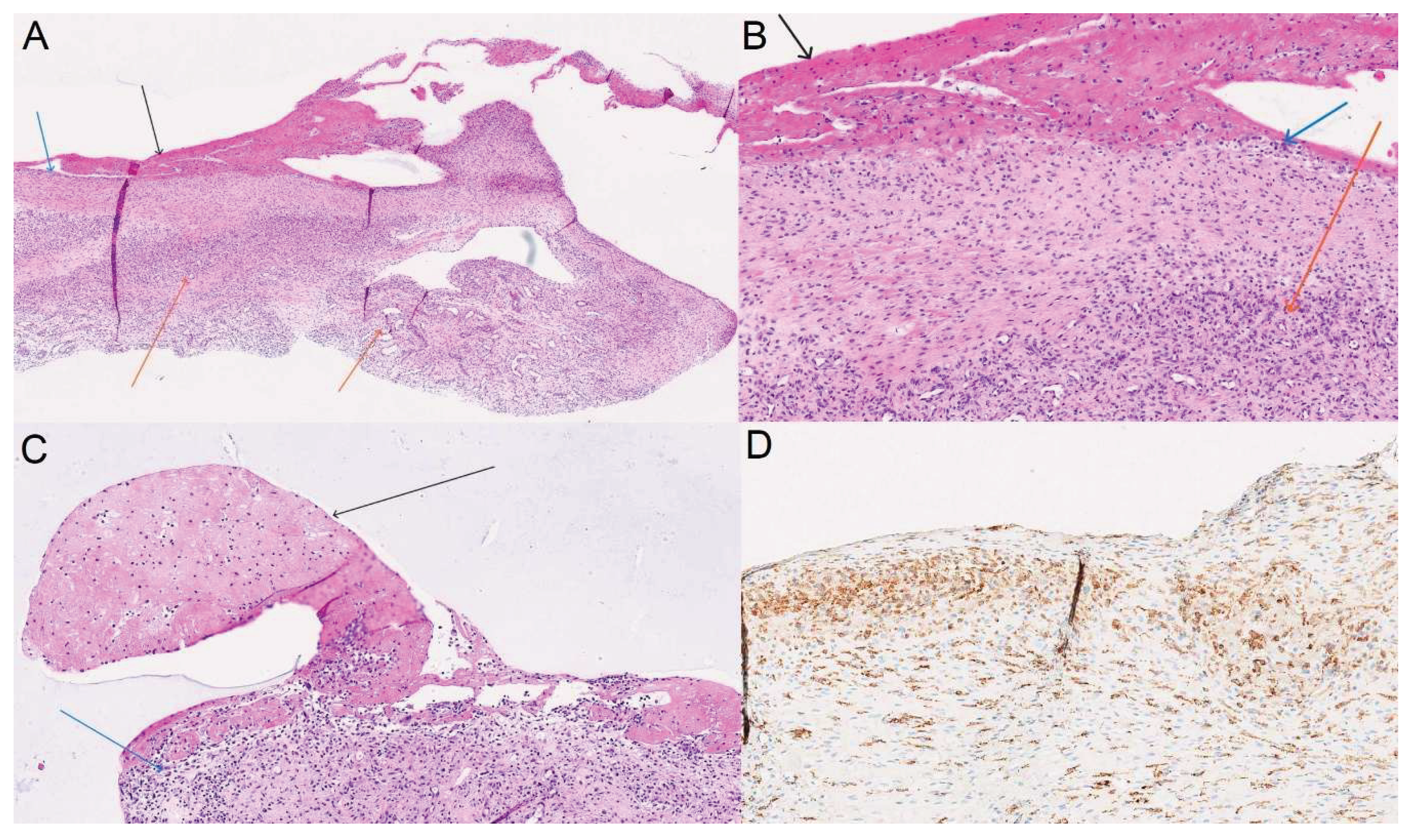

Table 1.
Clinical characteristics.
| Patients | Age | Gender | Vaccines | Delay post vaccine | Initial symptoms | Medical history |
Arthroscopy Biopsy |
MRI knee | |||||
| DNA | RNA | Arthritis | |||||||||||
| Doses | Doses | ||||||||||||
| 1 | 2 | 1 | 2 | 3-4 | |||||||||
| 1 | caucasian | 65 | F | AZ | AZ | Pf | 1 day | 2 knees | Diabetes HT |
- | Synovitis | ||
| 2 | caucasian | 61 | M | Pf | Pf | Mod | 1 day | 2 knees 2 ankles |
Diabetes HT |
- | - | ||
| 3 | African black | 51 | M | AZ | AZ | Pf | 1 month | 2 knees | HT | + | Synovitis | ||
| 4 | Caucasian | 85 | M | Pf | Pf | 2 months | Left knee | - | + | Synovitis | |||
| 5 | Caucasian | 51 | M | Mod | Mod | Mod | >6 months | Left knee | HLAb27+ |
- | - | ||
| 6 | Caucasian | 69 | M | AZ | AZ | Pf | Pf | 1.5 month | Right knee 2 ankles |
- | + | Synovitis osteochondroma |
|
| 7 | Caucasian | 31 | F | Pf | Pf | Pf Mod | >6 months | Right knee Left wrist |
- | + | - | ||
AZ: astra Zeneca vaccine, Mod: Moderna vaccine, Pf: Pfizer vaccine, HT: hypertension.
Table 2.
- Biological features.
| Age/gender | VS/CRP |
Anti-Spike antibodies Blood BAU/ml delay post vaccine |
Anti Spike Synovial Fluid BAU/ml delay post vaccine |
Articular Fluid | Biopsy | ||||||||
| 1 | 2 | 3 | 1 | 2 | 3 | 1 | 2 | ||||||
| 1 | 65 | F | 90/65 | 16/2 | 1700 6months |
>2080 9months |
1680 13months |
270 10months |
456 18months |
Rare WC RC- |
Rare WC RC- |
- | |
| 2 | 62 | M | 37/94 | >2080 11months | >2080 15months |
>2080 17months |
1190 11months |
>2080 13mont |
WC 4150 65% PNN RC+ |
WC 27100 79% PNN RC+ |
- | ||
| 3 | 51 | M | 113/94 | 41/4 | 34/14 | >2080 13 months |
1050 24mois |
346 34months |
>2080 13months |
126 32months |
WC 300 60 Mono Mac RC+ |
WC 266 67% L RC + |
+ |
| 4 | 85 | M | 18/1 | 6/3 | >2080 9 months |
>2080 21months |
>2080 (PCR-) 9months |
Rare WC RC- |
+ | ||||
| 5 | 51 | M | 30/3 | >2080 13 months |
>2080 13months |
Rare WC RC- |
- | ||||||
| 6 | 69 | M | 6/2 | 10/9 | 2/1 | >2080 1.5months |
641 (6mois) |
596 10months |
1425 1.5 month |
WC 146 RC 16 |
+ | ||
| 7 | 31 | F | 13/6 | >2080 7months |
>2080 7 months |
WC 3500 79% L RC- |
+ | ||||||
WC: white cells count /mm3, RC: red cells /mm3, L lymphocytes %, PNN: polynuclear neutrophile %, Mono Mac: monocyte macrophage.
Disclaimer/Publisher’s Note: The statements, opinions and data contained in all publications are solely those of the individual author(s) and contributor(s) and not of MDPI and/or the editor(s). MDPI and/or the editor(s) disclaim responsibility for any injury to people or property resulting from any ideas, methods, instructions or products referred to in the content. |
© 2026 by the authors. Licensee MDPI, Basel, Switzerland. This article is an open access article distributed under the terms and conditions of the Creative Commons Attribution (CC BY) license (http://creativecommons.org/licenses/by/4.0/).
Copyright: This open access article is published under a Creative Commons CC BY 4.0 license, which permit the free download, distribution, and reuse, provided that the author and preprint are cited in any reuse.


