

Submitted:
22 April 2026
Posted:
27 April 2026
You are already at the latest version
Abstract
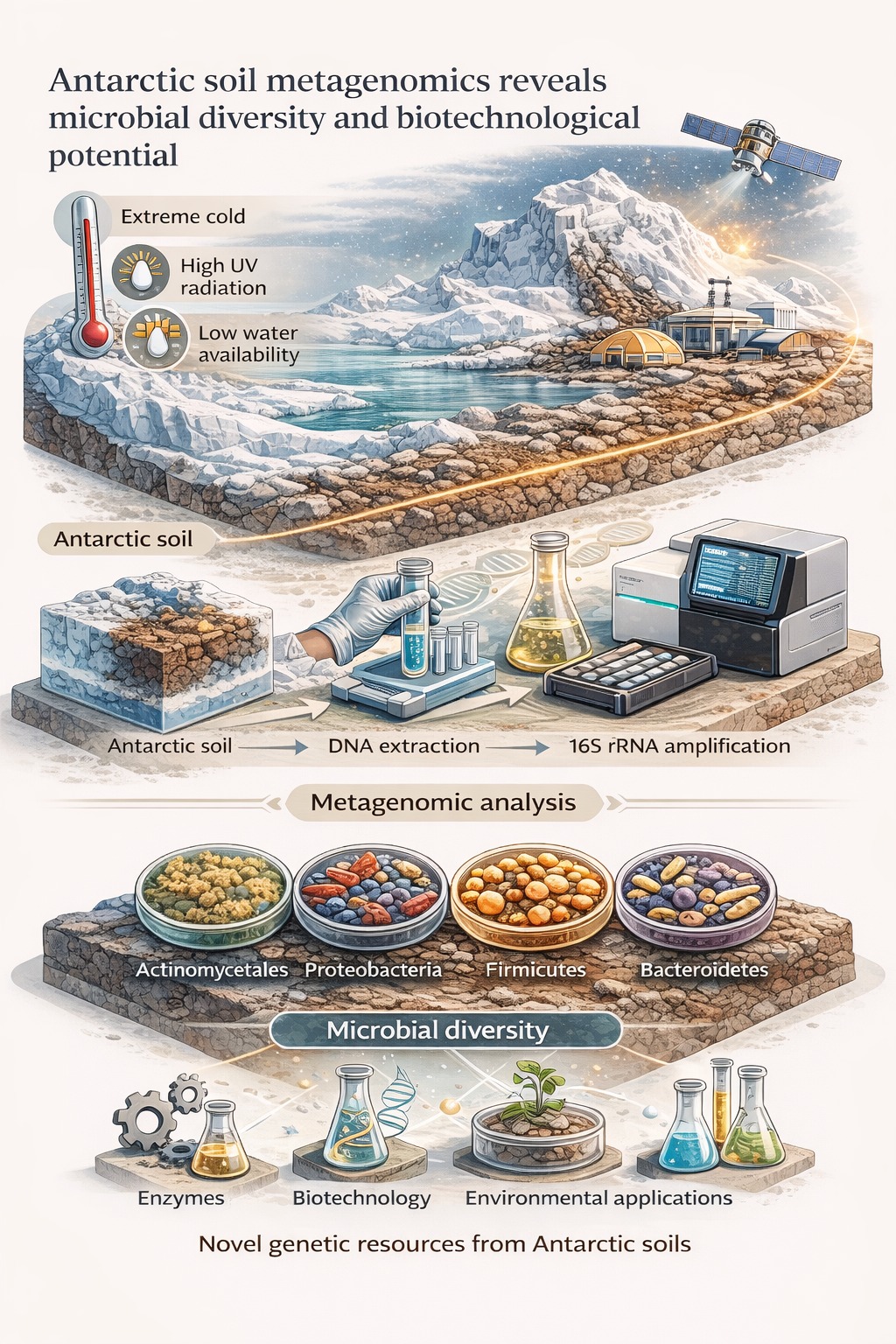
Metagenomic analysis of Antarctic soils provides a key perspective on the microbial diversity of one of the most extreme ecosystems on Earth, where microorganisms dominate ecological processes, although their diversity and distribution remain less understood than those of macroscopic eukaryotes. This study aimed to identify bacteria present in Antarctic soils using a metagenomic approach. Soil samples were obtained from the sample bank of the Escuela Superior Politécnica Agropecuaria de Manabí and were collected during an expedition conducted in 2014 on four islands: Greenwich, Dee, Barrientos, and Torre. The analysis included DNA extraction, amplification of the 16S rRNA gene by polymerase chain reaction (PCR) using specific primers, and sequencing on the Illumina MiSeq platform (Macrogen©). These techniques enabled reliable identification of the microbial populations present. The results revealed the predominance of several bacterial phyla across all four islands, with Actinomycetales (36.60%), Proteobacteria (20.03%), Firmicutes (17.53%), and Bacteroidetes (6.91%) being the most abundant. In addition, Antarctic soil metagenomes indicated the potential access to novel genes encoding enzymes with possible biotechnological and industrial applications. Overall, these findings highlight Antarctic ecosystems as reservoirs of valuable genetic resources and underscore their importance for the long-term development of biotechnological applications, without extrapolating conclusions beyond the results obtained.
Keywords:
genes
; metagenomes
; porkhooks
; sequencing
Copyright: This open access article is published under a Creative Commons CC BY 4.0 license, which permit the free download, distribution, and reuse, provided that the author and preprint are cited in any reuse.


