

Submitted:
22 April 2026
Posted:
23 April 2026
You are already at the latest version
Abstract
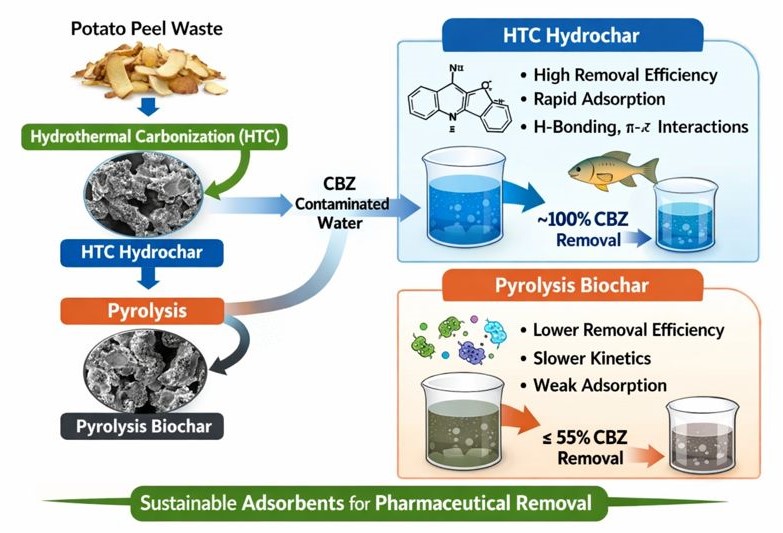
The persistence of pharmaceutical contaminants such as carbamazepine (CBZ) in aquatic environments presents a growing challenge for conventional wastewater treatment processes. In this study, potato peel waste was valorised into carbonaceous adsorbents via hydrothermal carbonization (HTC) and conventional pyrolysis, and their performance for CBZ removal from water was systematically compared. Hydrochars were prepared at 200 °C under varying residence times and biomass-to-water ratios, while biochars were produced at 400 °C using KOH activation under different reaction times and impregnation ratios. The materials were characterised using BET surface area analysis, CHNS elemental analysis, and FTIR spectroscopy. Adsorption experiments revealed that HTC-derived hydrochars achieved outstanding CBZ removal efficiencies (up to ~100%) and high uptake capacities (~50 mg g⁻¹) within one minute of contact, despite relatively low surface areas (< 2 m² g⁻¹). In contrast, pyrolysis biochars exhibited significantly lower removal efficiencies (7–55%) and slower, less stable adsorption behaviour. Correlation analysis demonstrated that CBZ removal was strongly associated with surface chemistry—particularly carbon, hydrogen, and nitrogen content and N/C ratio—rather than BET surface area or pore diameter. FTIR analysis indicated that π–π interactions, hydrogen bonding, and pore filling collectively govern CBZ adsorption, with oxygen- and nitrogen-containing functional groups playing a dominant role in rapid uptake. These findings highlight hydrothermal carbonization as an effective, low-severity route for producing high-performance adsorbents from food waste and demonstrate the potential of potato peel–derived hydrochars for rapid pharmaceutical remediation in water treatment applications.
Keywords:
pharmaceuticals
; biochars
; adsorption
; synthetic wastewater
; pyrolysis
; volarisation
1. Introduction
The global transition toward a circular, resource-efficient, and climate-resilient economy has intensified interest in the valorization of biomass residues and organic wastes into energy carriers and value-added materials [1,2]. Rather than treating waste solely as an environmental burden requiring disposal, contemporary waste management strategies increasingly emphasize conversion pathways that recover functionality, materials, and energy, thereby supporting the United Nations Sustainable Development Goals (SDGs), particularly SDG 6 (Clean Water and Sanitation), SDG 12 (Responsible Consumption and Production), and SDG 13 (Climate Action) [3,4].
Agricultural and food-processing wastes constitute one of the largest renewable biomass streams worldwide. Among these, potato peel waste is generated in substantial quantities from domestic consumption and agro-industrial processing, often posing logistical and environmental challenges due to its high moisture content and rapid biodegradability [1,5]. However, potato peel is rich in lignocellulosic components, starch, and nitrogen-containing biomolecules, making it an attractive precursor for thermochemical conversion into functional carbonaceous materials [6,7]. Valorizing potato peel waste through controlled carbonization pathways therefore offers a sustainable route to transform a low-value residue into high-value products with environmental and industrial relevance.
Thermochemical conversion technologies such as pyrolysis and hydrothermal carbonization (HTC) are widely applied for biomass valorization. Conventional pyrolysis operates at elevated temperatures under inert atmospheres and typically produces biochars with increased aromaticity and porosity, often requiring chemical activation to enhance performance [8,9,10,11]. In contrast, HTC is a low-temperature, water-mediated process that enables direct conversion of wet biomass into hydrochars without energy-intensive drying [12,13]. HTC is particularly suitable for food waste valorization, as it preserves oxygen- and nitrogen-containing functional groups while achieving significant carbon enrichment under comparatively mild conditions [14,15]. Despite increasing interest in HTC as a sustainable waste-to-material pathway, direct comparisons between HTC-derived hydrochars and pyrolysis-derived biochars produced from the same feedstock remain limited, particularly in terms of functional performance and structure–property relationships [16].
One promising application for waste-derived carbon materials is the adsorption-based removal of persistent organic micropollutants from water. Carbamazepine, a widely prescribed pharmaceutical, is frequently detected in wastewater effluents, surface waters, and even drinking water sources due to its resistance to biodegradation and conventional wastewater treatment processes [3,17]. Its persistence and potential ecological risks have led to its inclusion on regulatory monitoring lists, highlighting the need for effective mitigation strategies [17,18]. Adsorption using carbonaceous materials offers a low-energy and scalable treatment option, particularly when paired with sustainable, waste-derived adsorbents [19].
Previous studies have demonstrated the feasibility of carbamazepine removal using activated carbons and modified biochars derived from agricultural wastes, algae, and sludge [19,20,21,22,23,24,25,26]. However, many of these approaches rely on aggressive chemical activation, high surface areas, or composite synthesis, which may limit scalability and undermine the sustainability benefits of waste valorization. From a valorization perspective, it remains crucial to identify low-severity conversion routes capable of producing high-performance materials without extensive post-treatment or chemical modification.
Hydrochars produced via HTC are known to exhibit relatively low surface areas compared to pyrolyzed biochars, yet they possess surface chemistries rich in oxygenated and nitrogen-containing functional groups that can facilitate adsorption through hydrogen bonding, π–π interactions, and polar interactions [14,16,27]. Recent studies suggest that such surface chemistry may be more influential than surface area alone in governing adsorption of certain pharmaceuticals [22,26]. However, systematic experimental evidence linking conversion pathway, material chemistry, and rapid adsorption performance remains scarce.
In this study, potato peel waste is valorized into carbonaceous adsorbents via hydrothermal carbonization and conventional pyrolysis, and the resulting materials are systematically compared in terms of physicochemical properties and functional performance for carbamazepine removal from water. By correlating adsorption efficiency and kinetics with elemental composition, surface chemistry, and textural properties, this work demonstrates how low-temperature, water-based conversion routes can generate high-value adsorbents from food waste. The findings reinforce hydrothermal carbonization as a sustainable and effective biomass valorization strategy and highlight the potential of food-waste-derived hydrochars as functional materials for environmental applications, consistent with the aims of circular economy development and sustainable waste management.
2. Materials and Experimental Methods
2.1. Preparation of the Potato Peel Adsorbent via Pyrolysis
Samples were produced from dried potato peel powder using potassium hydroxide as an activation agent, under different conditions of reaction time and KOH ratios, whilst keeping the reaction temperature at 400 °C. The pyrolysis reaction time was either 1 or 4 hours, whilst the KOH/ biomass ratio was either 1:1 or 2:1. 10g of potato peel was used in this case, and the mass of KOH used would be 10g for the ratio 1:1 or 20g for the ratio 2:1. The samples produced by pyrolysis are named using the convention PRYRX-Y, where X represents the parts of KOH by mass and Y represents the pyrolysis reaction time. For instance, a sample produced with a KOH: biomass ratio of 2:1 and a reaction time of 1 hour would be named PRYR2-1.
2.2. Preparation of the Potato Peel Adsorbent via Hydrothermal Cracking
Hydrochar was produced in an autoclave reactor vessel from dried potato peel powder with distilled water. During the hydrothermal conversion, the reaction temperature was kept constant at 200°C while varying the reaction time (2 or 25 hours) and weight/volume ratios of the biomass to distilled water (1:1 or 1:5). For the ratio of 1:1, 4g of potato peel and 4ml of distilled water were used. 10g of potato peel and 50ml of distilled water were used for the ratio 1:5. The samples produced by hydrothermal cracking are named using the convention HTCX-Yhr, where X represents the parts of distilled water by mass/volume and Y represents residence time. For instance, a sample produced with a biomass: distilled water ratio of 1:1 and a residence time of 2 hours would be named HTC1-2hr.
2.3. Characterization of the Samples
The functional groups of the adsorbents PPPYR and PPHTC (both before and after adsorption) would be identified using Fourier Transform Infrared (FTIR) Spectroscopy within the range of 4000–400 cm−1 [28]. CHNS analysis would also be conducted. The surface area and porosity information of each adsorbent (before adsorption) would be evaluated using Brunauer-Emmett-Teller (BET) analysis at 77K using a Micromeritics Tristar 3020 instrument with N2 gas flow [28].
2.4. Adsorption Study
A 50 ppm aqueous solution of carbamazepine (CBZ) was produced from a 100 ppm stock solution by dilution, and the pH was adjusted to 6 using HCl and NaOH. 10 ml of the CBZ solution was transferred into 4 20 ml glass vials, followed by the addition of 100 mg of each of the adsorbents. The vials were put on a shaker at room temperature and a contact time of 24 hours. At the expiry of the required set contact time, the concentration of the CBZ solutions was measured using a UV-VIS spectrophotometer at a wavelength of 285nm. The measured absorbance from UV-VIS spectrophotometry was used in conjunction with calibration data to determine the concentration of CBZ in solution samples.
The removal of efficiency of the adsorbent was determined from the following equation:
In equation and are the initial and final concentrations of the CBZ before and after adsorption.
The CBZ uptake by the adsorbent (mg/g), was determined from:
where is the volume of the CBZ solution, is the mass of the adsorbent used in the test, and are as defined previously.
3. Results and Discussion
3.1. Sample Characterization
3.1.1. BET Analysis
Figure 1 (a) and (b) shows the BET isotherm for the best performing biochars and hydrochar. The BET isotherm for the other samples are provided in the supplementary information. The nitrogen adsorption–desorption isotherm of the potato peel biochar produced via pyrolysis exhibits the classical features of a Type IV mesoporous isotherm with an H3-type hysteresis loop, which is characteristic of non-rigid, slit-shaped pores commonly found in carbonaceous materials derived from lignocellulosic biomass [29]. The gradual increase in adsorbed nitrogen at low relative pressures (P/P₀ < 0.1) suggests limited microporosity, while the more pronounced adsorption at intermediate to high relative pressures reflects extensive mesopore filling by capillary condensation.
The broad H3 hysteresis loop further indicates an abundance of open, plate-like pores and layered structures, consistent with pore formation through devolatilization during pyrolysis. Such mesoporous structures, combined with increased surface area, are commonly observed in biochars produced at elevated temperatures and are known to enhance intermolecular interactions and sorption accessibility [30].
In contrast, the potato peel hydrochar generated through hydrothermal carbonization (HTC) displays a Type II isotherm, which is typical of non-porous or weakly porous carbonaceous solids with dominant external surface adsorption [31]. The nearly horizontal adsorption plateau across mid-range relative pressures (P/P₀ ≈ 0.1–0.9) indicates an absence of well-developed micro- or mesopores. The subtle hysteresis that emerges only at very high relative pressures (P/P₀ → 1) corresponds mainly to condensation within macropores or interparticle voids rather than true internal pore networks. This behaviour aligns with the typically dense, microsphere-like morphology of hydrochars, which retain fewer structural voids and exhibit lower specific surface areas than pyrolyzed biochars due to the milder temperatures and water-mediated reactions involved in HTC.
The pronounced differences in isotherm behaviour and pore development between the biochar and hydrochar have significant implications for their performance as adsorbents of antibiotics from wastewater. The biochar, with its well-developed mesoporous architecture and higher surface area, is expected to exhibit superior adsorption capacity for many classes of antibiotics—especially those with aromatic ring structures—due to enhanced pore filling, π–π interactions, and hydrophobic partitioning [32]. Mesopores also promote faster intraparticle diffusion, reducing mass-transfer limitations and improving adsorption kinetics. These characteristics align with findings from recent reviews showing that mesoporous agricultural-waste biochars frequently outperform other carbon materials in removing sulfonamides, tetracyclines, and fluoroquinolones [32]; [4].
Conversely, the hydrochar’s limited porosity and lower internal surface area constrain its total adsorption capacity, although its surface chemistry—typically richer in oxygen-containing functional groups—may facilitate specific interactions with certain antibiotic molecules, such as hydrogen bonding or electrostatic attraction. Such mechanisms have been observed in several hydrochar studies, where adsorption is dominated by surface functional groups rather than pore filling (Zhang et al., 2022). Nevertheless, due to structural limitations, hydrochars generally demonstrate slower diffusion rates and lower equilibrium capacities compared with corresponding biochars, unless chemically modified or activated. Overall, the biochar’s mesoporous structure makes it inherently more suited for the adsorption of bulky, aromatic antibiotics in wastewater, while hydrochar may require further activation or modification to achieve comparable performance.
Table 1 compares the BET surface areas and pore diameters of biochars produced from hydrothermal carbonization (HTC) and pyrolysis (PRYR) of potato peel powders. Adsorbents with the prefix HTC were prepared via hydrothermal conversion, while those with the prefix PRYR were obtained through pyrolysis. Micropores, mesopores, and macropores are defined as pores with diameters <2 nm, 2–50 nm, and >50 nm, respectively [27]. Except for raw potato peel and HTC5-2hr, all adsorbents exhibited mesoporous structures, with pore diameters ranging from 2.60 nm to 19.77 nm.
Activated carbons typically exhibit higher surface areas than hydrochars [33]. This trend was observed for most samples; however, HTC5-25hr (1.73 m²/g) surpassed PRYR2-1 (0.38 m²/g) and PRYR2-4 (1.52 m²/g), likely due to the influence of KOH dosage. Excessive KOH can damage pore walls through aggressive reactions with carbon, reducing surface area [31,34]. Consistent with the literature, HTC adsorbents generally had smaller pores than PRYR adsorbents [16].
Hydrothermal carbonization improved the surface area compared to raw potato peel, except for HTC5-2hr [12]. Longer residence times enhanced BET surface area, likely due to intensified hydrolysis and dehydration reactions at elevated temperatures, which release volatiles and create void spaces [13,30]. This trend was evident across HTC samples, where surface area increased with time (Fan et al., 2018). However, pore size did not consistently follow the expected increase with temperature and time; only HTC5-25hr exhibited a larger pore diameter than raw peel. Literature suggests that the liquid-to-solid ratio also influences surface area, with lower ratios causing incomplete carbonization [9]. HTC1-25hr and HTC5-25hr aligned with this observation. Additionally, higher water ratios can promote macropore formation (>100 nm), but this was only partially supported by HTC5-25hr [11].
Pyrolysis generally produces activated carbons with high surface areas [8], and all PRYR samples exceeded raw peel in this regard. Pore diameters also increased post-pyrolysis, consistent with the literature [35]. Residence time influenced surface area variably: PRYR1 samples showed a slight decrease from 4.23 m²/g (1 hr) to 3.77 m²/g (4 hr), while PRYR2 samples increased from 0.38 m²/g to 1.52 m²/g. This discrepancy may reflect differences in pore development and collapse during prolonged activation [36,37]. Increasing the KOH ratio from 1 to 2 significantly reduced surface area across all PRYR samples, likely due to excessive carbon–KOH reactions damaging pore walls [31,34]. Contrary to expectations, pore diameters decreased with higher KOH ratios and longer residence times, suggesting structural collapse under aggressive activation [29,38].
3.1.2. Textural Analysis
The textural feature of the adsorbents were investigated using SEM. Figure 2 shows comparison between the textural features of the best hydrochar and biocar adsorbents. Both images were acquired at a magnification of X8000 using acceleration voltage of 30 kV.
The SEM image of PRYR1-1 biochar presented in Figure 2 (a) shows a heterogeneous, sheet-like morphology interspersed with fibrous networks and micro–mesoporous cavities. The layered structures indicate incomplete carbonization of lignocellulosic precursors, while the fibrous textures suggest the preservation of cellulose-derived frameworks during pyrolysis. The presence of irregular pores and voids in the 1–10 µm range provides extensive surface roughness and facilitates diffusion of adsorbates into the biochar matrix. Such morphological heterogeneity is typical of potato peel-derived biochars, which often exhibit high porosity and irregular pore distribution due to volatile release during pyrolysis [1,5].
These textural features have direct implications for adsorption of organic pollutants like carbamazepine, a neutral pharmaceutical compound with relatively low biodegradability. The high surface area and pore connectivity of PRYR1-1 biochar increase the probability of carbamazepine molecules interacting with adsorption sites. The fibrous and layered textures also promote π–π electron donor–acceptor interactions between the aromatic domains of biochar and the aromatic rings of carbamazepine, enhancing sorption affinity [10,39]. Furthermore, the irregular pore geometry provides both micropores for molecular sieving and mesopores for rapid diffusion, which together improve adsorption kinetics.
Studies on potato peel biochars confirm that porous, irregular textures contribute to strong adsorption of pharmaceuticals and dyes due to combined physical entrapment and surface interactions [1,5]. For carbamazepine specifically, adsorption efficiency is often linked to the presence of oxygen-containing functional groups and graphitic domains within biochar, which are supported by the layered and fibrous morphologies observed in SEM [10,39]. Thus, the PRYR1-1 biochar’s textural features not only provide a large accessible surface but also facilitate chemical interactions, making it a promising adsorbent for wastewater treatment applications targeting persistent organic pollutants.
The SEM micrograph of HTC5-25hr hydrochar shown Figure 2 (a) reveals a heterogeneous, irregular, and porous surface morphology. The hydrochar exhibits aggregated sheet-like structures interspersed with fibrous domains and cavities, which are typical of biomass-derived hydrochars produced under extended hydrothermal carbonisation. The irregular pore distribution and rough surface texture suggest the release of volatile matter during carbonisation, leaving behind micro–mesoporous networks. Such morphologies are consistent with hydrochars obtained from lignocellulosic wastes, where incomplete aromatisation and dehydration preserve oxygen-rich functional groups and structural heterogeneity.
These textural features have direct implications for the adsorption of organic micropollutants such as carbamazepine, a neutral pharmaceutical compound with low biodegradability. The porous morphology enhances molecular diffusion and provides physical entrapment sites, while the fibrous and layered domains increase the number of accessible adsorption sites.
3.1.3. Elemental Analysis
CHNS analysis provides the composition of carbon, hydrogen, nitrogen and sulphur in an adsorbent. Table 2 below shows the CHNS results for all 8 adsorbents and raw potato peel.
The elemental composition of the raw potato peel (PP-Raw) was 39.77% C, 6.38% H and 2.09% N, in close agreement with reported values for potato peel wastes (≈41.9% C, 5.6% H, 1.6% N), confirming that the feedstock used here is representative of literature baselines [7]. For the hydrothermal carbonization (HTC) chars, carbon increased with residence time in both water-to-biomass series (HTC1: 54.23→62.17% C; HTC5: 37.09→53.28% C), consistent with the expectation that prolonged HTC promotes dehydration, decarboxylation and aromatization, thereby enriching fixed carbon and lowering oxygen [14,15]. Lower water loading (i.e., higher solid-to-liquid ratio; HTC1 vs HTC5 at the same time) also yielded higher carbon contents, aligning with reports that increased solids concentration can enhance carbonization, albeit with potential trade-offs in mixing and heat transfer [2]. Hydrogen typically declines with HTC severity due to dehydration and cleavage of C–H/O–H bonds [40,41]. This trend held for HTC5 (6.80→5.24% H), but a slight rise for HTC1 (5.27→5.74% H) suggests subtle structural differences; the observed intensification of C–H stretching near ~2900 cm⁻¹ for the longer residence sample is a plausible indicator of residual aliphatic functionality that would elevate measured hydrogen (FTIR observation). Nitrogen generally increased with residence time in both ratio series (HTC1: 2.44→2.85% N; HTC5: 1.25→2.55% N), in line with prior reports of N enrichment via condensation/polymerization under HTC conditions [16]. In contrast to studies that show higher liquid-to-solid ratios elevating N retention in hydrochars, the present data display the opposite, which can be rationalized by increased dissolution of nitrogenous species into the aqueous phase at higher water loadings [42,43].
For the pyrolysis (PRYR) chars, literature commonly reports that increasing residence time (or severity) raises fixed carbon and reduces hydrogen as volatiles are expelled and aromaticity grows [44]. Here, however, carbon decreased with time in both series (PRYR1: 16.59→13.95% C; PRYR2: 12.36→10.02% C). Hydrogen followed the expected decline only in PRYR1 (1.10→0.66% H) but increased in PRYR2 (1.13→1.45% H). These deviations from canonical trends point to process-specific factors—such as lower final temperatures, differences in ramp rates or residence time definitions, variable purge gas flows, or higher inorganic/ash fractions diluting the carbon percentage—that can suppress apparent carbon enrichment or modulate hydrogen loss despite longer nominal times. Notably, sulphur was consistently <0.3% for HTC samples but higher in several PRYR chars (up to 2.55%), indicating contrasting sulphur partitioning between the two thermochemical routes under the conditions applied in this work. Overall, HTC results broadly track literature expectations for increasing severity (higher C, generally lower H, rising N with time and higher solids loading), while the PRYR set shows attenuated or inverted trends for C and H that likely reflect differences in operational severity relative to standard pyrolysis protocols [2,40,41,42,43,44].
3.1.4. FTIR Analysis
FTIR spectroscopy was employed to identify functional groups present in raw potato peel and its derived adsorbents prepared via hydrothermal conversion (HTC) and pyrolysis (PRYR). These functional groups are critical in understanding adsorption mechanisms, particularly for organic pollutants such as carbamazepine (CBZ), which is a neutral, hydrophobic pharmaceutical compound. Figure 3. shows the comparison between the FTIR spectrum of raw potato and that of HTC samples.
The FTIR spectrum of raw potato peel exhibited a broad band between 3000–3300 cm⁻¹, attributed to hydrogen-bonded –OH stretching vibrations of hydroxyl groups, indicating the presence of cellulose and hemicellulose components [45]. A peak at 2938 cm⁻¹ corresponds to aliphatic C–H stretching of methyl and methylene groups in polysaccharides [46]. The band at 1632 cm⁻¹ is associated with C=O stretching vibrations of aldehydes, suggesting lignin-derived aromatic structures [47,48]. Peaks between 1000–1350 cm⁻¹ are linked to C–O and C–C stretching in starch molecules [49], while absorptions at 1600–1400 cm⁻¹ indicate aromatic C=C vibrations [6]. These oxygen-containing groups enhance hydrophilicity and provide active sites for hydrogen bonding with polar contaminants.
HTC-derived adsorbents displayed characteristic peaks at 3753 cm⁻¹ (–OH stretching), 2920–2850 cm⁻¹ (C–H stretching), and 1693 cm⁻¹ (C=O stretching of aromatic skeleton), confirming the presence of hydroxyl, carbonyl, and aromatic functionalities [14]. Peaks around 1570 cm⁻¹ correspond to aromatic C=C vibrations, while bands between 1195–594 cm⁻¹ indicate substituted –CH groups in benzene rings. Hydrothermal treatment tends to preserve oxygenated groups, which can interact with CBZ through hydrogen bonding and π–π interactions, improving adsorption efficiency for pharmaceuticals [50].
In Figure 4, pyrolysis-derived adsorbents exhibited broad O–H stretching bands (3100–3400 cm⁻¹), aromatic C=C stretching at 1615 cm⁻¹, and C–OH related vibrations at 1050–1150 cm⁻¹ [50,51]. Pyrolysis generally increases aromaticity and surface hydrophobicity, favouring π–π electron donor–acceptor interactions with CBZ’s aromatic rings. However, the reduction in polar oxygenated groups may limit hydrogen bonding compared to HTC adsorbents.
The presence of hydroxyl (–OH), carbonyl (C=O), and aromatic groups significantly affects CBZ removal. Hydroxyl and carbonyl groups enable hydrogen bonding with CBZ’s amide and heterocyclic nitrogen atoms, while aromatic structures facilitate π–π stacking interactions. HTC adsorbents, rich in oxygenated groups, may exhibit higher affinity for CBZ through combined hydrogen bonding and hydrophobic interactions. Conversely, PRYR adsorbents, with enhanced aromaticity and porosity, favor π–π interactions and van der Waals forces, which are crucial for adsorbing nonpolar pharmaceuticals [50,51,52].
3.2. Adsorption Results
The adsorption performance of HTC hydrochars and PRY biochars for carbamazepine (CBZ) removal after 1 minute of contact with a 50 ppm CBZ solution (1 g/L dosage) reveals notable differences in removal efficiency and uptake. The results are presented in Figure 5.
HTC-derived hydrochars demonstrate outstanding adsorption efficiency, achieving approximately 12–100% removal (Figure 5 a), and high uptake values between 35 and 50 mg/g (Figure 5 c). These capacities are comparable to or exceed those reported for activated hydrochars in the literature. For instance, [26] prepared a dual-activator modified hydrochar with a CBZ uptake of ~296 mg/g, attributed to its high specific surface area and π–π and pore-filling interactions. Although the technique in this study used less aggressive activation, the observed uptakes still reflect the benefits of hydrothermal processing [22,26].
By contrast, PRY biochars show much lower performance, with removal efficiencies of ~10–40% and Qₑ values between 5 and 20 mg/g (Figure 5b and Figure 4d). These results suggest biochars produced via pyrolysis under mild conditions retain fewer oxygenated surface groups, leading to weaker interactions with CBZ molecules. This aligns with findings from [19], who reported typical CBZ adsorption capacities on biochars and activated carbons ranging from 10 to 40 mg/g, depending heavily on precursor and pyrolysis/activation conditions.
The dramatic performance gap between HTC hydrochars and PRY biochars underscores the importance of surface chemistry and functional group availability. Hydrothermal carbonization preserves and introduces polar oxygen-functional groups and moderate porosity, which promote CBZ adsorption through hydrogen bonding, π–π interactions, and pore filling. Similar mechanisms were emphasized by [20] in their study on magnetic biochar, where pore filling and π–π interactions drove adsorption.
Overall, the HTC hydrochars examined here outperform PRY biochars in both efficiency and adsorption capacity, demonstrating their superior suitability for rapid CBZ removal. While literature hydrochars with more extreme activation (e.g., [26]) reach hundreds of mg/g, the ~50 mg/g uptake achieved after only 1-minute highlights the effectiveness of moderate HTC treatment and its potential for practical water treatment applications.
3.2.1. Adsorption Kinetics
The data in Figure 6 shows the variation of CBZ removal efficiency with adsorption time for HTC5-25hr and PRYR1-1 adsorbents. The HTC hydrochar (HTC5-25hr) exhibits a very rapid adsorption process, reaching nearly 95% removal within 30 seconds and stabilizing close to 100% thereafter. This indicates that HTC hydrochars possess highly accessible adsorption sites and strong affinity for CBZ, enabling near-instantaneous uptake. In contrast, the PRY biochar (PRYR1-1) shows a markedly different trend: removal efficiency peaks at around 65% within 30 seconds, then gradually declines to about 20% by 300 seconds. This decrease suggests possible desorption or weak binding interactions, likely due to the limited surface functionality and lower polarity of pyrolyzed biochars compared to HTC hydrochars.
These observations align with literature reports emphasizing the fast kinetics of CBZ adsorption on hydrochars and activated carbons, often attributed to abundant oxygen-containing functional groups and mesoporous structures that facilitate rapid diffusion and strong interactions _[20,22]. For example [22] reported that hydrochars modified with dual activators achieved equilibrium within minutes, with CBZ uptakes exceeding 200 mg/g. Conversely, biochars produced via pyrolysis typically exhibit slower kinetics and lower capacities due to their hydrophobic surfaces and reduced functional group density, as noted by [19], where CBZ adsorption on biochars was significantly less efficient and often required extended contact times to approach equilibrium.
The sharp contrast between HTC5-25hr and PRYR1-1 underscores the importance of adsorbent surface chemistry and porosity in determining adsorption kinetics. HTC hydrochars offer rapid and stable CBZ removal, making them highly suitable for short-contact-time water treatment applications, whereas PRY biochars may be less effective under similar conditions.
3.2.3. Adsorption Mechanisms
Based on the provided data presented in Table 3, the correlation between CBZ removal efficiency and the physicochemical properties of HTC hydrochars and PRYR biochars reveals a complex interplay of factors, rather than a dependency on any single parameter.
Firstly, examining the elemental composition and atomic ratios suggests that the degree of carbonization and surface chemistry significantly influence adsorption performance. For the HTC series, the highest CBZ removals (94.4% for HTC1-25hr and 97.0% for HTC5-25hr) correspond with higher carbon content (C%) and lower H/C atomic ratios (1.11 and 1.18, respectively). A lower H/C ratio typically indicates higher aromaticity and carbonization [53], which can enhance π-π electron donor-acceptor (EDA) interactions with the aromatic rings of CBZ [54]. Conversely, the PRYR biochars, despite sometimes having higher sulphur content (e.g., PRYR1-1, PRYR1-4), show markedly lower CBZ removal (23.0% to 54.7%). Their lower carbon content and varying H/C ratios suggest a less graphitized, potentially more oxidized structure, which may be less favourable for π-π interactions with CBZ.
Regarding physical properties, the BET surface area shows a notable but non-linear relationship with adsorption. The HTC samples with the highest removal (HTC5-25hr, 97.0%) possess a moderate BET area (1.733 m²/g), which is substantially lower than that of PRYR1-1 (4.226 m²/g), yet the latter achieves only 54.7% removal. This indicates that while surface area provides potential adsorption sites, it is not the sole determinant of efficiency for CBZ. More critically, the pore diameter appears to play a significant role in accessibility. The HTC samples with high removal have pore diameters between 2.60 and 5.06 nm (mesoporous range), which may be optimal for accommodating the CBZ molecule (kinetic diameter ~0.7 nm) and facilitating diffusion [55]. In contrast, PRYR samples with very large pore diameters (e.g., 19.77 nm for PRYR1-1) may represent more macroporous structures with fewer adsorption sites per volume, potentially explaining their lower performance despite higher surface area. Notably, the raw material (PP-Raw) with minimal surface area and inconclusive data for some HTC samples underscores that the development of a porous structure via hydrothermal carbonization (HTC) is crucial for creating effective adsorbents.
The FTIR spectra (Figure 7 and Figure 8) provide insight into the adsorption mechanisms. For HTC adsorbents (Figure 7), the attenuation or shift of bands in regions associated with O-H stretching (~3400 cm⁻¹) and C=O/C-O groups (~1700-1000 cm⁻¹) after adsorption suggests the involvement of these functional groups in CBZ uptake, likely through hydrogen bonding or dipole-dipole interactions [56].
For PRYR biochars (Figure 8), changes in similar spectral regions are also observable. The presence of sulphur-containing groups in some PRYR samples (indicated by elemental analysis) could also participate in specific interactions, though their overall lower performance suggests these are less effective for CBZ than the combined π-π and polar interactions facilitated by the HTC chars. The consistent pattern across both figure sets indicates that CBZ adsorption involves surface functional groups, complementing the likely dominant mechanism of π-π conjugation between the adsorbent's aromatic backbone and the CBZ molecule [54,57].
The schematic in Figure 9 illustrates that the removal of carbamazepine (CBZ), a neutral and relatively hydrophobic compound with aromatic rings and an amide group, occurs through different dominant mechanisms depending on whether hydrochar (HTC) or pyrolysis-derived biochar (PYR) is used. In the case of HTC hydrochar, adsorption is primarily influenced by its oxygen-rich and polar surface chemistry. The presence of abundant functional groups such as hydroxyl (–OH), carboxyl (–COOH), and amino (–NH₂) groups facilitates hydrogen bonding with the amide functionality of CBZ. Additionally, polar interactions and surface complexation contribute to adsorption, as electron donor–acceptor interactions occur between CBZ heteroatoms and the hydrochar surface. Pore filling also plays a role, with CBZ molecules being physically retained within the mesoporous structure of the hydrochar.
In contrast, PYR biochar exhibits a more carbonized, aromatic, and hydrophobic surface due to high-temperature treatment, leading to different dominant adsorption mechanisms. π–π interactions between the aromatic rings of CBZ and the graphitic domains of the biochar are a key pathway for removal. Hydrophobic interactions further enhance adsorption, as CBZ preferentially partitions from the aqueous phase onto the nonpolar biochar surface. The well-developed microporosity and higher surface area of PYR biochar also promote pore filling, increasing adsorption capacity through physical entrapment. Additionally, residual mineral components in the biochar, such as metal cations (e.g., Na⁺, Fe²⁺, Zn²⁺), can contribute to adsorption via cation bridging or coordination with CBZ functional groups. Overall, the schematic emphasizes that HTC hydrochar relies more on hydrogen bonding and polar interactions, whereas PYR biochar removal is dominated by π–π interactions, hydrophobic effects, and enhanced pore filling, reflecting the differences in surface chemistry and structure resulting from their respective production processes.
4. Conclusions
This study demonstrates that hydrothermal carbonization (HTC) is a more effective method than conventional pyrolysis for converting potato peel waste into adsorbents capable of removing carbamazepine from water. HTC-derived hydrochars, particularly HTC5-25hr, achieved near-complete removal within minutes, outperforming pyrolyzed biochars which exhibited slower kinetics and lower adsorption capacities. The superior performance of hydrochars is attributed not to high surface area, but to their favorable surface chemistry—including oxygen-rich functional groups, higher carbonization, and optimized mesoporosity—which facilitates strong π–π interactions, hydrogen bonding, and pore-filling mechanisms. These findings underscore the importance of adsorbent surface properties over textural metrics and highlight the potential of HTC as a sustainable, low-temperature route for valorizing agricultural waste into effective pharmaceutical adsorbents.
5. Recommendations for Future Work
Future work should focus on optimizing HTC processing conditions—such as temperature, residence time, and water-to-biomass ratio—to further enhance adsorption performance and material consistency. Research is also needed to evaluate the regeneration and reusability of hydrochars over multiple cycles to assess their practical and economic viability. Expanding contaminant testing to include a broader range of pharmaceuticals, antibiotics, and complex real wastewater matrices would better elucidate the adsorbent’s applicability in diverse scenarios. Additionally, mechanistic studies using advanced modeling and characterization could deepen the understanding of adsorption pathways and kinetics. Finally, pilot-scale column or continuous-flow experiments, coupled with life cycle and techno-economic assessments, would provide critical insights for scaling up this technology toward real-world implementation.
Supplementary Materials
The following supporting information can be downloaded at the website of this paper posted on Preprints.org.
Author Contributions
All authors contributed to the study conception and design. writing – original draft; writing – review and editing. Bo Justin Khong Xiao, Chirangano Mangwandi: Software; visualization; writing – review and editing : Bo Xiao, Chirangano Mangwandi: Data curation; resources; investigation: Justin Khong; Resources. Chirangano Mangwandi. All authors read and approved the final manuscript.
Funding
The authors did not receive support from any organization for the submitted.
Ethics Approval
No required for the study.
Data and/or Code
Data available upon request.
Consent to Publication
It is not applicable.
Conflicts of Interest/Competing Interests
The authors have no conflict of interest to declare.
Conflicts of Interest
The authors have no relavent financial or non-financial conflict of interest to disclose.
References
- Augustine, D., et al., A Novel Adsorption/Co-Digestion/Pyrolysis Scheme for Potato Peel Waste Management to Fulfill the Sustainable Development Goals (SDGs). Waste and Biomass Valorization, 2024. 15(11): p. 6323-6341.
- Hidalgo, D., et al., Hydrothermal Carbonization of Industrial Sludge: Recent Advances, Challenges, and Perspectives, in Recent Trends in Management and Utilization of Industrial Sludge, V. Kumar, et al., Editors. 2024, Springer Nature Switzerland: Cham. p. 95-123.
- aus der Beek, T., et al., Pharmaceuticals in the environment—Global occurrences and perspectives. Environmental Toxicology and Chemistry, 2015. 35(4): p. 823-835.
- Biswal, B.K. and R. Balasubramanian, Adsorptive removal of sulfonamides, tetracyclines and quinolones from wastewater and water using carbon-based materials: Recent developments and future directions. Journal of Cleaner Production, 2022. 349: p. 131421.
- Vilakazi, S.P., P. Muchaonyerwa, and N.N. Buthelezi-Dube, Characteristics and liming potential of biochar types from potato waste and pine-bark. PLOS ONE, 2023. 18(2): p. e0282011.
- Liang, S. and A.G. McDonald, Chemical and Thermal Characterization of Potato Peel Waste and Its Fermentation Residue as Potential Resources for Biofuel and Bioproducts Production. Journal of Agricultural and Food Chemistry, 2014. 62(33): p. 8421-8429.
- Osman, A.I., et al., Production and characterisation of activated carbon and carbon nanotubes from potato peel waste and their application in heavy metal removal. Environmental Science and Pollution Research, 2019. 26(36): p. 37228-37241.
- Bouchelta, C., et al., Effects of pyrolysis conditions on the porous structure development of date pits activated carbon. Journal of Analytical and Applied Pyrolysis, 2012. 94: p. 215-222.
- Si, H., et al., Liquid-solid ratio during hydrothermal carbonization affects hydrochar application potential in soil: Based on characteristics comparison and economic benefit analysis. Journal of Environmental Management, 2023. 335: p. 117567.
- Taotao, S., et al., Properties of Biochar Prepared by Solar Pyrolysis and Its Adsorption of Cu2+ in Water. Earth Sciences, 2024. 13(4): p. 151-162.
- Yao, F., et al., Preparation of activated biochar with adjustable pore structure by hydrothermal carbonization for efficient adsorption of VOCs and its practical application prospects. Journal of Environmental Chemical Engineering, 2023. 11(2): p. 109611.
- Danso-Boateng, E., et al., Hydrochars produced by hydrothermal carbonisation of seaweed, coconut shell and oak: effect of processing temperature on physicochemical adsorbent characteristics. SN Applied Sciences, 2022. 4(8): p. 203.
- Román, S., et al., Hydrothermal carbonization as an effective way of densifying the energy content of biomass. Fuel Processing Technology, 2012. 103: p. 78-83.
- Goyi, A.A., N.M. Sher Mohammad, and K.M. Omer, Preparation and characterization of potato peel derived hydrochar and its application for removal of Congo red: a comparative study with potato peel powder. International Journal of Environmental Science and Technology, 2024. 21(1): p. 631-642.
- Köchermann, J., et al., Hydrothermal carbonization: Temperature influence on hydrochar and aqueous phase composition during process water recirculation. Journal of Environmental Chemical Engineering, 2018. 6(4): p. 5481-5487.
- Guo, Q., et al., A comparison of hydrothermal carbonization versus pyrolysis-activation for sludge-derived carbon materials on physiochemical properties and electrochemical performance. Biomass and Bioenergy, 2024. 182: p. 107079.
- Patel, M., et al., Pharmaceuticals of Emerging Concern in Aquatic Systems: Chemistry, Occurrence, Effects, and Removal Methods. Chemical Reviews, 2019. 119(6): p. 3510-3673.
- Fent, K., A.A. Weston, and D. Caminada, Ecotoxicology of human pharmaceuticals. Aquatic Toxicology, 2006. 76(2): p. 122-159.
- Décima, M.A., et al., A Review on the Removal of Carbamazepine from Aqueous Solution by Using Activated Carbon and Biochar. Sustainability, 2021. 13(21): p. 11760.
- Liu, Y., et al., Adsorption of carbamazepine on self-endowed magnetic biochar produced from iron-rich sludge. RSC Advances, 2025. 15(52): p. 44486-44494.
- Pandiyarajan, A., et al., Sustainable development and analysis of a novel bio-derived (biochar) nanocomposite for the remediation of carbamazepine from aqueous solution. Chemosphere, 2023: p. 140696.
- Saqib, N.U., et al., Utilizing hydrothermally carbonized food waste-derived activated hydrochar for the elimination of carbamazepine and naproxen. Research Square, 2024.
- Stoykova, M., B. Koumanova, and L. Mörl, Adsorptive removal of carbamazepine from wastewaters by activated charcoals. Journal of Chemical Technology and Metallurgy, 2013. 48: p. 469-474.
- Yukhymchuk, A., et al., Waste-to-Wealth: Unlocking the Potential of Pine Sawdust Biochar for Adsorption of Cobalt(II) and Nickel(II) Ions and Sustainable Elimination of Carbamazepine from Aqueous Solutions. ACS ES&T Water, 2024. 4(9): p. 3943-3955.
- Zhang, W., et al., The crucial role of different NaOH activation pathways on the algae-derived biochar toward carbamazepine adsorption. Results in Engineering, 2023. 20: p. 101509.
- Zhong, H., et al., Efficient adsorption removal of carbamazepine from water by dual-activator modified hydrochar. Separation and Purification Technology, 2025. 353: p. 128287.
- Thunshirn, P., W.W. Wenzel, and C. Pfeifer, Pore characteristics of hydrochars and their role as a vector for soil bacteria: A critical review of engineering options. Critical Reviews in Environmental Science and Technology, 2022. 52(23): p. 4147-4171.
- Campbell, R., B. Xiao, and C. Mangwandi, Production of activated carbon from spent coffee grounds (SCG) for removal of hexavalent chromium from synthetic wastewater solutions. Journal of Environmental Management, 2024. 366: p. 121682.
- Harimisa, G.E., et al., Synthesis of potassium hydroxide-treated activated carbon via one-step activation method. Journal of Physics: Conference Series, 2022. 2259(1): p. 012009.
- Kyotani, M., et al., Efficient preparation of carbon papers by pyrolysis of iodine-treated Japanese paper. Journal of Analytical and Applied Pyrolysis, 2012. 95: p. 14-20.
- Castillo, K.J.T., et al., Optimization study for chemical activation of biochar derived from sugarcane bagasse for maximum phytohormone adsorption from waste coconut water. IOP Conference Series: Materials Science and Engineering, 2024. 1318(1): p. 012015.
- Du, L., et al., A review of antibiotics and antibiotic resistance genes (ARGs) adsorption by biochar and modified biochar in water. Science of the total environment, 2023. 858: p. 159815.
- Kozyatnyk, I. and I. Yakupova, Impact of Chemical and Physical Treatments on the Structural and Surface Properties of Activated Carbon and Hydrochar. ACS Sustainable Chemistry & Engineering, 2025. 13(6): p. 2500-2507.
- Mehrabinia, P., et al., Nitrate removal from agricultural effluent using sugarcane bagasse active nanosorbent. Journal of Applied Water Engineering and Research, 2022. 10(3): p. 238-249.
- Sufian, J., et al., Algal Biomass, Biochar and Hydrochar from Chlorella Vulgaris for Cadmium Removal from Aqueous Streams. 2023.
- Kumar Mishra, R., B. Singh, and B. Acharya, A comprehensive review on activated carbon from pyrolysis of lignocellulosic biomass: An application for energy and the environment. Carbon Resources Conversion, 2024. 7(4): p. 100228.
- Malini, K., D. Selvakumar, and N.S. Kumar, Activated carbon from biomass: Preparation, factors improving basicity and surface properties for enhanced CO2 capture capacity – A review. Journal of CO2 Utilization, 2023. 67: p. 102318.
- Putra, A.E.E., et al., Effect of Residence Time and Chemical Activation on Pyrolysis Product from Tires Waste. Journal of the Japan Institute of Energy, 2019. 98(10): p. 279-284.
- Ray, A., Characterization of Biochars from Various Agricultural By-Products Using FTIR Spectroscopy, SEM focused with image Processing. International Journal of Agriculture Environment and Biotechnology, 2020.
- Smith, A.M. and A.B. Ross The Influence of Residence Time during Hydrothermal Carbonisation of Miscanthus on Bio-Coal Combustion Chemistry. Energies, 2019. 12. [CrossRef]
- Wang, G., et al., Hydrothermal carbonization mechanism of agricultural waste under different conditions: An experimental and ReaxFF molecular dynamics study. Journal of the Energy Institute, 2023. 110: p. 101353.
- Aragón-Briceño, C.I., et al., Hydrothermal carbonization of wet biomass from nitrogen and phosphorus approach: A review. Renewable Energy, 2021. 171: p. 401-415.
- Su, X., et al., Potential Application Performance of Hydrochar from Kitchen Waste: Effects of Salt, Oil, Moisture, and pH. Toxics, 2023. 11(8).
- Ganesapillai, M., et al., Waste to energy: A review of biochar production with emphasis on mathematical modelling and its applications. Heliyon, 2023. 9(4): p. e14873.
- El-Azazy, M., et al., Potato Peels as an Adsorbent for Heavy Metals from Aqueous Solutions: Eco-Structuring of a Green Adsorbent Operating Plackett–Burman Design. Journal of Chemistry, 2019. 2019(1): p. 4926240.
- Farooq, U., et al., Effect of modification of environmentally friendly biosorbent wheat (Triticum aestivum) on the biosorptive removal of cadmium(II) ions from aqueous solution. Chemical Engineering Journal, 2011. 171(2): p. 400-410.
- Bodîrlău, R., C.A. Teacă, and I. Spiridon, Preparation and characterization of composites comprising modified hardwood and wood polymers/poly (vinyl chloride). BioResources, 2009. 4(4).
- Johari, K., et al., Adsorption equilibrium and kinetics of elemental mercury onto coconut pith. Journal of Environmental Science and Technology, 2015. 8(2): p. 74.
- Van Soest, J.J., et al., Short-range structure in (partially) crystalline potato starch determined with attenuated total reflectance Fourier-transform IR spectroscopy. Carbohydrate research, 1995. 279: p. 201-214.
- Kyzas, G.Z. and E.A. Deliyanni, Modified activated carbons from potato peels as green environmental-friendly adsorbents for the treatment of pharmaceutical effluents. Chemical Engineering Research and Design, 2015. 97: p. 135-144.
- Arampatzidou, A.C. and E.A. Deliyanni, Comparison of activation media and pyrolysis temperature for activated carbons development by pyrolysis of potato peels for effective adsorption of endocrine disruptor bisphenol-A. Journal of Colloid and Interface Science, 2016. 466: p. 101-112.
- Tran, N.H., M. Reinhard, and K.Y. Gin, Occurrence and fate of emerging contaminants in municipal wastewater treatment plants from different geographical regions-a review. Water Res, 2018. 133: p. 182-207.
- Mäkelä, M., V. Benavente, and A. Fullana, Hydrothermal carbonization of lignocellulosic biomass: Effect of process conditions on hydrochar properties. Applied Energy, 2015. 155: p. 576-584.
- Wang, B., et al., Preparation of biochar by simultaneous carbonization, magnetization and activation for norfloxacin removal in water. Bioresource Technology, 2017. 233: p. 159-165.
- Ahmed, M.B., et al., Progress in the preparation and application of modified biochar for improved contaminant removal from water and wastewater. Bioresource Technology, 2016. 214: p. 836-851.
- Li, J., et al., The electrochemical advanced oxidation processes coupling of oxidants for organic pollutants degradation: A mini-review. Chinese Chemical Letters, 2019. 30(12): p. 2139-2146.
- Pezoti, O., et al., Adsorption studies of methylene blue onto ZnCl2-activated carbon produced from buriti shells (Mauritia flexuosa L.). Journal of Industrial and Engineering Chemistry, 2014. 20(6): p. 4401-4407.
Figure 1.
BET N2 isotherms of (a) the pyrolysis biochar (PRYR1-1) and (b) hydrochar from hydrothermal conversion (HTC5-25hr).
Figure 1.
BET N2 isotherms of (a) the pyrolysis biochar (PRYR1-1) and (b) hydrochar from hydrothermal conversion (HTC5-25hr).
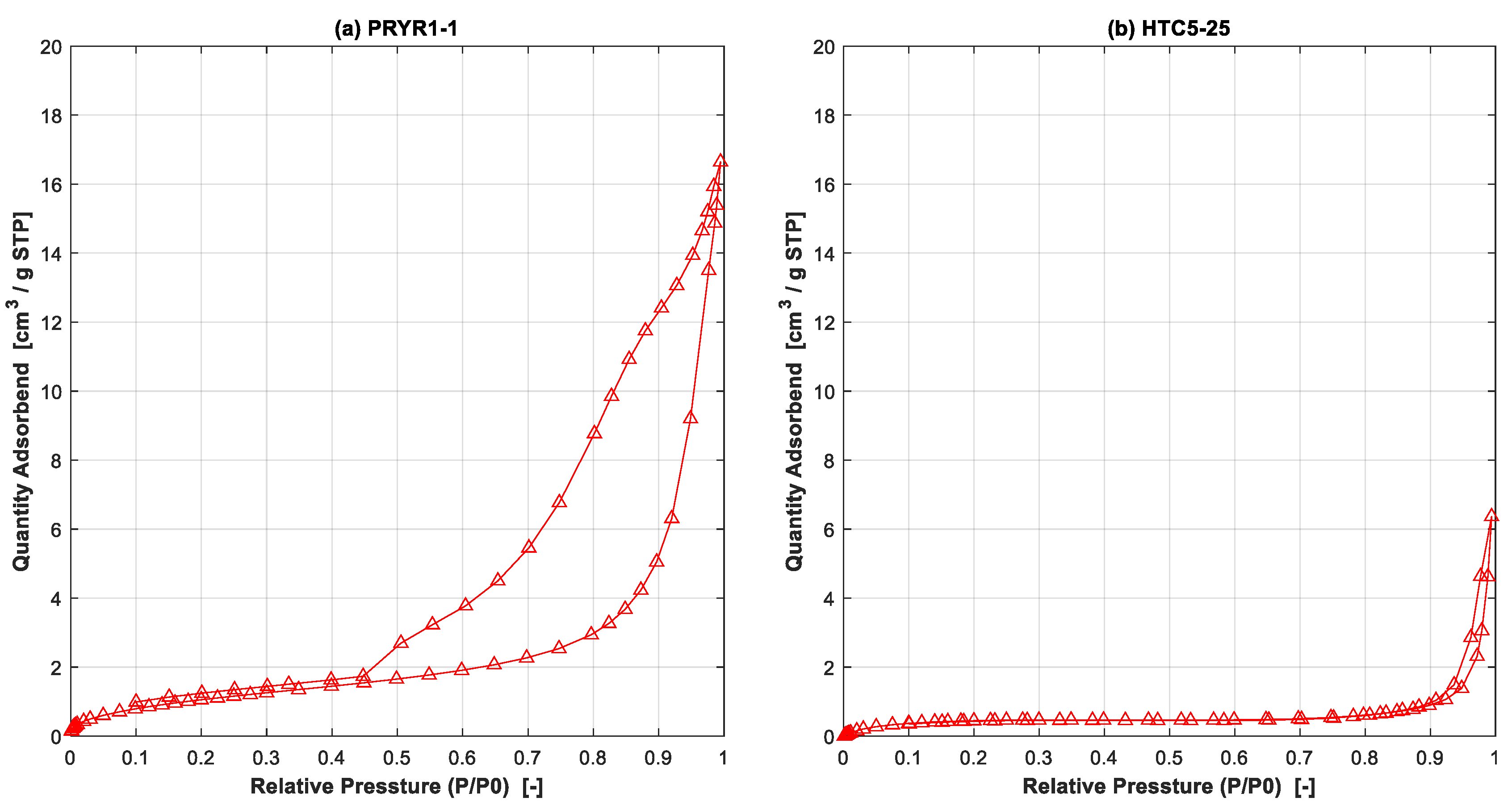
Figure 2.
SEM images showing textural features of (a) PRYR1-1 biochar (b) HTC5-25 hydrochar adsorbents.
Figure 2.
SEM images showing textural features of (a) PRYR1-1 biochar (b) HTC5-25 hydrochar adsorbents.
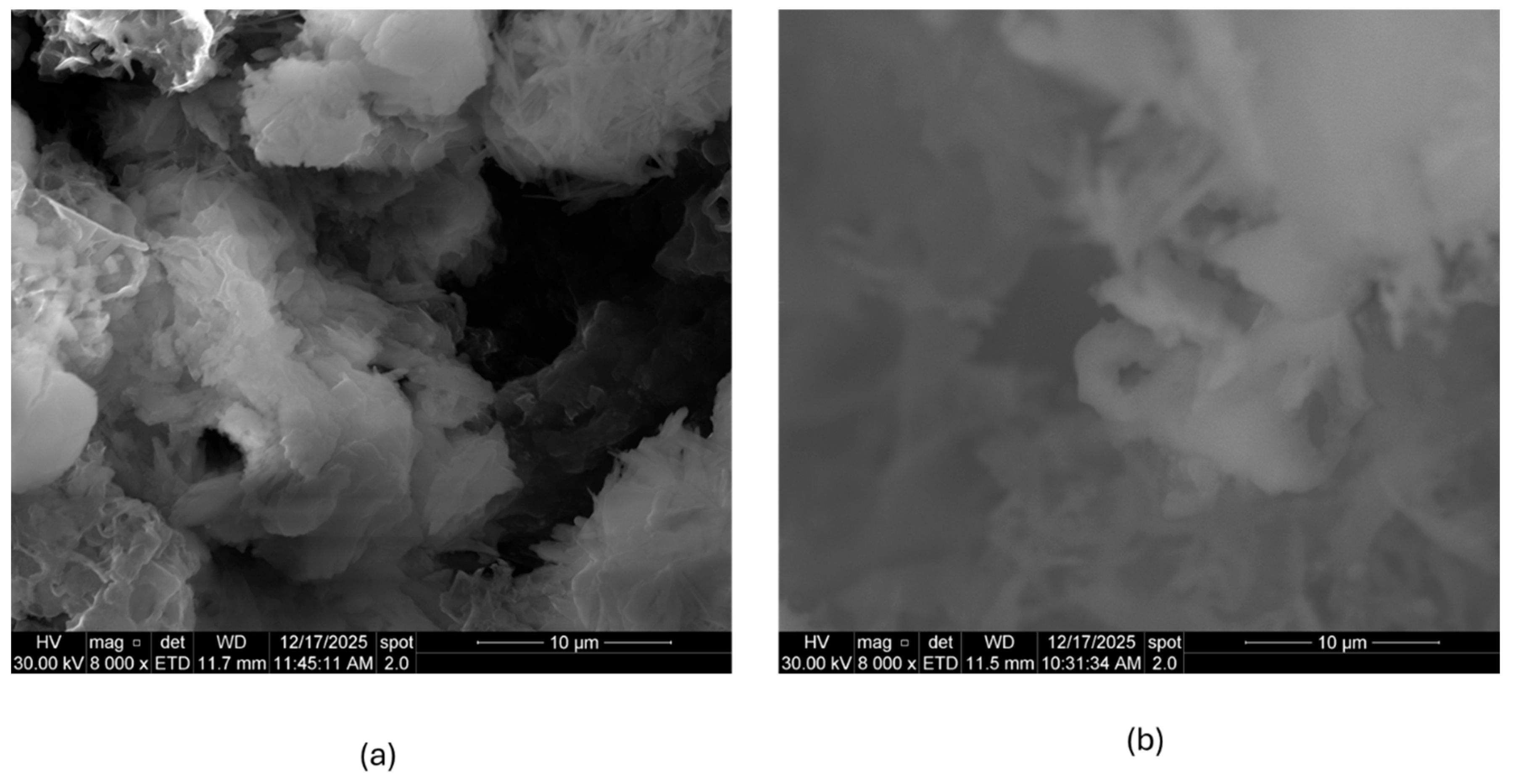
Figure 3.
FTIR results of raw potato peel and the HTC adsorbents before adsorption ((a) HTC1-2hr, (b) HTC5-2hr, (c) HTC1-25hr, (d) HTC5-25hr).
Figure 3.
FTIR results of raw potato peel and the HTC adsorbents before adsorption ((a) HTC1-2hr, (b) HTC5-2hr, (c) HTC1-25hr, (d) HTC5-25hr).
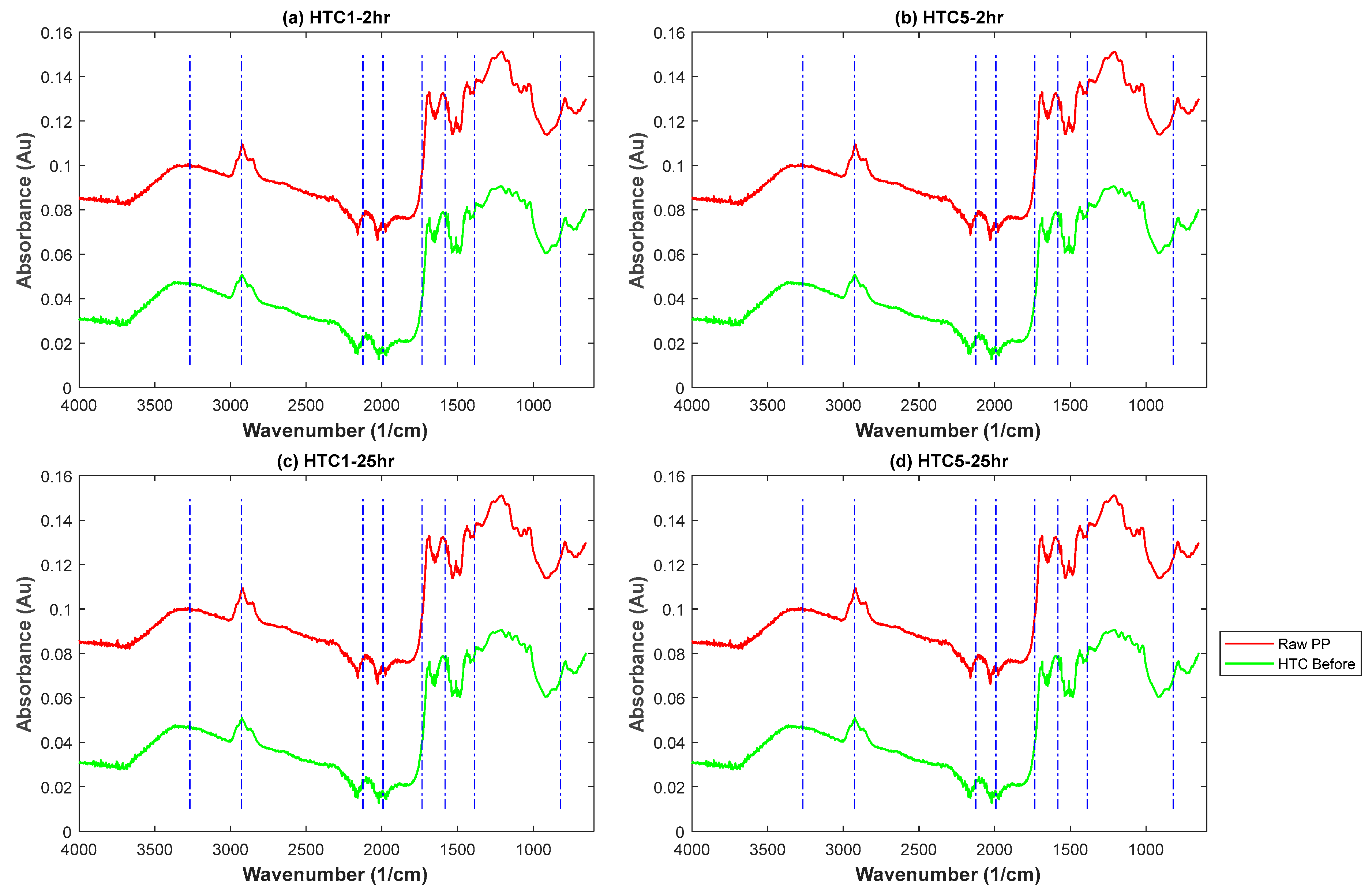
Figure 4.
FTIR results of raw potato peel and the PRYR adsorbents before adsorption ((a) PRYR1-1, (b) PRYR1-4, (c) PRYR2-1, (d) PRYR2-4)).
Figure 4.
FTIR results of raw potato peel and the PRYR adsorbents before adsorption ((a) PRYR1-1, (b) PRYR1-4, (c) PRYR2-1, (d) PRYR2-4)).
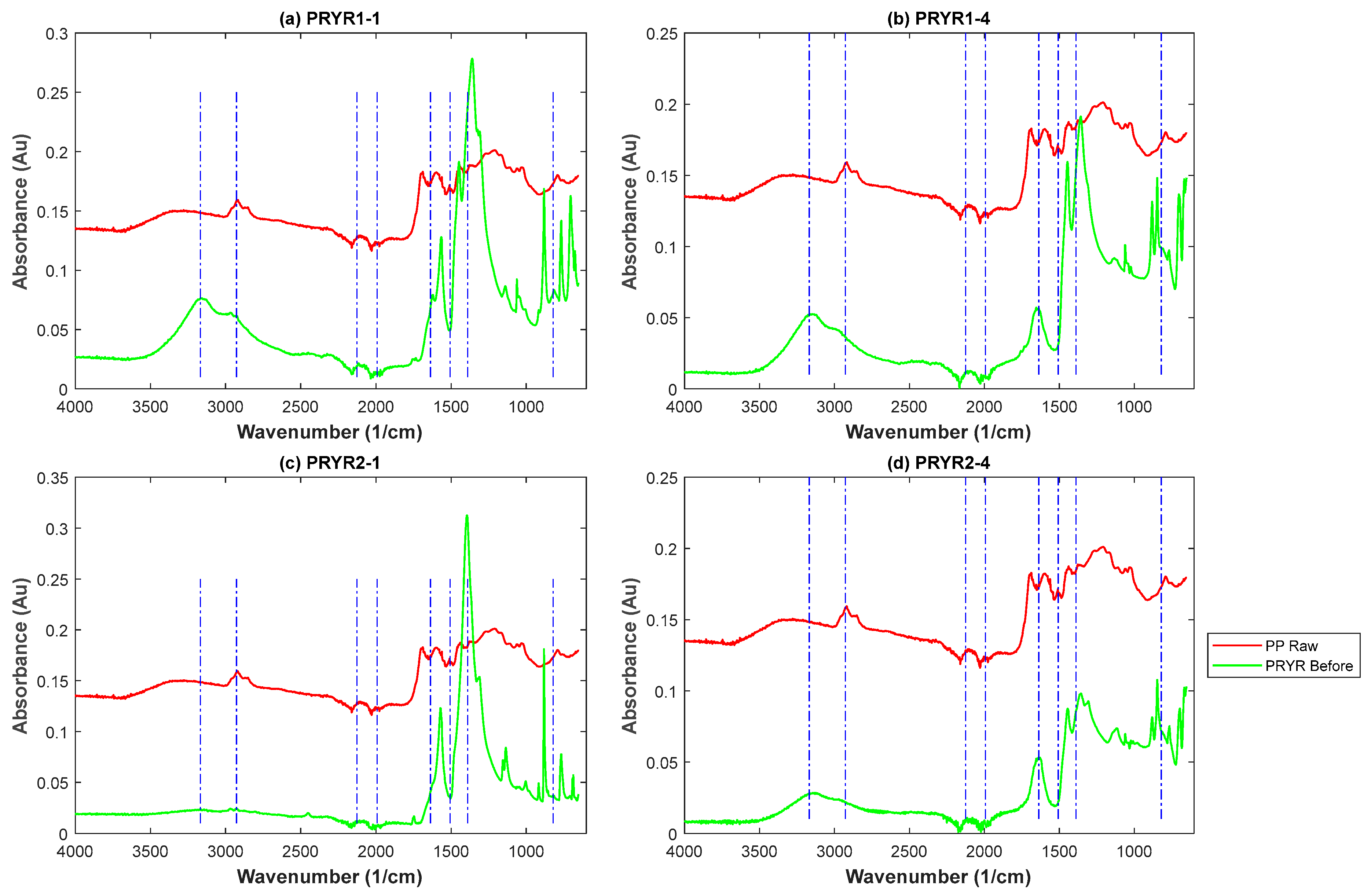
Figure 5.
(a) and (b) Adsorption efficiencies for CBZ uptake of (a) hydrothermal conversion biochar(b) pyrolysis potato peel biochars. Uptake of CBZ (c) pyrolysis potato hydrochars d) pyrolysis potato peel biochars.
Figure 5.
(a) and (b) Adsorption efficiencies for CBZ uptake of (a) hydrothermal conversion biochar(b) pyrolysis potato peel biochars. Uptake of CBZ (c) pyrolysis potato hydrochars d) pyrolysis potato peel biochars.
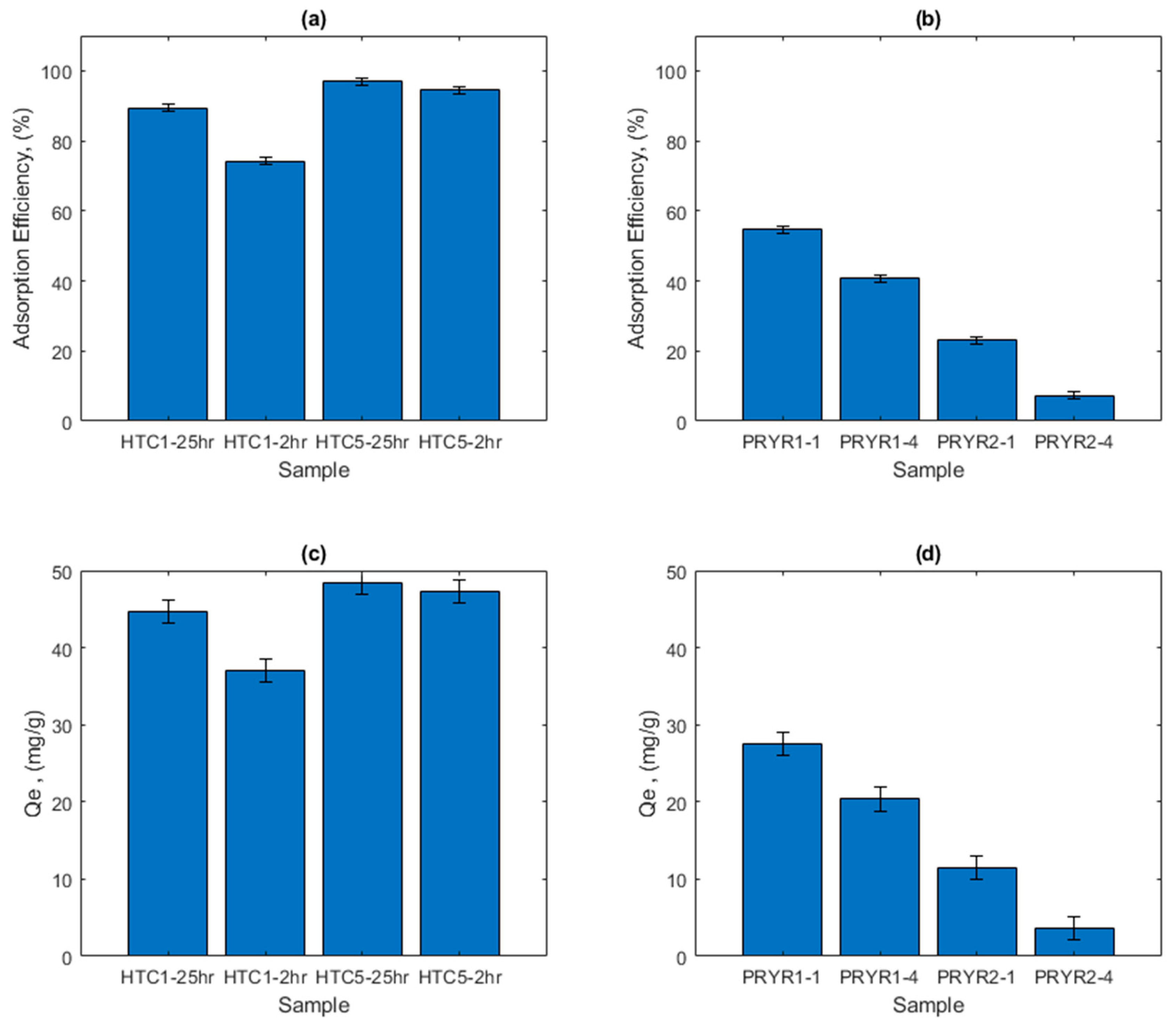
Figure 6.
Comparison of the adsorption kinetics of HTC and PRY samples in the first 5 minutes of adsorption.
Figure 6.
Comparison of the adsorption kinetics of HTC and PRY samples in the first 5 minutes of adsorption.
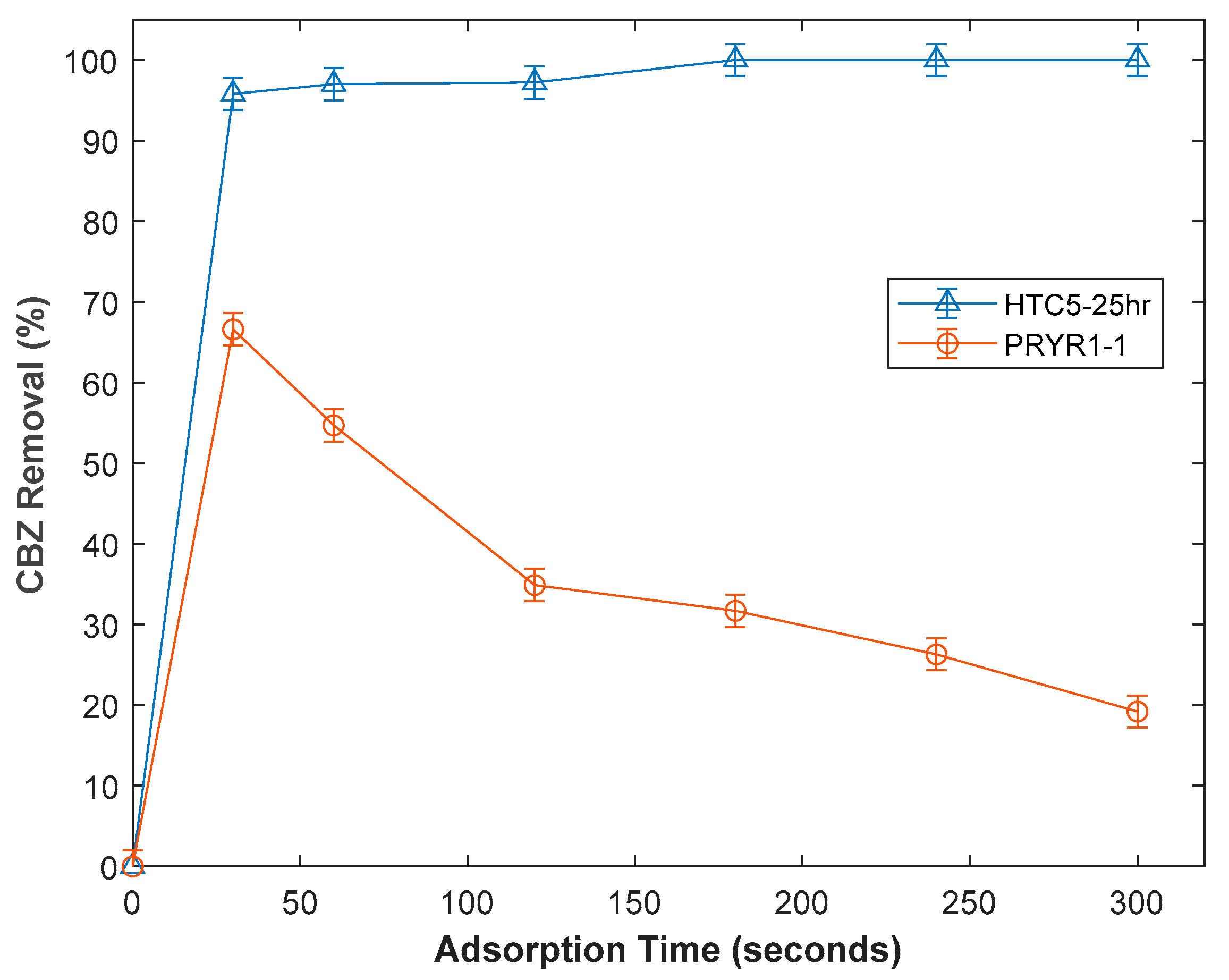
Figure 7.
Comparison of the FTIR spectra of the HTC hydro chars before and after adsorption.
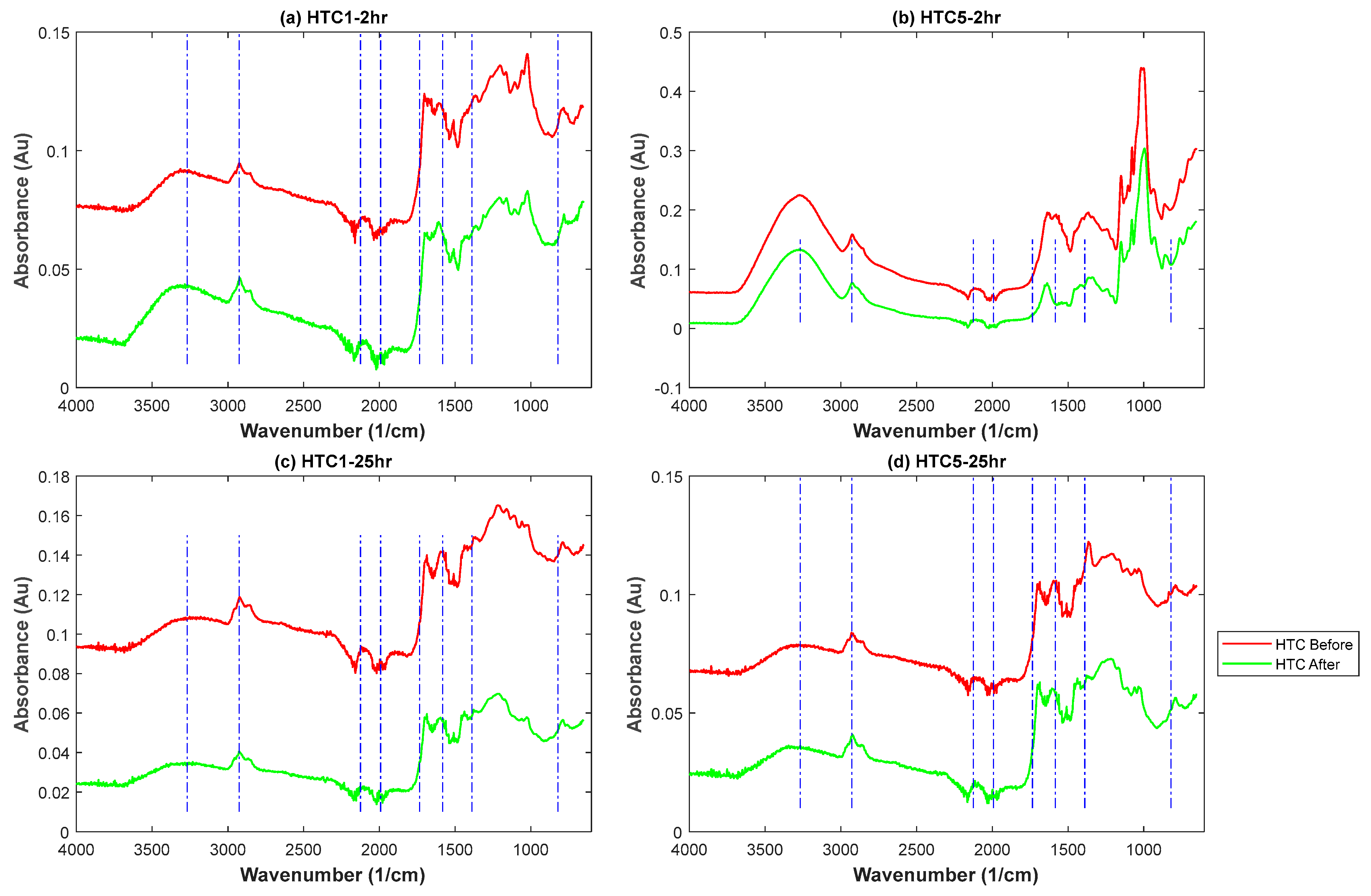
Figure 8.
Comparison of the FTIR spectra of the PRYR biochars before and after adsorption.
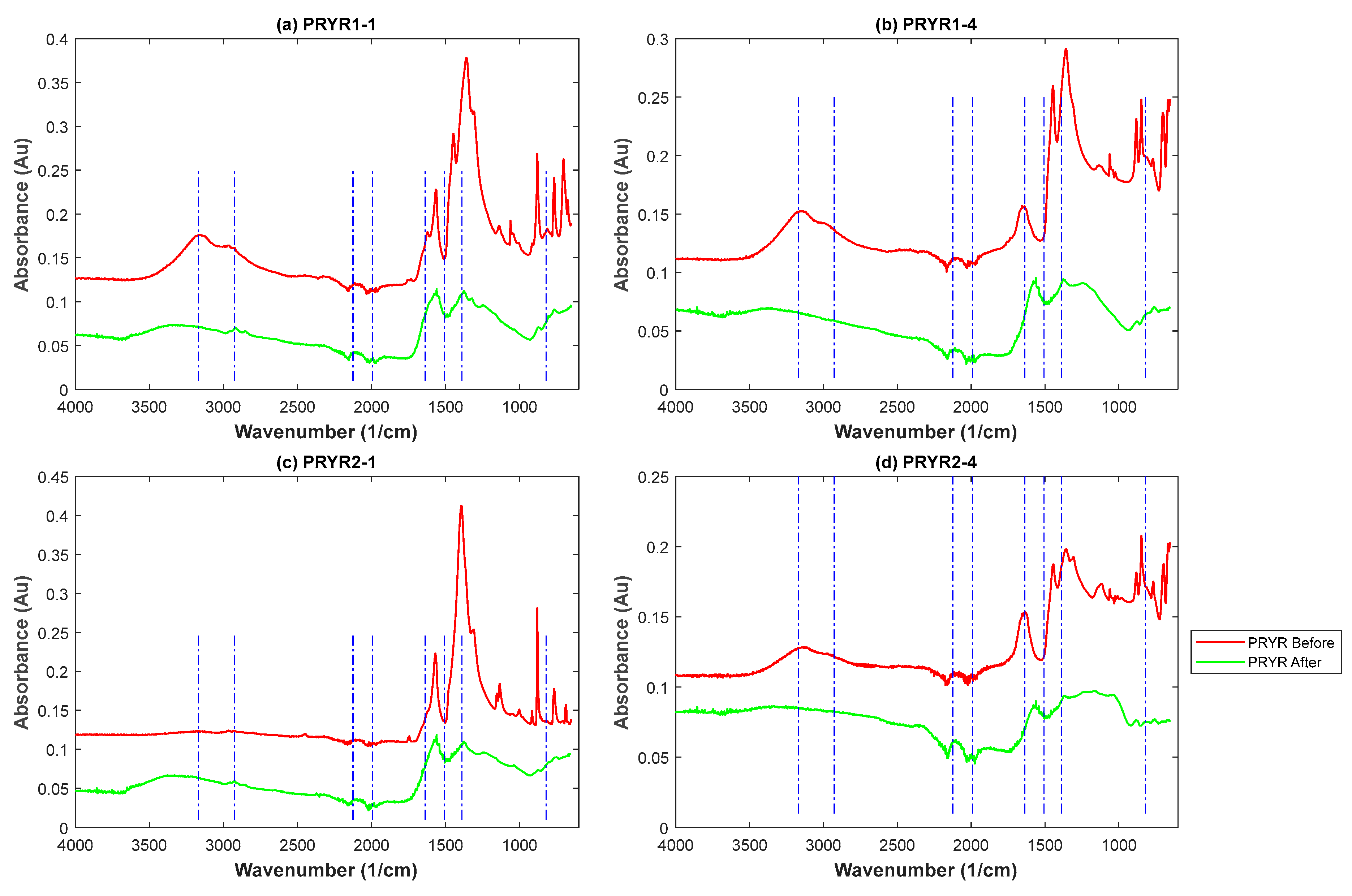
Figure 9.
Proposed CBZ removal mechanism by HTC and PRYR adsorbents.
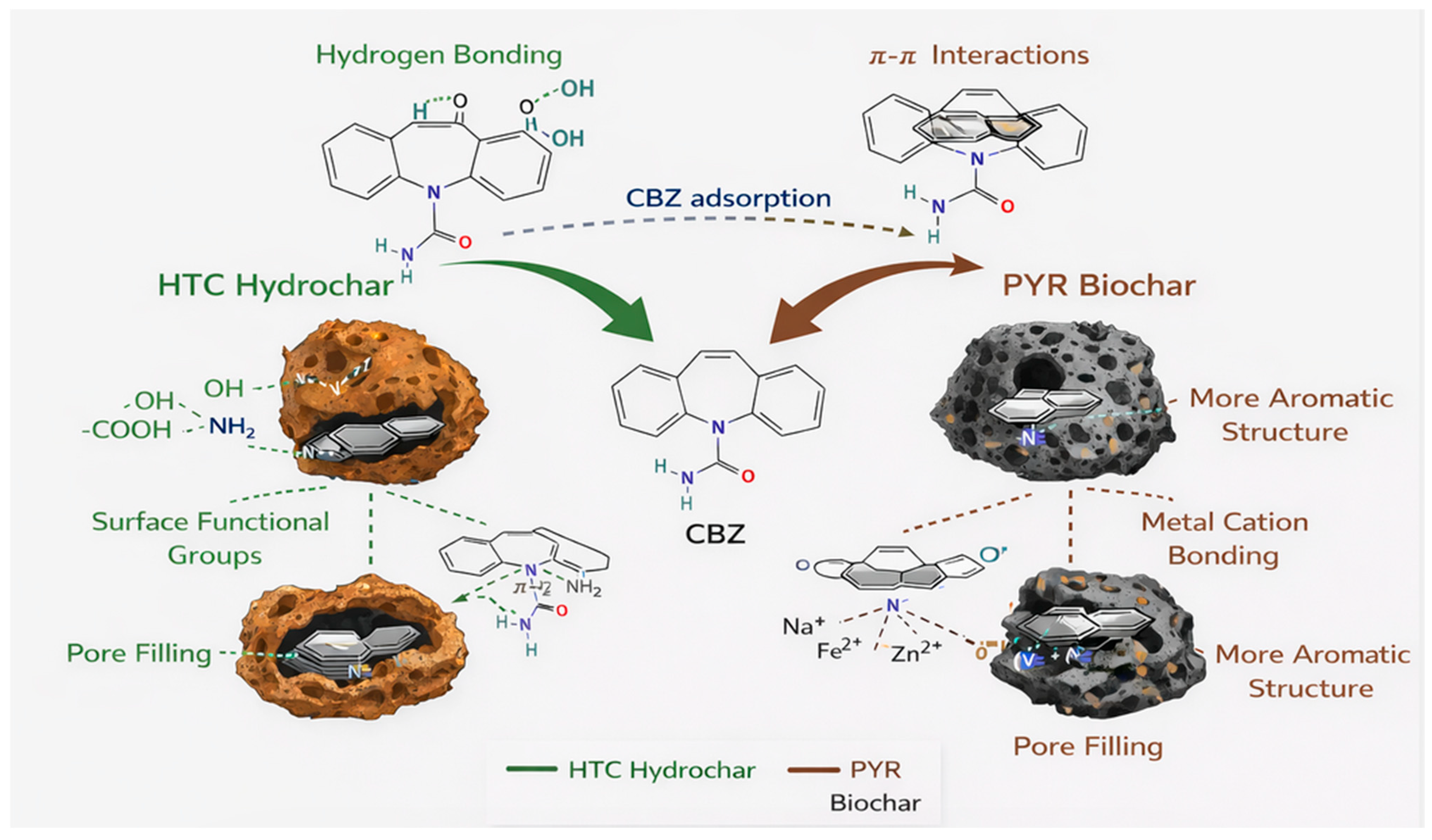

Table 1.
Comparison between the BET surface areas and pore diameters of biochars produced from different processes.
Table 1.
Comparison between the BET surface areas and pore diameters of biochars produced from different processes.
| Adsorbent | BET Surface Area (m2/g) | Pore diameter (nm) |
| PP-Raw | 0.12± 0.01 | 5.05 |
| HTC1-2hr | 0.73 ± 0.03 | 3.65 |
| HTC1-25hr | 0.95 ± 0.01 | 2.60 |
| HTC5-2hr | Inconclusive | - |
| HTC5-25hr | 1.73 ± 0.04 | 5.06 |
| PRYR1-1 | 4.23 ± 0.03 | 19.77 |
| PRYR1-4 | 3.77 ± 0.03 | 14.15 |
| PRYR2-1 | 0.38 ± 0.01 | 11.74 |
| PRYR2-4 | 1.52 ± 0.01 | 6.25 |
Table 2.
Comparison of elemental analysis of the different adsorbent samples.
| Adsorbent | C % | H % | N % | Sulphur % | H/C ratio |
| PP-Raw | 39.77 | 6.38 | 2.09 | <0.3 | 1.93 |
| HTC 1-2hr | 54.23 | 5.27 | 2.44 | - | 1.17 |
| HTC1-25hr | 62.17 | 5.74 | 2.85 | - | 1.11 |
| HTC5-2hr | 37.09 | 6.80 | 1.25 | <0.3 | 2.20 |
| HTC5-25hr | 53.28 | 5.24 | 2.55 | <0.3 | 1.18 |
| PRYR1-1 | 16.59 | 1.10 | 0.32 | 1.89 | 0.80 |
| PRYR1-4 | 13.95 | 0.66 | 0.32 | 2.55 | 0.57 |
| PRYR2-1 | 12.36 | 1.13 | <0.3 | <0.3 | 1.10 |
| PRYR2-4 | 10.02 | 1.45 | <0.3 | <0.3 | 1.74 |
Table 3.
Elemental analysis results and BET surface area, pore diameter effect on CBZ adsorption.
| Adsorbent | C % | H % | N % | Sulphur % | H/C atomic ratio |
N/C atomic ratio |
BET Surface Area (m2/g) | Pore diameter (nm) | CBZ % Removal at 1 min |
| PP-Raw | 39.77 | 6.38 | 2.09 | <0.3 | 1.93 | 0.045 | 0.12 ± 0.01 | 5.05 | n.d |
| HTC 1-2hr | 54.23 | 5.27 | 2.44 | <0.3 | 1.17 | 0.039 | 0.73 ± 0.03 | 3.65 | 74.2 |
| HTC1-25hr | 62.17 | 5.74 | 2.85 | <0.3 | 1.11 | 0.039 | 0.95 ± 0.01 | 2.60 | 94.4 |
| HTC5-2hr | 37.09 | 6.80 | 1.25 | <0.3 | 2.20 | 0.029 | Inconclusive | - | 11.9 |
| HTC5-25hr | 53.28 | 5.24 | 2.55 | <0.3 | 1.18 | 0.041 | 1.73 ± 0.04 | 5.06 | 97.0 |
| PRYR1-1 | 16.59 | 1.10 | 0.32 | 1.89 | 0.80 | 0.017 | 4.23 ± 0.03 | 19.77 | 54.7 |
| PRYR1-4 | 13.95 | 0.66 | 0.32 | 2.55 | 0.57 | 0.020 | 3.77 ± 0.03 | 14.15 | 40.7 |
| PRYR2-1 | 12.36 | 1.13 | <0.3 | <0.3 | 1.10 | Nd | 0.38 ± 0.01 | 11.74 | 23.0 |
| PRYR2-4 | 10.02 | 1.45 | <0.3 | <0.3 | 1.74 | Nd | 1.52 ± 0.01 | 6.25 | 7. 3 |
Disclaimer/Publisher’s Note: The statements, opinions and data contained in all publications are solely those of the individual author(s) and contributor(s) and not of MDPI and/or the editor(s). MDPI and/or the editor(s) disclaim responsibility for any injury to people or property resulting from any ideas, methods, instructions or products referred to in the content. |
© 2026 by the authors. Licensee MDPI, Basel, Switzerland. This article is an open access article distributed under the terms and conditions of the Creative Commons Attribution (CC BY) license.
Copyright: This open access article is published under a Creative Commons CC BY 4.0 license, which permit the free download, distribution, and reuse, provided that the author and preprint are cited in any reuse.


