

Submitted:
22 April 2026
Posted:
23 April 2026
You are already at the latest version
Abstract
Chili pepper (Capsicum spp.) plays a crucial cultural, nutritional, and economic role in Senegal, supporting smallholder livelihoods, domestic food systems, and regional export markets. However, post-harvest losses associated with traditional open-air drying and storage remain high, particularly under coastal conditions characterized by high relative humidity and variable weather. Improving drying assessment and storage practices is therefore essential to enhance chili quality, safety, and marketability. This study evaluated smallholder chili drying and storage practices in Senegal, with a particular focus on processor dryness judgment, drying surfaces, and storage materials, and assessed the potential role of a simple equilibrium relative humidity (ERH)-based decision-support tool. A participatory, on-farm study was conducted with six chili processors in the Niayes agroecological zone of western Senegal. Freshly harvested chilies were dried concurrently using black plastic sheeting and processors’ customary drying materials under farmer-managed conditions. Processor assessments of storage readiness were compared with ERH-based classifications using the DryCard tool. Drying duration and dry matter content were recorded for each treatment. Dried chilies were subsequently stored in either airtight glass jars or traditional gunny bags, and weight changes were monitored at 25, 45, and 70 days after storage. Data were analysed descriptively using within-processor comparisons to identify consistent patterns across sites. After 15 days of drying, all chili samples were classified as not dried for storage, with DryCard readings of approximately 75% ERH across sites. Final processor-determined drying durations ranged from 29 to 42 days. DryCard ERH values at this stage ranged from 30% to 70%, with three instances where processor judgement indicated storage readiness despite ERH values exceeding the 65% threshold. Dry matter content varied widely across treatments and sites, ranging from 7.4% to 18.3%. Chilies dried on black plastic sheeting showed higher and more consistent dry matter content (median ≈ 11.5%) compared with chillies dried on processor-preferred materials (median ≈ 9.1%). During storage, chilies kept in airtight glass jars maintained stable weights close to the initial 200 g over 70 days (199–201 g). In contrast, those stored in gunny bags showed progressive weight increases, reaching median values of approximately 208.5 g after 70 days. The study demonstrates that while experiential knowledge remains central to smallholder chili processing, it can be strengthened with simple, objective tools that support more reliable drying and storage decisions. Incremental improvements in drying surface selection, combined with ERH-based assessment and moisture-limiting storage, offer practical pathways for reducing post-harvest losses and quality risks. These context-appropriate interventions can enhance the safety, stability, and economic value of dried chilies without requiring costly infrastructure, making them well-suited to smallholder systems in humid environments.
Keywords:
chili pepper
; post-harvest drying
; DryCard
; equilibrium relative humidity
; smallholder processing
; storage stability
1. Introduction
The chili pepper (Capsicum spp.), locally known as piment in Senegal, holds an important place in Senegalese food systems, culture, and rural livelihoods. It is a staple condiment in everyday diets and is integral to widely consumed dishes such as thieboudienne, yassa, and maafé (Diouf et al., 2025). Senegal’s annual chili pepper consumption is estimated at approximately 5,000 metric tons, a level that has remained relatively stable since 2017 (FAOSTAT, 2024). This stability reflects steady domestic demand driven by traditional food habits and modest growth in urban food processing. With an estimated population of 18 million, per capita consumption averages about 0.28 kg per person per year.
Beyond its dietary significance, chili contributes to household incomes, especially for smallholder farmers and women processors engaged in drying, trading, and informal marketing in Senegal (ANRMI, 2022; Jha et al., 2023). At the regional level, chili represents one of the most valuable horticultural export commodities in West Africa, with Senegal playing a leading role. In 2024, the West African chili market was valued at approximately USD 1.2 billion, with Senegal accounting for about 52% of the regional export value (IndexBox, 2026). Senegal produced approximately 4,954 metric tons of dry chili and peppers in 2022, with production hovering around 5,000 tons in recent years (Helgi Library, 2023). Senegal’s domestic production of dry chili and pepper was approximately 4,954 t in 2022, indicating a substantial local supply. Import statistics for chili and pepper products (e.g., approximately 28.4 tons of dried chili and 31 tons of crushed or ground pepper in 2023) are comparatively low, supporting the characterization that Senegal is largely self-sufficient, with only modest chili imports to supplement urban markets and off-season demands (HelgiLibrary, 2024). This dual role, as both a culturally important food crop and an economically strategic commodity, makes chili a key focus for post-harvest improvement and value addition.
Chilies in Senegal are consumed predominantly in fresh form, but dried chilies play a secondary but strategically important role. While dried chilies and chili powders are used in some long-cooked dishes and processed foods, their primary importance lies in preservation, off-season availability, and export. Thus, fresh chili dominates daily consumption, while dry chili strengthens market integration and income generation. From an economic perspective, dry chili is more lucrative than fresh chili (Marwati et al., 2021). Drying chili reduces its water content, concentrates pungency and flavour, and significantly extends shelf life. These characteristics enable dried chili to command higher prices and access export markets. Fresh chili prices are relatively low and volatile due to perishability and short shelf life (Mardiyati & Natsir, 2024). Furthermore, most fresh chili is sold locally, limiting opportunities for scale and value addition. In contrast, dried chili supports Senegal’s export surplus of approximately 4,000 to 4,500 tons annually, generating foreign exchange and higher margins.
Despite its economic importance, Senegal’s chili sector faces significant barriers in post-harvest handling, particularly drying and storage (Beye & Komarek, 2020; Jha et al., 2023). These stages account for 20-30% of total losses in horticultural crops, such as peppers, exacerbating food insecurity and resulting in economic impacts estimated at USD 167 million annually in broader post-harvest losses (CIAT, 2024). High humidity (60-80%), erratic rainfall, and limited infrastructure complicate drying operations among medium- and smallholder chili producers in coastal areas where chilies are predominantly produced in Senegal, leading to quality degradation, contamination, and reduced market value (Olanipekun et al., 2024). Drying is one of the most critical post-harvest stages for chili. Therefore, improper drying of chili results in residual moisture levels above safe thresholds that promote mold growth and contamination during storage. Furthermore, drying is critical for preserving chili’s pungency, colour, and export viability, but traditional methods of open-air sun exposure dominate smallholder practices in Senegal, resulting in inefficiencies and losses (Wu et al., 2025). This low-cost but highly susceptible to Senegal’s tropical climate – frequent rains, high humidity, and inconsistent sunlight cause prolonged drying times, up to 12-15 days or even more, and uneven moisture reduction. This leads to incomplete drying (moisture >15%), fostering mold growth (e.g., aflatoxins) and post-harvest losses of 15-25% for peppers (Olanipekun et al., 2024).
Given the importance of drying to chili quality, safety, and profitability, there is a need for practical tools that complement traditional chili processors’ judgment to support informed drying decisions. Indigenous processors rely on experiential knowledge to judge dryness; however, such assessments can be subjective. The DryCard, a decision support tool developed by UC Davis for determining the water activity of dried agricultural produce such as chilies and grains (Thompson et al., 2017), provides a standardized means of validating indigenous chili dryness assessments by linking processors’ subjective decisions to objective outcomes. By evaluating DryCard-guided drying decisions and storage conditions for chili in Senegal, this study addresses a critical gap in preventing mold and reducing post-harvest losses. The specific objectives of the study were to document: (i) the agreement between processors’ subjective chili dryness decisions and DryCard dryness classifications at the end of drying; (ii) the influence of spreading material (black plastic sheeting versus processors’ customary materials) on chili drying duration (days); (iii) the influence of spreading material on the dry matter content of dried chili; and (iv) the weight stability of dried chili stored in airtight glass jars and traditional gunny bags over a 70-day storage period. Given the exploratory and descriptive nature of this processor-managed, on-site chili drying and storage study, no formal hypotheses were tested.
2. Methodology
2.1. Location
The study was conducted between January and March 2025 in the Niayes agroecological zone, a narrow coastal strip extending from south of Saint-Louis to the Cap-Vert peninsula in western Senegal. The zone covers approximately 2,754 km². It has a unique coastal microclimate, shallow groundwater resources, and fertile sands that support intensive horticultural production. It is inhabited by many smallholder and peri-urban farmers whose livelihoods depend on horticultural output. The Niayes zone is widely regarded as Senegal’s primary horticultural production area, supplying most of the country’s vegetables and fruits. Historically, it has contributed around 60% of domestic vegetable consumption needs and up to 80% of horticultural export volumes, making it a vital agricultural hub for both local markets and regional trade. The Niayes’ market-oriented agricultural production is facilitated by their proximity to urban centers such as Dakar and Saint-Louis. The region experiences a long dry season from November to June and a short rainy season from July to October. Annual rainfall is relatively low, generally ranging between 300 and 500 mm per year, with wetter conditions typically occurring during the rainy season. Mean monthly temperatures range from 22 °C in the coolest months (January) to 31 °C during the warmest months (October). Relative humidity also reflects coastal influence, with monthly averages varying from approximately 58% in the dry season (December) to 83% during the peak rainy period (August).
2.2. Experimental Design and Treatments
A stepwise, on-farm drying and storage experiment was conducted with six purposefully selected chili processors in the Districts of Month Roland and Diender in the region of Thies and the Districts of Zac Mbao and Parcelle in the region of Dakar, using a participatory research approach. Processors were actively involved in selecting treatments, implementing practices, and managing drying and storage activities to ensure relevance to local processing conditions. The experiment used a non-replicated, within-processor comparative design. In the first stage, fresh reddish-brown chilies harvested from each processor’s farm were dried at the processing site using two concurrent drying treatments: (i) black plastic sheeting (BPS) and (ii) the processor’s preferred sheeting (PPS), which consisted of either a netted onion bag or a polypropylene bag, reflecting prevailing local practices. In the second stage, dried chilies meeting predefined quality criteria (acceptable color and absence of visible microbial damage) were selected at each site and subjected to two storage treatments: (i) storage in an airtight glass jar and (ii) storage in a gunny bag, representing the processor’s customary storage method. In total, four treatments were implemented at each processor’s processing center: two drying treatments (BPS and PPS) and two storage treatments (airtight glass jar and gunny bag). Treatment comparisons were conducted within processors to evaluate the relative performance of alternative drying and storage methods under farmer-managed, real-world conditions.
2.3. The DryCard and Its Principle of Operation
The DryCard is a simple, low-cost qualitative humidity-indicator tool developed by UC Davis (Thompson et al., 2017). It is used to assess the storage suitability of dried agricultural commodities (e.g., chilies, maize, grains) based on equilibrium relative humidity (ERH). How it works: when a dried product is sealed in an airtight container, moisture exchange between the product and the headspace air proceeds until equilibrium is reached, such that the relative humidity of the air reflects the product’s water activity, which governs microbial growth. The DryCard responds to this ERH through a colour change, providing a rapid indication of moisture conditions associated with mold growth risk. After a short equilibration period (typically 30 minutes), the colour displayed corresponds to a specific ERH threshold. ERH ≤ 65% indicates low water activity (≈ aᵥ ≤ 0.65), a condition under which most storage molds cannot grow and is sufficiently dry for safe storage. ERH > 65% indicates elevated water activity and increased risk of mold development during storage, suggesting that the product requires further drying. Thus, the DryCard provides a practical proxy for biological stability during storage rather than a direct measurement of moisture content.
2.4. Data Collection
The duration of chili drying (in days) was recorded for each drying treatment at each processing site. The first dryness assessment was conducted 15 days after the start of drying to represent the ideal drying duration under controlled, optimal drying conditions (Getahun et al., 2021). A second assessment was conducted between 29 and 42 days after the start of drying, based on the processor’s judgment of when chilies had reached the customary endpoint for storage under prevailing open-air drying conditions. Drying was initiated simultaneously across all treatments and sites and continued until chilies from both drying treatments were independently assessed by the processor as adequately dried and suitable for storage. The total elapsed drying time (days) from initiation to the processor-determined endpoint was recorded. Processor assessments of drying adequacy were subsequently validated using the DryCard tool, which provides an indicator of ERH and associated mold risk during storage.
To validate the processor’s chili dryness pronouncement with the DryCard tool for each drying treatment, a 200 g subsample of dried chilies was placed in a 2-L airtight glass jar, which occupied approximately 70% of the container volume, allowing adequate headspace for equilibration and placement of the DryCard. The DryCard was placed in the container and sealed. DryCard readings were recorded 30 minutes after sealing the containers, corresponding to ERH conditions within the container. Chilies were classified as adequately dried for safe storage when the DryCard reading was ≤65% ERH, a threshold commonly associated with reduced risk of mold development during storage. Readings >65% ERH were classified as insufficient drying, indicating a processor’s false dryness decision, and an elevated risk of microbial spoilage under storage conditions.
The dry matter content of chilies from each drying treatment was determined as the percentage of dry weight relative to the fresh weight before drying, calculated as follows: Dry matter (%) = (Dry weight / Fresh weight) × 100. To assess the effect of storage method on chili weight stability, 200 g of dried chilies exhibiting no visible signs of microbial spoilage or rot were stored in either airtight glass jars or gunny bags at each processor’s site. Sample weights were recorded at 25, 45, and 70 days after the start of storage.
All data were collected using the mobile application of the Global Agricultural Technology Evaluator (GATE) and downloaded from the GATE web platform. Incubated by the AgriService Unit of the former Syngenta Foundation for Sustainable Agriculture, Basel, Switzerland, GATE was used for the validation and adaptation of need-based smallholder agricultural technologies.
2.5. Data Analyses
Given the non-replicated, participatory nature of the experiments, data were analysed using a within-processor comparative approach, with individual processor sites treated as observational units. Analyses were intended to identify consistent patterns across sites rather than to establish causal inference. Drying duration (in days to processor-determined dryness), dry matter content (%), and storage weight at 25, 45, and 70 days after storage were summarized descriptively by treatment using means and ranges across processor sites. Differences between drying treatments (black plastic sheeting and the processor’s preferred sheeting) in days to dryness and dry matter content were evaluated using paired comparisons across processor sites. For the storage experiment, differences in weight between storage methods (airtight glass jars and gunny bags) were assessed descriptively over time (25, 45, and 70 days after storage), with processor sites serving as paired observational units. All descriptive statistics and data visualization were performed using R, a language and environment for statistical computing, version 4.4.1 (R Core Team, 2024).
3. Results
Descriptive statistics were used to summarise observed patterns across processor sites. No inferential statistical comparisons were conducted due to the non-replicated and observational nature of the drying and storage assessments.
Average daily temperature distributions across processors’ sites showed significant overlap in ranges and interquartile intervals (Figure 1). The overall temperature range across sites was 18.0–26.9 oC, with a median value of 21.3 oC. Differences in mean and median temperatures were observed among processors (Supplementary Table 1); however, these descriptive patterns alone do not indicate whether the observed variability reflects meaningful differences in thermal conditions without formal statistical testing.
3.1. Chili Drying Duration and Dryness Agreement Between Processor Judgement and DryCard Readings
Chilies assessed after 15 days of drying under both black plastic sheeting and the processor’s preferred sheeting were consistently judged by processors as not suitable for storage across all sites (Table 1; Supplementary Table S2). This assessment was supported by DryCard readings of 75% ERH for all samples at this stage, indicating moisture conditions associated with elevated storage risk. After extended drying periods ranging from 29 to 42 days, all samples were considered by processors to be dried for storage (Table 1; Supplementary Table S2). DryCard ERH readings for these samples ranged from 30% to 70%, reflecting substantial heterogeneity in final moisture conditions under processor-managed drying.
In our observations, processor judgments of drying adequacy corresponded with DryCard classifications, indicating ERH values at or below 65%. However, in three observations, samples judged by processors as adequately dried exhibited DryCard ERH values of 70%, exceeding the commonly used threshold for reduced mold risk during storage. These cases represent instances where processor judgment indicated storage readiness despite ERH conditions associated with high moisture risk.
3.2. The Relationship Between Chili Dry Matter and Drying Duration
A paired-site regression plot was used to illustrate the relationship between drying duration and dry matter content for chilies dried on black plastic sheeting and the processor’s preferred sheeting material (Figure 2). For black plastic sheeting, the paired observations across processor sites showed a negative linear association, with dry matter content generally decreasing as drying duration increased. Drying duration accounted for approximately 58% of the observed site-level variability in dry matter content (R² = 0.58), indicating a relatively consistent pattern across paired sites, despite some dispersion around the fitted line. In contrast, paired-site observations for the processor’s preferred sheeting material showed a weak and inconsistent relationship between drying duration and dry matter content. The fitted regression showed a shallow negative slope, with drying duration explaining only a small proportion of the variability in dry matter content across sites (R² = 0.04). Dry matter values varied widely among paired sites at similar drying durations, suggesting limited correspondence between drying time and achieved dryness under processor-preferred drying conditions. In general, the paired-site regression patterns indicate greater consistency in drying outcomes for black plastic sheeting relative to processor-preferred sheeting, based on observed site-level data.
3.3. Observed Dry Matter Content by Drying Sheeting Materials
The dry matter content of dried chilies differed across sites and drying sheeting materials, with overall ranges from 7.4% to 18.3% (Figure 3). Chilies dried on black plastic sheeting exhibited dry matter values ranging from 10.7% to 18.3%, with a median of 11.5% and an interquartile range of 10.8 to 12.7%. In contrast, chilies dried on the processor’s preferred sheeting material showed a broader lower-end distribution, with dry matter values ranging from 7.4% to 16.7%, a median of 9.1%, and an interquartile range of 8.1 to 9.6%. Although the distributions overlapped, the central tendency of dry matter content was consistently higher for chilies dried on black plastic sheeting. Variability was greater for the processor’s preferred sheeting, as reflected by its wider overall range and lower quartile values. These patterns reflect observed differences in drying outcomes across processor-managed sites rather than statistically inferred treatment effects.
3.4. Effect of Storage Material and Storage Duration on the Weight of Dried Chili
Across all three storage durations (25, 45, and 70 days after storage), the weight of stored dried chili remained relatively stable in airtight glass jars. Observed weights ranged narrowly from 199.0 to 201.0 g, with a median of 200.0 g and a mean of 200.1 g, indicating minimal deviation from the initial 200 g stored weight (Figure 4). No clear temporal trend in weight change was evident for chilies stored in airtight glass jars over the storage period. The interquartile range was small (1st quartile: 200.0 g; 3rd quartile: 200.8 g), reflecting limited variability across processors and storage duration. In contrast, chilies stored in gunny bags consistently exhibited higher weights than those stored in airtight glass jars at all storage durations. At 25 days after storage, chilies stored in gunny bags exhibited higher weights, ranging from 202.0 to 207.0 g, with a median and mean of 204.5 g. At 45 days after storage, weights increased further, spanning 203.0 to 209.0 g, with a median of 206.5 g and a mean of 206.0 g. By 70 days after storage, chilies stored in gunny bags showed the highest weights observed in the study, ranging from 204.0 to 211.0 g, with a median of 208.5 g and a mean of 208.2 g. Overall, consistent differences in stored chili weight between storage materials were observed, with airtight glass jars maintaining lower and more stable weights across time, and gunny bags showing progressively higher and more variable weights as storage duration increased.
4. Discussions
Building on the observed patterns in chili drying duration, dryness judgment, dry matter content, and weight during storage periods across processor sites, the following discussion interprets these findings in relation to processor decision-making, ambient drying conditions, and implications for safe chili storage.
4.1. Alignment Between Processor Judgement and DryCard ERH-Based Dryness Indicators
Judgements of chili storage readiness made by participating processors aligned closely with the DryCard equilibrium relative humidity threshold for storage readiness, with only a few deviations observed, suggesting general alignment between subjective assessments and ERH-based indicators of storage readiness. This close correspondence suggests that processors possess substantial experiential knowledge of chili dryness, while the observed discrepancies, particularly under borderline moisture conditions, indicate limits to visual or physical assessment. Processor assessments generally reflected ERH-based indications of storage suitability, supporting the relevance of both approaches in small-scale drying contexts. Across sites, drying chilies on open patios in open air conditions using either black plastic sheeting or processor-preferred sheeting did not result in storage-level dryness after 15 days. This outcome likely reflects the influence of ambient environmental conditions and processor-specific handling practices typical of on-farm, open-air drying systems, rather than the drying surface alone.
Under the prevailing conditions of this study (average daily temperature of 22.8 °C and relative humidity of 62%), the commonly used drying practices were insufficient to consistently achieve moisture levels suitable for safe storage within 15 days. By contrast, Getahun et al. (2021) reported attaining storage-ready chili dryness within 15 days using a controlled hot-air drying cabinet operating at approximately 50 °C and 35% relative humidity, highlighting the importance of temperature and humidity control in reducing drying duration. While such controlled systems may not be readily accessible to smallholder processors, the descriptive patterns observed here underscore the potential value of simple ERH-based tools, such as the DryCard, to complement processor judgement, particularly in situations where drying outcomes are marginal and difficult to distinguish reliably through sensory indications alone.
4.2. Drying Surface on Chili Dry Matter Content and Drying Consistency
The dry matter content achieved after drying varied substantially across processor sites and drying sheeting materials, reflecting the heterogeneous conditions characteristic of small-scale, open-air chili drying systems. Across all sites, dry matter content ranged from 7.4% to 18.3%, indicating that drying outcomes were highly variable under processor-managed conditions. However, consistent patterns emerged when results were examined by drying surface: Chilies dried on black plastic sheeting generally attained higher dry matter contents than those dried on processor-preferred sheeting. The distribution of dry matter values for black plastic sheeting (ranging from 10.8 to 12.8%) suggests more uniform drying outcomes across sites. In contrast, chilies dried on processor-preferred sheeting exhibited a lower median dry matter content (9.18%) and a broader spread at the lower end of the distribution, with values extending as low as 7.40%. The consistently higher central tendency and reduced variability associated with black plastic sheeting point to more reliable moisture removal under these conditions.
The greater variability and lower dry matter content observed for processor-preferred sheeting are consistent with field observations made during the study, where chilies dried on these materials frequently exhibited signs of surface discoloration and visible microbial growth (Supplementary Figure S1a,b). Although microbial contamination was not quantitatively assessed, these visual indicators suggest that the lower dry matter levels achieved under processor-preferred sheeting may have resulted from microbial contamination or activity during drying. In open-air systems, prolonged exposure to high ambient relative humidity, intermittent rewetting, and contact with porous or contaminated drying surfaces can delay moisture reduction and increase the risk of microbial colonization, which may further compromise product quality and appearance (Alp & Bulantekin, 2021; Gomez et al., 2023; Yu et al., 2014).
The paired-site regression analysis reinforces these observations by illustrating differences in drying consistency between the two sheeting materials. For black plastic sheeting, drying duration showed a relatively strong and consistent association with dry matter content across sites, accounting for approximately 58% of the observed variability. This suggests that, despite environmental variation, drying time under black plastic sheeting followed a more predictable trajectory. In contrast, drying duration explained very little of the variability in dry matter content for processor-preferred sheeting, indicating that time alone was a poor indicator of drying effectiveness under these conditions. The wide dispersion of dry matter values at similar drying durations further suggests that unmeasured factors, such as surface hygiene, airflow restriction, moisture retention of the sheeting material, and site-specific microclimates, played a dominant role.
Furthermore, the observed pattern likely reflects the thermal and moisture-transfer properties of black plastic sheeting, which promotes faster early moisture loss due to increased heat absorption, followed by diminishing returns as drying progresses under ambient conditions (Sokombela et al., 2025; Xu et al., 2023). Under such circumstances, extended drying duration may reflect unfavourable weather conditions, intermittent rewetting, or delayed moisture equilibration rather than continued effective dehydration. Similar nonlinear or plateauing drying responses have been reported in open-air drying systems, where ambient relative humidity and night-time moisture uptake can offset gains achieved during daytime drying (Acurio et al., 2023; Deng et al., 2021; Sahadeo et al., 2024).
Taken together, these observations indicate that processor-preferred drying sheeting may not only be less effective at achieving adequate dryness but may also increase the likelihood of quality deterioration through delayed drying and potential microbial growth. Although causality cannot be established from these descriptive data, the convergence of lower dry-matter content, greater variability, weak drying-duration relationships, and observed quality defects supports the assumption that drying surface choice influences both drying efficiency and postharvest quality risk. These results highlight the importance of promoting drying surfaces that support faster and more uniform moisture removal, as well as the value of complementary tools, such as ERH-based indicators, to assist processors in identifying marginal drying outcomes that may not be reliably detected through sensory assessment alone.
4.3. Effect of Storage Material on the Weight Stability of Dried Chilies During Storage
The contrasting weight patterns observed between storage materials reflect fundamental differences in their ability to limit moisture exchange with the surrounding environment. Chilies stored in the airtight glass jars retained weights very close to the initial 200 g across all storage durations, with minimal variability among processor sites. This stability indicates that airtight containers effectively restricted moisture ingress and egress, thereby preserving the physical integrity of the dried chili over time. The absence of an apparent temporal trend in weight change further suggests that, once sealed, the storage environment within the glass jars remained relatively stable throughout the 70-day storage period. In contrast, chilies stored in gunny bags consistently exhibited higher and progressively increasing weights as storage duration increased. The gradual rise in median and mean weights from 25 to 70 days after storage suggests moisture uptake from the surrounding environment, a well-documented characteristic of permeable, hygroscopic storage materials such as woven bags (Kaur et al., 2018; Lane & Woloshuk, 2017). Gunny bags allow continuous interaction between the stored product and ambient air, making the stored products, like chilies, susceptible to fluctuations in relative humidity (Selemani et al., 2025). As a result, dried chilies may reabsorb moisture during storage, leading to an increase in weight over time. The increasing variability in weight observed for gunny bags, particularly at longer storage durations, further indicates that moisture gain was not uniform across sites. This likely reflects differences in local storage conditions, including ambient humidity, ventilation, and handling practices at the processor level. While weight gain itself does not directly confirm quality deterioration, it is commonly associated with elevated moisture content, which may increase the risk of microbial growth, discoloration, texture changes, and reduced shelf stability in dried products such as chili (Chi, 2024). Studies on dried chili samples showed a direct relationship between higher moisture content and increased aflatoxin levels, illustrating that elevated moisture in storage correlates with microbial toxin formation, a key quality and safety concern (Sahar et al., 2015).
The patterns observed in this study are consistent with findings in the broader postharvest literature on dried spices and other hygroscopic commodities. Studies of moisture sorption isotherms for spices such as paprika, cumin, and chili have shown that water activity and ambient relative humidity strongly influence moisture uptake during storage, with porous or non-hermetic packaging facilitating equilibrium with environmental humidity and resulting in weight gain and quality changes (Arslan & Toǧrul, 2005; Barbosa-Cánovas et al., 2020). These moisture sorption behaviours are directly linked to the equilibrium relative humidity of the storage environment, supporting the descriptive weight patterns observed in gunny bag storage relative to airtight glass jar conditions. In general, the descriptive patterns observed in this study underscore the importance of selecting storage materials to maintain post-drying stability of dried chilies under small-scale, on-farm conditions. While gunny bags are widely used due to their low cost and availability, the observed weight increases over time indicate that they may be less suitable for preserving dried chilies intended for extended storage. Airtight storage, even using simple containers, appears to offer a practical means of limiting moisture reabsorption and maintaining more stable storage conditions that support improved postharvest quality.
5. Conclusions and Recommendations
This study highlights key considerations for improving chili drying and storage practices under small-scale, open-air processing conditions. The findings underscore the central role of processor decision-making while also revealing structural limitations inherent to ambient drying systems, particularly in environments characterized by moderate temperatures and relatively high humidity. Although experiential judgement remains an important component of postharvest management, reliance on sensory cues alone can be insufficient when chilies approach marginal moisture levels, where small differences in dryness have significant implications for storage safety and quality.
The study also emphasizes the importance of integrating simple, objective decision-support tools into existing processing practices. Equilibrium relative humidity-based indicators provide a practical means of strengthening processor judgement without displacing local knowledge, offering value in identifying borderline drying outcomes that are difficult to assess visually or tactually. Their use can support more consistent storage decisions and reduce the risk associated with prematurely storing inadequately dried chilies.
Drying surface selection emerges as a critical, yet often overlooked, element of open-air drying systems in this study. Differences in surface properties influence heat absorption, moisture transfer, and exposure to contamination, with direct implications for drying reliability and product quality. Promoting drying surfaces that enhance uniform moisture removal and reduce prolonged exposure to unfavourable conditions can therefore contribute strongly to improved postharvest outcomes, even in the absence of controlled drying infrastructure. Post-drying handling and storage are equally important determinants of chili quality and safety. Storage materials that allow continuous moisture exchange with the environment undermine the benefits of drying by facilitating moisture reabsorption during storage. In contrast, limiting interaction between dried chilies and ambient humidity is essential for maintaining stability over time and reducing the likelihood of microbial growth and associated food safety risks. Storage interventions should therefore be considered an integral extension of the drying process rather than a separate or secondary concern.
Based on these insights, several recommendations are proposed: First, extension efforts should encourage the combined use of processor judgement and low-cost ERH-based tools to support more reliable drying and storage decisions. Second, guidance on drying surface selection should prioritize materials that promote faster and more consistent drying while minimizing contamination risks. Third, the adoption of airtight or moisture-limiting storage options should be advocated wherever feasible, particularly for chilies intended for extended storage. Where such options are not accessible, strategies to reduce storage duration and exposure to high humidity should be emphasized. In conclusion, incremental and context-appropriate improvements in drying assessment, surface selection, and storage practices can substantially enhance the safety, stability, and quality of dried chilies in smallholder systems such as the context of this study. By strengthening existing practices rather than replacing them, these measures offer a realistic pathway for reducing postharvest losses and food safety risks in resource-constrained settings.
Supplementary Materials
The following supporting information can be downloaded at website of this paper posted on Preprints.org.
Funding
This work was made possible through support provided by the Bureau for Resilience, Environment, and Food Security (REFS), U.S. Agency for International Development, through the former Syngenta Foundation for Sustainable Agriculture’s Seeds2B initiative. The opinions expressed herein are those of the author(s) and do not necessarily reflect the views of the U.S. Agency for International Development.
Acknowledgments
We thank Lydiah Maranga of the Feed the Future Innovation Lab for Horticulture at UC Davis for facilitating the delivery of the DryCards for this study. We are also grateful to Alassane Aw, Abdoulaye Diop, and Ndeyema Mbengue of Sénégalaise pour une Agriculture Durable SENAD for the logistical and other support provided during this study.
References
- Acurio, L., A. Baquerizo, A. Borja, M. Vayas, P. García-Segovia, J. Martínez-Monzó, and M. Igual. 2023. Water-Sorption Isotherms and Air-Drying-Kinetics Modelling of Andean Tubers and Tuberous Roots. MDPI AG. [Google Scholar] [CrossRef]
- Alp, D., and Ö. Bulantekin. 2021. The microbiological quality of various foods dried by applying different drying methods: a review. European Food Research and Technology. [Google Scholar] [CrossRef]
- ANRMI. 2022. GREEN JOBS FOR WOMEN IN AFRICA: African Natural Resources Management and Investment Centre GREEN JOBS FOR WOMEN IN AFRICA: SENEGAL COUNTRY REPORT. Abidjan. 06_5.3_ENG_Green Jobs for Women in Africa Opportunities and Policy Interventions.pdf. [Google Scholar]
- Arslan, N., and H. Toǧrul. 2005. Moisture sorption isotherms for crushed chillies. Biosyst. Eng. 90: 47–61. [Google Scholar] [CrossRef]
- Barbosa-Cánovas, G. V., A.J. Fontana, S.J. Schmidt, B.-C. Fontana, and S. Labuza. 2020. Water Activity in Foods: Fundamentals and Applications Editors Water Activity in Foods. In Water Activity in Foods: Fundamentals and Applications - Google Books, 2nd ed. Wiley Blackwell: Iowa. [Google Scholar]
- Beye, A., and A.M. Komarek. 2020. Quantification and benefits of reducing post-harvest losses: Evidence for vegetables in Senegal. Bonn: Available online: https://knowledge4policy.ec.europa.eu/publication/quantification-benefits-reducing-post-harvest-losses-evidence-vegetables-senegal_en.
- Chi, C. 2024. Impact of thermal and drying regimes, used to make powders derived from spinach leaves, on their material properties and digestibility. PhD, 2024, Uni. of Nottingham, Nottingham. Available online: https://eprints.nottingham.ac.uk/78495/.
- CIAT. 2024. Innovation challenge sparks ideas to solve post-harvest losses in Senegal. Available online: https://www.cgiar.org/news-events/news/innovation-challenge-spark-ideas-solve-post-harvest-losses-senegal?utm_source=chatgpt.com.
- Deng, Z., M. Li, T. Xing, J. Zhang, Y. Wang, and Y. Zhang. 2021. A literature review on the drying quality of agricultural products using solar drying technologies. Solar Energy 229: 69–83. [Google Scholar] [CrossRef]
- Diouf, L., S. Golli, M. Kinya, R.O. Magwanga, W. Nguru, P.K. Nouwodjro, S. Thiam, B. Bamba, C. Muriithi, M. Obadiah, N.A. Ndiaye, M. Diop, and I. Ouedraogo. 2025. Enhancing Hot Pepper Agronomic Performance Under Rainfed Conditions Through Organo-Mineral Fertilization in Senegal. [Google Scholar] [CrossRef]
- FAOSTAT. 2024. Agriculture in Africa.
- Getahun, E., A.M. Delele, N. Gabbiye, W.S. Fanta, and M. Vanierschot. 2021. Studying the drying characteristics and quality attributes of chili pepper at different maturity stages: Experimental and mechanistic model. Case Studies in Therm. Eng. [Google Scholar] [CrossRef]
- Gomez, R.S., K.C. Gomes, J.M. Gurgel, L.B. Alves, R.A. Queiroga, H.L.F. Magalhães, L.S.S. Pinheiro, E.J.C. Silva, D.S. Oliveira, H.W.D. Moreira, H.C. Brito, J.M.P.Q. Delgado, and A.G.B. Lima. 2023. The Effect of Air Relative Humidity on the Drying Process of Sanitary Ware at Low Temperature: An Experimental Study. Processes 11. [Google Scholar] [CrossRef]
- Helgi Library. 2023. Production of Chilli and Pepper (Dry) in Senegal. Prague: Available online: https://www.helgilibrary.com/.
- HelgiLibrary. 2024. Production of Chilli and Pepper (Dry) in Senegal; Prague. Available online: https://www.helgilibrary.com/indicators/production-of-chilli-and-pepper-dry/senegal/.
- IndexBox. 2026. ECOWAS - Chilies and peppers (Green) - market analysis, forecast, size, trends, and insights; Claymont. Available online: https://www.indexbox.io/store/ecowas-chilies-and-peppers-green-market-analysis-forecast-size-trends-and-insights/.
- Jha, P.K., G. Middendorf, A. Faye, B.J. Middendorf, and P.V.V. Prasad. 2023. Lives and Livelihoods in Smallholder Farming Systems of Senegal: Impacts, Adaptation, and Resilience to COVID-19. Land (Basel). [Google Scholar] [CrossRef]
- Kaur, S., M. Arora, and M. Alam. 2018. Effect of operational speed of an entoleter and packaging material on microflora and nutritive value of stored wheat. J. Emerg. Technol. Innov. Res. 5. Available online: https://www.jetir.org/papers/JETIRA006201.pdf.
- Lane, B., and C. Woloshuk. 2017. Impact of storage environment on the efficacy of hermetic storage bags. J. Stored Prod. Res. 72: 83–89. [Google Scholar] [CrossRef] [PubMed]
- Mardiyati, S., and M. Natsir. 2024. Fluctuations and trends in the prices of red chilies and cayenne peppers in the traditional markets of Makassar City. In IOP Conference Series: Earth and Environmental Science. Institute of Physics. [Google Scholar] [CrossRef]
- Marwati, T., Y. Prestyaning Wanita, T.F. Djaafar, R.U. Hatmi, E. Apriyati, and S. Dewi Indrasari. 2021. Effect of Blanching and Drying Process on Physicochemical and Microbiological Characteristics of Dried Chili. Adv. Sci. Eng. Information Tech. 11. Available online: https://ijaseit.insightsociety.org/index.php/ijaseit/article/view/12132/pdf_1786.
- Olanipekun, C.I., K.O. Salaudeen, E. Totin, F. Yamauchi, B. Balana, and O. Popoola. 2024. Setting the stage for improved drying: A stepping stone to solar dryer. Washington, DC: Available online: https://hdl.handle.net/10568/163564.
- R Core Team. 2024. The R Project for Statistical Computing. Available online: https://cran.r-project.org/faqs.html.
- Sahadeo, P.J., D. Sukha, X.T. Chadee, P. Umaharan, and R.M. Clarke. 2024. Assessing mathematical models for the intermittent drying of cocoa (Theobroma cacao L.) beans. Discover Applied Sciences 6. [Google Scholar] [CrossRef]
- Sahar, N., S. Arif, S. Iqbal, Q.U.A. Afzal, S. Aman, J. Ara, and M. Ahmed. 2015. Moisture content and its impact on aflatoxin levels in ready-to-use red chillies. Food Addit. Contam. Part B Surveill. 8: 67–72. [Google Scholar] [CrossRef] [PubMed]
- Selemani, S., R. Madege, and Y. Nzogela. 2025. Effects of Packaging Material and Storage Duration on Germination Ability and Vigour of Stored Sunflower Seeds. European Journal of Ecology, Biology and Agriculture 2: 38–55. [Google Scholar] [CrossRef] [PubMed]
- Sokombela, A., A.R. Ndhlala, M.P. Bopape-Mabapa, B.K. Eiasu, S. Mpai, and P. Nyambo. 2025. Colored plastic mulch impacts on soil properties, weed density, and vegetable crop productivity: A meta-analysis. Sci. Rep. 15. [Google Scholar] [CrossRef] [PubMed]
- Thompson, J.F., M.S. Reid, L. Felix, I. Donis-Gonzalez, B. Mjawa, and J. Ambuko. 2017. DryCardTM - A low-cost dryness indicator for dried products. AIMS Agriculture and Food 2: 339–344. [Google Scholar] [CrossRef]
- WFW. 2026. Food in Senegal [WWW Document]. Available online: https://www.worldfoodwine.com/food-in-senegal (accessed on 2.10.26).
- Wu, D., W. Yang, J. Chen, Z. Zhu, C. Chen, N. Wang, K. Wu, J. He, and W. Fu. 2025. Impact of different drying methods on the quality and flavor of two chili peppers (Capsicum annuum L.) varieties: Chemical composition and volatile compounds. Food Chem. X 29. [Google Scholar] [CrossRef] [PubMed]
- Xu, Z., R. Wallach, J. Song, and X. Mao. 2023. Effect of Plastic Film Colours and Perforations on Energy Distribution, Soil Temperature, and Evaporation. Agronomy 13. [Google Scholar] [CrossRef]
- Yu, Z., G. Wang, and P. Marschner. 2014. Drying and rewetting - Effect of frequency of cycles and length ofmoist period on soil respiration and microbial biomass. Eur. J. Soil Biol. 62: 132–137. [Google Scholar] [CrossRef]
Figure 1.
Temporal variation of average daily temperature (°C) over the drying duration for six chili processors in Senegal. Each panel represents one processor. The raw data were downloaded from the Global Agricultural Technology Evaluation (GATE) dashboard https://fieldtrials.sfsa-tools.org.
Figure 1.
Temporal variation of average daily temperature (°C) over the drying duration for six chili processors in Senegal. Each panel represents one processor. The raw data were downloaded from the Global Agricultural Technology Evaluation (GATE) dashboard https://fieldtrials.sfsa-tools.org.
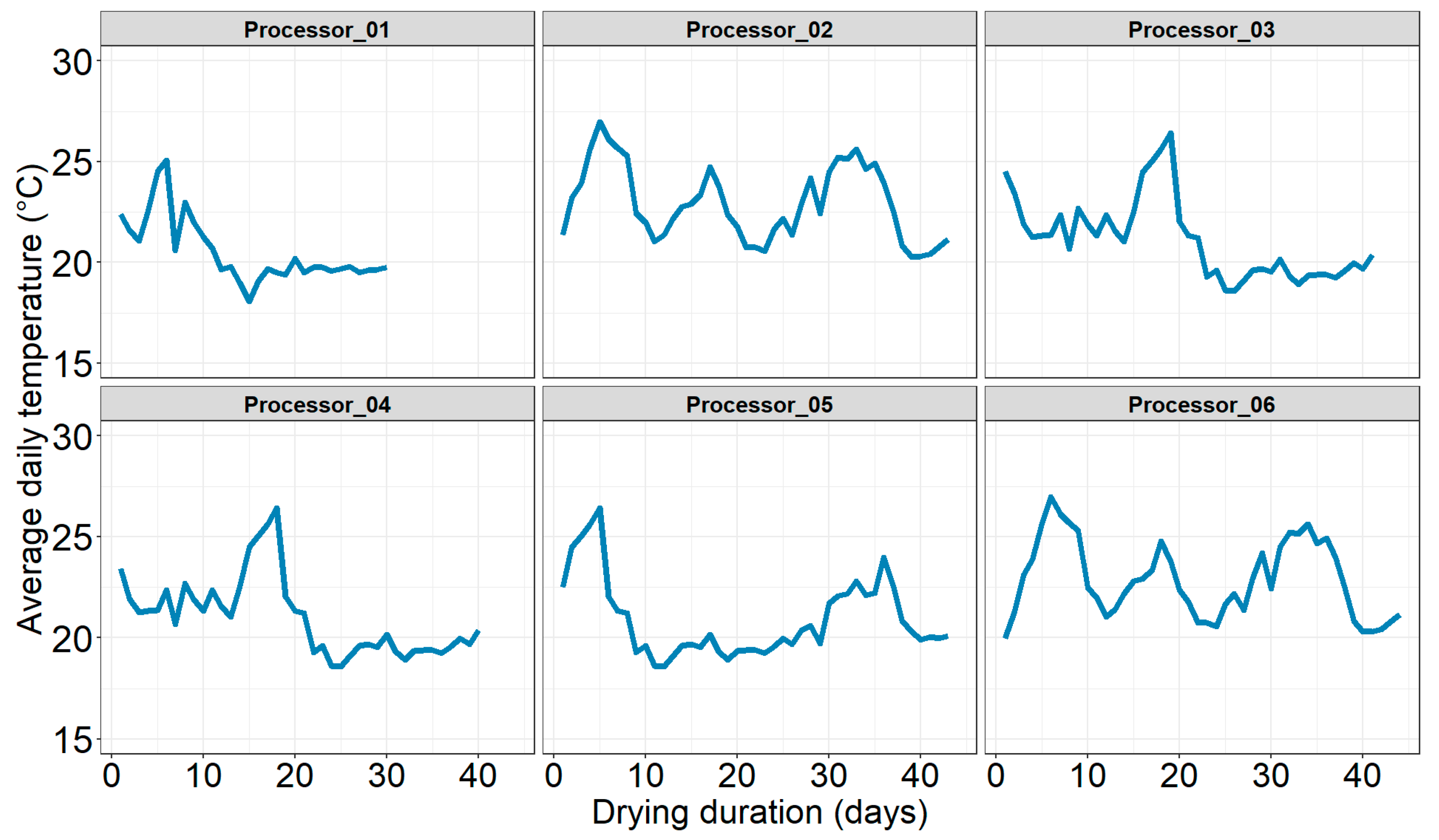
Figure 2.
Relationship between drying duration (days) and dry matter content (%) of chilies dried on black plastic sheeting and processor-preferred sheeting materials across processor sites. Solid lines represent fitted linear trends for each drying material, shown to illustrate observed associations rather than inferential relationships.
Figure 2.
Relationship between drying duration (days) and dry matter content (%) of chilies dried on black plastic sheeting and processor-preferred sheeting materials across processor sites. Solid lines represent fitted linear trends for each drying material, shown to illustrate observed associations rather than inferential relationships.
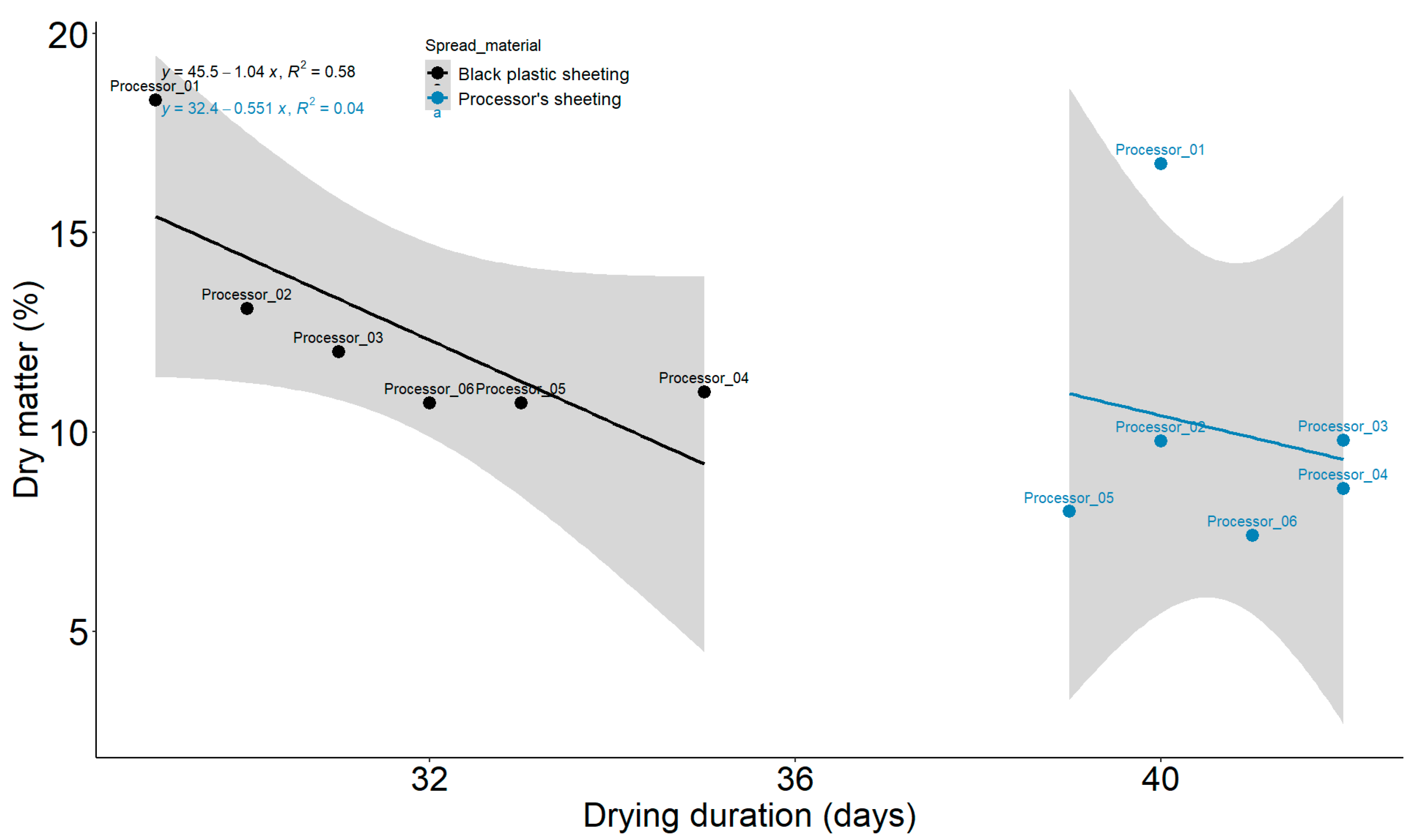
Figure 3.
Dry matter (%) of chilies dried on black plastic sheeting and processor-preferred sheeting materials across processor sites.
Figure 3.
Dry matter (%) of chilies dried on black plastic sheeting and processor-preferred sheeting materials across processor sites.
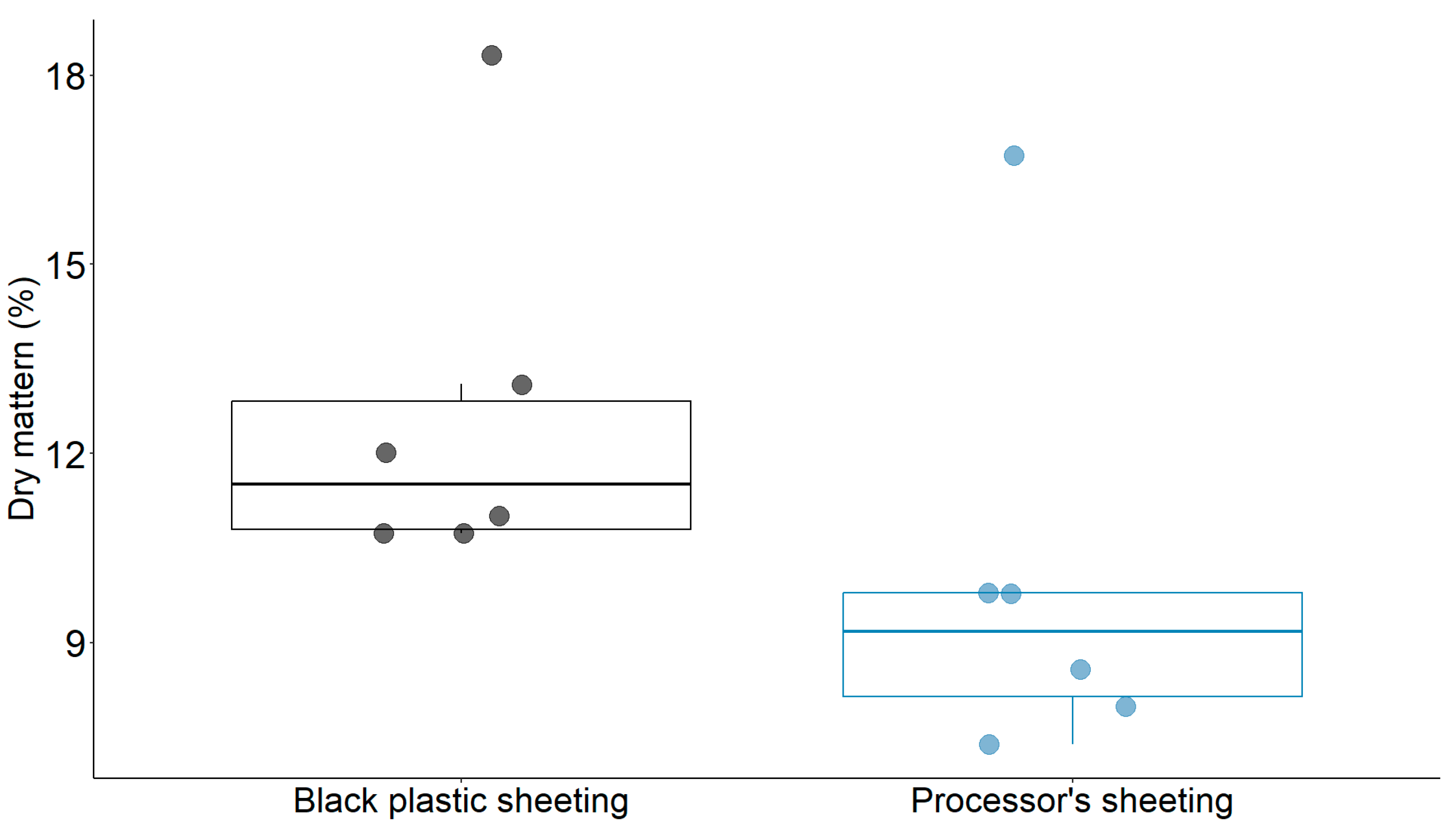
Figure 4.
Weight stability of 200 g dried chilies stored in airtight glass jars and gunny bags across storage durations.
Figure 4.
Weight stability of 200 g dried chilies stored in airtight glass jars and gunny bags across storage durations.
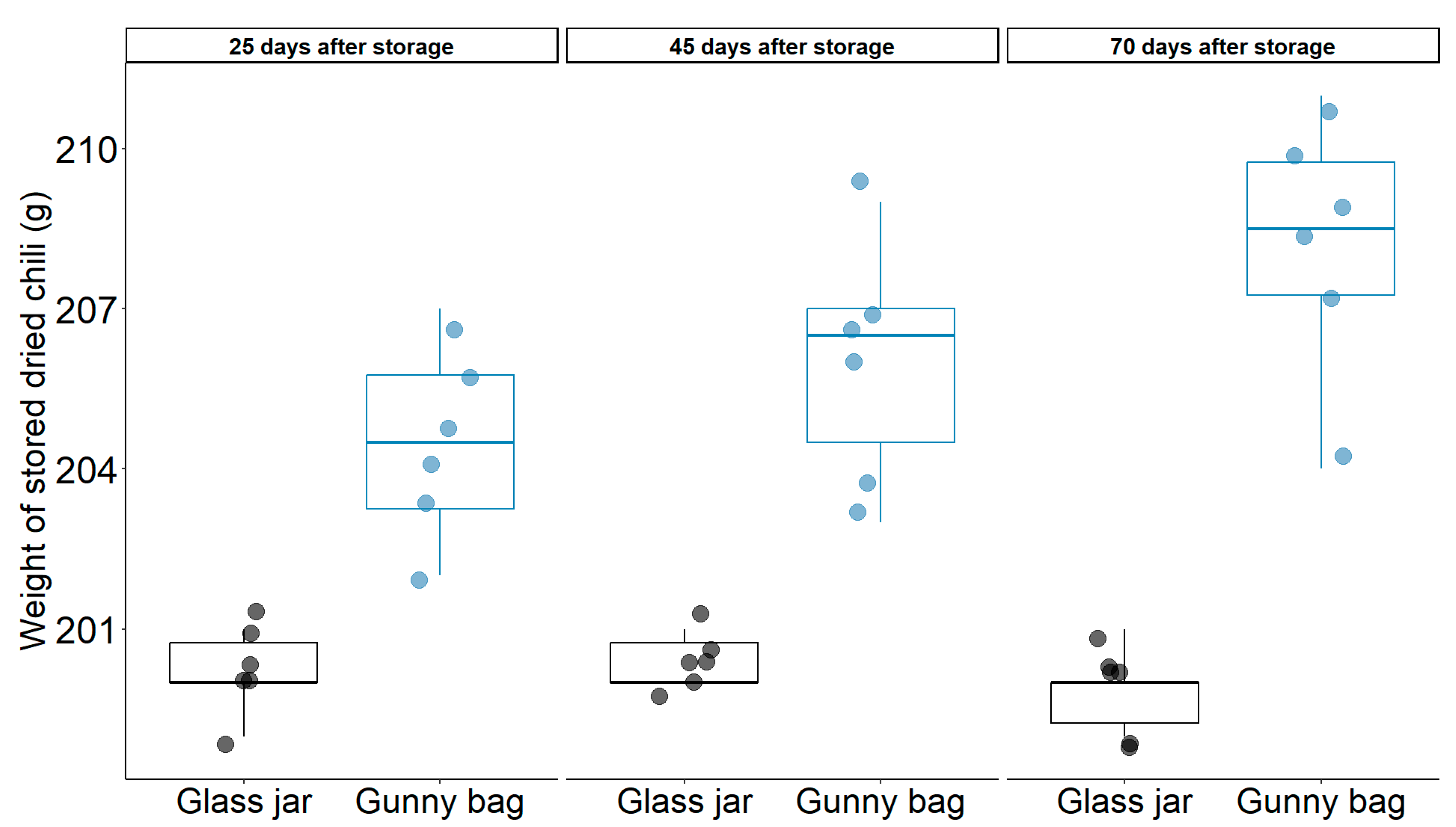

Table 1.
Summary of drying duration and agreement between processor judgement and DryCard equilibrium relative humidity readings across all processor sites and drying treatments.
Table 1.
Summary of drying duration and agreement between processor judgement and DryCard equilibrium relative humidity readings across all processor sites and drying treatments.
| Drying stage | Drying duration | Dry matter content (%) | DryCard ERH range (%) | Processors judgement | Agreement with DryCard |
|---|---|---|---|---|---|
| Early assessment | 15 | Not determined | 75 | Not dried for storage | Yes (all sites) |
| Final assessment | 29-42 | 7.4-18.3 | 30-70 | Dried for storage | Mostly (3 mismatches) |
ERH: Equilibrium relative humidity.
Disclaimer/Publisher’s Note: The statements, opinions and data contained in all publications are solely those of the individual author(s) and contributor(s) and not of MDPI and/or the editor(s). MDPI and/or the editor(s) disclaim responsibility for any injury to people or property resulting from any ideas, methods, instructions or products referred to in the content. |
© 2026 by the authors. Licensee MDPI, Basel, Switzerland. This article is an open access article distributed under the terms and conditions of the Creative Commons Attribution (CC BY) license.
Copyright: This open access article is published under a Creative Commons CC BY 4.0 license, which permit the free download, distribution, and reuse, provided that the author and preprint are cited in any reuse.


