
Submitted:
22 April 2026
Posted:
23 April 2026
You are already at the latest version
Abstract
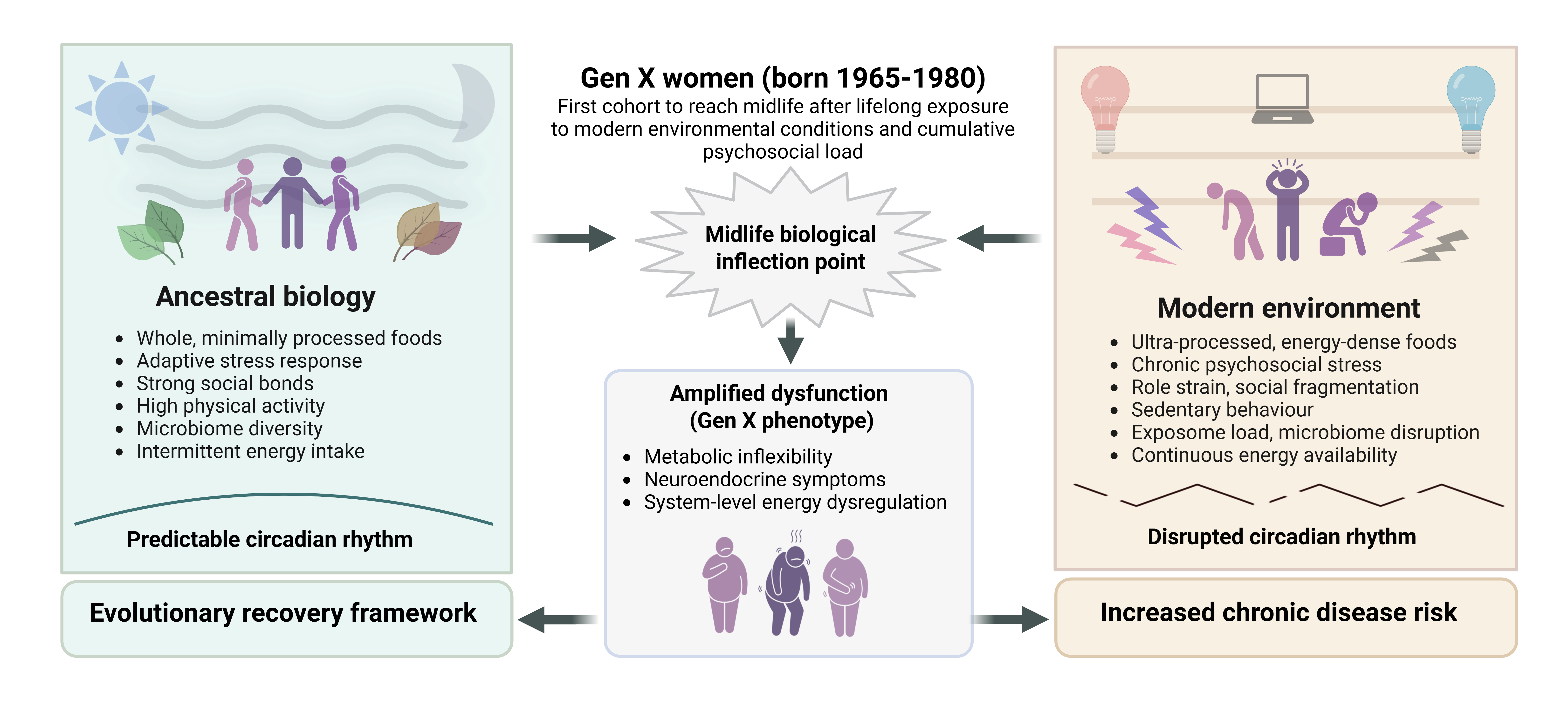
Chronic stress, circadian disruption, sedentary behavior, industrialized diets and disturbances in the gut microbiome have created an evolutionary mismatch between ancestral physiology and the modern environment. Generation X (Gen X) women (born between 1965–1980) are the first cohort to enter midlife having lived their entire adult lives within these conditions while also carrying distinct cohort-specific factors shaped by major economic and cultural transitions. The interaction of evolutionary mismatch and Gen X pressures destabilizes hormonal regulation, increases allostatic load and impairs mitochondrial function, contributing to fatigue, metabolic inflexibility and cognitive dysfunction during perimenopause and menopause, with implications for postmenopausal health and long-term disease risk. Women with polycystic ovary syndrome have reduced insulin sensitivity and a heightened proinflammatory response that makes them more susceptible to Gen X evolutionary mismatch pressures. This paper synthesizes evidence from evolutionary biology, endocrinology, neuroscience and lifestyle medicine to present an integrated model explaining the mechanisms driving midlife symptomatology in Gen X women. The model places midlife dysfunction within an evolutionary mismatch context, where modern environmental exposures and cohort-specific demands interact with hormonal, immune and metabolic changes to drive convergent pathophysiological mechanisms. A tiered recovery framework is proposed, targeting allostatic load reduction, circadian realignment, restoration of metabolic flexibility, and integration of mitochondrial, musculoskeletal and gut–brain–endocrine signaling systems.
Keywords:
evolutionary mismatch
; generation X women
; Gen X
; metabolic dysfunction
; metabolic inflexibility
; insulin resistance
; mitochondrial dysfunction
; allostatic load
; cognitive dysfunction
Copyright: This open access article is published under a Creative Commons CC BY 4.0 license, which permit the free download, distribution, and reuse, provided that the author and preprint are cited in any reuse.


