

Submitted:
22 April 2026
Posted:
23 April 2026
You are already at the latest version
Abstract
The PP2C (protein phosphates 2C) are key regulators of abscisic acid (ABA) signaling that play a crucial role in plant stress responses. In this study, we performed a comprehensive genome-wide analysis and identified 71 DlPP2C genes in Dimocarpus longan which is an economically important fruit crop. The evolutionary analysis revealed that DlPP2C genes were classified into distinct subgroups based on phylogenetic relationships with Arabidopsis thaliana and Oryza sativa. Structural analysis demonstrated conserved motif composition and gene organization within subgroups, whereas chromosomal distribution and synteny analysis revealed that segmental duplication events contributed to gene family expansion. Promoter analysis findings identified numerous cis-acting elements related to hormone and stress responsiveness especially abscisic acid-responsive elements (ABREs), suggesting their potential involvement in ABA signaling pathways. Under exogenous ABA treatments, expression profiling of the DlPP2C genes exhibited dynamic, dose and time dependent response with several genes showing peak expression at 10 μM ABA after 16 h, especially the DlPP2C1 displayed a strong transcriptional response, indicating its potential role as a key regulator. Overexpression and GUS staining assays revealed enhanced activity under ABA treatment, further supporting its involvement in ABA-responsive regulation. Moreover, RNA sequencing analysis revealed a total of 1799 differentially expressed genes, with prevalence of downregulated genes, showing extensive transcriptional reprograming. Functional enrichment analysis demonstrated that these genes were largely associated with plant hormone signaling, stress response and metabolic pathways. Together, these findings propose that DlPP2C genes, especially DlPP2C1, play a key role in ABA-mediated regulatory networks and provide valuable insights intro stress adaption mechanisms during early somatic embryogenesis in longan.
Keywords:
Dimocarpus longan
; somatic embryogenesis
; protein phosphatase 2C
; ABA signaling
1. Introduction
The protein phosphatase 2C (PP2C) commonly known as the metal dependent type protein phosphatases having serine or threonine as their dephosphorylation site. In comparison to other protein phosphatases, the regulatory subunits are absent in PP2C that itself a monomeric enzyme whose activity depends on Mg2+ or Mn2+. The PP2C may lost their activity when Mg2+ or Mn2+ are replaced with other ions such as CA2+ and Zn2+ [1]. The initial report on PP2C gene family was published on Arabidopsis thaliana and Oryza sativa in early 2008. According to that report a total 80 and 90 PP2C genes were reveled in Arabidopsis thaliana and Oryza sativa, respectively [2]. The previously published studies have shown that the conserved catalytic domains of PP2C in plants are mostly centered at the C terminus whereas the N terminus serve as an extension zone with weak conservation and varying lengths, resulting in different functions to PP2C [3,4]. The clade A PP2C in Arabidopsis serve as negative regulator in ABA signal transduction pathways. For instance, the AtABI1 (a clade A PP2C member), has a conserved sequence at its C terminus which forms a ternary complex with the ABA receptor (PYL) and SnRK2 kinases, thereby modulating downstream stress activities [5].
Longan, also known as "dragon's eye" or Dimocarpus longan, is a tropical evergreen tree indigenous to Southeast Asia, particularly southern China, Taiwan, and Vietnam. It is closely related to Lychee and Rambutan and is a member of the Sapindaceae family. Significant progress has been made in the molecular research of D. longan, mainly due to genome sequencing initiatives [6]. In longan, somatic embryogenesis has been investigated thoroughly as a model system for regenerating woody plants. To identify the molecular mechanisms underlying embryo development, research has focused on molecular biology and proteomics during somatic embryogenesis, employing methods such as gene cloning, real-time quantitative PCR, and two-dimensional electrophoresis [7,8]. Furthermore, studies on the PP2C gene family have demonstrated its functional significance and evolutionary conservation across several plant species [9]. Techniques for tissue culture have been crucial to the conservation and multiplication of D. longan. These techniques benefit the mass propagation of superior genotypes and conserve cultivars at risk of extinction [10,11].
Genome sequencing and various bioinformatics software have provided basic and powerful tools for the identification and analysis of gene families. At present, a large number of gene families have been identified and characterized at the whole genome level including TF families in Dimocarpus longan, including (bZIP, B3, ARF, ABI, MYB and NAC) [12,13,14,15,16,17]. PP2Cs are well organized as key negative regulators in core ABA signaling pathway, modulating the activities of downstream kinases and transcription factors to fine-tune plant responses to environmental stimuli. Although PP2C gene families have been extensively characterized in several model crop species, including Grape (Vitis vinifera L.) [18], Litchi (Litchi Chinensis Sonn.) [19], cucumber [20], strawberries (Fragaria ananassa) [21], peanut (Arachis hypogaea) [22] and soyabean (Glycine max) [23], but their deification and functional roles in Dimocarpus longan remain largely unexplored.
Here a total of 71 DlPP2C genes were identified and a comprehensive genome-wide analysis was performed to investigate their structural features, evolutionary relationships and expression patterns. Furthermore, we functionally characterized DlPP2C1 using transient overexpression and GUS assays and integrated transcriptomic analysis to elucidate its role in ABA responsive regulatory cascade. Our findings provide new insights into molecular mechanism underlaying ABA signaling during early somatic embryogenesis in Longan and establish a foundation for future studies on stress adaption and genetic improvement of this economically important fruit crop.
2. Results
2.1. Physicochemical Properties Analysis of DlPP2C Gene Family
Based on the physicochemical properties, the structural features and possible functional properties of the 71 PP2C proteins detected in Dimocarpus longan were analyzed. These were the amino acid length, molecular weight (MW), isoelectric point (pI), instability index (II), aliphatic index (AI), grand average of hydropathicity (GRAVY) and predicted subcellular localization. The sizes of the DlPP2C proteins differed significantly ranging between 276 amino acids (DIPP2C33) to 1018 amino acids (DIPP2C67) with a molecular weight of 30.27 kDa to 114.97 kDa respectfully. Most plant proteins are usually in the 10-100 kDa diameter, however, because of its comparatively large size, DIPP2C67 might have a more complicated structure organization, possibly enclosing more functional domains or regulatory regions than smaller proteins like DIPP2C33.The estimated isoelectric points were between 4.83 (DIPP2C52) and 8.91 (DIPP2C34), indicating a high variation in the charge features of the proteins. The pI values of most of the DlPP2C proteins were below 7 implying that it is mainly acidic proteins. This property could enable them to be soluble and exercise their activity in intracellular organelles like the chloroplasts and the cytoplasm. The instability index was used to estimate protein stability that varied significantly among DlPP2Cs with a range of 40.91 (DIPP2C34) to 101.12 (DIPP2C41). The proteins that have an instability index above 40 are normally regarded as unstable and therefore, a significant percentage of DlPP2C proteins might be less stable in vitro. Conversely, the aliphatic index ranged (AI), a measure of the volume of aliphatic side chains (a measure of stability), went between 68.07 (DIPP2C1) and 101.12 (DIPP2C41), indicating unpredictable thermostability. It is worth noting that values of AI, is an indicator of increased structural stability, which means that a portion of DlPP2C proteins can maintain stability in different environmental conditions despite increased instability index. GRAVY values are above -0.579 (DIPP2C5) and below 0.013 (DIPP2C56). The existence of negative GRAVY values implies that majority of the proteins of DlPP2C are hydrophilic, which is a property commonly linked with soluble proteins that have a role in intracellular signaling. This finding is in line with the overall functional role of PP2C proteins in the plant signaling pathways Subcellular localization prediction revealed that DlPP2C proteins are spread through various cellular compartments, such as the nucleus, cytosol, chloroplasts, mitochondria, vacuoles, and the plasma membrane. Such large-scale localization pattern indicates that the DlPP2C proteins are involved in numerous biological processes primarily in signal transduction and stress response, as well as metabolic processes.

Table 1.
Physicochemical properties of the PP2C gene family in D. longan. First column contains the gene IDs list, number of Amino acids (A.A), Molecular weight (MW), Isoelectric points (pI), Instability index (II), Aliphatic index (AI), Grand Average of Hydropathicity (GRAVY) and predicted subcellular localization (SCL) in subsequent columns.
Table 1.
Physicochemical properties of the PP2C gene family in D. longan. First column contains the gene IDs list, number of Amino acids (A.A), Molecular weight (MW), Isoelectric points (pI), Instability index (II), Aliphatic index (AI), Grand Average of Hydropathicity (GRAVY) and predicted subcellular localization (SCL) in subsequent columns.
| ID | AA | MW | pI | II | AI | GRAVY | SCL |
| DlPP2C1 | 481 | 53095.49 | 5.37 | 46.39 | 68.07 | -0.469 | chlo |
| DlPP2C2 | 487 | 53534.05 | 5.63 | 41.3 | 76.28 | -0.437 | chlo |
| DlPP2C3 | 532 | 58738.96 | 4.95 | 38.69 | 81.43 | -0.367 | cyto |
| DlPP2C4 | 494 | 54353.02 | 5.53 | 40.61 | 78.16 | -0.403 | chlo |
| DlPP2C5 | 446 | 50102.44 | 6.29 | 31.26 | 75.61 | -0.579 | cyto |
| DlPP2C6 | 386 | 42984.75 | 6.36 | 40.35 | 76.53 | -0.279 | chlo |
| DlPP2C7 | 386 | 42984.75 | 6.36 | 40.35 | 76.53 | -0.279 | chlo |
| DlPP2C8 | 380 | 41976.53 | 7.99 | 48.26 | 81.08 | -0.31 | chlo |
| DlPP2C9 | 351 | 38552.76 | 5.71 | 44.38 | 88.29 | -0.273 | cyto |
| DlPP2C10 | 386 | 42904.35 | 5.28 | 41.16 | 76.04 | -0.299 | mito |
| DlPP2C11 | 386 | 42904.35 | 5.28 | 41.16 | 76.04 | -0.299 | mito |
| DlPP2C12 | 713 | 80002.69 | 5.44 | 43.35 | 78.49 | -0.517 | nucl |
| DlPP2C13 | 709 | 79381.33 | 5.41 | 45.21 | 73.96 | -0.601 | nucl |
| DlPP2C14 | 397 | 42739.4 | 7.53 | 60.46 | 76.12 | -0.28 | chlo |
| DlPP2C15 | 431 | 47829.8 | 5.97 | 61.46 | 65.57 | -0.581 | cyto |
| DlPP2C16 | 427 | 46665.56 | 5.6 | 58.58 | 77.82 | -0.417 | nucl |
| DlPP2C17 | 786 | 86793.15 | 5.36 | 42.48 | 79.21 | -0.474 | chlo |
| DlPP2C18 | 882 | 98099.08 | 5.93 | 39.87 | 68.21 | -0.56 | nucl |
| DlPP2C19 | 393 | 42503.3 | 6.38 | 44.89 | 83.77 | -0.188 | chlo |
| DlPP2C20 | 351 | 38708.11 | 5.84 | 36.22 | 86.58 | -0.329 | nucl |
| DlPP2C21 | 448 | 49649.68 | 8.24 | 36.49 | 85.87 | -0.376 | mito |
| DlPP2C22 | 524 | 57090.5 | 5.17 | 47.32 | 88.95 | -0.188 | nucl |
| DlPP2C23 | 397 | 43513.15 | 5.88 | 46.48 | 85.31 | -0.359 | chlo |
| DlPP2C24 | 494 | 54248.02 | 8.59 | 44.14 | 77.91 | -0.43 | Nucl |
| DlPP2C25 | 418 | 45486.45 | 5.56 | 62.73 | 81.2 | -0.278 | Nucl |
| DlPP2C26 | 455 | 50300.21 | 6.12 | 49.41 | 83.54 | -0.415 | Chlo |
| DlPP2C27 | 544 | 59008.92 | 4.89 | 44.04 | 91.69 | -0.12 | Chlo |
| DlPP2C28 | 397 | 43225.38 | 4.96 | 55.72 | 74.84 | -0.434 | Nucl |
| DlPP2C29 | 546 | 58749.44 | 4.9 | 47.91 | 93.35 | -0.167 | Chlo |
| DlPP2C30 | 464 | 51427.31 | 5.51 | 65.62 | 82.28 | -0.258 | Chlo |
| DlPP2C31 | 293 | 31518.87 | 5.05 | 39.49 | 77.92 | -0.327 | Cyto |
| DlPP2C32 | 356 | 39302.94 | 5.24 | 47.5 | 75.06 | -0.4 | Chlo |
| DlPP2C33 | 276 | 30273.96 | 5.1 | 30.36 | 82.28 | -0.244 | Cyto |
| DlPP2C34 | 353 | 39479.4 | 8.91 | 42.23 | 91.42 | -0.219 | Chlo |
| DlPP2C35 | 658 | 73053.46 | 6.11 | 40.91 | 93.31 | -0.187 | Cyto |
| DlPP2C36 | 282 | 31023.03 | 7.76 | 40.74 | 82.98 | -0.413 | Cyto |
| DlPP2C37 | 282 | 31011.19 | 5.68 | 42.61 | 89.18 | -0.296 | Cyto |
| DlPP2C38 | 283 | 30887.89 | 6.75 | 38.41 | 82.37 | -0.385 | Nucl |
| DlPP2C39 | 406 | 44250.34 | 5.09 | 53.3 | 89.11 | -0.058 | Nucl |
| DlPP2C40 | 394 | 42888.75 | 5.87 | 49.59 | 80.96 | -0.307 | Nucl |
| DlPP2C41 | 187 | 20712.63 | 6.15 | 38.64 | 101.12 | -0.14 | Chlo |
| DlPP2C42 | 428 | 45737.3 | 6.9 | 32.34 | 86.33 | -0.111 | Chlo |
| DlPP2C43 | 439 | 47181.98 | 8.24 | 36.67 | 86.86 | -0.174 | Chlo |
| DlPP2C44 | 438 | 47673.46 | 5.17 | 37.87 | 82.58 | -0.193 | Cyto |
| DlPP2C45 | 400 | 44478.72 | 8.15 | 57.04 | 77.5 | -0.357 | Chlo |
| DlPP2C46 | 318 | 35003.53 | 8.21 | 43.44 | 83.43 | -0.393 | Cyto |
| DlPP2C47 | 303 | 33325.7 | 8.22 | 43.19 | 84.65 | -0.364 | Cyto |
| DlPP2C48 | 277 | 31547.17 | 9.68 | 55.24 | 75.63 | -0.467 | Chlo |
| DlPP2C49 | 398 | 43428.37 | 5.76 | 37.62 | 93.87 | -0.114 | Chlo |
| DlPP2C50 | 398 | 43331.26 | 5.76 | 37.45 | 91.91 | -0.129 | Chlo |
| DlPP2C51 | 410 | 44560.11 | 5.07 | 35.52 | 79.98 | -0.348 | Chlo |
| DlPP2C52 | 907 | 100000.67 | 4.83 | 46.17 | 96.37 | -0.09 | Plas |
| DlPP2C53 | 476 | 52456.31 | 5.7 | 39.43 | 82.23 | -0.214 | Chlo |
| DlPP2C54 | 155 | 17163.21 | 6.81 | 36.12 | 62.32 | -0.517 | Nucl |
| DlPP2C55 | 372 | 41033.06 | 5.44 | 41.47 | 71.34 | -0.422 | Nucl |
| DlPP2C56 | 306 | 32961.16 | 5.05 | 39.31 | 92.06 | 0.013 | Chlo |
| DlPP2C57 | 514 | 55360.65 | 6.23 | 44.45 | 80.04 | -0.227 | Mito |
| DlPP2C58 | 453 | 47908.98 | 8.48 | 40.16 | 78.98 | -0.09 | Chlo |
| DlPP2C59 | 394 | 44304.57 | 6.9 | 50.54 | 96.24 | -0.199 | Mito |
| DlPP2C60 | 391 | 43315.21 | 5.85 | 37.44 | 94.99 | -0.207 | Cyto |
| DlPP2C61 | 385 | 43139.22 | 8.12 | 42.64 | 90.34 | -0.288 | Chlo |
| DlPP2C62 | 397 | 44158.32 | 8.67 | 48.55 | 88.84 | -0.307 | Chlo |
| DlPP2C63 | 397 | 44176.3 | 8.94 | 48.68 | 90.3 | -0.272 | Nucl |
| DlPP2C64 | 385 | 42838.69 | 7 | 38.99 | 91.14 | -0.289 | Chlo |
| DlPP2C65 | 374 | 41591.6 | 8.86 | 43.57 | 87.35 | -0.293 | Mito |
| DlPP2C66 | 383 | 42310.97 | 5.74 | 42.23 | 89.32 | -0.193 | Chlo |
| DlPP2C67 | 1018 | 114972.38 | 5.62 | 45.74 | 80.42 | -0.382 | Vacu |
| DlPP2C68 | 243 | 26329.38 | 9 | 42.67 | 98.35 | -0.016 | Cyto |
| DlPP2C69 | 258 | 28459.06 | 4.9 | 42.67 | 79.73 | -0.252 | Extr |
| DlPP2C70 | 454 | 48976.75 | 4.72 | 42.62 | 88.24 | -0.137 | Chlo |
| DlPP2C71 | 555 | 61220.53 | 5.55 | 48.62 | 87.48 | -0.235 | Chlo |
2.2. Evolutionary Analysis of the PP2C Gene Family
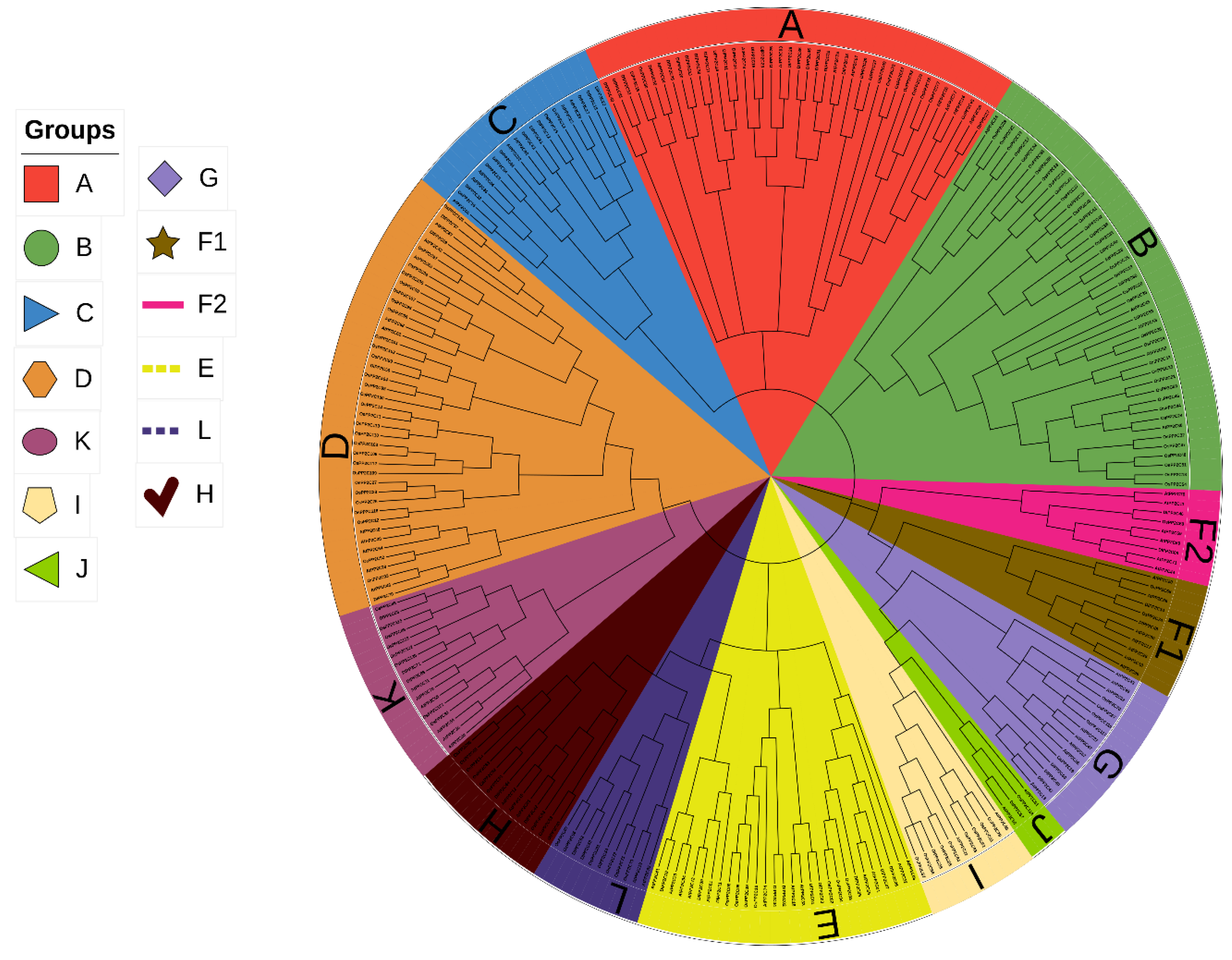
In order to render the patterns of evolution and possible diversification of the DlPP2C gene family in terms of functionality, a phylogenetic tree was built using the multiple sequence alignment of the conserved PP2C catalytic domain. Whereas PP2C proteins of Dimocarpus longan, Arabidopsis thaliana and Oryza sativa, belonging to dicot and monocot species were analyzed. According to the phylogenetic topology, these PP2C proteins were divided into 13 different groups, each group has a color, which indicates the evolutionary divergence of the proteins and their evolutionary subgroups. D.longan contains 71 PP2C genes that is similar to 80 reported members of A. thaliana but significantly lower than 122 reported members in rice. The phylogenetic tree also revealed that the major clades did not evenly have the DlPP2C members. Clade A comprised of the most members 25 DlPP2C, and, f clade D had 1 DlPP2C. The clades F1 and F2 consisted of four proteins of the DlPP2C group and one of them was the smallest, consisting of one DlPP2C protein. Interestingly, DlPP2C were found in all the clades (A-J), and there is no significant PP2C group is lost in longan. The DlPP2C proteins within a clade were further clustered with their homologs of either A. thaliana and O. sativa, indicating that the large subfamilies of PP2C are very conserved across dicot and monocot species. It is a conserved phylogenetic distribution that suggests the split of PP2C genes probably preceded the split of those plants’ lineages. The fact that all major subgroups have the representatives retained in longan is another argument in favor of the functional conservativity of PP2C proteins. On the whole, phylogenetic connections give important information on the evolutionary conservation and possible functional similarity of DlPP2C proteins with their homologs in model plant species.
Figure 1.
The figure represents a phylogenetic tree of PP2C gene family in three species, including D. longan, Arabidopsis thaliana and Oryza sativa. The tree is divided into 13 families, which consist of a unique set of PP2C gene family members of the species, displayed in different colors.
Figure 1.
The figure represents a phylogenetic tree of PP2C gene family in three species, including D. longan, Arabidopsis thaliana and Oryza sativa. The tree is divided into 13 families, which consist of a unique set of PP2C gene family members of the species, displayed in different colors.
2.3. PP2C Gene Clustering and Distribution of Chromosomes in Logan
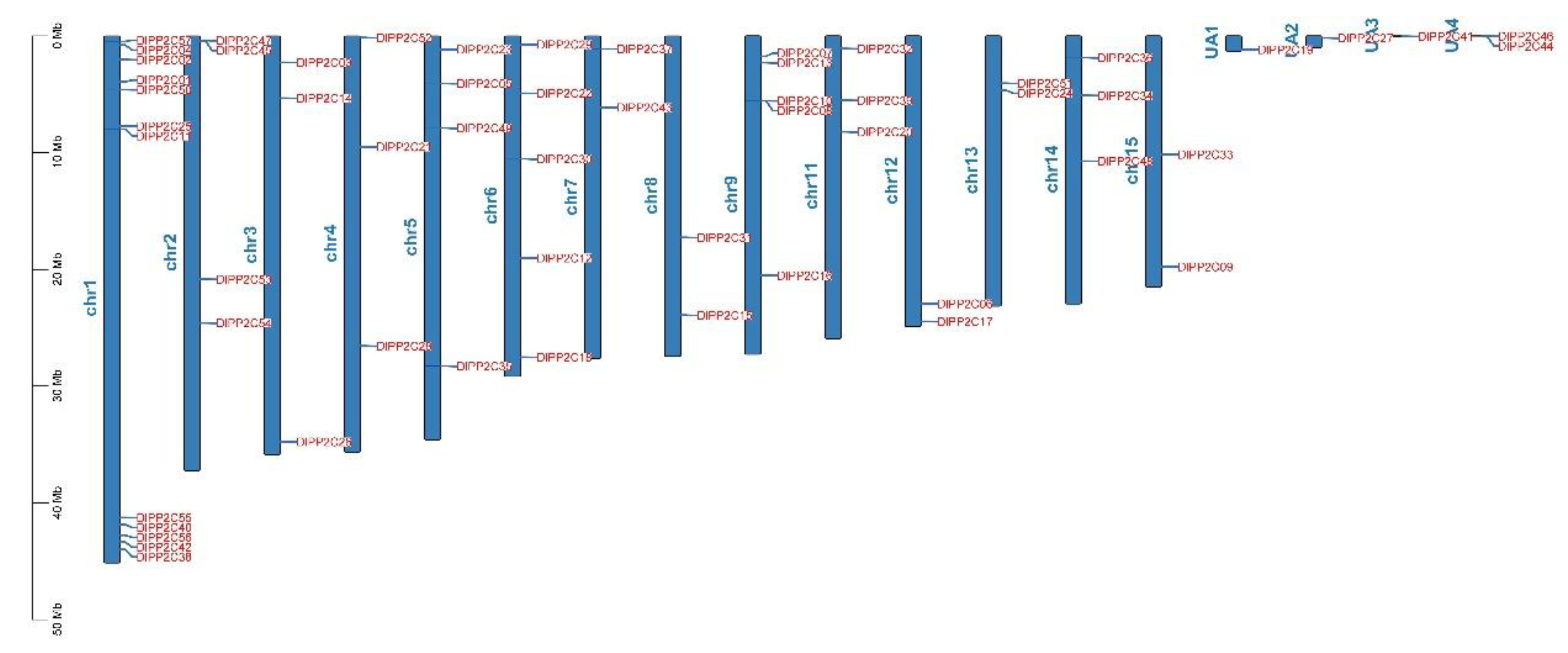
After the discovery of the PP2C gene family, 71 possible DlPP2C genes have been mapped onto the longan genome and systematically renamed according to the position of the chromosome and physical order, from DlPP2C1 to DlPP2C71. The genes of DlPP2C were unevenly distributed in the chromosomes, and there were local instances of gene clustering. It was worth noting that DlPP2C genes were evenly spread in various chromosomes even though their abundance was extremely uneven. There was a total of fifteen DlPP2C genes were found on chromosomes 1 whereas only two DlPP2C genes were observed on chromosome 15 Moreover, there were three DlPP2C gene members in chromosomes 3,4, 11 and 14, but two genes on chromosomes 7, 8, 12 and 13. Such a non-random pattern of distribution indicates that specific areas of the chromosomes can be PP2C-enriched locus. Further, a total of five 5 DlPP2C genes were found in unanchored (UA) scaffolds, which illustrates that the genes are present in the assembled genome, but their actual chromosomal positions had not been determined. Comprehensively, chromosomal localization analysis offers important data that lead to the understanding of the genomic organization of the DIPP2C gene family. The difference in the number and distribution of the genes on the chromosomes may reflect lineage-specific expansion patterns that may either be related to evolutionary adaptation and functional specialty of PP2C genes in longan.
Figure 2.
The chromosomal distribution of the DIPP2C gene family, where 13 chromosomes (Chr1-Chr 13) are clearly defined with its genes being positioned in different locations on the chromosome. Unanchored (UA) regions, contain additional DIPP2C genes, which is an indication that they are unassembled or their genomic regions remains unresolved.
Figure 2.
The chromosomal distribution of the DIPP2C gene family, where 13 chromosomes (Chr1-Chr 13) are clearly defined with its genes being positioned in different locations on the chromosome. Unanchored (UA) regions, contain additional DIPP2C genes, which is an indication that they are unassembled or their genomic regions remains unresolved.
2.4. Interaction Network of Longan and Arabidopsis PP2C Genes
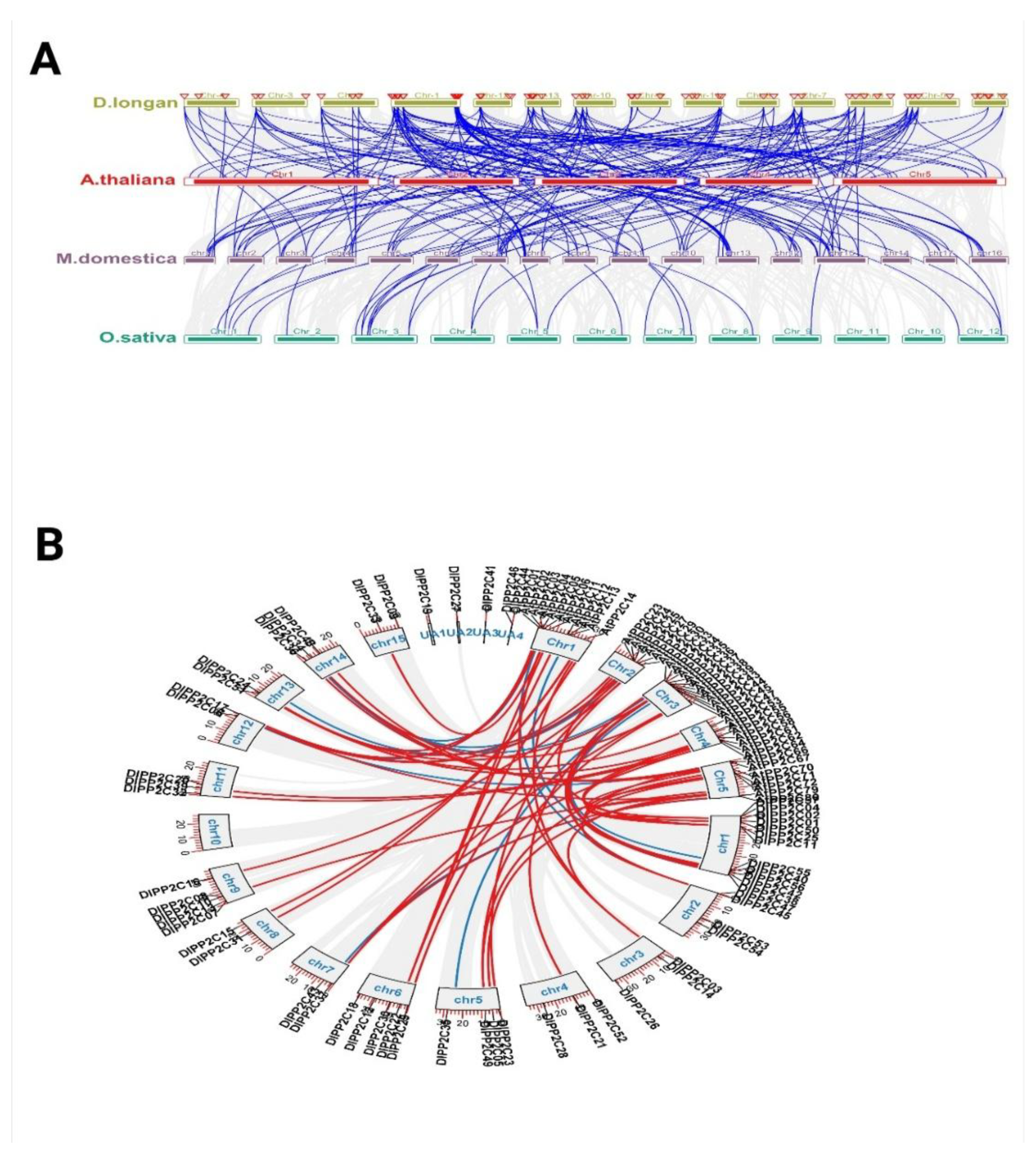
In order to further evaluate the pattern of evolutionary conservation and duplication of DlPP2C gene family, synteny analysis was conducted between Dimocarpus longan and the representative dicot and monocot species, Arabidopsis thaliana and Oryza sativa. Analysis demonstrated the presence of massive collinearity among the DlPP2C genes in the longan genome with many intrachromosomal relationships (Figure 7A). The majority of the duplicated DlPP2C gene copies occurred on other chromosomes; thus, it is possible that segmental duplication or whole-genome duplication (WGD) has been the major driving force behind the expansion of the PP2C gene family in longan. Conversely, the numbers of duplicated gene pairs in close proximity were few, which is another sign that tandem duplication has been a rather minor process. Interestingly, chromosome 9 showed the highest number of collinearity interaction with chromosomes 5, 7 and 8 and so it is possible that the chromosome might be a hot spot of PP2C gene expansion. Also, multiple DlPP2C genes were found within unanchored (UA) genomic regions. But even though these sequences are not yet attached to particular chromosomes, their existence stating that the sequences can add to the general diversity of the PP2C gene family. Incomplete genome assembly or structural complexity may also hide the true picture of PP2C gene spread because similar associations with unanchored regions were also found in Arabidopsis thaliana. Overall, the synteny analysis demonstrates the role of the events of segmental and whole-genome duplication on the development and evolution of the DlPP2C gene family. The existing results can provide meaningful information about the evolutionary dynamics and structural preservation of PP2C genes in the plant species.
Figure 3.
(A). The synteny plot of the chromosomal localization of Arabidopsis thaliana, Dimocarpus longan, and Oryza sativa. The blue lines represent the synteny between Arabidopsis and Longan and the red lines mark the syntenic associations between Longan and Oryza sativa. The map highlights the preserved gene arrangement and genomic rearrangements among the species, and provides information on their evolutionary association and the maintenance of the genomic regions throughout the evolution. (B). This circos map of the locus of the PP2C genes in the chromosomes of Longan (denoted as "chr") and Arabidopsis (denoted as "Chr"). The red lines represent the PP2C genes of Longan and the blue lines are the PP2C genes of Arabidopsis. The unanchored regions denoted as (UA1, UA2, etc.) refer to loci of the chromosomes, which could have additional PP2C genes, but with diminished resolution.
Figure 3.
(A). The synteny plot of the chromosomal localization of Arabidopsis thaliana, Dimocarpus longan, and Oryza sativa. The blue lines represent the synteny between Arabidopsis and Longan and the red lines mark the syntenic associations between Longan and Oryza sativa. The map highlights the preserved gene arrangement and genomic rearrangements among the species, and provides information on their evolutionary association and the maintenance of the genomic regions throughout the evolution. (B). This circos map of the locus of the PP2C genes in the chromosomes of Longan (denoted as "chr") and Arabidopsis (denoted as "Chr"). The red lines represent the PP2C genes of Longan and the blue lines are the PP2C genes of Arabidopsis. The unanchored regions denoted as (UA1, UA2, etc.) refer to loci of the chromosomes, which could have additional PP2C genes, but with diminished resolution.
2.5. Gene Structure and Conserved Motifs and Domains Analysis of the DlPP2C Gene Family
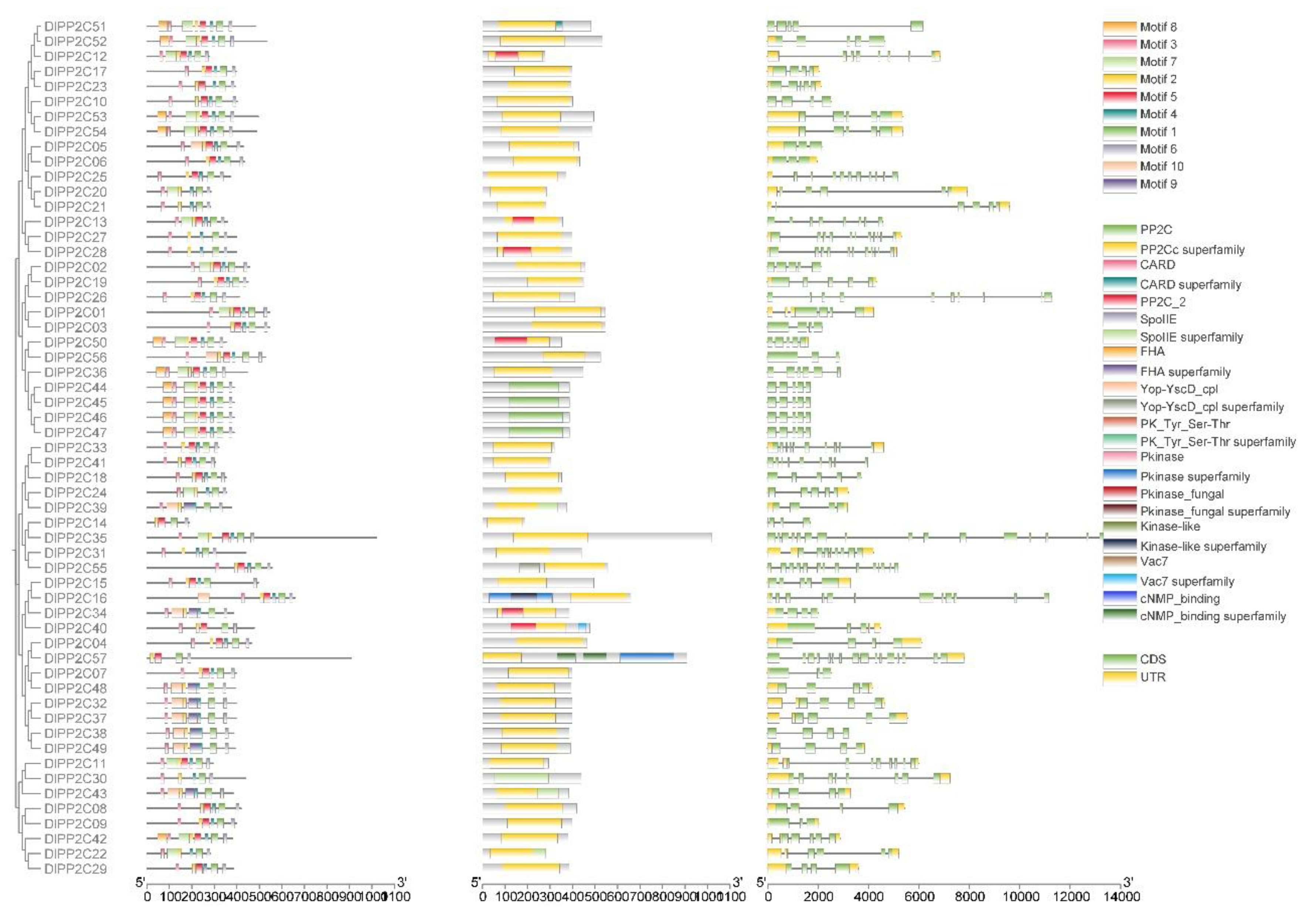
Combined phylogenetic, conserved motif, domain analysis, and gene structure analysis allowed further analysis of the structural and evolutionary associations of the DIPP2C gene family (Fig. 5). The conserved motif distribution analysis showed that proteins of DIPP2Cs have some common motifs similar to the conserved functional regions and necessary to catalytic activity. It is also noteworthy that evolution members of the same subgroup had similar motif composition, which indicated functional preservation, but the differences in the motif arrangement among subgroups could identify functional divergence. Domain analysis also revealed that all DlPP2C proteins have conserved PP2C catalytic domains which are critical in their phosphatase activity. These domains in conservation in the family of genes emphasize their central role in conserving core biochemical functions and minor structural differences could help to explain the differences in substrate specificity or regulatory interactions. Analysis of the gene structure represents the arrangement of the coding sequences (CDS) and untranslated regions (UTRs) in DIPP2C genes. Regions associated with protein encoding (the CDS regions) had patterns which were relatively conserved across highly related genes. Conversely, it was found that the length and structure of UTRs had varying variants and this can lead to post-transcriptional regulation, such as mRNA stability and translational efficiency. Taken as a whole, the homogeneity in the structure of genes among subgroups, hypothesizes both the functionality and diversification in the DlPP2C family.
Figure 4.
This figure is an illustration of a four-part study (from left to right), of the DIPP2C gene family including evolutionary connections (part 1) Phylogenetic tree, motif distributions (part 2), conserved domains (part 3), and coding sequences (CDS) and untranslated regions (UTRs) (part 4), highlighting the structural and functional diversity of the DlPP2C gene family.
Figure 4.
This figure is an illustration of a four-part study (from left to right), of the DIPP2C gene family including evolutionary connections (part 1) Phylogenetic tree, motif distributions (part 2), conserved domains (part 3), and coding sequences (CDS) and untranslated regions (UTRs) (part 4), highlighting the structural and functional diversity of the DlPP2C gene family.
2.6. Protein-Protein Interaction (PPI) Analysis of PP2C Gene Family in Longan
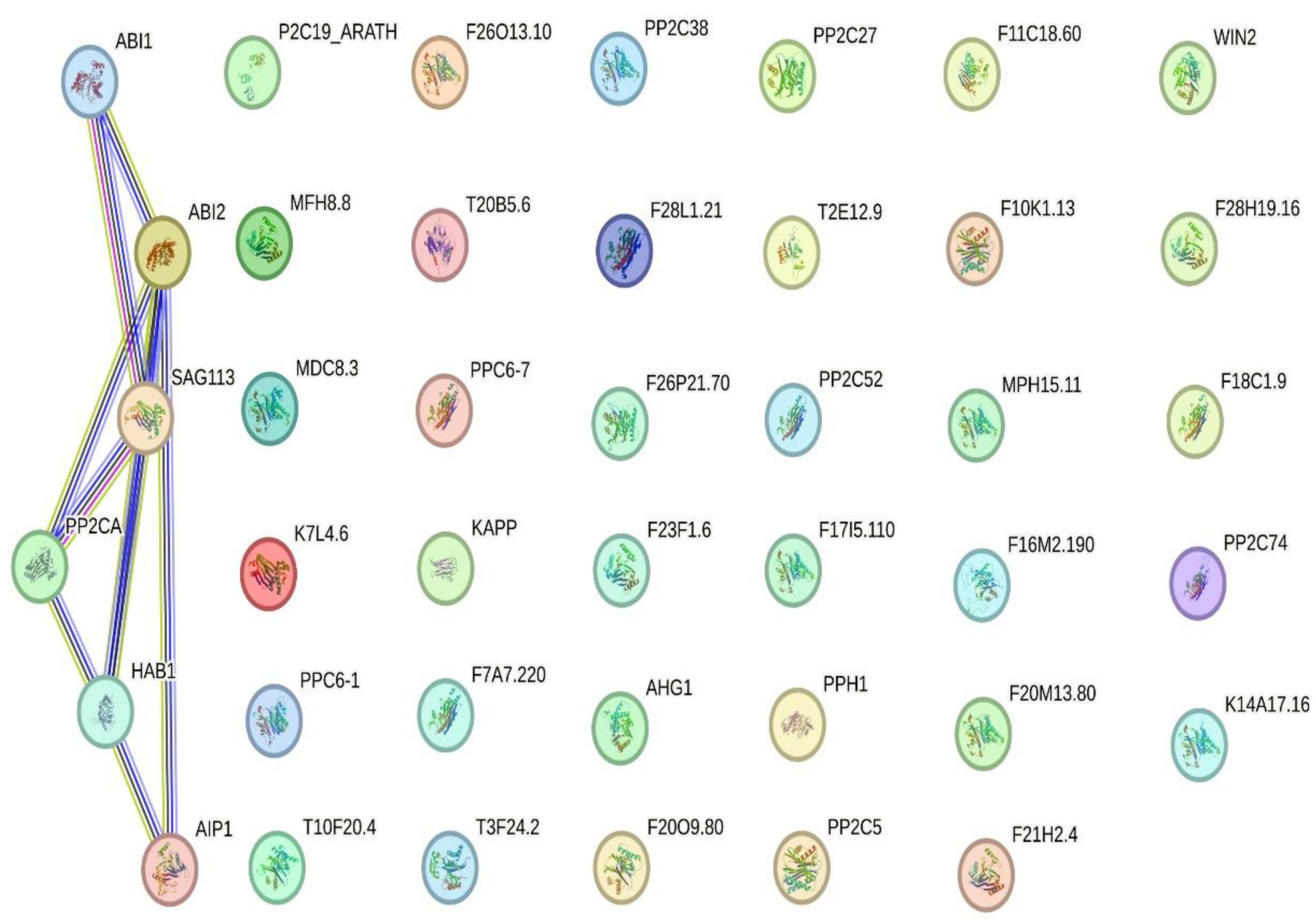
In order to further investigate the functional relationships of the proteins that are involved in DlPP2C, a protein-protein interaction (PPI) network was built to project the possible interactions of DIPP2C gene family members with the interacting proteins (Fig. 6). Each node in the network is a protein, and the connecting edges depict predicted or experimentally validated interactions between the proteins. The position of DIPP2C proteins places them in the center of the node, and they have interactions with proteins of various functional categories. The PPI network shows a complex feature and some of the DIPP2C proteins provide a broad connectivity. It is noteworthy that DlPP2C12, DlPP2C18 and DlPP2C29, have more patterns of interaction implying that these proteins may be the key to a number of cell events. Interaction pattern functional annotation showed that DIPP2C proteins could be implicated in a number of biological pathways such as signal transduction, stress response, metabolic control and cellular homeostasis. The high connectivity of the network indicates that the DlPP2C proteins can serve as important parts of the protein complexes in order to organize the responses in the cell. In addition, a group of DIPP2C proteins that included DlPP2C52 and DlPP2C50 were also predicted to interact with transcription factors and regulatory proteins which showed a potential to play a role in the regulation of gene expression.
Figure 5.
The predicted Protein-protein interaction network of DlPP2C gene family members displaying functional associations based on Arabidopsis thaliana as query. Each node stands for a protein whereas edges represent predicted interactions.
Figure 5.
The predicted Protein-protein interaction network of DlPP2C gene family members displaying functional associations based on Arabidopsis thaliana as query. Each node stands for a protein whereas edges represent predicted interactions.
2.7. Cis-Acting Elements Analysis of the PP2C Gene Family in D. longan
In an attempt to understand the possible transcriptional regulation of the DlPP2C gene family, 2,000 upstream promoter kilobase regions have been studied in order to identify putative cis-acting regulatory factors (Supplementary Table.S1). The promoters of DlPP2C genes had a large number of cis-elements linked to hormone responsiveness, stress responses and developmental regulation. These included hormone responsive elements including abscisic acid-responsive elements (ABREs) and auxin-responsive elements (AuxREs), which were often found, indicating the possibility of involvement of DlPP2Cs in hormone signaling pathways. Specifically, the abundance of ABRE motifs suggests that many genes of DlPP2C participate in the ABA-dependent processes. Moreover, various stress-dependent cis-elements were highly distributed such as dehydration-responsive element (DRE), MYB binding sites (MBS-FBR), TC-rich repeats, MeJA-responsive element (MeJARE), and wound responsive element (WRE). The fact that these aspects are common implies that DlPP2C genes can be linked to the responses to abiotic stresses, such as drought, salinity and oxidative stress, and biotic stress-related signaling. Furthermore, the promoters contained several cis-elements associated with the developmental and cellular regulation, including CMA3, SEF1-BS, PMCD, CRE, and CC-CRE and thus suggested their roles in growth, tissue differentiation, and circadian regulation. It is interesting to note that genes with similar cis-elements composition tended to cluster in certain phylogenetic subsets indicating that transcription was regulated. By and large, the analysis of cis-regulatory elements indicates that the DlPP2C genes have complex regulatory structures that allow them, to combine hormonal and environmental cues. These functional predictions however are found on the analysis of promoters in silico and need further experimental verification.
2.8. Expression Analysis of the DlPP2C Gene Family in Response Exogenous to ABA Treatment
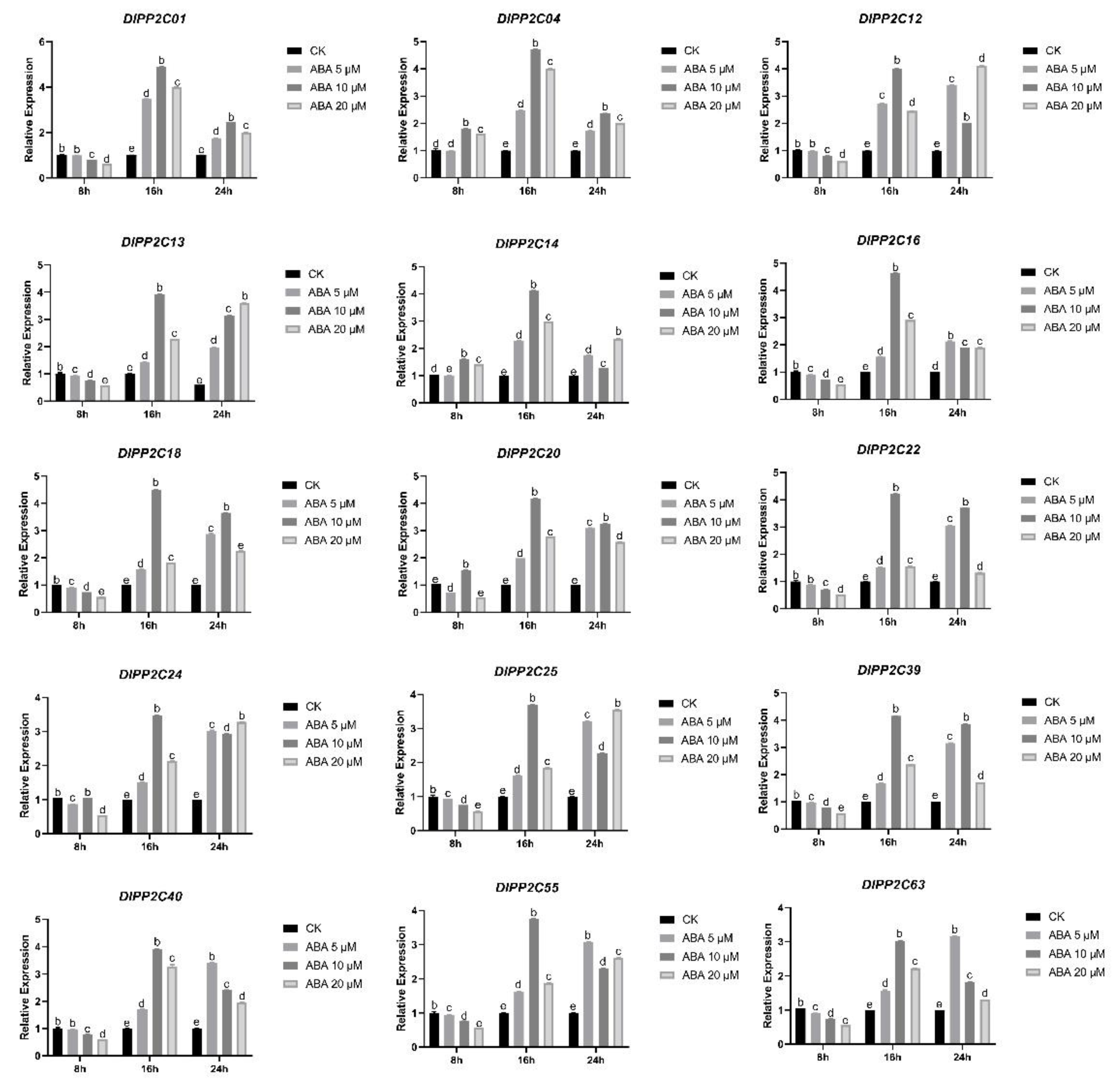
The heatmap demonstrates the expression profile of the DlPP2C genes after ABA (Abscisic Acid) treatment. A number of genes such as DlPP2C1 and DlPP2C25 are highly expressed which means that they are tangled in stress or response pathways mediated by ABA (Supplementary Figure.1). On the other hand, other genes like DlPP2C28 and DlPP2C38 show lower levels of expression implying that they are not so imperative in ABA signaling. The study of the effect of DlPP2C genes during ABA signal response was performed using longan embryogenic callus subjected to various concentrations of abscisic acid (5mM, 10mM and 20mM) at different time intervals (8h, 16h and 24h). The transcriptional response of the genes of interest (DlPP2C) to ABA treatment was then evaluated through RT-qPCR expression of the gene (Fig. 6). The results showed that the selected DlPP2C genes displayed dynamic and dose-dependent patterns of expression to exogenous ABA treatment. There were many genes that showed significant changes in transcription under various treatment conditions, indicating that they are sensitive to ABA concentration and duration of exposure. Interestingly, ABA treatment of 16h at 10 mM concentration triggered the most significant levels of several DlPP2C gene expression, indicating that intermediate levels of concentration and intermediate exposure time is the best in stimulating PP2C-mediated signaling response. Particularly, DlPP2C01 had a strong and consistent response to ABA treatment with its expression being suggestively changed at various time points implying its possible involvement as a key regulator in ABA signaling.
Figure 6.
The relative expression of DlPP2C genes in response to exogenous ABA treatments (5,10 and 20 µM) at three-time intervals (8,16 and 24h), during early SE of longan determined by qRT-PCR. Values are the mean (n=3) of three biological replicates. The data is plotted as fold change (2−ΔΔCT) relative to control, normalized to UBQ as internal reference. Graphpad prism 8 (v 10.0.0), software was used for plotting the graphs using one way ANOVA. Different letters above the bars indicate significant differences among treatments based on Tuckey’s t-test (p≤0.05).
Figure 6.
The relative expression of DlPP2C genes in response to exogenous ABA treatments (5,10 and 20 µM) at three-time intervals (8,16 and 24h), during early SE of longan determined by qRT-PCR. Values are the mean (n=3) of three biological replicates. The data is plotted as fold change (2−ΔΔCT) relative to control, normalized to UBQ as internal reference. Graphpad prism 8 (v 10.0.0), software was used for plotting the graphs using one way ANOVA. Different letters above the bars indicate significant differences among treatments based on Tuckey’s t-test (p≤0.05).
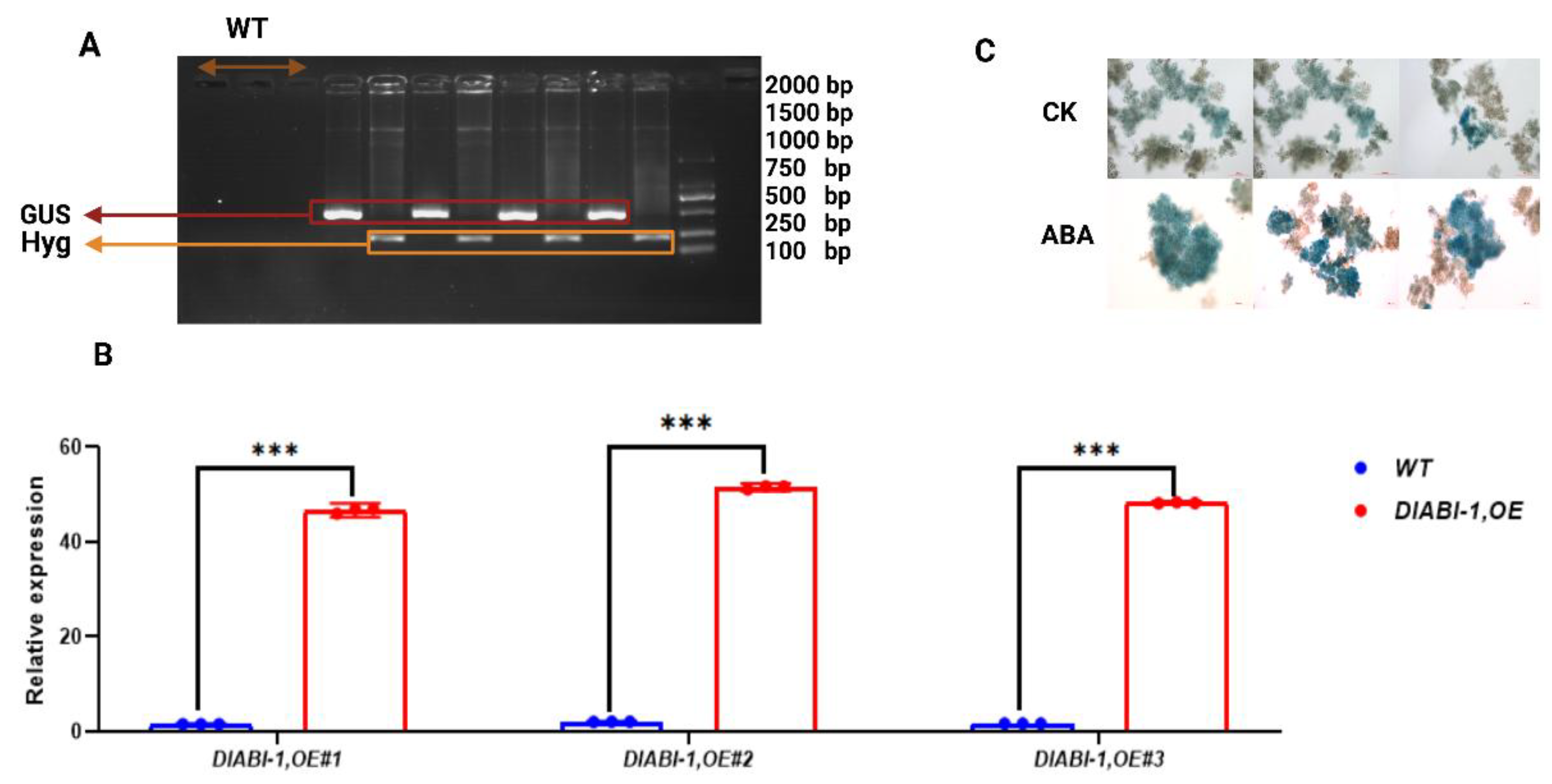
This was also confirmed by GUS staining of DlPP2C01 lines of overexpression that exhibited increased activity in the presence of ABA which indicated its efficient role in ABA-responsive regulation (Fig. 7). Moreover, other DlPP2C genes demonstrated varied function with respect to expression, some were prematurely induced at 8h and gradually decreased with the time interval (16-24 h) which depicts functional separation among the genes in the gene family. The difference in expression patterns of DlPP2C members revealed that they might be having different functions in the regulation during ABA signaling.
Figure 7.
Transient overexpression of D. longan EC and molecular identification. (A). PCR amplification of WT and DlPP2C1 transient overexpression cell lines displaying the GUS (225 bp) and Hyg (475 bp), detection for the verification of amplified sequences. (B). GUS staining of WT and DlPP2C1 transiently overexpressed line. The fluorescence microscopy technique was used for capturing images with field of view set at 20x. (C). Relative expression level of WT and DlPP2C1 transient overexpression cell line determined by qRT-PCR. Asterisks indicate significant differences (WT vs. OE comparison), “*” is p < 0.05, “**” is p < 0.01, and “***” is p < 0.001.
Figure 7.
Transient overexpression of D. longan EC and molecular identification. (A). PCR amplification of WT and DlPP2C1 transient overexpression cell lines displaying the GUS (225 bp) and Hyg (475 bp), detection for the verification of amplified sequences. (B). GUS staining of WT and DlPP2C1 transiently overexpressed line. The fluorescence microscopy technique was used for capturing images with field of view set at 20x. (C). Relative expression level of WT and DlPP2C1 transient overexpression cell line determined by qRT-PCR. Asterisks indicate significant differences (WT vs. OE comparison), “*” is p < 0.05, “**” is p < 0.01, and “***” is p < 0.001.
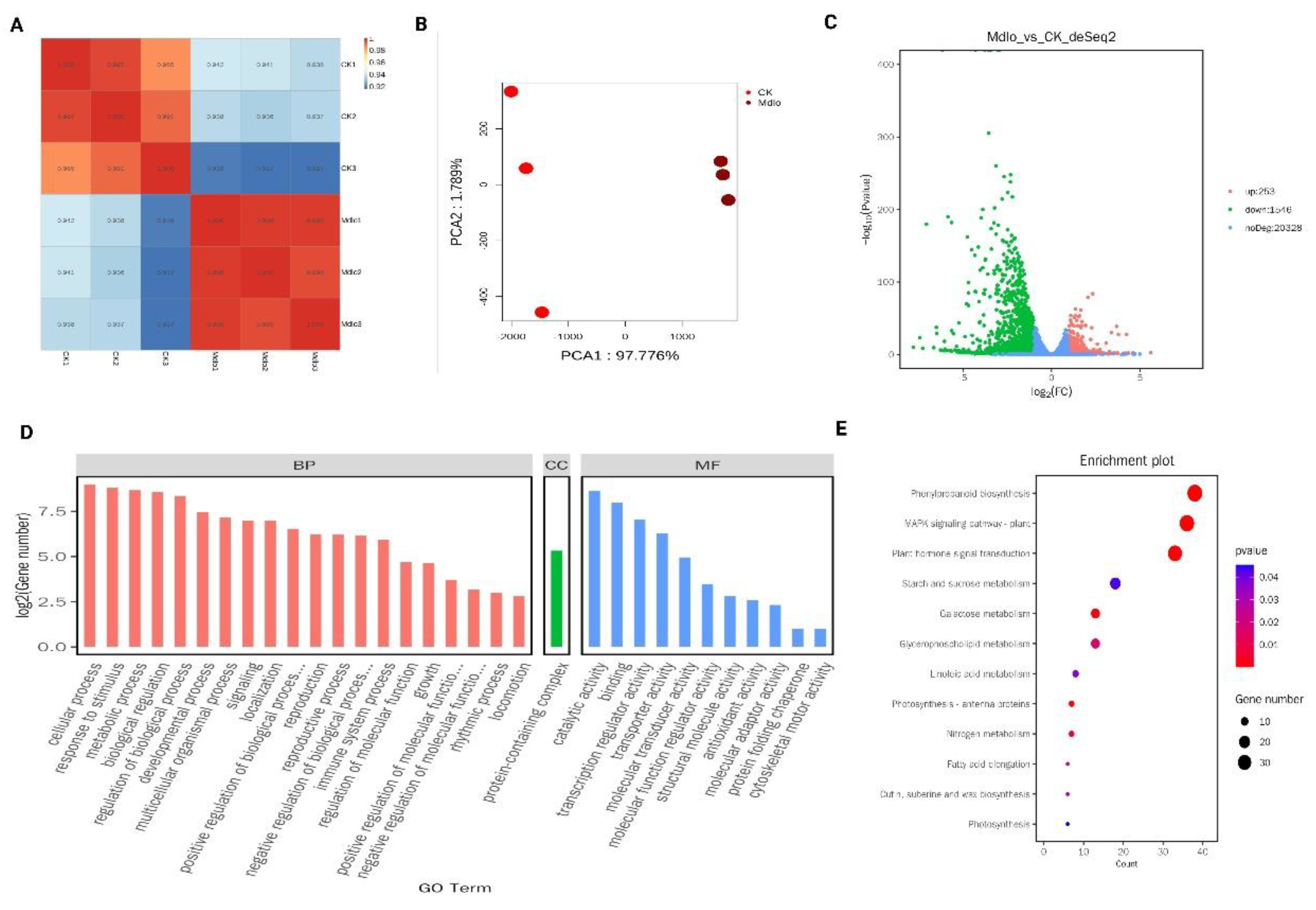
Moreover, transcriptome (RNA-seq) results of the ABA-treated and control longan EC represented vast transcriptional reprogramming. The sample correlation analysis revealed that there were high correlation coefficients between biological replicates that described and presented a good data consistency (Fig. 8A). Principal component analysis (PCA) also revealed that there is a distinct difference in control and ABA-treated groups (Fig. 8B). indicating that ABA treatment caused a considerable amount of transcriptional change. A total of 1799 differentially expressed genes (DEGs) were identified in the course of differential expression (DEA) analysis, comprising of 253 upregulated and 1546 downregulated genes (Fig. 8C). The over-representation of downregulated genes shows that ABA treatment induces widespread transcriptional repression in longan callus. To further investigate the idea of the functional significance of these DEGs, Gene Ontology (GO) enrichment analysis was conducted (Fig. 8D), and the enrichment in biological process was significantly obtained based on stress response, metabolic regulation and cellular process. In addition, KEGG pathway enrichment analysis (Fig. 8E), indicated that the DEGs mainly participated in pathways of phenylpropanoid biosynthesis, MAPK signaling, and plant hormone signal transduction respectively.
The RNA-seq findings were in line with the RT-qPCR results to indicate that DlPP2C genes, specifically DlPP2C1, are involved in the regulation of ABA-responsive transcriptional networks. Collectively, these findings postulate the vitality of the ABA-induced DlPP2C genes and specify that DlPP2C1 is of prime importance in the coordination of ABA-induced gene expression and ABA-induced stress adaptation in longan callus.
Figure 8.
Transcriptomic analysis and data quality assessment. (A) Correlation heatmap between samples. A closer R2 value to 1 indicates better reproducibility between the two samples. (B) PC1 and PC2 are two principal components; different colors represent different groups of biological replicates. (C) Volcano plot on differential expression. Each dot represents a gene. X-axis: log2Fold change of expression; Y-axis: -log10(FDR) or -log10(P-value). (D) GO classification of DEGs. X-axis: Go terms and classifications; Y-axis: Number of DEGs (genes) annotated to the term (right) and percentage of that in all DEGs (genes) (Left). (E) KEGG pathway enrichment on DEGs-Bubble chart. Each dot represents a KEGG pathway. Y-axis: Pathway; X-axis: Rich factor.
Figure 8.
Transcriptomic analysis and data quality assessment. (A) Correlation heatmap between samples. A closer R2 value to 1 indicates better reproducibility between the two samples. (B) PC1 and PC2 are two principal components; different colors represent different groups of biological replicates. (C) Volcano plot on differential expression. Each dot represents a gene. X-axis: log2Fold change of expression; Y-axis: -log10(FDR) or -log10(P-value). (D) GO classification of DEGs. X-axis: Go terms and classifications; Y-axis: Number of DEGs (genes) annotated to the term (right) and percentage of that in all DEGs (genes) (Left). (E) KEGG pathway enrichment on DEGs-Bubble chart. Each dot represents a KEGG pathway. Y-axis: Pathway; X-axis: Rich factor.
3. Discussion
This study gives the first thorough genome-wide analysis of the PP2C gene family in Dimocarpus longan, a tropical fruit species of enormous economic and therapeutic relevance. Identifying 71 PP2C genes offers vital insights into their probable functions in regulating Longan's growth, development, and stress responses [24,25]. Phylogenetic analysis showed that longan PP2C genes are organized into six primary clades in a way comparable to Arabidopsis thaliana and Oryza sativa, which are model dicot and monocot plants, respectively. This clustering demonstrates that the PP2C gene family underwent early evolutionary diversity well before the split between monocots and dicots [26]. Chromosomal mapping of the longan PP2C genes indicated an unequal distribution among numerous superscaffold, with various clusters of genes detected nearby. The clustering of PP2C genes across these scaffolds indicates potential gene duplication events, a primary process by which gene families increase and diversify [27]. Synteny's research further confirmed the findings from the Circos plot by indicating conserved collinear areas between Longan and numerous other plant species, including Arabidopsis and Oryza sativa [28]. This comparative genomic study demonstrated the evolutionary and functional significance of key PP2C loci, supporting the concept that these genes have been conserved across numerous plant taxa [29]. Gene structure and conserved motif analysis of longan PP2C genes indicated the existence of essential functional domains, including the PP2C catalytic domain and kinase-like regions [30]. These conserved domains demonstrate that longan PP2Cs share core structural properties with other PP2C proteins throughout plants [31,32]. Additionally, changes in exon-intron arrangement suggest that some genes may have undergone structural modifications to enable more complex control. The discovery of kinase-like domains in specific longan PP2C genes suggests that these genes likely participate in unique signaling pathways that are specific to this species [33]. Protein-protein interaction network analysis identified a closely connected cluster of PP2C proteins likely engaged in the abscisic acid (ABA) signaling pathway, a vital mechanism for Longan's adaptation to abiotic challenges such as drought and cold stress [44,45]. The predominance of this cluster fits with the well-established role of PP2Cs as negative regulators of ABA-mediated stress responses [34]. The network analysis revealed that these PP2Cs are likely interacting to modify ABA signaling in a coordinated manner, which is necessary for Longan's ability to respond to altering environmental conditions [35,36]. Cis-acting element analysis showed a variety of hormone-responsive and stress-related regulatory motifs inside the promoters of longan PP2C genes. Elements such as ABRE (ABA-responsive), MeJARE (methyl jasmonate-responsive), and others related to gibberellin and auxin signaling were prevalent, supporting the concept that longan PP2Cs are major integrators of numerous hormonal and environmental signals [37,38]. Distribution of these elements illustrated that PP2C of D. longan have ability to effectively interfere with multiple signaling pathways which allows the plants to respond to both external and internal stimuli. These cis-acting areas show how PP2C genes are regulated in response to shifting environmental factors, indicating how adaptable these genes are in facilitating adaptive reactions [39].
Abscisic acid (ABA) plays a central role in regulating plant growth, development, and stress adaptation, with clade A protein phosphatase 2C (PP2C) proteins functioning as key negative regulators in the ABA signaling pathway. In this study, several DlPP2C genes exhibited dynamic transcriptional responses to exogenous ABA treatment in longan embryogenic callus, with 10 μM ABA at 16 h inducing peak expression levels, particularly for DlPP2C1. This time- and dose-dependent response is consistent with previous findings in longan embryogenic tissues, where hormone-induced transcriptional regulation has been shown to occur in a temporally dynamic manner [40,41]. ABA plays a key role in regulating plant growth, development and stress adaption, with clade A PP2C proteins known as key negative regulators in the ABA signaling pathway. Our findings showed that several DlPP2C genes exhibited dynamic transcriptional responses to exogeneous ABA treatments in longan EC, especially DlPP2C with 10 μM ABA at 16 h induced peak expression levels. This time and dose dependent responses is consistent with previous findings in longan embryogenic callus, where hormonal induced transcriptional regulation has been shown to occur in temporally dynamic manner [42,43,44]. The DlPP2C1 which is ABA responsive suggests that it may function similarly to ABI1-like PP2Cs in model plants. It was already reported that, clade A PP2Cs such as ABI1 and ABI2 act as negative regulators of ABA signaling by inhibiting SnRK2 kinases in Arabidopsis thaliana, thereby modulating downstream transcriptional responses [45,46]. Remarkably, despite their inhibitory role at the protein level, both ABI1 and ABI2 genes are transcriptionally induced by ABA, establishing part of negative feedback regulatory loop [47,48], which permits plants to fine-tune ABA signaling intensity and halt redundant responses under continued stress conditions. The expression patterns revealed in the current study especially DlPP2C1 aligns with this conserved regulatory model. The higher expression patterns of DlPP2C under exogenous ABA treatment, particularly at intermediate time interval, may reflect its involvement in feedback diminution of ABA signaling [49]. This claim was further supported by the GUS staining findings, where the higher GUS activity in DlPP2C1 OE line under ABA treatment was recorded which indicates that the gene is transcriptionally activated in response to ABA. In addition to expression and functional validation, RNA sequence analysis revealed an extensive transcriptional reprogramming in response to exogenous ABA treatment, with a predominance of downregulated genes. This universal repression pattern propose that ABA may primarily suppress growth related metabolic process while triggering a subset of stress responsive pathways. Analogous reports have already been published in other plant systems, where ABA induces a large-scale reorganization of gene expression to aid stress adaption [50,51].
4. Materials and Methods
4.1. Identification and Physicochemical Properties of DlPP2C Proteins
The protein sequences of Arabidopsis thaliana PP2C family members were obtained from TAIR (https://www.arabidopsis.org/) [52], while the rice PP2C sequences were retrieved EnsemblPlants (https://plants.ensembl.org/) [53]. Firstly, the Arabidopsis thaliana PP2C amino acid sequences were used a query and probe to download the HHZ D. longan third-generation genome from National Center for Biotechnology Information (NCBI), Sequence Read Archive (SRA) database (SEE17675476). The TBtools software (v 2.420) [54], was used for searching possible DlPP2C sequences and further screened by two-way Blast at NCBI. The PP2C conserved structural domains of the screened members were reconfirmed by using the HMMER online software (https://www.ebi.ac.uk/Tools/hmmer/search/phmmer) [55]. Finally, the preliminarily identified members were compared with HHZ D. longan third-generation genome to search for any omissions and confirmed the existence of a total of 71 DlPP2C gene family members which are renamed in reference to Arabidopsis thaliana nomenclature for the DlPP2C transcription factor family. The online software ExPASy (https://web.expasy.org/protparam/) [56], was used to determine the number of amino acids (AA), molecular weight (MW) and isoelectric point (pI), instability index (II), aliphatic index (AI) and grand average of hydropathicity (GRAVY) of DlPP2C family proteins while the subcellular localization predictions were done by using WoLF PSORT (https://wolfpsort.hgc.jp/) [57].
4.2. Phylogenetic Tree, Conserved Motif and Gene Structure of DlPP2C Family Members
The evolutionary tree between Arabidopsis thaliana, Rice and longan was constructed by using the maximum likelihood (ML) algorithm with TBtools software (V 2.420). The online interactive software iTOL (https://itol.embl.de/) was used edit and visualize the phylogenetic tree [58]. The conserved motifs of DlPP2C proteins were identified using Multiple Em for motif Elicitation (MEME) suite (http://meme-suite.org/). The full-length amino acid sequences of DlPP2C proteins were submitted to MEME with maximum number of motifs was set up to 10, the optimum motif width ranged from 6 to 50 residues and other parameters were kept at default settings. The coding sequences (CDS) were aligned with their corresponding genomic DNA sequences to analyze exon-intron organization of DlPP2C genes while the diagrams were generated using the Gene Structure Display Server (GSDS V 2.0) (http://gsds.gao-lab.org/) [59].
4.3. PP2C Gene clustering, Distribution of Chromosomes, Cis- Elements Analysis and Synteny Visualization of DlPP2C Genes
The genome annotation (GFF/GTF) information files of Dimocarpus longan were used to determine chromosomal distribution of DlPP2C genes. The TBtools software (version 2.420) was utilized for mapping DlPP2C genes onto their respective chromosomes. The PlantCARE (http://bioinformatics.psb.ugent.be/webtools/plantcare/html/) was used to analyze the cis-acting elements prediction [60]. For synteny analysis between D. longan, Arabidopsis thaliana (L.) Heynh. and Oryza sativa subsp. japonica Kato, the TBtools software v 2.420 (https://github.com/CJ-Chen/TBtools-II) was used.
4.4. Protein-Protein (PPI) Interaction Network Analysis
The string database (https://string-db.org/) was used to predict the potential interaction relationships of DlPP2C proteins [61]. The DlPP2C protein sequences were first used to identify homologous proteins in Arabidopsis thaliana due to limited annotation of Dimocarpus longan.
4.5. Plant Materials, ABA Treatments and Expression Analysis
For the current study, we used embryogenic callus (EC) of D. longan Lour-Honghezi. Selected 0.2 g EC were treated with ABA in MS medium provided by (Coolaber manufacturer Beijing, China) after 20 days of proliferation, at concentrations of 5 μM, 10 μM and 20 μM. Treated materials were incubated in the dark environment at 25 °C for three-time intervals including 8h, 16h and 24h. EC in MS medium without ABA treatments were used as a control. For each treatment, three biological replicates were performed and samples were collected and frozen in liquid nitrogen and stored in a −80 °C refrigerator.
4.6. The qRT-PCR Analysis
The TransZol Up kit provided by (TransGen, China) was used for the total RNA extraction from samples following their instructions manual. The cDNA synthesis was completed by using Revertaid Master Mix (Thermo Fisher scientific, China) and qRT-PCR was done on the Roche Light Cycler 96 instrument with 10-fold diluted cDNA as amplification template. The UBIQUITIN (UBQ) was used as an internal reference [62]. Data calculations were performed according to 2−ΔΔCt [63], and graphs were generated by using GraphPad Prism 8.0.2 software. The DNAMAN 6.0 software was used to design the qRT-PCR primers (Suppl. Table S2).
4.7. RNA Sequencing and Analysis
Based on the comprehensive assessment, expression outcomes, aimed at capturing the most biologically informative, reproducible and interpretable transcriptomic response, the 10 µM ABA treated samples (labeled as Mdlo) at 16 h with a control group (CK) with three independent biological replicates were subjected to RNA sequencing analysis (Wuhan Baiyuan Biotechnology Co., Ltd.). Total RNA from the six groups of longan embryogenic cultures. The purity and concentration of RNA were assessed using a Nanodrop 2000 spectrophotometer, and RNA integrity was verified using the Agilent 2100/Lab Chip GX [64]. After samples passed quality control, library construction and mRNA transcriptome sequencing were carried out. HISAT2 (Hierarchical Indexing for Spliced Alignment of Transcripts) software was used to quickly and accurately compare the Clean Reads with the reference genome, and to acquire aligning information for the Reads on the reference genome [65]. The reads were then assembled using String Tie, to reconstruct the transcriptome for subsequent analysis [66]. Annotation of genes for various analysis including DEGs, KEGG [67], GO was performed. and bioinformatics analysis were conducted according to the methods described as followed.
4.8. Transient Transformation of D. longan Embryogenic Callus
The DNAMAN 9.0 software was used to design the specific amplification primers at the 3′and 5 ends of the Dlo000068 (DlPP2C1) CDS sequence which were cloned into the pCAMBIA1301-35-GUS vector (Suppl. Table S3). The bacterial solution comprising the recombinant plasmid was activated and cells were gathered by centrifugation at 7800 r/min for the duration of 10 min. The collected cells were further resuspended by using MS suspension medium containing (30 g/L sucrose, 200 mM AS, and 100 mM, MgCl2) in the infiltration solution. The OD600 was adjusted between 0.6-0.8. The 15-d old D. longan EC was co-cultured with Rhizobium radiobacter for 30 min, sap was filtered and transferred to MS solid media for 3 d. The wild type (WT) having Empty vector and the pCAMBIA1301-35-GUS were taken as control check whereas transient overexpression DlPP2C cell lines were labeled as DlPP2C01-OE#1,2,3. The transiently transformed pCAMBIA1301 and pCAAMBIA1301:DlPP2C1: GUS(OE1-OE3) cell lines were collected with 0.1g each. After freezing in liquid nitrogen, samples were stored in −80 °C refrigerator for further analysis.
4.9. GUS Staining and PCR Amplification
The transiently transformed pCAMBIA1301 and pCAAMBIA1301:DlPP2C1: GUS(OE1-OE3) cell lines were collected with 0.1g each. After freezing in liquid nitrogen, samples were stored in −80 °C refrigerator for further analysis. Following the instructions mentioned on the GUS staining kit provided by (HUAYUEYANG BIOTECHNOLOGY, China), the GUS staining on the transgenic materials was completed. The fluorescence microscope (LEICA DMI8, Germany) was used to observe and obtaining the images of the GUS-Stained D. longan EC transgenic cells under 20x field of view. For the DNA extraction from both WT and overexpression cell lines after transient transformation, the Plant Genomic DNA Kit (ThermoFisher, USA) was used. The PCR amplification using F/R primers of GUS and Hyg (Suppl. Table S3) were used for the identification of transgenic cell lines.
5. Conclusions
Our findings provide the comprehensive exploration of PP2C gene family in Dimocarpus longan, during early somatic embryogenesis. In the context of ABA signaling, during development processes and under stress conditions, the DlPP2C1 (ABI1) revealed it significant role as a negative regulator within the ABA signaling pathway. The uniformity between RNA-seq data and RT-qPCR findings further chains the participation of DlPP2C genes, particularly DlPP2C1, in ABA-mediated regulatory networks. Taken together, the collective evidence form ABA treatment assays, GUS staining findings, and transcriptomic outcomes suggests that DlPP2C functions as an ABA -responsive regulator in Dimocarpus longan. Overall, our results provide new insights into the functional role of DlPP2C genes in ABA signaling as well as establishes a basis for future investigations into stress adaption and its application to other important plant species having challenging micropropagation systems.
Supplementary Materials
The following supporting information can be downloaded at the website of this paper posted on Preprints.org, Figure S1: title; Table S2: Table S3.
Author Contributions
M.A. designed and performed the experiments, carried out statistical analyses, produced the figures and tables, and wrote the manuscript. H.M.U and M.S. assisted in bioinformatics analysis. X.X., C.Z. and S.L. assisted in morphological checks. Y.C. revised the manuscript. Z.L. and Y.L. contributed to the creation of the concept and the funding acquisition. All authors have read and agreed to the published version of the manuscript.
Funding
This research was supported by the National Natural Science Foundation of China (32572999 and 31572088) and the Science and Technology Innovation Fund of Fujian Agriculture and Forestry University (KFB24103 and KFB22021XA).
Data Availability Statement
All relevant data is available within the manuscript and Supplementary materials.
Acknowledgments
Thanks to the Institute of Horticultural Biotechnology of Fujian Agriculture and Forestry University for facilitating this work and all the colleagues who contributed to the present research.
Conflicts of Interest
The authors declare no competing interests.
Abbreviations
The following abbreviations are used in this manuscript:
| ABA | Abscisic acid |
| PP2C | protein Phosphatase 2C |
| ABI | Abscisic acid insensitive |
| GO | Gene Ontology |
| KEGG | Kyoto encyclopedia of genes and genomes |
| DEGs | Differentially expressed genes GO Gene ontology |
References
- Cohen, P. The Structure and Regulation of Protein Phosphatases. Annu. Rev. Biochem. 1989, 58, 453–508. [Google Scholar] [CrossRef]
- Xue, T.; Wang, D.; Zhang, S.; Ehlting, J.; Ni, F.; Jakab, S.; Zheng, C.; Zhong, Y. Genome-Wide and Expression Analysis of Protein Phosphatase 2C in Rice and Arabidopsis. BMC Genomics 2008, 9, 1–21. [Google Scholar] [CrossRef] [PubMed]
- Jung, C.; Nguyen, N.H.; Cheong, J.-J. Transcriptional Regulation of Protein Phosphatase 2C Genes to Modulate Abscisic Acid Signaling. Int. J. Mol. Sci. 2020, 21, 9517. [Google Scholar] [CrossRef] [PubMed]
- Ma, Y.; Szostkiewicz, I.; Korte, A.; Moes, D.; Yang, Y.; Christmann, A.; Grill, E. Regulators of PP2C Phosphatase Activity Function as Abscisic Acid Sensors. Science (80-. ). 2009, 324, 1064–1068. [Google Scholar] [CrossRef] [PubMed]
- Park, S.-Y.; Fung, P.; Nishimura, N.; Jensen, D.R.; Fujii, H.; Zhao, Y.; Lumba, S.; Santiago, J.; Rodrigues, A.; Chow, T.F. Abscisic Acid Inhibits Type 2C Protein Phosphatases via the PYR/PYL Family of START Proteins. Science (80-. ). 2009, 324, 1068–1071. [Google Scholar] [CrossRef]
- Wang, J.; Li, J.; Li, Z.; Liu, B.; Zhang, L.; Guo, D.; Huang, S.; Qian, W.; Guo, L. Genomic Insights into Longan Evolution from a Chromosome-Level Genome Assembly and Population Genomics of Longan Accessions. Hortic. Res. 2022, 9, uhac021. [Google Scholar] [CrossRef]
- Wen-yu, L.; Wei, C.; Rui-feng, S.; Feng, Z. Advances in Embryo Development of Longan. Subtrop. Plant Sci. 2004, 33, 65. [Google Scholar]
- Chen, Y.; Lin, X.; Lai, Z. Advances in Somatic Embryogenesis of Dimocarpus Longan Lour. Chin. J. Trop. Crop. 2020, 41, 1990–2002. [Google Scholar]
- Lin, Y.; Min, J.; Lai, R.; Wu, Z.; Chen, Y.; Yu, L.; Cheng, C.; Jin, Y.; Tian, Q.; Liu, Q. Genome-Wide Sequencing of Longan (Dimocarpus Longan Lour.) Provides Insights into Molecular Basis of Its Polyphenol-Rich Characteristics. Gigascience 2017, 6, gix023. [Google Scholar] [CrossRef]
- El-Naby, M.E.-S.A. In Vitro Propagation for Conservation and Genetic Fidelity of the near Threatened Dimocarpus Longan Plant. J. Genet. Eng. Biotechnol. 2022, 20, 130. [Google Scholar] [CrossRef]
- Lai, Z.X.; He, Y.; Chen, Y.T.; Cai, Y.Q.; Lai, C.C.; Lin, Y.L.; Lin, X.L.; Fang, Z.Z. Molecular Biology and Proteomics during Somatic Embryogenesis in Dimocarpus Longan Lour. In Proceedings of the III International Symposium on Longan, Lychee, and other Fruit Trees in Sapindaceae Family 863, 2008; pp. 95–102. [Google Scholar]
- Zhai, T.; Guo, Y.; Yang, M.; Zhang, X.; Lin, Y.; Cai, D.; Lan, S.; Tang, M.; Ma, W.; Wang, S. The BZIP20 Transcription Factor Enhances Thermotolerance in Dimocarpus Longan by Maintaining ROS Homeostasis and Involving the MeJA Pathway. Plant Physiol. Biochem. 2025, 223, 109869. [Google Scholar] [CrossRef]
- Tang, M.; Zhao, G.; Awais, M.; Gao, X.; Meng, W.; Lin, J.; Zhao, B.; Lai, Z.; Lin, Y.; Chen, Y. Genome-Wide Identification and Expression Analysis Reveals the B3 Superfamily Involved in Embryogenesis and Hormone Responses in Dimocarpus Longan Lour. Int. J. Mol. Sci. 2023, 25, 127. [Google Scholar] [CrossRef]
- Peng, Y.; Fang, T.; Zhang, Y.; Zhang, M.; Zeng, L. Genome-Wide Identification and Expression Analysis of Auxin Response Factor (ARF) Gene Family in Longan (Dimocarpus Longan L.). Plants 2020, 9, 221. [Google Scholar] [CrossRef]
- Awais, M.; Xu, X.; Zhang, C.; Chen, Y.; Liu, S.; Lin, Y.; Lai, Z. Genome-Wide Identification of ABSCISIC ACID-INSENSITIVE ( ABI ) Genes and Their Response to MeJA During Early Somatic Embryogenesis in Longan ( Dimocarpus Longan L.). 2025, 1–22. [Google Scholar] [CrossRef]
- Lv, X.; Tian, S.; Huang, S.; Wei, J.; Han, D.; Li, J.; Guo, D.; Zhou, Y. Genome-Wide Identification of the Longan R2R3-MYB Gene Family and Its Role in Primary and Lateral Root. BMC Plant Biol. 2023, 23, 448. [Google Scholar] [CrossRef]
- Munir, N.; Yukun, C.; Xiaohui, C.; Nawaz, M.A.; Iftikhar, J.; Rizwan, H.M.; Xu, S.; Yuling, L.; Xuhan, X.; Zhongxiong, L. Genome-Wide Identification and Comprehensive Analyses of NAC Transcription Factor Gene Family and Expression Patterns during Somatic Embryogenesis in Dimocarpus Longan Lour. Plant Physiol. Biochem. 2020, 157, 169–184. [Google Scholar] [CrossRef]
- Li, K.; Liu, K.; Wang, K.; Pang, Y.; Zhang, X.; Li, X.; Li, B. Comprehensive Analysis of the PP2C Gene Family in Grape (Vitis Vinifera L.) and Identification of VvPP2C26 and VvPP2C41 as Negative Regulators of Fruit Ripening. Plants 2025, 14, 3827. [Google Scholar] [CrossRef]
- Yang, J.; Chen, R.; Liu, W.; Fan, C. Genome-Wide Identification, Phylogenetic Investigation and Abiotic Stress Responses Analysis of the PP2C Gene Family in Litchi (Litchi Chinensis Sonn.). Front. Plant Sci. 2025, 16, 1547526. [Google Scholar] [CrossRef] [PubMed]
- Zhang, G.; Zhang, Z.; Luo, S.; Li, X.; Lyu, J.; Liu, Z.; Wan, Z.; Yu, J. Genome-Wide Identification and Expression Analysis of the Cucumber PP2C Gene Family. BMC Genomics 2022, 23, 563. [Google Scholar] [CrossRef] [PubMed]
- Guo, L.; Lu, S.; Liu, T.; Nai, G.; Ren, J.; Gou, H.; Chen, B.; Mao, J. Genome-Wide Identification and Abiotic Stress Response Analysis of PP2C Gene Family in Woodland and Pineapple Strawberries. Int. J. Mol. Sci. 2023, 24, 4049. [Google Scholar] [CrossRef] [PubMed]
- Wu, Z.; Luo, L.; Wan, Y.; Liu, F. Genome-Wide Characterization of the PP2C Gene Family in Peanut (Arachis Hypogaea L.) and the Identification of Candidate Genes Involved in Salinity-Stress Response. Front. Plant Sci. 2023, 14, 1093913. [Google Scholar] [CrossRef] [PubMed]
- Zhang, Z.; Ali, S.; Zhang, T.; Wang, W.; Xie, L. Identification, Evolutionary and Expression Analysis of PYL-PP2C-SnRK2s Gene Families in Soybean. Plants 2020, 9, 1356. [Google Scholar] [CrossRef]
- Garcia-Hernandez, M.; Berardini, T.; Chen, G.; Crist, D.; Doyle, A.; Huala, E.; Knee, E.; Lambrecht, M.; Miller, N.; Mueller, L.A. TAIR: A Resource for Integrated Arabidopsis Data. Funct. Integr. Genomics 2002, 2, 239–253. [Google Scholar] [CrossRef]
- Kersey, P.J.; Allen, J.E.; Allot, A.; Barba, M.; Boddu, S.; Bolt, B.J.; Carvalho-Silva, D.; Christensen, M.; Davis, P.; Grabmueller, C. Ensembl Genomes 2018: An Integrated Omics Infrastructure for Non-Vertebrate Species. Nucleic Acids Res. 2018, 46, D802–D808. [Google Scholar] [CrossRef] [PubMed]
- Chen, C.; Chen, H.; He, Y.; Xia, R. TBtools, a Toolkit for Biologists Integrating Various Biological Data Handling Tools with a User-Friendly Interface. BioRxiv 2018, 289660, 289660. [Google Scholar]
- Potter, S.C.; Luciani, A.; Eddy, S.R.; Park, Y.; Lopez, R.; Finn, R.D. HMMER Web Server: 2018 Update. Nucleic Acids Res. 2018, 46, W200–W204. [Google Scholar] [CrossRef]
- Duvaud, S.; Gabella, C.; Lisacek, F.; Stockinger, H.; Ioannidis, V.; Durinx, C. Expasy, the Swiss Bioinformatics Resource Portal, as Designed by Its Users. Nucleic Acids Res. 2021, 49, W216–W227. [Google Scholar] [CrossRef]
- Horton, P.; Park, K.-J.; Obayashi, T.; Fujita, N.; Harada, H.; Adams-Collier, C.J.; Nakai, K. WoLF PSORT: Protein Localization Predictor. Nucleic Acids Res. 2007, 35, W585–W587. [Google Scholar] [CrossRef]
- Letunic, I.; Bork, P. Interactive Tree of Life (ITOL) v6: Recent Updates to the Phylogenetic Tree Display and Annotation Tool. Nucleic Acids Res. 2024, 52, W78–W82. [Google Scholar] [CrossRef]
- Hu, B.; Jin, J.; Guo, A.-Y.; Zhang, H.; Luo, J.; Gao, G. GSDS 2.0: An Upgraded Gene Feature Visualization Server. Bioinformatics 2015, 31, 1296–1297. [Google Scholar] [CrossRef] [PubMed]
- Lescot, M.; Déhais, P.; Thijs, G.; Marchal, K.; Moreau, Y.; Van de Peer, Y.; Rouzé, P.; Rombauts, S. PlantCARE, a Database of Plant Cis-Acting Regulatory Elements and a Portal to Tools for in Silico Analysis of Promoter Sequences. Nucleic Acids Res. 2002, 30, 325–327. [Google Scholar] [CrossRef]
- Szklarczyk, D.; Kirsch, R.; Koutrouli, M.; Nastou, K.; Mehryary, F.; Hachilif, R.; Gable, A.L.; Fang, T.; Doncheva, N.T.; Pyysalo, S. The STRING Database in 2023: Protein–Protein Association Networks and Functional Enrichment Analyses for Any Sequenced Genome of Interest. Nucleic Acids Res. 2023, 51, D638–D646. [Google Scholar] [CrossRef] [PubMed]
- Lin, Y.L.; Lai, Z.X. Reference Gene Selection for QPCR Analysis during Somatic Embryogenesis in Longan Tree. Plant Sci. 2010, 178, 359–365. [Google Scholar] [CrossRef]
- Livak, K.J.; Schmittgen, T.D. Analysis of Relative Gene Expression Data Using Real-Time Quantitative PCR and the 2− ΔΔCT Method. methods 2001, 25, 402–408. [Google Scholar] [CrossRef]
- Kim, D.; Langmead, B.; Salzberg, S.L. HISAT: A Fast Spliced Aligner with Low Memory Requirements. Nat. Methods 2015, 12, 357–360. [Google Scholar] [CrossRef]
- Pertea, M.; Pertea, G.M.; Antonescu, C.M.; Chang, T.-C.; Mendell, J.T.; Salzberg, S.L. StringTie Enables Improved Reconstruction of a Transcriptome from RNA-Seq Reads. Nat. Biotechnol. 2015, 33, 290–295. [Google Scholar] [CrossRef]
- Trapnell, C.; Williams, B.A.; Pertea, G.; Mortazavi, A.; Kwan, G.; Van Baren, M.J.; Salzberg, S.L.; Wold, B.J.; Pachter, L. Transcript Assembly and Abundance Estimation from RNA-Seq Reveals Thousands of New Transcripts and Switching among Isoforms. Nat. Biotechnol. 2010, 28, 511. [Google Scholar] [CrossRef]
- Love, M.I.; Huber, W.; Anders, S. Moderated Estimation of Fold Change and Dispersion for RNA-Seq Data with DESeq2. Genome Biol. 2014, 15, 550. [Google Scholar] [CrossRef]
- Ghanizadeh, H.; Qamer, Z.; Zhang, Y.; Wang, A. The Multifaceted Roles of PP2C Phosphatases in Plant Growth, Signaling, and Response to Abiotic and Biotic Stress. Plant Commun. 2025. [Google Scholar] [CrossRef] [PubMed]
- Chuong, N.N.; Nghia, D.H.T.; Le Thi, V.-A.; Tran, L.-S.P.; Hoang, X.L.T.; Thao, N.P. Type 2C Protein Phosphatases in Plant Signaling Pathways under Abiotic Stress. In Protein Phosphatases and Stress Management in Plants: Functional Genomic Perspective; Springer, 2020; pp. 67–82. [Google Scholar]
- Yu, X.; Han, J.; Wang, E.; Xiao, J.; Hu, R.; Yang, G.; He, G. Genome-Wide Identification and Homoeologous Expression Analysis of PP2C Genes in Wheat (Triticum Aestivum L.). Front. Genet. 2019, 10, 561. [Google Scholar] [CrossRef] [PubMed]
- Zhang, B.; Chen, N.; Peng, X.; Shen, S. Identification of the PP2C Gene Family in Paper Mulberry (Broussonetia Papyrifera) and Its Roles in the Regulation Mechanism of the Response to Cold Stress. Biotechnol. Lett. 2021, 43, 1089–1102. [Google Scholar] [CrossRef]
- Wu, H.; Zhu, L.; Cai, G.; Lv, C.; Yang, H.; Ren, X.; Hu, B.; Zhou, X.; Jiang, T.; Xiang, Y. Genome-Wide Identification and Characterization of the PP2C Family from Zea Mays and Its Role in Long-Distance Signaling. Plants 2023, 12, 3153. [Google Scholar] [CrossRef] [PubMed]
- Pei, J.; Cong, Q. Computational Analysis of Regulatory Regions in Human Protein Kinases. Protein Sci. 2023, 32, e4764. [Google Scholar] [CrossRef] [PubMed]
- Chen, X.; Huang, S.; Jiang, M.; Chen, Y.; XuHan, X.; Zhang, Z.; Lin, Y.; Lai, Z. Genome-Wide Identification and Expression Analysis of the SR Gene Family in Longan (Dimocarpus Longan Lour.). PLoS One 2020, 15, e0238032. [Google Scholar] [CrossRef]
- Corredoira, E.; Merkle, S.A.; Martínez, M.T.; Toribio, M.; Canhoto, J.M.; Correia, S.I.; Ballester, A.; Vieitez, Am. Non-Zygotic Embryogenesis in Hardwood Species. CRC. Crit. Rev. Plant Sci. 2019, 38, 29–97. [Google Scholar] [CrossRef]
- Krzywińska, E.; Kulik, A.; Bucholc, M.; Fernandez, M.A.; Rodriguez, P.L.; Dobrowolska, G. Protein Phosphatase Type 2C PP2CA Together with ABI1 Inhibits SnRK2. 4 Activity and Regulates Plant Responses to Salinity. Plant Signal. Behav. 2016, 11, e1253647. [Google Scholar] [CrossRef]
- Cuming, A.C. Evolution of ABA Signaling Pathways. In Advances in botanical research; Elsevier, 2019; Vol. 92, pp. 281–313. ISBN 0065-2296. [Google Scholar]
- Sun, Z.; Li, S.; Chen, W.; Zhang, J.; Zhang, L.; Sun, W.; Wang, Z. Plant Dehydrins: Expression, Regulatory Networks, and Protective Roles in Plants Challenged by Abiotic Stress. Int. J. Mol. Sci. 2021, 22, 12619. [Google Scholar] [CrossRef]
- Li, R.; Zhu, F.; Duan, D. Function Analysis and Stress-Mediated Cis-Element Identification in the Promoter Region of VqMYB15. Plant Signal. Behav. 2020, 15, 1773664. [Google Scholar] [CrossRef] [PubMed]
- Yamaguchi-Shinozaki, K.; Shinozaki, K. Organization of Cis-Acting Regulatory Elements in Osmotic-and Cold-Stress-Responsive Promoters. Trends Plant Sci. 2005, 10, 88–94. [Google Scholar] [CrossRef]
- Boudsocq, M.; Sheen, J. Stress Signaling II: Calcium Sensing and Signaling. Abiotic Stress Adapt. plants Physiol. Mol. genomic Found. 2010, 75–90. [Google Scholar]
- Kikuchi, A.; Sanuki, N.; Higashi, K.; Koshiba, T.; Kamada, H. Abscisic Acid and Stress Treatment Are Essential for the Acquisition of Embryogenic Competence by Carrot Somatic Cells. Planta 2006, 223, 637–645. [Google Scholar] [CrossRef] [PubMed]
- Walther, M.; Wagner, I.; Raschke, J.; Zoglauer, K.; Rupps, A. Abscisic Acid Induces Somatic Embryogenesis and Enables the Capture of High-Value Genotypes in Douglas Fir (Pseudotsuga Menziesii [MIRB.] Franco). Plant Cell, Tissue Organ Cult. 2022, 148, 45–59. [Google Scholar] [CrossRef]
- Fernando, S.C.; Gamage, C.K.A. Abscisic Acid Induced Somatic Embryogenesis in Immature Embryo Explants of Coconut (Cocos Nucifera L.). Plant Sci. 2000, 151, 193–198. [Google Scholar] [CrossRef]
- Singh, A.; Pandey, A.; Srivastava, A.K.; Tran, L.-S.P.; Pandey, G.K. Plant Protein Phosphatases 2C: From Genomic Diversity to Functional Multiplicity and Importance in Stress Management. Crit. Rev. Biotechnol. 2016, 36, 1023–1035. [Google Scholar] [CrossRef] [PubMed]
- Bhaskara, G.B.; Nguyen, T.T.; Verslues, P.E. Unique Drought Resistance Functions of the Highly ABA-Induced Clade A Protein Phosphatase 2Cs. Plant Physiol. 2012, 160, 379–395. [Google Scholar] [CrossRef]
- Kline, K.G.; Sussman, M.R.; Jones, A.M. Abscisic Acid Receptors. Plant Physiol. 2010, 154, 479–482. [Google Scholar] [CrossRef]
- Ying, W.; Liao, L.; Wei, H.; Gao, Y.; Liu, X.; Sun, L. Structural Basis for Abscisic Acid Efflux Mediated by ABCG25 in Arabidopsis Thaliana. Nat. plants 2023, 9, 1697–1708. [Google Scholar] [CrossRef]
- Huang, X.; Zhang, X.; An, N.; Zhang, M.; Ma, M.; Yang, Y.; Jing, L.; Wang, Y.; Chen, Z.; Zhang, P. Cryo-EM Structure and Molecular Mechanism of Abscisic Acid Transporter ABCG25. Nat. Plants 2023, 9, 1709–1719. [Google Scholar] [CrossRef]
- Lammers, T.; Lavi, S. Role of Type 2C Protein Phosphatases in Growth Regulation and in Cellular Stress Signaling. Crit. Rev. Biochem. Mol. Biol. 2007, 42, 437–461. [Google Scholar] [CrossRef]
Disclaimer/Publisher’s Note: The statements, opinions and data contained in all publications are solely those of the individual author(s) and contributor(s) and not of MDPI and/or the editor(s). MDPI and/or the editor(s) disclaim responsibility for any injury to people or property resulting from any ideas, methods, instructions or products referred to in the content. |
© 2026 by the authors. Licensee MDPI, Basel, Switzerland. This article is an open access article distributed under the terms and conditions of the Creative Commons Attribution (CC BY) license (http://creativecommons.org/licenses/by/4.0/).
Copyright: This open access article is published under a Creative Commons CC BY 4.0 license, which permit the free download, distribution, and reuse, provided that the author and preprint are cited in any reuse.


