

Submitted:
21 April 2026
Posted:
23 April 2026
You are already at the latest version
Abstract
Background: Substance Use Disorder (SUD) is characterized by recurrent craving episodes frequently associated with emotional dysregulation and altered reward processing. This study aimed to evaluate whether emotional states associated with craving episodes can be detected through automated facial emotion recognition during controlled emotional induction. Methods: Forty-one participants completed a 14-day ecological momentary assessment (EMA) monitoring anxiety and craving levels, followed by an emotional induction task using standardized stimuli from the EmoMadrid database and addiction-related images. Facial expressions were recorded and analyzed in real time using a computational facial emotion recognition model trained on the FER-2013 dataset. Results: Participants with SUD exhibited significantly reduced positive emotional valence and activation in response to positive stimuli compared with HC (p < 0.01). Item-level analyses revealed that most differences occurred in stimuli depicting social interactions. Positive emotions and energy were linked to less intense cravings and shorter substance use. People with SUD showed more fear and less disgust in their facial expressions than controls (p = 0.02). Conclusions: These results suggest that people with SUD have changes in how they process emotions, showing less response to positive things and unique facial expressions related to craving.
Keywords:
craving
; emotional expressions
; substance use disorder
; FER
; addiction
1. Introduction
SUD is a chronic, relapsing neuropsychiatric condition characterized by persistent and compulsive substance use despite significant adverse physical, cognitive, behavioral, and social consequences [1,2]. The disorder is maintained by maladaptive reinforcement processes that progressively induce long-lasting neurofunctional alterations, particularly within circuits implicated in reward processing, stress regulation, and executive control. These neuroadaptations often persist beyond detoxification or rehabilitation, contributing to high relapse rates and sustained vulnerability.
Beyond its clinical burden at the individual level, SUD constitutes a major public health concern worldwide. It is associated with increased mortality, elevated risk of chronic and acute medical conditions, and substantial socioeconomic costs [3]. In Mexico, for instance, SUD-related expenditures and productivity losses represent a significant proportion of national economic resources [4,5].
A central feature of SUD is craving, defined as an intense desire or urge to consume a substance, triggered by recalling prior rewarding experiences and negative emotional states. This phenomenon directly results from the interaction between dysregulated reward circuitry and altered stress- and emotion-related neural systems [6]. Converging evidence demonstrates that individuals with SUD consistently exhibit heightened negative emotionality and impaired emotion regulation capacities compared to healthy controls. Chronic substance exposure has been associated with functional and structural alterations in neural networks encompassing the amygdala, prefrontal cortex, insula, and striatal regions, areas critically involved in emotional processing, interception, and inhibitory control [7]. These alterations may increase vulnerability to mood disturbances and impair adaptive regulatory mechanisms [8,9].
Emotion dysregulation is increasingly recognized as a risk factor and maintaining mechanism in addiction [10,11]. It involves experiencing intense affective states, heightened physiological arousal, and insufficient regulatory capacity. These factors may lead to maladaptive coping strategies such as substance use [12]. Thus, interventions aiming to improve emotion regulation specifically target the underlying processes that sustain addictive behaviors, making impaired emotion regulation a promising focus for therapeutic efforts.
Craving episodes are frequently precipitated by contextual cues, including specific people, environments, objects, or activities previously associated with substance use [13]. These cues can elicit powerful conditioned emotional and motivational responses, even after prolonged periods of abstinence, thereby facilitating relapse [14]. Experimental paradigms that reliably induce emotional reactivity are therefore critical for understanding the mechanisms underlying cue-induced craving. The EmoMadrid database (An Emotional Pictures Database for Affective Research) provides a standardized set of visual stimuli validated in Spanish-speaking populations and systematically categorized along core affective dimensions, including valence, arousal, and dominance. The use of validated visual stimuli allows controlled induction of emotional states with well-characterized psychometric properties, enhancing experimental rigor and reproducibility [15].
Visual exposure was selected in the present study due to the high sensitivity of the human visual system to emotionally noticeable (salient) stimuli. Emotional reactivity to visual cues involves coordinated activation of emotional (affective), memory-related (mnemonic), and behavioral response systems. This activation is influenced both by the inherent features of the stimulus (its intrinsic properties) and how each person interprets the context [16]. Such research setups (paradigms) offer a controlled imitation of real-world cue exposure while maintaining experimental consistency (standardization).
In this study, we investigated whether emotional states linked to craving episodes can be detected through facial emotion recognition. We used an emotional induction task, which involves deliberately eliciting specific emotions using standardized pictures from the EmoMadrid database and images related to addiction. By combining controlled emotional induction, ecological momentary assessment (real-time data collection of participants’ feelings and behaviors in their natural environments), and computational analysis of facial expressions (using computer-based methods to evaluate and quantify expressions), we aimed to identify objective markers of craving-related emotional states in individuals with substance use disorder.
2. Materials and Methods
All procedures were approved by the Ethics and Research Committees of the Centro Universitario de Ciencias de la Salud, Universidad de Guadalajara, and conducted in accordance with the Declaration of Helsinki. Prior to testing, subjects were briefed on the study’s aims and required to sign informed consent forms. All participants provided their consent.
2.1. Study Design
This study employed a comparative observational design combining longitudinal EMA, a controlled emotional induction task, and automated facial emotion recognition (FER) analysis during 14 consecutive days.
2.2. Sample Size
The sample size for this study was derived from our previously published protocol 18, from which this analysis represents a focused component on emotional expression during craving. A priori estimation was performed using Epidat 4.2, based on the comparison of independent means and parameters reported by Rykov et al. Assuming unequal variances, a standardized mean difference of 2.54, standard deviations of 1.6 and 3.21, a 1:1 allocation ratio, α = 0.05, and power = 0.80, the minimum required sample size was 17 participants per group.
2.3. Population
Participants were recruited from specialized addiction treatment facilities. The clinical sample consisted of individuals diagnosed with SUD who were actively undergoing rehabilitation treatment at Fundación México Me Necesita. A matched group of healthy controls (HC) was recruited for comparison. At enrollment, all participants were assigned a unique identification code to ensure anonymity throughout the study and to ensure secure data management. A total of 44 participants were initially assessed at intake, with 22 individuals (50%) allocated to the SUD group and 22 (50%) to the HC group. During the study, 2 participants in the HC group (10%) withdrew due to the burden of daily ecological momentary assessment (EMA) self-reports. Additionally, one participant from the SUD group (5%) was excluded because of severe extrapyramidal side effects related to antipsychotic medication, primarily dystonia and Parkinsonism, which interfered with the accurate use of the Facial Emotion Recognition (FER) software. After attrition, 41 participants completed the full study protocol. All remaining participants (100%) completed the midpoint emotional assessment, and 40 participants (95.24%) completed the daily EMA assessments across the study period. The final analyzed sample comprised 41 participants aged 25-31 years. Inclusion criteria for the SUD group consisted of a confirmed clinical diagnosis of SUD and active participation in a rehabilitation program at the time of recruitment. For all participants, additional inclusion criteria included the ability to provide written informed consent and the absence of physical limitations that could interfere with the use of the smartwatch or the automated FER system. Exclusion criteria included facial paralysis, craniofacial malformations (e.g., cleft lip or palate), prior facial surgeries affecting muscle function, or severe motor disturbances that could compromise accurate facial emotion recording.
2.4. Emotional Arousal Image Bank
Emotional induction used stimuli from the EmoMadrid database 15. This database was developed by the Cerebro, Afecto y Cognición (CEACO) research group at the Universidad Autónoma de Madrid. EmoMadrid is a standardized, validated collection of 1,200 images for psychological and neuroscientific research. The images fall into three affective categories: positive (n = 400), neutral (n = 400), and negative (n = 400). Each image is normatively rated for valence, arousal, and dominance, which allows for controlled induction of emotional responses. From the full database, 43 images were selected for presentation to participants, ensuring representation across the three affective categories (positive, negative, and neutral) while maintaining the normative thresholds established in the EmoMadrid validation protocol. Selection criteria were based on standardized valence and arousal ratings to ensure clear affective differentiation between categories. In addition to the standardized stimuli, seven substance-related images depicting methamphetamine, alcohol, cocaine, prescription drugs, and tobacco use were incorporated to increase ecological validity and simulate addiction-relevant contextual cues. These additional images were selected to maintain visual quality and presentation standards consistent with the EmoMadrid protocol. Each image was presented for 1 second, followed by a brief interstimulus interval during which participants evaluated perceived emotional valence (type of emotion induced) and emotional intensity (arousal). To minimize visual and emotional fatigue, 30-second rest periods were provided after every 25 images. The entire session was recorded in .mp4 audiovisual format. Facial expressions were continuously monitored and quantified in real time using a custom-developed computational script designed for automated Facial Emotion Recognition Software. This procedure enabled the simultaneous capture of subjective emotional ratings and objective facial expression data during controlled emotional induction [17].
2.5. Modified Mannheim Craving Scale
Craving intensity was assessed using a modified version of the Mannheim Craving Scale [18], This self-report instrument designed to evaluate cognitive and affective components associated with substance use following periods of abstinence. The scale consists of 16 items that assess intrusive thoughts, urges to consume substances, emotional distress related to abstinence, and perceived control over substance-related impulses. It evaluates dimensions such as frequency and intensity of craving episodes, anxiety or irritability associated with the urge to consume, and the individual’s perceived capacity to resist or regulate the impulse. For the purposes of the present study, a partial administration of the instrument was implemented during the emotional assessment session. Items 9 through 12 were administered at baseline, immediately prior to the emotional induction procedure, as these items specifically target the subjective intensity and controllability of craving-related experiences. This targeted administration was selected to minimize assessment burden while capturing core craving dimensions relevant to the experimental paradigm. Following exposure to emotionally salient visual stimuli from the validated image database, the same items were re-administered to assess potential changes in craving intensity and impulse control. Two supplementary items were also included: one to determine whether participants perceived any change in emotional state after stimulus exposure, and another to elicit a brief qualitative description of that change. This approach allowed assessment of both quantitative variation in craving-related dimensions and subjective emotional shifts induced by the experimental manipulation.
2.6. Facial Expression Recognition System
The smart system of emotion quantification was implemented to automatically detect and classify participants’ facial expressions during the emotional induction task, Figure 1. The protocol ran on a desktop equipped with an Intel i7-12650H CPU (2.30 GHz; MSI Cyborg 15 A12V), 64 GB RAM, and an NVIDIA RTX 4050 GPU, enabling real-time processing. The video was acquired with a 1080p webcam at a standardized distance to optimize facial landmark detection and reduce variability from camera angle or lighting. Facial activity was continuously recorded during stimulus presentation. Automatic emotion recognition was performed using a personalized script algorithm implemented in Python. Face detection and preprocessing were conducted using OpenCV, which extracted facial regions of interest (ROIs) from each video frame. Once detected, faces were converted to grayscale, resized to 48 × 48 pixels, and normalized to match the input specifications of the classification model. Subsequently, the emotion classification model, trained on the publicly available FER-2013 dataset, was used. This dataset contains 35,887 labeled grayscale facial images distributed across seven basic emotion categories: anger, disgust, fear, happiness, sadness, surprise, and neutral. The dataset includes 28,709 training images, 3,589 validation images, and 3,589 test images, and has been widely used in affective computing research. Emotion probabilities were computed on a frame-by-frame basis, enabling continuous monitoring of affective responses during stimulus exposure. For each participant, the system generated real-time outputs indicating the dominant detected emotion and cumulative counts for each emotional category across the experimental session. All scripts developed for facial detection and emotion classification are available in Supplementary Materials S1.
2.7. Facial Expression Recognition System
Statistical analyses were performed in R (R Foundation for Statistical Computing, Vienna, Austria). Normality of distributions was assessed using the Shapiro–Wilk test. Between-group comparisons for continuous variables were conducted using independent-samples t-tests or Mann–Whitney U tests when normality assumptions were not met. Categorical variables were compared using chi-square tests.
Longitudinal EMA data were analyzed using repeated measures comparisons of daily mean values between groups. Linear regression analyses were performed to evaluate trends across the 14-day period. Pearson correlation coefficients were calculated to examine associations between EMA variables, craving dimensions, emotional valence and activation scores, facial expression frequencies, and duration of substance use. Correlation strength was interpreted according to conventional guidelines (weak: r=0.10–0.29; moderate: r=0.30–0.49; strong: ≥0.50), statistical significance was set at p<0.05.
2.8. Statistical Analysis
Statistical analyses were performed in R (R Foundation for Statistical Computing, Vienna, Austria). Normality of distributions was assessed using the Shapiro–Wilk test. Between-group comparisons for continuous variables were conducted using independent-samples t-tests or Mann–Whitney U tests when normality assumptions were not met. Categorical variables were compared using chi-square tests. Longitudinal EMA data were analyzed using repeated measures comparisons of daily mean values between groups. Linear regression analyses were performed to evaluate trends across the 14-day period. Statistical significance was set at p<0.05.
3. Results
3.1. Characteristics and Adherence of Participants
Out of the 44 participants enrolled at intake, 22 (50%) belonged to the SUD group and 22 (50%) to the HC group. During the study, 2 participants from the HC group (10%) withdrew due to the burden associated with completing daily EMA self-reports. Additionally, 1 participant from the SUD group (5%) was excluded because severe extrapyramidal side effects of antipsychotic medication, primarily dystonia and parkinsonism, interfered with the use of the Facial Emotion Recognition software. Of the remaining participants, 41 individuals completed the midpoint emotional assessment, and 40 participants (95.24%) completed the daily EMA assessments throughout the duration of the study, Table 1.
Participants in the SUD group ranged in age from 18 to 55 years (mean = 31.33, SD = 10.01), whereas those in the HC group ranged from 19 to 38 years (mean = 25.7, SD = 6.39). Educational attainment differed between groups. In the SUD group, the highest level of education ranged from secondary school (14.29%) to postgraduate studies (9.52%), with the largest proportion reporting high school completion (47.62%), followed by undergraduate education (23.81%). In contrast, most HC participants had completed a bachelor’s degree (70%), followed by postgraduate education (25%) and high school education (1%; Table 1).
Marital status was predominantly single in both groups (SUD: 76.19%; HC: 85%). However, notable differences were observed between groups: 19.05% of participants in the SUD group reported being separated or divorced, whereas only 4.76% reported currently being in a relationship. In the HC group, 15% reported being in a long-term relationship, and none reported a prior separation or divorce (Table 1). Regarding living arrangements prior to entering the rehabilitation program, most participants in the SUD group reported living with their parents and siblings (47.62%), followed by living alone (19.05%), living with other relatives (19.05%), living with a partner and children (9.52%), and living with roommates (4.76%). In the HC group, the majority also reported living with their parents and siblings (60%), followed by living with partners and children or with unrelated roommates (15% each), and a smaller proportion living alone or with other relatives (5% each), (Table 1).
Both groups presented several neuropsychiatric conditions, with depression being the most prevalent (SUD = 52.38%, HC = 10%), followed by anxiety disorders (SUD = 42.86%, HC = 20%) and attention-deficit/hyperactivity disorder (ADHD) (SUD = 28.57%, HC = 15%). Additional conditions observed exclusively in the SUD group included bipolar disorder (19.05%) and one case of antisocial personality disorder (4.76%), Table 1.
Regarding pharmacological treatment, five participants in the SUD group (23.81%) reported not using medication. Of the 17 remaining participants, medications included antipsychotics (42.86%), antidepressants (14.29%), anxiolytics (2%), methylphenidate (9.52%), and antiretroviral therapy (4.76%), administered in various combinations. In the HC group, three participants (15%) received pharmacological treatment: methylphenidate (10%) or anxiolytics (5%) (see Table 1).
3.2. Substance Use Characteristics in the SUD Group
Participants in the SUD group were predominantly polysubstance users. Most used methamphetamine (n = 18, 85.71%), followed by alcohol (n = 2, 9.52%) and cocaine (n = 1, 4.76%). Mean duration for primary substance use was 7.85 years (SD = 5.93) for methamphetamine, 12.50 years (SD = 16.26) for alcohol, and 5 years for cocaine.
Participants also reported the use of multiple secondary substances. Frequently co-used substances were: alcohol (76.19%), tobacco and inhalants (66.67%), cannabis (61.90%), and cocaine (57.14%). Less frequently reported substances formed a separate group: hallucinogens, sedatives, and unclassified stimulants (23.81%).
The age of onset of substance use ranged from 6 to 48 years, with a mean onset age of 14.81 years (SD = 8.39). The most frequently reported age of initiation was 15 years (n = 4). The most common gateway substances were alcohol (52.38%), tobacco (47.62%), and cannabis (4.76%).
3.3. Anxiety Influences Craving Levels in SUD
Across the 14-day EMA period, craving levels differed significantly between HC and SUD groups on 11 days, and anxiety scores on 10. In contrast, significant somatic anxiety differences appeared only on Day 14 (p = 0.04); on other days, somatic symptoms were comparable. No significant between-group differences emerged for worry at any point. Craving and general anxiety showed the most consistent group differences, while somatic symptoms and worry remained largely comparable (Table 3, Figure 2).
Simultaneously, higher anxiety levels in the SUD group appeared to coincide with specific scheduled events during the monitoring period, including family visitations on Sundays (Day 6: 2.52 ± 1.21; Day 13: 2.24 ± 2.42), therapeutic sessions involving family members (Days 1 and 8), and the emotional activation craving test (Day 7). Increased craving intensity was also observed on the day following several of these events, although this pattern was descriptive in nature. Across the observation period, a slight decreasing trend was observed for anxiety (slope = −0.015, p = 0.66) and craving (slope = −0.013, p = 0.57), although neither trend reached statistical significance, (Figure 3).
3.4. Positive Emotional Valence and Activation Are Diminished in SUD
Separate analyses of emotional valence and activation were conducted within each group for the four types of visual stimuli, and the results were then compared between groups. A significant difference in the valence ratings of positive stimuli (Δ = −0.63, p < 0.01) indicated that HC participants rated these stimuli as more positive (x̄ = 3.90, SD = 0.26), while SUD group participants rated them as less positive (x̄ = 3.27, SD = 0.42). No significant between-group differences were observed for negative (Δ = 0.03, p = 0.75), neutral (Δ = −0.12, p = 0.30), or substance-related stimuli (Δ = 0.03, p = 0.78).
Emotional activation showed a similar pattern when analyzed by stimulus type. Positive stimuli were rated as significantly less activated by participants in the SUD group (x̄ = 2.10) compared with HC participants (x̄ = 2.80; Δ = −0.62, p < 0.01). No significant between-group differences were observed for negative (Δ = 0.18, p = 0.29), neutral (Δ = 0.08, p = 0.38), or substance-related stimuli (Δ = 0.29, p = 0.06) (Figure 4).
Of the ten items showing significant group differences, 60% were in the “people” subcategory, 20% in “food,” and 10% each in “objects” and “animals.” In the “people” category, SUD participants rated all scenes less positively than HC participants (Figure 5). The greatest differences occurred with item 21 (physical intimacy), followed by items 26 (Δ = −1.0) and 18 (Δ = −1.0), both of which depict groups involved in recreational activities (Figure 5).
Significant differences between groups were observed in emotional activation for positive stimuli (Δ = −0.62, p < 0.01), with participants in the SUD group reporting lower activation (x̄ = 2.10, SD = 0.45) compared with the HC group (x̄ = 2.80, SD = 0.58), S3.
At the item level, 14 stimuli showed significant between-group differences in emotional activation. Of these, 7 (50%) belonged to the “people” category, 3 (21.43%) to the “objects” category, 2 (14.29%) to “food,” and 1 item each to the “substance use” and “animal” categories (7.14% each) (Figure 6).
3.5. Comparison of Facial Emotion Expression Between SUD and HC Groups
The six basic emotions and a neutral state detected by the facial emotion recognition algorithm were recorded and analyzed. No significant difference was observed in total emotional expressions between participants with SUD (x̄ = 129.62 ± 14.65) and those in the HC reference group (x̄ = 131.60 ± 10.96) (Δ = 3.0, p = 0.47).
For individual emotions, SUD participants showed lower rates of disgust (x̄ = 5.19 ± 5.01) than HC (x̄ = 9.70 ± 7.17; Δ = −4.5, p = 0.02), but higher fear (x̄ = 2.40 ± 4.06) than HC (x̄ = 0.25 ± 0.64; Δ = 2.2, p = 0.02). No significant differences were detected for neutral (Δ = -1.3, p = 0.84), sadness (Δ = 1.8, p = 0.29), anger (Δ = 3.1, p = 0.06), surprise (Δ = 3.2, p = 0.61), and happiness (Δ = -5.9, p = 0.30) (Figure 7).
4. Discussion
This study investigated whether emotional states associated with craving episodes in people with SUD can be detected using automated facial emotion recognition. The method used controlled emotional induction and ecological momentary assessment. By integrating real-time facial emotion recognition, standardized affective stimulation from the EmoMadrid database [15], and ongoing monitoring of anxiety and craving, this study offers new insights into how emotional dysregulation and craving interact in addiction. The results show that people with SUD exhibit lower positive emotional valence and activation when presented with positive stimuli. Their facial expressions reveal more fear and less disgust. These findings suggest that abnormalities in emotional processing are a measurable behavioral trait linked to vulnerability to cravings in SUD.
One of the most consistent findings of the present study was the attenuation of positive emotional responses in participants with SUD. Individuals in the SUD group rated positive stimuli as significantly less positive and less activating. This pattern is consistent with the concept of reward system dysregulation that characterizes chronic addiction [19,20]. Long-term exposure to psychoactive substances induces neuroadaptations within mesocorticolimbic circuits, particularly within dopaminergic projections connecting the ventral tegmental area, nucleus accumbens, and prefrontal cortex [21]. These neuroadaptations reduce sensitivity to natural rewards while increasing motivational salience toward substance-related cues. Therefore, individuals with SUD frequently exhibit blunted hedonic responses to normally rewarding experiences, a phenomenon often referred to as reward deficiency or anhedonia. The reduced positive valence and activation observed in this study likely reflect this broader neurobiological imbalance between reward and stress systems [22].
The SUD group showed notably weaker positive responses to stimuli depicting social interactions and human activities, especially those categorized as ‘people.’ These scenes (recreation, social engagement, and interpersonal intimacy) elicited the most marked dampening of positive response. This pattern highlights a key finding: social reward processing, which depends on neural circuits also implicated in addiction (ventromedial prefrontal cortex, amygdala, striatum) [23,24], is impaired in SUD. Chronic substance use has been linked to reduced responsivity in these circuits to social stimuli, potentially fostering social withdrawal, impaired relationships, and less engagement in non-drug rewards [25]. Thus, diminished emotional responsiveness to socially relevant stimuli may be a behavioral marker of reward system dysfunction in addiction. In contrast to the differences observed for positive stimuli, emotional responses to negative, neutral, and substance-related images did not significantly differ between groups. This pattern suggests that the primary emotional alteration in this cohort may not involve exaggerated reactivity to negative stimuli but rather a diminished capacity to experience positive affect. Such an interpretation aligns with theoretical models proposing that addiction is characterized not only by enhanced negative emotionality but also by reduced sensitivity to natural rewards [26,27]. Within the context of recovery, this imbalance may contribute to persistent motivational deficits and difficulty engaging in adaptive, non-drug-related behaviors.
Another key finding concerns the relationship between emotional dysregulation and craving dynamics captured through EMA monitoring. Across the 14-day observation period, individuals with SUD consistently exhibited higher levels of anxiety and craving compared with healthy controls. These results reinforce the well-established association between negative affective states and substance craving [28,29,30,31]. Emotional distress, particularly anxiety, has long been recognized as a powerful trigger for craving episodes and relapse [32,33,34]. Importantly, in the present study emotional responses were experimentally induced using standardized affective stimuli, allowing controlled examination of emotional reactivity in relation to craving states. This approach enabled integrating subjective emotional ratings with objective behavioral indicators obtained from the automated facial emotion recognition smart system. The use of this computational tool provided an additional layer of behavioral measurement, allowing real-time detection of emotional expressions during the induction task and supporting the validity of the experimental paradigm for studying craving-related emotional processes.
In addition to subjective emotional responses, the automated facial emotion recognition system revealed alterations in objective facial expression patterns. Although the overall number of emotional expressions did not differ between groups, participants with SUD displayed significantly higher frequencies of fear expressions and lower frequencies of disgust expressions compared with healthy controls. These differences may reflect alterations in emotional processing circuits involved in threat detection and aversive learning. Fear-related responses are strongly associated with amygdala activation and heightened stress sensitivity, both of which are commonly dysregulated in addiction. Increased fear expression may therefore reflect heightened emotional reactivity to internal or external cues associated with craving or withdrawal states [35,36].
Reduced expression of disgust in individuals with SUD is noteworthy. Disgust typically prompts avoidance and self-protection from harmful cues. In addition, diminished disgust toward substance cues may indicate altered judgment of aversive stimuli or impaired inhibition [37,38]. Neuroimaging shows reduced insular activation during disgust in those with dependence, suggesting that altered interoceptive awareness weakens aversive signaling [39]. These findings support the idea that changes in disgust processing may increase addiction vulnerability. However, methodological aspects related to automated facial emotion recognition should also be considered when interpreting these findings. Emotion recognition algorithms more accurately identify emotions with clear facial features, especially when there are distinctive changes in the periocular region. In contrast, several negative emotions share overlapping facial cues, increasing the risk of misclassification. For example, anger may be classified as fear, and disgust as sadness [40]. Thus, while differences in fear and disgust expression could indicate true changes in emotional processing, they may also result from current limitations in FER models.
An additional strength of the present study lies in the use of automated facial emotion recognition technology to quantify emotional responses in real time. Traditional assessments of emotional processing often rely exclusively on self-report measures, which are subject to bias and limited introspective awareness [41]. The integration of computational emotion recognition algorithms allows for objective behavioral measurements that complement subjective reports. The use of machine learning–based facial emotion recognition models trained on large, annotated datasets, such as FER-2013, enables the continuous monitoring of emotional responses with high temporal resolution. Such systems have the potential to transform behavioral assessment in clinical research by providing scalable and objective tools for monitoring emotional states [42,43].
These specific alterations in fear and disgust expressions align with and extend a growing body of literature on emotion recognition deficits in addiction. A pivotal meta-analysis by Castellano et al. [44], synthesized evidence across multiple studies and confirmed that individuals with alcohol and substance use disorders exhibit a significant, though moderate, overall impairment in facial emotion recognition accuracy compared to healthy controls. While that meta-analysis identified a global deficit, the present study’s computational approach allows for a more granular analysis, revealing that this impairment may manifest not as a uniform difficulty but as specific biases in emotional expression namely, heightened fear and blunted disgust. Our findings of reduced disgust expression are particularly resonant with the meta-analysis’s call for research into specific emotion categories, as disgust is crucial for avoidance learning and may be a key but understudied emotion in the context of addiction. The increased fear expression observed in our SUD group further supports the notion of heightened threat sensitivity and altered stress circuitry, providing a behavioral correlate to the neurobiological dysregulation discussed earlier [44].
From a translational perspective, automated emotional monitoring systems may offer valuable tools for addiction treatment and relapse prevention. Individuals with substance use disorders often exhibit impairments in emotional processing and facial emotion recognition, which are associated with altered neural circuits involved in reward processing and emotional regulation [45]. These alterations may contribute to difficulties in identifying emotional states that precede substance-seeking behavior.
Craving episodes frequently emerge rapidly and may be preceded by subtle emotional changes that individuals may not consciously recognize. In this context, automated facial emotion recognition systems could enable real-time detection of emotional patterns associated with increased relapse risk. Integration of these technologies into wearable or mobile platforms may support early intervention strategies, including digital therapeutics or just-in-time adaptive interventions, by providing timely alerts to patients or clinicians and facilitating coping strategies during periods of emotional vulnerability [46].
Despite these promising implications, several limitations should be considered when interpreting the findings. First, the facial emotion recognition system used in this study mainly detected emotions from frontal facial images during the craving induction task. Although participants were positioned to maximize frontal face detection, this constraint may limit the system’s performance in natural environments where head movements, occlusions, and non-frontal facial orientations often occur. Real emotional interactions involve dynamic and multi-angle facial expressions, and systems trained in controlled laboratory conditions may not fully generalize to real-world contexts.
Second, the FER model in this study was mainly trained on static facial image datasets. While these datasets are common in affective computing research, they do not capture the temporal dynamics of natural emotional expression. Human emotions unfold over time through subtle micro-expressions and dynamic muscle movements. Research has shown that dynamic emotional stimuli can improve emotion recognition compared to static images. This finding indicates that temporal information is important for accurate emotional decoding [47]. Relying on static training datasets may reduce the sensitivity of automated systems. These systems may miss transient or nuanced emotional responses during craving episodes.
Third, facial expressions represent only one component of emotional communication. Emotion. Third, facial expressions are only one part of emotional communication. Emotional states are conveyed through multiple channels, including body posture, gestures, gaze direction, and environmental context. Studies on substance users have shown that impairments can extend beyond facial expressions to include body-based cues and contextual emotion processing [46]. Without these additional modalities, interpreting facial signals alone may be ambiguous, especially for emotions with overlapping facial features. Integrating information such as body position, head orientation, physiological signals, and scene analysis may greatly improve the accuracy and ecological validity of automated emotion recognition systems. Given the momentary assessment to capture craving-related emotional states, the relatively modest sample size, and the controlled experimental setting, the generalizability of the findings to broader clinical populations may be limited. Previous studies in SUD populations have emphasized the heterogeneity of emotional processing deficits and their relationship with clinical variables such as substance type, duration of use, and social functioning [44,48]. Therefore, future research should involve larger and more diverse samples, as well as longitudinal monitoring in naturalistic environments. Such approaches may help validate automated FER systems as potential digital biomarkers capable of detecting emotional vulnerability and relapse risk in individuals with substance use disorders.
5. Conclusions
The present study provides evidence that individuals with SUD exhibit altered emotional processing characterized by reduced responsiveness to positive stimuli, increased fear expression, and reduced disgust-related emotional responses. These findings support theoretical models that identify emotional dysregulation as a central mechanism underlying addiction. Furthermore, the results highlight the potential utility of computational facial emotion recognition technologies for the objective monitoring of emotional vulnerability during recovery.
Supplementary Materials
The following supporting information can be downloaded at the website of this paper posted on Preprints.org, Supplementary S1 (FER code), S2.
Author Contributions
Conceptualization, J.G.-E., D.E.M.-F. and D.F.-Q.; methodology, J.G.-E. and D.E.M.-F.; software, J.G.-E., D.E.M.-F. and I.G.A.-G.; validation, J.G.-E., D.E.M.-F. and I.G.A.-G.; formal analysis, J.G.-E., D.E.M.-F. and I.G.A.-G.; investigation, J.G.-E., D.E.M.-F., I.S.P.-A. and C.J.M.-G.; resources, D.F.-Q. and S.L.; data curation, I.S.P.-A. and C.J.M.-G.; writing—original draft preparation, J.G.-E. and D.E.M.-F.; writing—review and editing, I.G.A.-G., S.L. and D.F.-Q.; visualization, J.G.-E. and D.E.M.-F.; supervision, D.F.-Q.; project administration, D.F.-Q.; funding acquisition, D.F.-Q. All authors have read and agreed to the published version of the manuscript.
Funding
Programa de Apoyo a la Mejora en las Condiciones de Producción de las Personas Integrantes del SNII y SNCA (PROSNII) 2025, U006EST.
Institutional Review Board Statement
This study was approved by the Institutional Review Board at the University of Guadalajara, Mexico. C.E.I. 0012-25 on January 24, 2025.
Informed Consent Statement
Informed consent was obtained from all subjects involved in the study.
Data Availability Statement
All data is available in manuscript and downloaded in supplementary material.
Acknowledgments
We sincerely thank all participants for their time and contributions to this study. We also acknowledge the assistance of former and current laboratory members in data collection and management. We are grateful to the University of Guadalajara, and Fundación México me Necesita for their support, as well as for the oversight and approval of this study through the appropriate Institutional Review Board.
Conflicts of Interest
The authors declare no conflicts of interest.
References
- World Health Organization International Statistical Classification of Diseases and Related Health Problems (ICD). Https://Icd.Who.Int/Browse/2024-01/Mms/En 2022.
- American Psychiatric Association Diagnostic and Statistical Manual of Mental Disorders: Fifth Edition Text Revision DSM-5-TRTM.
- Volkow, N.D.; Blanco, C. Substance Use Disorders: A Comprehensive Update of Classification, Epidemiology, Neurobiology, Clinical Aspects, Treatment and Prevention. World Psychiatry 2023, 22, 203–229. [CrossRef]
- Comisión Nacional contra las Adicciones Auditoría de Desempeño 2019-5-12X00-07-0176-2020: Prevención y Atención Contra Las Adicciones. 2019.
- Instituto para la Economía y la Paz Índice de Paz México 2023: Identificación y Medición de Los Factores Que Impulsan La Paz. 2023.
- Volkow, N.D.; Michaelides, M.; Baler, R. The Neuroscience of Drug Reward and Addiction. Physiol Rev 2019, 99, 2115–2140. [CrossRef]
- Sampedro-Piquero, P.; Ladrón de Guevara-Miranda, D.; Pavón, F.J.; Serrano, A.; Suárez, J.; Rodríguez de Fonseca, F.; Santín, L.J.; Castilla-Ortega, E. Neuroplastic and Cognitive Impairment in Substance Use Disorders: A Therapeutic Potential of Cognitive Stimulation. Neurosci Biobehav Rev 2019, 106, 23–48. [CrossRef]
- Bresin, K.; Verona, E. Craving and Substance Use: Examining Psychophysiological and Behavioral Moderators. Int J Psychophysiol 2021, 163, 92–103. [CrossRef]
- Mental, Neurological, and Substance Use Disorders: Disease Control Priorities, Third Edition (Volume 4); Patel, V., Chisholm, D., Dua, T., Laxminarayan, R., Medina-Mora, M.E., Eds.; The International Bank for Reconstruction and Development / The World Bank: Washington (DC), 2016; ISBN 978-1-4648-0426-7.
- McRae, K.; Gross, J.J. Emotion Regulation. Emotion 2020, 20, 1–9. [CrossRef]
- Nozaki, Y.; Mikolajczak, M. Extrinsic Emotion Regulation. Emotion 2020, 20, 10–15. [CrossRef]
- Koob, G.F. Antireward, Compulsivity, and Addiction: Seminal Contributions of Dr. Athina Markou to Motivational Dysregulation in Addiction. Psychopharmacology (Berl) 2017, 234, 1315–1332. [CrossRef]
- Antons, S.; Brand, M.; Potenza, M.N. Neurobiology of Cue-Reactivity, Craving, and Inhibitory Control in Non-Substance Addictive Behaviors. J Neurol Sci 2020, 415, 116952. [CrossRef]
- Viera, A.; Jadovich, E.; Lauckner, C.; Muilenburg, J.; Kershaw, T. Responding to Location-Based Triggers of Cravings to Return to Substance Use: A Qualitative Study. J Subst Use Addict Treat 2025, 168, 209534. [CrossRef]
- Carretié, L.; Tapia, M.; López-Martín, S.; Albert, J. EmoMadrid: An Emotional Pictures Database for Affect Research. Motiv Emot 2019, 43, 929–939. [CrossRef]
- Marczak-Czajka, A.; Redgrave, T.; Mitcheff, M.; Villano, M.; Czajka, A. Assessment of Human Emotional Reactions to Visual Stimuli “Deep-Dreamed” by Artificial Neural Networks. Front. Psychol. 2024, 15. [CrossRef]
- Garzón-Partida, A.P.; Magaña-Plascencia, K.; Martínez-Fernández, D.E.; García-Estrada, J.; Luquin, S.; Fernández-Quezada, D. Development of a Cohesive Predictive Model for Substance Use Disorder Rehabilitation Using Passive Digital Biomarkers, Psychological Assessments, and Automated Facial Emotion Recognition: Protocol for a Prospective Cohort Study. JMIR Res Protoc 2025, 14, e71374. [CrossRef]
- Meule, A.; Nakovics, H.; Kübler, A. The Mannheimer Craving Scale (MaCS): Psychometric Properties in a Non-Clinical Sample and Development of Cut-off Score 2023.
- Kelley, N.J.; Finley, A.J.; Schmeichel, B.J. Aftereffects of Self-Control: The Reward Responsivity Hypothesis. Cogn Affect Behav Neurosci 2019, 19, 600–618. [CrossRef]
- Young, C.B.; Nusslock, R. Positive Mood Enhances Reward-Related Neural Activity. Soc Cogn Affect Neurosci 2016, 11, 934–944. [CrossRef]
- London, E.D.; Groman, S.M.; Leyton, M.; de Wit, H. The Mesocorticolimbic System in Stimulant Use Disorder. Mol Psychiatry 2025, 30, 5486–5499. [CrossRef]
- Li, Q.; Du, M.; Xiao, J.; Li, T.; Hu, K.; Tu, S.; Liu, X.; Wang, L.; Dai, W. Divergent Neural Mechanisms of Reward Processing and Cognitive Control in Non-Substance and Substance Addiction: A Meta-Analytic Perspective. NeuroImage 2026, 327, 121735. [CrossRef]
- Bhanji, J.P.; Delgado, M.R. The Social Brain and Reward: Social Information Processing in the Human Striatum. Wiley Interdiscip Rev Cogn Sci 2014, 5, 61–73. [CrossRef]
- Sazhin, D.; Frazier, A.M.; Haynes, C.R.; Johnston, C.R.; Chat, I.K.-Y.; Dennison, J.B.; Bart, C.P.; McCloskey, M.E.; Chein, J.M.; Fareri, D.S.; et al. The Role of Social Reward and Corticostriatal Connectivity in Substance Use. J Psychiatr Brain Sci 2020, 5, e200024. [CrossRef]
- Ike, K.G.O.; de Boer, S.F.; Buwalda, B.; Kas, M.J.H. Social Withdrawal: An Initially Adaptive Behavior That Becomes Maladaptive When Expressed Excessively. Neuroscience & Biobehavioral Reviews 2020, 116, 251–267. [CrossRef]
- Kwako, L.E.; Bickel, W.K.; Goldman, D. Addiction Biomarkers: Dimensional Approaches to Understanding Addiction. Trends Mol Med 2018, 24, 121–128. [CrossRef]
- Ferrer-Pérez, C.; Montagud-Romero, S.; Blanco-Gandía, M.C. Neurobiological Theories of Addiction: A Comprehensive Review. Psychoactives 2024, 3, 35–47. [CrossRef]
- Schlauch, R.C.; Gwynn-Shapiro, D.; Stasiewicz, P.R.; Molnar, D.S.; Lang, A.R. Affect and Craving: Positive and Negative Affect Are Differentially Associated with Approach and Avoidance Inclinations. Addictive Behaviors 2013, 38, 1970–1979. [CrossRef]
- Murphy, A.; Taylor, E.; Elliott, R. The Detrimental Effects of Emotional Process Dysregulation on Decision-Making in Substance Dependence. Front Integr Neurosci 2012, 6, 101. [CrossRef]
- Cyr, L.; Bernard, L.; Pedinielli, J.-L.; Cutarella, C.; Bréjard, V. Association Between Negative Affectivity and Craving in Substance-Related Disorders: A Systematic Review and Meta-Analysis of Direct and Indirect Relationships. Psychol Rep 2023, 126, 1143–1180. [CrossRef]
- Votaw, V.R.; Tuchman, F.R.; Piccirillo, M.L.; Schwebel, F.J.; Witkiewitz, K. Examining Associations Between Negative Affect and Substance Use in Treatment-Seeking Samples: A Review of Studies Using Intensive Longitudinal Methods. Curr Addict Rep 2022, 9, 445–472. [CrossRef]
- Khedr, M.A.; El-Ashry, A.M.; Ali, E.A.; Eweida, R.S. Relationship between Craving to Drugs, Emotional Manipulation and Interoceptive Awareness for Social Acceptance: The Addictive Perspective. BMC Nurs 2023, 22, 376. [CrossRef]
- Darharaj, M.; Hekmati, I.; Mohammad Ghezel Ayagh, F.; Ahmadi, A.; Eskin, M.; Abdollahpour Ranjbar, H. Emotional Dysregulation and Craving in Patients with Substance Use Disorder: The Mediating Role of Psychological Distress. International Journal of Mental Health and Addiction 2023. [CrossRef]
- Sinha, R. Chronic Stress, Drug Use, and Vulnerability to Addiction. Ann N Y Acad Sci 2008, 1141, 105–130. [CrossRef]
- Ressler, K.J. Amygdala Activity, Fear, and Anxiety: Modulation by Stress. Biol Psychiatry 2010, 67, 1117–1119. [CrossRef]
- Nikbakhtzadeh, M.; Ranjbar, H.; Moradbeygi, K.; Zahedi, E.; Bayat, M.; Soti, M.; Shabani, M. Cross-Talk between the HPA Axis and Addiction-Related Regions in Stressful Situations. Heliyon 2023, 9, e15525. [CrossRef]
- Hand, L.J.; Paterson, L.M.; Lingford-Hughes, A.R. Re-Evaluating Our Focus in Addiction: Emotional Dysregulation Is a Critical Driver of Relapse to Drug Use. Transl Psychiatry 2024, 14, 467. [CrossRef]
- Knowles, K.A.; Cox, R.C.; Armstrong, T.; Olatunji, B.O. Cognitive Mechanisms of Disgust in the Development and Maintenance of Psychopathology: A Qualitative Review and Synthesis. Clin Psychol Rev 2019, 69, 30–50. [CrossRef]
- Schienle, A.; Stark, R.; Walter, B.; Blecker, C.; Ott, U.; Kirsch, P.; Sammer, G.; Vaitl, D. The Insula Is Not Specifically Involved in Disgust Processing: An fMRI Study. Neuroreport 2002, 13, 2023–2026. [CrossRef]
- Castellano, G.; De Carolis, B.; Macchiarulo, N. Automatic Facial Emotion Recognition at the COVID-19 Pandemic Time. Multimed Tools Appl 2023, 82, 12751–12769. [CrossRef]
- Ceja-Vega, M.J.; Ruvalcaba-Delgadillo, Y.; Jáuregui-Huerta, F. Impact of Methamphetamine Abstinence on Social Cognition and Oxytocin Regulation: A Study in Patients Undergoing Rehabilitation. Personalized Medicine in Psychiatry 2025, 51–52, 100156. [CrossRef]
- Castellano, F.; Bartoli, F.; Crocamo, C.; Gamba, G.; Tremolada, M.; Santambrogio, J.; Clerici, M.; Carrà, G. Facial Emotion Recognition in Alcohol and Substance Use Disorders: A Meta-Analysis. Neuroscience & Biobehavioral Reviews 2015, 59, 147–154. [CrossRef]
- Hosseini, M.; Sohrab, F.; Gottumukkala, R.; Bhupatiraju, R.T.; Katragadda, S.; Raitoharju, J.; Iosifidis, A.; Gabbouj, M. A Multimodal Stress Detection Dataset with Facial Expressions and Physiological Signals. Sci Data 2025, 12, 1844. [CrossRef]
- Castellano, F.; Bartoli, F.; Crocamo, C.; Gamba, G.; Tremolada, M.; Santambrogio, J.; Clerici, M.; Carrà, G. Facial Emotion Recognition in Alcohol and Substance Use Disorders: A Meta-Analysis. Neurosci Biobehav Rev 2015, 59, 147–154. [CrossRef]
- Rabin, R.A.; Parvaz, M.A.; Alia-Klein, N.; Goldstein, R.Z. Emotion Recognition in Individuals with Cocaine Use Disorder: The Role of Abstinence Length and the Social Brain Network. Psychopharmacology (Berl) 2022, 239, 1019–1033. [CrossRef]
- Bonfiglio, N.S.; Renati, R.; Bottini, G. Decoding Emotion in Drug Abusers: Evidence for Face and Body Emotion Recognition and for Disgust Emotion. Eur J Investig Health Psychol Educ 2022, 12, 1427–1440. [CrossRef]
- Żurowska, N.; Kałwa, A.; Rymarczyk, K.; Habrat, B. Recognition of Emotional Facial Expressions in Benzodiazepine Dependence and Detoxification. Cogn Neuropsychiatry 2018, 23, 74–87. [CrossRef]
- Bland, A.R.; Ersche, K.D. Deficits in Recognizing Female Facial Expressions Related to Social Network in Cocaine-Addicted Men. Drug Alcohol Depend 2020, 216, 108247. [CrossRef]
Figure 1.
Implementation of the automated facial emotion recognition system. Left panel: Example of the Python script used for facial emotion detection, including the use of the OpenCV library for face detection and a convolutional neural network model trained on the FER-2013 dataset for emotion classification. Right panel: Example output of the system during analysis. The algorithm detects the facial region of interest (green bounding box) and classifies the dominant emotional expression in real time, displaying the predicted emotion label (“Happy”). The participant’s eyes are anonymized to preserve identity. Written informed consent was obtained from the participant for the publication of this image.
Figure 1.
Implementation of the automated facial emotion recognition system. Left panel: Example of the Python script used for facial emotion detection, including the use of the OpenCV library for face detection and a convolutional neural network model trained on the FER-2013 dataset for emotion classification. Right panel: Example output of the system during analysis. The algorithm detects the facial region of interest (green bounding box) and classifies the dominant emotional expression in real time, displaying the predicted emotion label (“Happy”). The participant’s eyes are anonymized to preserve identity. Written informed consent was obtained from the participant for the publication of this image.
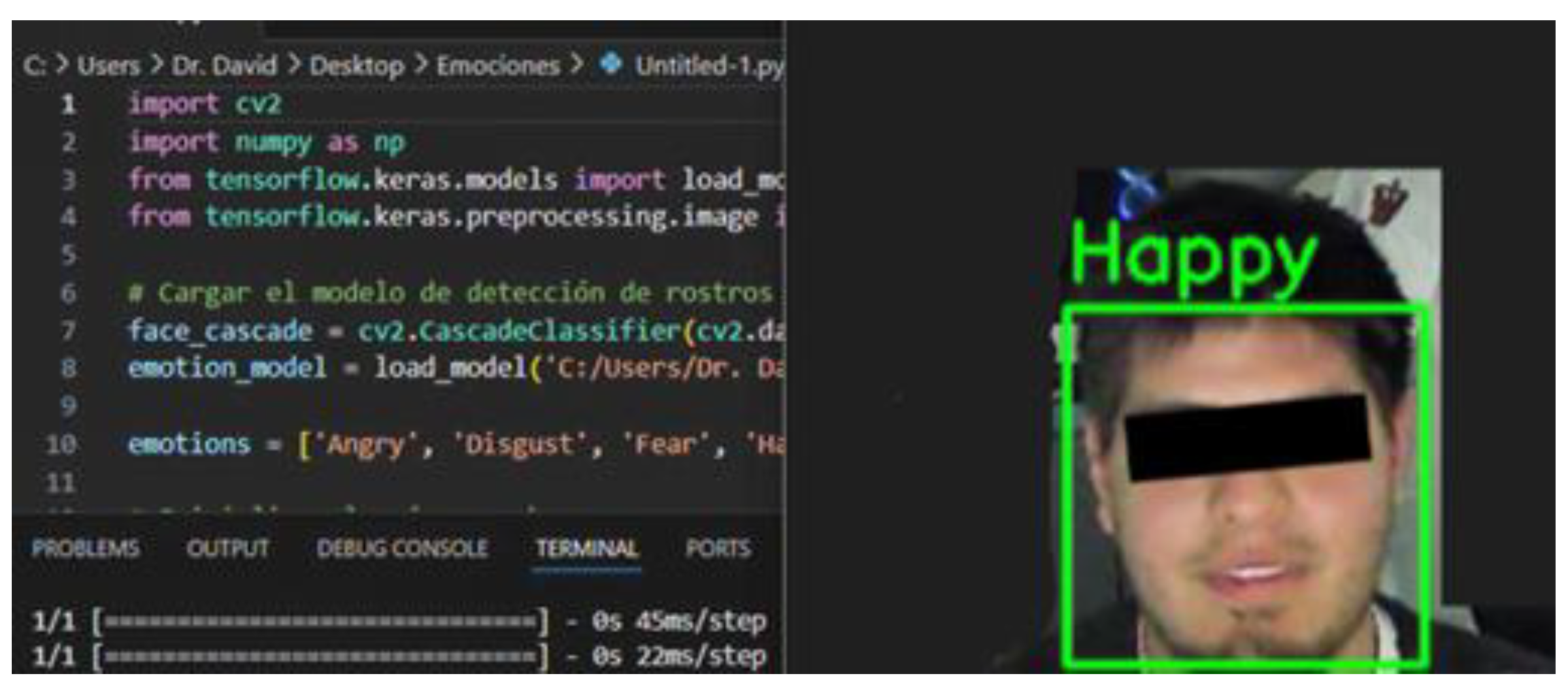
Figure 2.
Daily EMA measures anxiety and craving in HC and SUD groups across the 14-day observation period. Panels show mean ± SD values for (A) anxiety levels, (B) somatic anxiety symptoms, (C) worry symptoms, and (D) craving. Somatic and worry symptoms were coded as presence (1) or absence (0). Green markers represent the HC group and purple markers represent the SUD group. Asterisks indicate statistically significant between-group differences for the corresponding day (*p < 0.05).
Figure 2.
Daily EMA measures anxiety and craving in HC and SUD groups across the 14-day observation period. Panels show mean ± SD values for (A) anxiety levels, (B) somatic anxiety symptoms, (C) worry symptoms, and (D) craving. Somatic and worry symptoms were coded as presence (1) or absence (0). Green markers represent the HC group and purple markers represent the SUD group. Asterisks indicate statistically significant between-group differences for the corresponding day (*p < 0.05).
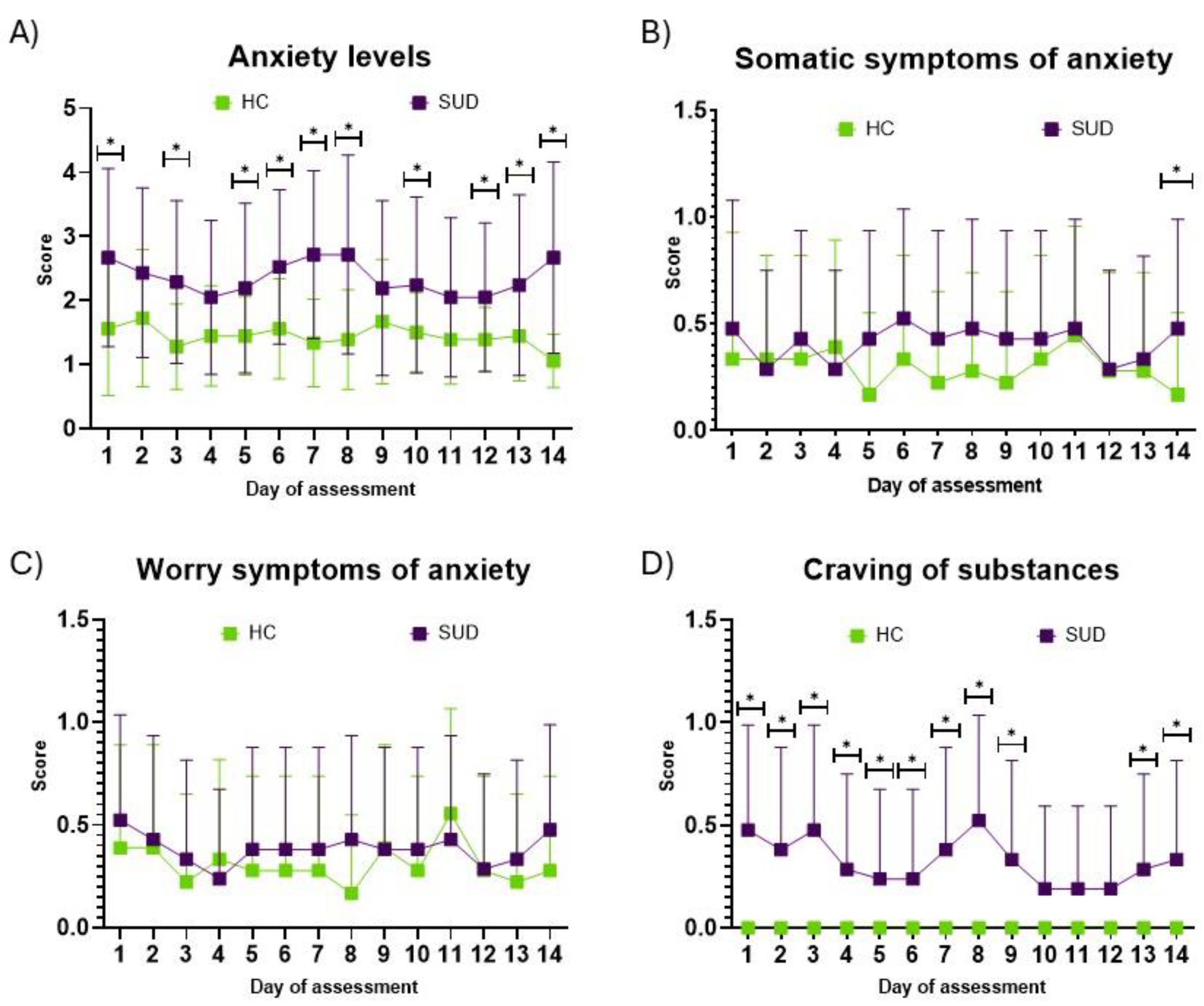
Figure 3.
Trends in anxiety and craving among participants in the SUD group across the monitoring period. Daily escalated scores for anxiety (circles) and craving (squares) are shown across the observation period. Solid lines represent linear trend lines for anxiety (m = −0.015) and craving (m = −0.013). Blue dashed vertical lines indicate days of group therapy interventions (Days 1 and 8), green dashed vertical lines indicate family visitation days (Days 6 and 13), and the shaded gray area represents the Emotional Activation and Craving (EAC) test conducted on Day 7.
Figure 3.
Trends in anxiety and craving among participants in the SUD group across the monitoring period. Daily escalated scores for anxiety (circles) and craving (squares) are shown across the observation period. Solid lines represent linear trend lines for anxiety (m = −0.015) and craving (m = −0.013). Blue dashed vertical lines indicate days of group therapy interventions (Days 1 and 8), green dashed vertical lines indicate family visitation days (Days 6 and 13), and the shaded gray area represents the Emotional Activation and Craving (EAC) test conducted on Day 7.
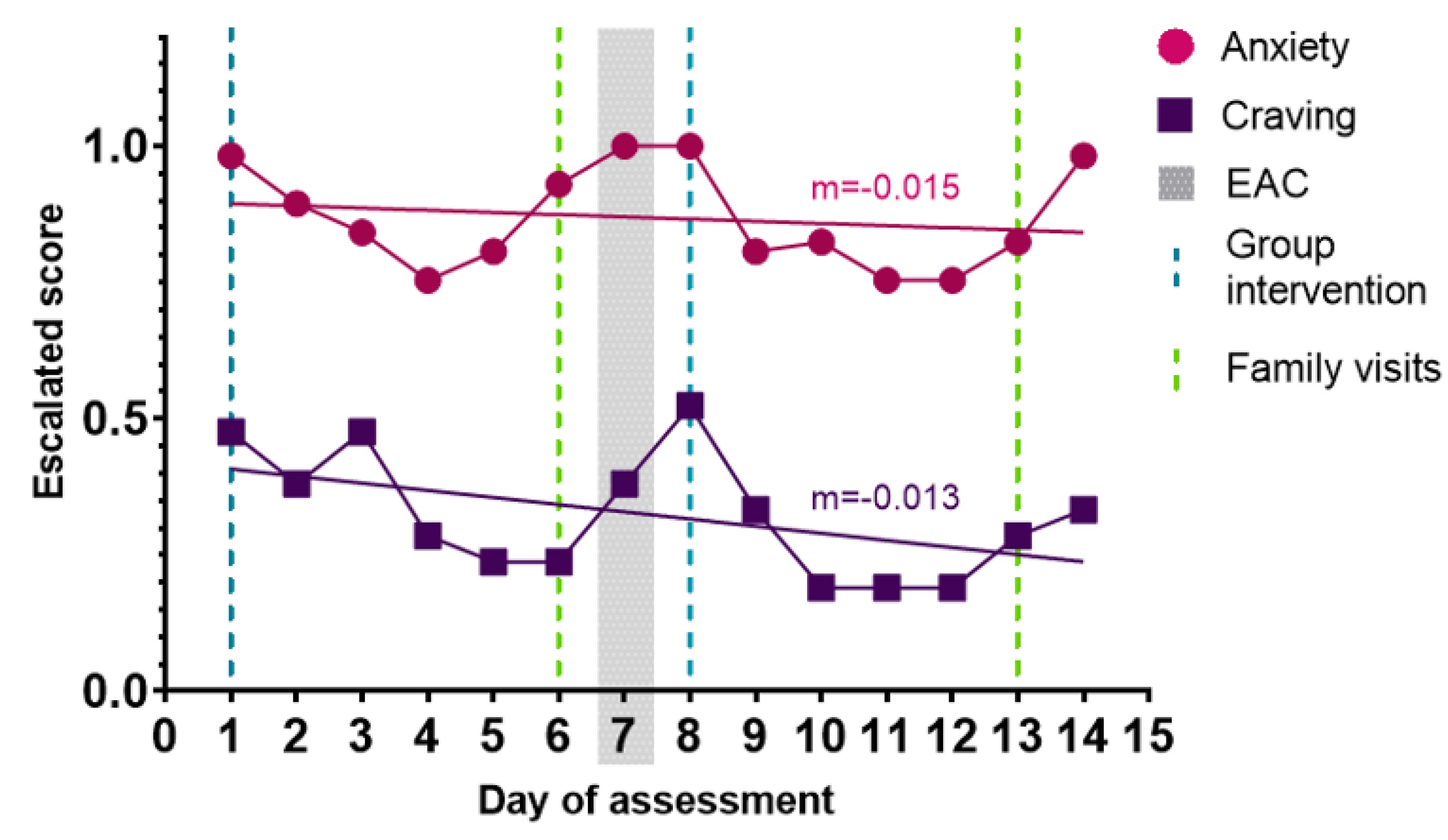
Figure 4.
Emotional valence and activation ratings by stimulus type in SUD and HC groups. (A) Mean ± SD emotional valence scores for the four stimulus categories (positive, negative, neutral, and substance-related). (B) Mean ± SD emotional activation scores for the same stimulus categories. Asterisks indicate statistically significant between-groups for the corresponding day (*p < 0.05). Upon analysis by items, it was possible to determine the specific items where differences were found, S3.
Figure 4.
Emotional valence and activation ratings by stimulus type in SUD and HC groups. (A) Mean ± SD emotional valence scores for the four stimulus categories (positive, negative, neutral, and substance-related). (B) Mean ± SD emotional activation scores for the same stimulus categories. Asterisks indicate statistically significant between-groups for the corresponding day (*p < 0.05). Upon analysis by items, it was possible to determine the specific items where differences were found, S3.
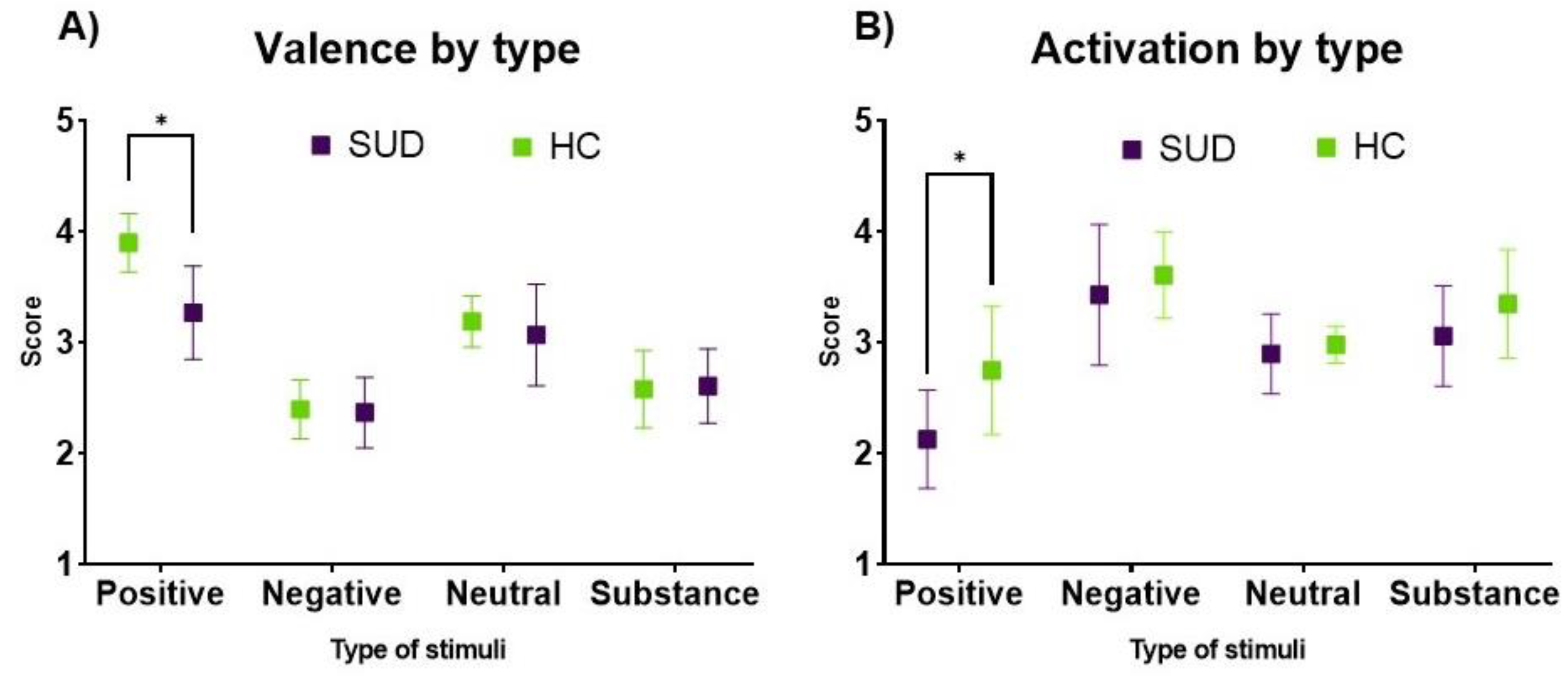
Figure 5.
Item-level comparison of emotional valence ratings between SUD and HC groups. (A) Mean ± SD valence scores for each stimulus item. Scores ranged from 1 (very negative) to 5 (very positive), with 3 representing neutral valence. Purple markers indicate the SUD group and green markers indicate the HC group. Asterisks (*) denote items with significant between-group differences. (B) Subset of items showing significant differences between groups. Shaded rows indicate stimuli belonging to the “people” category in the image index. Double asterisks (**) indicate items with stronger statistical significance (p < 0.01).
Figure 5.
Item-level comparison of emotional valence ratings between SUD and HC groups. (A) Mean ± SD valence scores for each stimulus item. Scores ranged from 1 (very negative) to 5 (very positive), with 3 representing neutral valence. Purple markers indicate the SUD group and green markers indicate the HC group. Asterisks (*) denote items with significant between-group differences. (B) Subset of items showing significant differences between groups. Shaded rows indicate stimuli belonging to the “people” category in the image index. Double asterisks (**) indicate items with stronger statistical significance (p < 0.01).
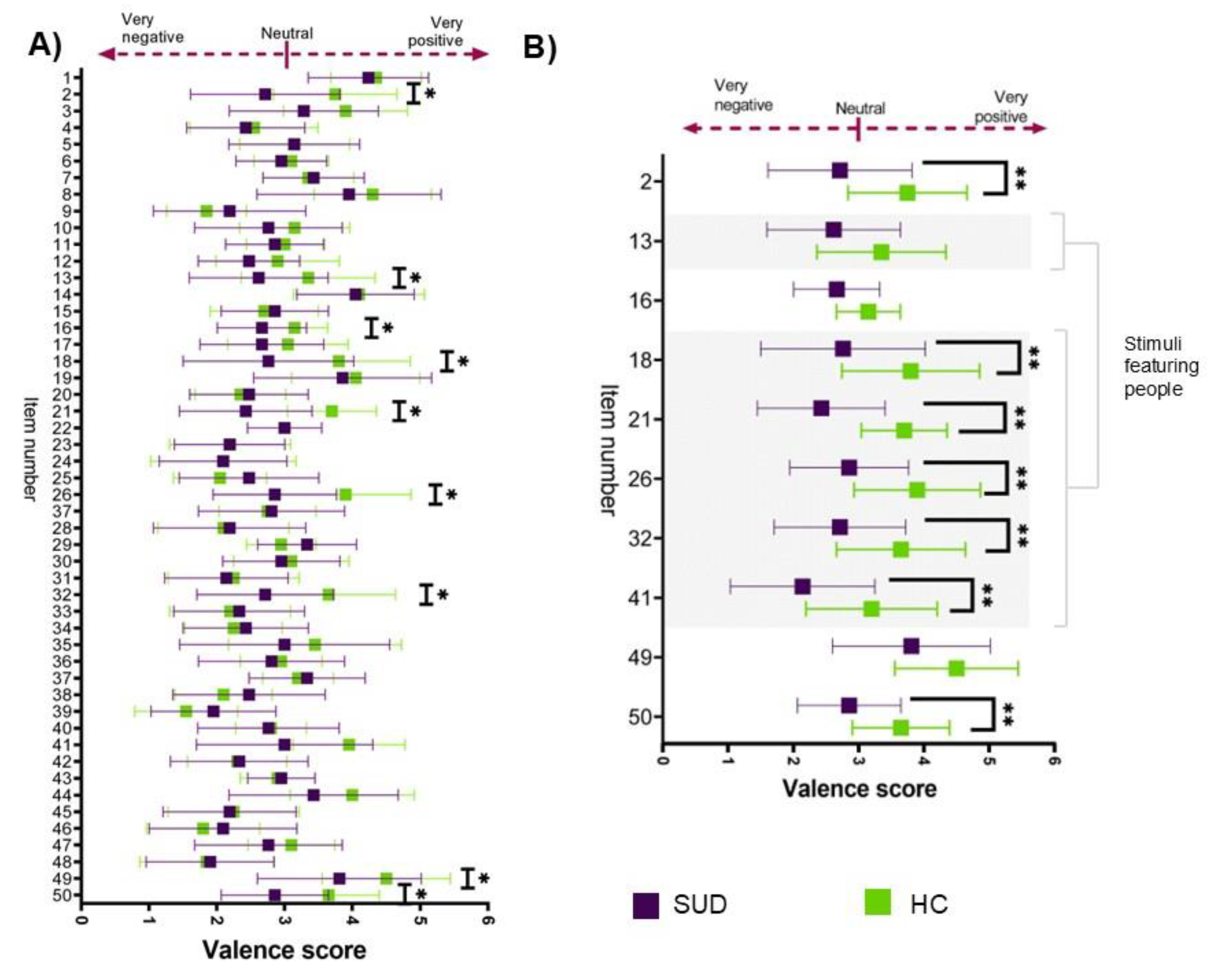
Figure 6.
Item-level comparison of emotional activation ratings between SUD and HC groups. (A) Mean ± SD activation scores for each stimulus item. Scores ranged from 1 (low activation or relaxing) to 5 (high activation or stimulating), with 3 indicating neutral activation. Purple markers represent the SUD group and green markers represent the HC group. Asterisks (*) denote items with significant between-group differences. (B) Subset of items showing significant differences between groups. Shaded rows indicate stimuli belonging to the “people” category in the image index. Double asterisks (**) indicate stronger statistical significance (p < 0.01).
Figure 6.
Item-level comparison of emotional activation ratings between SUD and HC groups. (A) Mean ± SD activation scores for each stimulus item. Scores ranged from 1 (low activation or relaxing) to 5 (high activation or stimulating), with 3 indicating neutral activation. Purple markers represent the SUD group and green markers represent the HC group. Asterisks (*) denote items with significant between-group differences. (B) Subset of items showing significant differences between groups. Shaded rows indicate stimuli belonging to the “people” category in the image index. Double asterisks (**) indicate stronger statistical significance (p < 0.01).
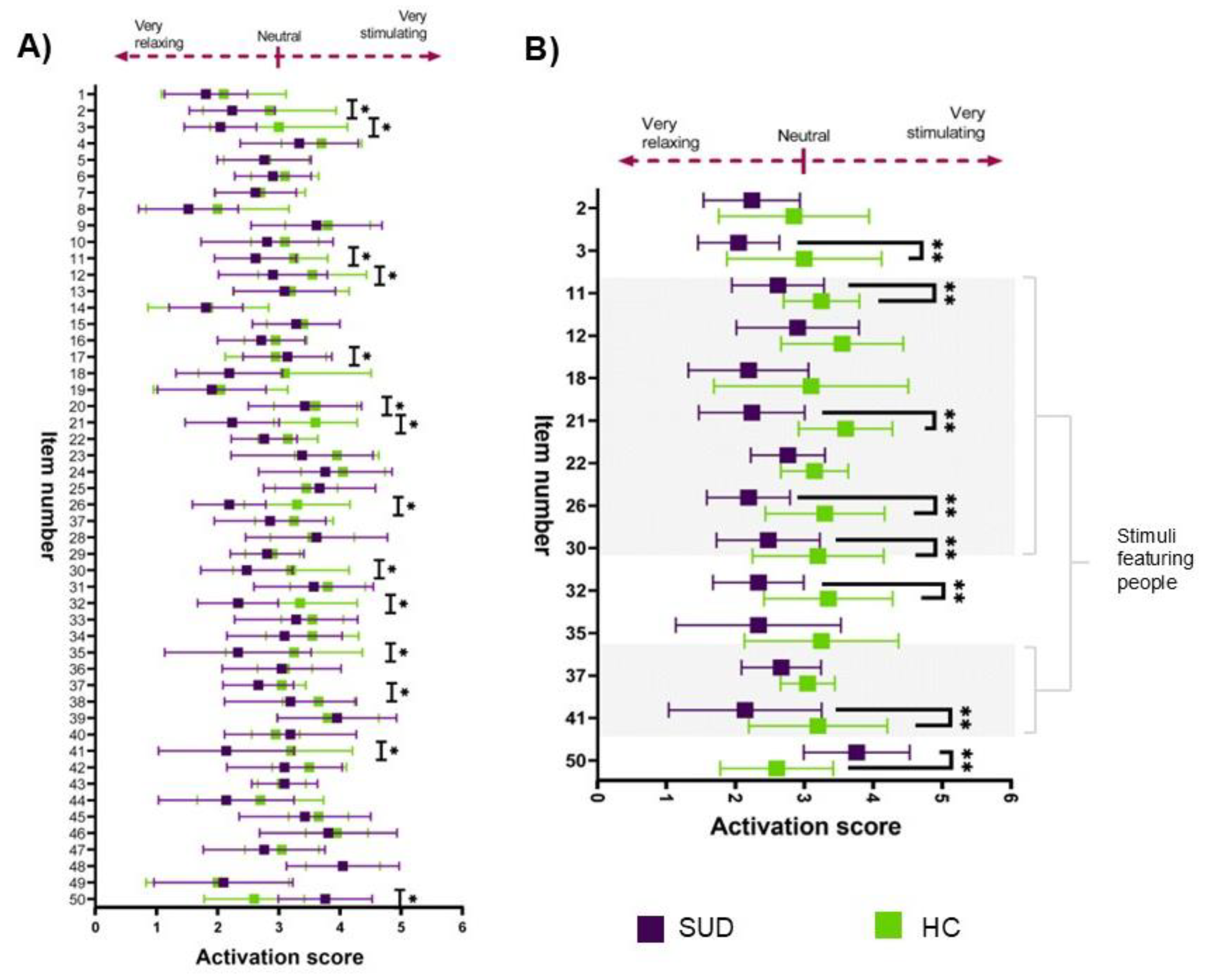
Figure 7.
Frequency of facial emotional expressions detected by the smart system in SUD and HC groups. Bars represent mean ± SD counts of emotional expressions detected across the assessment period, from the initial interview (MACS evaluation) to the closing interview. Purple bars correspond to the SUD group and green bars to the HC group. Significant between-group differences were observed for disgust and fear expressions (p = 0.02 for both), indicated by asterisks (*).
Figure 7.
Frequency of facial emotional expressions detected by the smart system in SUD and HC groups. Bars represent mean ± SD counts of emotional expressions detected across the assessment period, from the initial interview (MACS evaluation) to the closing interview. Purple bars correspond to the SUD group and green bars to the HC group. Significant between-group differences were observed for disgust and fear expressions (p = 0.02 for both), indicated by asterisks (*).
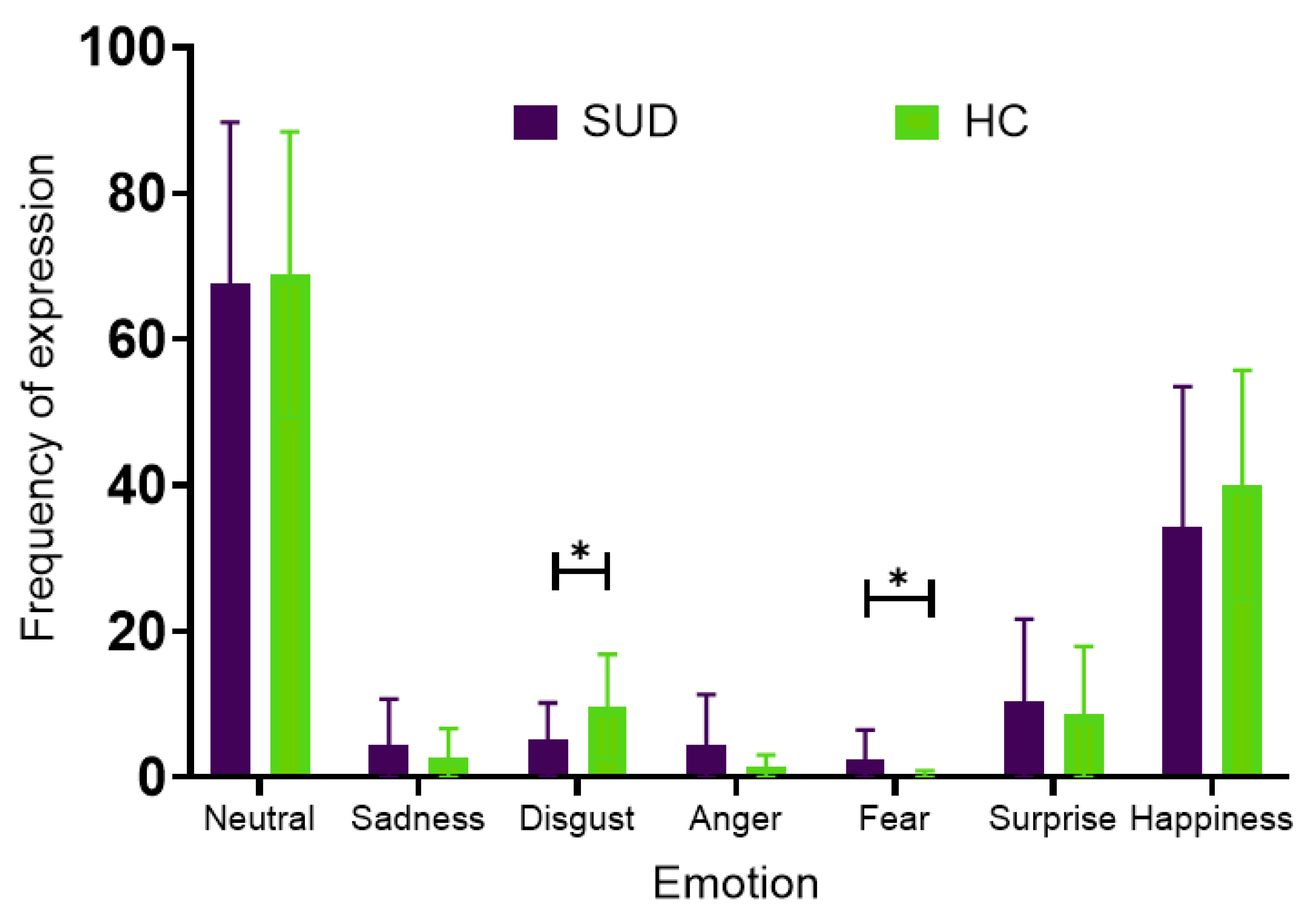

Table 1.
Resume of Participant Characteristics.
| Variable | SUD | HC | ||
| % / x̄±SD | n | %/ x̄±SD | n | |
| Age | 31.33±10.01 | 22 | 25.79±6.39 | 20 |
| Education | ||||
| Secondary education | 14.29% | 3 | 0% | 0 |
| High School | 47.62% | 10 | 5% | 1 |
| Bachelor’s degree | 23.81% | 5 | 70% | 14 |
| Postgraduate degree | 9.52% | 2 | 25% | 5 |
| Employment | ||||
| Manual labor | 42.86% | 9 | 5% | 1 |
| Customer service | 19.05% | 4 | 5% | 1 |
| Self-employed | 19.05% | 4 | 10% | 2 |
| Healthcare | 4.76% | 1 | 30% | 6 |
| Unemployed | 9.52% | 2 | 5% | 1 |
| Other a | 4.76% | 1 | 45% | 9 |
| Marital status | ||||
| Single | 76.19% | 16 | 85% | 17 |
| Long-term partner or married | 4.76% | 1 | 15% | 3 |
| Separation or divorce | 19.05% | 4 | 0% | 0 |
| Housing | ||||
| Alone | 19.05% | 4 | 5% | 1 |
| Parents and/or siblings | 47.62% | 10 | 60% | 12 |
| Partner with/without children | 9.52% | 2 | 15% | 3 |
| Relatives | 19.05% | 4 | 5% | 1 |
| Friends and/or roommates | 4.76% | 1 | 15% | 3 |
| Mental health | ||||
| Depressive disorders | 52.38% | 11 | 10% | 2 |
| Anxiety disorders | 42.86% | 9 | 20% | 4 |
| ADHD | 28.57% | 6 | 15% | 3 |
| Bipolar disorders | 19.05% | 4 | - | - |
| Antisocial personality disorder | 4.76% | 1 | - | - |
| None | 19.05% | 4 | 70% | 14 |
| Medications | ||||
| Antipsychotics | 42.86% | 9 | - | - |
| Antidepressants | 14.29% | 3 | - | - |
| Methylphenidate | 9.52% | 2 | 10% | 2 |
| Anxiolytics | 9.52% | 2 | 5% | 1 |
| Antiretrovirals | 4.76% | 1 | - | - |
| Cardiovascular | 4.76% | 1 | - | - |
| None | 23.81% | 5 | 85% | 17 |
a Financial support from family, scholarships and others.
Disclaimer/Publisher’s Note: The statements, opinions and data contained in all publications are solely those of the individual author(s) and contributor(s) and not of MDPI and/or the editor(s). MDPI and/or the editor(s) disclaim responsibility for any injury to people or property resulting from any ideas, methods, instructions or products referred to in the content. |
© 2026 by the authors. Licensee MDPI, Basel, Switzerland. This article is an open access article distributed under the terms and conditions of the Creative Commons Attribution (CC BY) license (http://creativecommons.org/licenses/by/4.0/).
Copyright: This open access article is published under a Creative Commons CC BY 4.0 license, which permit the free download, distribution, and reuse, provided that the author and preprint are cited in any reuse.


