

Submitted:
21 April 2026
Posted:
22 April 2026
You are already at the latest version
Abstract
Stepped spillways are engineered structures designed to mitigate the erosive effects of floodwaters on downstream riverbeds. Despite extensive research on spillways with slopes exceeding 26.6°, there is a notable gap in understanding energy loss mechanisms for slopes between 3.4° and 26.6°. This study aims to develop predictive models for energy dissipation in stepped spillways within this slope range, eliminating the need for complex friction factor calculations. Experimental data from air-water flow experiments on a large-scale stepped spillway facility inform the development of these models. The proposed models demonstrate strong correlation with experimental data (R = 0.79 - 0.99), offering a simplified and accurate approach to estimating energy losses.
Keywords:
stepped spillway
; energy dissipation
; nappe flow
; skimming flow
1. Introduction
Stepped spillways are structures built on dams to reduce the kinetic energy of flowing water, minimising erosion at the riverbed [1]. These spillways feature a series of steps that create turbulence, enhancing energy dissipation and reducing flow velocity. The design of stepped spillways can be visually appealing, resembling natural waterfalls, and adds aesthetic value to dams or reservoirs [2].
The stepped configuration of spillways includes dimensions, slope, and the number of steps, influencing the flow regime and energy dissipation [3]. There are three main flow regimes: nappe, transition, and skimming. Each regime has a distinct energy dissipation mechanism, affected by discharge rates and step configuration [4].
Research has focused on energy loss in flat stepped spillways with channel slopes of 26.6 degrees or greater, but there’s a gap in understanding energy losses in spillways with slopes between 26.6° and 3.4°. The existing model includes a friction factor, which is challenging to determine and often requires subjective judgments [5].
To address this, a new model is being developed to estimate energy losses without the friction factor, focusing on flat stepped spillways with channel slopes between 26.6° and 3.4°.
Energy loss in stepped spillways has been extensively studied for slopes above 26.6° [6]. However, there is a knowledge gap regarding energy dissipation in spillways with gentler slopes (3.4°-26.6°). Current models rely on a friction factor, which is challenging to determine and often requires subjective judgment [7].
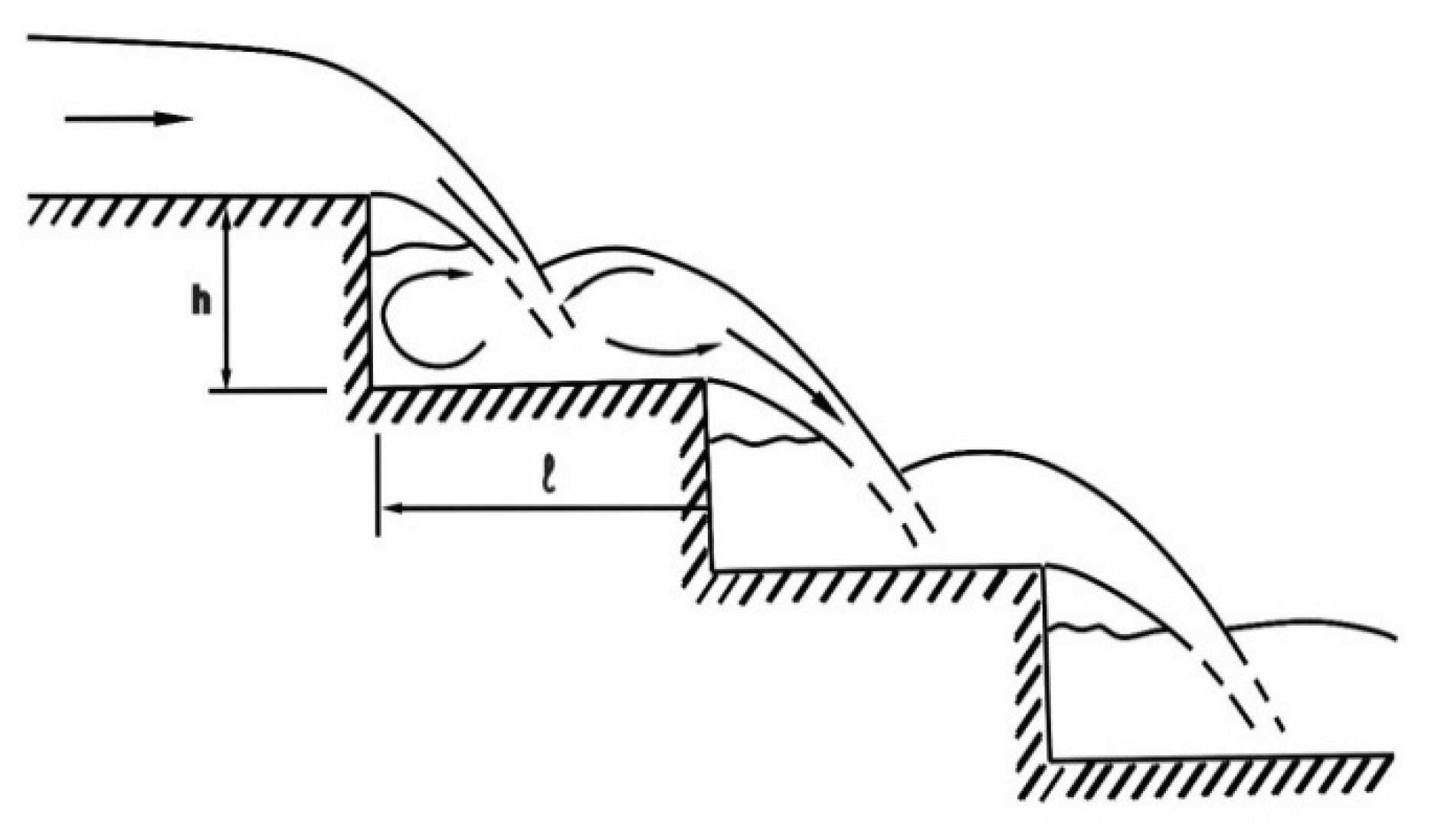
Research has identified three distinct flow regimes in stepped spillways: nappe, transition, and skimming. The nappe flow regime is characterized by low discharges and a free-falling sheet of water cascading down the steps [8]. Transition flow features moderate flow rates with significant spray and turbulence [9], while skimming flow is marked by a coherent stream with circulating vortices between the steps [10].
Figure 1.
Nappe flow regime (Flow at a drop structure).
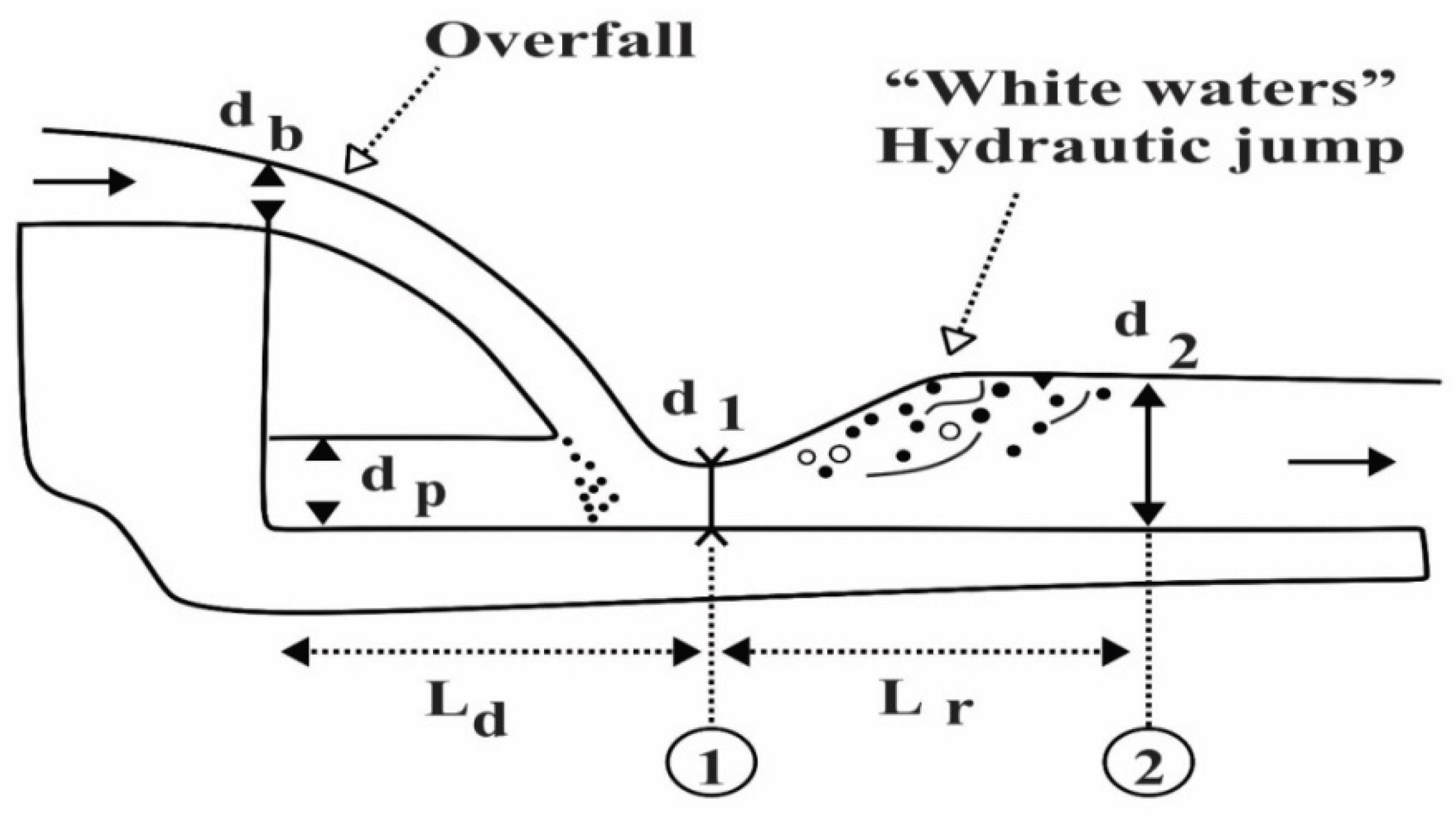
Figure 2.
Nappe flow with partially developed hydraulic jump.
Each flow regime has a unique energy dissipation mechanism. For nappe flow, the head loss is estimated using equations (1) and (2) [11], which account for the maximum head, residual head, and critical depth [28].
- a)
- Energy Dissipation at Nappe Flow Regime
At any particular intermediate point, the head loss corresponds to the energy lost in a nappe flow regime characterized by a fully developed hydraulic jump (Figure 1). The total head loss, ∆H, along the spillway is equal to the maximum head, Hmax, and the residual head, Hres, at the spillway’s bottom [12].
Where is the total head loss calculated as is the rate of energy dissipation; ; is the maximum height estimated as Hdam is the dam height; dc is the critical depth estimated as .
The residual energy or Hres, consists of the velocity head and the residual pressure head. If the nappe is aerated and descends freely, the pressure head can be considered negligible, thus leaving velocity and potential energy as the major contributors to the remaining energy [30]. Therefore, the total remaining energy at a particular downstream position for a freely tumbling nappe can be estimated as follows [13]:
This energy is dissipated at the spillway toe through a hydraulic jump occurring in the dissipation basin [32].
For a gated spillway, the relation is [14]:
For a gated spillway, the maximum head available and the dam height are related by :
Here, Hdam is the height of the dam, while H0 represents the elevation of the reservoir free surface above the spillway crest.
- b) Energy Dissipation at the Skimming Flow Regime
To sustain stable depression vortices, energy dissipation occurred. According to [15], if downstream flow conditions are steady, the energy loss can be calculated as follows (Figure 5):
Where is the rate of energy dissipation, is the total head loss calculated as ; Hdam is the dam height, is the maximum height estimated as ; is the residual head estimated as ; is the total water flow, b is the width of the channel, is the unit flow, ; dc is the critical depth estimated as ; Uavg is the average velocity estimated as ; dw is the clear water depth estimated as ; θ is the dam slope in degrees, and the total head loss may be rewritten in terms of the friction factor, f, the spillway slope, θ, in degree.
[14] stated that Equation (8) is specifically stated with θ set at 52 degrees. The average flow resistance on smooth spillways is represented by the friction factor, f = 0.3, while for stepped spillways, it is f = 1.30.
2. Materials and Methods
Modeling of stepped spillways reveals that scale effects in these models are highly evident at scales smaller than 10:1. For techniques to reduce scale effects, refer to research by [16], which recommends a model scale of 10:1 or larger, while [17] suggest maintaining a minimum Reynolds number of 105 and a minimum Weber number of 100.
A study conducted by [17] emphasizes the necessity of following the Froude, Reynolds, and Morton similarity criteria when modeling flows with considerable air entrainment, acknowledging that achieving this is only feasible at full-scale levels. Although consensus among researchers regarding the criteria for addressing scale effects in physical models of stepped spillways is still lacking, there are some established guidelines. The use of conventional mono-phase flow measurement devices in high-velocity air-water mixtures is impractical due to the complex three-dimensional airflow with significant air-water interactions [18].
Considering the large volumes of air at the air-water interface, methods such as Dall Tube flow meters, V-notch weirs for flow rate assessments, Prandtl-Pitot tubes for measuring flow velocities, or point gauges for determining clear water flow depths are not suitable for analyzing air-water flow characteristics [19]. In stepped spillway scenarios, invasive probes are commonly employed, and experimental studies using optical fiber probes and conductivity probes have shown encouraging results.
2.1. Model Development
The researchers assessed approximately 500 instances that contained complete datasets to create energy dissipation models depicting transition and skimming flow under various operational scenarios. It is essential to identify parameter values that accurately represent the modeled system [20]. By utilizing the least squares method, the best-fit curve for this study was determined as follows:
(9)
Where
∆H/Hmax represents the energy loss ratio,
Hmax is the maximum available height,
N denotes the number of spillway steps,
h indicates the height of the spillway steps,
θ represents the slope of the spillway channel.
The coefficients are α0, α1, α2, α3, and α4.
A portion of the collected datasets was employed alongside multiple regression analysis and the matrix method to resolve (9), leading to the identification of the constant α0 and coefficients α1, α2, α3, and α4, which were then reintegrated to formulate the models discussed in section 3.
2.2. Model Verification
The authors utilized the remaining datasets and validation datasets to assess the model’s performance (interpolation). If the model accurately represents the validation data, it is considered a valid reflection of the actual system, referred to as the interpolation aspect.
A commonly employed statistical approach to evaluate the reliability of the developed model is the Pearson Correlation Coefficient. This coefficient illustrates the nature of the correlation and ranges from -1 to +1: -1 signifies a strong negative correlation, 0 indicates no correlation, and +1 shows a high positive correlation.
The formula for manually computing Pearson’s correlation coefficient [21] is as follows:
Where:
- x and y are the values of the two variables.
- n is the number of paired data points.
- ∑x is the sum of all x values.
- ∑y is the sum of all y values
- ∑x2 is the sum of the squares of x values.
- ∑y2 is the sum of the squares of y values.
∑xy is the sum of the product of corresponding x and y values.
3. Results and Discussion
The developed models predict energy dissipation in stepped spillways with slopes between 3.4° and 26.6°. The models are based on experimental data and show a strong correlation with observed values. The models show good agreement with the experimental data and can be used to predict energy dissipation in stepped spillways with various slopes and step heights.
(11)
For θ = 26.6o, N = 10, h (cm) = 10
(12)
For θ = 26.6o, N = 20, h (cm) = 5
(13)
For θ = 21.8o, N = 10, h (cm) = 10
(14)
For θ = 21.8o, N = 20, h (cm) = 5
(15)
For θ = 18.4°, N = 40, h (cm) = 3/6
(16)
For θ = 15.9o, N = 18, h (cm) = 5
(17)
For θ = 14.6o, N = 13, h (cm) = 10
(18)
For θ = 14.6o, N = 26, h (cm) = 5
(19)
For θ = 8.9o, N = 21, h (cm) = 3/6
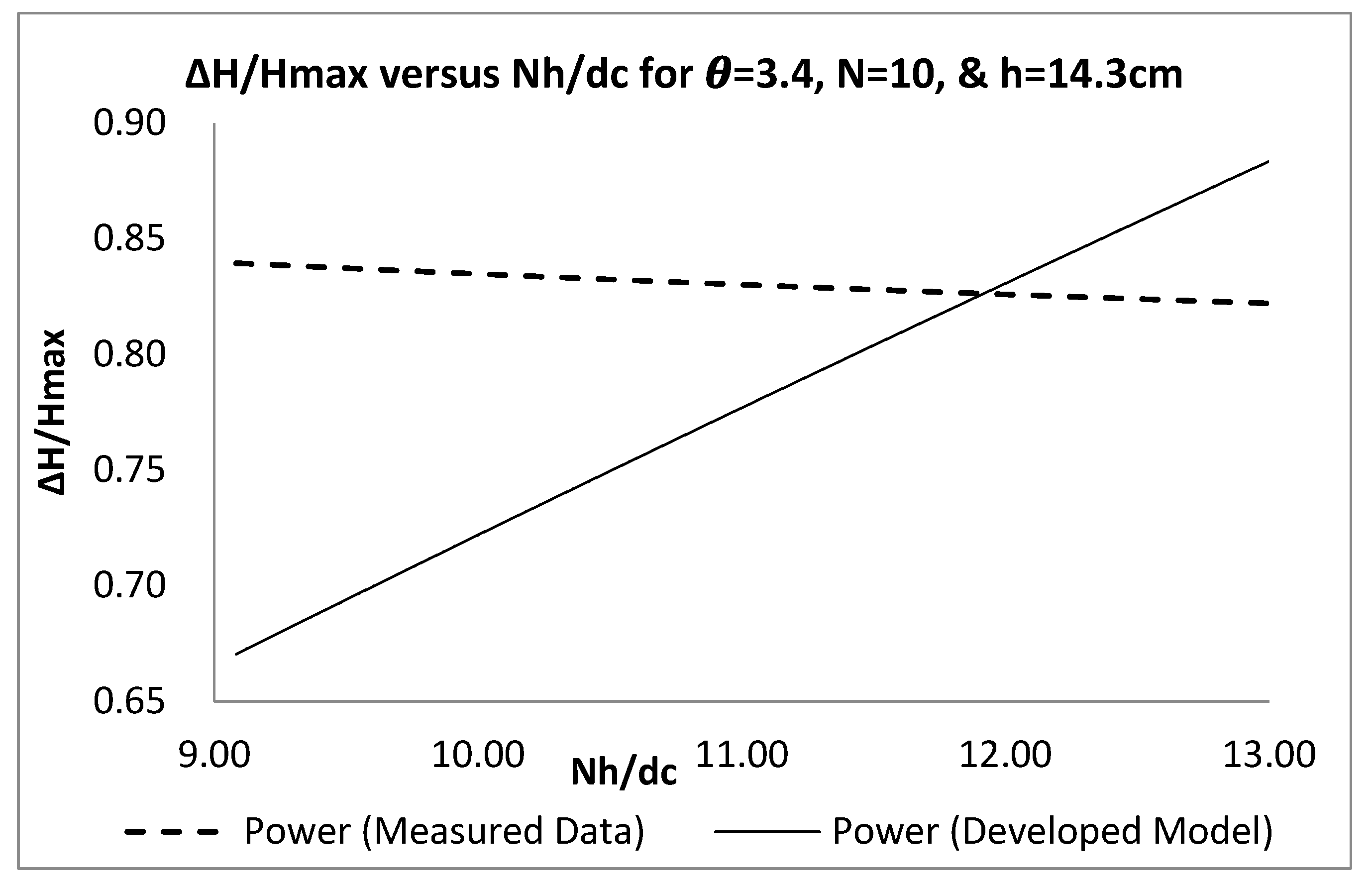
(20)
For θ = 3.4o, N = 10, h (cm) = 14.3
Discussions
The relationship between energy loss rates and dam height is illustrated in Figure 6, Figure 7, Figure 8, Figure 9, Figure 10, Figure 11, Figure 12, Figure 13, Figure 14 and Figure 15. The developed models (Eqs. 11-20) show strong correlation with experimental data, with Spearman coefficients ranging from 0.79 to 1.0. Energy losses increase with increasing dam height, consistent with previous research.
The models are designed to be practical and user-friendly. Dimensionless energy dissipation rates correlate strongly with transition and skimming regimes. Pearson correlations range from 0.79 to 1.00, indicating good agreement between observed and predicted values.
4. Conclusion
Energy losses are presented for observed and estimated datasets, along with the ratio of dam height to critical depth. The distribution of datasets exhibits a concave shape, with energy losses increasing with dam height. Spearman correlation coefficients (0.79 - 1.00) indicate a robust relationship between observed and estimated data, validating the model’s predictive ability.
5. Design Application
Example: A stepped spillway with 21 steps, step height 0.05 m, and step length 0.319 m, has a discharge per unit of 0.04 m²/s. What is the energy dissipated at the base?
Using Eq (17): ∆H/Hmax = (1.5Nh/dc)1.2 *N-0.2*h-2.33*θ-0.1
Nh/dc = 19.2, N = 21, h = 5 cm, θ = 8.9°
∆H/Hmax = 0.82 (82% energy dissipated)
Acknowledgement
Thanks to Prof. Hubert Chanson, University of Queensland, for insightful discussions and inputs.
List of Symbols
| C | void fraction |
| DH | hydraulic diameter (m) |
| dw | equivalent clear water flow depth (m) |
| dc | critical flow depth (m) |
| g | gravity constant (m/s²) |
| H | total head (m) |
| Hdam | dam height (m) |
| Hmax | maximum upstream head (m) |
| Hres | residual head (m) |
| h | vertical step height (m) |
| l | horizontal step length (m) |
| qw | water discharge per unit width (m²/s) |
| Re | Reynolds number |
| Uw | mean flow velocity (m/s) |
| W | channel width (m) |
| Y90 | characteristic depth (m) |
| ΔH | total head loss (m) |
| θ | angle between pseudo-bottom and horizontal |
References
- Chanson, H. The hydraulics of stepped chutes and spillways; Balkema, 2001. [Google Scholar]
- Chamani, R.; Rajaratnam, N. Jet flow on stepped spillways. J. Hydraul. Eng. 1994, vol. 120(no. 2), 254–259. [Google Scholar] [CrossRef]
- Kramer, M.; Chanson, H. Transition flow regime on stepped spillways: Air-water flow characteristics and step-cavity fluctuations. Environ. Fluid Mech. 2018, vol. 18(no. 4), 947–965. [Google Scholar] [CrossRef]
- Ozueigbo, O. Using a ball that bounces down a flight of stairs to determine energy dissipation in stepped spillway with a fully developed hydraulic jump. J. Eng. Res. Rep. 2022. [Google Scholar] [CrossRef]
- Chanson, H.; Toombes, L. Air-water flows down stepped chutes: Turbulence and flow structure observations. Int. J. Multiphase Flow 2002, vol. 28(no. 11), 1737–1761. [Google Scholar] [CrossRef]
- Chanson, H.; Toombes, L. Energy dissipation and air entrainment in stepped storm waterway: Experimental study. J. Irrig. Drain. Eng. 2002, vol. 128(no. 5), 305–315. [Google Scholar] [CrossRef]
- Stephenson, D. Energy dissipation down stepped spillways. Int. Water Power Dam Constr. 1991, 27–30. [Google Scholar]
- Ozueigbo, O.; Agunwamba, J. Two new equations for energy dissipation down a stepped spillway with channel slopes between 3.4° and 26.6°. Techniques and Innovation in Engineering Research 2023. [Google Scholar] [CrossRef]
- Chanson, H. Measuring air-water interface area in supercritical open channel flow. Water Res. 1997, vol. 31(no. 6), 1414–1420. [Google Scholar] [CrossRef]
- Chanson, H. Comparison of energy dissipation between nappe and skimming flow regimes on stepped chutes. J. Hydraul. Res. 1994, vol. 32(no. 2), 213–218. [Google Scholar] [CrossRef]
- Sorensen, M. Stepped spillway hydraulic model investigation. J. Hydraul. Eng. 1985, vol. 111(no. 12), 1461–14725. [Google Scholar] [CrossRef]
- Ozueigbo, O.; Agunwamba, J. New equations for energy dissipation down a stepped spillway. J. Eng. Res. Rep. 2022. [Google Scholar] [CrossRef]
- Essery, I. T.; Horner, M. W. The hydraulic design of stepped spillways; London, U.K. Construction Industry Research and Information Association, 2005; Volume Rep. 33. [Google Scholar]
- Takahashi; Yasuda, M.; Ohtsu, Y.I. Flow patterns and energy dissipation over various stepped chutes. J. Irrig. Drain. Eng. 2008, vol. 134(no. 1), 114–116. [Google Scholar] [CrossRef]
- Chanson, H. Air bubble entrainment in open channels. Flow structure and bubble size distributions. Int. J. Multiphase Flow 1997, vol. 23(no. 1), 193–203. [Google Scholar] [CrossRef]
- Felder, S.; Chanson, H. Energy dissipation, flow resistance and gas-liquid interfacial area in skimming flows on moderate-slope stepped spillways. Environ. Fluid Mech. 2009, vol. 9(no. 4), 427–441. [Google Scholar]
- Bahmanpouri, F.; Gualtieri, C. Experiments on two-phase flow in hydraulic jump on pebbled rough bed: Part 1–Turbulence properties and particle chord time and length. Water Sci. Eng. 2023. [Google Scholar] [CrossRef]
- Ozueigbo, O. Three new approaches to estimating energy losses in stepped spillways with the channel slope of 8.9°. J. Eng. Res. Rep. 2025. [Google Scholar] [CrossRef]
- Gualtieri, et al. Application of the entropy model to estimate flow discharge and bed load transport in a large river. Phys. Fluids 2025. [Google Scholar] [CrossRef]
- Agunwamba, J. Engineering mathematical analysis. Enugu: De – Adroit Innovation, Chapter Twelve 2007, pp. 479–510, 674–675. [Google Scholar]
- Stephanie, G. “Alpha level (significance level): What is it?,” StatisticsHowTo.com: Elementary Statistics for the rest of us! 2018. Available online: https://www.statisticshowto.com/probability-and-statistics/statistics-definitions/what-is-an-alpha-level/.
Figure 3.
Skimming flow regime.
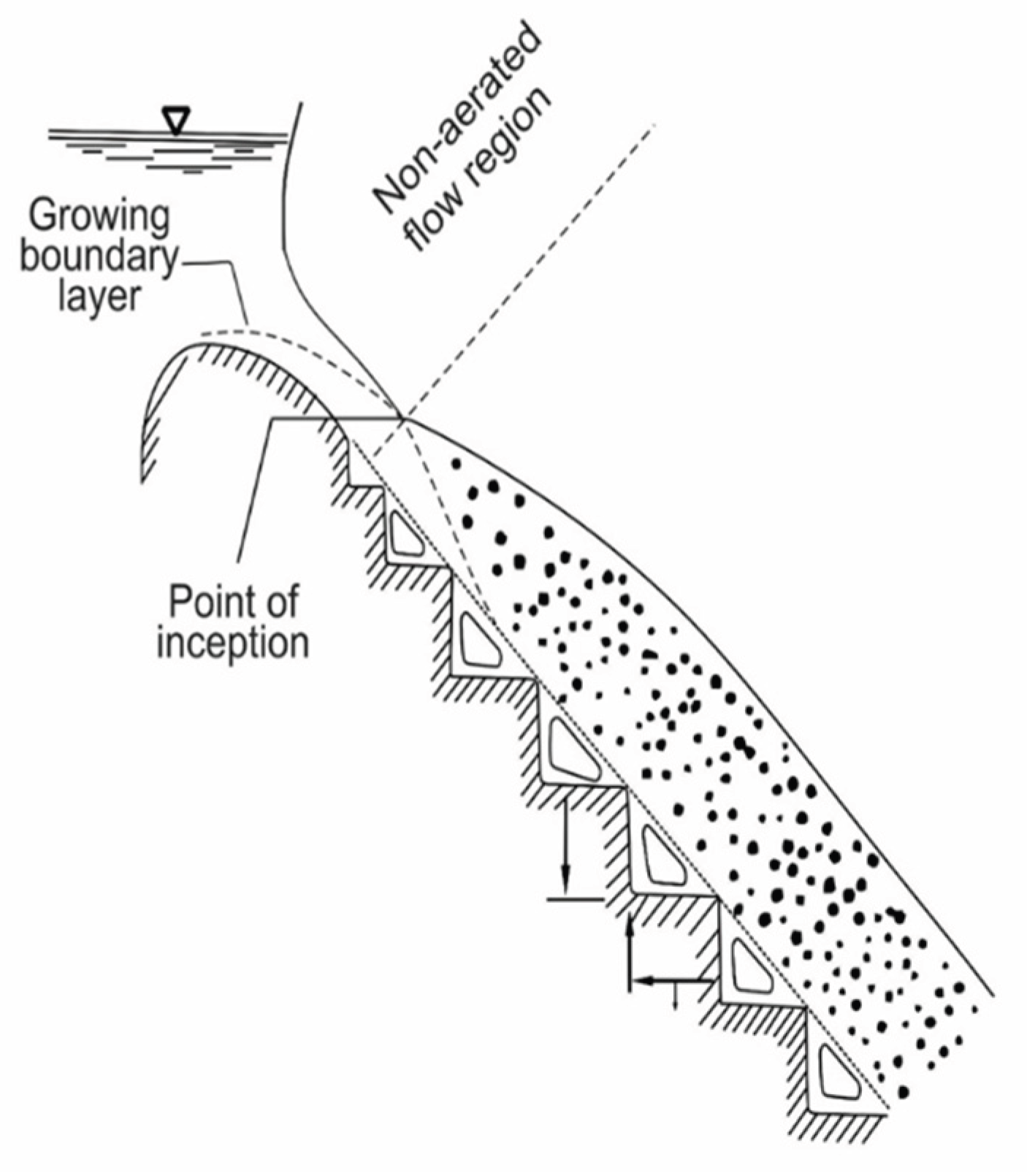
Figure 4.
Skimming flow regime with uniform flow conditions.
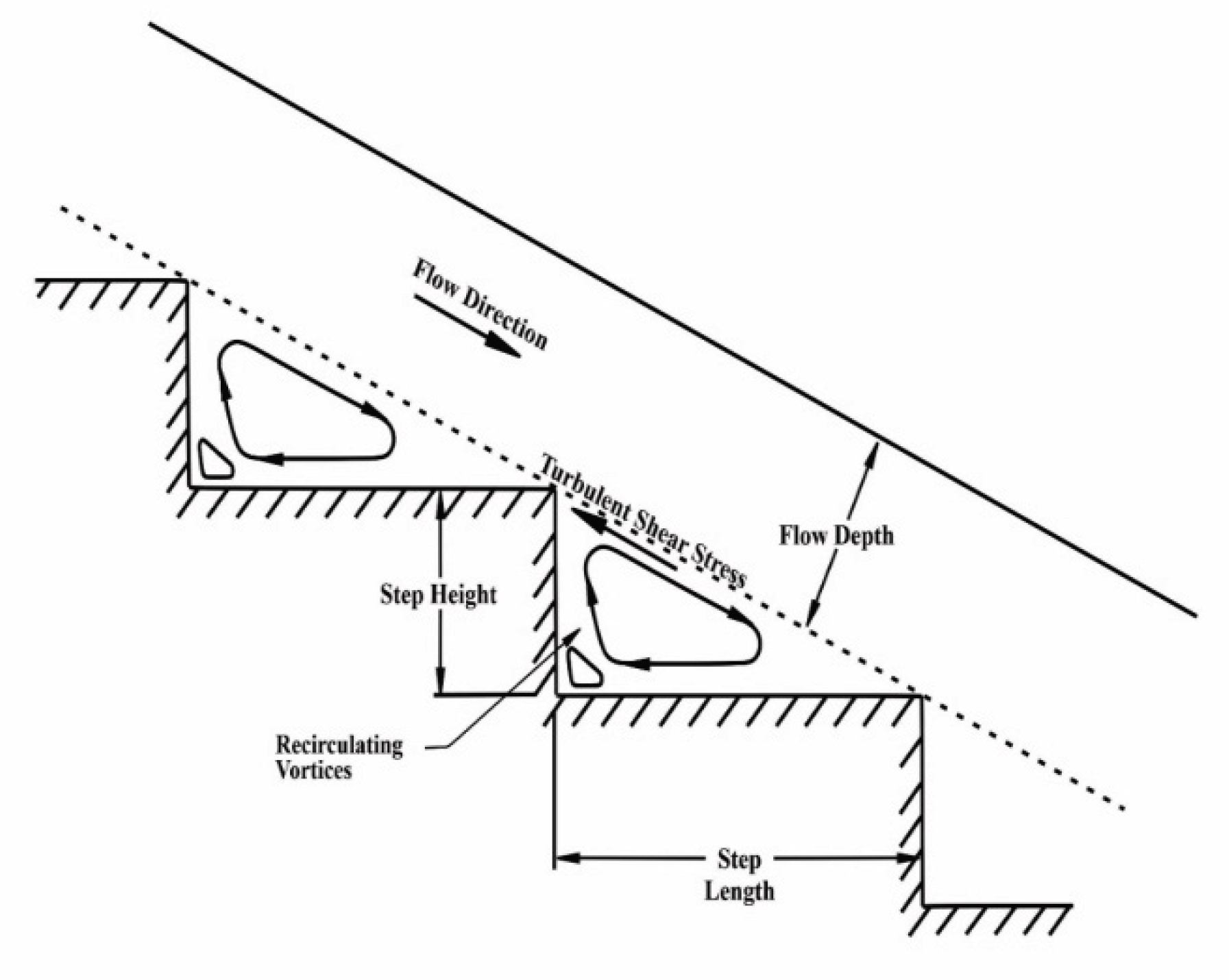
Figure 5.
Arrangement of the spillway with the definition of the variables.
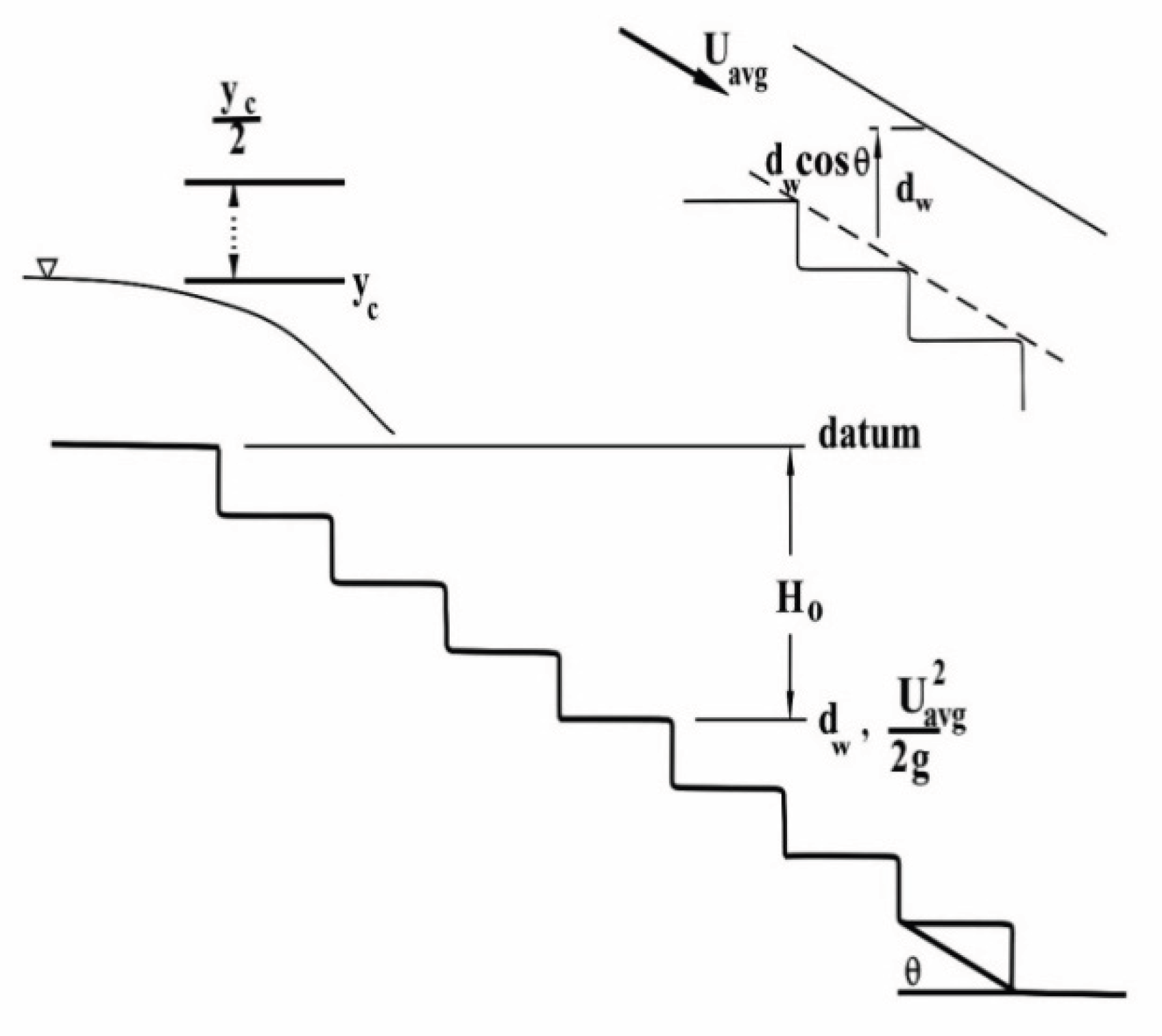
Figure 6.
∆H/Hmax as a function of Nh/dc between 5.00 and 10.00, qw = (0.073 - 0.249) m2/s & Re = (2.92 x 10⁵ - 9.96 x 10⁵), flow rate, dc/h, of (0.82 - 1.85).
Figure 6.
∆H/Hmax as a function of Nh/dc between 5.00 and 10.00, qw = (0.073 - 0.249) m2/s & Re = (2.92 x 10⁵ - 9.96 x 10⁵), flow rate, dc/h, of (0.82 - 1.85).
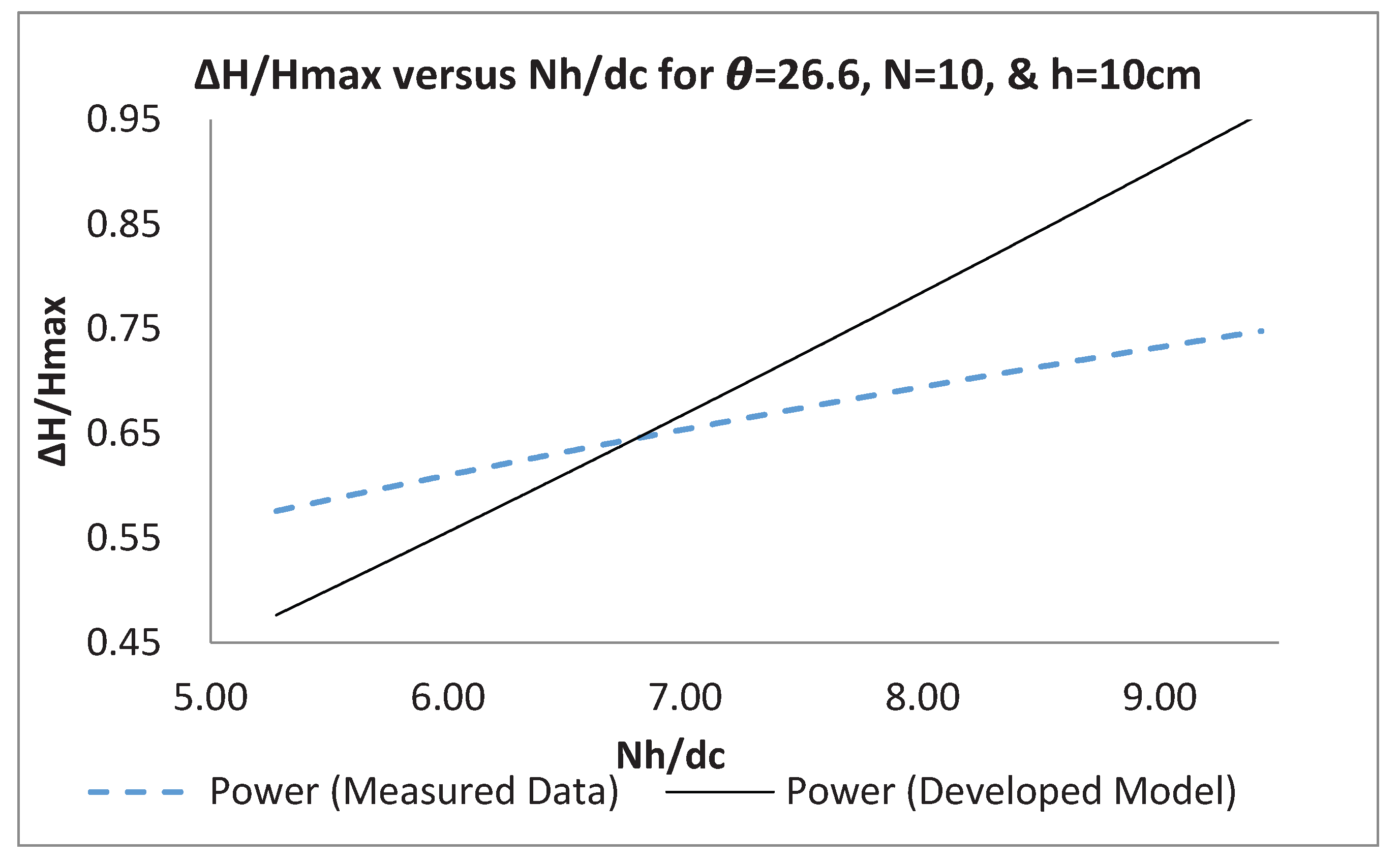
Figure 7.
∆H/Hmax as a function of Nh/dc between 4.00 and 10.00, qw = (0.020 - 0.227) m2/s & Re = (8.0 x 10⁴ - 9.08 x 10⁵), flow rate dc/h, of (0.69 - 3.30).
Figure 7.
∆H/Hmax as a function of Nh/dc between 4.00 and 10.00, qw = (0.020 - 0.227) m2/s & Re = (8.0 x 10⁴ - 9.08 x 10⁵), flow rate dc/h, of (0.69 - 3.30).
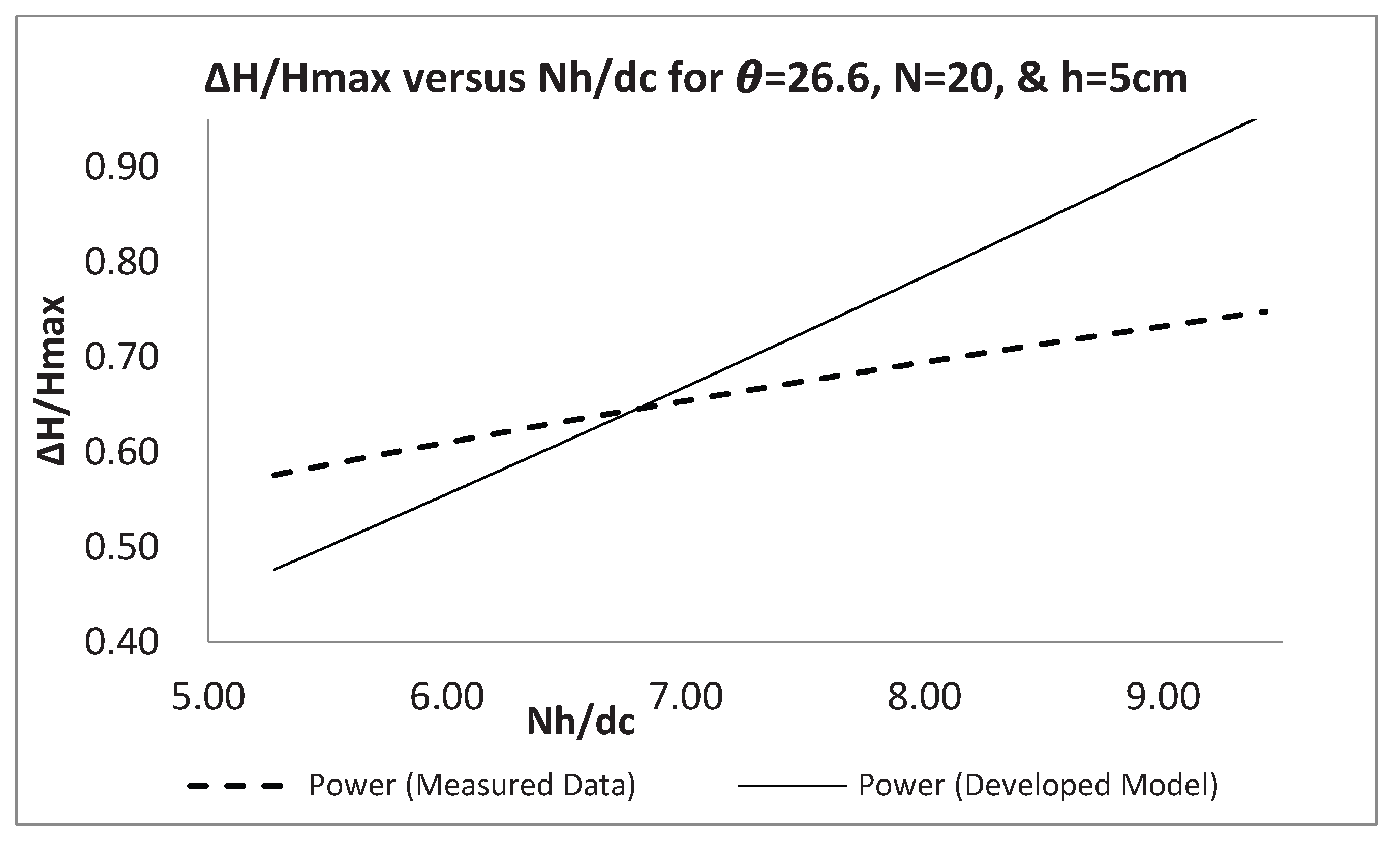
Figure 8.
∆H/Hmax as a function of Nh/dc between 5.00 and 12.00, qw = (0.095 - 0.180) m2/s, Re = (3.80 x 10⁵ - 7.20 x 10⁵), flow rate, dc/h, of (1.00 - 1.57).
Figure 8.
∆H/Hmax as a function of Nh/dc between 5.00 and 12.00, qw = (0.095 - 0.180) m2/s, Re = (3.80 x 10⁵ - 7.20 x 10⁵), flow rate, dc/h, of (1.00 - 1.57).
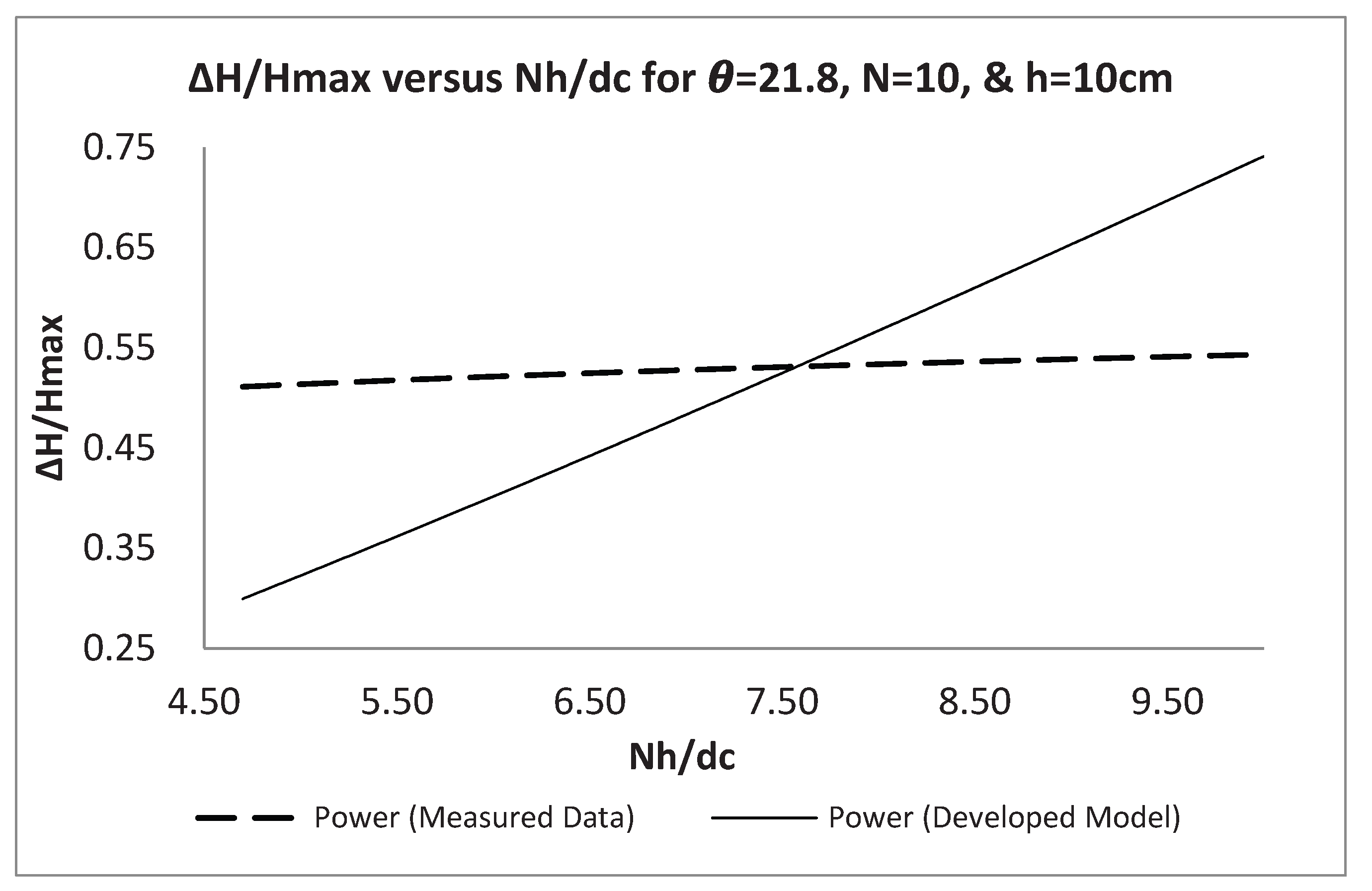
Figure 9.
∆H/Hmax as a function of Nh/dc between 5.00 and 12.00, qw = (0.095 - 0.180) m2/s, Re = (3.80 x 10⁵ - 7.20 x 10⁵), flow rate, dc/h, of (1.00 - 1.57).
Figure 9.
∆H/Hmax as a function of Nh/dc between 5.00 and 12.00, qw = (0.095 - 0.180) m2/s, Re = (3.80 x 10⁵ - 7.20 x 10⁵), flow rate, dc/h, of (1.00 - 1.57).
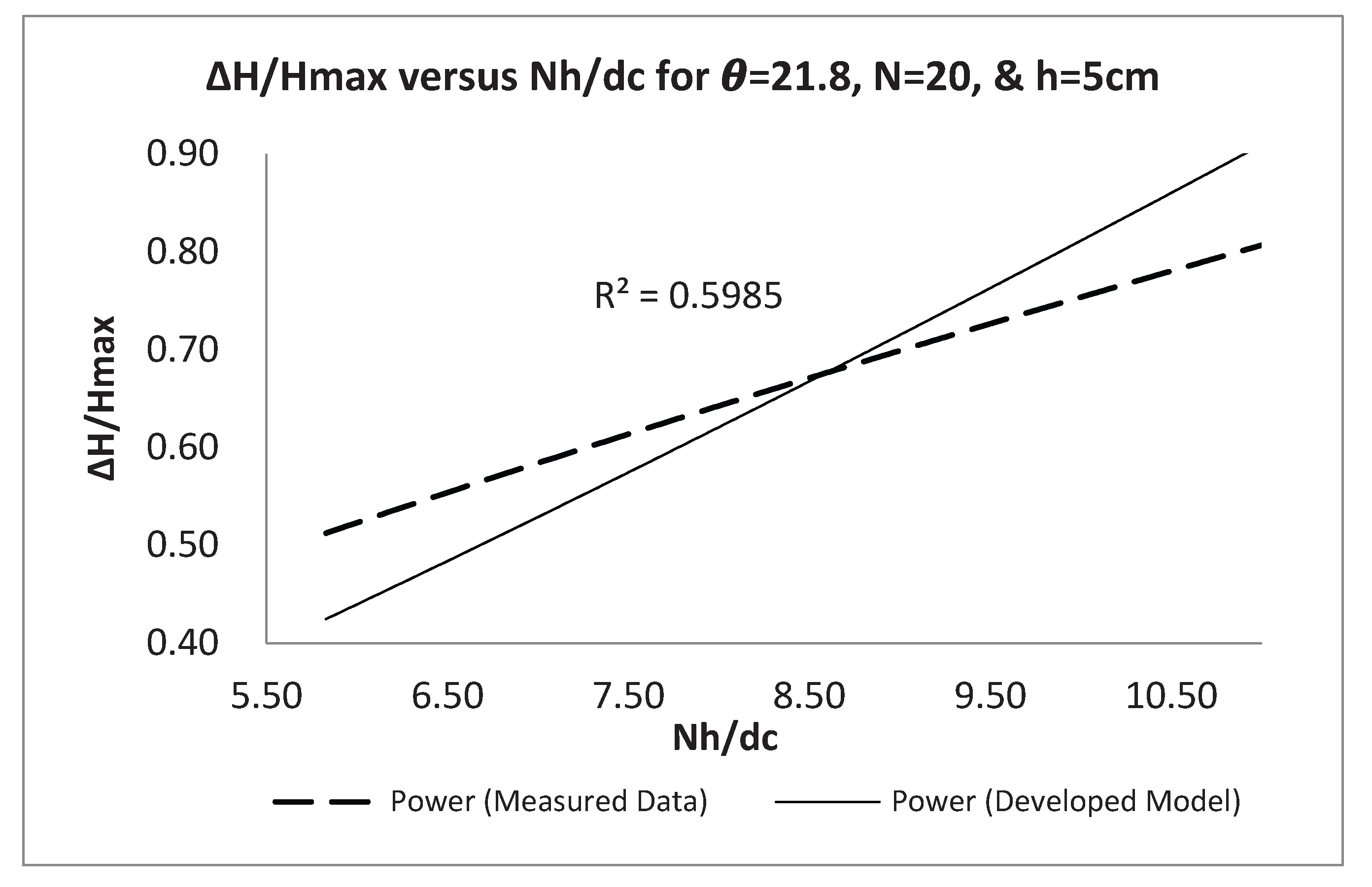
Figure 10.
∆H/Hmax as a function of Nh/dc between 5.50 and 11.00, qw = (0.059 - 0.158) m2/s, Re = (2.36 x 10⁵ - 6.32 x 10⁵), and flow rate, dc/h, of (0.80 - 1.85).
Figure 10.
∆H/Hmax as a function of Nh/dc between 5.50 and 11.00, qw = (0.059 - 0.158) m2/s, Re = (2.36 x 10⁵ - 6.32 x 10⁵), and flow rate, dc/h, of (0.80 - 1.85).
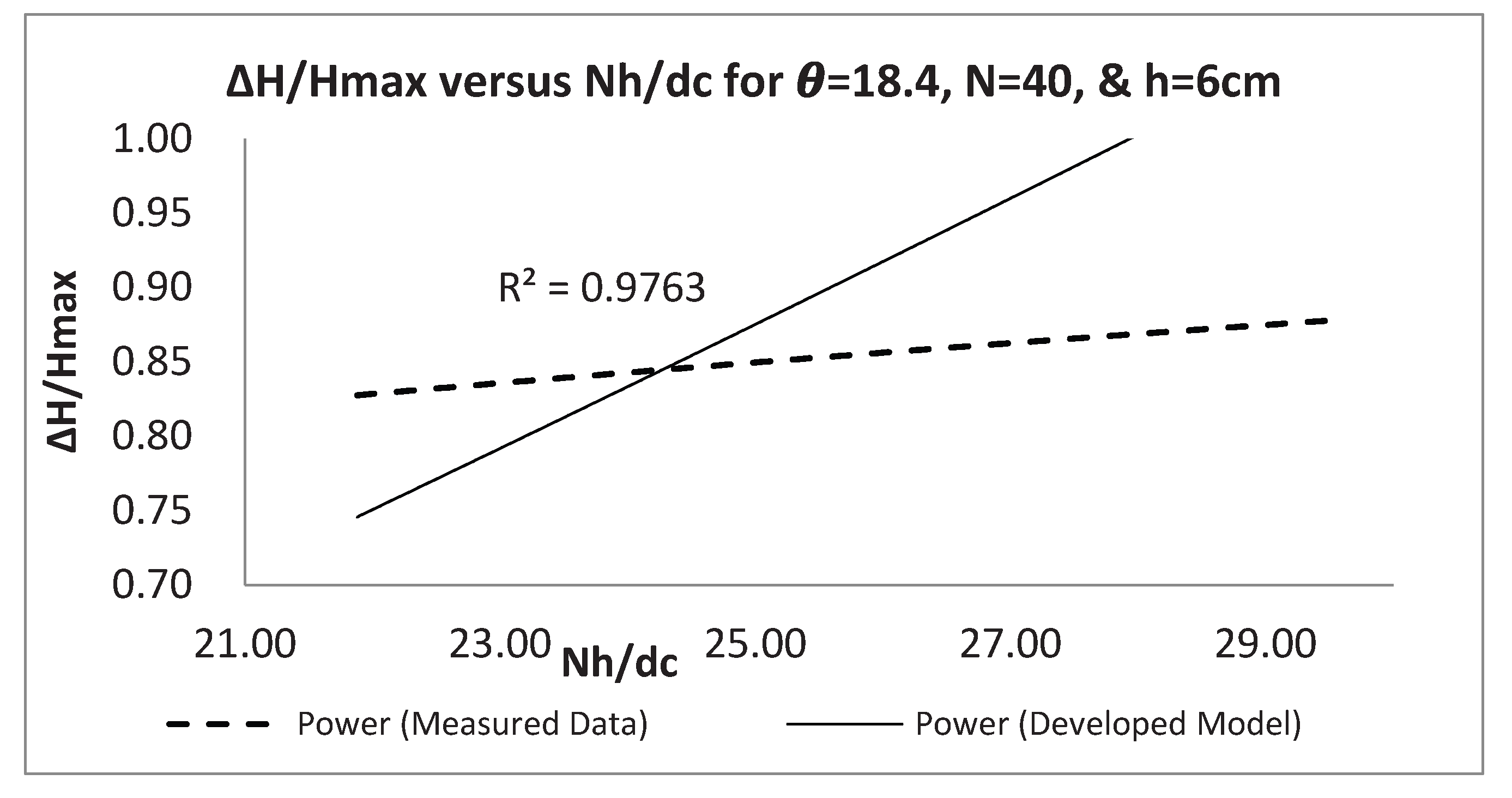
Figure 11.
∆H/Hmax as a function of Nh/dc between 4.50 and 6.60, qw = (0.069 - 0.188) m2/s, Re = (2.76 x 10⁵ - 7.52 x 10⁵), flow rate, dc/h, of (0.78 - 1.53).
Figure 11.
∆H/Hmax as a function of Nh/dc between 4.50 and 6.60, qw = (0.069 - 0.188) m2/s, Re = (2.76 x 10⁵ - 7.52 x 10⁵), flow rate, dc/h, of (0.78 - 1.53).
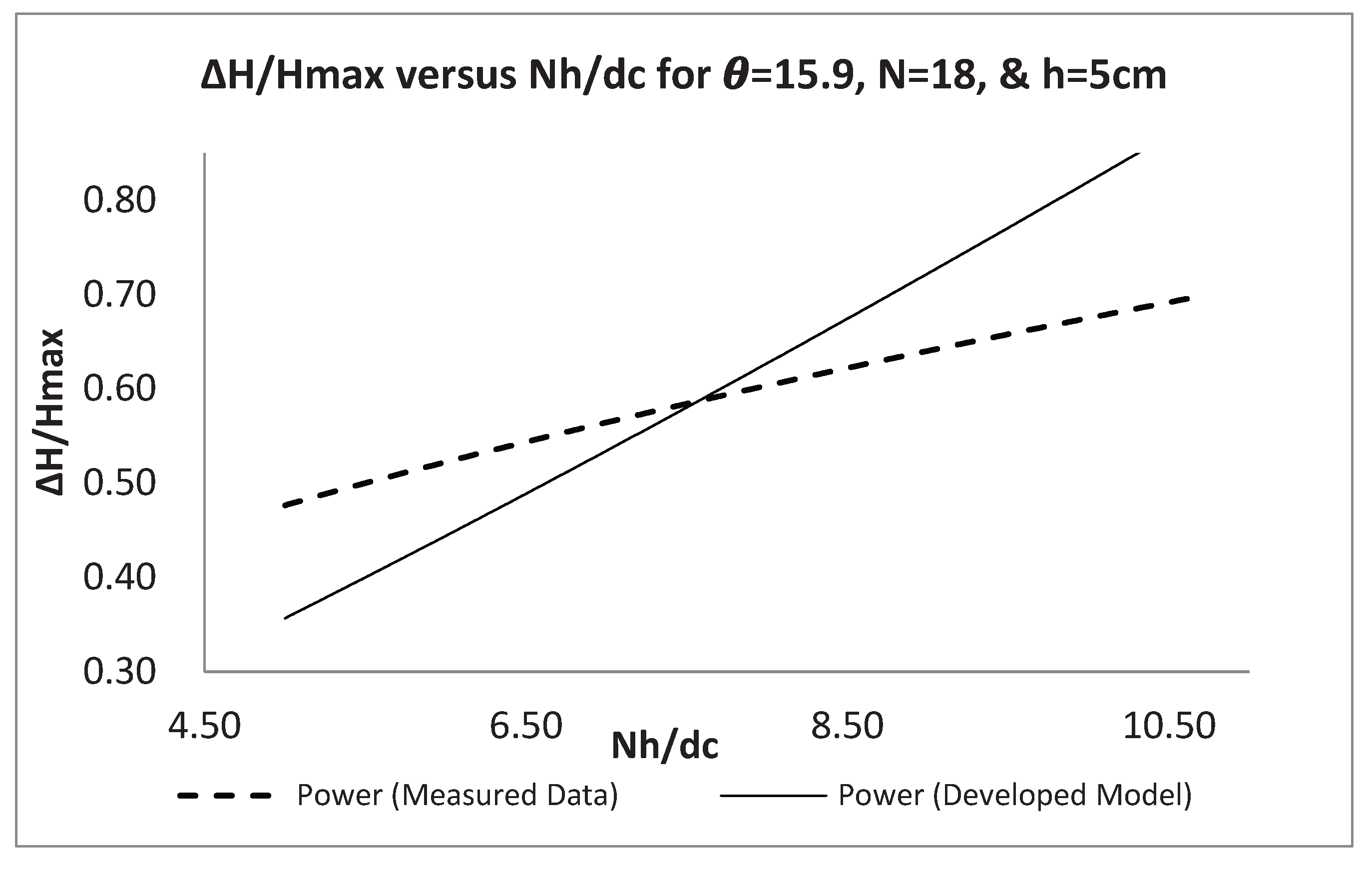
Figure 12.
∆H/Hmax as a function of Nh/dc between 6.25 and 8.60, qw = (0.069 - 0.188) m2/s, Re = (2.76 x 10⁵ - 7.52 x 10⁵), flow rate, dc/h, of (0.78 - 1.53).
Figure 12.
∆H/Hmax as a function of Nh/dc between 6.25 and 8.60, qw = (0.069 - 0.188) m2/s, Re = (2.76 x 10⁵ - 7.52 x 10⁵), flow rate, dc/h, of (0.78 - 1.53).
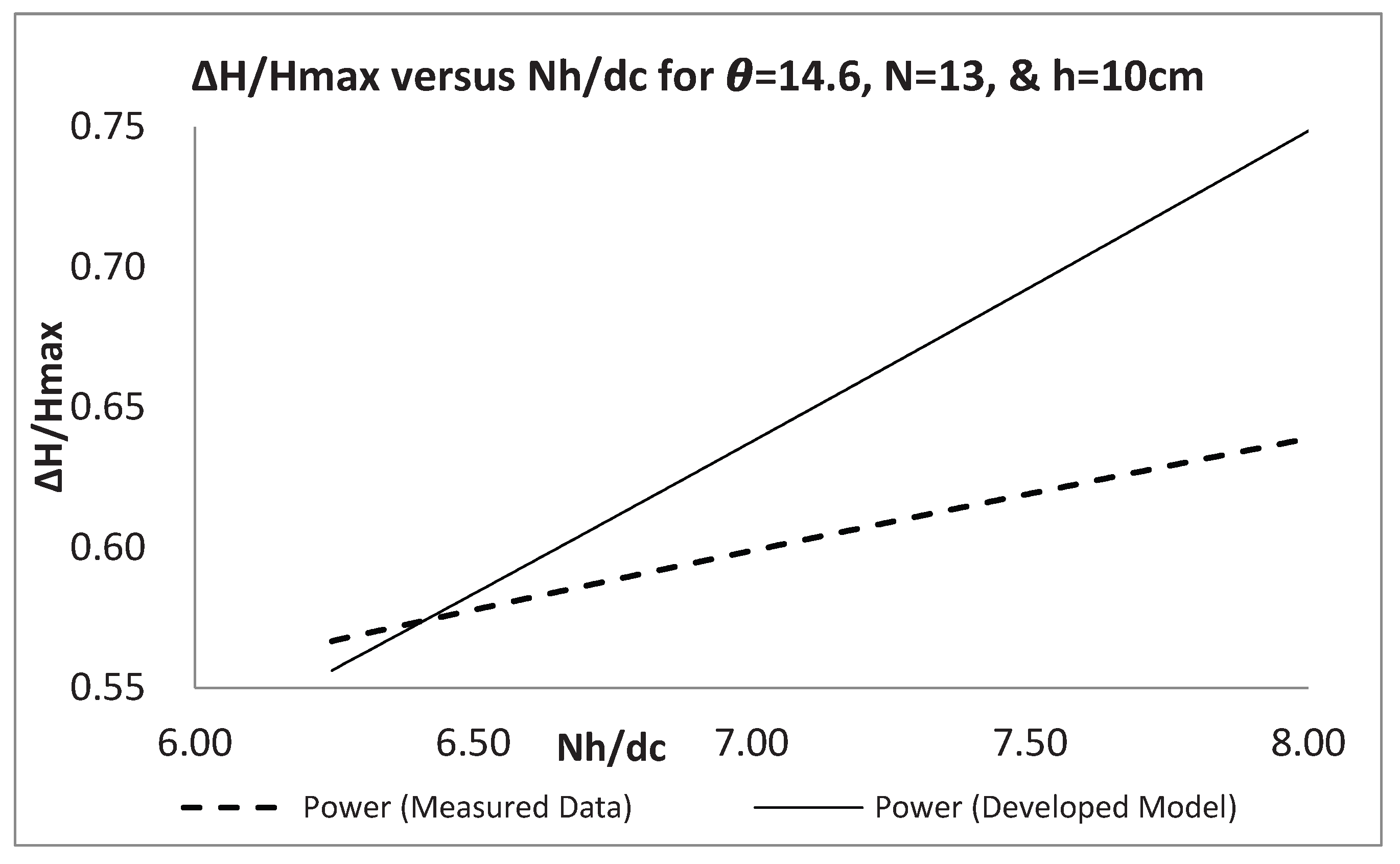
Figure 13.
∆H/Hmax as a function of Nh/dc between 6.20 and 8.00, qw = (0.05 - 0.234m2/s), Re = (2.0 x 10⁵ - 9.36 x 10⁵), & flow rate, dc/h, of (1.27 - 3.55).
Figure 13.
∆H/Hmax as a function of Nh/dc between 6.20 and 8.00, qw = (0.05 - 0.234m2/s), Re = (2.0 x 10⁵ - 9.36 x 10⁵), & flow rate, dc/h, of (1.27 - 3.55).
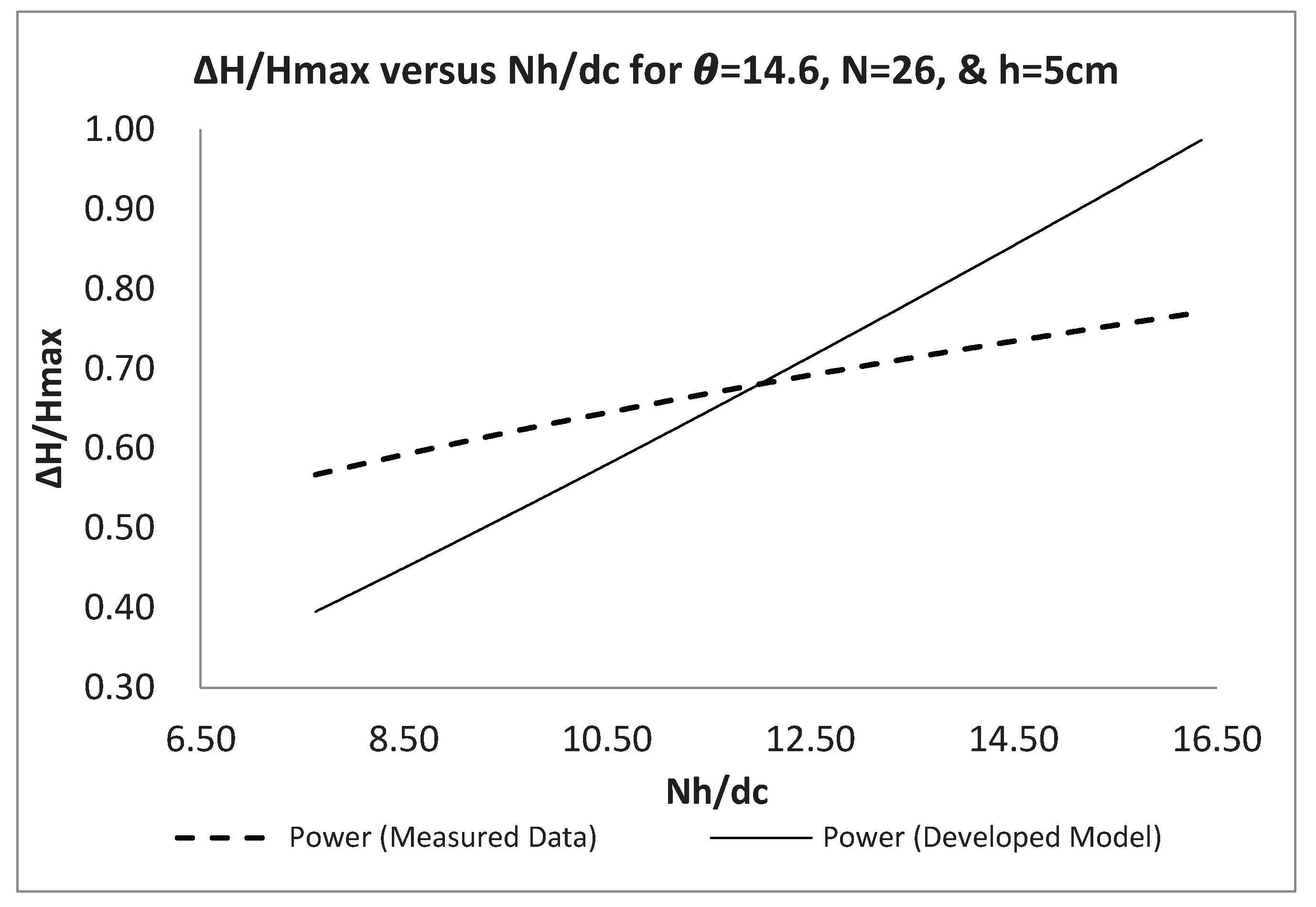
Figure 14.
∆H/Hmax as a function of Nh/dc between 5.00 and 12.00, qw = (0.035 - 0.234) m2/s, Re = (1.40 x 10⁵ - 9.36 x 10⁵), & flow rate, dc/h, of (1.0 - 3.55).
Figure 14.
∆H/Hmax as a function of Nh/dc between 5.00 and 12.00, qw = (0.035 - 0.234) m2/s, Re = (1.40 x 10⁵ - 9.36 x 10⁵), & flow rate, dc/h, of (1.0 - 3.55).
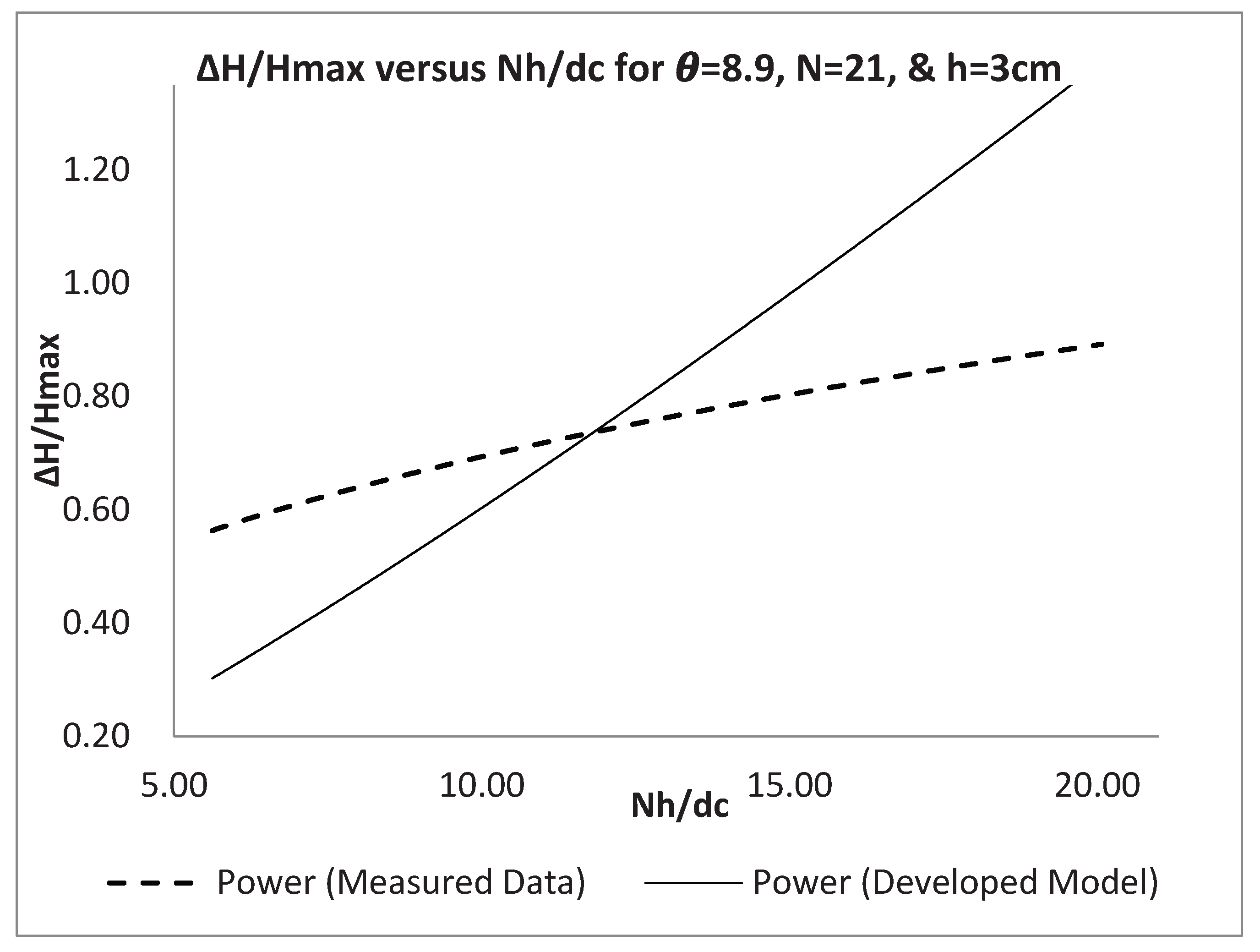
Figure 15.
∆H/Hmax as a function of Nh/dc for θ = 3.4o, N = 10, h (cm) = 14.3, qw = (0.61 - 0.92) m2/s, Re = (2.44 x 10⁶ - 3.68 x 10⁶), dc/h = (0.82 - 1.85).
Figure 15.
∆H/Hmax as a function of Nh/dc for θ = 3.4o, N = 10, h (cm) = 14.3, qw = (0.61 - 0.92) m2/s, Re = (2.44 x 10⁶ - 3.68 x 10⁶), dc/h = (0.82 - 1.85).
Disclaimer/Publisher’s Note: The statements, opinions and data contained in all publications are solely those of the individual author(s) and contributor(s) and not of MDPI and/or the editor(s). MDPI and/or the editor(s) disclaim responsibility for any injury to people or property resulting from any ideas, methods, instructions or products referred to in the content. |
© 2026 by the authors. Licensee MDPI, Basel, Switzerland. This article is an open access article distributed under the terms and conditions of the Creative Commons Attribution (CC BY) license (http://creativecommons.org/licenses/by/4.0/).
Copyright: This open access article is published under a Creative Commons CC BY 4.0 license, which permit the free download, distribution, and reuse, provided that the author and preprint are cited in any reuse.


