
Submitted:
21 April 2026
Posted:
22 April 2026
You are already at the latest version
Abstract
To overcome the high labor intensity and severe vegetative damage inherent in the mechanized picking of Osmanthus fragrans at the full bloom stage, a selective separation mechanism utilizing a flexible roller-brush was proposed. First, biomechanical thresholds for selective detachment were quantitatively established, requiring 1.2 N for corolla-pedicel abscission and >5.0 N for petiole-branch retention. Rigid-flexible coupled transient dynamic simulations verified that flexible polyurethane (PU) bristles effectively attenuate impact forces via a "flexible unloading effect." This mechanism precisely transfers targeted detachment kinetic energy (~1.3 N) to fragile pedicels while restricting forces on robust petioles (~2.5 N) below the damage threshold. Furthermore, a terrain-adaptive picker (CZD-01) with a three-degree-of-freedom contour-following arm was developed. A mixed I-Optimal response surface design was employed to optimize the operational parameters. ANOVA revealed that bristle material is the absolute dominant factor determining the leaf detachment rate (P<0.0001). Under the globally optimized configuration-a roller brush rotational speed of 161 r/min, a circumferential rotation speed of 8 r/min, and smooth PU bristles-field validations demonstrated an average flower picking rate of 84.0% and a strictly controlled leaf detachment rate of 6.5%. The developed flexible picking technology achieves an optimal balance between productivity and canopy protection, offering a robust mechanization paradigm for fragile floral crops.
Keywords:
Osmanthus fragrans
; selective separation
; roller-brush parameter optimization
; field test
1. Introduction
Osmanthus fragrans (sweet osmanthus), native to China, is a traditional aromatic species with extensive applications in the food, fragrance, pharmaceutical, and cosmetic industries [1,2,3,4]. However, O. fragrans picking has long relied on manual labor, characterized by high labor intensity, low efficiency and high cost. According to statistics, manual picking of O. fragrans requires 450-600 working hours per hectare, with picking costs monopolizing over 40% of the total gross output value. With increasing labor shortages and rising production costs, mechanized picking has become imperative for the sustainable development of the O. fragrans industry.
Currently, flower picking equipment has diversified, with core mechanisms including vibration, pneumatic, shearing, and roller-brush systems [5,6,7,8,9,10,11,12,13]. For vibration picking, existing studies have used vibration motors or linear reciprocating mechanisms to realize vibration shedding of O. fragrans and related flowers. For pneumatic picking, some scholars have developed negative pressure suction and portable pneumatic pickers based on aerodynamic principles. For shearing picking, relevant equipment uses end-effectors to achieve precise cutting and separation of specific flowers. For roller-brush picking, relevant studies have significantly improved the mechanized picking efficiency of camellia, chrysanthemum and other crops by applying multi-degree-of-freedom manipulators, friction rollers or cam-disc comb mechanisms.
Although these mechanized picking technologies have advanced for high-volume floral crops such as chrysanthemums and roses, they face significant limitations when applied to O. fragrans picking [14,15]. Vibration technology transmits vibration through trunks or branches to promote flower shedding; since the pedicel attachment force of O. fragrans decreases significantly during the late flowering stage, this method achieves good picking effect at this stage. However, compared with the easy-to-shed late flowering stage, the pedicel bonding force of O. fragrans at full bloom stage remains at a high level, which causes a challenging phenological and mechanical conflict for mechanized picking. Pneumatic technology uses negative pressure adsorption for picking, but its airflow attenuates rapidly in dense canopies, resulting in insufficient detachment force on pedicels and low flower picking rate, indicating that non-contact aerodynamic methods are difficult to overcome the high bonding force at full bloom stage. Shearing technology is mainly suitable for picking single flowers, and cannot achieve large-scale picking facing the huge and dense flowering quantity of O. fragrans.
In contrast, roller-brush picking has demonstrated high efficiency for economic crops such as honeysuckle (Lonicera japonica) and goji berry (Lycium barbarum). However, existing roller-brush designs mainly rely on rigid or semi-rigid bristles, with inherent low picking efficiency and risk of inducing branch bending. O. fragrans flowers are only 3–5 mm in diameter and extremely fragile, and fragile petals containing essential oils are susceptible to damage from rigid contact [16]; meanwhile, O. fragrans branches have low lignification degree and are susceptible to bending and fracture. In addition, the full bloom stage of O. fragrans is only 7–10 days short, requiring picking operations to maximize flower integrity and reduce leaf detachment rate on the premise of ensuring high efficiency. The above research status indicates that the core bottleneck of roller-brush picking lies in accurately matching flexible operating parameters according to the biomechanical characteristics of crops.
To address these challenges, this study proposes a selective picking mechanism based on flexible profiling technology. This mechanism uses elastic deformation of bristles to slide over tough O. fragrans leaves, and delivers targeted impact forces to fragile pedicels. Based on this mechanism, a flexible roller-brush type O. fragrans picker was designed, and a technical path to solve the problem of efficient and low-loss picking of O. fragrans at full bloom stage established through biomechanical testing, structural optimization and parameter experiments. This study aims to provide theoretical support and equipment reference for the picking and processing of characteristic forest products, there by promoting mechanized forestry operations.
2. Materials and Methods
2.1. Test Object and Morphological Characteristics
2.1.1. Test Object
Field picking tests were conducted in October 2025 at the O. fragrans Standardized Cultivation Base of Hubei University of Science and Technology, Xianning , Hubei Province, China. Eleven-year-old O. fragrans var. thunbergii was selected as theprimary subject. Among main O. fragrans varieties, O. fragrans var. thunbergii has a concentrated full bloom stage (usually September to October), and its essential oil content significantly exceeds that of O. fragrans var. latifolius and O. fragrans var. semperflorens, with high commercial development value.
The test forest was planted on flat, standardized land, with vigorous growth and full canopies. To accurately evaluate the performance of the flexible picking mechanism and decouple the potential interference caused by uneven chassisposture on hilly terrains, this initial field validation was purposely conducted in aflat and standardized plantation. Field measurement results showed that the crown diameter of samples ranged from 3000 to 4000 mm, plant height ranged from 4000 to 5000 mm; the average plant spacing of the forest land was 2800 mm, and the average row spacing was 3000 mm (Figure 1). The spatial layout and tree morphological characteristics of the forest land fully meet the unstructured field operation and chassis traffic requirements of the picker platform.
2.1.2. Morphological Characteristics
O. fragrans is an evergreen shrub or small tree of the family Oleaceae. Its inflorescences are usually cymes densely clustered in leaf axils of branches, some inflorescences nearly corymbose, and multiple small flowers usually grow in each leaf axil. In terms of floral microstructure, bracts are broadly ovate and fleshy, about 2–4 mm long; pedicels bearing corollas are slender and delicate, 4–10 mm long. In addition, the total floral length is only 3–4 mm, and the corolla tube is very short, about 0.5–1 mm (Figure 2).
The above spatial distribution morphology and geometric characteristics have a decisive impact on the design of picking actuators. The clustered morphology at leaf axils requires picking bristles to have good branch-leaf penetration ability; the structural feature of tiny corolla with slender pedicel directly forms the physical action target for selective separation by flexible roller-brushes.
2.2. Selective Separation Mechanism and Picking Window
2.2.1. Definition of Selective Separation Mechanism
The core of selective separation in mechanized O. fragrans picking is to achieve physical detachment of target floral organs from the parent plant (branches and leaves) through controlled impact (Figure 3), while ensuring that non-target organs remain undamaged. Combined with the morphological characteristics and growth patterns of O. fragrans, this study defines effective separation in the picking process as the following two modes:
(1) Corolla-pedicel detachment: Picking bristles impact the corolla, causing the corolla to fracture at the structural weak point connecting it with the pedicel.
(2) Pedicel-branch separation: Picking bristles directly penetrate and engage flower clusters, causing the whole pedicel to detach under force from the leaf axil junction of the branch.
In actual field operations, both detachment modes can achieve effective collection of O. fragrans products without inducing mechanical trauma to adjacent vegetative structures such as foliage and stems
2.2.2. Time-Varying Evolution Law of Mechanical Characteristics
The resistance to mechanical picking in O. fragrans varies temporally, exhibiting significant dynamic changes throughout the flowering phenology. To obtain accurate mechanical thresholds for picker operation, continuous monitoring was performed over the full 9-day observation period. (encompassing the entire flowering period from anthesis to senescence) on selected O. fragrans var. thunbergii sample trees based on the test forest. During the 9-day observation period, periodic in-situ sampling combined with a microcomputer-controlled force measurement system was adopted to systematically measure the dynamic evolution data of petiole and pedicel bonding forces at different phenological stages.The detachment force was measured using a high-precision digital force gauge(HP-50, Edberg Instruments; range: 0–50 N, resolution: 0.01 N) mounted on a motorized vertical test stand. To minimize the influence of the strain-rate dependency inherent in viscoelastic plant tissues, a constant tensile loading rate of 10 mm/min was strictly applied during all measurements. For each observation day, 30 samples (N=30) were randomly selected for both the corolla-pedicel and petiole-branch junctions to guarantee the statistical reliability of the threshold data.
An analysis of the temporal evolution of mechanical properties for each botanical component across phenological stages (Figure 4) establishes the following strict mechanical boundaries:
(1) Upper threshold for leaf retention: Throughout the observation period, the bonding force at the petiole to branch junction (Figure 4a) consistently exhibits high structural resistance. Although a slight decline occurrs during the late flowering stage, its lower quartile remained strictly bounded above 5.0 N. This substantial mechanical resilience provides a reliable safety margin to prevent inadvertent foliar detachment during dynamic picking operations.
(2) Lower critical threshold for selective detachment
The separation forces requisite for the two defined detachment modes exhibited distinct initial values but converged significantly over time(Figure 4b、4c). Specifically, bonding forces at both the pedicel to branch junction and the corolla to pedicel interface demonstrate a nonlinear downward trajectory. During the full bloom stage (Days 3 to 6), the structural integrity of both floral connection points deteriorates rapidly, causing the required separation forces to fluctuate within the interval of 0.3 N to 1.2 N. From the perspective of mechanical engineering, guaranteeing high picking efficiency across the entire full bloom window necessitates that the applied impact force overcomes the upper boundary of this biological resistance range, thereby accommodating the more resistive early phase on Day 3. Consequently, the minimum critical force required for effective and reliable floral separation, defined herein as the operational picking threshold, is strictly established at 1.2 N.
(3) Convergence of biomechanical and economic optima: Prior research establishes that essential oil accumulation within O. fragrans corollas reaches its absolute maximum during the full bloom stage [17]. Superimposing this biochemical peak onto the empirical mechanical profiles demonstrates that the full bloom phase serves not only as the period of highest commercial viability but also as the ideal operational window for achieving high efficiency mechanized picking with minimal structural damage.
2.2.3. Determination of Comprehensive Picking Window
Based on the preceding analysis, the optimal picking window for O. fragrans must be dually constrained by phenology within the temporal domain and by structural detachment thresholds within the mechanical domain. Prior research indicates that while the bonding force at the pedicel decreases during the late flowering stage, rendering mechanized detachment readily achievable, this advanced stage possesses no economic viability for commercial picking due to the severe dissipation of volatile aromatic compounds.
Consequently, the integrated picking window defined within this study establishes two mandatory constraints. Temporally, machine operations are strictly confined to the full bloom phase to capture maximum commercial value (a narrow duration typically spanning three to five days). Mechanically, the dynamic impact force F exerted by the picking actuator upon the canopy must be rigorously regulated within a specific operational range, satisfying the following mechanical boundary condition:
2.3. System Composition and Working Principle of the Picker
2.3.1. System Composition of the Picker
To adapt to the unstructured terrain of O. fragrans forest land in hilly areas of southern China and accurately match the tree morphological characteristics described above, the CZD-01 flexible roller-brush type O. fragrans picker was designed in this study. As shown in Figure 5, the whole machine system is mainly composed of three core modules: a terrain-adaptive chassis with obstacle-crossing capability, a multi-degree-of-freedom picking arm and a flexible roller-brush picking actuator.
Aiming at the complex terrain of forest land, the chassis adopts a wheel-track hybrid configuration with differential and articulated steering. This design has strong obstacle-traversing capability (maximum gradient capability of approximately 30°), and the whole machine has compact dimensions, which can flexibly travel in medium-density O. fragrans plantations (plant and row spacing 2.8 m×3.0 m). The power unit is equipped with a hybrid power system comprising a 150 Ah lithium battery pack and a 6 kW range extender to ensure energy supply for high-intensity continuous operations. The whole machine is spatially deployed through multi-section hydraulic profiling arms, with a maximum operating height of 5000 mm, perfectly covering the three-dimensional spatial morphology of 11-year-old O. fragrans var. thunbergii sample trees (tree height 4000–5000 mm, crown width 3000–4000 mm). The total weight of the equipment is maintained below 1.8 t, effectively reducing soil compaction damage to the forest land. The main technical parameters are shown in Table 1.
2.3.2. Working Principle
During the initial operational phase, the operator navigates the chassis to the target tree's operational zone using a PWM-based remote control system. Then, the hydraulic system drives the primary arm, secondary arm, and telescopic arm to operate synergistically, conveying the picking actuator to the outer contour of the canopy. The multi-section profiling arms perform geometric envelope according to the shape of O. fragrans trees, ensuring the best fit between the flexible roller-brush and the canopy surface, so as to eliminate picking blind areas to the greatest extent.
After attitude locking, the end-effector enters the picking cycle. The control system drives the brushless motor to drive the flexible roller-brush assembly to rotate at a set speed (adjustable within 0–600 r/min). Under the action of rotating centrifugal force, the bristles cut into the dense leaf axil area, exert physical impact on O. fragrans corolla and pedicel, and finally make O. fragrans fall off [18,19].
2.4. Design of Key Components of the Picker
2.4.1. Design of Flexible Roller-Brush
The flexible roller-brush serves as the end-effector that directly engages with the O. fragrans canopy to achieve physical detachment of floral organs. Its core design goal is to convert the rotational kinetic energy of the driving motor into instantaneous impact force on O. fragrans through flexible matching of structure and material, and strictly limit it within the range of 1.2 N to 5.0 N (Figure 6).
The picking actuator assembly is mainly composed of self-aligning bearings, roller-brush spindle, flexible bristles, bristle holders, brushless DC motor (BLDC) and its drive module. To meet the comparison requirements of different flexible parameters in subsequent tests, a modular assembly design utilizing lock nuts is adopted between the bristle holder and the roller-brush spindle. It ensures radial stability during high-speed rotation and can quickly replace flexible bristles of different materials.
2.4.1.1. Force Analysis of Bristle Striking Flowers
The essence of roller-brush type O. fragrans picking is that the circular motion of bristles generates striking force, which separates the corolla from the pedicel to realize picking operation [20]. The force analysis is shown in Figure 7.
According to force analysis, the forces on the flower decomposed on the x and y axes are:
where: G is the gravity of the flower (N); Fs is the striking force of bristles on the flower (N); FT is the tensile resistance between corolla and pedicel (N); f is the friction force of bristles on the pedicel (N); θ is the picking angle of bristles (rad); ∂ is the tensile angle of the flower (rad).
The friction force on the pedicel during picking can be simplified as:
where: FN is the normal pressure on the flower (N); μ is the friction coefficient between bristles and pedicel.
By combining Equations (2) and (3), the striking force of bristles on the flower can be obtained as:
It can be seen from Equation (4) that the force of bristles on the flower is related to picking angle, friction coefficient between bristles and pedicel, tensile angle of the flower, flower mass, bonding force between corolla and pedicel and other factors. Among them, the picking angle of bristles is related to the rotation of the driving shaft; the tensile angle of the flower and the tensile resistance between corolla and pedicel are related to the variety and picking period of the flower; the friction force between bristles and pedicel is proportional to the normal pressure on the flower, and the friction coefficient is related to the bristle material.
As indicated by Equation (4), the critical striking force Fs exerted by the bristles must overcome the intrinsic bonding resistance of the floral structures. Instead of relying on generalized theoretical material strengths, this study directly utilizes the in situ biomechanical measurements detailed in Section 2.2.2 to determine the engineering target.According to the empirical temporal evolution data (Figure 4), the separation forces requisite for both defined detachment modes (corolla to pedicel interface and pedicel to branch junction) fluctuate within the interval of 0.3 N to 1.2 N during the full bloom stage. From a mechanical engineering perspective, successful pick does not necessitate the simultaneous fracture of both joints; rather, detachment is guaranteed once the applied impact exceeds the yield limit of the weaker node along the force transmission path.To guarantee reliable and high-efficiency selective detachment across the entire full bloom canopy-ensuring the effective pick of even the most strongly attached flowers within this period-the picking actuator must be designed to generate a dynamic impact force that strictly overcomes the upper boundary of this biological resistance range. Consequently, the definitive dynamic target for the picking actuator is rigorously established at 1.2 N. This parameter not only ensures complete floral detachment but also maintains a substantial safety margin below the foliar damage threshold (5.0 N).
2.4.1.2. Dynamic Analysis of Bristles and Motor Selection
The roller-brush assembly is mainly subjected to self-rotation and picking resistance during rotation, so the calculation is divided into two parts:
(1) Self-resistance torque:
The moment of inertia J of the roller-brush can be calculated according to the size and mass of the roller-brush assembly:
where: J is moment of inertia (kg·m²); m is equivalent mass (kg); r is equivalent radius (m).
According to the rotational form of Newton's second law, the torque T required for the rotation of the roller-brush assembly can be obtained:
where: T is torque (N·m); α is angular acceleration (rad/s²).
𝑇=𝐽𝛼
(2) Picking resistance torque:
The picking resistance torque M is:
where: M is picking torque (N·m); R is bristle length (m), 0.35;N is number of bristles, 13(limit value/3); is force of flower detachment(N), 1.2.
M=NFR
In summary:
The required torque MZ of the motor is:
where: MZ is required torque of the motor (N·m); K is safety factor.
MZ=K(T+M)
According to known conditions, the required torque of the motor MZ=5.748 N·m, and the speed range is 0–600 r/min.Based on the specifications of Zhongda Motor, the Z55BLD500-48GHL motor (rated speed 3000 r/min) was selected, the reducer is 5GU5L, and the speed ratio is 5.
2.4.1.3. Selection and Arrangement of Roller-Brush Bristle Materials
roller-brush bristles are key components of the picking device, which directly affect the picking effect [21,22]. The material should be flexible, with certain toughness and moderate surface roughness. Too soft bristles are easy to entangle with leaves and branches, while too hard bristles will damage leaves and branches. Therefore, roller-brush bristle materials should have low elastic modulus, certain elongation deformation and recoverability. According to the above requirements, three materials are selected, as shown in Table 2.
O. fragrans branches, which are highly branched, exhibit diameters of 6–8 mm, while cymes in leaf axils display widths of 30–50 mm. The bristle spacing should be determined according to the branch diameter range and cyme width range. Too small spacing is easy to entangle with branches, while too large spacing will affect picking efficiency. Therefore, to ensure flower picking rate and picking efficiency, the bristles are arranged in staggered rows between adjacent rows, that is, the spacing of bristles in the same row is set to 20 mm, and the spacing of bristles in two adjacent rows is set to 10 mm.
2.4.1.4. Transient Dynamic Simulation Using ANSYS Workbench
To verify the selective separation mechanism of the flexible roller-brush at the micro-dynamic level, a rigid-flexible coupled collision model between the picking actuator and plant components (flower, leaf, and branch) was established and solved using ANSYS Workbench [23,24,25].
(1) Physical Model Establishment and Boundary Condition Setting
To ensure the high-fidelity of the rigid-flexible coupled transient dynamic simulation, the biomechanical properties of the O. fragrans components and the bristle materials must be accurately defined. Due to the high water content and complex viscoelasticity of fresh plant tissues, calculating their exact hyperelastic constitutive models requires massive computational resources. Therefore, based on standard agricultural engineering practices, the plant components (branch, petiole, leaf, pedicel, and corolla) were simplified as macroscopic isotropic linear elastic materials.
The physical and mechanical parameters inputted into the ANSYS Engineering Data module were determined through a combination of preliminary static load tests and generalized references from similar broad leaf woody plants. The specific material properties utilized to govern the collision and energy dissipation behaviors in the simulation are detailed in Table 3.
(2) Dynamic Response Analysis and Mechanism Verification
To comprehensively reveal the operational mechanism of the flexible bristles, the simulationresults were analyzed in depth from two dimensions: spatial stress distribution and transienttime history.
- ①
- Spatial Deformation and Stress Distribution Characteristics
The total deflection and equivalent stress contours at the instant of impact (t≈0.05 s) wereextracted, as shown in Figure 8 and Figure 9.
As illustrated in the total deflection contours (Figure 8a and Figure 9a), under the dynamic impact ofthe flexible bristles, both the vegetative leaf and the flower undergo significant forced bendingdeformation, with maximum deflections reaching 13.08 mm and 9.56 mm, respectively. This mutual flexible deformation between the plant organs and the polyurethane bristles effectively prolongs the contact buffer duration and drastically attenuates the peak impact characteristic of rigid actuators, demonstrating an excellent “flexible unloading effect” (energy-absorbingcapacity).
The equivalent stress contours (Figure 8b and Figure 9b) clearly illustrate the spatial distribution characteristics of impact energy transmission. Whether striking the leaf or the flower, the maximum equivalent stress does not appear at the contact interface but is precisely concentrated at the basal junction regions-namely, the “Petiole-Branch” and “Pedicel-Branch”interfaces. This phenomenon of stress concentration provides fundamental mechanical evidence that these junctions constitute the weakest physical links in the biological chain, perfectly identifying them as the effective abscission positions.
- ②
- Transient Bonding Force Time-History Analysis
To further quantitatively evaluate whether the transient impact meets the selective detachmentthresholds, the time-history curves of the normal instantaneous bonding forces wereextracted, as presented in Figure 10.
As shown in Figure 10a, during the floral impact simulation, force transmission exhibits a distinct temporal sequence. At t≈0.045 s, the striking action on the corolla rapidly induces a bonding force peak of approximately 0.6 N at the corolla-pedicel interface. Subsequently, the impact kinetic energy propagates to the “Pedicel-Branch” junction, reaching a maximum peak of approximately 1.3 N at t≈0.055 s. Crucially, this peak successfully exceeds the lower threshold for selective detachment (1.2 N) calibrated in the preliminary phase of this study. This temporally verifies the mechanical feasibility of the flexible bristles in achieving effective floral abscission. Furthermore, following the primary impact, the connection structures undergosignificant damped oscillation (residual vibration) within the 0.07 s to 0.12 s interval. This alternating stress fatigue further promotes the secondary shedding of any remaining loosely attached flowers.
Conversely, Figure 10b presents the dynamic response when the bristles sweep across the vegetative leaves. Benefiting from the “flexible unloading effect” verified in the preceding contour analysis, the contact duration is significantly extended. The maximum transient force generated at the petiole-branch base is effectively restricted to approximately 2.5 N at t≈0.065 s. This value retains a substantial safety margin, as it is far below the upper retention threshold (5.0 N) required to induce mechanical foliar damage.
The cross-validation of the aforementioned contour plots and transient curves fundamentally corroborates the “selective separation mechanism” of the flexible roller-brush. The system not only precisely targets the weak abscission points spatially but also dynamically delivers a directional detachment kinetic energy exceeding 1.2 N to the fragile pedicels, while strictly capping the impact force on the robust petioles below 5.0 N. Consequently, high-efficiency picking of O. fragrans is achieved concurrently with extremely low rates of branch and leaf damage.
2.4.2. Design of Profiling Arm
To address poor conformance resulting from variable canopy architectures, a profiling articulated structure was designed, which can make up for the poor profiling effect and single operating parameters of single-axis pickers (Figure 11). Each articulated joint can be adjusted by 0–90°, and the attitude of the roller-brush assembly can be adjusted according to the trunk-lateral branch-twig tree structure of O. fragrans trees, so that the bristles fit along the canopy contour, avoiding picking blind areas and improving picking coverage. It can adapt to canopies of different shapes, trees of different varieties and forests of different modes, broadening the operating range of the picker.
2.4.3. Structure and Principle of the Picker Platform
The terrain of O. fragrans plantations dictates the design of the picker platform. Aiming at the operation requirements of complex forest land, a wheel-track composite profiling picker platform (Figure 12) was developed. It adopts a terrain-adaptive obstacle-crossing system, and is designed to possess the potential to cross obstacles in complex environments such as slopes and uneven grounds through articulated steering, articulated arching for obstacle crossing and track-wrapped wheel-set cooperative driving, overcoming the limitations of complex terrain. The innovative application of rigid-flexible dual steering mode, differential steering and articulated steering dual system, addresses the challenges of inaccessibility and limited maneuverability in the forest. The power system adopts a composite configuration of 150 Ah lithium battery and 6 kW range extender, solving the technical bottlenecks of power attenuation and insufficient endurance in extreme terrain, providing stable power for picking operations. The control system adopts remote control+image transmission to ensure the personal safety of operators. The picker platform is mainly composed of wheel-set system, front body, articulated arching component, rear body, etc., as shown in Figure 12. The picker platform adopts four motors to independently drive four wheel sets, and articulated steering, arching obstacle-crossing and support wheels are hydraulically driven, with stable driving, high transmission efficiency and green environmental protection of electric drive. A PWM-based teleoperation architecture is implemented to ensure high-fidelity signal transmission and guarantee operator safety during navigation in complex topographies.
2.5. Experimental Design and Evaluation Indicators
2.5.1. Test Indicators and Factors
Picking efficiency and leaf detachment rate constitute the primary metrics for evaluating picker performance.
1.Flower picking rate
The calculation formula of flower picking rate is:
where: H is flower picking rate (%); A1 is the number of shed flowers; A2 is the number of unshed flowers.
2. Leaf detachment rate
The calculation formula of leaf detachment rate is:
where: Y is leaf detachment rate (%); B1 is the number of shed leaves; B2 is the number of unshed leaves.
Given the impracticability of counting the total number of florets on mature O. fragrans trees (up to 5 meters in height), a stratified random sampling method was implemented for field data collection. The canopy of each sampled tree was conceptually divided into three vertical strata (upper, middle, and lower) and four cardinal directions (east, south, west, and north). Within each of the 12 resulting canopy zones, a standard branch (length:30±5cm) was randomly selected and tagged. The total numbers of inflorescences and leaves on these 12 tagged branches were meticulously recorded manually before and immediately after the picking operation, serving as the sample baseline for calculating (H) and (Y).
Roller-brush rotational speed, circumferential rotating speed and brush material of the picker have a great impact on flower picking rate. Therefore, this study takes roller-brush rotational speed A, circumferential rotating speed B and brush material C as factors (test factor coding is shown in Table 4) [26,27], and takes flower picking rate H and leaf detachment rate Y as test indicators to design a three-factor three-level test [28,29,30,31,32,33]. The evaluation indicators are rounded and filled in Table 5.
2.5.2. Experimental Design
2.5.2.1. Mixed I-Optimal RSD
To systematically evaluate the interactive effects of operational parameters andmaterial properties on picking performance, a mixed I-Optimal response surface experimental design was established using Design-Expert software. The design matrix incorporated two continuous variables (Roller speed A and Circumferential rotation speed B) and one categorical variable (Bristle material C, featuring threelevels: PA6 Nylon Rod, Smooth PU Polyurethane Round Rod, and Rough PU Polyurethane Round Rod).
Due to the physical calibration limits of the motors and frequency converters, thecandidate search space was strictly restricted to three discrete levels (-1, 0, 1). Thealgorithm optimally selected 22 experimental combinations (including 5 replicates atthe center point) to minimize the integrated prediction variance across the designspace. The flower picking rate (H) and leaf detachment rate (Y) were selected as theevaluation indicators.
The experimental results for 22 runs are presented in Table 5. Quadratic polynomial regression models were constructed for both flower picking rate (H) and leaf detachment rate (Y). The ANOVA results (Table 6) demonstrate that both models are highly significant, with P-values of 0.0011 and 0.0005, respectively (P < 0.01). Although the Lack of Fit for the picking rate model showed significance (P=0.0381), the extremely small model P-value (0.0011) and sufficient coefficient of determination indicate that the model can still reliably navigate the design space. Conversely, the Lack of Fit for the leaf detachment rate is 0.8200 (not significant), further confirming its exceptional predictive accuracy.
Based on the ANOVA results (Table 6), model reduction was performed by strictly eliminating non-significant interaction and quadratic terms (P>0.05) to establish highly accurate and simplified mathematical models. Since the bristle material (Factor C) is a categorical variable, the comprehensive models were decoded and split into specific predictive equations for eachmaterial type to facilitate practical engineering application.
For the flower picking rate (H), the linear terms (A, B) and quadratic terms (A2, B2) exhibited significant effects, confirming a strong non-linear response to speed variations. The simplified quadratic polynomial equations for the three materials are expressed as follows:
For PA6 Nylon Rod:
For Smooth PU Polyurethane Round Rod:
For Rough PU Polyurethane Round Rod:
For the leaf detachment rate (Y), the ANOVA revealed that the bristle material (C) showed an extremely high impact (P<0.0001), followed by the roller speed (A). Notably, thecircumferential rotation speed (B) and allinteraction terms were statistically non-significant within the tested range. Consequently, the predictive models for vegetative damage were significantly reduced to the following linear equations:
For PA6 Nylon Rod:
For Smooth PU Round Rod:
For Rough PU Round Rod:
2.5.2.2. Analysis of Interactive Effects
Figure 13 illustrates the interactive effects of roller speed and circumferential speedon picking indicators under the optimal material condition (Smooth PU). As roller speed increases, the flower picking rate initially increases and then stabilizes, which is consistent with the energy threshold theory discussed in Section 2.4.1.4. However, the detachment rate rises sharply when the roller speed exceeds level O (mid-speed), suggesting that excessive kinetic energy overcomes the damping capacity of the flexible bristles, leading to increased leaf damage.
3. Results
To validate the picking performance of the roller-brush picker, field tests were conducted in October 2025 at the O. fragrans Cultivation Base of Hubei University of Science and Technology, Xianning, Hubei, China(Figure 14). The experimental site featured flat terrain with intra- and inter-row spacing compatible with picker operation. The test specimens comprised 11-year-old O. fragrans var. thunbergii , with plant heights of 4–5 m and spacing of 2.8 m×3.0 m, meeting the requirements for mechanized picking.
3.1. Multi-objective Global Optimization and Parameter Selection
To identify the optimal operational configuration that balances picking productivity with plant protection, a multi-objective optimization was performed using the numerical optimization module in Design-Expert 13.0. Based on the established regression models, the optimization problem was formulated to maximize the flower picking rate (H) while simultaneously minimizing the leaf detachment rate (Y).
Considering that picking efficiency is the primary economic driver in O. fragrans production,a higher weighting factor (Importance ++++) was assigned to H, whereas a moderate weighting (Importance ++) was assigned to Y to ensure it remained within the safe biological threshold defined in Section 2.2.3. The boundary conditions for the optimization were set as follows:
The global optimization yielded an optimal solution at: roller-brush rotational speed of 160.9 r/min, circumferential rotating speed of 7.9 r/min, and smooth PU round rod as the bristle material. Under this specific combination, the predicted flower picking rate and leaf detachment rate were 83.8% and 6.1%, respectively. To ensure operational feasibility for field picking, these parameters were rounded to A=161 r/min and B=8 r/min for the subsequent validation trials.
3.2. Verification of Field Picking Test
Under the optimized operational conditions (roller-brush rotational speed of 161 r/min, circumferential rotating speed of 8 r/min, and smooth PU round rod), 10 independent field validation trials were conducted to evaluate the actual dynamic performance. The statistical results of the 10 replicates showed that the average flower picking rate reaches 84.00%±1.36% (CV=1.62%), and the average leaf detachment rate was strictly controlled at 6.50%±0.61% (CV=9.38%)(Table 7). The minor standard deviations and extremely low coefficients of variation (both CV<10%) indicate that the flexible roller-brush picker exhibits excellent operational stability and low-loss selectivity in unstructured field environments, perfectly meeting the design objectives for the mechanical picking of O. fragrans at the full bloom stage.
4. Discussion
4.1. Selective Separation Mechanism based on Biomechanical Characteristics
The core of the flexible roller-brush picking mechanism proposed in this study lies in utilizing the “mechanical filtering” effect of flexible materials to achieve precise energy distribution within the complex plant canopy. Biomechanical tests reveal that the bonding force between the pedicel and corolla of O. fragrans at the full bloom stage ranges from 0.3 to 1.2 N, whereas the bonding force at the petiole-branch junction consistently remains above 5.0 N. Transient dynamic simulation results demonstrate that under a rotational speed of 150 r/min, the peak transient bonding force exerted by the flexible bristles on the corolla is approximately 1.3 N. This value precisely exceeds the detachment threshold, thereby guaranteeing effective picking.In stark contrast, the peak transient force acting on the petiole is only about 2.5 N. This is attributed to the “flexible unloading effect” illustrated by the equivalent stress contours: the bristles undergo forced bending deformation upon contacting tough leaves, which prolongs the energy transmission duration. Consequently, although the stress is concentrated at the petiole base, it falls far short of the 5.0 N fracture threshold. Furthermore, the post-collision damped oscillation observed in the simulation reduces the reliance on a single impact energy through alternating stress fatigue. This physically explains the fundamental reason why the prototype maintains an extremely low damage rate (6.5%) in field trials.
4.2. Non-linear Impact of Operational Parameters
Regression analysis indicates that both the roller brush rotational speed (A) and circumferential rotation speed (B) exert a significant non-linear impact on the flower picking rate. As the roller speed increases from a low to a high level, the picking rate initially rises and then declines, reflecting a balance between kinetic energy input and the dynamic stiffness of the bristles. At lower speeds, the centrifugal force is insufficient to overcome the bending stiffness of the bristles, preventing them from penetrating deeply into the flower clusters located at the leaf axils. As the speed approaches the optimal value of 161 r/min, the bristles exhibit optimal canopy penetrability.However, as the speed continues to escalate, the “centrifugal stiffening” effect emerges, causing the flexible bristles to exhibit quasi-rigid characteristics during high-speed rotation. This leads to a precipitous drop in their buffering capacity upon contact with leaves, thereby triggering a sharp increase in the leaf detachment rate. Additionally, the negative correlation of the circumferential rotation speed (B) implies that an excessively high sweeping speed shortens the effective interaction time between the bristles and target organs, resulting in missed harvests. The optimal combination of 161 r/min and 8 r/min, determined via multi-objective optimization, essentially identifies the mechanical equilibrium point between kinetic energy supply and effective contact duration.
4.3. Dominant Role of Material Properties in Selectivity
ANOVA results conclusively demonstrate that the bristle material (C) is the absolute core variable determining the leaf detachment rate (P<0.0001). Smooth polyurethane (Smooth PU) exhibits a protective effect vastly superior to that of PA6 nylon. Its lower elastic modulus allows the bristles to reduce local pressure through elastic yielding upon contact with the leaf surface.Simulation contours further elucidate this material advantage: a rigid material with a high modulus causes the stress at the petiole base to rapidly breach the yield limit, whereas the low-modulus smooth PU dissipates the majority of the impact energy through the internal damping characteristics of the material. In comparative trials, the smooth PU material successfully reduced the damage rate to approximately 6.1% while maintaining a baseline picking rate of 83.8%, verifying the necessity of flexible materials for operations in complex, unstructured forestry environments.
4.4. Limitations and Engineering Prospects
Although this study successfully constructs a comprehensive framework from micro-mechanisms to macro-operations, certain limitations remain. First, field validations were primarily conducted in standardized flat plantations. Complex hilly terrains may impose more stringent requirements on the postural stability of the contour-following mechanism. Second, variations in branch density within the O. fragrans canopy can interfere with the trajectory of the bristles, resulting in a slightly lower picking rate in the deep canopy zones compared to the surface layer.Future research should focus on the deep integration of intelligent perception and recognition technologies with the picking end-effector. Utilizing depth vision to perceive canopy density in real-time and dynamically adjusting the roller brush rotational speed will enable a more intelligent, variable-parameter adaptive picking process. Moreover, developing a more universally applicable flexible picking mechanism tailored to the biomechanical differences of O. fragrans across various tree ages and cultivars will be a crucial direction for advancing the mechanized picking of characteristic forest products in China.
5. Conclusions
In this study, a flexible roller-brush picker was proposed to address the technical bottleneck of mechanical picking for Osmanthus fragrans at the full bloom stage.The main conclusions are as follows:
(1) The mechanical window for the selective separation of O. fragrans at the full bloom stage was quantitatively established. The required detachment force for the corolla-pedicel interface is 1.2 N, whereas the damage threshold for the petiole-branch junction strictly remains >5.0 N. Rigid-flexible coupled transient dynamic simulations verified that the flexible bristles utilize a “flexible unloading effect” to precisely deliver a targeted impact of approximately 1.3 N to the fragile pedicels, while restricting the impact on the robust petioles to approximately 2.5 N , theoretically proving the feasibility of low-damage selective picking.
(2) The CZD-01 flexible roller-brush picker was developed as a robust engineering platform. A wheel-track composite chassis was designed to navigate the unstructured terrains of hilly plantations, and a three-degree-of-freedom contour-following arm was integrated to adapt to diverse canopy architectures, effectively eliminating operational blind spots and ensuring optimal spatial posture for the flexible end-effector.
(3) Based on the mixed I-Optimal response surface methodology, it was statistically revealed that the bristle material is the absolute dominant factor determining the leaf detachment rate (P < 0.0001). Multi-objective optimization identified the optimal operational configuration as: smooth polyurethane (Smooth PU) bristles, a roller brush rotational speed of 161 r/min, and a circumferential rotation speed of 8 r/min.
(4) Field validation tests under the optimal configuration demonstrated an average flower picking rate of 84.0% and a severely restricted leaf detachment rate of 6.5%. These results confirm that the proposed flexible picking technology successfully balances high productivity with structural plant protection, providing a viable mechanized solution for the O. fragrans industry.
Author Contributions
Conceptualization, Z.F. and J.T.; methodology, Z.F., J.T., H.C. and X.Z.; software, Z.F. and D.W.; validation, Z.F., D.W., R.Z., Y.Q. and J.X.; formal analysis, Z.F. and J.T.; investigation, Z.F., D.W., R.Z., Y.Q. and J.X.; resources, J.T., H.C. and X.Z.; data curation, Z.F., D.W. and R.Z.; writing—original draft preparation, Z.F.; writing—review and editing, J.T., H.C. and X.Z.; visualization, Z.F. and D.W.; supervision, J.T., H.C. and X.Z.; project administration, J.T. and H.C.; funding acquisition, J.T. and H.C. All authors have read and agreed to the published version of the manuscript.
Funding
This study was funded by the Xianning Municipal Bureau of Science and Technology, with the project name “Research and Development of Intelligent Osmanthus Picking Technology and Equipment” and the funding number 2025NYYF091.
Acknowledgments
The authors sincerely acknowledge the support provided by Hubei University of Science and Technology. In the process of writing this manuscript, no generative artificial intelligence tools were used; the authors bear full responsibility for the content of this manuscript.
Conflicts of Interest
The authors declare no conflicts of interest. The funders had no role in the design of the study; in the collection, analyses, or interpretation of data; in the writing of the manuscript; or in the decision to publish the results.
Abbreviations
The following abbreviations are used in this manuscript:
| PWM | Pulse Width Modulation |
| ANOVA | Analysis Of Variance |
| CV | Coefficient of Variation |
References
- Gao, L.; He, Y.-Q.; Sun, Z.-G.; Lai, J.-D.; Chen, H.-G. Inheritance and Innovation of Intellectual Property Resources of Osmanthus fragrans Industry in China. South China Agric. Sci. Technol. 2023, 44, 185–190. (In Chinese) [Google Scholar]
- Li, Y.-L.; Ye, T.-S.; Zeng, F.-Y.; et al. Determination and Purification of Total Flavonoids in Osmanthus fragrans at Different Harvesting Stages. Asia-Pac. Tradit. Med. 2018, 14, 44–47. (In Chinese) [Google Scholar]
- Chen, G.; Zhang, D.; Chen, F.; et al. Characterization of OfERF17 as a Key Regulator of Petal Senescence in Osmanthus fragrans. Forests 2025, 16, 615. [Google Scholar] [CrossRef]
- Chen, G.; Chen, F.; Zhang, D.; et al. Osmanthus fragrans Ethylene Response Factor OfERF1-3 Delays Petal Senescence and Is Involved in the Regulation of ABA Signaling. Forests 2024, 15, 1619. [Google Scholar] [CrossRef]
- Zhang, J.-Y.; Jia, S.-J.; Qu, Z.-B.; Fu, Z.-G. Design of a New Vibrating Osmanthus fragrans Harvesting Equipment. J. Anhui Agric. Sci. 2018, 46, 155–158. (In Chinese) [Google Scholar]
- Wu, Z.-C.; Li, L.-J.; Zhao, Q.; Guo, X.; Li, J. Design and Research of a Harvesting Actuator for Camellia oleifera Flowers during the Budding Period. Agriculture 2022, 12, 1698. [Google Scholar] [CrossRef]
- Wang, H.-R. Research on Design of Flower-Class Traditional Chinese Medicine Harvesting Equipment Based on KJ-AHP-QFD. Master’s Thesis, Xihua University, Chengdu, China, 2024. (In Chinese) [Google Scholar]
- Li, L.-F. Design and Test of Combing-type Honeysuckle Harvesting Device. Master’s Thesis, Shihezi University, Shihezi, China, 2024. (In Chinese) [Google Scholar]
- Lv, H.; Li, L.-J.; Zhao, Q.; Wu, Z.-C.; Guo, X. Design and Experiment of a Shear-Type Camellia oleifera Flower Harvesting End-Effector. J. Agric. Mech. Res. 2024, 46, 134–139. (In Chinese) [Google Scholar]
- Zhang, H. Design of Motion Control System for End-effector of Roller-type Safflower Picking Robot. Master’s Thesis, Shihezi University, Shihezi, China, 2023. (In Chinese) [Google Scholar]
- Sun, C.-R.; Tan, S.-H.; Sun, S.-L.; et al. Design and test of the key components for a combing-type tobacco harvester. Int. J. Agric. Biol. Eng. 2024, 17, 145–153. [Google Scholar] [CrossRef]
- Zhao, Y.; Liu, J.-Y.; Yang, R.-B.; et al. A comb-brushing-type green soybean pod harvesting equipment: Design and experiment. PLoS ONE 2023, 18, e0293567. [Google Scholar] [CrossRef]
- Chang, C.-M.; Wang, S.-Y.; Chen, R.-S.; Yeh, J.-A.; Hou, M.-T. A Comb-Drive Actuator Driven by Capacitively-Coupled-Power. Sensors 2012, 12, 10881–10889. [Google Scholar] [CrossRef]
- Yang, S.-P.; Zhang, Z.-G.; et al. Optimal design and test of the flexible clamping device for safflower. Int. J. Agric. Biol. Eng. 2025, 18, 19–24. [Google Scholar] [CrossRef]
- Guo, H.; Luo, D.; Gao, G.-M.; Wu, T.-L.; Diao, H.-W. Design and Experiment of a Safflower Picking Robot Based on a Parallel Manipulator. Eng. Agr. 2022, 42, e20210129. [Google Scholar] [CrossRef]
- Qian, Y.; Shan, L.; Zhao, R.; et al. Recent Advances in Flower Color and Fragrance of Osmanthus fragrans. Forests 2023, 14, 1403. [Google Scholar] [CrossRef]
- Huang, Q.; Zhang, Y.-F.; Wei, X.-R.; Xu, Y.-B.; Lin, J.-Z.; Yang, M.; Yang, J.-H.; Han, L.; Zheng, C.; Zhang, D.-K.; et al. Unveiling the Essence, Production Mechanisms, and Extraction Challenges of Osmanthus fragrans Essential Oil. Food Rev. Int. 2025, 41, 3118–3141. [Google Scholar] [CrossRef]
- Ao, J.-X.; Ji, W.; Yu, X.-W.; Ruan, C.-Z.; Xu, B. End-Effectors for Fruit and Vegetable Harvesting Robots: A Review of Key Technologies, Challenges, and Future Prospects. Agronomy 2025, 15, 2650. [Google Scholar] [CrossRef]
- Olfatnia, M.; Sood, S.; Gorman, J.-J.; Awtar, S. Large Stroke Electrostatic Comb-Drive Actuators Enabled by a Novel Flexure Mechanism. J. Microelectromech. S. 2013, 22, 483–494. [Google Scholar] [CrossRef]
- Hohimer, C.-J.; Wang, H.; Bhusal, S.; et al. Design and Field Evaluation of a Robotic Apple Harvesting System with a 3D-Printed Soft-Robotic End-Effector. T. ASABE 2019, 62, 405–414. [Google Scholar] [CrossRef]
- Sui, S.-S.; Li, M.; Li, Z.-P.; et al. A comb-type end-effector for inflorescence thinning of table grapes. Comput. Electron. Agr. 2024, 217, 108607. [Google Scholar] [CrossRef]
- Ehlert, D. Current status and advanced solutions for chamomile harvesters. In Proceedings of the 69th International Conference on Agricultural Engineering (LAND TECHNIK AgEng), Hanover, Germany, 10–11 November 2011; 16, pp. 111–118. [Google Scholar]
- Wang, R.-Y.; Zheng, Z.-A.; Lu, X.-F.; et al. Design, simulation and test of roller comb type Chrysanthemum (Dendranthema morifolium Ramat) picking machine. Comput. Electron. Agr. 2021, 187, 106295. [Google Scholar] [CrossRef]
- Li, Z.-Y.; Yuan, X.-J.; Yang, Z.-P. Design, simulation, and experiment for the end effector of a spherical fruit picking robot. Int. J. Adv. Robot. Syst. 2023, 20. [Google Scholar] [CrossRef]
- Xu, H.; Xu, D.; Zheng, C.; Bai, X.; Li, W. Development and Testing of a Friction-Driven Forestry Electric Monorail Car. Forests 2023, 14, 263. [Google Scholar] [CrossRef]
- Li, L.-F.; Li, S.-F.; Li, J.-B.; et al. Design and Test of a Comb-Brush-Type Honeysuckle-Picking Device. Agriculture 2023, 13, 2088. [Google Scholar] [CrossRef]
- El-Moulaa, M.; Zaalouk, A.-K.; Mahmoud, W.-A. Design of a portable machine for picking chamomile flowers. Sci. Rep. 2026, 16, 8726. [Google Scholar] [CrossRef]
- Yang, G.-Q.; Wu, D.; Xu, W.-P.; Tang, Y. Design and experiment of a comb-and-scrape Idesia polycarpa Maxim threshing device. Sci. Rep. 2025, 15, 33871. [Google Scholar] [CrossRef]
- Ma, C.-C.; Zeng, H.-F.; Ge, Y.; et al. Design and Experiment of a Roller-Brush Type Harvesting Device for Dry Safflower Based on Plant Clamping and Pose Adjustment. Machines 2025, 13, 88. [Google Scholar] [CrossRef]
- Wang, C.; Shao, Y.-C.; Zhang, Y.; et al. Design and Experimental Research of a Comb-Type Buckwheat-Harvesting Device. Agriculture 2023, 13, 1383. [Google Scholar] [CrossRef]
- Yan, F.-X.; Li, X.-J.; Zhu, Y.-Y.; Ma, Z.-F.; Alisher, N. Crawler comb brush type Camellia oleifera fruit picking machine based on the multi-element main branch model. Biosyst. Eng. 2025, 260, 104327. [Google Scholar] [CrossRef]
- Jangali, R.; McGuinness, B.; Lim, H.; et al. Development of a Novel Multipurpose Robotic End Effector for Fruitlet Thinning and Fruit Harvesting of Apples. In Proceedings of the 2024 IEEE 20th International Conference on Automation Science and Engineering (CASE), Puglia, Italy, 28–31 August 2024; pp. 2073–2078. [Google Scholar]
- Huang, Q.; Li, Y.; Wu, X.; Liu, J.; Zhang, X. Design of Rubber Tapping Mechanical Test Bench and Optimization of Rubber Tapping Machine Parameters. Forests 2025, 16, 1764. [Google Scholar] [CrossRef]
Figure 1.
Topography of the O. fragrans planting.
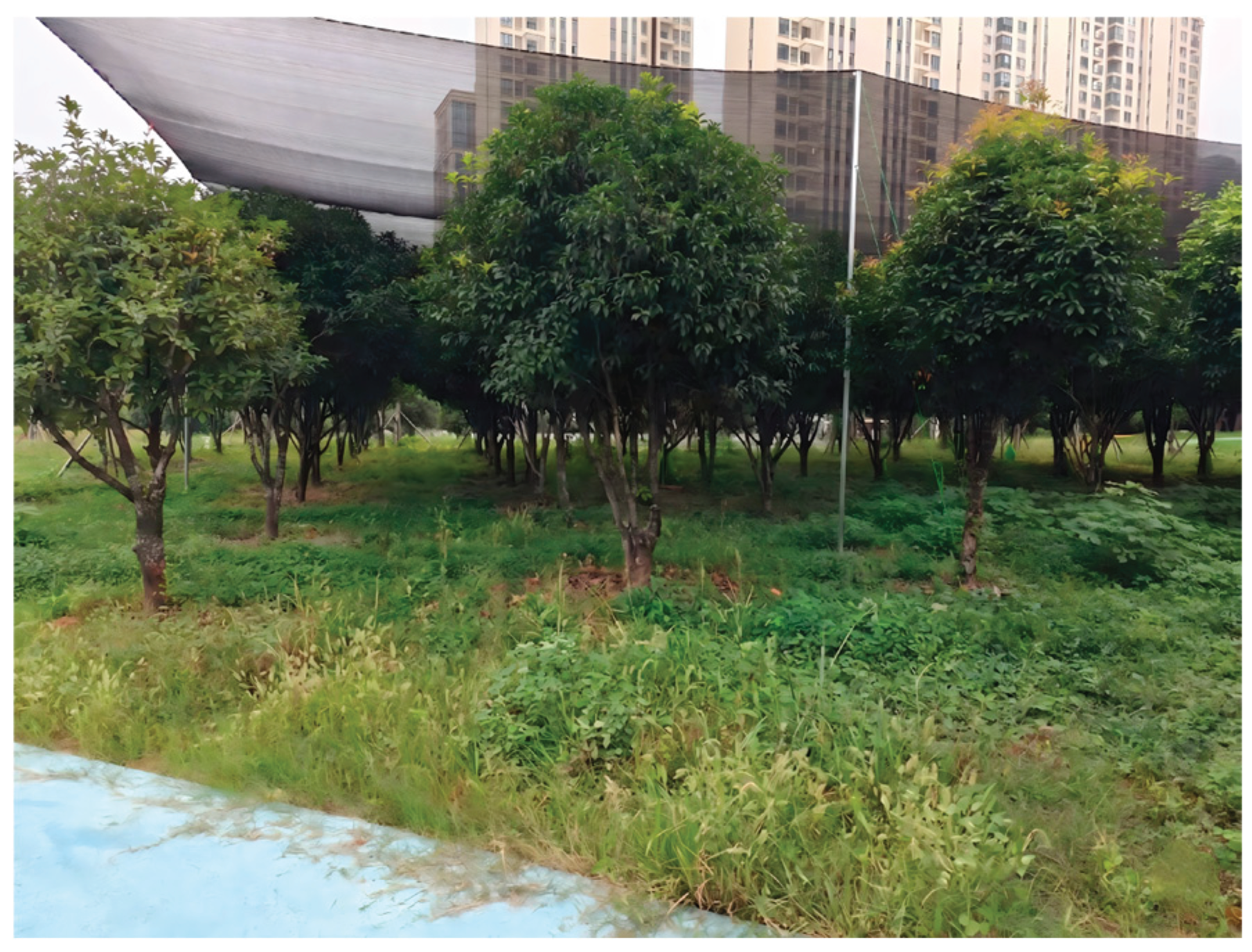
Figure 2.
Morphological structure of Osmanthus fragrans.
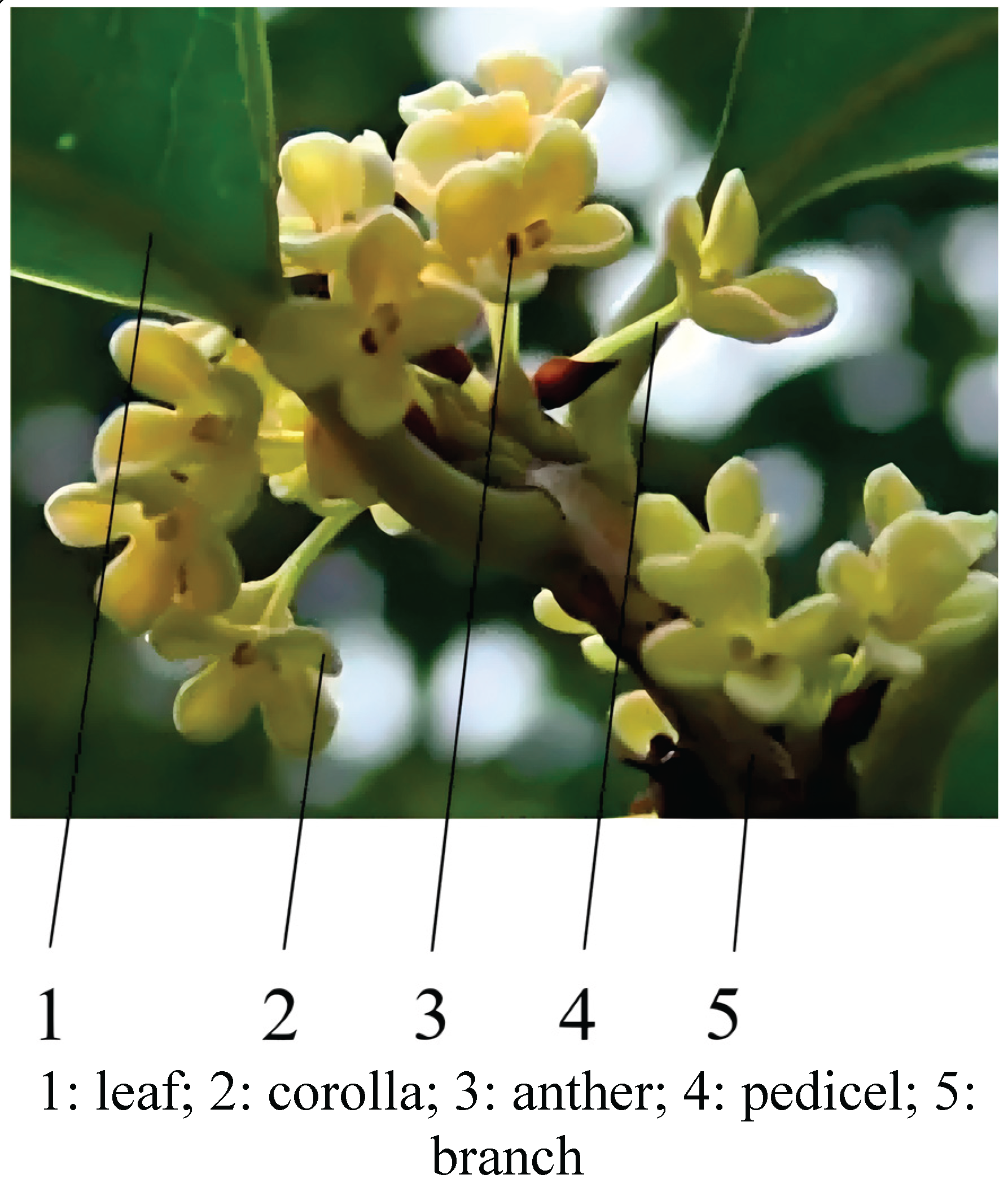
Figure 3.
Geometric Structure Model of Osmanthus fragrans”Branch-Leaf-Corolla” System.
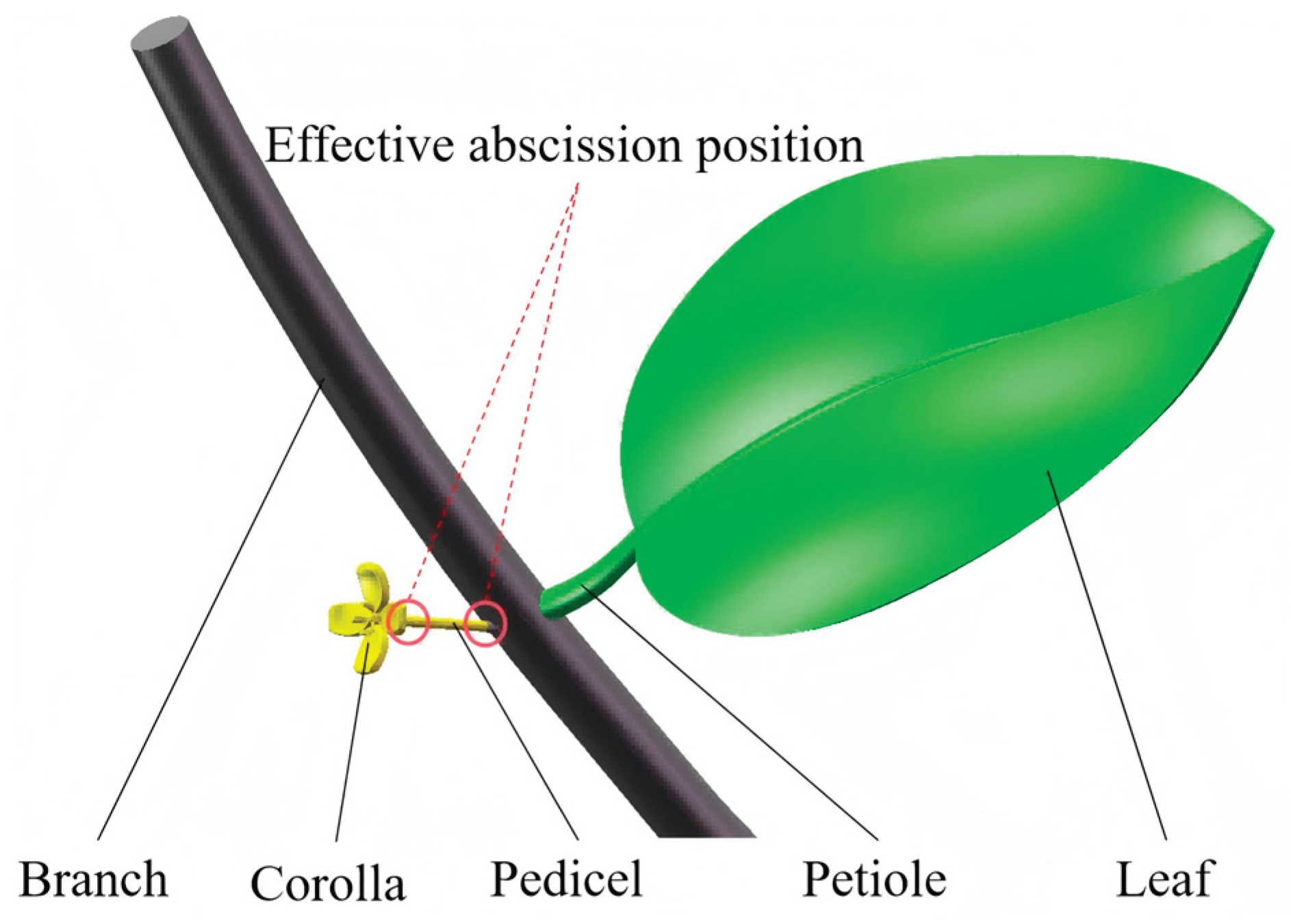
Figure 4.
Bonding Force Statistics of Petioles and Pedicels.
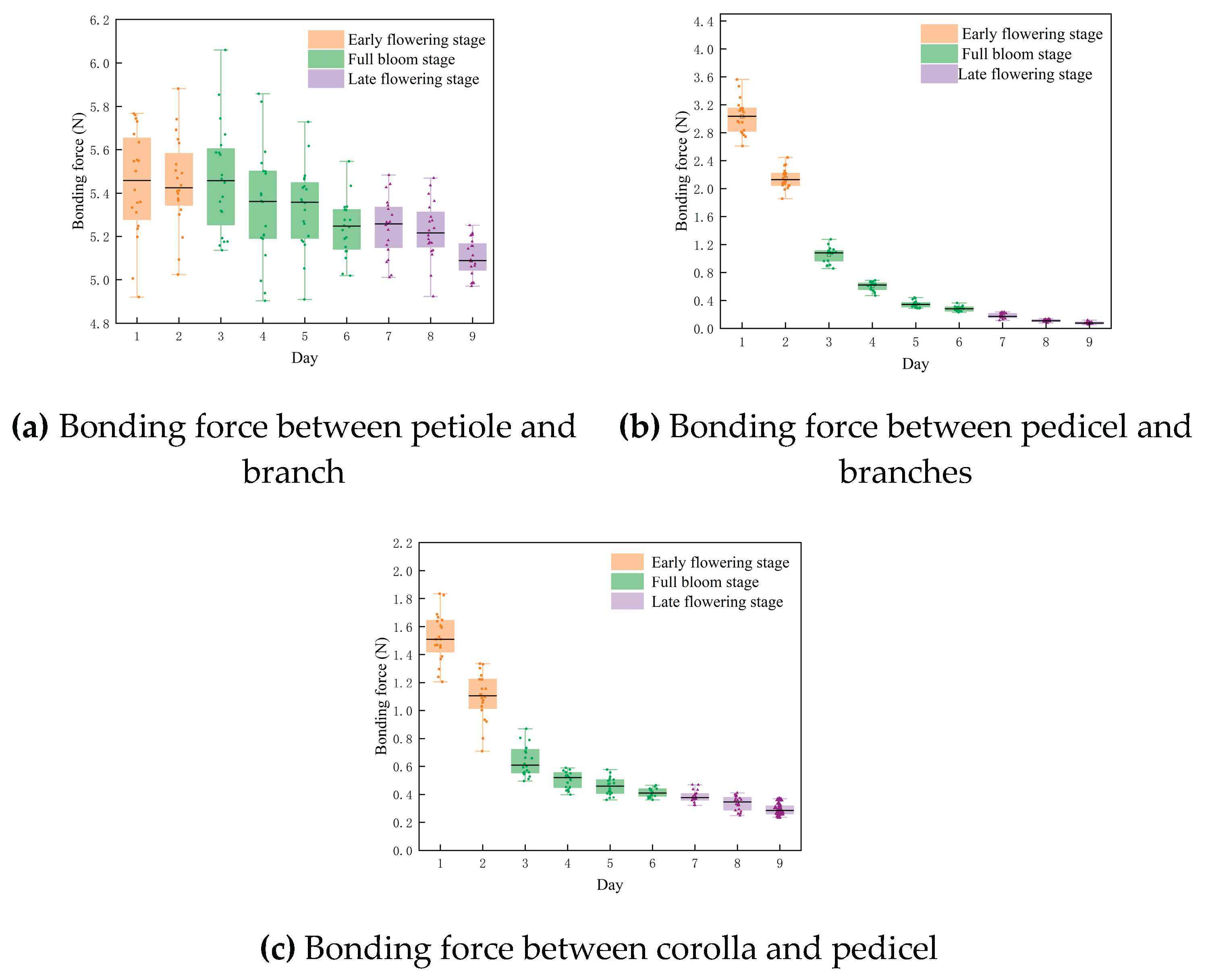
Figure 5.
CZD-01 Roller-Brush O. fragrans Picker.
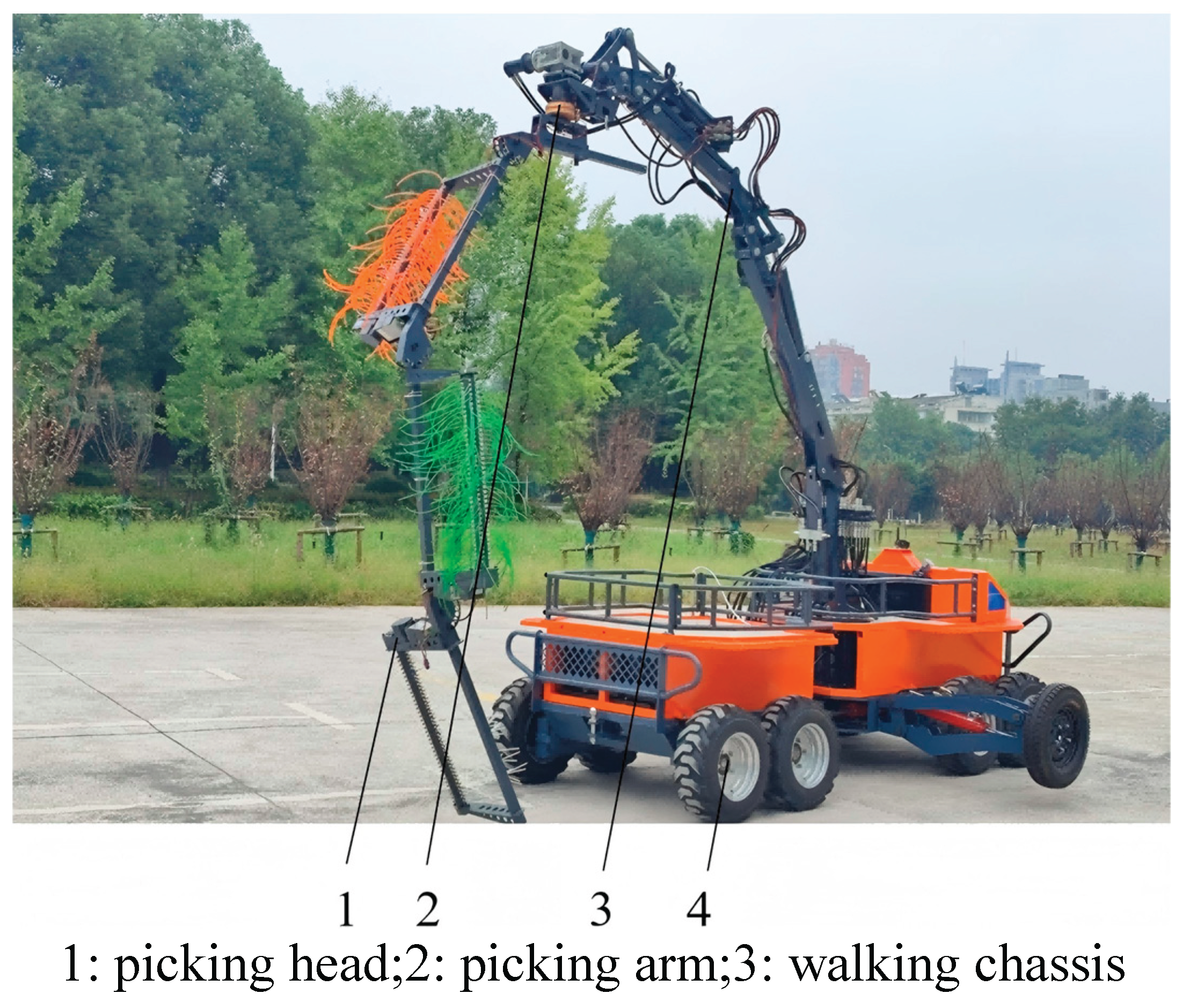
Figure 6.
Picking brush.
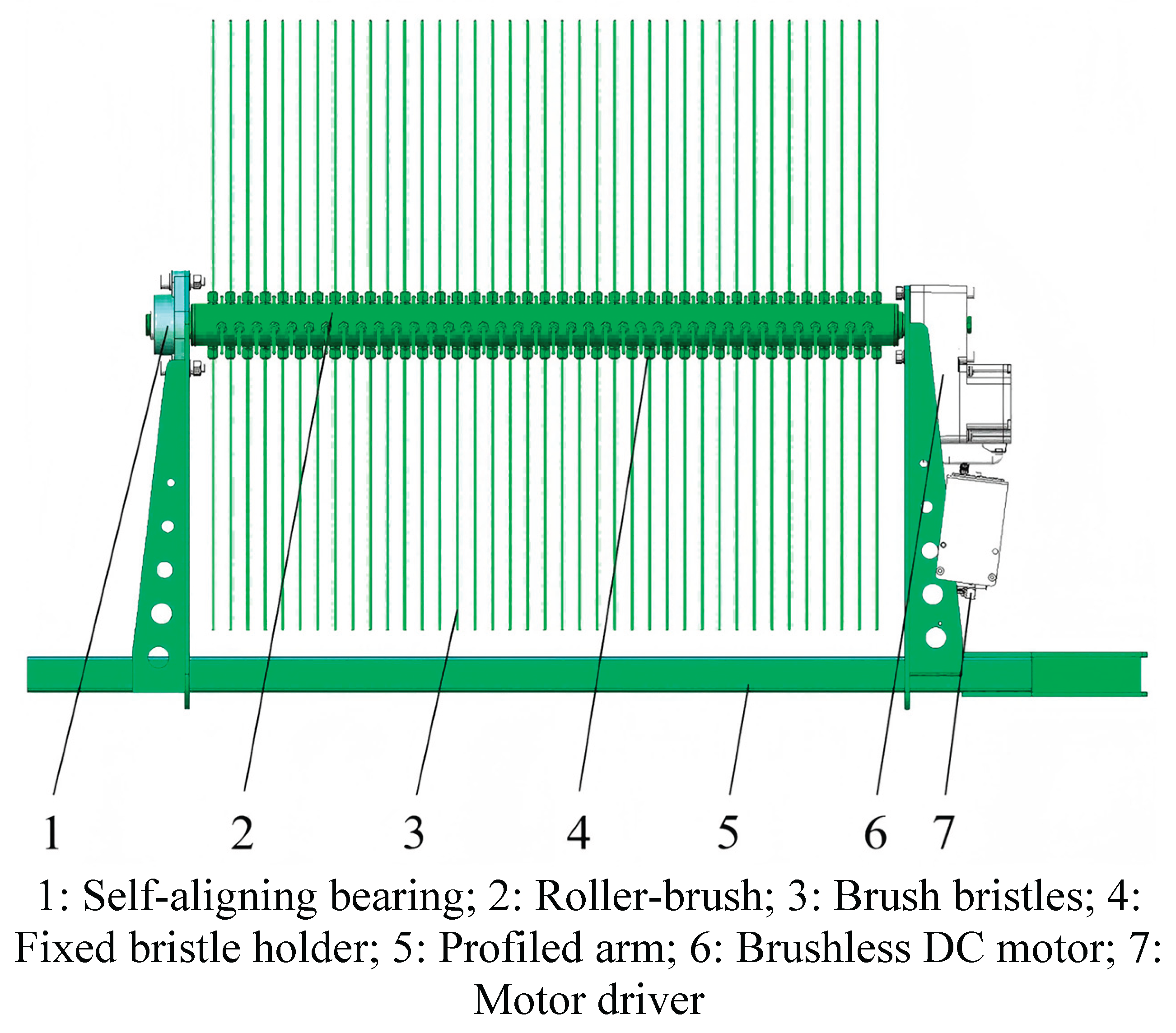
Figure 7.
Force analysis of Bristle operation.
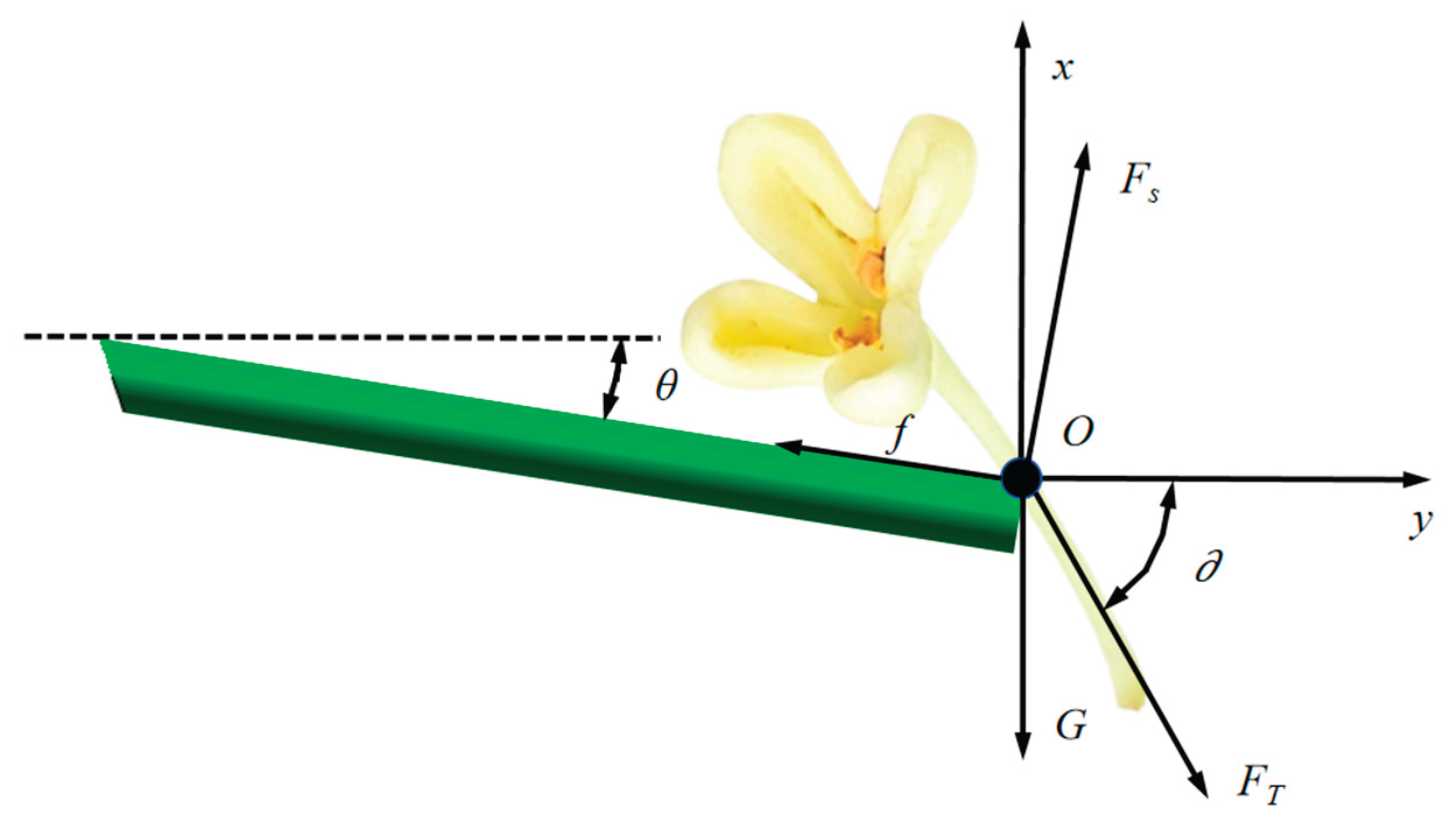
Figure 8.
Analysis of transient collision response with rigid-flexible coupling for “Petiole-Branch” Systems.
Figure 8.
Analysis of transient collision response with rigid-flexible coupling for “Petiole-Branch” Systems.
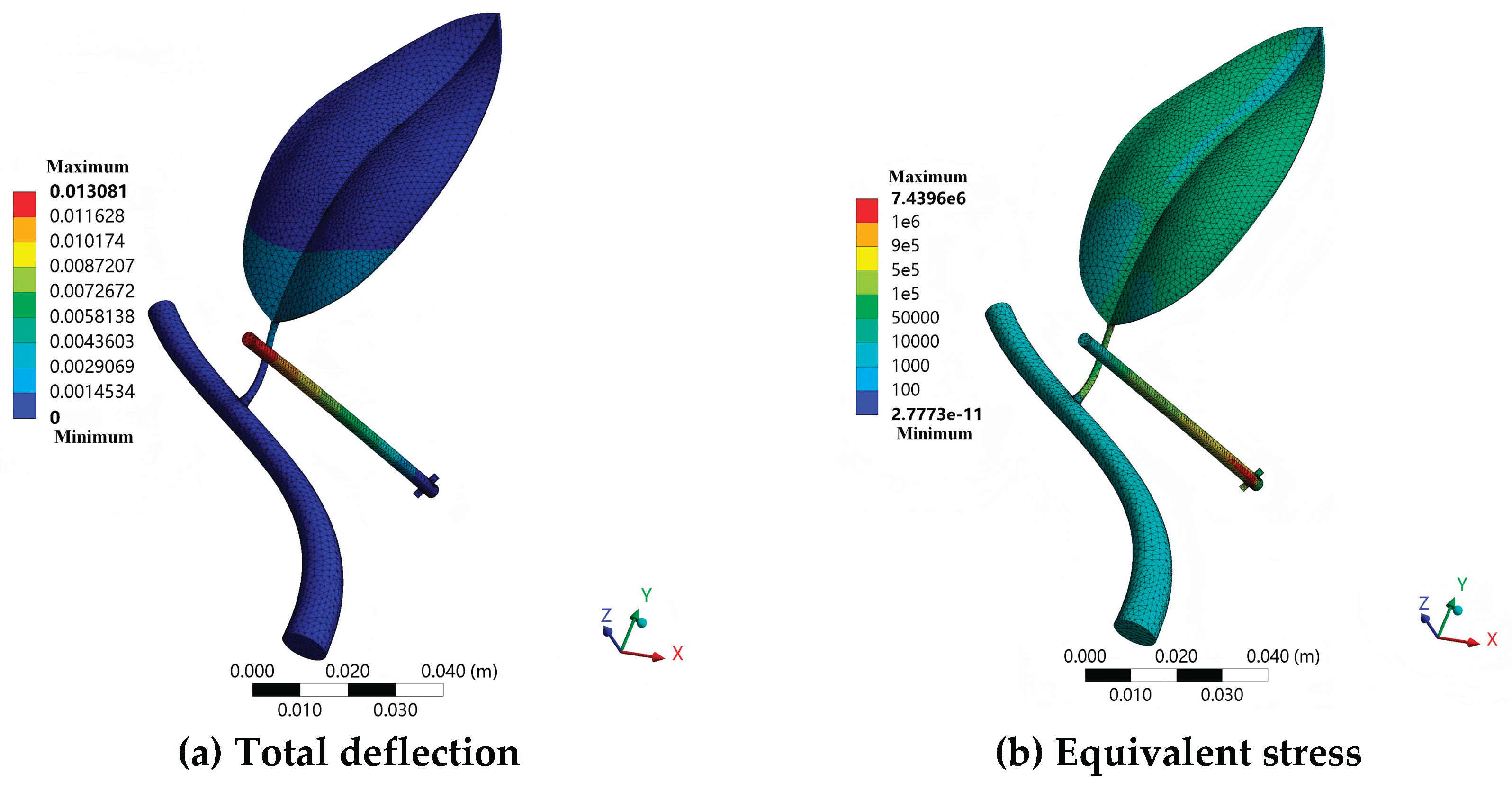
Figure 9.
Analysis of transient collision response with rigid-flexible coupling for “Pedicel-Branch” Systems.
Figure 9.
Analysis of transient collision response with rigid-flexible coupling for “Pedicel-Branch” Systems.
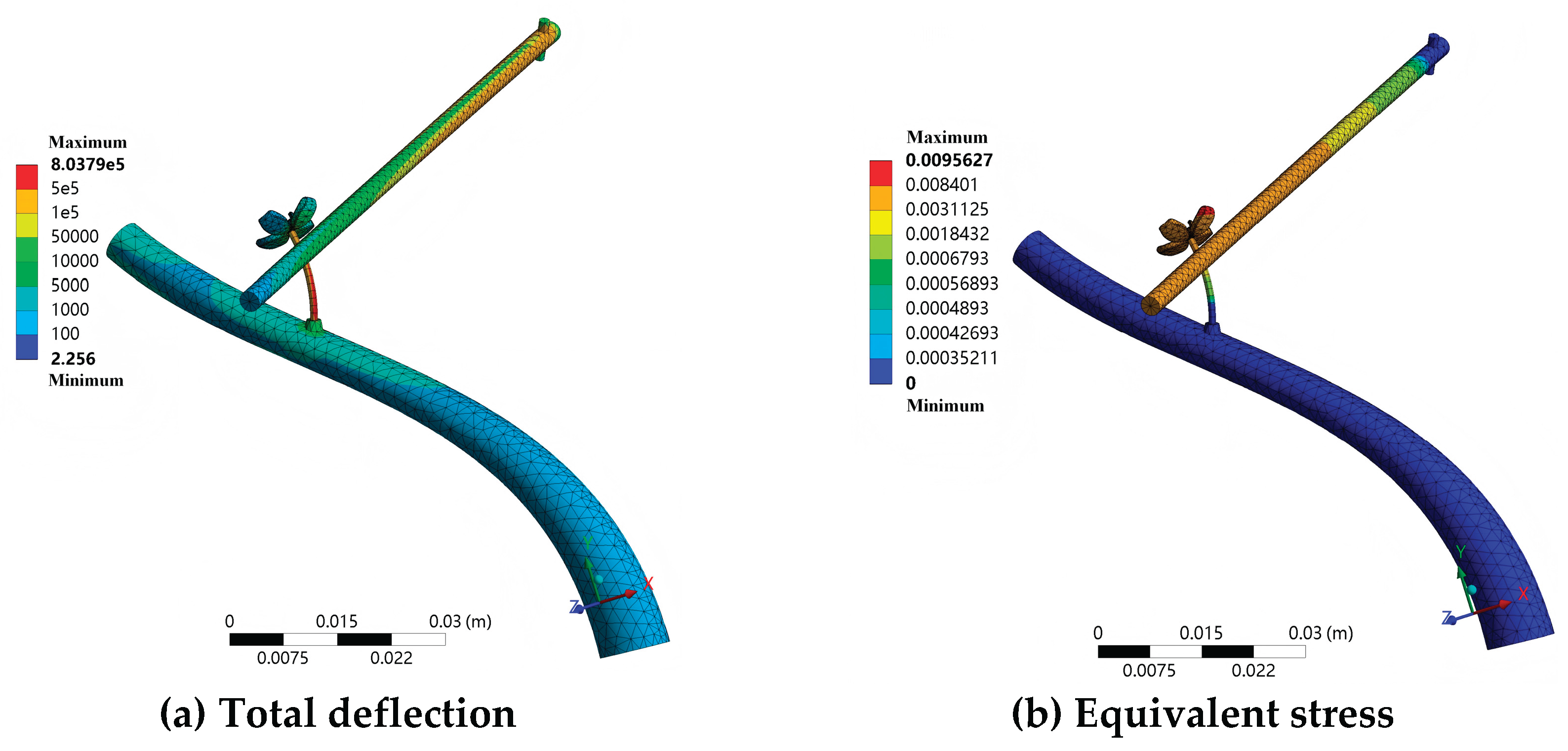
Figure 10.
Temporal course curves of transient bonding force under flexible impact.
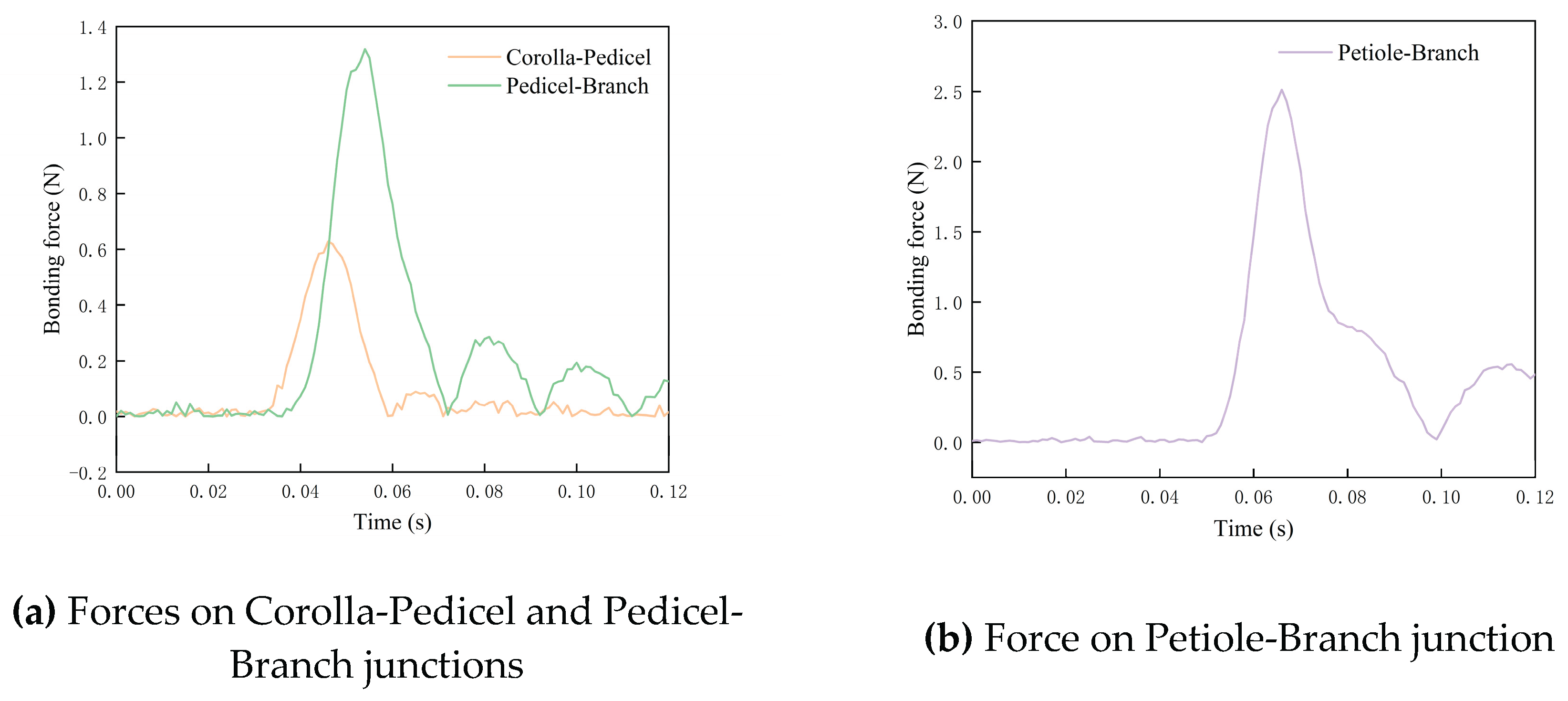
Figure 11.
Profiling arm structure.
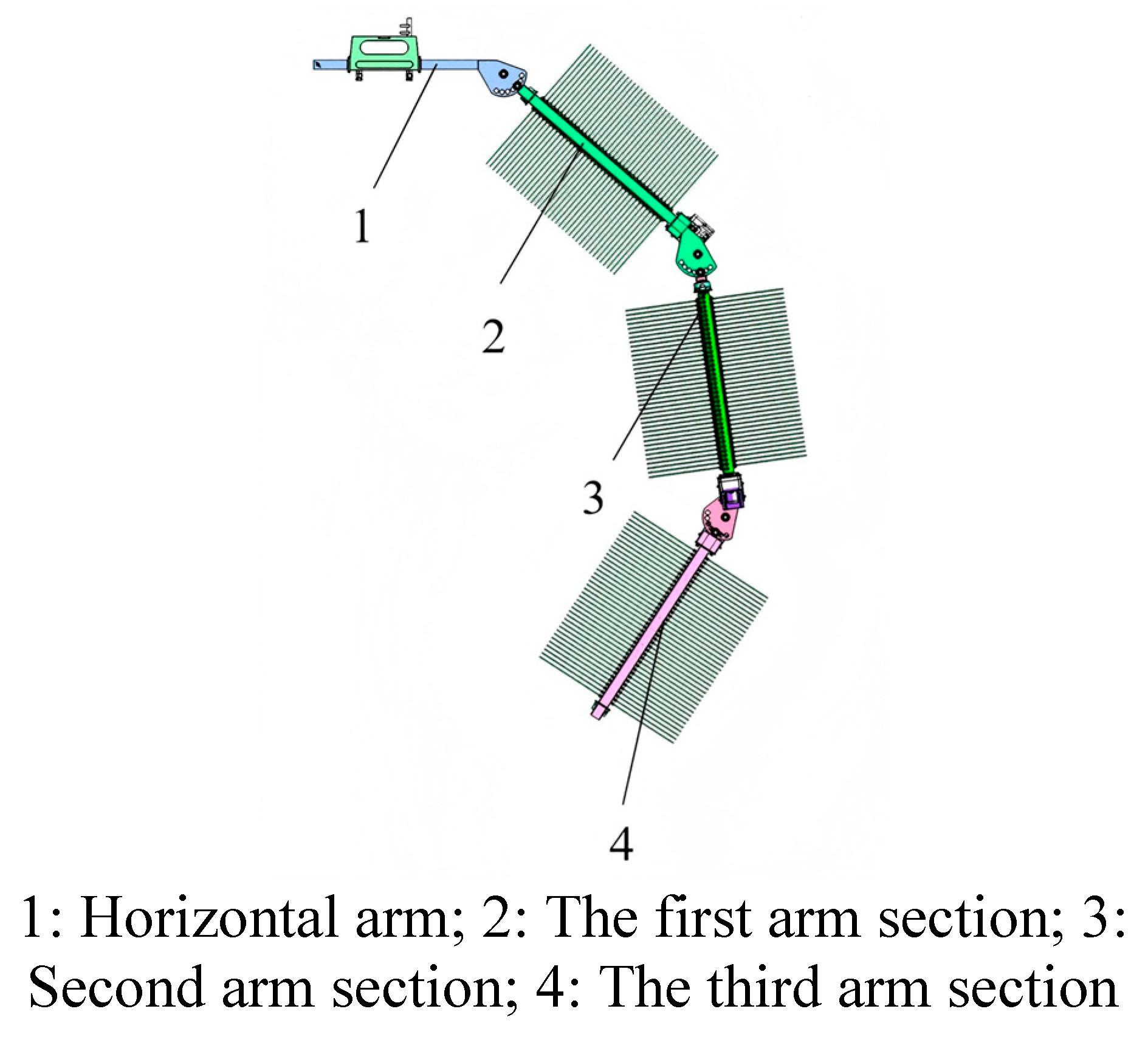
Figure 12.
Picker platform structure diagram.
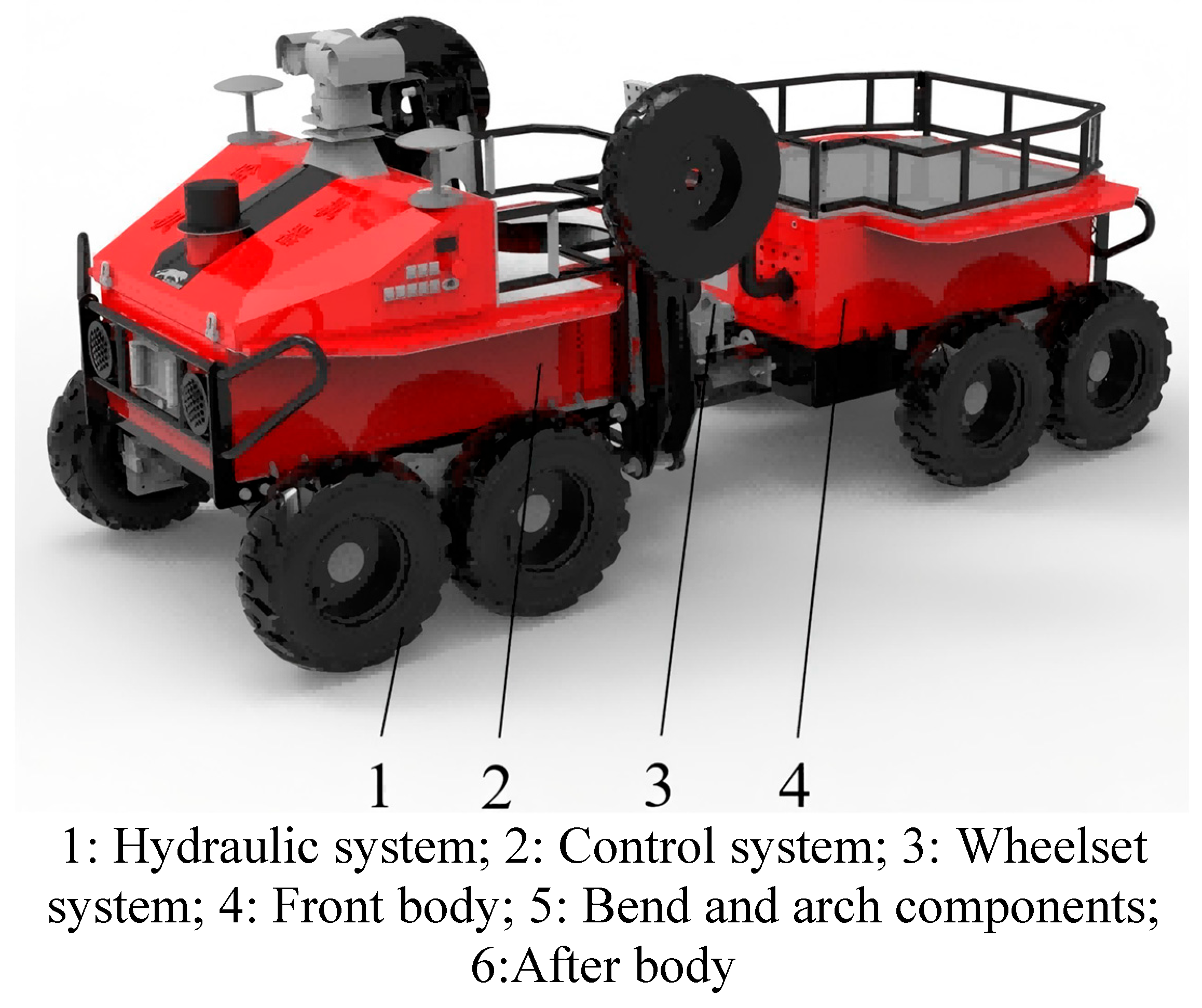
Figure 13.
3D Surface Plots.
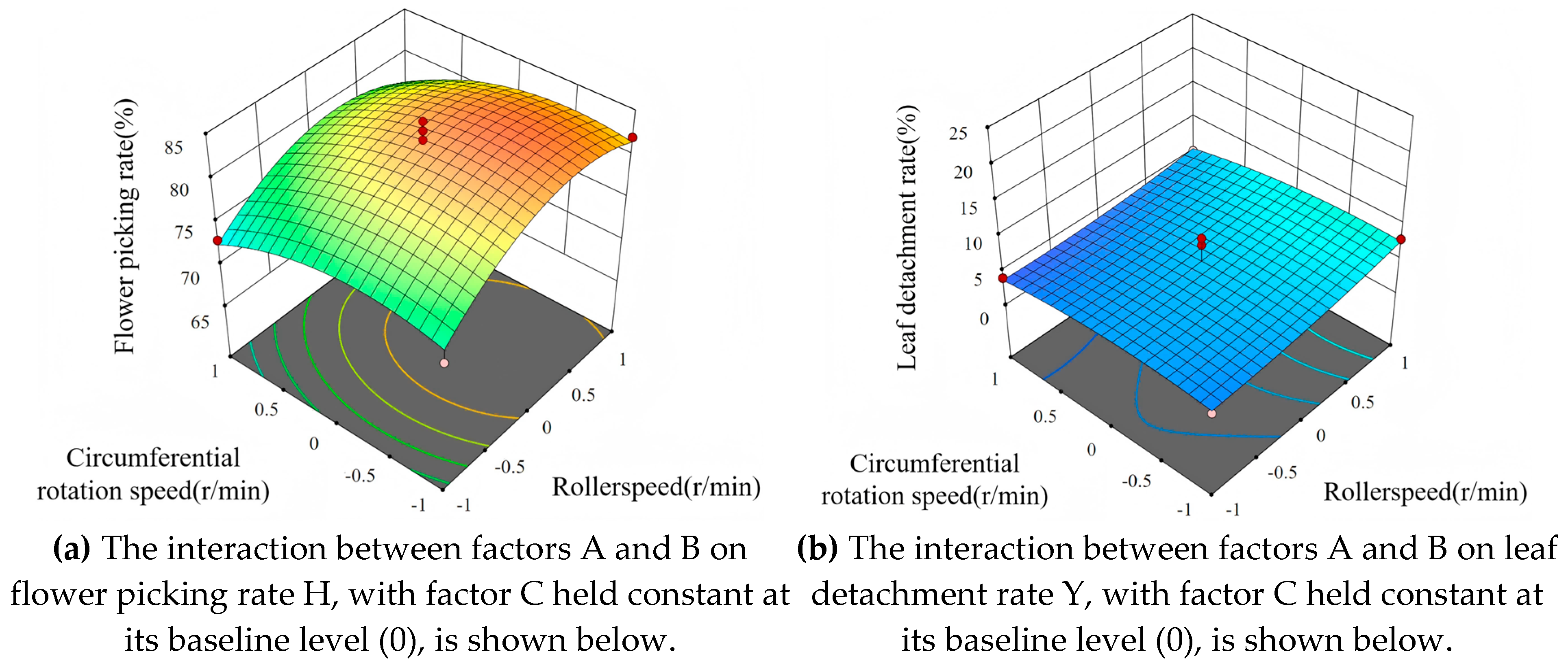
Figure 14.
Picking test.
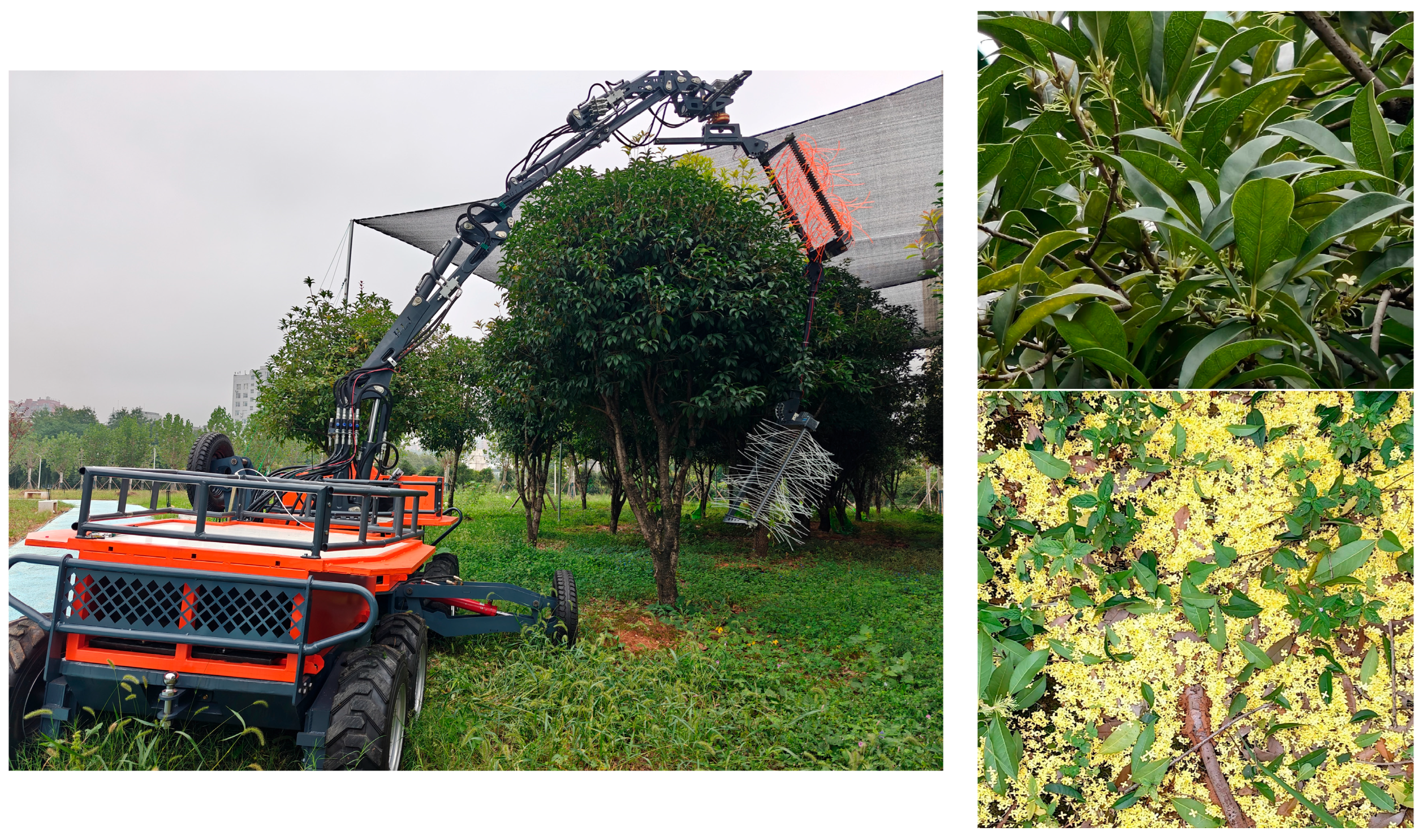

Table 1.
Technical specifications of the CZD-01 picker.
| Parameter | Value |
|---|---|
| Model | CZD-01 |
| Overall Dimensions (Length×Width×Height) | 3500×1550×1780 |
| Platform Power/kW | 4×1.2 |
| Climbing Angle/° | 30 (with 1-ton load) |
| Travel Mode | Wheeled+Covered Belt |
| Travel Speed/(km/h) | 3.6-7.2 |
| Steering Mode | Articulated Steering+Differential |
| Number of Profiling Arm Joints | 3 |
| Circumferential Rotating Speed/(r/min) | 6 (adjustable) |
| Picking Shaft Speed Range/(r/min) | 0-600 |
| Picking Shaft Length/(mm) | 800 |
| Picking Roller Diameter/(mm) | 48 |
| Roller-Brush Bristle Diameter/(mm) | 4 (material customizable) |
Table 2.
Mechanical properties of brush bristle materials.
| Material | Elastic Modulus(GPa) | Tensile Strength(MPa) | Compressive Strength (MPa) | Surface Form |
|---|---|---|---|---|
| PA6 Nylon Rod | 2.8 | 80 | 110 | Smooth |
| Smooth PU Polyurethane Round Rod | 1.2 | 27 | 1.1 | Smooth |
| Rough PU Polyurethane Round Rod | 1.2 | 27 | 1.1 | Rough |
Table 3.
Physical and mechanical properties of plant components and brush materials utilized in the ANSYS simulation.
Table 3.
Physical and mechanical properties of plant components and brush materials utilized in the ANSYS simulation.
| Material / Component | Density (kg/m3) | Young’s Modulus (MPa) | Poisson’s Ratio | Reference / Source |
|---|---|---|---|---|
| Branch | 1100 | 2100 | 0.33 | Estimated from generic broadleaf wood |
| Petiole | 1050 | 45 | 0.38 | Experimental estimation |
| Leaf blade | 950 | 12 | 0.4 | Standard foliar tissue properties |
| Pedicel | 1000 | 25 | 0.35 | Experimental estimation |
| Corolla (Flower) | 850 | 5 | 0.42 | Experimental estimation |
| Smooth PU (Shore A 75) | 1200 | 25 | 0.45 | Manufacturer technical data |
| PA6 Nylon (Shore D 80) | 1140 | 2800 | 0.39 | Manufacturer technical data |
Table 4.
Test factors coding.
| Level | Factor | ||
|---|---|---|---|
| Roller speed (r/min) (A) |
Circumferential rotation speed(r/min) (B) |
Brush Material (C) |
|
| -1 | 100 | 5 | PA6 Nylon Rod |
| 0 | 150 | 10 | Smooth PU Polyurethane Round Rod |
| 1 | 200 | 15 | Rough PU Polyurethane Round Rod |
Table 5.
Test results.
| Order number | Factor | Evaluating indicator | |||
|---|---|---|---|---|---|
| Roller speed (r/min) (A) |
Circumferential rotation speed(r/min) (B) |
Brush Material (C) |
Flower Picking rate(%) (H) |
Leaf detachment rate(%) (Y) |
|
| 1 | -1 | 0 | 1 | 72 | 6 |
| 2 | 1 | -1 | 0 | 82 | 8 |
| 3 | 1 | 1 | 0 | 75 | 5 |
| 4 | 0 | 0 | 0 | 82 | 4 |
| 5 | 1 | 0 | 1 | 79 | 7 |
| 6 | -1 | 1 | 0 | 73 | 4 |
| 7 | 0 | 0 | 0 | 83 | 9 |
| 8 | 0 | 0 | 0 | 85 | 8 |
| 9 | 0 | 1 | -1 | 74 | 13 |
| 10 | -1 | -1 | 0 | 74 | 4 |
| 11 | 1 | 0 | -1 | 77 | 17 |
| 12 | 0 | -1 | -1 | 84 | 15 |
| 13 | -1 | 0 | -1 | 74 | 12 |
| 14 | 0 | 0 | 0 | 84 | 3 |
| 15 | 0 | -1 | 1 | 79 | 5 |
| 16 | 0 | 1 | 1 | 71 | 3 |
| 17 | 0 | 0 | 0 | 82 | 5 |
| 18 | 1 | -1 | 1 | 80 | 6 |
| 19 | -1 | 1 | -1 | 69 | 11 |
| 20 | 1 | 1 | -1 | 78 | 19 |
| 21 | -1 | -1 | 1 | 73 | 3 |
| 22 | 0 | 0 | 0 | 84 | 5 |
Table 6.
Analysis of variance for flower picking rate and leaf detachment rate.
| Source | Flower picking rate1) | Leaf detachment rate2) | ||||||||
|---|---|---|---|---|---|---|---|---|---|---|
| Sum of Squares | Degree of freedom | Mean Squares | F | P | Sum of Squares | Degree of freedom | Mean Squares | F | P | |
| Model | 459.92 | 11 | 41.81 | 8.38 | 0.0011* | 430.52 | 11 | 39.14 | 10.10 | 0.0005* |
| A | 108.00 | 1 | 108.00 | 21.64 | 0.0009* | 40.33 | 1 | 40.33 | 10.41 | 0.0091* |
| B | 100.04 | 1 | 100.04 | 20.05 | 0.0012* | 2.34 | 1 | 2.34 | 0.60 | 0.4548 |
| C | 55.52 | 2 | 27.76 | 5.56 | 0.0238* | 347.84 | 2 | 173.92 | 44.88 | <0.0001* |
| AB | 1.50 | 1 | 1.50 | 0.30 | 0.5955 | 1.04 | 1 | 1.04 | 0.27 | 0.6154 |
| AC | 1.50 | 2 | 0.75 | 0.15 | 0.8624 | 12.71 | 2 | 6.35 | 1.64 | 0.2422 |
| BC | 8.75 | 2 | 4.37 | 0.88 | 0.4459 | 0.5373 | 2 | 0.27 | 0.07 | 0.9335 |
| A2 | 74.67 | 1 | 74.67 | 14.96 | 0.0031* | 1.52 | 1 | 1.52 | 4 | 0.5447 |
| B2 | 29.17 | 1 | 29.17 | 5.85 | 0.0362* | 4.02 | 1 | 4.02 | 1.07 | 0.3322 |
| Residual | 49.90 | 10 | 4.99 | / | / | 38.75 | 10 | 3.88 | / | / |
| Lack of fit | 42.57 | 5 | 8.51 | 5.08 | 0.0381 | 11.42 | 5 | 2.28 | 0.4177 | 0.8200 |
| Pure Error | 7.33 | 5 | 1.47 | / | / | 27.33 | 5 | 5.47 | / | / |
1), 2) *indicates significant (P < 0.05).
Table 7.
Analysis of variance.
| Test No. | Flower picking rate(%) | Leaf detachment rate(%) |
|---|---|---|
| 1 | 82.5 | 6.2 |
| 2 | 84.2 | 7.1 |
| 3 | 85.1 | 5.8 |
| 4 | 83.4 | 6.5 |
| 5 | 86 | 7.4 |
| 6 | 81.8 | 6 |
| 7 | 84.8 | 6.8 |
| 8 | 83.9 | 5.5 |
| 9 | 85.5 | 7 |
| 10 | 82.8 | 6.7 |
| Mean | 84 | 6.5 |
| SD | 1.36 | 0.61 |
Disclaimer/Publisher’s Note: The statements, opinions and data contained in all publications are solely those of the individual author(s) and contributor(s) and not of MDPI and/or the editor(s). MDPI and/or the editor(s) disclaim responsibility for any injury to people or property resulting from any ideas, methods, instructions or products referred to in the content. |
© 2026 by the authors. Licensee MDPI, Basel, Switzerland. This article is an open access article distributed under the terms and conditions of the Creative Commons Attribution (CC BY) license.
Copyright: This open access article is published under a Creative Commons CC BY 4.0 license, which permit the free download, distribution, and reuse, provided that the author and preprint are cited in any reuse.


