

Submitted:
17 April 2026
Posted:
21 April 2026
You are already at the latest version
Abstract
The growing consumption of plant-based meat alternatives (PBMAs) has increased attention to their microbiological safety, particularly under refrigerated storage conditions. Although the PBMA market has expanded rapidly, data on the microbiological status of industrially produced, heat-treated products remain limited. The present study aimed to evaluate, within a descriptive framework, the microbiological safety of industrially produced, heat-treated PBMAs during refrigerated storage. A total of 100 PBMA formulations, including salami-type and frankfurter-type ready-to-eat products, were manufactured under standardized industrial conditions and subjected to validated thermal processing (core temperature ≥ 92 °C for varying durations). Microbiological analyses were conducted at four predefined storage intervals (day 0, day 15, day 35, and day 60 at 0˗4 °C) to assess the presence of selected foodborne pathogens (Salmonella spp. and Listeria monocytogenes) and hygiene indicator microorganisms (generic Escherichia coli, Enterobacteriaceae, coagulase-positive Staphylococcus aureus, and Bacillus cereus). Intrinsic physicochemical parameters relevant to microbial survival and growth, including pH, water activity, moisture content were also determined. Salmonella spp. and Listeria monocytogenes were not detected (absence in 10 g) in any sample at any storage time point. Hygiene indicator microorganisms were not detected during early storage (day 0-15), while limited occurrence was observed at extended storage (day 60), including Escherichia coli (3%), coagulase-positive Staphylococcus aureus (20%), and Bacillus cereus (15%). Detected Staphylococcus aureus levels ranged between 103 and 105 CFU/g. These findings indicate strong microbiological stability during early refrigerated storage, with limited microbial occurrence at extended storage intervals (day 60). Overall, the evaluated products demonstrated a favorable microbiological safety profile under the applied processing and storage conditions. Given formulation heterogeneity and the absence of biological replication, findings are interpreted descriptively and provide an industrially relevant safety overview rather than inferential conclusions.
Keywords:
microbiological analyses
; plant-based meat alternatives
; heat-treated
; storage
; microorganisms
1. Introduction
As awareness of plant-based meat alternatives (PBMAs) continues to increase, their microbiological safety has become an important consideration. PBMAs are consumed not only by vegetarians and vegans, but also by a broader population seeking to reduce or avoid meat consumption for health, ethical, or environmental reasons. These products are commonly marketed as sustainable protein sources designed to mimic conventional meat in terms of taste, texture, appearance, and nutritional profile [1]. In response to evolving consumer expectations, the food industry has developed a second generation of PBMA products that more closely replicate the sensory characteristics and macronutrient composition of animal-derived products [2]. Although PBMAs represent a relatively recent commercial category, plant-based protein foods such as tofu, seitan, and tempeh have been consumed for centuries [3]. Modern PBMAs, however, are formulated using complex ingredient systems in which structured plant proteins are combined with lipids, carbohydrates, binding agents, flavor compounds, and coloring substances to achieve meat-like properties [4,5]. Given consumers’ habitual handling and preparation practices associated with conventional meat products, it is reasonable to assume that raw or minimally processed PBMAs may share certain food safety considerations with the products they are intended to replace [6]. While plant-derived proteins and carbohydrates are generally associated with lower intrinsic microbiological risks than raw animal products, plant raw materials are not microbiologically sterile. Legumes, cereals, and vegetable proteins may harbor diverse microbial populations originating from soil, irrigation water, harvesting equipment, and post-harvest handling [7,8]. In addition, spices, hydrocolloids, and functional additives incorporated during PBMA formulation may introduce environmental microorganisms, including spore-forming bacteria [9]. Further contamination risks may arise during industrial processing through contact surfaces, equipment, air exposure, and personnel handling, particularly in production systems involving comminution, mixing, and casing operations [10]. Previous studies have reported the presence of spoilage microbiota, lactic acid bacteria, and spore-forming microorganisms in plant-based protein systems [11,12], highlighting the importance of effective thermal processing and hygienic manufacturing practices. Although PBMAs are often associated with perceived health and sustainability benefits [13], ensuring microbiological safety remains essential, particularly for ready-to-eat heat-treated products distributed under refrigerated conditions. Appropriate processing conditions, hygienic manufacturing practices, and adequate handling by consumers are required to minimize contamination risks and maintain product quality [14]. Despite the rapid expansion of the PBMA market, published data on the microbiological safety of industrially produced, heat-treated PBMAs during refrigerated storage remain limited. In particular, systematic evaluations across multiple formulations and storage intervals are scarce. Accordingly, the aim of this study was to assess the microbiological safety of industrially produced, heat-treated PBMAs, during refrigerated storage by determining the presence or absence of selected foodborne pathogens and hygiene indicator microorganisms, including Listeria monocytogenes, Salmonella spp., Escherichia coli, Enterobacteriaceae, Staphylococcus aureus, and Bacillus cereus. Given formulation heterogeneity and the absence of biological replication, the investigation was structured as a descriptive industrial microbiological safety assessment rather than a hypothesis-driven experimental study. The findings of this study provide industrially relevant baseline data on the microbiological safety and stability of heat-treated PBMAs during refrigerated storage, contributing to the limited body of knowledge in this emerging product category.
2. Materials and Methods
A total of 100 plant-based meat alternative (PBMA) samples representing distinct formulations were produced between May and June 2024, comprising 70 industrial salami-type and 30 frankfurter-type products. All samples were manufactured in 5 kg batches at a commercial meat-processing facility in Kosovo, following standardized industrial production protocols. Depending on casing diameter, each batch yielded approximately 50 to 100 individual units, reflecting typical industrial production output. Formulations were based on structured plant protein matrices combined with vegetable fats, hydrocolloids, and seasoning systems designed to mimic the technological and sensory characteristics of conventional meat products. Following ingredient mixing, the formulations were stuffed into casings of varying diameters representative of commercial salami and frankfurter formats. Subsequently, the products underwent controlled thermal processing, followed by post-process cooling and storage under refrigerated storage (0-4 °C). Detailed descriptions of formulation characteristics, production procedures, thermal treatment conditions, physicochemical analyses, and microbiological methods are provided in the following subsections.

Table 1.
Distribution of plant-based meat alternative (PBMA) samples by product type.
| Product Type | Number of Samples |
|---|---|
| Salami-type | 70 |
| Frankfurter-type | 30 |
| Total | 100 |
2.1. Sample Production and Thermal Processing
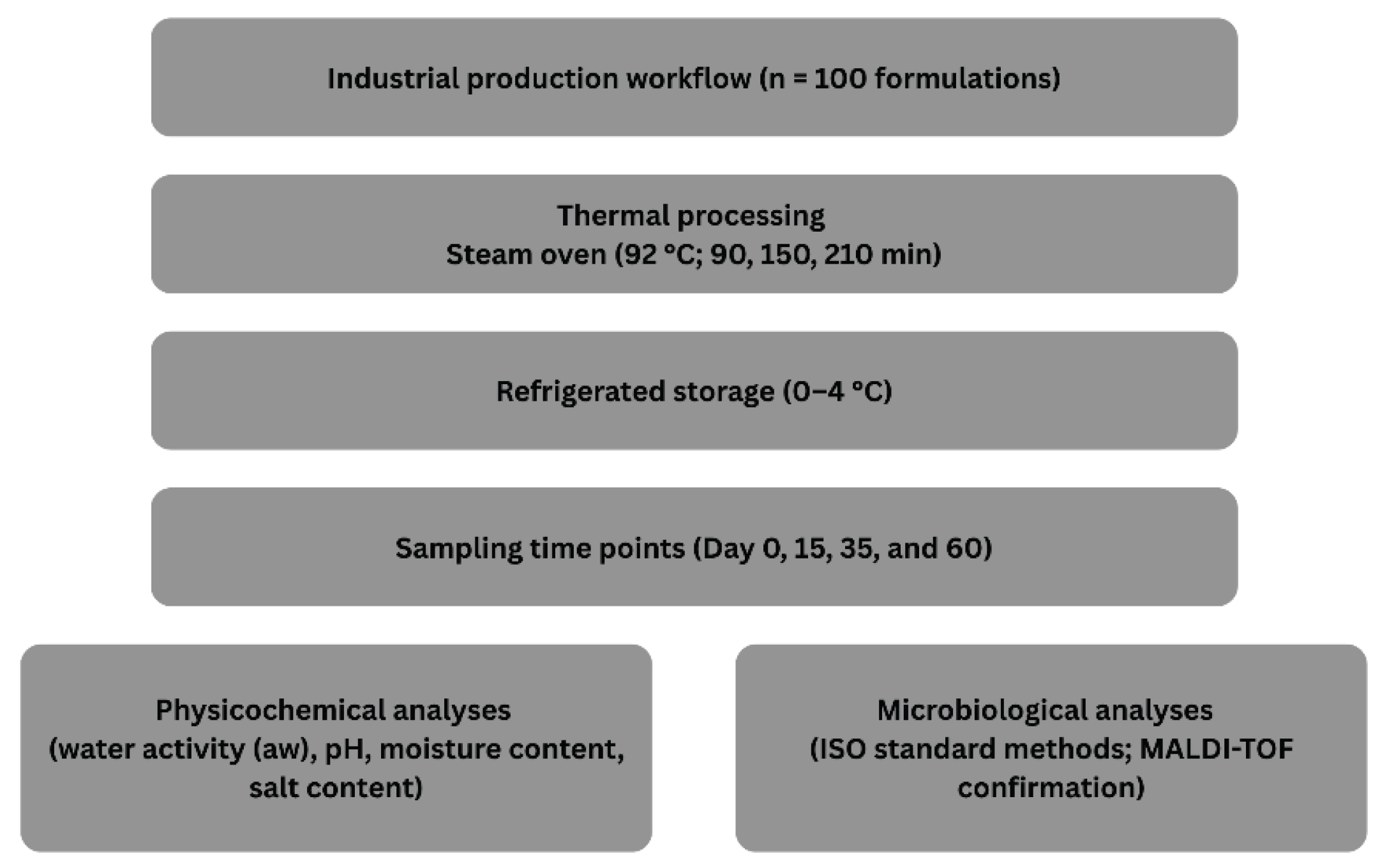
Heat-treated plant-based meat alternatives (PBMAs) produced under industrial conditions were subjected to microbiological evaluation. The study comprised 100 products representing distinct formulations, including 70 salami-type products and 30 frankfurter-type sausages. Each formulation was prepared in 5 kg batches using standardized industrial manufacturing procedures. All products followed a uniform processing workflow, including ingredient mixing, stuffing into casings of varying diameters, thermal treatment, post-process cooling, and refrigerated storage. Casings with internal diameters of 22, 42, 60, and 90 mm were used, representing typical commercial formats. Thermal processing was conducted in a steam oven at 92 °C under cold-start conditions using three-time temperature regimes (90, 150, or 210 min). Processing durations were selected to ensure adequate heat penetration and microbial lethality across products with differing casing diameters, reflecting commercial industrial practice. Processing conditions were validated by the manufacturer to achieve core product temperatures ≥ 90 °C across all casing formats. Following heat treatment, samples were cooled in accordance with HACCP-based industrial guidelines and stored at 0-4 °C until analysis. Microbiological analyses were conducted at predefined storage intervals (day 0, 15, 35, and 60) during refrigerated storage. Given industrial production constraints, each formulation was produced as a single batch and therefore represented one biological unit, although each batch yielded multiple individual product units depending on casing diameter. Consequently, microbiological observations reflect industrial batch-level verification data rather than replicated experimental measurements. Findings are therefore presented descriptively to characterize microbiological status over time, rather than to support inferential statistical comparisons.
Figure 1.
Schematic overview of the industrial production, thermal processing, refrigerated storage, sampling scheme, and subsequent physicochemical and microbiological analyses of plant-based meat alternatives (PBMAs).
Figure 1.
Schematic overview of the industrial production, thermal processing, refrigerated storage, sampling scheme, and subsequent physicochemical and microbiological analyses of plant-based meat alternatives (PBMAs).
2.2. Physicochemical Analyses
Intrinsic physicochemical conditions influencing microbial survival and growth were evaluated to characterize the internal product environment of the heat-treated plant-based meat alternatives during refrigerated storage. The parameters assessed included pH, water activity (aw), moisture content, and salt content, all of which are established determinants of microbial stability, shelf life, and product safety in ready-to-eat foods. All physicochemical measurements were performed at predefined storage intervals (day 0, 15, 35, and 60 of refrigerated storage). Each parameter was analyzed in triplicate technical replicates per sample to ensure analytical precision and reproducibility. Measurements were conducted under standardized laboratory conditions using calibrated instruments and validated analytical methods, as described in the following subsections. Results are reported as mean values accompanied by standard deviations to describe measurement variability and to provide a descriptive representation of physicochemical stability throughout refrigerated storage.
2.2.1. pH Measurement
The pH of the samples was determined following thermal processing and cooling procedures using calibrated digital pH meter (Hanna Instruments, model HI981036). The instrument was calibrated prior to analysis using standard buffer solutions at pH 4.0 and 7.0 in accordance with the manufacturer’s instructions. Samples were homogenized to obtain representative measurements of the product matrix, and pH values were recorded at room temperature by direct insertion of the electrode into the homogenized material. Measurements were performed in triplicate at predefined storage intervals (day 0, 15, 35, and 60), and results are expressed as mean values ± standard deviation. The pH values were determined to characterize intrinsic physicochemical conditions relevant to microbial survival and growth potential within the analyzed products.
2.2.2. Water Activity (aw)
Water activity (aw) was measured using a Novasina LabMaster aw neo instrument (Novasina AG, Lachen, Switzerland), equipped with a resistive electrolytic sensor, in accordance with ISO 18787. The instrument was calibrated prior to analysis using certified reference standards supplied by the manufacturer. Representative portions of each sample were places in the measurement chamber, and aw values were recorded under controlled temperature conditions after equilibrium was reached. Measurements were performed in triplicate at predefined storage intervals (day 0, 15, 35, and 60), and results are expressed as mean values ± standard deviation. Water activity was determined to characterize intrinsic physicochemical conditions influencing microbial survival and growth potential throughout refrigerated storage.
2.2.3. Moisture Content
Moisture content was determined by oven drying at 105 °C to constant weight in accordance with standard AOAC gravimetric methods. Representative portions of each homogenized sample were placed in pre-weighed moisture dishes and dried until a constant mass was achieved. Measurements were performed in triplicate at predefined storage intervals (day 0, 15, 35 and 60 of refrigerated storage), and results are expressed as mean values ± standard deviation. Moisture content was determined to characterize intrinsic product conditions relevant to microbial survival and growth potential during refrigerated storage.
2.2.4. Salt Content
Salt (NaCl) content was determined using the Mohr titration method. Representative portions of each homogenized sample were dissolved in distilled water, and chloride ions were titrated with standardized silver nitrate (AgNO3) solution using potassium chromate (K2CrO4) as the indicator. The endpoint was identified by the formation of a persistent reddish-brown precipitate. Sodium chloride content was calculated from the measured chloride content and expressed as percentage NaCl. Measurements were performed in triplicate at predefined storage intervals (day 0, 15, 35, and 60 of refrigerated storage), and results are expressed as mean values ± standard deviation. Salt content was determined as an intrinsic physicochemical parameter influencing microbial survival and growth potential in heat-treated PBMAs during refrigerated storage.
2.3. Microbiological Analyses
Microbiological analyses were conducted to evaluate the safety of heat-treated plant-based meat alternatives (PBMAs). Samples were examined for selected foodborne pathogens and hygiene indicator microorganisms, including Listeria monocytogenes, generic Escherichia coli, Salmonella spp., Enterobacteriaceae, coagulase-positive staphylococci (Staphylococcus aureus), and Bacillus cereus, using standardized International Organization for Standardization (ISO) reference methods. This microbiological panel represents organisms of primary relevance to ready-to-eat thermally processed foods and is widely applied in industrial safety monitoring programs. A total of 100 unique product formulations, produced within the same manufacturing period were analyzed. Each formulation was examined at predefined storage intervals (day 0, day 15, day 35, and day 60 of refrigerated storage). At each time point, one homogeneous representative sample per formulation was analyzed to characterize microbiological status over time, reflecting standard industrial verification practices. Samples were aseptically collected from the product interior using sterile instruments to minimize surface contamination and to better represent intrinsic microbiological conditions. All samples were processed immediately following collection in accordance with ISO methodological timelines. Analyses were performed using method-specified culture media, incubation conditions, and quality control procedures, including positive and negative controls and media performance verification. Results were reported descriptively as presence or absence of target microorganisms for each formulation and storage interval, in accordance with the detection limits of the applied ISO methods (absence in 10 g). Where enumeration procedures were applied, duplicate plating was performed to ensure analytical reliability, and results below detection limits were reported as “not detected” following ISO reporting conventions. As individual formulations were not biologically replicated, measurements obtained across storage intervals represent repeated observations rather than independent biological replicates. Consequently, the results are interpreted within a descriptive framework to characterize overall microbiological safety status rather than to support inferential statistical comparisons.
2.3.1. Enumeration and Confirmation of Indicator Microorganisms
Enumeration and confirmation of coagulase-positive Staphylococcus, Escherichia coli, and Enterobacteriaceae were performed as follows. A 10 g portion of each sample was homogenized with 90 mL of Maximum Recovery Diluent (MRD) (Liofilchem® S.r.l., Roseto degli Abruzzi, TE, Italy) for 60 s using a peristaltic homogenizer. From each homogenized sample, ten-fold serial dilutions were prepared. For the enumeration of coagulase-positive Staphylococcus, 0.1 mL aliquots from appropriate dilutions were spread onto duplicate plates of Baird-Parker Agar (BPA) (Liofilchem® S.r.l., Roseto degli Abruzzi, TE, Italy), and incubated under aerobic conditions at 37 ± 1 °C for 24-48 h, in accordance with ISO 6888-2:1999/Amd.1:2003 [15]. Typical colonies were subjected to confirmatory catalase and coagulase tests. The coagulase test was performed using rabbit plasma fibrinogen (Merck, Germany) and brain heart infusion broth (Liofilchem® S.r.l., Roseto degli Abruzzi, TE, Italy). Enumeration of Escherichia coli was conducted by plating 1 mL of appropriate serial dilutions onto Tryptone Bile X-glucuronide (TBX) Agar (Liofilchem® S.r.l., Roseto degli Abruzzi, TE, Italy), followed by incubation at 44 ± 1 °C for 24 h, in accordance with ISO 16649-2:2001 [16]. Intensely blue-colored colonies were considered presumptive E. coli. For the enumeration of Enterobacteriaceae, the procedure described in ISO 21528-2:2017 was followed. Serial dilutions were plated onto Violet Red Bile Glucose (VRBG) Agar (Liofilchem® S.r.l., Roseto degli Abruzzi, TE, Italy), and incubated at 37 °C for 24 h ± 2h. Typical colonies were counted and subsequently sub cultured onto nutrient agar for biochemical confirmation using oxidase (negative reaction) and glucose fermentation (positive reaction) tests, as specified by the ISO standard [17]. Enumeration of Bacillus cereus was performed in accordance with ISO 7932:2004. Appropriate serial dilutions were surface plated onto Mannitol Egg Yolk Polymyxin (MYP) agar (Liofilchem® S.r.l., Roseto degli Abruzzi, TE, Italy), and incubated aerobically at 30 °C for 24 h. Presumptive Bacillus cereus colonies, characterized by pink colonies surrounded by a zone of precipitation due to lecithinase activity, were enumerated. Selected colonies were subjected to confirmatory tests, including Gram staining, catalase activity, and motility, in accordance with the ISO standard [18].
2.3.2. Qualitative Detection and Identification of Selected Foodborne Pathogens
Detection of Salmonella spp. was performed in accordance with ISO 6579-1:2017. A 10 g test portion of each sample was homogenized in 90 mL of Buffered Peptone Water (BPW) (Liofilchem® S.r.l., Roseto degli Abruzzi, TE, Italy), and incubated at 37 °C for 18-24 h. Selective enrichment was subsequently carried out in Rappaport-Vassiliadis Soya Peptone (RVS) broth and Müller-Kauffmann Tetrathionate-Novobiocion (MKKTn) broth (Liofilchem® S.r.l., Roseto degli Abruzzi, TE, Italy). Enriched cultures were plated onto Xylose Lysine Deoxycholate (XLD) agar and Brilliant Green Agar (BGA) (Liofilchem® S.r.l., Roseto degli Abruzzi, TE, Italy), and incubated under aerobic conditions at 37 °C for 24 h. Presumptive Salmonella colonies were purified on nutrient agar and subjected to biochemical confirmation using Triple Sugar Iron (TSI) agar, urea agar, and lysine decarboxylase tests (Liofilchem® S.r.l., Roseto degli Abruzzi, TE, Italy), in combination with oxidase testing (negative reaction), as specified by the ISO standard [18]. Serological confirmation was performed by slide agglutination using specific Salmonella antisera according to the Kauffmann-White scheme [19,20].
Detection of Listeria monocytogenes was conducted following ISO 11290-1:2017. A 10 g test portion of each sample was homogenized in 90 mL of Half Fraser Broth (Liofilchem® S.r.l., Roseto degli Abruzzi, TE, Italy), and incubated at 30 °C for 24 h. Secondary enrichment was performed by transferring 0.1 mL of the primary enrichment into Fraser Broth (Liofilchem® S.r.l., Roseto degli Abruzzi, TE, Italy), followed by incubation at 37 °C for 24-48 h. Enriched cultures were streaked onto Oxford agar and Palcam agar (Liofilchem® S.r.l., Roseto degli Abruzzi, TE, Italy), and incubated at 37 °C for 24-48 h. Presumptive Listeria colonies were purified on nutrient agar and subjected to biochemical confirmation, including catalase testing (positive reaction), Gram staining, and carbohydrate utilization tests, as specified by the ISO standard. Confirmation of Listeria monocytogenes was performed in accordance with ISO 11290-1:2017. Results were expressed as presence or absence of Listeria monocytogenes in 10 g of sample [21].
2.4. MALDI-TOF Confirmation
Microbial identification of presumptive isolates was performed using matrix-assisted laser desorption/ionization time-of-flight mass spectrometry (MALDI TOF MS) with the VITEK MS system (bioMérieux, France). Representative colonies obtained from selective culture media were subjected to direct smear preparation on a MALDI target plate and overlaid with α-cyano-4-hydroxycinnamic acid (HCCA) matrix solution. For Gram-positive bacteria, including Staphylococcus aureus, Listeria monocytogenes, and Bacillus spp., an additional on-plate formic acid extraction step was applied to enhance protein desorption and spectral quality. Following laser-induced ionization, mass spectra was generated based on the time-of-flight of ionized proteins, primarily ribosomal proteins, and compared against the manufacturer’s reference database for genus and species level identification. This approach enables rapid and reliable confirmation of microorganisms relevant to this study, including Listeria monocytogenes, Salmonella spp., Escherichia coli, Staphylococcus aureus, members of the Enterobacteriaceae family, and spore-forming bacteria such as Bacillus spp. It should be noted that identification of spore-forming bacteria is only possible following germination and growth of vegetative cells. As MALDI-TOF MS requires prior cultivation, it was used exclusively for confirmation of viable isolates obtained through culture-based methods.
2.5. Statistical Analysis
Physicochemical parameters, including pH, water activity, moisture content, and salt content, were evaluated to characterize compositional attributes and intrinsic stability of the developed plant-based meat alternatives. Measurements were performed at predefined refrigerated storage intervals (day 0, day 15, day 35, and day 60) in triplicate technical replicates for each sample. Data were summarized using descriptive statistical approaches. Mean values were calculated together with standard deviations to describe measurement variability, while minimum and maximum values and parameter ranges were used to illustrate variability across formulations. No inferential statistical analyses (e.g., ANOVA, regression modeling, or hypothesis testing) were performed due to the exploratory design of the study and the absence of biological replication at the formulation level, whereby each product represented a distinct industrial formulation rather than a replicated experimental unit. Consequently, results are presented descriptively to document observed variability and physicochemical trends without supporting comparative or causal inferences. This approach aligns with descriptive product characterization studies in emerging food innovation research, where the objective is to generate baseline compositional and stability data, identify variability patterns, and establish reference values for future hypothesis-driven investigations employing balanced experimental replication.
3. Results
Intrinsic physicochemical parameters relevant to microbial survival and growth, including pH, water activity (aw), moisture content, and salt content, were evaluated to characterize internal product conditions of heat-treated plant-based meat alternatives (PBMAs) during refrigerated storage (day 0, 15, 35, and 60). Physicochemical analyses were performed in technical triplicate, and results are expressed as mean values ± standard deviation. Descriptive statistical approaches, including minimum and maximum values, parameter ranges, and variability among formulations, were applied to characterize physicochemical heterogeneity. The microbiological safety of PBMAs was evaluated through qualitative detection of selected foodborne pathogens and assessment of hygiene indicator microorganisms across all storage intervals. Particular emphasis was placed on the absence or presence of key pathogens relevant to ready-to-eat products. Identification of presumptive isolates was confirmed using matrix-assisted laser desorption/ionization time-of-flight mass spectrometry (MALDI-TOF MS), ensuring reliable species-level verification of culture-based findings. The results are presented in two main sections, beginning with physicochemical characteristics followed by microbiological findings. Microbiological results are reported as presence or absence of target pathogens and as enumeration (CFU/g) of hygiene indicator microorganisms for each formulation and storage interval, providing a comprehensive overview of microbiological safety under industrial processing and refrigerated storage conditions. Together, physicochemical and microbiological data provide an integrated descriptive evaluation of intrinsic product stability and microbiological safety of PBMAs during refrigerated storage.
3.1. Physicochemical Results
Water activity (aw) values ranged from 0.68 to 1, with a mean value of 0.86 ± 0.06. The observed variability reflects differences in formulation composition, including moisture content, hydrocolloid systems, and fat incorporation. Moisture content ranged from 24% to 45%, with a mean value of 31% ± 5.5. Variability among samples corresponds to differences in formulation design, casing diameters, and thermal processing conditions. pH values varied between 5.3 and 7.1, with a mean value of 6.3 ± 0.38. The majority of samples exhibited near-neutral pH conditions, consistent with non-fermented product formulations. Salt content ranged from 0.98% to 4.85%, with a mean value of 1.95% ± 0.55. Variability in salt levels reflects differences in formulation and processing characteristics. Minimum and maximum values, together with corresponding mean values and standard deviations, are summarized in Table 2. Overall, the physicochemical parameters demonstrate heterogeneous intrinsic conditions across the analyzed PBMA formulations.
To provide an overall visualization of the physicochemical characteristics across all formulations, mean values of the measured parameters are presented in Figure 2.
3.2. Microbiological Results
Microbiological analyses of the heat-treated plant-based meat alternatives (PBMAs) demonstrated the absence of the investigated foodborne pathogens throughout the evaluated storage period. Salmonella spp. and Listeria monocytogenes were not detected (absence in 10 g) in any analyzed sample at any storage interval (day 0, day 15, day 35, and 60). Hygiene indicator microorganisms exhibited limited occurrence during storage. Generic Escherichia coli and Enterobacteriaceae were not detected within the applied analytical limits at day 0 and day 15, while Enterobacteriaceae remained undetected throughout the entire storage period. At day 35, coagulase-positive Staphylococcus aureus was detected in one sample (1% of the analyzed formulations). At day 60, increased occurrence of selected hygiene indicator microorganisms was observed. Escherichia coli was detected in 3 samples (3%), coagulase-positive Staphylococcus aureus in 20 samples (20%), and Bacillus cereus in 15 samples (15%). Detected Staphylococcus aureus levels ranged between 103 and 105 CFU/g across affected samples. All presumptive isolates were confirmed using matrix-assisted laser desorption/ionization time-of-flight mass spectrometry (MALDI-TOF MS).
Figure 3.
Occurrence (%) of selected hygiene indicator microorganisms detected in heat-treated plant-based meat alternatives (PBMAs) at day 60 of refrigerated storage (0-4 °C). Increased occurrence was observed for coagulase-positive Staphylococcus aureus (20%), Bacillus cereus (15%), and Escherichia coli (3%).
Figure 3.
Occurrence (%) of selected hygiene indicator microorganisms detected in heat-treated plant-based meat alternatives (PBMAs) at day 60 of refrigerated storage (0-4 °C). Increased occurrence was observed for coagulase-positive Staphylococcus aureus (20%), Bacillus cereus (15%), and Escherichia coli (3%).
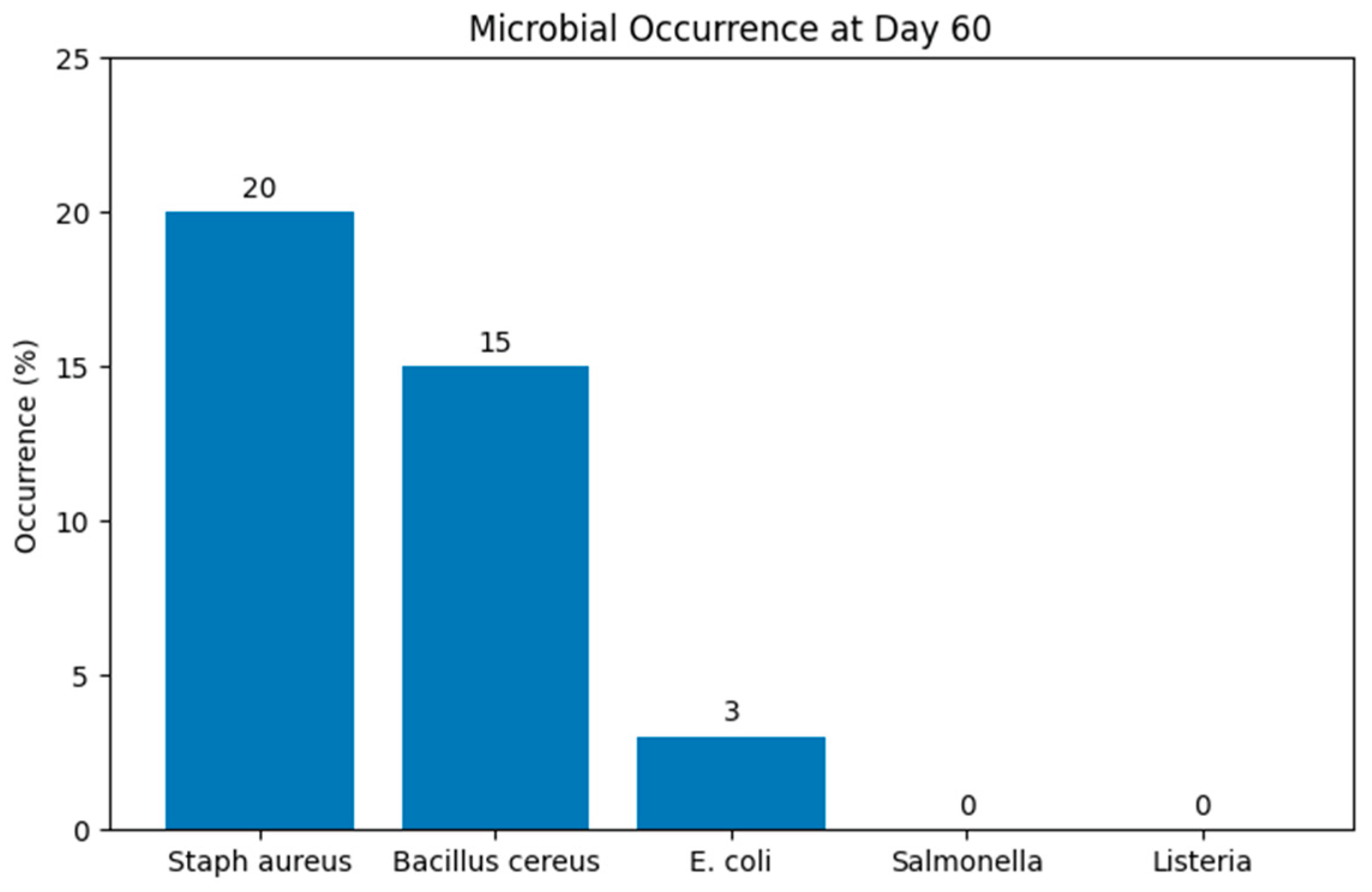
No microbial presence was observed during early storage (day 0-15), while initial detection occurred at day 35 and increased at day 60. Overall, these results indicate microbial stability during early refrigerated storage, with limited occurrence of selected microorganisms at extended storage levels. The temporal evolution and distribution of microbial occurrence across storage intervals are illustrated in Figure 4, Figure 5, Figure 6 and 7.
Table 3.
Microbiological status of PBMAs during refrigerated storage (day 0, 15, 35, and 60).
| Microorganism | Day 0 | Day 15 | Day 35 | Day 60 |
|---|---|---|---|---|
| Salmonella spp. | ND | ND | ND | ND |
| Listeria monocytogenes | ND | ND | ND | ND |
| Escherichia coli | ND | ND | ND | 3% |
| Enterobacteriaceae | ND | ND | ND | ND |
| Staphylococcus aureus | ND | ND | 1% | 20% (103 – 105 CFU/g) |
| Bacillus cereus | ND | ND | ND | 15% |
4. Discussion
The present study provides a descriptive assessment of the microbiological safety of heat-treated plant-based meat alternatives (PBMAs) produced under industrial conditions and stored under refrigeration. Across 100 heterogeneous formulations, the absence of Salmonella spp., Listeria monocytogenes, and Enterobacteriaceae throughout the evaluated storage period indicates a consistently favorable microbiological profile within the detection limits of the applied ISO methods. This is consistent with the applied thermal processing regime (core temperature ≥ 90 °C), combined with controlled post-process cooling and refrigerated storage (0˗4 °C), which are expected to reduce initial microbial loads and limit subsequent proliferation [22,23,24,25,26]. The absence of microbial detection during early storage (day 0-15), followed by limited occurrence at extended storage (day 60), reflects the temporal nature of microbial dynamics in heat-treated PBMAs. At day 60, the occurrence of selected microorganisms increased compared to earlier storage intervals, indicating delayed microbial recovery or post-processing contamination. This delayed appearance can be attributed to a combination of factors, including recovery of sublethally injured cells following thermal processing, germination of heat-resistant spores (particularly in the case of Bacillus cereus), and low-level post-processing contamination during handling and storage. Thermal processing at temperatures approaching 92 °C promotes denaturation and aggregation of plant proteins, contributing to gel network formation and structural stabilization of the product matrix [27,28,29,30], while simultaneously inactivating vegetative foodborne pathogens. Previous studies have demonstrated substantial reduction in Salmonella spp. and Escherichia coli at temperatures below 90 °C, with lethality increasing as temperature rises [22,23]. Similarly, Listeria monocytogenes, Staphylococcus aureus, and members of the Enterobacteriaceae family exhibit pronounced heat sensitivity and undergo cellular injury and inactivation during moist heat processing [24,25,26]. These observations support the dual role of thermal treatment in both structuring plant-based matrices and ensuring microbiological safety. The absence of major foodborne pathogens observed in this study is consistent with the applied processing conditions (92 °C for 90, 150, or 210 min), which are expected to result in substantial reductions of vegetative bacterial populations in ready-to-eat food matrices [31]. In addition, refrigerated storage 0-4 °C likely further limited post-processing microbial proliferation [32,33,34]. Comparable findings have been reported in studies of commercially available PBMAs, where low prevalence of major foodborne pathogens has been observed, particularly in heat-treated products [4,14]. The selected sampling points (day 0, 15, 35, and 60) were designed to reflect key stages of refrigerated storage. Day 0 enabled verification of processing lethality and post-process hygiene, while day 15 represented an intermediate phase in which psychotrophic or sublethally injured microorganisms could begin to recover. Day 35 captured late-stage microbiological dynamics, and day 60 provided an extended storage point to evaluate microbial persistence or delayed growth. A limited but notable occurrence of hygiene indicator microorganisms was observed at extended storage. Coagulase-positive Staphylococcus aureus was detected in one formulation at day 35, increasing to 20% of samples at day 60, with counts ranging between 103 and 105 CFU/g. Although these levels exceed commonly referenced hygiene guideline values, they remain below concentrations typically associated with enterotoxin production in ready-to-eat foods (≥ 105 = 106 CFU/g) [35,36,37,38]. In the present study, these levels were not consistently reached, and refrigerated storage (0-4 °C) likely limited bacterial growth and toxin production [35,39]. Accordingly, enterotoxin production would be considered less likely, although it was not directly assessed. The detected level exceeded commonly applied hygiene guideline values but remained within ranges relevant for food safety assessment [40,41,42]. The absence of repeated detection in individual formulations and the overall low prevalence support the interpretation of localized contamination events rather than systemic processing deficiencies. Similar observations have been attributed to post-processing handling or environmental contamination rather than insufficient thermal inactivation [43]. The detection of Bacillus cereus and Escherichia coli at day 60 further supports the presence of limited microbial activity during extended storage. Bacillus cereus, identified in 15% of samples at day 60, is a spore-forming organism whose heat-resistant endospores are known to withstand thermal processing and may subsequently germinate under favorable post-processing and storage conditions. At the observed occurrence levels and in the absence of widespread detection, this finding is consistent with expected spore survival and does not indicate a significant safety concern under the evaluated conditions. This pattern is consistent with expected spore survival and does not necessarily indicate insufficient thermal processing. In contrast, the detection of Escherichia coli in 3% of samples likely reflects low-level post-processing contamination or recovery of sublethally injured cells rather than survival of the applied heat treatment. Such delayed detection patterns have been reported in ready-to-eat and thermally processed foods, where low initial contamination levels and microbial recovery kinetics result in late-stage detectability. Surviving spores and injured cells may require time to recover and become detectable, while environmental contamination may initially remain below analytical thresholds. These findings do not indicate insufficient thermal processing but rather reflect expected microbial dynamics in heat-treated, ready-to-eat food systems. Similar observations have been reported in PBMAs, PBMAs, where major foodborne pathogens are rarely detected, while limited occurrence of Staphylococcus aureus and Bacillus cereus group organisms has been observed [44,45]. The intrinsic physicochemical properties of the products likely contributed to the observed microbiological stability. Based on the heterogeneity of formulations, variability in microbial occurrence may be partially attributed to differences in composition, including the use of diverse plant protein sources, hydrocolloids, and seasoning systems, which can influence water distribution, nutrient availability, and matrix structure, although formulation-specific effects were not evaluated in this study. Water activity, pH, moisture distribution, and salt content collectively influence microbial growth by limiting water availability, imposing osmotic stress, and interacting with storage temperature. Although the formulations were heterogeneous, the combination of moderate salt content, variable but often reduced water activity, refrigerated storage, and prior thermal treatment likely contributed collectively to suppression of microbial growth. Together, these factors likely acted as a multi-hurdle system limiting microbial growth [46]. Water activity is a critical factor governing microbial growth, and values approaching or below commonly recognized thresholds can restrict the proliferation of many Gram-negative bacteria, including members of the Enterobacteriaceae family [47,48,49]. The descriptive design of this study should be considered when interpreting the findings. Each formulation was produced once, and microbiological observations across storage intervals represent repeated measurements rather than independent biological replicates. Consequently, causal relationships between formulation variables and microbial outcomes cannot be established. Instead, the results provide an industrial-scale overview of microbiological safety across diverse PBMAs produced under standardized conditions. Overall, the findings demonstrate that heat-treated PBMAs manufactured under controlled industrial conditions and stored under refrigeration can maintain a favorable microbiological safety profile, particularly during early storage, with limited microbial occurrence observed at extended storage durations.
5. Conclusions
This study provides a descriptive, industrial-scale assessment of the microbiological safety of heat-treated plant-based meat alternatives (PBMAs) manufactured under controlled processing conditions and stored under refrigeration. Across 100 heterogeneous formulations evaluated at four storage intervals (day 0, day 15, day 35, and day 60), Salmonella spp. and Listeria monocytogenes were not detected (absence in 10 g) in any sample, indicating a favorable microbiological status under the evaluated conditions. Hygiene indicator microorganisms were not detected during early storage but exhibited limited occurrence at extended storage (day 60), including Escherichia coli, Staphylococcus aureus, and Bacillus cereus. These findings suggest that, while thermal processing and early storage conditions were effective in controlling microbial presence, extended refrigerated storage may permit limited microbial recovery, spore germination, or low-level post-processing contamination. The overall microbiological profile is consistent with the applied thermal processing regime, refrigerated storage conditions (0-4 °C), and intrinsic physicochemical characteristics of the products, which collectively contribute to microbial stability through a multi-hurdle effect. Given formulation heterogeneity and the absence of biological replication, the results are interpreted descriptively and do not support inferential conclusions regarding formulation-specific or processing-specific effects. Within these limitations, the findings indicate that heat-treated PBMAs manufactured under standardized industrial conditions can maintain a favorable microbiological safety profile, particularly during early refrigerated storage. The results indicate satisfactory microbiological stability during early refrigerated storage, while limited occurrence of selected microorganisms was observed at extended storage. The present study provides industrially relevant baseline data for this rapidly expanding food category. Future investigations incorporating biological replication, controlled comparative designs, extended storage durations, and quantitative microbiological risk assessment are recommended to further substantiate safety and support shelf-life determination.
Author Contributions
Conceptualization, Z.H.M. and E.G.; methodology, E.G and A.H; software, E.G.; validation, Z.H.M and A.H.; micro analysis, E.G.; investigation, A.H,Z.H.M and E.G.; resources, E.G.; data curation, E.G and Z.H.M.; writing—original draft preparation, E.G.; writing—review and editing, Z.H.M and A.H.; visualization; E.G and Z.H.M supervision, Z.H. M. and A.H.; micro analyses B.J. All authors have read and agreed to the published version of the manuscript.
Funding
This research received no external funding.
Acknowledgments
The authors would like to acknowledge the University of Prishtina and “Ss. Cyril and Methodius” University of Skopje, Koral Corporation for their assistance in the production process, RAPS GmbH for supplying additives and providing formulation guidance, Food and Veterinary Agency for specific analyses.
Conflicts of Interest
The authors declare no conflicts of interest.
Abbreviations
The following abbreviations are used in this manuscript:
| PBMA | Plant-Based Meat Alternatives |
References
- Choudhury, D.; Singh, S.; Seah, H.S.J.; Yeo, D.C.H.; Tan, P.L. Commercialization of plant-based meat alternatives. Trends Food Sci. Technol. 2020, 105, 233-249 . [CrossRef]
- Jang, J.; Lee, D.-W. Advancements in plant-based meat analogs enhancing sensory and nutritional attributes. npj Sci.Food 2024, 8, 50 . [CrossRef]
- Bohrer, B.M. An investigation of the formulation and nutritional composition of modern meat analogue products. Food Sci. Hum. Wellness 2019, 8, 320-329 . [CrossRef]
- Dušková, M.; Dorotíková, K.; Bartáková, K.; Králová, M.; Šedo, O.; Kameník, J. The microbial contaminants of plant-based meat analogues from the retail market. Int. J. Food Microbiol. 2024, 425, 110869 . [CrossRef]
- Kyriakopoulou, K.; Keppler, J.K.; van der Goot, AJ. Functionality of ingredients and additives in plant-based meat analogues. Foods 2021, 10, 600. [CrossRef]
- Capiani, S.; Brown, L.P.; Carrillo, C.D.; Lau, C.H. Bacterial microbiota associated with raw plant-based meat analogue products and their influences on selective enrichment for Escherichia coli O157:H7. Curr. Res. Food Sci. 2024, 10, 100944. [CrossRef]
- Roch, F.-F.; Dzieciol, M.; Quijada, N.M.; et al. Microbial community structure of plant-based meat alternatives. npj Sci. Food 2024, 8, 27. [CrossRef]
- Capiani, S.; Brown, L.P.; Carrillo, C.D.; Lau, C.H. Bacterial microbiota associated with raw plant-based meat analogue products. Curr. Res. Food Sci. 2024, 10, 100944. [CrossRef]
- Kyriakopoulou, K.; Keppler, J.K.; van der Goot, A.J. Functionality of ingredients in plant-based meat analogues. Foods 2021, 10, 600. [CrossRef]
- Mehta, N.; Kumar, P.; et al. Microbial quality of plant-based meat analogs. Discover Food 2026, 6, 31. [CrossRef]
- Dušková, M.; Dorotíková, K.; et al. Microbial contaminants of plant-based meat analogues. Int. J. Food Microbiol. 2024, 425, 110869. [CrossRef]
- Dogan, M.; Mann, D.A.; Deng, X. Characterization of spoilage microbial communities in plant-based meat alternatives. Microbiol. Spectr. 2025. [CrossRef]
- Ishaq, A.; Irfan, S.; Sameen, A.; Khalid, N. Plant-based meat analogs: A review with reference to formulation and gastrointestinal fate. Curr.Res.Food Sci. 2022, 5, 973-983. [CrossRef]
- Barmettler, K.; Waser, S.; Stephan, R. Microbiological quality of plant-based meat alternative products collected at retail in level in Switzerland. J.Food.Prot 2025, 88, 100402. [CrossRef]
- ISO (International Organization for Standardization). Microbiology of food and animal feeding stuffs – Horizontal method for the enumeration of coagulase-positive staphylococci (Staphylococcus aureus and other species) – Part 2: Technique using rabbit plasma fibrinogen agar medium – Amendment 1: Inclusion of an alternative confirmation test; ISO 6888-2:1999/Amd.1:2023; ISO: Geneva, Switzerland, 2003.
- ISO (International Organization for Standardization). Microbiology of food and animal feeding stuffs – Horizontal methods for the enumeration of β-glucuronidase-positive Escherichia coli – Part 2: Colony-count techniques at 44 °C using 5-bromo-4-chloro-3-indolyl β-D-glucuronide; ISO 16649-2:2001 (reaffirmed 2022); ISO: Geneva, Switzerland, 2001.
- ISO (International Organization for Standardization). Microbiology of the food chain – Horizontal method for the detection and enumeration of Enterobacteriaceae – Part 2: Colony-count techniques; ISO 21528-2:2017; ISO: Geneva, Switzerland, 2017.
- ISO (International Organization for Standardization). Microbiology of food and animal feeding stuffs – Horizontal method for the enumeration of presumptive Bacillus cereus – Colony-count technique at 30 °C; ISO 7932:2004; ISO: Geneva, Switzerland, 2004.
- ISO (International Organization for Standardization). Microbiology of the food chain – Horizontal method for the detection, enumeration and serotyping of Salmonella – Part 1: Detection of Salmonella spp.; ISO 6579-1:2017; ISO: Geneva, Switzerland, 2017.
- ISO (International Organization for Standardization). Microbiology of the food chain – Horizontal method for the detection, enumeration and serotyping of Salmonella – Part 3: Guidelines for serotyping of Salmonella spp.; ISO 6579-3:2014; ISO: Geneva, Switzerland, 2014.
- ISO (International Organization for Standardization). Microbiology of the food chain – Horizontal method for the detection and enumeration of Listeria monocytogenes and of Listeria spp. – Part 1: Detection method; ISO 11290-1:2017; ISO: Geneva, Switzerland, 2017.
- Juneja, V.K.; Eblen, B.S.; Marks, H.M. Thermal inactivation of Salmonella spp. in poultry products. Journal of Food Protection 2001, 64, 80-87.
- Li, X.; Sheldon, B.W.; Walker, J.T.; Slavik, M.F. Thermal inactivation of Salmonella spp., Escherichia coli O157:H7, and Listeria monocytogenes in ready-to-eat meat products. Journal of Food Science 2005, 70, M112-M118.
- Kennedy, J.; Blair, I.S.; McDowell, D.A.; Bolton, D.J. An investigation of the thermal resistance of Staphylococcus aureus in foods. International Journal of Food Microbiology 2005, 99, 257-262.
- Doyle, M.P.; Buchanan, R.L. Food Microbiology: Fundamentals and Frontiers, 4th ed.; ASM Press: Washington, DC, USA 2013.
- Jay, J.M.; Loessner, M.J.; Golden, D.A. Modern Food Microbiology, 7th ed.; Springer: New York, NY, USA 2005.
- Mession, J.; Sok, N.; Assifaoui, A.; Saurel, R. Thermal denaturation of pea globulins (Pisum sativum L.): Molecular interactions leading to heat-induced protein aggregation. Food Chem. 2013, 139, 587-594. [CrossRef]
- Bulgaru, V.; Sensory, I.; Netreba, N.; Gurev, A.; Altanlas, U.; Paiu, S.; Dragancea, V.; Monsanu, A. Qualitative and antioxidant evaluation of high-moisture plant-based meat analogs obtained by extrusion. Foods 2025, 14, 2939. [CrossRef]
- Bainy, E.; Corredig, M.; Poysa, V.; Woodrow, L.; Tash, S. Assessment of the effects of soy protein isolates with different protein compositions on gluten thermosetting gelation. Food Hydrocoll. 2010, 24, 168-175. [CrossRef]
- Jang, J.; Lee, Y.; Kim, H. Advancements in plant-based meat analogs enhancing texture, flavor, and nutritional profiles. Nat. Food 2024, 5, 50.
- Cebrián, G.; Condón, S.; Mañas, P. Physiology of the inactivation of vegetative bacteria by thermal treatments: Mode of action, influence of environmental factors and inactivation kinetics. International Journal of Food Microbiology 2017, 266, 1-11. [CrossRef]
- Parniakov, O.; Barba, F.J.; Grimi, N.; Lebovka, N. Microbiological quality and safety of plant-based meat alternatives at retail level. Foods 2023, 12, 1123.
- Heir, E.; Bjerke, G.A.; Hånninen, M.-L.; Møretrø, T.; Langsrud, S. Microbiological hazards associated with plant-based meat alternatives. Microorganisms 2023, 11, 2432.
- Russell, N.J. The effects of chill storage and food processing on microbial growth. International Journal of Food Microbiology 2002, 79, 1-9.
- Hennekinne, J-A.; De Buyser, M-L.; Dragacci, S. Staphylococcus aureus and its food poisoning toxins: Characterization and outbreak investigation. FEMS Microbiology Reviews 2012, 36, 815-836. [CrossRef]
- Argudín, M.Á.; Mendoza, M.C.; Rodicio, M.R. Food poisoning and Stpahylococcus aureus enterotoxins. Toxins 2010, 2, 1751-1773. [CrossRef]
- Kadariya, J.; Smith, T.C.; Thapaliya, D. Staphylococcus aureus and staphylococcal food borne disease: An ongoing challenge in public health. BioMed Research International 2014, 827965. [CrossRef]
- European Commission. Commission Regulation (EC) No 2073.2005 on microbiological criteria for foodstuffs. Official Journal of the European Union 2005, L338, 1-26.
- Liu, Y.; Chen, Q.; Zhang, X.; Wang, J.; Li, H. Detection of Staphylococcus aureus enterotoxins in food: Recent advances and challenges. Comprehensive Reviews in Food Science and Food Safety 2023, 22, 1234-1256.
- ICMSF. Microorganisms in Foods 6: Microbial Ecology of food Commodities; Springer: Boston, MA, USA, 2005.
- EFSA BIOHAZ Panel. Scientific Opinion on the public health risks of Staphylococcus aureus toxins in food. EFSA Journal 2015, 13, 3994.
- U.S. FDA. Bad Bug Book: Foodborne Pathogenic Microorganisms and Natural Toxins Handbook, 2nd ed.; Silver Spring, MD, USA, 2012.
- Gutiérrez, D.; Delgado, S.; Vázquez-Sánchez, D.; Martínez, B., Rodríguez, A.; García, P. Incidence of Staphylococcus aureus and analysis of associated bacterial communities on food industry surfaces. Applied and Environmental Microbiology 2012, 78, 8547, 8554. [CrossRef]
- Barmettler, K.; Waser, S.; Stephan, R. Microbiological Quality of Plant-Based Meat-Alternative Products Collected at Retail Level in Switzerland. Journal of Food Protection 2025, 88, 100402. [CrossRef]
- Kabisch, J.; Joswig. G.; Böhnlein, C.; Fiedler, G.; Franz, C.M.A.P. Microbiological Status of Vegan Ground Meat Products from German Retail. Journal of Consumer Protection and Food Safety 2024, 19, 33-40. [CrossRef]
- Leistner, L.; Gould, G.W. Hurdle Technologies: Combination Treatments for Food Stability, Safety and Quality; Springer: Boston, MA, USA 2002.
- International Commission on Microbiological Specifications for Foods (ICMSF). Microorganisms in Foods 5: Characteristics of Microbial Pathogens; Springer: Boston, MS, USA, 1996.
- Jay, J.M.; Loessner, M.L.; Golde, D.A. Modern Food Microbiology, 7th ed,; Springer, New York, NY, USA, 2005.
- Barbosa-Cánovas, G.V.; Fontana, A.J.; Schmidt, S.J.; Labuza, T.P. Water Activity in Foods: Fundamentals and Applications; Blackwell Publishing: Ames, IA, USA, 2007.
Figure 2.
Mean values of intrinsic physicochemical parameters (water activity, pH, moisture content, and salt content) of heat-treated plant-based meat alternatives (PBMAs). Values represent overall composition across all formulation.
Figure 2.
Mean values of intrinsic physicochemical parameters (water activity, pH, moisture content, and salt content) of heat-treated plant-based meat alternatives (PBMAs). Values represent overall composition across all formulation.
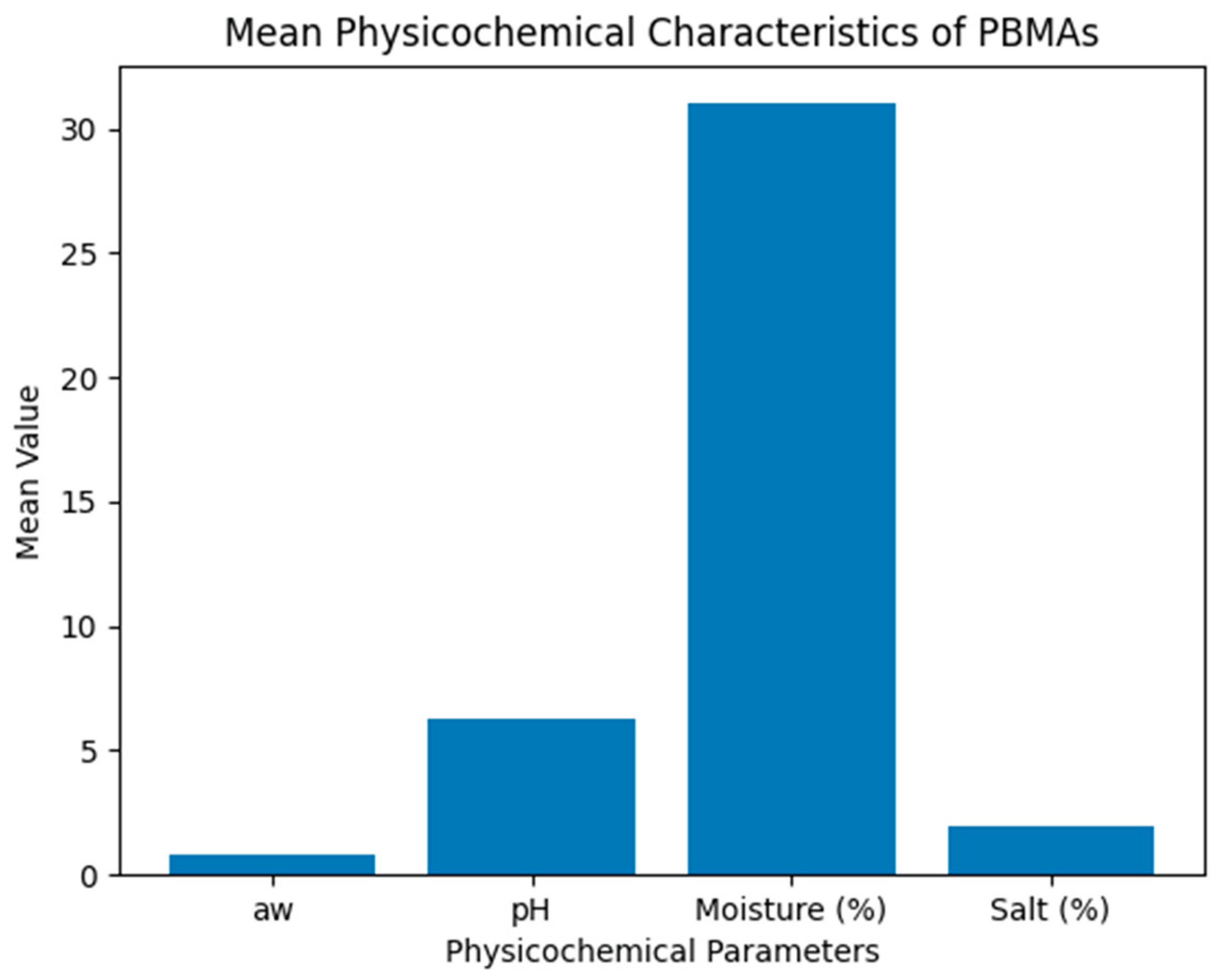
Figure 4.
Temporal changes in the prevalence (%) of selected microorganisms in heat-treated plant-based meat alternatives (PBMAs) during refrigerated storage (0-4 °C). Microbial absence was observed during early storage (day 0-15), followed by initial detection at day 35. At day 60, increased prevalence of hygiene indicator microorganisms was recorded, including Escherichia coli, coagulase-positive Staphylococcus, and Bacillus cereus, while Salmonella spp, and Listeria monocytogenes remained undetected throughout the storage period.
Figure 4.
Temporal changes in the prevalence (%) of selected microorganisms in heat-treated plant-based meat alternatives (PBMAs) during refrigerated storage (0-4 °C). Microbial absence was observed during early storage (day 0-15), followed by initial detection at day 35. At day 60, increased prevalence of hygiene indicator microorganisms was recorded, including Escherichia coli, coagulase-positive Staphylococcus, and Bacillus cereus, while Salmonella spp, and Listeria monocytogenes remained undetected throughout the storage period.
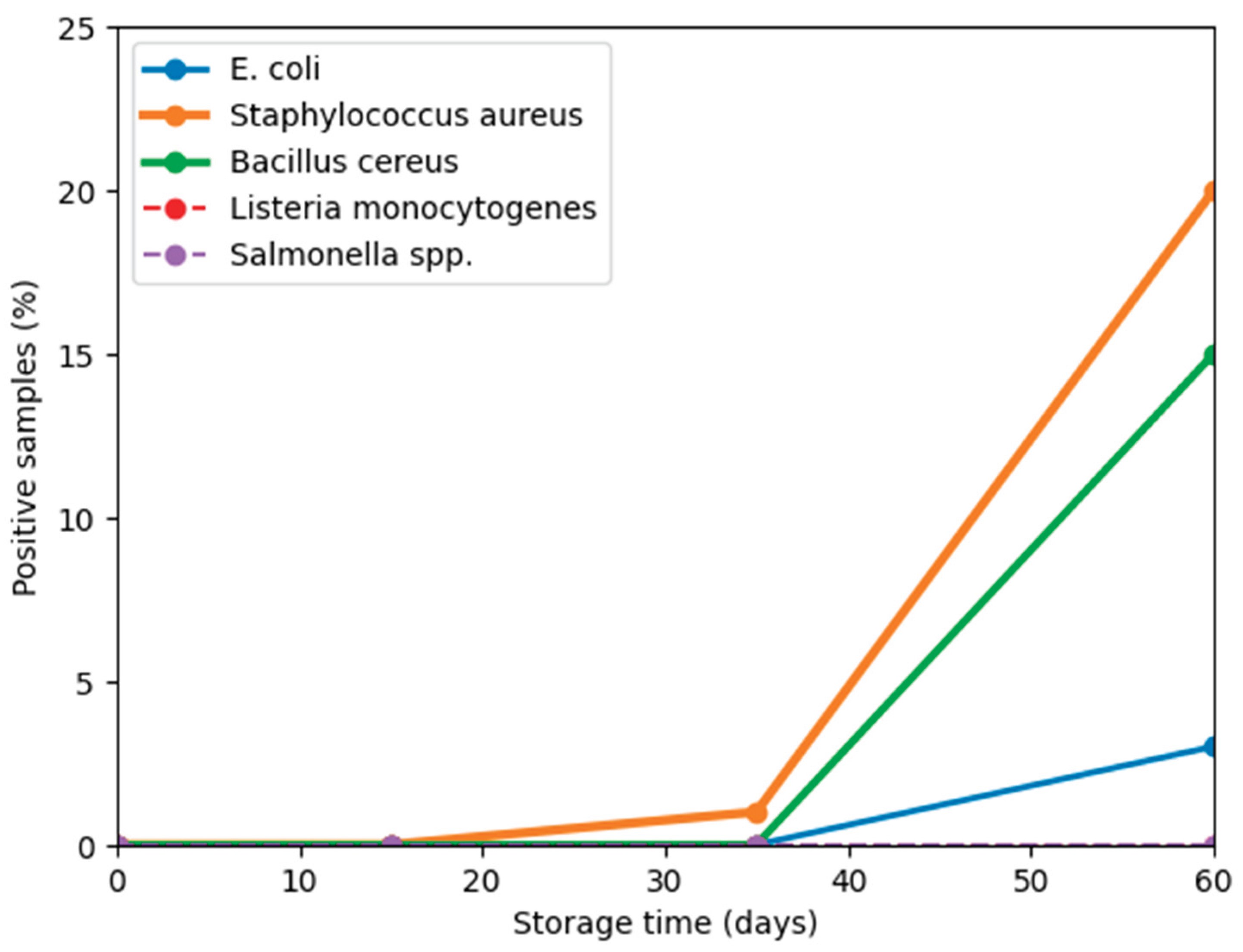
Figure 5.
Heatmap illustrating the occurrence (%) of selected hygiene indicator microorganisms in heat-treated plant-based meat alternatives (PBMAs) during refrigerated storage. Color intensity increases from white (no detection) to red (higher prevalence), highlighting the emergence of microbial occurrence at extended storage (day 60).
Figure 5.
Heatmap illustrating the occurrence (%) of selected hygiene indicator microorganisms in heat-treated plant-based meat alternatives (PBMAs) during refrigerated storage. Color intensity increases from white (no detection) to red (higher prevalence), highlighting the emergence of microbial occurrence at extended storage (day 60).
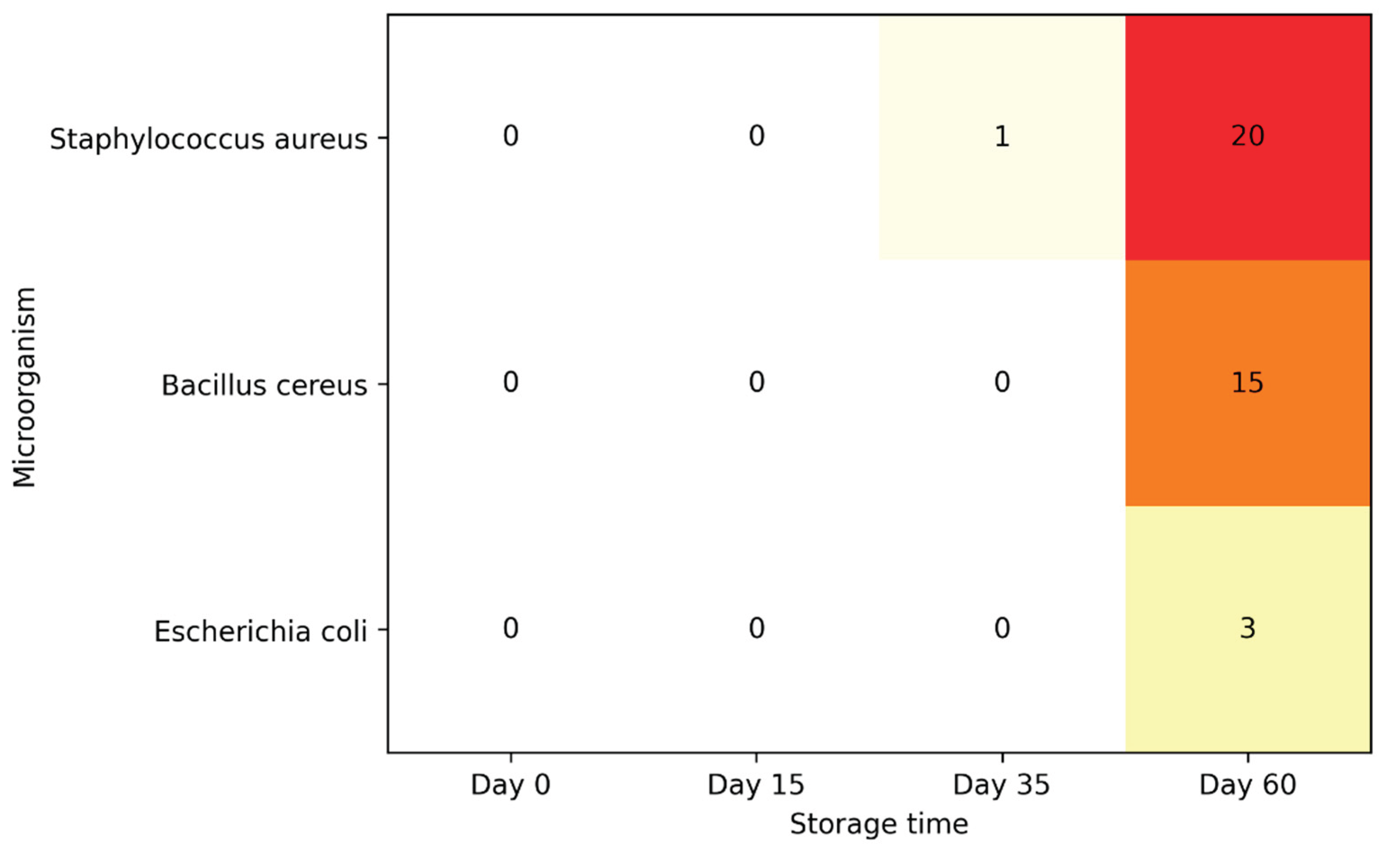
Figure 6.
Temporal evolution of selected hygiene indicator microorganisms in heat-treated plant-based meat alternatives (PBMAs) during refrigerated storage (0-4 °C). Microbial absence was observed during early storage (day 0-15), followed by initial detection at day 35. A marked increase in occurrence was observed at day 60, particularly for coagulase-positive Staphylococcus aureus (20%), Bacillus cereus (15%), and Escherichia coli (3%).
Figure 6.
Temporal evolution of selected hygiene indicator microorganisms in heat-treated plant-based meat alternatives (PBMAs) during refrigerated storage (0-4 °C). Microbial absence was observed during early storage (day 0-15), followed by initial detection at day 35. A marked increase in occurrence was observed at day 60, particularly for coagulase-positive Staphylococcus aureus (20%), Bacillus cereus (15%), and Escherichia coli (3%).
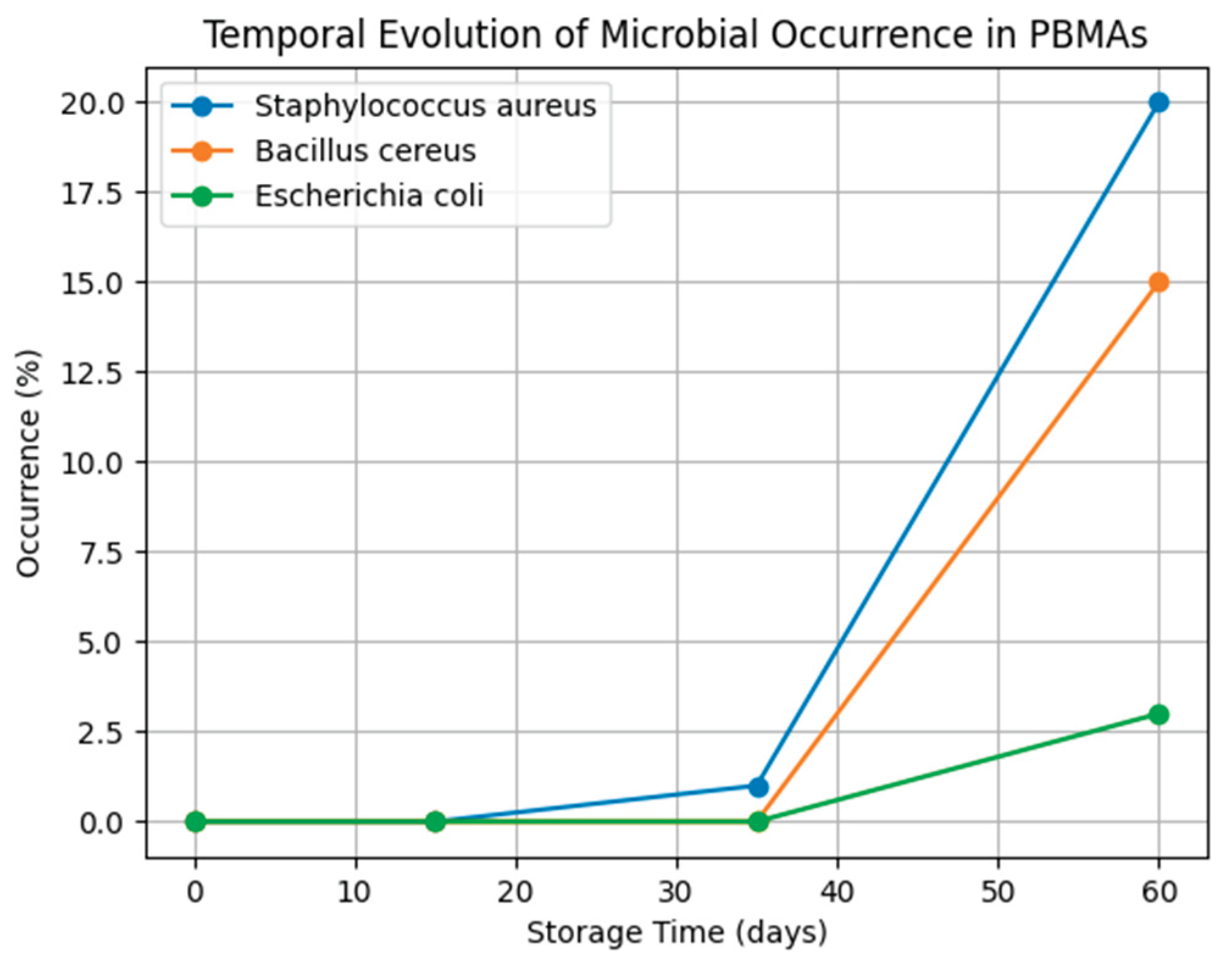
Table 2.
Summary of physicochemical parameters of plant-based meat alternatives (PBMAs), expressed as minimum, maximum, mean ± standard deviation, and range.
Table 2.
Summary of physicochemical parameters of plant-based meat alternatives (PBMAs), expressed as minimum, maximum, mean ± standard deviation, and range.
| Parameter | Minimum | Maximum | Mean ± SD | Range |
|---|---|---|---|---|
| aw | 0.68 | 1.0 | 0.85 ± 0.06 | 0.32 |
| pH | 5.3 | 7.1 | 6.3 ± 0.38 | 1.8 |
| Moisture (%) | 24% | 45% | 31% ± 5.5 | 21% |
| Salt (%) | 0.98% | 4.85% | 1.95% ± 0.55 | 3.87% |
Disclaimer/Publisher’s Note: The statements, opinions and data contained in all publications are solely those of the individual author(s) and contributor(s) and not of MDPI and/or the editor(s). MDPI and/or the editor(s) disclaim responsibility for any injury to people or property resulting from any ideas, methods, instructions or products referred to in the content. |
© 2026 by the authors. Licensee MDPI, Basel, Switzerland. This article is an open access article distributed under the terms and conditions of the Creative Commons Attribution (CC BY) license (http://creativecommons.org/licenses/by/4.0/).
Copyright: This open access article is published under a Creative Commons CC BY 4.0 license, which permit the free download, distribution, and reuse, provided that the author and preprint are cited in any reuse.


