

Submitted:
18 April 2026
Posted:
20 April 2026
You are already at the latest version
Abstract
This work was designed as a comparative extract-level study to clarify how solvent polarity influences antioxidant activity, preliminary hyaluronidase inhibition, and supportive chemical features in Buddleja officinalis Maxim.. Six extracts prepared with petroleum ether, ethyl acetate, n-butanol, water, 60% ethanol, and 95% ethanol were independently prepared in triplicate and evaluated for DPPH· radical scavenging, ABTS⁺· radical scavenging, ferric reducing power, and hyaluronidase inhibitory activity, together with total flavonoid and linarin contents. The 60% ethanol extract showed the strongest overall radical-scavenging activity, reaching 95% DPPH· scavenging and 95% ABTS+· scavenging at 2 mg/mL, whereas the 95% ethanol extract showed the highest ferric reducing power under the tested conditions. Total flavonoid and linarin contents were highest in the ethanol-rich fractions, especially the 95% ethanol and 60% ethanol extracts. In the hyaluronidase assay, the petroleum ether and 60% ethanol extracts showed relatively strong inhibition at 2.5 mg/mL, with inhibition rates of 74% and 68%, respectively. Supportive 1H NMR and UPLC–QTOF–MS data, including representative chromatographic profiles and representative compound assignments for the 60% ethanol extract, indicated clear polarity-dependent differences in extract composition; the 60% ethanol fraction was enriched in phenylethanoid glycosides and flavonoid glycosides, whereas the petroleum ether fraction was characterized mainly by lipophilic constituents. Overall, the results support a comparative and exploratory interpretation in which medium-polarity phenolic-rich fractions are associated with stronger antioxidant effects, while non-polar fractions may contribute more strongly to hyaluronidase inhibition. Because the present work was based on in vitro assays and preliminary enzyme screening, further studies with positive inhibitor controls, potency evaluation, and activity-guided isolation are still required.
Keywords:
Buddleja officinalis
; comparative extract-level study
; solvent polarity
; antioxidant activity
; hyaluronidase inhibition
; total flavonoids
; linarin
; 1H NMR
; UPLC–QTOF–MS
1. Introduction
Buddleja officinalis Maxim. is a medicinal and edible plant of interest for comparative extract-level study because solvent polarity may strongly influence its extract composition and observed bioactivities. Recent reviews indicate that B. officinalis contains flavonoids, phenylethanoid glycosides, and other secondary metabolites associated with diverse pharmacological activities [1]. Among these reported activities, antioxidant effects have most consistently been linked to flavonoid-rich or ethanol-derived fractions, but comparatively less attention has been given to how solvent polarity shapes extract-level differences in antioxidant performance, hyaluronidase inhibition, and supportive chemical features within a unified experimental framework.
Oxidative stress is closely involved in the development of diabetes, vascular injury, and other chronic disorders [2,3,4,5]. Earlier studies have shown that extraction conditions and isolated constituents of B. officinalis are associated with antioxidant-related and anti-inflammatory effects [6,7]. From this perspective, B. officinalis provides a suitable subject for comparative extract-level investigation aimed at linking solvent-dependent bioactivity differences with composition–activity associations and representative chemical characteristics.
In addition to antioxidant effects, B. officinalis has also been linked to anti-inflammatory activity in dry-eye-related models, including effects on lacrimal gland apoptosis and inflammatory factors, and aqueous extracts have shown activity against vascular inflammatory responses in human umbilical vein endothelial cells [8,9,10]. Hyaluronidase is a biologically relevant target in this context because it degrades hyaluronic acid and contributes to inflammatory and allergic processes [11,12]. Even so, hyaluronidase inhibition by polarity-differentiated extracts of B. officinalis has not been systematically compared.
Against this background, the present work was designed as a comparative extract-level study to clarify how solvent polarity influences antioxidant activity, preliminary hyaluronidase inhibition, and supportive chemical features in B. officinalis. Six extracts prepared with petroleum ether, ethyl acetate, n-butanol, water, 60% ethanol, and 95% ethanol were compared within a unified experimental framework. Antioxidant activity was evaluated by DPPH· radical scavenging, ABTS+· radical scavenging, and ferric reducing power assays, whereas hyaluronidase inhibition was assessed using a modified Elson–Morgan method. In parallel, total flavonoid and linarin contents were determined, and supportive compositional evidence was obtained from 1H NMR and UPLC–QTOF–MS profiling. The aim of the study was not to assign activity definitively to individual molecules, but rather to establish an extract-level evidence chain linking bioactivity differences, composition–activity associations, and representative chemical characteristics, thereby providing a more informative basis for fraction selection and subsequent follow-up studies.
2. Materials and Methods
2.1. Materials and Instruments
Dried flower buds of B. officinalis were obtained from Qingchuan, Guangyuan, Sichuan, China, powdered, and passed through a 60-mesh sieve before extraction. The plant material was authenticated by Prof. Shiping Cheng and a voucher specimen (No. BO-2025-0617) was deposited at Yaoshan Laboratory, Pingdingshan University.. DPPH· (Sigma-Aldrich); Methanol (HPLC grade), ethyl acetate, and n-butanol (Beijing Bailingwei Technology Co., Ltd.); L-ascorbic acid, ABTS, and other analytical-grade reagents were purchased from Sinopharm Chemical Reagent Co., Ltd.; Potassium persulfate (Beijing Ouhe Technology Co., Ltd.); Phosphate-buffered saline (PBS) (Meilun Biotechnology Co., Ltd.); Potassium ferricyanide (Solarbio Science & Technology Co., Ltd.); Trichloroacetic acid and absolute ethanol (Aladdin Biochemical Technology Co., Ltd.); Ferric chloride (Beijing Chemical Works. Rutin reference standard was obtained from the National Institutes for Food and Drug Control (Beijing, China), and linarin reference standard (>98%) was obtained from Macklin Biochemical Co., Ltd. (Shanghai, China). Main instruments included a microplate reader, a Waters e2695 HPLC system, a Bruker AVANCE 400 MHz NMR spectrometer, and a Waters ACQUITY H-Class UPLC coupled to a Xevo G2-XS QTOF mass spectrometer.
2.2. Preparation of Solvent Extracts
Powdered B. officinalis material (100 g each) was extracted separately with petroleum ether, ethyl acetate, n-butanol, 95% ethanol, 60% ethanol, or water. For each solvent, the extraction was performed independently in triplicate. For each extraction, the solid-to-liquid ratio was 1:7 (w/v; 100 g plant material with 700 mL solvent). Samples were sonicated at 50 °C for 1 h and then macerated for 12 h. After filtration, the filtrates were concentrated under reduced pressure to obtain crude extracts and then freeze-dried. The dried extracts were stored until analysis. All reported values represent the mean ± SD of three independently prepared extracts.
2.3. Determination of Total Flavonoid Content
Total flavonoid content was determined using a rutin-based colorimetric method. A rutin calibration curve was prepared over the linear range of 0.039–2.5 mg/mL, yielding the regression equation A = 1.2753C + 0.0527 with R2 = 0.9998. For sample analysis, 20 mg of dried extract was dissolved in methanol and diluted to 10 mL. After sonication and centrifugation, aliquots were reacted sequentially with NaNO2, Al(NO3)3, and NaOH, and absorbance was measured at 510 nm. Results were expressed as mg rutin equivalents per g dry extract. The colorimetric determination of total flavonoids was performed with reference to previously reported rutin-based spectrophotometric procedures [13].
2.4. Quantification of Linarin
Linarin was quantified by HPLC using a Waters Symmetry C18 column (4.6 × 250 mm, 5 μm) at 40 °C. The mobile phase consisted of methanol–water–acetic acid (45:54.5:0.5, v/v/v), delivered at 0.8 mL/min. The detection wavelength was 326 nm and the injection volume was 10 μL. The linarin calibration curve was Y = 2.0 × 10⁷X − 6794.8 with R2 = 0.9999 over the concentration range of 5–50 μg/mL. Linarin content was reported as mg/g dry extract.
2.5. DPPH· Radical Scavenging Assay
A 1 mmol/L DPPH· solution was prepared in methanol. Each extract was dissolved at 2 mg/mL and serially diluted to 0.125 mg/mL. For analysis, 200 μL of sample solution was mixed with 600 μL of DPPH· solution and allowed to react in the dark for 30 min at room temperature. Absorbance was measured at 517 nm. VC was tested under the same concentration series as the positive control. Scavenging percentage was calculated using sample, solvent, and reagent blank corrections.
2.6. ABTS+· Radical Scavenging Assay
ABTS+· working solution was prepared by reacting ABTS with potassium persulfate and then diluting the resulting stock solution to the required working concentration. VC was used as the positive control under the same assay conditions. Extracts and VC were tested over the same concentration range used in the DPPH· assay. In each test, 200 μL of ABTS+· working solution was mixed with 10 μL of sample solution, incubated in the dark for 30 min, and the absorbance was measured at 405 nm using a microplate reader. In the present manuscript, ABTS+· results are presented as relative scavenging percentages for consistency with the concentration-dependent comparison across solvent fractions.
2.7. Ferric Reducing Power Assay
Ferric reducing power was determined using potassium ferricyanide reduction followed by ferric chloride color development. One millilitre of sample solution was mixed with 2.5 mL of 0.2 mol/L phosphate buffer and 2.5 mL of 1% potassium ferricyanide, incubated at 50 °C for 20 min, treated with 10% trichloroacetic acid, and centrifuged. The supernatant was then mixed with ethanol and 0.1% ferric chloride, and absorbance was measured at 700 nm. The blank-corrected absorbance was used as the reducing power index.
2.8. Hyaluronidase Inhibitory Activity
Hyaluronidase inhibition was measured using a modified Elson–Morgan method. Extract solutions at 2.5, 5.0, and 7.5 mg/mL were incubated with hyaluronidase in acetate buffer, followed by CaCl2, sodium hyaluronate, NaOH, acetylacetone reagent, Ehrlich’s reagent, and ethanol according to the established procedure. Absorbance was measured at 530 nm, and inhibition percentage was calculated using systems with and without enzyme and sample. Because no reference inhibitor and no IC50 value were included in the present design, these results are reported as preliminary comparative inhibition data only.
2.9. 1H NMR Analysis
1H NMR spectra were recorded on a Bruker AVANCE 400 MHz spectrometer at 297.3 K using DMSO-d6 as the solvent. Spectra were acquired for aqueous, 60% ethanol, 95% ethanol, ethyl acetate, n-butanol, and petroleum ether extracts. Experimental parameters were as follows: pulse sequence, zg30; number of scans, 8; relaxation delay, 1.0 s; acquisition time, 2.04 s. The NMR data were used as supportive compositional evidence to compare the dominant chemical-class features of extracts with different polarity.
2.10. UPLC–QTOF–MS Profiling and Tentative Compound Identification
Chemical profiling was carried out on a Waters ACQUITY H-Class UPLC system coupled to a Waters Xevo G2-XS QTOF mass spectrometer with an electrospray ionization source. Separation was achieved on a Waters BEH C18 column (2.1 × 100 mm, 1.7 μm) at 40 °C. The mobile phase consisted of 0.1% formic acid in water (A) and 0.1% formic acid in acetonitrile (B) at a flow rate of 0.4 mL/min. The gradient program was 0–1 min, 5% B; 1–35 min, 5–98% B; 35–37 min, 98% B; and 37.1–40 min, 5% B. The injection volume was 2 μL. Data were acquired in both ESI+ and ESI− modes over m/z 50–1200. Compounds were tentatively assigned using accurate mass, isotopic pattern, MS/MS fragmentation, and comparison with the Waters Traditional Medicine Library 2.0 and relevant literature. Only linarin and verbascoside (acteoside) were supported by comparison with authentic reference standards; all other identifications remain tentative.
2.11. Data Processing and Correlation Analysis
Unless otherwise stated, all quantitative results are expressed as mean ± SD from three independently prepared extracts per solvent (n = 3). Origin 2019b was used for figure preparation, and SPSS 20.0 was used for Pearson correlation analysis. Because the correlation analysis was based on a limited number of solvent fractions, these relationships were treated as exploratory and interpreted conservatively.
3. Results
3.1. Total Flavonoid Content of Extracts Prepared with Solvents of Different Polarity
The total flavonoid contents of the six solvent extracts of B. officinalis are shown in Figure 1. The 95% ethanol, 60% ethanol, and n-butanol extracts showed the highest total flavonoid contents, reaching 355 ± 6.223, 270 ± 5.176, and 225 ± 3.007 mg/g dry extract, respectively. The water extract contained 105 ± 3.1098 mg/g, whereas the ethyl acetate and petroleum ether extracts contained much lower levels, at 75 ± 0.3224 and 5 ± 0.0216 mg/g, respectively. The overall order was 95%EtOH > 60%EtOH > n-BuOH > H2O > EtOAc > PE. These data indicate that medium- and high-polarity solvents extracted flavonoid-rich fractions more efficiently on a dry-extract basis.
3.2. Linarin Content of Extracts Prepared with Solvents of Different Polarity
The linarin contents of the six solvent extracts are summarized in Figure 2. The 95% ethanol extract had the highest linarin content (34.997 ± 1.6275 mg/g dry extract), followed by the 60% ethanol extract (31.5 ± 1.37 mg/g) and the n-butanol extract (20.03 ± 0.7932 mg/g). The water and ethyl acetate extracts contained intermediate levels, at 14.4 ± 0.59328 and 8.11 ± 0.3876 mg/g, respectively, whereas the petroleum ether extract contained only a trace amount (0.51 ± 0.0255 mg/g). The rank order was therefore 95%EtOH > 60%EtOH > n-BuOH > H2O > EtOAc > PE, which was broadly consistent with the distribution pattern of total flavonoids.
3.3. Antioxidant Activity of the Solvent Extracts
All The antioxidant activities of the solvent extracts were evaluated using DPPH· radical scavenging, ABTS+· radical scavenging, and ferric reducing power assays. Overall, the 60% ethanol and 95% ethanol extracts showed stronger antioxidant performance than the other fractions, whereas the petroleum ether extract showed consistently weak activity in the radical-scavenging assays.
3.3.1. DPPH· Radical Scavenging Activity
The DPPH· radical scavenging activities of the solvent extracts are shown in Figure 3. The DPPH· scavenging activity of all extracts increased with increasing concentration. Among the tested fractions, the 60% ethanol extract showed the strongest activity, reaching 95% scavenging at 2 mg/mL, which was close to that of VC (95.51%) under the same conditions. The 95% ethanol extract ranked second, reaching 78% at 2 mg/mL, followed by the water extract (48%), n-butanol extract (24%), ethyl acetate extract (10%), and petroleum ether extract (3%). Based on the tested concentration range, the overall order of DPPH· scavenging activity was 60%EtOH > 95%EtOH > H2O > n-BuOH > EtOAc > PE.
3.3.2. ABTS+· Radical Scavenging Activity
The ABTS+· radical scavenging activities of the solvent extracts are shown in Figure 4. The ABTS+· scavenging activity also increased with increasing concentration. At 2 mg/mL, the 60% ethanol extract exhibited the highest scavenging rate (95%), very close to VC (96%). The water extract and the 95% ethanol extract also showed strong activities, reaching 93% and 86%, respectively, while the n-butanol extract reached 82%. In contrast, the ethyl acetate extract showed only moderate activity (48%), and the petroleum ether extract remained almost inactive (0.2%). Thus, at the highest tested concentration, the overall order was 60%EtOH > H2O > 95%EtOH > n-BuOH > EtOAc > PE.
3.3.3. Ferric Reducing Power
The ferric reducing powers of the solvent extracts are presented in Figure 5. The ferric reducing power assay also showed concentration-dependent behavior. At 2 mg/mL, the 95% ethanol extract showed the highest absorbance (0.96), followed closely by the 60% ethanol extract (0.92). The n-butanol extract also exhibited relatively strong reducing power (0.79), whereas the water extract showed moderate activity (0.50). The ethyl acetate and petroleum ether extracts displayed much lower reducing ability, with absorbance values of 0.32 and 0.07, respectively. Therefore, under the present assay conditions, the reducing power ranking was 95%EtOH > 60%EtOH > n-BuOH > H2O > EtOAc > PE.
3.4. Hyaluronidase Inhibitory Activity of the Solvent Extracts
The hyaluronidase inhibitory activities of the six solvent extracts are shown in Figure 6. Unlike the antioxidant assays, the hyaluronidase inhibitory activity did not follow exactly the same solvent-dependent pattern. At 2.5 mg/mL, the petroleum ether extract showed the highest inhibition (74%), followed by the 60% ethanol extract (68%), whereas the water extract showed moderate inhibition (38%). In contrast, the 95% ethanol, n-butanol, and ethyl acetate extracts exhibited much weaker inhibition at the same concentration, with values of 13%, 6%, and 5%, respectively. At 5 mg/mL, the inhibition rates increased to 79% for petroleum ether, 73% for 60% ethanol, 59% for 95% ethanol, 56% for water, 40% for ethyl acetate, and 28% for n-butanol. At 7.5 mg/mL, the 60% ethanol extract showed the strongest inhibition (93%), followed by the 95% ethanol extract (91%) and the petroleum ether extract (86%). These results indicate that both non-polar and medium-polarity fractions of B. officinalis may contain constituents relevant to hyaluronidase inhibition. Because no reference inhibitor or IC50 determination was included, these data should be interpreted as preliminary comparative screening results rather than benchmarked inhibitory potencies.
3.5. Correlation Among Antioxidant Performance Indices
Pearson correlation analysis was used to explore the relationships among the antioxidant performance indices, and the results are summarized in Table 1. ABTS+· and DPPH· antioxidant indices were strongly positively correlated (r = 0.985, p = 0.002). The correlation between the ABTS+· index and ferric reducing power was also positive and reached nominal statistical significance (r = 0.891, p = 0.043), whereas the correlation between the DPPH· index and ferric reducing power did not reach significance in this small data set (r = 0.809, p = 0.097). Overall, these results indicate that the three antioxidant assays showed generally consistent trends across the solvent fractions, although the degree of consistency differed among assay types. Because the analysis was based on only six solvent fractions, these results should be interpreted as exploratory rather than definitive.
3.6. Association of Total Flavonoids and Linarin with Antioxidant Performance
The relationships between the measured compositional variables and antioxidant performance are summarized in Table 2. Both total flavonoid content and linarin content showed positive associations with antioxidant performance across the solvent fractions. Among the observed relationships, linarin showed the strongest association with the ABTS+· antioxidant index (r = 0.832). Total flavonoids also showed positive associations with the ABTS+·, DPPH·, and ferric reducing power indices, with the strongest observed association being that with ferric reducing power (r = 0.857). These results are directionally consistent with the distribution pattern of the ethanol-rich fractions, which contained higher levels of total flavonoids and linarin and also showed stronger antioxidant performance in the bioassays. Given the limited sample size and the exploratory nature of the analysis, these results are best interpreted as composition–activity trends rather than strong inferential statistical evidence. These findings support the view that phenolic-rich fractions contribute importantly to antioxidant performance, but they do not justify attributing the observed activity to total flavonoids or linarin alone.
3.7. Chemical Profiling of the Most Active Extracts
3.7.1. 1H NMR Spectroscopic Analysis
The 1H NMR spectra provided supportive evidence that extracts of different polarity contained different major classes of constituents. The aqueous, 60% ethanol, and 95% ethanol extracts displayed relatively strong aromatic and sugar-proton regions, consistent with flavonoid glycosides and phenylethanoid glycosides, whereas the petroleum ether extract was dominated by aliphatic signals characteristic of lipophilic constituents. These polarity-dependent spectral differences are consistent with the observed divergence between antioxidant activity and hyaluronidase inhibition. However, the NMR data are interpreted here as class-level compositional support rather than direct proof of specific active molecules. Detailed spectra are provided in the Supplementary Materials (Figures S1–S6).
3.7.2. UPLC–QTOF–MS Analysis and Tentative Compound Identification
To provide more direct chemical support for the extract-level activity pattern, the 60% ethanol extract, which showed the strongest overall antioxidant performance in the present study, was further profiled by UPLC–QTOF–MS in both negative and positive ion modes. As shown in Figure 7, the base peak intensity chromatograms revealed a chemically rich profile with multiple well-resolved signals distributed mainly in the early-to-middle retention time range, consistent with the presence of medium-polarity constituents. A set of representative compounds identified or tentatively assigned from this fraction is summarized in Table 3, whereas the comprehensive compound list is provided in the Supplementary Materials (Table S1).
Among the detected constituents, phenylethanoid glycosides and flavonoid glycosides were the dominant classes. Representative phenylethanoid glycosides included echinacoside, acteoside (verbascoside), forsythoside B, and cistanoside A, while representative flavonoid glycosides included linarin, luteolin-7-O-glucuronide, baicalin, scutellarin, and isoquercitrin. Chlorogenic acid was also detected as a representative phenolic acid. Among these compounds, linarin and verbascoside were further supported by comparison with authentic reference standards, whereas the remaining assignments were based on accurate mass measurement, isotopic pattern, MS/MS fragmentation behavior, and comparison with library and literature data.
The compositional features of the 60% ethanol extract are consistent with its strong antioxidant performance in the DPPH·, ABTS⁺·, and ferric reducing power assays. In particular, the predominance of medium-polarity phenolic constituents provides direct chemical support for the extract-level composition–activity associations observed in the present study. Although these data do not establish the contribution of any single constituent to the observed bioactivity, they provide chemically relevant support for interpreting the antioxidant results at the extract level.
4. Discussion
The present study establishes a comparative extract-level evidence chain showing that the biological performance of B. officinalis is strongly influenced by solvent polarity. Among the six tested extracts, the 60% ethanol fraction showed the strongest overall radical-scavenging activity, whereas the 95% ethanol fraction showed the highest ferric reducing power under the tested conditions. In contrast, hyaluronidase inhibitory activity followed a partially different solvent-dependent pattern, with the petroleum ether extract showing relatively strong inhibition at 2.5 mg/mL and the 60% ethanol and 95% ethanol extracts showing high inhibition at 7.5 mg/mL. Together, these results indicate that different extract classes may contribute differently to antioxidant performance and hyaluronidase inhibition, and that the bioactivity pattern of B. officinalis cannot be adequately explained by any single measured compositional parameter alone.
From the antioxidant perspective, the solvent-dependent trends observed here were broadly consistent with the distribution of total flavonoids and linarin across the six extracts. The ethanol-rich fractions, especially the 60% ethanol and 95% ethanol extracts, contained the highest levels of these measured compositional variables and also performed best in the antioxidant assays. This pattern is directionally consistent with previous studies showing that extraction conditions, constituent distribution, and isolated compounds of B. officinalis are associated with antioxidant-related and anti-inflammatory effects [6,7]. On a dry-extract basis, the present results therefore support the view that medium- and high-polarity solvents are more effective for obtaining antioxidant-active fractions from B. officinalis. Even so, the different rank orders observed among DPPH· scavenging, ABTS+· scavenging, and ferric reducing power also suggest that antioxidant performance should be interpreted as assay-dependent rather than reduced to a single numerical indicator.
A notable finding of the present study is that hyaluronidase inhibitory activity was not restricted to the same fractions that showed the strongest antioxidant activity. At 2.5 mg/mL, the petroleum ether extract showed the highest inhibition, followed by the 60% ethanol extract, whereas the 95% ethanol, n-butanol, and ethyl acetate extracts were much weaker under the same conditions. At higher concentrations, however, both the 60% ethanol and 95% ethanol extracts reached high inhibition levels. This polarity-divergent activity pattern suggests that the constituents associated with hyaluronidase inhibition may differ, at least in part, from those associated primarily with antioxidant effects. In other words, the functional profile of B. officinalis cannot be reduced to a simple “more flavonoids means more activity” explanation, and non-polar as well as medium-polarity fractions may deserve attention depending on the intended bioactivity endpoint.
Complementary chemical evidence further supports the bioassay results. The 1H NMR spectra showed clear differences among extracts of different polarity. The aqueous, 60% ethanol, and 95% ethanol extracts displayed relatively strong aromatic and sugar-proton regions, consistent with flavonoid glycosides and phenylethanoid glycosides, whereas the petroleum ether extract was dominated by aliphatic signals characteristic of lipophilic constituents. These class-level spectral differences are consistent with the observed divergence between antioxidant activity and hyaluronidase inhibition, although the NMR data are interpreted here as supportive compositional evidence rather than direct proof of specific active molecules.
Together, the UPLC–QTOF–MS chromatograms and representative compound assignments provide additional chemical support for this interpretation. In the present study, the 60% ethanol extract showed the strongest overall radical-scavenging activity and was also characterized by a chemically rich profile dominated by phenylethanoid glycosides, flavonoid glycosides, and other phenolic-type constituents. Representative compounds such as acteoside (verbascoside), linarin, luteolin-7-O-glucuronide, baicalin, scutellarin, isoquercitrin, and chlorogenic acid are all consistent with a medium-polarity, phenolic-enriched fraction. Although no individual compound can be assigned as the sole active contributor on the basis of the present data, the chemical profiling results provide a more plausible compositional context for the extract-level antioxidant pattern observed in this study. This interpretation is also consistent with recent studies showing that integrated MS- and NMR-based approaches can provide more informative support for linking chemical features with bioactivity in B. officinalis [14].
The correlation analysis provided additional, although still limited, support for this interpretation. The three antioxidant performance indices showed generally consistent trends across the solvent fractions, and both total flavonoids and linarin were positively associated with antioxidant performance. These findings are directionally compatible with the compositional enrichment of the ethanol-rich fractions and with the representative chemical profile of the 60% ethanol extract. Nevertheless, because the analysis was based on only a small number of solvent fractions, these relationships should be interpreted as exploratory trends rather than strong inferential statistical evidence. These findings support the view that phenolic-rich fractions contribute importantly to antioxidant performance, but they do not justify attributing the observed activity to total flavonoids or linarin alone.
Recent in vitro studies have further expanded the pharmacological understanding of B. officinalis flower extracts in the context of dry eye disease [15]. Taken together with the present results, these observations suggest that extract-level comparison remains a useful strategy for identifying solvent fractions with different functional profiles and for guiding subsequent bioactivity-oriented investigation.
Several limitations should still be stated explicitly. First, although each solvent was extracted independently in triplicate, the present work remains an extract-level comparative study and does not yet provide compound-level potency attribution. Second, the extracts were compared on an equal dry-extract mass basis rather than on an extraction-yield-normalized raw-material basis. Third, the ABTS assay results are presented as relative scavenging percentages within the current experimental framework rather than as TEAC values. Fourth, hyaluronidase inhibition was expressed only as percentage inhibition, because no positive inhibitor control and no IC50 determination were included in the current design. Finally, the UPLC–QTOF–MS assignments, except for linarin and verbascoside supported by authentic standards, should be regarded as tentative. These limitations do not invalidate the present results, but they do define the boundaries within which the study should be interpreted.
Overall, the present discussion supports a cautious but coherent interpretation in which solvent polarity shapes both the chemical profile and the observable functional behavior of B. officinalis extracts. Medium-polarity phenolic-rich fractions appear more closely associated with antioxidant performance, whereas hyaluronidase inhibition may involve contributions from both non-polar and medium-polarity constituents. From this perspective, the value of the present work lies not in definitive mechanistic proof, but in establishing a comparative extract-level framework that can guide fraction selection, supportive chemical interpretation, and subsequent bioactivity-oriented investigation.
5. Conclusion
This study comparatively evaluated six solvent extracts of B. officinalis Maxim. within a unified extract-level framework integrating bioactivity testing, composition–activity association analysis, and supportive chemical profiling. The ethanol-rich fractions, especially the 60% ethanol extract, showed the strongest overall antioxidant performance, while the 95% ethanol extract showed the strongest ferric reducing power under the tested conditions. In the hyaluronidase assay, both the petroleum ether extract and the 60% ethanol extract showed relatively strong inhibitory activity, indicating that non-polar and medium-polarity fractions may both contain relevant constituents.
Supportive 1H NMR and UPLC–QTOF–MS data, together with representative chromatographic profiles and representative compound assignments for the 60% ethanol fraction, showed clear polarity-dependent differences in extract composition and helped place the bioactivity results within a more informative chemical context. In particular, the 60% ethanol fraction was characterized by abundant phenylethanoid glycosides and flavonoid glycosides, whereas the petroleum ether fraction showed a predominantly lipophilic profile. Positive composition–activity associations were observed between antioxidant indices and both total flavonoid and linarin contents, although these relationships should be regarded as exploratory rather than definitive evidence of causal contribution.
Overall, the present work should be interpreted as a comparative and exploratory study rather than definitive mechanistic proof. Even so, the bioassay data, together with supportive chemical characterization, provide a clearer basis for selecting B. officinalis fractions for further standardization, positive-control-supported enzyme studies, and activity-guided phytochemical investigation. Taken together, these findings support the value of a comparative extract-level study framework for guiding fraction selection, follow-up phytochemical investigation, and bioactivity-oriented evaluation of B. officinalis.
Supplementary Materials
The following supporting information can be downloaded at the website of this paper posted on Preprints.org. The Supporting Information includes 1H NMR spectra of representative extracts (Figures S1–S6), supplementary UPLC–QTOF–MS base peak intensity chromatograms of the 60% ethanol extract acquired in negative and positive ion modes (Figures S7 and S8), a comprehensive compound list for the 60% ethanol extract (Table S1), and detailed instrumental conditions.
Author Contributions
Conceptualization, G.T. and Y.H.; methodology, G.T., Y.T. and S.C.; validation, G.T., Y.T. and S.C.; formal analysis, G.T., Y.T. and C.Y.; investigation, G.T., Y.T. and S.C.; resources, G.T. and Y.H.; data curation, G.T. and Y.T.; writing—original draft preparation, G.T.; writing—review and editing, G.T., Y.T., S.C., C.Y. and Y.H.; visualization, G.T. and Y.T.; supervision, G.T. and Y.H.; project administration, G.T.; funding acquisition, G.T. and Y.H. All authors have read and agreed to the published version of the manuscript.
Funding
This work was financially supported by the 2024 Henan Provincial Higher Education Teaching Reform Research and Practice Project (Undergraduate Education Category), “Construction and Practice of Project-Based + Tutoring System Talent Cultivation Model” (No. 2024SJGLX0492), and the Postgraduate Education Reform and Quality Improvement Project of Henan Province, “An Engineering Practice-Oriented Teaching Case for the Green-Low-Carbon Transition of Core Nylon Chemical Materials under China’s Dual-Carbon Goals” (No. YJS2026AL145).
Data Availability Statement
The data presented in this study are available in the article and Supplementary Materials. Additional supporting information may be provided by the corresponding author upon reasonable request.
Acknowledgments
The authors thank the analytical platforms of Pingdingshan University for instrumental support.
Conflicts of Interest
The authors declare no conflict of interest.
References
- Wang M, Wang S, Tang HP, et al. Buddleja officinalis Maxim.: A review of its botany, ethnopharmacology, phytochemistry, pharmacology, and therapeutic potential for ophthalmic diseases. J Ethnopharmacol. 2024, 318(Pt B): 116993. [CrossRef]
- Asmat U, Abad K, Ismail K. Diabetes mellitus and oxidative stress—A concise review. Saudi Pharm J. 2016, 24(5): 547–553. [CrossRef]
- Chaudhuri J, Bains Y, Guha S, et al. The role of advanced glycation end products in aging and metabolic diseases: Bridging association and causality. Cell Metab. 2018, 28(3):337–352. [CrossRef]
- Fiorentino TV, Prioletta A, Zuo P, Folli F. Hyperglycemia-induced oxidative stress and its role in diabetes mellitus related cardiovascular diseases. Curr Pharm Des. 2013, 19(32): 5695–5703. [CrossRef]
- Vlassara H, Striker GE. AGE restriction in diabetes mellitus: A paradigm shift. Nat Rev Endocrinol. 2011, 7(9): 526–539. [CrossRef]
- Xie G, Li R, Han Y, Zhu Y, Wu G, Qin M. Optimization of the extraction conditions for Buddleja officinalis Maxim. using response surface methodology and exploration of the optimum harvest time. Molecules. 2017, 22(11): 1877. [CrossRef]
- Huang F B, Liang N, Hussain N, et al. Anti-inflammatory and antioxidant activities of chemical constituents from the flower buds of Buddleja officinalis. Nat Prod Res. 2022, 36(12): 3031–3042. [CrossRef]
- Peng QH, Yao XL, Wu QL, et al. Effects of eye drops of Buddleja officinalis Maxim. extract on lacrimal gland cell apoptosis in castrated rats with dry eye. J Chin Integr Med. 2010, 8(3): 244–249. [CrossRef]
- Peng J, Ouyang Y, Li WJ, et al. Effect of Buddleja officinalis eye drops on inflammatory factors of lacrimal gland cells of castrated male rabbits with dry eye. Int Eye Sci. 2018, 18(8): 1359–1364. [CrossRef]
- Lee YJ, Moon MK, Hwang SM, et al. Anti-inflammatory effect of Buddleja officinalis on vascular inflammation in human umbilical vein endothelial cells. Am J Chin Med. 2010, 38(3): 585–598. [CrossRef]
- Rutkowska M, Kolodziejczyk-Czepas J, Olszewska MA. The effects of Sorbus aucuparia L. fruit extracts on oxidative/nitrative modifications of human fibrinogen, impact on enzymatic properties of thrombin, and hyaluronidase activity in vitro. Antioxidants (Basel). 2021, 10(12): 2009. [CrossRef]
- Bralley EE, Hargrove JL, Greenspan P, Hartle DK. Inhibition of hyaluronidase activity by Vitis rotundifolia berry seeds and skins. Pharm Biol. 2007, 45(8):667–673. [CrossRef]
- Yan XY, Li L. Optimization of ultrasonic-assisted extraction for total flavonoids from Ginkgo biloba leaves and its scavenging capacity on hydroxyl free radicals. Sci Technol Food Ind. 2020, 41(9): 200–204, 224. [CrossRef]
- Wasilewicz A, Areesanan A, Kirchweger B, et al. Combining the strengths of MS and NMR in biochemometrics: A case study on Buddleja officinalis. J Nat Prod. 2025, 88(5):1099–1110. [CrossRef]
- Areesanan A, Wasilewicz A, Kirchweger B, et al. Pharmacological in vitro profiling of Buddleja officinalis flower extracts in the context of dry eye disease. Biomed Pharmacother. 2024, 181:117685. [CrossRef]
Figure 1.
Total flavonoid content in different solvent extracts of B. officinalis. PE, petroleum ether; EtOAc, ethyl acetate; n-BuOH, n-butanol; H2O, water; 60%EtOH, 60% ethanol; 95%EtOH, 95% ethanol. Values are mean ± SD (n = 3).
Figure 1.
Total flavonoid content in different solvent extracts of B. officinalis. PE, petroleum ether; EtOAc, ethyl acetate; n-BuOH, n-butanol; H2O, water; 60%EtOH, 60% ethanol; 95%EtOH, 95% ethanol. Values are mean ± SD (n = 3).
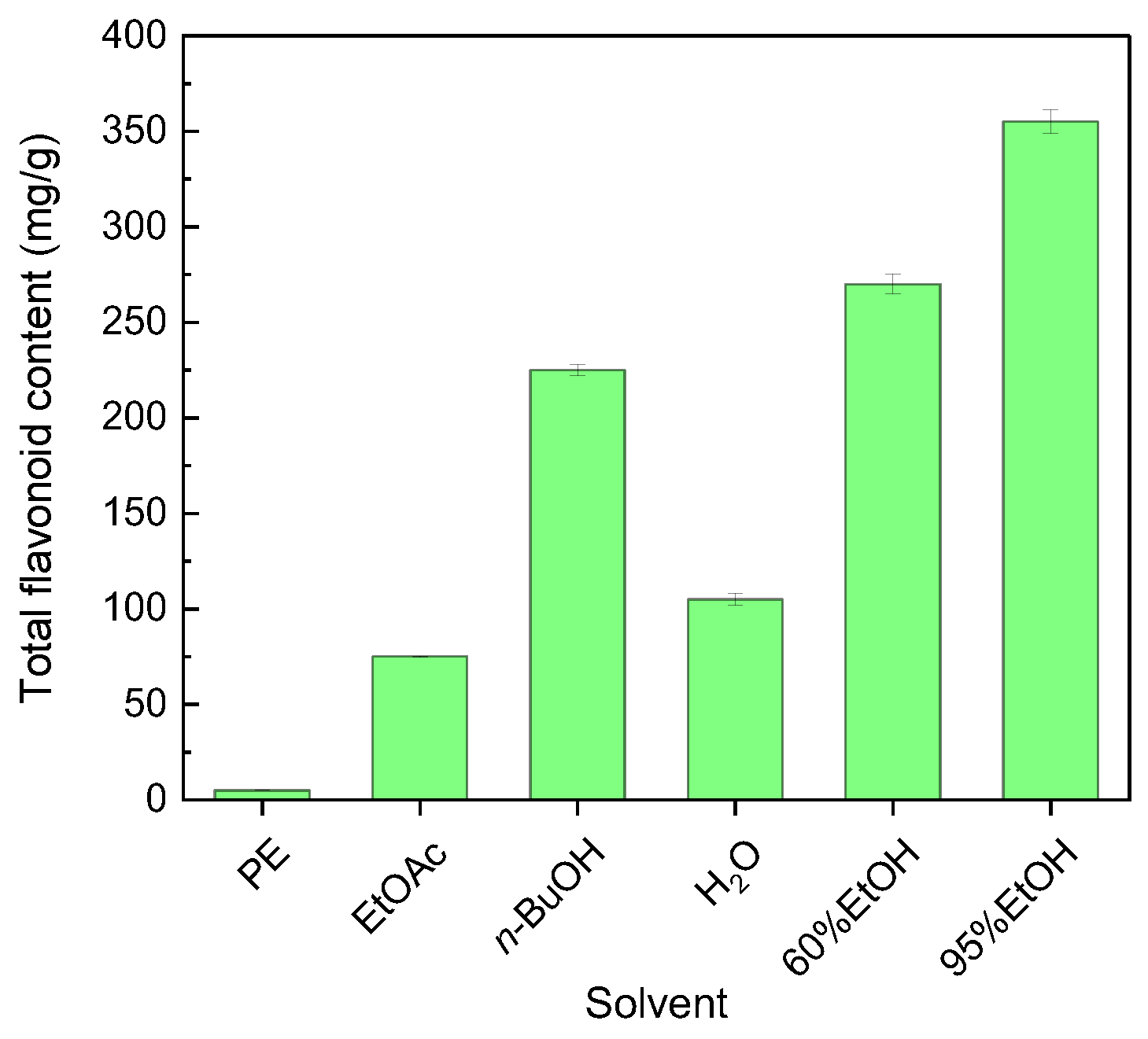
Figure 2.
Linarin content in different solvent extracts of B. officinalis. Abbreviations are the same as in Figure 1. Values are mean ± SD (n = 3).
Figure 2.
Linarin content in different solvent extracts of B. officinalis. Abbreviations are the same as in Figure 1. Values are mean ± SD (n = 3).
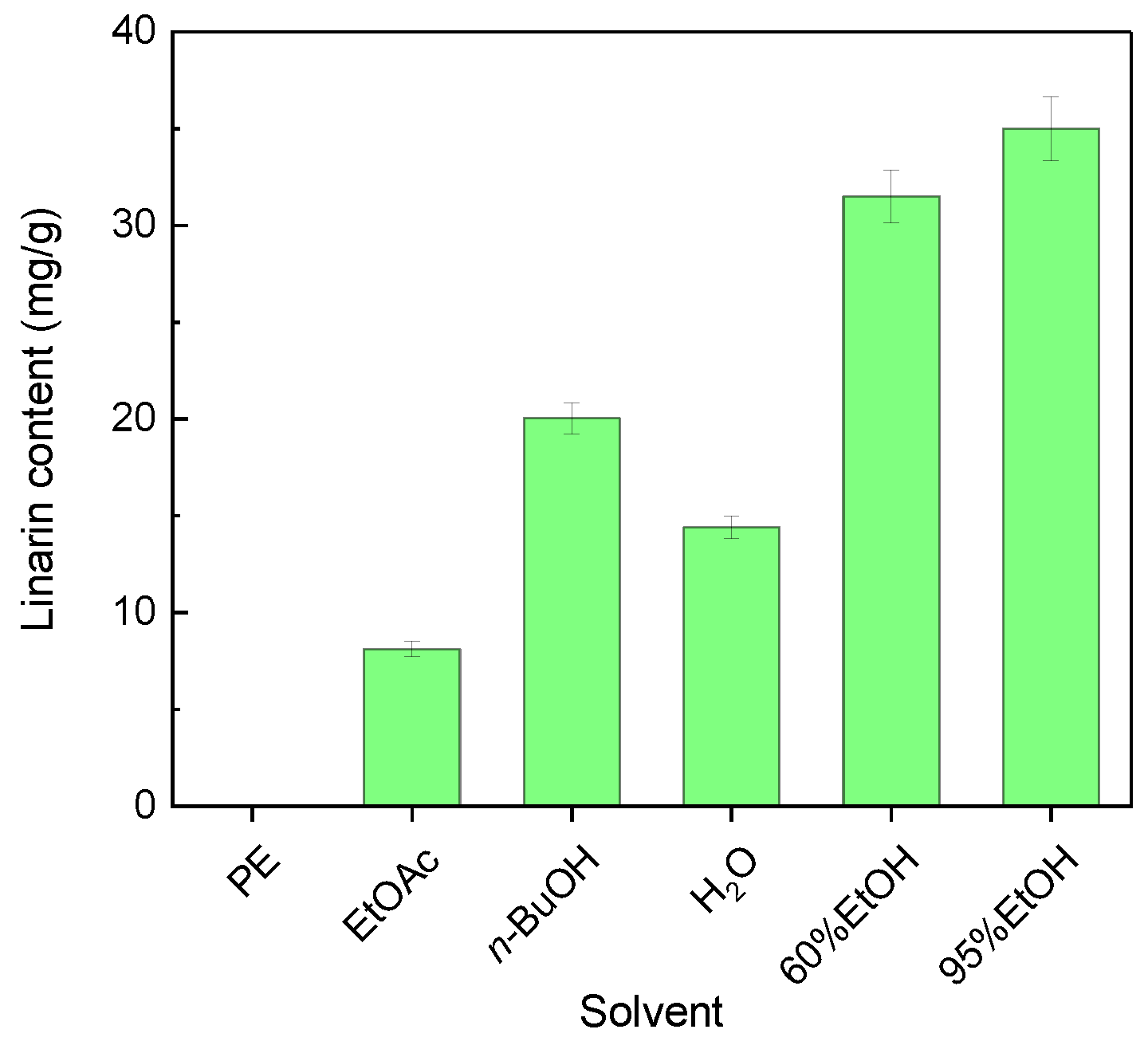
Figure 3.
DPPH· radical scavenging activity of solvent extracts of B. officinalis. VC, vitamin C; PE, petroleum ether; EtOAc, ethyl acetate; n-BuOH, n-butanol; H2O, water; 60%EtOH, 60% ethanol; 95%EtOH, 95% ethanol. Values are mean ± SD (n = 3).
Figure 3.
DPPH· radical scavenging activity of solvent extracts of B. officinalis. VC, vitamin C; PE, petroleum ether; EtOAc, ethyl acetate; n-BuOH, n-butanol; H2O, water; 60%EtOH, 60% ethanol; 95%EtOH, 95% ethanol. Values are mean ± SD (n = 3).
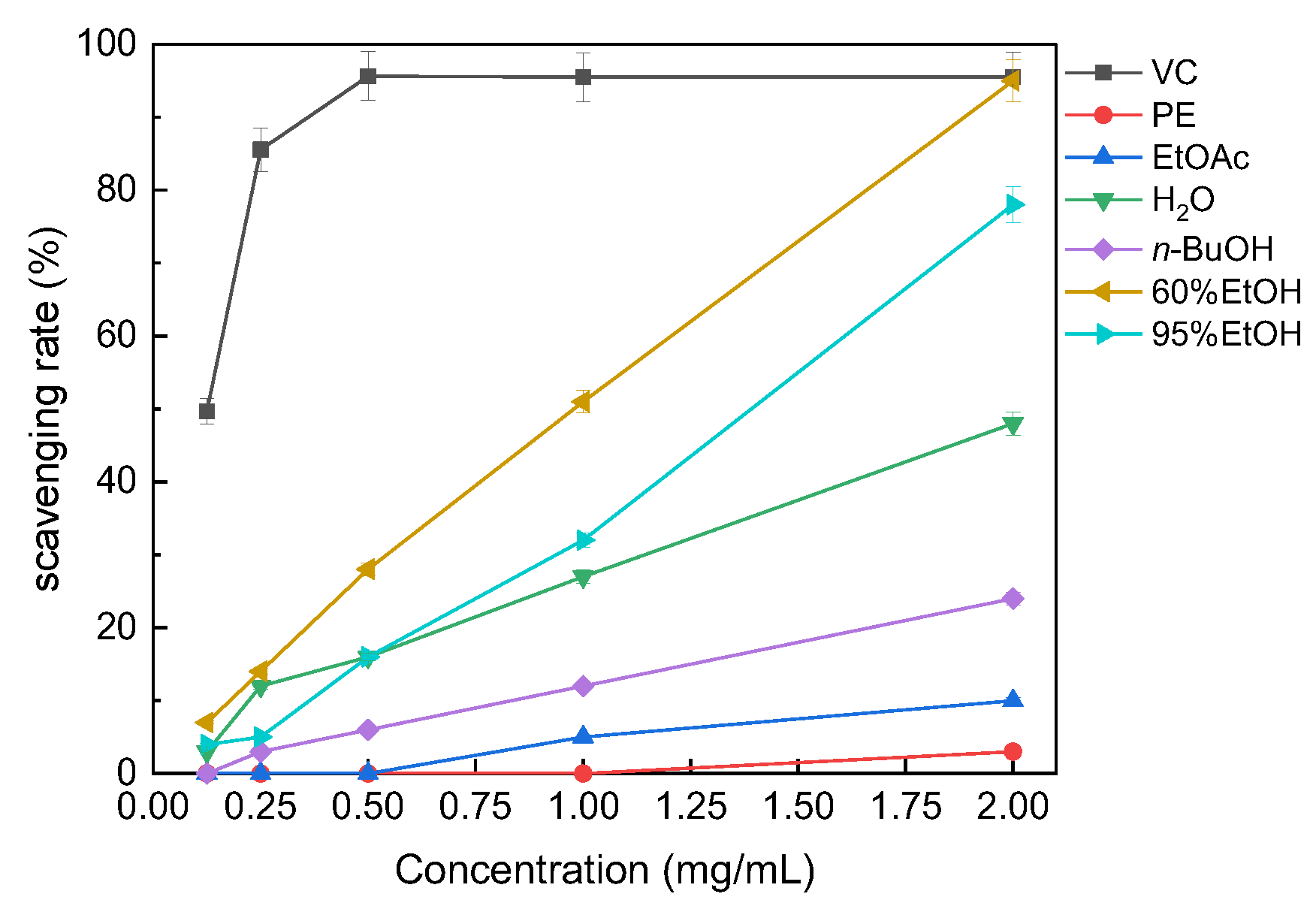
Figure 4.
ABTS+· radical scavenging activity of solvent extracts of B. officinalis. Abbreviations are the same as in Figure 3. Values are mean ± SD (n = 3).
Figure 4.
ABTS+· radical scavenging activity of solvent extracts of B. officinalis. Abbreviations are the same as in Figure 3. Values are mean ± SD (n = 3).
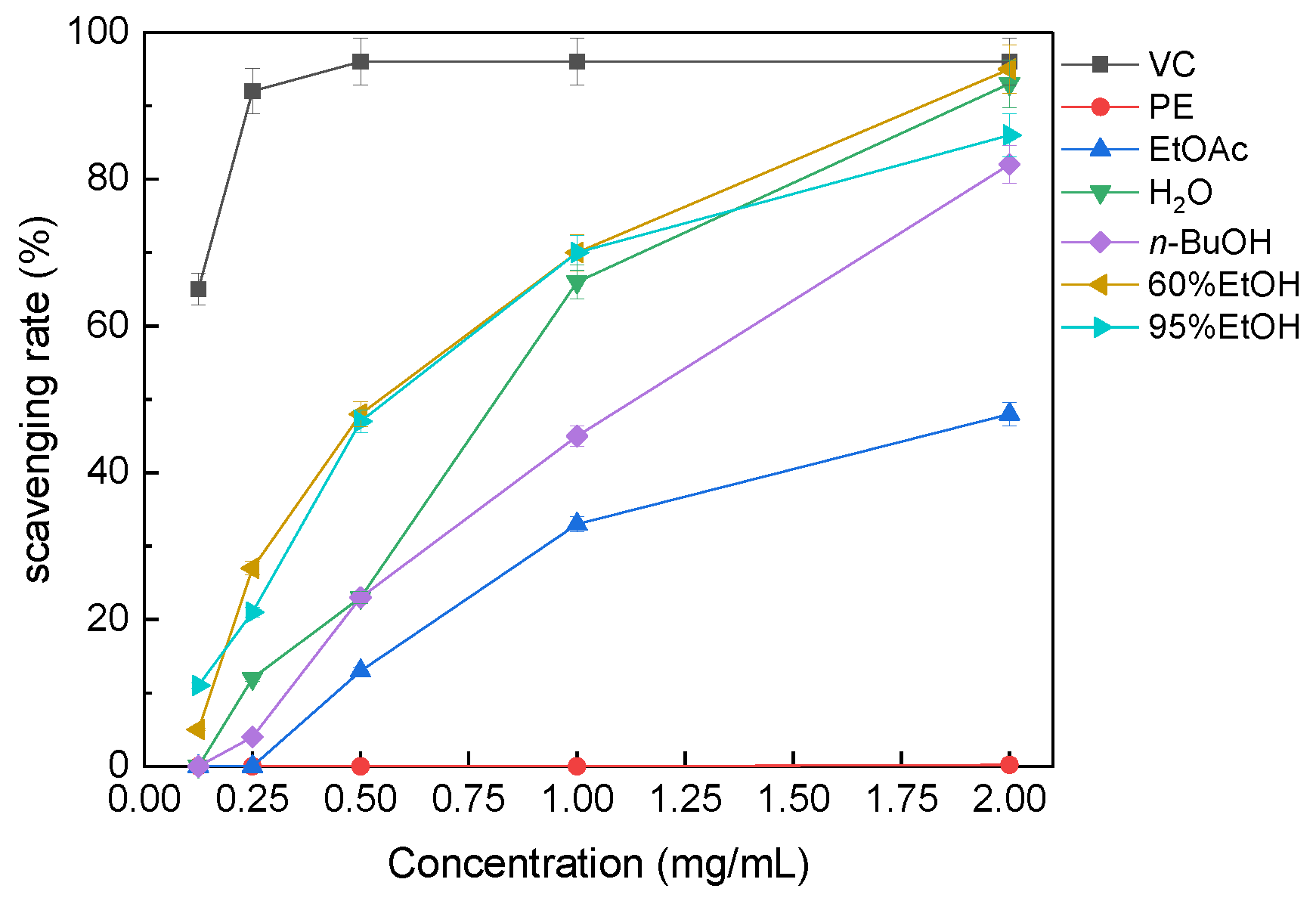
Figure 5.
Ferric reducing power of solvent extracts of B. officinalis. Abbreviations are the same as in Figure 3. Values are mean ± SD (n = 3).
Figure 5.
Ferric reducing power of solvent extracts of B. officinalis. Abbreviations are the same as in Figure 3. Values are mean ± SD (n = 3).
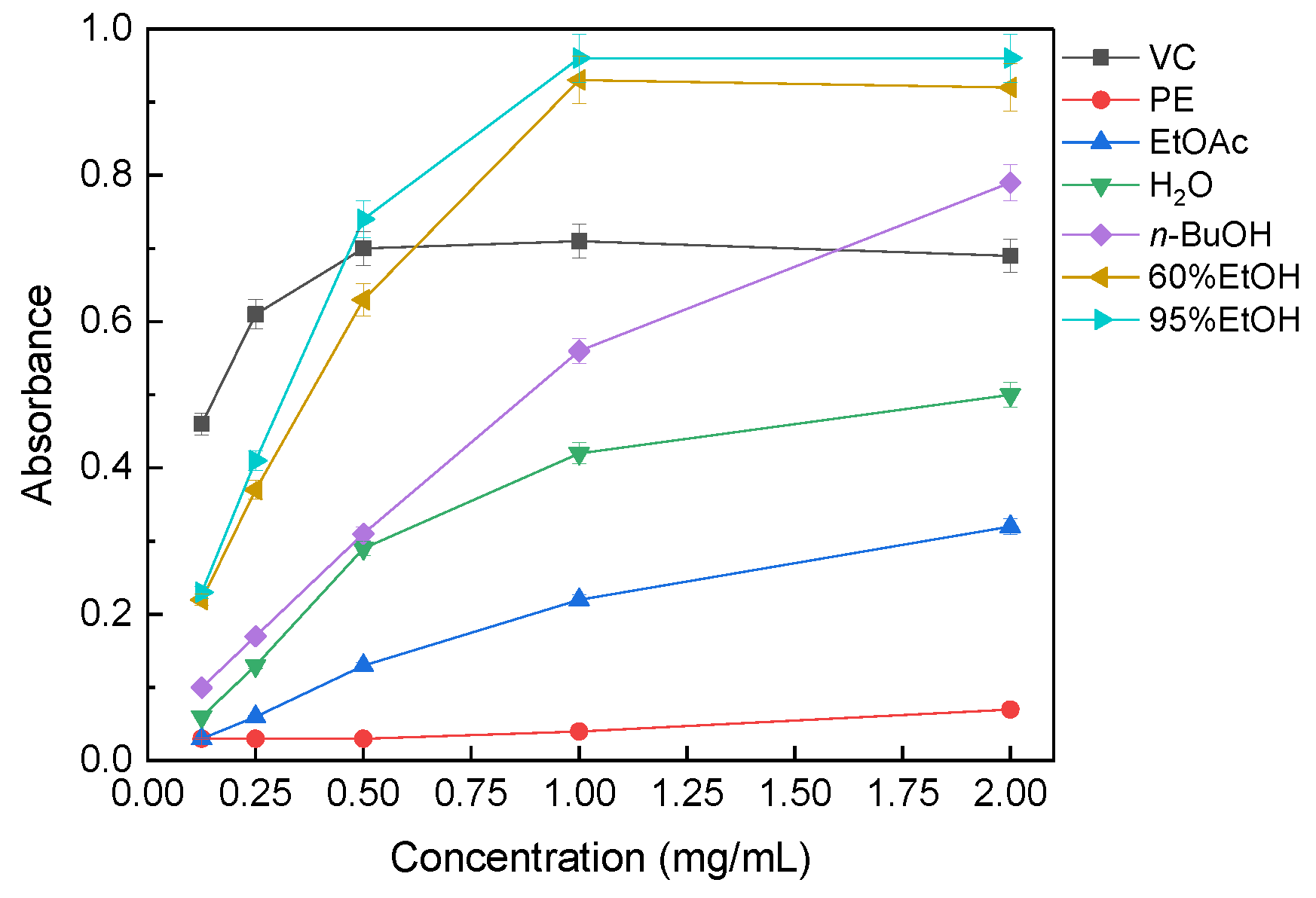
Figure 6.
Hyaluronidase inhibitory activity of solvent extracts of B. officinalis. Values are mean ± SD (n = 3).
Figure 6.
Hyaluronidase inhibitory activity of solvent extracts of B. officinalis. Values are mean ± SD (n = 3).
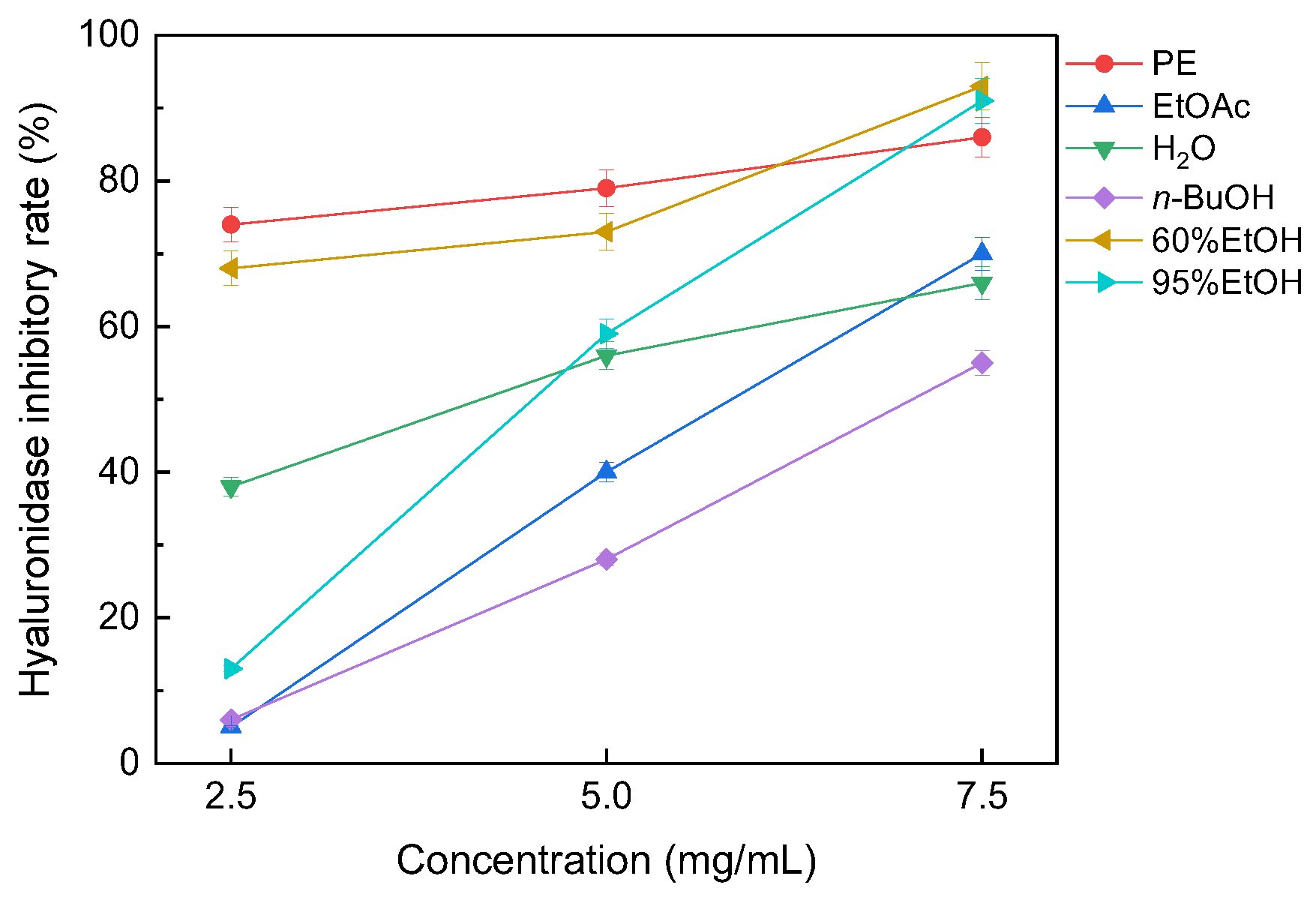
Figure 7.
Representative UPLC–QTOF–MS base peak intensity chromatograms of the 60% ethanol extract of B. officinalis acquired in negative ion mode (A, ESI−) and positive ion mode (B, ESI+). Putative assignments were based on accurate mass, isotopic pattern, MS/MS fragmentation, and library/literature comparison. Linarin and verbascoside were additionally supported by authentic reference standards. The comprehensive compound list is provided in Table S1.
Figure 7.
Representative UPLC–QTOF–MS base peak intensity chromatograms of the 60% ethanol extract of B. officinalis acquired in negative ion mode (A, ESI−) and positive ion mode (B, ESI+). Putative assignments were based on accurate mass, isotopic pattern, MS/MS fragmentation, and library/literature comparison. Linarin and verbascoside were additionally supported by authentic reference standards. The comprehensive compound list is provided in Table S1.
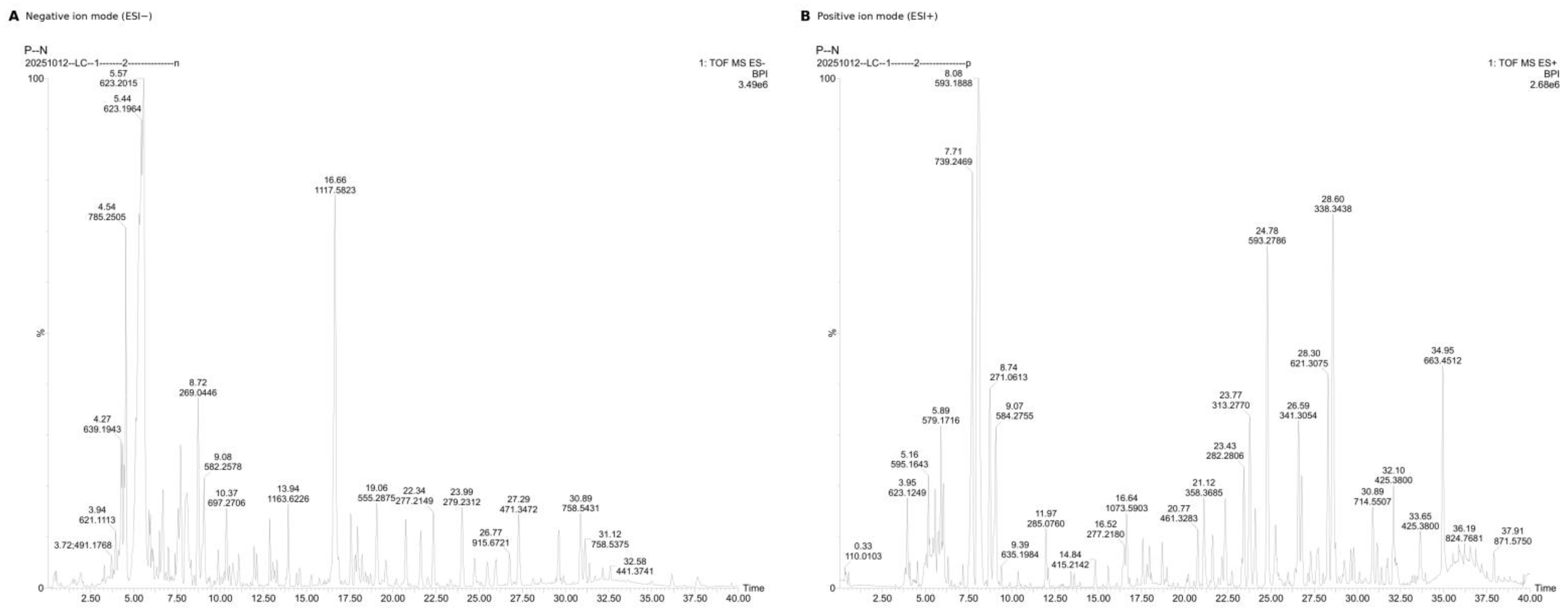

Table 1.
Correlation among antioxidant performance indices of B. officinalis extracts.
| Components | DPPH· index | ABTS⁺· index | Ferric reducing power index |
|---|---|---|---|
| DPPH· index | 1 | – | – |
| ABTS+· index | 0.985, p = 0.002 | 1 | – |
| Ferric reducing power index | 0.809, p = 0.097 | 0.891, p = 0.043 | 1 |
Note: Data are presented as Pearson correlation coefficients (r) and significance levels (p). The analysis was performed across the six solvent fractions (n = 6). Because of the small sample size, these results should be interpreted as exploratory rather than definitive.
Table 2.
Association of total flavonoids and linarin with antioxidant performance indices of B. officinalis extracts.
Table 2.
Association of total flavonoids and linarin with antioxidant performance indices of B. officinalis extracts.
| Component | ABTS+· index | DPPH· index | Ferric reducing power index |
|---|---|---|---|
| Total flavonoids | 0.736 | 0.682 | 0.857 |
| Linarin | 0.832 | 0.812 | 0.830 |
Note: Values are Pearson correlation coefficients (r). Because the analysis was based on a small number of extract fractions, these results are presented as exploratory associations rather than strong inferential statistical evidence.
Table 3.
Representative compounds identified or tentatively assigned in the 60% ethanol extract of B. officinalis by UPLC–QTOF–MS.
Table 3.
Representative compounds identified or tentatively assigned in the 60% ethanol extract of B. officinalis by UPLC–QTOF–MS.
| No. | Compound | Molecular Formula | Rt (min) |
Observed m/z (Adduct) |
Ion Mode | Compound Class | Identification Level | Possible Relevance |
|---|---|---|---|---|---|---|---|---|
| 1 | Echinacoside | C35H46O20 | 4.54 | 785.2525 [M−H]− | ESI− | Phenylethanoid glycoside | Tentative | Phenolic constituent potentially relevant to antioxidant activity |
| 2 | Acteoside (Verbascoside) | C29H36O15 | 5.95 | 623.1973 [M−H]− | ESI− | Phenylethanoid glycoside | Supported by reference standard | Phenylethanoid glycoside associated with antioxidant potential |
| 3 | Forsythoside B | C34H44O19 | 5.26 | 755.2401 [M−H]− | ESI− | Phenylethanoid glycoside | Tentative | Medium-polarity phenolic glycoside relevant to extract-level antioxidant effects |
| 4 | Cistanoside A | C36H48O20 | 5.19 | 799.2636 [M−H]− | ESI− | Phenylethanoid glycoside | Tentative | Phenylethanoid glycoside contributing to the phenolic-rich profile |
| 5 | Linarin | C28H32O14 | 8.08 | 593.1865 [M+H]+ | ESI+ | Flavonoid glycoside | Supported by reference standard | Major quantified marker associated with antioxidant performance |
| 6 | Luteolin-7-O-glucuronide | C21H18O12 | 4.84 | 461.0720 [M−H]− | ESI− | Flavonoid glycoside | Tentative | Flavonoid glycoside consistent with radical-scavenging activity |
| 7 | Baicalin | C21H18O11 | 5.81 | 445.0778 [M−H]− | ESI− | Flavonoid glycoside | Tentative | Flavonoid glycoside contributing to the antioxidant-active fraction |
| 8 | Scutellarin | C21H18O12 | 3.96 | 621.1107 [M−H]− | ESI− | Flavonoid glycoside | Tentative | Representative polar flavonoid glycoside |
| 9 | Isoquercitrin | C21H20O12 | 4.39 | 463.0876 [M−H]− | ESI− | Flavonoid glycoside | Tentative | Phenolic glycoside with potential antioxidant relevance |
| 10 | Chlorogenic acid | C16H18O9 | 2.30 | 353.0871 [M−H]− | ESI− | Phenolic acid | Tentative | Representative phenolic acid supporting the phenolic-rich composition |
Note: Rt, retention time. Compound assignments were based on accurate mass measurement, isotopic pattern, MS/MS fragmentation, and comparison with library/literature data. Linarin and verbascoside (acteoside) were further supported by comparison with authentic reference standards, whereas the remaining assignments are tentative. The table presents representative compounds selected from the comprehensive compound list provided in the Supplementary Materials (Table S1).
Disclaimer/Publisher’s Note: The statements, opinions and data contained in all publications are solely those of the individual author(s) and contributor(s) and not of MDPI and/or the editor(s). MDPI and/or the editor(s) disclaim responsibility for any injury to people or property resulting from any ideas, methods, instructions or products referred to in the content. |
© 2026 by the authors. Licensee MDPI, Basel, Switzerland. This article is an open access article distributed under the terms and conditions of the Creative Commons Attribution (CC BY) license (http://creativecommons.org/licenses/by/4.0/).
Copyright: This open access article is published under a Creative Commons CC BY 4.0 license, which permit the free download, distribution, and reuse, provided that the author and preprint are cited in any reuse.


