

Submitted:
17 April 2026
Posted:
21 April 2026
You are already at the latest version
Abstract
Point-supported connections are an innovative modern connection design that can benefit from the 2-way structural action of cross-laminated timber (CLT) slabs, which is typically not considered in traditional timber design. It also allows for flatter ceiling surfaces where no beams are needed to support the mass timber floor slabs. In attempt to better understand the structural behavior of such type of connection in fire conditions, preliminary unloaded fire tests were conducted to evaluate their thermal performance. The test results indicated that the presence of steel connection components does not inherently increase charring rates within adjacent mass timber elements. This paper presents the results of two full-scale fire-resistance tests under load: Test 1 had the point-supported connection fully exposed to fire and Test 2 was protected by a firestop. Both tests were able to sustain the applied load for 2-hours of standard fire exposure. Test 1 experienced charring at the CLT-steel plate interface, although at a low rate than the CLT aside to the connection, while Test 2 did not. Their mechanical behaviors were similar – protected or not. Lastly, a preliminary design approach is being proposed, although it requires further validation.
Keywords:
mass timber
; fire-resistance
; point-supported connection
; timber buildings
1. Introduction
Encapsulated mass timber construction (EMTC) up to 12-storeys for Groups C and D major occupancies was first introduced in the 2020 National Building Code of Canada (NBCC) [1]. Recently in December 2023, provinces of British Columbia and Quebec with support from Ontario submitted a joint Code change proposal to accelerate the adoption of mass timber construction from the International Building Code (IBC) [2] allowing up to 18-storeys of numerous building occupancies, with up to 9-storeys fully exposed. The Code change proposal was based on a transferability report done in 2023 [3] in which the fire safety and structural provisions of the International Building Code (IBC) were analyzed for their applicability within the NBCC framework. These provisions have been adopted during the summer of 2024 in British Columbia, January 2025 in Ontario and June 2025 in Quebec along with an accompanying technical guide [4,5]. The flexibility offered by these new provisions significantly expands the market opportunities for mass timber construction, namely for low-rise and large building areas for schools, residential and offices, as well as greater possibility for mixed-uses at the lower storeys. For such buildings, building elements are required to provide at least 2-hour of fire-resistance, regardless of the type of construction and structural materials used.
Point-supported connections are an innovative modern connection design that can benefit from the 2-way structural action of cross-laminated timber (CLT) slabs, which is typically not considered in traditional timber design. It also allows for flatter ceiling surfaces where no beams are needed to support the mass timber floor slabs. In attempt to better understand the structural behavior of such type of connection, a number of studies led by BC design firms were performed [6,7,8]. The results suggest that rolling shear strength is one of the key design parameters for point-supported CLT flat-slab directly supported by columns without any beams. Figure 1 shows an example of such point-supported connection used in a tall mass timber building using steel columns.
Figure 2.
Point-supported connections used in tall timber buildings in downtown Vancouver (Canada).
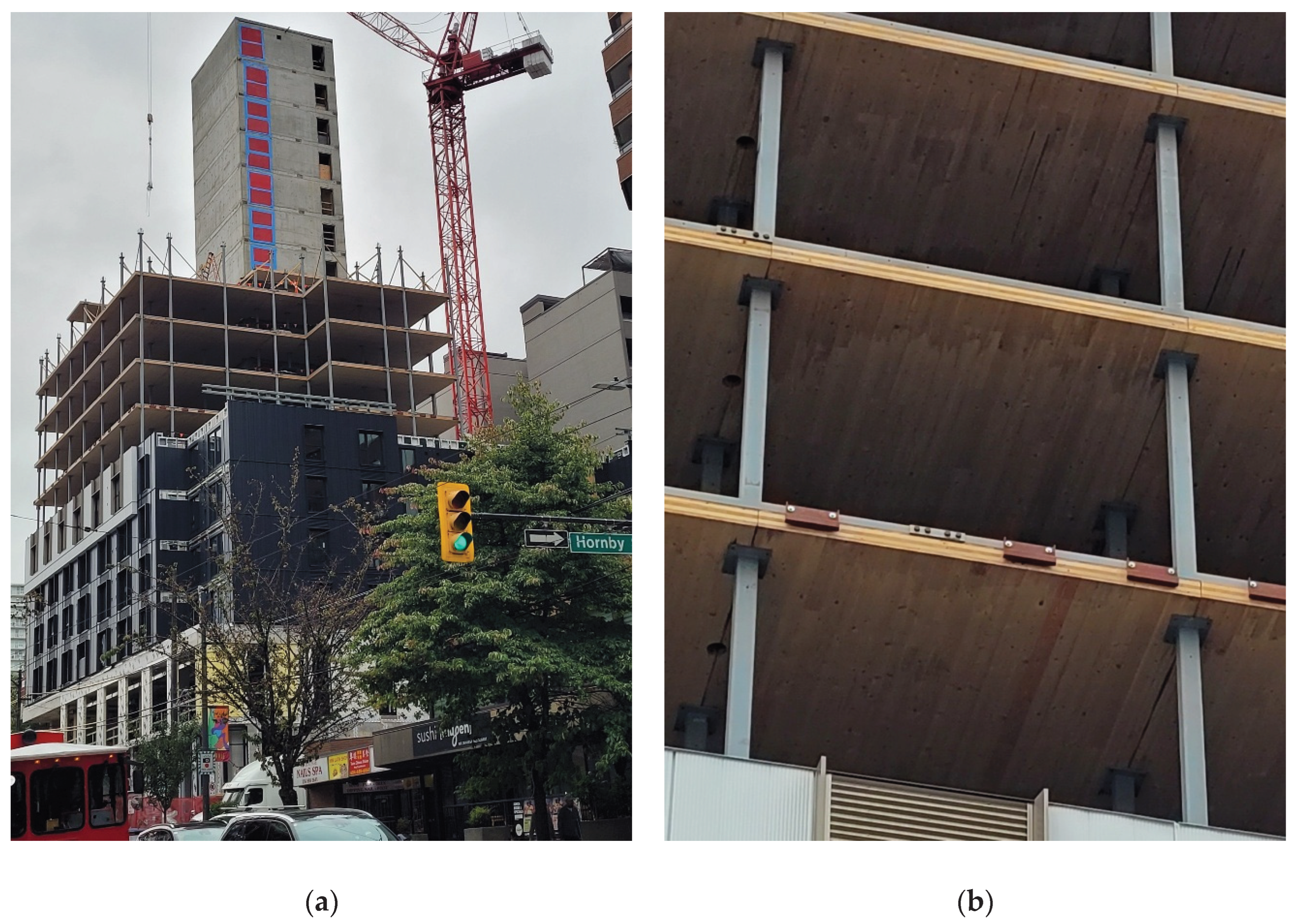
Research and modeling performed in the past few years allowed to increase the knowledge about the underlying mechanisms of timber performance in fire. A preliminary assessment of the fire performance of point-supported steel connection in mass timber construction was performed using a pilot-scale furnace with no structural load [9]. The fire tests provided insight into the thermal performance and charring behavior of steel–timber interfaces at the unloaded CLT panel-to-column connection assemblies. The primary objective of the technical analysis was to evaluate the thermal impact of exposed steel components to timber and different protection strategies on temperature development and timber charring at the connection region.
Five connection configurations were evaluated, including exposed steel columns, gypsum board protected steel columns, intumescent-coated steel columns, exposed steel-glulam column assemblies, and timber-protected steel interfaces. All specimens were subjected to the standard fire prescribed in CAN/ULC S101 [10]. Temperature measurements were obtained using thermocouples installed at the steel–timber interface and within the CLT panels to assess heat transfer behavior during the test.
The temperature measurements demonstrate that steel components exposed directly to the furnace environment experienced rapid heating, with exposed steel elements reaching the critical steel temperature of approximately 538°C within approximately 14 minutes. In contrast, the temperature rise at steel–timber interfaces embedded within the CLT panel occurred significantly more slowly.
For the exposed steel column configuration, the first glue line of the CLT panel reached the critical steel temperature after approximately 46 minutes of fire exposure. Deeper locations within the panel experienced additional delays in temperature rise, with temperature differences of approximately 30 minutes observed between the first and second glue lines. These observations indicate that the thermal mass of the CLT panel provides a substantial buffering effect, delaying heat transfer to embedded steel components.
The gypsum board protected configuration showed the most effective thermal insulation, with critical steel temperatures not reached at the measured interface locations during the test duration. The intumescent-coated specimen exhibited moderate thermal performance; however, localized cracking and detachment of the coating were observed during the test, resulting in partial exposure of steel components earlier than expected.
The test results indicate that the presence of steel connection components does not inherently increase charring rates within adjacent mass timber elements. Instead, the thermal response of the connection region is largely governed by the insulating capacity of the surrounding timber.
Protection strategies influence the thermal behavior of the steel components and the adjacent timber. Gypsum board protection provides effective insulation to steel elements, while timber cover protection may offer an alternative strategy to limit heat transfer at steel–timber interfaces. The performance of the intumescent coating observed in this study suggests that further investigation may be required to evaluate the reliability of such protection systems in connection applications.
While the preliminary studies provided insight with respect to transient heat transfer within the components, it is necessary to conduct fire tests on these point-supported connection systems subjected to structural loading.
This project consists of evaluating the structural fire-resistance of point-supported connections. The results will provide valuable information with respect to the char contraction, structural behavior and compression perpendicular to grain developed at the steel-timber interface as fundamental for structural fire-resistance assessment and to demonstrate building code compliance. The design of the connections will be made in such way as to achieve at least 2-hours of fire-resistance in an effective and cost-efficient manner, with the intent to allow as much as possible of that point-supported connection exposed.
2. Materials and Methods
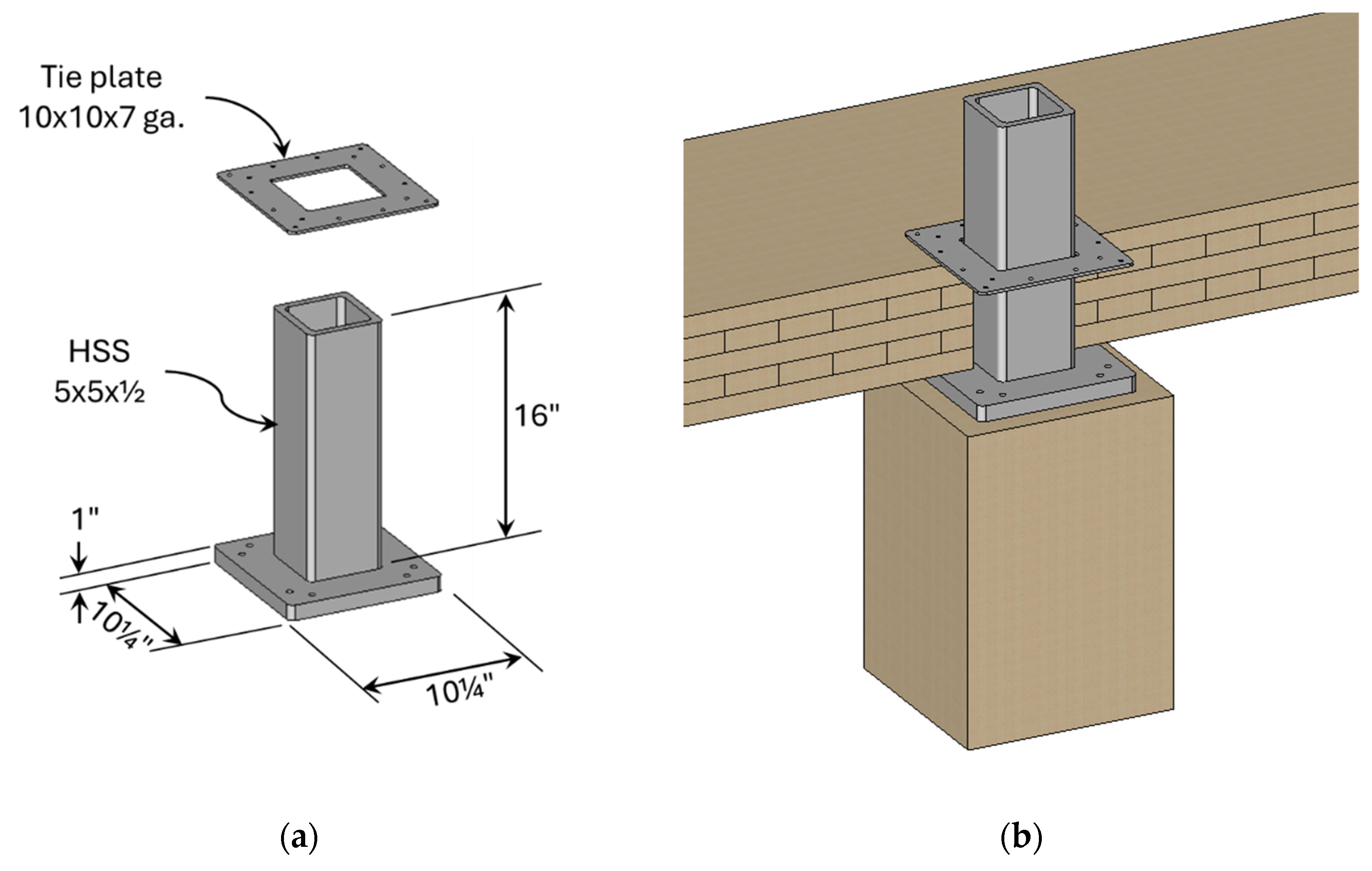
The testing consisted of two structural fire-resistance tests of point-supported connections, using the mass timber MPSC 200 connector from Simpson Strong Tie (Figure 2). The MPSC 200 point-supported steel connector consists of a bottom plate welded to a HSS standoff to create the load transfer path without passing through the mass timber floor slab. The standoff can be up to 16” tall to accommodate various floor/ceiling thicknesses and finishes. Figure 3 illustrates the MPSC 200 connector.
Figure 2.
MPSC 200 connector supplied by Simpson Strong Tie.
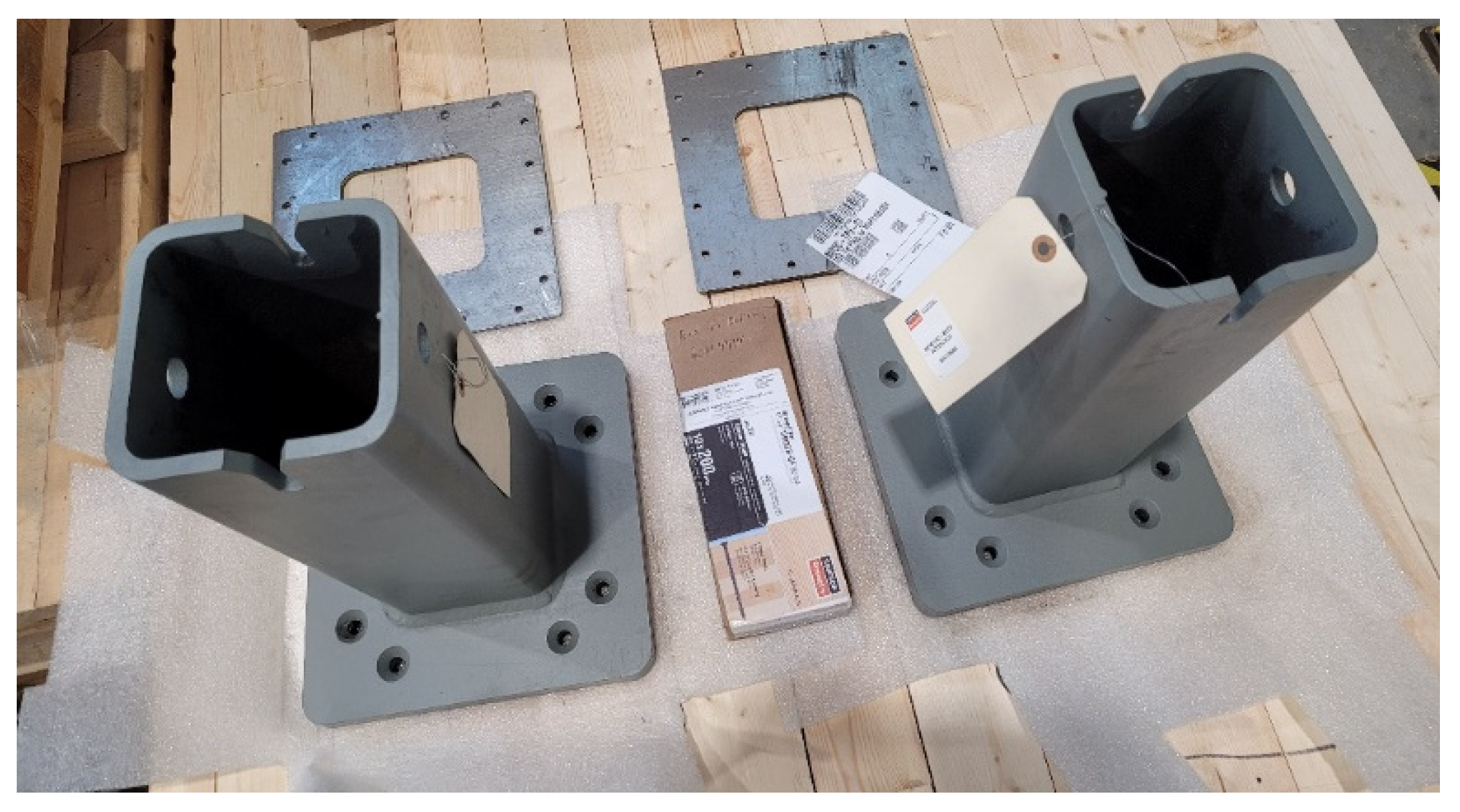
Figure 3.
MPSC 200 connection system. (a) schematics of the MPSC 200; (b) floor assembly (half view).
Figure 3.
MPSC 200 connection system. (a) schematics of the MPSC 200; (b) floor assembly (half view).
The tested assemblies consisted of a 5-plies (175 mm) CLT floor slab of the E1 stress grade conforming to ANSI/APA PRG 320 [11], with dimensions of 1168 mm wide by 3921 mm long (46” x 154”). A 152 mm x 152 mm (6” x 6”) square opening positioned at the geometric center was created by a computer numerical control (CNC) wood router, with a corner radius of 10 mm. This allows for a 12.7 mm (½”) additional space to accommodate the fillet weld around the HSS standoff of the bottom plate.
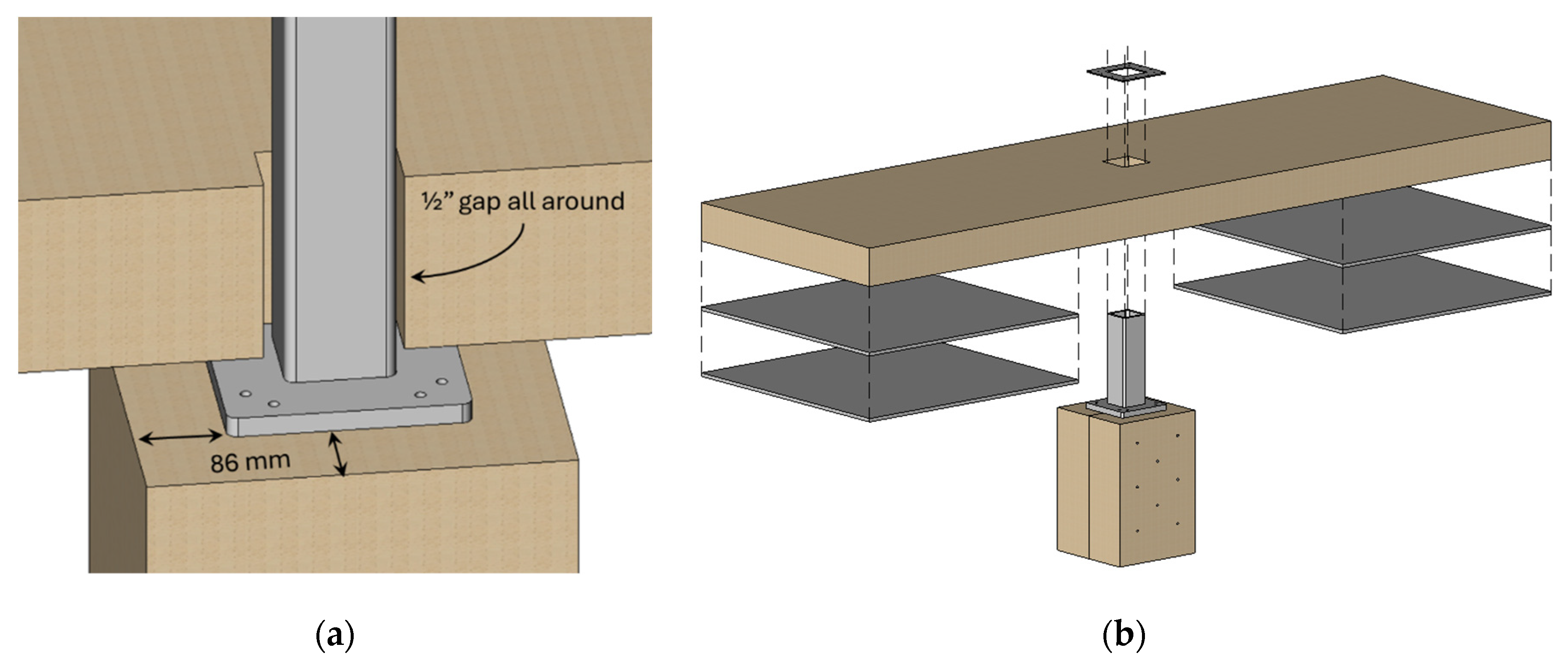
Two pieces of glulam of 215 x 432 mm (8½” x 17”) were assembled to form a column of 432 x 432 mm (17” x 17”) by 635 mm (25”) in height. The glulam was of the 24f-EX Douglas fir species grade conforming to CSA O122:25 and CSA O86:24 [12,13]. Structural adhesive used for CLT manufacturing was used to assemble the 2 elements together, along with self-tapping screws fully-threaded CSK 10x320 mm and partially-threaded ASSY Ecofast 8x300 mm. The glulam columns were sized to provide 86 mm of wood cover, as determined by Annex B of CSA O86:24 for a 2-hour standard fire exposure. Specific to the testing, the perimeter of the tie plate was sealed with a firestop caulking to prevent smoke and flame leakage during testing. In an actual building, floor finish and/or encapsulation material on top of the mass timber floor would provide such protection.
The MPSC bottom plate was fastened to the short glulam column using 8 SDCF 10 x 200 mm self-tapping screws inserted parallel to the grain of the glulam. The MPSC tie plate at the top is fastened to the CLT panel using 16 SDS 25300 self-tapping screws (6.5 mm outside diameter by 76 mm long). According to the supplier’s technical literature, a MPSC 200 installed with a CLT floor slab has an allowable perpendicular-to-grain bearing resistance of 130.5 kN (29,350 lb). This assumes a CLT stress grade E1 conforming to ANSI/APA PRG 320 and a uniform load distribution along the bottom plate dimensions. Other structural considerations may reduce this maximum resistance, such as punching shear through the CLT.
The CLT ceiling was protected at each end using 2 layers of 15.9 mm (5/8”) Type X gypsum boards of 1168 mm wide by 1200 mm long, leaving an exposed area of 1168 mm wide by 1521 mm long (46” x 60”) inside the furnace. This was made in attempt to facilitate the control of the furnace temperature. Figure 4 shows the test assembly.
Figure 4.
(a) Positioning of the MPSC connector for a 2-hrs standard fire exposure; (b) Schematic of the MPSC connection fire tests.
Figure 4.
(a) Positioning of the MPSC connector for a 2-hrs standard fire exposure; (b) Schematic of the MPSC connection fire tests.
Given the test furnace capability, the whole assembly was suitably adapted so that the applied load would be made through a self-reaction frame. The applied load pulled upward the MPSC and glulam column, rather than pushing downward the CLT panel. The assemblies were exposed to the standard fire of CAN/ULC S101.
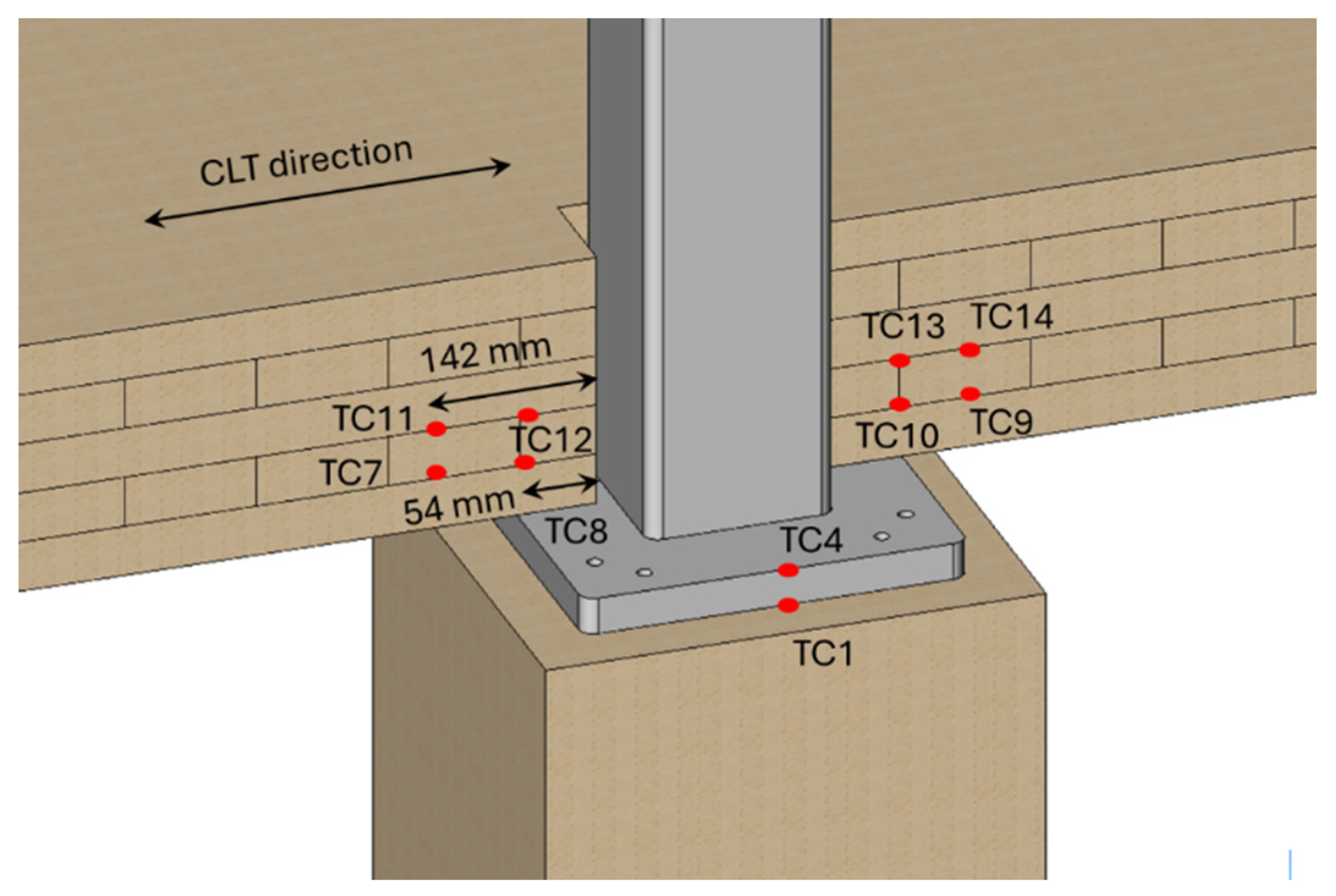
Fourteen (14) fiberglass insulated thermocouples per assembly were used to monitor the temperature profiles at critical locations at the vicinity of the connector and across the CLT. TC1 to TC6 were on the MPSC connector (Figure 5) while TC7 to TC14 were inserted in the CLT through pre-drilled pilot holes (Figure 6). Pilot holes were sealed with fire stop caulking to limit heat flow. TC7, TC9, TC11 and TC14 were 142 mm away from the inside of the square opening; that is in the same vertical plane as the outside faces of the glulam column. TC8, TC10, TC12 and TC13 were at 54 mm from the inside of the square opening, that is in the same vertical plane as the outside edges of the MPSC bottom plate.
Figure 5.
Instrumentation of the MPSC connector.
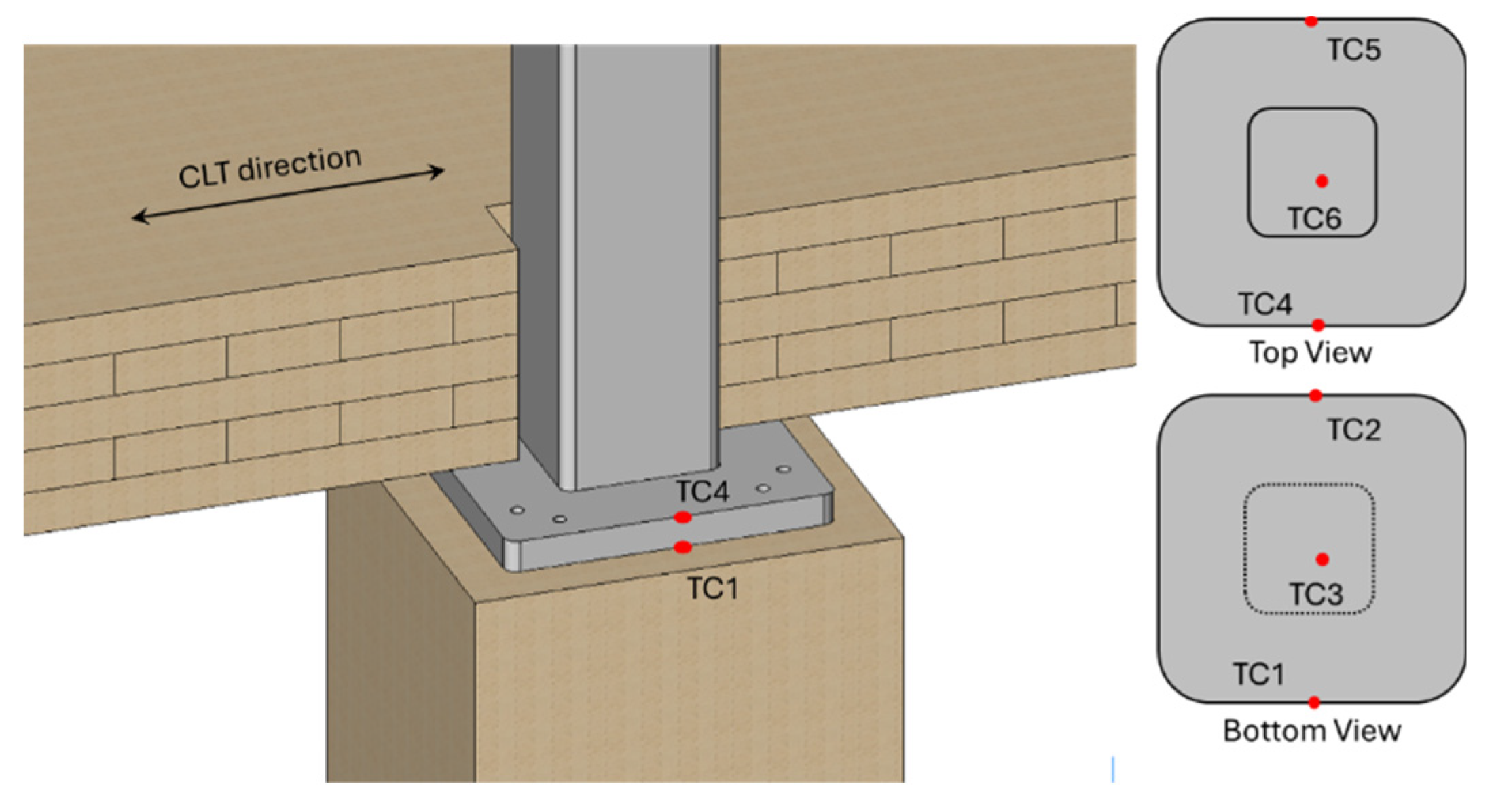
Figure 6.
Instrumentation of the MPSC connector.
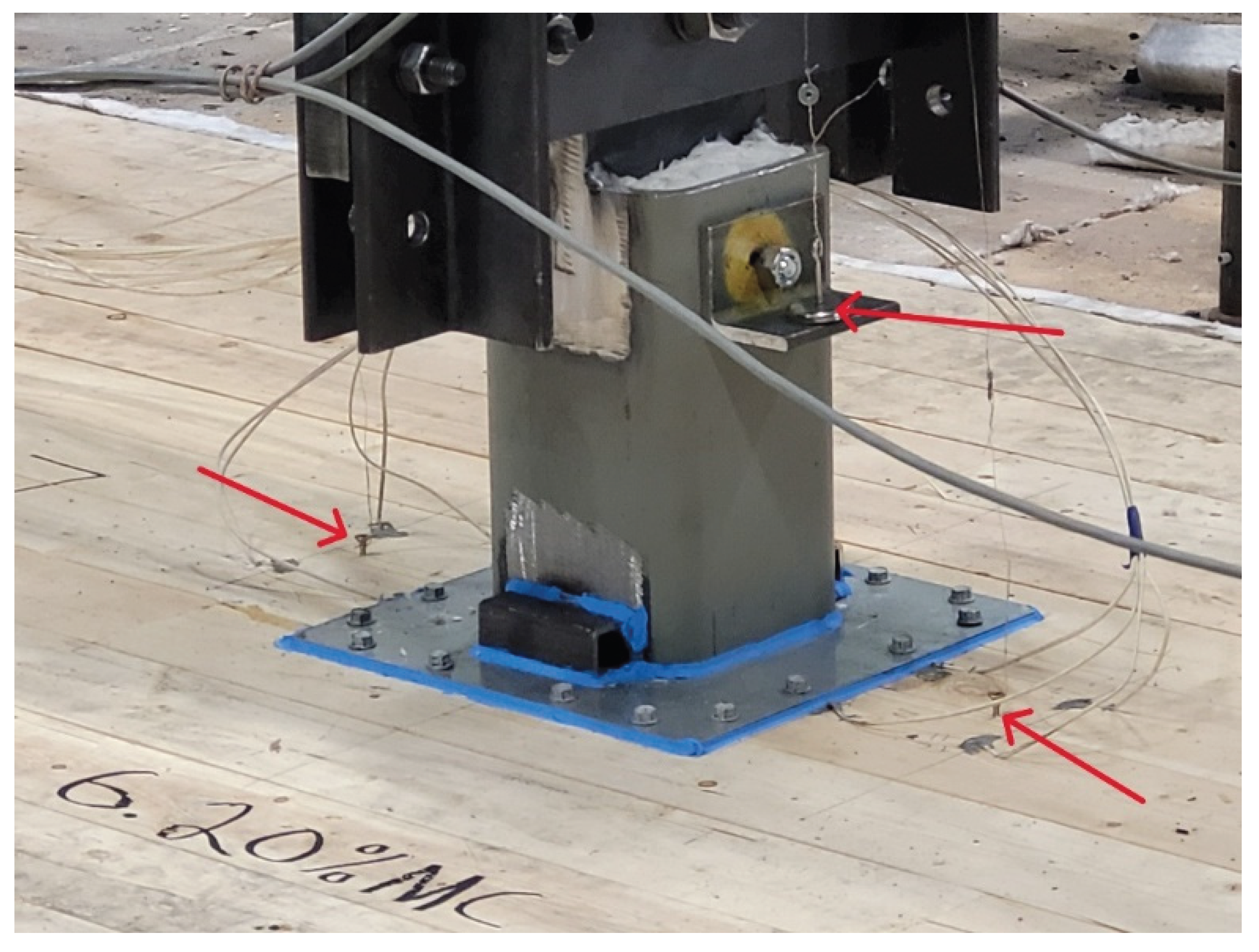
String potentiometers were used to measure the vertical displacement of the CLT panel during Test 1. After completion of Test 1, it was decided to measure the displacement of the HSS standoff using 1 string potentiometer and 2 to measure the CLT displacement, as shown in Figure 7.
Figure 7.
String potentiometers - Test 2.
Test 1 consisted of the MPSC 200 assembly with the gap between the top of the glulam column and ceiling of the CLT panel being fully exposed to fire (Figure 8). Given the dimensions of the MPSC 200 (Figure 3), the resulting gap was 25 mm (1”) deep. A load of 70 kN (15,735 lb) was applied to the system based on the CLT rolling shear resistance, as observed as a limiting factor for such connection system with CLT [6,7,8], resulting in a full loading conditions in accordance with CAN/ULC S101. On the day of testing, the CLT and glulam average moisture content was 8.1%.
Test 2 consisted of the MPSC 200 assembly with the gap between the top of the glulam column and ceiling of the CLT panel being sealed using the Fire Foam from Rothoblass, which is used to firestop linear joints in CLT construction. Given the dimensions of the MSPC 200 and installation details shown in Figure 4, the firestop was applied through the entire 86 mm depth by the full 25 mm thickness of the steel plate. After being fully dried, the firestop was cut flush with the outside perimeter of the glulam column. The intent was to limit heat transfer to the steel components. As with Test 1, a load of 70 kN (15,735 lb) was applied to the system, resulting in a full loading condition in accordance with CAN/ULC S101. On the day of testing, the CLT and glulam average moisture content was 6.2%.
Figure 8.
(a) Test 1 – Unprotected gap; (b) Test 2 – Protected gap.
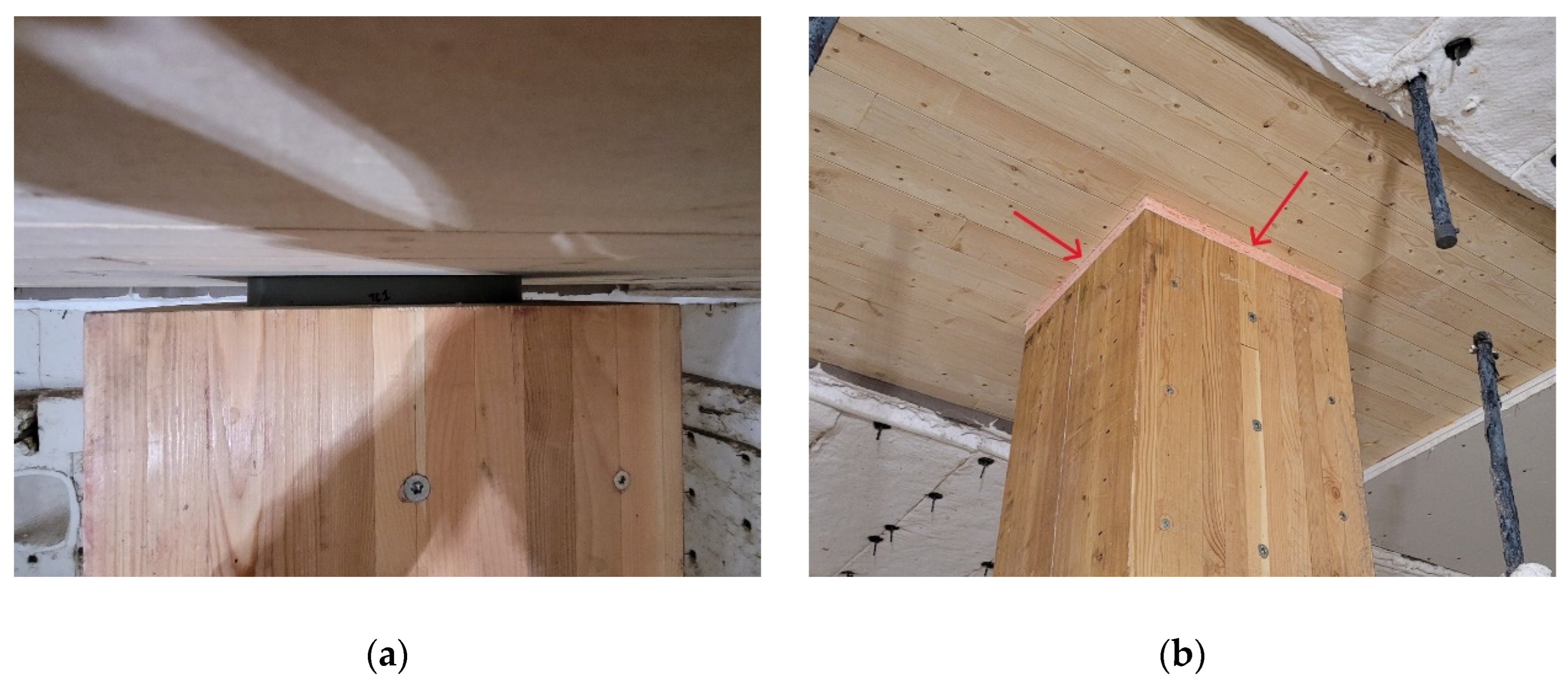
Figure 9.
(a)Test 1 installed in the furnace; (b) Loading configuration.
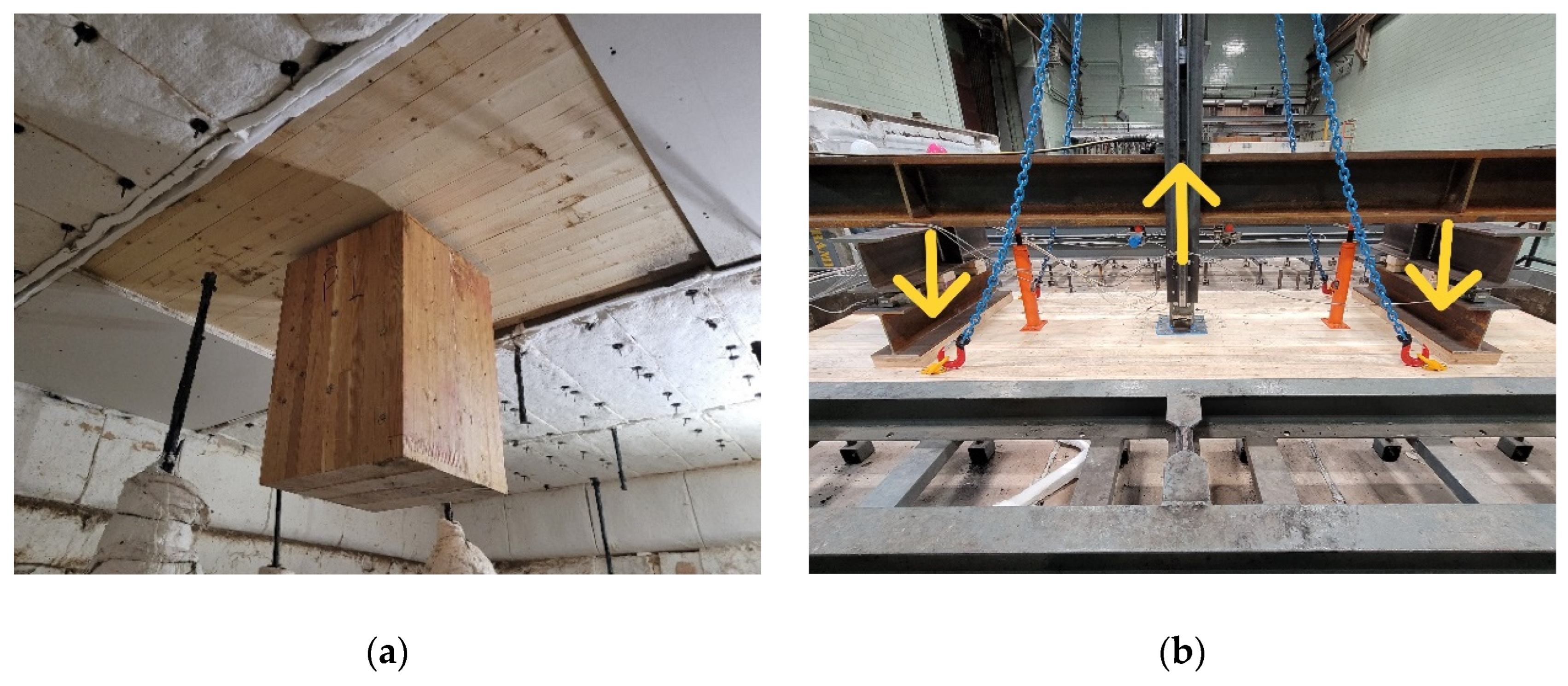
3. Results
Both tests were conducted at the National Research Council Canada fire safety unit in Ottawa (Canada) with staff from FPInnovations and J.S. Held witnessing the tests.
As required in CAN/ULC S101, the load was applied gradually in four increments of 25% of the total load until stabilization of deflection after each increment. The full (100%) load was applied for at least 30 min prior to starting the fire-resistance test. The average furnace temperature was controlled using 9 shielded Type K thermocouples to allow to follow the standard time-temperature within the ±5% tolerance required in CAN/ULC S101 for 2-hrs fire-resistance tests.
3.1. Test 1 – MPSC 200 (Unprotected Gap)
3.1.1. Failure Mode
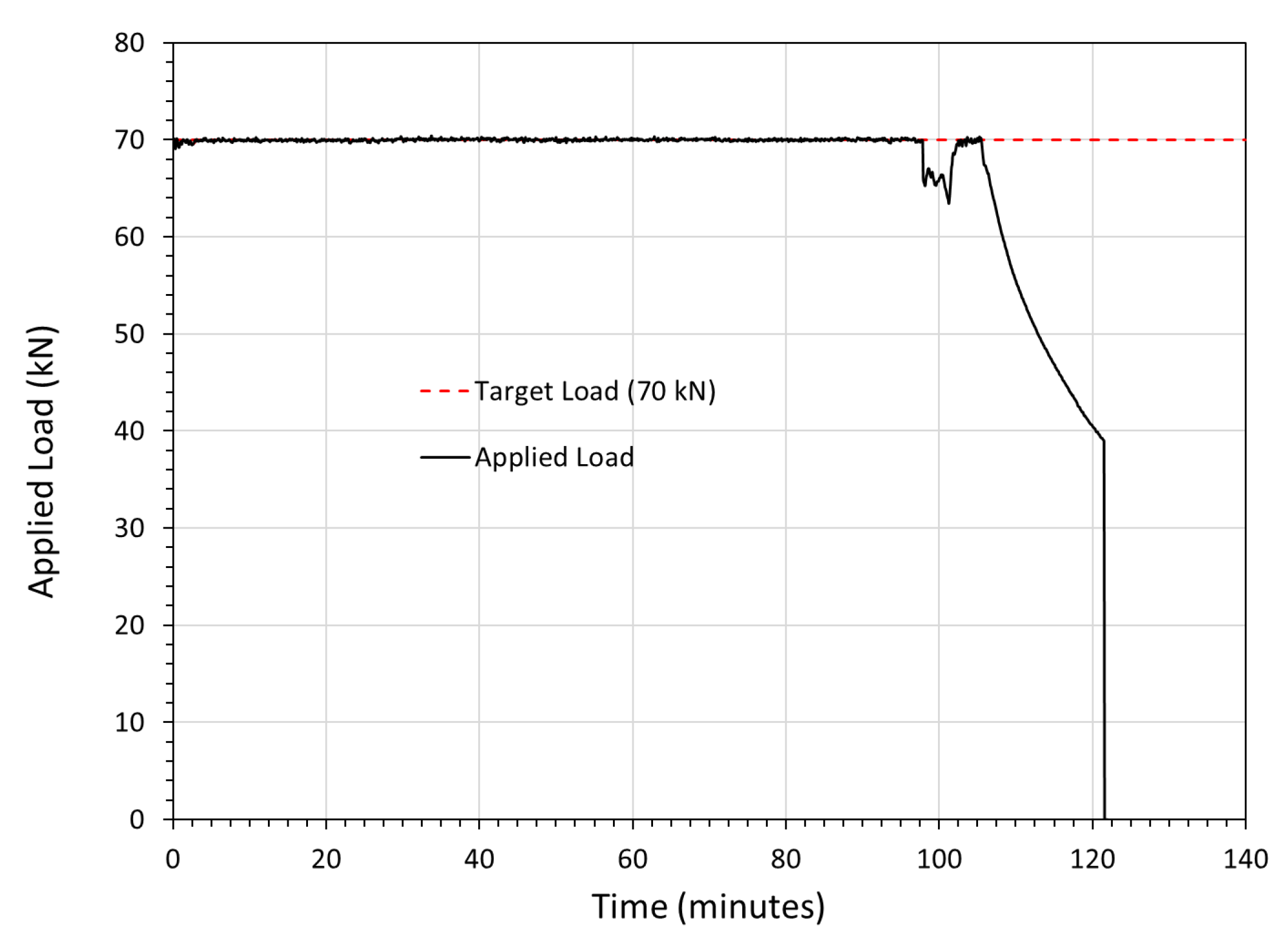
No failure was reached after the 2 hours of standard fire exposure. After 107 minutes, the allowed vertical stroke of 101 mm (4”) of the load actuator reached its limit, as shown in Figure 13. At that time, the load could no longer be sustained, but the test continued until 2 hours. The test was terminated at 2h02 (122 min).
Figure 10.
(a) Maximum displacement of 101 mm (4”) for Test 1; (b) Maximum reached after 107 minutes.
Figure 10.
(a) Maximum displacement of 101 mm (4”) for Test 1; (b) Maximum reached after 107 minutes.
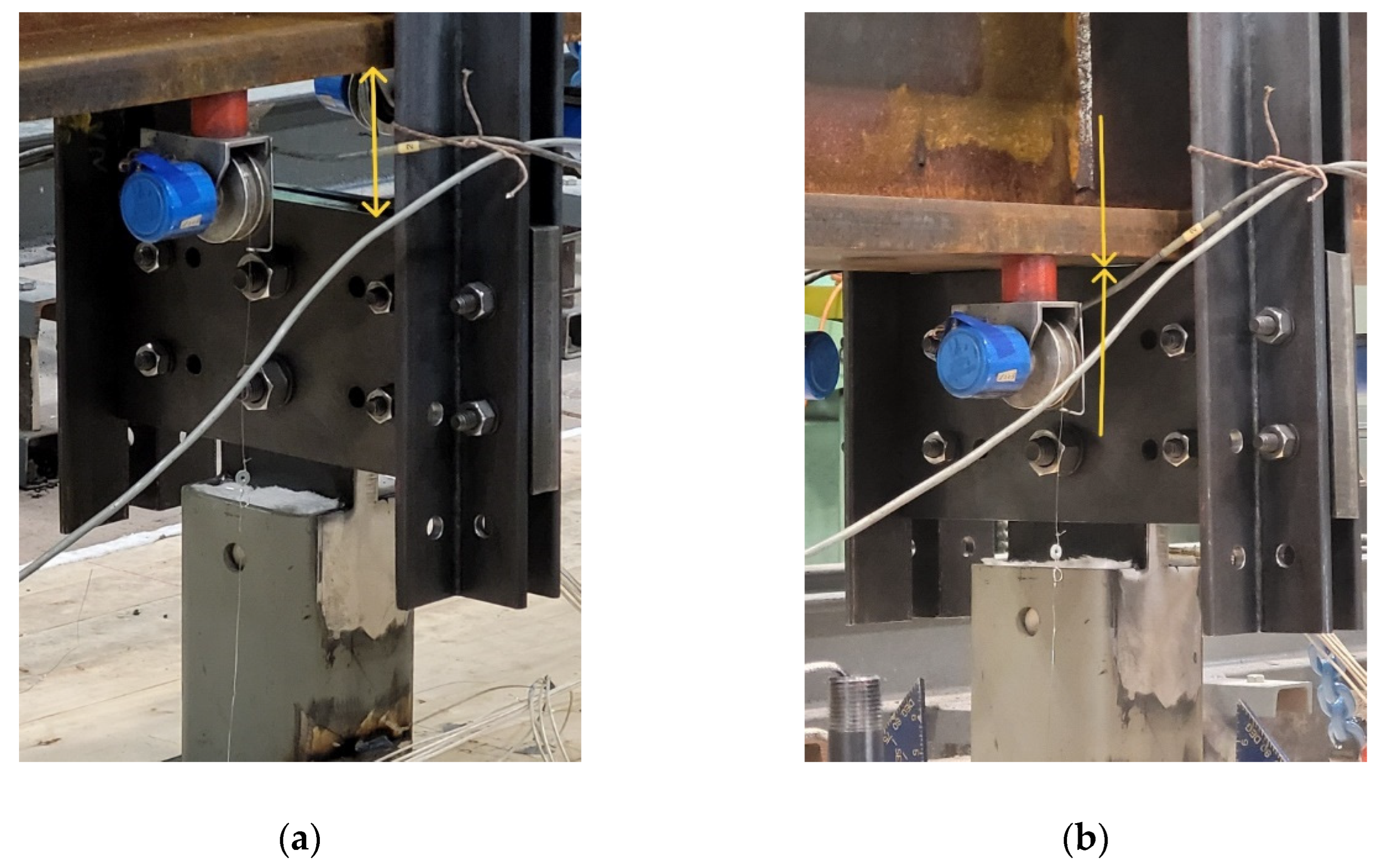
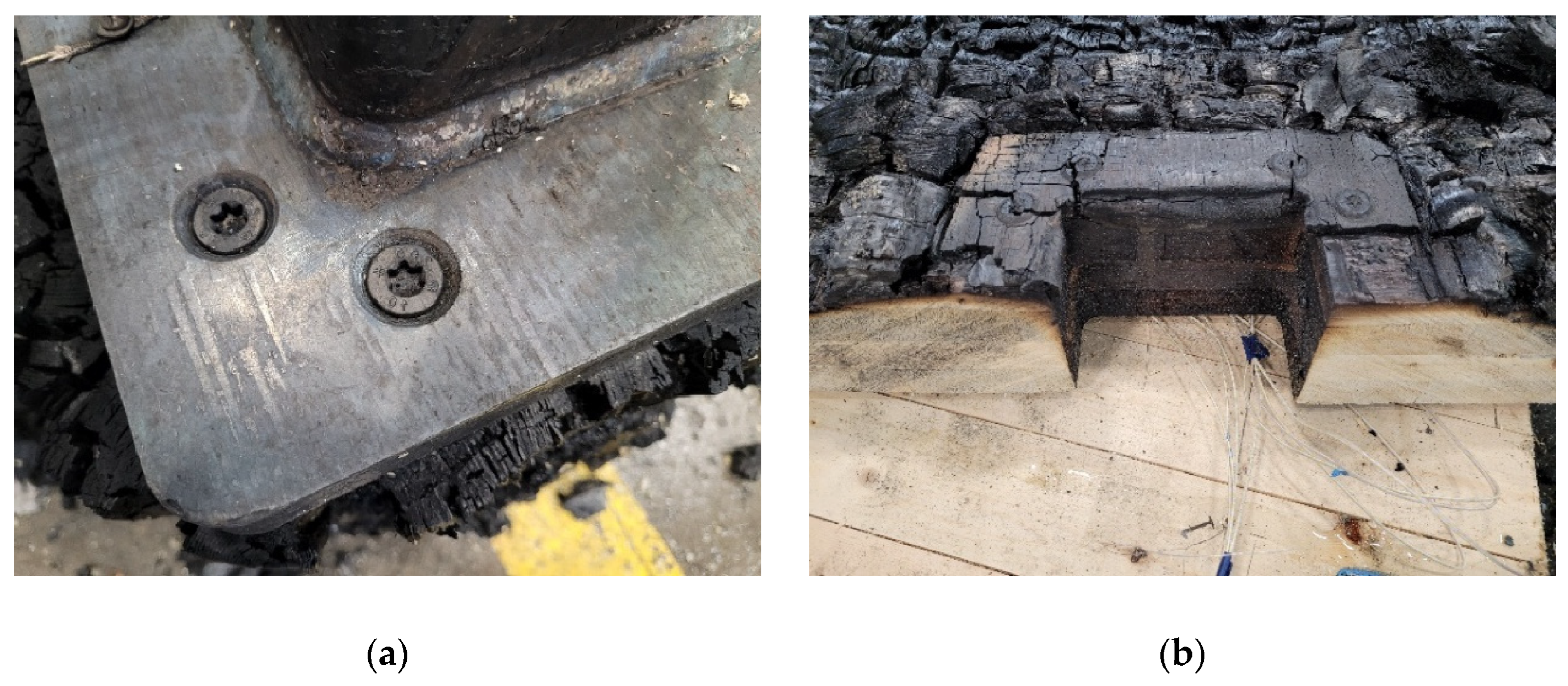
Figure 11 shows the MPSC 200 Test 1 assembly being dismantled after the fire test. It can be observed that the interface between the CLT panel and the column remained closed. It was also be observed that little to no charring occurred around the square opening in the CLT. Local crushing due to steam and moisture migration was observed, where the actual screw heads used to connect the MPSC to the glulam were embossed in the charred CLT panel (Figure 12).
Figure 11.
(a) View of the interface; (b) View inside the CLT opening.
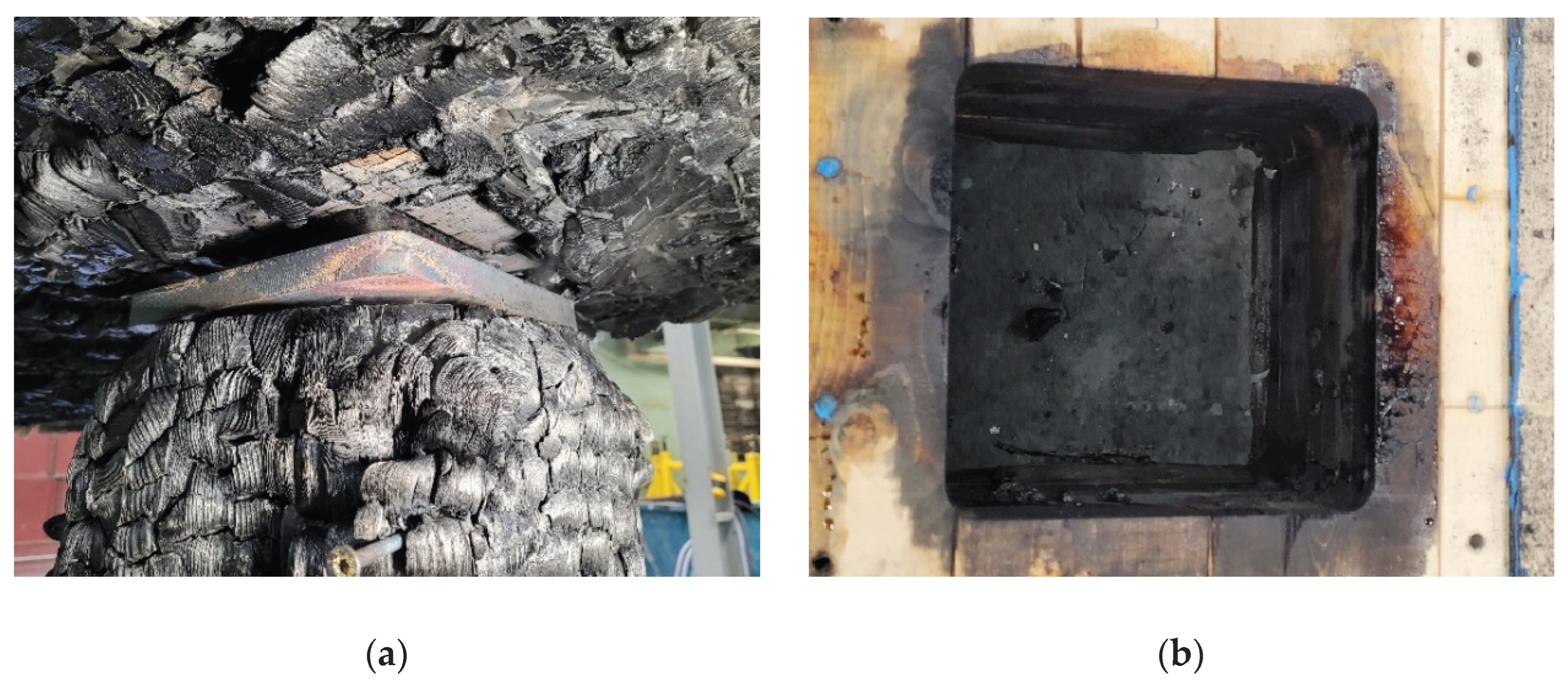
Figure 12.
(a) MPSC plate and screw heads; (b) Embossed screw heads in the charred CLT.
3.1.2. Applied Load
The MPSC 200 Test 1 assembly has been able to support the full applied load until the actuator reached its maximum stroke at 107 min. Given the displacement could no longer increase, the resulting applied load slowly reduced from 70 to 40 kN between 107 and 120 minutes.
Figure 13.
Applied load – Test 1.
3.1.3. Deflection
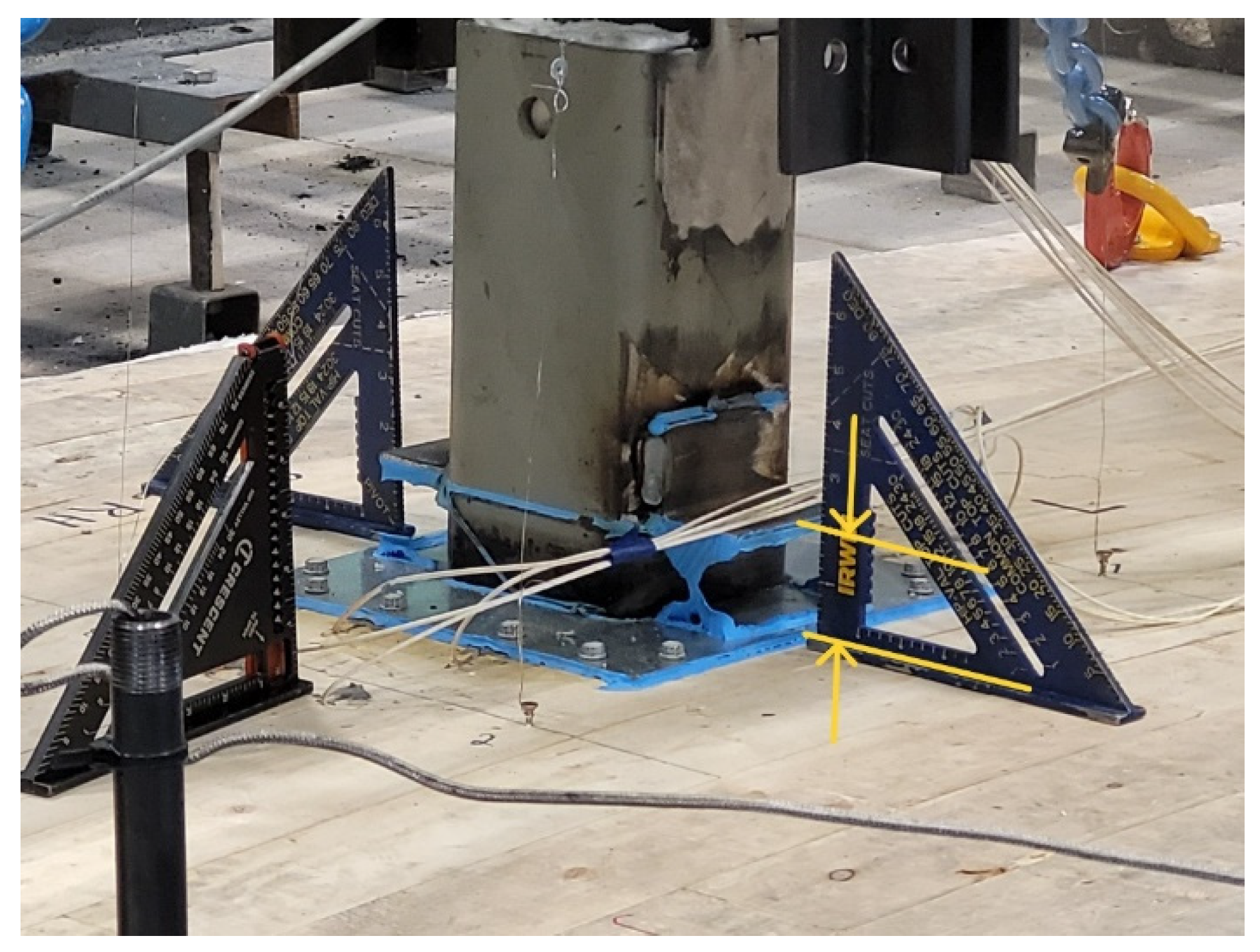
Given the loading configuration, the CLT exhibited significant upward bending as the load was pulling up the MPSC 200 connector. The maximum displacement recorded by the 4 string potentiometers was 51.7 mm (Figure 14). At the end of the test, it was observed that the MPSC moved up by approximately 50 mm (2”), as shown in Figure 15, suggesting that charring occurred to the CLT above the steel plate. Combining both deformations allowed to reach the 101 mm maximum stroke faster than expected.
Figure 14.
Vertical displacement – Test 1.
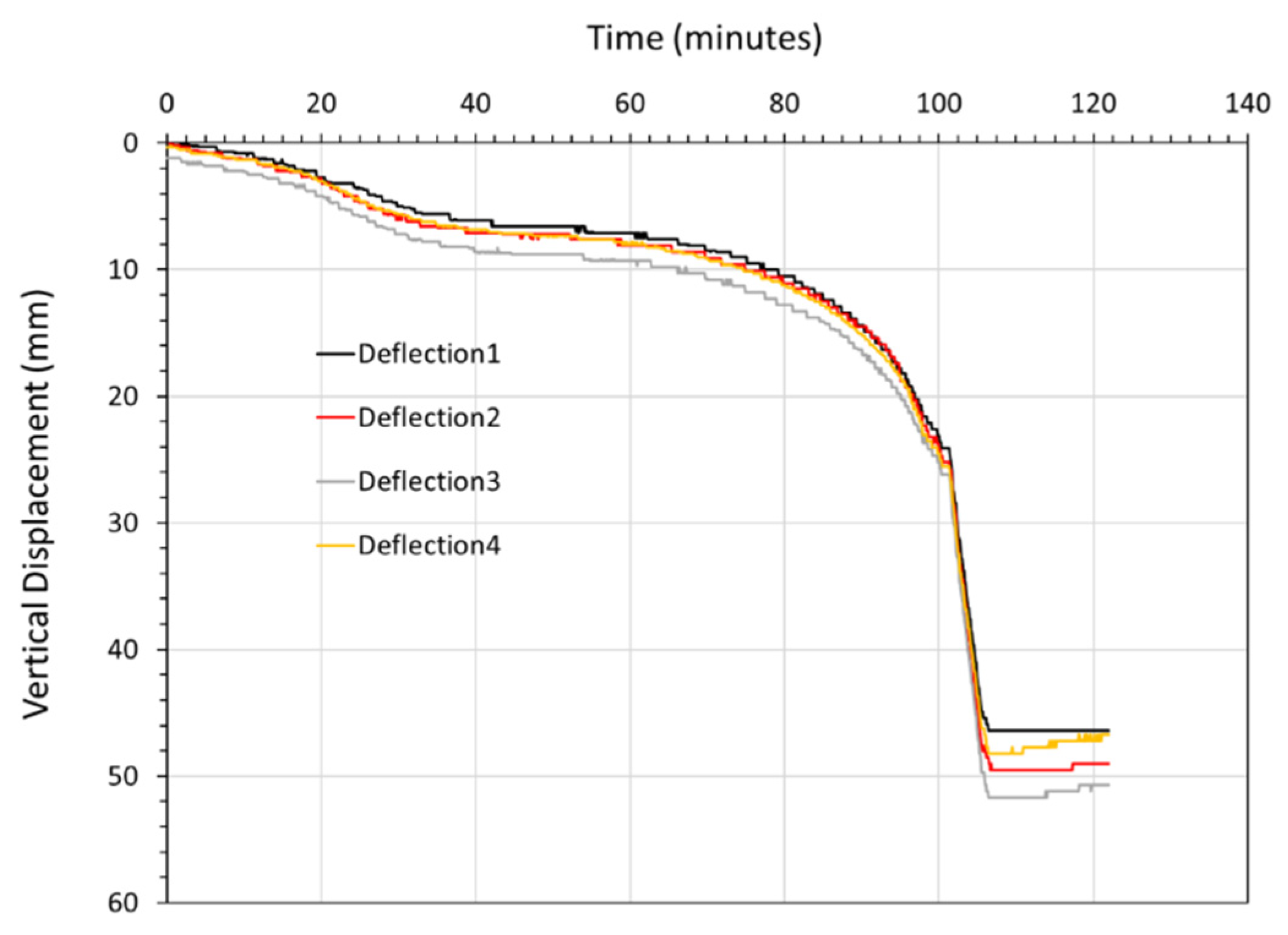
Figure 15.
Upward displacement of the MPSC connector at the end of Test 1.
3.1.4. Temperature Profiles
Temperature profiles recorded by the thermocouples on the MPSC 200 steel connector are illustrated in Figure 16. It can be observed that the temperature exhibited a smooth reduction after 60 min, which coincide with the time when the CLT upward vertical displacement started to increase (Figure 14). This phenomenon is likely caused by the MPSC connector being embedded into the charred CLT panel, and thereby shielding the thermocouples along with the steel plate perimeter from fire exposure.
Throughout the test, none of the thermocouples exceeded the CAN/ULC S101 maximum temperature criteria of 704°C (single point) for steel beams. The average temperature of 593°C (average of 4 thermocouples) was also not exceeded. The 593°C threshold was exceeded by only 1 thermocouple (TC-2) after 118 minutes.
The temperature profile measured within the CLT panel is plotted in Figure 17. As expected, TC7 and TC9 positioned at the first glueline and the furthest from the MPSC connector were the first to reach the charring temperature of 300°C, at 43.75 and 52.83 minutes, respectively. The second set of thermocouples to reach 300°C were TC8 and TC10 after 88.08 and 105 minutes, respectively. They were also positioned at the first glueline, but closest to the MPSC connector. TC11 and TC14 positioned at the second glueline and furthest from the MPSC connector exceeded 300°C after 105.42 and 115 minutes, respectively. TC12 and TC13 positioned at the second glueline and closest to the MPSC connector reached a maximum temperature of 133°C and 126°C after 2-hrs of standard fire exposure. Data from TC11 and TC14 results in charring rates up to the 2nd glueline of 0.66 and 0.61 mm/min, respectively, away from the MPSC connector, which is consistent with the one-dimensional charring rate of 0.65 mm/min applicable to CLT in CSA O86:24. The charring rates obtained from TC8 and TC10 are 0.40 and 0.33 mm/min, respectively, which is much slower than the 0.65 mm/min one-dimensional rate. This suggests that the MPSC plate was partially shielded from heat exposure by the CLT, as opposed to the claimed increasing heat conduction that metal connectors may provide to timber elements.
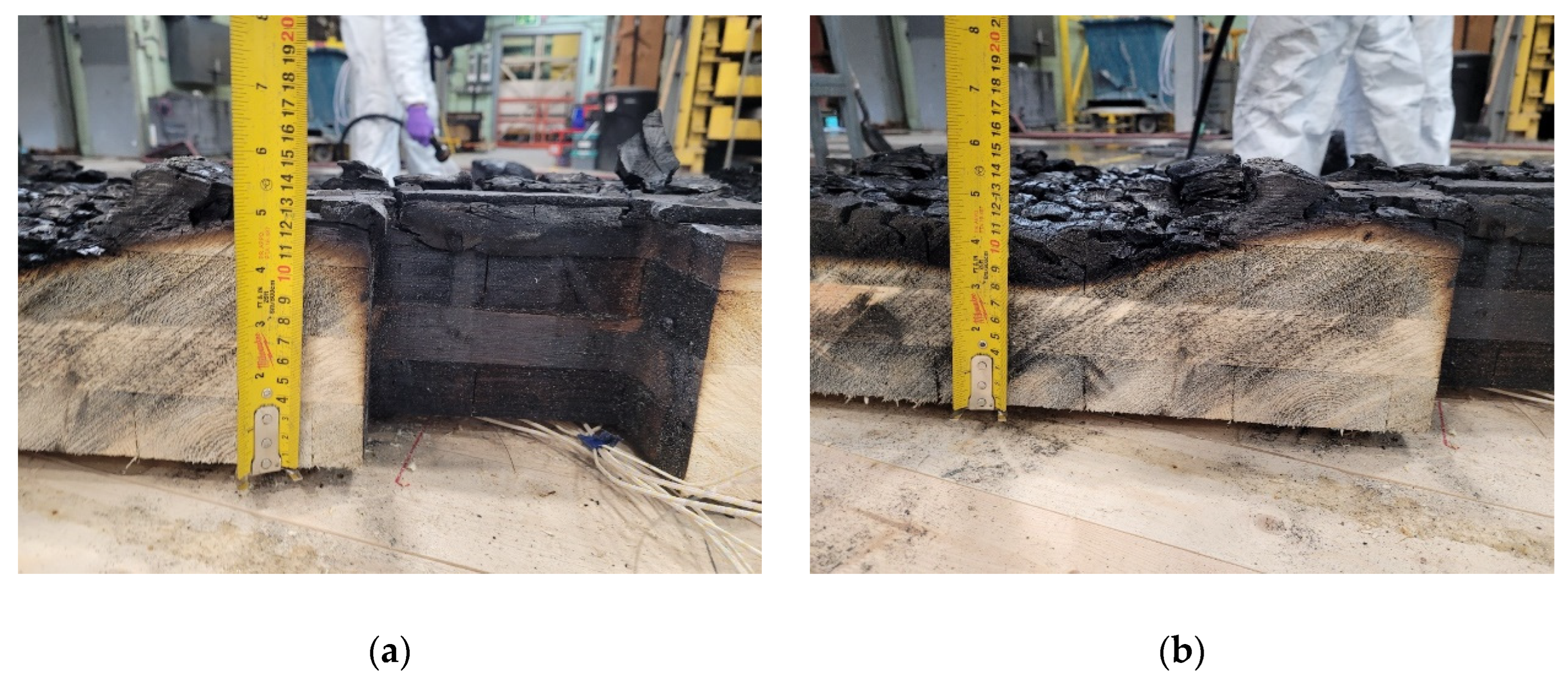
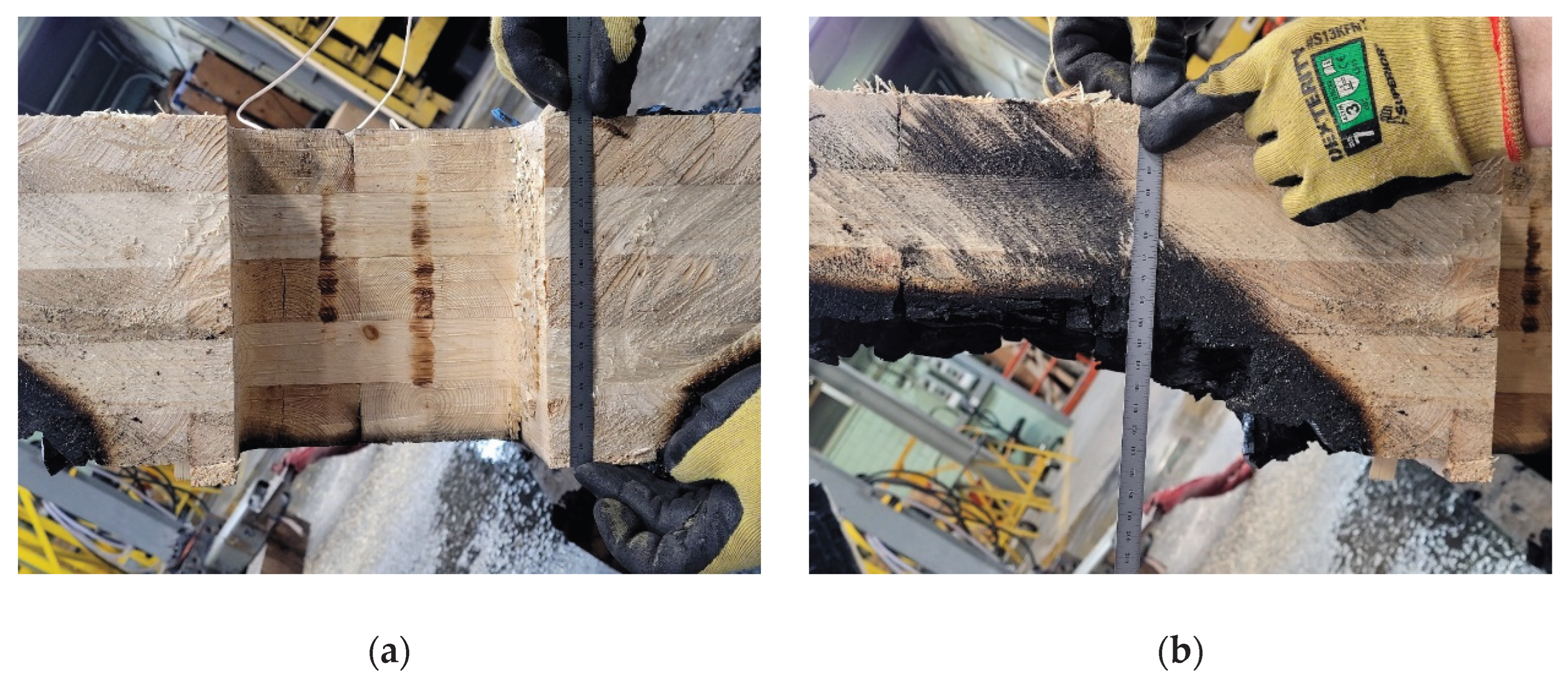
From post-test visual observation, it was found that the CLT had a remaining thickness of approximately 120 mm (±3.3 plies left) at the vicinity of the MPSC connector (Figure 24). This residual thickness reduced to approximately 85-90 mm (±2.25 plies left), as shown in Figure 25. The measurements translate to a charring rate of 0.46 mm/min underneath the MPSC steel plate and 0.70 mm/min in the CLT panel - away from the MPSC connector. These are consistent with the charring rates obtained from the thermocouples. It is noted that once the test is terminated and the burners are turned off, the CLT continues to char until it is extinguished by the NRCC staff. With an estimated additional 15 minutes of charring, although at a lower rate, the resulting charring rate reduces to 0.63-0.67 mm/min.
The glulam residual cross-section was measured as 253 x 258 mm (Figure 26), resulting in a charring rate varying between 0.73 and 0.75 mm/min. These rates are consistent with the design approach where 86 mm of wood cover was provided (86 mm / 120 min = 0.72 mm/min). As with the CLT, considering the additional 15 minutes before extinguishment, the resulting charring rate reduces to 0.64-0.66 mm/min.
Figure 16.
Temperature profiles of the MPSC steel connector – Test 1.
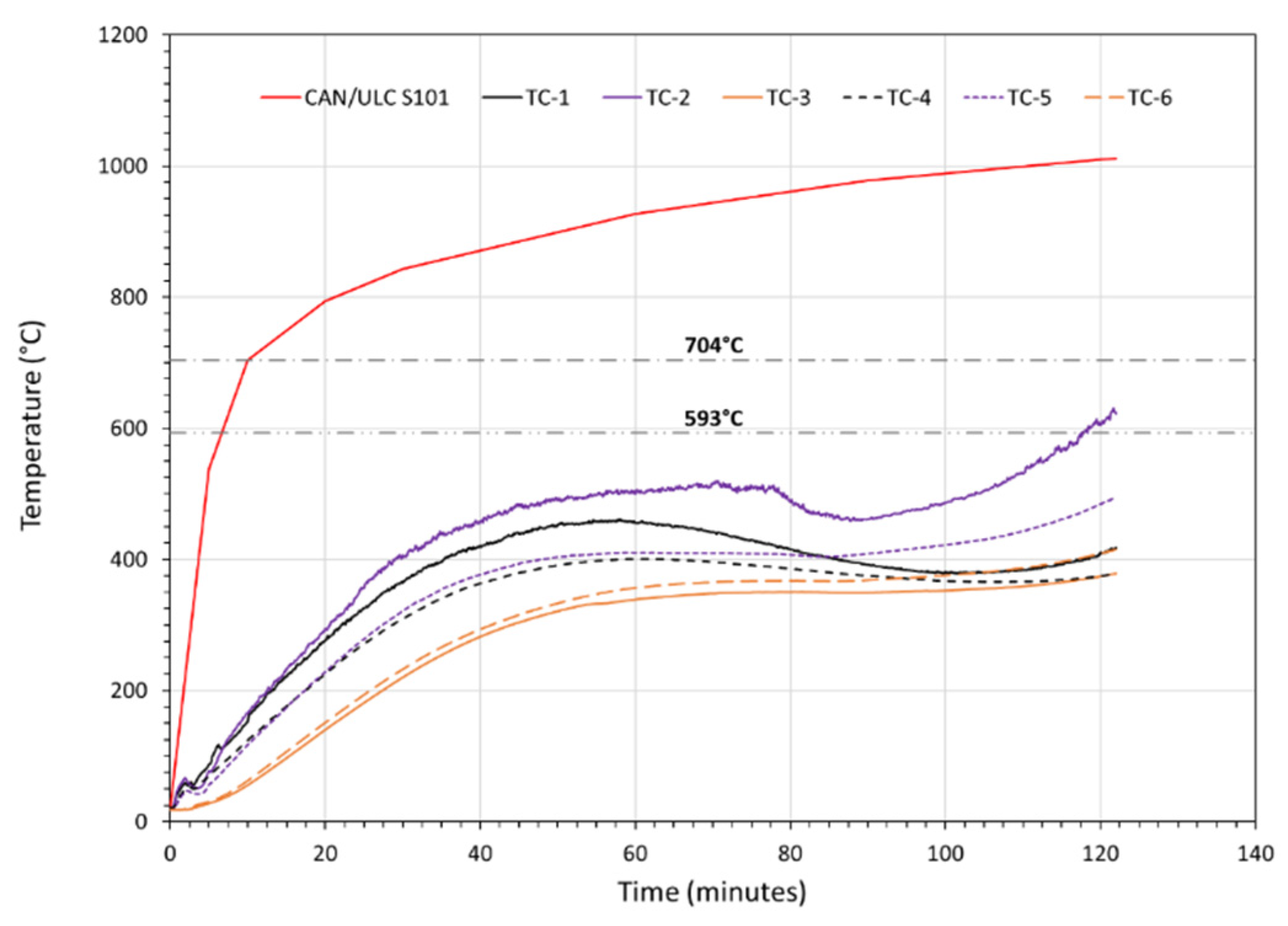
Figure 17.
Temperature profiles of the CLT panel above the MPSC steel connector – Test 1.
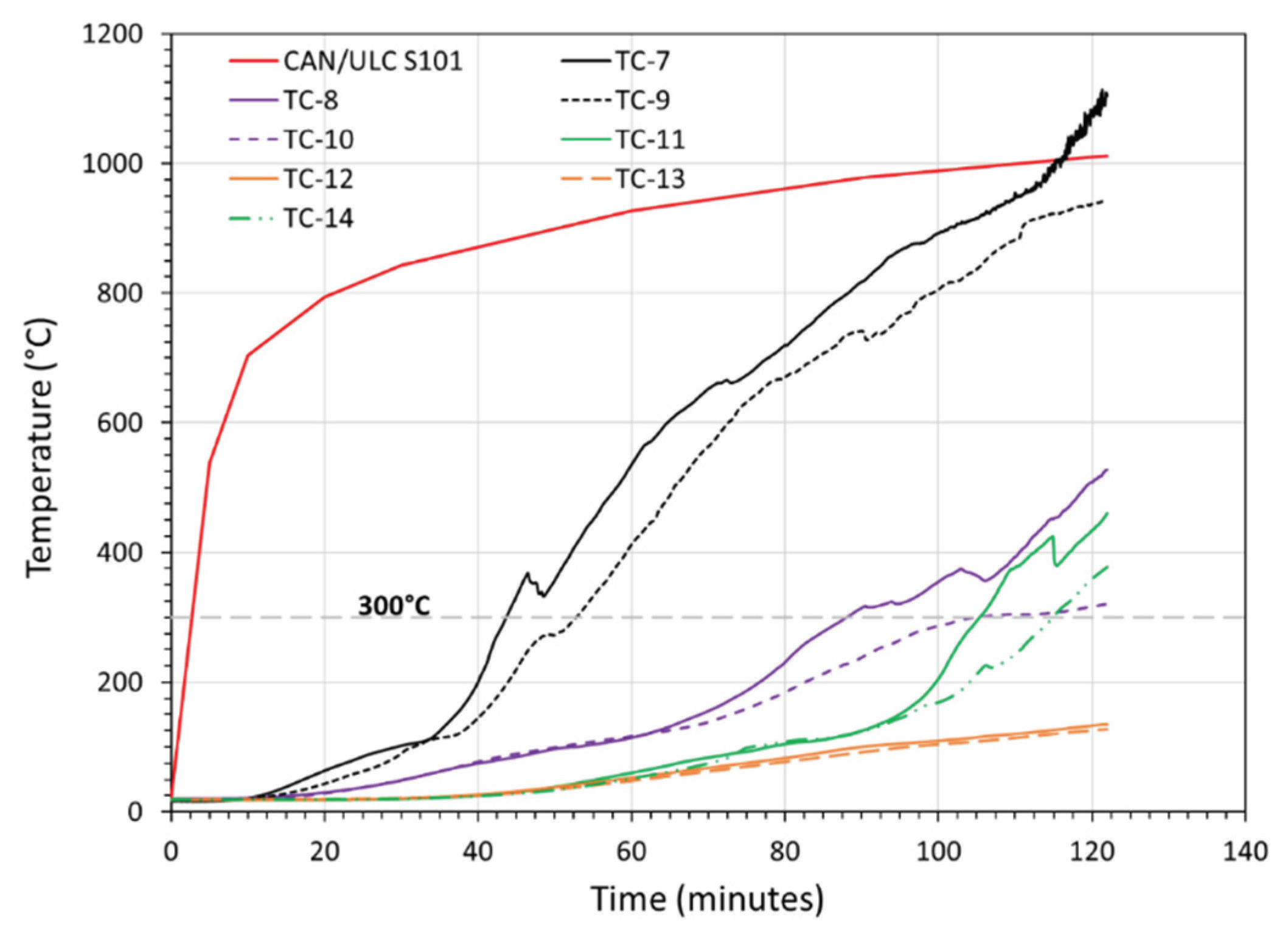
Figure 18.
Residual cross-section – Test 1.
3.2. Test 2 – MPSC 200 (Protected Gap)
3.2.1. Failure Mode
No failure was reached after the 2 hours of standard fire exposure. At 118 minutes, the load was unable to be kept, likely due to excessive bending deflection of the CLT panel caused by the reduced cross-section. The test was terminated at 2h02 (122 min), similarly to Test 1. During Test 2, the stroke of the load actuator was increased to 152 mm (6”), which was not reached at the end of the test.
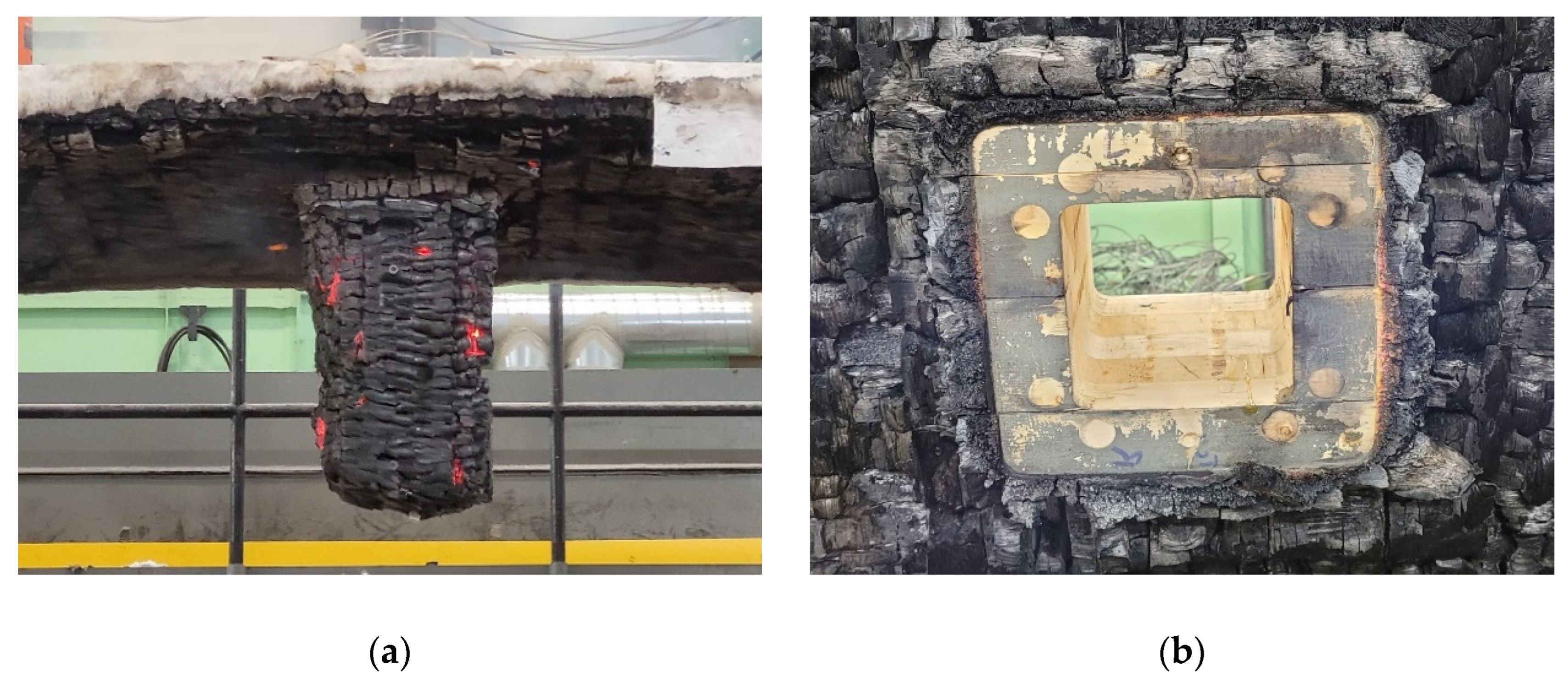
As opposed to what was observed in Test 1, where the screw heads became embedded into the charred CLT panel, the firestop prevented heat from reaching the steel plate. As such, the CLT panel remained almost intact, with no signs of char above the steel plate, as shown in Figure 19.
Figure 19.
(a) View of the interface; (b) View inside the CLT opening.
3.2.2. Applied Load
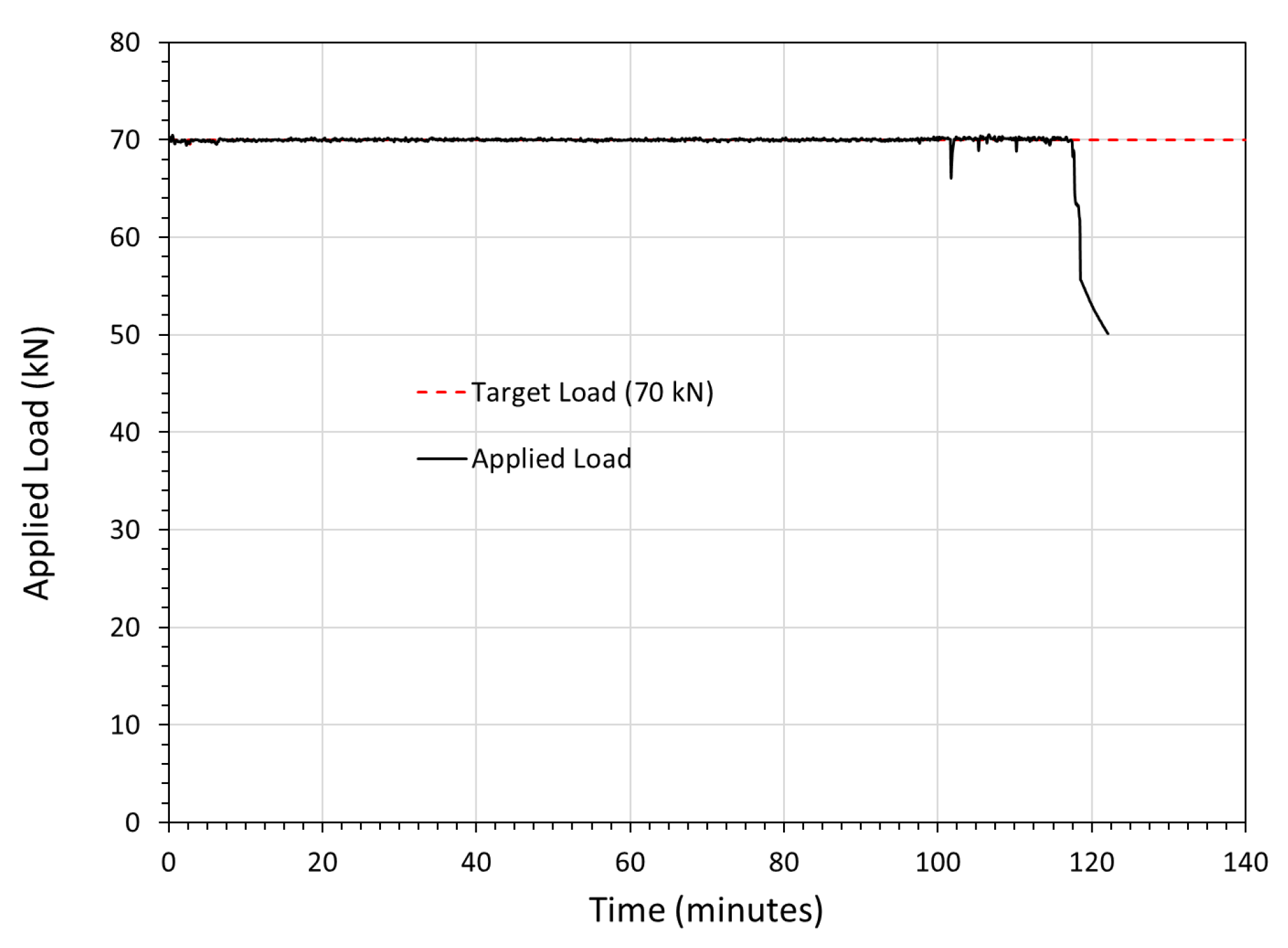
The MPSC 200 Test 2 assembly has been able to support the full applied load until the charred CLT became the weakest component after 117 min. At that time, the load could no longer be maintained and reduced from 70 to 53 kN between 117 and 120 minutes, as shown in Figure 20.
Figure 20.
Applied load – Test 2.
3.2.3. Deflection
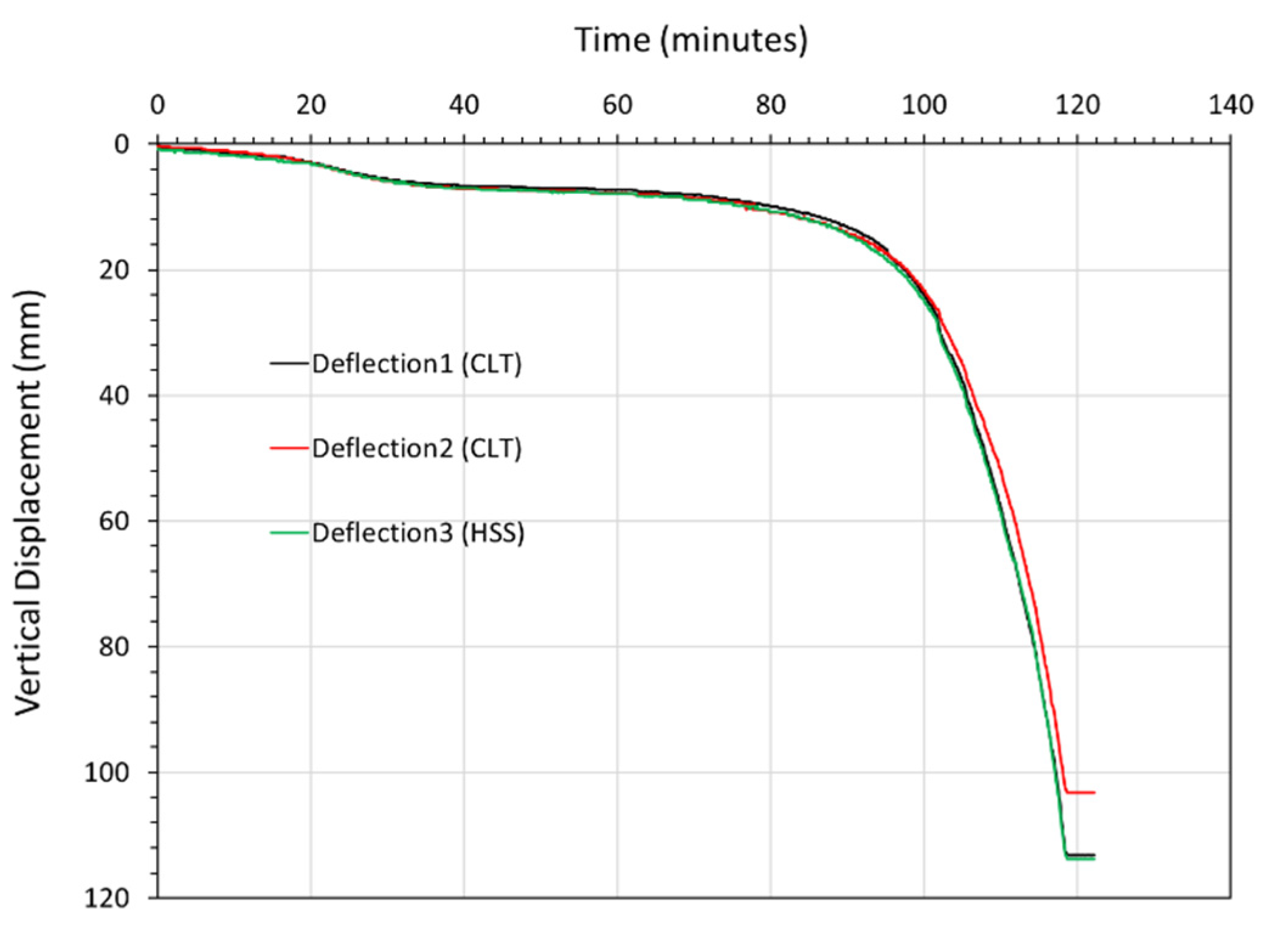
As observed in Test 1, the CLT exhibited significant upward bending as the load was pulling up the MPSC 200 connector (Figure 21). The maximum displacement recorded by the 2 string potentiometers was 121 mm. As opposed to Test 1, it was observed that the MPSC moved up by only 4 mm during the test, indicating that little to no charring was experienced to the CLT above the steel plate. Figure 22 shows the displacement of the CLT panel and the MPSC connector during Test 2.
Figure 21.
Upward bending of the CLT panel at the end of the 2-hrs fire test – Test 2.
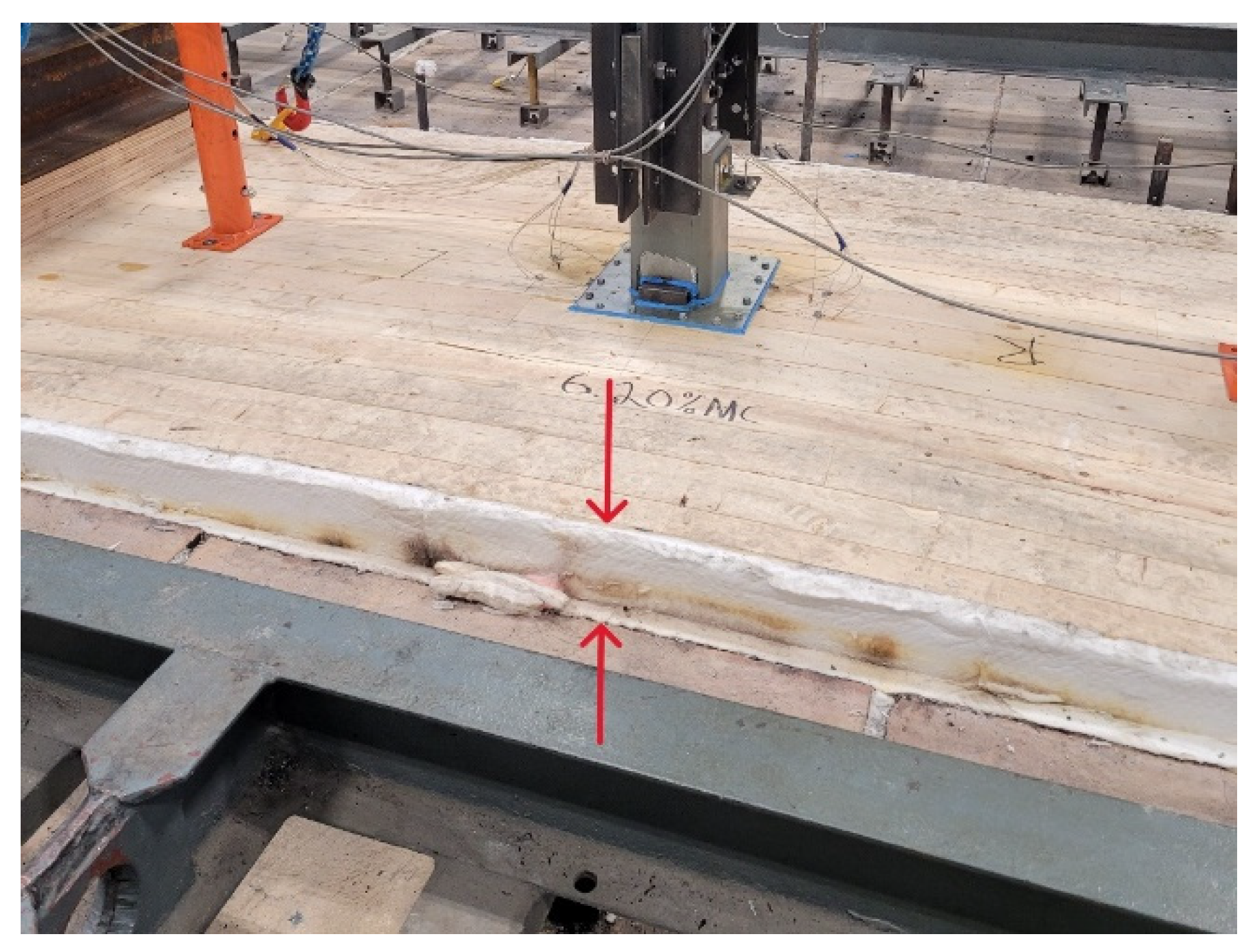
Figure 22.
Vertical displacement – Test 2.
3.2.4. Temperature Profiles
Temperature profiles recorded by the thermocouples on the MPSC 200 steel connector are illustrated in Figure 23. Throughout the test, none of the thermocouples exceeded the CAN/ULC S101 maximum temperature criteria of 704°C (single point) or 593°C (average) for steel beams. The maximum temperature reached at 2 hours was 106°C (TC2). The firestop effectively prevented heat from penetrating into the assembly.
The temperature profile measured within the CLT panel is plotted in Figure 24. As expected, TC7 and TC9 positioned at the first glueline and the furthest from the MPSC connector were the first to reach the charring temperature of 300°C, at 76.17 and 65.00 minutes, respectively. The second set of thermocouples to reach 300°C were TC 11 and TC14, positioned at the second glueline and furthest from the MPSC connector, after 114.58 and 113.25 minutes, respectively. Data from TC11 and TC14 results in charring rates up to the 2nd glueline of 0.61 and 0.62 mm/min, respectively, away from the MPSC connector, which is consistent with the one-dimensional charring rate of 0.65 mm/min applicable to CLT in CSA O86:24. None of the thermocouples positioned closest to the MPSC connector exceeded 300°C throughout the 2-hrs of standard fire exposure. The maximum temperature recorded at 2-hours was 104°C (TC10). This suggests that the firestop foam effectively prevented heat from penetrating into the MPSC connection.
From post-test visual observation, it was found that the CLT had no charred laminations at the vicinity of the MPSC connector (i.e., all 5-plies remaining, 175 mm in thickness), as shown in Figure 25. This residual thickness reduced to approximately 90 mm (±2.25 plies left) away from the MPSC connector. The measurements translate to a charring rate of 0.71 mm/min in the CLT panel - away from the MPSC connector. These are consistent with the charring rates obtained from the thermocouples. As explained previously, considering the additional 15 minutes before extinguishment reduces the resulting charring rate to 0.63 mm/min.
The glulam residual cross-section was measured as 255 x 256 mm, resulting in a charring rate varying between 0.74 and 0.73 mm/min. These rates are consistent with the design approach where 86 mm of wood cover was provided. When considering the additional 15 minutes, this translates to a charring rate of 0.65-0.66 mm/min.
Figure 23.
Temperature profiles of the MPSC steel connector – Test 2.
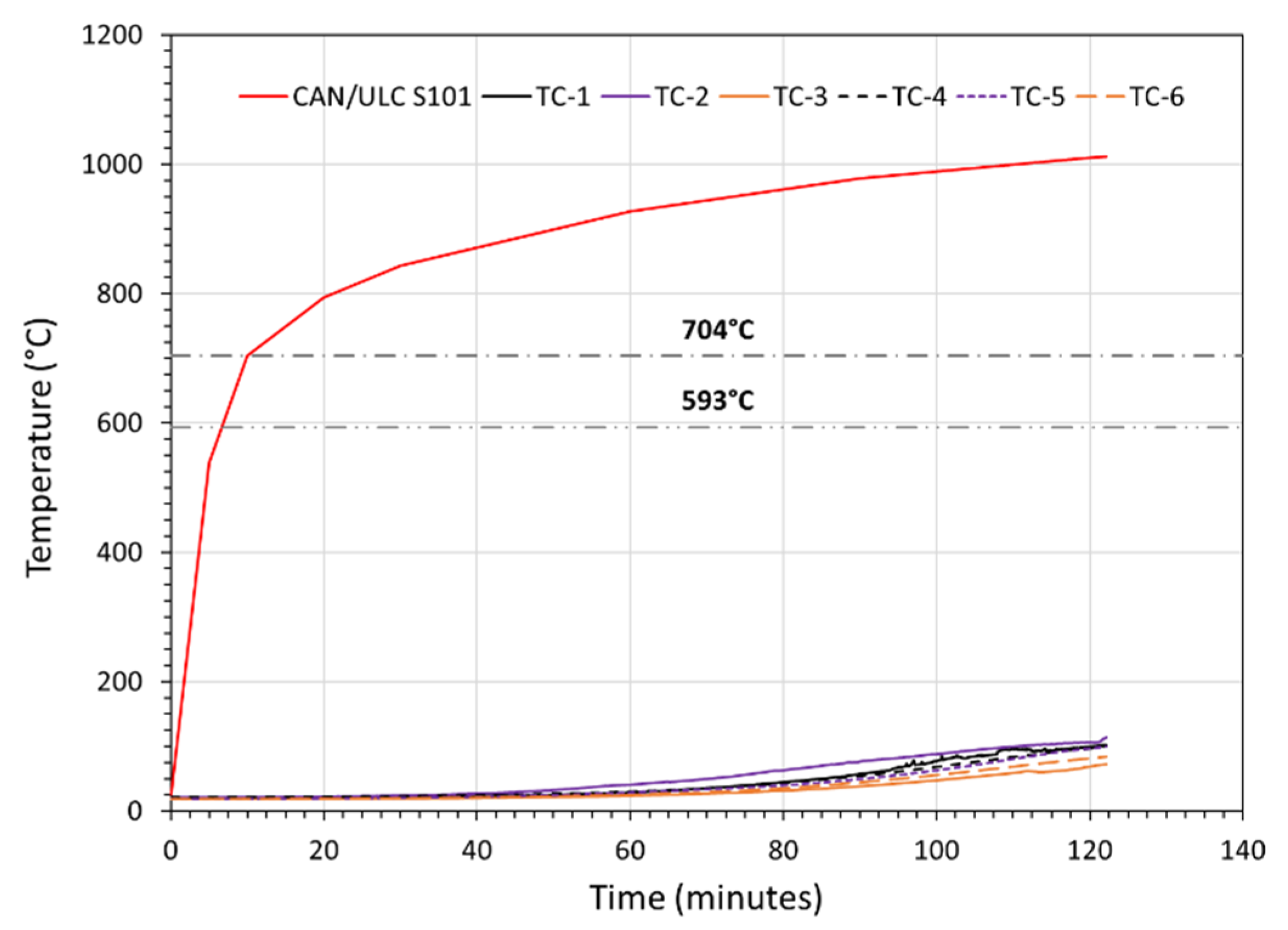
Figure 24.
Temperature profiles of the CLT panel above the MPSC steel connector – Test 2.
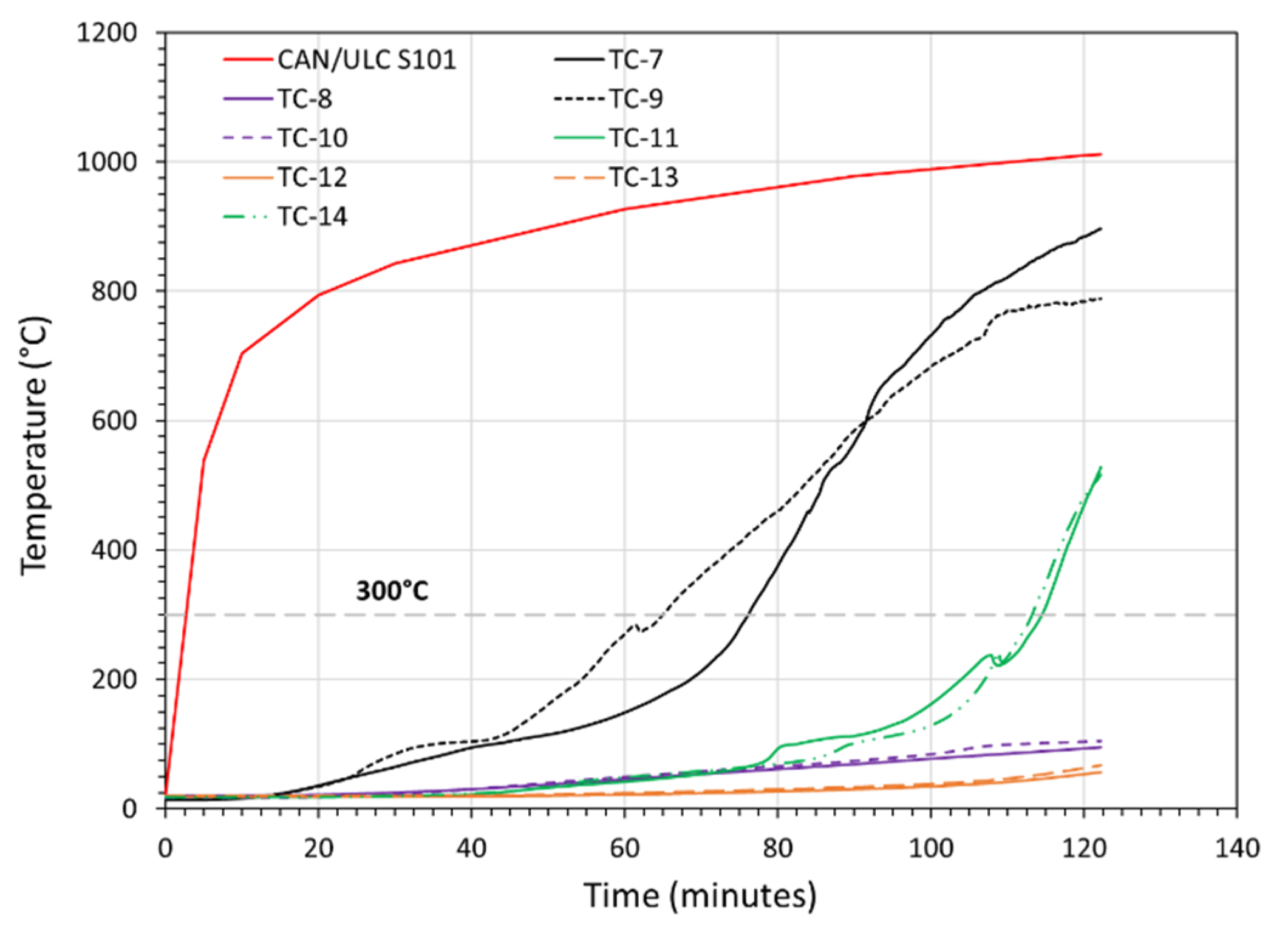
Figure 25.
Residual cross-section – Test 2.
4. Discussion
As explained in Subsections 4.1 and 4.2, the only difference between the two tests was the gap at the CLT panel and glulam column, created by the 25 mm thick steel plate of the MPSC 200 connector. Based on the test results, the following behavior can be observed.
4.1. Load-Displacement
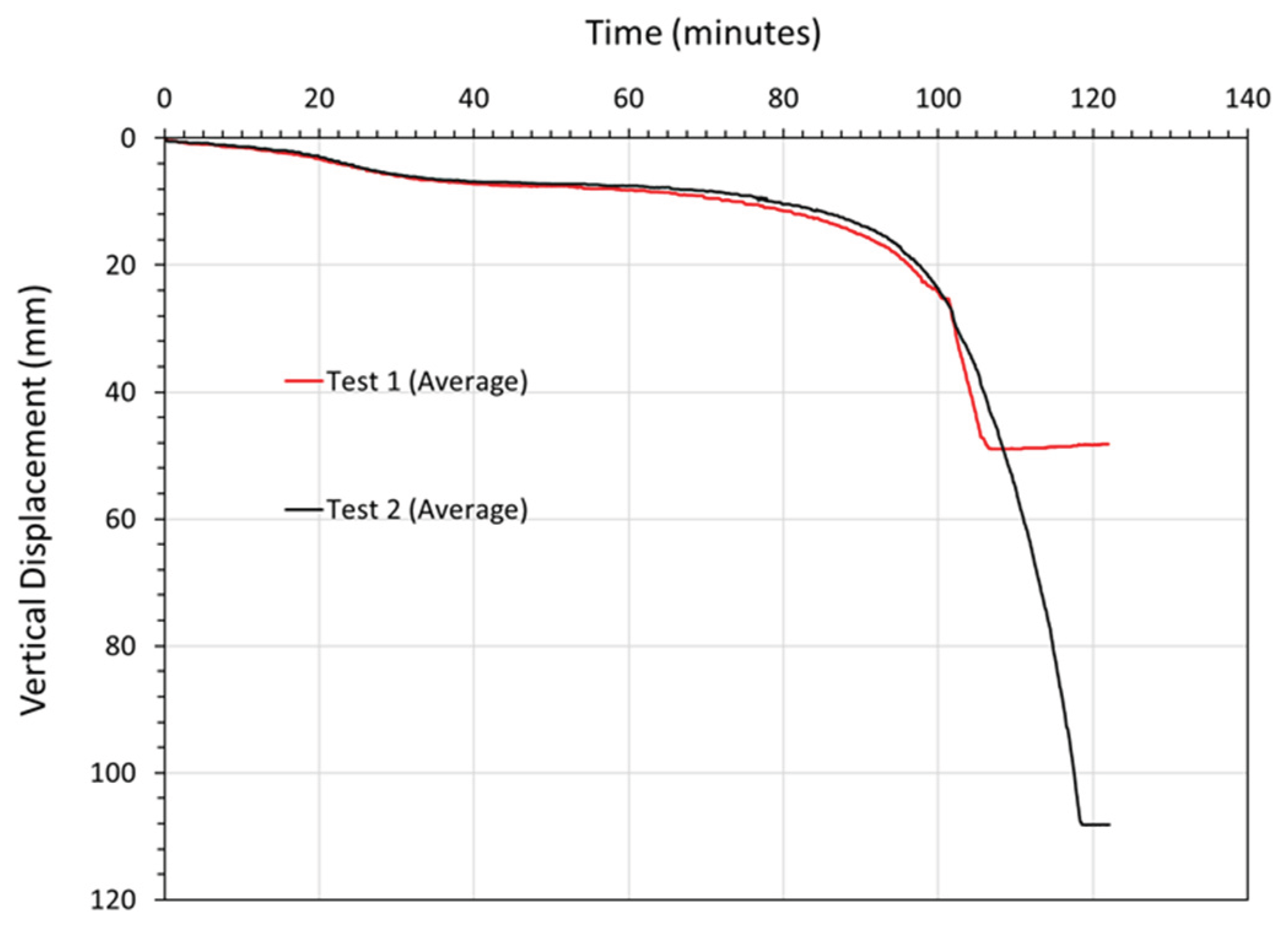
When comparing both assemblies, it can be seen in Figure 26 that the CLT displacement curves are similar, whether the gap was fully exposed or protected. The only difference is Test 1 reaching the maximum stroke of the load actuator at 107 min, while Test 2 was able to reach greater deflection (maximum stroke was increased for Test 2). With all other test parameters identical and given the minimal difference up to 107 minutes, the results suggest that both assemblies would have performed similarly up to 2-hrs.
Figure 26.
Vertical displacement of the CLT panel – Test 1 vs. Test 2.
4.2. Thermal Performance
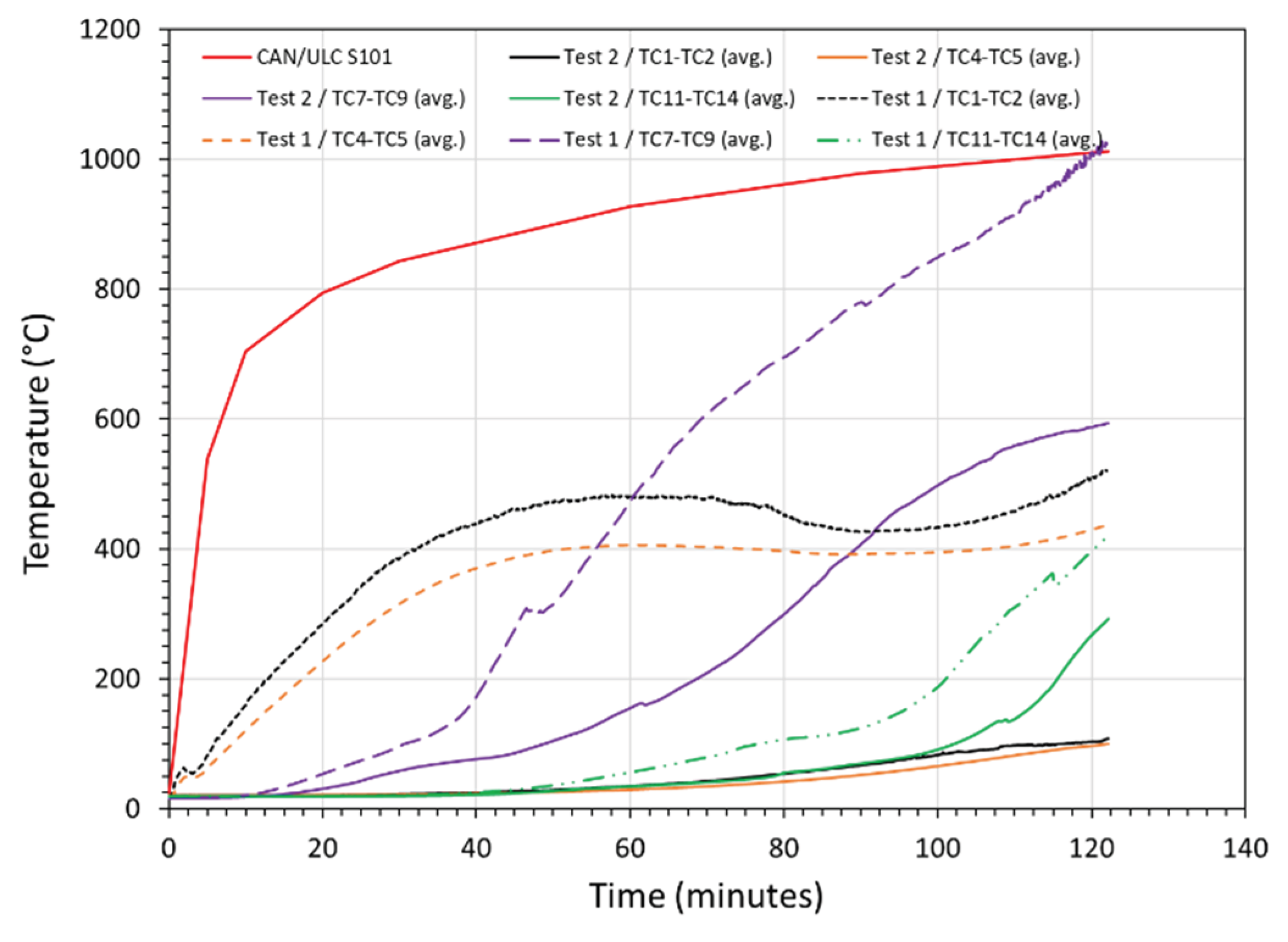
Figure 27 plots the average temperature are critical locations, namely at the perimeter of the steel plate (bottom – TC1 and TC2, top – TC4 and TC5) as well as across the CLT along the plane of the glulam column perimeter (1st glueline – TC7 and TC9, 2nd glueline – TC11 and TC14).
The first main observation is the thermal protection of the MPSC steel plate. In Test 1, the edges of the steel plate increased to 400°C and remained fairly stable throughout the test duration, while the temperature in Test 2 barely exceeded 100°C after the 2-hrs of standard fire exposure.
The second observation is related to the CLT charring behavior. Given the thermal protection provided to the steel plate in Test 2, it is not surprising that the CLT charred slightly lower when compared to that of Test 1. The residual cross-sections, as shown in Figure 43, are also different due to the charring of the CLT above the steel plate in Test 1, where a residual thickness of 120 mm was left (±3.3 plies left). There was little to no sign of charring in Test 2, all 5 plies were left.
While the thermal performance between the two tests was quite different, the critical steel temperature of 704°C (single point) or 593°C (average) has not been reached in both tests. The main difference from Test 1 is the differential displacement of the MPSC due to charring of the CLT above the steel plate, which was not observed in Test 2.
Figure 27.
Average temperature profiles - Test 1 vs. Test 2.
4.3. Predicting the Steel Temperature
In attempt to provide a design approach for such exposed connection, the following equation (1) is used. This equation is a step-by-step calculation method for unprotected steel elements exposed to the standard fire, as presented in Buchanan & Abu [14].
where ΔTs is the steel temperature increase (°C or K), (F/V) is the steel section factor (m-1) taken as the heated perimeter (F) divided by the volume (V), ρs is the steel density (kg m-3), cs is the steel specific heat (J kg-1 K-1), hc is the convective heat transfer coefficient (W m-2 K-1), σ is the Stefan-Boltzmann constant (5.67 x 10⁻¹¹ kW m-2 K-4), ε is the resulting emissivity (0.70 for carbon steel), Tf is the fire temperature (°C or K) and Ts is the steel temperature (°C or K). This model assumes that the entire steel cross-section is of uniform temperature.
When considering the exposed surface of the MPSC 200 steel plate, taken as its perimeter multiplied by its thickness, the temperature profile shown in Figure 28 is obtained. It can be observed that the temperature profile falls within the measured average temperatures up to approximately 30 minutes. From this profile, the time to charring, assumed as 300°C, is reached after 28.5 minutes. As reported in Subsection 3.1.4, TC4 and TC5 positioned at the top edge of the steel plate reached 300°C after 28.66 and 27.42 minutes, respectively. This also coincides with the time when these thermocouples started to flatten to approximately 400°C (Figure 16). At the reduced charring rate of 0.33 to 0.40 mm/min, as reported in Subsection 3.1.4, it would take 62.5 to 75.76 minutes to fully embed the MPSC 200 steel plate (25 mm thick) into the charred layer, which coincides with the time when TC1 and TC2 started to flatten (Figure 16).
Figure 28.
Predicted steel temperature profile using Equation (1).
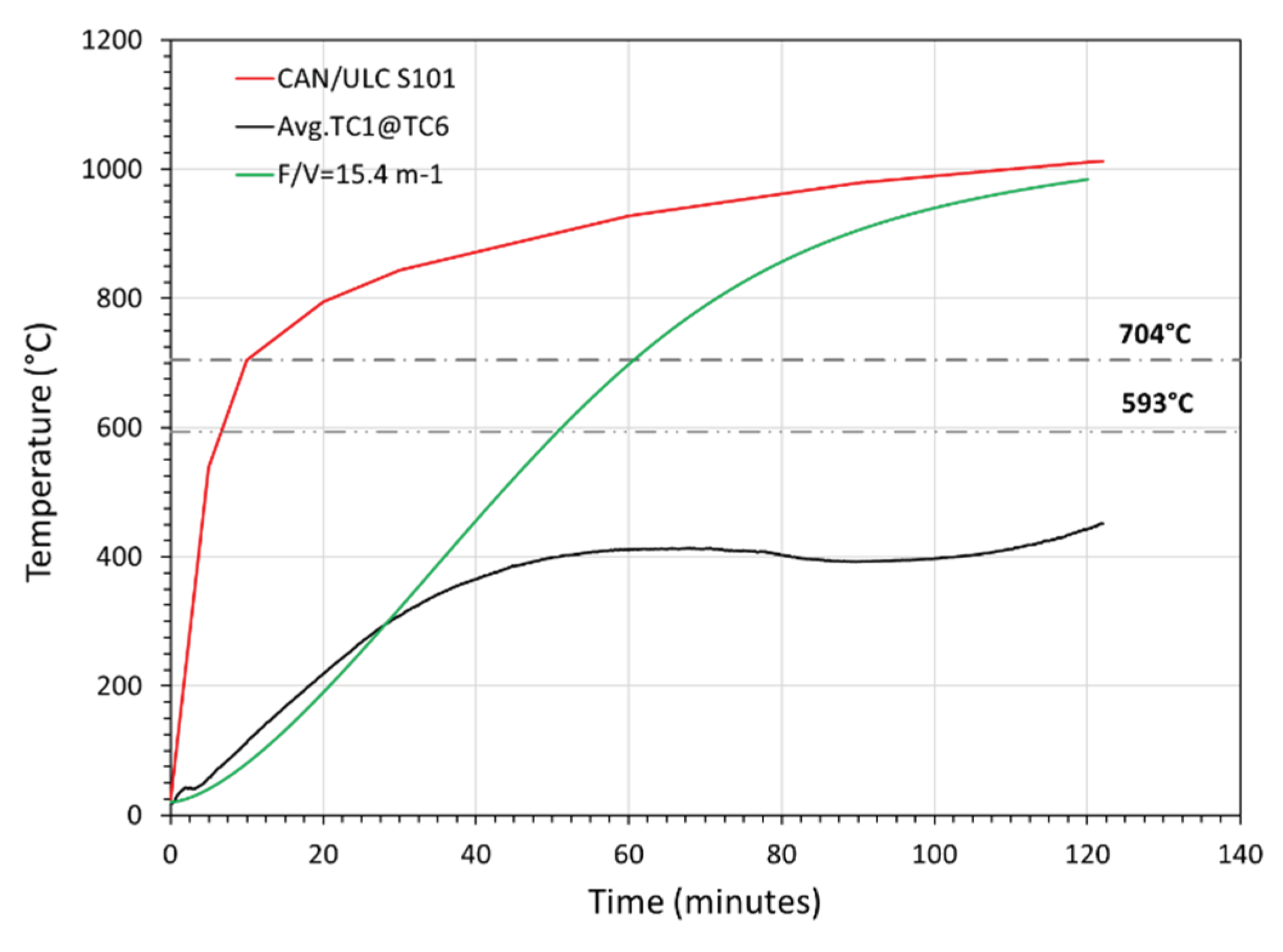
While this approach provides a reasonable understanding of the steel temperature and potential charring at the interface, it assumes full convective and radiative heat fluxes being applied to the surfaces, which may be too conservative. It also reflects the behavior from a single test. Additional research for refining such model is needed.
5. Conclusions
Point-supported connections are an innovative modern connection design that can benefit from the 2-way structural action of cross-laminated timber (CLT) slabs, which is typically not considered in traditional timber design. It also allows for flatter ceiling surfaces where no beams are needed to support the mass timber floor slabs. In Canada, this type of structure was first used in the 18-storeys Tallwood House student residence on the University of British Columbia campus, and has been slowly replicated over the years. However, given the entire mass timber structure was fully encapsulated at that time, there was no need to assess the thermal performance of such point-supported structure, namely the steel-timber bearing area interface.
Two structural fire-resistance tests of point-supported connections were conducted, using the mass timber point-supported connector MPSC 200 from Simpson Strong Tie. The assemblies were exposed to the standard fire of CAN/ULC S101 for 2-hours.
Test 1 consisted of the MPSC 200 assembly with the gap between the top of the glulam column and ceiling of the CLT panel being fully exposed to fire (25 mm gap). No failure was reached after the 2 hours of standard fire exposure. Test 1 has been able to support the full applied load until the actuator reached its maximum stroke at 107 min. Given the displacement could no longer increase, the resulting applied load slowly reduced from 70 to 40 kN between 107 and 120 minutes. Differential displacement of the MPSC connector was observed, due to charring of the CLT at the steel plate interface. Little to no charring was observed around the square opening in the CLT. Thermocouples above the MPSC steel plate provided low charring rates, suggesting that the MPSC steel plate partially shielded the CLT from direct heat exposure.
Test 2 consisted of the MPSC 200 assembly with the 25 mm gap between the top of the glulam column and ceiling of the CLT panel being sealed using the Fire Foam from Rothoblass. No failure was reached after the 2 hours of standard fire exposure. Test 2 has been able to support the full applied load until the charred CLT became the weakest component after 117 min. At that time, the load could no longer be maintained and reduced from 70 to 53 kN between 117 and 120 minutes. No differential displacement of the MPSC connector was measured. As opposed to Test 1, the CLT panel remained almost intact, with no signs of char above the steel plate and inside the square opening. None of the thermocouples positioned closest to the MPSC connector exceeded 300°C throughout the 2-hrs of standard fire exposure, suggesting that the firestop foam effectively prevented heat from penetrating into the MPSC connection.
A first step-by-step design approach is proposed herein to predict the steel temperature and potential charring at the interface. While it provides reasonable predictions when compared to Test 1, the model assumes full convective and radiative heat fluxes being applied to the surfaces, which may be too conservative. Additional research for refining such model is needed.
Author Contributions
Conceptualization, C.D., M.A, S.C.Y. and A.H.; methodology, C.D. and M.A.; formal analysis, C.D.; writing—original draft preparation, C.D.; writing—review and editing, M.A., S.C.Y. and A.H.; All authors have read and agreed to the published version of the manuscript.
Funding
This research was funded by the Forest Innovation Investment of British Columbia (BC FII), grant number 25/26-FPI-PSTM-W26-092.
Data Availability Statement
The raw data supporting the conclusions of this article will be made available by the authors on request.
Acknowledgments
The authors acknowledge the collaboration by the staff of the fire safety division of the National Research Council Canada (NRCC) for conducting the fire-resistance tests. The technical and in-kind contributions from Simpson Strong Tie is also acknowledged.
Conflicts of Interest
The authors declare no conflicts of interest.
References
- CCBFC. National Building Code of Canada 2020; Canadian Commission on Building and Fire Codes: Ottawa (ON), 2020. [Google Scholar]
- ICC. International Building Code; International Code Council: Washington (DC), 2024. [Google Scholar]
- GHL Consultants Ltd., and Fast + Epp. Transferability of 2021 International Building Code Tall Wood Building Provisions to the National Building Code of Canada; GHL 7958.00-R1,; Forestry Innovation Investment, 2023. [Google Scholar]
- RBQ. Arrêté Ministériel 2025-001: Mesure Équivalente Sur l’utilisation Du Bois d’œuvre Massif Encapsulé Dans La Construction de Bâtiments d’au plus 18 Étages; Régie du bâtiment du Québec, 2025. [Google Scholar]
- RBQ. Bâtiments de Construction En Bois d’oeuvre Massif Encapsulé d’au plus 18 Étages - Conditions à Respecter et Guide Explicatif; Régie du bâtiment du Québec, 2025. [Google Scholar]
- Shahnewaz, M.; Dickof, C.; Ganjali, H.; Slotboom, C.; Tam, M.; Jackson, R.; Popovski, M.; Tannert, T. Experimental Research on Point-Supported CLT Panels: Phase 1: Rolling Sher Strength. presented at the World Conference on Timber Engineering WCTE, 2023. [Google Scholar] [CrossRef]
- Slotboom, C.; Dickof, C.; Jackson, R. A Comparison of Punching Shear Design Approaches for Point Supported CLT Panels. presented at the World Conference on Timber Engineering WCTE, 2023. [Google Scholar] [CrossRef]
- Sullivan, J. P.; Dickof, C.; Slotboom, C. Case Study in the Next Generation of Point-Supported CLT Structures. presented at the World Conference on Timber Engineering WCTE, 2023. [Google Scholar]
- Yuan, C.; Harmsworth, A. Technical Analysis and Summary: Pilot Scale Demonstrations (GHL File 8000.03); GHL Consultants Ltd.: Vancouver (BC), 2023. [Google Scholar]
- ULC. CAN/ULC-S101-14-REV1 Fire Endurance Tests of Building Construction and Materials; Underwriters Laboratories of Canada: Toronto (ON), 2019. [Google Scholar]
- ANSI. ANSI/APA PRG 320 Standard for Performance-Rated Cross-Laminated Timber; APA - The Engineered Wood Association: Tacoma (WA), 2025. [Google Scholar]
- CSA. CSA O122:25 Structural Glued-Laminated Timber; CSA Group, 2025. [Google Scholar]
- CSA. CSA O86-24 Engineering Design in Wood; CSA Group: Mississauga (ON), 2024. [Google Scholar]
- Buchanan, A. H.; Abu, A. K. Structural Design for Fire Safety - 2nd Edition; John Wiley & Sons: West Sussex (UK), 2017. [Google Scholar] [CrossRef]
Disclaimer/Publisher’s Note: The statements, opinions and data contained in all publications are solely those of the individual author(s) and contributor(s) and not of MDPI and/or the editor(s). MDPI and/or the editor(s) disclaim responsibility for any injury to people or property resulting from any ideas, methods, instructions or products referred to in the content. |
© 2026 by the authors. Licensee MDPI, Basel, Switzerland. This article is an open access article distributed under the terms and conditions of the Creative Commons Attribution (CC BY) license (http://creativecommons.org/licenses/by/4.0/).
Copyright: This open access article is published under a Creative Commons CC BY 4.0 license, which permit the free download, distribution, and reuse, provided that the author and preprint are cited in any reuse.


