Preprint
Article

This version is not peer-reviewed.

High-Throughput Amplicon Sequencing Reveals Geographic Structuring and Latent Infections of Bacterial and Fungal Pathogens in Eritrean Potato Production Systems

A peer-reviewed version of this preprint was published in:
Applied Biosciences 2026, 5(3), 57. https://doi.org/10.3390/applbiosci5030057

Submitted:

18 April 2026

Posted:

20 April 2026

You are already at the latest version

Abstract

Potato (Solanum tuberosum L.) is a vital food security and cash crop in Eritrea, yet bacterial and fungal pathogens responsible for 15–30% yield losses remain molecularly uncharacterized across its production systems. Here, we present the first nationwide amplicon-based metagenomic survey of potato pathogen communities, sampling 81 farms across 14 sub-regions spanning four agroclimatic regions during July–August 2024. High-throughput amplicon sequencing targeting the bacterial 16S rRNA V3–V4 region and fungal ITS1–ITS2 loci revealed pronounced geographic heterogeneity in community composition and alpha diversity. Pseudomonas spp. were ubiquitous, with peak relative abundance of 19.5% in Dekemhare. Dominant fungi included Alternaria spp. (14% in Berik), Fusarium spp. (highest diversity 53.8% in Adi Kuala), Botrytis cinerea (37% in Adi Keih), and Rhizoctonia solani (44.4% in Adi Tekeliezan). Bacterial Shannon diversity averaged 5.67; fungal, 4.70. Weighted UniFrac PCoA accounted for 56.5% of bacterial community variance along PC1, confirming distinct geographic clustering. Critically, latent infections of Pseudomonas, Alternaria, Fusarium, and Colletotrichum were detected in every asymptomatic sample examined, demonstrating the inadequacy of visual-only disease surveillance. These findings establish the first molecular baseline for potato pathogen diversity in Eritrea, providing the empirical foundation for region-specific integrated disease management and evidence-based seed certification protocols.

Keywords: 
;  ;  ;  ;  ;  ;  

1. Introduction

Potato (Solanum tuberosum L.) is an important food and cash crop supporting many populations around the world for both income generation and ensuring food security. However, its production is seriously challenged by several biotic and abiotic stresses, where bacterial and fungal pathogens are the most economically important pathogens, leading to severe yield reductions up to 15% - 30% in East African countries [1]. In Eritrea, potatoes are mainly grown in the highlands of Maekel and Debub regions. The medium climatic conditions in these regions provide the optimal conditions for crop growth, while the crops’ nature facilitates colonisation by pathogens that lead to disease and spread from generation to generation. Understanding and managing disease requires full information on the causative agents’ biology, genetic variation, and the spatial distribution patterns in the specific production environments. Conventional disease surveillance methods have been heavily dependent on visual symptom identification and isolation by culture-based techniques [2]. However, such conventional methods can only give a pathogen profile of the already reported pathogen diversity in the region using target primers or reference materials. This creates incomplete information for pathogens that show similar symptoms, and pathogens that are not easily grown on culture media are difficult to identify. Moreover, the absence of visible symptoms, such as the emerging recombinant strains of PVY [3], often leads to the omission or underestimation of important yield reducing diseases.
Metagenomic methods facilitate a comprehensive, culture-independent analysis of complete microbial communities, offering vast possibilities for revolutionising disease identification and management [4,5]. Amplicon sequencing targets conserved marker genes to characterize bacterial (16S rRNA) and fungal (ITS) communities, providing data on alpha and beta diversity [6]. The culture-independent method enables the profiling of whole communities of microorganisms. This approach permits the detection of multiple concurrent pathogens, the resolution of geographic patterns of pathogen distribution, and hidden or cryptic infections in plants that may not show symptoms or are classified as uninfected [7]. This is critical for understanding the composition and spatial distribution of bacterial and fungal pathogens. In Eritrea, so far, no comprehensive geographically based molecular systematic potato disease survey has been conducted across the diverse production zones. The absence of molecular characterization constitutes a significant gap, as such data are essential for comprehending pathogen evolution, dissemination, monitoring disease spread, understanding inoculum sources, evaluating emerging strain risks, developing better control strategies, and assisting in breeding initiatives. Characterizing pathogen populations in Eritrea will provide a significant contribution to understand regional disease dynamics, identifying sources and hotspots, and developing coordinated regional management strategies.

2. Materials and Methods

2.1. Study Areas and Sampling
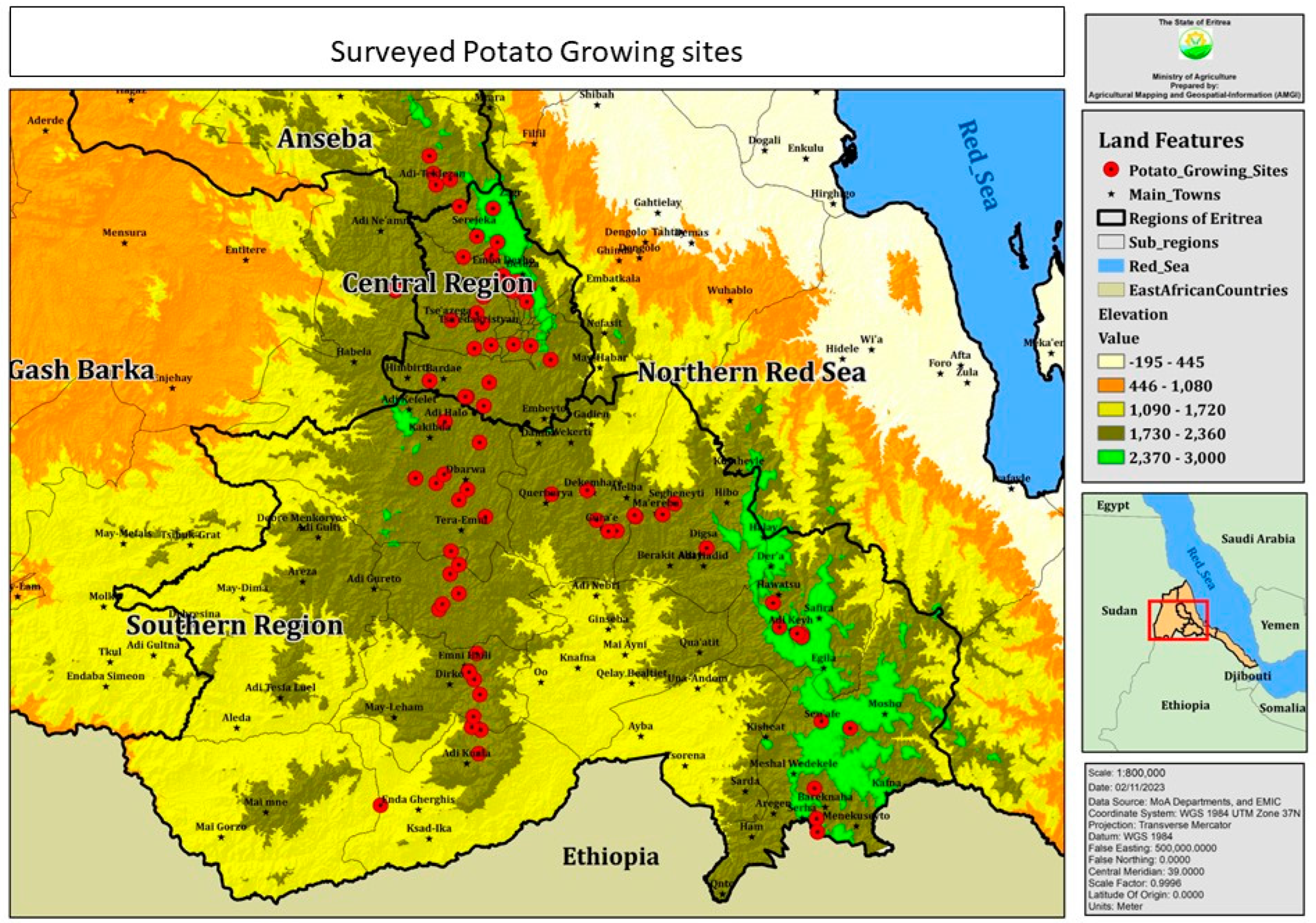
The study was conducted in 14 potato growing sub-regions under four regions of Eritrea: Maekel (Central), Debub (Southern), Gash Barka, and Anseba. The later two regions were represented by Logo Anseba and Adi Tekeliezan sub-regions, respectively, where their agroecology resembles the other first two major potato growing regions. In these sub-regions, 81 farms were selected purposively to ensure comprehensive coverage of diverse agroecological zones during the growing season of July–August 2023. Moreover, the sampling sites were selected based on inclusive criteria that included major potato production areas, agroecological significance, historical disease incidence records, fields that are used for seed and ware potato production, and areas where potato production and agroecology intersected on existing maps. Additionally, clustered and pocket areas were prioritized in consultation with local sub-region extension workers.
Figure 1. Surveyed potato growing subregions of Eritrea and Agroecological zones represented by altitudinal gradients.
Preprints 208989 g001
Within each selected farm, a diagonal sampling technique was used to collect leaf, stem, and tuber samples from symptomatic, diseased plants. Furthermore, representative samples were collected from asymptomatic (visually healthy looking) plants from three potato production farms at different sub-regions, namely Dubarwa (labelled as Asy Dubarwa), Adi Keih (labelled as Asy Adi Keih), and Gala Nefhi (labelled as Asy Gala Nefhi) to investigate latent infections.
The samples collected from each farm were then pooled into one sample. Similarly, for the asymptomatic samples, one pooled sample was prepared per selected area. Each pooled sample designated for DNA extraction was immediately placed in zip-locked plastic bags. Strict disinfection protocols, including the use of ethanol and gloves, were followed for hands and tools between sampling sites to prevent cross-contamination between farms and samples

2.2. Crude Sample Extraction

Leaf samples were ground using a pestle and mortar with liquid nitrogen at the National Animal and Plant Health Laboratory of Eritrea (NAPHL). The ground crude samples were then sealed in 2 mL Eppendorf tubes, and DNA/RNA Shield (Zymo Research, Irvine, CA, USA) was added to preserve nucleic acid integrity, and stored at 4 °C until further processing.

2.3. DNA Extraction

Total DNA was extracted following the protocol described by [8] with in-house modifications at the Institute of Biotechnology Research (IBR) laboratory of JKUAT. The crude sample (300-400µL) was washed with an equal amount of phosphate-buffered saline (PBS) by centrifuging at 13000rpm for 5min to remove the DNA/RNA shield used for nucleic acid stabilization during transport. The supernatant was discarded, and 0.15g of powdered activated charcoal (PAC), 500 µL of CTAB (cetyltrimethylammonium bromide) buffer, 300 µL of SDS (sodium dodecyl sulfate) (10%), and finally 20 µL of proteinase K (20 mg/ml) were added to a 2ml centrifuge tube. The mixture was then vortexed to homogenise and incubated in a water bath at 65 ℃ for 1 hour with intermittent shaking. Following this, 30 µL of lysozyme was added, and samples were then transferred to a 37 °C water bath for 45 minutes of incubation. The supernatant was collected after centrifuging at 12000 rpm under 4 ℃ for 20 minutes. Half the volume of PEG 6000 (30% in 1 M NaCl) was added to precipitate the DNA and left at room temperature for 1 hour. Thereafter, 1 ml of TE buffer (pH 8.0), 100 μL of 5M potassium acetate was added and incubated at 4 ℃ for 15min. An equal volume of phenol-chloroform-isoamyl alcohol (25:24:1) was added, and the mixture stood at room temperature for 10 min, followed by centrifugation at 10000rpm for 10minutes under 4 ℃. The aqueous layer was transferred into a new tube, treated with 0.7 volume of isopropanol, and left for 1 hour at room temperature. DNA was precipitated by centrifugation at 10000rpm for 10 min at 4 ℃. The resulting pellet was washed sequentially with 1 mL of 75% ethanol and 1 mL of anhydrous alcohol, each followed by centrifugation at 10,000 rpm for 10 minutes under 4 °C and dried at room temperature. The dried pellet was eluted in 60 µL of nuclease-free water and stored at -20 °C until further analysis. The extracted DNA was then pooled into 17 (Based on 14 symptomatic +3 asymptomatic samples during collection), representing the sampled potato growing sub-regions in the country [9].

2.4. Library Preparation and Sequencing

The construction of the amplicon library followed the protocols for 16S and ITS Metagenomic Sequencing Library preparation, using the Nextera XT Index V2 Kit (Illumina Inc., Madison, WI, USA). For bacterial community profiling, the V3–V4 hypervariable region of the 16S rRNA gene was amplified, and for the fungal community, the internal transcribed spacer (ITS1 and ITS2) region was targeted. The adapter and PCR primers utilised are described in Table 1. Paired-end sequencing (2 × 301 bp) was performed on an Illumina MiSeq (Illumina Inc., San Diego, CA, USA). A total of 34 libraries were sequenced, comprising 17 for 16S rRNA and 17 for ITS regions.

2.5. Data Preprocessing and ASV Generation

After sequencing, Cutadapt(v3.2) [10] was utilized to remove adapter and primer sequences from the raw data. Additionally, forward and reverse reads were trimmed to 250bp and 200bp using Cutadapt(v3.2). Amplicon Sequence Variants (ASVs) were generated through error-correction, merging, and denoising processes implemented in DADA2 (v1.18.0) [11]. Sequences with an expected error rate of 2 or more were excluded. Erroneous reads were denoised based on an established error model, and paired-end reads were merged by overlapping. Chimeric sequences were eliminated using the consensus method with the removeBimeraDenovo function in DADA2. ASVs with lengths shorter than 350 bp were filtered out using R (v4.0.3). For microbial community comparison analysis, normalization was performed using QIIME (v1.9) [12], where subsampling was conducted based on the sample with the lowest read count among all samples to ensure comparability. The resulting ASVs were utilized for downstream analysis.

2.6. Taxonomy Analysis and Community Diversity

Each ASV was aligned to the organism with the highest similarity in the corresponding reference database (NCBI BLASTn). Then, using QIIME 2 [11], the taxonomic and community diversity were analysed. Alpha diversity metrics—the Shannon index, Gini–Simpson index, and PD whole tree—were calculated to represent species complexity within individual samples. Beta diversity (diversity among samples within a group) was calculated based on Bray–Curtis, Weighted UniFrac, and Unweighted UniFrac distances. Genetic relationships among samples were visualised based on Principal Coordinates Analysis (PCoA) and Unweighted Pair Group Method with Arithmetic Mean (UPGMA) tree.

3. Results

3.1. Sequencing and ASV Output

Quality filtering retained 110,000–155,000 bacterial reads per sample, with final ASV counts of 50,000–110,000 reads per sub-region. Fungal sequences showed similar retention (40,000–90,000 final reads), providing sufficient depth for diversity analysis. Asymptomatic samples (Asy Dubarwa, Asy Adi Keih, Asy Gala Nefhi) showed lower read counts, reflecting lower microbial compositions. The DADA2 pipeline successfully denoised sequences and removed chimeras, generating high-quality ASV tables. Bacterial communities yielded between 119 and 536 unique ASVs across locations (median = 391 ASVs), while fungal communities contained 84 to 266 ASVs (median = 168 ASVs) (Figure 2).

3.2. Geographic Distribution of Bacterial Pathogens

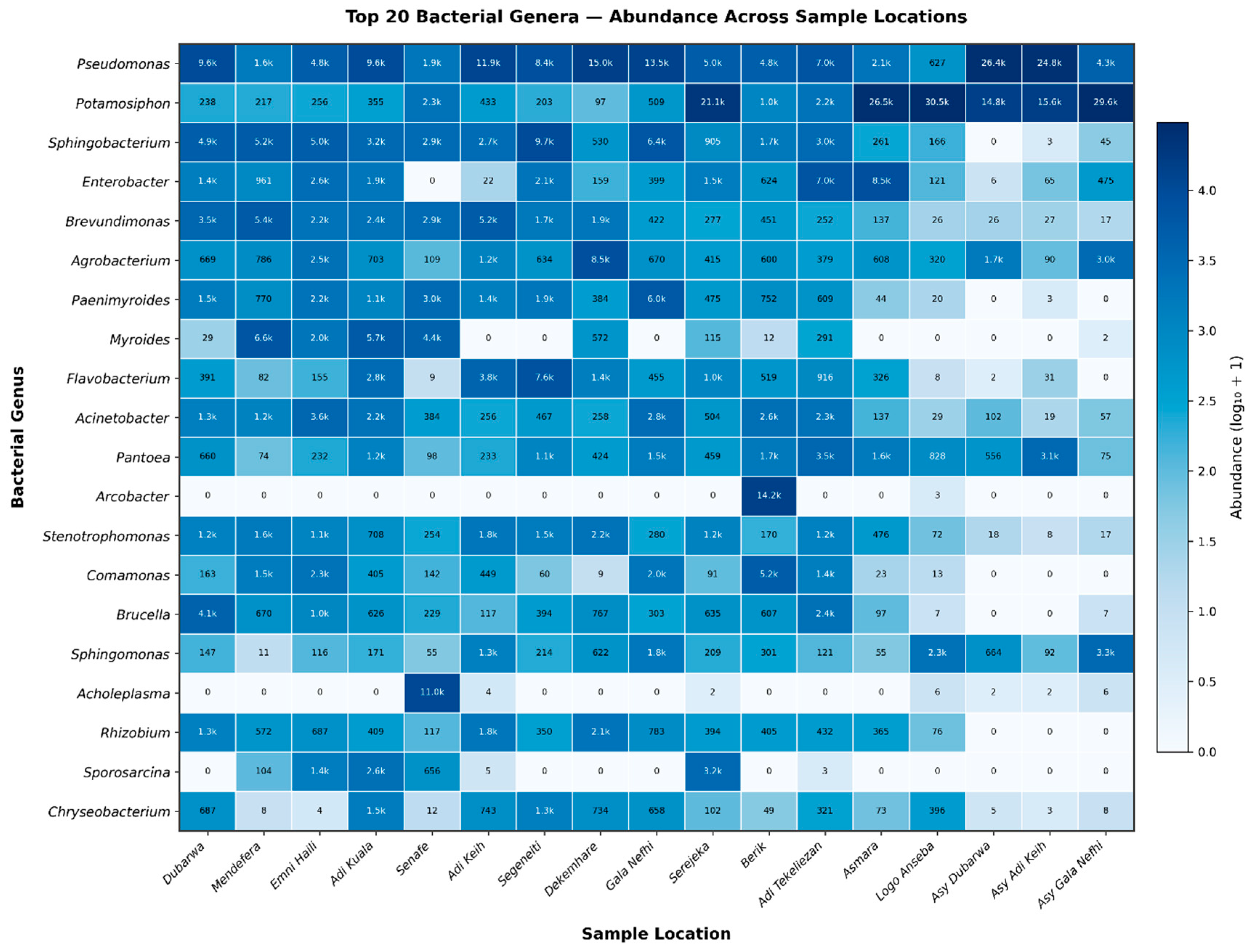
Taxonomic profiling of the samples revealed substantial geographic variation in bacterial communities across the 14 sub-regions (Figure 3). Pseudomonas species were detected in all locations, exhibiting varying relative abundances in the sampling sites. The highest Pseudomonas abundances were observed in Dekemhare (19.5%), Dubarwa (19.0%), Adi Kuala (18.4%), Adi Keih (16.7%), and Gala Nefhi (16.2%), while lower abundances were recorded in Logo Anseba (1.0%), Mendefera (2.6%), Senafe (2.8%), and Emni Haili (3.2%).
Pectobacterium, the causal agent of economically important bacterial soft rot and blackleg diseases, exhibited different geographic distribution patterns. Higher Pectobacterium abundances were detected in Berik (3.5%), followed by Adi Tekeliezan (1%). The predominant species included P. atrosepticum, P. carotovorum, P. quasiaquaticum, P. aroidearum, P. polaris, and P. betavasculorum. Moreover, P. atrosepticum was observed to be more common in cooler highland locations in Adi Keih, whereas P. carotovorum was more abundant in Berik. Ralstonia solanacearum, the bacterial wilt pathogen, was detected at low abundance (1.35%) in the sub-region at the cooler highland (Senafe) at one farm located at the border. Other bacterial genera detected at lower abundances included Erwinia and Xanthomonas, all of which contain species capable of causing disease in solanaceous crops.

3.3. Geographic Distribution of Fungal Pathogens

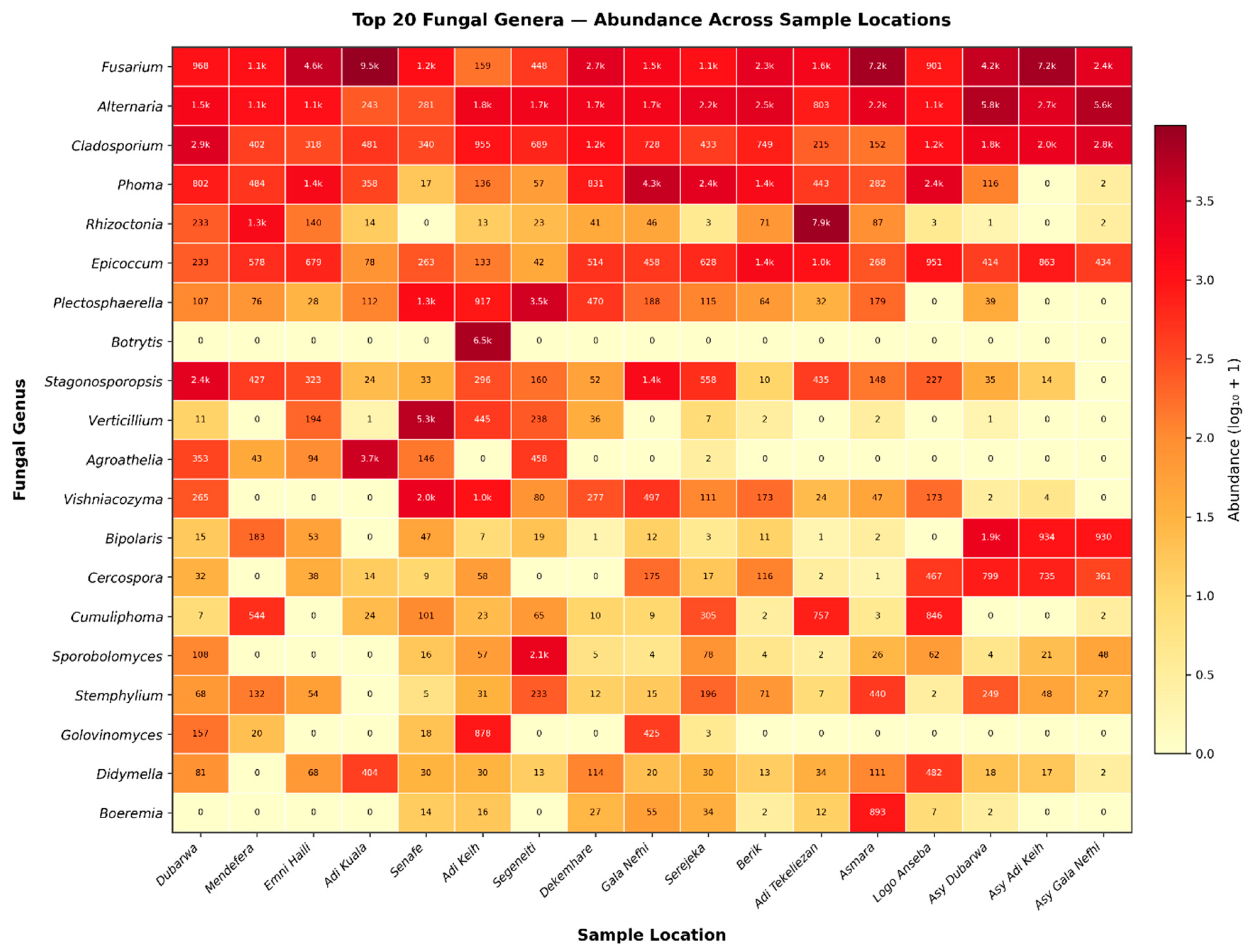
Fungal communities also showed pronounced geographic structuring across the sub-regions (Figure 4). Alternaria species, the causal agents of early blight disease, were among the most abundant fungal pathogens detected, with particularly high relative abundances in Berik (14%), Dekemhare (10%), and Gala Nefhi (9.7%). Lower Alternaria abundances were observed in Senafe (1%), Emni Haili (6%), and Logo Anseba (6%). The multiple Alternaria spp. ASVs identified include A. solani, A. alternata, and A. tenuissima. Fusarium species, known to cause dry rot, wilt, and tuber decay in potatoes, showed presence across all locations. Fusarium community composition varied geographically, with the highest diversity observed in Adi Kuala (53.8%), Asmara (43.7%), and Emni Haili (28.1%). Species-level analysis revealed sequences matching F. solani and F. oxysporum as predominant in most locations.
Botrytis cinerea, the grey mould pathogen, was detected at higher abundance (37%) in Adi Keih, a location characterised by higher humidity and cooler temperatures. Rhizoctonia, causal agents of stem canker and black scurf, and Verticillium, causing potato early dying, were each detected in 10–12 of the 14 locations at abundances ranging from 2–54%. However, meaningful abundance (≥2%) of Rhizoctonia occurs at only two sites: Mendefera (7.6%) and Adi Tekeliezan (44.4%), and Verticillium was higher at Senafe (30%).

3.4. Alpha Diversity Patterns Across Geographic Locations

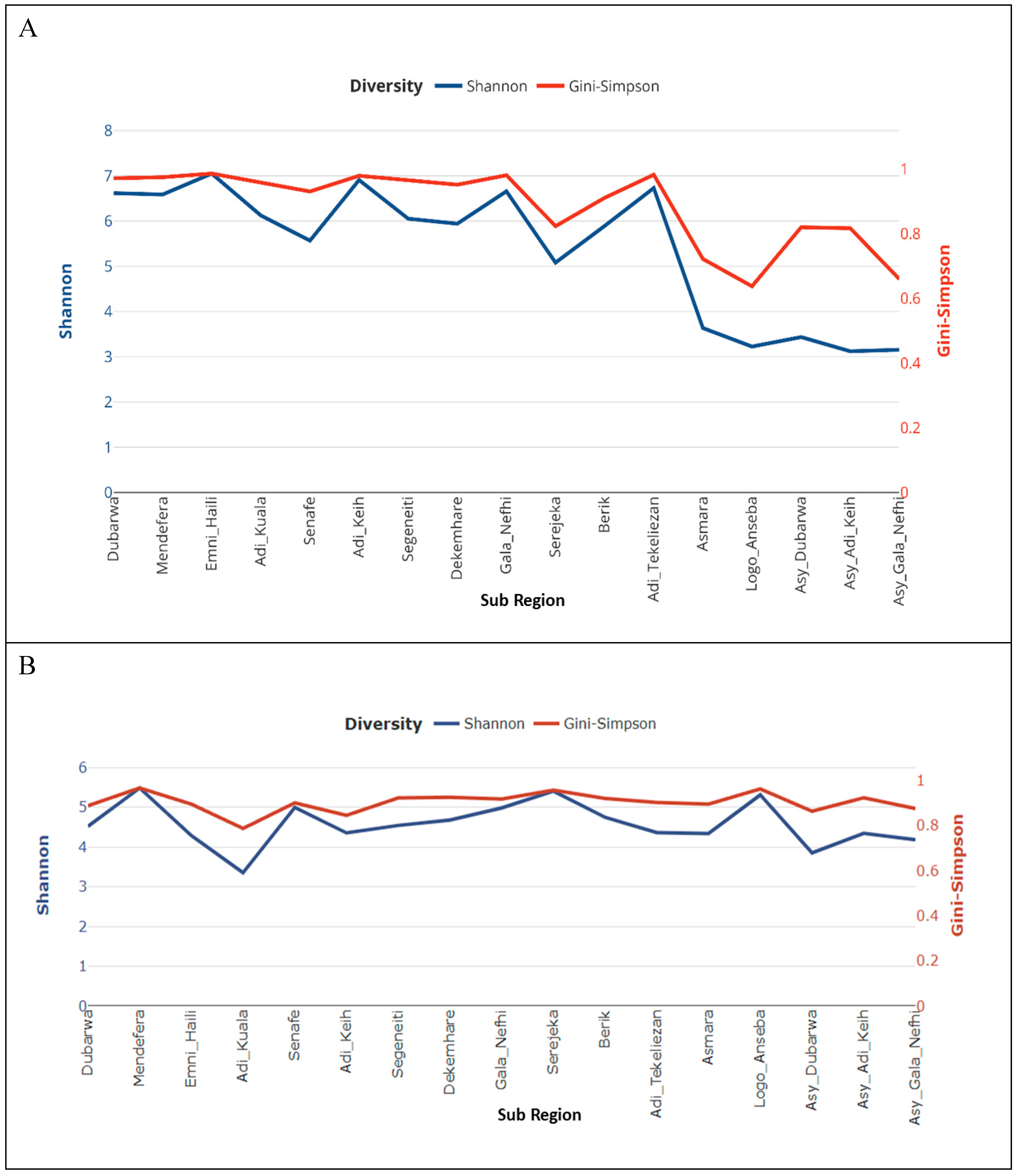
Alpha diversity analysis revealed substantial geographic variation in pathogen community complexity (Figure 5, Table 2). Bacterial Shannon diversity indices ranged from 3.12 in the asymptomatic sample from Gala Nefhi to 7.05 in the symptomatic sample from Emni Haili, with a mean of 5.67 across the 14 diseased sample locations. High bacterial diversity was found in Emni Haili (7.05), Adi Keih (6.91), Dubarwa (6.62), and Gala Nefhi (6.66). Conversely, lower diversity was observed in Senafe (5.57), Serejeka (5.08), and Dekemhare (5.94). The three asymptomatic samples showed lower diversity (mean Shannon index = 3.36).
Fungal diversity showed less geographic variation among diseased samples, ranging from 3.36 (Adi Kuala) to 5.49 (Mendefera), with a mean of 4.70. The highest fungal diversity was observed in Mendefera (5.49), Logo Anseba (5.31), and Serejeka (5.41), while the lowest was in Adi Kuala (3.36) and the asymptomatic sample from Dubarwa (3.85). Phylogenetic diversity (Table 2) patterns generally paralleled Shannon diversity values, ranging from 12 to 40 for bacteria and 22 to 40 for fungi.

3.5. Geographic Clustering of Pathogen Communities

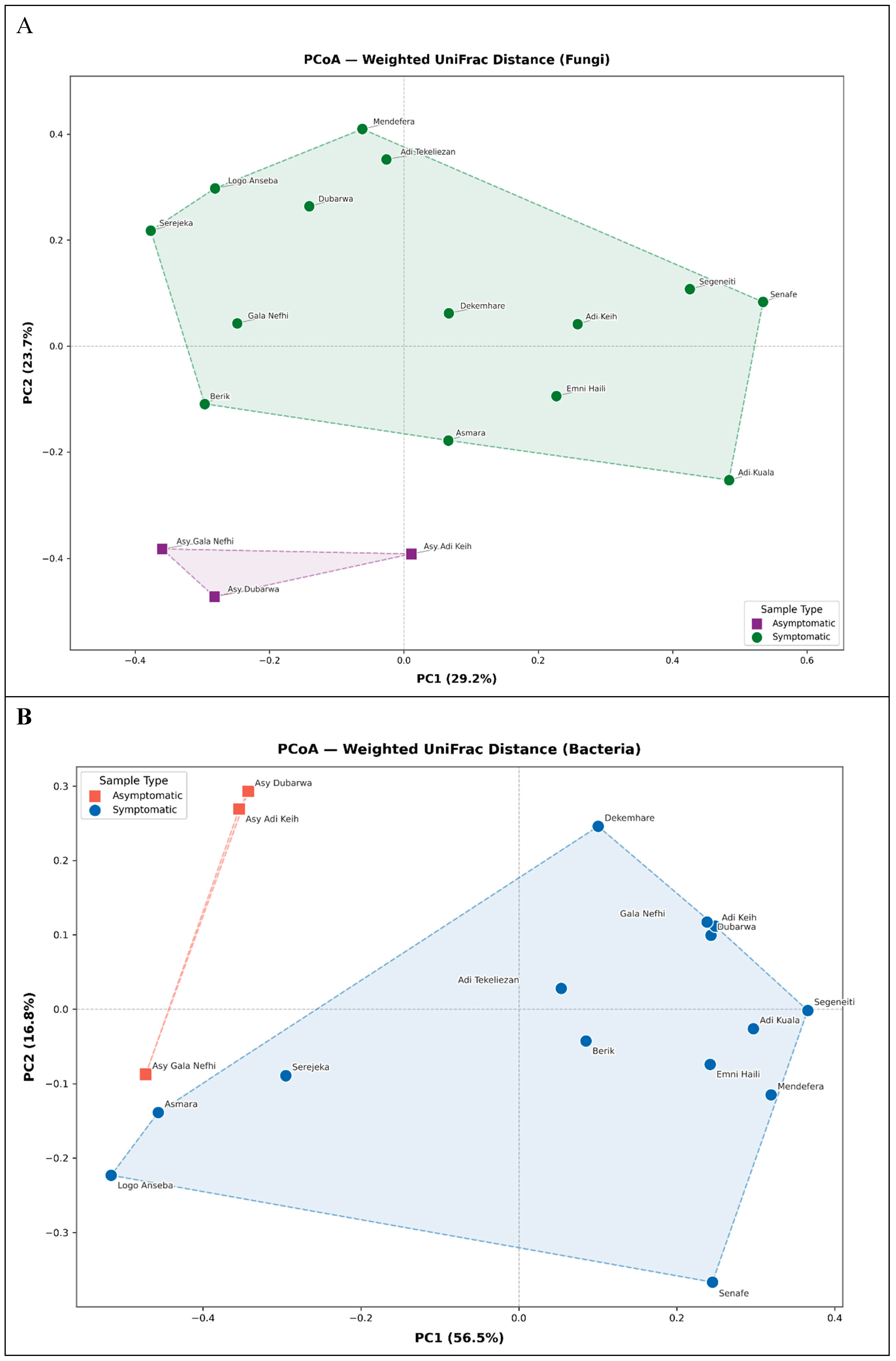
Beta diversity analysis revealed distinct geographic structuring of pathogen communities (Figure 6). Principal Coordinates Analysis (PCoA) based on Bray–Curtis dissimilarity explained 27.91% (PC1) and 12.28% (PC2) of the variance in bacterial communities, and 16.97% (PC1) and 13.61% (PC2) in fungal communities. For bacterial communities, Senafe and Serejeka showed clear separation from other locations along PC1, suggesting distinctive microbial community profiles in these sub-regions. Berik, Gala Nefhi, and Dekemhare formed a loose cluster, possibly reflecting similar environmental conditions or disease management practices. The three asymptomatic samples clustered together and separately from most diseased samples. Weighted UniFrac PCoA, which incorporates phylogenetic relationships, showed even stronger patterns, with PC1 explaining 56.5% of bacterial community variance (Figure 6B). Fungal weighted UniFrac PCoA explained 29.25% (PC1) and 23.73% (PC2) of variance (Figure 6A), displaying similar geographic clustering patterns.
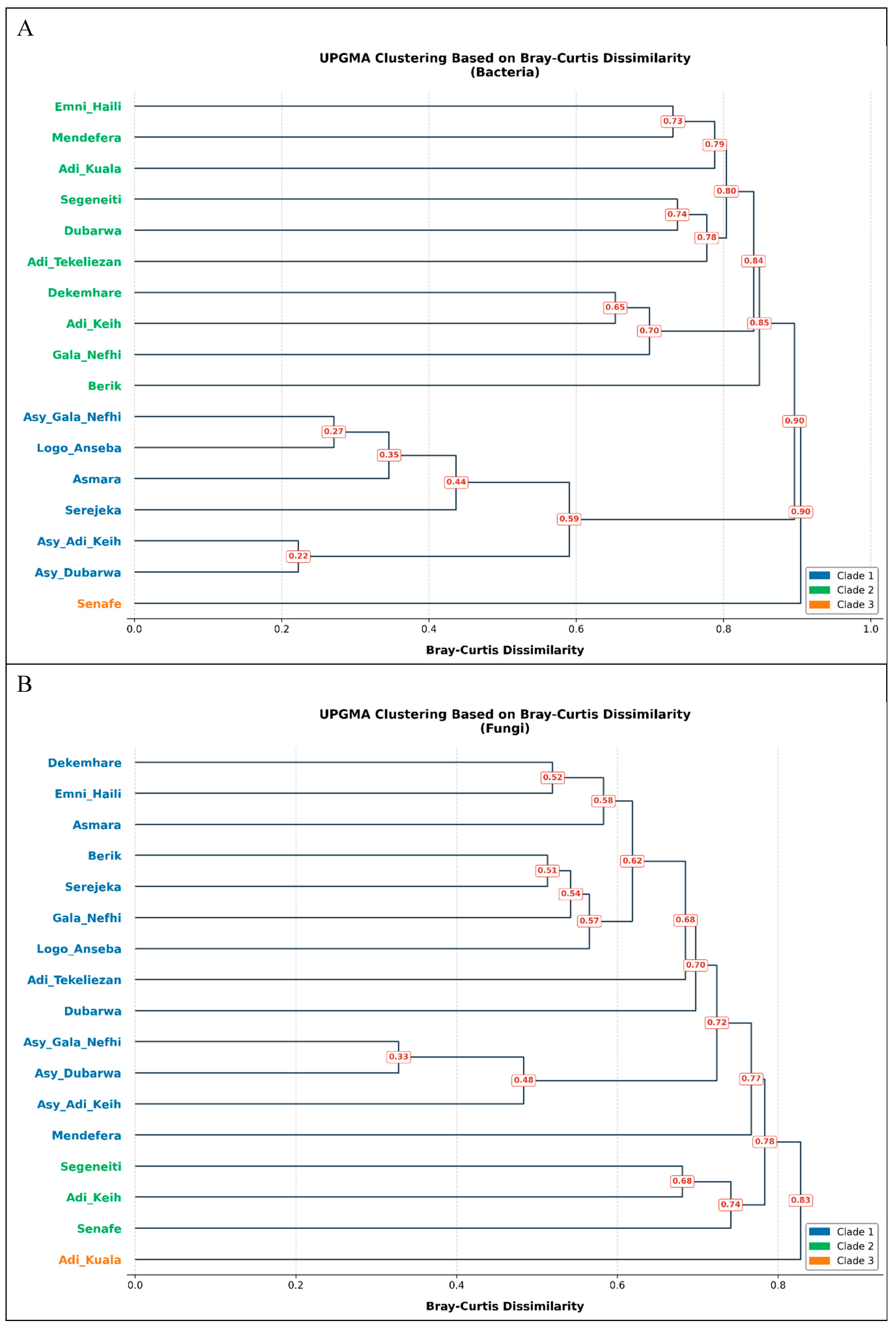
UPGMA clustering based on Bray–Curtis dissimilarity produced dendrograms that reflected geographic proximity. For bacteria, three main clades were identified, where Senafe was the most divergent sub-region, joining all others last, while for fungi, Adi Kuala was the most divergent sub-region (Figure 7). Distance matrix analysis revealed Bray–Curtis dissimilarities ranging from 0.22 to 0.90 among sub-regions for bacteria and 0.33 to 0.83 for fungi. The lowest dissimilarities were observed between geographically similar sub-regions Adi Keih-Dekemhare (0.65) and between Adi Keih–Gala Nefhi (0.70) from Debub and Mekel Region, respectively, for bacteria, and for fungi, Serejeka-Berik (0.51) and Emni Haili-Dekemhare (0.52) showed closer dissimilarity. The highest dissimilarities occurred between geographically distant sub-regions, including Mendefera-Logo Anseba (0.97) and Dubarwa–Logo Anseba (0.96) for bacteria, and Adi Kuala-Adi Keih (0.90) and Adi Kuala-Asy Gala Nefhi (0.88) for fungi (Table S1).

3.6. Pathogen Detection in Asymptomatic Plants

The samples collected from asymptomatic potato plants showed a consistent presence of pathogenic taxa in all three asymptomatic samples, albeit at low abundances. Bacterial pathogens detected in these asymptomatic samples included Pseudomonas, and similarly, fungal pathogens identified included Alternaria, Fusarium, and Colletotrichum.

4. Discussion

The characterisation of microbial communities associated with diseased potato (Solanum tuberosum L.) across the potato growing sub-regions of Eritrea provides a comprehensive and ecologically grounded picture of the disease complex affecting potato production in the country. The high-throughput amplicon sequencing approach identified a unique microbial landscape, revealing significant geographic structuring and highlighting the need for advanced surveillance in disease monitoring and seed systems. The widespread occurrence of Alternaria species, particularly A. solani and A. alternata, indicates that early blight is a major and persistent threat to Eritrean potato production. The low Bray-Curtis dissimilarity for Alternaria across sub-regions suggests an established inoculum reservoir, implying that preventive, weather-based fungicide applications are more effective than reactive treatments [13,14]. The geographic structuring of pathogen communities is in agreement with a study conducted by Davies & Pedersen [15] where the pathogen communities are influenced by the host range and geographical clustering. Where host relatedness is the best overall predictor of whether two host species share the same pathogens, and geographical overlap among neighbouring hosts is more important in determining host range [15]. The dominance of Pseudomonas and Pectobacterium for major bacterial pathogens, while Alternaria and Fusarium species for major fungal pathogens, is in line with their global significance to potato production [16,17]. In a similar recent study of metagenomic characterization of bacterial abundance related to potato by Kiige and his team [18] found that Enterobacteriaceae and Pseudomonadaceae were the most dominant bacterial families present in the rhizosphere. The identification of the spread of Pectobacterium species, P. atrosepticum in cooler highlands and P. carotovorum in warmer highland sub-regions aligns with the characteristics of the bacteria, where moist, cool (below 70 °F or 21 °C) conditions enhance blackleg caused by P. atrosepticum, while warmer conditions (70 °F to 80 °F or 21-27 °C) are optimal for soft rot caused by P. carotovorum [19]. This indicates that local climate is an important factor contributing towards the distribution of particular pathotypes [20] and thus has potential implications for the development of region-specific management strategies.
The detection of Verticillium dahliae in varying abundance is epidemiologically significant. The pathogen infects roots, blocks vascular tissues, and leads to premature vine yellowing, wilting, and thereby decreasing productivity. As a persistent soilborne pathogen causing severe early dying and substantial yield losses, its dominance in the high altitude and cooler areas signals a potential long-term field infestation. This necessitates vigilant follow-up, including soil sampling, tuber inspection, and pathogenicity testing, to prevent further dissemination and implement effective control measures like rotation of the potato crop with non-host crops. The co-occurrence of multiple Fusarium species, including F. oxysporum and F. solani complex members, across various sub-regions underscores the complexity of potato wilt and dry rot diseases. These combined inoculum occurrences of the Fusarium species can cause a higher rotting of the infected tubers, as observed in a study conducted by Tiwari [21] in Australia. The co-occurrence and synergistic interaction between Fusarium and Verticillium, leading to more severe early dying, emphasize the need for integrated management approaches targeting both pathogens. Similarly, the prominent detection of Rhizoctonia solani at Adi Tekeliezan points to localized pressure from stem canker, warranting further characterization of anastomosis groups for tailored management. The identification of Ralstonia solanacearum, a devastating bacterial wilt pathogen, is relatively low but indicates the necessity of continuous surveillance for plants, as even low inoculum can bring about serious disease outbreaks under conducive conditions. This pathogen, responsible for bacterial wilt, is highly destructive and adapted to cool highland environments [22,23].
The alpha diversity analysis revealed that pathogen community complexity varied greatly among the locations, where diseased samples were generally more diverse than healthy ones. This could indicate that disease development is dominated by a larger and/or more synergistic pathogen community. The high microbial diversity in diseased plant tissue often reflects complex multi-pathogen infections and secondary colonization rather than a healthy community [24,25]. The distinct clustering of asymptomatic samples with lower diversity supports this, suggesting earlier-stage or simpler early infections. A similar study conducted in microbial community composition associated with potato plants in Canada and analysed through next-gen sequencing found that alpha diversity of the bacterial communities in the healthy and diseased plants was different [26].
The high phylogenetic diversity observed at specific sites, such as Berik and Serejeka for bacteria might suggest the existence of various pathogen lineages due to repeated introductions or local evolution. Recent metagenomic work on potato cyst nematode fields confirms varied bacterial richness tied to host-pathogen dynamics [18]. The decoupling of bacterial and fungal diversity patterns, as seen in Logo Anseba (low bacterial, high fungal diversity) and Emni Haili (high bacterial, low fungal diversity), highlights the competitive microbial interactions and distinct disease etiologies [27,28]. Recent studies confirm that bacterial and fungal diversity often decouple across potato sites due to niche-specific responses, competitive interactions, and disease pressures like potato early dying (PED) due to Verticillium and others. In potato rhizospheres, bacterial communities respond strongly to root proximity and growth stage, while fungal diversity peaks mid-season and is more soil-driven or air-borne, showing distinct abundance patterns (e.g., bacterial shifts in rhizosphere vs. fungal stability in bulk soil). Wilt of potato due to bacterial stress elevates fungal diversity in potato endospheres but suppresses it in rhizospheres, creating inverse profiles akin to low bacterial/high fungal or vice versa scenarios [29,30,31]. Potato monoculture gradients reveal bacteria shaped by cropping, while fungi respond differently, with Fusarium enrichment decoupled from broader bacterial changes [30].
Results of the beta diversity analysis also supported that potato microbial communities, including pathogens, cluster significantly by location due to spatial heterogeneity in highland systems. Although some cluster patterns were associated more with zones of regional sample origin (like Maekel and Debub), the contribution of other parameters, such as microclimatic differences, local agricultural practices (e.g., rotation system), or seed potato multiplication sites, could not be discounted. For example, sites with intensive irrigation or waterlogging may favor the presence of waterborne pathogens, such as Pectobacterium, whereas sites with lower field maintenance or decreased standards of phytosanitary requirements could experience increased populations of soil-borne pathogens. This spatial heterogeneity in potato pathogens aligns with several studies, where rotation, seed quality, cultivar, and microclimate drive variation [1,32,33]. It remains unknown how much of the variation in pathogen community assembly is attributed to these factors, and further studies should couple the information on environment (climatic conditions, for example) with more detailed farm-level data.

5. Conclusions

This study has successfully elucidated the genetic diversity and geographic distribution of major bacterial and fungal potato pathogen communities in Eritrea, revealing significant spatial structuring and the widespread occurrence of latent infections. We identified key pathogens such as Alternaria spp., Verticillium dahliae, Fusarium spp., Rhizoctonia solani, and Ralstonia solanacearum, revealing their widespread presence and significant regional variations. The consistent detection of pathogens in asymptomatic plants highlights the prevalence of latent infections and the limitations of visual disease assessment. These findings underscore the necessity of moving beyond conventional symptom-based surveillance towards molecular approaches for accurate pathogen detection and monitoring. The baseline data generated here are invaluable for the development of robust, region-specific disease management strategies, a strengthened pathogen surveillance system, enhanced seed quality programmes, and ultimately contribute to improved potato production and food security in Eritrea. Future studies could integrate quantitative PCR (qPCR) to estimate absolute pathogen loads and employ whole-genome sequencing for strain-level differentiation, virulence factors, and evolution tracking, enabling the development of more resilient potato production systems across East African and similar climatic regions.

Author Contributions

Conceptualization, M.M., J.N, C.M and T.M.; methodology, M.M., J.N and C.M.; software, M.M., and S.G; validation, M.M., J.N. and C.M.; formal analysis, M.M., and S.G; investigation, M.M.; resources, J.N., C.M. and T.M.; data curation, M.M.; writing—original draft preparation, M.M.; writing—review and editing, M.M., J.N., C.M., T.M. and S.G.; visualization, M.M., and S.G; supervision, J.N., C.M. and T.M; project administration, M.M; funding acquisition, M.M. All authors have read and agreed to the published version of the manuscript.

Funding

This research was funded by the Ministry of Agriculture and Vita under the project DeSIRA.

Institutional Review Board Statement

Not applicable.

Data Availability Statement

The raw sequencing data generated in this study have been deposited in the NCBI Sequence Read Archive (SRA) under BioProject accession number PRJNA1445368. All scripts used for data analysis are available from the corresponding author upon reasonable request.

Acknowledgments

The authors gratefully acknowledge the support of the National Animal and Plant Health Laboratory of Eritrea (NAPHL), the staff of Halhale-NARI, Agro-mapping and the Geospatial unit of the Ministry of Agriculture for their support in GIS mapping, and local sub-region extension workers for their invaluable assistance during field sampling. The authors also thank the staff of the Institute of Biotechnology Research (IBR), JKUAT, for laboratory support.

Conflicts of Interest

The authors declare no conflicts of interest.

Abbreviations

The following abbreviations are used in this manuscript:
ASV Amplicon Sequence Variant
CTAB Cetyltrimethylammonium bromide
DADA2 Divisive Amplicon Denoising
ITS Internal Transcribed Spacer
NAPHL National Animal and Plant Health Laboratory
NARI National Agricultural Research Institute
NCBI National Center for Biotechnology Information
PAC Powdered Activated Charcoal
PBS Phosphate-Buffered Saline
PCoA Principal Coordinates Analysis
PD Phylogenetic Diversity
QIIME Quantitative Insights Into Microbial Ecology
rRNA Ribosomal Ribonucleic Acid
SRA Sequence Read Archive
SDS Sodium Dodecyl Sulfate
UPGMA Unweighted Pair Group Method with Arithmetic Mean

References

  1. Harahagazwe, D.; Condori, B.; Barreda, C.; Bararyenya, A.; Byarugaba, A.A.; Kude, D.A.; Lung’Aho, C.; Martinho, C.; Mbiri, D.; Nasona, B.; et al. How Big Is the Potato (Solanum Tuberosum L.) Yield Gap in Sub-Saharan Africa and Why? A Participatory Approach. Open Agric. 2018, 3, 180–189. [Google Scholar] [CrossRef]
  2. Villamor, D.E.V.; Ho, T.; Al Rwahnih, M.; Martin, R.R.; Tzanetakis, I.E. High Throughput Sequencing For Plant Virus Detection and Discovery. American Phytopathological Society 2019, 109, 716–725. [Google Scholar] [CrossRef] [PubMed]
  3. Bartola, M. Della; Byrne, S.; Mullins, E. Characterization of Potato Virus Y Isolates and Assessment of Nanopore Sequencing to Detect and Genotype Potato Viruses. Viruses 2020, 12. [Google Scholar] [CrossRef]
  4. Roossinck, M.J. Deep Sequencing for Discovery and Evolutionary Analysis of Plant Viruses. Virus Res. 2017, 239, 82–86. [Google Scholar] [CrossRef] [PubMed]
  5. Massart, S.; Olmos, A.; Jijakli, H.; Candresse, T. Current Impact and Future Directions of High Throughput Sequencing in Plant Virus Diagnostics. Virus Res. 2014, 188, 90–96. [Google Scholar] [CrossRef]
  6. Walters, W.; Hyde, E.R.; Berg-Lyons, D.; Ackermann, G.; Humphrey, G.; Parada, A.; Gilbert, J.A.; Jansson, J.K.; Caporaso, J.G.; Fuhrman, J.A.; et al. Improved Bacterial 16S RRNA Gene (V4 and V4-5) and Fungal Internal Transcribed Spacer Marker Gene Primers for Microbial Community Surveys. mSystems 2015, 1. [Google Scholar] [CrossRef] [PubMed]
  7. Muñoz-Ramírez, Z.Y.; González-Escobedo, R.; Avila-Quezada, G.D.; Ramírez-Sánchez, O.; Higareda-Alvear, V.M.; Zapata-Chávez, E.; Borrego-Loya, A.; Muñoz-Castellanos, L.N. Exploring Microbial Rhizosphere Communities in Asymptomatic and Symptomatic Apple Trees Using Amplicon Sequencing and Shotgun Metagenomics. Agronomy 2024, 14, 357. [Google Scholar] [CrossRef]
  8. YU, X.L.; HU, X.Y.; WANG, X.X.; ZHANG, X.Y.; DU, K.B. A Protocol Specialized for Microbial DNA Extraction from Living Poplar Wood. Not. Bot. Horti Agrobot. Cluj. Napoca. 2022, 50, 12822–12822. [Google Scholar] [CrossRef]
  9. Orn, B.; Lindahl, D.; Nilsson, R.H.; Tedersoo, L.; Abarenkov, K.; Carlsen, T.; Kjøller, R.; K~ Oljalg, U.; Pennanen, T.; Rosendahl, S.; et al. Methods Fungal Community Analysis by High-Throughput Sequencing of Amplified Markers-a User’s Guide. New Phytologist 2013, 199, 288–299. [Google Scholar] [CrossRef]
  10. Martin, M. Cutadapt Removes Adapter Sequences from High-Throughput Sequencing Reads. EMBnet. J. 2011, 17, 10–12. [Google Scholar] [CrossRef]
  11. Callahan, B.J.; McMurdie, P.J.; Rosen, M.J.; Han, A.W.; Johnson, A.J.A.; Holmes, S.P. DADA2: High-Resolution Sample Inference from Illumina Amplicon Data. Nature Methods 2016, 13(13), 581–583. [Google Scholar] [CrossRef]
  12. Caporaso, J.G.; Kuczynski, J.; Stombaugh, J.; Bittinger, K.; Bushman, F.D.; Costello, E.K.; Fierer, N.; Pẽa, A.G.; Goodrich, J.K.; Gordon, J.I.; et al. QIIME Allows Analysis of High-Throughput Community Sequencing Data. Nature Methods 2010, 7:5 7, 335–336. [Google Scholar] [CrossRef]
  13. Meno, L.; Abuley, I.; Seijo, M.C.; Escuredo, O. Management Strategies for Early Blight in Potatoes: Assessment of the TOMCAST Model, Including the Aerobiological Risk Level and Critical Phenological Period. Agriculture 2024, 14, 1414. [Google Scholar] [CrossRef]
  14. da Silva Silveira Duarte, H.; Zambolim, L.; Machado, F.J.; Pereira Porto, H.R.; Rodrigues, F.Á. Comparative Epidemiology of Late Blight and Early Blight of Potato under Different Environmental Conditions and Fungicide Application Programs. Semin. Cienc. Agrar. 2019, 40, 1805–1818. [Google Scholar] [CrossRef]
  15. Davies, T.J.; Pedersen, A.B. Phylogeny and Geography Predict Pathogen Community Similarity in Wild Primates and Humans. Proceedings of the Royal Society B: Biological Sciences 2008, 275, 1695. [Google Scholar] [CrossRef] [PubMed]
  16. Chaloner, T.M.; Gurr, S.J.; Bebber, D.P. Plant Pathogen Infection Risk Tracks Global Crop Yields under Climate Change. Nature Climate Change 2021, 11 11, 710–715. [Google Scholar] [CrossRef]
  17. Bebber, D.P.; Gurr, S.J. Crop-Destroying Fungal and Oomycete Pathogens Challenge Food Security. Fungal Genetics and Biology 2015, 74, 62–64. [Google Scholar] [CrossRef]
  18. Kiige, J.K.; Kavoo, A.M.; Mwajita, M.R.; Mogire, D.; Ogada, S.; Wekesa, T.B.; Kiirika, L.M. Metagenomic Characterization of Bacterial Abundance and Diversity in Potato Cyst Nematode Suppressive and Conducive Potato Rhizosphere. PLoS One 2025, 20. [Google Scholar] [CrossRef]
  19. Zhang, X.; Zhang, X. Genetic And Biological Characterization Of Bacterial Complexes Causing Potato Blackleg And Soft Rot. Electronic Theses and Dissertations 2025, 4131. [Google Scholar]
  20. Hameed, A.; Zeeshan, M.; Binyamin, R.; Alam, M.W.; Ali, S.; Zaheer, M.S.; Ali, H.; Riaz, M.W.; Ali, H.H.; Elshikh, M.S.; et al. Molecular Characterization of Pectobacterium Atrosepticum Infecting Potato and Its Management through Chemicals. PeerJ 2024, 12, e17518. [Google Scholar] [CrossRef]
  21. Tiwari, R.K.; Lal, M.K.; Kumar, R.; Sharma, S.; Sagar, V.; Kumar, A.; Singh, B.; Aggarwal, R. Impact of Fusarium Infection on Potato Quality, Starch Digestibility, In Vitro Glycemic Response, and Resistant Starch Content. Journal of Fungi 2023, 9, 466. [Google Scholar] [CrossRef]
  22. Charkowski, A.; Sharma, K.; Parker, M.L.; Secor, G.A.; Elphinstone, J. Bacterial Diseases of Potato. In The Potato Crop; Springer International Publishing: Cham, 2020; pp. 351–388. [Google Scholar]
  23. Wang, Z.; Luo, W.; Cheng, S.; Zhang, H.; Zong, J.; Zhang, Z. Ralstonia Solanacearum – A Soil Borne Hidden Enemy of Plants: Research Development in Management Strategies, Their Action Mechanism and Challenges. Front. Plant Sci. 2023, 14, 1141902. [Google Scholar] [CrossRef]
  24. Compant, S.; Samad, A.; Faist, H.; Sessitsch, A. A Review on the Plant Microbiome: Ecology, Functions, and Emerging Trends in Microbial Application. J. Adv. Res. 2019, 19, 29–37. [Google Scholar] [CrossRef]
  25. Trivedi, P.; Mattupalli, C.; Eversole, K.; Leach, J.E. Enabling Sustainable Agriculture through Understanding and Enhancement of Microbiomes. New Phytologist 2021, 230, 2129–2147. [Google Scholar] [CrossRef]
  26. Borza, T.; Lumactud, R.A.; Shim, S.Y.; Al-Mughrabi, K.; Prithiviraj, B. Microbial Community Composition Associated with Potato Plants Displaying Early Dying Syndrome. Microorganisms 2025, 13, 1482. [Google Scholar] [CrossRef] [PubMed]
  27. Zimudzi, J.; van der Waals, J.E.; Coutinho, T.A.; Cowan, D.A.; Valverde, A. Temporal Shifts of Fungal Communities in the Rhizosphere and on Tubers in Potato Fields. Fungal Biol. 2018, 122, 928–934. [Google Scholar] [CrossRef] [PubMed]
  28. Hardoim, P.R.; van Overbeek, L.S.; Berg, G.; Pirttilä, A.M.; Compant, S.; Campisano, A.; Döring, M.; Sessitsch, A. The Hidden World within Plants: Ecological and Evolutionary Considerations for Defining Functioning of Microbial Endophytes. Microbiology and Molecular Biology Reviews 2015, 79, 293–320. [Google Scholar] [CrossRef] [PubMed]
  29. Bak, G.R.; Lee, K.K.; Clark, I.M.; Mauchline, T.H.; Kavamura, V.N.; Jee, S.; Lee, J.T.; Kim, H.; Lee, Y.H. Changes in the Potato Rhizosphere Microbiota Richness and Diversity Occur in a Growth Stage-Dependent Manner. Sci. Rep. 2025, 15, 2284. [Google Scholar] [CrossRef]
  30. Liu, X.; Zhang, J.; Gu, T.; Zhang, W.; Shen, Q.; Yin, S.; Qiu, H. Microbial Community Diversities and Taxa Abundances in Soils along a Seven-Year Gradient of Potato Monoculture Using High Throughput Pyrosequencing Approach. PLoS One 2014, 9. [Google Scholar] [CrossRef]
  31. Li, Z.; Zhu, J.; Shi, T.; Gao, C.; Qiu, X.; Bao, M.; Li, Y.; Bi, Z.; Yao, P.; Sun, C.; et al. Microbial Community Restructuring under Crop Rotation: A Sustainable Strategy to Counteract Potato Monoculture-Induced Soil Degradation in Arid Ecosystems. Agric. Ecosyst. Environ. 2026, 400, 110245. [Google Scholar] [CrossRef]
  32. Charkowski, A.O. The Changing Face of Bacterial Soft-Rot Diseases. Annu. Rev. Phytopathol. 2018, 56, 269–288. [Google Scholar] [CrossRef] [PubMed]
  33. Imam, N.; Belda, I.; García-Jiménez, B.; Duehl, A.J.; Doroghazi, J.R.; Almonacid, D.E.; Thomas, V.P.; Acedo, A. Local Network Properties of Soil and Rhizosphere Microbial Communities in Potato Plantations Treated with a Biological Product Are Important Predictors of Crop Yield. mSphere 2021, 6. [Google Scholar] [CrossRef] [PubMed]
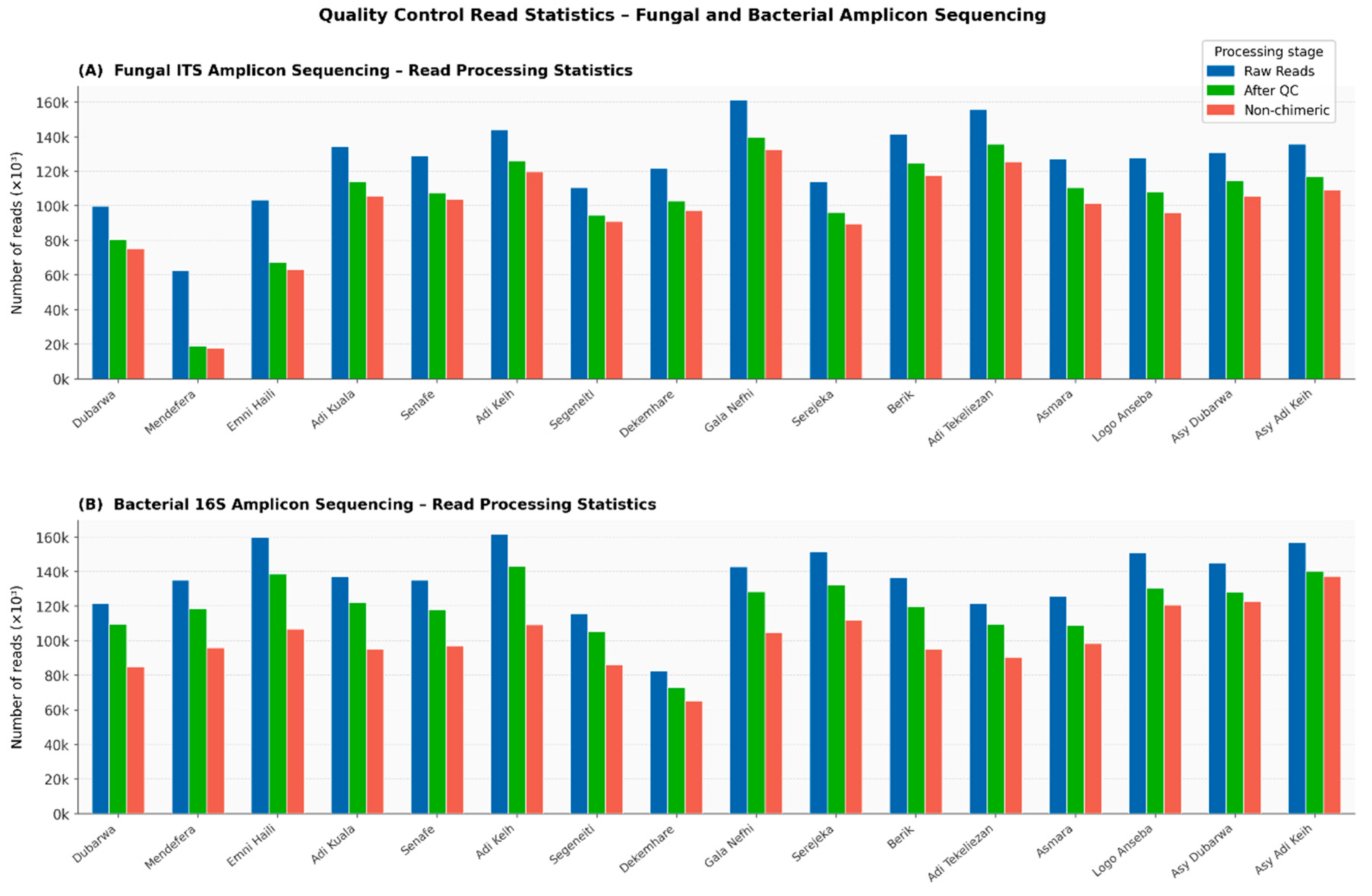
Figure 2. Quality control read processing statistics for fungal ITS (A) and bacterial 16S rRNA (B) amplicon sequencing. Bars represent read counts at three preprocessing stages: raw reads, after quality control, and final non-chimeric reads across 17 samples.
Preprints 208989 g002
Figure 3. Geographic distribution of major bacterial genera across fourteen potato-producing sub-regions in Eritrea.
Preprints 208989 g003
Figure 4. Geographic distribution of major fungal genera abundance across fourteen potato-producing sub-regions in Eritrea.
Preprints 208989 g004
Figure 5. Alpha diversity patterns of bacterial (A) and fungal(B) communities across all seventeen samples.
Preprints 208989 g005
Figure 6. PCoA ordination plots of (A) Fungal communities and (B) Bacterial communities based on Weighted UniFrac.
Preprints 208989 g006
Figure 7. Weighted UniFrac UPGMA clustering based on Bray-Curtis Dissimilarity. A. Sub-region clustering based on bacterial communities, B. Sub-region clustering based on fungal communities.
Preprints 208989 g007
Table 1. Primers and adaptors used in sequencing on the Illumina MiSeq platform.
Type Read Type Sequence
Nextera kit adapters for both 16S and ITS amplicon sequencing Forward adapter CTGTCTCTTATACACATCTCCGAGCCCACGAGAC
Reverse adapter CTGTCTCTTATACACATCTGACGCTGCCGACGA
16S V3-V4 Primers Forward primer CCTACGGGNGGCWGCAG
Reverse primer GACTACHVGGGTATCTAATCC
ITS1-ITS2 Primers Forward primer CTTGGTCATTTAGAGGAAGTAA
Reverse primer GCTGCGTTCTTCATCGATGC
Table 2. Complete diversity index values for all samples.

Sub region
Bacterial Fungal
Shannon Gini-Simpson PD whole tree ASV Shannon Gini-Simpson PD whole tree ASV
Dubarwa 6.62 0.97 38.21 499 4.52 0.89 28.09 168
Mendefera 6.59 0.97 34.00 463 5.49 0.97 26.21 85
Emni Haili 7.05 0.99 36.13 517 4.29 0.89 28.85 84
Adi Kuala 6.12 0.96 28.37 391 3.36 0.79 26.27 119
Senafe 5.57 0.93 37.75 411 5.00 0.90 35.49 199
Adi Keih 6.91 0.98 34.88 531 4.36 0.84 31.78 208
Segeneiti 6.05 0.97 27.73 365 4.54 0.92 28.47 134
Dekemhare 5.94 0.95 23.16 313 4.68 0.93 30.53 168
Gala Nefhi 6.66 0.98 24.65 391 4.98 0.92 35.56 230
Serejeka 5.08 0.82 36.07 536 5.41 0.96 40.09 266
Berik 5.89 0.91 40.43 519 4.75 0.92 33.27 197
Adi Tekeliezan 6.73 0.98 24.65 390 4.37 0.90 28.02 174
Asmara 3.64 0.72 23.69 280 4.34 0.89 25.63 150
Logo Anseba 3.23 0.64 31.98 349 5.31 0.96 24.36 168
Asy Dubarwa 3.44 0.82 12.17 119 3.85 0.86 22.71 142
Asy Adi Keih 3.12 0.82 14.79 121 4.34 0.92 26.35 136
Asy Gala Nefhi 3.16 0.66 22.45 195 4.18 0.88 30.24 171
Disclaimer/Publisher’s Note: The statements, opinions and data contained in all publications are solely those of the individual author(s) and contributor(s) and not of MDPI and/or the editor(s). MDPI and/or the editor(s) disclaim responsibility for any injury to people or property resulting from any ideas, methods, instructions or products referred to in the content.
Copyright: This open access article is published under a Creative Commons CC BY 4.0 license, which permit the free download, distribution, and reuse, provided that the author and preprint are cited in any reuse.