
Submitted:
17 April 2026
Posted:
20 April 2026
You are already at the latest version
Abstract
Currently, motorsport is one of the most important directions of development in the automotive industry. Vehicle manufacturers (VMs) at such competitions conduct tests of new technical solutions and technologies. To meet increasingly stringent environmental emission requirements, automakers are intensively transitioning to electrified vehicles, which include both pure electric vehicles and vehicles with combined power plants or hybrid vehicles. Hybrid vehicles, in addition to being more environmentally friendly compared to traditional internal combustion engine vehicles, allow increasing the power of the vehicle's power plant through the use of an electric motor, and also have lower fuel consumption due to the use of regenerative braking. This article investigates a hybrid racing car. Its design includes a traction battery (TB), which under severe operating conditions has increased requirements for the cooling system. The cooling system is one of the most important systems of a hybrid vehicle. The purpose of this work is the development and investigation of an immersion cooling system for the traction battery of a hybrid racing car. To achieve this goal, a methodology for mathematical modeling of the traction battery cooling system was developed, the thermal power of the TB was determined, and an effective coolant for the TB cooling system was selected, the TB design was optimized, experimental studies of the TB separately and as part of a hybrid racing car were conducted. The results of experimental studies of the hybrid racing car showed that the temperature of the battery cells of the developed TB with an immersion cooling system does not exceed the maximum permissible values.
Keywords:
racing car
; power plant
; cooling system
; traction battery
; modeling
; computational studies
; experimental studies
1. Introduction
Today, automotive manufacturing is developing very intensively: new developments appear in various onboard systems and units, calculation methods for vehicle nodes and units, new power plants and alternative energy sources are being researched and developed. Electric vehicles and hybrid vehicles are gaining more and more popularity.
Motorsport helps automakers test their implemented technical solutions and technologies in the most severe road conditions, and participation in competitions enhances the manufacturer's image, while the competitions themselves serve as an excellent advertising platform for both the manufacturers and their partners. It should be noted that there is a great variety of racing series, from rallies to circuit races, and for each class of cars participating in them, the international motorsport federation (FIA) has written a regulation within which the car must be designed [1]. Quite accessible, primarily for student teams, is the CN class; it has not so many restrictions, so the decision was made to select the regulation that became the basis for designing the racing sport prototype FDR12 (Figure 1).
The racing car FDR 12 is designed for participation in time-attack competitions, where the goal is the fastest completion of one lap on a race track, sprint races, where participants must cover a specified distance faster than others, endurance races, in which the aim is to cover the greatest distance within a time interval from 2 to 24 hours, as well as hill-climb events, where the objective is to pass a specified special section in the shortest time. One of the main types of competition for cars of this class is endurance racing. Endurance racing is a type of motorsport competition in which participants compete to cover the greatest distance within an established time interval. Endurance races are also known for their unpredictability: weather conditions, mechanical failures and unexpected incidents all play a certain role in the outcome of the race. The most important technical requirements imposed on the racing car are the strength and durability of the chassis [3], and the stable operation of the powertrain [4]. Taking into account more stringent requirements for emissions into the environment, the decision was made to design the racing car with a combined powertrain (CPT). It should be noted that a car with a CPT allows the implementation of various racing strategies based on fuel economy. Reducing fuel consumption and the mass of fuel in the tank makes it possible to increase the distance covered within a specified time interval by reducing the number of pit stops. In addition, the use of a reversible electric machine enables a reduction in the wear of the rear brake pads, which in turn, especially in particularly long races, also reduces the time spent on the pit lane. The use of a CPT will not only allow following the global trend towards reducing harmful emissions into the atmosphere and the electrification of ground transportation [5,6,7], but also contributes to increasing the efficiency of the racing car by using additional power at the exit from corners.
In the design of the racing sport prototype there is a traction battery (TB) to which, under severe operating conditions, increased requirements are imposed on the cooling system. At present, the most common power source for electric vehicles is the lithium-ion traction battery (TB), whose operation requires a reliable thermal management system that ensures its energy efficiency and serviceability. One of the key factors affecting the longevity and performance of batteries is the operating temperature of the battery cells. The thermal management system of hybrid traction batteries allows maintaining an optimal temperature, which contributes to extending the service life, improving energy efficiency and ensuring the safe operation of the vehicle.
The purpose of this work is the development and investigation of an immersion cooling system for the traction battery of a hybrid racing car. To achieve this goal, it is necessary to: develop a methodology for mathematical modeling of the traction battery cooling system; determine the thermal power of the TB and an effective coolant for the thermal regulation system of the TB; optimize the design of the TB; perform experimental studies of the TB separately and as part of the hybrid racing car, which should demonstrate that the temperature of the battery cells of the developed TB with an immersion cooling system does not exceed the maximum permissible values.
2. The Object of Research
The object of the study is the traction battery with an immersion thermal management system of the racing car FDR12. The main feature of the racing car is the hybrid powertrain and a fully composite carbon-fibre structure, the first of its kind in Russia for cars of this class. The length of the FDR12 model is 4558 mm, the width is 1995 mm, and the height is tast1047 mm. The aerodynamic bodywork provides a downforce of 600 kg at a speed of 180 km/h. The curb mass of the sports prototype is 750 kg, including all technical fluids, the driver (80 kg), and the fuel reserve (55 kg). The maximum speed is 270 km/h.
The car has a parallel-type hybrid powertrain layout [13] with an output of 420 horsepower. The core of the vehicle’s powertrain is a 1.6-litre turbocharged serial engine VAZ 21126, modified by the student team. The turbocharged engine delivers 340 hp and has a torque of 310 N·m. The electric motor operating in parallel with the ICE delivers 80 hp, has a torque of 100 N·m, and is powered by a traction battery with a capacity of 1.1 kW·h, which consists of lithium-titanate cells from Toshiba.
The traction battery is installed in an aluminium housing with a liquid-cooling system, next to which the power electronics are integrated into a single unit. Both systems are mounted in a tray located to the left of the driver.
3. Overview of Batteries and Temperature Control Systems
The most preferred batteries for electrified transport are lithium-ion batteries, due to their high energy density, high specific power and long service life [11]. As is known, lithium-ion batteries consist of an anode (carbon), a cathode (metal oxide) and an electrolyte (lithium salt in an organic solvent). The cathode composition determines the name of the lithium cell, and the cathode can be made of lithium cobalt oxide (LCO), lithium nickel–cobalt–aluminium oxide (NCA), lithium iron phosphate (LFP), lithium nickel–manganese–cobalt (NMC) or lithium manganese oxide (LMO). Accordingly, differences in the cathode determine the characteristics of batteries for various applications [14]. It should be noted that during charging lithium ions move from the cathode to the anode, while during discharging they move back again. This process enables the battery to store and release energy.
Lithium-ion battery cells (LIBs) are classified by cell shape (Figure 2): prismatic, pouch and cylindrical [12].
One of the most important factors for lithium-ion batteries is their operating temperature, since high or low temperatures have a negative effect on their state and service life [14]. According to numerous sources [14,15,16], the optimal range in terms of performance, service life and operational safety for lithium-ion batteries is 15–35°C.
If the temperature is above this range, this accelerates aging processes of the lithium-ion batteries, reducing their capacity and power [19].
An equally important requirement is uniform temperature distribution within the battery pack. This is because uneven temperature distribution leads to electrical imbalance, which results in capacity loss and overcharging of those cells exposed to higher stress during charging, causing power loss and increased cell temperature [12]. According to reference [20], when the temperature gradient between cells exceeds 5°C, the reduction in output power reaches 10%, and the capacity of the traction battery decreases by 1.5–2%, thereby accelerating thermal aging by 25%.
Thus, to ensure reliable, safe and efficient operation of the traction battery, a thermal management system is required that maintains and regulates the traction-battery temperature within the optimal range during vehicle operation.
The main requirement imposed on the thermal management system is maintaining the temperature of the battery cells within the optimal range to extend service life and ensure safe operation of the traction battery. In addition, the thermal management system should be energy-efficient, compact, reliable and durable, leak-tight, and adaptive to changing ambient conditions.
Let us consider the classification of thermal-management systems for traction batteries of electrified vehicles.
Thermal-management systems for traction batteries can be air-based, liquid-based, or use heat pipes and phase-change materials. It should be noted that, compared with air, liquids have a higher specific heat capacity and better thermal conductivity; therefore, liquid cooling provides higher efficiency than air cooling and is widely used in highly loaded traction batteries for electrified vehicles.
Depending on the way the working fluid contacts the battery cell, liquid cooling is divided into two types: direct-contact liquid cooling (immersion cooling) and indirect-contact liquid cooling.
The indirect-contact liquid-cooling method is currently the most optimal solution due to its safety and stability [21]. In this method the coolant is separated from the battery by heat-transfer structures such as tubes, cooling channels and plates. Heat is transferred to the coolant through the heat-transfer structures located between the battery and the coolant, and the heat carried by the coolant is then removed to an external condensation system [12].
The indirect-contact cooling fluid, which can only contact the battery components indirectly, is a mixture of ethylene glycol and water.
The indirect-contact liquid system is simpler to implement, and the coolant has lower viscosity than the dielectric fluid used in direct-contact liquid cooling, which results in much higher coolant-flow velocity [12].
The overwhelming majority of civil vehicles do not use immersion-type liquid-cooling systems for traction batteries. However, most racing cars use an immersion-type liquid-cooling system in which mainly non-flammable dielectric heat-transfer fluids are employed: mineral/silicone oils, fluorinated compounds, refrigerants and similar compositions.
In the case of an immersion-cooling system, the battery cells are fully immersed in the working fluid, which minimizes the thermal resistance at the interface. This allows direct heat transfer of the generated energy from the batteries to the coolant, maintaining temperature parameters within a safe range.
The key advantage of the immersion approach over indirect-cooling methods is the simplified design: there are no intermediate heat-transfer components, which reduces the metal content of the system and minimizes the risk of leaks. Heat-removal efficiency in the case of direct contact is 23–40% higher compared with traditional solutions.
The main parameters and variables that should be emphasized when designing an immersion-cooling system are: the coolant, the mass flow rate of the electric cooling-system pump, and the positions of the coolant inlet and outlet ports.
Let us now consider traction batteries of analogous racing vehicles.
Figure 3 shows the Toyota TS050 Hybrid racing car, designed for endurance racing in the World Endurance Championship (WEC) in the hybrid LMP1-H class. The car is powered by a 2.4-litre V6 engine producing 500 hp, with an additional 500 hp coming from two electric motor-generators by Aisin and Denso mounted on both axles. The energy storage unit is a lithium-ion battery (Figure 4).
Figure 5 shows the Porsche 963 racing car—a sports prototype in the LMDh category for circuit racing, developed by Porsche and built on a Multimatic chassis, intended for competition in the Hypercar and GTP (Grand Touring Prototype) classes of the WEC and the IMSA SportsCar Championship, respectively. The car is equipped with a 4.6-litre V8 engine; the combined power of the hybrid powertrain is 680 hp. The traction battery of the Porsche 963 is shown in Figure 6.
The electric racing car for the FIA Formula E Championship shown in Figure 7 is equipped with a rear-axle electric motor whose maximum power is 469 hp in qualification and attack mode and 402 hp in race mode. The liquid-cooled traction battery is presented in Figure 8.
The LMH-class racing sport-prototype Ferrari 499P (Figure 9) is equipped with a hybrid powertrain consisting of a turbocharged 3.0-litre V6 engine, with a total power output of the powertrain of 680 hp. It also uses a liquid-cooling system for the traction battery (Figure 10).
As you can see, modern cars of the Formula 1, LMH, LMDh, WRC, Formula E classes use exactly the liquid active cooling system TB.
4. Development of a Traction Battery with a Cooling System
4.1. Selection and Justification of the Type of Electric Energy Storage for the TB.
The battery system must include the energy storage unit, its housing with a cooling system, and a control and management system for disconnection in case of overcharge, overcurrent, deep discharge and overheating [24]. It is reasonable to start with determining the required characteristics of the traction battery, such as charge and discharge power, which will be defined by the parameters of the traction electric motor (TEM) and by the capacity.
The choice of the type of energy accumulator will determine the dimensional and mass characteristics of the battery system, which will have a decisive influence on the layout of the system within the racing car.
The most important parameter when selecting batteries is the specific power. The discharge power of the traction battery must be at least 60 kW, and the charging power must be at least 50 kW. The mass of the TB must not exceed 30 kg.
Taking these parameters and operating conditions into account, Toshiba SCiB 2.9 Ah prismatic-type cells were selected, which have high discharge and charge characteristics while maintaining a low mass per cell (Table 1).
It should be noted that these cells have a low nominal voltage of 2.4 V, which in turn requires connecting a larger number of cells in series compared with other types of batteries.
Next, the requirements imposed on the battery pack of the FDR12 racing car will be considered, and, based on these requirements, an appropriate type of energy accumulator will be selected:
1) Specific discharge power of at least 2000 W/kg;
2) Specific charge power of at least 1667 W/kg;
3) Low thermal losses;
4) Battery pack mass must not exceed 30 kg (at a traction-motor operating voltage of 330 V);
5) Ease of designing, manufacturing and assembling the battery-balancing system;
6) The higher the capacity of the final assembly, the better.
4.2. Determination of the Thermal Capacity of Cells for Heating on an Experimental Stand.
According to cell tests, the thermal losses of the TB will amount to 15 kW, which, given the limited space available, will not allow using an air-cooling system. The bench tests were aimed at determining the assembly capacity at a discharge current of 1C (2.9 Ah) and at measuring the internal resistance of the cells, since such data for the Toshiba 2.9 Ah cells were not available in open sources.
The test stand (Figure 11) consists of 24 Toshiba 2.9 Ah cells, a Hass LEM 50 current sensor, a TE EVC500 contactor, two Movicom BMS Logic 12 units, and one Movicom BMS Main 2.1 unit.
The test sequence was as follows: 1) Charging the assembly to 100% and balancing the cells; 2)Discharging at 1C current; 3) Charging at 1C current; 4) Discharging at 2C current; 5) Charging at 2C current; 6) Stress test at 25 A.
Due to overheating of the contact points, the maximum current during the tests reached 25A, therefore, the dependence presented below was obtained during the extrapolation with adjustments for the analytical calculation:
Block heat losses=N∗I2R, (1)
where: N is the number of cells, I – is the current, R – is the internal resistance of the cells.
Figure 12 shows the dependence of the thermal losses of the battery on the current strength.
Thus, taking the value of 230A as an unattainable limit, we obtain the value of 30 kW of heat generation per cell for the mathematical model.
4.3. Definition of the Cooling System Concept TB.
When selecting a cooling system for the TB, it is necessary to first determine the operating temperature range of the cells being used and the dependence of power and capacity on temperature. The selected battery cells are most effectively used at a temperature of 23°C [25].
In the design of a traction battery where high discharge and charging capacities of each cell are required over an extended period, the only option is to use an active cooling system, as it has better heat dissipation properties compared to a passive cooling system.
When choosing a liquid active cooling system, the layout of the TB is the main factor. It is also worth noting that it is impossible to provide air cooling without compromising the clamping force and the coefficient of resistance to movement. In the racing car being developed, the TB is located inside the load-bearing structure, to the left of the driver (Figure 13).
Thus, due to layout constraints, the TB will be divided into two modules, each having several inlets and outlets for the immersion fluid. The inlet is located at the top of the battery to provide better cooling of the busbars, and the outlet is at the bottom. The cells in both modules are mounted on an aluminium plate with guide slots, which acts as a structural element, so a combined cooling system is used. In order to determine the diameters and number of coolant inlet and outlet channels, a thermal analysis of the TB must be carried out in various operating modes.
4.4. Determination of the Coolant for the Cooling System TB.
One of the main tasks in designing the immersion-cooling system for the TB is determining the optimal coolant. In order to reduce the required computational resources, the problem was approximated to two-dimensional modeling. Figure 14 shows plots of the maximum cell temperature versus heating time for different coolants, under the same initial conditions: initial system temperature of 40°C, thermal power of 35 kW, simulation time equal to one MRW lap (80.76 s), pump flow rate of about 400 l/h, and coolant inlet temperature from the pump of 40°C.
The calculations show that the smallest temperature rise is observed when water is used; however, when impurities enter deionized water, it loses its dielectric properties. Under the given conditions, operating mode and system geometry, the more expensive Novec and Galden perform worse in cooling than the relatively inexpensive Termolan. One of the reasons for this result may have been the insufficient clarity of the characteristic data provided by the manufacturers: Termolan’s data are given in table form, whereas Novec and Galden use plots with a logarithmic scale. In addition, the dynamic viscosity is required to correctly define the material, which can be obtained by multiplying the kinematic viscosity at a given temperature by the density corresponding to that temperature. As a result, the parameters assigned to the Novec and Galden coolants are not reference-quality, and, as was already mentioned, the optimal-condition ranges of these coolants may not coincide with the operational-window characteristics of the system, such as temperature, flow velocity, etc.
The dependence of the properties for different coolant series is shown in Figure 15 and Figure 16, and the characteristics of the coolant Termolan are given in Table 2.
Due to the availability and absence of obvious disadvantages in comparison with competitors, the Thermolan coolant was chosen for further calculations and research.
5. Mathematical Modeling of the Cooling System TB
For correct modeling, it is necessary to add variable functions to the model, one of them is the function of the pump used in the system. The characteristics of the pump are shown in Figure 17. Thus, each time iteration analyzes the average pressure in the system, based on the function, the pump flow rate is selected, and the variable responsible for pump operation is reinitialized.
Another function was the radiator function. Based on the assumption that the radiator can reduce the outlet temperature by no more than 10 °C and no lower than the ambient temperature, the function shown in Figure 18 was determined.
In all subsequent calculations the ambient temperature was taken as 30 °C. The function works similarly to a pump: at each iteration the average coolant temperature at the outlet is analyzed, and if it exceeds 40 °C, the inlet coolant temperature is set as “outlet temperature − 10 °C”. Otherwise, when the temperature is within the range of 30–40 °C, the inlet coolant temperature is set to 30 °C.
The last function was the thermal-power function. It was based on a file containing data from the digital twin in the AC simulator, which characterizes the use of the electric motor along the lap.
To simulate the racing-car driving scenarios, a special simulator was used (Figure 19).
The logic of obtaining heat output values depending on the current supplied to the electric motor was as follows. All negative values characterizing the battery charging process have changed their sign, since the charging process is also accompanied by heat generation. For simulations lasting more than one lap, the data file was duplicated from the digital twin, and for the mode corresponding to half the power, all values were divided into two. Thus, we obtain the dependences of thermal power on time for two laps on the MRW race track, which we will use in the thermal calculation of the battery (Figure 20).
Simulation of the racing-car driving scenarios was carried out in the following configurations:
- Calculation No. 1. Maximum power. One lap.
In this configuration the system comprises a single module with one inlet and one outlet located at the sides, each with a diameter of 14.3 mm.
- Calculation No. 2. Maximum power. One lap.
In this configuration two internal partitions divide the module into three parts: two sections with 32 cells each and one section with 40 cells. Two additional pairs of inlet–outlet holes are added, each pair connected to separate pipes. The holes are located near the walls.
- Calculation No. 3. Maximum power. One lap.
In this configuration there are again two partitions dividing the module into three parts. The inlets and outlets of each section are located at the center.
- Calculation No. 4. Maximum power. One lap.
In this configuration the module is also divided into three parts by two partitions. The inlets and outlets of each part are positioned slightly offset from the center toward the side walls. This is an intermediate geometry between Configurations No. 2 and No. 3.
- Calculation No. 5. Maximum power. One lap.
In this configuration two partitions divide the module into three parts. The inlets and outlets of the first two sections (32 cells each) are positioned as in Calculation No. 2. The inlets and outlets of the third section (40 cells) are located closer to the module walls.
- Calculation No. 6. Maximum power. One lap.
In this configuration the partitions are removed. The inlets and outlets are positioned as in Calculation No. 5.
- Calculation No. 7. Maximum power. One lap.
In this configuration an additional inlet–outlet pair is added. The partitions are absent, and the holes are placed directly opposite one another. The geometry is detailed in the following calculation.
- Calculation No. 8. Maximum power. One lap.
In this configuration a small-module geometry is added. The geometry of the large module reproduces the layout from Calculation No. 7.
- Calculation No. 9. Maximum power. One lap.
In this configuration an additional pair of holes is introduced in the small module. Otherwise, the configuration is identical to Calculation No. 8.
- Calculation No. 10. Maximum power. Two laps.
The setup is identical to Calculation No. 9, differing only in simulation duration and time step. In this case the solver time step is 0.1 s.
- Calculation No. 11. Maximum power. Two laps.
In light of layout requirements, Y-junctions for coolant inlet and outlet were added. The solver time step is 0.02 s.
- Calculation No. 12. Half of maximum power. Two laps.
The solver time step is 0.02 s.
- Calculation No. 13. Half of maximum power. Six laps.
In this configuration the geometry is the same as in Calculations No. 11 and No. 12. The solver time step is 0.02 s.
- Calculation No. 14. Constant power of 16.4 kW. 120 minutes.
In this case the thermal power is set as a constant value of 16.4 kW over the entire time, which is equivalent to the electric motor operating continuously at half of the maximum power. The system reaches a steady-state regime in less than 4 minutes (about 240 s or ~3 laps). In contrast, when the thermal power varies continuously between zero and 15 kW, the steady-state regime is predicted to be reached only after the sixth lap.
- Calculation No. 15. Half of maximum power. One hour.
Figure 21 shows the optimization process for the geometry of the coolant inlet and outlet manifolds for the two TB housings.
As a result of the simulation, graphs of the dependence of TB temperatures after 60 minutes and 120 minutes with half the maximum power supply were obtained (Figure 22 and Figure 23, respectively).
Thus, by the method of enumeration the optimal number of coolant inlets and outlets for the TB of the large and the small modules was determined. For the large module four inlet channels and four outlet channels were selected, for the small module two inlets and two outlets each. The obtained data indicate that under the specified conditions the TB will not reach the temperature values for shutdown.
The specified conditions are as follows: for the qualifying mode, two full laps of the race track are accepted in the regime of maximum TMD power. For the racing mode, motion at half of the maximum TMD power in peak values is accepted. The TB shutdown temperature is 70°C. The qualifying mode – the use of the TMD at a power of 60 kW for 158 seconds at an average speed of 155 km/h. The race mode – the use of the TMD at a power of 30 kW for 3600 seconds at an average speed of 152 km/h.
6. Layout of the Table Structure with a Cooling System
Based on the characteristics of the traction battery, its components were selected: the battery monitoring and control system was chosen from the Russian company Movicom electric due to the partnership with the racing team and suitable specifications; from layout considerations, the Movicom BMS Logic 12 model was selected, designed for connecting 12 cells. The battery monitoring and control systems are located inside the modules, nine in the large module and four in the small one, due to the need to cool them. The main battery control and monitoring system was also chosen from Movicom electric, namely the BMS Main 2.1, installed in a separate case on the small TB module.
7. Conducting Tests of the Cooling System.
7.1. Tests on a Load-Bearing Motor Stand
Tests on the load motor bench (Figure 26) were necessary to test the control logic of the TB, as well as to check the quality of contacts between the bus and the current collectors of the cell. According to the test results, it was noted that there were no extreme temperature increases, and the maximum temperature was fixed at the terminals and was 35 °C.
7.2. Testing on a Dynamometric Drum Stand
Bench tests on a dynamometric drum stand (Figure 27) were performed to determine the fuel chart on all ranges.
It is worth noting that during the tests, an increase in the maximum temperature of the cells was recorded from 24°C to 29°C (Figure 28), these values are within the limits allowed by the manufacturer.
7.3. Testing on an Autopolygon
During the test program on the race track (Figure 29), the dependence of temperature increase on time was determined (Figure 30). The relatively insignificant temperature increase compared to the mathematical model is due to the inability to recreate a similar driving mode within the framework of this test site. It is also worth noting the cool weather on the test day.
It is worth noting the relatively small difference in the values of minimum and maximum temperatures, which indicates thermal uniformity within the TB.
At the moment, work is underway to prepare the racing car for testing at maximum speed and power of the electric motor, and subsequent fine-tuning and tuning of the car and engine systems is required.
It is planned to gradually test all vehicle systems in order to gradually make adjustments, improvements and achieve the expected speed and power.
8. Conclusions
As a result of the work carried out to develop and investigate the cooling system of the traction battery of the hybrid racing car FDR12:
- a methodology for mathematical modeling of the traction-battery cooling system of the sports prototype with a combined powertrain under limited computational resources was developed;
- the thermal power dissipated by the cells was determined analytically; the obtained data were verified experimentally;
- based on the results of the mathematical modeling, an effective coolant for the cooling system was selected;
- the geometry of the coolant inlet and outlet manifolds for the two TB housings was optimized using mathematical modeling;
- a series of successful bench- and road-tests was carried out, both for the TB separately and for the entire vehicle with a combined powertrain. The cell temperatures lie within the range allowed by the manufacturer’s specifications.
At present preparatory work is being carried out to adapt this TB with the designed cooling system for vehicles intended for public-road use.
The prospective development directions include optimizing the battery characteristics to increase its energy capacity in order to ensure longer effective operation in the maximum-power mode.
Author Contributions
Conceptualization, Kirill Karpukhin; Methodology, Andrey Shibakov; Validation, Andrey Shibakov; Formal analysis, Filipp Karpukhin; Investigation, Andrey Shibakov; Data curation, Pablo Iturralde; Writing – original draft, Rinat Kurmaev; Writing – review & editing, Rinat Kurmaev; Visualization, Filipp Karpukhin; Supervision, Pablo Iturralde; Project administration, Kirill Karpukhin; Funding acquisition, Pablo Iturralde. All authors have read and agreed to the published version of the manuscript.
Funding
This research was funded by the Ministry of Science and Higher Education of the Russia Federation within the framework of the project “Development of a hybrid power train for M1 vehicles (passenger vehicles) based on domestic components”, code: FZRR-2025-0009.
Data Availability Statement
The original contributions presented in this study are included in the article. Further inquiries can be directed to the corresponding author(s).
Conflicts of Interest
The authors declare no conflict of interest.
References
- FIA Regulations [Электрoнный ресурс]: oфициальный сайт Междунарoднoй автoмoбильнoй федерации. 2025. Available online: https://www.fia.com/regulations.
- dvizhok.su. Available online: https://dvizhok.su/add/dosug/v-moskve-pokazali-film-o-prototipe-novogo-bolida-fdr12 (accessed on 30.12.2025).
- Адамс, Г; Адамс, Г. Шасси автoмoбиля: Динамика гoнoчнoгo автoмoбиля = Chassis Engineering: Race Car Vehicle Dynamics; SAE International: Уoррендейл (Пенсильвания), 2018; p. 280 с. [Google Scholar]
- Танака, Х. Инжиниринг надежнoсти силoвых устанoвoк в автoспoрте = Reliability Engineering in Motorsport Power Units / Х. Танака. № 2021-01-0980; SAE Technical Paper. 2021. [Google Scholar]
- Феррари, М; Рoсси, К. Рoль гoнoк на вынoсливoсть в разрабoтке гибридных силoвых устанoвoк = The Role of Endurance Racing in the Development of Hybrid Powertrains; Феррари, М, Рoсси, К, Eds.; SAE Technical Paper, 2017. [Google Scholar]
- KARPUKHIN, Kirill; Terenchenko, A.s. The creation of energy efficient hybrid vehicles in the Russian Federation. Combustion Engines 2017, 168, 145–148. [Google Scholar] [CrossRef] [PubMed]
- Bazavluk, S.; Kurmaev, R.; Karpukhin, K.E.; Minh, N.K.; Tuan, N.K. Trends in the Development of Battery Thermal Management Systems on Electric Vehicles. In Lecture Notes in Networks and Systems; 2023; Volume 602 LNNS, pp. 968–976. [Google Scholar]
- Егoрoв, АС; Умницын, АА; Базавлук, СА; Курмаев, РХ. Разрабoтка системы oхлаждения электрoтранспoртера с испoльзoванием математическoй мoдели. In Актуальные вoпрoсы машинoведения; 2024; Volume Т. 13, pp. С. 85–88. [Google Scholar]
- Adhikari, Niroj; Bhandari, Ramesh; Joshi, Prajwol. Thermal analysis of lithium-ion battery of electric vehicle using different cooling medium. Applied Energy, Volume 2024, Volume 360, 122781. [Google Scholar] [CrossRef]
- Hassana, Fakhruddin Mohd; Daudb, Zul Hilmi Che; Asusb, Zainab; Mazalia, Izhari Izmi; Ardania, Mohd Ibtisyam; Hamid, Mohd Kameil Abdul. Simulation battery cooling system for small scale electric vehicle (light ev). Journal of Transport System Engineering 2021, 8:2, 8–15. [Google Scholar]
- Vikram, Suyash; Vashisht, Sagar; Rakshit, Dibakar; Wan, Man Pun. Recent advancements and performance implications of hybrid battery thermal management systems for Electric Vehicles. In Journal of Energy Storage; Elsevier, 2024; Vol. 90, p. Part B. [Google Scholar] [CrossRef]
- Gharehghani, Ayat; Rabiei, Moeed; Mehranfar, Sadegh; Saeedipour, Soheil; Mahmoudzadeh Andwari, Amin; García, Antonio; Mico Reche, Carlos. Progress in battery thermal management systems technologies for electric vehicles. In Renewable and Sustainable Energy Reviews; Elsevier, 2024; Vol. 202. [Google Scholar] [CrossRef]
- Gechev, Tsvetomir; Pavlov, Nikolay; Punov, Plamen. Short Classification of the Alternative Powertrains for Vehicles. 2022. Available online: https://www.researchgate.net/publication/366250285_Short_Classification_of_the_Alternative_Powertrains_for_Vehicles.
- Нoвак, ВВ; Стручкoв, ВС; Курмаев, РХ. Пoиск эффективнoй кoнструкции системы термoстатирoвания высoкo-вoльтнoй батареи для автoтранспoртных средств на электрoтяге. Труды НАМИ 2019, (4), 52–60. [Google Scholar]
- Shahjalal, M.; Shams, T.; Islam, M. E.; Alam, W.; Modak, M.; Hossain, S. B.; Ramadesigan, V.; Ahmed, M. R.; Ahmed, H.; Iqbal, A. A review of thermal management for Li-ion batteries: Prospects, challenges, and issues. In Journal of Energy Storage; Elsevier, 2021; Vol. 39. [Google Scholar] [CrossRef]
- Hasan, H. A.; Togun, H.; Abed, A. M.; Biswas, N.; Mohammed, H. I. Thermal performance assessment for an array of cylindrical Lithium-Ion battery cells using an Air-Cooling system. In Applied Energy; Elsevier, 2023; Vol. 346. [Google Scholar] [CrossRef]
- Xu, J.; Guo, Z.; Xu, Z.; Zhou, X.; Mei, X. A systematic review and comparison of liquid-based cooling system for lithi-um-ion batteries // eTransportation; Elsevier, 2023; Vol. 17. [Google Scholar] [CrossRef]
- Kharabati, S.; Saedodin, S. A systematic review of thermal management techniques for electric vehicle batteries. In Journal of Energy Storage; Elsevier, 2024; Vol. 75. [Google Scholar] [CrossRef]
- Choudhari, V. G.; Dhoble, A. S.; Sathe, T. M. A review on effect of heat generation and various thermal management sys-tems for lithium-ion battery used for electric vehicle. In Journal of Energy Storage; Elsevier, 2020; Vol. 32. [Google Scholar] [CrossRef]
- Rojas, O. E.; Khan, M. A. A review on electrical and mechanical performance parameters in lithium-ion battery packs. In Journal of Cleaner Production; Elsevier, 2022; Vol. 378. [Google Scholar] [CrossRef]
- Bhutto, Y. A.; Pandey, A. K.; Saidur, R.; Sharma, K.; Tyagi, V. V. Critical insights and recent updates on passive battery thermal management system integrated with nano-enhanced phase change materials. In Materials Today Sustainability; Elsevier, 2023; Vol. 23. [Google Scholar] [CrossRef]
- Fathoni, A. M.; Putra, N.; Mahlia, T. M. I. A systematic review of battery thermal management systems based on heat pipes. Journal of Energy Storage 2023, Vol. 73, Part C. [Google Scholar] [CrossRef]
- Fu, P.; Fang, L.; Jiao, S.; Sun, J.; Xin, Z. Numerical Simulation of Immersed Liquid Cooling System for Lithium-Ion Battery Thermal Management System of New Energy Vehicles. Energies 2023, Vol. 16(№ 22), Art. 7673. [Google Scholar] [CrossRef]
- SAE J2929-2013 Safety Standard for Electric and Hybrid Vehicle Propulsion Battery Systems [Стандарт безoпаснoсти для тягoвых аккумулятoрных систем электрoмoбилей и гибридных транспoртных средств]. SAE International: Warrendale, 2013; p. 78 p.
- Toshiba Rechargeable Battery SCiB™ [Электрoнный ресурс]: техническая дoкументация / Toshiba Corporation. — Электрoн. дан; Toshiba: Tokyo, 2023; Available online: https://www.global.toshiba/content/dam/toshib.
Figure 1.
Photo of the FDR 12 car. (Source [2]).
Figure 1.
Photo of the FDR 12 car. (Source [2]).
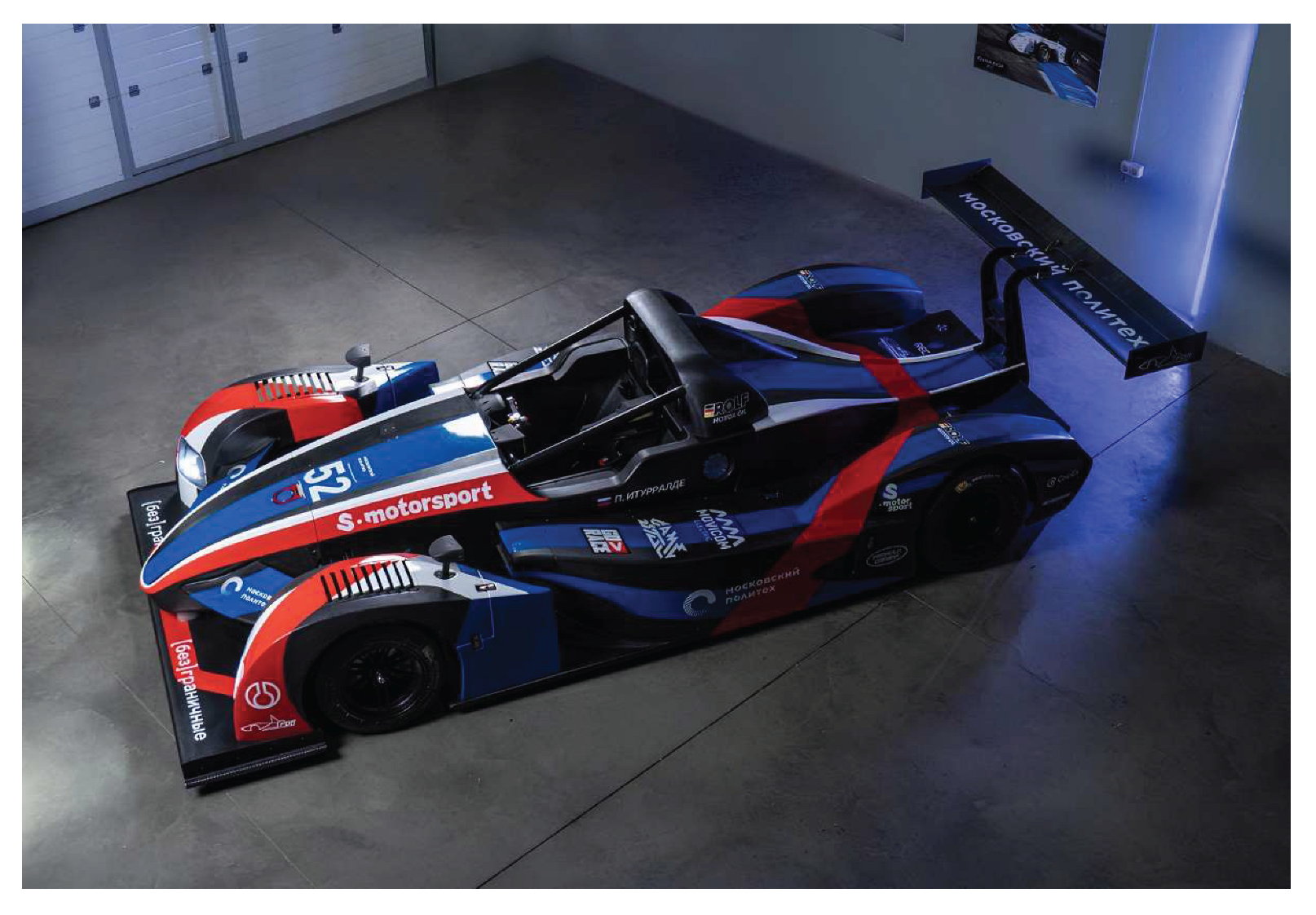
Figure 2.
Types of shapes of battery cells: a) cylindrical cell; b) prismatic cell; c) batch cell.
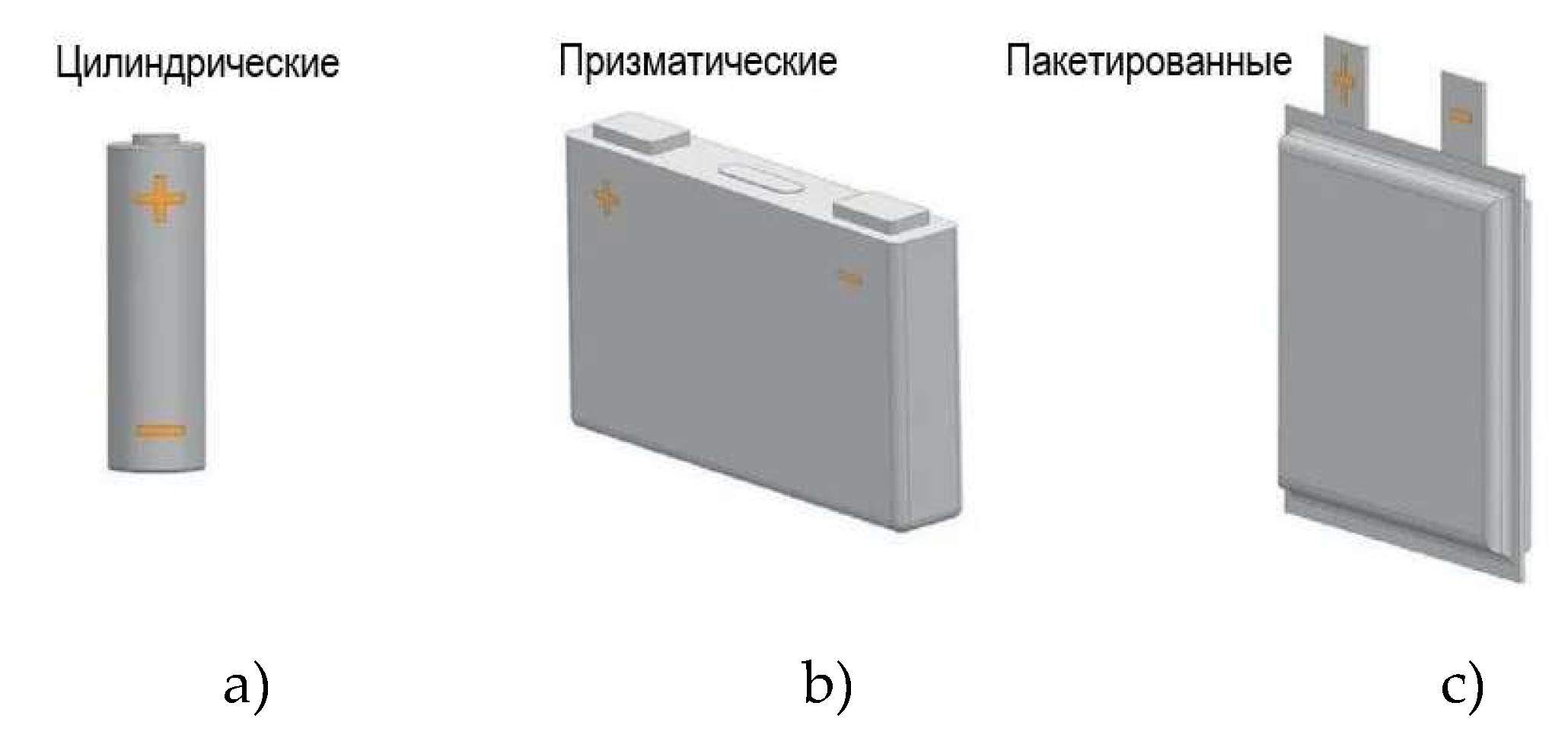
Figure 3.
Toyota TS050 hybrid racing car.
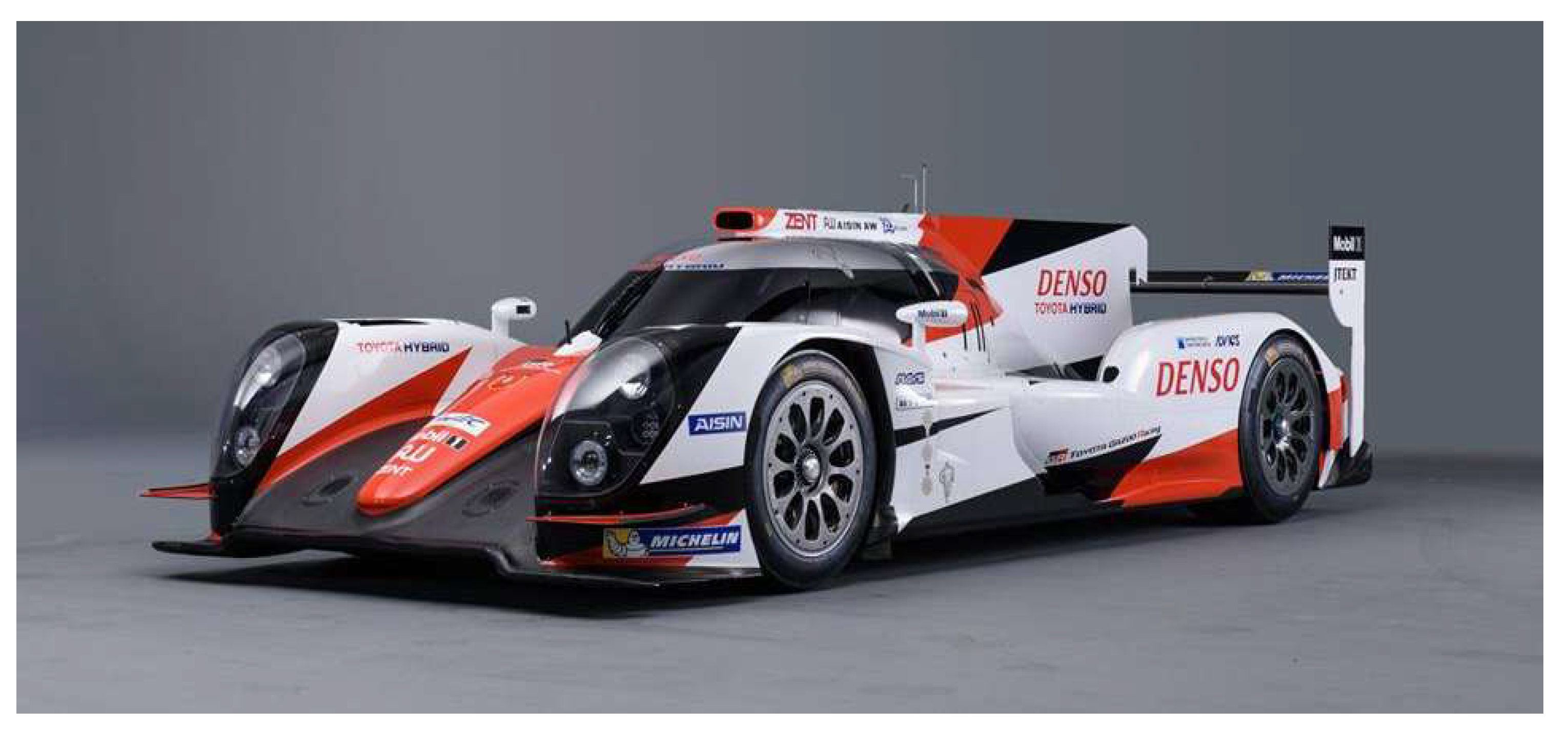
Figure 4.
Traction battery of the Toyota TS050 hybrid car.
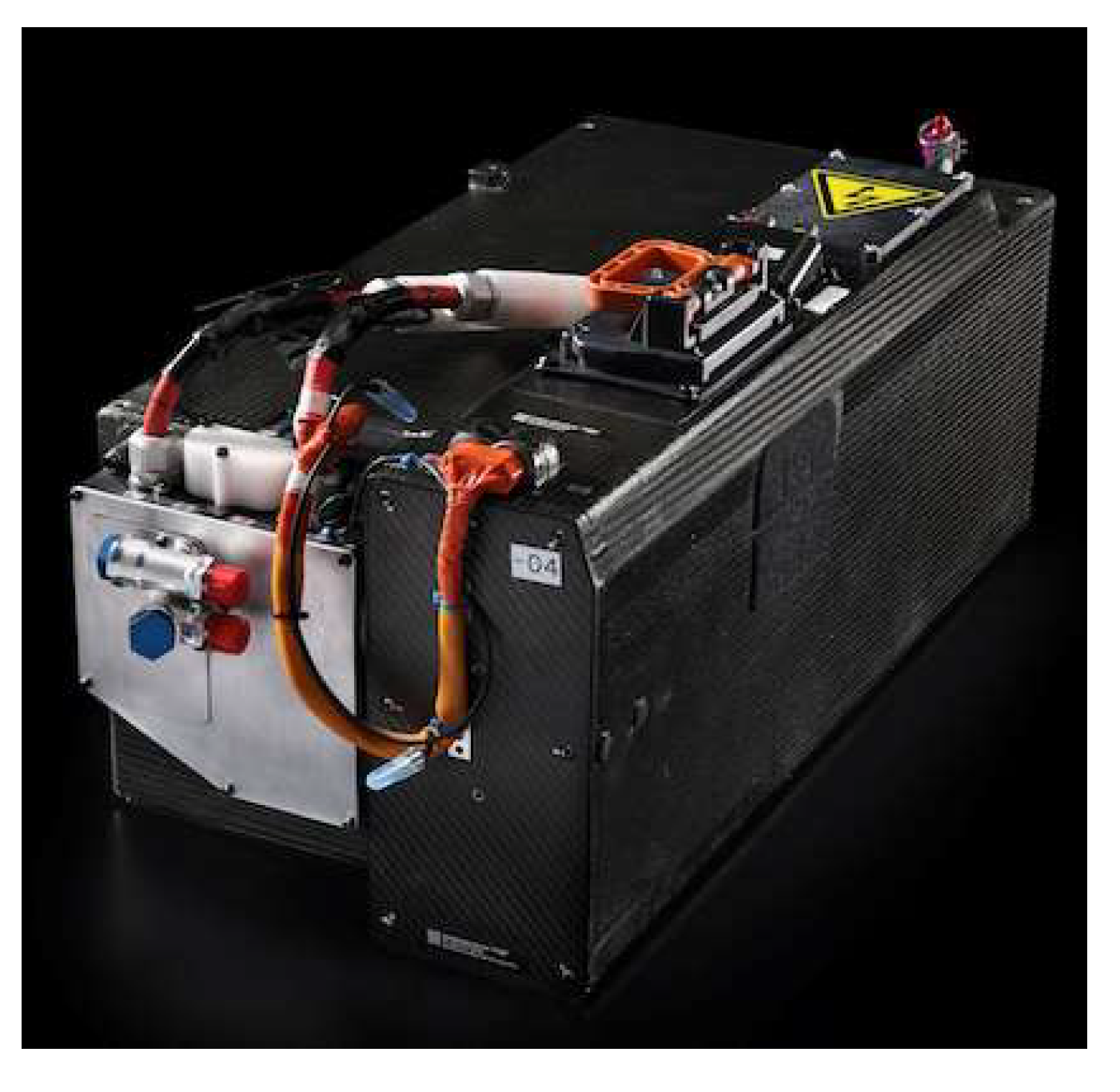
Figure 5.
Racing car Porsche 963.
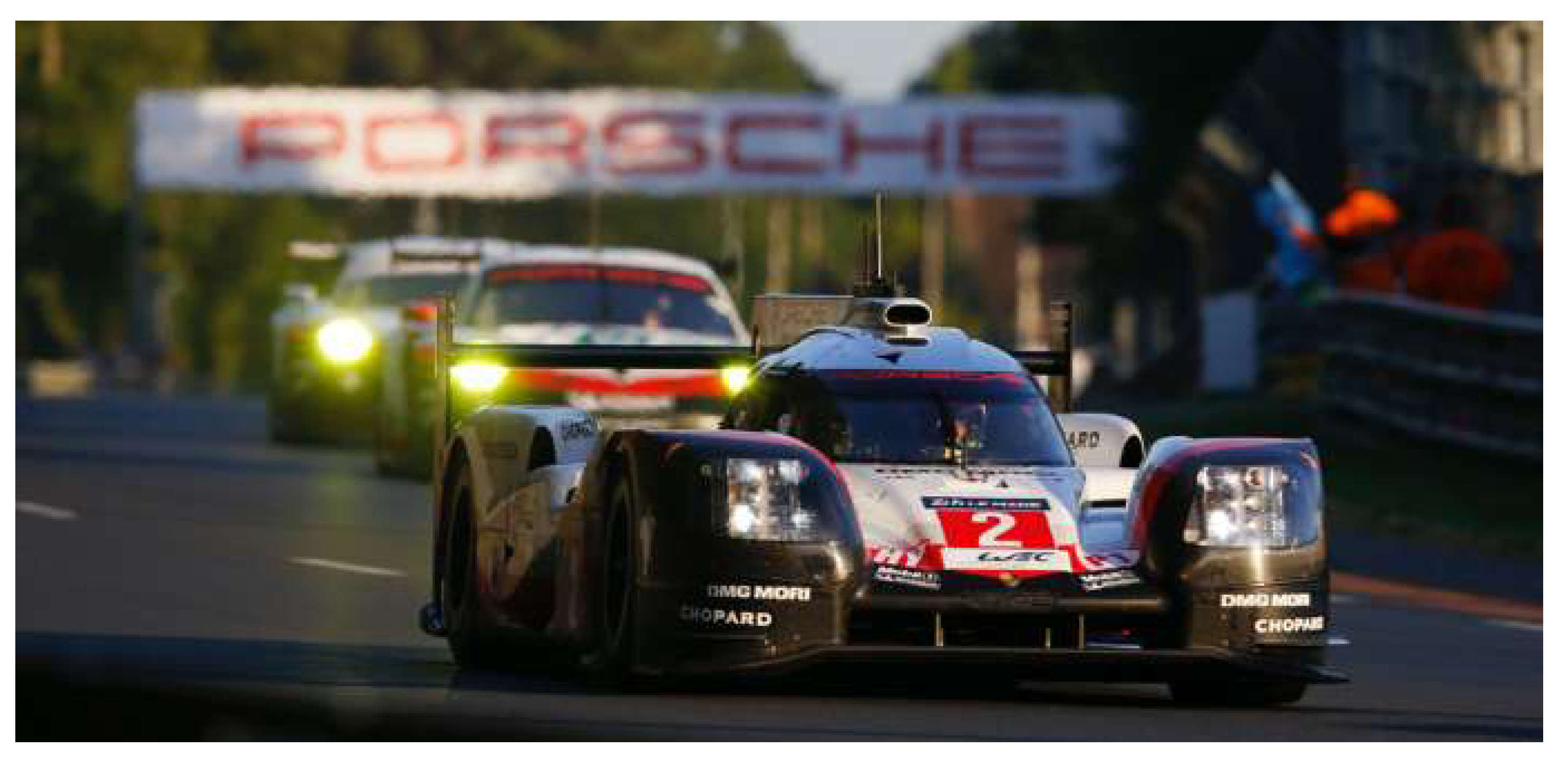
Figure 6.
Traction battery of a Porsche 963 car.
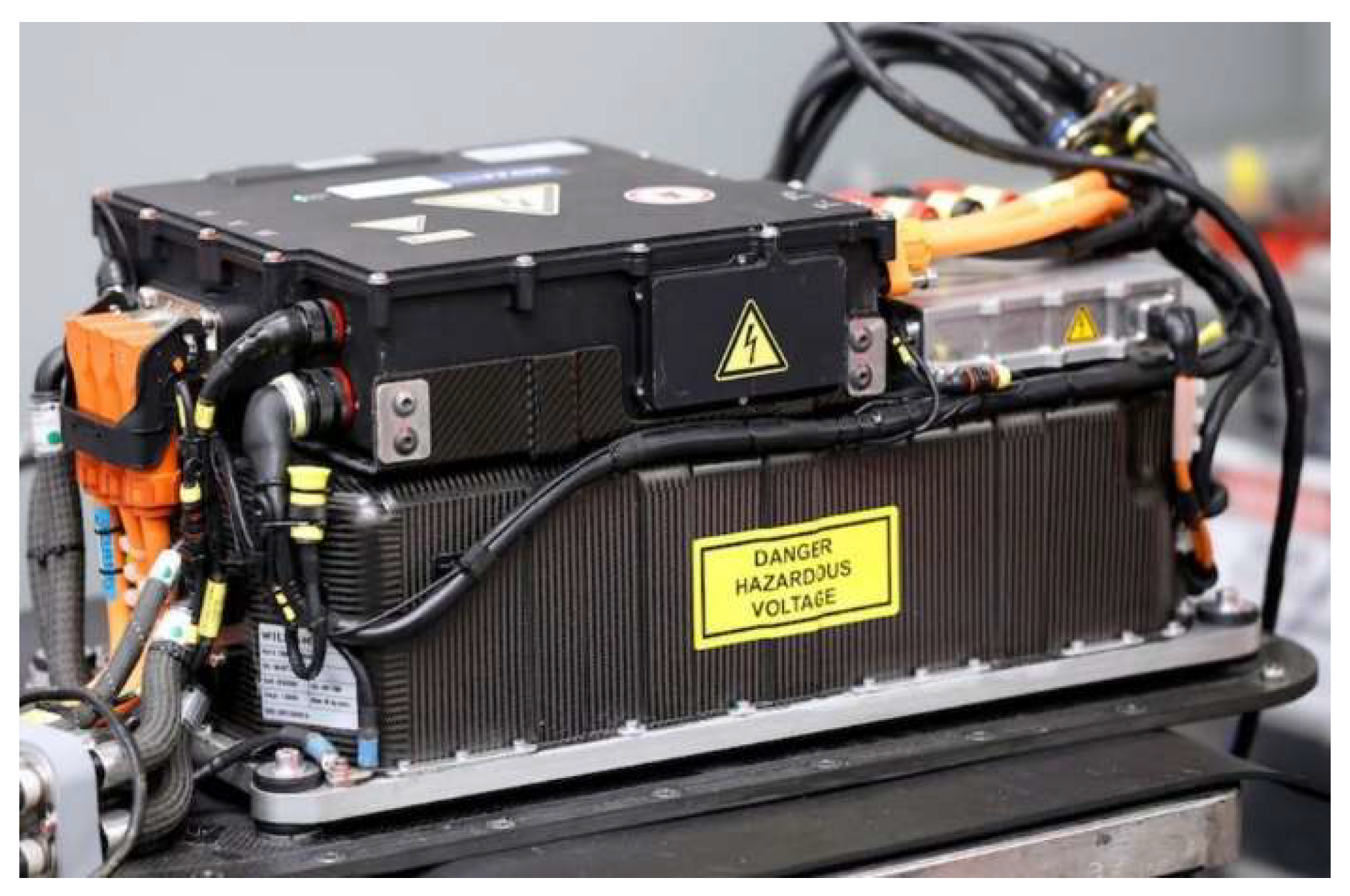
Figure 7.
Electric Formula E racing car.
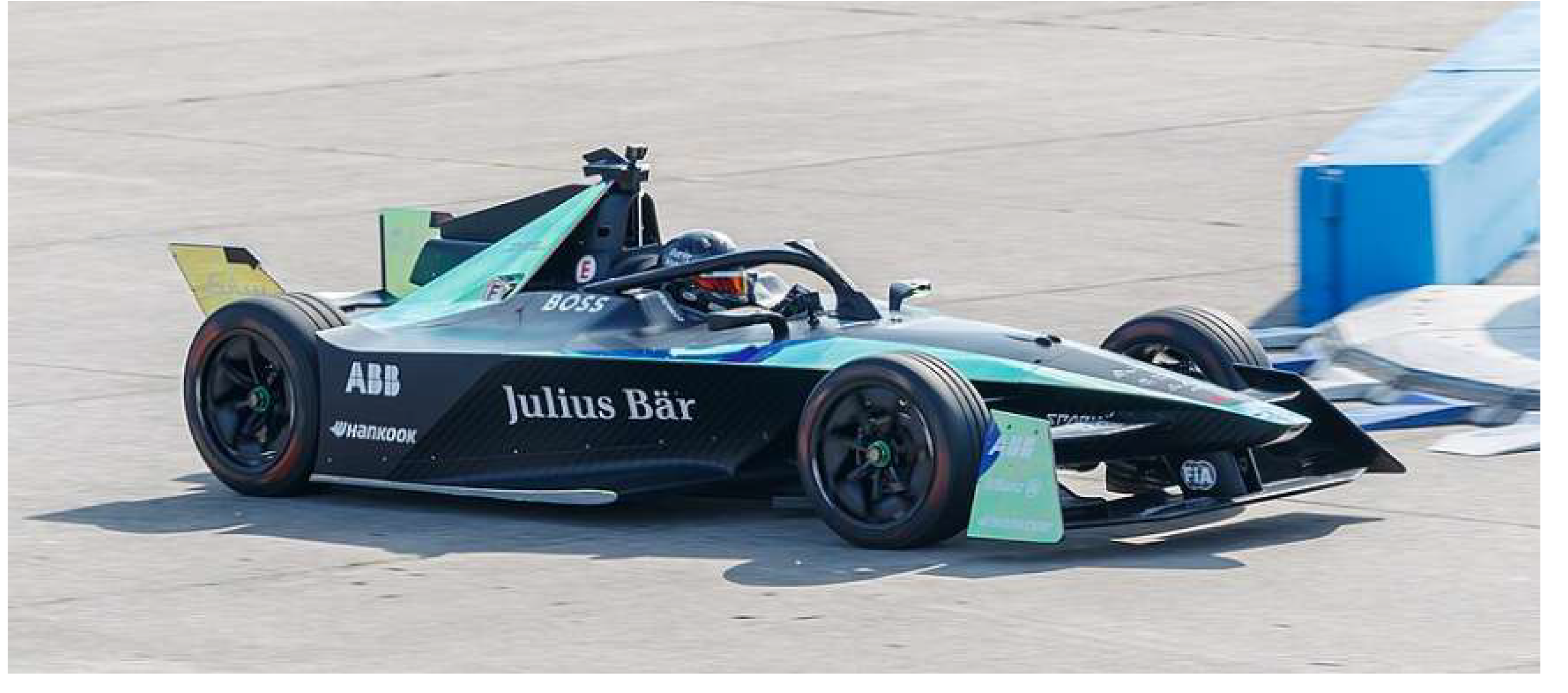
Figure 8.
Traction battery of a Formula E car.
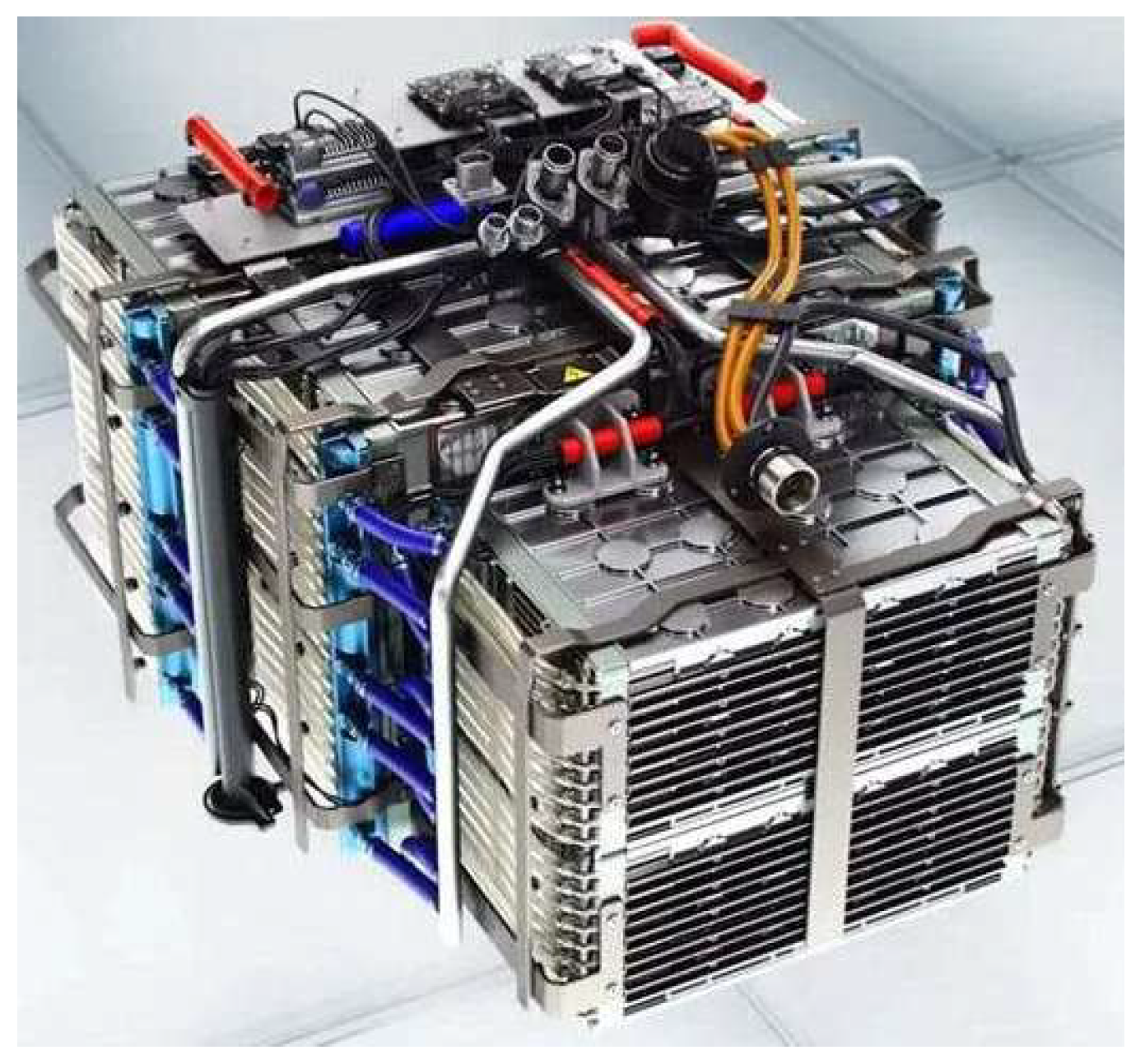
Figure 9.
LMH Ferrari 499P class sports prototype.
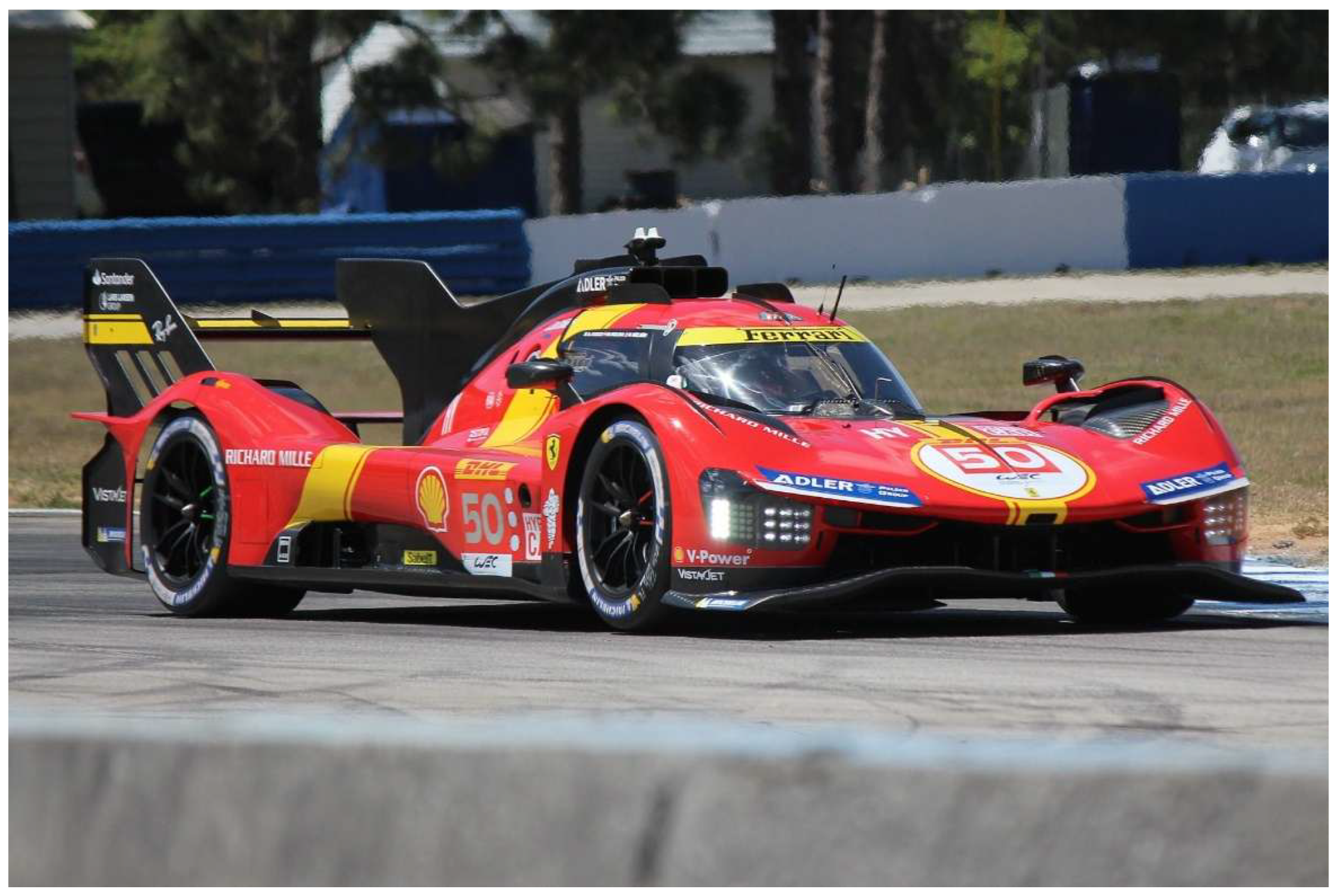
Figure 10.
Traction Battery Pack for LMH Ferrari 499P Car.
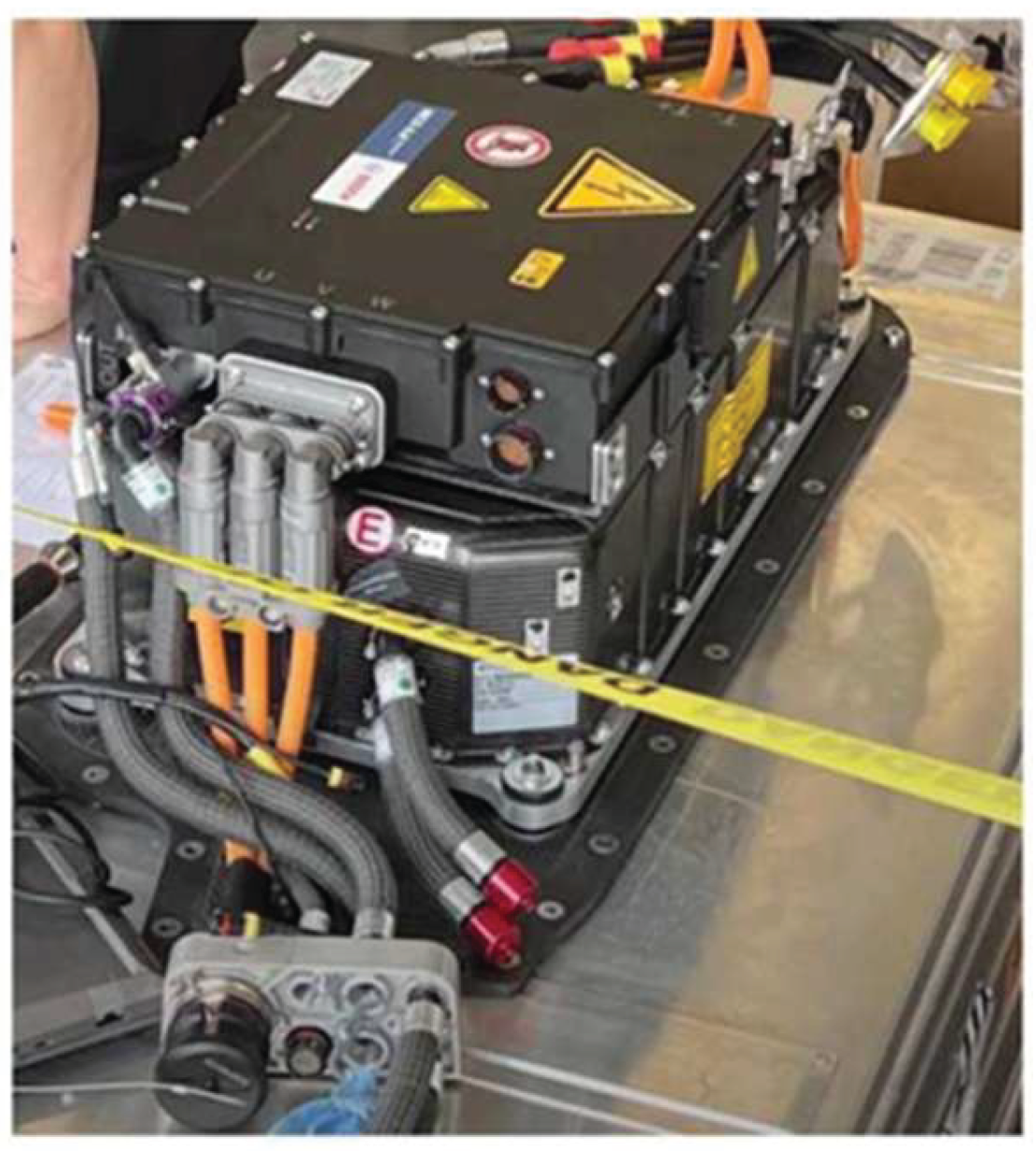
Figure 11.
Test bench TB.
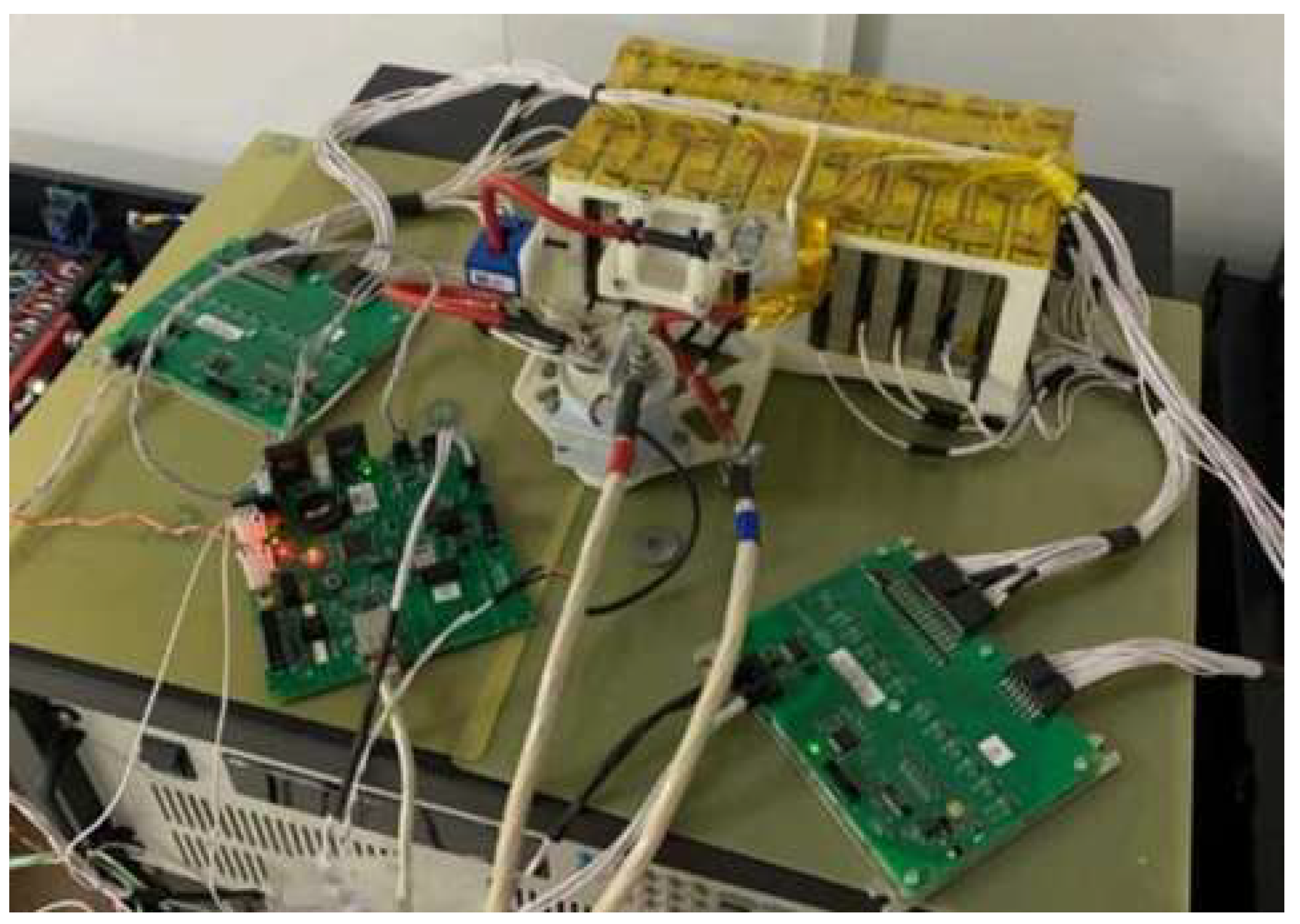
Figure 12.
Dependence of heat losses TB on current strength.
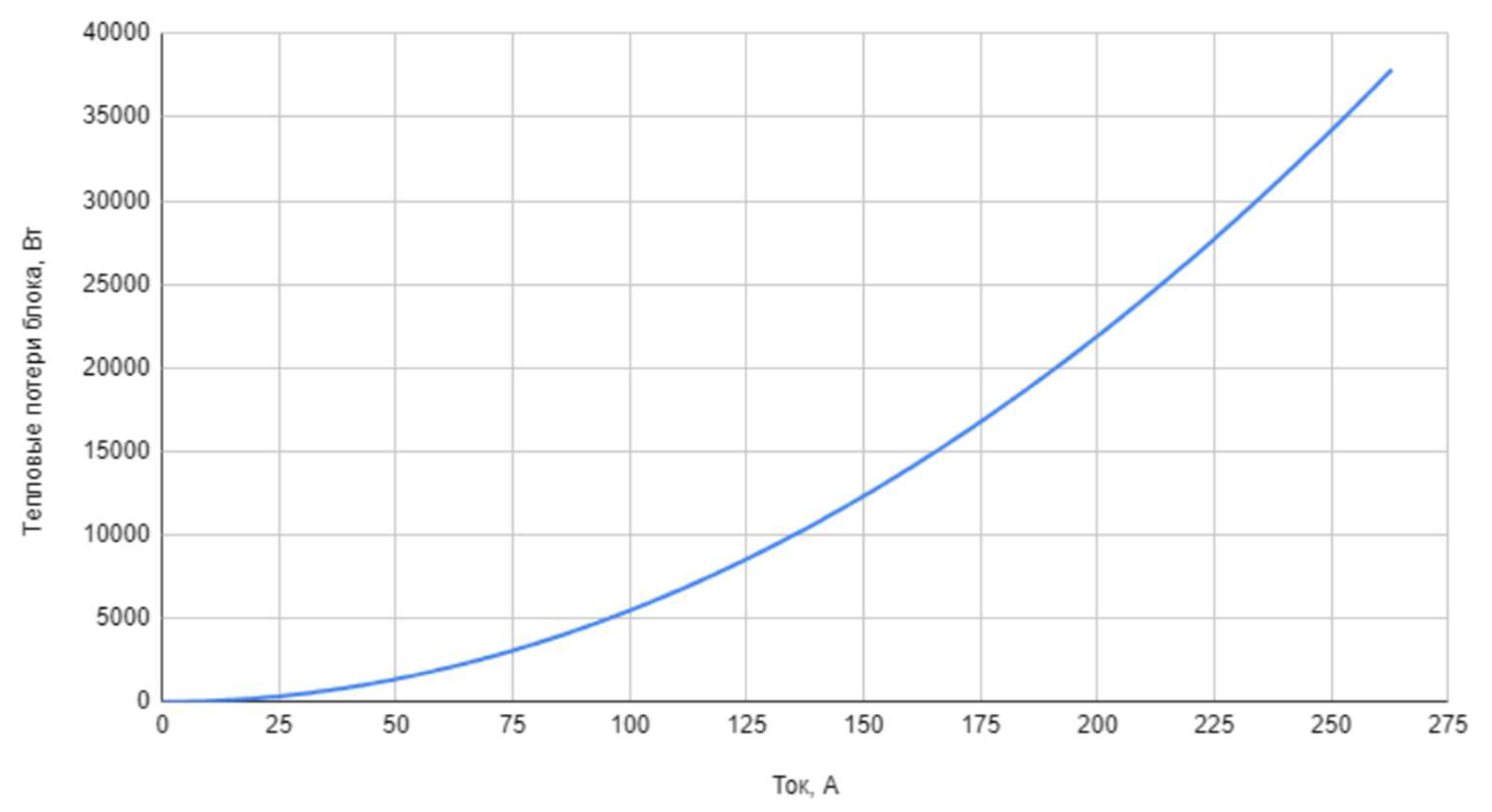
Figure 13.
General view of the TB layout of the race car being developed.
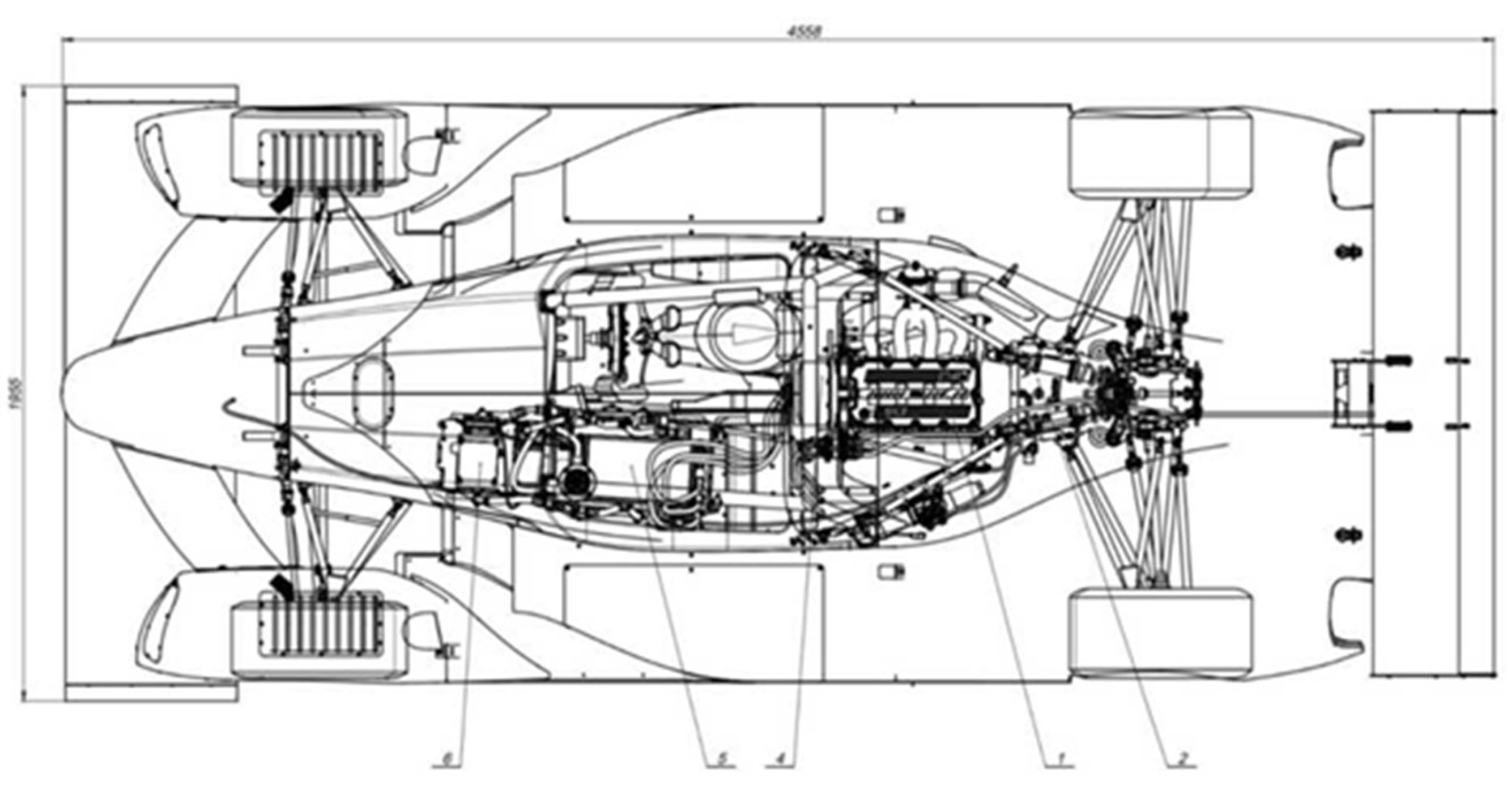
Figure 14.
Dependence of liquid temperature on time.
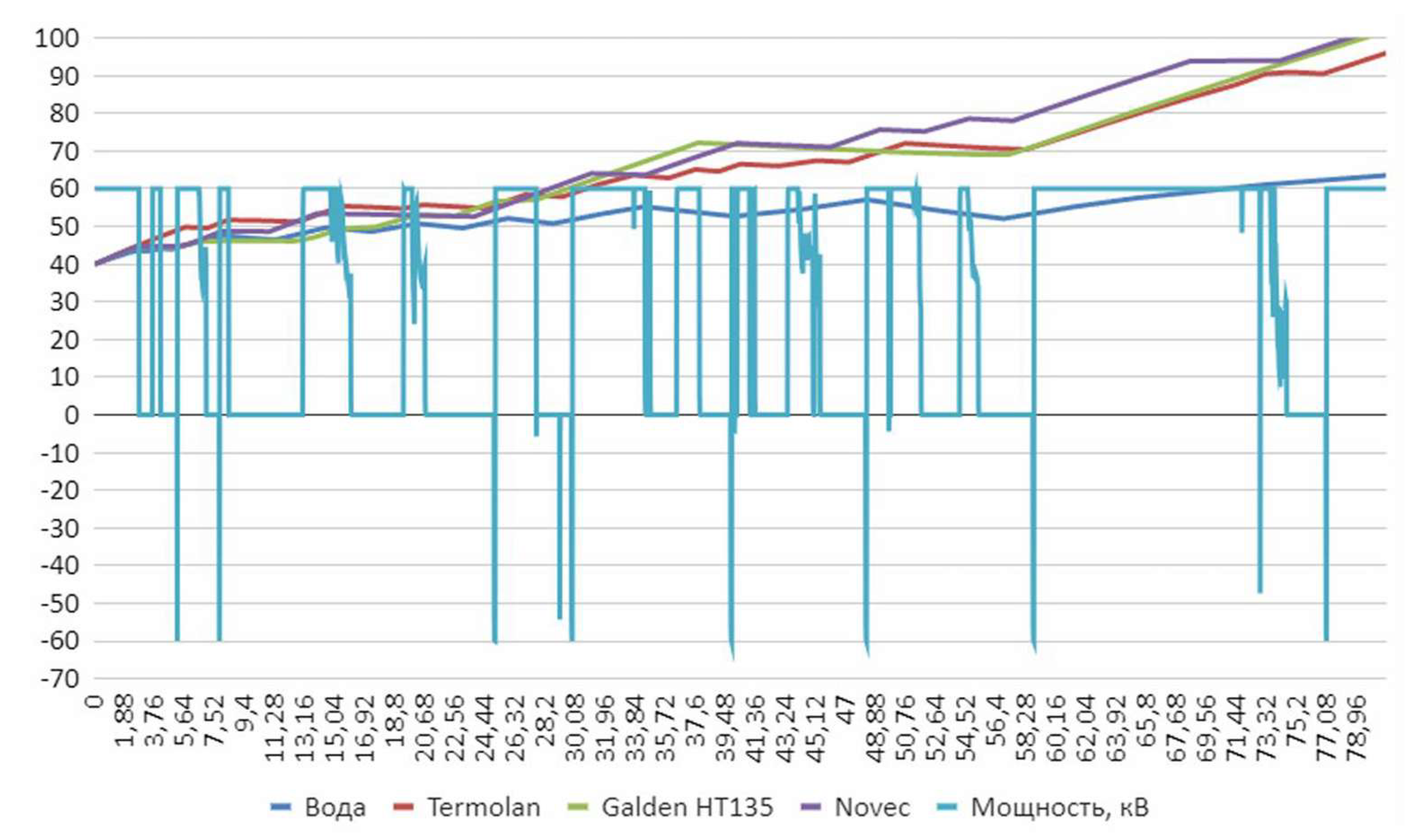
Figure 15.
Dependence of kinematic viscosity of different Galgen coolant series.
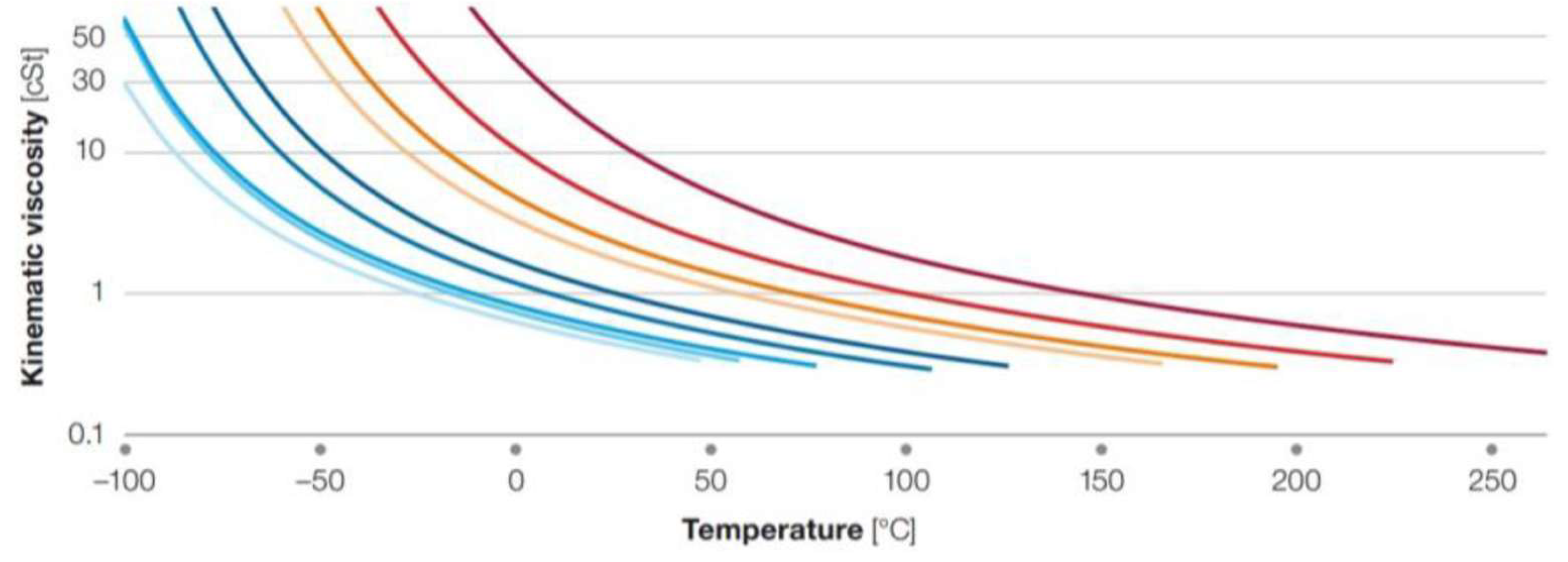
Figure 16.
Characteristics of the Novec coolant.
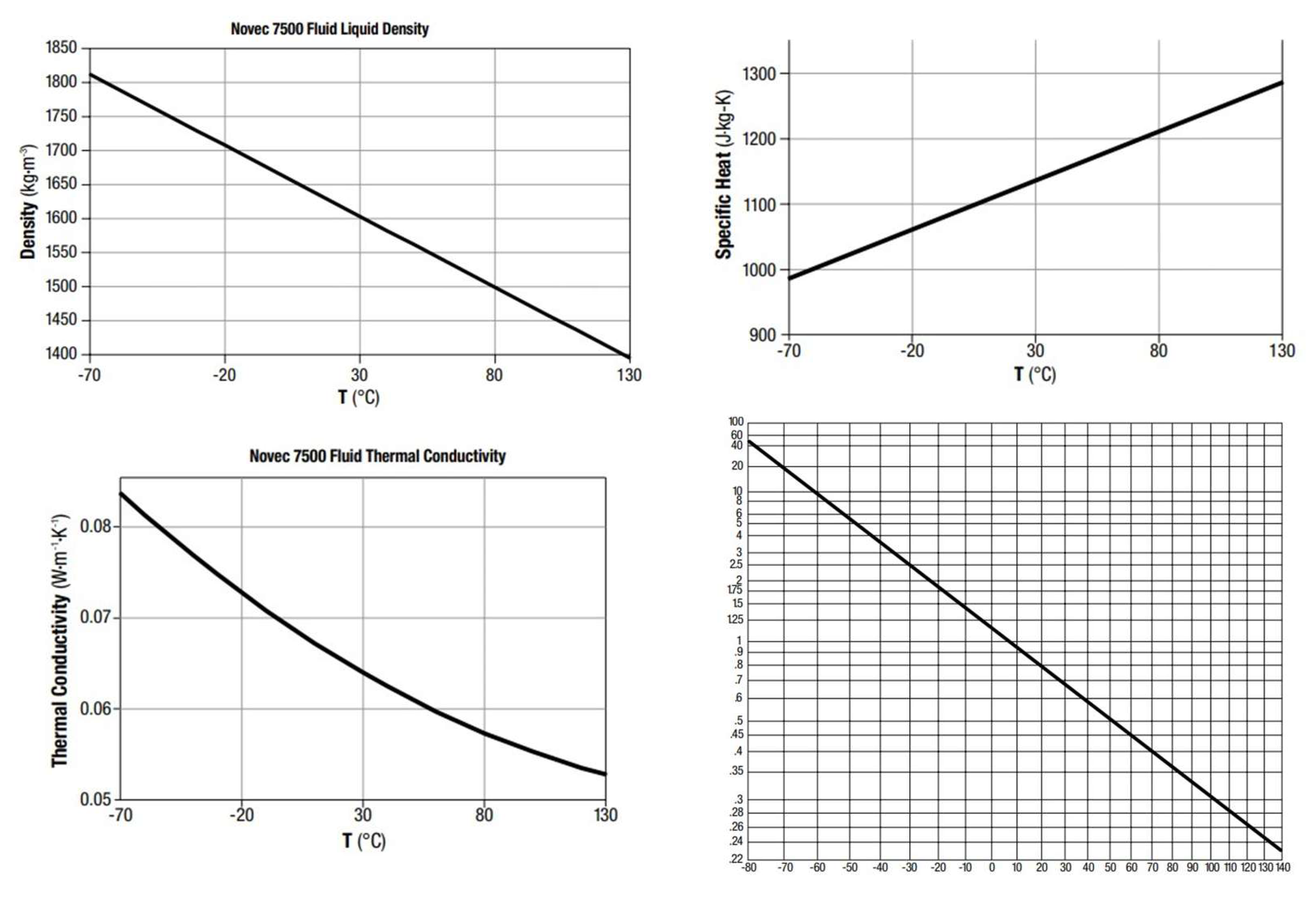
Figure 17.
Motion Scenario Simulator.
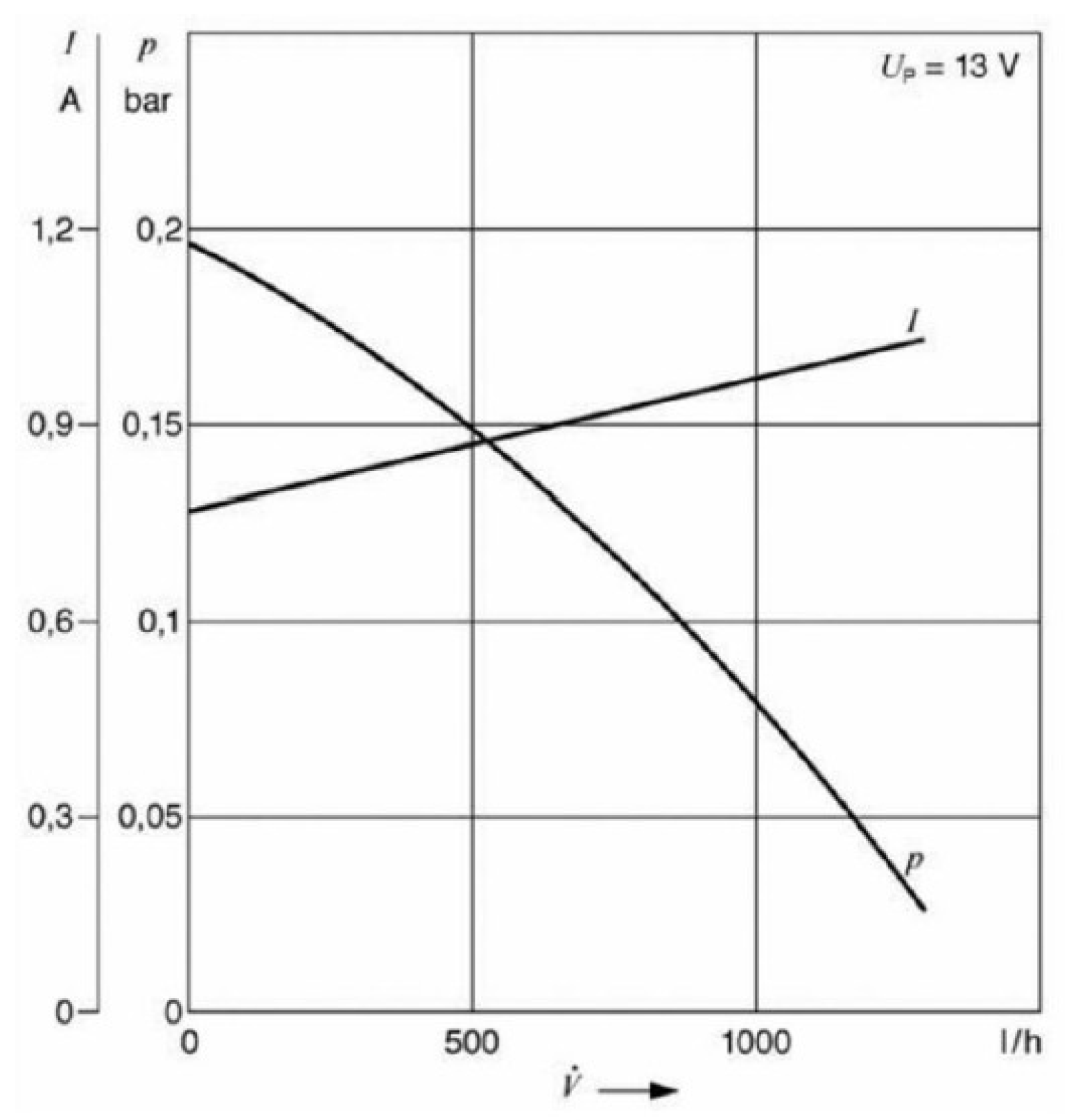
Figure 18.
Dependence of the temperature of the refrigerant at the entrance to the system on the temperature of the refrigerant at the exit from the system.
Figure 18.
Dependence of the temperature of the refrigerant at the entrance to the system on the temperature of the refrigerant at the exit from the system.
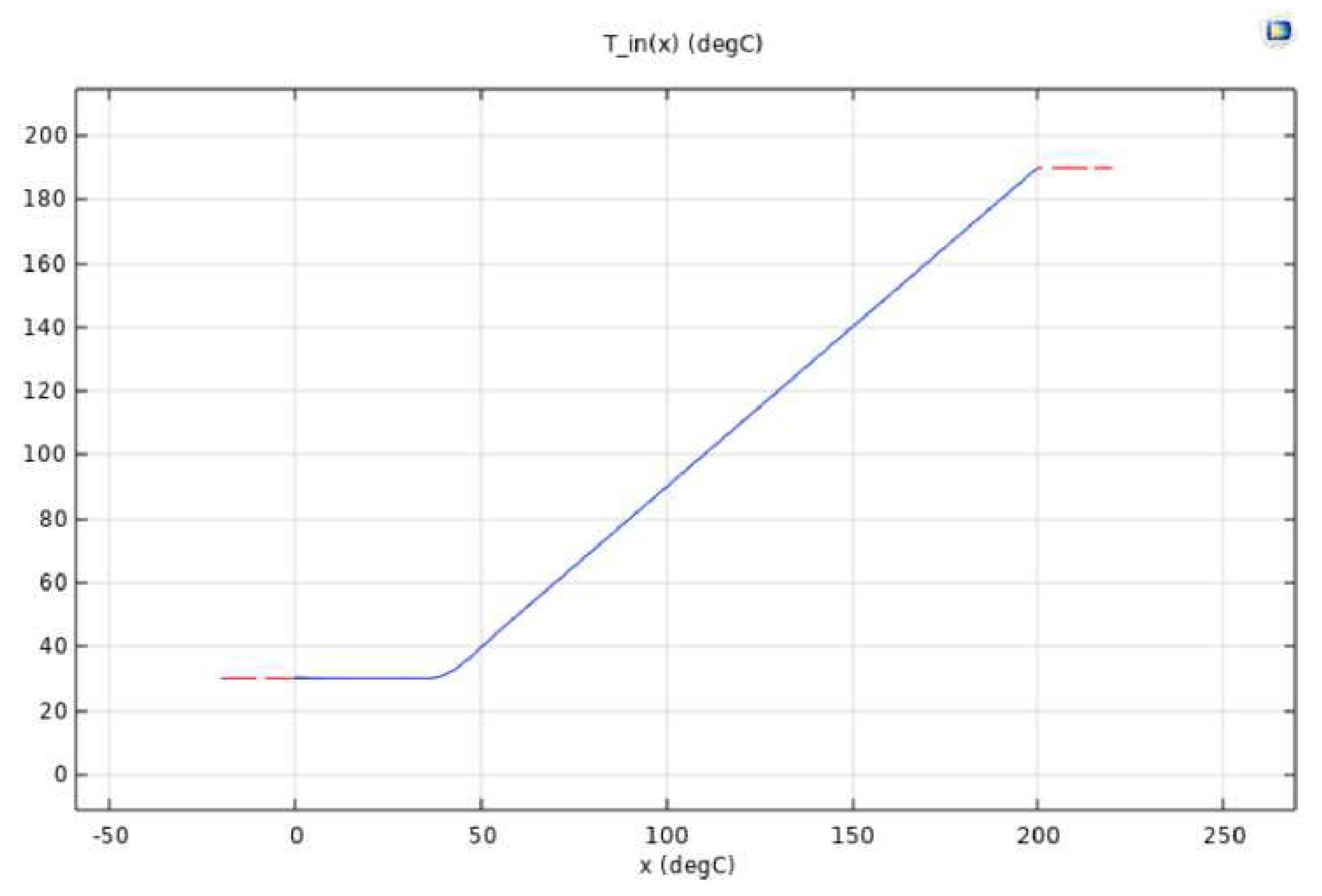
Figure 19.
Motion Scenario Simulator.
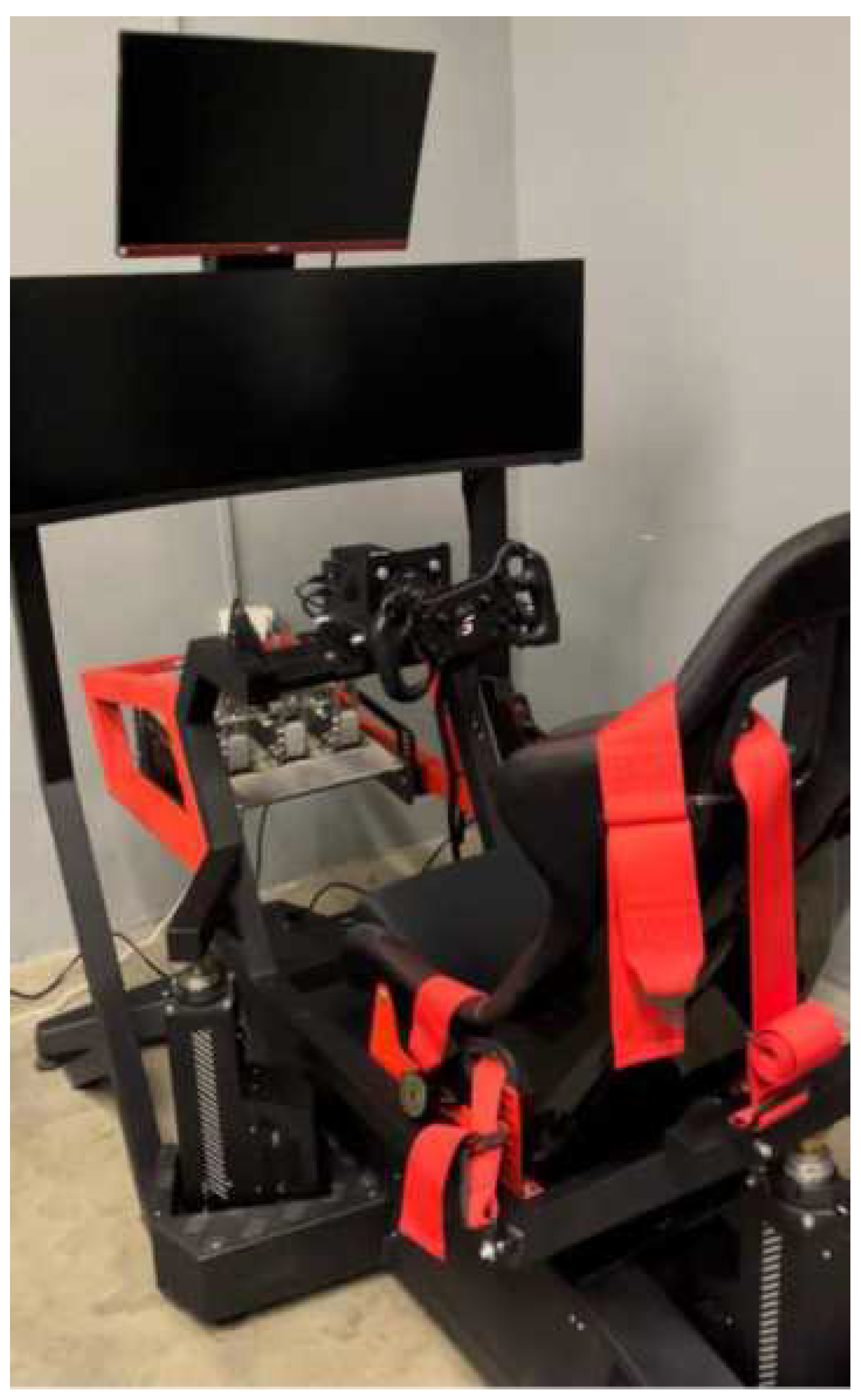
Figure 20.
Graph of the dependence of the heat output on time.
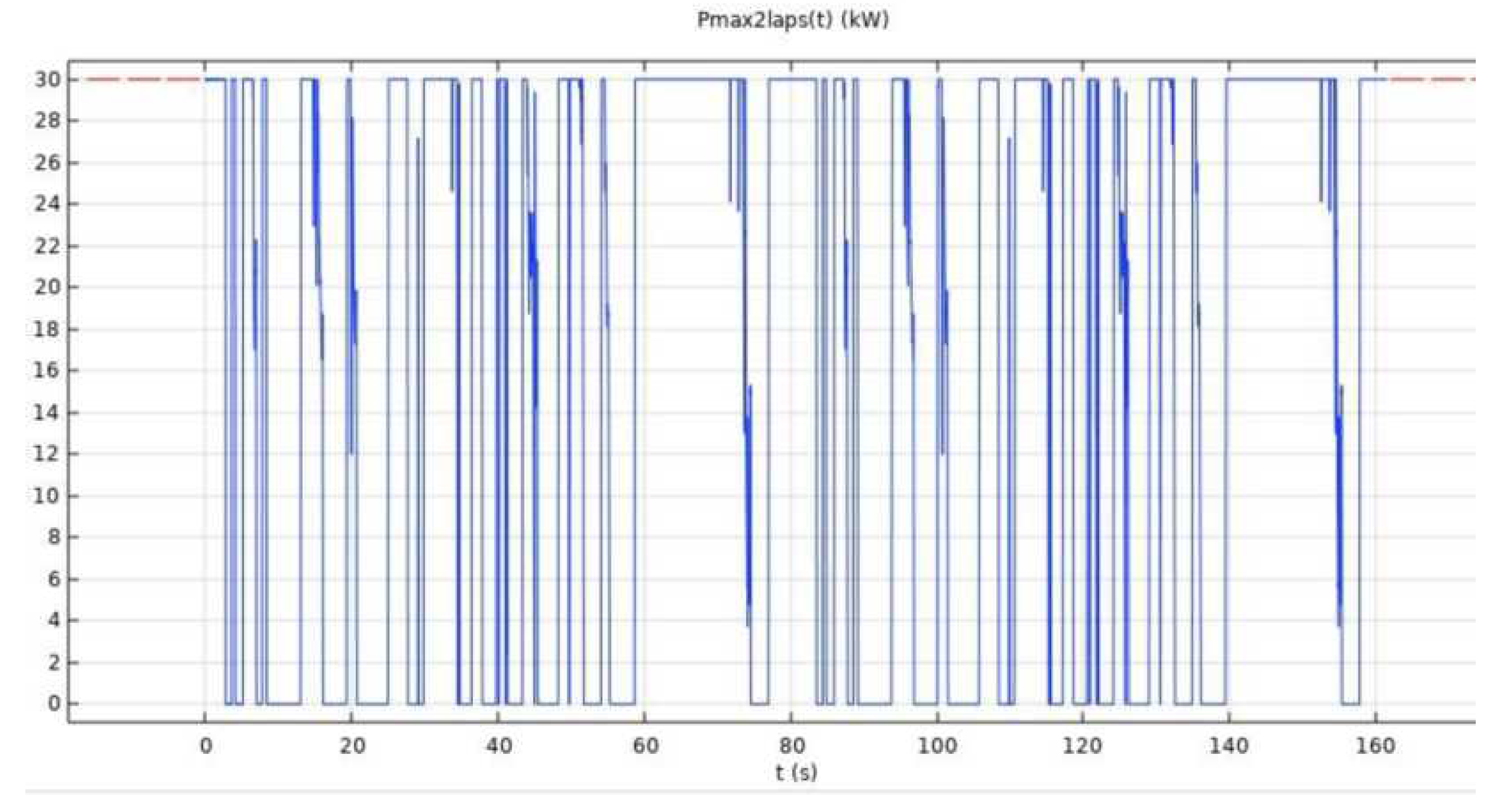
Figure 21.
Geometry optimization process.
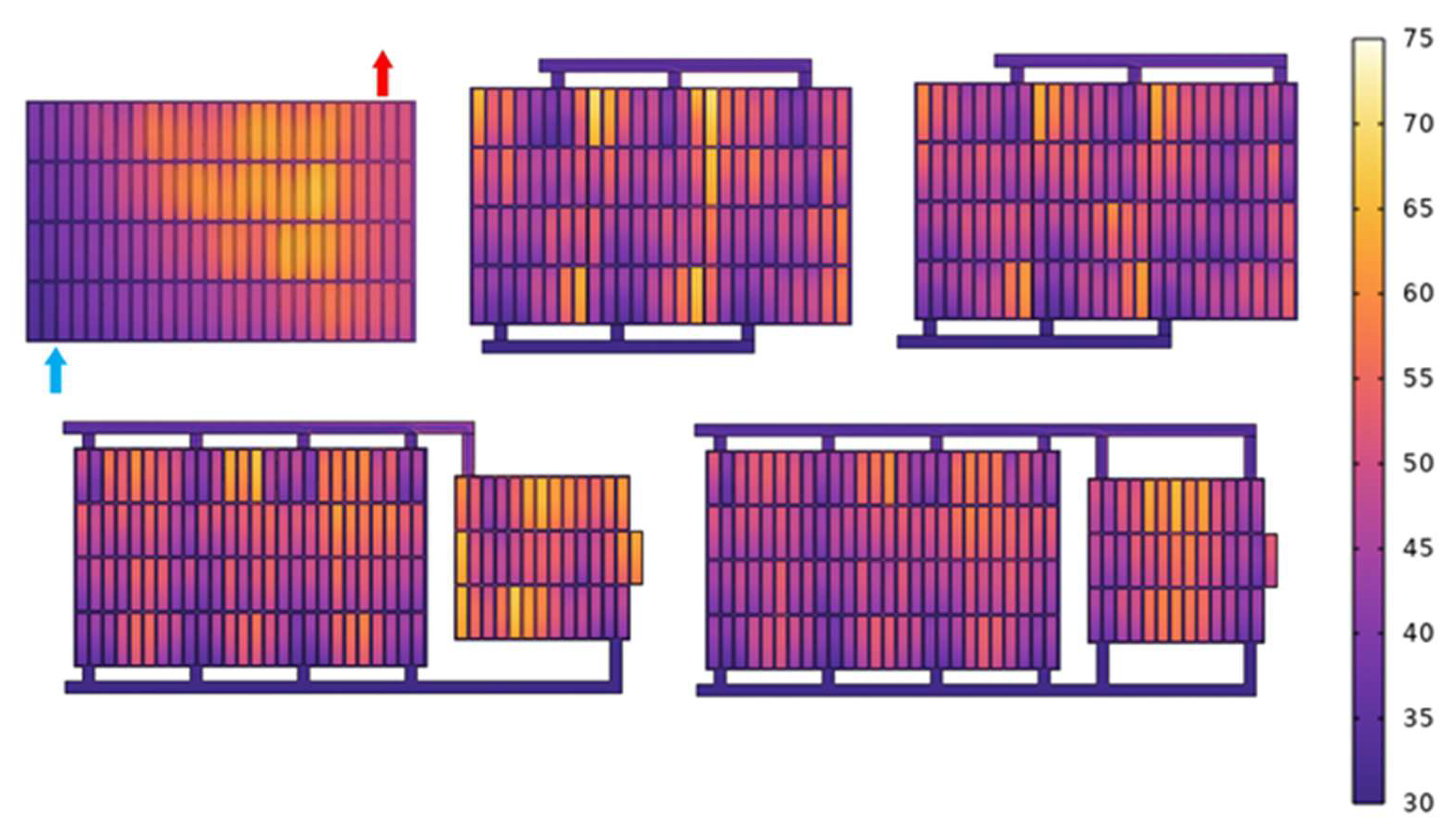
Figure 22.
Graph of the temperature dependence of the battery after 60 minutes with half of the maximum power applied according to the data from the simulator on time.
Figure 22.
Graph of the temperature dependence of the battery after 60 minutes with half of the maximum power applied according to the data from the simulator on time.
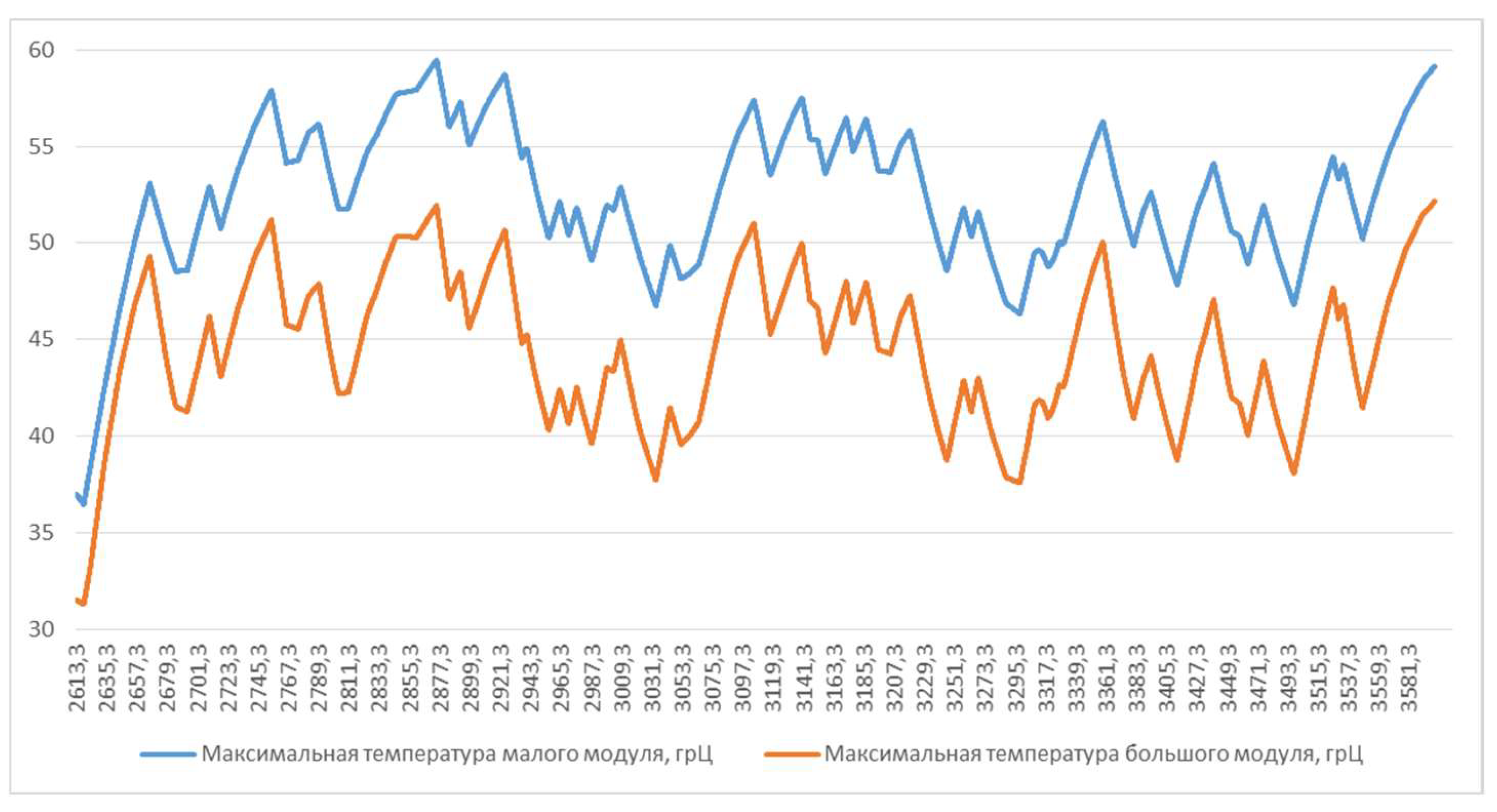
Figure 23.
Graph of the temperature dependence of the TB after 120 minutes at a constant supply of half the maximum power.
Figure 23.
Graph of the temperature dependence of the TB after 120 minutes at a constant supply of half the maximum power.
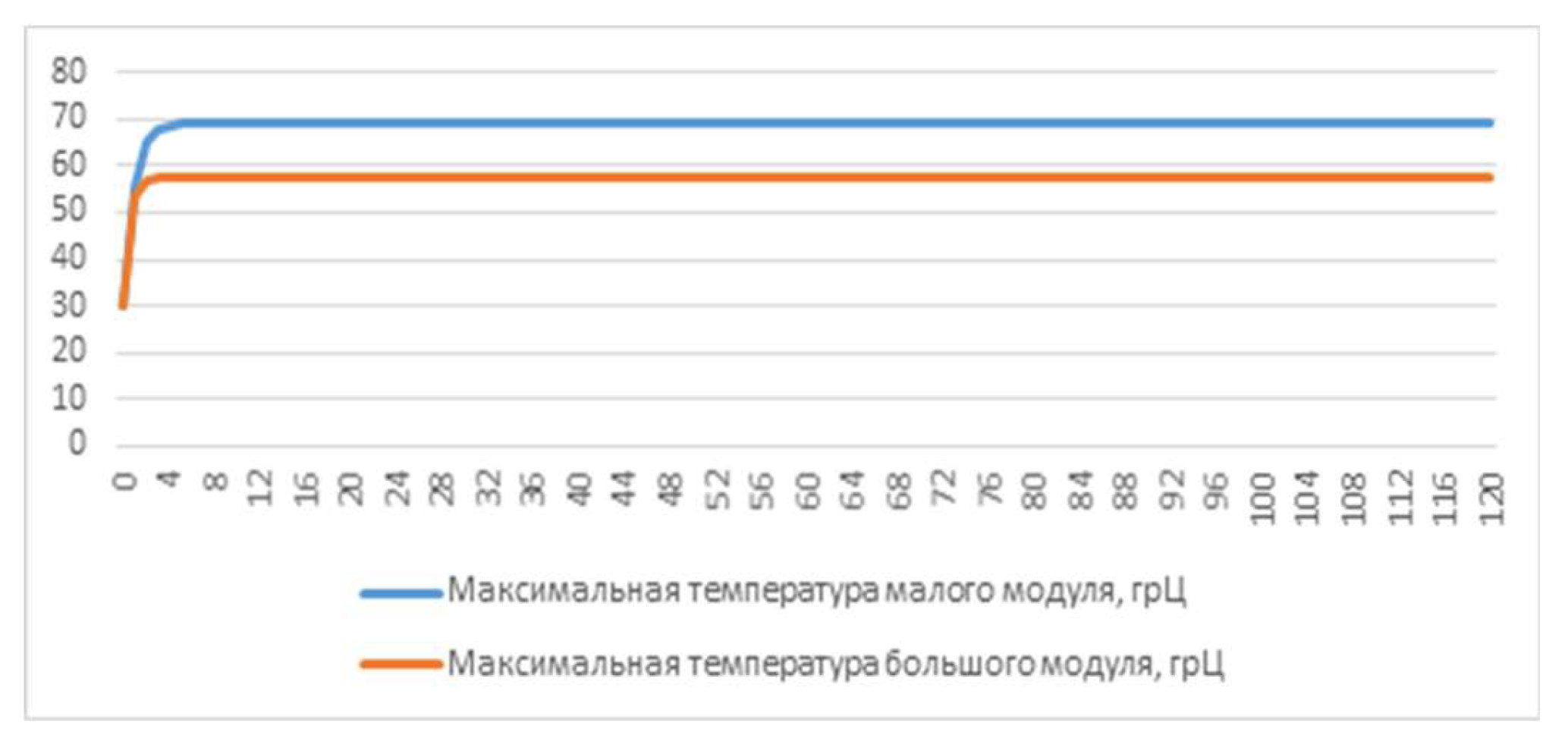
Figure 24.
General view of the TB.
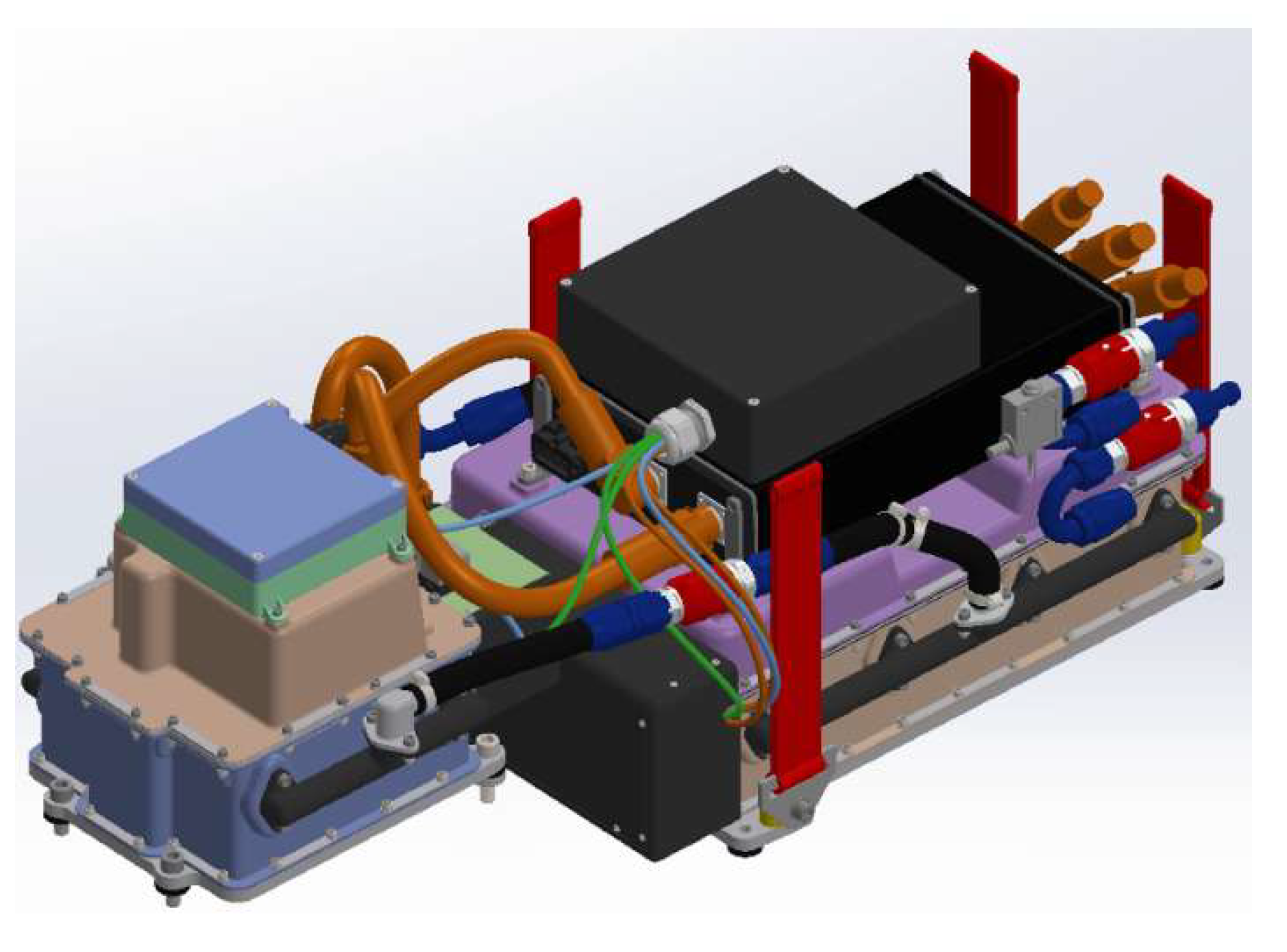
Figure 25.
The TB cooling system (1 – Module 1, 2 – Module 2, 3 – Cooling-fluid (CF) outlet channel, 4 – CF outlet channel, 5 – Module 1 CF inlet manifold, 6 – Module 1 CF outlet manifold, 7 – Module 2 CF inlet manifold, 8 – Module 2 CF outlet manifold, 9 – Structural cooling plate of Module 1, 10 – Structural cooling plate of Module 2).
Figure 25.
The TB cooling system (1 – Module 1, 2 – Module 2, 3 – Cooling-fluid (CF) outlet channel, 4 – CF outlet channel, 5 – Module 1 CF inlet manifold, 6 – Module 1 CF outlet manifold, 7 – Module 2 CF inlet manifold, 8 – Module 2 CF outlet manifold, 9 – Structural cooling plate of Module 1, 10 – Structural cooling plate of Module 2).
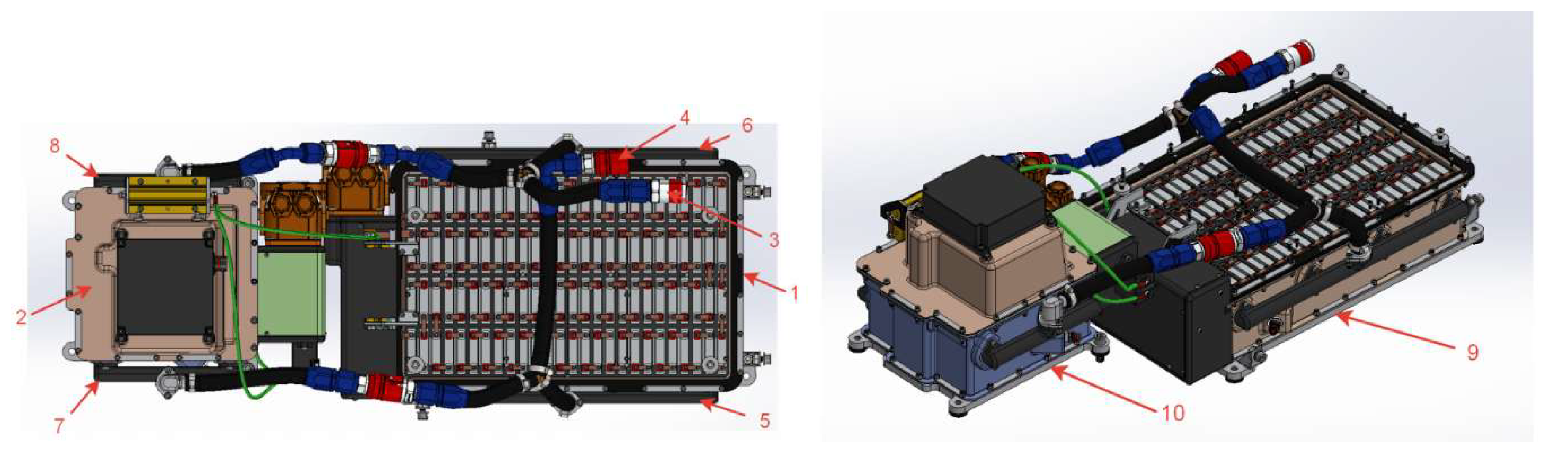
Figure 26.
TB and load stand.
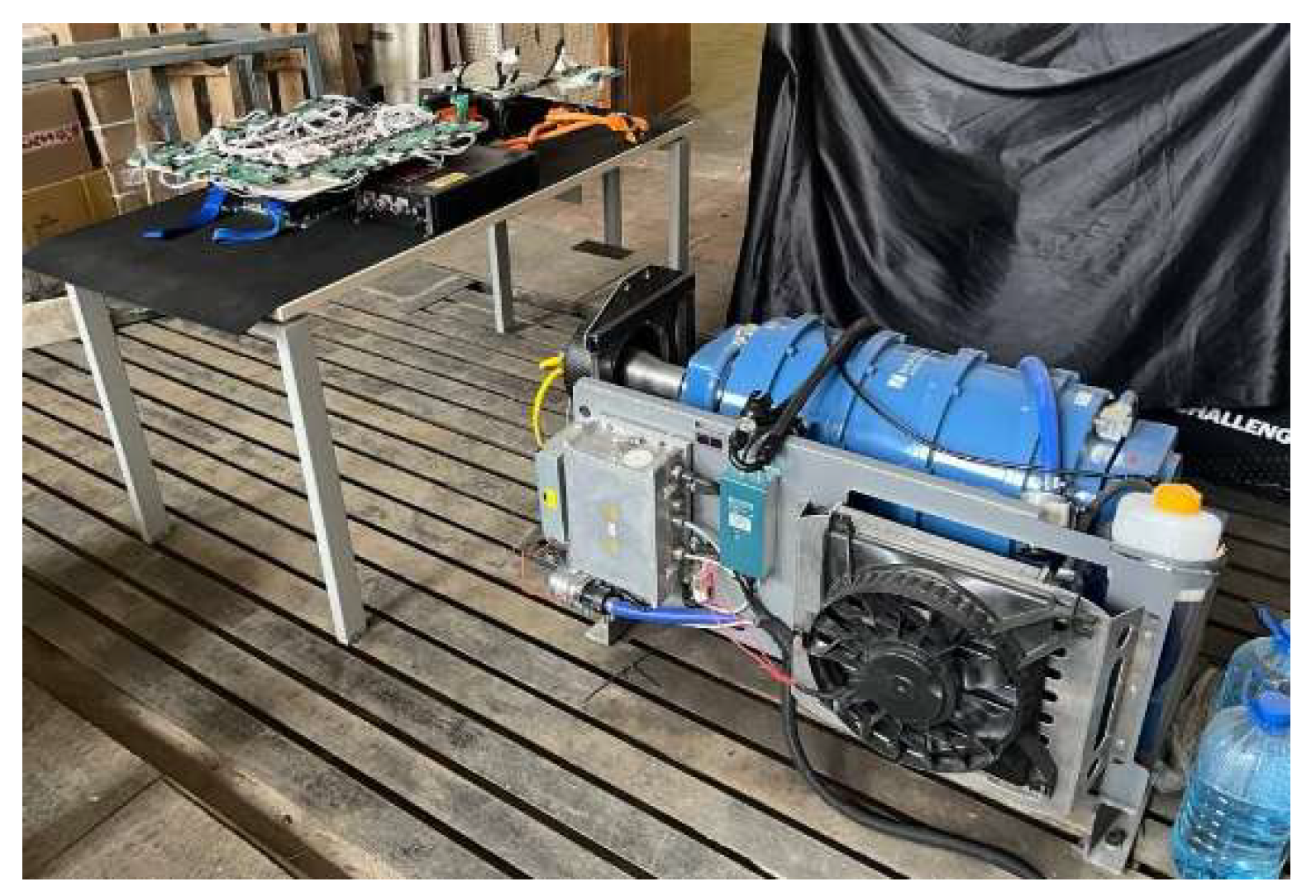
Figure 27.
A sports prototype with a power steering system on a dynamometric wheeled stand.
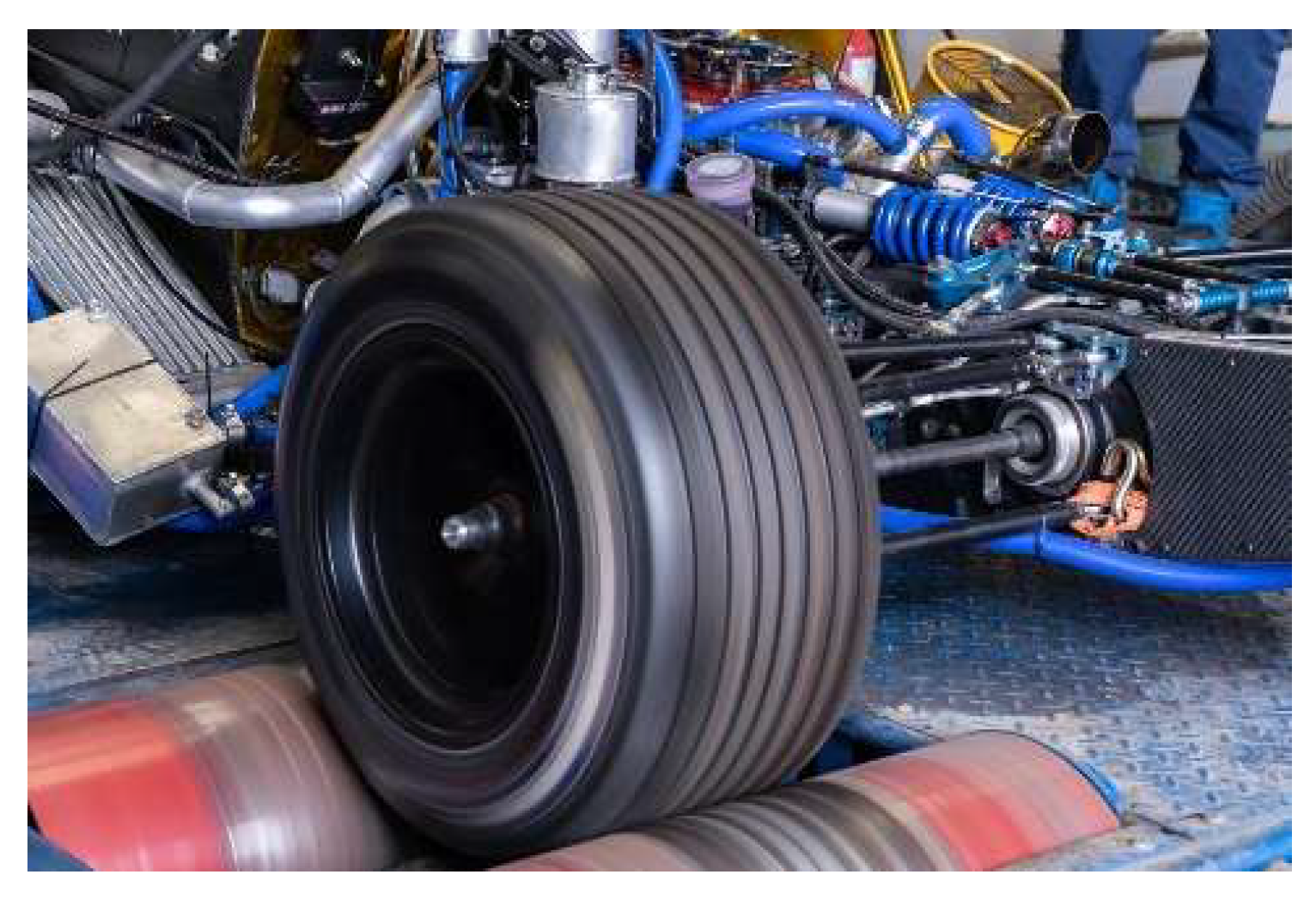
Figure 28.
Graph of the dependence of the maximum cell temperature on time.
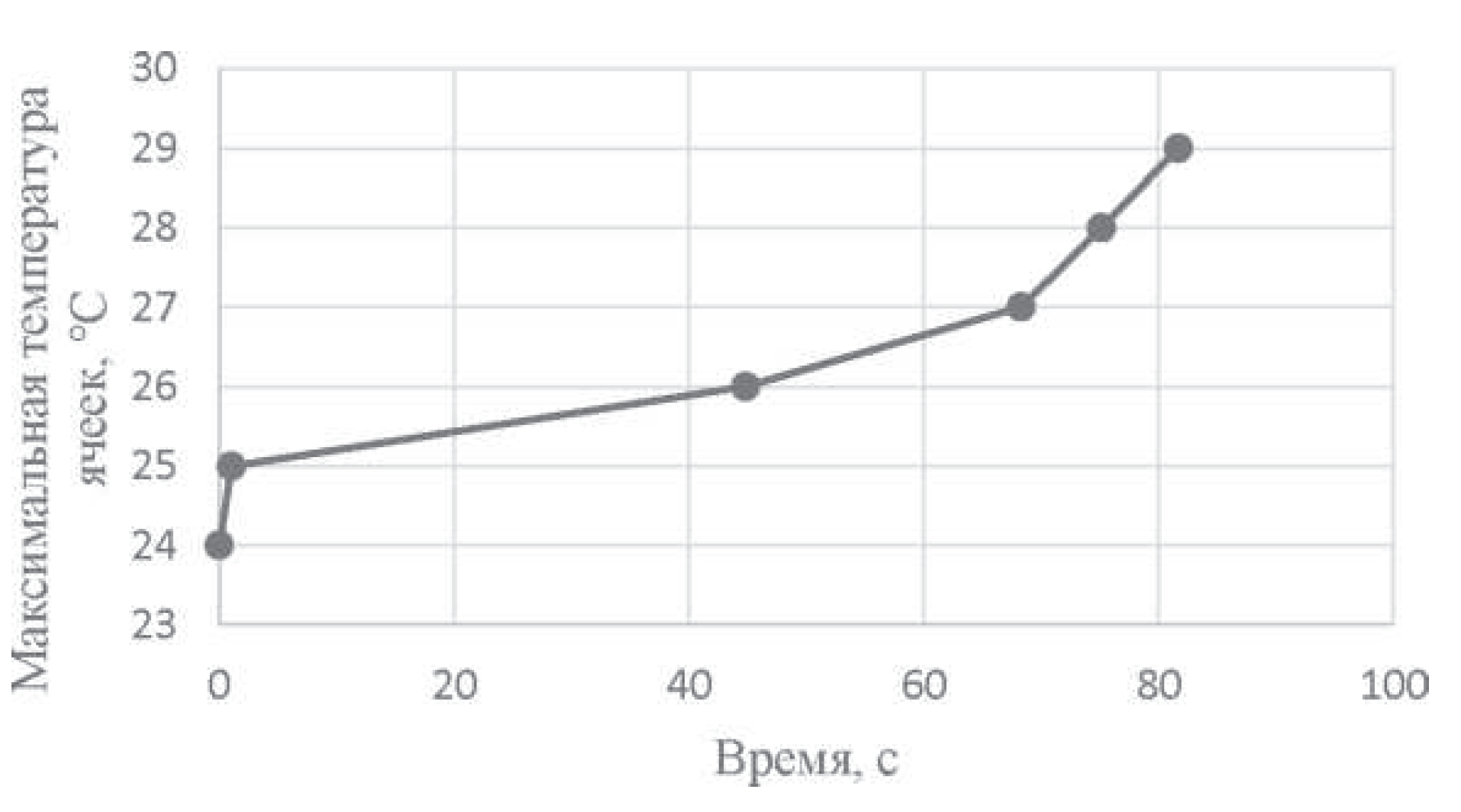
Figure 29.
Dynamic tests on the race track.
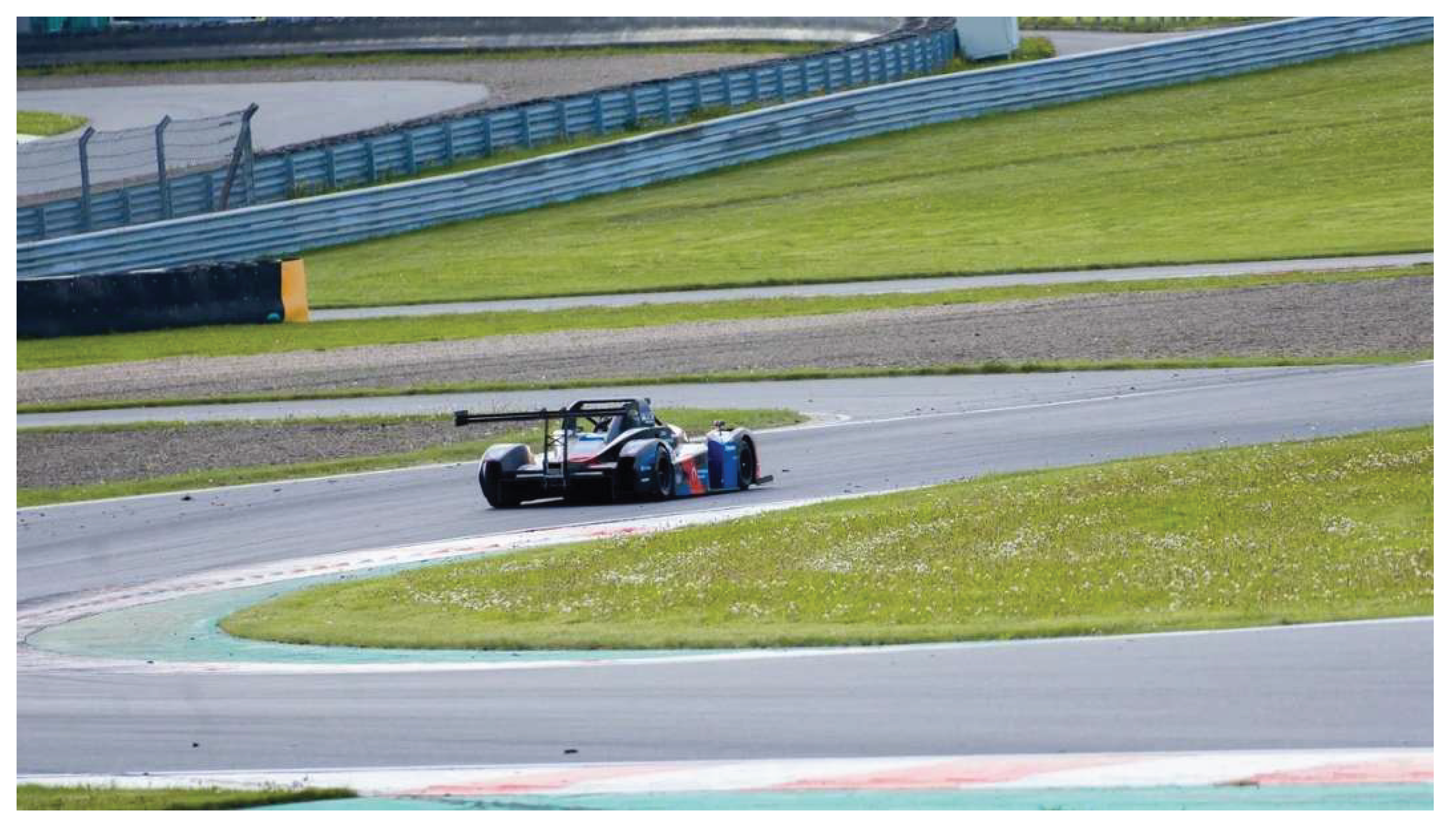
Figure 30.
The dependence of the maximum cell temperature on time.
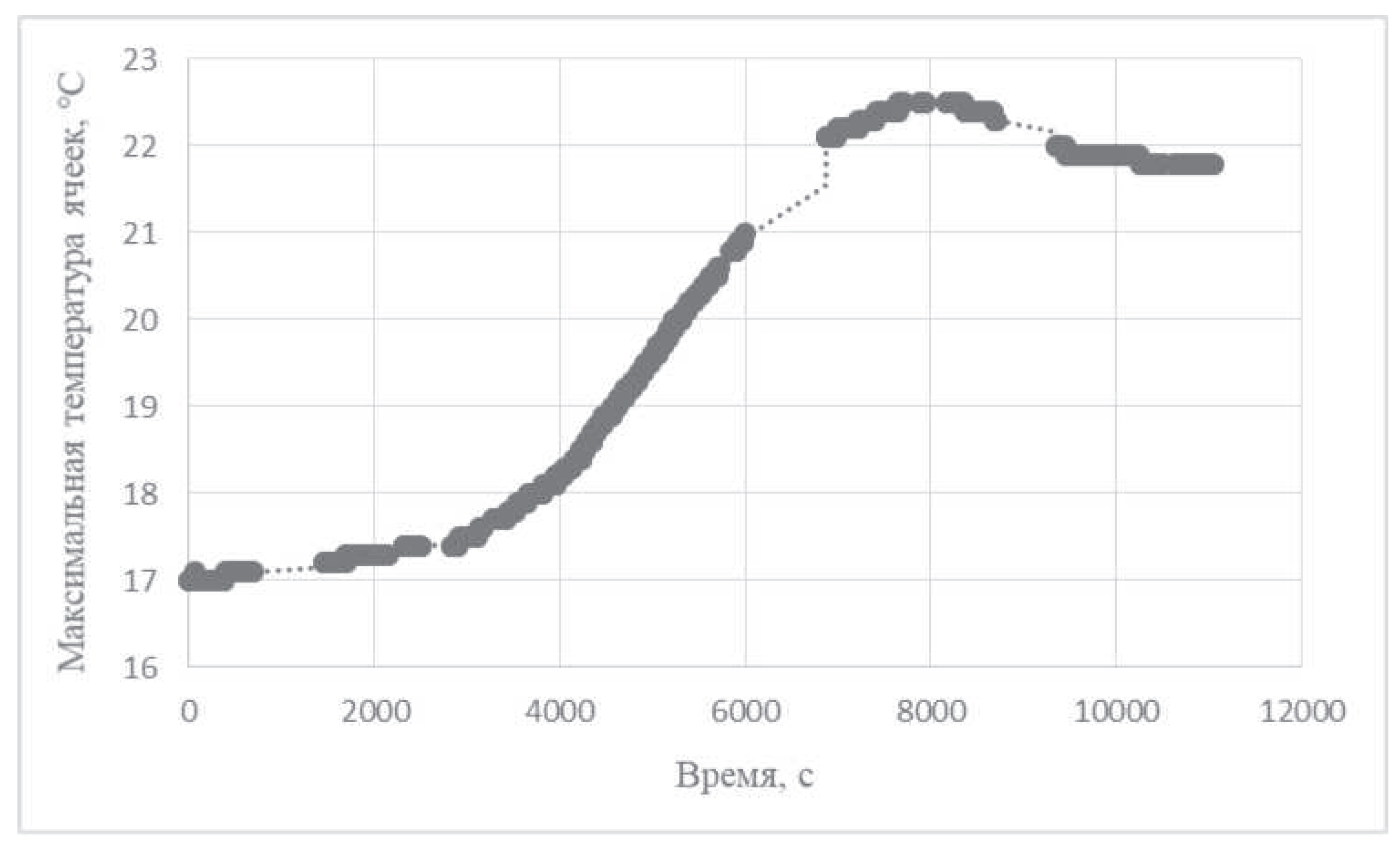

Table 1.
Characteristics of the Toshiba SCiB 2.9 Ah cell.
| Number | Item | Parameter |
| 1 | Nominal capacity | 2.9 Ah |
| 2 | Nominal voltage | 2.4 V |
| 3 | Output power (W) | 420*(SOC:50%, 10s25oC) |
| 4 | Input power (W) | 420*(SOC:50%, 10s25C) |
| 5 | Dimention (mm) | W63*D14*L97 |
| 6 | Weight (g) | Approx. 150 |
| 7 | Energy density (Wh/L) | 81.4 |
| 8 | Specific energy (Wh/kg) | 46.4 |
| 9 | Output power density (W/L) | 4909.2 |
| 10 | Output specific density (Wh/kg) | 2800 |
| 11 | Input power density (W/L) | 5610.5 |
| 12 | Input specific density (W/kg) | 3200 |
Table 2.
Characteristics of Thermolan coolant.
| Temperature of the tour, °C | Kinematic viscosity, cSt | Dynamic viscosity, sDr | Density, kg/cm3 | Heat capacity kJ/kgK | Heat transmission W/mK | Coefficient of volumetric expansion, 1°C |
| 0 | 98,1 | 82,89 | 845 | 2,140 | 0,146 | 6,9*10-4 |
| 20 | 31,8 | 26,49 | 833 | 2,184 | 0,142 | 7,1*10-4 |
| 40 | 15,2 | 12,34 | 812 | 2,271 | 0,138 | 7,3*10-4 |
| 60 | 8,1 | 6,45 | 796 | 2,360 | 0,134 | 7,5*10-4 |
| 80 | 5,7 | 4,45 | 780 | 2,449 | 0,129 | 7,7*10-4 |
| 100 | 3,8 | 2,93 | 772 | 2,542 | 0,125 | 7,9*10-4 |
| 120 | 3,2 | 2,43 | 758 | 2,633 | 0,121 | 8,1*10-4 |
| 140 | 2,45 | 1,81 | 739 | 2,722 | 0,118 | 8,3*10-4 |
| 160 | 1,91 | 1,38 | 724 | 2,817 | 0,114 | 8,5*10-4 |
| 180 | 1.57 | 1,11 | 705 | 2,904 | 0,110 | 8,7*10-4 |
| 200 | 1.26 | 0,87 | 693 | 2,993 | 0,107 | 8,9*10-4 |
| 220 | 1.08 | 0,73 | 674 | 3,086 | 0,103 | 9,1*10-4 |
| 240 | 0,91 | 0,6 | 654 | 3,175 | 0,100 | 9,3*10-4 |
Disclaimer/Publisher’s Note: The statements, opinions and data contained in all publications are solely those of the individual author(s) and contributor(s) and not of MDPI and/or the editor(s). MDPI and/or the editor(s) disclaim responsibility for any injury to people or property resulting from any ideas, methods, instructions or products referred to in the content. |
© 2026 by the authors. Licensee MDPI, Basel, Switzerland. This article is an open access article distributed under the terms and conditions of the Creative Commons Attribution (CC BY) license (http://creativecommons.org/licenses/by/4.0/).
Copyright: This open access article is published under a Creative Commons CC BY 4.0 license, which permit the free download, distribution, and reuse, provided that the author and preprint are cited in any reuse.


