
Submitted:
16 April 2026
Posted:
20 April 2026
You are already at the latest version
Abstract
This study investigates the effect of dust and environmental debris (soiling) on reflective components in Concentrated Solar Thermal (CST) systems, a phenomenon that significantly reduces specular reflectivity and overall optical efficiency. Recent research efforts in the field have focused on advanced coatings capable of modifying surface wettability to improve self-cleaning performance and reduce water consumption for maintenance. Traditional methods for evaluating wettability rely on static contact angle measurements to characterize hydrophobic or hydrophilic surfaces; however, this parameter alone does not adequately reflect actual water usage in cleaning operations, which is influenced by environmental conditions, particulate composition, and operational constraints.Experimental assessment in operational solar fields remains impractical, as no facilities are currently fully equipped with self-cleaning mirrors, leaving the real impact on water consumption largely unknown. To address this gap, a laboratory-based gravimetric methodology has been proposed to quantify water retained on mirror surfaces during cleaning. By systematically correlating surface wettability with water retention and cleaning efficiency under controlled conditions, this approach provides a predictive framework for estimating water use based on coating properties.The methodology offers a standardized way to compare self-cleaning surface technologies and supports the design of coatings that minimize water consumption while maintaining high reflectivity, ultimately contributing to more sustainable and efficient solar thermal systems.
Keywords:
solar mirrors
; CSP
; self-cleaning coating
; hydrophobic
1. Introduction
The optical efficiency of solar fields in Concentrated Solar Thermal (CST) plants is significantly compromised by the accumulation of dust and environmental debris on reflective components. This phenomenon, known as soiling, leads to a marked reduction in specular reflectivity and a subsequent decline in overall system performance [1]. Recent studies indicate that in arid regions, soiling can reduce the energy yield by up to 0.5% daily if left unmanaged, necessitating frequent and costly maintenance [2]. The operational expenditures (OPEX) associated with mirror cleaning has a significant influence on the Levelized Cost of Electricity (LCOE) in Concentrated Solar Power (CSP) plants, often accounting for 5% to 10% of total operating costs in high-soiling environments [3,4]. Precise optimization of cleaning frequencies and the adoption of water-saving mitigation strategies are therefore critical, as uncontrolled reflectivity losses can lead to a relevant increase in LCOE due to reduced annual energy production and high-water procurement costs [5,6].
To mitigate these OPEX costs, traditional cleaning strategies are increasingly being supplemented by passive mitigation techniques [7]. In recent years, research has pivoted toward advanced materials capable of modulating surface wettability. These solutions aim to minimize water consumption during maintenance cycles while sustaining peak reflectivity [2]. Specifically, the development of multifunctional coatings—such as superhydrophobic or photocatalytic surfaces—has shown promise in reducing the adhesion forces between particles and the mirror substrate [8]. Among the various strategies, the utilization of self-cleaning coatings appears most promising. This approach is based on the principle that modifying surface energy, achieving either superhydrophobic (water contact angle > 150°) or super hydrophilic <20°) states, can significantly reduce the water volume required for cleaning compared to standard solar glass [9]. However, while extensive experimental work has been conducted at the laboratory scale, field demonstrations remain limited to a few prototypes [10], and full-scale integration of coated mirrors in operational plants has yet to be realized [11].
Conventionally, such coatings are characterized by their static contact angle, which serves as the primary indicator of hydrophobic or hydrophilic behavior [12,13]. However, this parameter fails to provide a comprehensive representation of a material’s actual impact on cleaning efficiency and water conservation under real-word operational conditions. Since cleaning strategies in CSP plants are inherently site-specific—governed by variables such as microclimate, particulate composition, and water scarcity—a universally accepted metric for benchmarking water consumption across diverse facilities remains undefined [14]. Therefore, a “missing link” exists between surface chemistry (wettability) and operational metrics (liters of water saved per square meter). Consequently, quantifying the precise water savings facilitated by self-cleaning coatings or optimized surface treatments remains a significant challenge.
Existing literature underscores the intensive water requirements for solar mirror maintenance [15]. For instance, the Ouarzazate Solar Power plant in Morocco consumes approximately 1.7 million cubic meters of water annually, translating to 4.6 liters per kWh produced. This is more than double the consumption of a water-cooled coal-fired plant and twenty-three times higher than that of a dry-cooled facility [16]. To address these inefficiencies, several innovative technologies have been proposed [17,18]. Nevertheless, the establishment of a robust methodology for evaluating and comparing water usage is essential to validate the efficacy of these technologies and to catalyze their industrial-scale implementation.
Prior to the high-volume production of self-cleaning coatings—which entails significant manufacturing complexity and cost—it is vital to accurately project potential water savings. However, direct field comparisons between coated and uncoated solar fields often are logistically impractical. Therefore, an alternative framework is required to correlate coating performance with water consumption. To this end, the present study proposes a laboratory-based gravimetric approach to systematically estimate the water demand associated with mirror cleaning. Therefore, this study proposes a comprehensive, multi-scale framework that translates laboratory surface properties into predictive models for large-scale water consumption. Particularly, the proposed methodology is based on three steps: 1) Gravimetric Laboratory Analysis: a standardized methodology to physical quantify the volume of water retained by mirrors of varying surface treatments; 2) Mathematical Modeling: a predictive correlation that links static contact angles to dynamic water retention and run-off behaviors; 3) Field Validation: the integration of a site-specific “soiling factor”, calibrated via field-deployable samplers, to adapt laboratory baseline data to real-world desert conditions. By systematically correlating surface wettability with physical water retention and environmental soiling, this approach provides a robust tool to project OPEX savings, ultimately catalyzing the industrial-scale implementation of sustainable CST maintenance strategies.
2. Materials and Methods
To evaluate the water reduction potential of self-cleaning coatings on solar mirrors, a multi-scale experimental framework was developed. The methodology targets the definition of a laboratory-scale gravimetric procedure, whose results are intended for extrapolation to industrial-scale systems. A critical preliminary step involved the validation of the laboratory protocol by comparing the water retention data of uncoated mirrors with available operational data from CST plants. This comparison serves to establish whether a consistent correlation exists between controlled laboratory conditions and real-world cleaning processes.
2.1. Sample Preparation and Coating Deposition
The substrates used in this study are commercial solar mirrors provided by Società Vetraria Biancaldese SpA, sectioned 10x10cm specimens.
The self-cleaning Aluminum Nitride (AlN) coatings were deposited onto the mirror surfaces by means of a previously described sputtering deposition process [19].
For field characterization, prototypes panels were obtained by bonding the coated mirrors onto commercial Back Surface Mirrors (BSM), as detailed in the following paragraphs.
2.2. Surface and Optical Characterization
The wetting properties of the surfaces were assessed via static Water Contact Angle (WCA) measurements, using the direct optical drop-shape analysis method (KRUSS DSA-100).
The optical performance was characterized using a double-beam Perkin-Elmer Lambda 900 spectrophotometer, equipped with a 15 cm integrating sphere to measure global spectral reflectance and transmittance across the UV-VIS-NIR spectrum.
2.3. Laboratory Gravimetric Procedure for Water Retention
Water retention was quantified through a high-precision gravimetric method. Measurements were conducted using deionized water 10MΩ and a technical scale analytical balance (XS BALANCE mod. BL 2002), suitable for weighing glass sheets of 10 cm2 and operating in the temperature range of 10° to 40 °C. The procedure involved weighing the specimens before and 10 seconds after a standardized washing step. During the cleaning phase, samples were secured on a holder inclined at adjustable angles relative to the laboratory plane, and a predetermined volume of deionized water was applied via a controlled spray. Environmental parameters, including temperature and humidity, were recorded for each measurement to ensure reproducibility.
Figure 1 reports the scheme of the gravimetric procedure.
A system for tilting the sample to be measured was designed, as shown in Figure 2.
2.4. Field Testing and On-Site Reflectance Monitoring
Outdoor testing was performed at the ENEASHIP demonstrative Fresnel plant, located at the ENEA Research Center in Casaccia (Figure 3). On-site specular reflectance was monitored using a portable D&S R15-USB reflectometer. To ensure statistical significance, reflectance values were determined by averaging three measurements per 50 x 40 cm panel and nine measurements for the entire solar collector assembly. Data collection was repeated over distinct time intervals at fixed locations to accurately quantify reflectivity degradation and recovery due to soiling and subsequent cleaning cycles.
3. Results and Discussion
The experimental gravimetric data, obtained following the laboratory procedures described above, are summarized in Table 1.
For uncoated mirrors at ambient temperature with deionized water, retention was measured at 5.2 ± 0.3 mL per 10 cm2 sample. The data confirm that increased temperature slightly reduces water retention, likely due to decreased viscosity and faster runoff. Conversely, hard water marginally increases retention, consistent with stronger adhesion forces between ions and the surface.
As a first step in scaling laboratory data to real-world conditions, only the water retained on uncoated mirror surfaces was considered. Experimental results show that a 10 cm2 hydrophobic AlN based sample retained 5.2 mL of water, which mathematically corresponding to 5.2 L/m2. This quantity represents the water amount strictly held by the surface, excluding any additional water required for washing operations. When compared with real dry-cooled CSP plants such as the Redstone Solar Thermal Power Plant in South Africa, where mirror washing is estimated to require 26–244 L/m2 per year, [20] the laboratory value is consistent when scaled for the required number of cleaning cycles. The higher water use in the plant arises because more water is required to cover the entire mirror surface evenly, remove dust, and compensate for losses such as evaporation
Hydrophobic AlN based coating and superhydrophobic surfaces (Teflon) are designed to reduce water retention and thus minimize water consumption. Previous studies often report improvements in contact angle (WCA), assuming that higher angles directly reduce water usage [21]. However, there are no operational CSP data yet on full-scale installations of self-cleaning mirrors, so the actual savings remain uncertain. Laboratory experiments suggest that modifying the WCA alone is a major factor, but water retention is also influenced by other factors, such as: Surface roughness and morphology, Water chemistry (hardness, temperature), Cleaning protocol (spray pressure, inclination). Thus, while WCA is a useful predictor, a more complete approach is required to quantitatively estimate water savings.
3.1. Water Retention Model
To bridge the gap between microscopic wettability and macroscopic water consumption, a physical model must translate the WCA ( ) into volumetric terms. The water poured onto the surface behaves according to a balance between gravity, which pulls it downward, and the cohesive/adhesive forces with the surface, which determine whether it spreads or forms droplets.
To quantitatively describe water retention on mirror surfaces, a simplified physical model was adopted. The total water poured on a surface is partitioned into two components:
Where VRET is the volume of water retained on the surface after cleaning, Vrun-off is the volume that runs off the surface and η is the cleaning efficiency.
Crucially, both retention and run-off are mathematically tethered to the surface energy via the cosine of the contact angle, cos θ (see Figure 4).
Based on the present experimental work, water retention was modeled using the simplified relation:
where k is an experimentally determined constant reflecting surface morphology and chemistry. Controlled laboratory conditions allowed to determine k by plotting VRET against for each sample type and performing linear regression. The resulting slope corresponds to k. From gravimetric experiments, the following results were obtained:

Table 2.
Experimental WCA and resulting k.
| Surface | WCA (°) | k (mL/cm2) |
|---|---|---|
| Uncoated | 46.8 | 0.10 |
| Hydrophobic | 89.6 | 0.50 |
| Superhydrophobic | 126.1 | 1.00 |
While laboratory conditions allowed to isolate k, real-world cleaning efficiency η is deeply affected by the site’s specific contamination and washing procedures. Cleaning efficiency is defined as
where θ is the static water contact angle of the surface, β is a coefficient that depends on the washing procedure (spray opening and pressure, inclination of the mirror during cleaning operations, water composition) and the type of soiling of the site. corresponds to a clean surface. By measuring the retained volume versus total applied volume in the lab, β captures baseline operational parameters including mirror inclination, spray pressure, and water temperature. Particularly, to determine the coefficient β, gravimetric experiments were performed on mirror samples with different coatings and known contact angles. A controlled and measured volume of water was applied to each sample, and the amount of water retained on the surface (VRET ) was recorded. The volume that runs off (Vrun-off ) was then obtained by difference. The ratio of run-off water to total water provides an estimate of the retention efficiency η, also defined as the fraction of water that actively contributes to cleaning relative to the total applied.
Table 3.
Experimental WCA and fitted constants.
| Surface | WCA (°) | k (mL/cm2) | β |
|---|---|---|---|
| Uncoated | 46.8 | 0.10 | 0.95 |
| Hydrophobic | 89.6 | 0.50 | 0.70 |
| Superhydrophobic | 126.1 | 1.00 | 0.55 |
These constants allow prediction of water retention for any mirror area and cleaning scenario.
To make this model applicable to industrial CST/CSP plants, the parameter β must not remain a static laboratory constant. Instead, it must act as a dynamic operational variable, which can include dust, sand, salts, and organic deposits. These contaminants influence both the water retained on the surface and the water that runs off during cleaning. Therefore, β was expressed as a comprehensive parameter that captures both the influence of mirror geometry and washing methods, as well as the effect of surface soiling. In practice, this can be expressed by introducing a site-specific soiling factor :
where β0 represents the baseline efficiency for clean mirrors, and fdirt accounts for the type and severity of contamination (for example, fine, loosely adhering dust requires less water, while coarse sand or oily deposits increase the volume needed). By integrating soiling in this way, βeffective remains a single, physically meaningful parameter, avoiding the proliferation of additional constants while capturing essential operational effects.
3.2. Field Validation: Capturing Real-World Soiling Dynamics
Before projecting utility-scale water savings, the theoretical model must be anchored to actual environmental conditions. To quantify fdirt, literature data were used to characterize deposition rates, particle types, and adhesion properties typical of desert and arid environments, such as those of Redstone or Ouarzazate. Furthermore, to complement these data, a dedicated soiling sampler that accommodates standard silicon wafers was designed within this study. These wafers were exposed at the target site for a defined period, allowing natural deposition of dust and particulate matter. After retrieval, the wafers were analyzed to determine composition, particle size distribution, and adhesion characteristics. This procedure provides a practical and scalable input for calibrating βeffective, ensuring that the model reflects realistic water requirements for mirror cleaning under varying environmental and operational conditions.
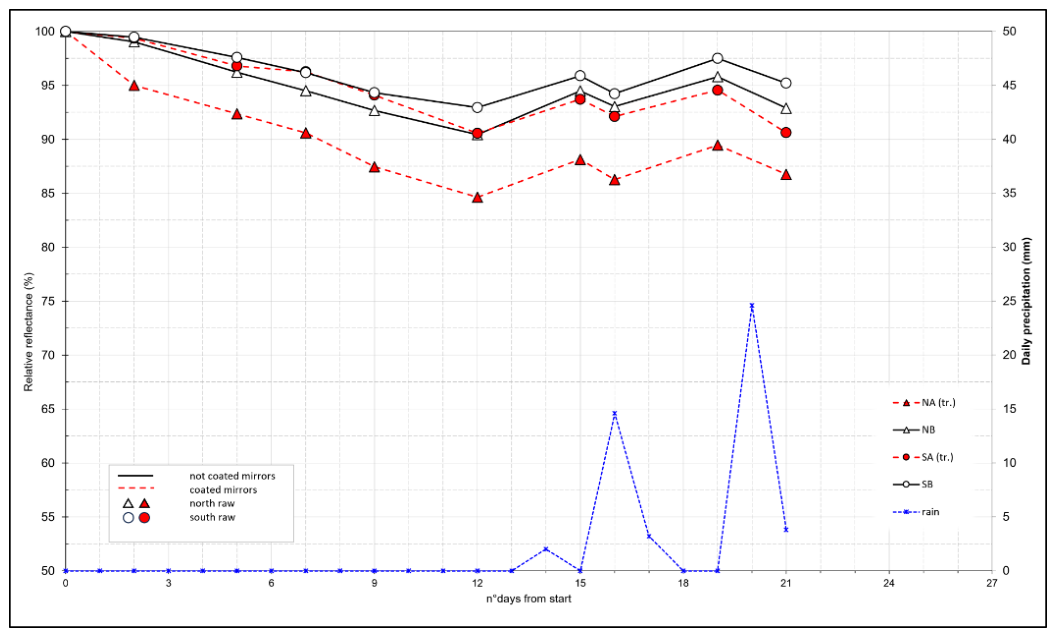
Furthermore, a field measurement campaign was conducted at the demonstrative Fresnel plant ENEASHIP in Rome, where no cleaning operations have been performed. Sample mirrors were positioned at different locations across the solar field to account for spatial variability in soiling. As shown in Figure 5, daily reflectance measurements allowed to track how quickly and unevenly the mirrors become soiled, revealing distinct degradation profiles between the north and south rows.
Figure 5.
Field-deployable soiling sampler (a) open position, (b) sampler containing a silicon wafer for FTIR characterization.
Figure 5.
Field-deployable soiling sampler (a) open position, (b) sampler containing a silicon wafer for FTIR characterization.
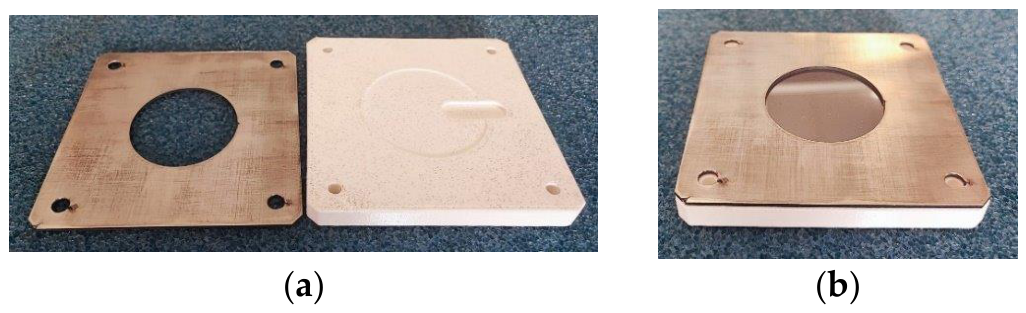
Figure 6.
Soiling measurement campaign on ENEA2 plant.
3.3. Case Study: Quantifying the Water Savings for Self-Cleaning Coatings
With the predictive framework established and validated, the operational impact of ENEA’s custom surface treatments was evaluated to demonstrate their industrial viability. Applying the model to AlN-based self-cleaning coatings, the following results (Table 4) were obtained:
For a standard uncoated mirror (WCA = 46.8°), extrapolating the baseline retention to a standard 1 m2 solar mirror surface corresponds to 52 mL of retained water strictly due to natural surface energy. In contrast, the hydrophobic AlN coating (WCA = 89.6°) significantly alters the fluid dynamics, reducing water retention to just 30 mL per m2. This represents a guaranteed baseline water saving of 42% per cleaning cycle compared to uncoated glass. Furthermore, substituting the surface with a superhydrophobic Teflon coating (WCA = 126.1°) demonstrated an even more dramatic retention reduction of 58%.
These figures are particularly relevant when scaled to a utility-scale CSP facility, such as the Ouarzazate plant, which consumes 1.7 million cubic meters of water annually [16]: a 42% to 58% reduction in the required cleaning volume translates to massive OPEX savings. The model presented here transforms static wettability parameters into economic and environmental projections, providing a highly practical tool for CSP/CST plant design and water management optimization.
This information is particularly useful for identifying areas where soiling is most pronounced, which in turn could inform targeted cleaning strategies, minimizing water use by cleaning only the most affected rows of mirrors. In this context the field measurements of mirror reflectance do not aim to demonstrate an immediate performance advantage of the coating under unwashed conditions. Since no periodic cleaning was performed during the 21-day exposure period, the observed evolution in reflectance is exclusively driven by natural soiling processes and the experimental data are used to quantify the temporal evolution of soiling rather than to assess cleaning-induced benefits. The resulting soiling dynamics are then employed to calibrate the soiling-related parameter in the predictive water consumption model.
Even in the absence of active cleaning, the resulting reflectance trends provide a practical and scalable dataset to calibrate the soiling factor in water consumption model, linking the physical accumulation of environmental contaminants to the operational parameters. With the model fully parameterized for real-world variables, it was reliably applied to estimate actual plant water requirements.
4. Conclusions
This study intends to bridge the gap between materials surface characterization and large-scale operational metrics in Concentrating Solar Thermal plants. While traditional coating evaluations rely heavily on static WCA measurements, this parameter alone is insufficient to predict dynamic water usage. Instead, a laboratory-based gravimetric methodology and a mathematical framework to quantify the exact volume of water retained on mirror surfaces during cleanings is here proposed.
By systematically correlating surface wettability (with scaling factors estimated at k ~ 0.1 for WCA=46.8° and k ~ 1 for WCA=126.1°) with site-specific soiling factors, a predictive model to evaluate the true water savings offered by advanced technologies is here established.
The results demonstrate that both surface properties and operational factors are critical in determining dirt removal efficiency, and that neither aspect alone can fully predict cleaning performance.
Applying this framework revealed an estimated water saving of 42% for hydrophobic AlN coatings (WCA = 89.6°) and up to 58% for superhydrophobic surfaces (WCA = 126.1°) per cleaning cycle.
These findings demonstrate that investing in tailored surface wettability is a highly viable pathway to drastically reduce operational water procurement costs. This quantitative approach provides a standardized framework to benchmark diverse self-cleaning coatings, ultimately supporting the design of more sustainable, water-efficient, and cost-effective solar thermal systems globally.
This integrated framework provides a robust tool for evaluating and comparing surface treatments, offering practical guidance for the design of self-cleaning or easy-to-clean materials. The methodology can be further extended to different contaminant types and cleaning protocols, enhancing its predictive power and applicability. Overall, these findings contribute to the development of more sustainable and cost-effective cleaning practices, reducing environmental impact while supporting improved energy efficiency in CSP plants.
Author Contributions
Conceptualization, A.C; methodology, A.C., M.L. and E.G; software, E.G.; validation, A.C.; formal analysis, A.C, M.L.; investigation, A.C. and E.G.; resources, A.C. and M.L.; data curation, E.G.; writing—original draft preparation, A.C, M.L.; writing—review and editing, A.C. and M.L.; visualization, G.V.; supervision, A.C., M.L.; project administration, A.C.; funding acquisition, A.C. All authors have read and agreed to the published version of the manuscript.
Funding
This research was funded the Italian Ministry of Environment and Energy Security through the “National Electric System Research” Programme – Project 1.9 “CSP/CST technology”, 2025-2027 implementation plan.
Institutional Review Board Statement
Not applicable.
Informed Consent Statement
Not applicable.
Conflicts of Interest
The authors declare no conflicts of interest.
References
- Sarver, T.; Al-Qaraghuli, A.; Kazmerski, L.L. A comprehensive review of the impact of dust on the use of solar energy: history, investigations, results, and applications. Renewable and Sustainable Energy Reviews 2013, 22, 310–333. [Google Scholar] [CrossRef]
- Mehos, M.; Turchi, C.; Jorgenson, J.; Ho, C.; et al. Technical Report NREL/TP-5500-65688; On the Path to SunShot: Advancing Concentrating Solar Power Technology, Performance, and Dispatchability. National Renewable Energy Laboratory (NREL), 2020.
- Sansoni, S.; Fontani, D.; Cigni, M.; et al. Impact of soiling on the LCOE of concentrated solar power plants: a review. Renewable and Sustainable Energy Reviews 2018, 97, 120–135. [Google Scholar] [CrossRef]
- Guillén, E.; García, P.; Hernández, M.; et al. Economic feasibility of anti-soiling coatings for solar reflectors. Solar Energy Materials and Solar Cells 2016, 158, 11–17. [Google Scholar] [CrossRef]
- Bouaddi, S.; Lamhamdi, T.; El Amrani, M.; et al. A cost-benefit analysis of different cleaning strategies for CSP plants in Morocco. Energy Procedia 2017, 119, 126–137. [Google Scholar] [CrossRef]
- He, G.; Zhou, C.; Li, Z.; et al. A review of the effects of dust deposition on solar photovoltaic systems. Renewable and Sustainable Energy Reviews 2011, 15(9), 4657–4666. [Google Scholar] [CrossRef]
- Zubair, M.; et al. A review of conventional and innovative sustainable methods for cleaning reflectors in concentrating solar power plants. Renewable and Sustainable Energy Reviews 2018, 97, 120–135. [Google Scholar] [CrossRef]
- Bellani, S.; Cossaro, A.; Maccato, C.; et al. Graphene-based coatings for solar energy applications. Nanoscale 2018, 10(42), 19652–19672. [Google Scholar] [CrossRef]
- Bhushan, B.; Jung, Y.C. Natural and biomimetic artificial surfaces for self-cleaning, low adhesion, and drag reduction. Progress in Materials Science 2011, 56(1), 1–108. [Google Scholar] [CrossRef]
- Aranzabe, E.; López, R.; Martínez, F.; et al. Self-cleaning anti-soiling coatings for solar mirrors: field test results. Solar Energy Materials and Solar Cells 2019, 193, 140–146. [Google Scholar]
- Wette, J.; Müller, R.; Schubert, M.; et al. Durability of antisoiling coatings for solar reflectors: accelerated weathering and outdoor exposure. Solar Energy 2016, 135, 374–383. [Google Scholar]
- Hoffmann, A.; Pérez, R.; Gómez, J.; et al. Cleaning and performance optimization of solar mirrors for CSP applications. Renewable and Sustainable Energy Reviews 2015, 44, 145–158. [Google Scholar] [CrossRef]
- Roth, M.; Klein, P.; Weber, S.; et al. Surface modification for self-cleaning coatings to reduce water consumption in solar mirror cleaning. Journal of Coatings Technology and Research 2018, 15(2), 313–320. [Google Scholar] [CrossRef]
- Schmitt, J.; Braun, A.; Keller, M.; et al. Hydrophobic surfaces and their role in reducing water requirements for solar mirrors. Solar Energy Materials and Solar Cells 2018, 187, 182–188. [Google Scholar] [CrossRef]
- Bichai, F.; Hassan, A.; Ali, M.; et al. Influence of surface wettability on water retention and cleaning efficiency of solar mirrors. Applied Surface Science 2017, 421, 258–265. [Google Scholar] [CrossRef]
- Boyer, H.; Leconte, P.; Durand, R.; et al. Water usage and optimization in CSP plants: a review of site-specific factors. Energy 2020, 201, 117415. [Google Scholar] [CrossRef]
- Allaire, S.E.; Zhang, X.; Smith, R.; et al. Scaling of water retention characteristics of soils in the laboratory to field conditions. In Soil Science Society of America Journal; 2005. [Google Scholar]
- Smith, J.; Brown, L.; Wilson, P.; et al. Porosity and water retention in concrete materials. Journal of Materials Science 2012. [Google Scholar]
- Rohani, S.; Abdelnabi, N.; Fluri, T.; Heimsath, A.; Wittwer, C.; Pérez Ainsua, J.G. Optimized mirror cleaning strategies in PTC plants reducing water consumption and levelized cost of cleaning. AIP Conference Proceedings 2019, 2126, 220004. [Google Scholar] [CrossRef]
- SolarReserve, ACWA Power. Redstone Solar Thermal Power Plant Environmental Management Programme (EMPr) – Water use and operational water management for construction and operation of the CSP plant. Environmental Management Programme Report, 2015. [Google Scholar]
- Jang, G.G.; Smith, D.B.; List, F.A.; Lee, D.F.; Ievlev, A.V.; Collins, L.; Park, J.; Polizos, G. The anti-soiling performance of highly reflective superhydrophobic nanoparticle-textured mirrors. Nanoscale 2018, 10, 14600–14612. [Google Scholar] [CrossRef] [PubMed]
- de Gennes, P.G.; Brochard-Wyart, F.; Quéré, D. Capillarity and Wetting Phenomena: Drops, Bubbles, Pearls, Waves; Springer, 2004. [Google Scholar]
- Israelachvili, J.N. Intermolecular and Surface Forces; Academic Press, 2011. [Google Scholar]
- Furmidge, C.G.L. Studies at phase interfaces. I. The sliding of liquid drops on solid surfaces and a theory for spray retention. Journal of Colloid Science 1962, 17(4), 309–324. [Google Scholar] [CrossRef]
- Castaldo, A.; Gambale, E.; Vitiello, G.; Cara, G. Self-cleaning solar mirror coatings: from laboratory scale to prototype field tests. Applied Sciences 2024, 14, 6669. [Google Scholar] [CrossRef]
Figure 1.
Scheme of gravimetric procedure.
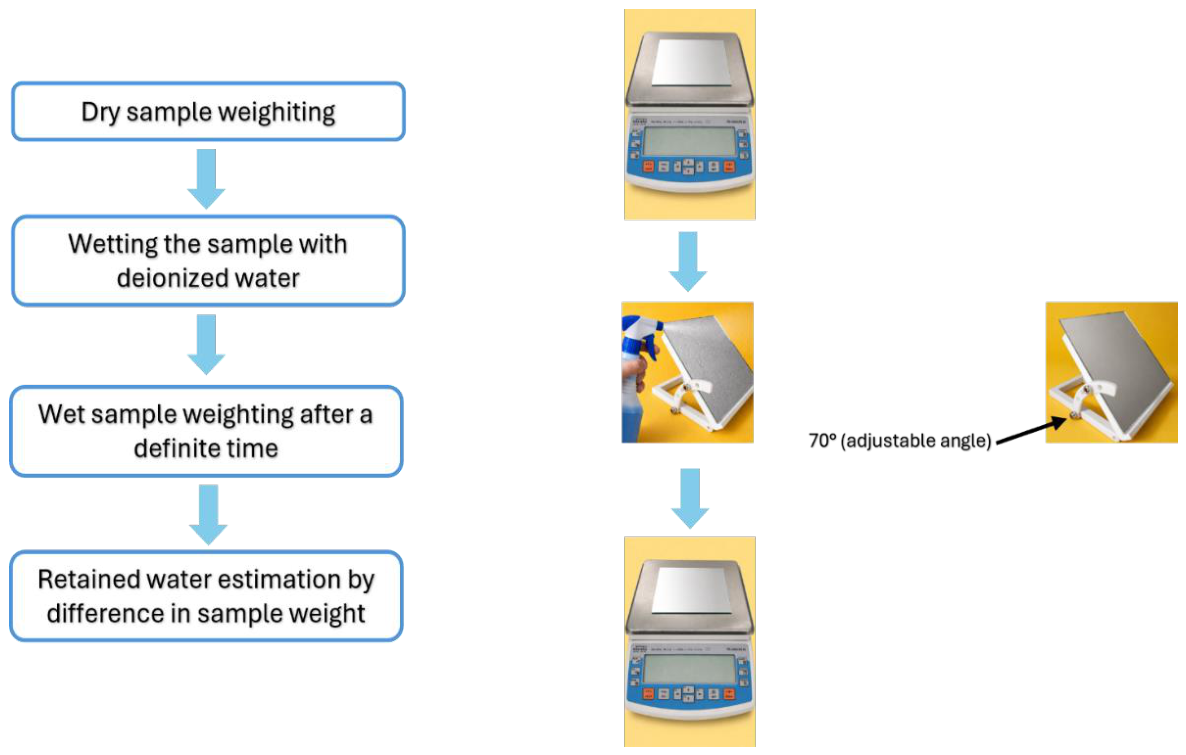
Figure 2.
Empty (a), occupied holder (b) and its lateral view (c).
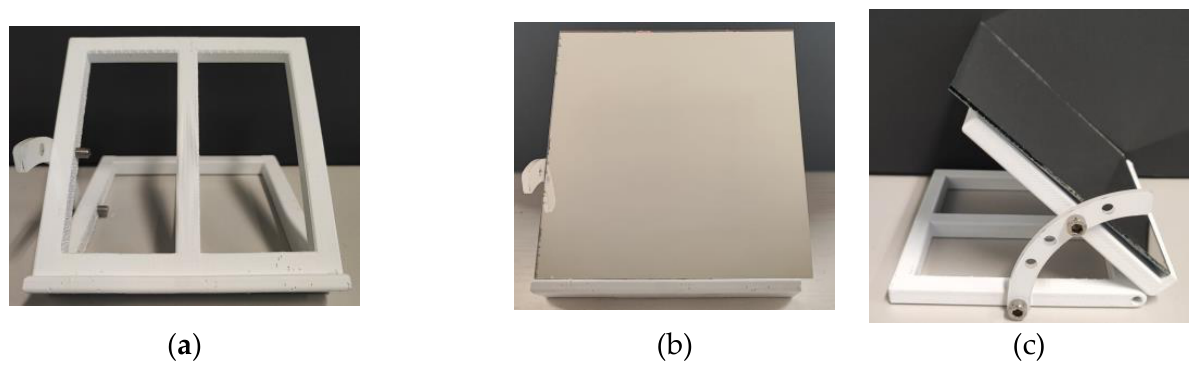
Figure 3.
Linear Fresnel plant located at the ENEA Casaccia Research Centre (Rome).
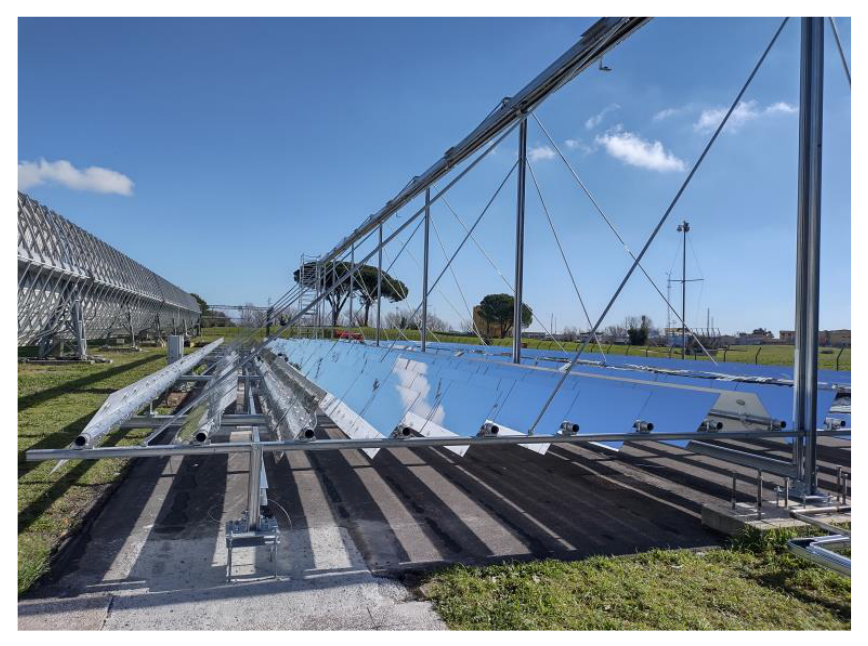
Figure 4.
Relationships between retention and/or run-off and WCA°.
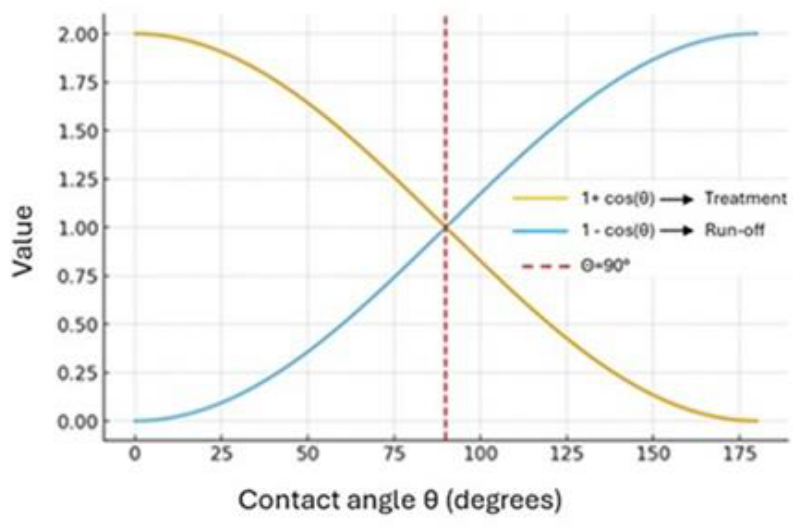
Table 1.
Experimental retained water data from different surfaces.
| Sample | WCA (°) | Water Type | Temperature (°C) | Retained Water (mL) |
|---|---|---|---|---|
| Uncoated | 46.8 | Deionized | 25 | 5.2 ± 0.3 |
| Hydrophobic AlN based | 89.6 | Deionized | 25 | 3.0 ± 0.2 |
| Superhydrophobic (Teflon) | 126.1 | Deionized | 25 | 2.2 ± 0.1 |
| Uncoated | 46.8 | Hard Water (47.7 °F) | 25 | 5.5 ± 0.3 |
| Hydrophobic AlN based | 89.6 | Hard Water | 25 | 3.3 ± 0.2 |
| Superhydrophobic (Teflon) | 126.1 | Hard Water | 25 | 2.4 ± 0.1 |
| Hydrophobic AlN based | 89.6 | Deionized | 40 | 2.8 ± 0.2 |
| Superhydrophobic (Teflon) | 126.1 | Deionized | 40 | 2.0 ± 0.1 |
Table 4.
Water savings of hydrophobic AlN-based selfcleaning coating.
| Coating | WCA (°) | V_RET (mL/10×10 cm2) | Water Saving vs Uncoated |
|---|---|---|---|
| Uncoated | 46.8 | 5.2 ± 0.3 | — |
| Hydrophobic | 89.6 | 3.0 ± 0.2 | 42% |
Disclaimer/Publisher’s Note: The statements, opinions and data contained in all publications are solely those of the individual author(s) and contributor(s) and not of MDPI and/or the editor(s). MDPI and/or the editor(s) disclaim responsibility for any injury to people or property resulting from any ideas, methods, instructions or products referred to in the content. |
© 2026 by the authors. Licensee MDPI, Basel, Switzerland. This article is an open access article distributed under the terms and conditions of the Creative Commons Attribution (CC BY) license (http://creativecommons.org/licenses/by/4.0/).
Copyright: This open access article is published under a Creative Commons CC BY 4.0 license, which permit the free download, distribution, and reuse, provided that the author and preprint are cited in any reuse.


