

Submitted:
16 April 2026
Posted:
18 April 2026
You are already at the latest version
Preprints on COVID-19 and SARS-CoV-2
Abstract
Neonatal calf diarrhea (NCD) is one of the most important problems of calf breeding across the world. It causes deaths in calves in the first 10 days of their life and it is mainly caused by E. coli, Bovine Rotavirus (BRV) and Bovine Coronavirus (BCoV). Ab-sence of an effective vaccine targeting the main causes of NCD makes disease control highly challenging. The current study aims to design multi-epitope mRNA based vac-cine targeting the major pathogens responsible for NCD using Immunoinformatic tools and molecular modelling approaches. BRV capsid protein VP6, BCoV Spike glycopro-tein and E. coli F5 fimbrial protein were used as antigenic proteins to predict potential epitopes. Fifteen selected epitopes were linked with suitable linkers and conjugated with build adjuvant, resulting in designing of stable, antigenic and non-allergenic vac-cine candidate against NCD pathogens. Furthermore, Molecular docking analysis shows strong binding affinity between the vaccine candidate and bovine Toll-like re-ceptors TLR2 and TLR4 at low energy and high stability. Based on these findings, the proposed multi-epitope vaccine represents a promising approach for prevention and control of neonatal calf diarrhea and provides a solid scientific foundation for future experimental studies to validate its efficacy and safety in vivo.
Keywords:
neonatal calf diarrhea
; multi-epitope vaccine
; mRNA vaccine
1. Introduction
Neonatal calf diarrhea (NCD) is one of the most significant health problems affecting newborn calves and representing a major cause of morbidity and mortality during the first weeks of their life. While several pathogens are behind infection of newborn calves with NCD, BCoV, BRV and E. coli K99 are the main and economically important causative agents of the disease [1,2].
BRV and BCoV are viral causes of NCD. In case of BRV, the virus infects mature enterocyte that locates at the tips of small intestine. This leads to impair of digestion and absorption then resulting in diarrhea, dehydration, electrolyte imbalance and growth retardation. In same manner BCoV infects small and large intestine causing sever and prolong diarrhea. Several studies documented increase the severity and duration of diarrhea in case of co infection of BCoV and BRV as compare with rotavirus infections alone [3]. In contrast to BCoV and BRV, E coli k99 doesn’t invade the intestinal epithelium but colonizes the gut through k99 antigen which binds to specific receptor on the intestinal epithelial cells. Then heat-stable enterotoxins produced by the bacteria induce diarrhea due to stimulation excessive secretion of fluids and electrolytes into the intestinal lumen [1].
Several studies documented that mixed infections involving viral and bacterial pathogens are frequently reported in neonatal calves and are associated with more severe clinical signs. These signs like high mortality rates and reduced response to treatment compared to single-pathogen infections. The interaction between Bovine BCoV, BRV and E coli k99 exacerbates intestinal damage and disrupts normal immune responses, increasing disease severity and economic losses in cattle industry [2].
NCD remains a serious problem for Livestock farm due to invalid of effective vaccine that can provide protective immunity for calves against the causative agents. Therefore, development of vaccine candidate targeting multi-pathogen of the disease is urgently needed. In recent years, advances in molecular biology and Immunoinformatics have facilitated designing of next-generation vaccines, including multi-epitope and mRNA-based vaccines, which offer several advantages over traditional vaccine platforms [4].
Recently, reverse vaccinology was used to design and evaluate vaccines against wide range of infectious pathogens. Most of these studies suggest that multi epitope vaccine are able to stimulate both humeral and cellular responses. In this type of vaccines epitopes from different pathogens can include in a single vaccine which provide a broad spectrum protection. Furthermore, combination these types of vaccines with mRNA platform provide high level of safety, rapid production and strong immune response without risk of genomic integration [5,6,7]. Development in molecular technique facilities the constructing process of multiepitope vaccine and enables to incorporate genetic elements such as build in adjuvants, untranslated regions (UTRs), Kozak sequences and strong promoters in vaccine construct thereby, enhancing antigen expression and immune stimulation, further improving vaccine efficacy [8].
Considering the high prevalence of mixed infections caused by Bovine Coronavirus, Bovine Rotavirus and Escherichia coli K99 the development of a heterogeneous multi-epitope mRNA vaccine represents a promising approach for prevention and control of neonatal calf diarrhea. Such this vaccine strategy has the potential to provide broad, effective and long-lasting immunity, ultimately reducing disease burden and economic losses in cattle industry.
2. Materials and Methods
Figure 1: Represents the work flow of the current study including design, prediction and Immunoinformatic evaluation processes of the proposed vaccine.
2.1. Sequence Retrieval of Protein
Proteins sequences of the target antigens from Bovine Coronavirus (BCoV), Bovine Rotavirus (BRV) and Enterotoxigenic Escherichia coli (ETEC) K99 (F5) were retrieved from the National Center for Biotechnology Information (NCBI) database. For BCoV, the spike (S) protein was selected due to its crucial role in viral attachment and induction of neutralizing antibodies. In case of BRV, the outer capsid protein VP7 was chosen as a major immunogenic antigen involved in protective immunity. While ETEC, the fimbrial protein K99 (F5) that mediates bacterial adhesion to the intestinal epithelial cells in neonatal calves was selected as a key virulence and vaccine target antigen. These proteins were selected based on their reported immunogenicity and relevance in the pathogenesis of neonatal calf diarrhea [1,9].
2.2. Epitope Mapping
Predicted B-cell epitopes, MHC class I and MHC class II T-cell epitopes were identified using immunoinformatics tools available through the Immune Epitope Database IEDB (https://www.iedb.org/) analysis resource. Default prediction parameters were applied to ensure standardized epitopes identification. Epitopes with high binding affinity scores, strong immunogenic potential, and the ability to stimulate both humoral and cellular immune responses were shortlisted. Overlapping epitopes among B-cell, MHC-I and MHC-II predictions were prioritized to enhance immune coverage and vaccine efficacy [10,11].
2.3. Bovine Homology
BLASTp was used to analyze of the predicted epitopes against the cattle proteome (TaxID: 9913) in the NCBI Database, also to identify any potential cross reaction. Default settings of the server were used. peptides with more than E-value of 0.05 were considered as non-homologous to cattle peptides.
2.4. Epitope Conservancy
To ensure broad-spectrum protection, the conservancy of the selected B-cell and T-cell epitopes was evaluated using the IEDB Epitope Conservancy Analysis Tool. Epitopes showed 100% sequence conservancy among different strains of each pathogen. These strains were selected for further vaccine construction. High epitope conservancy is essential to overcome antigenic variability and enhance cross-protective immunity against circulating strains of BCoV, BRV and ETEC K99 [12].
2.5. Assessment of B Cell and T Cell Epitopes
Antigenicity of the predicted epitopes derived from the Immune Epitope Database (IEDB) analysis was evaluated using the VaxiJen v2.0 web server (https://www.ddg-pharmfac.net/vaxijen/), with a threshold value of 0.5 to identify highly antigenic epitopes [13]. Only epitopes exceeding the defined threshold were considered antigenic and selected for further analysis.
Subsequently, the allergenicity of the shortlisted epitopes was assessed using the AllerTOP v2.0 server (https://www.ddg-pharmfac.net/AllerTOP/), which predicts the allergenic potential based on physicochemical properties [14]. Epitopes predicted as non-allergenic and antigenic were retained for construction of the multi-epitope vaccine candidate.
2.6. Assembly of the Final Multi-Epitope mRNA Vaccine
To construct the final multi-epitope mRNA vaccine candidate, highly conserved, antigenic, non-allergenic and overlappe epitopes derived from Bovine Coronavirus, Bovine Rotavirus and Escherichia coli K99 were assembled into a single vaccine construct. The selected epitopes were joined using appropriate linkers, including GPGPG, AAY and KK to maintain the independent immunogenicity of each epitope and to prevent junctional immunogenicity [15].
A built-in adjuvant sequence was incorporated into the vaccine construct to enhance immune stimulation. Additionally, molecular optimization elements such as optimized 5′ and 3′ untranslated regions (UTRs), a Kozak sequence, and a 26S subgenomic promoter were included to ensure efficient antigen expression and translation. This rational design strategy aims to enhance the stability, immunogenicity and overall efficacy of the proposed heterogeneous multi-epitope mRNA vaccine.
2.7. Profile of Physicochemical and Immunological Properties of the Construct
The physicochemical properties of the designed multi-epitope vaccine construct were evaluated using the ProtParam tool available on the ExPASy server (https://web.expasy.org/protparam/) [16]. The analyzed parameters included molecular weight, amino acid composition, theoretical isoelectric point (pI), aliphatic index, estimated half-life in vitro and in vivo based on the N-end rule, and the grand average of hydropathicity (GRAVY) value.
The antigenicity of the vaccine construct was predicted using the VaxiJen v2.0 web server, with a threshold value of 0.5 to identify the high antigenic candidates [13]. Furthermore, the allergenicity of the construct was assessed using the AllerTOP v2.0 server to ensure the safety of the designed vaccine by predicting its non-allergenic nature [14].
2.8. Prediction of Secondary Structure (2D)
The secondary structural features of the vaccine construct, including alpha-helices, beta-turns, and random coils were predicted using the PSIPRED v3.3 web server [17]. This analysis provided insight into the structural stability and folding patterns of the designed vaccine.
2.9. Prediction of Tertiary Structure (3D)
The three-dimensional (tertiary) structure of the constructed vaccine was predicted using the I-TASSER web server (https://zhanggroup.org/I-TASSER/) [18]. Among the generated models, the best-quality 3D structure was selected based on the confidence score (C-score), which typically ranges from −5 to +2, where a higher score indicates greater reliability of the predicted model.
2.10. Validation and Refinement of the Vaccine Model
The three-dimensional structure (3D) of the designed multi-epitope vaccine was refined using the GalaxyRefine web server (https://galaxy.seoklab.org/refine) to improve the overall structural quality and stability of the model [19]. The refinement process enhanced side-chain conformations and reduced structural clashes, resulting in a more reliable vaccine model. The refined vaccine structure was then validated using the RAMPAGE web server to analyze the Ramachandran plot, which assesses the stereochemical quality of the protein model [20]. The majority of amino acid residues were found within the favored and allowed regions, indicating good backbone geometry and acceptable conformational accuracy of the modeled vaccine structure. These validation results confirm the structural reliability and suitability of the refined vaccine model for subsequent immunoinformatics analyses, including molecular docking and immune interaction studies.
2.11. Molecular Docking of the Vaccine Candidate with Immune Receptors
Molecular docking analysis was performed to evaluate the interaction between the designed multi-epitope vaccine and the innate immune receptors TLR-2 and TLR-4 using the ClusPro v2.0 web server (https://cluspro.bu.edu) [21].
The three-dimensional structures of TLR-2 and TLR-4 were retrieved from the Protein Data Bank (PDB) and prepared for docking analysis. The modeled vaccine construct was docked separately with each receptor to assess binding affinity and interaction stability.
The best docked complexes were selected based on the lowest binding energy scores and optimal cluster size. Visualization and structural analysis of the docked complexes were performed using PyMOL to identify key binding residues and interaction interfaces between the vaccine construct and both TLR-2 and TLR-4 receptors. Additionally, the HDOCK web server was employed to further validate the docking results and enhance the reliability of the predicted interactions. These analyses suggest a strong potential of the designed vaccine to stimulate innate immune responses through effective interaction with TLR-2 and TLR-4 receptors.
2.12. Molecular Dynamic Simulations (MDs)
iMODS server have been used to authorize the physical dynamics of molecules and atoms within the receptor –vaccine complex. Complex with most favorable energy have been selected for the analysis. Through iMODS server, the stability with molecules and atoms was assessed.
2.13. Immune Simulation of the Vaccine Candidate
The C-ImmSim server [22] was used to assess the ability of the proposed vaccine to stimulate protective immune response within the host against the target pathogens. The proposed vaccine was evaluated based on three injections at four-week interval.
3. Results
3.1. Retrieval and Analysis of Selected Proteins Sequences
Bovine Coronavirus spike protein (BCoV, Accession no. P15777); Bovine Rotavirus VP6 protein (BRV, Accession no. Q68YC9) and Escherichia coli K99 fimbrial protein (K99, Accession no. WP_089508147.1) have been selected as target antigens. All three proteins were analyzed for antigenicity using the VaxiJen v2.0 web server, and the results indicated that all proteins are antigenic and capable of eliciting immune responses, with scores exceeding the threshold values.
3.2. Perdition and Evaluation of T and B Cell Epitopes
All potential epitopes in the three proteins were screened to select fully conserved, antigenic, and non-allergenic epitopes. From Bovine Coronavirus spike protein (BCoV spike protein): 2 THL epitopes, 2 CTL epitopes and 2 LBL epitopes were selected. While 2 THL epitopes, 1 CTL epitope and 1 LBL epitope were selected from Bovine Rotavirus VP6 protein (BRV VP6 protein). Finally, 2 THL epitopes, 2 CTL epitopes and 1 LBL epitope were selected from Escherichia coli K99 protein (E. coli K99 protein). As shown in Table 1, Table 2 and Table 3 all selected epitopes were combined to construct the proposed vaccine.
3.3. Construction of the Multi-Epitope mRNA Vaccine
As show in Figure 2A, Five CTL, six HTL and four LBL epitopes were selected to construct the proposed vaccine. AAY, GPGPG, and KK linkers were employed to fuse the epitopes and to prevent the epitope from interfering. To enhance immunogenicity, RpfE was incorporated as a built-in adjuvant, along with the Kozak sequence at the 5′ end via the EAAAK linker. Additionally, 5′ and 3′ untranslated regions (UTRs) were added to ensure stability and optimal expression.
3.4. Physicochemical and Immunological Analysis of the Proposed Vaccine
Immunogenicity of the vaccine was primarily predicted using VaxiJen and AllerTOP v1.1. The result shows that the proposed vaccine is antigenic with antigenic score two-times more than threshold score with probable not allergen to the selected host. ProtParam web server has used to predict phscichmical properties of the proposed vaccine. Table 3 summarizes main physicochemical characters of the proposed vaccine include.

Table 4.
Immunogenic and physicochemical characteristics of the vaccine construct.
| Characteristic | Measurement | Remark |
|---|---|---|
| Total number of amino acids | 377 | Suitable |
| Molecular weight | 39070.24 | Appropriate |
| Theoretical pI | 9.26 | Basic |
| Formula | C1702H2625N499O540S11 | ------- |
| Predicted half-life (Escherichia coli, in vivo) | 10h | ----- |
| Predicted half-life (mammalian reticulocytes, in vitro) | 1.9h | ------ |
| Predicted half-life (yeast-cells, in vivo) | 20h | ----- |
| Grand average of hydropathicity (GRAVY) | -0.479 | Hydrophilic |
| Instability index of vaccine | 25.07 | stable |
| Antigenicity | 1.1056 | antigenic |
| Allergenicity | Non-allergic | Non-allergic |
| Toxicity | Nontoxic | Nontoxic |
3.5. Secondary and 3D Structure of the Proposed Vaccine Construct
The Figure 2b shows that vaccine contained 20.7% (78/377) α-helices, 13% (49/377) extended strands, and 66.3% (250/377) random coils. The predicted secondary structure of the proposed vaccine refers to high possibility to recognize it by immune cell. 3D structure of the vaccine construct was predicted using I-TASSER server. The server predicts five models (1-5) with different com Score (CS) of -2.32, -2.15, 3.14, -3.66 and -3.66 respectively. We chose model one with CS of -2.32 (Figure 3A) then the selected model was refined with The Galaxy Refine server. Model in (Figure 3B) was selected among five refined model based on five structural validation metrics including GDT-HA score, RMSD score, MolProbity score, and Clash score. The selected models record GDT-HA score of 0.8879, RMSD score of 0.571, MolProbity score of 2.346 and Clash score of 15.7 which is best validation score among the five predicted models. As shown in the Figure 3C the Z-score of the refined model was -2.88 (Figure 3C). other validation and quality of the refine structure was predicted using SAVE web server. The structure has overall quality factor of 69.8925, While The Ramachandran plot (Figure 3D) show that 97.2% of residues allowed regions, and 0.9% were in disallowed regions. Overall all, the predicted validation metrics refer to good quality of the model and could be used for further analysis.
3.6. Prediction of Discontinuous B-Cell Epitopes
Analysis of the proposed vaccine with the ElliPro server shows that this vaccine contains four Discontinuous B-Cell Epitopes (Figure 4). All predicted epitopes have score above 0.5. with different number of amino acids. Table 4 shows the predicted epitopes and number of residues along with score for each predicted epitope.
Table 4.
The discontinuous B cell epitopes residues of the vaccine candidate.
| No | Residues | Number of residues | score |
|---|---|---|---|
| 1 | A:N354, A:W355, A:S356, A:A357, A:Q358, A:S359, A:R360, A:R361, A:E362, A:N363, A:P364, A:V365 | 12 | 0.875 |
| 2 | A:G111, A:T112, A:Q113, A:P114, A:Q115, A:K116, A:V124, A:N125, A:N126, A:T127, A:W128, A:P134, A:G135, A:T136, A:N137, A:V138, A:G139, A:N140, A:G141, A:S142, A:G143, A:G144, A:G145, A:P146, A:G147, A:P148, A:G149, A:G150, A:N151, A:G152, A:S153, A:G154, A:G155, A:A156, A:N157, A:I158, A:N159, A:T160, A:S161, A:F162, A:T163, A:T164, A:A165, A:A166, A:Y167, A:N168, A:N169, A:C170 | 48 | 0.729 |
| 3 | A:S1, A:V2, A:N3, A:W4, A:D5, A:A6, A:I7, A:A8, A:Q9, A:S10, A:E11, A:S12, A:G13, A:G14, A:N15, A:W16, A:S17, A:I18, A:N19, A:T20, A:A27, A:I29, A:F30, A:T31, A:A32, A:G33, A:T34, A:G39, A:G40, A:S41, A:G42, A:S43, A:A44, A:A45, A:N46, A:A47, A:S48, A:R49, A:Q52, A:V55, A:A56, A:E57, A:N58, A:V59, A:L60, A:R61, A:S62, A:Q63, A:G64, A:I65, A:A67, A:W68, A:P69, A:V70, A:C71, A:G72, A:G75, A:E76, A:T87, A:C88, A:G89, A:P90, A:G91 | 63 | 0.691 |
| 4 | A:K282, A:F283, A:C284, A:G295, A:N296, A:G297, A:P298, A:D301, A:A302, A:G303, A:Y304, A:N306, A:S307, A:G308, A:I309, A:G310, A:T311, A:K312, A:K313, A:G314, A:R315, A:K316, A:V317, A:D318, A:L319, A:Q320, A:L321, A:G322, A:L324, A:G325, A:L327, A:Q328, A:S329, A:F330, A:N331, A:Y332, A:R333, A:I334, A:D335, A:T336, A:T337, A:K338, A:K341, A:T342, A:I343, A:N344, A:F345, A:N346, A:N347, A:S348, A:S349, A:Q350, A:S351, A:I352, A:Y366, A:E367, A:Y368, A:K369, A:N370, A:P371, A:M372, A:V373 | 62 | 0.675 |
3.7. Molecular Docking of the Vaccine Candidate with Bovine TLR2 and TRL4
AS mentioned in method section the ClusPro v2.0 web server for molecular docking of Vaccine with the selected immune receptors (Bovine TLR2 and Bovine TLR4). The server predicted 10 possible complexes for each receptor. In case of TLR2, model 1 was selected with lowest energy score of -1127 (Figure 5A). While lowest energy of model 1 of Vaccine –Bovine TLR4 was -1942.4 (Figure 6A). The PDBsum web server was used to predict the interacting residue within the complexes. As shown in Figure 5B-D, there are 22 and 26 residues interface, generating interface area 1456 and 1425 between TLR2 and vaccine, respectively. The results show that TLR2-Vaccine complex formed 1 salt bridge, 3 hydrogen bonds, and 170 nonbonding contacts. In case of vaccine- TRL4, there are 32 and 32 residues interface, generating interface area 1605 and 1508 between TRL4 and vaccine respectively. 1 salt bridge, 11 hydrogen bonds, and 173 nonbonding contacts were found within vaccine-TRL4 complex (Figure 6B-D). Normal mode analysis (NMA) of the vaccine-TLR complexes were predicted using iMODS server. The Figure 7A-B illustrated the deformability plot Which shows low deformity in the vaccine –TRL2 complex (Figure 7A) and vaccine –TRL4 complex (Figure 7B). This result predicted high stability and flexibility of the two complexes. A comparison between NMA and PDB for the vaccine-TLR was presented in Figure 7C-D. In both complexes, the similarity between predicted NMA and PDB refers to overall structural stability with localized flexible regions of the candidate construct. In Figure 7F-E, pure purple refers to individual variance with a clear exponential-like increase as the mode index increases. Both constructs are highly stable however vaccine –TRL4 is more rigid and stable scaffold (Figure 7E) than vaccine-TLR2 (Figure 7F).
Covariance matrix was represented in Figure 7G-H where the correction between residue pairs has been detected. Finally, Combination of the vaccine within the receptor was predicted using the elastic network model (Figure 7 I-G). Overall the results predicted that the tested complexes are strong and stable.
3.8. Immune Simulation of the Proposed Vaccine
The C-ImmSim web server was used to simulate immune responses after three injections of the proposed vaccine. The results in general show that the vaccine is able to induce humeral and cellular responses (Figure 8). The Figure 8A shows rapid and significant increase in the titer of antibody after injection of the proposed vaccine. Number of Memory B cell was also increase after immunization and reach to 700 cells/mm3 and stay high which refers to long term protection of proposed vaccine (Figure 8B). While concentration of B-cell per acitvivated state was 480–510 cells/mm3(Figure 8C). In the same manner, TH and TC were also notably increase in response to injection of the proposed vaccine where the helper T cell enhanced immune regulation and coordination while T cytotoxic targeting and elimination of infected cells (Figure 8D-G).
3.9. mRNA Vaccine Structure and In Silico Codon Optimization
Codon optimization for the sequence of proposed vaccine was performed using VectorBuilder (USA)web server. Optimization of the sequence was performed using default setting except host was change to cow as the target host. GC content of the sequence become 59.68% after optimization while CAI was 0.87 which overall refer to high translation possibility of RNA within the cow body. the RNAfold web server was used to predict the structural arrangement of the RNA molecule. The results show that the centroid secondary structure free energy was −240.10 kcal/mol(Figure 9B), while the thermodynamic ensemble was −321.42 kcal/mol(Figure 9A). In general, the result of thermodynamic robustness predict that tested modeled RNA was good and stable.
4. Discussion
Neonatal calf diarrhea is a multifactorial disease mainly caused by Bovine Coronavirus (BCoV), Bovine Rotavirus (BRV) and Escherichia coli K99, leading to severe economic losses and high mortality during the first weeks of life [2]. Infected calves with more than one NCD causes are frequently reported in many recent studies. Furthermore, theses studies suggest that clinical sign of mixed infectious are more sever than single type of infection with NCD causes [23]. Invalid of commercial vaccine that targeting the three main causes of NCD, make control of the disease is difficult. In recent years several multi-epitopes based vaccines were designed against wide ranges of infectious disease agents using Immunoinformatic tool. Promising results were gotten from evaluate some of these vaccines in term of its ability to induce immune response within animal model or providing protective immunity against the target agent. However multifactorial disease involving more than one pathogen are urgently need to innovative vaccine that provide protection across strains [24]
Recent advances in Immunoinformatic tools along with structural biology leads to possible use of fusion strategy to develop multivalent vaccine against heterogeneous pathogens. Yang and his colleague utilized from this strategy to design chimeric multi-epitope vaccine targeting influenza A and Mycoplasma pneumonia [25] while Mohammadipour and his colleague targeting SARS-CoV-2 and influenza viruses using single multi-epitope vaccine [26]. During the COVID-19 outbreak, numerous studies focused on designing and evaluating mRNA vaccines against several important pathogens. mRNA vaccines offer multiple advantages, including rapid and straightforward development, relatively low production costs, and a strong safety profile, as they do not pose a risk of genomic integration [27].
In this study, chimeric multi-epitope vaccine targeting Bovine corona virus, bovine Rota virus and E. coli k99 as major causes of NCD were designed using Immunoinformatic and molecular modelling approaches. According to their role in pathogenicity and initiation of infection, three proteins of targeted pathogens were selected to constructed the vaccine candidate. The proposed vaccine consists from 15 epitopes in total with adding building adjuvant to increase immune response. furthermore, the proposed vaccine was tested using set of Immunoinformatic tools in term of predict its antigenicity, stability and ability to induce immune response within the target host. Structural modelling refer that the vaccine is conformation stable and high possibility to it recognize by immune cells. Furthermore, docking analysis show the proposed vaccine able to interact with bovine TRL2 and Bovine TLR4 at low energy. Moreover, immune simulation predicts vaccine ability to induce strong humeral and cellular response. Overall, the proposed vaccine can a promising option for control of NCD. However, several wet laboratory studies are required in term to confirm several issues including expression of the mRNA based vaccine within the host, safety of the vaccine, ability to induce specific immunity again the selected pathogen and protective efficiency against natural experimental infection with NCD pathogen.
5. Conclusions
In conclusion, Immunoinformatic tool and molecular modeling approaches were used to design chimeric multi-epitope vaccine targeting BCV, BRV and E. coli k99 as main causes of NCD in calves. Spike, VP6 and K99 are the target protein antigen were used it in predict and select the chimeric epitope. Set of informatics tool have been used to evaluate stability, antigenicity and other immunological and physiochemical properties of the vaccine construct. Immunoinformatic analysis predict that the proposed vaccine is stable and able to induced protective immune response. However, laboratory based experiments are needed to confirm efficiency and safety of the vaccine.
Author Contributions
Amjed Alsultan: Identified highly antigenic proteins within the BCV, BRV and E coli k99. Mariam Hassan and Dhama Alsallami: Software and analysis. All authors have read, reviewed, and approved the final manuscript.
Funding
No funding was receiving for this manuscript.
Institutional Review Board Statement
Not applicable.
Informed Consent Statement
Not applicable.
Data Availability Statement
Data available on request form corresponding author Amjed AL sultan.
Acknowledgments
The authors thank the Deanship of the Veterinary Medicine College, Al-Qadisiyah University for providing the necessary facilities for this study.
Conflicts of Interest
The authors declare there is no conflict of interest.
References
- Foster, D.M.; Smith, G.W. Pathophysiology of diarrhea in calves. Vet Clin North Am Food Anim Pract 2009, 25(1), 13–36. [Google Scholar] [CrossRef] [PubMed]
- Cho, Y.I.; Yoon, K.J. An overview of calf diarrhea – infectious etiology, diagnosis, and intervention. J Vet Sci. 2014, 15(1), 1–17. [Google Scholar] [CrossRef]
- Kostanić, V.; Kunić, V.; Prišlin Šimac, M.; Lolić, M.; Sukalić, T.; Brnić, D. Comparative insights into acute gastroenteritis in cattle caused by bovine rotavirus A and bovine coronavirus. Vet Sci. 2024, 11(12), 671. [Google Scholar] [CrossRef]
- Maier, G.U.; Breitenbuecher, J.; Gomez, J.P.; Samah, F.; Fausak, E.; Van Noord, M. Vaccination for the prevention of neonatal calf diarrhea in cow-calf operations: a scoping review. Vet Anim Sci. 2022, 15, 100238. [Google Scholar] [CrossRef]
- Pardi, N.; Hogan, M.J.; Porter, F.W.; Weissman, D. mRNA vaccines — a new era in vaccinology. Nat Rev Drug Discov. 2018, 17(4), 261–79. [Google Scholar] [CrossRef]
- Maier, G.U.; Breitenbuecher, J.; Gomez, J.P.; Samah, F.; Fausak, E.; Van Noord, M. Vaccination for the prevention of neonatal calf diarrhea in cow-calf operations: A scoping review. Vet Anim Sci. 2022, 15, 100238. [Google Scholar] [CrossRef]
- Pumchan, A.; Proespraiwong, P.; Sawatdichaikul, O.; Phurahong, T.; Hirono, I.; Unajak, S. Computational design of novel chimeric multiepitope vaccine against bacterial and viral disease in tilapia (Oreochromis sp.). Scientific Reports 2024, 14(1), 14048. [Google Scholar] [CrossRef]
- Leong, K.Y.; Tham, S.K.; Poh, C.L. Revolutionizing immunization: a comprehensive review of mRNA vaccine technology and applications. Virol J. 2025, 22(1), 71. [Google Scholar] [CrossRef] [PubMed]
- Zhang, H.; Yuan, X.; He, Y.; Chen, Y.; Hu, C.; Chen, J.; Zhang, L.; Chen, X.; Guo, A. A novel multiepitope fusion antigen as a vaccine candidate for the prevention of enterotoxigenic E. coli-induced calf diarrhea. Vaccines 2024, 12(5), 457. [Google Scholar] [CrossRef] [PubMed]
- Zhang, Q.; Wang, P.; Kim, Y.; Haste-Andersen, P.; Beaver, J.; Bourne, P.E.; Bui, H.H.; Buus, S.; Frankild, S.; Greenbaum, J.; Lund, O. Immune epitope database analysis resource (IEDB-AR). Nucleic acids research 2008, 36 (suppl_2), W513–8. [Google Scholar] [CrossRef]
- Vita, R.; Mahajan, S.; Overton, J.A.; Dhanda, S.K.; Martini, S.; Cantrell, J.R.; Wheeler, D.K.; Sette, A.; Peters, B. The immune epitope database (IEDB): 2018 update. Nucleic acids research 2019, 47(D1), D339–43. [Google Scholar] [CrossRef] [PubMed]
- Bui, H.H.; Sidney, J.; Dinh, K.; Southwood, S.; Newman, M.J.; Sette, A. Predicting population coverage of T-cell epitope-based diagnostics and vaccines. BMC bioinformatics 2006, 7(1), 153. [Google Scholar] [CrossRef]
- Doytchinova, I.A.; Flower, D.R. VaxiJen: a server for prediction of protective antigens, tumour antigens and subunit vaccines. BMC bioinformatics 2007, 8(1), 4. [Google Scholar] [CrossRef]
- Dimitrov, I.; Bangov, I.; Flower, D.R.; Doytchinova, I. AllerTOP v. 2—a server for in silico prediction of allergens. Journal of molecular modeling 2014, 20(6), 2278. [Google Scholar] [CrossRef]
- Chen, X.; Zaro, J.L.; Shen, W.C. Fusion protein linkers: property, design and functionality. Advanced drug delivery reviews 2013, 65(10), 1357–69. [Google Scholar] [CrossRef]
- Gasteiger, E.; Hoogland, C.; Gattiker, A.; Duvaud, S.E.; Wilkins, M.R.; Appel, R.D.; Bairoch, A. Protein identification and analysis tools on the ExPASy server. In InThe proteomics protocols handbook; Humana press: Totowa, NJ, 22 Mar 2005; pp. 571–607. [Google Scholar]
- McGuffin, L.J.; Bryson, K.; Jones, D.T. The PSIPRED protein structure prediction server. Bioinformatics 2000, 16(4), 404–5. [Google Scholar] [CrossRef]
- Roy, A.; Kucukural, A.; Zhang, Y. I-TASSER: a unified platform for automated protein structure and function prediction. Nature protocols 2010, 5(4), 725–38. [Google Scholar] [CrossRef]
- Heo, L.; Park, H.; Seok, C. GalaxyRefine: Protein structure refinement driven by side-chain repacking. Nucleic acids research 2013, 41(W1), W384–8. [Google Scholar] [CrossRef]
- Lovell, S.C.; Davis, I.W.; Arendall, W.B., III; De Bakker, P.I.; Word, J.M.; Prisant, M.G.; Richardson, J.S.; Richardson, D.C. Structure validation by Cα geometry: ϕ, ψ and Cβ deviation. Proteins: Structure, Function, and Bioinformatics 2003, 50(3), 437–50. [Google Scholar] [CrossRef] [PubMed]
- Guo, W.; Wang, X.; Hu, J.; Zhang, B.; Zhao, L.; Zhang, G.; Qi, J.; Wei, Z.; Bao, Y.; Tian, M.; Wang, S. In silico design of a multi-epitope vaccine against Mycobacterium avium subspecies paratuberculosis. Frontiers in Immunology 2025, 16, 1505313. [Google Scholar] [CrossRef] [PubMed]
- Rapin, N.; Lund, O.; Bernaschi, M.; Castiglione, F. Computational immunology meets bioinformatics: the use of prediction tools for molecular binding in the simulation of the immune system. PloS one 2010, 5(4), e9862. [Google Scholar] [CrossRef]
- Brunauer, Michael; Roch, Franz-Ferdinand; Conrady, Beate. Prevalence of worldwide neonatal calf diarrhoea caused by bovine rotavirus in combination with bovine coronavirus, Escherichia coli K99 and Cryptosporidium spp.: a meta-analysis. Animals 2021, 11(no. 4), 1014. [Google Scholar] [CrossRef] [PubMed]
- Alawadi, Z.I.; Alsultan, A.; Alsallami, D.; Alnomasy, S.F.; Alqasmi, M.; Almufarriji, F.M.; Alotaibi, B.S.; Mazhari, B.B.; Alenazy, R. Designing a multiepitope mRNA-based vaccine against enterotoxigenic Escherichia coli infection in calves: immunoinformatics and molecular modeling approach. Open Veterinary Journal 2024, 14(6), 1417. [Google Scholar] [CrossRef] [PubMed]
- Yang, Z.; Li, Y.; Chen, L.; Jia, S. Designing a broad-spectrum multi-epitope vaccine against influenza A and Mycoplasma pneumoniae: an immunoinformatics approach. Frontiers in Public Health 2026, 14, 1671035. [Google Scholar] [CrossRef] [PubMed]
- Mohammadipour, S.; Tavakkoli, H.; Fatemi, S.N.; Sharifi, A.; Mahmoudi, P. Designing a multi-epitope universal vaccine for concurrent infections of SARS-CoV-2 and influenza viruses using an immunoinformatics approach. BMC Infectious Diseases 2025, 25(1), 688. [Google Scholar] [CrossRef]
- Chaudhary, N.; Weissman, D.; Whitehead, K.A. mRNA vaccines for infectious diseases: principles, delivery and clinical translation. Nature reviews Drug discovery 2021, 20(11), 817–38. [Google Scholar] [CrossRef]
Figure 1.
Flow chart represents work flow of the study. The chart shows processes to design of MEVC starting from choosing the antigenic proteins, immune simulation, and construct of the final form of the vaccine.
Figure 1.
Flow chart represents work flow of the study. The chart shows processes to design of MEVC starting from choosing the antigenic proteins, immune simulation, and construct of the final form of the vaccine.
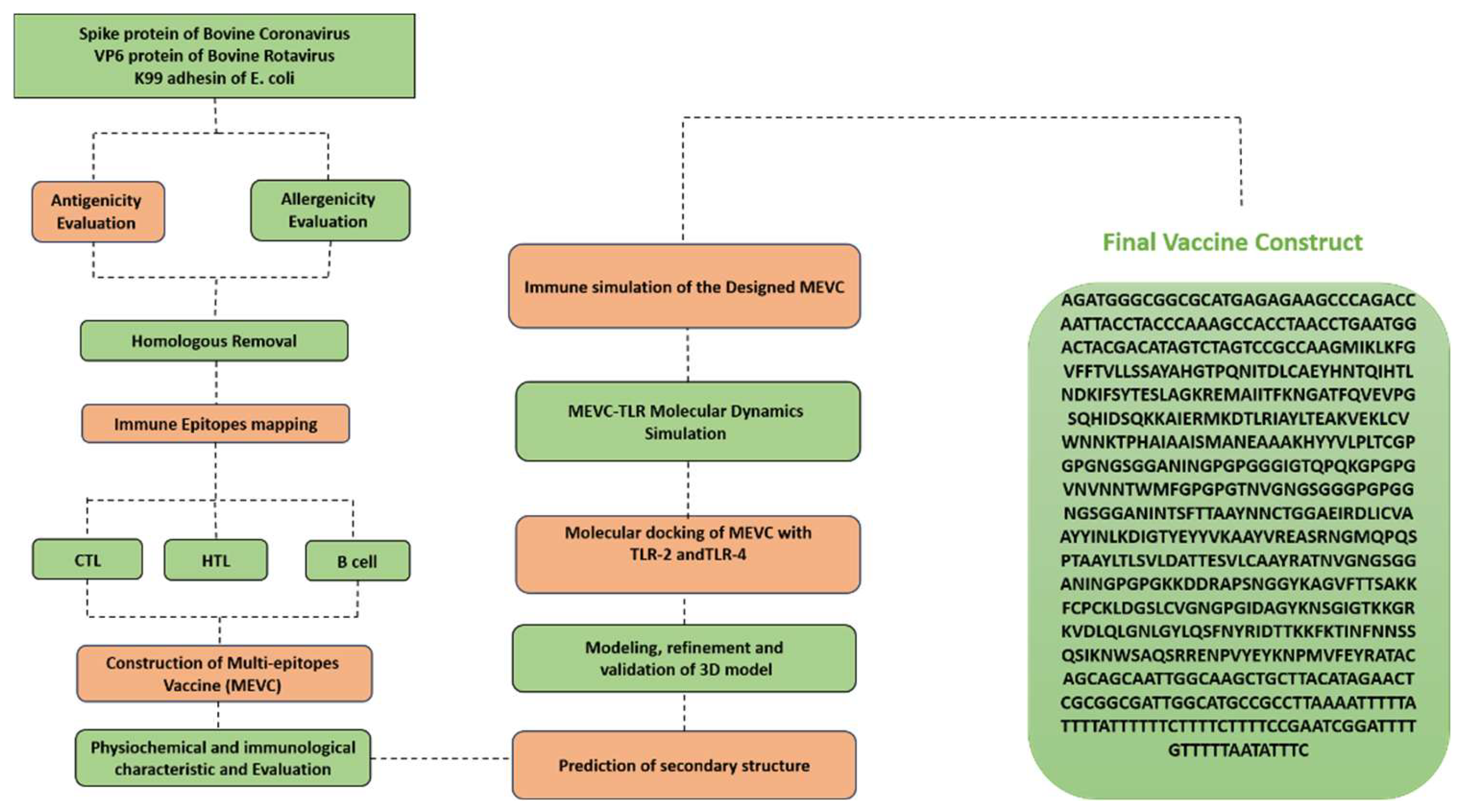
Figure 2.
Graphical map and secondary structure of the final mRNA multi-epitope vaccine construct. (A): The construct includes Kozak sequence and RpfE adjuvant at the N-terminal linked by EAAAK. HTL epitopes from BCoV, BRV and E. coli were joined using GPGPG linker, CTL epitopes using AAY linker and B-cell epitopes using KK linker. The 5′ and 3′ UTRs and Poly (A) tail were added to enhance mRNA stability and expression. (B) Secondary structure of vaccine construct. The structure composite of 20.7% (78/377) α-helices, 13% (49/377) extended strands, and 66.3% (250/377) random coils.
Figure 2.
Graphical map and secondary structure of the final mRNA multi-epitope vaccine construct. (A): The construct includes Kozak sequence and RpfE adjuvant at the N-terminal linked by EAAAK. HTL epitopes from BCoV, BRV and E. coli were joined using GPGPG linker, CTL epitopes using AAY linker and B-cell epitopes using KK linker. The 5′ and 3′ UTRs and Poly (A) tail were added to enhance mRNA stability and expression. (B) Secondary structure of vaccine construct. The structure composite of 20.7% (78/377) α-helices, 13% (49/377) extended strands, and 66.3% (250/377) random coils.
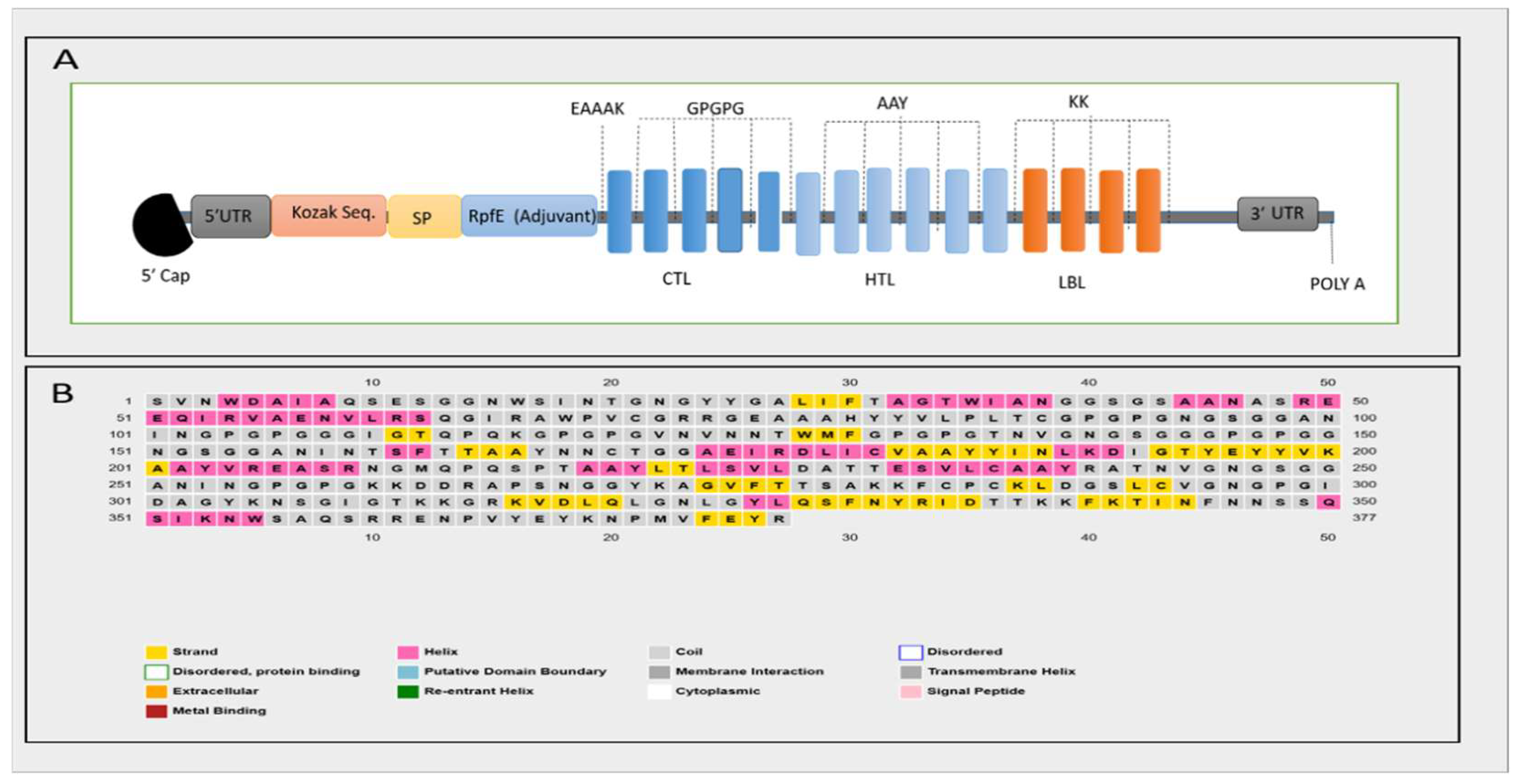
Figure 3.
Prediction, refinement and validity of the proposed vaccine construct. A: initial predicted model. B: Refine of the vaccine structure with galaxy web server. C: Z-score calculated with Pro-SA web server. D: Ramachandran plot analysis.
Figure 3.
Prediction, refinement and validity of the proposed vaccine construct. A: initial predicted model. B: Refine of the vaccine structure with galaxy web server. C: Z-score calculated with Pro-SA web server. D: Ramachandran plot analysis.
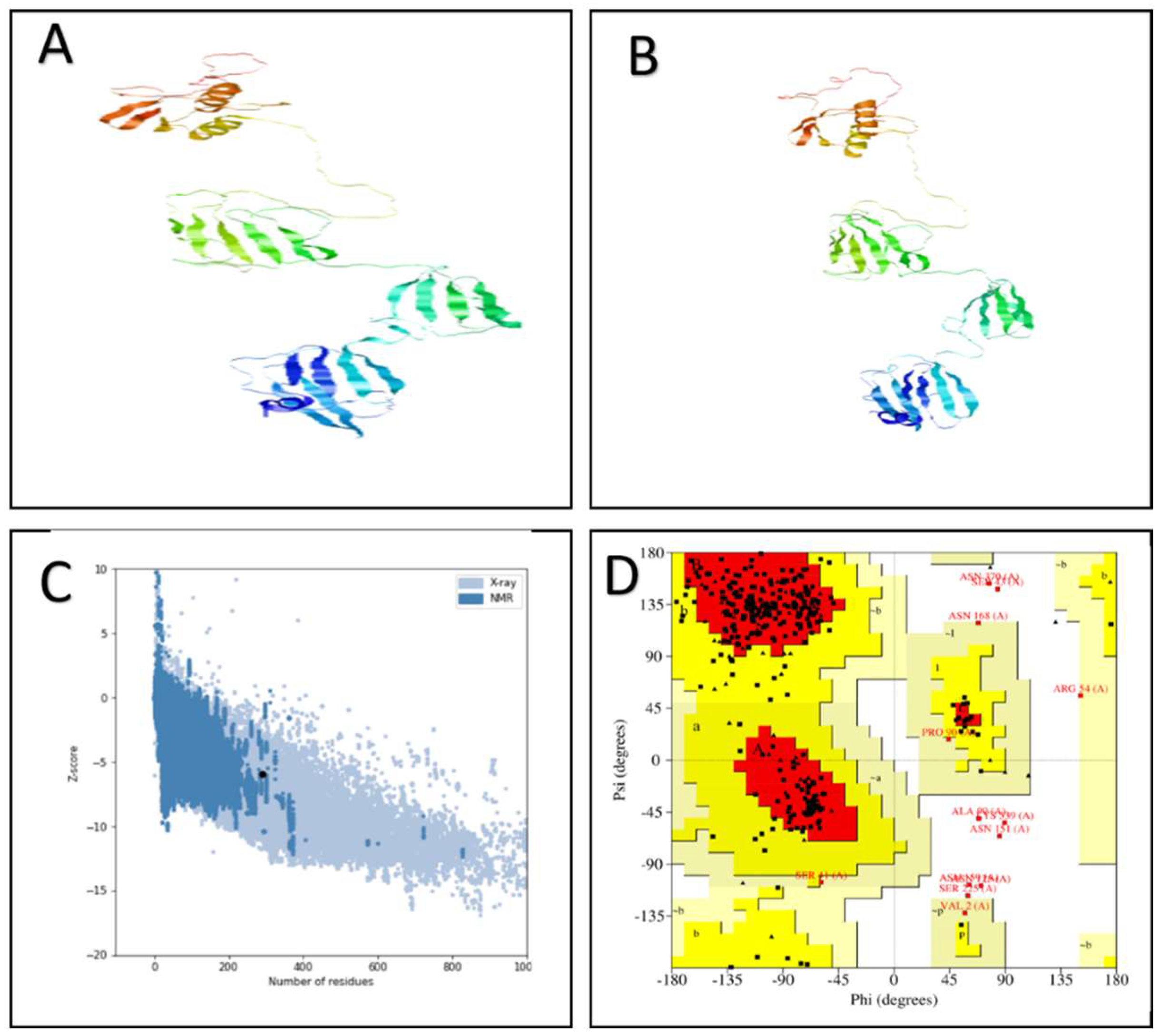
Figure 4.
3D model predicted by ElliPro server and display discontinuous B-cell epitopes in response to the vaccine candidate. A: Epitope with 12 residues. B: Epitope with 48 residues. C: Epitope with 63 residues. D: Epitope with 62 residues.
Figure 4.
3D model predicted by ElliPro server and display discontinuous B-cell epitopes in response to the vaccine candidate. A: Epitope with 12 residues. B: Epitope with 48 residues. C: Epitope with 63 residues. D: Epitope with 62 residues.
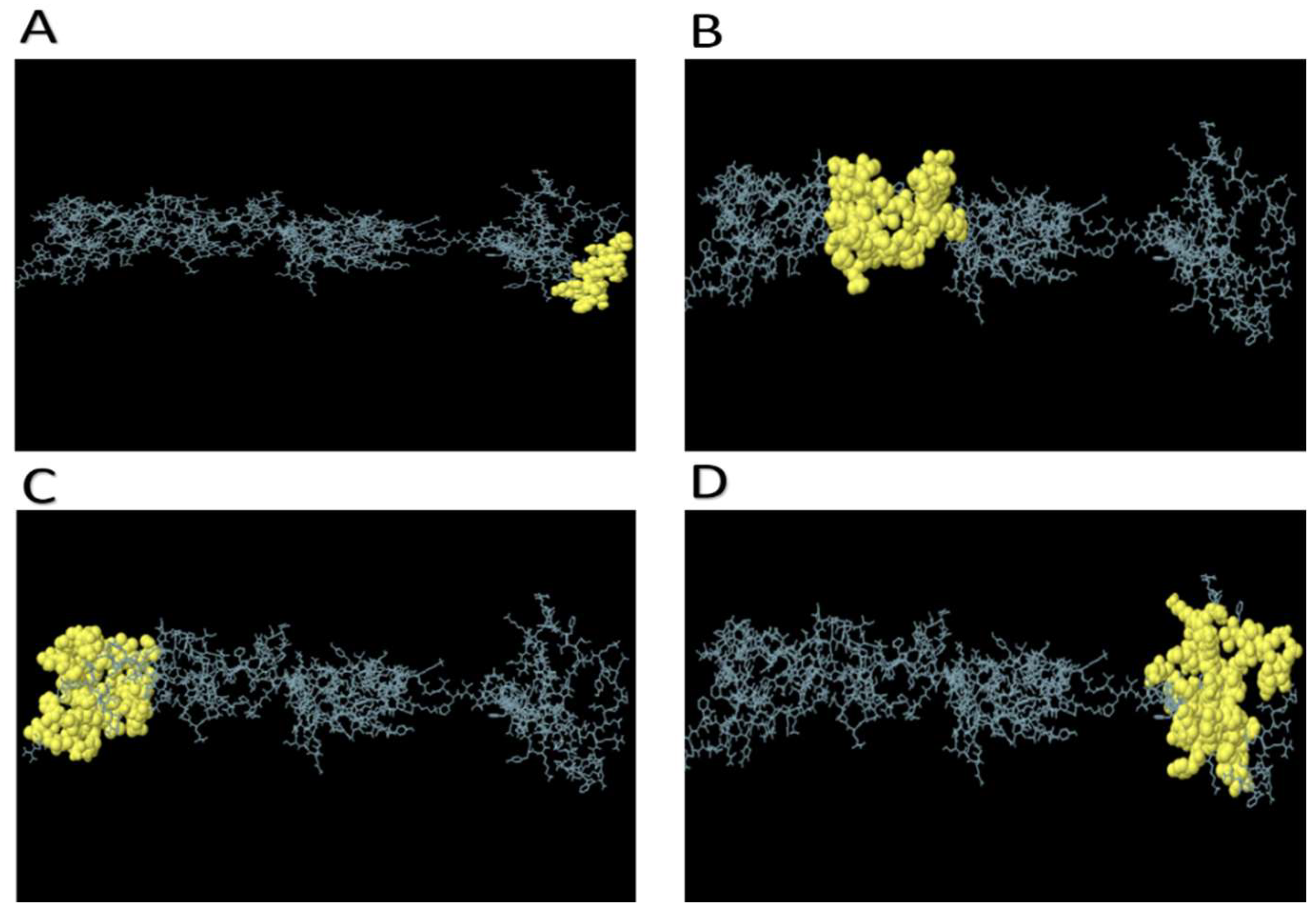
Figure 5.
Molecular interaction between bovine TLR2 and the vaccine candidate. A: 3D structural diagram of molecular docking of the proposed vaccine with TLR2 receptor. B: Schematic diagram for TRL2 and the vaccine candidate interaction. C: Interface statistic. D: Overview interaction between TLR2 and the vaccine showing residues and bonds.
Figure 5.
Molecular interaction between bovine TLR2 and the vaccine candidate. A: 3D structural diagram of molecular docking of the proposed vaccine with TLR2 receptor. B: Schematic diagram for TRL2 and the vaccine candidate interaction. C: Interface statistic. D: Overview interaction between TLR2 and the vaccine showing residues and bonds.
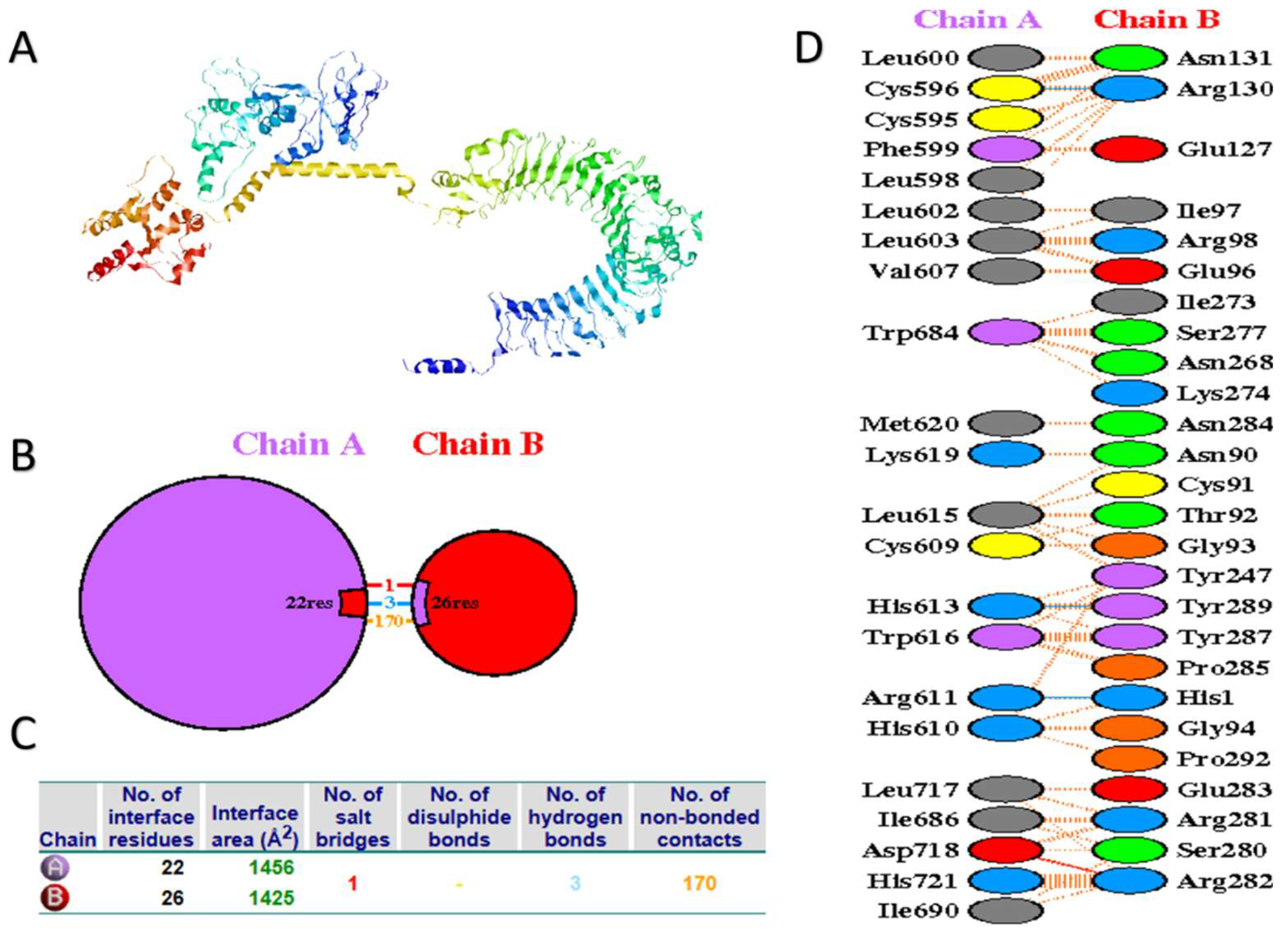
Figure 6.
Molecular interaction between bovine TLR4 and the vaccine candidate. A: 3D structural diagram of molecular docking of the proposed vaccine with TLR2 receptor. B: Schematic diagram for TRL4 and the vaccine candidate interaction. C: Interface statistic. D: Overview interaction between TLR4 and the vaccine showing residues and bonds.
Figure 6.
Molecular interaction between bovine TLR4 and the vaccine candidate. A: 3D structural diagram of molecular docking of the proposed vaccine with TLR2 receptor. B: Schematic diagram for TRL4 and the vaccine candidate interaction. C: Interface statistic. D: Overview interaction between TLR4 and the vaccine showing residues and bonds.
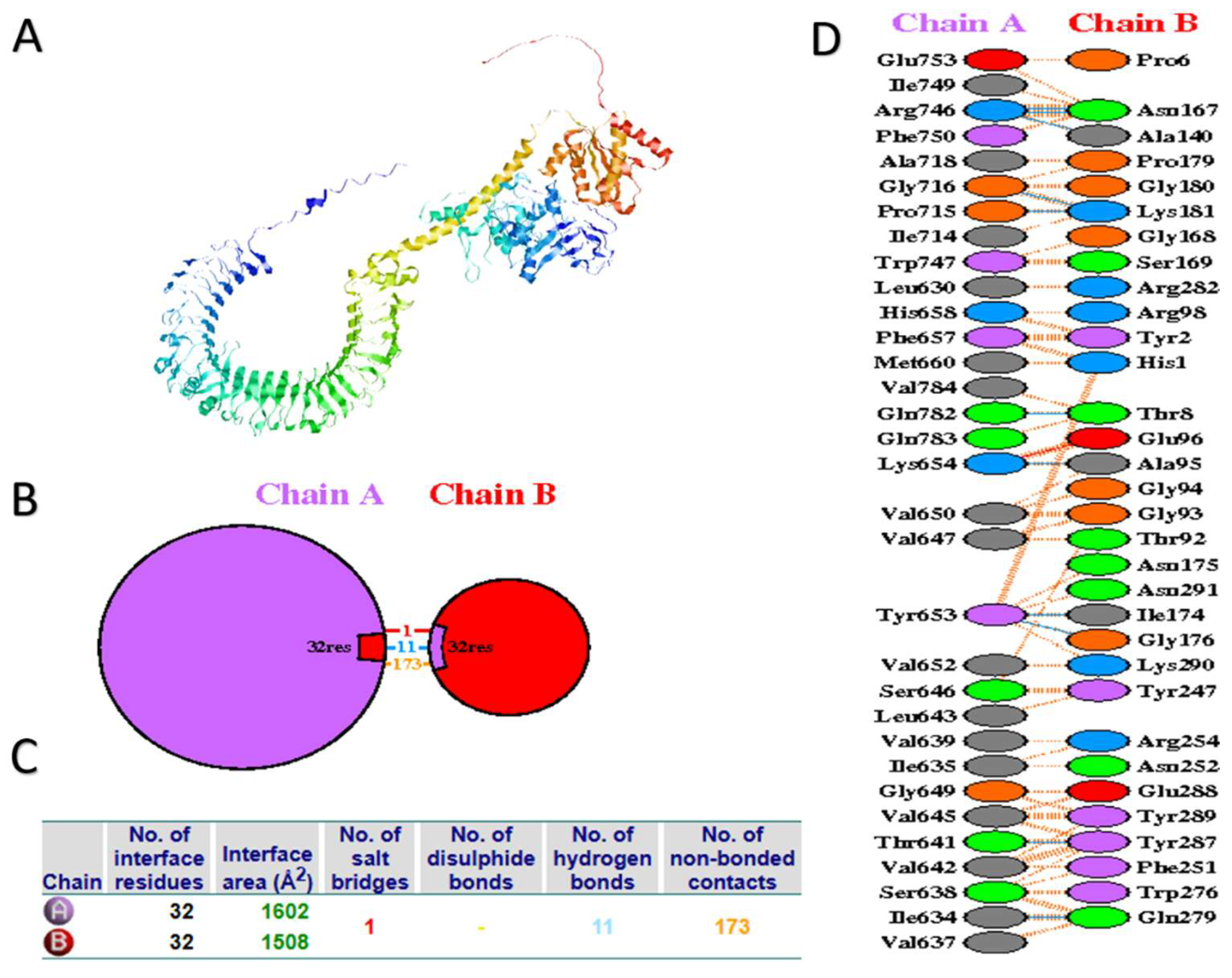
Figure 7.
NMA modeling of Vaccine-Bovine TLR complexes. A-B: Modeling the deformability of the main chain for TLR2 and TLR4. C: B-factor values (Vaccine –TLR2).D: B-factor values (Vaccine –TLR4).E-F: Eigenvalues value the complex( Vaccine with TLR2 and TLR4 respectively. G-H: Graph representing covariance of the complex (Vaccine-TLR2 and TLR4). I-J: Model of elastic network (TLR2 and TLR4 respectively).
Figure 7.
NMA modeling of Vaccine-Bovine TLR complexes. A-B: Modeling the deformability of the main chain for TLR2 and TLR4. C: B-factor values (Vaccine –TLR2).D: B-factor values (Vaccine –TLR4).E-F: Eigenvalues value the complex( Vaccine with TLR2 and TLR4 respectively. G-H: Graph representing covariance of the complex (Vaccine-TLR2 and TLR4). I-J: Model of elastic network (TLR2 and TLR4 respectively).
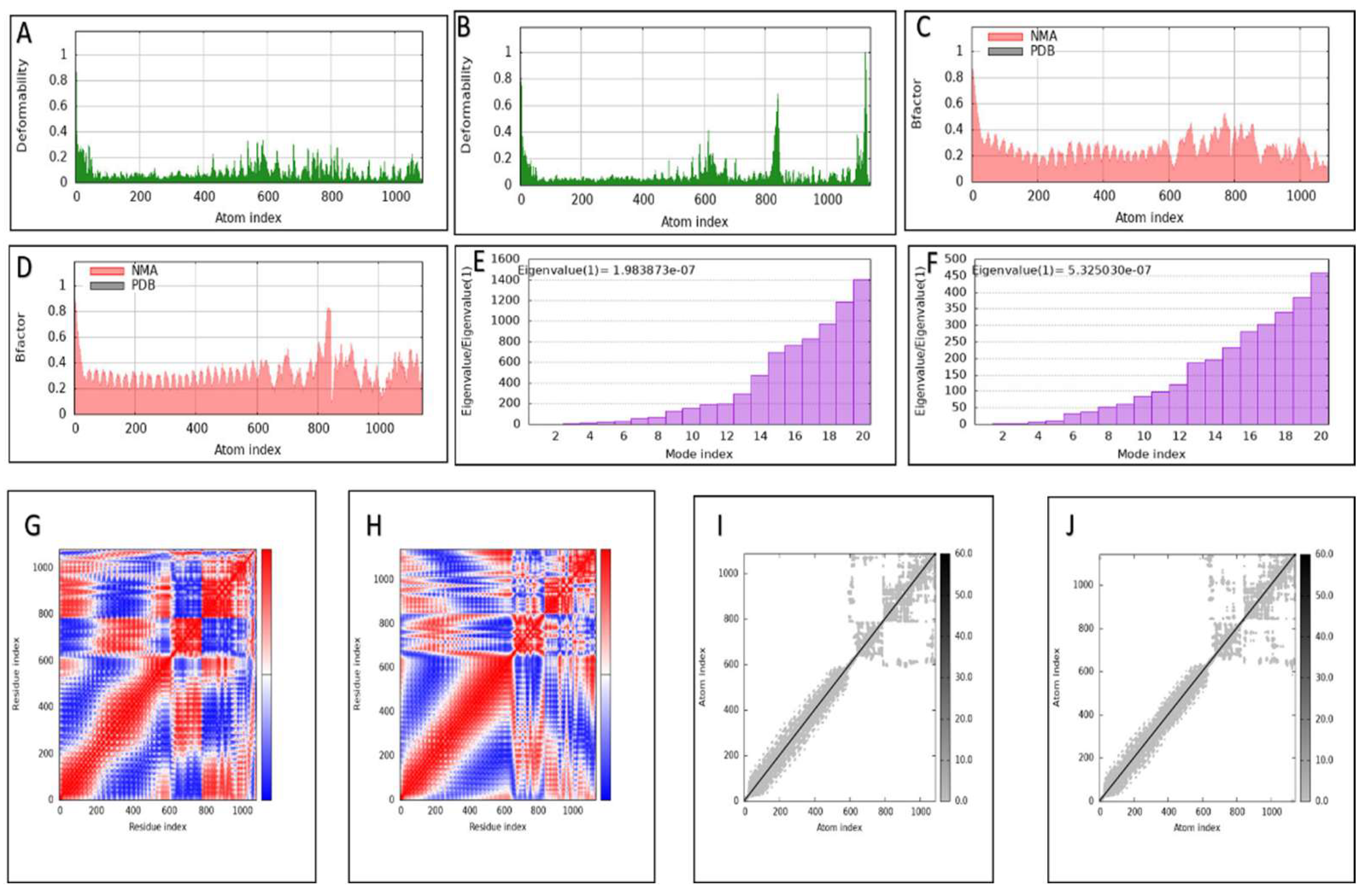
Figure 8.
Chimeric multi-epitope vaccine immune-simulation. A: Level of immunoglobulin after immunization. B: B-cell population. C: B-cell population per state. D: T cytotoxic cell population. E: T cytotoxic cell per state: T helper cell population. G: T helper cell population per state. H: nature killer population. I: Dendritic cell per state. J: Macrophage population per state. K: Epithelial cell population per state. L: Cytokines and interleukins concentration.
Figure 8.
Chimeric multi-epitope vaccine immune-simulation. A: Level of immunoglobulin after immunization. B: B-cell population. C: B-cell population per state. D: T cytotoxic cell population. E: T cytotoxic cell per state: T helper cell population. G: T helper cell population per state. H: nature killer population. I: Dendritic cell per state. J: Macrophage population per state. K: Epithelial cell population per state. L: Cytokines and interleukins concentration.
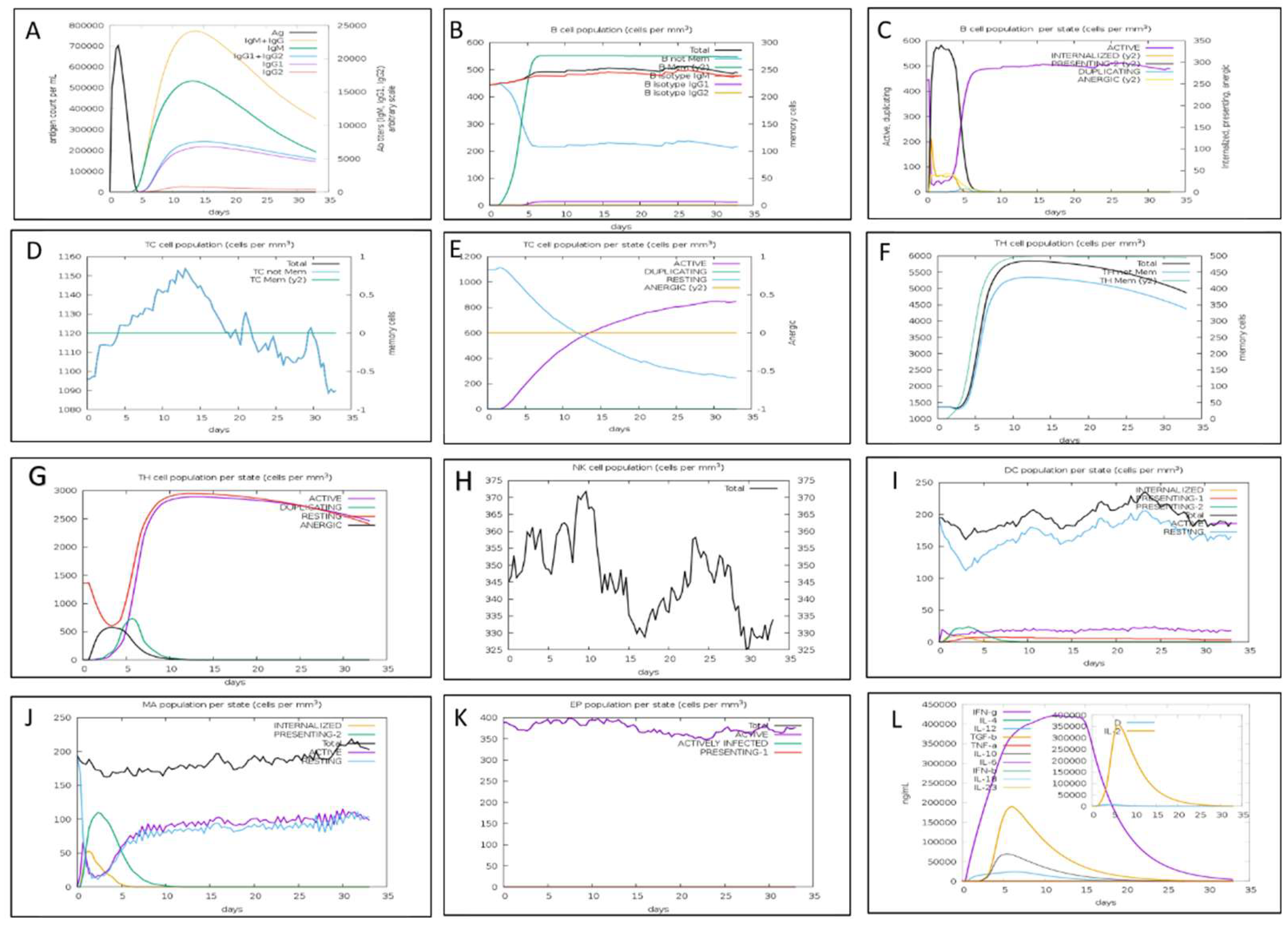
Figure 9.
Structure of the modeled RNA molecule. A: Ideal secondary configuration. B: Central secondary arrangement of the RNA.
Figure 9.
Structure of the modeled RNA molecule. A: Ideal secondary configuration. B: Central secondary arrangement of the RNA.
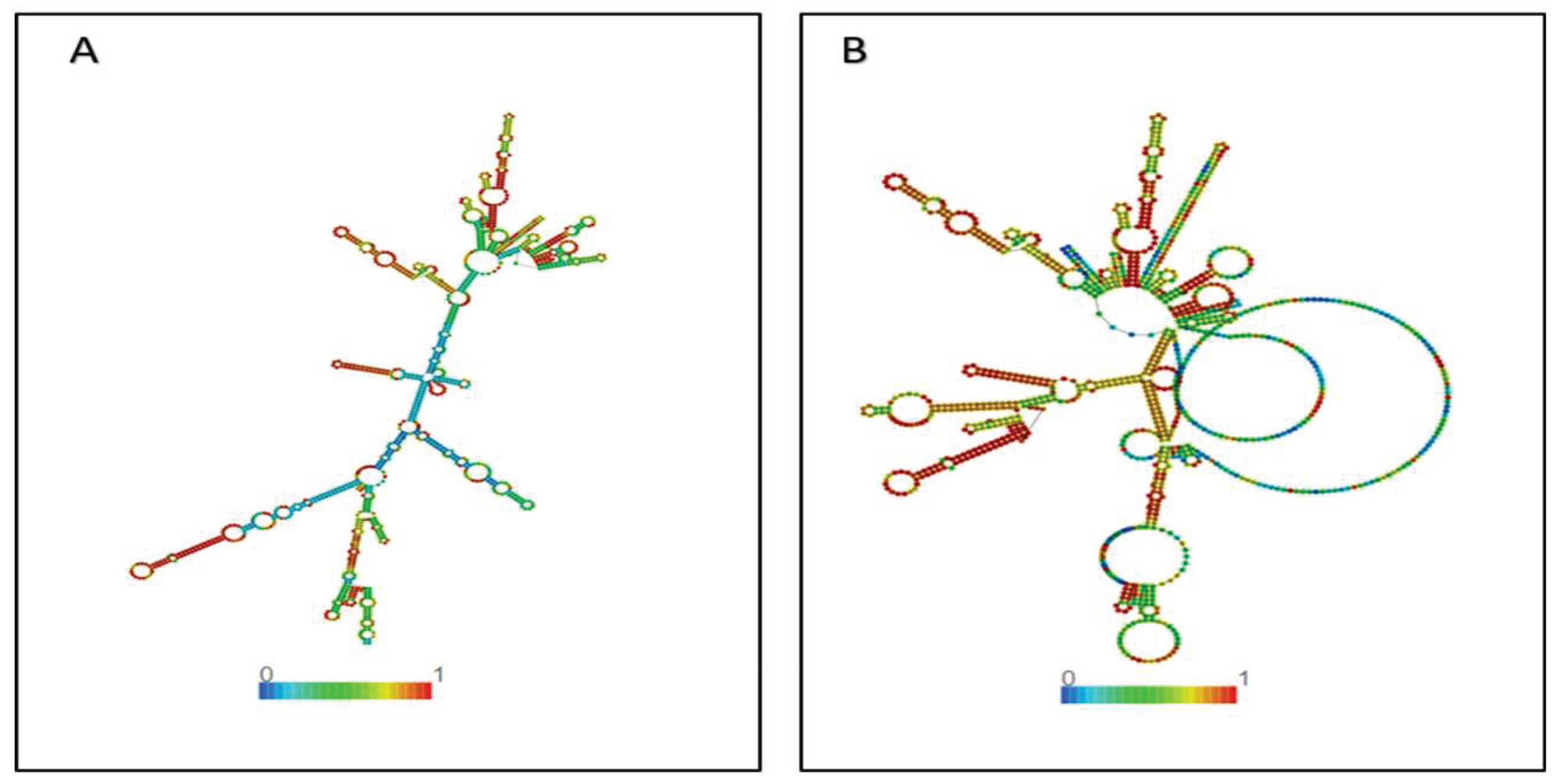
Table 1.
Final selected CTL epitopes for the candidate vaccine.
| Epitopes | Antigenicity score | Toxicity | Allergenicity | conservancy | Protein |
|---|---|---|---|---|---|
| NGSGGANIN |
2.5205 |
No | None | 100% | K99 |
| TNVGNGSGG | 2.8300 |
No | None | 100% | K99 |
| VNVNNTWMF |
1.0835 | No | None | 100% | spike |
| HYYVLPLTC |
0.9452 |
No | None | 100% | spike |
| GGIGTQPQK | 1.8178 | No | None | 100% | VP6 |
Table 2.
Final selected HTL epitopes for the candidate vaccine.
| Epitopes | Antigenicity score | Toxicity | Allergenicity | conservancy | pathogen |
|---|---|---|---|---|---|
| NNCTGGAEIRDLICV |
1.0165 |
No | None | 100% | Spike |
| YINLKDIGTYEYYVK |
1.0400 |
No | None | 100% | Spike |
| LTLSVLDATTESVLC |
0.9570 |
No | None | 100% | Vp6 |
| VREASRNGMQPQSPT | 0.4824 |
No | None | 100% | VP6 |
| GNGSGGANINTSFTT |
1.9647 |
No | None | 100% | K99 |
| RATNVGNGSGGANIN |
2.0509 |
No | None | 100% | K99 |
Table 3.
Final selected LBL epitopes for the candidate vaccine.
| Epitopes | Antigenicity score | Toxicity | Allergenicity | conservancy | Protein |
|---|---|---|---|---|---|
| KKDDRAPSNGGYKAGVFTTSA | 0.8975 | No | None | 100% | K99 |
| FCPCKLDGSLCVGNGPGIDAGYKNSGIGT |
0.5114 |
No | None | 100% | Spike |
| GRKVDLQLGNLGYLQSFNYRIDTT |
1.2781 |
No | None | 100% | Spike |
| FKTINFNNSSQSIKNWSAQSRRENPVYEYKNPMVFEYR | 0.9673 |
No | None | 100% | Vp6 |
Disclaimer/Publisher’s Note: The statements, opinions and data contained in all publications are solely those of the individual author(s) and contributor(s) and not of MDPI and/or the editor(s). MDPI and/or the editor(s) disclaim responsibility for any injury to people or property resulting from any ideas, methods, instructions or products referred to in the content. |
© 2026 by the authors. Licensee MDPI, Basel, Switzerland. This article is an open access article distributed under the terms and conditions of the Creative Commons Attribution (CC BY) license (http://creativecommons.org/licenses/by/4.0/).
Copyright: This open access article is published under a Creative Commons CC BY 4.0 license, which permit the free download, distribution, and reuse, provided that the author and preprint are cited in any reuse.


