
Submitted:
15 April 2026
Posted:
16 April 2026
You are already at the latest version
Abstract
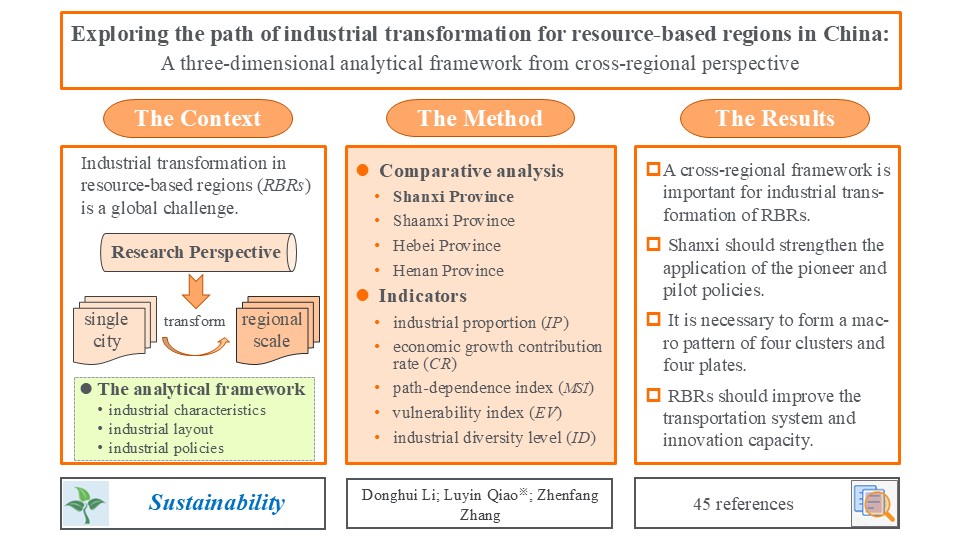
Industrial transformation in resource-based regions (RBRs) is a global challenge. Shanxi is a typical resource-based province in China. The long-term exploitation of coal resources has posed huge challenges to its ecological protection and high-quality development. Breaking away from the single-city perspective, this study focuses on the regional scale and comparative analysis, and attempts to construct a novel three-dimensional analytical framework, namely “industrial characteristics, industrial layout, and industrial policies”, to explore the industrial transformation path of typical RBRs. The results indicate as follows: (1) Shanxi Province does not have obvious advantages in terms of resource endowment, with a severely heavy industrial structure and strategic emerging industries still in the initial stage of development. At the national strategic level, it is still necessary to strengthen the application of the “pioneer and pilot” policies and mechanism innovation. (2) Under the background of high-quality development, Shanxi needs to clarify the orientation and transformation direction of industrial development: for agricultural development, it should highlight characteristic and efficient development; for industrial development, it should focus on the upgrading of advantageous industries and the cultivation of emerging industries; for tertiary industry development, it should form a pattern of “new producer services + characteristic tourism”. It is also necessary to form a macro pattern of “four provincial clusters and four inter-provincial plates” in regional development layout to promote inter-regional coordinated development. (3) In the new period, Shanxi should accelerate the construction of a comprehensive transportation system as the backbone network to improve the convenience of inter-regional cooperation; increase investment in education and scientific research to enhance the overall social innovation capacity; and strengthen the supply of differentiated regional development policies to promote high-quality industrial development. Focusing on the regional scale, the new logical analysis paradigm can provide theoretical references for RBRs to clarify the direction of industrial transformation and formulate transformation policies.
Keywords:
industrial transformation
; path dependence
; regional coordination
; high-quality development
; resource-based regions
; Shanxi Province
1. Introduction
The resource-based regions (RBRs) are characterized by dominant industries centered on the extraction and processing of natural resources, including minerals and timber[1]. China has numerous extensively distributed RBRs and resource-dependent cities. Since the founding of the People's Republic, these regions have yielded 52.9 billion tons of raw coal, 5.5 billion tons of crude oil, 5.8 billion tons of iron ore, and 2.0 billion cubic meters of timber, thereby making historic contributions to establishing China's independent industrial system and promoting sustainable economic development[2].
Typically, industrial development in RBRs relies heavily on resource abundance. Industrial inertia and path dependence frequently lock regional industrial structures into upstream production chains, generating functional lock-in effects[3,4,5,6]. Consequently, two critical challenges emerge. On the one hand, resource depletion or market volatility severely constrains sustainable economic growth. On the other hand, structural rigidity impedes industrial transformation, hindering adaptation to high-quality development requirements. Under contemporary pressures, including global anti-globalization trends and China's economic “new normal”, contradictions within RBRs have intensified, presenting three interconnected dilemmas. First, industrial transformation and upgrading are difficult. Natural resource abundance exerts a crowding-out effect on regional innovation[7,8]. Persistent resource dependence has fostered mono-industrial dominance, weakening talent/technology agglomeration capacities[9,10], which in turn impeded industrial upgrading. Second, social development challenges are prominent. In recent years, supply-side structural reforms and overcapacity resolution policies have significantly impacted resource-industrial economies. Consequently, widespread unemployment among coal/steel workers, increased urban welfare reliance, enterprise closures, and stagnant agricultural incomes have exacerbated social tensions[11]. Third, it is difficult to deal with the ecological governance complexities. Prolonged resource exploitation and energy-intensive industries have caused profound ecological degradation, including mining subsidence zones, geohazard-prone areas and severe soil/water contamination[12,13]. Such degradation reflects acute imbalances between resource extraction and environmental preservation[14]. In general, RBRs face compounded vulnerabilities: complex geography, monolithic industrial structures, social contradictions, and fragile ecosystems. These negative externalities from prolonged resource-dependent development increasingly internalize as institutional costs of industrial transition, substantially elevating transformation risks.
Industrial transformation in RBRs constitutes a global challenge typically spanning decades, with few successful cases worldwide, exemplified by Ruhr in Germany[15,16], Pittsburgh in USA[17], and Kitakyushu in Japan[18]. The critical experiences from these cases are cultivating strategic emerging industries through enabling institutional environments, implementing ecological restoration to rebrand regional landscapes, and leveraging talent development and technology transfer to activate innovation ecosystems. Since China's 18th Party Congress, academic focus on RBRs transformation has intensified, particularly regarding: typological identification and evolutionary stages for resource-based cities[19,20], industrial restructuring and structural growth[21,22], innovation-transformation coupling[23], and policy effectiveness evaluation[24], etc. With growing consensus on of new development concepts and the rise of new technologies, recent scholarship further examines transformation pathways for resource-based cities through lenses of green transition, digital economy, urban resilience, and high-speed rail infrastructure construction[25,26,27,28]. These studies have yielded many enlightening conclusions and countermeasures. However, when the research scope is extended from individual cities to broader regions, there remains a relative paucity of studies addressing the economic and industrial transformation of RBRs. Recent research topics have predominantly focused on the mechanisms of action involving factors such as natural resources and economic growth[29,30], industrial diversification and spillover effects[31], as well as innovation-driven development, digital finance, and new infrastructure construction[32,33,34].
From the perspective of regional coordinated development, industrial systems of RBRs exhibit spatial interdependence with neighboring regions, creating cross-jurisdictional production networks. Industrial decline in RBRs consequently triggers structural ripple effects across interconnected regions, a phenomenon particularly evident in contiguous resource corridors (e.g., Shanxi-Inner Mongolia-Northern Shaanxi, northern China). This spatial continuity calls for macro-strategic approaches that integrates three critical dimensions: industrial structure and comparative advantage analysis, industrial transformation direction and spatial layout, and transformation environment creation and differentiated policy frameworks. Therefore, this study attempts to establish a cross-regional analytical paradigm, and through case study to provide actionable insights for regional resource-based economic transformation and policy formulation.
2. Analysis Framework and Study Area
2.1. The Analysis Framework
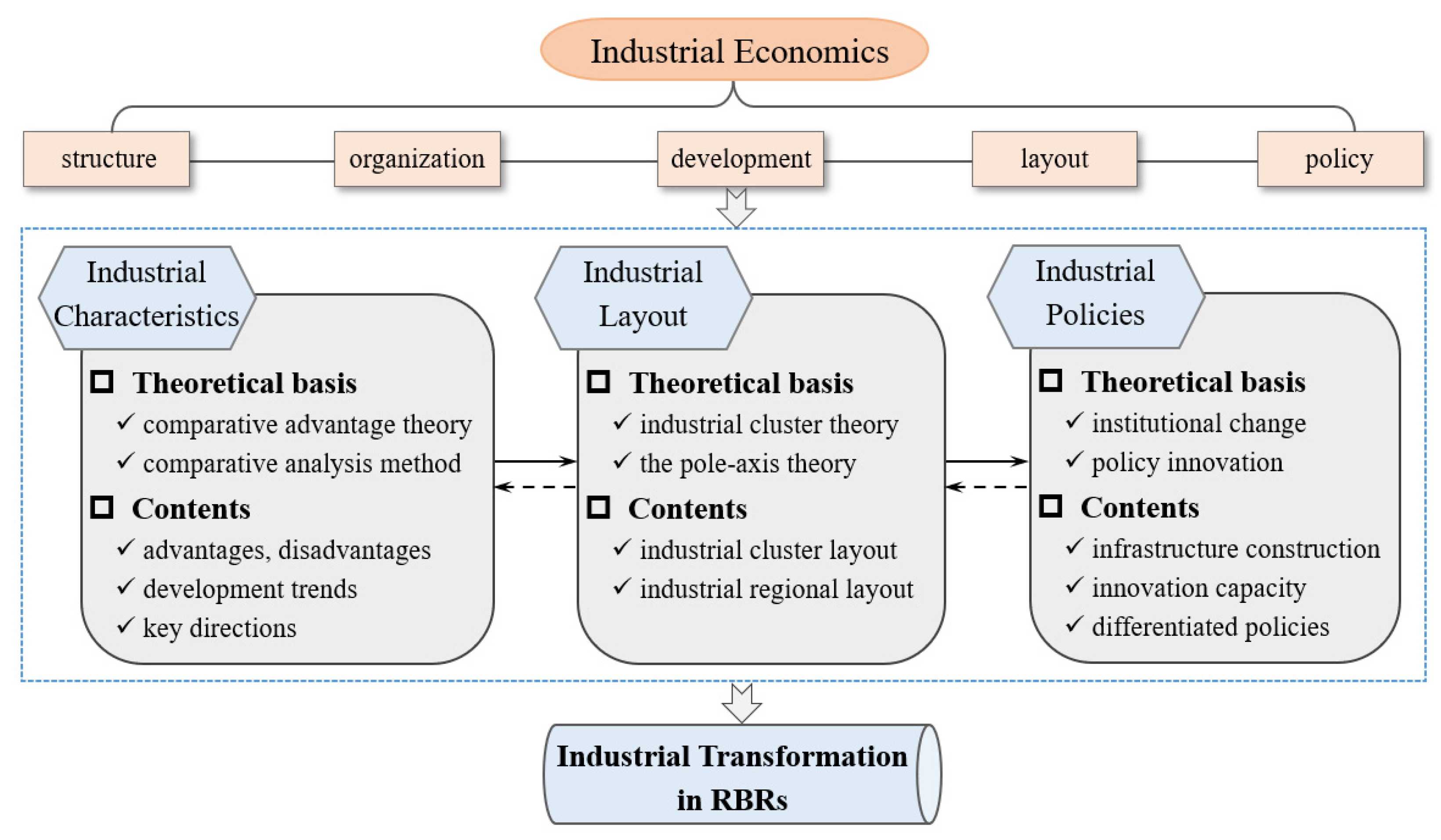
The core issue about the transformation development of RBRs lies in the transformation of resource-dependent industries as well as their supporting industrial policies and institutions. Therefore, the basic principles of industrial economics provide the research framework for this paper. Specifically, industrial economics takes the industries of a country/region as its research object, focusing on the study of industrial structure, industrial organization, industrial development, industrial layout, and industrial policies, among other aspects[35,36]. From a logical perspective, exploring the industrial transformation paths of a region should prioritize identifying the characteristics of its industrial structure, industrial development orientation, industrial spatial layout, and industrial support policies. First, based on the comparative advantage theory[37], this study employs the comparative analysis method to analyze the characteristics of region’s industrial structure, clarify its industrial development advantages, disadvantages and development trends, and determine the key directions of industrial development. Second, drawing on the industrial cluster development theory[38], in accordance with the principles of optimizing industrial layout, strengthening competition and cooperation, and reducing institutional costs, the study identifies the strategies for industrial cluster layout. Third, adhering to the orientation of domestic and international large markets, aiming to enhance regional industrial synergy, and breaking down industrial and trade barriers, the study clarifies the cross-regional industrial spatial layout strategies based on location theory and pole-axis theory[39]. Fourth, grounded in the institutional change theory, we propose supporting policies and institutional innovations to promote industrial transformation and development. Therefore, this study attempts to construct a three-dimensional analytical framework of "industrial characteristics, industrial layout, industrial policies" to carry out the research work. Among them, the industrial characteristics analysis section establishes five indicators, namely industrial proportion, contribution rate of economic growth, path dependence index, industrial vulnerability index, and industrial diversity level. The industrial layout analysis section covers two dimensions: cluster layout and regional layout. The industrial policy analysis section includes aspects such as infrastructure construction, improvement of innovation capacity, and differentiated policies.
Figure 1.
A three-dimensional analytical framework from regional perspective.
2.2. The Study Area
Shanxi Province, a pivotal energy production and supply base in China's Yellow River Basin, plays a critical role in safeguarding national energy security. As one of the six central Chinese provinces, it represents a typical resource-dependent region. In December 2010, the central government established the Shanxi Resource-Based Economic Transformation Comprehensive Reform Pilot Zone, with the core mandate of accelerating industrial restructuring and economic transformation toward resource-efficient and environmentally sustainable development. However, during the 13th Five-Year Plan period, the province experienced the end of coal's "golden decade" and a sharp economic downturn. Nevertheless, recent years have seen gradual economic recovery. Consequently, as ecological conservation and high-quality development in the Yellow River Basin become national strategies, higher demands are placed on relevant provinces to expedite transformational development.
As China undergoes critical economic restructuring and industrial upgrading, Shanxi Province must concurrently protect its recovering vegetation ecosystem and advance resource-dependent economic transformation. Consequently, the task of achieving industrial transition and high-quality development presents greater urgency. In March 2024, the President Xi Jinping chaired the "Symposium on Promoting the Rise of the Central Region in the New Era" in Changsha, Hunan. He emphasized that the central provinces should drive industrial innovation through scientific and technological innovation. Specifically, they need to strengthen the linkages with other major development strategies, optimize the industrial spatial layout, construct a modern transportation infrastructure system, and enhance the inter-provincial cooperation mechanism within the region. These directives have outlined a blueprint and provided guidance for the rise of the central region.
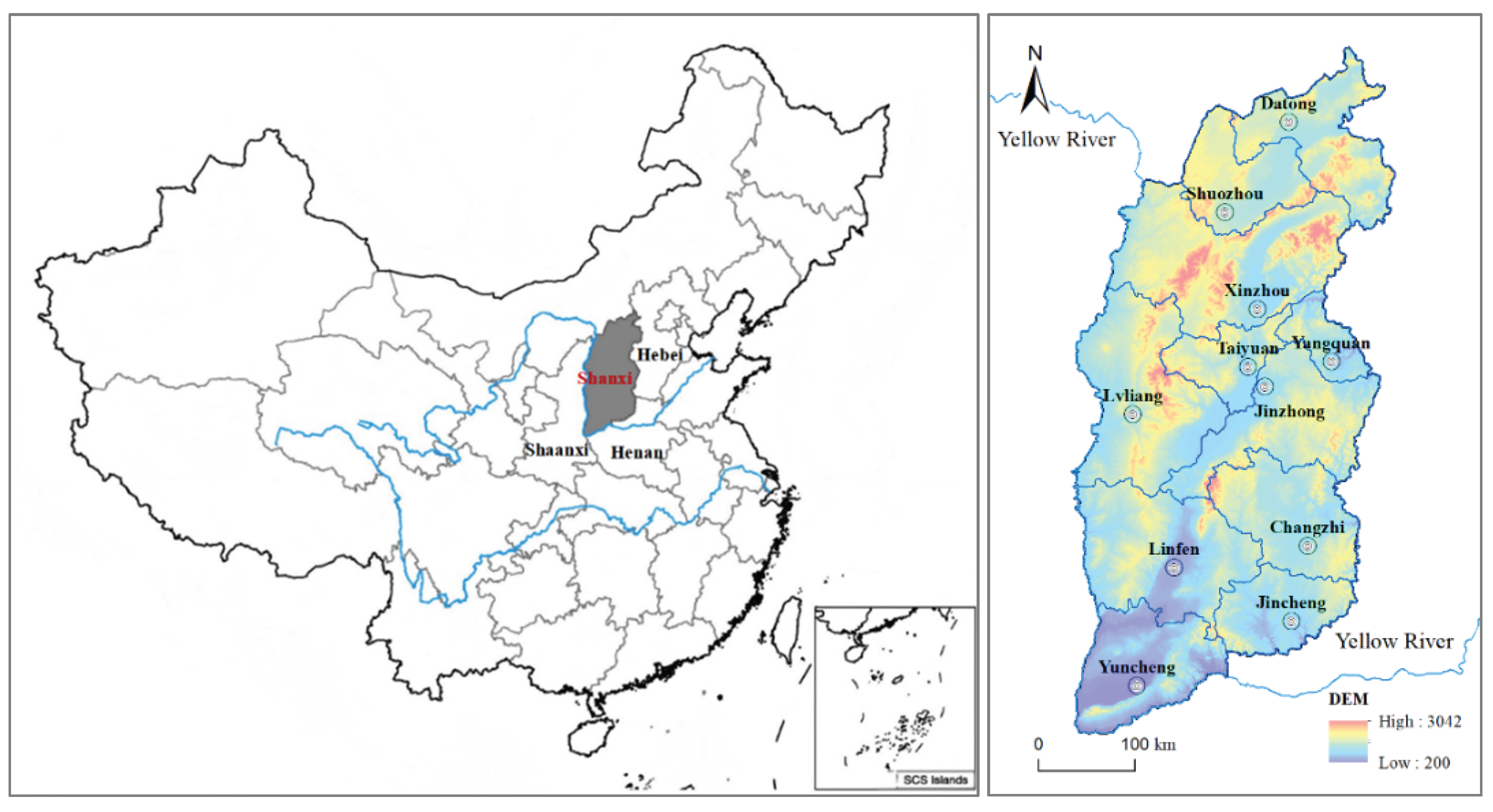
During the 15th Five-Year Plan (2026-2030) and the coming period, Shanxi Province will face critical challenges. Based on the development foundation and comparative advantages, how to promote industrial transformation by leveraging internal innovation activation, foster a transformative environment with conducive conditions for outward engagement, optimize industrial layouts and strengthen inter-regional cooperation? Geographically, Shanxi is positioned in the hinterland of North China, bordering Hebei, Shaanxi, Henan, and Inner Mongolia. Its relatively enclosed terrain imposes constraints on cross-regional and long-distance exchanges and collaborations. However, the neighboring regions exhibit strong industrial interconnections, presenting both homogeneous competition and substantial cooperation potential among provinces. Therefore, this study takes Shanxi Province as the typical case and conducts research as follows: (1) Constructing indicators including economic growth contribution rate, path dependence index, vulnerability index, and industrial diversity level to analyze industrial structure; (2) Comparing and analyzing the background conditions and comparative advantages of the four neighboring provinces (Shanxi, Shaanxi, Hebei, Henan), and clarifying the key directions for industrial transformation and regional development layout under the concepts of differentiated and coordinated regional development; (3) Proposing countermeasures and suggestions for promoting industrial transformation and high-quality development from the perspective of creating a supportive transition environment, with the aim of providing references for the transformation of Shanxi and other resource-based economies.
3. Methodology
3.1. Analysis Indictors
Industrial transformation constitutes the core objective of transformative development in the resource-based regions (RBRs), while accurately grasping the industrial structure characteristics and clarifying the industrial transformation direction represent its fundamental prerequisites. This paper attempts to construct five indices to analyze and characterize the industrial structure of the study area, thereby providing foundational support for identifying the direction of industrial transformation.
Figure 2.
The location of Shanxi Province.
(1) Industrial proportion and economic growth contribution rate. The industrial proportion (IP) is defined as the ratio of the added value of the three sectors (primary, secondary, tertiary) to the regional GDP, or the ratio of the added value of a specific industry to that of major industrial categories. It reflects the significance of a given industry or sector within the regional economy. The economic growth contribution rate (CR) refers to the proportion of the increment in the added value of the three industries relative to the increment in regional GDP, which indicates the contribution of industrial growth to regional economic development. These metrics are calculated as follows:
where: Ii denotes the added value of an industry; the higher IP value indicates greater importance of the industry in regional economy, and vice versa. AIi represents the increment of industrial added value, and AGDP represents the increment of regional GDP; the higher CR value indicates higher contribution of the industry to regional economic growth, and the lower the vice versa.
(2) Path-dependence and vulnerability index. For RBRs, developing resource-intensive industries based on comparative advantages is an inevitable choice in the initial stage of industrialization. However, due to the development inertia, an industrial structure dominated by resource development and processing industries will eventually take shape. Consequently, such path-dependence in RBSs manifests primarily through overreliance on mining industry and processing sectors. This study quantifies provincial path-dependence level using the Mining Sector Specialization Index (MSI)[5]. The economic development of RBRs relies heavily on natural resources, with their economies highly concentrated in resource-based industrial categories or sectors. If exposed to external environmental fluctuations and shocks, the overly concentrated industrial structure lacks buffering space. It is difficult to achieve structural adjustment in the short term, increasing the risk of economic recession and demonstrating strong vulnerability. Therefore, we measure the economic vulnerability (EV) through the employment proportion in mining industry and its processing sectors. According to the China's National Economic Industry Classification (GB/T4754-2017), the mining industry encompasses coal, oil and natural gas, ferrous metals, non-ferrous metals, non-metals, and other mineral resources. The raw material and processing industry covers petroleum processing, coking and nuclear fuel processing, chemical raw materials and chemical products, ferrous metal smelting and rolling processing, non-ferrous metal smelting and rolling processing, non-metallic mineral products, metal products, as well as electric power, heat, and gas production and supply. The metrics are calculated as:
Where: Em represents the proportion of employment in the mining industry and its processing sectors in each province, and E represents the employment ratio of the mining industry and its processing sectors in the whole country; the higher MSI value indicates the higher path-dependence level on mining industry and its processing sectors, and vice versa. PM is the number of people employed in the mining industry and its processing sectors, and P is the number of people employed in the industry; the higher the EV value indicates the higher economic vulnerability of the province, and vice versa.
(3) The level of industrial diversity. Corresponding to vulnerability, the rational industrial structure, diversified industrial categories and balanced industrial development can strengthen resilience to external shocks and enhance transformation potential. Industrial diversity can be divided into vertical and horizontal dimensions; the former is achieved through industrial chain extension and by-product development, while the latter emphasizes cultivating other high-growth, high-value-added industries. For RBRs, overcoming path-dependence of resource-based industries necessitates prioritizing horizontal diversity. Following existing studies[40], this study employs the entropy method to quantify non-resource-based industrial diversity (ID) at the provincial level. Non-resource-based industries encompass all sectors beyond the previously defined resource-based categories. The metric is calculated as follows:
Where: Ti represents the number of employees in non-resource-based industries (double-digit industries), and Tg represents the number of employees in the manufacturing industry; the higher ID value indicates the higher level of industrial diversity, and vice versa. Among them, the industrial classification refers to the China's national standard “Industrial Classification of the National Economy (GB/T 4754-2017)”.
3.2. Data Sources
According to the research needs, this study mainly uses two aspects of data: (1) statistical data, including the industry and employment data of Shanxi, Shaanxi, Hebei and Henan provinces, which are mainly used for the analysis of industrial structure characteristics, such data are derived from the statistical bulletin of national economic and social development of each province in 2023 and the statistical yearbooks of each province and the whole country in the corresponding years; (2) The strategic planning and related information of the four provinces are mainly derived from the strategic plans approved by the state and the information published on the website of the provincial government.
4. The Characteristics of Industrial Structure
4.1. Basic Characteristics of the Agricultural Development: Small
Constrained by natural geographical conditions, mountains/hills cover 80% of Shanxi Province's territory, with plain and basin accounting for only around 20%. Compared with the extensive Huang-Huai-Hai Plain in Hebei and Henan Provinces, as well as the Guanzhong Plain in Shaanxi, Shanxi lacks advantages in water and soil resources required for large-scale commercial agriculture. Statistics indicate that in 2023, the added value of Shanxi's primary industry stood at ¥ 138.89 billion, equivalent to merely 52.4% of Shaanxi's, 31.1% of Hebei's, and 25.8% of Henan's; its growth rate, however, was slightly higher than that of Hebei and Henan. Notably, the primary industry's share of the economy (IPF) in Shanxi was 5.4%, compared with 10.2% in Hebei and 9.1% in Henan. Its contribution rate to provincial economic growth (CRF) was only 4.3%, slightly exceeding Henan's but remaining far below Shaanxi's (Table 1). Accordingly, Shanxi's total agricultural output value is relatively small, with a low share in the overall economy. During the special period of mounting downward pressure on the macroeconomy, it has exerted a rather limited effect on stabilizing and stimulating the provincial economy. In the new era, Shanxi's agriculture development requires aligning production with local natural conditions and resource endowments, targeting the North China and national consumer markets, adapting the broad food conception and agricultural product consumption upgrading, and pursuing differentiated development from neighboring provinces. In conclusion, the authorities of Shanxi urgently need to identify the development positioning of characteristic agricultural products for enhancing agricultural product competitiveness and accelerating agricultural transformation and high-quality development.
4.2. Basic Characteristics of the Industrial Structure: Heavy
Over an extended period, Shanxi Province's industrial development has developed a strong reliance on coal and mineral resources, leading to an industrial structure characterized by “coal dominance”. In 2022, the industrial value-added stood at ¥1.28 trillion, with the proportion of above-scale heavy industry reaching 96.6%—a figure roughly equivalent to, or even slightly higher than, the 2013 level. The “heavy industrialization” of industrial structure is rarely seen across the country. In terms of sectoral distribution, the mining industry accounted for approximately 63.8% of industrial value-added, with the coal mining and washing sector alone contributing nearly half of the total. By contrast, manufacturing made up 30.7% of industrial value-added. Within this, traditional industries such as metal smelting, energy and chemicals—all dependent on resource extraction—accounted for over 60%. Modern manufacturing and high-tech industries, including pharmaceutical production, equipment manufacturing, electronic communications, and electrical machinery, remained small in scale and were still in a nascent stage of development. By comparison, industrial structures in neighboring provinces present distinct patterns. In 2022, Hebei Province's mining industry contributed about 7.3% of industrial value-added, while manufacturing accounted for 84.5%. In Henan Province, strategic emerging industries (25.9%), high-tech manufacturing (12.9%), and consumer goods manufacturing (e.g., food and textiles, 25.6%) collectively constituted 64.4% of industrial value-added, with resource-based industries such as coal mining, energy chemicals, and metal smelting making up approximately 35.6%. These data indicate that Shanxi's industrial structure exhibits "deformed" development characteristics, Hebei's industrial structure has a solid foundation and positive transformation momentum, and Henan's industrial structure is relatively balanced with stronger development potential.
Analysis of the industrial development index shows that Shanxi Province's path dependence index (MSI) registers at 2.59, a figure significantly higher than that of Shaanxi Province and approximately double the levels observed in Hebei and Henan Provinces. This phenomenon reflects a pronounced path dependence and functional lock-in effect. Notably, Shanxi's economic vulnerability index (80.17%) ranks the highest, markedly surpassing those of the three neighboring provinces and thereby making its industrial development more prone to external environmental fluctuations. Furthermore, the province exhibits the lowest diversity level in non-resource-based industries (1.51), which presents obstacles to the formulation of new development pathways for industrial transformation in the short term (Table 2). In recent years, the central government has sustained efforts to reduce overcapacity in high-energy-consuming industries such as coal, iron and steel, and chemicals. Simultaneously, the advocacy of green development concepts, the implementation of “dual carbon” goals, and the designation of ecological protection and high-quality development in the Yellow River Basin as a national strategy have collectively driven industrial transformation in resource-based regions. However, Shanxi's industrial structure is excessively concentrated in resource-based and high-energy-consuming sectors, leading to extremely high institutional costs for industrial restructuring and upgrading. To a certain extent, national macro-policy orientations have even become restrictive factors for the development of Shanxi's industrial economy, which also accounts for the sharp fluctuations in Shanxi's economic growth over the past decade. Data analysis suggests that Shanxi is likely to remain entrenched in path dependence on resource-based industries in the coming period, with its economic development confronting substantial vulnerability and structural risks. As a result, industrial transformation may be difficult to accomplish in the short term.
4.3. Basic Characteristics of the Tertiary Industry: Weak
Compared with Shaanxi, Hebei, and Henan provinces, Shanxi Province recorded the smallest total value-added of tertiary industry in 2022, accounting for approximately half of Hebei’s and one-third of Henan’s. According to the National Bureau of Statistics 2023, the Shanxi’s top five industry sectors of tertiary industry were finance, transportation & warehousing & postal services, education, information transmission, software & information technology services, and leasing & business services. While Hebei and Henan also had these five industries among their top sectors, their rankings differed. The value-added of these five industry sectors accounted for 49.3% in Shanxi, 44.6% in Hebei, and 43.5% in Henan. Correspondingly, their shares of total social employment stood at 11.7% in Shanxi, 9.4% in Hebei, and 8.6% in Henan.
In comparison, several key observations emerge: (1) Overall, producer services (defined as intermediate services supporting industrial production such as logistics, consulting) [41]in Shanxi contribute a relatively high proportion to both value-added and employment, indicating a solid foundation. (2) Specifically, Shanxi's transportation, warehousing, and postal services (a critical component of modern logistics industry) are 32.2% of Henan's, which aligns roughly with the relative size of the tertiary industry in Shaanxi and Hebei. This suggests that modern logistics development in Shanxi is constrained by its overall service sector size. Considering the relatively isolated geographical location of Shanxi Province, there is still a lot of room for improving economic development in terms of external exchanges and cooperation. (3) Conversely, Shanxi's value-added in leasing and business services, a key indicator of market vitality, is only 16.1% of Henan's—far below the proportional gap in total tertiary industry. This indicates a structural weakness in market entity activity and professional service capacity, independent of overall scale constraints. (4) Additionally, Shanxi’s education, scientific research, and technical services account for merely 30% of Henan’s, suggesting that its capacity for technological transformation and social innovation is notably weaker. Resource-dependent regions (e.g., Shanxi) tend to lag in tertiary industry diversification, while Henan, as a comprehensive economic hub, shows stronger service sector vitality. In summary, Shanxi's tertiary industry has a small total scale, with a relatively high proportion of producer services and a sound foundation, exhibiting significant growth potential for foreign economic cooperation and exchanges. Nevertheless, its market economic vitality and social innovation capacity are weak, leaving substantial room for improvement.
5. Comparative Advantage and Transformation Direction
5.1. Basis Conditions and Comparative Advantage
Resource endowments, location conditions, and the industrial structure shaped thereby constitute the contextual basis for regional transformation development[42], while national macro-strategies provide new external opportunities for such transformation. Shanxi, Shaanxi, Hebei and Henan provinces differ significantly in their regional contextual conditions, and assume distinct national strategic orientations. Comparative analysis indicates that Shanxi Province lacks obvious advantages in resource endowment. Specifically, its industrial structure is “coal-dominated” with a marked heavy-industrial bias, and its location conditions are less favorable compared to the other three provinces. At the national strategic level, moreover, efforts need to be intensified to apply the “first trial, first implementation” policy and promote institutional innovation in the national comprehensive supporting reform pilot zone (Table 3). For Shanxi, a typical resource-based province in the middle reaches of the Yellow River, it is urgent to clarify its strategic positioning and top-level design. This involves integrating its resource endowment and industrial foundation, adhering to the new development concepts (e.g. green development, coordinated development, and transformational development), leveraging the policy advantages of the national comprehensive reform pilot zone, and fostering new growth momentum (new developmental impetus refers to institutional innovation-induced productivity gains) and developing new competitive advantages in the new era.
5.2. Key Directions of Industrial Transformation
Industrial development in resource-based regions typically exhibits strong inertia, and industrial transformation in such areas constitutes a global challenge. Drawing on international experience, actively cultivating and developing subsequent alternative industries while establishing diversified industrial systems represent a fundamental pathway to successful transformation. The transformation process generally spans several decades or even longer; however, it may still end in failure. Notably, industrial transformation is not a process of creating something entirely new. Rather, it is largely a process of industrial restructuring and upgrading rooted in characteristic resources and existing industrial foundations, encompassing aspects such as industrial structure, scale, organization, technology, and the environment. In the new period, Shanxi Province should clearly identify key development directions for its primary, secondary and tertiary industries in the context of industrial transformation, particularly critical under China's dual carbon goals.
(1) Agricultural development emphasizes distinctiveness and efficiency. Modern agricultural sectors boast rich connotations and diverse forms: specialized agricultural sectors enrich the supply of agricultural products; agricultural processing industries increase the added value of agricultural products; leisure and sightseeing agriculture extends functionality of agriculture; and emerging agricultural service sectors diversify business models[43]. Accordingly, guided by the development philosophy of emphasizing distinctiveness, and based on the agricultural resource endowment and existing agricultural development base of Shanxi Province, efforts should be made to adjust the agricultural planting structure and optimize production layouts. Priority will be given to supporting the development of high-quality forestry and fruit industries in mountainous and hilly areas, specialized minor grain crops in northern and southeastern Shanxi, grassland animal husbandry and Chinese medicinal materials in northern Shanxi, and agricultural product processing in southern Shanxi. Concurrently, emphasis will be placed on building brands for specialized agricultural products to enhance their market competitiveness. Furthermore, efforts will also be made to vigorously enhance quality and efficiency of urban agriculture and leisure-sightseeing agriculture. This will cater to diverse consumer demands and promote rural primary-secondary-tertiary sector integrated development. This agricultural repositioning aligns with the specialty crops framework, and addresses Table 3's identified competitiveness gaps.
(2) Industrial development prioritizes advantageous industries upgrading and emerging sectors cultivation. As the core of Shanxi's resource-based economic transformation, industrial restructuring should be guided by the theory of new-quality productive forces. Based on the existing industrial structure and foundational strengths, it is essential to assess industrial development trends, optimize and upgrade industrial and supply chains, adjust industrial structures, and actively foster emerging and future-oriented industries. Such a strategy will gradually mitigate the economic predicament of over-reliance on coal (referred to as the "one-coal dominance" dilemma). Referring to the industrial path creation framework[44], a dual-track approach is put based on Table 3's revealed structural imbalances. On the one hand, concerning traditional energy and resource-based industries, efforts should focus on achieving vertical extension and upgrading of industrial chains. This entails vigorously introducing cutting-edge technologies, incentivizing enterprise-led technological innovation, advancing modern coal chemical industries, and promoting coalbed methane as a clean energy source—collective measures that ensure national energy strategic security. On the other hand, developing strategic emerging industries is critical to enhancing the diversity of non-resource-based sectors, balancing industrial development, and nurturing new engines for regional economic growth. Priority should be accorded to supporting high-tech and modern manufacturing industries, such as advanced equipment manufacturing, information technology, biomedicine, new materials, general aviation, and optoelectronics. Additionally, constructing a favorable industrial and business environment will facilitate social innovation and talent-driven initiatives, thereby stimulating new drivers of economic development.
(3) The tertiary industry development will form an integrated pattern of "new productive service industries and characteristic tourism". As a core component of modern service systems, producer services are defined as specialized support services decoupled from various stages of industrial (particularly manufacturing) production processes, driven by cost comparative advantages. Such services exhibit distinct attributes, including high professionalization, strong industrial integration, flexible operational modalities, and rapid product iteration[45]. Based on the development orientation of characteristic agriculture and emerging industries, efforts should be made to optimize the service industry structure and vigorously develop new productive service industries. Priority should be accorded to fostering sectors such as modern logistics, modern finance, R&D and design, information technology services, inspection, testing and certification, leasing services, business consulting, and service outsourcing. These sectors collectively provide robust foundational support for the upgrading of emerging industries. Moreover, capitalizing on Shanxi Province’s abundant cultural heritage and natural landscapes, targeted efforts should be directed toward developing characteristic tourism and health care industries as new economic growth engines. Specific focus will be placed on nurturing high-potential life service sectors, including cultural tourism, red tourism, rural tourism, tourism services, health services, and elderly care services. These strategic initiatives are critical to facilitating the diversified transition of Shanxi’s resource-based economy.
5.3. Ideas for Regional Development Layout
Shanxi Province is characterized by distinctive natural geographical features: the Taihang Mountains stretch north-south across its eastern part, its western and southern borders are framed by the Yellow River, and its northern boundary is demarcated by the Great Wall. This topographical configuration has resulted in relative geographical isolation. Consequently, Shanxi’s regional development must adhere to a "going-out" strategy, which entails strengthening inter-provincial connectivity, enhancing cross-provincial exchanges and cooperation through rational industrial spatial layouts,and proactively integrating into national strategic frameworks. Specifically, guided by the "pole-axis system" theory and the regional dual-core structure (central-gateway city) theory, the spatial layout should center on Taiyuan, the provincial capital, as the regional central city. This approach aims to form a macro pattern of four provincial urban agglomerations and four inter-provincial economic zones, thereby leveraging the comparative advantages of various cities and facilitating coordinated regional development.
(1) The northern Shanxi cluster and the Shanxi-Hebei-Inner Mongolia Great Wall golden triangle zone. Taiyuan serves as the regional central city, with Xinzhou and Shuozhou as node cities, and Datong functioning as the gateway city. This urban system radiates and drives the development of small towns in northern Shanxi, forming an integrated urban cluster. Meanwhile, with Datong, Shuozhou, Hohhot, Jining, and Zhangjiakou as core cities, extensive cooperation and exchanges will be promoted across advantageous industries. These include the cultivation and processing of minor grains and special agricultural products, livestock breeding and dairy product processing, medicinal herb cultivation and biopharmaceuticals, new energy and modern coal chemicals, and cross-regional tourism. Such efforts aim to construct the Shanxi-Hebei-Inner Mongolia Great Wall golden triangle zone, thereby forming a new pattern of regional integrated development characterized by complementary advantages, industrial linkage, and close collaboration.
(2) The central Shanxi cluster and the Shanxi-Hebei central zone. Taiyuan, the provincial capital, serves as the regional central city, while Jinzhong functions as a nodal city and Yangquan as a gateway city. These cities radiate and drive surrounding small towns, collectively forming the Jinzhong cluster. Priority is given to supporting industries such as advanced equipment manufacturing, steel alloy processing, finance and insurance, cultural tourism, and modern coal chemical industries, aiming to foster differentiated industrial layouts and agglomeration effects within the province. For the Shanxi-Hebei central zone, Taiyuan, Jinzhong, Yangquan, and Shijiazhuang are designated as key cities to strengthen exchanges and cooperation in the core areas of Shanxi and Hebei, thereby promoting the development of this central zone. Leveraging the inter-provincial "Shi-Tai" transportation corridor (critical rail/road link between Shijiazhuang-Taiyuan) and building on local industrial foundations and advantageous conditions, the zone will enhance collaboration in pharmaceuticals, modern textiles, and new chemical industries. Furthermore, it will expand domestic and foreign trade to achieve coordinated regional development.
(3) The southern Shanxi cluster and the Shanxi-Shaanxi-Henan Yellow River golden triangle zone. Taiyuan acts as the regional central city, with Linfen as a nodal city and Yuncheng as a gateway city. These cities radiate and drive small towns within the region, collectively forming the southern cluster. Focusing on key cities including Yuncheng, Linfen, Weinan, Xi'an, and Sanmenxia, efforts will be made to strengthen regional cooperation and connectivity, thereby constructing the Shanxi-Shaanxi-Henan Yellow River golden triangle zone. Meanwhile, the construction of the Yuncheng-Sanmenxia passenger dedicated line will be accelerated, with connections to such passenger and freight transportation channels as the Datong-Xi’an High-Speed Railway and Zhengzhou-Xi’an High-Speed Railway, aiming to build an efficient regional transportation system. Furthermore, traditional industries in Linfen, Weinan, and Sanmenxia—such as coal chemical engineering, energy, iron and steel, electric power, and metallurgy—will undergo accelerated transformation and upgrading, while cooperation and exchanges in the advantageous industrial fields of each city will be strengthened. Yuncheng will also be supported in developing into a modern manufacturing base. Leveraging the region's convenient passenger and freight transportation channels and Xi'an's frontier position in westward opening-up, industrial products within the region will be promoted to broader domestic and international markets.
(4) The southeastern Shanxi cluster and the Shanxi-Henan connected zone. Taiyuan, the provincial capital, serves as the regional central city, with Changzhi as a nodal city and Jincheng as a gateway city. These cities radiate and drive small towns in the region, collectively forming the southeastern Shanxi cluster. With Changzhi, Jincheng, Jiaozuo, Jiyuan, and Zhengzhou as key cities, comprehensive cooperation and exchanges between southeastern Shanxi and northwestern Henan will be strengthened to develop the Shanxi-Henan connected zone. Notably, the Taiyuan-Zhengzhou High-Speed Railway will serve as a convenient channel for southeastern Shanxi to integrate into the Central Plains Urban Agglomeration. Furthermore, intercity cooperation in energy and electricity within the region will be enhanced to provide sustainable energy guarantees for the Central Plains Urban Agglomeration. Efforts will also be made to accelerate the transformation and upgrading of industries such as metal smelting, coal chemical engineering, foundry, and electrical machinery. Leveraging Zhengzhou's role as a major hub, these industries will be connected to domestic and international markets. In addition, the region boasts relatively abundant water resources, with a focus on water stewardship and protection. Relying on high-speed rail lines, inter-provincial tourism routes (such as the Ancient Villages Cluster in the Qinhe River Basin and the Taihang Grand Canyon Scenic Area) will be jointly developed to promote integrated cultural and tourism development.
6. Supportive Polices for Industrial Transformation
6.1. Accelerating the Construction of Transportation Infrastructure
Based on the "pole-axis system" theory, well-developed and convenient transportation corridors can effectively connect various cities, strengthen inter-regional factor flows, and promote regional linkage development. Shanxi’s terrain is featured by strategic passes and encircling rivers (biǎo lǐ shān hé); however, its unique geographical conditions have also become a significant barrier to external exchanges. Against this backdrop, aligned with the spatial layout of regional coordinated development, during the "15th Five-Year Plan" period and beyond, efforts should be made to vigorously advance the construction of the provincial transportation network and inter-provincial transportation channels. First, priority should be given to upgrading and accelerating the high-speed railways such as the Datong-Taiyuan-Xi’an line (serving the Northern and Southern Shanxi cluster), Taiyuan-Jincheng line (serving the Southeastern Shanxi cluster), and Datong-Zhangjiakou line (serving the Shanxi-Hebei-Inner Mongolia zone). Second, the construction of highways and external passages within Shanxi province should be accelerated to realize the "county-level expressway access" and high-speed exit points on the existing basis. By doing so, a comprehensive transportation system with "high-speed railways and expressways" as the backbone network will be formed as soon as possible. This will further enhance the convenience of Shanxi's external exchanges and cooperation, and provide effective support for inter-regional factor flows, talent exchanges, information acquisition, and the development of the modern logistics industry.
6.2. Increasing Investment in Education and Scientific Research
To accelerate economic transformation and high-quality development, Shanxi Province must abandon the mindset of resource-dependent and extensive growth models, and establish a new concept centered on innovation-driven growth and reform-promoted development. During the transition period, scientific and technological innovation serves as the primary driving force, while talents constitute the core resource supporting innovation-driven development. First, sustained investment in knowledge-intensive sectors—such as higher education and scientific research and development—should be increased. In particular, the number of research projects in strategic emerging industries needs to be expanded, with concurrent support for the development of scientific and technological innovation teams and research bases. Second, efforts should be made to improve the conversion rate of scientific and technological achievements. This requires focusing on strengthening the construction of a socialized and networked intermediary service system for technological achievement transformation, cultivating a contingent of professional technology brokers, and thus facilitating the commercialization of scientific and technological outputs. Third, implementation measures and guidelines for talent innovation awards should be formulated to stimulate the innovation enthusiasm of diverse entities, including researchers, enterprise R&D teams, and social individuals. This will help foster an institutional environment conducive to innovation and a social atmosphere that encourages talent mobility and exchange, thereby accelerating knowledge diffusion and enhancing knowledge spillover effects. Ultimately, the normalization of social innovation should be realized to provide stronger support for the comprehensive transformation and development of the province’s economy.
6.3. Strengthening Differentiated Regional Development Policy Supply
Within the overall framework of Shanxi National Resource-based Economic Transformation Comprehensive Supporting Reform Pilot Zone, full utilization of state-granted "pioneering policy autonomy" should drive ideational emancipation and bold institutional innovation. Meanwhile, experiences from other comprehensive reform pilot zones should be learned from; with a focus on the positioning of industrial transformation as well as the layout of regional development, the supply of differentiated regional development policies and mechanism innovation should be strengthened to provide effective guarantees for the province’s economic transformation and high-quality development. Specifically, in terms of industrial development, with the goal of supporting the distinctive efficient agriculture, new industries, high-tech industries, producer services, and characteristic tourism, policy innovation in land, finance, and taxation should be strengthened. Additionally, investment in science and technology and the transformation of achievements should be increased, institutional barriers to industrial development should be broken down, and thus the industrial transformation development of the province should be boosted. In terms of regional coordinated development, the macro layout of industries, the functional positioning of regional plates, and core cities should be clarified. Differentiated policy supply and mechanism innovation for central cities (provincial capital Taiyuan), nodal cities, and gateway cities (Datong, Yangquan, Yuncheng, and Jincheng) should be strengthened. Furthermore, exchanges and cooperation between cities in cross-provincial zones should be enhanced to promote regional coordinated development.
7. Conclusions and Implications
The Yellow River Basin plays a very important strategic position in the country's economic and social development and in ensuring national ecological security. Shanxi Province, a typical resource-based region in the middle reaches of the Yellow River, is facing great pressure from resource-based economic transformation and high-quality development. At present, it is urgently necessary to clarify the key directions for industrial transformation and the spatial layout ideas for regional coordinated development.
Firstly, from a comparative analysis perspective, this paper employs indicators including the economic growth contribution rate, path dependence and vulnerability index, and industrial diversity index to conduct a comparative study on the industrial structure and development trends of four provinces, namely Shanxi, Shaanxi, Hebei, and Henan. The results indicate that: constrained by natural and geographical conditions, Shanxi Province has a relatively small total agricultural output value with slow development momentum, and its stabilizing and driving effects on the provincial economy are rather limited. In terms of industrial development, the strong dependence on coal and mineral resources has led to an industrial structure characterized by the dominance of the coal industry and severe heavy-industrialization, which results in relatively high economic vulnerability. For producer services, despite a sound foundation, the sector is associated with high external economic dependence, weak market vitality and insufficient social innovation capacity, leaving enormous room for further improvement.
Secondly, given the significant disparities in resource endowments, industrial structure, national strategies, and provincial capital advantages among Shanxi, Shaanxi, Hebei, and Henan provinces, Shanxi lacks distinct regional development advantages. Therefore, the industrial transformation of Shanxi should prioritize the gradual conversion of resource endowments into economic advantages: for agricultural development, highlight characteristic and high-efficiency orientation and strengthen the brand building of characteristic agricultural products; for the industrial sector, focus on the upgrading of advantageous industries and the fostering of emerging strategic industries to gradually address the predicament of the "dominance of the coal industry"; for the tertiary industry, establish a development pattern of "emerging producer services + characteristic tourism" to cultivate new economic growth engines.
Thirdly, the unique natural and geographical conditions of Shanxi Province determine the closed nature of its economic location. Thus, the province should adopt a multi-directional approach to conducting regional cooperation and accessing domestic and international markets. By adhering to the "Going Global" strategy, and following the pole-axis system theory and the regional dual-core structure theory, Shanxi is expected to form a macro-pattern of "four internal industrial clusters and four inter-provincial cooperation zones" in its spatial layout based on the construction of inter-provincial transportation corridors. At the intra-provincial level, the province needs to optimize industrial and development layouts to give full play to the comparative advantages of various prefecture-level cities. At the inter-provincial level, it should strengthen exchanges, cooperation and industrial chain synergy, avoid homogeneous competition, and promote regional coordinated development.
Fourthly, on the basis of clarifying the industrial transformation orientation and regional layout framework, Shanxi needs to focus its efforts on three key dimensions to advance the province’s high-quality development in the coming period: to accelerate the transportation infrastructure construction, build a comprehensive transportation system with a backbone network of "high-speed railways + expressways", and enhance the convenience of inter-regional exchanges and cooperation; to increase investment in education and scientific research, raise the conversion rate of scientific and technological achievements, establish incentive schemes for talent innovation, and improve the overall social innovation capacity; to strengthen the supply of differentiated regional development policies and institutional innovation, so as to provide effective safeguards for industrial transformation and high-quality development.
Funding
This research was supported by Fundamental Research Program of Shanxi Province (the free exploration category) (No. 202303021211012).
References
- National Development and Reform Commission. Implementation plan for promoting high-quality development of resource-based regions in the “14th Five-Year Plan” period. 2021-11-05, No.1559. Available online: https://www.gov.cn/ zhengce/ zhengceku/2021-11/14/content _5650830. htm (accessed on 14 November 2021).
- The State Council. National plan for sustainable development of resource-based cities (2013-2020). 2013-11- 12, No.45. Available online: https://www.gov.cn/zwgk/2013-12/03/content_2540070.htm (accessed on 12 November 2013).
- David, P. Clio and the economics of QWERTY. Am. Econ. Rev. 1985, 75(2), 332–337. [Google Scholar]
- Martin, R.; Sunley, P. Path dependence and regional economic evolution. J. Econ. Geogr. 2006, 6(4), 395–437. [Google Scholar] [CrossRef]
- Miao, C.; Hu, Z.; Geng, F.; et al. Characteristics of economic evolution and the influencing factors of resource-dependent cities in China: The role of path dependence, vulnerability and path creation. Geogr. Res. 2018, 37(7), 1268–1281. [Google Scholar] [CrossRef]
- Fu, Y.; Li, J. Evolutionary game and simulation analysis of resource-based city transformation under the framework of path construction. J. Ind. Technol. Econ. 2019, (12), 11–21. [Google Scholar] [CrossRef]
- Olaniyan, F.; Ipinnaiye, O. Sustainable regional development in a resource-rich region: The case for social innovation. Resour. Policy 2026, 112, 1–12. [Google Scholar] [CrossRef]
- Hai, Q.; Gao, Q. The extrusion effect of regional innovation ability in resource-intensive areas. Sci. Technol. Prog. Policy 2020, 37(19), 41–50. [Google Scholar] [CrossRef]
- Deschamps, P.; Wilemme, G. Local labor market dynamics and agglomeration effects. Eur. Econ. Rev. 2025, 180, 1–31. [Google Scholar] [CrossRef]
- Wu, K.; Zhang, W.; Zhan, P. High-quality development of resource-based cities in China: Dilemmas and breakthroughs. J. Nat. Resour. 2023, 38(1), 1–21. [Google Scholar] [CrossRef]
- Xi, S.; Yan, K.; Zhang, B.; et al. Revealing the sustainability transitions in China’s metal resource-based cities. Humanit. Soc. Sci. Commun. 2025, 12, 1–14. [Google Scholar] [CrossRef]
- Sylvia, H.; Lee, J.; Zhou, T. Shrinking cities and resource-based economy: The economic restructuring in China’s mining cities. Cities 2017, 60, 75–83. [Google Scholar] [CrossRef]
- Ali, I.; Rahman, A. Environmental degradation: Causes, effects and solutions. Int. J. Multidiscip. Res. 2024, 6(3), 1–10. [Google Scholar]
- Lampert, A. Over-exploitation of natural resources is followed by inevitable declines in economic growth and discount rate. Nat. Commun. 2019, 10, 1419. [Google Scholar] [CrossRef]
- Mey, F.; Weik, A.; Lilliestam, J. From grey to green? Tipping a coal region incrementally. Glob. Environ. Change 2024, 87, 1–18. [Google Scholar] [CrossRef]
- Hui, L.; Chen, R.; Huang, B. Research on high-quality development of resource-based cities from the perspective of new structural economics: Taking the industrial transformation and strategic choice of Ruhr area of Germany as an example. J. Macro-quality Res. 2020, 8(5), 100–113. [Google Scholar] [CrossRef]
- Deitrick, S.; Briem, C. The Pittsburgh transition: Not quite so simple. Econ. Dev. Q. 2021, 35(3), 197–201. [Google Scholar] [CrossRef]
- Sun, X.; Zheng, H. Economic transformation mode in resource-based regions: International comparison and reference. Economist 2019, (11), 104–112. [Google Scholar] [CrossRef]
- Yu, J.; Li, J.; Zhang, W. Identification and classification of resource-based cities in China. Acta Geogr. Sin. 2018, 73(4), 677–687. [Google Scholar] [CrossRef]
- Lu, S.; Zhang, W.; Yu, J.; et al. The identification of spatial evolution stage of resource-based cities and its development characteristics. Acta Geogr. Sin. 2020, 75(10), 2180–2191. [Google Scholar] [CrossRef]
- Fan, X.; Yan, Y.; Luo, Q. Industrial transformation and regional differences of cities based on comparative advantages in China. Econ. Geogr. 2019, 39(10), 87–93. [Google Scholar] [CrossRef]
- Sun, Y. From resource curse to resilience restructuring: How does the innovation ecosystems’ organicity reshape industrial transformation in resource-based regions? A case study of China’s π-shaped Curve Area. Industrial transformation and regional differences of cities based on comparative advantages in China. Appl. Geogr. 2026, 188, 1–12. [Google Scholar] [CrossRef]
- Qiu, F.; Zhang, C.; Guo, M.; et al. Heterogeneity of the coupling relationship between the innovation capacity and industrial transformation of renewable resource-based cities in China. Sci. Geogr. Sin. 2020, 40(7), 1092–1103. [Google Scholar] [CrossRef]
- Zhang, W.; Yu, J. Policy evolution and transformation effect analysis of sustainable development of resource-based cities in China. J. Nat. Resour. 2023, 38(1), 22–38. [Google Scholar] [CrossRef]
- Li, H.; Fu, H. Digital infrastructure, green technology innovation, and environmental sustainability: Evidence from China’s resource-based cities. Green Technol. Sustain. 2026, 4, 1–10. [Google Scholar] [CrossRef]
- Liu, X.; Li, W.; Guo, P.; et al. Can location-oriented policies promote the green transformation of resource-based cities? Taking the establishment of “Comprehensive Reform Zone” in Shanxi as an example. J. Nat. Resour. 2024, 39(1), 84–103. [Google Scholar] [CrossRef]
- Huang, M.; Zhang, W. Comparison of resilience levels and development strategies of four types of resource-based cities in China. Econ. Geogr. 2023, 43(1), 34–43. [Google Scholar] [CrossRef]
- Guo, Y.; Cao, X.; Zeng, G. Impact of high-speed rail construction on industrial transformation and upgrading in special regions: Evidence from resource-based cities. Geogr. Res. 2023, 42(5), 1326–1342. [Google Scholar] [CrossRef]
- Si, R.; Mao, P. Empirical analysis of the influence of natural resources on regional economic growth: Based on the sample of key coal cities in China from 2000-2016. J. Nat. Resour. 2019, 34(12), 2491–2503. [Google Scholar] [CrossRef]
- Wu, Z.; Li, X.; Li, Y. Spatial-temporal changes in the interaction between economic development and natural resources in resource-based regions: Case of Inner Mongolia. J. Arid Land Resour. Environ. 2022, 36(11), 41–48. [Google Scholar] [CrossRef]
- Zhang, R.; Qiu, Q.; Yan, Y. Industrial development and spillover effect in western resource-based regions: A study based on the two dimensions of time and space. Sci. Technol. Prog. Policy 2022, 39(16), 87–94. [Google Scholar] [CrossRef]
- Zhu, M. Strategy analysis of innovation driven development in resource-based regions. Econ. Probl. 2021, (6), 91–97. [Google Scholar] [CrossRef]
- Mao, C.; Yang, G.; Fan, R. Digital finance and the transformation and upgrading of industrial structure in resource-based regions:Empirical analysis based on 109 resource-based cities. Econ. Probl. 2022, (7), 63–70. [Google Scholar] [CrossRef]
- Li, Y. Promoting high-quality transformation and development of resource-based regions through new infrastructure. Theor. Explor. 2021, (4), 100–106. [Google Scholar]
- Etro, F. Research in economics and industrial organization. Res. Econ. 2016, 70, 511–517. [Google Scholar] [CrossRef]
- Sertsios, G. Corporate finance, industrial organization, and organizational economics. J. Corp. Financ. 2020, 64, 1–22. [Google Scholar] [CrossRef]
- Morrow, P. Ricardian-Heckscher-Ohlin comparative advantage: Theory and evidence. J. Int. Econ. 2010, 82, 137–151. [Google Scholar] [CrossRef]
- Engelstoft, S.; Butler, C.; Smith, I. Industrial clusters in Denmark: Theory and empirical evidence. Pap. Reg. Sci. 2006, 85(1), 73–97. [Google Scholar] [CrossRef]
- Lu, D. The T-shaped structure of land development and economic layout sustainable development of the Yangtze River economic belt. Macroecon. Manag. 2018, (11), 43–47. [Google Scholar] [CrossRef]
- Frenken, K.; Oort, F.; Verburg, T. Related variety, unrelated variety and regional economic growth. Reg. Stud. 2007, 41(5), 685–697. [Google Scholar] [CrossRef]
- Yang, F.; Yeh, A.; Wang, J. Regional effects of producer services on manufacturing productivity in China. Appl. Geogr. 2018, 98, 263–274. [Google Scholar] [CrossRef]
- Chen, Y. Resource endowment, location and regional economic growth. Econ. Manag. 2012, (2), 30–39. [Google Scholar] [CrossRef]
- Misra, S.; Ghosh, A. Agriculture paradigm shift: a journey from traditional to modern agriculture. In Biodiversity and Bioeconomy; 2024; Volume 6, pp. 113–141. [Google Scholar] [CrossRef]
- Hassink, R.; Isaksen, A.; Trippl, M. Towards a comprehensive understanding of new regional industrial path development. Reg. Stud. 2019, 53(11), 1636–1645. [Google Scholar] [CrossRef]
- Liu, Z. Market and subdivision of labor drive the development of producer service industry: Dynamic evolution and development paths. Econ. Rev. J. 2023, (11), 111–121. [Google Scholar] [CrossRef]

Table 1.
The agricultural development characteristics of the four provinces.
| Regions/Indicators | Value-added of primary production (100 million yuan) | Growth rate of primary production (%) | IPF(%) | CRF(%) |
|---|---|---|---|---|
| Shanxi Province | 1388.9 | 4.0 | 5.4 | 4.3 |
| Shaanxi Province | 2649.8 | 4.0 | 7.8 | 7.3 |
| Hebei Province | 4466.2 | 2.6 | 10.2 | 4.8 |
| Henan Province | 5360.2 | 1.8 | 9.1 | 4.0 |
1 Data source: the statistical bulletin on national economic and social development in 2023.
Table 2.
Basic characteristics of industry development of the four provinces.
| Regions/Indicators | Path Dependency Index (MSI) |
Economic Vulnerability Index (EV) |
Level of Industry Diversity (ID) |
|---|---|---|---|
| Shanxi Province | 2.59 | 80.17% | 1.51 |
| Shaanxi Province | 1.72 | 53.17% | 2.01 |
| Hebei Province | 1.30 | 45.20% | 2.11 |
| Henan Province | 1.16 | 35.92% | 2.27 |
1 Data source: Provincial Statistical Yearbook in 2023.
Table 3.
Resource endowment, industrial structure and strategic opportunity of the four provinces.
| Provinces | Resource endowment |
Characteristics of industrial structure | national strategy | advantages of provincial capitals |
|---|---|---|---|---|
| Shanxi Province | (1) There are many mountains and few plains and valleys, and the geographical conditions are relatively closed; (2) Abundant coal resources; (3) Rich in cultural and tourism resources. |
(1) The share of agriculture is small; (2) The industry is "coal dominated" with a marked heavy-industrial bias, and the modern manufacturing industry is still in its infancy; (3) The share of science and technology R&D and education is small, and the ability of social innovation is weak. | National Comprehensive Supporting Reform Pilot Zone | (1) A national comprehensive transportation hub; (2) The core city of Taiyuan urban agglomeration. |
| Shaanxi Province | (1) Guanzhong plain is rich in agricultural resources; (2) Enrichment of energy minerals in northern Shaanxi; (3) Rich in cultural and tourism resources. | (1) Energy and chemical industry, metal smelting and processing industries account for more than 60%, heavy-industrial bias; (2) The modern manufacturing industry and high-tech industries are developing rapidly. | An important fulcrum of the "Belt and Road", opening up the frontier to the west | (1) An international comprehensive transportation hub; (2) Many colleges and universities, developed science & technology, and strong innovation; (3) National central city. |
| Hebei Province | (1) the Great Plain of North China; (2) Abundant iron and energy resources; (3) Port advantages. | (1) The share of agriculture was 10.2%; (2) The industrial structure is heavy, and the steel industry is under great pressure to reduce capacity; (3) The modern manufacturing industry has begun to take shape. | Coordinated development of "Beijing-Tianjin-Hebei"; Xiong'an New Area | (1) A national comprehensive transportation hub; (2) Build the "third pole" of the Beijing-Tianjin-Hebei urban agglomeration. |
| Henan Province | (1) the Great Plain of North China; (2) Rich in cultural and tourism resources. | (1) The share of agriculture was 9.1%; (2) High-growth industries and high-tech industries have a large share and strong economic development momentum; (3) Business services, scientific and technological research and development, education, etc. have a large share, active market and strong innovation ability. | Central Plains Economic Zone | (1) An international comprehensive transportation hub; (2) The hinterland is vast and the economic network is developed; (3) China (Henan) Pilot Free Trade Zone. |
1 Data source: It is based on the statistical yearbooks of the four provinces, the strategic planning approved by the state, and the introduction materials of the provincial government website.
Disclaimer/Publisher’s Note: The statements, opinions and data contained in all publications are solely those of the individual author(s) and contributor(s) and not of MDPI and/or the editor(s). MDPI and/or the editor(s) disclaim responsibility for any injury to people or property resulting from any ideas, methods, instructions or products referred to in the content. |
© 2026 by the authors. Licensee MDPI, Basel, Switzerland. This article is an open access article distributed under the terms and conditions of the Creative Commons Attribution (CC BY) license (http://creativecommons.org/licenses/by/4.0/).
Copyright: This open access article is published under a Creative Commons CC BY 4.0 license, which permit the free download, distribution, and reuse, provided that the author and preprint are cited in any reuse.


