

Submitted:
15 April 2026
Posted:
17 April 2026
You are already at the latest version
Abstract
This paper examines the evolving role of central banks in supporting the transition to a low-carbon economy within the framework of sustainable development objectives. While central banks are not directly responsible for climate policy, climate-related physical and transition risks increasingly affect their core mandates, including price stability, financial stability, and the resilience of the banking system. The study highlights the growing relevance of integrating Sustainable Development Goals (SDGs) into central banks’ analytical frameworks as a means of linking macroeconomic and financial dynamics with environ-mental and social transformations. Drawing on key institutional sources, including Eurostat’s SDG monitoring reports, NGFS Phase IV climate scenarios, and ECB and ESRB analyses, the paper explores how climate risks can be quantified and incorporated into monetary policy and financial stability assessments. It emphasizes the role of standardized climate scenarios and stress testing in evaluating both transition and physical risks, as well as the uneven distribution of these risks across sectors and regions. Furthermore, the paper discusses the ECB’s “Climate and nature 2024–2025” plan as a concrete step toward operationalizing climate considerations in monetary policy, supervision, and portfolio management. By combining SDG indicators with climate scenarios and stress test results, the research identifies potential synergies and trade-offs between sustainability objectives and central bank mandates. The findings contribute to a conceptual and empirical framework for assessing how central banks can support the green transition while maintaining macroeconomic and financial stability.
Keywords:
central banks
; sustainable development goals (SDGs)
; climate risk
; green transition
; monetary policy
; financial stability
; NGFS scenarios
; Eurostat indicators
; ECB
; ESG factors
1. Introduction
Climate change and the pressures arising from the transition to a low-carbon economy have gradually shifted the attention of the international public opinion towards the growing importance of the financial sector in supporting sustainable development objectives, including those set out in the European Union’s 2030 Agenda.
Although central banks are not directly responsible for implementing climate policies, they are increasingly aware of a new reality: physical and transition climate risks now influence the core variables of their mandate – price stability, financial stability, the smooth functioning of markets, and the resilience of the banking system. In this context, integrating the Sustainable Development Goals (SDGs) into central banks’ analytical frameworks and tools has become highly relevant. It provides a coherent reference point for assessing how economic, social, and environmental transformations affect macroeconomic and financial conditions.
Over the past decade, central banks have deepened their focus on sustainability, the green economy, and ESG factors (environment, social, governance). They have gradually developed analytical tools that incorporate climate risks into financial stability assessments and monetary policy design. The Network for Greening the Financial System (NGFS) has played a decisive role in this shift by providing standardized climate scenarios that serve as a common starting point for analyzing macro-financial risks linked to climate change. The Phase IV version of the NGFS scenarios offers a more detailed framework for evaluating both transition risks (associated with stricter or delayed climate policies) and physical risks (both acute and chronic) including heatwaves, droughts, floods, and cyclones.
At the European Union (EU) level, Eurostat publishes an annual report titled “Sustainable development in the European Union – monitoring report on progress towards the SDGs in an EU context.” This report systematically tracks the evolution of indicators related to the 17 SDGs across economic, social, and environmental dimensions. The 2024 edition, the eighth in the series, highlights the EU’s progress in areas such as poverty reduction, health and well-being, decent work and economic growth. At the same time, it stresses that efforts in climate action and the energy transition need to be significantly accelerated to meet the established targets. Eurostat’s SDG indicator database, structured around the 17 goals, provides central banks with an essential empirical source for analyzing how performance in sustainable development influences macroeconomic outlooks and financial stability risks.
The joint report by the European Central Bank (ECB) and the European Systemic Risk Board (ESRB), “Climate-related risk and financial stability,” shows that climate change can generate significant aggregate risks for the financial system. However, these risks are unevenly distributed across sectors, regions, and institutions, which calls for a granular mapping of climate risk exposures. The analysis highlights that both physical and transition risks can affect asset quality, financing costs, and the transmission channels of monetary policy – particularly in scenarios of disorderly transition or insufficient climate action (“too little, too late”). Complementing this, the thematic articles in the ECB’s Financial Stability Review dedicated to climate risks have strengthened quantitative efforts to estimate the impact of these risks on financial stability, including through the use of NGFS scenarios in medium- and long-term stress tests.
The ECB’s “Climate and nature 2024–2025” plan represents a major step forward in integrating climate and nature-related risks into monetary policy, banking supervision, and the management of its own portfolios. The document envisages a stronger incorporation of climate considerations into the monetary policy framework (including adjustments to the collateral framework and corporate bond portfolios), improved assessment of climate risks in prudential supervision, and a reduction in the carbon footprint of the ECB’s internal operations. The implementation of this plan is supported by significant progress in data quality and indicators, as well as by climate stress tests and scenario analyses conducted at Euro system level.
Within this framework, integrating the SDGs into central banks’ analysis and tools, particularly in the euro area, takes on a clear operational dimension. The SDG indicators provided by Eurostat can be used to assess how developments in areas such as clean energy (SDG 7), decent work and economic growth (SDG 8), industry, innovation and infrastructure (SDG 9), reduced inequalities (SDG 10), and climate action (SDG 13) influence inflation trajectories, growth potential, and vulnerabilities in the financial sector. By combining these indicators with the NGFS Phase IV scenarios and the results of the ECB’s climate stress tests, it becomes possible to identify synergies and tensions between sustainability objectives and the central bank’s mandate, including potential trade-offs between short-term macroeconomic stability and long-term green transition.
In conclusion, this paper aims to conceptualize the green transition in a way that is compatible with the mandate and tools of central banks, to identify the role of monetary policy in supporting this transition, and to develop relevant indicators for assessing both the progress made and the contribution of central banks to achieving the SDGs. Linking the analysis with Eurostat’s SDG monitoring reports, the NGFS climate scenarios, and the ECB’s documents on climate risks and the “Climate and nature 2024–2025” plan provides a solid empirical and conceptual foundation for examining the synergies and tensions between sustainability goals and macroeconomic and financial stability.
1. Green Transition and Sustainable Development in a Macroeconomic Context
Sustainability is a highly complex field that requires an integrated analysis of the interdependencies between, on the one hand, climate change, biodiversity, the energy transition, critical resources, and consumption patterns, and, on the other hand, macroeconomic dynamics, price stability, financial stability, and economic growth.
1.1. The Concept of Green Transition and Its Link to the Economy
The green transition represents a fundamental shift toward a low-carbon economy, driven by climate policies, green technological innovations, and evolving societal preferences. This transformation has a significant impact on key macroeconomic variables such as inflation and output.
At its core, the green transition involves a gradual phase-out of fossil fuels and unsustainable practices. Its main objectives are to mitigate the adverse effects of climate change, protect biodiversity, and build resilience for a fairer and more sustainable future. This is achieved through the adoption of new technologies, innovative business models, and targeted changes in economic and sectorial policies.
It is a systemic change that affects the entire spectrum of economic activities — from energy and industry to consumption and finance. Ultimately, the green transition seeks to align economic growth with ecological and planetary boundaries, particularly the limits of non-renewable resources.
Key aspects targeted by the green transition include:
- Decarbonization, meaning the gradual elimination of fossil fuels and their replacement with renewable energy sources (such as solar and wind power);
- Resource efficiency, which involves optimizing the use of resources and promoting the principles of the circular economy (reduce, reuse, recycle);
- Innovation and technology, referring to the development and adoption of green technologies, smart grids and cities, electric vehicle infrastructure, and sustainable industrial processes, among others;
- Economic transformation, which entails the creation of new sustainable jobs, the reallocation of investments, and the reform of financial systems to support sustainable growth;
- Policy and governance, through which governments introduce frameworks, incentives, and regulations to guide this transformation;
- Social inclusion (the so-called “just transition”), which means ensuring an equitable transition that “leaves no one behind,” creating decent jobs and protecting vulnerable communities.
Green transition is considered essential for society based on three main assumptions: mitigating climate change and its potentially devastating economic and social costs; the need for a balanced approach to the consumption of natural resources; and the creation of new economic opportunities while improving well-being within current and future planetary boundaries.
In line with these principles, the most common examples of actions associated with the green transition include: investments in renewable energy sources such as wind and solar power; the development of hydrogen technology and circular economy solutions; the construction of public charging infrastructure for electric vehicles; and the implementation of nature-based solutions, such as improving soil health and the quality of drinking water sources.
The most widely used categories of indicators for monitoring the progress of the green transition are:
- Energy and climate: greenhouse gas emissions; share of renewable energy; energy intensity of the economy; energy efficiency of buildings.
- Circular economy and resources: circular material use rate; waste generation and management; resource productivity.
- Sustainable transport and mobility: registrations of zero-emission vehicles; recharging infrastructure; use of public transport (rail and electric urban transport);
- Social and market indicators: green jobs; green finance (the percentage of public and private investments directed toward sustainable projects); energy poverty (the number of households that cannot afford adequate heating — a critical indicator for a “just transition”).

Table 1.
Key indicators evolution ODD – Eurostat (2020-2025, 2026 projection).
| Indicator | UE27 2023/2024 | Trend |
|---|---|---|
| GHG-reduction of greenhouse gas emissions | -20% vs 2013 | ↓ |
| RES (renewable energy sources) % | 24.5% | ↑ |
| Circular % | 11.8% | Stabil |
| ZEVs (new zero-emission vehicles) % | 14.5% | ↑ |
| Energy poverty % | 9.2% | ↓ |
Source: Author’s own elaboration based on: https://ec.europa.eu/eurostat/databrowser/explore/all/all_themes.
At the EU level, the European Green Deal, anchored in the UN 2030 Agenda, together with the “Fit for 55” legislative package, establishes a new policy framework that will reshape the sectoral structure of the European economy by 2050. This creates both pressures and opportunities for the monetary policy of the Euro system.
1.2. Sustainable Development Goals (SDGs) and Economic Policy
This section highlights the SDGs most relevant to economic and financial policy — such as climate action, clean energy, decent work and economic growth — and explores their connection with the European Green Deal and the “Fit for 55” package. It also discusses the impact of the SDGs on investment decisions and capital allocation in the economy.
The 2030 Agenda for Sustainable Development was adopted by the United Nations in 2015, grounded in the fundamental principle of “leaving no one behind.” This framework document introduced a global plan consisting of 17 interconnected Sustainable Development Goals (SDGs) aimed at eradicating poverty, protecting the planet, and ensuring peace and prosperity by 2030. The goals cover economic, social, and environmental dimensions, including climate action, health, education, and the reduction of inequalities.
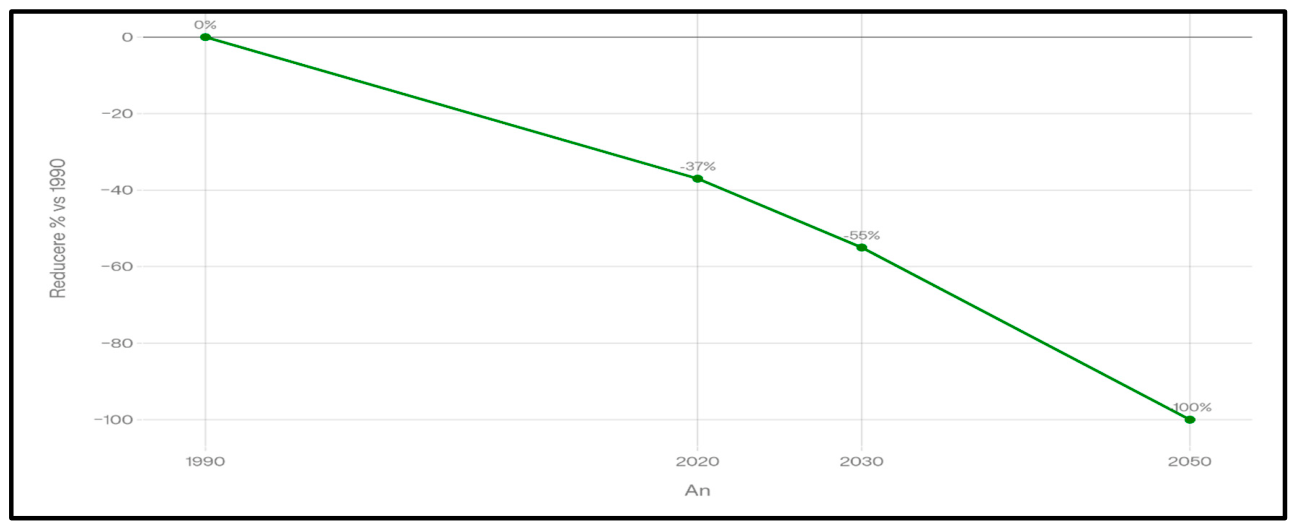
These objectives have been integrated into EU policies through the European Green Deal and the “Fit for 55” package, which set ambitious targets to reduce net greenhouse gas emissions by at least 55% by 2030 and to achieve climate neutrality by 2050.
Figure 1.
EU GHG Emissions Reduction Trajectory (European Green Deal & Fit for 55) Decarbonization targets of the EU until 2050 Source: Author’s own elaboration based on the “Fit for 55” package, https://climate.ec.europa.eu/eu-action/european-green-deal/fit-55-initiative-delivering-europes-2030-climate-target_en.https://climate.ec.europa.eu/index_en.
Figure 1.
EU GHG Emissions Reduction Trajectory (European Green Deal & Fit for 55) Decarbonization targets of the EU until 2050 Source: Author’s own elaboration based on the “Fit for 55” package, https://climate.ec.europa.eu/eu-action/european-green-deal/fit-55-initiative-delivering-europes-2030-climate-target_en.https://climate.ec.europa.eu/index_en.
In the European approach, the financial sector and central banks play an essential role in channeling capital flows toward investments that are compatible with the Sustainable Development Goals (SDGs) and the green transition. This is achieved both through prudential regulation and by steering market operations and the collateral framework.
From the perspective of combined public and market financial activities and monetary policy, the SDGs related to climate action, affordable and clean energy, decent work and economic growth, sustainable infrastructure, innovation, responsible consumption and production, and partnerships for the goals are particularly relevant.
1.3. Green Transition and Macro-Financial Stability
Climate change induces risks because it affects the entire economic, social, and ecological system, with consequences that are both visible and difficult to anticipate.
Physical risks are direct risks resulting from global climate change (extreme weather events, rising sea levels, impacts on water and soil, etc.). They can have a sudden and significant financial impact, affecting operations, transportation, supply chains, or the safety of employees and customers. To mitigate their negative effects, adaptation measures are being implemented alongside policies that stimulate the transition to a low-carbon economy and provide protection for vulnerable regions, economic sectors, and social groups.
These developments give rise to transition risks, which stem from changes in policies, technology, markets, regulatory credibility, and shifts in consumer preferences during this transformation.
Climate risks, both physical and transition related further generate economic risks (such as declining productivity, capital losses, labor market distortions, and volatile energy and mineral prices). These, in turn, can trigger financial risks in a cascade effect: non-performing loans, increased volatility in financial markets, abrupt asset revaluations, and liability risks for insurance companies, among others.
At the same time, the green transition also brings numerous opportunities, including: rising demand for energy efficiency services; development of electric vehicle battery charging infrastructure; carbon capture and storage solutions; regenerative, local, and sustainable agriculture; development of green financial products (green bonds, specialized funds, sustainability-linked financing); and investments in energy-efficient building renovations, among others.
The governmental and administrative measures accompanying the green transition vary widely, with two major directions standing out: investments in technology and infrastructure, and the management of the energy transition. These mitigation measures, such as carbon pricing, subsidy programs, government investments, regulations, sustainability standards, and indices, can generate short-term inflationary pressures. The increase in production costs caused by regulations and the investments required for green technologies represents a key component of the inflationary impact of the green transition. In the medium and long term, however, when implemented in a timely and well-sequenced manner, these same policies can help reduce inflation. This occurs through greater societal familiarity with new technologies, efficiency gains from economies of scale and scope, and broader access for a growing share of the population to these solutions.
The transition to a low-carbon economy therefore has profound implications for the structure of production, relative prices (especially energy), and investment dynamics, with direct effects on inflation, economic growth, and financial stability.
Recent analyses by the ECB and European supervisory authorities, based on “Fit for 55” scenarios, show that although the green transition entails significant costs and losses for certain sectors and financial intermediaries, an orderly transition reduces long-term macroeconomic and financial risks compared to disorderly or delayed scenarios. From a financial stability perspective, exposures (lending) to high greenhouse gas emission sectors are becoming a source of systemic vulnerability. Assets in climate-relevant sectors (often referred to as “brown” sectors) may rapidly lose value due to new environmental standards or higher carbon certificate prices, amplifying credit risk and necessitating macro-prudential adjustments. In this context, central banks and supervisory authorities have introduced climate stress tests and begun reviewing their collateral management frameworks.
For example, the “Fit for 55” scenario analysis exercise conducted by the ECB, EBA, EIOPA, and ESMA (2024) indicates that, in the most severe macroeconomic scenario, potential losses in the banking sector exceed €638 billion in the first round and €1,218 billion in the second round, with increased probabilities of default in high-emission sectors. At the same time, the results show that while transition risks taken in isolation are considered “unlikely to threaten financial stability,” their combination with adverse macroeconomic shocks can generate significant systemic losses. This underscores the need for a robust macro-prudential policy framework and climate stress testing.
In conclusion, the coordination of monetary and fiscal policies specific to the green transition is essential for supporting efforts to combat inflation while simultaneously advancing the green transition. This practical necessity validates the development of the innovative instrument proposed in this doctoral thesis, namely, an analytical framework and a new tool designed to measure and manage the degree of central banks’ involvement in the global process of transitioning toward a sustainable economy, using the Sustainable Development Goals (SDGs) as the primary source of inputs and reference indicators.
2. Monetary Policy and the Role of Central Banks in Green Transition
The present chapter analyzes the interconnection between monetary policy and the transition toward a sustainable economy, with a focus on the strategic role of central banks in managing climate risks and accelerating the objectives of the European Green Deal. It starts with the theoretical framework of integrating ESG factors into the dual mandate of price stability and financial stability, highlighting the evolution from traditional governance toward innovative green supervision instruments.
2.1. The Expansion of Central Banks’ Mandates
Traditionally, central banks’ mandates have focused on price stability and, in some jurisdictions, on employment and financial stability, without explicitly including environmental or sustainable development objectives. However, the rapid evolution of climate risks and the expansion of public policy frameworks have led to a gradual integration of these dimensions into monetary policy and financial stability strategies, even when they are not directly mentioned in the mandate.
This section discusses the evolution of central banks’ mandates from traditional objectives, such as price stability and financial stability, toward the inclusion of sustainability goals. It presents international examples, including the ECB, the Fed, and the NGFS network, as well as the creation of internal structures dedicated to climate-related issues.
Why is this mandate expansion taking place? As presented in the previous chapter, the effects of moving toward a green economy also influence central banks’ policies and instruments. Although monetary policy is intended to remain neutral under a central bank’s mandate, it faces certain dilemmas: on the one hand, the green transition has an inflationary impact in the short term due to the need for large-scale investments and the costs of emerging technologies, both of which raise final consumer prices; on the other hand, the transition reduces major macroeconomic risks and contributes to long-term price stability.
Central banks recognize that climate change poses risks to a country’s economic and financial stability. They openly acknowledge the need to engage in activities that help them better understand these risks, their dynamics, potential implications, and consequences, and to formulate appropriate policy responses.
The main reasons explicitly recognized as relevant for this awareness and action process are:
- climate change and the degradation of nature/biodiversity loss;
- radical or abrupt administrative mitigation measures (especially fiscal ones);
- disorderly transition, i.e., reactive interventions to physical climate risks;
- market behavior (households and firms) in adopting green solutions.
Furthermore, the integration of the SDGs into monetary and macro-prudential policies must not ultimately undermine the independence of central banks. From the broader perspective of economic governance, central banks recognize that their activities must remain within their statutory mandate and that their actions should support overall local, regional, or global economic policy to serve the public interest through the maintenance of price and financial stability.
As seen in the previous section, the effects of climate change influence the stability and dynamics of various economic sectors (energy, agriculture, transport, retail, etc.). These changes affect the operational, commercial, and business structures of producers and traders, and consequently alter their production cost structures, ultimately influencing price dynamics in the economy. At the same time, mitigation measures and policies aimed at accelerating the transition to a green economy impact “brown” sectors that still generate significant economic value and employment (energy-intensive sectors such as mining and agro-industry). This impact is reflected in the structure of expenditures and ultimately feeds through production and consumption costs.
The activities of economic operators, as well as the needs of the population, are financed by credit institutions. This financing is influenced by the carbon footprint of the financed projects and/or their location, exposing them to physical or transition risks. This creates the need for continuous monitoring of the banking system’s exposure to such risks.
To demonstrate this growing awareness, central banks undertake various types of activities, with differing degrees of depth and involvement:
- understanding and assessing the impact of climate risks on inflation, the economy, and the financial-banking system, to design an orderly transition aligned with their mandate and statutory objectives;
- evaluating the impact of climate risks on price stability due to the exposure of key sectors (e.g., energy, agriculture, transport);
- ensuring the stability and resilience of the banking system through prudential supervision, particularly regarding its appropriate exposure to climate risks, especially those related to financing the transition to a green economy;
- supporting the government’s overall economic policy in the areas of sustainable development, macro-prudential stability, or energy transition;
- facilitating and “democratizing” access to knowledge, solutions, and information that help the public and businesses make the transition to a green economy;
- promoting sustainability by leading by example, reducing their own carbon footprint, maintaining a sustainable cash circulation process, and conducting social, educational, and environmental activities based on a transparent ESG agenda and voluntary sustainability reporting.
Pro-active central banks in the field of green transition therefore explicitly assume roles that go beyond the strict boundaries of their traditional mandate, such as supporting green financing, conducting macro-climate research and modeling, promoting sustainable financial education, and engaging in national and international cooperation. These roles materialize through:
- multi-year programs and plans dedicated to the green transition and the integration of climate risks into central bank policies;
- inclusion of dedicated sustainability sections in strategies, annual reports, financial stability reports, and policy documents;
- adaptation of the operational framework (for example, climate criteria in asset portfolios and collateral frameworks) and analytical tools (climate scenarios and stress tests).
At the same time, there are differences in approach across jurisdictions. For example, in early 2025, the Federal Reserve (Fed) decided to withdraw from the NGFS (Network for Greening the Financial System), citing the forum’s expansion toward nature-related issues and the mobilization of sustainable finance. This decision was interpreted by analysts as a response to political pressures associated with the new U.S. presidential administration. This withdrawal contrasts with the position of the ECB, which remains one of the most influential and active members of the NGFS and has chosen to strengthen its presence and actions oriented towards the green transition.
Regarding the internal organizational model for “sustainability and climate change” activities, there is no clear pattern or consensus among central banks. Based on available information from consulted sources, four main organizational models can be distinguished:
- A standalone directorate directly coordinated by the Governor (e.g., Bank of Greece);
- Centers of expertise on climate change and sustainability directly coordinated by the President/Governor (e.g., ECB);
- Coordination centers, either independent or within directorate-type structures (e.g., Banque de France);
- Project/program-based organization coordinated by an executive board member (Governor or Deputy Governor).
A relevant example is the ECB, which established a Climate Change Centre in January 2021 as a cross-cutting structure coordinating climate-related activities across monetary policy, financial stability, market operations, and internal corporate sustainability (ECB, 2021a). Through this structure, the ECB explicitly recognized that climate change affects all areas of its policy, justifying the integration of climate considerations into monetary and prudential policy (ECB, 2021b).
Table 2.
Key Priorities of the ECB Climate Centre – 2024-2025 Plan.
| Domains | Core responsibilities |
|---|---|
| Green transition | Green transition navigation, Fit for 55 stress-test |
| Physical climate impacts | Assessment of heightened physical risks |
| Nature-related risks | Development of a dedicated workstream on nature-related risks |
| Banking supervision | Deadline ICAAP (Internal Capital Adequacy Assessment Process) integration of climate risks and strengthened enforcement |
| Indicators | Publication of enhanced climate statistical indicators |
Source: Author’s own elaboration, adapted from ECB (2021a)
https://www.ecb.europa.eu/ecb/climate/our-climate-and-nature-plan/html/index.en.html (accessed 8 February 2026).
2.2. The SDGs Relevant to a Central Bank’s Mandate
Several Sustainable Development Goals (SDGs) interact directly or indirectly with the responsibilities of a central bank. The ESG agenda, in turn, channels capital toward sustainable and green assets, influencing the structure of financial markets.
From the perspective of central banks’ mandates, certain SDGs have a direct connection:
- SDG 8 – Decent Work and Economic Growth: It sets targets for sustained economic growth and productivity, which are closely linked to the macroeconomic objectives pursued by monetary policy.
- SDG 13 – Climate Action: It requires the integration of climate risks into national and financial policies, calling for the adaptation of monetary and prudential policy tools.
- SDG 7 – Affordable and Clean Energy: It directly affects inflation through energy price dynamics and has significant implications for the scenarios used in macroeconomic modeling and stress testing.
These goals directly influence the key variables monitored by central banks, inflation, financial stability, and credit conditions, and therefore provide justification for expanding the analytical framework of monetary policy.
Other SDGs operate through indirect channels but can still be relevant for macro-financial stability:
- SDG 9 – Industry, Innovation and Infrastructure: It influences investment needs and the structure of capital, with implications for financing demand and sectoral risk profiles.
- SDG 11 – Sustainable Cities and Communities: It affects physical risks (such as floods and heatwaves) to urban infrastructure and the real estate market, which in turn influences the collateral used in monetary policy operations.
- SDG 12 and 15 – Responsible Consumption and Production; Life on Land: These connect to nature-related and biodiversity risks, which the NGFS and some European central banks have begun to integrate into their financial stability analyses.
In addition, SDG 16 (Peace, Justice and Strong Institutions) and SDG 17 (Partnerships for the Goals) support, from a central bank perspective, international cooperation within networks such as the NGFS, as well as dialogue between central banks, supervisory authorities, and private sector actors regarding reporting standards and risk modeling.
Figure 2.
Symbolic Representation of SDG 16 and SDG 17 Source: Author’s own elaboration based on the 2030 Agenda for Sustainable Development. Available at: https://sdgs.un.org/2030agenda (accessed 8 February 2026).
Figure 2.
Symbolic Representation of SDG 16 and SDG 17 Source: Author’s own elaboration based on the 2030 Agenda for Sustainable Development. Available at: https://sdgs.un.org/2030agenda (accessed 8 February 2026).

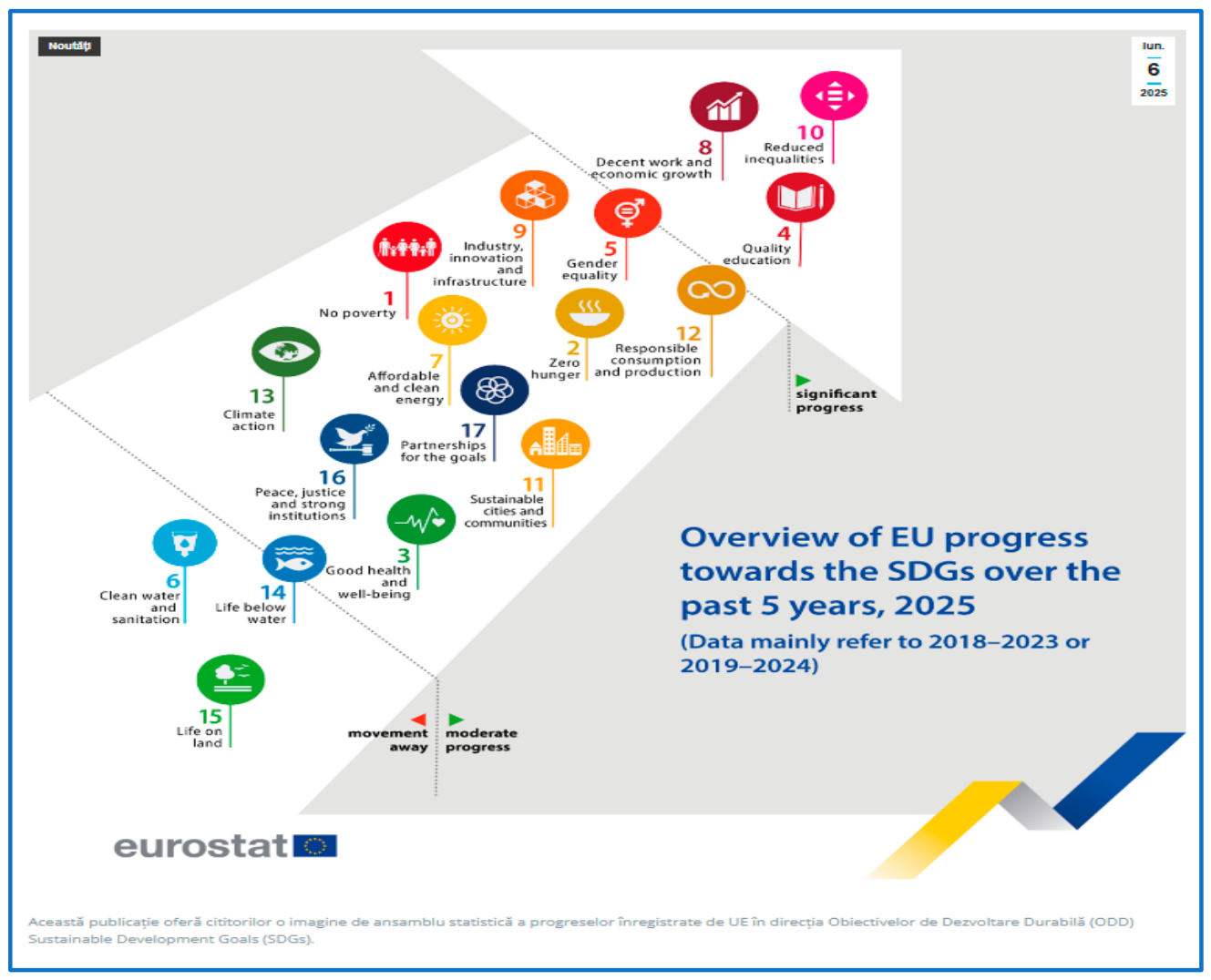
Moderate progress on SDG 7 (Affordable and Clean Energy), SDG 8 (Decent Work and Economic Growth), and SDG 13 (Climate Action) over the past three years (2023–2025) points to positive trajectories, yet still falling short of the EU’s 2030 targets, according to the Eurostat SDG Monitoring Report 2025. Linear trend-based projections for 2026 suggest modest acceleration driven by the European Green Deal and the REPowerEU plan, with notable implications for inflation, productivity, and stress risks.
The integration of the SDGs into central bank actions occurs through several channels:
- Risk channel: Climate change and nature degradation increase the likelihood of structural losses and episodes of heightened volatility. These developments affect price stability and the resilience of the financial system, requiring the inclusion of such risks in macroeconomic scenarios and stress tests.
- Public policy channel: Once governments embed the SDGs into legislation (through the European Green Deal, Fit for 55 packages, or national and international commitments), central banks incorporate these trajectories into their medium- and long-term macroeconomic projections and risk assessments.
- Capital allocation channel: Through the collateral framework, asset purchases, and potential green lending facilities, central banks can influence the relative cost of financing for activities that are either aligned or misaligned with the SDGs.
These mechanisms are reflected in ongoing debates about reforming the Basel framework, integrating climate risks into capital requirements, and developing a voluntary framework for climate risk reporting by banks, as proposed by the Basel Committee.
Figure 3.
Sustainable Development in the European Union – Monitoring Report on Progress towards the SDGs in the EU Context Source:
Eurostat (2025), Sustainable development in the European Union: Monitoring report on progress towards the SDGs in an EU context – 2025 edition, Publications Office of the European Union, Luxembourg, KS-01-24-018. Available at: https://ec.europa.eu/eurostat/en/web/products-flagship-publications/w/ks-01-24-018 (accessed 15 January 2026).
Figure 3.
Sustainable Development in the European Union – Monitoring Report on Progress towards the SDGs in the EU Context Source:
Eurostat (2025), Sustainable development in the European Union: Monitoring report on progress towards the SDGs in an EU context – 2025 edition, Publications Office of the European Union, Luxembourg, KS-01-24-018. Available at: https://ec.europa.eu/eurostat/en/web/products-flagship-publications/w/ks-01-24-018 (accessed 15 January 2026).
The integration of climate risks into financial stability assessments has become a priority for many central banks, including the ECB and the central banks of EU Member States that are part of the NGFS. The measures adopted include incorporating climate considerations into financial stability reports, developing tools for analyzing physical and transition risks, and adapting stress-testing frameworks to include climate scenarios over longer time horizons.
The “Fit for 55” exercise represents the first climate stress test conducted across the entire European financial system, banks, insurers, occupational pension funds, and investment funds, in an integrated perspective. It models both first-round losses and contagion and amplification effects arising from interconnected portfolios. The results show that investment funds are particularly exposed to market losses in adverse scenarios, while the banking sector suffers significant losses through the credit channel, especially vis-à-vis “brown” sectors. However, the stability of the system is not considered to be directly threatened by transition risks in isolation.
2.3. Green Monetary Policy Instruments and Mechanisms
In its guide on sustainable investment for central banks, which recommends the development of a tailored framework for integrating ESG factors into portfolio management, the NGFS proposes a series of recommendations:
- assessing the impact of ESG factors and aligning them with the mandate of price stability;
- implementing sustainable and responsible investment (SRI) strategies;
- integrating sustainability considerations into the management of owned asset portfolios;
- developing internal capacities, tools, and methodologies for integrating ESG factors and improving transparency (financial disclosure).
As highlighted in previous sections of this paper, central banks take an active role in the green transition primarily for three reasons:
- They can manage the risks generated by climate change for the financial system and the economy as a whole;
- They can channel funds toward sustainable investments, thereby supporting the green transition;
- They can use their expertise to drive behavioral changes in the banking sector and the broader economy.
Consequently, there is a growing emphasis on integrating environmental considerations into central banks’ operations and on promoting green assets in their portfolios. Although the impact of purchasing green assets may be limited in the short term, it has a signaling and leverage effect, which is considered important for demonstrating the commitment of financial institutions to sustainability and environmentally responsible practices.
Another emerging trend is that central banks have formulated intentions, ambitions, and forward-looking plans aimed at supporting green financing in the banking market and long-term economic resilience investments within the jurisdictions they serve as monetary authorities.
Specifically, the activities falling under their own monetary operations include:
- Understanding and anticipating shocks resulting from the materialization of physical or transition risks by adjusting macroeconomic models and expanding access to high-quality statistical data necessary for running scenarios with these models;
- The capacity to assess and target assets issued by institutions with a credible climate or sustainability profile, based on a set of economic behavior criteria (low emission levels, ambitious carbon footprint reduction targets, and a transparent and consistent green transition management process);
- Structuring portfolios of green assets (corporate bonds) for the purpose of central bank collateral management in refinancing operations with commercial banks. The identified pattern in this context involves limiting holdings of such assets issued by non-financial corporations for collateral purposes, based on their level of compliance with relevant legislation (for example, the CSRD).
These patterns of activity — transparency, risk management, and support for the green transition reflect the general direction of public opinion regarding the integration of climate considerations into central bank operations. Central banks are using their influence to guide financial markets toward more sustainable practices, considering the dynamics of the ESG bond market.
A relevant example in this regard is the “Stability through Sustainability” Manifesto, as well as the open letter addressed to the European Central Bank in 2015. These documents, endorsed and signed by renowned economists and experts in monetary policy and sustainable finance, put forward a set of concrete recommendations for a deeper integration of climate and nature-related considerations into monetary policy strategy. The Manifesto argues that, given the worsening climate and biodiversity crises and their amplifying impact on inflation and financial stability, the ECB should update its Climate Roadmap, adapt its collateral management framework and asset portfolios, and introduce green lending facilities.
The signatories argue that although the ECB has recognized the importance of a rapid and orderly transition for macro-financial stability and has conducted large-scale climate stress tests, the context of high inflation and the normalization of monetary policy led to the discontinuation of net asset purchases. This effectively ended the application of climate tilting, the preferential orientation of purchases and portfolios toward assets with superior climate performance and resulted in tighter financing conditions for green investments. In this context, the 2025 monetary strategy review was perceived as an opportunity to better align the ECB’s tools with climate objectives and relevant SDGs.
The Manifesto proposes three main directions for action by the ECB:
- the introduction of green refinancing operations, successfully launched at the end of 2025, allowing commercial banks to benefit from preferential rates for loans directed toward green investments, particularly in renewable energy and building renovation;
- updating the collateral framework to exclude assets issued by companies involved in activities that are permanently harmful to the environment, adjusting haircuts to reflect climate risks, and limiting the acceptance as collateral of assets with very high emissions;
- realigning asset portfolios with the objectives of the Paris Agreement through active rebalancing, engagement-based approaches, and the exclusion of entities whose activities are structurally incompatible with the green transition.
These instruments would strengthen the contribution of monetary policy to climate and energy-related SDGs, reduce transition risks in the central bank’s portfolios, and support macroeconomic stability by facilitating an orderly transition in line with NGFS scenarios and recommendations.
2.4. Indicators for Assessing the Contribution of Monetary Policy to Green Transition
Relevant indicators are proposed for evaluating monetary policy, such as interest rates, green lending, and the structure of asset portfolios. In addition, specific green transition indicators are identified, including emissions, clean energy consumption, and sustainable investments. A comparative analysis is carried out between common and divergent indicators for the two dimensions.
For the timely and operational integration of the SDGs into monetary policy, appropriate selection of indicators is required, depending on their purpose — analysis and/or decision-making. Starting from this premise, three categories of indicators can be evaluated:
- monetary policy indicators;
- indicators derived from the interaction between monetary policy and green transition measures; and
- specific green transition indicators.
2.4.1. Relevant Indicators for Assessing Monetary Policy in the Green Transition
The traditional key indicator of monetary policy remains, of course, the monetary policy interest rate. It is typically expressed through a simplified Taylor rule:
where:
- = neutral interest rate (approximately 2%),
- = current inflation rate,
- = inflation target (2%),
- output gap = deviation of actual output from potential output.
Methodological interpretation: This rule helps control inflation and economic growth (BCE, 2021).
In the context of the green transition, the relevance of this indicator persists. However, the monetary policy transmission mechanism becomes more complex due to the heterogeneity of investments (and capital) required for the transition and the uneven distribution of capital needs across “green” and “brown” assets in the economy. For example, a restrictive monetary policy may successfully moderate short-term inflation, but it can also slow down green investments, with direct consequences for the long-term progress of the transition.
Another relevant indicator is the structure of the central bank’s asset portfolio, particularly in relation to multi-year asset purchase programs intended for collateral or reserve management purposes. The degree of exposure to assets issued by climate-relevant entities (brown industries) or to securities aligned with climate neutrality objectives reflects the level of consistency between monetary policy goals and green transition commitments.
This issue is inherently sensitive, as the composition of central banks’ asset portfolios can potentially conflict with the principle of market neutrality and their statutory mandate. Moreover, the effectiveness of this tool also depends on market liquidity and the credible development of asset classes available for inclusion in the central bank’s portfolio.
Table 3.
ECB Asset Portfolio Structure – Green vs. Brown Exposure (2024) 35% corporate bonds exposed to high-emission industries (“brown”) 8% green bonds + 12% Green TLTRO = 20% green portfolio Mandate conflict: Market neutrality vs. climate transition (ECB, 2024).
Table 3.
ECB Asset Portfolio Structure – Green vs. Brown Exposure (2024) 35% corporate bonds exposed to high-emission industries (“brown”) 8% green bonds + 12% Green TLTRO = 20% green portfolio Mandate conflict: Market neutrality vs. climate transition (ECB, 2024).
| Asset class | Portfolio weight | Climate classification |
|---|---|---|
| Sovereign bonds | 45% | Neutral |
| Corporate bonds | 18% | 35% carbon-intensive (“brown”) assets (coal, oil) |
| Green bonds | 8% | Green (aligned with the Paris Agreement) |
| TLTROs (loans to banks) | 25% | 12% Green TLTROs (2025) |
| Other assets | 4% | Mixed |
Source: Author’s own elaboration based on ECB (2024), Climate and Nature Plan 2024–2025 and the APP portfolio review.
Green lending is another relevant indicator, although it remains secondary. It sits at the intersection of monetary policy objectives and climate objectives, which are generally not explicitly included in central banks’ mandates.
The evolution of the volume and cost of loans directed toward green projects in the economy provides information primarily on how current monetary conditions interact with capital allocation across the economy. Moreover, there is no broad consensus regarding the indicator of “green banking assets,” as it is also heavily influenced by specific fiscal policies. This limits its use as a purely monetary mechanism or indicator.
2.4.2. Specific Green Transition Indicators and Their Limitations from a Monetary Policy Perspective
The specific green transition indicators, defined in section 2.1, play a complementary role in the activities of a central bank. These indicators primarily reflect the structural progress of the economy toward a sustainable transition and are essential for assessing alignment with the SDGs. However, they have limited relevance for calibrating short-term monetary policy decisions. They offer valuable insight into the pace of the transition and potential aggregate demand. Nevertheless, they are strongly influenced by non-monetary factors such as fiscal policies, associated regulations, and subsidies, which reduce their ability to directly affect the effectiveness of monetary policy.
2.4.3. Comparative Analysis: Common and Divergent Indicators
The analysis of monetary policy indicators and those specific to the green transition reveal both areas of convergence and divergence. For example, sustainable investments can influence aggregate demand and the economy’s growth potential, thereby affecting inflation and macroeconomic stability. Similarly, the structure of asset portfolios can generate financial risks and exposures resulting from the materialization of physical and transition climate risks.
Table 4.
Monetary Policy (bank credit portfolio) vs. Green Transition.
| Convergence (they reinforce each other) | Divergence (risks are conflicting for monetary policy) | Convergence (mutually reinforcing, with positive effects on the economy and financial stability) |
| Green jobs → + economic growth (GDP growth) | Carbon tax → +higher inflation | Green jobs → + economic growth (GDP growth) |
| Green bonds → stability | Stranding assets → loses | Green bonds → stability |
| Renovations → ↓ reduced energy costs | Physical risks → acute damages | Renovations → ↓ reduced energy costs |
Source: Author’s own elaboration based on: ECB, Climate and Nature Plan 2024–2025 (January 2026); EBA, EU-Wide Stress Test Results 2025 (July 2025); Fit-for-55 exercise (November 2024), indicating transition losses of €638 billion.
However, it can be argued that most indicators are divergent by their very nature. Interest rates and inflation are oriented toward medium-term monetary equilibria, whereas greenhouse gas emissions and clean energy consumption reflect long-term structural transformations. This divergence makes it impossible to use a single set of indicators for both dimensions.
Nevertheless, a certain correlation and causal relationship can be identified around energy transition indicators. Clean energy consumption and the transformation of the energy mix can have implications for fossil fuel prices, with long-term effects on price stability. However, in the short term, the energy transition can generate volatility and inflationary pressures. From a monetary policy perspective, these indicators therefore act more as circumstantial or transitory factors rather than operational benchmarks.
3. Synergies, Challenges and Perspectives for Integrating the SDGs
Integrating the Sustainable Development Goals (SDGs) into the monetary and financial stability policies of central banks, such as the ECB, creates significant synergies by linking the sustainability agenda with the dual mandate of price stability and financial system stability. In this way, risks such as inflation generated by carbon taxes or losses associated with stranded assets can be transformed into opportunities for economic convergence. These opportunities are reflected in the stimulation of GDP growth through the creation of green jobs, the stabilization of financial portfolios via green bonds, and the reduction of energy costs resulting from investments in building renovation and energy efficiency.
3.1. Synergies Between the SDGs and Macroeconomic Stability
This section highlights the benefits of an orderly transition for price and financial system stability, as well as the advantages of integrating climate risks into portfolios and monetary operations. Examples of best international practices are also presented.
A significant set of synergies arises from the fact that a rapid and orderly transition reduces the likelihood of energy price shocks, severe climate disasters, and the abrupt materialization of stranded assets — all of which can undermine macroeconomic and financial stability. Analyses by the ECB and NGFS emphasize that maintaining the “Fit for 55” trajectory and accelerating green investments can limit the long-term costs of climate change, even if they involve short-term transition costs and sectoral risks.
Furthermore, integrating climate risks into the management of central banks’ portfolios (reserves and monetary policy portfolios) can improve the long-term risk-return profile and reduce exposure to shocks associated with high-emission assets. This approach is fully compatible with the financial stability mandate and with the ECB’s secondary objective of supporting EU policies.
3.2. Tensions: Trade-offs Between Inflation, Financial Stability and Climate Objectives
At the same time, integrating the SDGs and the green transition can create tensions with the objective of price stability and the effectiveness of monetary policy transmission. The increase in green investments and energy reforms can generate short-term cost-push inflationary pressures, particularly through higher energy and carbon prices. This places central banks in a dilemma between tightening monetary policy and supporting the investments necessary for the transition.
An open letter addressed in 2025 to the ECB Governing Council highlights the negative impact of the sharp rise in interest rates, partly triggered by inflation linked to dependence on fossil fuels, on the financing of sustainable projects and on the pace of the transition of energy. It also points out that the climate “tilting” policy applied to the corporate bond portfolio has been limited by restrictions imposed by the ECB. The authors argue that, without adaptations to the collateral framework and the introduction of green lending facilities, monetary policy risks remaining insufficiently aligned with climate and nature-related objectives. This holds true even though the ECB acknowledges that a rapid transition is essential for price and financial stability.
As mentioned earlier in section 3.1, the “Fit for 55” exercise represents the first European climate stress test with a system-wide perspective. It covers banks, insurers, occupational pension funds, and investment funds over an eight-year horizon from 2023 to 2030.
The scenarios are based on a common baseline, the successful implementation of the “Fit for 55” package, with a 55% reduction in emissions by 2030 and cumulative energy investments of approximately €3.7 trillion. Two adverse scenarios are added: one centered on a “run on brown” shock and another that combines this shock with a deterioration in global macro-financial conditions.
The “Fit for 55” exercise is detailed in the official ECB/ESRB report from 2024. The table below summarizes all scenario explanations, based on the specifications of the previously cited document.
The Table 5 covers all the essential explanations from the report, including the 2023–2030-time horizon and the cross-sectoral perspective (banks, insurance, and funds).
The results indicate significant but manageable losses for the financial system, with vulnerabilities concentrated in high-emission sectors and in investment funds exposed to “brown” assets. However, exercise has important limitations: the assumption of a static balance sheet, the exclusive focus on the asset side, the absence of physical risks, and the lack of scenarios that account for policy failures or globally divergent transition pathways.
Recent critical analyses suggest that the ECB’s scenarios tend to convey an overly reassuring message, implying that “losses from the materialization of transition risks are unlikely to threaten financial stability” in the EU. At the same time, more severe scenarios or combinations of physical and transition risks over longer horizons were not explored. Critics point out that the assumption of successful implementation of the “Fit for 55” package in all scenarios, along with the presumption that the rest of the world will also meet its transition targets, underestimates risks related to policy failures, divergences between major economies, and geopolitical or technological shocks.
Attention is also drawn to the fact that the scenarios insufficiently address the risk of stranded assets in fossil fuel sectors, potential “run on green” dynamics triggered by disruptive technologies, the sudden downgrading of certain green investments, and risks associated with the dominance of certain global players (for example, China in renewable energy technologies and batteries). Proposals for improvement include expanding the range of scenarios, incorporating physical risks and climate tipping points, using reverse stress tests to identify the level of losses that could endanger financial stability, and developing models capable of capturing non-linear effects and feedback loops.
3.2.1. Challenges, Dilemmas for Central Banks and Other International Approaches
Current discussions focus on the conflicts between climate objectives and short-term price stability, the limitations of existing tools, and the decision-making dilemmas faced by central banks. The approaches of different international institutions, such as the ECB and the Fed, are compared, along with their implications for global standards.
In January 2025, the Federal Reserve announced its withdrawal from the NGFS, justifying the decision by a perceived “drift” between the Fed’s legal mandate and the network’s expanded scope, which now includes nature-related risks, biodiversity, and the mobilization of sustainable finance. The Fed Chair argued that the NGFS’s activities had significantly expanded since the time of accession, now encompassing objectives to support sustainable transition financing — objectives considered beyond the Fed’s traditional role.
Independent analyses, however, maintain that these themes have been part of the NGFS’s work since its inception and that the Fed’s decision reflects primarily domestic political pressures and the new presidential administration’s orientation toward reducing involvement in green transition initiatives. The decision is perceived as a step backward in international cooperation among central banks on climate issues and as a signal that may encourage a minimal approach to climate risks in U.S. financial regulation.
The NGFS expressed regret over the Fed’s withdrawal but reaffirmed its commitment to its mission of integrating climate and nature-related risks into financial supervision and central bank operations. Without the Fed’s participation, the ECB becomes the largest and most influential member of the network, thereby strengthening Europe’s role in shaping global standards for the analysis and management of climate risks.
This situation highlights the growing fragmentation between jurisdictions that adopt a proactive approach, aligned with the SDGs and the European Green Deal, and those in which climate considerations are subordinated to short-term political agendas. Over the medium term, this may have implications for the convergence of reporting standards, the calibration of capital requirements for climate risks, and the consistency of scenarios used in stress tests at the global level.
3.3. Perspectives and Recommendations for Future Policies
3.3.1. Presentation of the Basel III Framework
Measures are proposed to strengthen the role of central banks in the green transition, including the development of integrated climate scenarios, indicators, and stress tests. It is also recommended to continue research on the coupling between central bank-specific indicators and progress in the green transition.
The Basel III Framework, developed by the Basel Committee on Banking Supervision, represents the international standard for prudential regulation of banks. It establishes requirements for capital, liquidity, and risk management, which have been transposed into national and European legislation. In recent years, the Basel Committee has explicitly recognized the relevance of climate risks to financial stability and has developed a voluntary framework for climate risk disclosure by banks, intended to guide regulatory authorities in defining reporting requirements.
The climate risk disclosure framework published in 2025 provides for reporting on both qualitative factors (governance, risk management processes, integration of climate risks into strategy) and quantitative indicators concerning exposure to physical and transition risks. Although voluntary at the global level, this framework is seen as a bridge toward clearer integration of climate risks into Pillar 3 of the Basel regulations and as a tool through which the banking system can contribute to the achievement of climate- and environment-related SDGs.
3.3.2. Implementation in the EU and the Link with the SDGs
In the European Union, the prudential framework for credit institutions has already been extended to include detailed ESG risk disclosure requirements through amendments to the Capital Requirements Regulation (CRR). These include the mandatory reporting of indicators on transition and physical risks, as well as the Green Asset Ratio (GAR). These requirements are directly linked to the SDGs related to climate action, clean energy, sustainable industry, and responsible consumption. They promote transparency and exert market pressure on banks exposed to high-emission sectors.
Figure 4.
Green Asset Ratio (GAR) of EU Banks Source: EBA & ABN AMRO Group Economics (2025). https://www.abnamro.com/research/en/our-research/esg-strategist-why-eu-banks-green-asset-ratios-may-mislead-on-green.
Figure 4.
Green Asset Ratio (GAR) of EU Banks Source: EBA & ABN AMRO Group Economics (2025). https://www.abnamro.com/research/en/our-research/esg-strategist-why-eu-banks-green-asset-ratios-may-mislead-on-green.
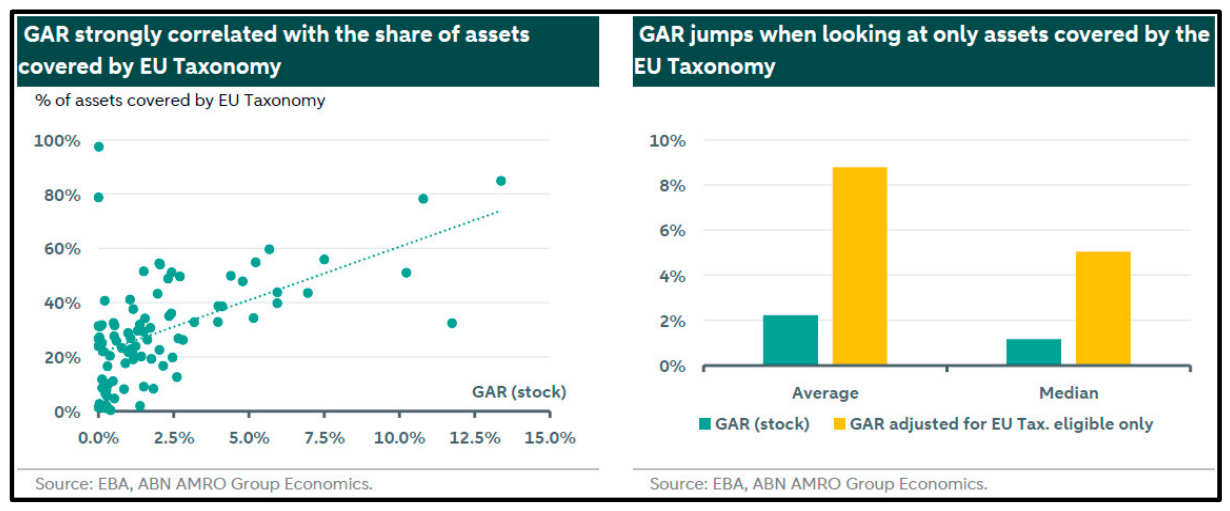
The integration of climate risks into the Basel framework and EU capital rules creates a bridge between the financial stability objectives of central banks and the SDGs related to climate and ecosystems, even though environmental objectives are not explicitly stated in monetary mandates. At the same time, the voluntary nature of the Basel framework at the global level, influenced also by political pressures, raises the risk of fragmentation in standards across jurisdictions and the emergence of regulatory gaps in countries where climate risks are treated as optional.
4. Conclusions, Limitations and Future Research
The integration of the SDGs into monetary policy is an irreversible but still incomplete process. Central banks can facilitate the green transition through adapted instruments and continuous assessment of risks. The development and use of relevant indicators enable the monitoring of progress and the alignment of monetary policies with the objectives of the 2030 Agenda.
The integration of the SDGs into monetary policies and green transition instruments at the level of central banks is emerging as an implicit yet still incomplete process, situated at the intersection of macroeconomic stability, prudential regulation, and sustainable development objectives. The case of the ECB highlights a significant institutional evolution, the creation of a Climate Change Centre, the development of climate scenarios and stress tests, and the partial adaptation of the operational framework, which reflects the explicit recognition of the role played by climate and nature-related risks in determining inflation and financial stability.
The analysis of official sources demonstrates that all three hypotheses formulated in Chapter I are fully confirmed, thereby justifying the strategic role of central banks in supporting the green transition.
The complete validation of the hypotheses confirms that the green transition is not merely a risk constraint, but a structural opportunity for long-term macroeconomic and financial stability within planetary boundaries. By integrating climate risks into monetary policy analysis and macro-prudential supervision, central banks become essential actors in an orderly and equitable transformation.
At the same time, critical literature and civil society interventions, such as the open letter “Stability through Sustainability,” signal that the current framework remains suboptimal for aligning monetary policy with climate and biodiversity objectives. They highlight the limitations of the scenarios used (short time horizons, optimistic assumptions regarding policy success, insufficient modelling of physical risks and tipping points), as well as the fact that monetary policy normalization has reduced the space for climate “tilting” instruments and has made the financing of green investments more difficult.
5. Limitations of the Study
The present work presents several limitations that must be explicitly acknowledged:
- The analysis relies predominantly on official documents (ECB, NGFS, Basel Committee) and a few recent policy and advocacy contributions, which may introduce a certain institutional or normative bias in the interpretation of the role of central banks.
- The approach is predominantly qualitative, without its own econometric modelling of the relationship between the green transition, the SDGs, inflation, and financial stability. This limits the ability to quantitatively estimate the magnitude of effects and to rigorously test the formulated hypotheses.
- The international comparative analysis is selective, focusing mainly on the ECB, the Fed, and the NGFS, without providing an in-depth examination of the experience of other relevant central banks (for example, the Bank of England, Banque de France, or central banks in emerging economies).
These limitations suggest caution in generalizing the conclusions and indicate the need for further research, both empirical and theoretical.
6. Directions for Future Research
Building on the limitations identified, several directions for future research can be outlined:
- The development of macroeconomic and financial stability models that explicitly integrate relevant SDGs (especially SDGs 7, 8, 9, 11, 12, 13, and 15) into central banks’ reaction functions, to quantitatively assess the trade-offs between price stability, financial stability, and green transition objectives.
- The practical need to develop an innovative instrument within the framework of this doctoral thesis, an analytical framework designed to measure and manage the involvement of central banks in the global transition toward a sustainable economy, using the Sustainable Development Goals (SDGs) as the primary inputs and reference indicators.
- The expansion and deepening of climate scenario analyses by including physical risks over long horizons, policy failure scenarios (“ policy failure”), as well as reverse stress tests that start from critical loss levels and derive the combinations of shocks that could generate them.
- Systematic comparative studies on green monetary policy instruments (green refinancing facilities, collateral adjustments, Paris-aligned asset portfolios) across different jurisdictions, to identify best practices, effects on monetary policy transmission, and potential risks of financial fragmentation.
Exploring these directions would allow for a more solid theoretical and empirical foundation regarding the role of central banks in achieving the SDGs and managing the risks associated with the green transition. This would contribute to clarifying the limits of the mandate and to designing monetary policy frameworks compatible with the objectives of the 2030 Agenda.
Author Contributions
Conceptualization, V.V., M.O., A.M., ; methodology, V.V., M.O., A.M..; software, V.V., M.O., A.M..; validation, V.V. and M.O.; formal analysis, V.V. and M.O., B.S.; investigation, V.V., M.O., A.M..; resources, V.V. and M.O.; data curation, V.V., M.O., A.M.; writing—original draft preparation, V.V., M.O., A.M..; writing—review and editing, M.O.; visualization, V.V., M.O., A.M.,B.S.; supervision, V.V., M.O., B.S.; project administration, V.V. and M.O.; funding acquisition, V.V. and M.O. All authors have read and agreed to the published version of the manuscript.
Funding
This research received no external funding.
Institutional Review Board Statement
Not applicable.
Informed Consent Statement
Not applicable.
Data Availability Statement
Not applicable.
Conflicts of Interest
The authors declare no conflicts of interest.
References
- ABN AMRO Group Economics & European Banking Authority (EBA) (2025). Why EU banks’ Green Asset Ratios may mislead on green alignment. Amsterdam: ABN AMRO. Available at: https://www.abnamro.com/research/en/our-research/esg-strategist-why-eu-banks-green-asset-ratios-may-mislead-on-green.
- Basel Committee on Banking Supervision (BCBS) (2025). A framework for the voluntary disclosure of climate-related financial risks. Basel: Bank for International Settlements. Available at: https://www.bis.org/bcbs/publ/d545.pdf.
- Bank of Canada (2024). Disclosure of climate-related risks 2023. Ottawa: Bank of Canada. Available at: https://www.bankofcanada.ca/2024/05/bank-of-canada-disclosure-of-climate-related-risks-2023/.
- Bank of England (2024). The Bank of England’s climate-related financial disclosure 2024. London: Bank of England. Available at.
- https://www.bankofengland.co.uk/climate-change/the-bank-of-englands-climate-related-financial-disclosure-2024.
- European Commission (2019). The European Green Deal. Brussels: European Commission. Available at.
- https://ec.europa.eu/info/strategy/priorities-2019-2024/european-green-deal_en.
- European Commission (2021). Transition Pathways for Industrial Ecosystems. Brussels: European Commission. Available at.
- https://single-market-economy.ec.europa.eu/industry/transition-pathways_en.
- European Banking Authority (EBA) (2022). Implementing Technical Standards on Pillar 3 disclosures on ESG risks. Paris: EBA. Available at.
- https://www.eba.europa.eu/publications-and-media/press-releases/eba-publishes-binding-standards-pillar-3-disclosures-esg.
- European Banking Authority (EBA) (2024). Climate risk stress testing on EU banks – EU-wide pilot exercise on climate risk and one-off Fit-for-55 analysis. Paris: EBA. Available at.
- https://www.eba.europa.eu/risk-and-data-analysis/risk-analysis/risk-monitoring/climate-risk-stress-testing-eu-banks.
- European Banking Authority (EBA) (2024). Key indicators on climate risk in the EU/EEA banking sector. Paris: EBA. Available at: https://www.eba.europa.eu/publications-and-media/press-releases/eba-publishes-key-indicators-climate-risk-eueea-banking-sector.
- European Banking Authority (EBA) (2025). 2025 EU-wide Stress Test – Results. Paris: EBA. Available at: https://www.eba.europa.eu/publications-and-media/publications/2025-eu-wide-stress-test-results.
- European Central Bank (ECB) (2021). ECB sets up climate change centre. Frankfurt am Main: ECB. Available at.
- https://www.ecb.europa.eu/press/pr/date/2021/html/ecb.pr210125_1~3fc4ebb4c6.en.html.
- (Accessed: 15 January 2026).
- European Central Bank (ECB) (2023). ECB’s economy-wide climate stress test: Methodology and results. Frankfurt am Main: ECB. Available at.
- https://www.ecb.europa.eu/pub/pdf/scpops/ecb.op281~05a7735b1c.en.pdf.
- (Accessed: 15 January 2026).
- European Central Bank (ECB) (2023). Faster green transition would benefit firms, households and banks. Frankfurt am Main: ECB. Available at.
- https://www.ecb.europa.eu/press/pr/date/2023/html/ecb.pr230906~a3d6d06bdc.en.html.
- (Accessed: 15 January 2026).
- European Central Bank (ECB) (2024). Climate and nature plan 2024–2025. Frankfurt am Main: ECB. Available at: https://www.ecb.europa.eu/ecb/climate/our-climate-and-nature-plan/html/index.en.html.
- European Central Bank (ECB) (2024). Guide on climate-related and environmental risks. Frankfurt am Main: ECB. Available at.
- https://www.bankingsupervision.europa.eu/ecb/pub/pdf/ssm.202011finalguideonclimate-relatedandenvironmentalrisks~58213f6564.en.pdf.
- European Central Bank (ECB) (2024). Set of climate-related indicators. Frankfurt am Main: ECB. Available at: https://www.ecb.europa.eu/stats/all-key-statistics/horizontal-indicators/sustainability-indicators/html/index.en.html.
- European Central Bank (ECB) (2026). ECB advances climate and nature work after delivering on 2024 priorities. Frankfurt am Main: ECB. Available at.
- https://www.ecb.europa.eu/press/pr/date/2026/html/ecb.pr260116~4b4a05a179.en.html.
- Eurostat (2024). Sustainable development in the European Union: Monitoring report on progress towards the SDGs. Luxembourg: Publications Office of the European Union. Available at: https://ec.europa.eu/eurostat/documents/3859598/14632469/KS-FT-24-001-EN-N.pdf.
- Eurostat (2025). Sustainable development in the European Union: Monitoring report on progress towards the SDGs in the EU context – 2025 edition. Luxembourg: Publications Office of the European Union. KS-01-24-018. Available at.
- https://ec.europa.eu/eurostat/en/web/products-flagship-publications/w/ks-01-24-018.
- Green Central Banking (2024). EU stress test reveals financial impacts of transition risks. Available at: https://greencentralbanking.com/2024/12/09/eu-stress-test-reveals-financial-impacts-of-transition-risks/.
- Green Central Banking (2025). ECB climate scenarios need a rethink. Available at.
- https://greencentralbanking.com/2025/01/31/unfit-for-55-rethink-ecb-climate-scenarios/.
- Manta, O. (2021). ‘Circular economy and collaborative economy’, in Alexandri, C. et al. (eds.) Sustainability and resilience of the agricultural sector and rural space. Bucharest: Romanian Academy Publishing House, pp. 23. ISBN 978-973-27-3412-4.
- Manta, O. (2022). Sustainability and competitiveness of the mountain economy. Sciencia Scripts. ISBN 978-620-4-99579-3.
- Manta, O. and Cojocariu, A. (2025). ‘Integrating climate scenarios into global banking strategy: A catalyst for sustainable transition’, SSRN Electronic Journal. Available at.
- https://doi.org/10.2139/ssrn.5377636.
- Network for Greening the Financial System (NGFS) (2019). First comprehensive report. Paris: NGFS. Available at.
- https://www.ngfs.net/system/files/import/ngfs/medias/documents/ngfs_first_comprehensive_report_-_17042019_0.pdf.
- Network for Greening the Financial System (NGFS) (2025). NGFS Climate Scenarios – Phase V. Paris: NGFS. Available at: https://www.ngfs.net/en/scenarios/ngfs-climate-scenarios-phase-v.
- Task Force on Climate-related Financial Disclosures (TCFD) (2017). Final Report: Recommendations of the Task Force on Climate-related Financial Disclosures. New York: TCFD. Available at: https://assets.bbhub.io/company/sites/60/2021/10/FINAL-2017-TCFD-Report.pdf.
Table 5.
Full Explanations of the Fit for 55 Scenarios.
| Scenario | Detailed Description | Emissions Reduction | GDP Impact (2023–2030) | Energy Investments | Main Risks | Financial Sector Resilience |
|---|---|---|---|---|---|---|
| Baseline (Ordered Transition) | Successful implementation of the Fit for 55 package: full EU policies in place, smooth transition supported by substantial fiscal measures. | 55% by 2030 | +11% cumulative (average annual growth 1.5%) | €3.7 trillion cumulative (renewable energy, efficiency, grids) | Low transition risks, orderly adjustment | Resilient; minimal capital losses (under 1%) |
| A1 (Adversary Transition) | Base + sudden shock “run-on-brown”: abrupt correction in prices of carbon-intensive assets (e.g. coal, oil), accelerated strict regulations. | 55% achieved (with delay) | -5-10% cumulative (GDP shock -3% in 2025-26) | Maintained, but quickly reallocated | “Brown” asset losses 15-25%, energy inflation +20% | Moderate vulnerabilities; capital losses 3-5% of banks |
| A2 (Combined Adverse) | A1 + severe macro risks: persistent inflation, prolonged recession, geopolitical shocks (e.g. trade fragmentation), intensified physical disasters. | 55% facing significant difficulty | a cumulative contraction of 15–20% (with an average annual recession of -4%) | Disruptive (with project delays ranging from 30% to 50%) | Systemic losses, accompanied by liquidity stress and corporate defaults | Systemic vulnerabilities, with aggregate capital losses estimated at 8–12% |
Source: ECB, Fit-for-55 Climate Scenario Analysis (2024), author’s own elaboration based on a synthesis of the scenario assumptions: https://www.ecb.europa.eu/pub/pdf/other/ecb.report_fit-for-55_stress_test_exercise~7fec18f3a8.en.pdf.
Disclaimer/Publisher’s Note: The statements, opinions and data contained in all publications are solely those of the individual author(s) and contributor(s) and not of MDPI and/or the editor(s). MDPI and/or the editor(s) disclaim responsibility for any injury to people or property resulting from any ideas, methods, instructions or products referred to in the content. |
© 2026 by the authors. Licensee MDPI, Basel, Switzerland. This article is an open access article distributed under the terms and conditions of the Creative Commons Attribution (CC BY) license (http://creativecommons.org/licenses/by/4.0/).
Copyright: This open access article is published under a Creative Commons CC BY 4.0 license, which permit the free download, distribution, and reuse, provided that the author and preprint are cited in any reuse.


