

Submitted:
07 April 2026
Posted:
16 April 2026
You are already at the latest version
Abstract
Contemporary urban governance faces structural obsolescence in municipal solid waste management, particularly in the Global South. This study analyzes the implementation of the Zero Waste Cities Platform, a digital public infrastructure (DPI) designed to facilitate the transition from linear to circular economies, within the context of the first public pro-curement for innovation in Florianópolis, Brazil. Using an embedded case study and a mixed-methods approach, including a questionnaire administered to 125 citizens, the re-search evaluates the platform through four analytical lenses: institutional, political, terri-torial, and ecological. The implementation results demonstrate a 31% reduction in collec-tion route time and a 17% decrease in operational costs. Furthermore, cluster analysis of the questionnaire responses citizen a high latent potential for digital engagement, with 94% of respondents expressing willingness to use applications integrated into the nation-al governmental platform (Gov.br) to participate in recycling initiatives. The study con-cludes that “citizen digitalization,” when anchored in open DPIs and social innovation, acts as a systemic transition vector that reconfigures the roles of the state, cooperatives, and citizens. These findings provide empirically grounded insights for local governments seeking to combine emerging technologies, such as IoT and data intelligence, with demo-cratic experimentalism to accelerate ecological transitions and urban sustainability.
Keywords:
urban governance
; solid waste management
; social innovation
; circular economy
; zero-waste cities
1. Introduction
The climate crisis is a central challenge of contemporary urban governance, with more severe impacts on cities in the Global South, where historical inequalities and territorial vulnerabilities are heightened [1,2]. In this scenario, urban management models—frequently based on fragmented and technocratic paradigms—have proven obsolete and insufficient to respond to extreme events and the complex, multifaceted public problems experienced at the municipal level.
A particularly critical domain of this structural obsolescence is municipal solid waste management (MSWM). Predominantly structured under the logic of the linear economy, extraction, production, consumption, disposal this practice results in significant losses of materials, resources, and energy, high operational costs, pressure on landfills, and the social exclusion of informal workers. In Brazil, although the National Solid Waste Policy (Política Nacional de Resíduos Sólidos – PNRS) has been in force for nearly 15 years, the persistence of open dumps and limited diversion of recyclable materials highlight the urgency of systemic transformation.
According to the Brazilian Association of Public Cleaning and Special Waste Companies, Brazil generated over 81 million tons of municipal solid waste in 2022. In that same year, only 4% of recyclable waste was actually recycled, and 39% of all waste (approximately 27.9 million tons) was inadequately disposed of in dumps or controlled landfills. Although the technologies required to comply with the PNRS are available in Brazil, low municipal state capacity, high costs, and a lack of greater integration in MSWM have been identified as the primary reasons why challenges remain almost the same as before the policy’s implementation in the country [2,4].
In this context, this research examines the development and implementation of the Zero Waste Cities Platform1 in the municipality of Florianópolis, Brazil. The initiative was conducted by one of the authors through a deep-tech GovTech startup,2 characterized as a digital public infrastructure (DPI)3. The central objective of this study is to understand how the platform, by coordinating technology and citizen participation, acts as a vector for social innovation and the co-production of the PNRS at the municipal level, contributing to more participatory and resilient urban governance. The study is based on the hypothesis that urban digitalization, when anchored in open DPIs and social innovation, can accelerate the ecological transition at a municipal scale. Brazil’s Ministry of Cities4 has issued an official decree on Urban Digital Transformation at the local level, which not only supports this initiative but also provides guidelines for transforming analog public policies, based on evidence, monitoring, and digitalization.
This article contributes to the debate on urban digital transformation by examining DPI not as a standalone technological artifact, but as an institutional and sociotechnical arrangement that may reshape governance capacities and coordination patterns in MSWM. By mobilizing an interdisciplinary analytical framework (institutional, political-relational, territorial, and ecological lenses), the platform’s development and implementation are related to broader questions of democratic experimentalism, social innovation, and circular economy transitions in the Global South.
2. Theoretical Framework and Analytical Lenses
To analyze the implementation of the Zero Waste Cities Platform, we employ a theoretical framework that articulates debates on urban governance, social innovation, sociotechnical transitions, and the circular economy. These notions and their theoretical application in the public policy analysis with a pragmatist lens [5] will guide the interpretation of the data and are summarized below.
2.1. Urban Governance, Resilience, and Sustainability in Cities
Urban governance is a key concept for analyzing the challenges faced by contemporary cities, especially considering the intensification of the climate crisis [6]. By shifting the focus from traditional public management to broader, more horizontal, and participatory arrangements, urban governance presupposes the coordination among public, private, and community-based actors within policy networks that operate in the production and regulation of urban territories [7].
In the context of the climate crisis, this perspective takes on new dimensions. Cities have ceased to be mere victims of climate change and have become protagonists in its mitigation and adaptation, requiring new models of institutional action, multilevel coordination, and local experimentation [1]. This dynamic is particularly relevant in countries of the Global South, where socio-environmental inequalities accentuate the vulnerability of urban territories and populations [2].
In this scenario, urban resilience must be reconceptualized beyond a narrow technical or adaptive focus. Instead, it should be viewed as a political and institutional strategy that integrates social justice, ecological prudence, and the collective capacity to navigate systemic risks and uncertainties. This shift gives rise to the paradigm of resilient, just, and sustainable cities, which critiques dominant “smart city” models [8], as these often rely on technocratic solutions detached from territorial realities and fail to address their implications for the resilience of infrastructures that provide essential services to urban populations [9]. Without sufficient social grounding and critical mass, such technological interventions remain confined to niche operations rather than catalyzing broader transformations in value chains and social practices.
Effective local climate governance must integrate institutional innovation, the democratization of urban decision-making, and ecological prudence. These critical dimensions are often marginalized in conventional urban planning models, which frequently operate in isolation from natural spaces, territorial dynamics, and local socio-economic actors. Such models remain tethered to bureaucratic, analog frameworks or rely on fragmented, hyper-specialized systems that fail to respond to the complexity of contemporary urban challenges. These challenges are often characterized as “wicked problems” [10]; robust and multidimensional issues for which clear definitions or straightforward solutions are impossible, necessitating responses promoted by a governance process composed of a multitude of actors and sectors.
Consequently, it is essential to bridge technological transformations with shifts in social interactions and coordination processes. This implies a fundamental reimagining of governance, moving beyond strictly institutional logic toward a relational paradigm. Such a shift highlights the centrality of social innovations, which function as collaborative processes for co-defining and co-governing wicked problems at the local level [11].
2.2. Social Innovation, Co-Creation, and Democratic Experimentalism
The advancement of the scientific debate on social innovation—specifically emphasizing Social Innovation Ecosystems (SIE) [12,13,14,15,16,17,18]—provides a powerful response to the inherent limitations of top-down models in urban public policy formulation. According to Andion et al. (2022), grounded in a pragmatist analytical perspective, social innovation dynamics are interpreted not merely as discrete products or new solutions to social problems, but as longitudinal historical processes embedded in specific spatial and temporal contexts. These processes occur within public arenas where multiple actors and artifacts are mobilized to interpret and address collective challenges.
In this horizon, co-creation is a new paradigm to interpret public governance [19]. Rather than policies designed exclusively by technocrats or central governments, co-creation involves end-users, civil society organizations, and citizens in all phases of public policy formulation—from conception to implementation. This approach recovers the power of everyday political craftsmanship to reconfigure state practices, conceiving public policies as responses to lived realities and the fruit of socio-state interactions.
These processes are also intersected by forms of democratic experimentalism [19]—that is, practices that test, at a local scale, new governance arrangements, civic technologies, forms of service co-production, and innovative institutional devices. These insurgent planning practices [20] shift the center of urban planning from the State to communities, social movements, and local actors in the struggle for the right to the city [21].
Participation, in this context, is not limited to participatory democracy or a deliberative formality; instead, it assumes a productive and transformative character, with the potential to reconfigure state capacities and urban environment governance.
2.3. Sociotechnical and Ecological Transitions and Circular Economy
In this sense, addressing the climate crisis requires not only incremental adaptations but structural changes in the sociotechnical systems that sustain urban life—such as mobility, energy, food, and especially waste. In this field, the circular economy has consolidated as an emerging paradigm that breaks with the linearity of extraction-production-consumption-disposal, proposing regenerative and sustainable cycles of material, energy, and knowledge flows.
Socio-ecological transitions do not occur spontaneously or homogeneously [22], but through local experimentation, conflicts, and institutionalization processes. The literature on sociotechnical and ecological transitions [23] suggests that these transformations take place in “innovation niches,” spaces where alternative solutions can be tested and adjusted before challenging the dominant regime.
This logic was institutionalized through Brazil’s Legal Framework for Science, Technology, and Innovation (Constitutional Amendment EC 85/2015). This legislation paved the way for the Legal Framework for Startups (Supplementary Law 182/2021), which introduced a strategic instrument for public procurement: the public procurement for innovation (Contratação Pública de Soluções Inovadoras – CPSI). This research examines the Zero Waste Cities Platform, an initiative implemented via a CPSI process in Florianópolis, Brazil. This procurement model enabled the testing of public-sector innovation through the Living Lab 5G5 – an open innovation ecosystem that identified a series of public challenges to be addressed through emerging technologies.
The Zero Waste Cities Platform operates as a digital public infrastructure (DPI) and a transition vector guided by principles of ecological justice, transparency, and inclusion. As an expression of the relational paradigm, DPIs are especially relevant in mediating the complex interface between the state and civil society. By enabling flexible governance arrangements and decentralized co-production practices, the platform addresses the wicked problems of urban waste through collaborative solid waste management, real-time monitoring of recycling drop-off points (RDPs), and the strategic engagement of schools and cooperatives in reverse logistics programs [24].
Within this framework, citizen digitalization represents a potential strategic lever for sociotechnical and ecological transformation when articulated with local actor networks and social innovation dynamics. This approach allows reshaping the flow of material flows throughout the municipal waste system and the institutional arrangements and cultural practices associated with the urban environment. Such reconfiguration could facilitate the emergence of new ventures, services, and business models linked to the city’s material and waste chains, operating in a circular, regenerative, and more sustainable cycle.
2.4. Synthesis of the Analytical Framework
The empirical investigation was guided by the intersection of the preceding theoretical discussions through an interdisciplinary and multidimensional analytical framework of urban governance. This framework assesses the implementation of the Zero Waste Cities Platform through four primary lenses:
- Institutional dynamics: This lens analyzes the reorganization of legal and regulatory devices and evaluates the state’s capacity to internalize and institutionalize social innovations.
- Political and relational dimension: This lens examines the processes of co-definition, co-governance, and co-creation in addressing wicked public problems, focusing on the mobilization and engagement of diverse social actors.
- Territorial inscription: This lens focuses on the integration of digital solutions into the urban structure and their interaction with local infrastructures and networks, such as RDPs and waste pickers.
- Ecological perspective: This lens analyzes the solutions’ impact on adaptive resource management and their potential to promote an ecological and circular rationality within the municipal solid waste management (MSWM).
3. Methodology
This applied study adopts an exploratory and interpretive approach, employing a mixed-methods (qualitative-quantitative) embedded case study design (Stake, 2000). The case study is justified by the need for an in-depth understanding of the governance arrangements and effects of a concrete urban governance experience, which requires the analysis of a contemporary phenomenon within its complex and multifaceted context.
The empirical object is the implementation of the Zero Waste Cities Platform in the context of the first public procurement for innovation (CPSI) process in Florianópolis, Brazil. The platform was implemented under the leadership of one of the authors of this study, with a focus on the public challenge of efficiently managing glass recycling drop-off points (RDPs). Data were gathered from multiple sources, including institutional documents, technical reports, and public records related to municipal contracts. These were supplemented by informal interviews with public managers and stakeholders, alongside the analysis of operational data (logistical efficiency and material recovery).
Additional data were collected via a self-administered digital questionnaire (Appendix 1). This exploratory instrument was designed to identify patterns in perceived usefulness, willingness to engage, and “early-adopter” profiles rather than to estimate population-level parameters. A convenience sampling strategy yielded 125 responses; given the overrepresentation of highly educated and well-connected respondents, the results do not allow for statistical inference. Instead, the findings are interpreted as indicative trends regarding digital engagement and citizen motivation, serving to inform hypotheses for future representative studies. The items of the questionnaire were derived from the theoretical framework discussed above and reviewed by experts in public administration.
Quantitative data were subjected to descriptive statistical analysis. Open-ended responses were systematized into thematic categories using cluster analysis facilitated by ChatGPT 5. To ensure academic rigor and linguistic precision, the was refined by the authors using Gemini 3 Flash AI model for structural enhancement and technical definition alignment.
4. Results
The presentation of the results is divided into three parts. The first part introduces the Zero Waste Cities Platform case and its functionalities, alongside a brief discussion of its implementation. The second part presents the operational performance results, and the third part discusses the questionnaire findings on the potential for citizen engagement.
4.1. The Zero Waste Cities Platform: A DPI for Urban Transformation
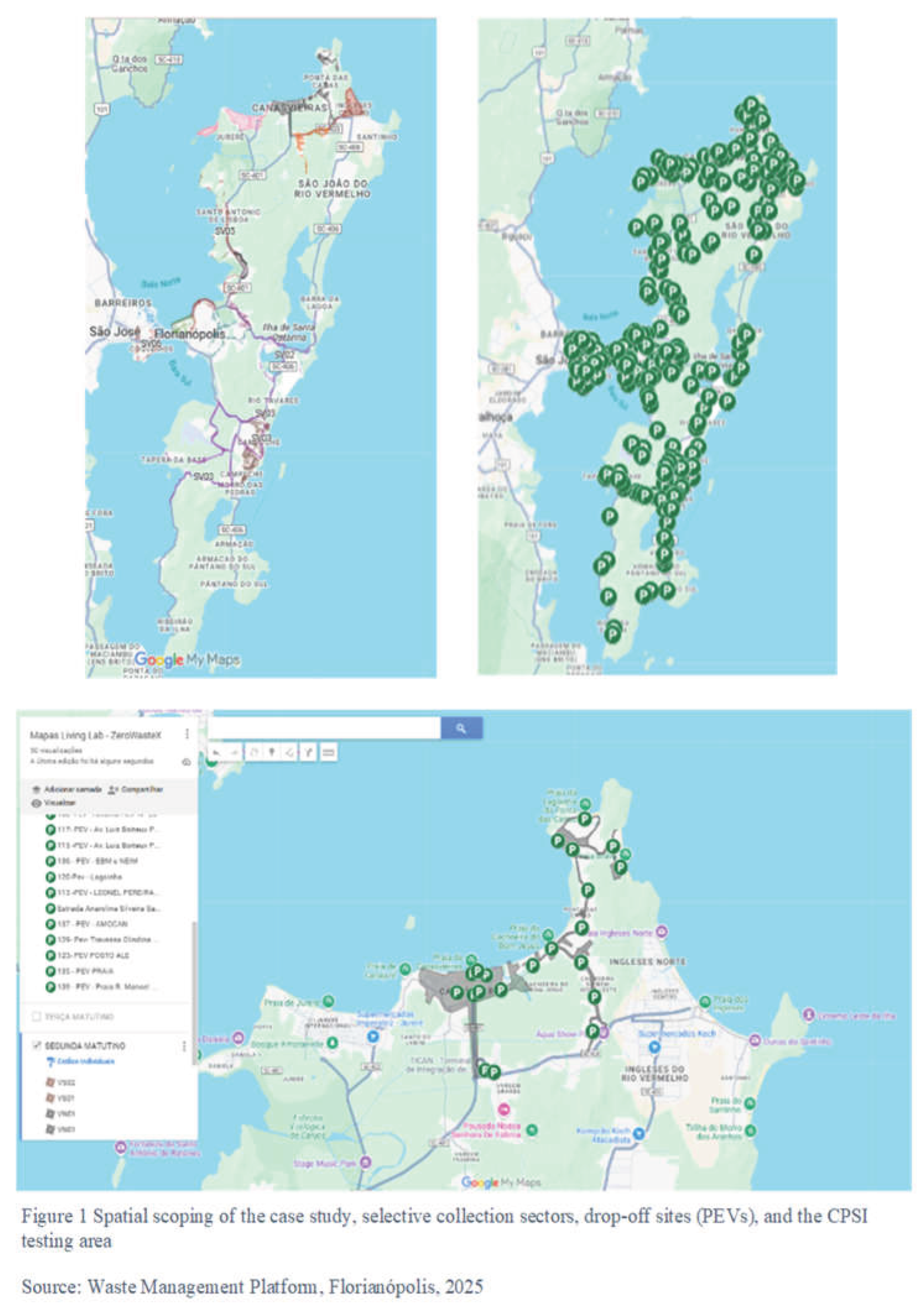
The Zero Waste Cities Platform is designed as a modular Digital Public Infrastructure (DPI) to orchestrate the transition of urban waste systems from linear extraction models to circular, sustainable cycles. Unlike traditional, fragmented management systems, this platform implements a multilevel governance architecture where responsibilities, data, and decision-making are shared across public, private, and community stakeholders. The digital architecture is designed to be interoperable and scalable, using a multi-layered approach to handle real-time data from urban environments.
4.1.1. Technical Architecture and Integration
The platform integrates several emerging technologies into a cohesive governance tool:
- Internet of Things (IoT) and Remote Sensing: Real-time sensing of RDPs provides high-fidelity data on container occupancy and waste movement.
- GNSS and Telemetry: Deployed on collection vehicles to track frequency, weight, and spatial coverage of routes.
- Data Intelligence: Automated alerts and public dashboards enable evidence-based logistical adjustments and continuous service improvement.
- IoT Protocols: The system is designed to operate over low-power wide-area networks (such as LoRaWAN) or 5G, ensuring connectivity even in dense urban areas.
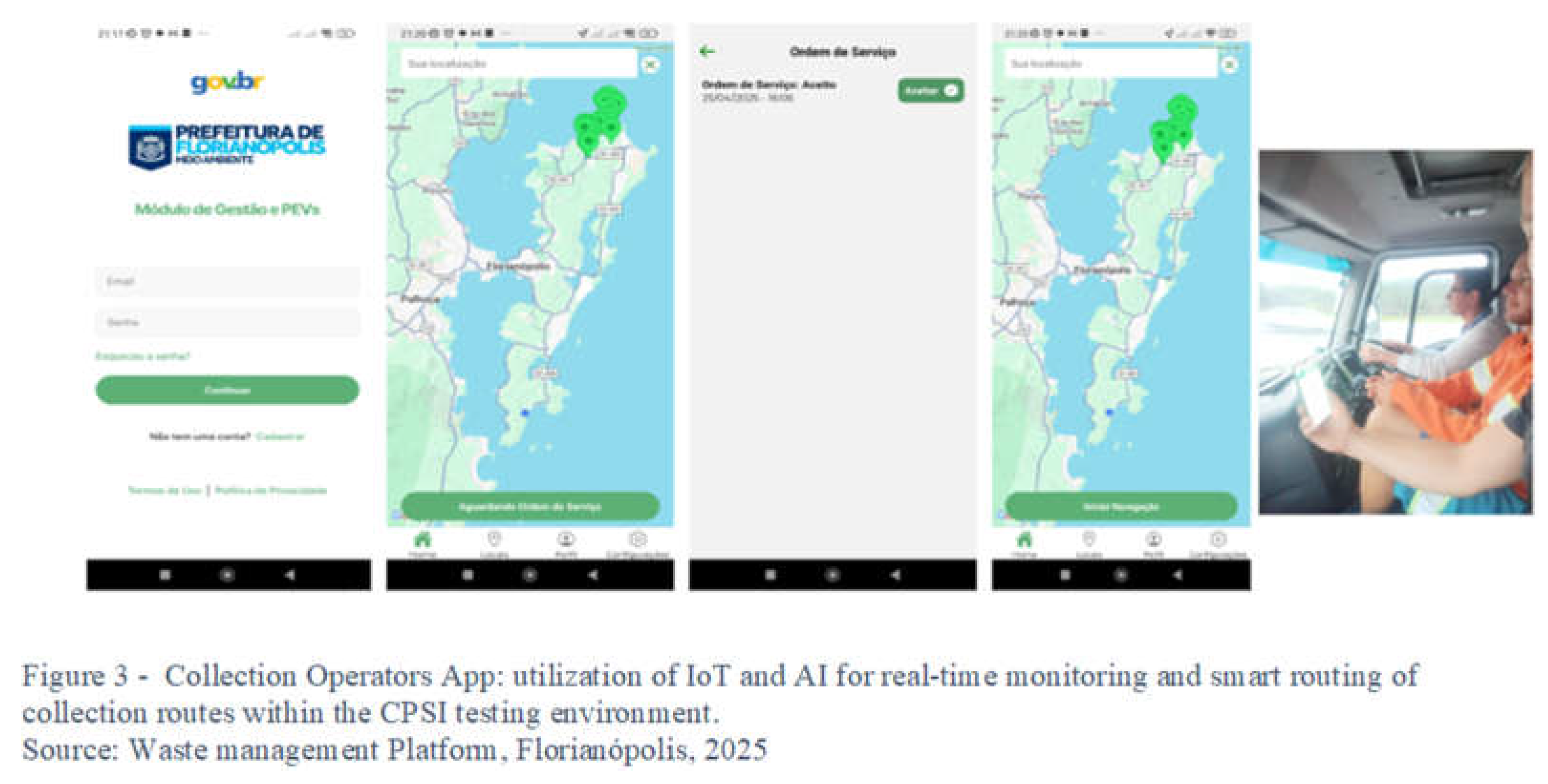
- Artificial Intelligence: smart route planning using AI for route calculation and optimization.
IoT Sensors: Volume telemetry sensors using radar technology to monitor and enable real-time verification of the fill levels of containers at glass recycling drop-off points.
4.1.2. Modular Functional Components
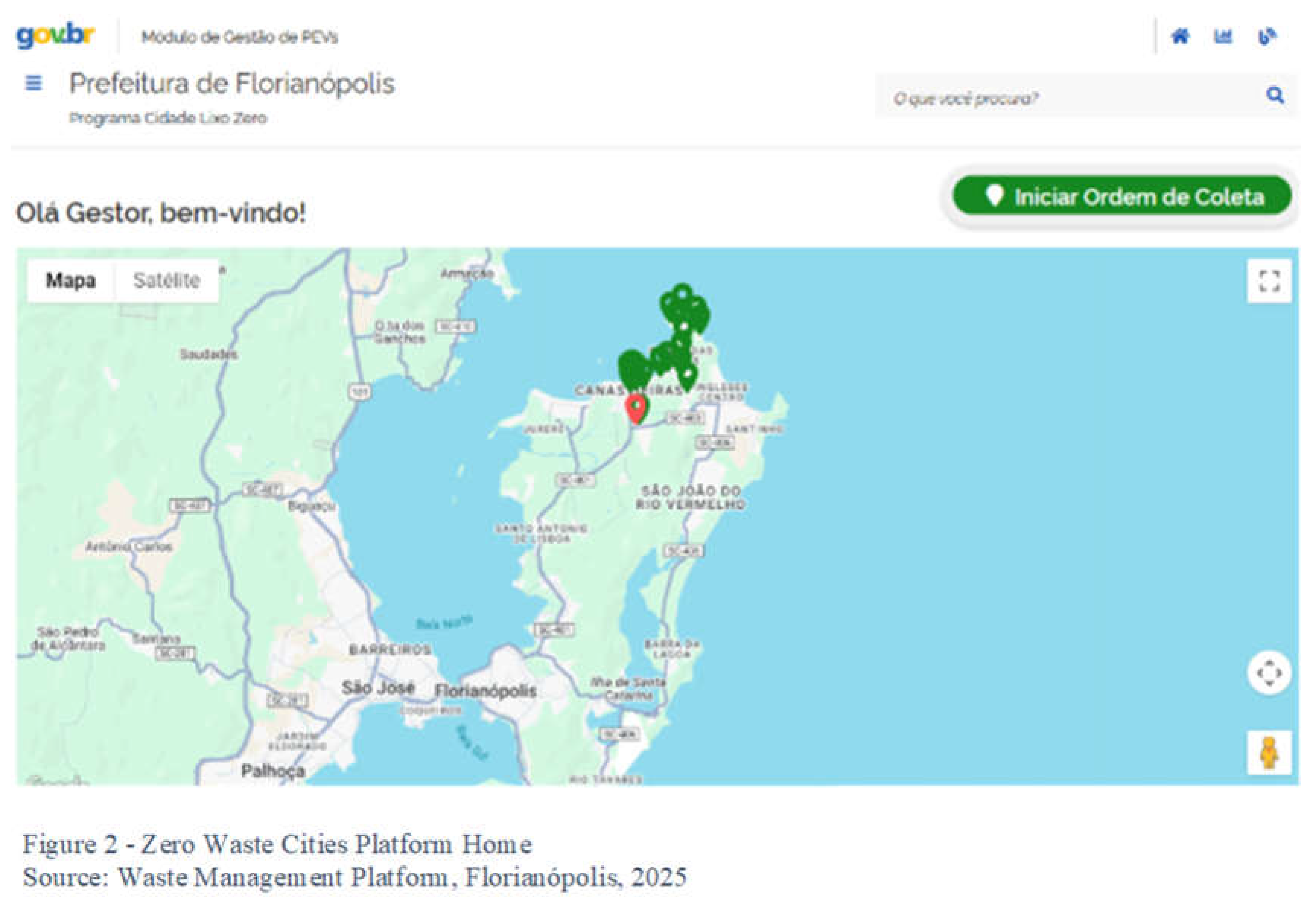
The platform’s design is modular and networked, allowing municipalities to scale implementation according to their institutional capacity.
- Interfederative and multilevel data architecture: Enables the sharing of information between public, private, and community actors and levels of government through integrated modules.
- Data intelligence: Algorithms process raw sensor data to generate automated alerts for overflow, logistical optimization reports, and impact indicators (e.g., CO2 emissions avoided).
- Open infrastructure: The platform uses open protocols to ensure data interoperability and prevent vendor lock-in, facilitating integration with existing municipal systems.
- Selective collection (i.e., the segregated gathering of recyclable materials) and RDP module: This component tracks material flows and facilitates gamified engagement for schools and residential areas.
- Environmental service and carbon infrastructure: By consolidating data on avoided emissions, the module enables payment for ecosystem services (PES) programs and generates credits for reverse logistics compliance.
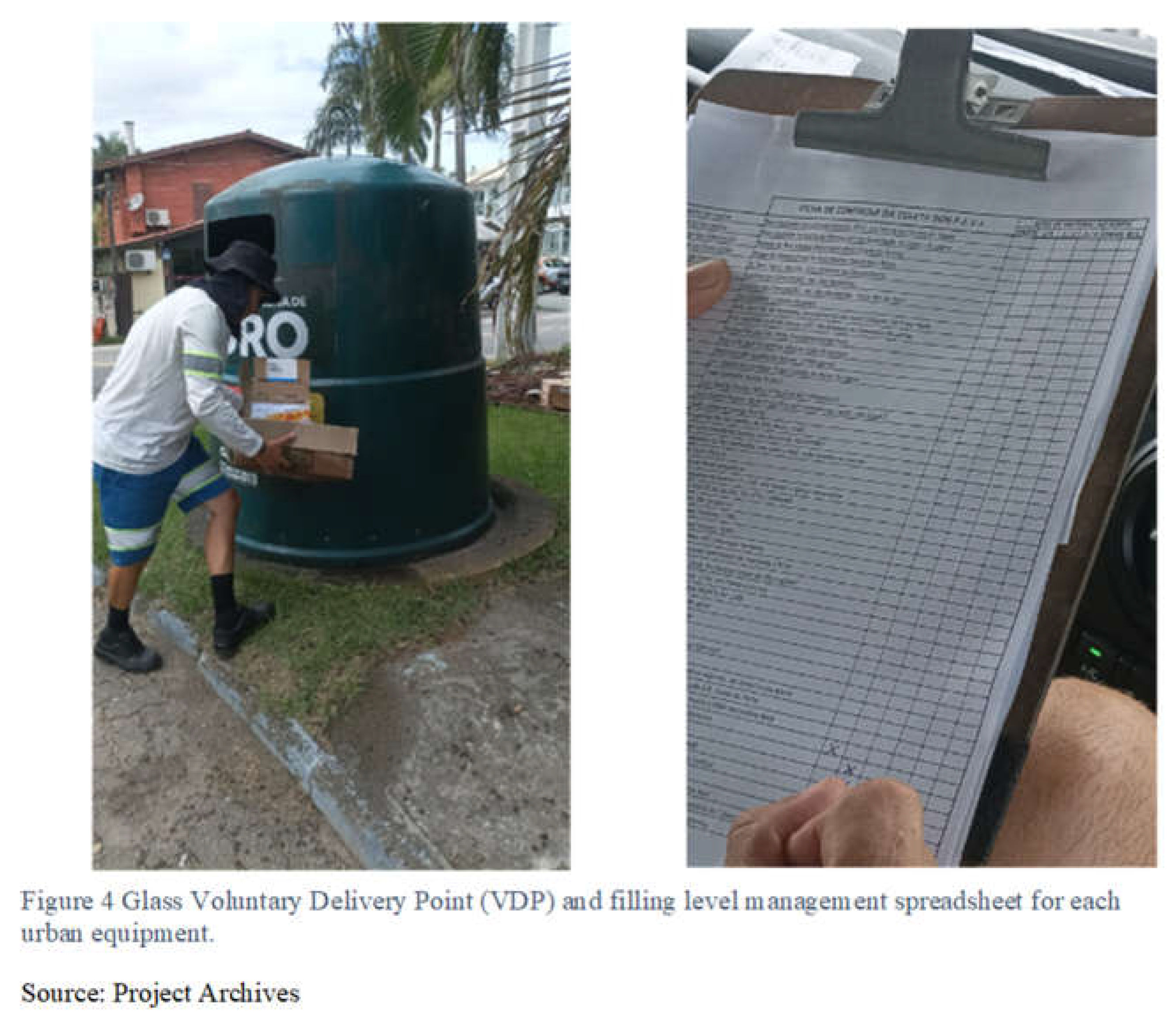
- Operational management: The interface replaces analog tracking (e.g., paper spreadsheets) with real-time smart routing and automated service orders.
4.1.3. Social Innovation and Co-Creation
The platform acts as a vector for systemic sociotechnical innovation by reconfiguring traditional urban roles:
- Waste picker cooperatives: These actors are elevated from informal workers to formal policy co-producers, using digital interfaces to generate impact data.
- Educational hubs: Public schools are transformed into community engagement centers that catalyze local participation.
- Open governance: The infrastructure is built on open standards, ensuring scalability and legal compliance with the Brazilian Legal Framework for Startups (Supplementary Law No. 182/2021).
- Citizen engagement: Interface (Gov.br); an interface integrated with the national digital identity system that allows residents to locate RDPs, view their recycling history, and participate in gamified sustainability programs.
Despite the operational success of the platform’s implementation in Florianópolis, critical institutional barriers were identified. These include municipal technical limitations, administrative discontinuities, and the digital divide regarding access to the Gov.br ecosystem, all of which require targeted digital inclusion strategies to ensure long-term sustainability.
In alignment with the institutional transparency and accountability requirements of the CPSI process, the platform’s results were formally presented6 to the Municipal Innovation Council of Florianópolis and disseminated to key stakeholders.
In summary, the Zero Waste Cities Platform functions as a modular DPI designed to catalyze the transition to zero-waste cities. Its value proposition integrates emerging technologies—such as IoT, remote sensing, and data intelligence—with social innovation, replacing fragmented analog management with a multilevel governance architecture of shared data and responsibilities. The initiative exemplifies systemic sociotechnical innovation by reconfiguring the interactions between the state, society, and technology. By embedding co-creation principles, the platform may transform schools into engagement hubs, elevate waste picker cooperatives to the status of policy co-producers via digital interfaces—generating critical data for Urban Environmental Service Payments (PSAU)—and empower residents to monitor performance indicators and co-produce public services.
4.2. Operational Performance and Logistical Efficiency
The implementation of the platform in Florianópolis yielded measurable advancements in both the operational efficiency and sustainability of RDP management. Logistical performance improved significantly, characterized by a 31% reduction in execution time per collection route and a 17% decrease in total operational costs per cycle. These results underscore the capacity of digital integration to optimize the use of public resources in complex urban environments.
Regarding socio-environmental outcomes, the platform led to a 3.03% reduction in CO2 emissions per route and a 28.1% increase in socio-environmental benefits generated per hour worked, alongside the recovery of 18.52 tons of glass. These metrics validate the DPI’s potential to catalyze the transition to a circular economy by reconfiguring waste as a measurable and traceable urban asset.
4.3. Citizen Engagement Potential
To evaluate the potential for citizen engagement, an online questionnaire was administered, resulting in 125 valid responses. The participant demographic is primarily composed of individuals aged 25 to 44, followed by those aged 45–59, indicating a predominance of economically active adults. Regarding educational attainment, the sample exhibits a high concentration of respondents with completed or ongoing higher education and graduate degrees. This profile represents a demographic with a significantly higher level of instruction than the Brazilian national average.
While this high educational level reinforces the potential for engagement in circular economy programs, it also introduces a limitation regarding the study’s representativeness. The sample’s bias toward highly educated and digitally connected individuals suggests that the findings primarily reflect the predispositions of early adopters within the urban population. Consequently, these results provide exploratory trends rather than generalized statistical inference for the entire municipal population.
The analysis of the participants’ educational profile reveals a high level of schooling, with a predominance of individuals holding undergraduate and graduate degrees (specialization, master’s, or doctorate). This composition indicates a highly qualified and informed sample, which tends to positively influence perceptions of public policy, social innovation, and urban sustainability. The significant presence of respondents with university or technical backgrounds supports the hypothesis that engagement in waste separation practices and participation in circular economy programs is directly associated with the citizens’ educational and informational capital.
This pattern highlights the importance of environmental education and digital inclusion strategies to broaden the reach of social innovation policies for waste management, especially among population segments with less formal education.
The cluster analysis of the questionnaire data revealed four distinct groups of citizens, defined by the interrelation between environmental behavior, perceived benefits, digital engagement, and participation in municipal selective collection programs. The variables included: frequency of home waste separation, use of RDPs, participation in municipal programs, willingness to use the gov.br app, perceived benefits of “Zero Waste” initiatives, and digital engagement triggers (rewards, rankings, feedback, and social recognition).

Table 1.
Synthetic Description of Citizen Clusters.
| Cluster | Synthetic Description | Key Characteristics |
| C1 – Active Eco-Digitals (35%) | High environmental and digital engagement | Always separate waste; frequent RDPs users; familiar with drop-off points; participate in municipal programs; would use the gov.br app to log actions. Motivated by environmental benefits and social recognition. |
| C2 – Incentivized Pragmatists (28%) | Engagement conditional on tangible incentives | Separate waste occasionally; irregular RDPs use; high propensity to use the app if there are rewards (cashback, points, or ranking). Value transparency and concrete returns. |
| C3 – Latent Engaged (25%) | Environmental awareness without digital adherence | Demonstrate ecological concern and knowledge of selective collection, but rarely use drop-off sites or apps. Engaged through educational campaigns and community appeals. |
| C4 – Civic Disconnected (12%) | Low environmental and digital engagement | Do not separate waste; unfamiliar with RDPs; do not participate in municipal programs. Show resistance to app usage and a low sense of collective benefit. |
Source: Elaborated by the authors based on results.
Cluster C1 exhibits the best balance between environmental and digital engagement, representing the group with the highest potential to consolidate circular practices. C2 emerges as a strategic group for incentive and gamification policies, while C3 requires environmental education and awareness campaigns. C4 represents the challenge of socio-technical inclusion, requiring digital access policies and territorial communication.
The data indicate that the disposition toward using the gov.br application is strongly associated with the perception of social and environmental benefits, rather than being driven solely by economic incentives. Approximately 95% of respondents (Graphic 1) expressed a willingness to engage with the platform if it integrated impact indicators, RDPs mapping, collection rankings, and environmental rewards.
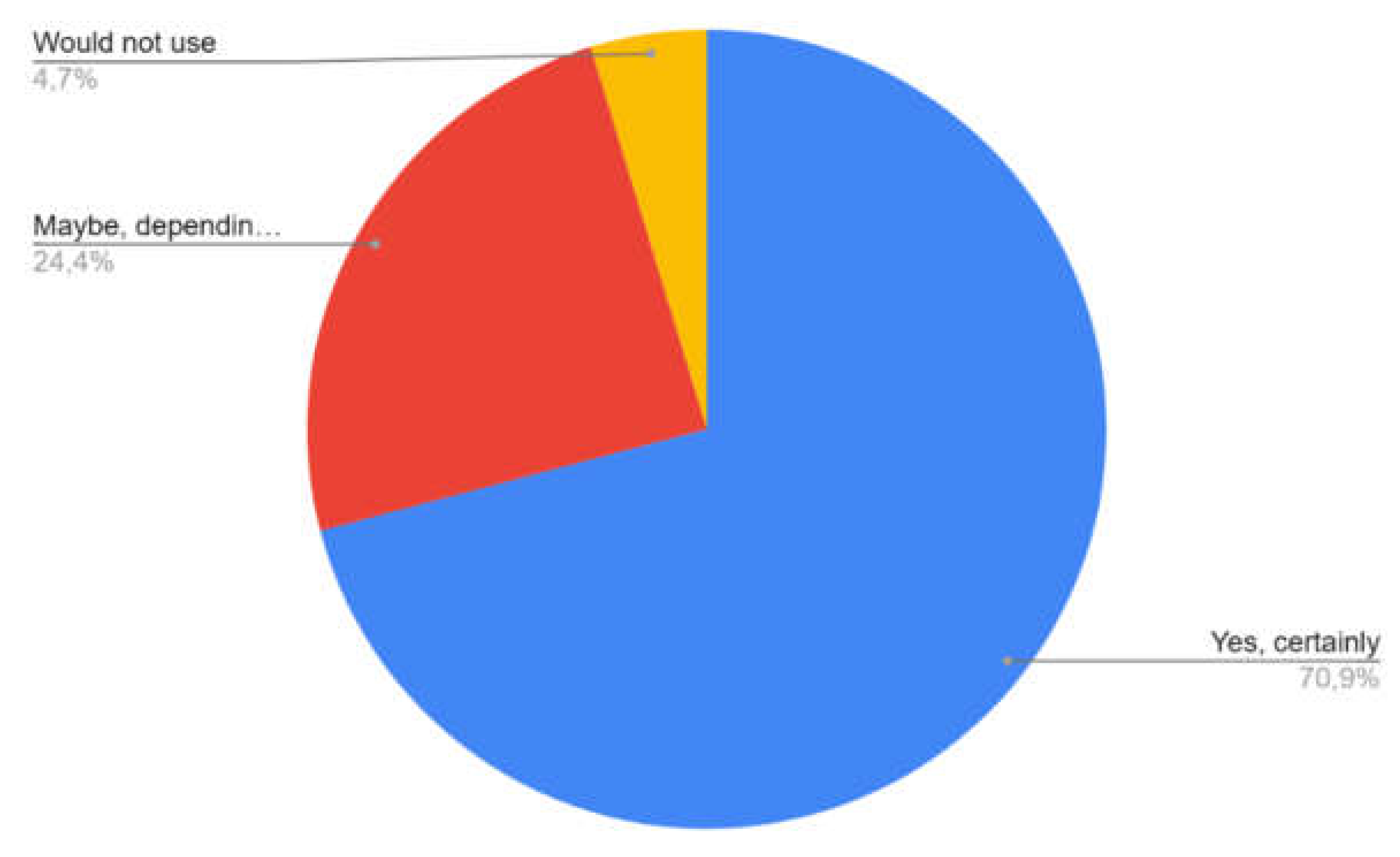
Graph 1. Disposition to engage with the platform. Source: Elaborated by the authors.
These findings underscore the potential of public digital platforms to function as infrastructures for citizen engagement. The results suggest that the success of such DPI depends on their capacity to effectively combine usability, transparency, and gamification mechanisms to sustain long-term participation in circular economy programs.
The results demonstrate that the primary perceived benefit of the Zero Waste Cities Platform is the enhancement of the environment and urban quality of life (65%), followed by social recognition (20%) and economic benefits (15%). This hierarchy of motivations suggests the potential for mobilizing collective and ecological values as primary drivers of engagement, which may be more influential than financial rewards alone.
In this context, the perception of shared value creation—specifically the mitigation of environmental impacts—emerges as a prominent factor in fostering participation. These findings align with the argument for transformative social innovation, where stakeholders may seek to engage based on the perception of generating a greater collective good and the understanding that their individual actions contribute to a common purpose.
Another interesting data concerns the use of Gov.br apps. When asked if they already had an active account in the federal government system, approximately 71% of respondents confirmed active use, 21% used it occasionally, and 7% did not use it. When asked: “If there were a municipal app integrated with Gov.br to log your participation in recycling actions (such as taking recyclables to RDPs or separating correctly at home), would you use it?”, 84,3% answered “yes” and 13,4% “maybe” showing a high degree of engagement.
The cluster analysis of responses regarding desired app functionalities revealed four distinct groups in terms of sociotechnical expectations. The first cluster (35%) emphasizes informational functionalities associated with transparency, environmental indicators, and RDPs location. The second group (30%) shows a strong interest in gamification mechanisms, rewards, and economic incentives, indicating a pragmatic digital engagement profile. The third cluster (22%) is composed of citizens motivated by community belonging, collective mobilization, and environmental education. Finally, the fourth cluster (13%) expresses demands focused on public governance, oversight, and reporting of irregularities.
These results highlight that the adoption of the gov.br app must integrate multiple dimensions—informational, motivational, community, and institutional—to maximize its engagement potential and impact on zero-waste city policies. This demonstrates the potential of using an app integrated with Gov.br to foster social innovation and catalyze the sociotechnical transition toward the zero-waste city and circular economy model.
Table 2.
Dimensions of Desired App Functionalities.
| Dimension | Cited Functionalities | Description |
| 1. Information & Environmental Transparency | • RDP/Drop-off maps • Real-time status (full/available) • Collection routes and schedules • Impact indicators (kg recycled, CO₂ avoided) • User disposal history | Informational features that allow citizens to visualize the territory, understand their impact, and plan actions. Focus on autonomy and data transparency. |
| 2. Gamification, Incentives, & Rewards | • Point systems • Cashback • Municipal tax discounts • Performance rankings (individual/school/neighborhood) • Medals and recycling goals | Features that reinforce extrinsic motivation and behavioral mechanisms (IoB), increasing engagement via rewards and healthy competition. |
| 3. Community Engagement & Environmental Education | • Educational content on waste separation • Environmental campaigns • School and community engagement • Educational trails • Notifications on collective actions | Features aimed at environmental training and social capital. Grounded in community values and continuous learning. |
| 4. Governance, Oversight, & Reporting | • Channel for reporting illegal dumping • Tracking municipal requests • Visualization of city hall actions (cleaning, maintenance) • Real-time tracking of municipal collection routes | Features related to strengthening public governance, accountability, and social control of urban cleaning services. |
Source: Elaborated by the authors based on results.
The analysis of responses to the question “What functionalities would you like this app to have?” evidenced four predominant motivational categories. The most mentioned category refers to Incentives and Rewards (39%), indicating that gamification, cashback, and tax benefits can significantly expand citizen participation. This is followed by Environmental Awareness and Education (28%), reinforcing that understanding the ecological impact remains a key component. The Infrastructure and Accessibility (19%) category shows that the location and proper functioning of RDPs directly influence behavior. Finally, Social and Community Engagement (14%) points to the role of territorial networks and schools as mobilization mechanisms.
In terms of motivation, the cluster analysis revealed four distinct profiles, demonstrating that engagement is multifaceted:
- Cluster 1 – Active Eco-Digitals (35%): Highly engaged, motivated by environmental benefits and social recognition.
- Cluster 2 – Moved by incentives (28%): Engagement conditional on tangible incentives (rewards, cashback).
- Cluster 3 – Latent Engaged (25%): Environmental awareness but lower digital adherence, requiring educational campaigns.
- Cluster 4 – Civic Disconnected (12%): Low engagement and resistance to applications.
The analysis of respondent profiles reveals the critical importance of accounting for the heterogeneity of engagement modes and motivational drivers identified within the study. Effectively addressing these varied expectations requires that digital solutions incorporate a multidimensional range of desired functionalities—spanning extrinsic incentives, environmental awareness, and detailed information regarding territorial infrastructure.
Consequently, the findings underscore the necessity for digital platforms to integrate diverse value propositions to ensure sustained user adherence and active mobilization within the municipal waste management ecosystem.
5. Discussion
The empirical results—derived from both the operational case study and the exploratory questionnaire—provide evidence for a multidimensional discussion, suggesting the platform’s potential as a digital public infrastructure (DPI) oriented toward sociotechnical and ecological transformation. The study’s main originality lies in articulating DPI with a multi-lens governance framework and using an implemented platform case to discuss how digital solutions can become territorially embedded and institutionally meaningful in a municipal waste system. Instead of claiming a fully realized participatory transformation, we identify concrete mechanisms, constraints, and enabling conditions through which a DPI may support democratic experimentalism and circular governance in practice—particularly under the infrastructural, social, and institutional asymmetries that characterize cities in the Global South.
5.1. Institutional Lens: State Reorganization and Interface with Social Innovation Ecosystems
The implementation of the Zero Waste Cities Platform indicates that adopting a digital government framework facilitates institutional reorganization of the state and relates government with other initiatives in the public arena. The data illustrates how this framework introduces new approaches to urban waste management by enabling collaborative arrangements between the state, the private sector, civil society, universities, communities, and citizens. This digital public infrastructure creates a deterritorialized, common cyberspace that interconnects networks previously separated by analog and institutional barriers. Furthermore, it facilitates the systemic digitalization of municipal, regional, and national public policies, as mandated by the legal instruments presented.
The creation of a common cyberspace [25] for all actors linked to planning instruments and institutional governance enables a digital public infrastructure that interconnects a network previously bound only by institutional, legal, and analog ties. Consequently, Gov.br, as the digital institution of the Brazilian state, finds support to inaugurate a new, deterritorialized space. Since the digital realm is accessible from any connected device, this common digital space—governed by technical protocols and requirements—becomes an extension of the state, accessible anywhere and at any time. This conception enables the co-creation of digital public policies, mediating governance over complex urban issues like uncontrolled waste production.
This is a clear example of how digital transformation can produce reforms in the very functioning of the state, creating conditions to govern contemporary urban complexity based on data, policy co-production, and multi-sectoral pacts aimed at the UN Sustainable Development Goals (SDGs).
However, the case study revealed vulnerabilities, such as a lack of integration between internal local government teams, a lack of familiarity with municipal social innovation processes and ecosystem, and the difficulty of shifting the internal mindset from an analog paradigm of public management to a new digital one.
Industries play a fundamental role in this paradigm shift from a linear to a circular economy. Consumption must be rethought through post-consumption return logic, and a whole range of materials, products, and services based on nature and ecosystem services is set to emerge. Although the National Solid Waste Policy (PNRS) prohibits sending recyclables to landfills or dumps, this remains the reality for most Brazilian municipalities, few of which divert more than 10% of their waste.
In this context, the national movement of waste pickers can gain new momentum through productive value aggregation and the structuring of integrated selective collection involving residents, cooperatives, public buildings, and manufacturing industries—all of whom share responsibility for the product life cycle. Structuring deposit-return schemes (DRS) for traceable packaging and products represents a real potential impact for the national economy. In such a scheme, the consumer pays a small fee upon purchase and receives it back when the packaging is returned via reverse logistics.
Cities can repurpose construction waste for public works, plastics for infrastructure, and organic waste for agriculture or energy. The application of digital product passports (DPP), as instituted by the EU, is a means to ensure that industries guarantee the return or environmentally sound disposal of their products. In all these dynamics, the citizen plays a dual role: as a “polluter-payer” and a “protector-receiver,” as defined by the PNRS. Therefore, the discussion on digital government for the circular economy involves legal and regulatory innovation for state reorganization in the digital age, representing real possibilities for implementing and governing innovative public policies.
5.2. Political Lens: Active Participation and the Co-Creation of Public Policies in Public Arenas
In this framework, citizen participation in public policy does not appear as a mere consultative ornament or a legitimacy instrument, but as the organizing principle of the public policy with the citizen-centric nature of public service at its core. The possibility of transforming public schools into engagement hubs, cooperatives into public policy partners, and citizens into co-constructors of solutions represents a significant advancement over traditional urban management models. This is primarily because the potential for new productive arrangements and technological routes resides in the radical separation of waste at the source.
The operational waste collection teams in Florianópolis pointed out the necessity of massive population involvement to expand the reach of the collection. There is a stark difference between collecting mixed or contaminated recyclable materials and implementing a single-material door-to-door collection logic, which directly impacts the technological routes adopted by the city at local and regional scales. Both behavioral sciences and IoB (Internet of Behavior) applied to public policy are currently positioned to assist in sectoral policy processes that demand engagement and behavioral change from stakeholders.
In this sense, the proposed application of DPI aligns with the concepts of democratic experimentalism and institutionalized insurgent planning [19,20] by institutionalizing grassroots practices, expanding spaces for listening and social accountability, and promoting transformations that stem from urban daily life with a focus on citizen-centered public services.
In the case study, there was no direct participation of citizens as system users; instead, participation was limited to the monitored RDPs. Nevertheless, the online questionnaire aimed to bring data and perceptions into the discussion. The data obtained allow us to infer a predisposition within the sample for using government applications that foster citizen participation in local public policy. This co-creation of public policies—backed by a sense of belonging and social support—ultimately generates a digital arena for planning, monitoring, and managing public policy. The clustering of responses identified specific interest groups and early adopters for this possibility of democratic experimentalism.
5.3. Territorial Lens: Revaluation of Common Spaces and Local Inscription of Innovation
By operating in articulation with the territory, the proposal for a DPI applied to e-government for zero-waste cities escapes the trap of “disembedded innovation”—the imposition of generic solutions detached from local realities and lacking the social or political support required for mass adoption. The proposed methodology ensures the negotiation of results between and among actors through mobilization, strategic agendas, and specific programs.
The territorial inscription of digital solutions—in drop-off points (RDPs), schools, collection routes, and cooperatives—activates a new thematic cartography of public policy. In this map, physical spaces and urban equipment are recognized as sites of governance, care, and the promotion of the urban commons, elements inherent to the complex generation of shared value in a transformative social innovation perspective. Furthermore, it allows actors to participate actively in data generation and in the construction of public policy itself, providing a clear perception that their individual contributions to the whole support the overall value creation of the proposed systemic innovation.
What is observed is the possibility of reconstructing an urban ecology (sensitive, integrated, and participatory) that opposes the spatial, institutional, and symbolic fragmentation of waste policies and the planning, implementation, and evaluation processes of Municipal Integrated Solid Waste Management Plans (Plano Municipal de Gestão Integrada de Resíduos Solidos – PMGIRS)—the municipal planning instrument mandated by the PNRS.
The theoretical discussion, the case study, and the exploratory questionnaire support the fruitfulness of the proposal as a means to catalyze the transition from obsolete, analog sociotechnical models currently present in the planning to collaborative management systems in cities.
5.4. Ecological Lens: Transition to Circular Rationality and Adaptive Management
The reconfiguration of waste as a regenerative resource profoundly transforms the meaning of public policy and its strategic understanding by decision-makers and statesmen. The digitalization of flows, traceability, carbon credit offsets, or urban Payment for Environmental Services (PSA), and collective engagement to reduce waste all contribute to an ecological rationality applied to urban management (Andion, 2009; Van Neste et al., 2024).
The discussed proposal functions as a support infrastructure for the transition from a linear to a circular economy, with concrete effects on emission reductions, the preservation of natural resources, and the enhancement of the city’s ecological dimension—while also supporting adaptive governance practices based on evidence and institutional responsiveness.
The case study demonstrates that public digital infrastructures can be designed to expand urban democracy, strengthen territorial bonds, and promote ecological justice, provided principles of co-creation, territorial sensitivity, and a commitment to the climate transition guide them. Its replicability, however, will depend on several factors:
- Local institutional capacity to absorb and reinforce social innovation;
- Political commitment to transparency and participation;
- Public investment oriented toward transformation and inclusive digitalization;
- Legal frameworks that favor the procurement of open and public GovTech solutions;
- Executive leadership agreement on performance outcomes and results;
- Urban connectivity conditions.
Thus, the discussion points to the need to rethink public innovation in waste management not merely as a product or tool, but as a social innovation process that emerges in arenas of sociotechnical and ecological reorganization. In these arenas, new infrastructures, power relations, environmental logics, and citizen practices are simultaneously produced and enhanced.
6. Conclusions
This article analyzed the experience of innovation dissemination within the public sector, using the Zero Waste Cities Platform as a case study in the context of the first public procurement for innovation (CPSI) in Florianópolis, Brazil. The focus was on urban solid waste governance in the face of the climate crisis, exploring the experience through the lenses of citizen engagement and social innovation.
Based on the theoretical framework of urban governance in the face of the climate crisis, it was argued that the proposed solution has the potential to operate as a digital public infrastructure (DPI). This infrastructure not only enhances the operational efficiency of waste management but, more crucially, can reorganize the institutional, ecological, and political foundations of urban policy. Thus, the analyzed experience reinforces the strategic importance of waste management as a primary form of local mitigation against the climate crisis and sustainable development.
6.1. Key Contributions and Lessons Learned
Even within an experimental environment, the case study data demonstrate the platform’s impact potential, offering both practical and theoretical insights.
From a practical and learning perspective, the following stand out:
- Digital public innovation must be structured as an open, modular, and common infrastructure, allowing for flexibility and replicability across municipalities while avoiding technological lock-in.
- Co-creation with local actors (cooperatives, schools, and citizens) is a prerequisite for the legitimacy and effectiveness of urban digital transformation, preventing failure or the reinforcement of inequalities.
- Treating waste as urban commons and assets for sustainable development catalyzes new arrangements for governance and social inclusion.
From a theoretical perspective, this study contributes to the literature on waste governance and management by bridging the debates on co-creation, democratic experimentalism, and digital transformation. Scientifically, it advances the relational paradigm of urban governance by providing insights into the role of social innovation ecosystems in sociotechnical and ecological transitions through a pragmatist lens.
6.2. Policy Implications
The CPSI favors a set of public policy recommendations focused on a fair ecological transition:
- Stimulate open digitalization: Promote public digitalization based on open and collaborative platforms, ensuring data interoperability and transparency.
- Foster digital social innovation: Create specific funding lines and urban climate funds for circular economy, digital platforms, social innovations dynamics and governance solutions.
- Impact-oriented procurement: Leverage the state’s purchasing power (and Law No. 14.133/2021) to favor technological solutions that demonstrate climate impact and territorial justice.
In conclusion, the analyzed experience acts as a “transition niche” that demonstrates the possibility of reinventing urban governance from the bottom up. In this model, technology and citizen participation are central to building more resilient and just cities in the face of the global ecological crisis, helping to shift to a zero-waste cities model and circular economy as keys to combat this planetary crisis. Thus, the originality of this research lies in empirically grounding the DPI debate in a concrete municipal waste context while articulating it with governance theories of co-creation, democratic experimentalism, and sociotechnical-ecological transitions—particularly from a Global South perspective. The Florianópolis case can be understood as a transition niche that makes visible both the promises and constraints of DPI-led circular governance: it evidences operational value, points to pathways for territorial embedding (e.g., through RDP networks and local actors), and clarifies institutional design requirements to avoid lock-in and inequality reinforcement. Future research should advance longitudinal evaluations of behavioral change and material recovery outcomes, assess data governance arrangements (interoperability, transparency, privacy), and test participatory designs that move from predisposition to sustained citizen use and co-governance in real-world operation.
7. Patents
The Zero Waste Cities Platform has filed a Software Registration application with the Brazilian National Institute of Industrial Property (INPI).
Author Contributions
Conceptualization, L.G.R.; methodology, C.A and L.G.R.; software, L.G.R.; validation, C.A and L.G.R.; formal analysis, FHO, C.A and L.G.R.; investigation, L.G.R.; resources, C.A and L.G.R.; data curation, L.G.R.; writing—original draft preparation, C.A and L.G.R.; writing—review and editing, F.H.O, C.A and L.G.R.; visualization, C.A and L.G.R.; supervision, F.H.O, C.A and L.G.R.; project administration, L.G.R.; funding acquisition, L.G.R. All authors have read and agreed to the published version of the manuscript.” Please turn to the CRediT taxonomy for the term explanation. Authorship must be limited to those who have contributed substantially to the work reported.
Funding
This research was supported by the Research and Innovation Support Foundation of the State of Santa Catarina (FAPESC) through the granting of doctoral scholarships by the Graduate Program in Territorial Planning and Socio-environmental Development at the Santa Catarina State University, grant number 62/2024.
Institutional Review Board Statement
The study was conducted in accordance with the Declaration of Helsinki, and approved by the Institutional Review Board (or Ethics Committee) of NAME OF INSTITUTE (protocol code XXX and date of approval).” for studies involving humans. OR “The animal study protocol was approved by the Institutional Review Board (or Ethics Committee) of NAME OF INSTITUTE (protocol code XXX and date of approval).” for studies involving animals. OR “Ethical review and approval were waived for this study due to REASON (please provide a detailed justification).” OR “Not applicable” for studies not involving humans or animals.
Informed Consent Statement
Informed consent was obtained from all subjects involved in the study.
Data Availability Statement
Datasets analyzed or generated during the study are available and will be presented by demand.
Acknowledgments
In this section, you can acknowledge any support given which is not covered by the author contribution or funding sections. This may include administrative and technical support, or donations in kind (e.g., materials used for experiments). Where GenAI has been used for purposes such as generating text, data, or graphics, or for study design, data collection, analysis, or interpretation of data, please add “During the preparation of this manuscript/study, the authors used GeminiPro for translation purposes. The authors reviewed and edited the result and assume full responsibility for the content of this publication.
Conflicts of Interest
The authors declare no conflicts of interest.
Abbreviations
The following abbreviations are used in this manuscript:
| MDPI | Multidisciplinary Digital Publishing Institute |
| DOAJ | Directory of open access journals |
| TLA | Three letter acronym |
| LD | Linear dichroism |
Appendix A
Questionnaire applied
Question 1 – Timestamp (Automatically recorded by Google Forms)
- Type: Automatic record
Question 2 – What is your age group? * Type: Multiple choice
Question 3 – In which city and neighborhood/region do you live? * Type: Open-ended question
Question 4 – What is your highest level of education? * Type: Multiple choice
Question 5 – Do you separate your household waste (organics, recyclables, and residual waste) * Type: Multiple choice
Question 6 – Have you ever used recycling drop-off points (RDPs) or recycling centers (Ecopontos) to dispose of recyclable materials? * Type: Multiple choice
Question 7 – Do you know the location of the nearest RDP/recycling center (Ecoponto) to your home or workplace? * Type: Yes/No
Question 8 – Would you use a gov.br application to register your participation in the Zero Waste City Platform? * Type: Yes/No
Question 9 – If rewards were offered (e.g., tax discounts, points, or cashback), would you participate more actively in selective collection? * Type: 1-to-5 Scale (from “Would not participate” to “Would certainly participate”)
Question 10 – Would an application that shows how much you have recycled (e.g., kg recycled, CO₂ emissions avoided) increase your engagement? * Type: 1-to-5 Scale
Question 11 – Do you believe that technology (sensors, mobile applications, and data analytics) can improve waste management in your city? * Type: Yes / No / Maybe
Question 12 – Would you participate in community or school initiatives if points or other benefits were provided through gov.br? * Type: 1-to-5 Scale
Question 13 – How many times per month do you take recyclable materials to cooperatives or RDPs? * Type: Numerical response or multiple choice
Question 14 – What is the main factor preventing you from participating in selective collection or adopting a more environmentally responsible behavior? * Type: Open-ended response
References
- Bulkeley, H. Cities and the governing of climate change. Annu. Rev. Environ. Resour. 2010, 35, 229–253. [Google Scholar] [CrossRef]
- Martins, R.D.; Ferreira, L.C. A critical review on cities and climate change: old wine in a new bottle or a new paradigm for local governance? Rev. Adm. Pública 2011, 45, 611–641. [Google Scholar] [CrossRef]
- ABRELPE. Panorama of Solid Waste in Brazil; Associação Brasileira de Empresas de Limpeza Pública e Resíduos Especiais: Brazil, 2022. [Google Scholar]
- Maiello, A.; Britto, ALN de P; Valle, T.F. Implementação da Política Nacional de Resíduos Sólidos. Rev Adm Pública [Internet] 2018, 52, 24–51. [Google Scholar] [CrossRef]
- Szigethy, L.; Antenor, S. Urban Solid Waste in Brazil: Technological, Political and Economic Challenges; IPEA: Brazil, 2020. [Google Scholar]
- Andion, C.; Magalhães, T. (Re). Aproximando os pragmatismos da análise das políticas públicas. Soc. Estado 2021, 36, 513–543. [Google Scholar] [CrossRef]
- Andion, C.; Chimenti, P. The contribution of administration to thinking and acting in cities. Rev. Adm. Contemp. 2024, 28, 1–6. [Google Scholar] [CrossRef]
- Frey, K. Urban governance and public participation. Rev. Adm. Contemp. 2007, 1, 136–150. [Google Scholar]
- Foster, S.; Iaione, C. Co-Cities: Innovative Transitions Toward Just and Self-Sustaining Communities; MIT Press: Cambridge, MA, USA, 2022. [Google Scholar]
- Colding, J.; Barthel, S. An urban ecology critique on the “Smart City” model. J. Clean. Prod. 2017, 164, 95–101. [Google Scholar] [CrossRef]
- Rittel, H.W.J.; Webber, M.M. Dilemmas in a general theory of planning. Policy Sci. 1973, 4, 155–169. [Google Scholar] [CrossRef]
- Andion, C.; Ronconi, L.; Moraes, R.L.; Gonsalves, A.K.R.; Serafim, L.B.D. Sociedade civil e inovação social na esfera pública: uma perspectiva pragmatista. Rev. Adm. Pública 2017, 51, 369–387. [Google Scholar] [CrossRef]
- Andion, C.; Alperstedt, G.D.; Graeff, J.F.; Ronconi, L. Social innovation ecosystems and sustainability in cities: a study in Florianópolis, Brazil. Environ. Dev. Sustain. 2022. [Google Scholar] [CrossRef]
- Domanski, D.; Howaldt, J.; Kaletka, C. A comprehensive concept of social innovation and its implications for the local context. Eur. Plan. Stud. 2020, 28, 454–474. [Google Scholar] [CrossRef]
- Canseco-Lopez, F.; Serra, A.; Camps, M.M. Opening Our Innovation Ecosystems to All: The INTEGER Project Case Study. Sustainability 2025, 17, 1164. [Google Scholar] [CrossRef]
- Moulaert, F.; Hamdouch, A.; MacCallum, D.; Mehmood, A. The International Handbook on Social Innovation; Edward Elgar: UK, 2013. [Google Scholar]
- Pel, B.; et al. Towards a theory of transformative social innovation: A relational framework and 12 propositions. Res. Policy 2020, 49, 104080. [Google Scholar] [CrossRef]
- Rangelov, I.; Theros, M. Civic ecosystems and social innovation: From collaboration to complementarity. Global Policy 2023, 14, 797–804. [Google Scholar] [CrossRef]
- Andion, C. Social innovation, experimentalism, and public governance: An ethnographical approach to study public arenas in the city. BAR [Internet]. 2023. Available online: https://bar.anpad.org.br/index.php/bar/article/view/600.
- Ansell, C.; Torfing, J. Co-creation: The new kid on the block in public governance. Policy Politics 2021, 49, 211–230. [Google Scholar] [CrossRef]
- Miraftab, F. Insurgency, planning, and the prospect of a human urbanism. Rev. Bras. Estud. Urbanos Reg. 2016, 18, 363–377. [Google Scholar] [CrossRef]
- Lefebvre, H. The Right to the City; Centauro: São Paulo, Brazil, 2001. [Google Scholar]
- Van Neste, S.; Melé, P.; Larrue, C. Transitions socioécologiques et milieux de vie. Entre experimentation, politization et institutionalization; Presses de l’Université de Montreal: Montreal.
- Angheloiu, C.; Tennant, M. Urban futures: Systemic or system changing interventions? Cities 2020, 104, 102808. [Google Scholar] [CrossRef]
- Bauer, L.T.; et al. Unpacking Digital Public Infrastructures: Foundational Capabilities for Public-Interest Digital Value Creation. DGO ‘25, 2025, Vol. 1.
- Lévy, P. Cyberculture; Editora 34: São Paulo, Brazil, 1999. [Google Scholar]
- Andion, C. Contributions of the debate on sustainable territorial development to the effectiveness of municipal management. Política Soc. 2009, 8, 119–143. [Google Scholar]
| 1 | To know about the Zero Waste Platforms in Brazil Cidades Lixo Zero | Gestão de PEVs |
| 2 | Learn more about the startup: www.zerowastex.com.br
|
| 3 | DPIs are structural solutions that adopt networked technology standards for the public interest. They are designed to be used by various entities from the public and private sectors, following the principles of universality and interoperability. Source: https://www.gov.br/governodigital (Accessed on Nov 3, 2025). |
| 4 | See the gate at the following link: https://www.in.gov.br/en/web/dou/-/portaria-mcid-n-1.012-de-4-de-setembro-de-2025-653269836
|
| 5 | See the public notice content at: : https://www.acate.com.br/wp-content/uploads/2024/06/LE_102_2024___solucoes_inovadoras_5G_LC_182.2021___SMDECT___retificado3327332101194669672.pdf. (Accessed on Sept 10, 2024). |
| 6 | See the public presentation (PPT) at the following link: https://docs.google.com/presentation/d/1Q4Q9fjeUtpMjvBRs7eEYFNS7XNvMmpwg/edit?usp=sharing&ouid=111593341074575005728&rtpof=true&sd=true
|
Disclaimer/Publisher’s Note: The statements, opinions and data contained in all publications are solely those of the individual author(s) and contributor(s) and not of MDPI and/or the editor(s). MDPI and/or the editor(s) disclaim responsibility for any injury to people or property resulting from any ideas, methods, instructions or products referred to in the content. |
© 2026 by the authors. Licensee MDPI, Basel, Switzerland. This article is an open access article distributed under the terms and conditions of the Creative Commons Attribution (CC BY) license (http://creativecommons.org/licenses/by/4.0/).
Copyright: This open access article is published under a Creative Commons CC BY 4.0 license, which permit the free download, distribution, and reuse, provided that the author and preprint are cited in any reuse.


