

Submitted:
14 April 2026
Posted:
16 April 2026
You are already at the latest version
Abstract
The crop system of soybean (summer)—maize or other cereals (fall/winter) succession has been adopted widely in the Neotropics. It inadvertently provides food in sequence to stink bugs (Hemiptera: Heteroptera: Pentatomidae), forming green bridges, which favor their outbreaks. Attempts to control these outbreaks, usually consists of chemical control on isolated crop scenarios. Analyzing the literature available, it is possible to conclude that stink bugs must be managed having a broader and more holistic perspective, taking the whole landscape into consideration, rather than the usual individualized perspective. Multidisciplinary recommendations should include insect pests plus weed and disease controls, crop harvest, sowed cultivars or varieties, and neighboring vegetation (cultivated or native) for effective stink bug management. In conclusion, during the first crop season, stink bugs should be controlled only in the reproductive stage of soybean (from R3 to R6 plant development stage), when population is equal or higher than ET (2 stink bugs.m−1). Biologicals should be used instead of chemicals whenever possible. When ET is surpassed at R7 or R8, more tolerant maize varieties (fast growing) should be sowed in the second crop season with the adoption of seed treatment. Always, grain losses during harvest and the presence of weeds must be avoided at the end of soybean season. Additionally, chemical insecticides sprayings on maize might still be necessary if Diceraeuss spp. outbreaks equal or surpass three insects.m−1 during maize early stages. This more precise and less impactful management of the agroecosystem will promote more sustainable and resilient management of these polyphagous pests.
Keywords:
Pentatomidae
; crop systems
; injury
; green bridge
; soybean
; maize
; integrated pest management
; global challenges
1. Introduction
Stink bugs (Hemiptera: Heteroptera: Pentatomidae) form one of the largest families within the heteropterans [1]. As most polyphagous pests, feeding over 100 host plant species [2], they have been causing significant economic losses to several crops [3], including both, commodities [4], and minor crops [5]. Of growing importance around the world [6], stink bug nymphs and adults insert their stylets into plant tissues, inject destructive digestive enzymes, and extract its fluids, which trigger deformation and abortion of seed and fruiting structures, in addition to causing delayed plant maturation [2,3,4,5,6,7]. They also affect the quality and appearance of grains, fruits, and plant seedlings [8]. Leaves and shoots can also be injured [2] besides the transmission of phytoplasmas, bacterial and fungal pathogens, which can lead to secondary infections; all of these negatively affecting crop yield and quality [9].
In the Neotropics, it is common to have continuous agricultural use of the same field, with successive short-lasting crops in the same year [10]. For instance, since early 1990s in Brazil, soybean cultivated in the summer followed by maize, wheat or sorghum cultivated in the autumn/winter in the same field has been the main agricultural production system [11]. This intense land use offers a constant food supply to pests along the year, which, combined with consistently high temperatures, forms a highly favorable environment. This allows continuous development and reproduction of stink bugs, leading to frequent outbreaks, triggering severe yield loss to those crops when not properly managed [6].
At least 54 different species of stink bugs are reported attacking soybean in the Neotropics [12], especially in Brazil [13], and in Argentina [14], major and third biggest global producers of this Leguminosae. Among those species, the Neotropical brown stink bug, Euschistus heros (F.) is the most important one due to both its increasing abundance [15] and challenging management [16], followed by the green-belly stink bugs, Diceraeus furcatus (F.) and Diceraeus melacanthus (Dallas) [10], which have evolved very successfully on the soybean-cereals-succession cultivation systems. As it can be seen, the importance of Diceraeus spp. in this crop system has been increasing over the last years, going from 3.7% of the whole stink bug population in 2014/15 crop season to 26.3% in 2024/25. An increase higher than 700% in the species abundancy in only 10 years (Figure 1).
Currently, the use of traditional chemical insecticides has been the first line of defense used by farmers against stink bug outbreaks not only in the Neotropics but in the whole world [6]. However, those chemicals are usually old compounds launched more than 40 years ago, such as acephate (organophosphate); imidacloprid, thiamethoxan, and acetamiprid (neonicotinoids), lambda-cyhalothrin, beta-cyfluthrin, and bifenthrin (pyrethoids) [18]. More recently, ethiprole (phenylpyrazoles), dinotefuran, and sulfoxaflor were released but the last two ones with similar mode of action than neonicotinoids, thus not expanding much the options for insect resistance management (IRM) strategies [19]. Consequently, chemical control has been of low efficacy, especially due to resistant stink bug populations [20]. Those difficulties of controlling stink bug outbreaks have been increasing, leading to an increase of insecticides use. A constant annual growth rate (CAGR) of insecticide use of 12% along the past ten years has been recorded. An impressive 1.2 billion USD was spent by farmers with insecticides to manage stink bugs only in Brazilian soybean fields in the crop season of 2022/23 [19].
Despite the current importance of chemical control to manage stink bugs, the overuse of harmful products brings negative side-effects [21], affecting pollinators and biocontrol agents [22], which poses considerable risks to the environment [23]. Therefore, reducing overdependency of traditional chemical insecticides to reach high yields in agriculture has been an increasingly global challenge [24]. In the Neotropics, where the agroecosystem is usually more complex, with higher biodiversity, warmer temperatures and successive crops cultivated over the same field all year long, instead of individually managing stink bugs in each crop individually, Integrated Pest Management (IPM) must be adopted at regional landscape, or at least at farmscape levels [25]. Stink bugs must be viewed as pests of the production system since they are feeding and causing damage to different crops forming this agroecosystem [19]. This includes soybean cultivated in the summer, maize or other cereals cultivated in sequence during autumn/winter (commodities), and different minor crops cultivated in the surroundings [6]. In this review we will focus on stink bug management from a more inclusive perspective of a landscape scenario (Figure 2), rather than the more traditional crop perspective, frequently adopted by farmers. In this landscape management, all the control strategies have their importance and limitations as discussed in the followings.
2. Role and Limitations of Chemical Control for Stink Bug Management Within Soybean–Maize Systems
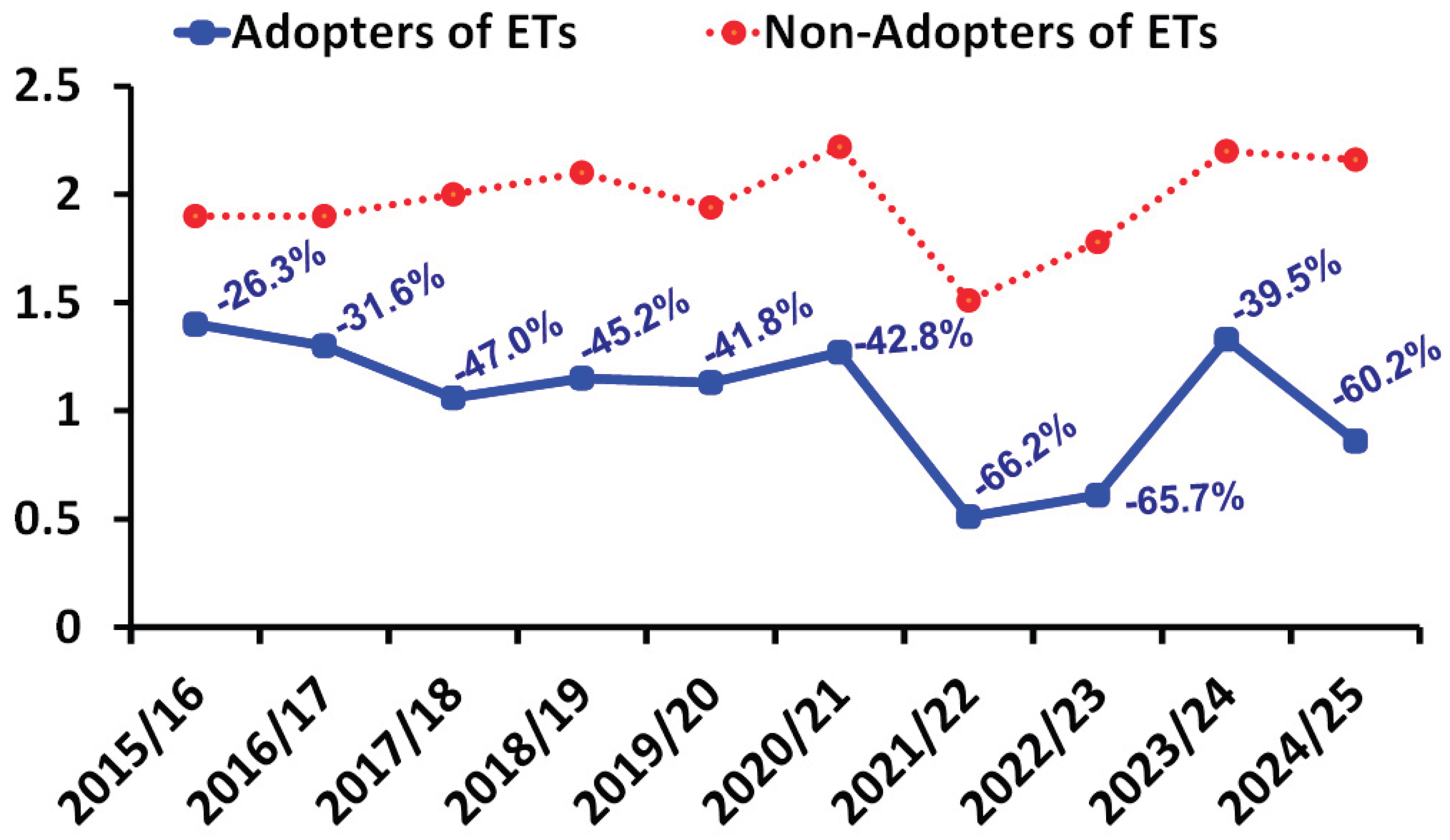
Chemical control remains a cornerstone for stink bug management around the world [6]. Its importance at near and medium time frame tends to continue high to keep pest populations under control [19]. However, chemical insecticide sprayings must be restricted to when population levels reach established economic thresholds (ETs) [26]. This can reduce insecticide use against stink bugs by an average of 46.6% when compared to farmers not adopting ETs [17]. From a long-period monitoring carried out from 10 consecutives crop season in Brazil, the adoption of ETs in soybean, within IPM context, reduced insecticide sprays against stink bug from 26.3% (2015/16) to 66.2% (2021/22) (Figure 3), illustrating the importance of spraying insecticides wisely.
Around the world, sound ETs are established for stink bugs attacking soybean [17,18,19,20,21,22,23,24,25,26], despite slightly differing among countries due to: variations in crop value; different adopted cultivars with different resistance levels; variable stink bug control costs; different sampling procedures or species of stink bugs occurring in each region; local environmental conditions; and the availability and effectiveness of control technologies adopted by local farmers [27]. For instance, in Brazil, since the 1970s, the recommended ET is two insects larger than 0.5 cm (including nymphs 3rd-5th instars and adults) per row meter if the fields are intended for grain production or one bug if the field is used for seed production [26,27,28]. In Argentina, ETs are 0.7 stink bugs per meter for soybean cultivars of maturity groups 3, 4 or 5 and 1.4 stink bugs if the maturity group is 6 or 7 [29].
In general, in most areas of Neotropics, immediately after the soybean harvest, maize or other cereals are sowed. After maize germination, ETs for Diceraeus spp. might vary accordingly to the cultivar; e.g., from 0.27 [30] to 0.8 insects m−2 [31]. Alternatively, ETs are stated as insects per meter (0.5 stink bugs m−1 of row) [31] for more susceptible cultivars while for more tolerant ones, 2 stink bugs m−1 of row (6 plants) are adopted as ET [33].
Taking into consideration the soybean-cereals production system, there is no ETs for insecticide use considering the landscape perspective. Economic thresholds are established for each isolated crop despite the population of Diceraeus spp. damaging maize (or other cereal) seedlings come from the previous soybean crop. After soybean harvest, Diceraeus spp. remains on the soil, sheltered under straw, and feeds on different weeds, such as Commelina benghalensis L. or volunteer soybean [34,35,36]. At maize emergence, they start feeding on seedlings [37,38]. This force additional chemical control of once considered secondary pest, increasing insecticide sprays in the production system [31,32,33,34,35,36,37,38,39].
Insecticide application late in the soybean season (R7-R8 soybean development stages), to reduce Diceraeus spp. at early maize cycle, proved to be inefficient [40]. Among possible reasons, this happens because the area cultivated with maize in the second season is smaller than the area cultivated with soybean during the first season. For instance, only in Brazil, soybean was cultivated in 47-48 million of hectares in 2024/25 followed by maize in the second season cropped in about 17 million hectares [41]. Despite the use of insecticides to control stink bugs on soybean in the reproductive stage, populations move (concentrate) into the fewer areas with maize, remaining at high levels at the time of maize initial growth [42,43,44]. Therefore, it is important to take into consideration the impact of the dispersion of stink bugs that occur after soybean harvest. Millions of hectares cultivated with soybeans during the first season (summer) will be reduced by more than half with maize in the second season (fall/winter). Consequently, after the soybean harvest, stink bugs concentrate their populations over the smaller area with maize [45] making any insecticide spray close to the soybean harvest inefficient to reduce the population.
It is also important to take into consideration that Diceraeus spp. are more tolerant than E. heros to insecticides, with resistant populations being more frequently recorded [20]. It is also important to consider the behavior of Diceraeus spp. to stay on the soil for longer periods of time sheltered under straw, which prevent contact with insecticides, reducing their efficacy [46]. Moreover, zeta-cypermethrin and thiamethoxam + lambda-cyhalothrin have low effect in the management of Diceraeus spp. [46,47]. This highlights the challenge of selecting not only the best active ingredients but also the best moment for controlling Diceraeus spp. in the soybean—maize succession system [46]. An alternative tool for stink bug landscape management in these production systems has been the maize seed treatment with highly soluble systemic insecticides (neonicotinoids) [20,21,22,23,24,25,26,27,28,29,30,31,32,33,34,35,36,37,38,39,40,41,42,43,44].
3. Recommended Procedures at Soybean Harvest
An important challenge for managing stink bugs is the presence of soybean grains on the soil after soybean harvest, as well as the consequent presence of volunteer soybean plants in addition to weeds. Those plants as well as the lost soybean grains serve as food sources for stink bugs to remain in the same field until maize emergence, when they will damage those seedlings [35]. An average of 4 to 6% of soybean is considered to be lost during harvest in Neotropics [48,49]. Considering the production of ca. 170 million tons in 48 million hectares only in Brazil in 2024/2025 crop season, and, that there are from 5,000 to 6,600 grains in each kilogram of soybean [50], it would potentially result from 885 to 1,168 volunteer soybean plants per hectare [production (170) x loss (average of 0.05 or 5%) ÷ cultivated area (48) x grains per kilo (from 5,000 to 6,600 grains)]. This configures the potential size of the problem regarding soybean loss at harvest which helps to increase stink bug outbreaks in early maize stages cropped in the sequence.
Grain harvest loss is impacted by different factors [49]: the adjustment of the speed of the reel and the distance between parts in the harvest machine [51]; operation of used cutting platforms [52]; the maintenance of the harvest machine [53]; and the speed of machinery. Therefore, efficient IPM programs must include not only pest control but also other multiple-discipline recommendations.
4. Adoption of Resistant/Tolerant Plants for Stink Bug Management
Among the different pest control strategies, host plant resistance has been historically considered a cornerstone to sustainably manage pests [54] and a fundamental component of IPM [55]. The adoption of plant resistance is compatible with all other control strategies in IPM, being economically, ecologically, and environmentally advantageous by avoiding or at least reducing the need of chemical control [56,57]. For sucking insects such as stink bugs, an important factor to be considered is the hardness of plant tissues. Plants with rigid tissues are less preferred as hosts, as they limit the feeding capacity of those insects [58]. The deposition of lignin, cellulose, suberin and other macromolecules in the cell wall of the plant gives greater hardness to the tissues, causing resistance to penetration of the stylets [59].
In the case of resistant/tolerant soybean cultivars to stink bugs, attempts were done to develop cultivars in the past, but results were limited [60] due to their relatively low yield potential. However, more recently, tolerant plants bearing the so-called “Block” technology are less damaged by stink bugs and show seed yields comparable to those of traditional commercial cultivars [61]. Genetic improved soybean plants having this tolerance to stink bugs have supported the double of insect infestation with the same level of damaged grains, being ideally to be cultivated in the latest sowed soybean fields in the landscape, which will suffer from higher stink bug outbreaks after the harvest of neighboring fields.
Maize seedlings are more susceptible to the injury by stink bugs at early plant stages, from VE (emergence: when the coleoptile breaks the soil surface) to V5 (weaning: 5 leaf stage—when plant develops crown roots and stops relying on seed reserves, becoming reliant on soil nutrients) [62]. When stink bug populations are high at late reproductive stages of soybean (R7-R8), no insecticides should be used because they are ineffective to prevent outbreaks in the crop being sowed after soybean harvest [35], but more resistant or tolerant cultivars of maize with insecticide seed treatment should be considered to be sowed in the succession.
These tolerant maize cultivars show some favorable traits such as: high initial vigor and rapid growth (plants that fast develop in the early stages have a greater capacity to overcome damage caused by toxin injection into the seedling collar); thicker/more rigid stem (greater stem diameter offers greater physical resistance to the insertion of the stink bug’s stylets); recovery capacity or regrowth vigor (plant’s ability to produce new leaves and resume growth even after the apical meristem is damaged, reducing the need for replanting); resistance to breakage (hybrids with greater stem rigidity suffer less from lodging or deformation -”crooked” or “goose neck” plant, when attacked); and low rate of super-sprouting (cultivars with lower super-sprouting due to the death of the apical bud). Tolerant maize cultivars, combined with systemic seed treatment (e.g., neonicotinoids), show lower percentage of attacked seedlings and greater ear weight (up to a 29.5% increase in productivity) [63] proving to be an excellent management strategy for stink bugs in the soybean-maize production system.
5. Augmentative and Conservation Biological Control
Augmentative biological control is essential strategy to build a more sustainable agriculture, especially in commodities such as soybean and maize, where the overuse of chemical insecticides has been of increasing concern [21]. Among the most studied and adopted biocontrol agents against stink bugs, egg parasitoids have been gaining momentum [64,65]. There are at least 23 different species of egg parasitoids reported on soybean [66], making them the most important biocontrol agents of this pest group [67,68]. The species Telenomus podisi Ashmead (Hymenoptera: Scelionidae) is the most promising alternatives to manage E. heros [69]. Due to its high parasitism capacity and availability in the Brazilian market as a commercial biocontrol agent, it has been released in 150,000 to 250,000 hectares of soybean annually in the country [70].
Fed adults at densities of ca. 6,000 parasitoids per hectare, released 2-3 times on a 14-day interval [65], result in >90% of eggs parasitized [71], being efficient against E. heros and also D. melacanthus [72] among other stink bug species [62,63,64,65,66,67]. For instance, T. podisi has been recorded naturally parasitizing eggs of Oebalus poecilus (Dallas) and Tibraca limbativentris (Stål) on rice [73] indicating that this parasitoid can possibly be also released in other crops where pentatomids are key pests. In Paraguay, high parasitism of O. poecilus eggs in rice fields after releases of T. podisi has been observed. More details in how to rear and release T. podisi in field crops in the Neotropics can be found in [16,17,18,19,20,21,22,23,24,25,26,27,28,29,30,31,32,33,34,35,36,37,38,39,40,41,42,43,44,45,46,47,48,49,50,51,52,53,54,55,56,57,58,59,60,61,62,63,64,65]. One of the befits of adopting egg parasitoids against pests is their capacity to control the pest at early stages (egg) before any injury being done on the plants. However, it imposes some challenges for the precise use of the parasitoids on the right timing. Farmers are used to monitor and control adults and nymphs of stink bugs in their fields. Over the crop season they would monitor the field several times to estimate the population size for insecticide-application decision. However, to correct adopt eggs parasitoids, farmers will have to get used to monitoring stink bug eggs, requiring pest scouters to be trained to acquire such new skills what can be a more time consuming operation in the field, which if it is the [16–65case will be more costly.
Despite the high potential of biological control using T. podisi, additional control strategies (chemical or biological) might be needed. Detailed understanding of the potential for combining eggs parasitoids with other compatible control tools against stink bug is essential for achieving the best stink bug management [13]. Threats posed by chemical pesticides against T. podisi as well as the possible perspectives of adopting more selective chemicals are discussed [74]. This reveals the need of different strategies combination to efficiently and sustainably manage stink bugs in complex agroecosystems [6].
Active ingredients belonging to the group of insect growth regulators, such as chlorfluazuron, teflubenzuron, novaluron and lufenuron, are more selective to T. podisi [75] but are usually used against lepidopterous pest. In contrast, pyrethroids (bifenthrin, beta-cyfluthrin, zeta-cypermethrin) and organophosphates (chlorpyrifos and acephate) are efficient against stink bugs, but are harmful to egg parasitoids, especially to adults, which are more susceptible than pupae remaining protected inside the egg chorion [70,71,72,73,74,75,76,77]. Therefore, these broad-spectrum insecticides should be avoided at least 10 days before and 15 days after T. podisi releases [65].
The best option to mitigate negative impact to egg parasitods is the use of other biocontrol agents. Three species of entomopathogenic fungi have been commercialized in Brazil as augmentative biocontrol agents, Beauveria bassiana (Bals.-Criv.) Vuill., Metarhizium anisopliae (Metsch.), and Cordyceps fumosorosea (Wize). The isolate BRM 2335 of M. anisopliae has shown high virulence against different species of stink bugs [78,79,80]. It causes mortality and also reduces E. heros feeding activities by 86%, which completely ceases after five days of spraying [81].
In addition to augmentative, conservation biological control should always be taken into consideration. We need to better learn to take advantage of native biodiversity of natural enemies, always present in any agroecosystem. Studies are needed and much should be learned about how the target pests live and reproduce. For example, life histories of stink bugs, following their abundances on crops and wild vegetation, number of generations per year, hosts and associated plants, and natural enemies’ roles should be studied in detail to help in mitigating their impact to the crops [82].
6. Innovative Tools for Stink Bug Management
Taking into consideration the few diversity of tools efficiently used against stink bugs due to different reasons, for instance: 1) resistant populations to insecticides; 2) few activity ingredients with activity against stink bugs; 3) lower performance of entomopathogens against stink bugs compared to lepidopterous; 4) no transgenic plants available against stink bugs; among others, the development of new innovative tools against stink bugs have been intensively studied, despite still few alternatives being already available for farmers [85].
Among the most advanced studies, pheromones in baited traps were efficient in attracting and capture stink bugs [86,87]. With costs of pheromone production being reduced, this technology will start to be used more frequently not only to monitor insects but also to help controlling them by mixing pheromones with insecticides and even biological control entomopathogens [88]. Pheromones will be also used in traps for monitoring stink bugs. The use of images from automated traps, satellites or drones to perform stink bug sampling and monitoring with precision and low costs will revolutionize stink bug manage and might be at a close step to become reality with the aid of artificial intelligence (AI). Imaging methods to identify captured insects, combining texture, color and shape information is really disruptive and should be improving stink bug monitoring and management at middle term future [85].
Botanical insecticides have stood out as an innovative alternative to synthetic chemicals and its growing research and adoption promises to boost the bioinsecticide market, representing a sustainable transition in global agriculture and a good alternative for stink bugs [89]. In addition, the application of RNA interference (RNAi) has emerged as a promising approach for the targeted control of stink bugs [90]. Putting together a more precise and cheaper stink bug monitoring associated with the used of not only biological control but also newer innovative “greener” sprayable insecticides based on RNAi, essential oils or even the adoption og genetic improved plants (GMs or edited plants) have been intensively studied against stink bugs [89,90] and are included in the newer innovative tools to be developed against those pests. Only the junction of great diversity of tools, in a more complex approach of landscape management, will enable stink bugs be sustainably managed.
7. Final Considerations and Conclusions
It can be concluded from this review that the use of a single tool against stink bugs is fated to failure if not used within an IPM context taking the landscape scenario into consideration. Against isolated strategies, nature will always find a way to select resistant populations or to have the empty ecological niche occupied by other species (e.g., outbreaks of secondary pests), or similar negative consequences. Aiming for a more resilient, sustainable and efficient stink bug management, a more complex landscape perspective over the traditional individualized crop perspective is required [17]. Pest management recommendations must evolve to crop protection procedures, and then, to landscape management. By leveraging interdisciplinary collaborations and regulatory advancements, precision pest control strategies promise to redefine agricultural practices, paving the way for a sustainable and resilient future for global food production [8].
Chemical insecticides use actually inevitable [84], should be restricted to when pest populations reach established ETs [17]. Moreover, stink bug populations management should not aim the complete elimination of stink bug from the fields, but to keep their population under control, providing hosts to maintain natural biological control in the area.
Whenever possible, biological control alternatives should be wisely used to replace chemicals [91]. They also need to be used within IPM context, respecting ETs, which still need to be studied and developed for biological control reality. It seems clear that the overuse of biological control can also bring negative side-effects [92], despite being lower than those of overuse chemicals.
In conclusion, during the first crop season, stink bugs should be controlled only in the reproductive stage of soybean fields (from R3 to R6 plant development stage), when population is equal or higher than ETs (2 stink bugs.m−1). When ETs is surpassed at R7 and R8, more tolerant maize varieties (fast growing) should be sowed and seed treatment performed. Always, losses during harvest and the presence of weeds must be avoided at the end of soybean season. Additionally, chemical insecticides sprayings on maize might still be necessary if Diceraeuss spp. outbreaks equals or surpass three insects.m−1 during maize early stages. Novel IPM tools under study already presented and discussed [85] should be implemented when available to reach the ultimate goal of a more sustainable and resilient management of pest stink bugs.
Author Contributions
Conceptualization, writing-original draft preparation, review and final editing W.P.S., A.R.P. and A.F.B.
Acknowledgments
The authors thank Embrapa Soja, Embrapa Trigo and Universidade Federal do Paraná for all the supported, and the National Council for Scientific and Technological Development (CNPq) for their financial support and fellowships provided (process number 304052/2021-3).
Conflicts of Interest
Adeney de Freitas Bueno works as a researcher for Embrapa Soja, Londrina, Paraná, Brazil. Antônio Ricardo Panizzi is retired researcher from Embrapa Trigo, Passo Fundo, Rio Grande do Sul, and Weidson Plauter Sutil is a post-doc from Universidade Federal do Paraná. The authors declare that they have no conflict of interest.
References
- Panizzi, A.R. Stink bugs (Hemiptera: Pentatomidae) emphasizing economic importance. In Encyclopedia of Entomology; Capinera, J.L., Ed.; Springer: Dordrecht, The Netherlands, 2008; pp. 3567–3570. [Google Scholar]
- Panizzi, A.R.; McPherson, J.E.; James, D.G.; Javahery, M.; McPherson, R.M. Stink bugs (Pentatomidae). In Heteroptera of Economic Importance; Schaefer, C.W., Panizzi, A.R., Eds.; CRC Press: Boca Raton, FL, USA, 2000; pp. 421–474. [Google Scholar]
- Grabarczyk, E.E.; Cottrell, T.E.; Tillman, G. Characterizing the spatiotemporal distribution of three native stink bugs (Hemiptera: Pentatomidae) across an agricultural landscape. Insects 2021, 12(10), 854. [Google Scholar] [CrossRef]
- Bryant, T.B.; Reay-Jones, F.P. Pest status and management of stink bugs (Hemiptera: Pentatomidae) in field corn in the Southeastern United States. J. Integr. Pest Manag. 2025, 16, 26. [Google Scholar] [CrossRef]
- Adamič-Zamljen, S.; Bohinc, T.; Trdan, S. Cabbage stink bug (Eurydema ventralis Kolenati, 1846) (Hemiptera: Pentatomidae)—An increasingly important pest in Europe. Agriculture 2025, 15, 1779. [Google Scholar] [CrossRef]
- Panizzi, A.R.; McPherson, J.E.; Bundy, C.S.; Esquivel, J.F.; Pozzebon, A.; Mele, A.; Scaccini, D.; Musolin, D.L.; Karpun, N.N.; Neimorovets, V.V.; Javahery, M.; Numata, H.; Shintani, Y.; Lim, U.T.; Zang, L.S.; Chen, Y.M.; Mensah, R.K.; Miles, M.M.; Walter, G.H.; Jackai, L.E.N.; Dingha, B.N.; Bueno, A.F. Stink bugs (Heteroptera: Pentatomidae) and related pentatomoid pests: Global contemporary status and perspectives. Entomol. Gen. 2026. [Google Scholar]
- McPherson, J.E.; McPherson, R.M. Stink Bugs of Economic Importance in America North of Mexico; 253 pp; CRC Press LLC: Boca Raton, FL, USA, 2000. [Google Scholar]
- Waterhouse, D.F.; Sands, D.P.A. Classical Biological Control of Arthropods in Australia; 559 pp; ACIAR: Canberra, Australia; CSIRO Publishing: Melbourne, Australia, 2001. [Google Scholar]
- Esquivel, J.F.; Bell, A.A. Acquisition and transmission of Fusarium oxysporum f. sp. vasinfectum VCG 0114 (race 4) by stink bugs. Plant Dis. 2021, 105, 3082–3086. [Google Scholar] [CrossRef]
- Panizzi, A.R.; Lucini, T.; Aldrich, J.R. Dynamics in pest status of phytophagous stink bugs in the Neotropics. Neotrop. Entomol. 2022, 51, 18–31. [Google Scholar] [CrossRef]
- Garcia, R.A.; Ceccon, G.; Sutier, G.A.D.S.; Santos, A.L.F.D. Soybean–corn succession according to seeding date. Pesq. Agropec. Bras. 2018, 53, 22–29. [Google Scholar] [CrossRef]
- Panizzi, A.R.; Slansky, F., Jr. Review of phytophagous pentatomids (Hemiptera: Pentatomidae) associated with soybean in the Americas. Fla. Entomol. 1985, 68, 184–203. [Google Scholar] [CrossRef]
- Bueno, A.F.; Sutil, W.P.; Jahnke, S.M.; Carvalho, G.A.; Cingolani, M.F.; Colmenarez, Y.C.; Corniani, N. Biological control as part of the soybean integrated pest management (IPM): Potential and challenges. Agronomy 2023, 13, 2532. [Google Scholar] [CrossRef]
- Dellapé, G. An update of the distribution of the stink bugs (Hemiptera: Pentatomidae) from Argentina. Rev. Soc. Entomol. Argent. 2021, 23–32. [Google Scholar] [CrossRef]
- Saldanha, A.V.; Horikoshi, R.; Dourado, P.; Lopez-Ovejero, R.F.; Berger, G.U.; Martinelli, S.; Head, G.P.; Moraes, T.; Corrêa, A.S.; Schwertner, C.F. The first extensive analysis of species composition and abundance of stink bugs (Hemiptera: Pentatomidae) on soybean crops in Brazil. Pest Manag. Sci. 2024, 80, 3945–3956. [Google Scholar] [CrossRef] [PubMed]
- Bueno, A.F.; Panizzi, A.R.; Sutil, W.P. Case Study 1: Euschistus heros (F.) on soybean in Brazil. In Stink Bugs (Hemiptera: Pentatomidae) Research and Management;Entomology in Focus; Bueno, A.F., Panizzi, A.R., Eds.; Springer: Cham, Switzerland, 2024; Volume 9, pp. 1–25. [Google Scholar] [CrossRef]
- Bueno, A.F.; Hoback, W.W.; Colmenarez, Y.C.; Valmorbida, I.; Sutil, W.P.; Zang, L.S.; Horikoshi, R.J. Advancements, challenges, and future perspectives of soybean-integrated pest management, emphasizing the adoption of biological control by the major global producers. Plants 2026, 15, 366. [Google Scholar] [CrossRef] [PubMed]
- Marques, R.P.; Cargnelutti Filho, A.; Melo, A.A.; Guedes, J.V.; Carli, C.D.; Rohrig, A.; Pozebon, H.; Perini, C.R.; Ferreira, D.R.; Bevilaqua, J.G.; Patias, L.S.; Forgiarini, S.E.; Padilha, G.; Leitão, J.V.; Moro, D.; Hahn, L.; Arnemann, J.A. Managing stink bugs on soybean fields: insights on chemical management. J. Agric. Sci. 2019, 11, 225–234. [Google Scholar] [CrossRef]
- Carvalho, R.; Okuma, D.; Bernardi, O.; Nauen, R. The present and future of chemical control to manage stink bugs in Brazil. In Stink Bugs (Hemiptera: Pentatomidae) Research and Management; Entomology in Focus; Bueno, A.F., Panizzi, A.R., Eds.; Springer: Cham, Switzerland, 2024; Volume 9, pp. 199–212. [Google Scholar] [CrossRef]
- Sosa-Gómez, D.R.; Corrêa-Ferreira, B.C.; Kraemer, B.; Pasini, A.; Husch, P.E.; Vieira, C.E.D.; Martinez, C.B.R.; Lopes, I.O.N. Prevalence, damage, management and insecticide resistance of stink bug populations (Hemiptera: Pentatomidae) in commodity crops. Agric. For. Entomol. 2020, 22, 99–118. [Google Scholar] [CrossRef]
- Guedes, R.N.C.; Berenbaum, M.R.; Biondi, A.; Desneux, N. The side effects of pesticides on nontarget arthropods. Annu. Rev. Entomol. 2026, 71. [Google Scholar] [CrossRef]
- Lisi, F.; Siscaro, G.; Biondi, A.; Zappalà, L.; Ricupero, M. Non-target effects of bioinsecticides on natural enemies of arthropod pests. Curr. Opin. Environ. Sci. Health 2025, 45, 100624. [Google Scholar] [CrossRef]
- Vandenberg, L.N.; Pierce, E.J.; Arsenault, R.M. Pesticides, an urgent challenge to global environmental health and planetary boundaries. Front. Toxicol. 2025, 7, 1656297. [Google Scholar] [CrossRef]
- Wolfram, J.; Bussen, D.; Bub, S.; Petschick, L.L.; Herrmann, L.Z.; Schulz, R. Increasing applied pesticide toxicity trends counteract the global reduction target to safeguard biodiversity. Science 2026, 391, 616–621. [Google Scholar] [CrossRef]
- Ehler, L.E. Farmscape ecology of stink bugs in northern California. In Farmscape Ecology of Stink Bugs in Northern California; Entomol. Soc. Am.; 2000; p. 1. [Google Scholar] [CrossRef]
- Hayashida, R.; Hoback, W.W.; Bueno, A.F. A test of economic thresholds for soybeans exposed to stink bugs and defoliation. Crop Prot. 2023, 164, 106128. [Google Scholar] [CrossRef]
- Hall, D.C. The regional economic threshold for integrated pest management. Nat. Resour. Model. 1988, 2, 631–652. [Google Scholar] [CrossRef]
- Panizzi, A.R.; Corrêa, B.S.; Gazzoni, D.L.; Oliveira, E.B.; Newman, G.G.; Turnipseed, S.G. Insetos da soja no Brasil. Embrapa Soja, Londrina, PR, Boletim Técnico 1977, 1, 1–20. [Google Scholar]
- Gamundi, J.C.; Sosa, M.A. Caracterización de daños de chinches en soja y criterios para la toma de decisiones de manejo. In Chinches fitófagas en soja: revisión y avances en el estudio de su ecología y manejo; Ediciones INTA: Manfredi, Argentina, 2008; pp. 129–148. [Google Scholar]
- Bridi, M.; Kawakami, J.; Hirose, E. Danos do percevejo Dichelops melacanthus (Dallas, 1851) (Heteroptera: Pentatomidae) na cultura do milho. Magistra 2016, 28, 301–307. [Google Scholar]
- Duarte, M.M.; Avila, C.J.; Santos, V. Danos e nível de dano econômico do percevejo barriga verde na cultura do milho. Rev. Bras. Milho Sorgo 2015, 14, 291–299. [Google Scholar] [CrossRef]
- Chiaradia, L.A.; Nesi, C.N.; Ribeiro, L.P. Nível de dano econômico do percevejo barriga verde, Dichelops furcatus (Fabr.) (Hemiptera: Pentatomidae), em milho. Agropecu. Catarin. 2016, 29, 63–67. [Google Scholar] [CrossRef]
- Gomes, E.C.; Hayashida, R.; Bueno, A. F. Dichelops melacanthus and Euschistus heros injury on maize: basis for re-evaluating stink bug thresholds for IPM decisions. Crop Prot. 2020, 130, 105050. [Google Scholar] [CrossRef]
- Panizzi, A.R.; Chocorosqui, V.R. Os percevejos inimigos. A Granja 2000, 56, 40–42. [Google Scholar]
- Queiroz, A.P.; Gonçalves, J.; Silva, D.M.D.; Panizzi, A.R.; Bueno, A.F. Diceraeus melacanthus (Dallas) (Hemiptera: Pentatomidae) development, preference for feeding and oviposition related to different food sources. Rev. Bras. Entomol. 2022, 66, 2–8. [Google Scholar] [CrossRef]
- Silva, J.J.; Ventura, M.U.; Silva, F.A.C.; Panizzi, A.R. Population dynamics of Dichelops melacanthus (Dallas) (Heteroptera: Pentatomidae) on host plants. Neotrop. Entomol. 2013, 42, 141–145. [Google Scholar] [CrossRef]
- Ávila, C.J.; Panizzi, A.R. Ocurrence and damage by Dichelops (Neodichelops) melachantus (Dallas) (Heteroptera: Pentatomidae) on corn. An. Soc. Entomol. Bras. 1995, 24, 193–194. [Google Scholar] [CrossRef]
- Corrêa-Ferreira, B.S.; Sosa-Gómez, D.R. Percevejos e o Sistema de Produção Soja-Milho; Documentos 98; Embrapa Soja: Londrina, Brazil, 2017. [Google Scholar]
- Jacobi, V.G.; Fernández, P.C.; Zavala, J.A. The stink bug Dichelops furcatus: a new pest of corn that emerges from soybean stubble. Pest Manag. Sci. 2022, 78, 2113–2120. [Google Scholar] [CrossRef]
- Queiroz, A.P.; Panizzi, A.R.; Franca-Neto, J.D.B.; Bueno, A.F. Management strategies for the control of Diceraeus melacanthus (Dallas) in soybean (summer)–maize (fall/winter) successions. Neotrop. Entomol. 2025, 54, 5. [Google Scholar] [CrossRef] [PubMed]
- CONAB—Companhia Nacional de Abastecimento. Acompanhamento da Safra Brasileira de Grãos; Brasília, DF, Brazil, 2026; Volume 13, safra 2025/26, n. 5, quinto levantamento, fevereiro 2026. Available online: http://www.conab.gov.br (accessed on 15 march 2026).
- Brustolin, C.; Bianco, R.; Neves, P.M.O.J. Inseticidas em pré e pós-emergência do milho (Zea mays L.), associados ao tratamento de sementes, sobre Dichelops melacanthus (Dallas) (Hemiptera: Pentatomidae). Rev. Bras. Milho Sorgo 2012, 10, 215–223. [Google Scholar] [CrossRef]
- Furlan, L.; Kreutzweiser, D. Alternatives to neonicotinoid insecticides for pest control: case studies in agriculture and forestry. Environ. Sci. Pollut. Res. 2015, 22, 135–147. [Google Scholar] [CrossRef] [PubMed]
- Chiesa, A.C.M.; Dos Santos Sismeiro, M.N.; Pasini, A.; Roggia, S. Tratamento de sementes para manejo do percevejo barriga verde na cultura de soja e milho em sucessão. Pesq. Agropec. Bras. 2016, 51, 301–308. [Google Scholar] [CrossRef]
- Bueno, A.F.; Corrêa-Ferreira, B.S.; Roggia, S.; Bianco, R. Silenciosos e daninhos. Rev. Cult. 2015, 196, 25–27. [Google Scholar]
- Perini, C.R.; Machado, D.N. Application periods against Diceraeus (Dichelops) melacanthus on maize and their significant response on damage and grain yield in the Brazilian Midwest. Crop Prot. 2023, 172, 106344. [Google Scholar] [CrossRef]
- Martins, G.L.M.; Toscano, L.C.; Tomquelski, G.V.; Maruyama, W.I. Controle químico do percevejo barriga-verde Dichelops melacanthus (Hemiptera: Pentatomidae) na cultura do milho. Arq. Inst. Biol. 2021, 76, 475–478. [Google Scholar] [CrossRef]
- Goldsmith, P.D.; Martins, A.G.; de Moura, A.D. The economics of post-harvest loss: a case study of the new large soybean–maize producers in tropical Brazil. Food Secur. 2015, 7, 875–888. [Google Scholar] [CrossRef]
- Arends-Kuenning, M.; Garcias, M.; Kamei, A.; Shikida, P.F.A.; Romani, G.E. Factors associated with harvest and postharvest loss among soybean farmers in Western Paraná State, Brazil. Food Policy 2022, 112, 102363. [Google Scholar] [CrossRef]
- Guimarães, L.J.M. Dia Nacional do Milho — A importância do milho para o agronegócio brasileiro. Available online: https://www.embrapa.br/en/busca-de-noticias/-/noticia/89583335/artigo-dia-nacional-do-milho---a-importancia-do-milho-para-o-agronegocio-brasileiro (accessed on 28 February 2026).
- Bock, R.; Alonço, A.S.; de Oliveira Dias, V.; Possebom, G.; Knierim, L.F.; da Cruz, W.A.S.; Machado, A.P.Á. Perdas na colheita mecanizada da soja em função da velocidade de deslocamento e índice de molinete. Braz. J. Dev. 2020, 6, 34707–34724. [Google Scholar] [CrossRef]
- Paulsen, M.R.; Pinto, F.A.; de Sena, D.G., Jr.; Zandonadi, R.S.; Ruffato, S.; Costa, A.G.; Ragagnin, V.A.; Danao, M.-G.C. Measurement of combine losses for corn and soybeans in Brazil. Appl. Eng. Agric. 2014, 30, 841–855. [Google Scholar] [CrossRef]
- Oliveira, T. C.; Netto Figueiredo, Z.; Grillo Neves, L.; Guimarães de Favare, H.; Pereira Pacheco, A. Quantitative losses on the mechanized harvesting of soy in the region of Cáceres, Mato Grosso. Braz. J. Appl. Technol. Agric. Sci. 2014, 7. [Google Scholar] [CrossRef]
- Sharma, H.C.; Ortiz, R. Host plant resistance to insects: an eco-friendly approach for pest management and environment conservation. J. Environ. Biol. 2002, 23, 111–135. [Google Scholar] [PubMed]
- Kumari, P.; Jasrotia, P.; Kumar, D.; Kashyap, P.L.; Kumar, S.; Mishra, C.N.; Kumar, S.; Singh, G.P. Biotechnological approaches for host plant resistance to insect pests. Front. Genet. 2022, 13, 914029. [Google Scholar] [CrossRef] [PubMed]
- Baldin, E.L.L.; Vendramim, J.D.; Lourenção, A.L. Introdução à resistência de plantas a insetos: fundamentos e aplicações. In Resistência de Plantas a Insetos: Fundamentos e Aplicações; FEALQ: Piracicaba, Brazil, 2019; pp. 1–493. [Google Scholar]
- Warghat, A.N.; Kumar, A.; Raghuvanshi, H.R.; Aman, A.S.; Kumar, A. Recent advancements in plant protection. In Recent Advances in Plant Protection; Kumar, N., Purushotham, P., Kumar, A., Sahu, A., Nandeesha, S.V., Eds.; Golden Leaf Publishers: Uttar Pradesh, India, 2023; pp. 1–25. [Google Scholar]
- Peeters, P.J. Correlations between leaf constituent levels and the densities of herbivorous insect guilds in an Australian forest. Austral Ecol. 2002, 27, 658–671. [Google Scholar] [CrossRef]
- Boiça, A.L., Jr.; Freitas, C.A.; Freitas, M.M.; Nogueira, L.; Di Bello, M.M.; Fonseca, S.S.; Eduardo, W.I. Estratégias de defesa de plantas a insetos. In Tópicos em Entomologia Agrícola; Castilho, R.C., Truzi, C.C., Pinto, C.P.G., Eds.; Gráfica e Editora Multipress: Jaboticabal, Brazil, 2018; Volume XI, pp. 71–93. [Google Scholar]
- Rossetto, C.J.; Gallo, P.B.; Razera, L.F.; Bortoletto, N.; Igue, T.; Medina, P.F.; Tisseli, O.F.; Aquilera, V.; Veiga, R.F.A.; Pinheiro, J.B. Mechanisms of resistance to stink bug complex in the soybean cultivar IAC-100. An. Soc. Entomol. Bras. 1995, 24, 517–522. [Google Scholar] [CrossRef]
- Lucini, T.; Panizzi, A.R. Host plant resistance to manage pest stink bugs: the block technology on soybean. In Stink Bugs (Hemiptera: Pentatomidae) Research and Management;Entomology in Focus; Bueno, A.F., Panizzi, A.R., Eds.; Springer: Cham, Switzerland, 2024; Volume 9, pp. 181–198. [Google Scholar] [CrossRef]
- Silva, P.R.; Istchuk, A.N.; Hunt, T.E.; Bastos, C.S.; Torres, J.B.; Campos, K.L.; Foresti, J. Susceptibility of corn to stink bug (Dichelops melacanthus) and its management through seed treatment. Aust. J. Crop Sci. 2019, 13, 2015–2021. [Google Scholar] [CrossRef]
- Santos, N.M.; Fadini, M.A.M.; Trindade, R.D.S.; Lima, P.F.; de Avellar, G.S.; dos Santos, D.G.; Mendes, S.M. Characteristics of maize plants predicting resistance to the stink bug Diceraeus (Dichelops) melacanthus (Dallas, 1851) (Hemiptera: Pentatomidae). Genet. Mol. Res. 2025, 24, 1–14. [Google Scholar] [CrossRef]
- Bueno, A.F.; Braz, ÉC.; Favetti, B.M.; França-Neto, J.B.; Silva, G.V. Release of the egg parasitoid Telenomus podisi to manage the Neotropical brown stink bug, Euschistus heros, in soybean production. Crop Prot. 2020, 105310. [Google Scholar] [CrossRef]
- Bueno, A.F.; Sutil, W.P.; Colmenarez, Y.C.; Roswadoski, L. The use of Telenomus podisi to manage stink bugs on soybean: the example of Brazil. In Stink Bugs (Hemiptera: Pentatomidae) Research and Management: Recent Advances and Case Studies from Brazil, Europe, and USA; Springer Nature Switzerland: Cham, Switzerland, 2024; pp. 51–64. [Google Scholar] [CrossRef]
- Sousa, K.K.A.; Silva, N.N.P.; Querino, R.B.; Silva, P.H.S.; Grazia, J. Diversity, seasonality, and egg parasitism of hemipteran (Coreidae and Pentatomidae) from a cowpea crop in northeastern Brazil. Fla. Entomol. 2019, 102, 29–35. [Google Scholar] [CrossRef]
- Koppel, A.L.; Herbert, D.A., Jr.; Kuhar, T.P.; Kamminga, K. Survey of stink bug (Hemiptera: Pentatomidae) egg parasitoids in wheat, soybean, and vegetable crops in southeast Virginia. Environ. Entomol. 2009, 38, 375–379. [Google Scholar] [CrossRef] [PubMed]
- Laumann, R.A.; Moraes, M.C.B.; Silva, J.P.D.; Vieira, A.M.C.; Silveira, S.D.; Borges, M. Egg parasitoid wasps as natural enemies of the neotropical stink bug Dichelops melacanthus. Pesq. Agropec. Bras. 2010, 45, 442–449. [Google Scholar] [CrossRef]
- Hoback, W.W.; Ramos, G.; Hayashida, R.; Santos, D.M.; Alvarez, D.D.L.; Oliveira, R.C. Optimizing the release pattern of Telenomus podisi for effective biological control of Euschistus heros in soybean. Insects 2024, 15, 192. [Google Scholar] [CrossRef] [PubMed]
- Silva, G.V.; Bueno, A.F.; Neves, P.M.O.J.; Favetti, B.M. Biological characteristics and parasitism capacity of Telenomus podisi (Hymenoptera: Platygastridae) on eggs of Euschistus heros (Hemiptera: Pentatomidae). J. Agric. Sci. 2018, 10, 210–220. [Google Scholar] [CrossRef]
- Pernambuco, F.J.C.; Almeida, W.S.; Gladenuccí, J.; Zachrisson, B.; de Oliveira, R.C. Efficacy of Telenomus podisi Ashmead, 1893 (Hymenoptera: Platygastridae) release for the control of Euschistus heros (Fabricius, 1794) (Hemiptera: Pentatomidae) eggs in soybean in Brazil. Idesia (Arica) 2022, 40, 77–86. [Google Scholar] [CrossRef]
- Taguti, ÉA.; Gonçalves, J.; de Freitas Bueno, A.; Marchioro, S.T. Telenomus podisi parasitism on Dichelops melacanthus and Podisus nigrispinus eggs at different temperatures. Fla. Entomol. 2019, 102, 607–613. [Google Scholar] [CrossRef]
- Silva, N.N.; Sousa, K.K.; Silva, P.H.S.; Querino, R.B. New records of egg parasitoids of stink bugs (Hemiptera: Pentatomidae) on rice in Piauí, Brazil: rate parasitism, incidence and seasonality. Entomol. Commun. 2021, 3, ec03020. Available online: https://orcid.org/0000-0002-0843-9670. [CrossRef]
- Torres, J.B.; Bueno, A.F. Conservation biological control using selective insecticides: a valuable tool for IPM. Biol. Control 2018, 126, 53–64. [Google Scholar] [CrossRef]
- Stecca, C.S.; Bueno, A.F.; Pasini, A.R.; Silva, D.M.; Andrade, K.; Zirondi Filho, D.M. Impact of insecticides used in soybean crops to the egg parasitoid Telenomus podisi (Hymenoptera: Platygastridae). Neotrop. Entomol. 2018, 47, 281–291. [Google Scholar] [CrossRef]
- Hassan, S.A.; Bigler, F.; Bogenschütz, H.; Boller, E.; Brun, J.; Calis, J.N.M.; Coremans-Pelseneer, J.; Duso, C.; Grove, A.; Heimbach, U.; Helyer, N.; Hokkanen, H.; Lewis, G.B.; Mansour, F.; Moreth, L.; Polgar, L.; Samsøe-Petersen, L.; Sauphanor, B.; Staubli, A.; Sterk, G.; Vainio, A.; Van de Veire, M.; Viggiani, G.; Vogt, H. Standard methods to test the side-effects of pesticides on natural enemies of insects and mites developed by the IOBC/WPRS Working Group “Pesticides and Beneficial Organisms”. EPPO Bull. 1985, 15, 214–255. [Google Scholar] [CrossRef]
- Carmo, E.L.; Bueno, A.F.; Bueno, R.C.O.F. Pesticide selectivity for the insect egg parasitoid Telenomus remus. BioControl 2010, 21, 455–464. [Google Scholar] [CrossRef]
- Boaventura, H.A.; Quintela, E.D. The multifunctionality of the fungus Metarhizium spp. and its use in Brazilian agriculture. Bragantia 2025, 84, e20240183. [Google Scholar] [CrossRef]
- Quintela, E.D.; Mascarin, G.M.; Silva, R.A.; Barrigossi, J.A.F.; Martins, J.F.S. Enhanced susceptibility of Tibraca limbativentris (Heteroptera: Pentatomidae) to Metarhizium anisopliae with sublethal doses of chemical insecticides. Biol. Control 2013, 66, 56–64. [Google Scholar] [CrossRef]
- Sousa, L.M.; Quintela, E.D.; Boaventura, H.A.; Silva, J.F.A.; Tripode, B.M.D.; Miranda, J.E. Selection of entomopathogenic fungi to control stink bugs and cotton boll weevil. Pesqui. Agropecu. Trop. 2023, 53, e76316. [Google Scholar] [CrossRef]
- Almeida, A. C. D. S.; Rodrigues, M. A.; Boaventura, H. A.; Vieira, A. S.; e Silva, J. F. A.; de Jesus, F. G.; Quintela, E. D. Can Metarhizium anisopliae reduce the feeding of the neotropical brown stink bug, Euschistus heros (Fabricius, 1798), and its damage to soybean seeds? Journal of Fungi 2025, 11(4), 247. [Google Scholar] [CrossRef]
- Panizzi, A.R.; Lucini, T. Life history studies of stink bugs: much-needed research to support their conservation biological control. BioControl 2024, 69, 493–505. [Google Scholar] [CrossRef]
- Boetzl, F.A.; Jachowicz, N.; Hansen, A.L.; Lundin, O. Landscape-scale drivers of insect pest regulation in sugar beet. Agric. Ecosyst. Environ. 2026, 396, 109999. [Google Scholar] [CrossRef]
- Smith, J.; Martins, B.A.B.; Beffa, R.; Field, L.M.; Goertz, A.; Le Goupil, G.; Mehl, A.; Langewald, J.; Martinelli, S.; Rossi, C.V.S.; Wiles, J.A. Challenges facing the management of pesticide resistance in weeds, diseases and insect pests in European agriculture and the future of effective IPM implementation. Pest Manag. Sci. 2026, 82, 2838–2843. [Google Scholar] [CrossRef]
- Bueno, A.F.; Panizzi, A.R. Perspectives on pest stink bugs research and management in agriculture. In Stink Bugs (Hemiptera: Pentatomidae) Research and Management: Recent Advances and Case Studies from Brazil, Europe, and USA; Springer Nature Switzerland: Cham, Switzerland, 2024; pp. 383–394. [Google Scholar] [CrossRef]
- Borges, M.; Schmidt, F.G.V.; Sujii, E.R.; Medeiros, M.A.; Mori, K.; Zarbin, P.H.G.; Ferreira, J.T.B. Field responses of stink bugs to the natural and synthetic pheromone of the Neotropical brown stink bug, Euschistus heros (Heteroptera: Pentatomidae). Physiol. Entomol. 1998, 23, 202–207. [Google Scholar] [CrossRef]
- Schmidt, F.G.V.; Pires, C.S.S.; Sujii, E.R.; Borges, M.; Pantaleão, D.C.; Lacerda, A.L.M.; Azevedo, V.C.R. Comportamento e captura das fêmeas de Euschistus heros em armadilhas iscadas com feromônio sexual. Embrapa-Cenargen, Brasília, DF, Brazil. Comunicado Técnico 2003, 93, 1–4. [Google Scholar]
- Akutse, K.S.; Khamis, F.M.; Ambele, F.C.; Kimemia, J.W.; Ekesi, S.; Subramanian, S. Combining insect pathogenic fungi and a pheromone trap for sustainable management of the fall armyworm, Spodoptera frugiperda (Lepidoptera: Noctuidae). J. Invertebr. Pathol. 2020, 177, 107477. [Google Scholar] [CrossRef]
- Lozano, E.R.; Potrich, M.; Battisti, L.; Abati, R. Botanical Insecticides as an Alternative to Control Stink Bugs in Agriculture. In Stink Bugs (Hemiptera: Pentatomidae) Research and Management: Recent Advances and Case Studies from Brazil, Europe, and USA; Springer Nature Switzerland: Cham, 2024; pp. 95–116. [Google Scholar] [CrossRef]
- Maktura, G. C.; Guidelli, G. V.; da Costa, T. R. G.; Marques-Souza, H. The Use of RNAi Against Stink Bugs. In Stink Bugs (Hemiptera: Pentatomidae) Research and Management: Recent Advances and Case Studies from Brazil, Europe, and USA; Springer Nature Switzerland: Cham, 2024; pp. 117–167. [Google Scholar] [CrossRef]
- Michaud, J.P. Problems inherent to augmentation of natural enemies in open agriculture. Neotrop. Entomol. 2018, 47, 161–170. [Google Scholar] [CrossRef]
- Rossi, M.N.; Fowler, H.G. Spatial and temporal population interactions between the parasitoids Cotesia flavipes and Tachinidae flies: considerations on the adverse effects of biological control practice. J. Appl. Entomol. 2004, 128, 112–119. [Google Scholar] [CrossRef]
Figure 1.
Stink bug species composition (%) over the years (different crop seasons) in the Neotropics, adapted from [17].
Figure 1.
Stink bug species composition (%) over the years (different crop seasons) in the Neotropics, adapted from [17].
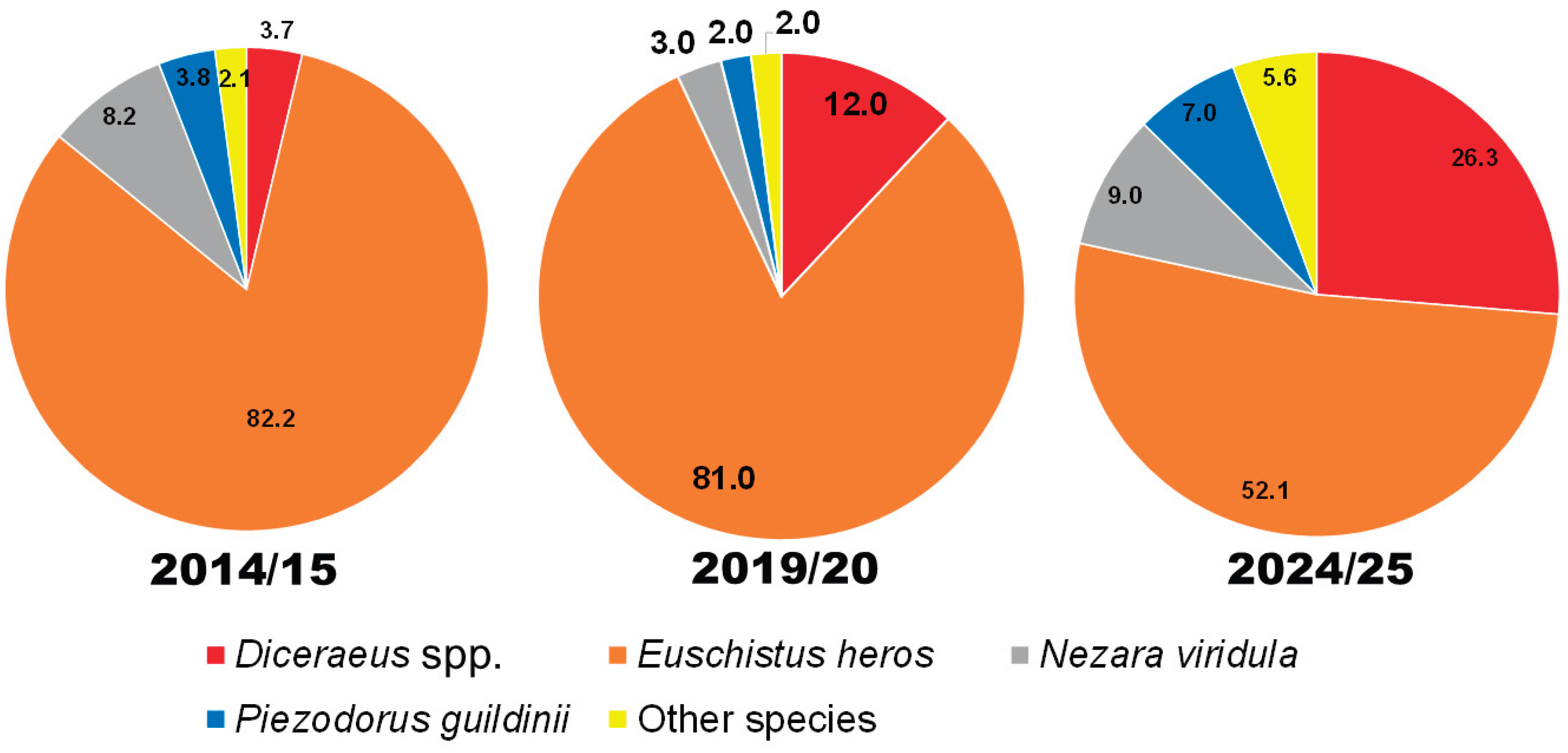
Figure 2.
Landscape Integrated Pest Management (IPM) taking the complexity of the agroecosystem into consideration. Figure created by the authors and enhanced using artificial intelligence tools.
Figure 2.
Landscape Integrated Pest Management (IPM) taking the complexity of the agroecosystem into consideration. Figure created by the authors and enhanced using artificial intelligence tools.
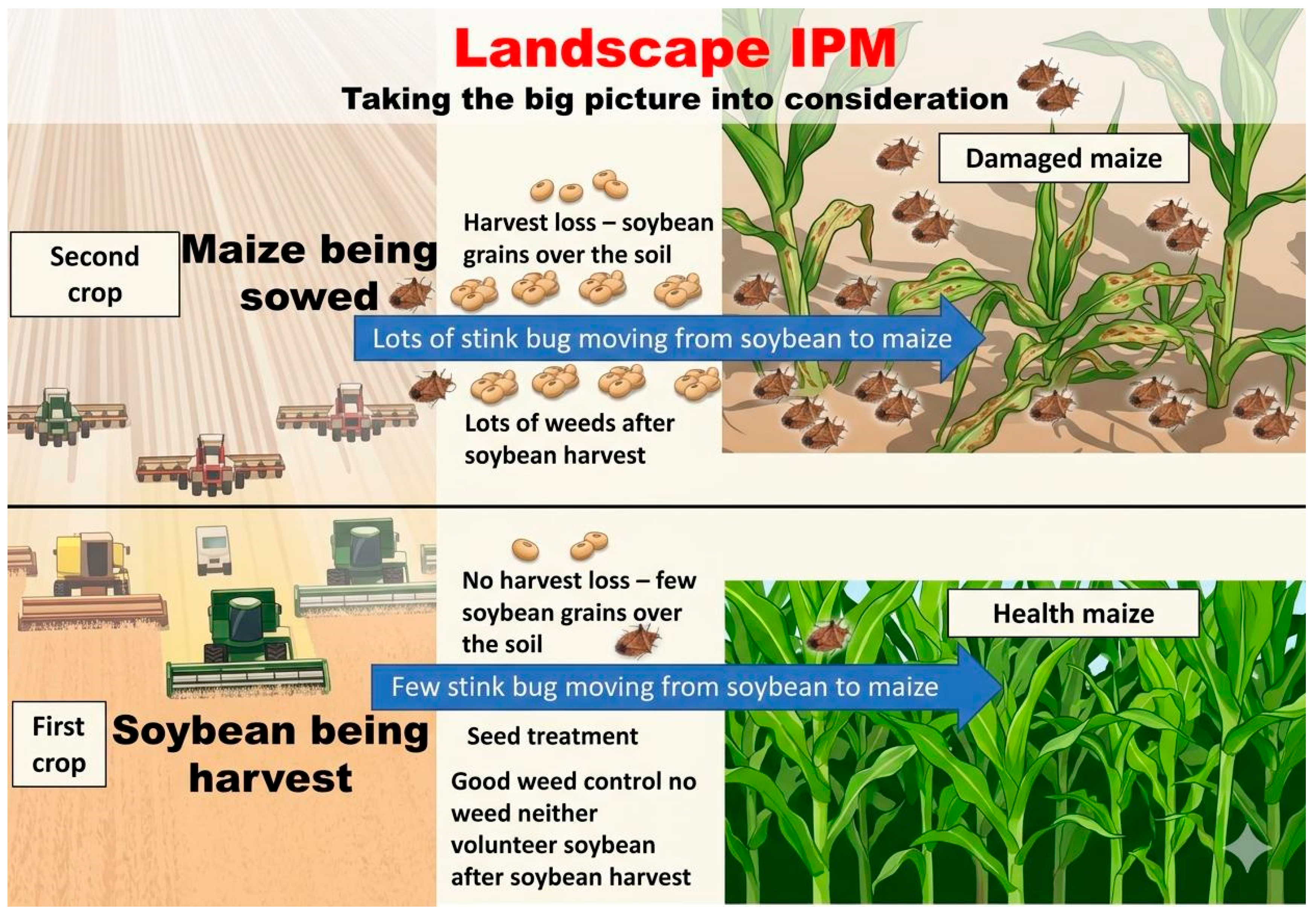
Figure 3.
Reduction of insecticide use to control stink bugs with the adoption of Economic Thresholds (ETs) within Integrated Pest Management (IPM) context, adapted from [17].
Figure 3.
Reduction of insecticide use to control stink bugs with the adoption of Economic Thresholds (ETs) within Integrated Pest Management (IPM) context, adapted from [17].
Disclaimer/Publisher’s Note: The statements, opinions and data contained in all publications are solely those of the individual author(s) and contributor(s) and not of MDPI and/or the editor(s). MDPI and/or the editor(s) disclaim responsibility for any injury to people or property resulting from any ideas, methods, instructions or products referred to in the content. |
© 2026 by the authors. Licensee MDPI, Basel, Switzerland. This article is an open access article distributed under the terms and conditions of the Creative Commons Attribution (CC BY) license (http://creativecommons.org/licenses/by/4.0/).
Copyright: This open access article is published under a Creative Commons CC BY 4.0 license, which permit the free download, distribution, and reuse, provided that the author and preprint are cited in any reuse.


