

Submitted:
15 April 2026
Posted:
15 April 2026
You are already at the latest version
Abstract
During phytosanitary monitoring of ornamental conifers conducted across multiple regions of Serbia, two species of spider mite, Eotetranychus libocedri (McGregor, 1936) and Eotetranychus thujae (McGregor, 1950), were recorded for the first time. E. libocedri was found on Platycladus orientalis L. (Franco), Thuja occidentalis L., and Cupressus × leylandii A.B. Jacks & Dallim, while E. thujae was detected on T. occidentalis. These records have extended the distribution area of these two allochthonous species in Europe. Together with previous findings, the number of registered species of the Tetranychidae family in Serbia now totals 47 species across 10 genera.
Keywords:
alien species
; spider mites
; cypress family
; Europe
1. Introduction
Spider mites represent one of the most significant groups of pest mites in agriculture, forestry, and horticulture. The family Tetranychidae comprises 1,364 species of obligate phytophages that feed on more than 4,100 plant species [1]. Due to differences in host specificity, several spider mite species are closely associated with conifers; nearly 50 species from 12 spider mite genera feed on conifers of the cypress family (Cupressaceae). Five species of the genus Eotetranychus have been recorded on Cupressaceae plants, including Eotetranychus cunninghamiae Wang, Eotetranychus juniperus Tuttle & Baker, Eotetranychus libocedri (McGregor), Eotetranychus pueblensis (Tuttle) and Eotetranychus thujae (McGregor) [1]. E. libocedri and E. thujae are considered potential pests of coniferous plants. In contrast, Oligonychus ununguis (Jacobi) is regarded as the most harmful conifer-feeding spider mite, causing serious economic damage to ornamental conifers grown under the most unfavourable conditions of anthropogenic pressure, due to its high fecundity and rapid development. O. ununguis is a common species on conifers, but it is important to note that E. libocedri and E. thujae can also co-exist with it [2,3,4,5,6].
E. libocedri and E. thujae belong to the same guild of spider mites, exhibiting a strong trophic relationship with conifers, primarily members of the Cupressaceae family. According to available data, they are mostly found on conifers in urban environments and nurseries. Both species are native to North America, from where they have been introduced into Europe and Asia [1].
The species E. libocedri has been recorded worldwide on 16 coniferous plants across three families: Cupressaceae (Calocedrus, Cupressus, Juniperus, Platycladus and Thuja), Pinaceae (Abies and Pinus), and Tamaricaceae (Tamarix) [1]. Exceptionally, it was also found on one broad-leaved evergreen plant, Euonymus fortunei, family Celastraceae [7]. This species has been reported from seven countries worldwide: United States, Mexico, Turkey, Hungary, Russian Federation, Kyrgyzstan and Uzbekistan. In Europe, its presence has been confirmed only in Hungary and the European parts of Turkey and Russia [7,8,9,10,11,12,13,14,15,16,17].
The species E. thujae has been recorded worldwide on 11 coniferous host plants, all belonging to the family Cupressaceae (Chamaecyparis, Cupressus, Juniperus, Platycladus, and Thuja spp.) [1]. To date, the species has been reported from seven countries globally: United States, Canada, Georgia, Hungary, Kazakhstan, Kyrgyzstan and Russian Federation. In Europe, its presence has been confirmed only in Georgia, Hungary, and the European part of Russia [6,9,14,16,18,19,20,21,22,23,24,25,26,27].
Data on spider mites associated with conifers in Serbia are limited to a small number of published works [28,29,30,31] and relate solely to urban environments, while no data have been published on spider mites inhabiting conifers in natural habitats. Due to insufficient taxonomic research on spider mites associate with conifers in Serbia, there is no relevant data on the significance of existing and potentially harmful spider mite species on conifers.
This study contributes to the knowledge of the Serbian acarofauna by reporting spider mite species newly recorded on coniferous plants. These findings provide valuable insights into the distribution of alien species of spider mites on ornamental conifers in Europe and may serve as a basis for future assessment of their potential impact on conifers in Serbia and neighboring countries.
2. Materials and Methods
The research was conducted in August and September 2024 at 15 localities across different regions of Serbia as part of small-scale phytosanitary monitoring of ornamental conifers. A total of 35 samples were collected from 11 conifer species: Chamaecyparis lawsoniana (A. Murray bis) Parl., Cupressus arizonica Greene, Cupressus × leylandii A.B. Jacks & Dallim., Juniperus chinensis L., J. horizontalis Moech, J. virginiana L., Platycladus orientalis L. (Franco), Thuja occidentalis L., Picea abies (L.) H. Karst., P. glauca (Moench) Voss, and Taxus baccata L.
Two spider mite species of the genus Eotetranychus were recorded on three conifer species (Cupressus × leylandii A.B. Jacks & Dallim., Platycladus orientalis L. (Franco), and Thuja occidentalis L.) in seven samples collected from six locations in urban areas (Table 1).
Plant samples were collected by cutting off branches, which were subsequently packed in 5-litre nylon bags, and transported to the laboratory. All samples were etherised with ethyl acetate for 30 minutes before examination to immobilise the mites. Quantitative assessment of scales was performed on each sample (25 twigs, each about 25–30 cm long) under a stereomicroscope, by counting active mite stages and eggs. During this examination, mites were photographed directly on the plant scales under the stereomicroscope. Qualitative examination was performed by beating the branches over sheets of white satin paper (60 × 40 cm), enabling the collection of additional individuals that may have remained undetected during the quantitative. During qualitative examination, isolated mites placed in Petri dishes were photographed under the stereomicroscope.
Preliminary examination of mites was conducted using a Leica Wild M3Z stereomicroscope, allowing the collection of isolated mites in Petri dishes. All collected specimens were subsequently placed in a clearing fixative, consisting of a 1:5 mixture of lactic acid (88%) and ethanol (70%). Permanent mounts were prepared using Heinze's medium [32].
Mounted mites were examined using a phase-contrast microscope Olympus BX53, equipped with cellSens Entry 2 (CS-EN-V2) imaging software for measurement and photography. Species identification was carried out using several literature sources for the family Tetranychidae [8,9,11,15,18,19,21,23,24,35,36,37]. The catalogue and worldwide database of spider mites were also consulted to verify the species distribution [1,38]. Permanent mounts are deposited in the collection of the Department of Entomology and Agricultural Zoology, Faculty of Agriculture, University of Belgrade.
3. Results
Two spider mites species, Eotetranychus libocedri (McGregor, 1936) and Eotetranychus thujae (McGregor, 1950) are reported for the first time in the fauna of Serbia on conifers. E. libocedri was recorded on three species, while E. thujae has been found on a single conifer species (Table 2).
Regarding taxonomic considerations, apart from their clear placement within the large genus Eotetranychus Oudemans, 1931 [39], both species share a number of distinctive morphological characters that have led to their previous assignment to smaller taxonomic groups. For instance, they have been included in the Libocedri Group within the genus Eotetranychus [9], the subgenus Mononychus Wainstein, 1960, and the genera Platytetranychus Oudemans, 1931, and Mononychellus Wainstein, 1971. According to Baker and Tuttle [21] their shared morphological characters are as follows: dorsal body setae are much shorter than the distance between their bases; prodorsal striae are longitudinal and opisthosomal striae are transverse; peritremes are distally bulbous; tibia II has five tactile setae; tarsus I with distal and adjacent duplex setae.
Family Tetranychidae Donnadieu, 1875
Subfamily Tetranychinae Berlese, 1913
Tribe Tetranychini Reck, 1950
Genus Eotetranychus Oudemans, 1931
Species Eotetranychus libocedri (McGregor, 1936)
Material examined. Twenty-five females, twelve males and seven nymphs on P. orientalis. Five females, one male and two nymphs on T. occidentalis. Eleven females and four males on Cupressus × leylandii (Table 2)
Remarks. The female E. libocedri (Figure 1a) can be recognized by the following characters: vertical setae (v2) are long, approximately equal to the distance between their bases; dorsocentral setae (c1, d1, e1, f1, h1) (Figure 1b) are smaller than other dorsal setae, very short, about half or less of the distance between their bases; dorsolateral setae (c2, d2, e2, f2) are slightly longer than dorsocentrals; both dorsocentral and dorsolateral setae are lanceolate and serrate; the spinneret of the palpal tarsus is very small, as long as it is wide; peritremes are slightly enlarged distally, not hooked (Figure 1c); pregenital striae are simple. The male (Figure 2a) can be recognised by the stout aedeagus, which narrows abruptly to the tip (Figure 2b).
Host plant. This species was recorded on ornamental cypresses: P. orientalis, T. occidentalis and Cupressus × leylandii, (Table 2). As the research was conducted during a prolonged period of extremely high temperatures and drought, the population density was generally low (Table 2), and symptoms of scale damage were not clearly expressed. Only at one locality (Sample code 1), on P. orientalis, there were several isolated but well-developed colonies with visible webs (Figure 3a) and numerous eggs (Figure 3b), accompanied by localized discoloration of scales. During this research, E. libocedri was not found cohabiting with other spider mites species.
Species Eotetranychus thujae (McGregor, 1950)
Material examined. Ten females, two males, and one nymph on Thuja occidentalis.
Remarks. The female E. thujae (Figure 4a) can be recognized by the following characters: vertical setae (v2), outer sacrals (f2), and clunals (h1) are slightly longer than the other setae; other dorsal setae are small, lanceolate, and serrate (Figure 4b); the spinneret of the palpal tarsus is three times as long as it is wide; peritremes are slightly enlarged and distally bulbous (Figure 4c); pregenital striae are lobed. The male (Figure 5a) can be recognized by the elongate aedeagus, which gradually tapers to a rounded tip (Figure 5b).
Host plant. This species was recorded only on T. occidentalis (Table 2). The population density was extremely low with only rare active stages (Figure 6a) and eggs (Figure 6b) recorded. No visible symptoms of scale damage were detected. During this research, E. thujae was not found cohabiting with other species of spider mites.
4. Discussion
Together with previously published data [31,40,41], this record of E. libocedri and E. thujae increased the number of known spider mite species in Serbia to 47. E. libocerdi and E. thujae have so far been reported in Europe from only a few countries. Both species are recorded in Hungary and the European parts of Russia; in the European part of Turkey only E. libocerdi has been reported, while in Georgia only E. thujae, has been documented. Thus, their discovery in Serbia expands the known distribution of both species in Europe.
According to available literature, most records of E. libocedri in Eurasia are associated with ornamental plants in urban environments, suggesting that the actual distribution may be considerably larger than currently known [15]. Therefore, further research is expected to expand the range of known host plants, including several relevant conifer families in Serbia.
During our research, E. libocedri and E. thujae were found on infested plants only in pure populations, i.e., without the presence of the commonly associated species O. ununguis [3,4,5], although they can cohabit with it on conifers [6]. In mixed populations with other spider mites, O. ununguis usually reaches higher population density, spins a stronger web, and causes more severe damage to host plants, making it difficult to objectively assess the harmfulness of other species on the same host plant [6]. In the present study, this issue did not arise, as E. libocedri and E. thujae were observed in isolation.
The relatively low population densities recorded through quantitative assessment of the samples were consistent with the weak manifestation of damage symptoms on the host plants. However, such results do not necessarily indicate that the two species are harmless, given the prevailing environmental conditions during the study period. Dry summer months are generally not favourable for spider mite populations on conifers to reach their maximum densities [6]. Research conducted during ecologically more favourable periods for population growth may yield different results.
Both species are of Nearctic origin, and are relatively rarely recorded within their native range, which therefore remains insufficiently studied. Although their presence in the Palearctic and Europe has been confirmed, the study of their distribution in these regions is even more limited, stressing the need to collect further data on these allochthonous species. Future studies in Serbia should focus on monitoring E. libocedri and E. thujae expand their host range or cause damage to ornamental conifers, and studying their biology, distribution, symptomatology, and control measures.
Author Contributions
Conceptualization, B.S. and K.M.; methodology, B.S., K.M., B.V. and N.A.; validation, K.M., B.S., B.V., N.A. and S.M.; formal analysis, B.S.; investigation, B.S., K.M., B.V. and N.A.; resources, K.M. and B.S.; writing—original draft preparation, B.S. and K.M.; writing—review and editing, K.M., B.S. and B.V.; visualization, B.S., K.M. and B.V.; supervision, B.S. and S.M.; funding acquisition, K.M. All authors have read and agreed to the published version of the manuscript.
Funding
This research was funded by Ministry of Science, Technological Development and Innovation of the Republic of Serbia, Grant No. 451-03-33/2026-03/200027, No. 451-03-34/2026-03/200116.
Data Availability Statement
The original contributions presented in this study are included in the article material. Further inquiries can be directed to the corresponding author.
Conflicts of Interest
The authors declare no conflicts of interest.
References
- Migeon, A.; Dorkeld, F. Spider Mites Web: a comprehensive database for the Tetranychidae. Available online: https://www1.montpellier.inrae.fr/CBGP/spmweb/index.php (accessed on 10. Jan 2026).
- Lehman, R.D. Spruce spider mite, Oligonychus ununguis (Jacobi) – an integrated approach to management Acarina: Tetranychidae. Entomol. Circ. 2002, 24(1), 1–4. [Google Scholar]
- Puchalska, E.; Czajkowska, B. Degree-day model for predicting emergence of spruce spider mite (Oligonychus ununguis Jacobi) from overwintering eggs. Suma temperatur efektywnych w prognozowaniu pojawu pierwszego pokolenia przędziorka sosnowca (Oligonychus ununguis Jacobi). Prog. Plant Prot. 2016, 56, 199–203. [Google Scholar] [CrossRef]
- Doherty, J.F. Phénologie et modèles prévisionnels d’éclosion printanière pour trois arthropods ravageurs en plantation commerciale d’arbres de Noël dans un contexte de changements climatiques. In Mémoires; Université Laval: Québec, 2017; Available online: http://hdl.handle.net/20.500.11794/27826.
- Bondareva, L.; Zhovnerchuk, O.; Kolodochka, L. A.; Chumak, Р Y.; Zavadska, O. V. Specifics of life cycle and damage of Oligonychus ununguis (Acari: Tetranychidae) on introduced species of coniferous plants in conditions of megalopolis. Pers. J. Acarol. 2020, 9(4), 367–376. [Google Scholar] [CrossRef]
- Koné, F. Y. Suivi des populations et des dommages d’Oligonychus ununguis (tétranyque de l’épinette) et de Platytetranychus thujae dans les thuyas ornementaux en champ et caractérisation de leur entomofaune. IQDHO - Réseau d’avertissements phytosanitaires - Pépinières ornementales 2023, 37p. [Google Scholar]
- Yeşilayer, A.; Çobanoğlu, S. Tetranychidae (Acari: Prostigmata) species from parks and ornamental plants in Istanbul, Turkey. Gaziosmanpaşa Bilimsel Araştırma Dergisi (Gaziosmanpasa Journal of Scientific Reserch, GBAD) 2015, 11, 90–98. [Google Scholar]
- McGregor, E.A. Two spinning mites attacking incense cedar in California. Ann. Entomol. Soc. Am. 1936, 29, 770–775. [Google Scholar] [CrossRef]
- Pritchard, A.E.; Baker, E.W. A revision of the spider mite family Tetranychidae . In Memoirs Series; Pacific Coast Entomological Society: San Francisco, 1955; Vol. 2, pp. 1–472. [Google Scholar] [CrossRef]
- Tuttle, D.M.; Baker, E.W. The spider mites of Arizona (Acarina: Tetranychidae). Agricultural Experiment Station, University of Arizona, Tech. Bull 1964, 158, 1–41. [Google Scholar]
- Tuttle, D.M.; Baker, E.W.; Abbatiello, M.J. Spider mites of Mexico (Acari: Tetranychidae). Int. J. Acarol. 1976, 2(2), 1–102. [Google Scholar] [CrossRef]
- Estebanes-Gonzalez, M.L.; Baker, E.W. Arañas rojas de Mexico (Acarina: Tetranychidae). An. Esc. Nac. Cienc. Biol. (Mex.) 1968, 15, 61–133. [Google Scholar]
- Kontschan, J.; Kiss, E.; Ripka, G. Alien, non-indigenous spider mites and flat mites (Acari:Tetranychidae and Tenuipalpidae) in Hungary. In XV International congress of Acarology (Turkey, Antalya; Sullivan, G.T., Ozman-Sullivan, S.K., Eds.; Bilkon Turizm Organizasyon Yayıncılık Ltd. Şti: Antalya, 2-8 September 2018; p. 213. [Google Scholar]
- Kamayev, I.O. New data on spider mites (Prostigmata: Tetranychidae) from Kyrgyzstan. Acarina 2023, 31(2), 271–273. [Google Scholar] [CrossRef]
- Kamayev, I.Q. A new record of Eotetranychus libocedri (McGregor, 1936) (Prostigmata, Tetranychidae) from Russia. Acarologia 2024, 64(1), 40–42. [Google Scholar] [CrossRef]
- Kamayev, I.; Karpun, N. A contribution to the knowledge of the spider mite fauna (Prostigmata: Tetranychidae) of the North Caucasus, Russia. Acarina 2024, 32(1), 35–42. [Google Scholar] [CrossRef]
- Kamayev, I.; Anorbayev, A.; Obidjanov, D. Review of the spider mite fauna of Uzbekistan, with new records (Prostigmata: Tetranychidae). Acarina 2024, 32(2), 157–167. [Google Scholar] [CrossRef]
- Reck, G.F. New species of tetranychid mites from Georgia. (Tetranychidae, Acari). Soobshch. Akad. Nauk Gruz. SSR 1947, 8(7), 471–475. [Google Scholar]
- McGregor, E.A. Mites of the family Tetranychidae. Am. Midl. Nat. 1950, 44, 257–420. [Google Scholar] [CrossRef]
- Reeves, R. M. Tetranychidae infesting woody plants in New York State, and a life history study of the Elm spider mite, Eotetranychus matthyssei n. sp.; Cornell University Agricultural Experiment Station, New York State College of Agriculture: Ithaca, N.Y, 1963; pp. 1–99 pp. [Google Scholar]
- Tuttle, D.M.; Baker, E.W. Spider mites of southwestern United States, a revision of the family Tetranychidae; The University of Arizona Press: Tucson, USA, 1968; p. 143 p. ISSN ISBN 0816500851, 9780816500857. [Google Scholar]
- Thewke, S.E.; Enns, W.R. The spider-mite complex (Acarina: Tetranychoidae) in Missouri . In Museum contributions; Columbia: Missouri, USA, University of Missouri, 1969; Volume Monograph No. 1, p. 106 p. [Google Scholar]
- Arabuli, T. Tetranychoid mites (Acari: Tetranychoidea) fauna of Georgia. Proc. Georgian Acad. Sci., Biol. Ser. B 2008, 6(1-2), 86–96. [Google Scholar]
- Kontschán, J.; Ripka, G. Checklist of the Hungarian spider mites and flat mites (Acari: Tetranychidae and Tenuipalpidae). Syst. Appl. Acarol. 2017, 22(8), 1199–1225. [Google Scholar] [CrossRef]
- Kontschán, J.; Kiss, E.; Ripka, G. Magyarország takácsatkái és laposatkái (Acari: Tetranychidae és Tenuipalpidae) [Spider mites and flat mites of Hungary (Acary: Tetranychidae and Tenuipalpidae)]. Növényvédelem különszám in Hungarian. 2018, 70 pp. [Google Scholar]
- Kamayev, I.O. Annotated list of Tetranychoidea mites (Acari: Trombidiformes) of Central European Russia. Acarina 2023, 31(1), 101–118. [Google Scholar] [CrossRef]
- Kamayev, I.O. New data on the fauna of spider mites (Acari, Tetranychidae) from Kazakhstan. Entomol. Rev. 2023, 103(9), 1029–1034. [Google Scholar] [CrossRef]
- Stojnić, B. Comparative faunistic and taxonomic analysis of spider mites (Acari: Tetranychidae) and their predators (Acari: Phytoseiidae) in cultivated and ornamental plants in wider area of Belgrade. M.Sc. thesis, In Serbian. University of Belgrade Faculty of Agriculture, 1993; p. 150 pp. [Google Scholar]
- Marić, I.; Marčić, D.; Petanović, R.; Auger, P. Biodiversity of spider mites (Acari: Tetranychidae) in Serbia: A review, new records, key to all known species. Acarologia 2018, 58, 3–14. [Google Scholar] [CrossRef]
- Marić, A.; Međo, I.; Jovanović, S.; Petanović, R.; Marčić, D. Spider mites (Acari; Tetranychidae) in protected natural areas of Serbia. Syst. Appl. Acarol. 2018, 23, 2033–2053. [Google Scholar] [CrossRef]
- Marić, I.; Medjo, I.; Marčić, D.; Petanović, R.; Jovanović, S.; Ueckermann, E. Spider mites (Acari: Tetranychidae) from Serbia: New species for the country and the Balkan Peninsula, with a key to all known Serbian species. Syst. Appl. Acarol. 2021, 26, 304–316. [Google Scholar] [CrossRef]
- Walter, D.E.; Krantz, G.W. Collection, rearing, and preparing specimens. In A Manual of Acarology. Third Edition; Krantz, G.W., Walter, D.E., Eds.; Texas Tech University Press: Lubbock, 2009; pp. 83–96. [Google Scholar]
- Wainstein, B.A. Tetranikhovye kleshchi Kazakhstana (s reviziej semejstva) [Tetranychoid mites of Kazakhstan (with revision of the family)]. In Trudy Nauchno-Issledovatelskogo Instituta Zashchity Rastenii Kazakhstana; in Russian; Kazakhskoe gosudarstvennoe izdatelstvo: Alma-Ata, 1960; Vol. 5, pp. 1–276. [Google Scholar]
- Wainstein, B.A. Mononychellus, a new name for Mononychus (Acariformes, Tetranychidae). Zool. Zhurn 1971, 50, 589. [Google Scholar]
- Mitrofanov, V.I.; Bosenko, L.I.; Bichevskis, M.Y. A key to the tetranychid mites of coniferous trees. Latvijas Entomologs. in Russian. 1975, Suppl, 1–42. [Google Scholar]
- Mitrofanov, V.I.; Strunkova, Z.I.; Livshits, I.Z. Opredelitel′ tetranikhovykh kleshchey fauny SSSR i sopredel′nykh stran (Tetranychidae, Bryobiidae) [Key to the tetranychid mites (Tetranychidae, Bryobiidae) of the fauna of the USSR and adjacent countries]; in Russian; Donish: Dushanbe, 1987; p. pp. 224. [Google Scholar]
- Baker, E.W.; Tuttle, D.M. A guide to the spider mites (Tetranychidae) of the United States; Indira Publishing House: West Bloomfield, 1994; p. 347 pp. [Google Scholar]
- Bolland, H.R.; Gutierrez, J.; Flechtmann, C.H.W. World catalogue of the spider mite family (Acari: Tetranychidae); Brill Academic Publishers: Leiden, 1998; p. 392 pp. [Google Scholar]
- Seeman, O.D.; Beard, J.J.; Zhang, L. A new Australian species of Eotetranychus (Acari: Tetranychidae) from buck spinifex Triodia mitchelli (Poaceae), intraspecific variation in Eotetranychus, and the synonymy of Platytetranychus with Eotetranychus. Zootaxa 2017, 4324, 491–517. [Google Scholar] [CrossRef]
- Mladenović, К; Stojnić, B.; Milanović, S.; Milenković, I.; Radulović, Z. Predatory Mites and Spider Mites (Acari: Phytoseiidae, Tetranychidae) on Oak Trees in Serbia. Acta Zool. Bul. 2021, 73(2), 179–185. Available online: http://www.acta-zoologica-bulgarica.eu/2021/002425.
- Mladenović, K.; Stojnić, B.; Vidović, B.; Furtula, D.; Jović, D. First Record of Petrobia (Tetranychina) harti (Ewing, 1909) (Acari: Tetranychidae) in Serbia, with Additional Remarks. Ecologies 2025, 6, 77. [Google Scholar] [CrossRef]
Figure 1.
Eotetranychus libocedri - Femal: (a) Dorsal view; (b) Dorsocentral setae: c1, d1, e1; (c) Peritremes.
Figure 1.
Eotetranychus libocedri - Femal: (a) Dorsal view; (b) Dorsocentral setae: c1, d1, e1; (c) Peritremes.
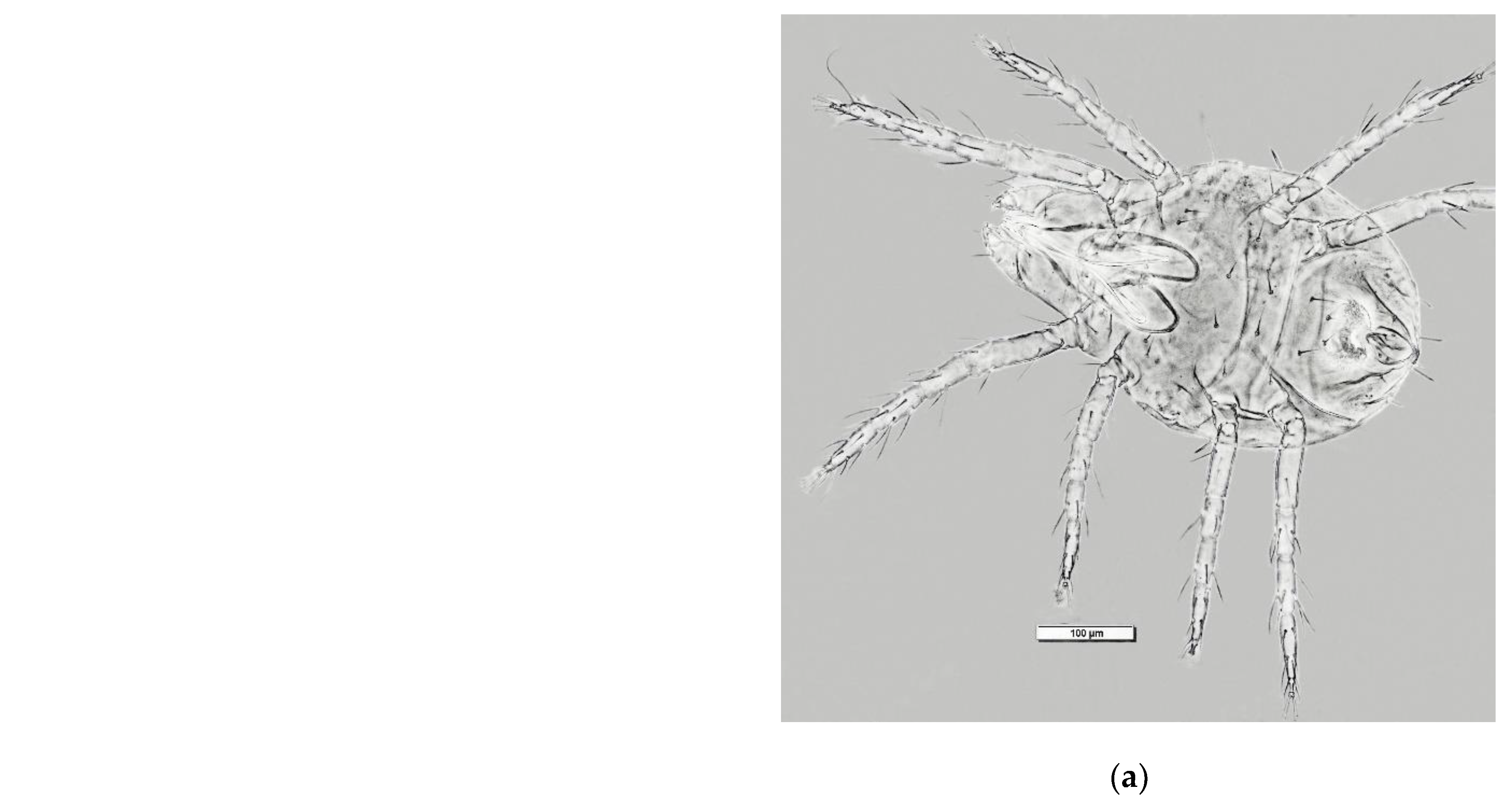
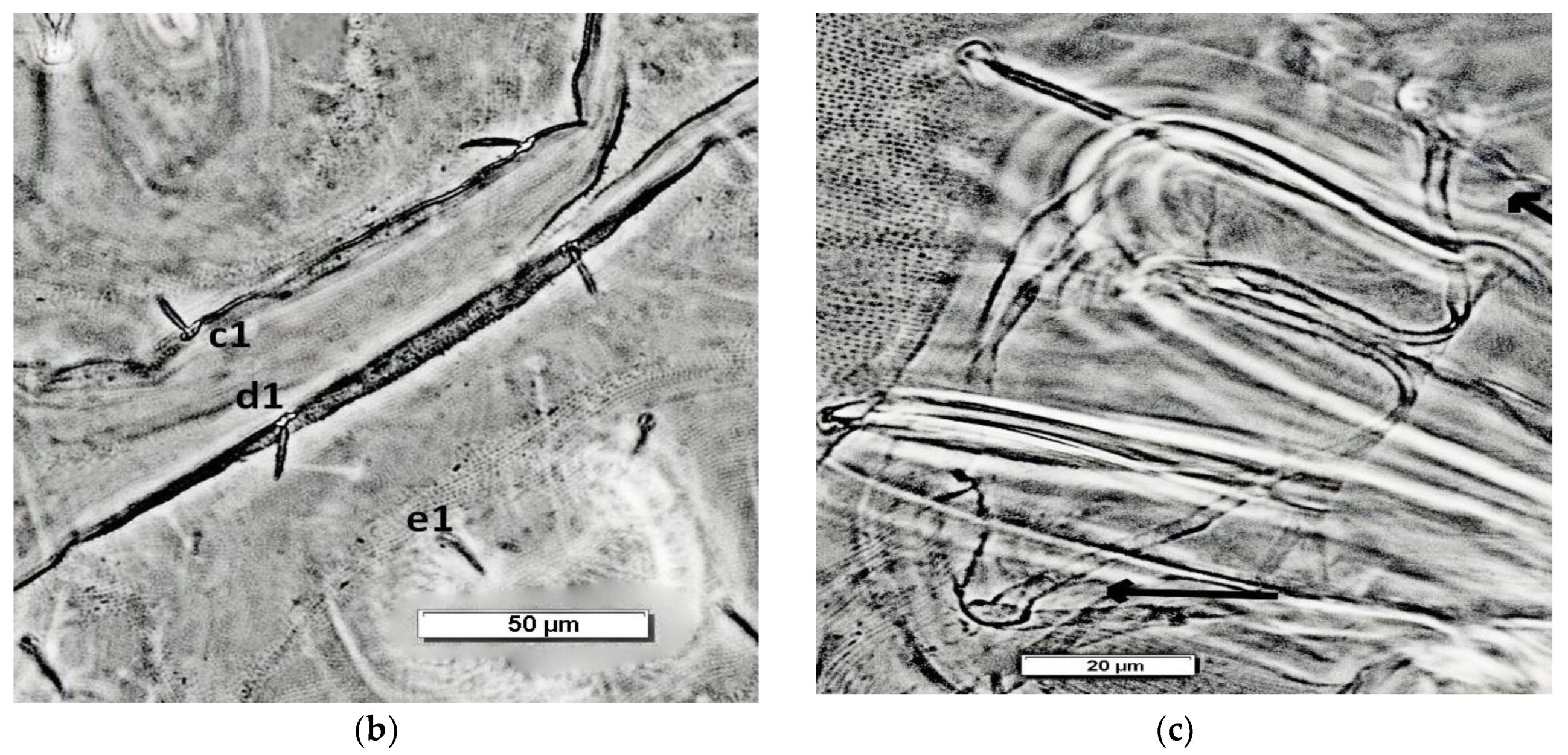
Figure 2.
Eotetranychus libocedri - Male: (a) Lateral view; (b) Aedeagus.
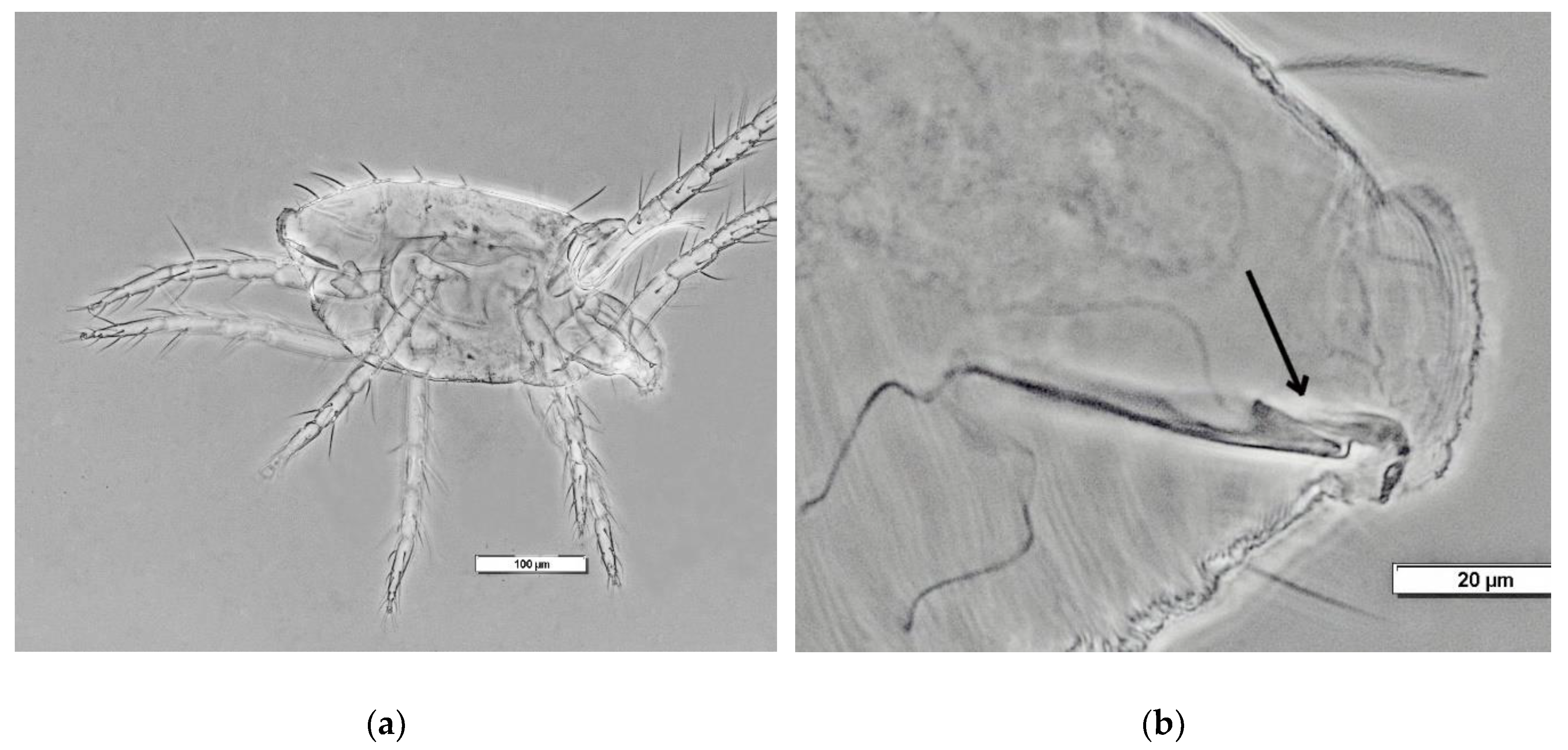
Figure 3.
Eotetranychus libocedri on Platicladus orientalis: (a) Mite colony in web; (b) Mite eggs in scales.
Figure 3.
Eotetranychus libocedri on Platicladus orientalis: (a) Mite colony in web; (b) Mite eggs in scales.
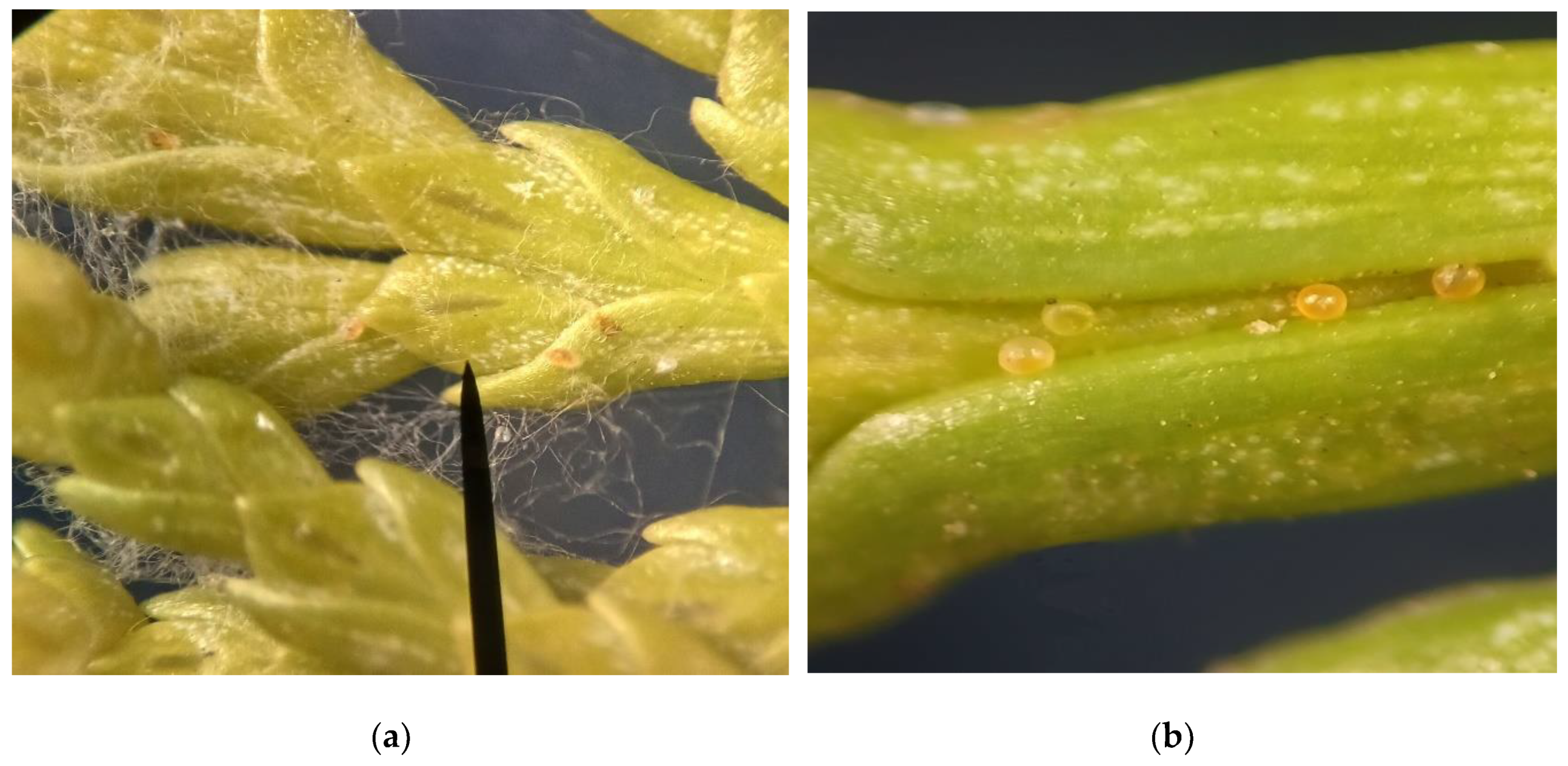
Figure 4.
Eotetranychus thujae – Female: (a) Dorsal view; (b) Dorsocentral setae: c1, d1, e1; (c) Peritremes.
Figure 4.
Eotetranychus thujae – Female: (a) Dorsal view; (b) Dorsocentral setae: c1, d1, e1; (c) Peritremes.
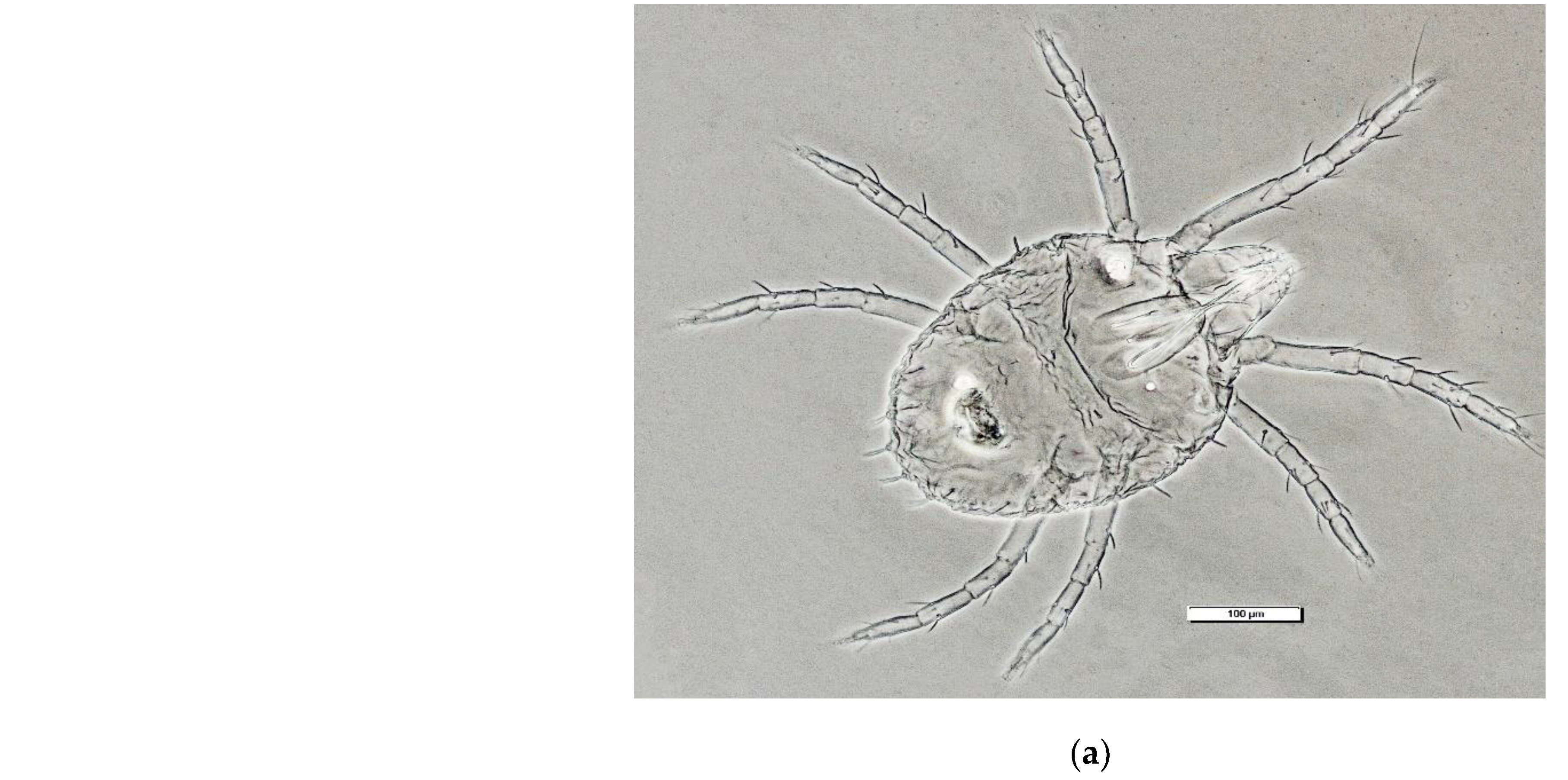
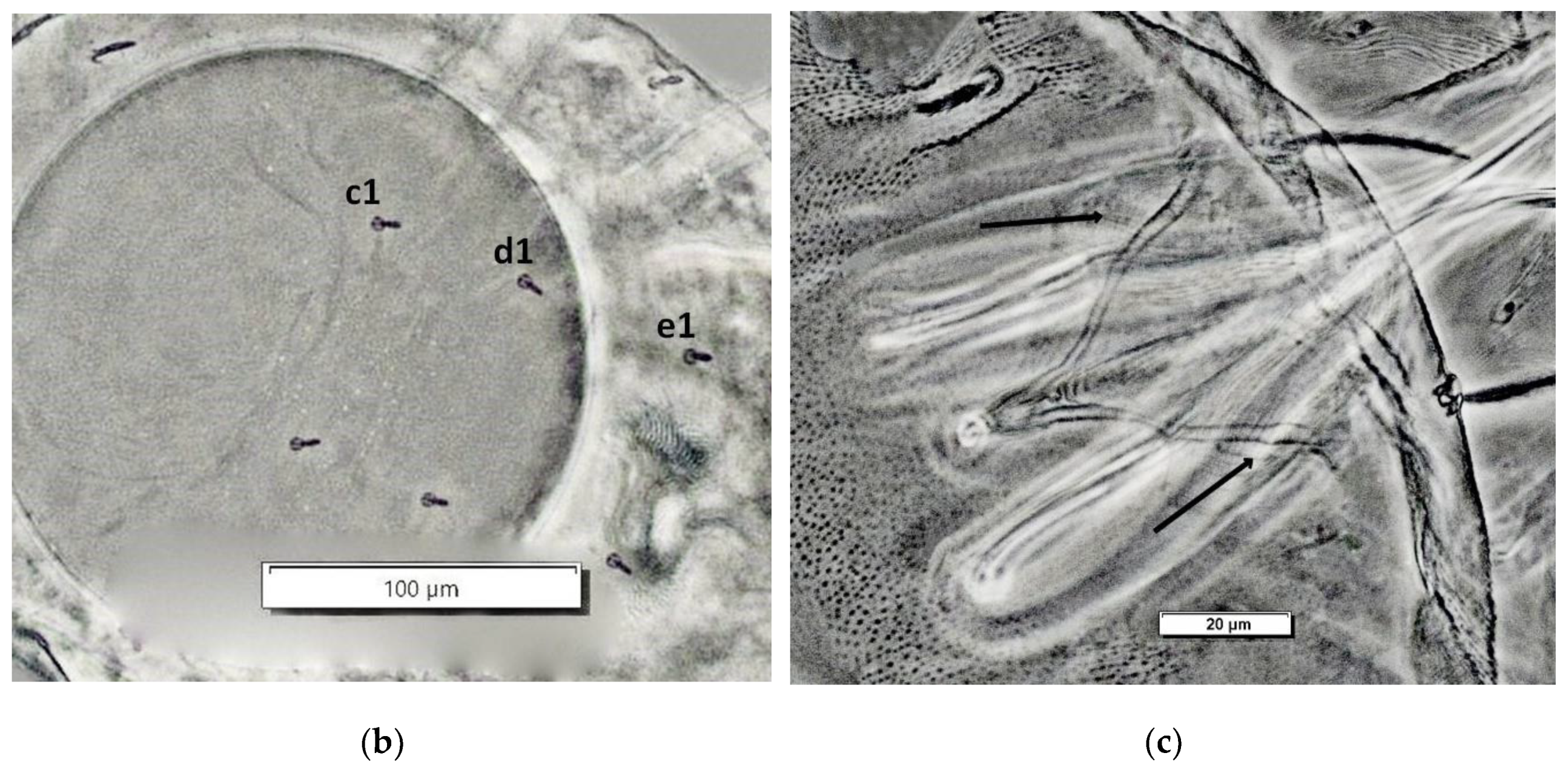
Figure 5.
Eotetranychus thujae – Male: (a) Lateral view; (b) Aedeagus.
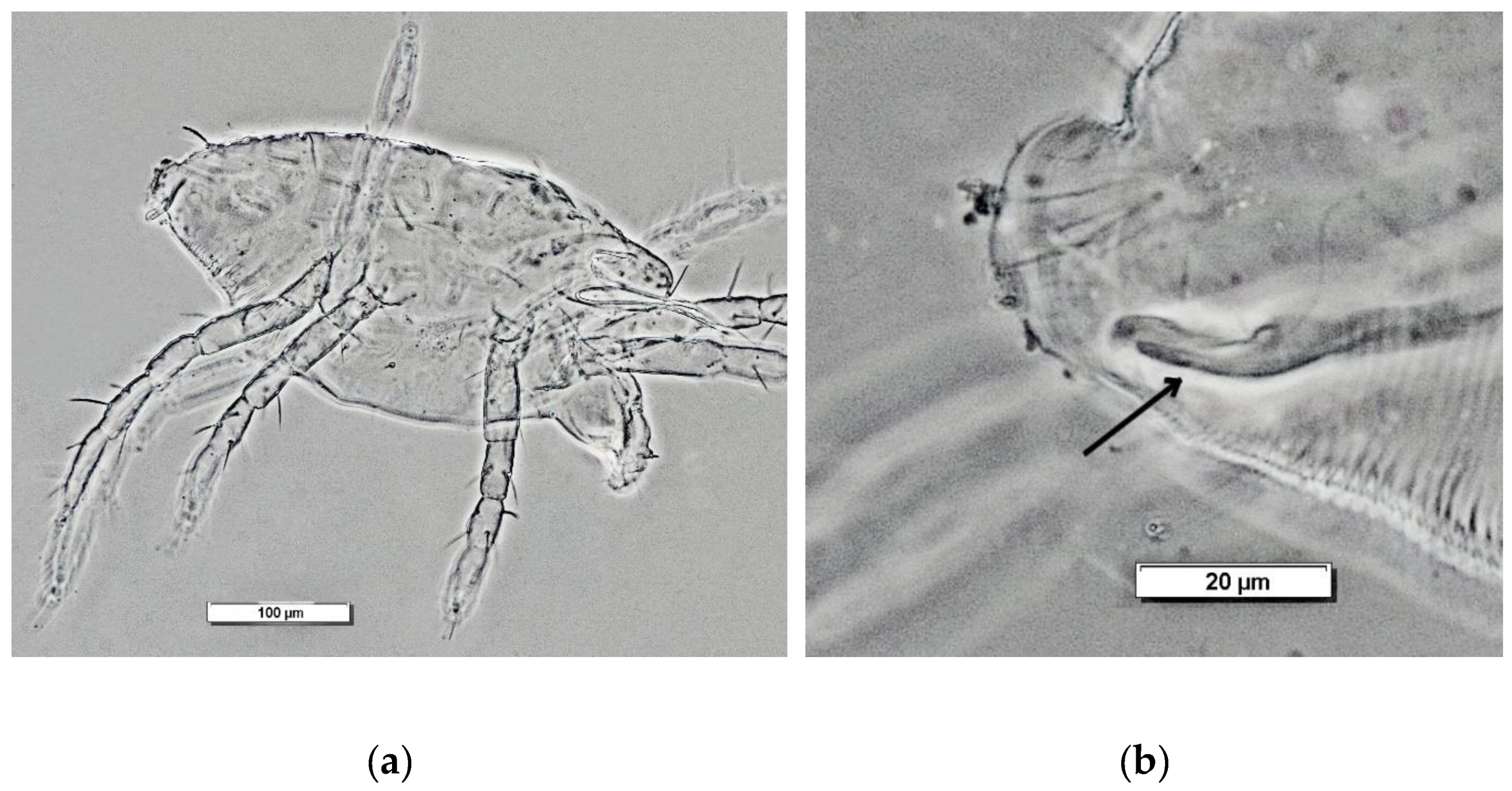
Figure 6.
Eotetranychus thujae on Thuja occidentalis: (a) Female on scale; (b) Egg on scale.
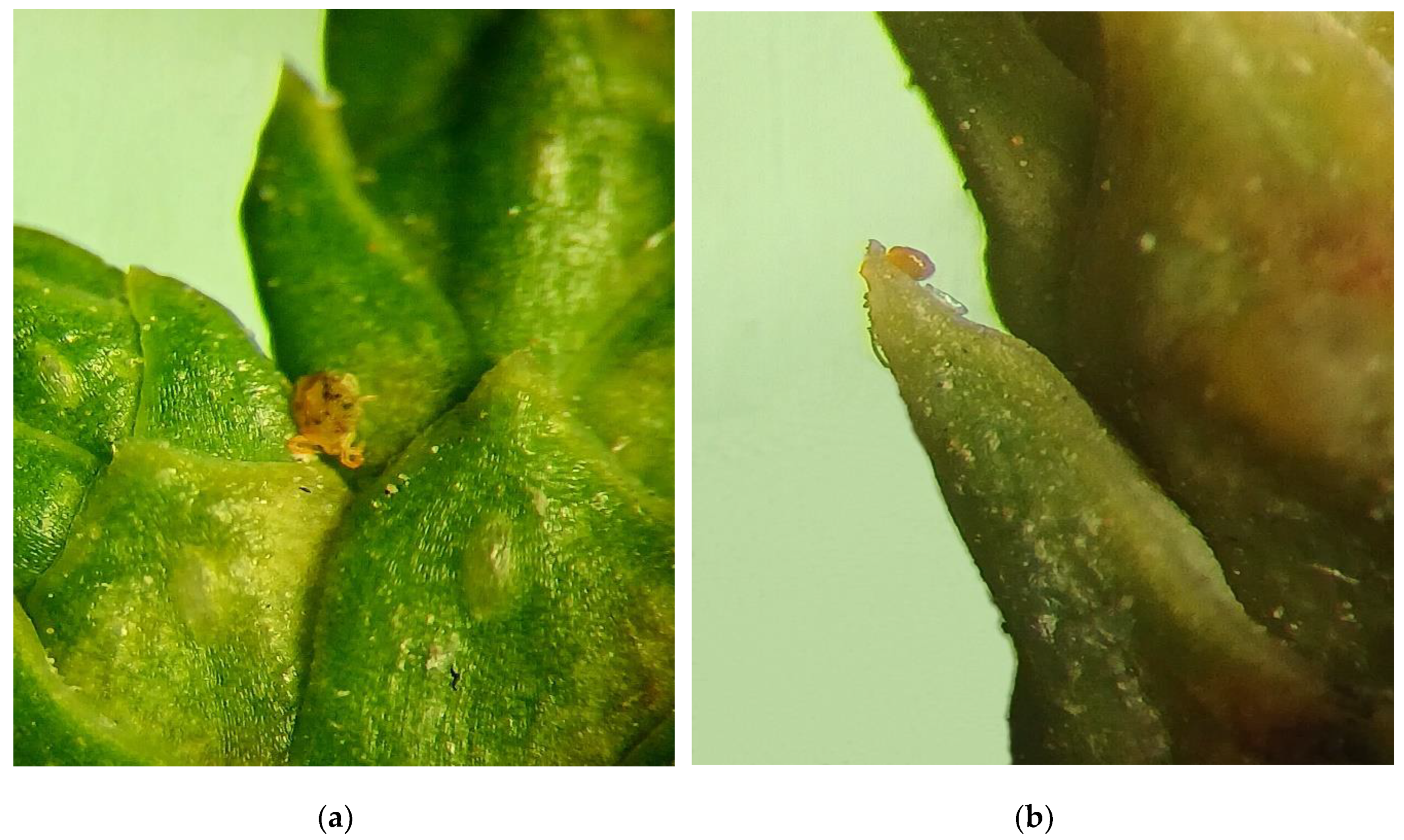

Table 1.
Sampling locations and plant species.
| Sample code | Plant species |
Locality Geographical coordinates |
Date | Sample origin |
| 1 | Platycladus orientalis | Rušanj, Belgrade area 44°40'57.1"N, 20°26'21.5"E |
22/08/2024 | school yard |
| 2 | Dobanovci, Belgrade area 44°49'52.8"N, 20°13'58.5"E |
22/08/2024 | city street, ornamental row | |
| 3 | Ušće, Belgrade area 44°48'54.3"N, 20°26'44.7"E |
22/08/2024 | city park | |
| 4 | Niš area 43°19'45.6"N, 21°53'20.5"E |
13/09/2024 | hotel park | |
| 5 | Thuja occidentalis | Dobanovci, Belgrade area 44°49'52.8"N, 20°13'58.5"E |
22/08/2024 | city street, ornamental row |
| 6 | Badanj, Raška Mt. Kopaonik 43°16'26.7"N, 20°47'02.3"E |
05/09/2024 | home yard | |
| 7 | Cupressus × leylandii | Bubanj, Niš area 43°23'00.7"N, 21°48'32.7"E |
13/09/2024 | school yard |
Table 2.
Eotetranychus libocedri and Eotetranychus thujae on plants and number of counted and examined individuals.
Table 2.
Eotetranychus libocedri and Eotetranychus thujae on plants and number of counted and examined individuals.
| Sample code | Spider mite species | Plant species | Number of counted individuals | Number of examined individuals |
||||
| active stages |
eggs | female | male | nymph | ||||
| 1 | Eotetranychus libocedri | Platycladus orientalis | 156 | 188 | 11 | 6 | 2 | |
| 2 | 2 | 10 | 5 | 2 | 1 | |||
| 3 | 3 | 16 | 1 | 2 | 4 | |||
| 4 | 23 | 193 | 8 | 2 | / | |||
| 5 | Thuja occidentalis | 1 | 7 | 5 | 1 | 2 | ||
| 7 | Cupressus × leylandii | 2 | 2 | 11 | 4 | / | ||
| 6 | Eotetranychus thujae | Thuja occidentalis | 18 | 13 | 10 | 2 | 1 | |
Disclaimer/Publisher’s Note: The statements, opinions and data contained in all publications are solely those of the individual author(s) and contributor(s) and not of MDPI and/or the editor(s). MDPI and/or the editor(s) disclaim responsibility for any injury to people or property resulting from any ideas, methods, instructions or products referred to in the content. |
© 2026 by the authors. Licensee MDPI, Basel, Switzerland. This article is an open access article distributed under the terms and conditions of the Creative Commons Attribution (CC BY) license (http://creativecommons.org/licenses/by/4.0/).
Copyright: This open access article is published under a Creative Commons CC BY 4.0 license, which permit the free download, distribution, and reuse, provided that the author and preprint are cited in any reuse.


