
Preprint
Article

This version is not peer-reviewed.

A Retrospective Study Evaluating the Efficacy and Safety of Oral Semaglutide Compared to Injectables in Controlling Diabetes and Weight Reduction

Submitted:

13 April 2026

Posted:

14 April 2026

You are already at the latest version

Abstract

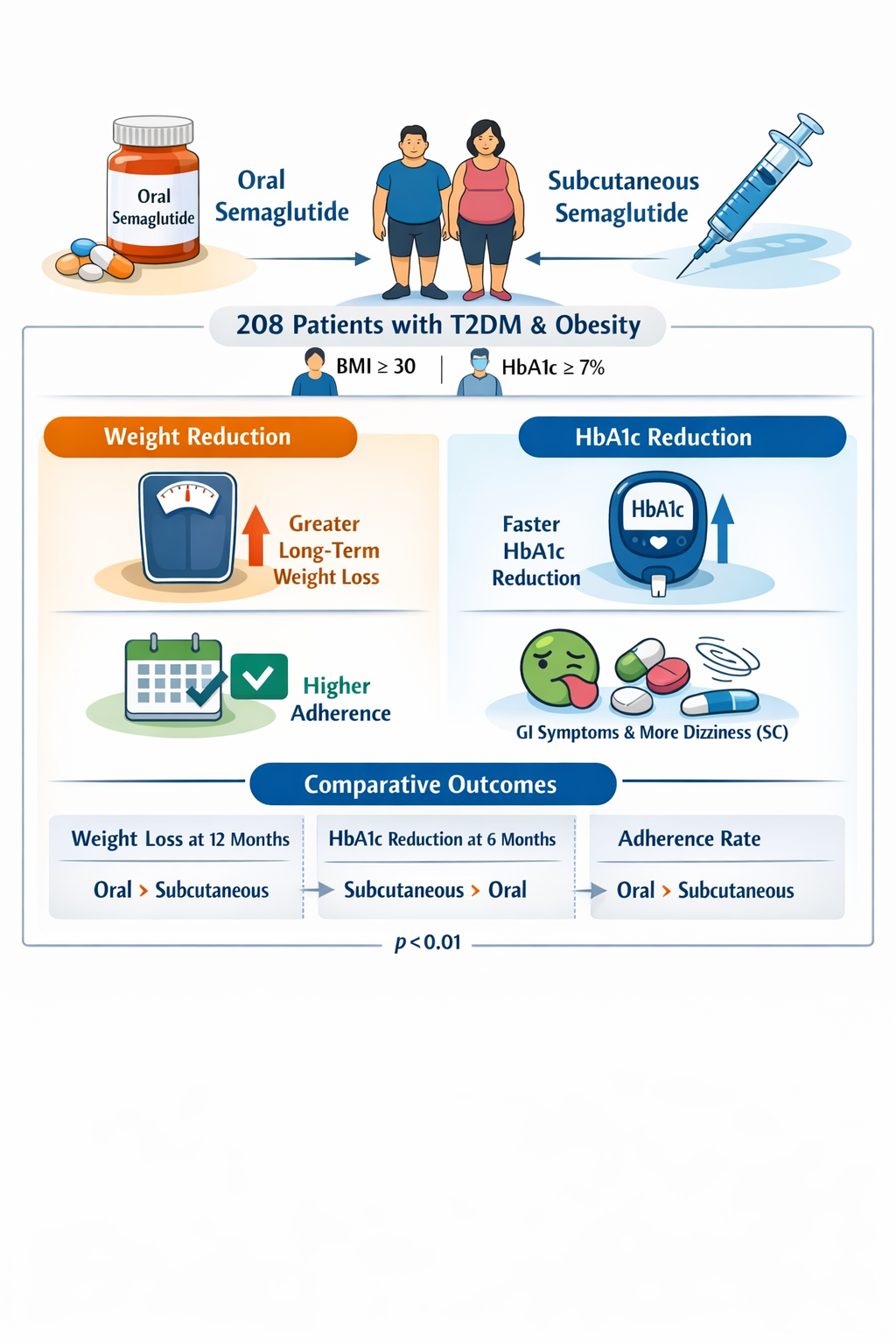
Objective: To compare the efficacy, safety, weight reduction and treatment adherence of oral versus subcutaneous semaglutide in adults with uncontrolled T2DM and obesity. Methods: A multicenter retrospective cohort study was conducted between January 2023 and January 2024. Adult patients (≥18 years) with T2DM (HbA1c ≥ 7%) and obesity (BMI ≥ 30) who received either oral or subcutaneous semaglutide were included. Demographic, clinical, and biochemical variables including body weight, BMI, HbA1c, side effects, and adherence were extracted from electronic medical records. Adverse effects were categorized by severity. Comparative analyses between groups used Chi-square and Mann Whitney U tests, with p<0.05 considered statistically significant. Results: A total of 208 patients were included: 89 on oral semaglutide and 119 on subcutaneous semaglutide. Baseline demographics, including gender, age, and physical activity, were comparable between groups (all p>0.05). The severity of adverse effects predominantly gastrointestinal symptoms such as nausea, vomiting, constipation, and diarrhea did not differ significantly between groups (p=0.994). However, dizziness was significantly more frequent in the subcutaneous group (p = 0.04). Adherence was markedly higher with oral semaglutide (p<0.05), with cost identified as the primary barrier among oral users, while subcutaneous users more frequently cited side effects, forgetfulness, and limited weight loss. Weight reduction was comparable at 3 months (p=0.23), but significantly greater with oral semaglutide at 6, 9, and 12 months (all p<0.01). Conversely, HbA1c reduction favored subcutaneous semaglutide at 3 and 6 months (p=0.03 and 0.02), although baseline glycemic control was similar. Conclusions: This study demonstrates that while subcutaneous semaglutide may provide a faster early HbA1c decline, oral semaglutide offers superior long-term weight reduction and significantly better adherence, likely attributable to easier administration. Both formulations exhibited comparable safety profiles.
Keywords: 
;  ;  ;  

1. Introduction

Insulin resistance and β-cell dysfunction are hallmarks of type 2 diabetes mellitus (T2DM), a progressive metabolic disease that is often associated with obesity. When combined, these illnesses raise the global rate of cardiovascular morbidity and death. To stop the progression of the disease and its complications, effective glycemic control and weight management remain crucial objectives. Glucagon-like peptide-1 receptor agonists (GLP-1 RAs) have become a mainstay in the treatment of type 2 diabetes over the last ten years, providing advantages over conventional antidiabetic medications in terms of weight loss, glycemic control, and cardiometabolic effects [1,2]. In both injectable and oral forms, Semaglutide, a potent, long-acting GLP-1 RA, has demonstrated notable efficacy in improving glycemic control and promoting weight loss [3]. The oral form, created using absorption enhancer SNAC technology, was assessed in the PIONEER trials [4], whereas the subcutaneous formulation was initially presented and validated in the SUSTAIN clinical trial program. By potentially increasing treatment adherence among patients who are reluctant to use injections, oral Semaglutide, the first GLP-1 RA to be made available in tablet form, offers a significant advancement in the treatment of diabetes [5].
There is still a dearth of empirical data comparing oral and subcutaneous Semaglutide, despite these encouraging findings. Clinical outcomes in routine practice may be impacted by variations in adherence, side-effect profile, and cost-effectiveness, even though both forms demonstrate similar efficacy in controlled trials [6]. Long-term glycemic control is largely determined by adherence to treatment, but this is frequently jeopardized by factors such as side effects, cost, forgetfulness, or perceived ineffectiveness [7]. Additionally, gastrointestinal (GI) side effects such as nausea, vomiting, diarrhea, and constipation are known to occur with GLP-1 RAs and may impact treatment persistence [8].
Apart from tolerability, preclinical and clinical studies have raised concerns about thyroid and pancreatic safety, warranting ongoing post-marketing monitoring [9]. Furthermore, because cost and lack of insurance coverage can significantly affect access and adherence, the economic implications of using oral versus injectable GLP-1 RAs are increasingly significant [10]. To inform formulary and policy decisions, it is crucial to assess the cost-effectiveness of oral Semaglutide, particularly in practical contexts.
Given this, the goal of the current study was to compare oral and subcutaneous Semaglutide in T2DM patients. Assessing the safety profile of oral Semaglutide compared with the subcutaneous formulation and determining how well it controls blood glucose and aids weight loss, were the main goals. The following were the secondary goals: (1) determining whether oral Semaglutide was cost-effective based on weight loss and medical expenses; (2) assessing patient compliance with treatment; (3) examining side effects, especially those related to the Gastrointestinal tract and to the central nervous system ; and (4) stressing the significance of follow-up in reducing serious adverse events.
This study aims to support evidence-based clinical pharmacy practice and inform treatment optimization for patients with type 2 diabetes by providing clinically relevant insights into the safety, effectiveness, and practical applicability of oral Semaglutide compared with its injectable counterpart.

2. Materials and Methods

The Materials and Methods should be described with sufficient details to allow

2.1. Design and Setting

A multicenter retrospective study was conducted, and participants data were collected from private and government hospitals in Saudi Arabia between January 2023 and January 2024. The study protocol was ethically reviewed and approved by the Standing Committee for Scientific Research of the Institutional Review Board of the Health Affairs in Almadinah (No:H-03-M-84)

2.2. Population

Male and female adults aged 18 years and older, from the general population of Saudi Arabia, who have inadequately controlled type 2 diabetes (HbA1c ≥ 7%) and obesity (BMI ≥ 30), all presenting high-risk characteristics, were included. Pediatric and pregnant Participants, non-diabetic & non-obese individuals (BMI < 30), and those with psychiatric disorders were excluded.

2.3. Sampling and Tools

Data from electronic medical records were retrospectively collected and analyzed from January 2023 to January 2024. Demographic (age, gender) and relevant clinical data [body weight, body height, BMI, HbA1c, comorbidities (arterial hypertension, dyslipidemia, cardio/cerebrovascular disease)] were collected.

2.4. Pilot Study

The Data sheet underwent pilot testing with 20 randomly selected participants to assess the validity and clarity of the items. The pilot sample of participants was not included in the main study.

2.5. Statistical Methods

Data were analyzed using IBM Statistical Package for the Social Sciences (SPSS) for Windows, Version 27.0 (IBM Corp., Armonk, NY). Descriptive statistics were used to present the patterns of answers to the different questionnaire items. Factors associated with knowledge (adequate vs inadequate) and attitudes (favorable vs unfavorable) were analyzed using the chi-square test. Factors that are divided into categories were analyzed using the Mann-Whitney U test. A p-value < 0.05 was used for statistical significance.

3. Results

3.1. Sociodemographic Characteristics of Study Participants

The study included 208 patients in total: 89 received oral semaglutide and 119 received subcutaneous semaglutide. 89 (43%) of the total sample were men. The subcutaneous group's median age was 33 years, while the oral semaglutide groups was 32 years (Table 1). The chi-square test for categorical variables was used to compare baseline characteristics between the two study groups; the results indicated no statistically significant difference between the oral and subcutaneous groups for gender and physical activity (p = 0.07 and 0.29, respectively). Additionally, age was analyzed using a Mann–Whitney U test because the sample failed the normality test, and the results showed no significant difference in age distribution between the two formulations (p = 0.16) Table 1.

3.2. Clinical Findings of Study Participants

Retrospective patient records were used to assess the severity of treatment-related side effects and patient adherence. The reported adverse events were divided into three severity categories: mild, moderate, and severe. Most adverse effects were gastrointestinal (GI), including fatigue, constipation, diarrhea, and abdominal pain. A small number of patients in both treatment groups also suffered from psychological symptoms like depression and anxiety. There was no discernible difference in the intensity of side effects between the oral and subcutaneous semaglutide groups, as assessed by the appropriate statistical tests (p = 0.994). On the other hand, patients who received oral semaglutide showed significantly higher levels of adherence to therapy, most likely as a result of the convenience and ease of oral administration (Table 2).

3.3. Factors Affecting the Adherence to the Treatment

The study also examined treatment non-adherence and its possible causes, including perceived treatment efficacy (in terms of weight loss), treatment cost, side effects, and forgetfulness. The comparison of the reasons for non-adherence in the oral and subcutaneous semaglutide groups is shown in Figure 1. Patients in the oral semaglutide group showed better adherence than those receiving subcutaneous therapy, according to the analysis. Non-adherence among subcutaneous users was primarily linked to forgetfulness, side effects, and insufficient weight loss. On the other hand, treatment cost was the main cause of non-adherence among oral users (Figure 1). These results suggest that increased weight loss among oral semaglutide users may have improved their adherence. However, the absence of oral semaglutide in the current health insurance system may be driving the rise in non-adherence among oral users due to cost, thereby increasing patients' out-of-pocket expenses.

3.4. Therapeutic Effect of Semaglutide Formulations on Body Weight and HbA1c

Up until the third month, there was no statistically significant difference in weight loss between patients receiving oral and subcutaneous semaglutide, according to the analysis of treatment efficacy (p = 0.23). However, as shown in Table 3, patients treated with the oral formulation showed a significant decrease in body weight compared to the subcutaneous group at month 6, month 9, and the end of the study period (p < 0.01). HbA1c levels, which are a measure of glycemic control, showed no discernible difference between the two treatment groups at baseline. However, as indicated in Table 4, further analysis using the Chi-square test revealed that patients in the subcutaneous semaglutide group had a significant decrease in HbA1c following three and six months of treatment (p < 0.05).

3.5. Reported Side Effects in Both Test Groups

The majority of the treatment-related side effects reported by study participants were gastrointestinal (GI). GI symptoms such as nausea, vomiting, diarrhea, constipation, and abdominal pain were frequently reported. Patients also reported headaches, joint pain, fatigue, dizziness, hypoglycemia, and psychological symptoms like anxiety and depression. The subcutaneous semaglutide group experienced a significantly higher frequency of dizziness than the oral semaglutide group, according to analysis using the Chi-square test (p = 0.04). As shown in Table 5, the difference between the two formulations was not statistically significant (p > 0.05) for any other negative effects.

4. Discussion

This retrospective, multicenter cohort study provides nuanced insights into the real-world comparative performance of oral versus subcutaneous semaglutide in adults with type 2 diabetes mellitus (T2DM) and obesity. The findings extend pivotal trial data by integrating adherence, cost-related barriers, and long-term clinical outcomes in a diverse Saudi Arabian population.
The baseline comparability of patients receiving oral and subcutaneous semaglutide in this cohort substantiates the validity of subsequent efficacy and safety comparisons. Among 208 adults with type 2 diabetes and obesity, the proportions of male participants in the oral and injectable arms did not differ significantly (p = 0.07).
Median ages were likewise well matched, reflecting the demographic profile of the Saudi Arabian real-world setting [11,12]. Moreover, rates of regular physical activity were similar, indicating balanced lifestyle backgrounds that could otherwise confound treatment-related weight and glycemic outcomes.
The predominance of gastrointestinal symptoms aligns with the established safety profile of semaglutide across both formulations. In the SUSTAIN-7 trial, rates of GI adverse events with once-weekly subcutaneous semaglutide dosing were predominantly mild to moderate in severity [13]. The present study found no significant difference in overall side-effect severity between oral and injectable groups, reinforcing the notion that the route of administration does not materially alter the tolerability profile of semaglutide. The study’s effectiveness data, however, reveal clear differences between formulations in both glycemic control and weight loss. In glycemic control, early HbA1c reduction favored the injectable formulation. These real-world findings mirror the phase III SUSTAIN (subcutaneous) and PIONEER (oral) programs, in which once-weekly injectable semaglutide reduced HbA1c by 1.5–1.8% and once-daily oral semaglutide by 1.0–1.4%, respectively [14]. On the other hand, oral semaglutide delivers more durable weight loss, advantages that mirror clinical-trial efficacy profiles but are magnified in routine practice by the markedly higher adherence to the pill formulation.
Adherence was markedly higher with oral semaglutide versus the subcutaneous form, despite similar side-effect severity (P << 0.05). This aligns with real-world evidence indicating that the route of administration is a key determinant of persistence with GLP-1 receptor agonists [15]. The convenience of oral dosing likely drove superior adherence, although out-of-pocket cost emerged as the predominant barrier among oral users, underscoring the need for formulary inclusion and insurance coverage in similar healthcare systems.
Non-adherence among subcutaneous semaglutide users was predominantly attributed to forgetfulness, treatment-emergent side effects, and perceived insufficient weight loss.
In contrast, the principal driver of non-adherence in the oral semaglutide group was treatment cost, reflecting the lack of insurance coverage for this formulation in the study setting. This phenomenon is consistent with the World Health Organization’s recognition of out-of-pocket medication costs as a critical barrier to long-term adherence to therapy, especially in middle-income countries [16]. Similarly, Cramer et al. identified cost burden as a major factor in the non-persistence of novel antidiabetic agents, underscoring the need for formulary inclusion and patient assistance programs to mitigate financial obstacles [17].
The present analysis demonstrates distinct temporal patterns in weight loss and glycemic control between oral and subcutaneous semaglutide, largely reflecting differences in formulation pharmacokinetics, patient adherence, and cumulative drug exposure.
Initial weight loss was comparable between the two formulations. However, oral semaglutide produced larger, more durable reductions that were maintained throughout the 12-month period, echoing the PIONEER trials’ demonstration of enhanced long-term weight loss versus placebo and active comparators [11,13,18], likely reflecting higher real-world adherence. Similarly, Kesavadev et al. reported a mean weight decline of 4.8 kg at 6 months with oral semaglutide in a real-world Indian cohort. These results suggest that long-term weight benefit may accrue more robustly with consistent oral dosing and higher adherence [15].
Baseline HbA1c distributions were analogous across both cohorts; however, the subcutaneous formulation induced a modestly accelerated decline in HbA1c during the early treatment phase. This effect aligns with data from both SUSTAIN 6 and PIONEER 6 cardiovascular outcome trials, in which subcutaneous and oral semaglutide reduced HbA1c by 1.3–1.5% at 26 weeks versus placebo [12,19]. Notably, by 12 months, adherence advantages of the oral form may narrow this early gap, suggesting a sequential strategy of initial injectable induction followed by oral maintenance in select patients.
Gastrointestinal adverse events predominated in both groups, consistent with the known GLP-1 receptor agonist class effect, and occurred at comparable frequencies (p > 0.05). Notably, dizziness was more frequent with the injectable form; this finding aligns with a post hoc analysis of SUSTAIN-6, which reported dizziness in 12% of subcutaneous semaglutide recipients versus 7% of placebo recipients, suggesting a formulation- or administration-related effect [12]. GI symptoms, including nausea, vomiting, diarrhea, constipation, and abdominal pain, were the most commonly reported side effects in both groups. Psychological symptoms (anxiety/depression) trended higher in the subcutaneous cohort but did not reach statistical significance (p = 0.05). Overall, the safety profile in this Saudi Arabian cohort aligns with global experience, in which semaglutide is generally well tolerated with transient GI events as the main limitation [18].
These findings support individualized therapy selection: subcutaneous semaglutide may be prioritized for patients requiring rapid HbA1c reduction, while oral semaglutide offers a patient-centric option with superior long-term weight control and adherence. Policymakers should address the reimbursement gap to reduce financial barriers and thereby optimize the therapeutic potential of oral GLP-1 RAs.
While the manuscript appropriately highlights key limitations, notably its retrospective design, potential unmeasured confounding, missing data, and cost-related non-adherence among oral users which highlights the urgent need for reimbursement strategies to maximize therapeutic benefits, but it also possesses several important strengths that bolster the validity and clinical applicability of its findings such as Multicenter, Real-World Cohort Design in which 208 adults were included across seven tertiary centers in Saudi Arabia which provides a broad, heterogeneous patient sample reflective of everyday clinical practice rather than the highly selected populations of randomized trials. Moreover, Comparable demographics and clinical profiles between groups (all p > 0.05) reduce baseline confounding and strengthen causal inferences regarding formulation-driven outcomes. [18,19]
Additionally, the observed early glycemic advantage of subcutaneous administration suggests a potential role for initial injectable therapy in patients requiring rapid HbA1c reduction, followed by oral maintenance in those with stable renal function and no contraindications.

5. Conclusions

In conclusion, oral semaglutide offers a patient-friendly, adherent alternative to injectable therapy, yielding superior long-term weight reduction and comparable safety, while subcutaneous semaglutide may deliver marginally faster glycemic improvements. By translating these real-world insights into rigorous prospective studies and targeted clinical pathways, stakeholders can optimize the therapeutic value of both oral and subcutaneous semaglutide, maximizing patient outcomes while informing evidence-based policy.

Author Contributions

ZU: Conceptualization, Writing, Visualization, Validation, Resources, Project administration, Methodology, Investigation, Writing – review & editing, HKG and SHA : Formal analysis, Data curation, Writing, original draft, MA and AA: Software, Resources, Methodology, Investigation, Formal analysis, Data curation, MA: Resources, Methodology, Data curation, Formal analysis, Investigation, GA, SIA and AMSA Project administration, Validation, Visualization, Writing. SIA and JSA: Data curation, Formal analysis, Investigation, Resources, Validation, Writing-original draft. We confirm that the manuscript has been read and approved for submission by all the authors.

Funding

This research received no external funding.

Institutional Review Board Statement

The study was conducted in accordance with the Declaration of Helsinki, and approved by the Institutional Review Board of GENERAL DIRECTORATE OF HEALTH AFFAIRS, MADINAH, KSA (protocol code 24-133 and 11.12.2024.

Acknowledgments

The authors are thankful to the hospitals who participated in this study and play role in data collection. The authors are also thankful to Buraydah Colleges for providing support platform for this study.

Conflicts of Interest

The authors declare no conflicts of interest, including financial interests, about the subject matter discussed in this study.

Abbreviations

The following abbreviations are used in this manuscript:
T2DM Type 2 Diabetes Mellitus
HbA1c Glycated Hemoglobin
BMI Body Mass Index
GI Gastrointestinal
GLP-1 RA Glucagon-Like Peptide-1 Receptor Agonist
GLP-1 RAs Glucagon-Like Peptide-1 Receptor Agonists
SNAC Sodium N-(8-[2-hydroxybenzoyl] amino) caprylate
SPSS Statistical Package for the Social Sciences
IBM International Business Machines
NY New York
χ² Chi-square test
p Probability value
Sc Subcutaneous
CNS Central Nervous System
IQ Interquartile Range (Note: should be IQR in standard reporting)
yrs Years
NB Nota Bene (Note)

References

  1. Xie, Y; Choi, T; Al-Aly, Z. GLP-1 receptor agonists in diabetes management: expanding therapeutic potential. Nat Med. 2025, 31(2), 240–8. [Google Scholar]
  2. Wilding, JPH; Batterham, RL. Mechanisms and clinical implications of GLP-1 receptor agonists in obesity and diabetes. Lancet Diabetes Endocrinol. 2024, 12(1), 45–58. [Google Scholar]
  3. Davies, MJ; et al. Semaglutide as a new option for the treatment of type 2 diabetes. Diabetes Care 2024, 47(3), 560–72. [Google Scholar]
  4. Zinman, B; Bain, SC; et al. Oral semaglutide in type 2 diabetes: the PIONEER clinical trial program. Lancet 2023, 402(10398), 2145–56. [Google Scholar]
  5. Nauck, MA; Meier, JJ. Oral GLP-1 receptor agonists: a new frontier in diabetes therapy. Nat Rev Endocrinol. 2025, 21(4), 320–33. [Google Scholar]
  6. Frontiers in Endocrinology. Oral semaglutide for the treatment of obesity: a real-world retrospective study. Front Endocrinol (Lausanne) 2024, 15, 1593334. [Google Scholar]
  7. Peyrot, M; et al. Patient adherence to diabetes therapy: barriers and strategies. Diabet Med. 2024, 41(2), 210–20. [Google Scholar]
  8. Pratley, RE; et al. Safety and tolerability of semaglutide across clinical trials. Clin Ther. 2023, 45(7), 1193–207. [Google Scholar]
  9. Marso, SP; et al. Cardiovascular and safety outcomes with semaglutide. N Engl J Med. 2024, 391(6), 490–503. [Google Scholar]
  10. Ahmed, A; et al. Cost-effectiveness of oral semaglutide versus injectable GLP-1 RAs in type 2 diabetes. Diabetes Obes Metab. 2025, 27(5), 1011–20. [Google Scholar]
  11. Husain, M.; Birkenfeld, A.L.; Donsmark, M.; Dungan, K.; Eliaschewitz, F.G.; Franco, D.R.; Jeppesen, O.K.; Lingvay, I.; Mosenzon, O.; Pedersen, S.D. Oral semaglutide and cardiovascular outcomes in patients with type 2 diabetes. New England Journal of Medicine 2019, 381, 841–851. [Google Scholar] [CrossRef] [PubMed]
  12. Marso, S.P.; Bain, S.C.; Consoli, A.; Eliaschewitz, F.G.; Jódar, E.; Leiter, L.A.; Lingvay, I.; Rosenstock, J.; Seufert, J.; Warren, M.L. Semaglutide and cardiovascular outcomes in patients with type 2 diabetes. New England Journal of Medicine 2016, 375, 1834–1844. [Google Scholar] [CrossRef] [PubMed]
  13. Pratley, R.; Amod, A.; Hoff, S.T.; Kadowaki, T.; Lingvay, I.; Nauck, M.; Pedersen, K.B.; Saugstrup, T.; Meier, J.J. Oral semaglutide versus subcutaneous liraglutide and placebo in type 2 diabetes (PIONEER 4): a randomised, double-blind, phase 3a trial. The Lancet 2019, 394, 39–50. [Google Scholar] [CrossRef] [PubMed]
  14. Meier, J.J. Efficacy of Semaglutide in a Subcutaneous and an Oral Formulation. Frontiers in Endocrinology 2021, 12. [Google Scholar] [CrossRef] [PubMed]
  15. Kesavadev, J.; Shankar, A.; Saboo, B.D.; Ashik, A.; Naina, J.; Jothydev, K.; Basanth, A.; RAJ K, S.; Jothydev, S. 1708-P: Effect of Oral Semaglutide in Glycemic Control and Weight Reduction for People with Type 2 Diabetes Mellitus Having a BMI≥ 25 kg/m2—A Six-Month Real-World Study. Diabetes 2024, 73, 1708–P. [Google Scholar] [CrossRef]
  16. Sabaté, E. Adherence to long-term therapies: evidence for action; World health organization, 2003. [Google Scholar]
  17. Cramer, J.; Benedict, A.; Muszbek, N.; Keskinaslan, A.; Khan, Z. The significance of compliance and persistence in the treatment of diabetes, hypertension and dyslipidaemia: a review. International journal of clinical practice 2008, 62, 76–87. [Google Scholar] [CrossRef] [PubMed]
  18. Thethi, T.K.; Pratley, R.; Meier, J.J. Efficacy, safety and cardiovascular outcomes of once-daily oral semaglutide in patients with type 2 diabetes: the PIONEER programme. Diabetes, Obesity and Metabolism 2020, 22, 1263–1277. [Google Scholar] [CrossRef] [PubMed]
  19. Bain, S.C.; Belmar, N.; Hoff, S.T.; Husain, M.; Rasmussen, S.; Vilsbøll, T.; Petrie, M.C. Cardiovascular, Metabolic, and Safety Outcomes with Semaglutide by Baseline Age: Post Hoc Analysis of SUSTAIN 6 and PIONEER 6. Diabetes Therapy 2025, 16, 15–28. [Google Scholar] [CrossRef] [PubMed]
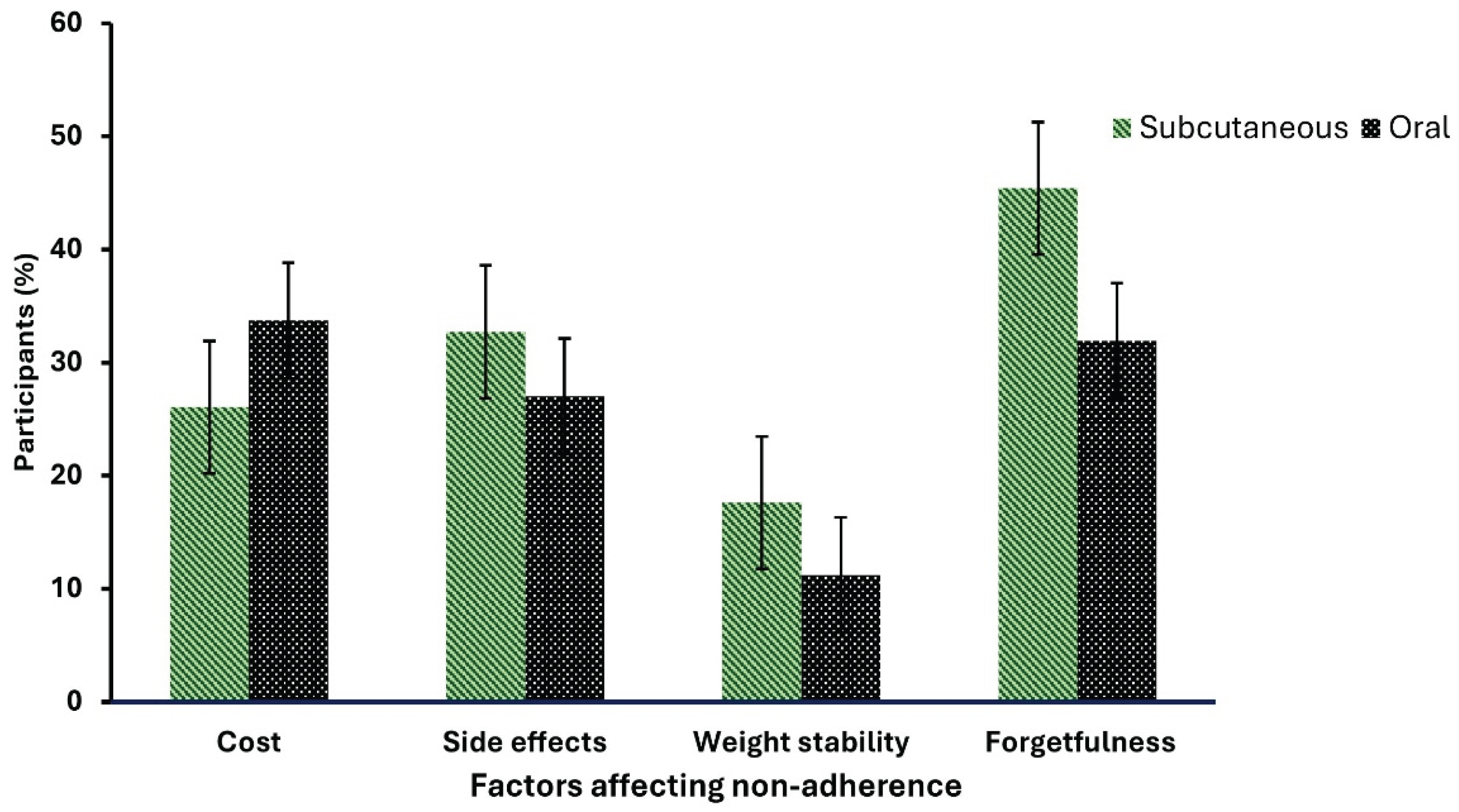
Figure 1. Comparison of factors contributing to medication non-adherence for the participants receiving subcutaneous vs. oral therapy. The most frequent barrier was forgetfulness, particularly in the subcutaneous group, followed by side effects and cost. Weight stability was the least reported factor in both groups. Data are presented as percentages of participants, with error bars indicating variability (± standard deviation).
Preprints 208169 g001
Table 1. Baseline characteristics of the study participants.
Variable Oral Subcutaneous P value
Gender
Male (%) 44 (49.4) 45 (37.8) P = 0.07
Female (%) 45 (50.6) 74 (62.2)
Age
Range (yrs) 14-64
IQ (yrs) 22.5-39 P = 0.16
Median (yrs) 32
Exercise status
Yes (%) 9 (10.1) 18 (15.1) P = 0.29
No (%) 80 (89.9) 101 (84.9)
NB: p-values were calculated from Chi-square (χ2) or Mann Whitney test.
Table 2. Comparison between side effects and patient adherence in the study groups.
Variable Oral
Count (%)
Subcutaneous
Count (%)
P value
Severity of side effects
Mild 27 (30.3 %) 37 (31.2 %)
P = 0.994
Moderate 37 (41.6 %) 49 (41.2 %)
Severe 25 (28.1%) 34 (28.6 %)
Patient adherence (Categories of dose missing)
Yes 5 (5.6 %) 109 (91.6 %)
P << 0.05*
May be 14 (15.7 %) 2 (1.7 %)
No 70 (78.7 %) 8 (6.7 %)
NB: p-values were calculated from Chi-square (χ2).
Table 3. Body weight reduction through treatment course.
Treatment period
3 months 6 months 9 months 12 months
Weight
reduction per treatment group
Oral
Count (%)
Sc
Count (%)
Oral
Count (%)
Sc
Count (%)
Oral
Count (%)
Sc
Count (%)
Oral
Count (%)
Sc
Count (%)
No 0 3 (2.5) 2 (2.2) 0 2 (2.2) 0 0 0
0.1-5 14 (15.7) 20 (16.8) 0 6 (5) 0 6 (5) 2 (2.2) 6 (5)
5.1-10 36 (40.5) 38 (31.9) 2 (2.2) 0 2 (2.2) 0 0 0
10.1-15 38 (42.7) 52 (43.7) 9 (10.1) 107 (90) 9 (10.1) 107 (90) 11 (12.4%) 95 (79.9)
15.1-20 1 (1.1%) 6 (5.1) 76 (85.5) 6 (5) 76 (85.5) 6 (5) 58 (65.2) 13 (10.95)
>20 0 0 0 0 0 0 18 (20.2) 5 (4.2)
p-value 0.23 << 0.01 << 0.01 << 0.01
NB: p-values were calculated from Chi-square (χ2).
Table 4. HbA1c reduction through treatment course.
Treatment
Period

0 months 3 months 6 months
HbA1c
Level by
treatment group
Oral
Count (%)
Sc
Count (%)
Oral
Count (%)
Sc
Count (%)
Oral
Count (%)
Sc
Count (%)
Less than 5.7% 18 (20.2) 23 (19.3) 52 (58.4) 71 (59.7) 55 (61.8) 92 (77.3)
5.7-6.4% 27 (30.3) 34 (28.6) 16 (18.0) 34 (28.6) 14 (15.7) 7 (5.9)
More than 6.4% 44 (49.5) 62 (52.1) 21 (23.6) 14 (11.7) 20 (22.5) 20 (16.8)
p-value >> 0.05 0.03 0.02
NB: p-values were calculated from Chi-square (χ2).
Table 5. Side effects precipitated by dosage forms.
Side effect Subcutaneous
Counts (%)
Oral
Counts (%)
p-value
Nausea 32 (26.89%) 35 (39.33%) 0.06
Constipation 19 (15.97%) 20 (22.47%) 0.23
Diarrhea 28 (23.53%) 19 (21.35%) 0.71
Vomiting 39 (32.77%) 32 (35.96%) 0.63
Abdominal Pain 28 (23.53%) 18 (20.22%) 0.93
fatigue 26 (21.85%) 11 (12.36%) 0.08
anxiety and depression 22 (18.49%) 8 (8.99%) 0.05
headache 15 (12.61%) 13 (14.61%) 0.676
dizziness 17 (14.29%) 5 (5.62%) 0.04*
Joint pain 8 (6.72%) 5 (5.62%) 0.74
Hypoglycemia 12 (10.08%) 4 (4.49%) 0.1
NB: p-values were calculated from Chi-square (χ2).
Disclaimer/Publisher’s Note: The statements, opinions and data contained in all publications are solely those of the individual author(s) and contributor(s) and not of MDPI and/or the editor(s). MDPI and/or the editor(s) disclaim responsibility for any injury to people or property resulting from any ideas, methods, instructions or products referred to in the content.
Copyright: This open access article is published under a Creative Commons CC BY 4.0 license, which permit the free download, distribution, and reuse, provided that the author and preprint are cited in any reuse.
Prerpints.org logo

Preprints.org is a free preprint server supported by MDPI in Basel, Switzerland.

Subscribe

Disclaimer

Terms of Use

Privacy Policy

Privacy Settings

© 2026 MDPI (Basel, Switzerland) unless otherwise stated
