

Submitted:
13 April 2026
Posted:
14 April 2026
You are already at the latest version
Abstract
In Europe, bitumen classification has traditionally relied on empirical tests, namely penetration and the Ring‐and‐Ball softening point, originally developed for unmodified binders and insufficient for modern modified materials. As an alternative, a rheology‐based method, the Bitumen Typisierungs Schnell Verfahren (BTSV), has been developed in Germany to characterize high service temperature performance, with performance requirements introduced in 2025. In this study, the performance of five bitumen types commonly used in Hungarian road construction was investigated using the BTSV method. During testing, the softening temperature corresponding to the rheological threshold value of G* = 15.0 kPa (TBTSV) and the phase angle (δBTSV) were determined. The results are compared with each other, with softening point values determined by the standardized Ring‐and‐Ball method, and with German bitumen classification systems. A total of 137 samples from production control were analyzed, including paving grade, SBS‐modified, and chemically stabilized rubber‐modified binders. Statistical evaluation included mean values and 95% confidence intervals. For rubber‐modified bitumens, the recoverable, insoluble rubber content was deter‐mined using Soxhlet extraction. Based on the results, it can be concluded that with increasing rubber content, the TBTSV value shows an increasing trend, while the δBTSV value decreases. A strong linear relationship was observed between the investigated parameters in the TBTSV–δBTSV diagram, with a coefficient of determination of R² = 0.99.
Keywords:
BTSV (Bitumen Typisierungs Schnell Verfahren)
; SBS modified bitumen
; chemically stabilized rubber modified bitumen
; Soxhlet extraction
1. Introduction
The requirements for bitumens and bituminous binders are primarily determined using physical properties observed in various temperature ranges. The most common bitumen classification systems worldwide are based on so-called empirical tests, which are based on direct experience, observation or experiments, such as needle penetration [1] in the medium temperature range of the road structure, and ring and ball softening point [2] measurement, which characterizes high service temperatures.
The European Union framework does not define specific property limit values for bitumen categories. Instead, Member States may determine the property requirements for bitumen types within their own competence, considering local climatic and traffic conditions [3,4].
Within EU Member States, no significant differences are observed in the ring-and-ball softening point values assigned to individual penetration classes of paving-grade bitumen. In contrast, significant differences can be identified in the case of modified bitumens: for example, different softening point requirements were specified for Hungarian (PmB 45/80-65) and German (PmB 45/80-50 A) PmB types with the same penetration rate value [5,6].
Originally, these empirical measurement methods were developed for testing unmodified bitumen types. Recent research works have shown several shortcomings and inaccuracies, especially due to the increasing complexity of the materials and their modification techniques. These types of tests are not suitable, among others, for the characterization of polymer-modified bitumens or aged binders from reclaimed asphalt pavements [7,8,9].
In the United States, traditional empirical tests such as penetration or ring and ball softening point are no longer used to classify bituminous binders. These methods have been replaced by the Superpave Performance Classification (PG) system, introduced as a result of the Strategic Highway Research Program (SHRP) implemented between 1987 and 1992 [10], which evaluates the behaviour of binders based on rheological parameters [11]. The system uses dynamic shear rheometer (DSR) to determine the high-temperature performance of the binder [12]. The high-temperature PG class is determined using the G/sinδ* parameter calculated from the relationship between the complex shear modulus (G*) and the phase angle (δ). The critical temperature is determined based on the limits of G/sinδ ≥ 1.00 kPa (at a frequency of 1.59 Hz/s) measured on unaged binder and G/sinδ ≥ 2.20 kPa measured on aged binder, where the aging is carried out by the Rolling Thin Film Oven Test (RTFOT) procedure [13]. δ denotes the phase angle determined during the DSR test. The purpose of the specified limits is to ensure that the selected binder exhibits adequate resistance to permanent deformation at high temperatures.
However, several studies have shown that the G/sinδ* rutting parameter is not always able to adequately predict the performance of polymer-modified binders and often shows poor correlation with the behaviour of asphalt mixtures [14,15,16]. As a result, in 2015, the United States introduced the Multiple Stress Creep and Recovery (MSCR) test as a standard test method to determine the high temperature performance of modified binders [17].
However, there are also some limitations in the application of the MSCR test. According to some researchers, DSR testing cannot apply the block-like stress signal completely without delay in certain cases for short creep periods. If there is a time difference between the theoretical end of the creep period and the actual decrease of the stress to zero, the stress may increase for a short time beyond the theoretical creep period. In such a case, the strain measured at the end of the recovery phase may be larger than the value recorded at the end of the creep period, which may result in a negative value of the recovery parameter (R) [18,19]. Therefore, it becomes necessary to introduce more modern testing methods that are based on the science of rheology and allow a better understanding of the viscoelastic behaviour of modern binders.
In the research work presented also a special rubber modified bitumen product was tested, which has been used in Hungary as bituminous binder for asphalt mix production since 2013. The development of the European patent for so-called chemically stabilized rubber bitumen (CSRB) can be considered a significant qualitative step forward in the field of rubber modified bitumens [15,20]. The favourable results of extensive laboratory tests [21] and the positive outcomes of long-term condition evaluation of an increasing number and traffic volume of experimental sections [22] resulted the increasingly important role of this environmental-friendly technique in Hungarian road technology selection [23,24,25].
2. Materials and Methods
2.1. Background
Various authors have previously determined the softening point of unmodified binders based on viscosity and oscillation measurements at their ring and ball softening point temperatures [9,26]. However, when examining modified binders, no reliable correlation was identified between the rheological parameters and the empirical softening point. Alisov [27] showed that at the softening point temperature, polymer-modified binders had significantly lower complex shear modulus (up to G* = 2563 Pa), while the highest value was measured for a normal binder 50/70 (G* = 15,682 Pa). A difference of about 13 kPa corresponds to a temperature difference of about 12.5 °C. This range illustrates the approximate rheological equivalence of the material state at the softening point temperature. This means that the softening point can only very approximately characterize the equivalent rheological material state.
The DSR apparatus and test method offer a reliable experimental alternative for determining the softening state of a bituminous binder. Based on the measurement results of the unmodified binder, the softening point temperature represents a material state characterized by a complex shear modulus of G* = 15 kPa, which was also confirmed by exploratory studies [26]. However, in the case of modified binders, the definition of the softening state based on the empirical softening point is not sufficient [27]. Instead, the threshold value of G* = 15 kPa is also applied to polymer-modified bitumens to characterize different binders based on equivalent rheological properties. The advantages of using DSR include the generation of rheological data, low material consumption, and the simplicity and speed of the test procedure. Therefore, by determining the isomodulus temperature corresponding to a shear modulus of 15 kPa, the material behaviour of the binder at elevated temperatures can be suitably characterized.
Based on the above conclusions, a simple method, the Bitumen Typisierungs Schnell Verfahren (BTSV) [28], also known as the rapid bitumen categorization method, was developed at the University of Braunschweig in Germany to characterize bituminous binders. A constant oscillatory shear stress (500 Pa) and frequency (1.59 Hz/s) are applied to a parallel plate binder sample of a standard 25 mm diameter, while the temperature is gradually increased (from 20 °C to 90 °C, with a speed of ΔT = 1.2 °C/min) over a period of about 60 minutes. With the new German procedure, the softening state is characterized by two main parameters: the softening temperature (TBTSV) and the phase angle (δBTSV), which are taken at G* = 15.0 kPa complex shear modulus value (Figure 1).
In 2025 the national regulation [6] issued within the framework of the German road specification system (FGSV) came into force in Germany, which defines the quality and testing requirements for paving grade bitumens and polymer modified bitumens.
The document is based on the European bitumen framework standards [3,4], but supplements them with more detailed physical, rheological, and ageing parameters, regarding temperature and load-dependent behaviour. In addition to the traditional consistency characteristics (e.g. penetration, softening point), the regulation also includes the parameters determined using the BTSV procedure, TBTSV and δBTSV. This makes Germany the first European country to include these parameters with limit values in its national bitumen requirements system.
However, the BTSV test procedure has not yet been included in the European standardisation framework. The regulatory body has been working on the definition of a performance-based bitumen classification since the 2010s. In 2020, the regulatory body only envisaged performance-based classification for modified bitumens, the framework specification [29] included T0 and δ0 as the two parameters to determine the viscoelastic behaviour without aging at high temperature. In the latest working copy “Bitumens and bituminous binders — Complementary performance-related specification framework [30] T1 and δ1 are included as parameters after short-term aging RTFOT [31]. In the absence of a harmonized regulation in the topic, BTSV has not appeared yet as a parameter to be examined in Hungarian technical specifications. As a result, the categorization of bitumens used in Hungary according to BTSV has not been carried out so far; so, this paper is the first comprehensive study that discusses this issue in Hungary in a systematic manner.
Figure 2 shows that there are detectable differences in terms of empirical characteristics between the requirements of the Hungarian (coloured line) and the German polymer-modified bitumens (grey dashed line). For example, for the German PmB 25/55-55 type, the Hungarian regulation sets a higher minimum requirement of approximately 65 °C for the ring and ball softening point, while the German specification stipulates a value of 55 °C. This difference arises from the fact that the European framework standard [4] allows Member States to choose the property limit values belonging to the bitumen classes in their national specifications – considering local climatic conditions, traffic loads and pavement construction practice. The upper limit of the softening point of German PmB bitumens was determined based on the maximum permissible values of bitumen recovered from asphalt, as determined by the [32] regulation. In Hungary, there is no such upper limit for the empirical softening point, therefore, for the sake of comparability, we took the two standard deviations (X̄ + 2SD) added to the arithmetic mean of each bitumen type as a basis, assuming a normal distribution, which covers approx. 95% of the results, without the outliers. In contrast, in the case of paving grade bitumens (penetration classes according to EN 12591 [3]) delimited by a continuous black line, there is no difference between the Hungarian and German regulations, since the requirements of the harmonized European standard system apply uniformly to these classes, so the limits of penetration and ring-ball softening point are equally limited from below and above.
2.2. Materials
The subject of the research was the sampling of 5 different types of bitumen most frequently used in Hungarian asphalt road construction at the asphalt mixing plants of the Duna Group between 2022 and 2023, on a quantity of approximately a total of 100 tons of bitumen. 139 bitumen samples were available: two categories of normal (unmodified) paving grade bitumen – B50/70 and B70/100 – and three modified bituminous binders – two of them SBS – modified (PmB 25/55-65, and PmB45/80-65) bitumens, and one special, chemically stabilized rubber (gumi)-modified GmB 45/80-55 bitumen.
In addition to the conventional, empirical properties (needle penetration and ring and ball softening point values), two parameters characterized by the BTSV method, i.e. the softening temperature (TBTSV) and the corresponding phase angle (δBTSV) were measured. The results of all samples are not detailed, just in Table 1 the tested properties are summarized giving the average, maximum and minimum values of each parameter.
3. Results
3.1. Relationship Between TBTSV Temperature and Ring and Ball Softening Point
The high service temperature of bituminous binders is the upper limit of the application temperature range in asphalt mixtures at which the bitumen still resists significant deformation, for example, rutting. This characteristic is especially important in summer, in case of intensive traffic load, since the consistency of bitumen is no longer able to maintain its shape above a certain temperature and flows under a given load. Based on previous research, the empirical softening point temperature of unmodified bitumens is approximately the same as the temperature at which the complex shear modulus, G* = 15 kPa (TBTSV). This relationship does not always valid for modified bitumens, since these materials are more elastic, i.e. they recover their shape more after deformation. This elastic behaviour appears with a lower phase angle (δBTSV) – so their behaviour is less viscous, more elastic. For this reason, the value G* = 15 kPa is not reached at the same temperature as the empirical ring and ball softening point [33].
Figure 3 illustrates the relationship between the softening point of bitumens (measured by the ring and ball method, in °C) and the characteristic temperature (TBTSV, °C) determined by the BTSV method for tested modified and paving grade bitumens. When examining the paving grade bitumen types (B 50/70 and B 70/100), a significant, nearly linear relationship can be observed between the TBTSV and the empirical softening point. The coefficient of determination, R² = 0.81, indicates a strong linear correlation between the two parameters. These findings suggest that, for paving-grade bitumens, the TBTSV value increases proportionally with increasing ring and ball softening point. This behavior may be attributed to the fact that the rheological properties of these bitumens are primarily determined by the structure and temperature-dependent viscoelastic characteristics of the base bitumen; consequently, parameters describing thermal sensibility vary in an interrelated manner.
In contrast, modified bitumens (PmB and GmB), no significant linear relationship can be demonstrated between the TBTSV and the ring and ball softening point (R² = 0.06), which is statistically very weak, in fact negligible correlation. In this case, the softening point no longer reflects exclusively the properties of the base bitumen but is also significantly influenced by the presence of modifiers. The results of the samples belonging to the GmB 45/80-55 type were located almost parallel to the TBTSV – ring and ball softening point relationship, or practically followed the regression line of paving grade bitumens. Based on this, the separate statistical evaluation of polymer-modified bitumen (PmB) and rubber modified bitumen (GmB) became justified, as their combined analysis would obscure the distinct behaviours of the individual binder types.
In the case of GmB 45/80-55 binder, the coefficient of determination, R² = 0.80, which is practically the same as the one identified for unmodified bitumens. In this case, although the value of the coefficient of determination increased for polymer modified bitumens (PmB), however, R² was only around 0.5. This indicates a medium-strength relationship, which can no longer be considered reliably linear. In this case, it was also demonstrated that for PmB type binders, the relationship between the softening point temperature and the rheological behaviour (G⁎ ≈ 15 kPa, δ) is not linear and unambiguous, because the elastic properties of the polymers can “shift” the “correspondence” between the two measurements. Thus, it can be said that the classical empirical parameters alone are not sufficient for the accurate prediction of the viscoelastic behaviour of bituminous binders.
3.2. BTSV Parameters
The temperature TBTSV [°C] and the phase angle δBTSV [°] of all samples from the BTSV measurement, corresponding to the rheological threshold value, G*=15 kPa, are shown in Figure 4. From the graphical representation of the measurement results, two large groups of paving grade bitumens and modified bitumens can be clearly distinguished.
The modification primarily affects the elastic component of the viscoelastic behaviour of the bitumen. The size of the elastic part is expressed by the phase angle. The greater the degree of modification, the lower the δBTSV value is expected [27]. The results indicate a well-defined threshold at a phase angle of δBTSV = 75°, consistent with findings reported in the German literature, and likewise applicable to the Hungarian test data. Accordingly, bitumens with a δBTSV > 75° are predominantly viscous in character based on their rheological behaviour and can be considered as paving grade bitumens. Binders with a δBTSV ≤ 75°, on the other hand, have a significant elastic component, indicating the presence of some modification.
During the further analysis, the characteristic ranges of the individual bitumen types were also determined, and in Figure 5, the extreme values were marked with rectangles in order to visually separate the individual categories. The comparison of the characteristic values belonging to the TBTSV showed that partial overlaps can be observed between the neighbouring bitumen types. This overlap may indicate that under certain temperature and loading conditions, different types of binders – especially in the overlap zones – may exhibit similar deformation properties in the high service temperature range.
Based on the evaluation, it can be stated that, based on their rheological parameters, the two paving grade bitumen types (B 50/70 and B 70/100) and the two polymer-modified binders (PmB 25/55-65 and PmB 45/80-65) form clearly distinct and statistically differentiable groups. Accordingly, these four bitumen types can be treated as an independent, homogeneous group in terms of high temperature performance. However, rubber modified bitumen (GmB 45/80-55) is an exception here. A significant scatter of values can be observed in terms of both the phase angle and the softening temperature. Since the BTSV test was conducted in accordance with the specified standards, it is unlikely that the measurement conditions contributed to the observed significant scatter. One possible explanation for this phenomenon is to be found in the specific, multiphase structure of rubber modified bitumen. During the sampling process during asphalt production, there is a possibility that the removed binder sample was not completely homogeneous. This may have resulted in heterogeneous rheological properties of the tested samples. Previous research work has already proven that the type of modifying substance and its amount have a significant effect on the BTSV result. a slight increase in the TBTSV value and a decrease in the δBTSV value. With a greater degree of modification, the phase angle shows a significantly lower value [27].
Based on the results of the tested rubber modified bitumen samples, the GmB 45/80-55 type can be classified into two clearly distinguishable subgroups, which have different characteristics. The first subgroup is characterized by a lower softening temperature (TBTSV < 60 °C) and a correspondingly higher phase angle (δBTSV > 55°). This behaviour indicates a higher viscous component, i.e. the resistance of the material to deformation, and a less elastic nature in the examined temperature range. The second subgroup, on the other hand, shows a higher softening temperature (TBTSV > 60 °C) and a lower phase angle (δBTSV < 55°). A lower δBTSV value indicates a stronger presence of the elastic component. Based on these rheological characteristics, it is likely that the proportion of rubber crumb in this sample group could have been higher.
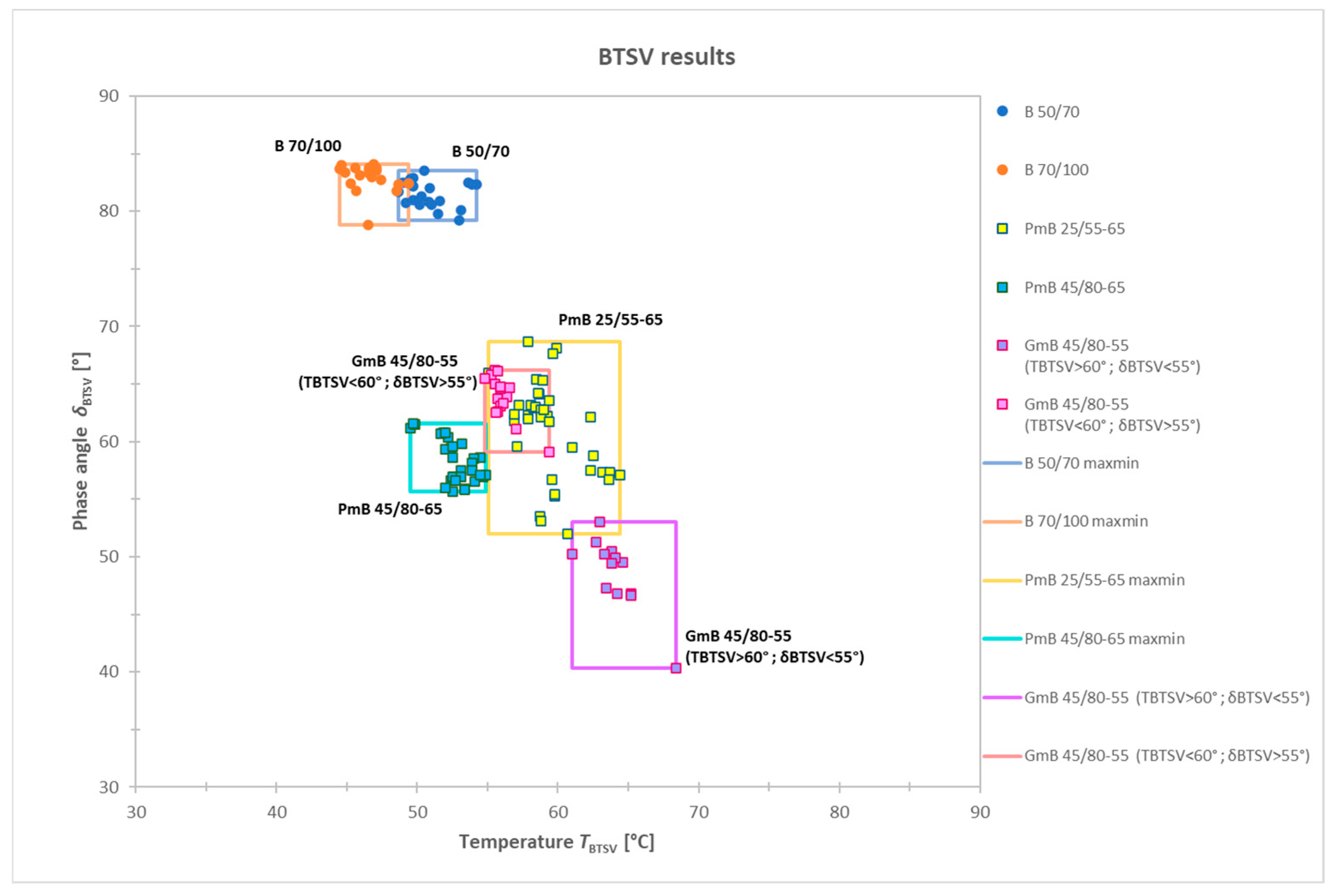
Figure 6.
Summary of BTSV results, with GmB 45/80-55 bitumen divided into two groups.
In order to verify the above assumption, based on the Australian test standard [34], the recoverable, insoluble rubber content was determined by Soxhlet extraction for samples selected from both groups of the tested rubber bitumen. The test results supported our assumption that the higher phase angle category had a rubber content of 2.5-5.0 wt%, while the lower one had values of around 14-18 wt%.
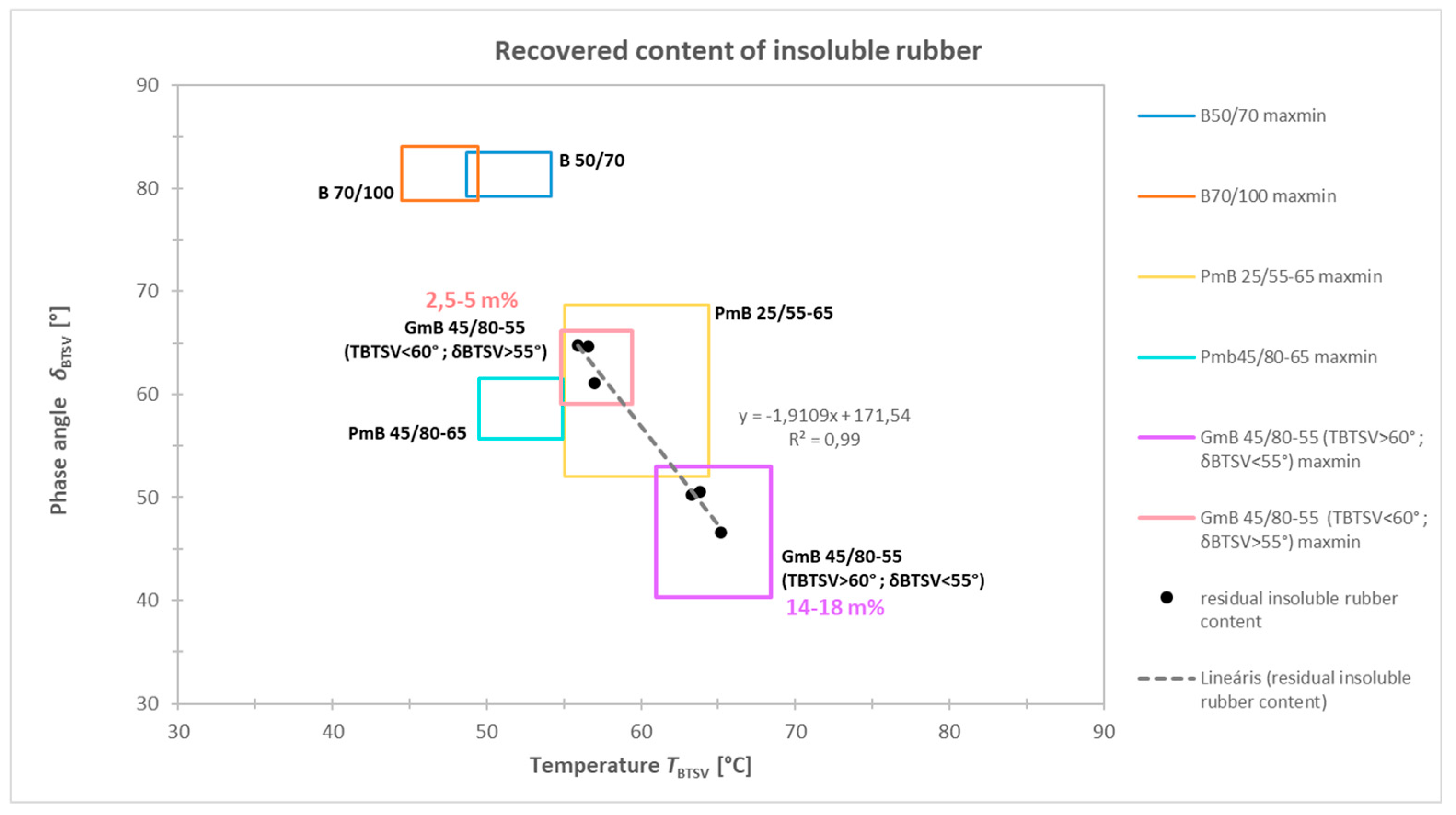
Figure 7.
Effect of increasing recoverable rubber crumb content on TBTSV.
The results clearly demonstrate that the increase in rubber content is closely related to the modification of rheological behaviour (R² = 0.99): the presence of a larger amount of rubber crumb results in an increased elastic contribution, which is manifested in a decrease in the phase angle and higher TBTSV values. This confirms that the amount of rubber content is a determining parameter in the development of the high-temperature viscoelastic properties of rubber bitumens.
3.3. Categorization of the Tested Bitumens According to BTSV
To characterize the bitumens, the TBTSV–δBTSV parameter pair was again represented graphically. As before, Figure 8 shows the extreme values of the measurement results in each bitumen category, while each type has been marked with a representative average point (x̄) in Figure 8. In order to make the data more accurately comparable, the outlier extreme values were filtered using a statistical method. Assuming a normal distribution (Gaussian distribution), the interval “mean ± 2 standard deviations (x̄ ± 2SD)” was applied, covering approximately 95% of the data. This approach allowed the exclusion of outliers from the categorization, while retaining a representative part of the data set. In Figure 8, we have marked in black the BTSV-method categorization of bitumens used in Germany, as a function of the softening temperature (TBTSV) determined at G* = 15 kPa and the associated phase angle (δBTSV). The enclosed areas represent the bituminous binder type fields according to the German classification practice.
The resulting (colourful) areas, bounded by x̄ ± 2SD, represent categories derived from Hungarian measurements and were plotted alongside the (black) German classification fields, enabling direct comparison of the two systems.
It can be stated that the tested bitumen types are located in a similar TBTSV range in both countries, which indicates that the classification according to the high temperature stiffness criterion (G* = 15 kPa) shows consistency.
4. Discussion
The average temperature corresponding to the G* = 15 kPa value of the Hungarian paving grade bitumens of B 70/100 and B 50/70 types occurs in a lower range in the case of the Hungarian samples. As a result, the category boundaries of the Hungarian bitumens shift to the left in the TBTSV–δBTSV diagram compared to the fields of the German bitumens. In the case of paving grade bitumens, the phase angle ranges show a large overlap with those of the German bitumens belonging to the same penetration class. This indicates that in terms of the δBTSV parameter, the rheological behaviour of the Hungarian and German paving grade bitumens is similar, i.e. there is no significant difference in the viscoelastic character between the bituminous binders in the same category.
At the same time, in the case of polymer-modified bitumens (PmB), a marked difference can be observed in the phase angle values. German types belonging to the same penetration category (e.g. 45/80-50 A and 25/55-55 A) typically have a δBTSV range above 65°, more likely around 70°, and therefore a more moderate modification can be assumed for them. In contrast, the examined Hungarian bitumen types (PmB 25/55-65 and PmB 45/80-55) show an average phase angle below 65°. Since the lower δBTSV value indicates a larger elastic component, it is likely that the examined Hungarian-made PmB binders have a higher SBS polymer content and/or more intensive modification.
It is worth examining the behaviour of the GmB 45/80-55 rubber modified bitumen separately. One subgroup of the samples (TBTSV < 60 °C; δBTSV> 55°) showed similar properties to the German 40/100-65 A type bitumen based on its rheological parameters. In contrast, the other subgroup (TBTSV> 60 °C; δBTSV < 55°) is completely different from the other binder groups compared to both the Hungarian and the German bitumen types. This separation can be characterized by a higher TBTSV temperature and a lower phase angle, which, due to the rubber content, indicates a more significant elastic behaviour and a more intense modification effect.
The BTSV method has been proven to replace two traditional tests (needle penetration, ring and ball softening point) with a single rapid measurement procedure. Thanks to the DSR device, the amount of measurement sample required is reduced, and much more accurate results can be obtained. In addition, a much more detailed description of the performance of individual binder types is available.
Among the BTSV parameters, the introduction of the phase angle caused the major breakthrough in the testing of bituminous binders, as it allows a measurable analysis of the different behaviour of bitumens with the same softening point. The δBTSV value provides additional information about the elastic component of the material that cannot be shown by empirical tests. It can be used to determine numerically the extent to which the binder is modified, how it changes its viscoelastic properties, and to what extent it will be sensitive to temperature changes.
References
- EN 1426; Bitumen and Bituminous Binders - Determination of Needle Penetration. European Committee for Standardization: Brussels, Belgium, 2016.
- EN 1427; Bitumen and Bituminous Binders - Determination of the Softening Point - Ring and Ball Method. European Committee for Standardization: Brussels, Belgium, 2016.
- EN 12591; Bitumen and Bituminous Binders - Specifications for Paving Grade Bitumens. European Committee for Standardization: Brussels, Belgium, 2009.
- EN 14023; Bitumen and Bituminous Binders - Specification Framework for Polymer Modified Bitumens. European Committee for Standardization: Brussels, Belgium, 2010.
- e-UT 05.01.26; Bitumen Binders for the Production of Asphalt Mixtures for Road Construction. (In Hungarian). 2018.
- TL Bitumen-StB 25; Technische Lieferbedingungen für Straßenbaubitumen und gebrauchsfertige Polymermodifizierte Bitumen. FGSV-Verlag: Cologne, Germany, 2025.
- Guericke, R. 100 years of softening points of the ring and ball - what comes next? Road Motorw. 2010, 61, 481–491. [Google Scholar]
- Mattischek, H.-P.; Sobczak, R.; Bleier, J. The use of a new measuring instrument in bitumen testing - correlation of zero viscosity with the softening point of the ring and ball. Bitumen 1996, 1, 8–12. [Google Scholar]
- Radenberg, M.; Nytus, N.; Gehrke, M. Chemische und physikalische Eigenschaften der in Deutschland verwendeten Straßenbaubitumen. Straße und Autobahn 2014, 65, 851–860. [Google Scholar]
- Roberts, F.L.; Kandhal, P.S.; Brown, E.R.; Lee, D.Y.; Kennedy, T.W. Hot Mix Asphalt Materials, Mixture Design, and Construction; National Asphalt Pavement Association Education Foundation: Lanham, MD, USA, 1996. [Google Scholar]
- AASHTO M320-23-UL; Standard Method of Test for Performance Graded Asphalt Binder. American Association of State Highway and Transportation Officials: Washington, DC, USA, 2023.
- AASHTO T 315-12-UL; Standard Method of Test for Determining the Rheological Properties of Asphalt Binder Using a Dynamic Shear Rheometer (DSR). American Association of State Highway and Transportation Officials: Washington, DC, USA, 2024.
- AASHTO T 240-23-UL; Standard Method of Test for Effect of Heat and Air on a Moving Film of Asphalt Binder (Rolling Thin-Film Oven Test). American Association of State Highway and Transportation Officials: Washington, DC, USA, 2023.
- Bahia, H.U.; Hanson, D.I.; Zeng, M.; Zhai, H.; Khatri, M.A.; Anderson, D.A. Characterization of Modified Asphalt Binders in Superpave Mix Design; National Cooperative Highway Research Program (NCHRP) Report 459; Transportation Research Board: Washington, DC, USA, 2001. [Google Scholar]
- Biro, Sz.; Geiger, A.; et al. Chemically Stabilized Asphalt Rubber Compositions and a Mechano-Chemical Method for Preparing the Same European Patent EP1960472 B1, 15 May 2009.
- Shenoy, A. Fatigue testing and evaluation of asphalt binders using the dynamic shear rheometer. J. Test. Eval. 2002. [Google Scholar] [CrossRef]
- ASTM D7405-21; Standard Test Method for Multiple Stress Creep and Recovery (MSCR) of Asphalt Binder Using a Dynamic Shear Rheometer. ASTM International: West Conshohocken, PA, USA, 2021.
- Paez-Dueñas, A.; Cabanillas, P.; Carrera, V.; Cerny, R.; De Visscher, J.; Durand, G.; Lancaster, I. European round-robin tests for the multiple-load creep-recovery test and contribution to the development of a European standard test method. In Proceedings of the 6th Eurasphalt & Eurobitume Congress, Prague, Czech Republic, 2016; EAPA & Eurobitume. [Google Scholar]
- Soenen, H.; Blomberg, T.; Pellinen, T.; Laukkanen, O. The multiple stress creep recovery test: Repeatability, reproducibility and relationship with other rheological tests. Road Mater. Pavement Des. 2013, 14, 2–11. [Google Scholar] [CrossRef]
- Geiger, A.; Holló, A.; et al. Chemically stabilized rubber bitumen. In Proceedings of the 5th Eurasphalt & Eurobitume Congress, Istanbul, Turkey, 2012. [Google Scholar]
- Tóth, Cs.; Igazvölgyi, Zs.; Soós, Z.; Soós, Z. Laboratory Tests of Asphalt Mixtures with Rubber Bitumen; (In Hungarian). Budapest University of Technology and Economics: Budapest, Hungary, 2017. [Google Scholar]
- Gáspár, et al. Complex Performance Evaluation of Road Pavement Layers with Chemically Modified Rubber Bitumen; (In Hungarian). KTI Institute for Transport Sciences and Budapest University of Technology and Economics: Budapest, Hungary, 2019. [Google Scholar]
- Almássy, K.; Geiger, A.; Gergó, P. Using possibilities of rubber bitumen in road building. Pollack Period. 2010, 5, 53–63. [Google Scholar] [CrossRef]
- Almássy, K.; Geiger, A.; Holló, A.; Gáspár, L. Performance of asphalt mixtures with a new type of rubber modified bitumen. Facta Univ. Ser. Archit. Civ. Eng. 2022, 19, 31–54. [Google Scholar] [CrossRef]
- Almássy, K.; Koch, D. Performance of rubber bituminous asphalt mixes at hot and warm production temperatures. Epitoanyag 2023, 75, 88–91. [Google Scholar] [CrossRef]
- Radenberg, M.; Gehrke, M. Assessing bitumen in the whole service-temperature-range with the dynamic shear rheometer. In Proceedings of the Eurasphalt & Eurobitume Congress, Prague, Czech Republic, 2016. [Google Scholar]
- Alisov, A. Typisierung von Bitumen mittels instationärer Oszillationsrheometrie; TU Braunschweig (ISBS): Braunschweig, Germany, 2017. [Google Scholar]
- DIN 52050; Bitumen und bitumenhaltige Bindemittel - BTSV- Prüfung. German Standard: Berlin, Germany, 2018.
- prEN 14023; Bitumen and Bituminous Binders - Framework Specification for the Quality of Polymer-Modified Bitumens. CEN: Brussels, Belgium, 2020.
- CEN/TC 336; Bitumens and Bituminous Binders - Complementary Performance-Related Specification Framework. prEN XXXXX:2025; European Committee for Standardization: Brussels, Belgium, 2025.
- EN 12607-1; Bitumens and Bituminous Binders-Determination of the Resistance to Hardening under Influence of Heat and Air-Part 1: RTFOT Method. European Committee for Standardization: Brussels, Belgium, 2024.
- ZTV Asphalt-StB 07/13; Zusätzliche Technische Vertragsbedingungen und Richtlinien für den Bau von Verkehrsflächenbefestigungen aus Asphalt. FGSV-Verlag: Cologne, Germany, 2013.
- Alisov, A.; Riccardi, C.; Schrader, J.; Falchetto, A.C.; Wistuba, M.P. A novel method to characterize asphalt binder at high temperature. Road Mater. Pavement Des. 2018, 21, 143–155. [Google Scholar] [CrossRef]
- AGPT/T142; Rubber Content of Crumb Rubber Modified Bitumen: Soxhlet Method. Austroads, 2020.
Figure 1.
Typical curves of the complex shear modulus and phase angle as a function of test temperature.
Figure 1.
Typical curves of the complex shear modulus and phase angle as a function of test temperature.
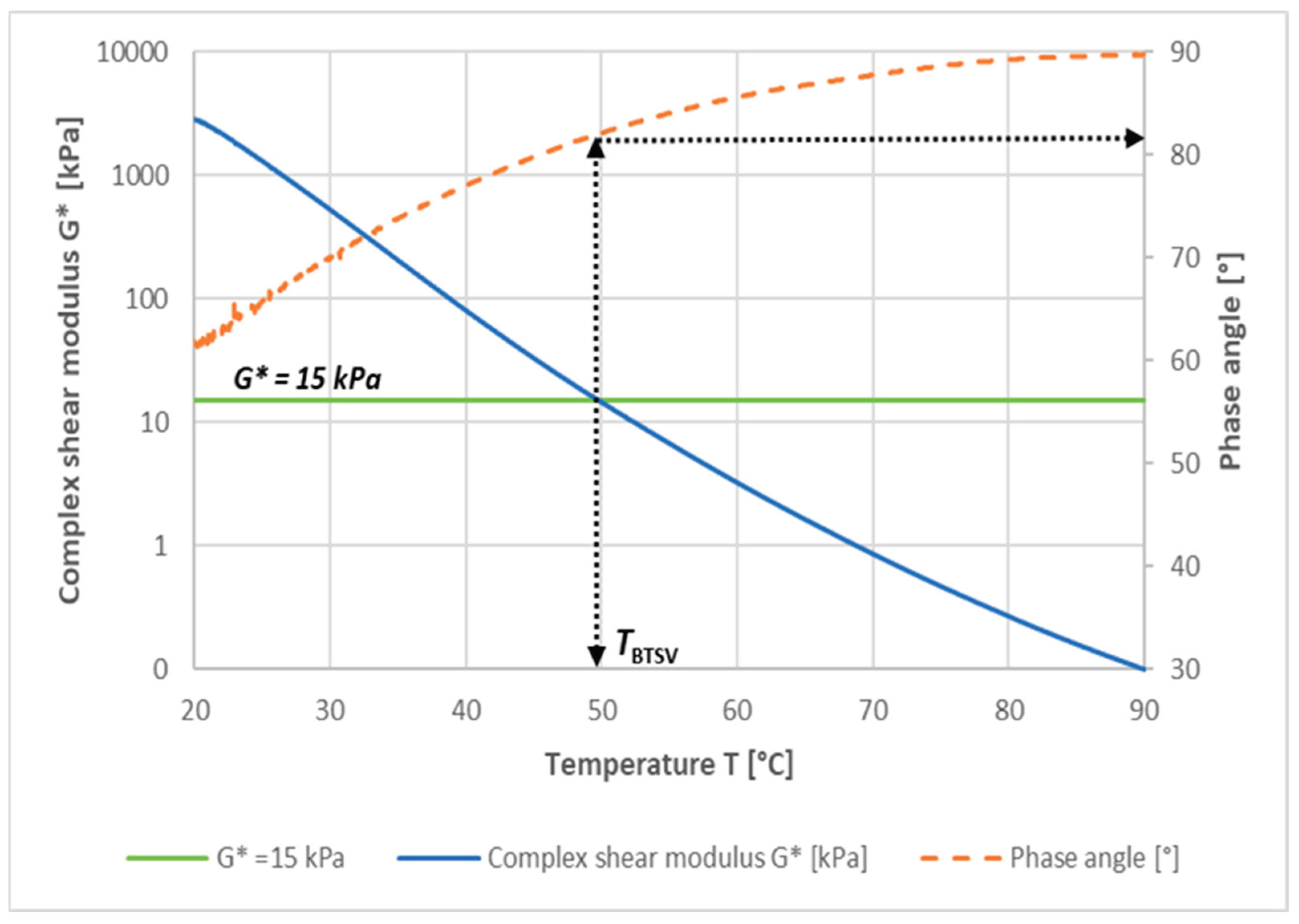
Figure 2.
Softening point and penetration limits of Hungarian and German bitumens.
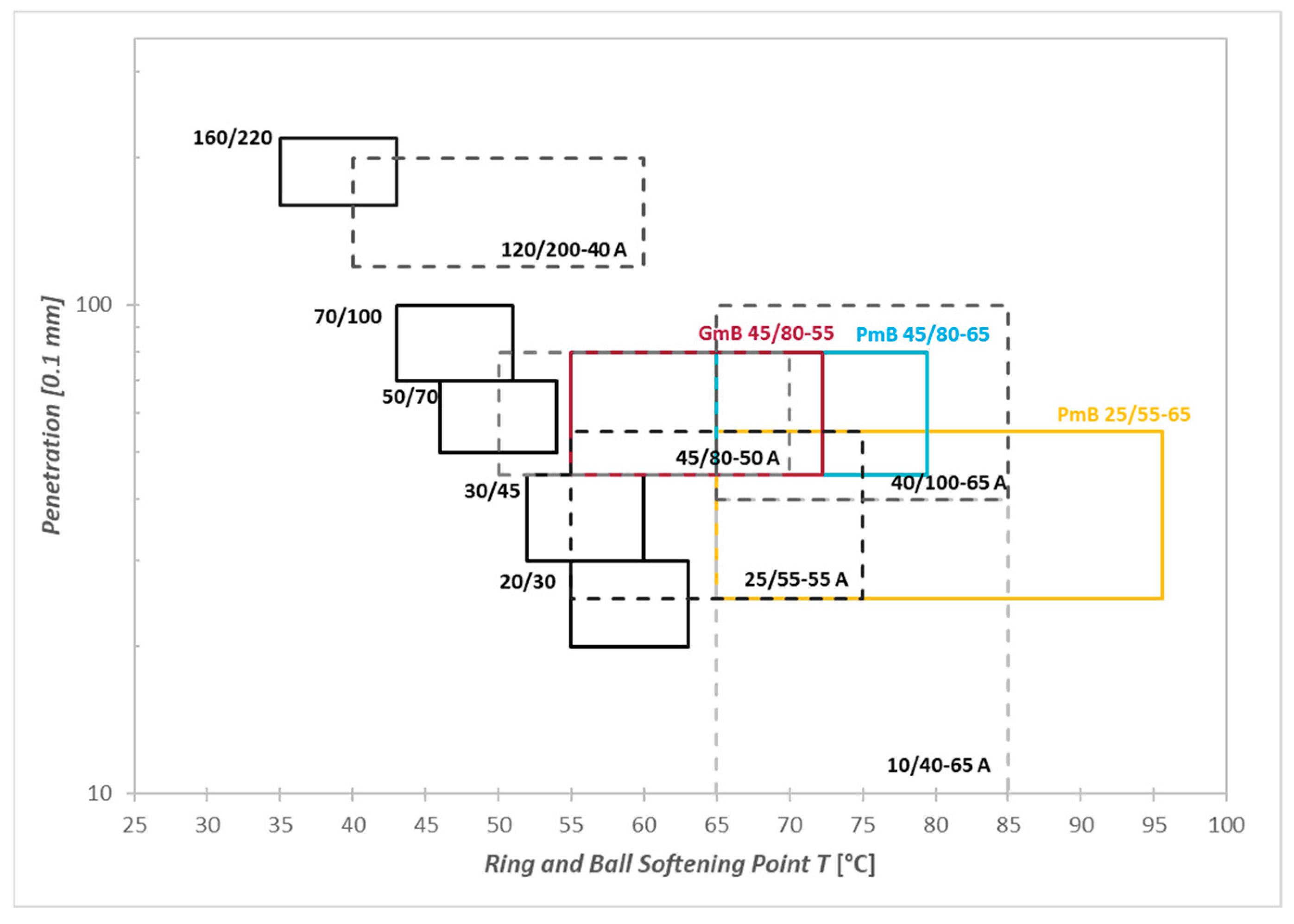
Figure 3.
Relationship between ring and ball softening point and TBTSV for SBS modified, rubber modified and paving grade bitumens.
Figure 3.
Relationship between ring and ball softening point and TBTSV for SBS modified, rubber modified and paving grade bitumens.
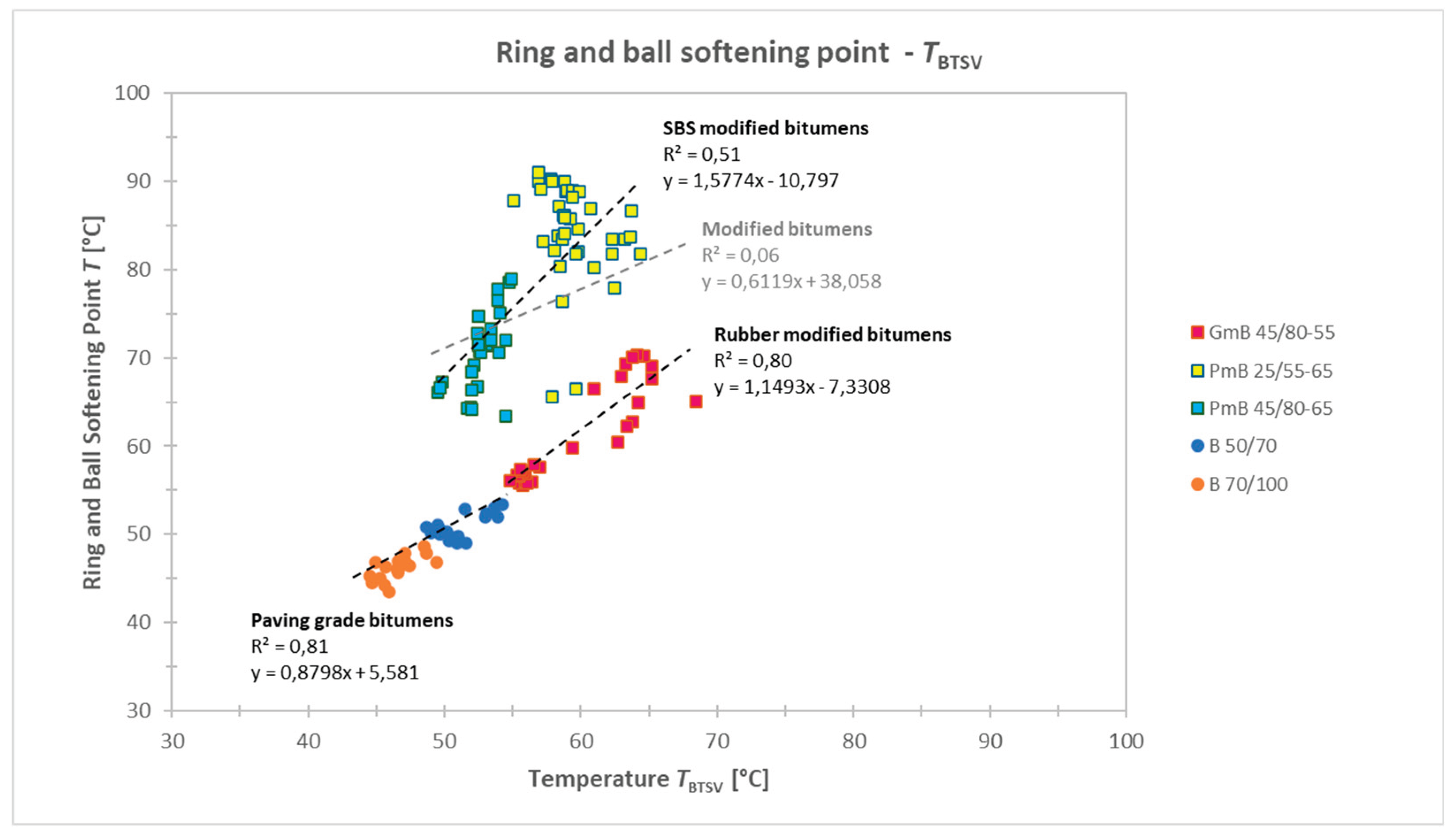
Figure 4.
Summary diagram of the BTSV results, the phase angle δBTSV and TBTSV measured at G*=15 kPa as a function of temperature.
Figure 4.
Summary diagram of the BTSV results, the phase angle δBTSV and TBTSV measured at G*=15 kPa as a function of temperature.
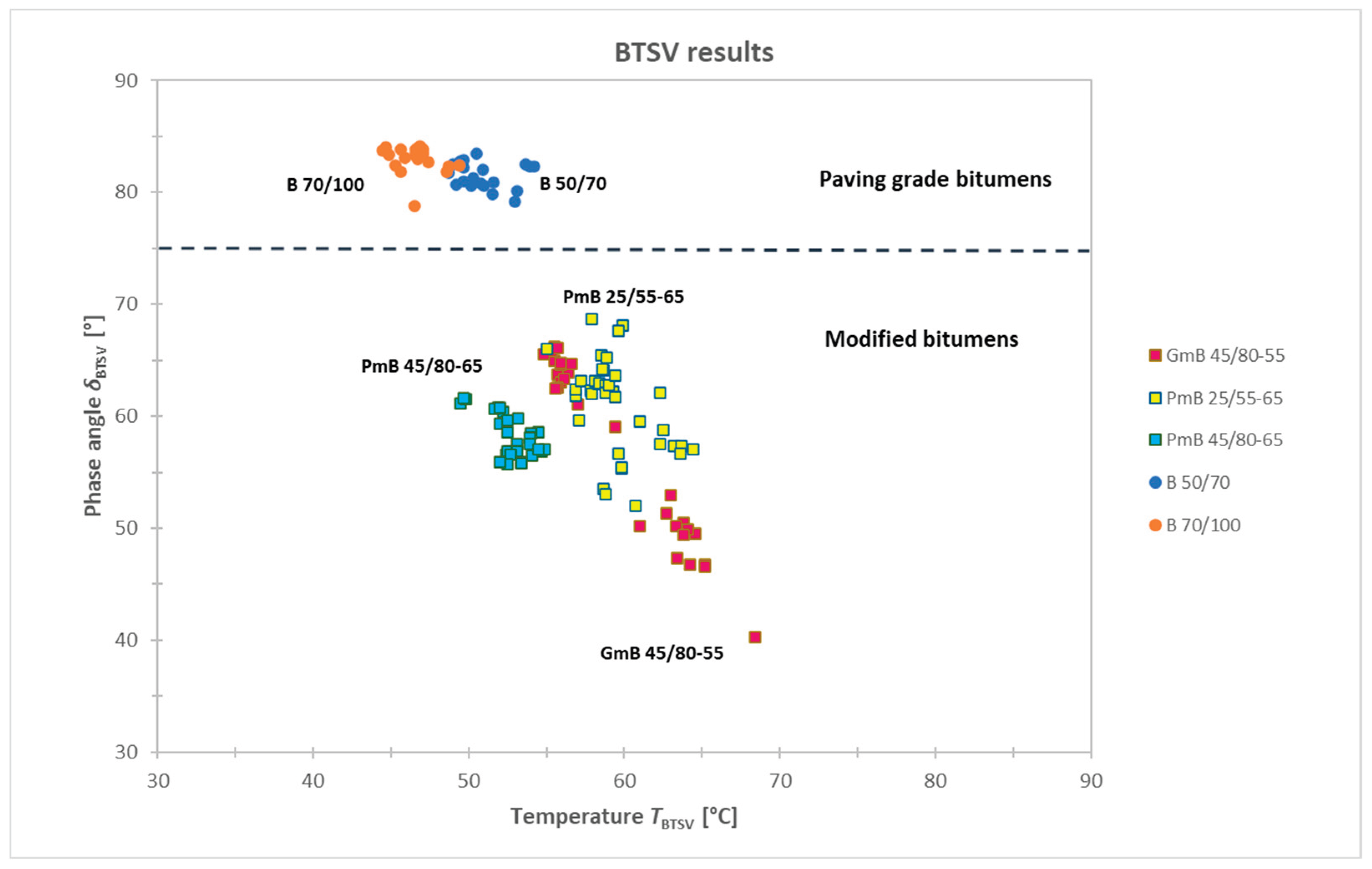
Figure 5.
Summary of BTSV results, δBTSV phase angle and TBTSV as a function of temperature measured at G*=15 kPa excluding extreme values.
Figure 5.
Summary of BTSV results, δBTSV phase angle and TBTSV as a function of temperature measured at G*=15 kPa excluding extreme values.
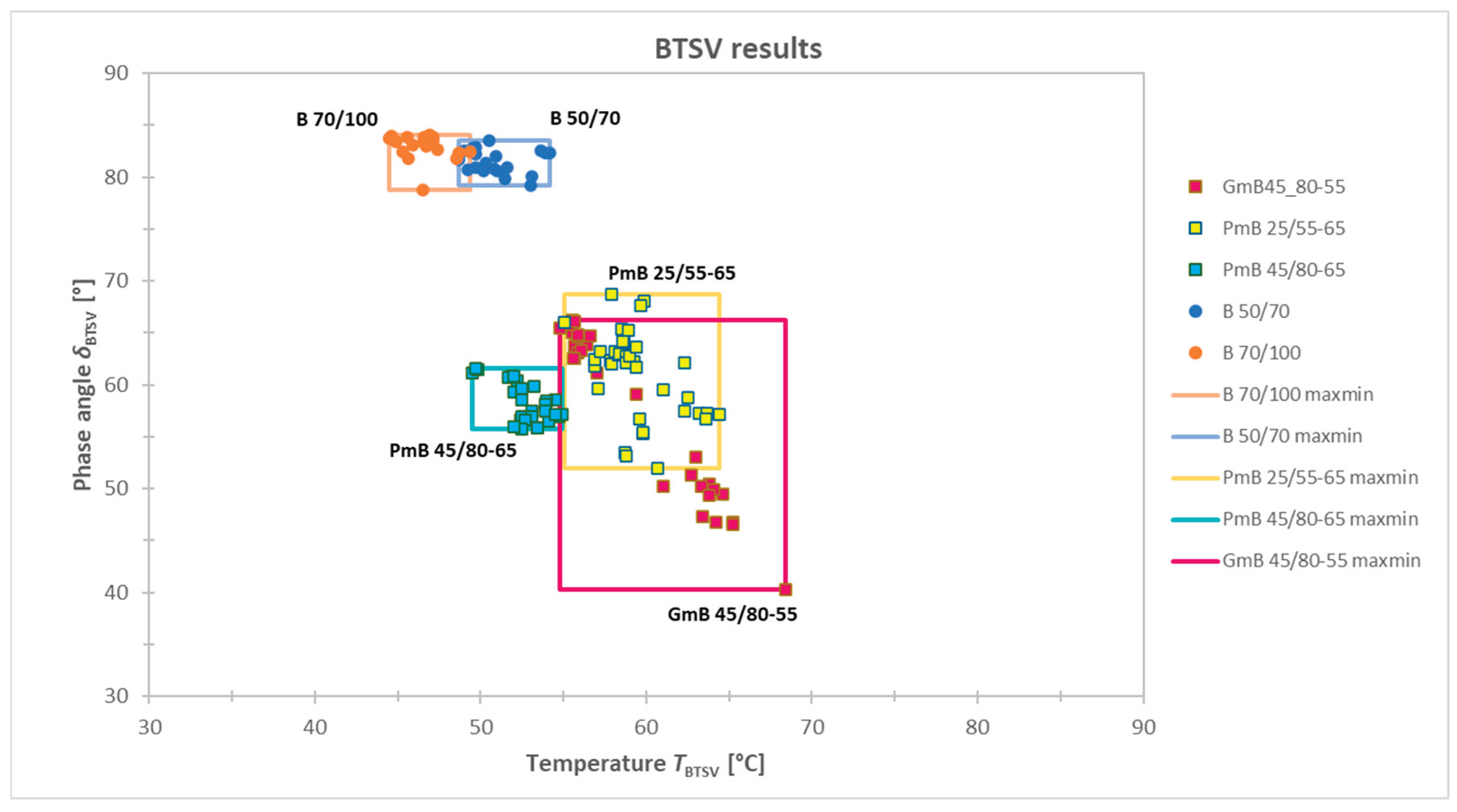
Figure 8.
BTSV-categorization of the most common Hungarian and German bitumen types as a function of phase angle (δBTSV) and temperature (TBTSV).
Figure 8.
BTSV-categorization of the most common Hungarian and German bitumen types as a function of phase angle (δBTSV) and temperature (TBTSV).
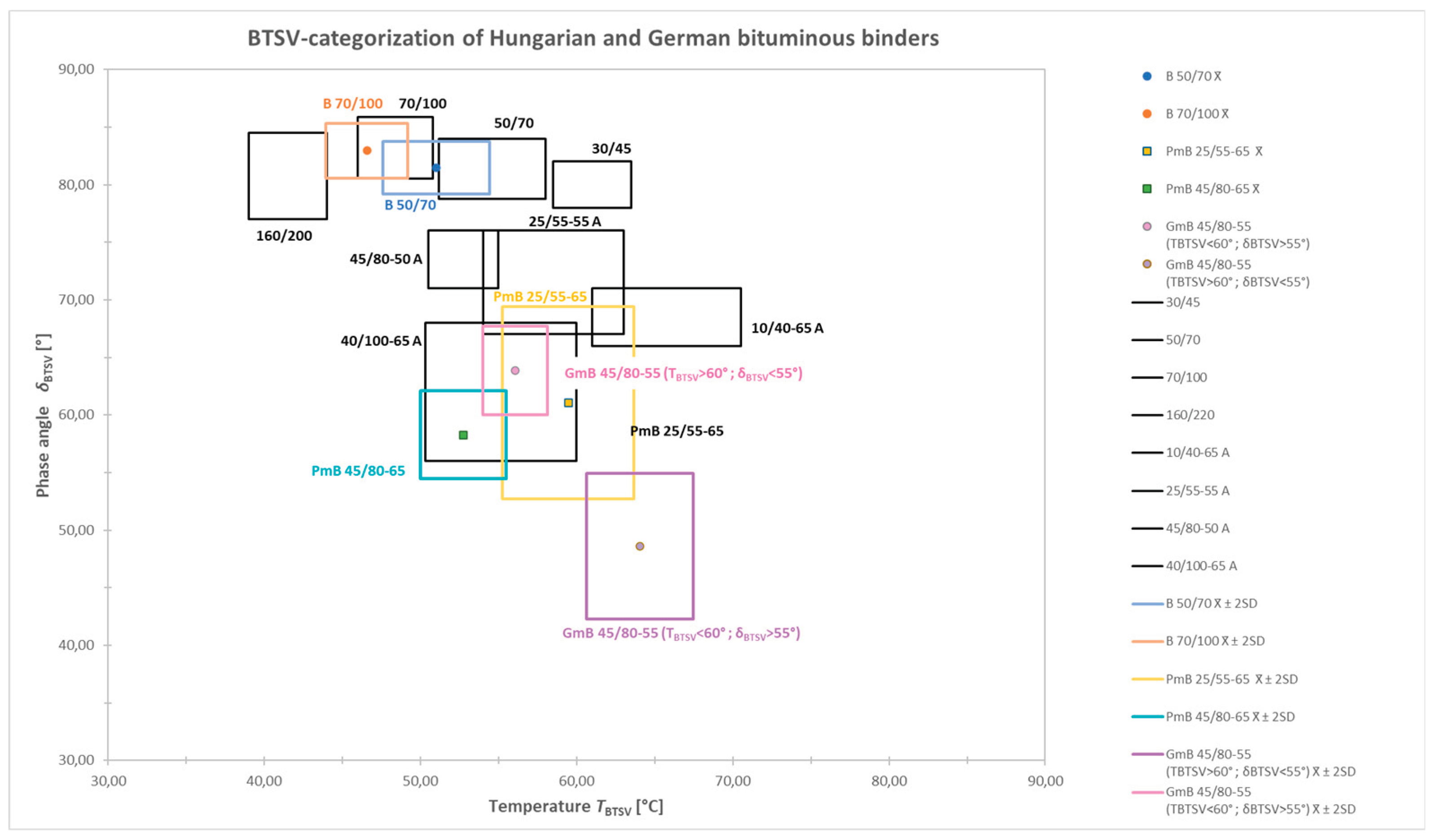

Table 1.
Bitumen sample sizes and statistical characteristics of parameter values.
| Sample type | Sample size | Parameter | Average | Min | Max |
|---|---|---|---|---|---|
| B 50/70 | 20 | Softening point [°C] | 50.77 | 49.00 | 53.40 |
| Penetration [0,1 mm] | 58.15 | 52.00 | 69.00 | ||
| TBTSV [°C] | 51.01 | 48.70 | 54.20 | ||
| Phase angle, δ [°] | 81.48 | 79.20 | 83.50 | ||
| B70/100 | 20 | Softening point [°C] | 46.25 | 43.50 | 48.60 |
| Penetration [0,1 mm] | 84.00 | 73.00 | 93.00 | ||
| TBTSV [°C] | 46.57 | 44.50 | 49.40 | ||
| Phase angle, δ [°] | 82.95 | 78.80 | 84.10 | ||
| GmB 45/80-55 | 29 | Softening point [°C] | 61.22 | 55.50 | 70.40 |
| Penetration [0,1 mm] | 45.13 | 39.10 | 49.20 | ||
| TBTSV [°C] | 59.64 | 54.80 | 68.40 | ||
| Phase angle, δ [°] | 57.03 | 40.30 | 66.20 | ||
| PmB 25/55-65 | 38 | Softening point [°C] | 84.28 | 65.60 | 91.05 |
| Penetration [0,1 mm] | 42.21 | 29.50 | 52.00 | ||
| TBTSV [°C] | 56.57 | 51.90 | 64.40 | ||
| Phase angle, δ [°] | 59.46 | 55.05 | 64.40 | ||
| PmB45/80-65 | 30 | Softening point [°C] | 70.75 | 63.35 | 78.90 |
| Penetration [0,1 mm] | 52.24 | 40.85 | 59.00 | ||
| TBTSV [°C] | 52.72 | 49.50 | 54.90 | ||
| Phase angle, δ [°] | 58.29 | 55.70 | 61.60 |
Disclaimer/Publisher’s Note: The statements, opinions and data contained in all publications are solely those of the individual author(s) and contributor(s) and not of MDPI and/or the editor(s). MDPI and/or the editor(s) disclaim responsibility for any injury to people or property resulting from any ideas, methods, instructions or products referred to in the content. |
© 2026 by the authors. Licensee MDPI, Basel, Switzerland. This article is an open access article distributed under the terms and conditions of the Creative Commons Attribution (CC BY) license (http://creativecommons.org/licenses/by/4.0/).
Copyright: This open access article is published under a Creative Commons CC BY 4.0 license, which permit the free download, distribution, and reuse, provided that the author and preprint are cited in any reuse.


