

Submitted:
10 April 2026
Posted:
14 April 2026
You are already at the latest version
Abstract
Against the backdrop of rural revitalization, traditional villages in Guizhou's ethnic minority regions face the dual challenges of preservation and development. Existing research predominantly focuses on macro-scale morphological descriptions, lacking an operable spatial classification method that can directly guide planning and management. To address this gap, this paper takes Fengxi Village in Dejiang County as a case study, integrates Conzenian urban morphology theory with the concept of "management units", and proposes a spatial unit classification method for traditional villages based on the overlay analysis of "morphological regions + property parcels". First, the Conzenian plan analysis method is employed to systematically deconstruct Fengxi Village's land use, road system, plot combinations, and building types, thereby delineating its morphological regions. Subsequently, three evaluation factors—building value, quality, and appearance—are innovatively introduced. Through quantitative evaluation, all 702 buildings in the village are classified into five categories: preservation units, restoration and improvement units, comprehensive renovation units, demolition and renewal units, and new development units, with the quantities and proportions of each unit type statistically analyzed. Building on this foundation, differentiated control guidelines and development strategies are proposed for each unit category. The research indicates that this method achieves a transformation from "morphological description" to "implementable control", breaking down the vague goal of "holistic preservation" into concrete "unit-based guidance" actions, and provides a replicable technical pathway for the refined planning and management of traditional villages. The innovation of this paper lies in constructing a complete technical framework of "morphological analysis - factor evaluation - unit control", addressing the deficiency of existing research at the micro-operational level.
Keywords:
conzenian theory
; traditional villages
; management units
; morphology
1. Research and Theoretical Background
1.1. Conzenian Theory and Its Application in China
The Conzenian urban morphology theory originated from the book Alnwick, Northumberland: A Study in Town-Plan Analysis published in 1960. The core of this theory is to examine the urban structure and evolutionary process from a historical and dynamic perspective, with its explicit research object being the urban landscape. The urban landscape consists of three core elements: plan units, building types, and land use characteristics, among which plan units include spatial components such as street systems, block combinations, and building footprints. M.R.G. Conzen established the analysis of urban plan layout as his core research method, which focuses on the systematic analysis and comprehensive overlay study of the three aforementioned morphological elements: plan units, building types, and land use characteristics. Through overlay operations, urban morphological regions are ultimately formed (Figure 1).
Since the introduction of this theory into China, starting from 2005, the research team led by Professor Tian Yinsheng from South China University of Technology has pioneered a series of groundbreaking academic achievements. Relevant studies cover a number of specific areas: for example, urban morphological analyses of residential blocks such as Xinhepu, Shamian, and Overseas Chinese New Village in Guangzhou, as well as areas including Qingping Road, Gaodi Street, Beijing Road, the surrounding area of Tianhe Sports Center, and Hualin Jade Professional Market, all attempt to deeply explore the laws behind morphological changes and their guiding significance for planning practice. In terms of theoretical deepening, domestic scholars have conducted discussions around the core concepts of the Conzenian School: the urban fringe is regarded as the forefront of urban spatial expansion; the plot cycle theory reveals the periodic evolution law of building density within private property plots. These studies provide an important perspective for understanding the spatial evolution of cities and villages.
1.2. The Concept of Management Units and Its Expansion in This Research
From 2009 to 2011, Professor Tian Yinsheng and his team completed the National Natural Science Foundation project Urban Morphology and Its Application in Urban Historical Conservation Planning. While conducting further research and combining with China’s national conditions, they achieved a breakthrough in the localization and practical application of the Conzenian theory. They creatively proposed the practical method of “management units”, which was applied in the Conservation and Renewal Planning of Wenquan Town in Guangzhou and Conservation and Renewal Planning of Zhuangyuanfang in Guangzhou and received positive practical verification. The concept of “management units” in this paper is also proposed on the basis of drawing on this method.
A management unit is an operable spatial scope delineated through the overlay analysis of morphological regions and land ownership regions based on architectural morphology theory. This unit system mainly includes four types: “renewal units”, “renovation units”, “development units” and “preservation units”. Each unit is equipped with a detailed database of current situation data, and corresponding renewal strategies, management guidelines and operation suggestions are formulated according to its characteristics. This method is particularly suitable for areas with complex spatial forms and diverse property right structures, providing a systematic planning and management tool for their renewal and development (Figure 2). Similar to cities, traditional villages, as organic entities, have formed dual complexities in form and property rights during historical development. In response to this situation, this paper adopts the theoretical method of “Conzenian morphology” and the model of “management units”, through the overlay of morphological regions and property right regions, and with the thinking of “dissecting an ox as skillfully as a butcher”, decomposes the complex overall renewal goal into simple and feasible local actions. Combined with the own characteristics of Fengxi Village, it puts forward an adaptive management model and village development suggestions.
This method provides an important foundation for this paper. However, existing research on management units is mainly based on qualitative judgments and lacks a unified quantitative standard. In view of the actual needs of the protection and development of traditional villages, this paper proposes a “spatial unit classification method based on multi-factor evaluation” on the basis of Conzenian morphological analysis. The core innovation of this method lies in: introducing three quantifiable evaluation factors—”building value, building quality, and building appearance”, and through the cross-evaluation of the three factors, dividing the village space into five types of units: preservation, restoration and improvement, comprehensive renovation, demolition and renewal, and new construction, realizing the transformation from “morphological description” to “precision control”. This framework is not only applicable to Fengxi Village, but also provides a replicable technical pathway for the refined planning of similar traditional villages. The following will take Fengxi Village in Guizhou as an example to show the application process of this method in detail.
2. Analysis of the Current Problems of Fengxi Village
2.1. Village Site Selection
Fengxi Village is located in Fengxiangxi Town in the southeast of Dejiang County, and was listed as the second batch of China’s traditional villages by the Ministry of Housing and Urban-Rural Development, the Ministry of Culture, and the Ministry of Finance in August 2013. Before the Qing Dynasty, Fengxi Village was a desolate land. In the early Qing Dynasty, the Wang clan settled here after being excluded by local tribes, and has lived and worked in peace and contentment ever since. Fengxi Village is surrounded by an excellent environment with abundant water and cultivated land resources in the area. Therefore, villagers built new houses on the open space between Ma’anshan Mountain and Fengxi River, and relied on the surrounding natural resources to live and reproduce. At the end of the Qing Dynasty, Fengxi Village had only a few hundred residents, mainly living in Huang Family Village and the Old Street. Later, with the increase of population, the New Street, Back Street, Huang Family Road and other roads were built one after another, and the village developed in a belt shape along the roads, gradually evolving into the current traditional village of Fengxi Village. Backed by Ma’anshan Mountain, which forms a good natural barrier, Fengxi Village is surrounded by small hills on both sides, with a small river winding through the front of the village and a large area of farmland in front of it. The beautiful pastoral scenery highlights the strong traditional rural atmosphere of Fengxi Village. Residents in the village build houses along the streets and alleys, distributed in a belt shape following the layout of streets and alleys. Up to now, the village has retained part of the traditional architectural style and the facades of village alleys, some of which are in the traditional architectural form of the Tujia nationality. The village, mountains, water and farmland complement each other, jointly forming the belt-shaped mountain-field-water pattern of Fengxi Village (Figure 3).
2.2. Street and Alley Space
Fengxi Village is of a relatively large scale. With the development and evolution of the village over the years, two main roads have formed from north to south in the village, one of which is the main living road running through the interior, and the other is the main transit road bypassing the village from the outside. The remaining secondary roads are interconnected and crisscross according to the distribution of buildings in the village. The width of roads in the village ranges from 1.5 to 9.0 meters, winding and tortuous with varying widths. Most of the road surfaces have been cement-paved, and only a small part still retain the traditional pavement forms such as earthen, macadam and stone slab roads. The condition of earthen road surfaces is poor, and that of macadam and stone slab road surfaces is moderate. On the whole, the condition of road surfaces in Fengxi Village is good and relatively coordinated with the overall style of the village (Figure 4).
2.3. Building Types
Most buildings in Fengxi Village are one-story, with a small number of two-story ones. In terms of building plane layout, the buildings are generally a row of four bays and three rooms, or six bays and five rooms for large families. Wing-rooms are built at both ends of the main house, extending at a right angle to the main house, and the last room is mostly a stilted building. The lower part of the stilted building is used for stacking sundries, hunting tools, and as a cattle pen, and the upper part is the living quarters for young girls. Whether it is a row of four bays and three rooms or six bays and five rooms, the middle is the main hall. A shrine is set on the middle wall of the main hall, and the two rooms on the left and right are called “human rooms”, which are divided into two small front and back rooms by the central column. The front one is used as a kitchen, and the back one as a bedroom. Parents live in the left room, and daughters-in-law in the right room. When two brothers divide the family property, the elder brother lives in the left room and the younger brother in the right room. When parents marry their sons to wives, they give up their own bedrooms and move to the back of the shrine. There is a patio in front of the house for cooling and resting. The courtyards of Tujia houses are generally two-level steps, some are three-level, all inlaid with blue stone slabs, symbolizing stepping up to success when entering the main hall of a Tujia house (Figure 5).
2.4. Existing Problems
2.4.1. Potential Fire Safety Hazards of Buildings
Fengxi Village presents an overall belt-shaped layout along the foot of the mountain, with residential buildings densely connected, forming a compact settlement form, which is extremely prone to the rapid spread of fires. At the same time, the water supply capacity inside the village is limited, no special fire water pool has been built, and only a small number of fire-fighting facilities have been installed around the site of the Fengxiangxi Conference. Therefore, the entire village faces a relatively serious fire risk, posing a significant threat to the safety of villagers’ lives and property as well as their daily production and living.
2.4.2. Impairment of Village Style and Features
The damage to the village style and features is mainly reflected in the interference of non-traditional buildings and their auxiliary structures on the overall landscape. Most of the new houses built in recent years are modern-style brick or brick-concrete structures, and both sides of the main streets have basically been occupied by modern buildings, leading to the gradual disappearance of traditional architectural characteristics and a prominent phenomenon of mixed new and old materials, which seriously weakens the continuity of the village’s traditional style and features. In addition, the phenomenon of illegal construction still exists, especially the random construction of auxiliary houses, which not only destroys the spatial order and visual environment of the village, but also brings certain potential safety hazards.
2.4.3. Inadequate Infrastructure
The current infrastructure of the village is still weak, which is specifically manifested in the following aspects: lack of public activity centers and cultural and recreational squares; aging power lines in urgent need of renovation and insufficient night lighting facilities; no systematic disinfection and effective protection of existing water sources, with a messy layout of household tap water pipe networks; lack of a complete drainage system in the village, leading to the random discharge of domestic sewage; absence of centralized garbage collection facilities, with the common phenomenon of random garbage disposal, which seriously affects environmental sanitation. These factors jointly restrict the improvement of villagers’ quality of life and the sustainable development of the village.
2.4.4. Insufficient Efforts in Cultural Protection
As a concentrated settlement of the Tujia nationality, Fengxi Village contains rich ethnic cultural resources, but the protection of both material and intangible cultural heritages is currently insufficient. Material cultural carriers have suffered varying degrees of damage, and intangible cultures such as traditional ballads and dances lack systematic protection and inheritance mechanisms. Relevant ethnic activities are held infrequently and are not sufficiently disseminated and popularized among teenagers, leading to the risk of loss of cultural memory.
3. Spatial Morphological Characteristics of Fengxi Village
3.1. Formation of Spatial Units
The formation of spatial units is based on the overlay analysis of morphological regions and property right regions. Among them, a morphological region refers to a continuous area with significant identity in spatial characteristics or constituent elements and obvious differences from the surrounding environment. Due to its unified morphological attributes and spatial characteristics inside, the same protection and development control rules can be applied, thus providing an effective basis for planning and management.
The delineation of morphological regions requires the application of the plan analysis method in Conzenian urban morphology to systematically classify and zone multiple elements of the village, including land use structure (Figure 6), road system organization (Figure 7), plot combination mode (Figure 8), building type differentiation (Figure 9) and building classification characteristics (Figure 10). After the zoning of each individual element is completed, the overall morphological region division result of the village is finally obtained through comprehensive overlay and integration analysis (Figure 11).
3.2. Innovation of Spatial Unit Classification Method Based on Multi-Factor Evaluation
To realize the refined control of traditional villages, it is necessary to transform macro morphological region analysis into micro and operable unit classification. On the basis of the delineation of Conzenian morphological regions, this paper introduces three core evaluation factors—”building value, building quality, and building appearance”. Based on the evaluation results, management units can be divided into five types: preservation units, restoration and improvement units, comprehensive renovation units, demolition and renewal units, and new construction units, and a classification matrix of spatial units of traditional villages is constructed to realize precision management (Figure 12). The core innovation of this method lies in: transforming qualitative morphological description into quantitative factor evaluation, making the classification results repeatable and comparable, and providing an objective basis for planning and management.

Table 1.
Classification and Statistical Summary of Architectural Units.
| Category | Characteristics | Building Quality | Building Appearance | Corresponding Number of Buildings (Unit) | Corresponding Proportion of Buildings (%) |
| High value Certain value Conflicting |
Good Moderate Poor |
Intact Good Moderate Conflicting with historical style Poor |
|||
| Preservation Units | High value (traditional buildings) | Good Moderate (of great value) |
Intact Well-preserved (of great value) |
31 | 4.4 |
| Restoration and Improvement Units | Certain value (traditional buildings) | Good Moderate |
Moderate Poor preservation |
107 | 15.3 |
| Comprehensive Renovation Units | Conflicting with historical style (other buildings) | Good Moderate (other buildings) |
Conflicting with historical style (other buildings) | 516 | 73.5 |
| Demolition and Renewal Units | Poor quality or appearance (traditional buildings)/For development needs (other buildings) | Poor Good (other buildings) |
Poor appearance Conflicting with historical style (other buildings) |
48 | 6.8 |
| New Construction Units | Unused land | ||||
| Total | 702 | 100 | |||
Based on the one-by-one evaluation of 702 buildings in Fengxi Village, the quantities and proportions of various units are shown in the table above. The data shows that the comprehensive renovation units account for as high as 73.5%, indicating that the main problem currently faced by Fengxi Village is the conflict between a large number of modern buildings and the traditional style; the preservation units only account for 4.4%, highlighting the scarcity of core historical resources and the urgency of protection; the demolition and renewal units account for 6.8%, mainly consisting of illegally built auxiliary houses, which are the focus of the recent renovation. This quantitative result provides accurate data support for the subsequent differentiated guidance and control. In view of the above five types of units, differentiated control guidelines are formulated respectively as follows to realize the refined management of “one policy for one type”.
3.2.1. Guidance and Control of Preservation Units
This unit mainly includes the buildings in Fengxi Village that have been listed as cultural relic protection units and the typical residential buildings that can reflect the traditional style and characteristics of the Tujia nationality. The management follows the principle of “repairing the old as it was, without changing the original state”, aiming to maintain the historical authenticity of the buildings. Specific measures include: carrying out original maintenance on the whole building, and only implementing protective reinforcement and current condition repair on local damaged parts; appropriately enhancing the expression of traditional elements inside the building and optimizing the surrounding greening environment to highlight its historical and cultural value.
3.2.2. Guidance and Control of Restoration and Improvement Units
Such buildings mainly refer to those with certain structural damage or partially using modern materials such as red brick, cement, ceramic tile and metal, which are inconsistent with the traditional style. The focus of guidance and control is to carry out protective activities such as structural reinforcement, facade renovation, and optimization of internal space and facilities on the premise of maintaining their traditional appearance characteristics, so as to ensure the overall continuity of their style, pattern, scale and design. For locally damaged parts or parts with inconsistent materials, traditional Tujia architectural materials should be used for replacement to integrate the buildings with the overall style of the village.
3.2.3. Guidance and Control of Comprehensive Renovation Units
This unit covers modern buildings built in a relatively late period and conflicting with the traditional style. These buildings have a significant impact on the overall landscape of the village and need systematic renovation. Adoptable transformation methods include: adjusting the color and materials of the facade; transforming the architectural shape such as the roof form; replacing doors and windows with traditional Tujia wooden windows and doors; and adding decorative components with ethnic characteristics, so as to reduce their visual conflict and improve the coordination of style and features.
3.2.4. Guidance and Control of Demolition and Renewal Units
Such buildings mainly refer to structures with poor style and low quality, including dilapidated original residential buildings, as well as illegally built auxiliary houses and temporary buildings. For buildings still with structural utilization value, measures such as main structure reinforcement and transformation of facade materials and shapes can be taken; for buildings with no preservation value, they shall be demolished, and whether to rebuild on the original site shall be decided according to the plan.
3.2.5. Guidance and Control of New Construction Units
Considering that there are still some undeveloped and unused lands in rural areas, a new construction unit is added in this plan to guide the orderly development of future construction activities on the premise of complying with the overall style and functional requirements.
4. Spatial Optimization and Development Strategies of Fengxi Village Based on Unit Classification
4.1. Control Measures for Different Unit Types
Based on the five types of spatial units and their quantitative characteristics divided above, the following targeted measures are proposed: Preservation Units (4.4%): Strictly follow the principle of “repairing the old as it was”, focus on the original maintenance of 31 traditional buildings, take them as the display window of Tujia architectural culture, and incorporate them into the core tourism routes. Restoration and Improvement Units (15.3%): Carry out “de-modernization” transformation on 107 traditional buildings partially using modern materials, replace inconsistent components such as red brick and cement with traditional materials, and restore their traditional style. Comprehensive Renovation Units (73.5%): This is the key and difficult point of the transformation. For 516 modern buildings, adopt the “facelift” facade renovation, including changing flat roofs to sloped roofs, replacing with traditional doors and windows, adding ethnic decorative components, etc., to greatly improve the coordination of style and features on the premise of not changing the main structure. Demolition and Renewal Units (6.8%): Demolish 48 dilapidated buildings and illegal constructions, and the vacated land shall be prioritized for public space (such as small squares and parking lots) or greening construction. New Construction Units: Delineate the future construction areas, formulate the Guidelines for the Style of New Residential Buildings, and require that new buildings be coordinated with the traditional style in terms of volume, color and materials.
4.2. Village Function Upgrading Strategy Based on Spatial Integration
On the basis of the classified control of units, the village functions are further optimized at the overall level: Improve infrastructure: Combine the space vacated by the demolition and renewal units to add fire water pools, garbage collection points, public toilets and other facilities to solve the infrastructure shortcomings proposed in Section 2.4. Activate red culture and ethnic culture: Take the site of the Fengxiangxi Conference in the preservation unit as the core, connect the typical Tujia residential buildings in the restoration and improvement units in series, design themed tourist routes, and set up cultural display nodes in the concentrated areas of comprehensive renovation units to realize the spatial linkage of cultural inheritance and tourism development.
5. Conclusion
Taking Fengxi Village in Guizhou as an example, this paper explores the application path of Conzenian urban morphology theory in the protection and renewal of traditional villages. The main contributions of the research are as follows: First, methodological innovation: it constructs a spatial unit classification method of “morphological region analysis + multi-factor building evaluation”, transforms abstract morphological theory into an operable planning tool, and makes up for the deficiency of existing research at the micro-control level; Second, empirical value: through the detailed investigation and classification of Fengxi Village (five types of units, 702 buildings), it provides a quantitative basis and classification guidelines for the protection planning of similar ethnic minority traditional villages. However, this research still has certain limitations: first, the selection of classification factors is mainly based on the building itself, with insufficient consideration of courtyard space, public space and other aspects; second, the connection mechanism between the delineated units and the current land ownership and administrative management units has not been deeply discussed. Future research can further introduce more dimensional evaluation factors, and explore the integration path of unit control with village planning compilation and village rules and regulations, so as to promote the refined governance of traditional villages.
Author Contributions
Conceptualization, Fang He and Yinsheng Tian; methodology, Fang He; software, Fang He; validation, Fang He; formal analysis, Fang He; investigation, Fang He; resources, Fang He; data curation, Fang He; writing—original draft preparation, Fang He; writing—review and editing, Fang He; visualization, Fang He; supervision, Yinsheng Tian; project administration, Fang He; funding acquisition, Fang He. All authors have read and agreed to the published version of the manuscript.
Funding
This research received no external funding.
Data Availability Statement
No new data were created or analyzed in this study. Data sharing is not applicable to this article.
Conflicts of Interest
The authors declare no conflicts of interest.
References
- Sun, L.; Gao, J. L. A Review of the Research on Conzenian Urban Morphology Theory in China [J]. Architecture & Culture 2016, 12, 212–213. [Google Scholar]
- Zeng, M. Y. Research on the Evolution of Architectural Form of Public Housing Settlements in Shenzhen Based on Density Index Analysis [D]. In Shenzhen University; 2023. [Google Scholar] [CrossRef]
- Huang, H. Y. Research on the Spatial Form of Diwo Bazi Traditional Village in Guizhou [D]. In South China University of Technology; 2021. [Google Scholar] [CrossRef]
- Tian, Y. S. Management Units of Urban Form: Significance, Construction and Application [J]. City Planning Review 2021, 45(07), 9–16. [Google Scholar]
- WHITEHAND, J. British Urban Morphology: The Conzenian Tradition[M]//TIAN Yinsheng,GU Kai,TAO Wei. In Urban Morphology,Architectural Typology and Cities in Transition; Science Press: Beijing, 2014; pp. 10–19. [Google Scholar]
- CONZEN, M. R. G. The Morphology of Towns in Britain During the Industrial Era[M]//WHITEHAND J. The Urban Landscape: Historical Development and Management 1981, 87–126.
- Li, X. B.; Yang, X. Y. Planning and Design of “Ciyun Old Street” Traditional Historical and Cultural Block—A Practical Exploration Based on the Urban Morphological Typology Method [J]. Urban Development Studies 2019, 26(04), 12–16+21. [Google Scholar]
- Zhou, Y.; Tian, Y. S.; Wei, K. Development and Reflection on Conzenian Urban Morphology Theory in China [C]//Urban Age, Collaborative Planning—Proceedings of the 2013 China Urban Planning Annual Conference (08-Uban Planning History and Theory). Publisher Unknown 2013, 286–301. [Google Scholar]
- Chen, J. T.; Yao, S.; Tian, Y. S. Enlightenments of Residential Area Research from the Perspective of Conzenian Urban Morphology [J]. Urban Development Studies 2014, 21(02), 14–21. [Google Scholar]
- Shi, C. H.; Song, F.; Wu, H. L. Application of Micro Urban Morphology Research of the Conzenian School—A Case Study of the Nanluoguxiang Area in Beijing [C]//Sustainable Development, Rational Planning—Proceedings of the 2017 China Urban Planning Annual Conference (09-Uban Cultural Heritage Protection). Publisher Unknown. 2017, 144–160. [Google Scholar]
- Lin, J. W. Analysis of Spatial Texture of Cantonese Traditional Villages Based on Urban Morphology [C]//60 Years of Planning: Achievements and Challenges—Proceedings of the 2016 China Urban Planning Annual Conference (08-Uban Culture); Publisher Unknown; Volume 2016, pp. 587–599.
- Liu, K. N.; Xue, Y. Research on the Character Creation Strategy of Historical Districts Based on Conzenian Morphological Analysis Method—A Case Study of the Shibo Si Historical District [C]//Vibrant Urban and Rural Areas, Livable Human Settlements—Proceedings of the 2019 China Urban Planning Annual Conference (07-Uban Design). Publisher Unknown 2019, 1930–1946. [Google Scholar] [CrossRef]
- Zheng, J. B.; Tian, Y. S. Research on the Inheritance and Development of Spatial Form of Dong Villages—A Case Study of Gunzheng Village in Liping County [J]. Urbanism and Architecture 2020, 17(09), 67–72. [Google Scholar] [CrossRef]
- Lin, J. Y.; Tian, Y. S. Research on the Spatial Form Inheritance and Economic Development Strategy of Shui Traditional Villages—A Case Study of Bamao Stockade in Niuchang Village, Zhonghe Town, Sandu Shui Autonomous County [J]. Intelligent Building and Smart City 2021, 05, 44–48. [Google Scholar] [CrossRef]
- Lu, W. T.; Qin, H. Spatial Analysis and Optimization of Traditional Villages Based on Space Syntax Theory—A Case Study of Baojing Village in Southeast Guizhou [J]. Forest Inventory and Planning 2020, 45(05), 26–35. [Google Scholar]
- Wang, F. Research on the Inheritance and Development of the Form of Buyi Villages in Yunnan [D]. In South China University of Technology; 2019. [Google Scholar] [CrossRef]
- Wei, Z. L. Research on the Morphological Characteristics and Evolution of Huangpu Ancient Village in Guangzhou from the Perspective of the Conzenian School [D]; South China University of Technology, 2016. [Google Scholar]
- Cai, M. A Classification Study on the Urban Form Management Units of Wenquan Town in Conghua, Guangzhou [D]; South China University of Technology, 2017. [Google Scholar]
- Deng, S. S. A Preliminary Study on Management Units and the Organic Renewal of Historical Towns [D]; South China University of Technology, 2017. [Google Scholar]
- Shi, Y. Research on the Protection and Renovation Countermeasures of the Historical Style of Qingdao Signal Hill Block from the Perspective of Urban Morphology [D]; Qingdao University of Technology, 2015. [Google Scholar]
- Zheng, J. Y. Research on the Evolution of Urban Form in the Inner Harbour of Macao [D]; South China University of Technology, 2017. [Google Scholar]
- Zhang, J. Research on the Form of Traditional Urban Blocks in Guangzhou from the Perspective of the Conzenian School [D]; South China University of Technology, 2012. [Google Scholar]
- Wang, Z. Research on the Spatial Form of Traditional Villages in the Valley Area of Jiarong Tibetan Nationality in Northwest Sichuan [D]. In South China University of Technology; 2021. [Google Scholar] [CrossRef]
Figure 1.
Flowchart of Morphological Analysis.
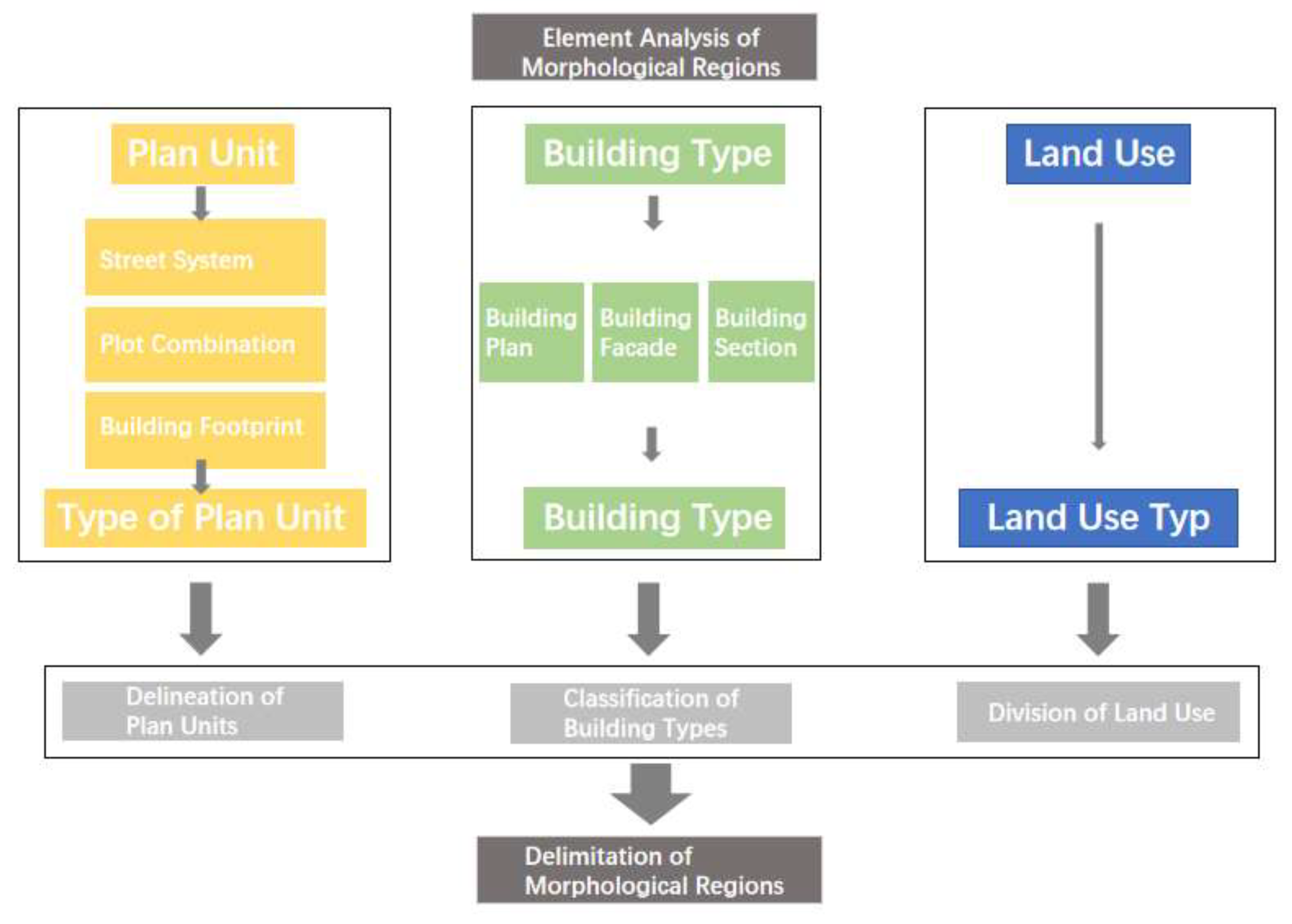
Figure 2.
Generation and Operational Mechanism of Management Units.
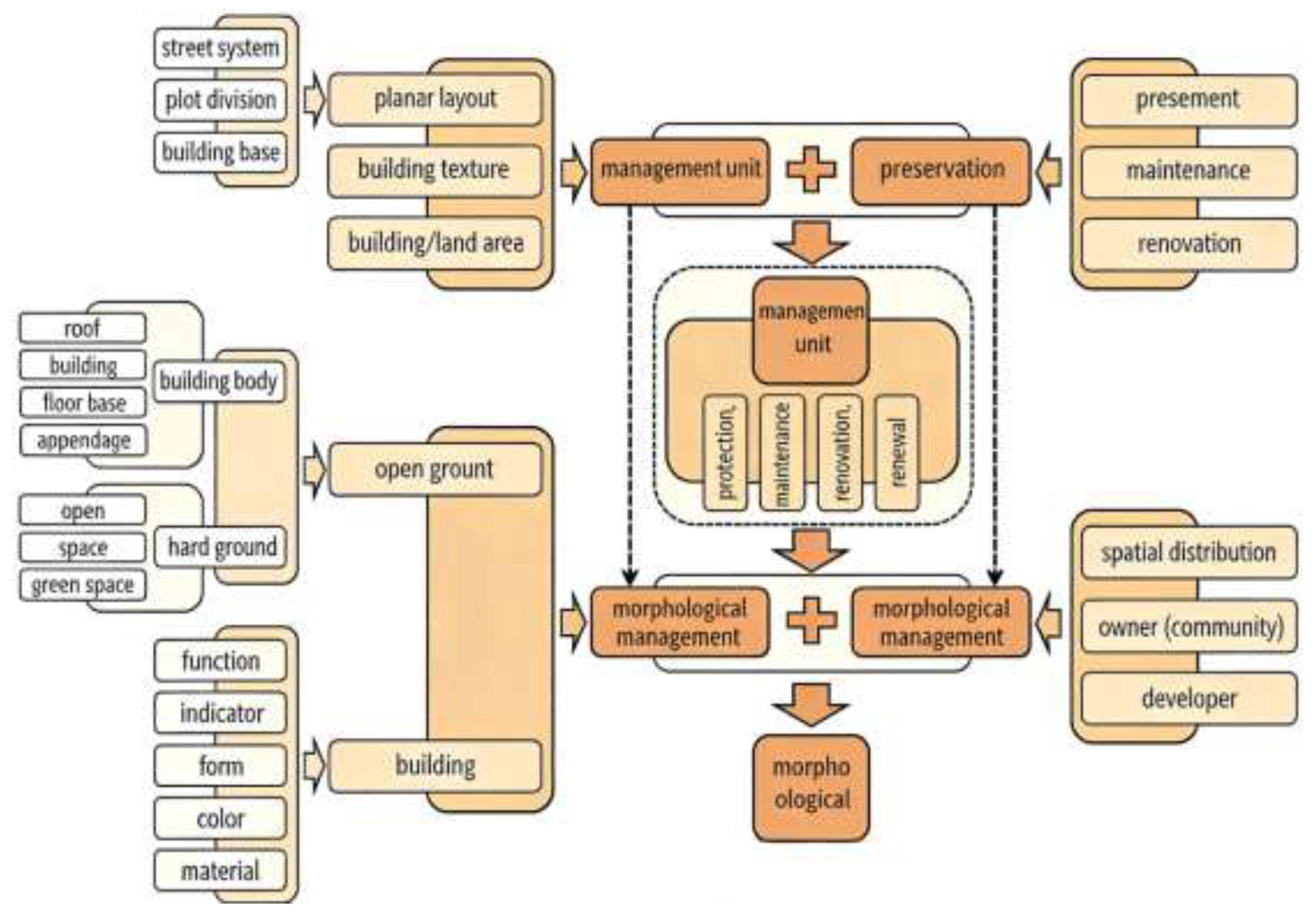
Figure 3.
Analysis Diagram of Traditional Spatial Pattern.
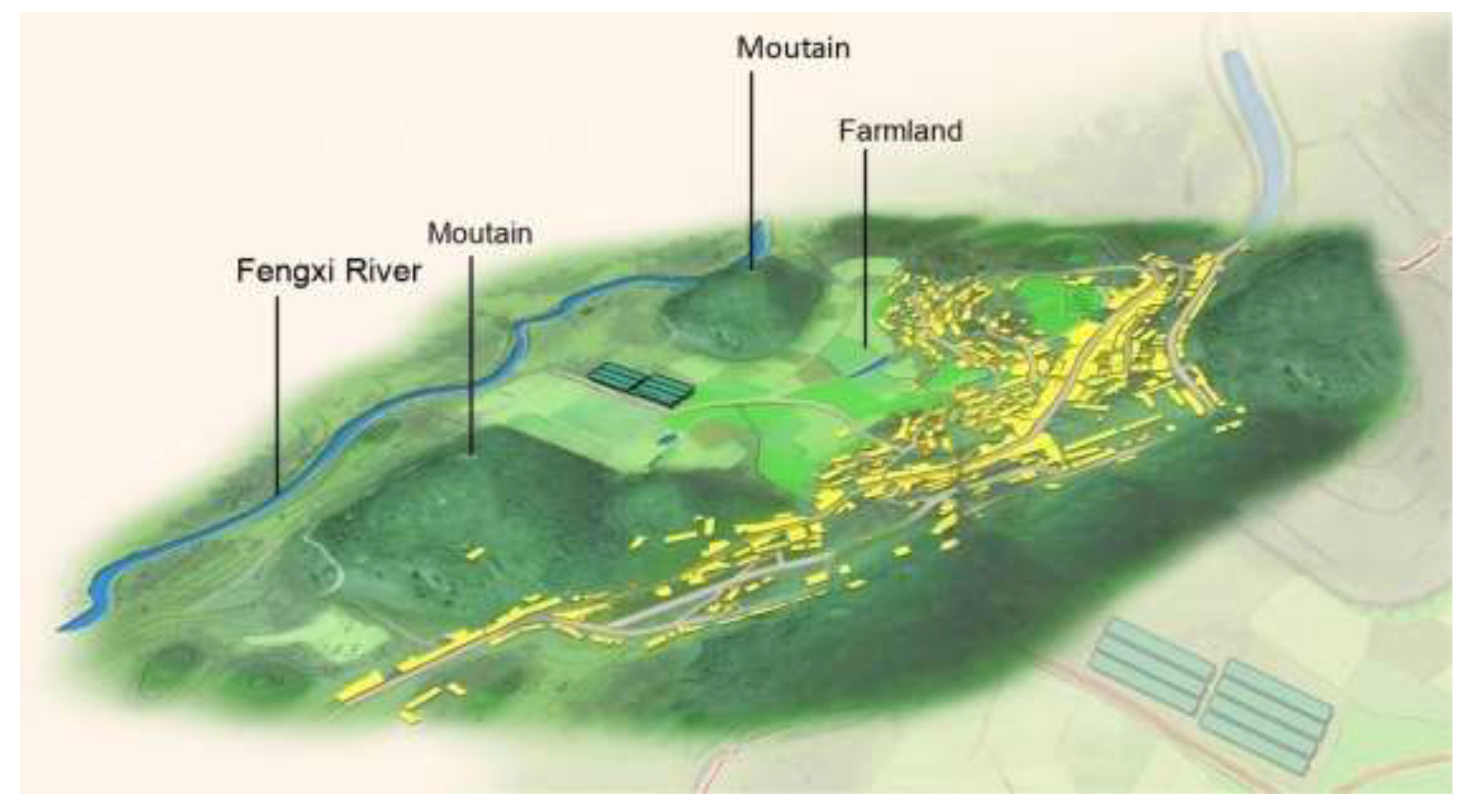
Figure 4.
Analysis Diagram of Traditional Street and Alley Texture.
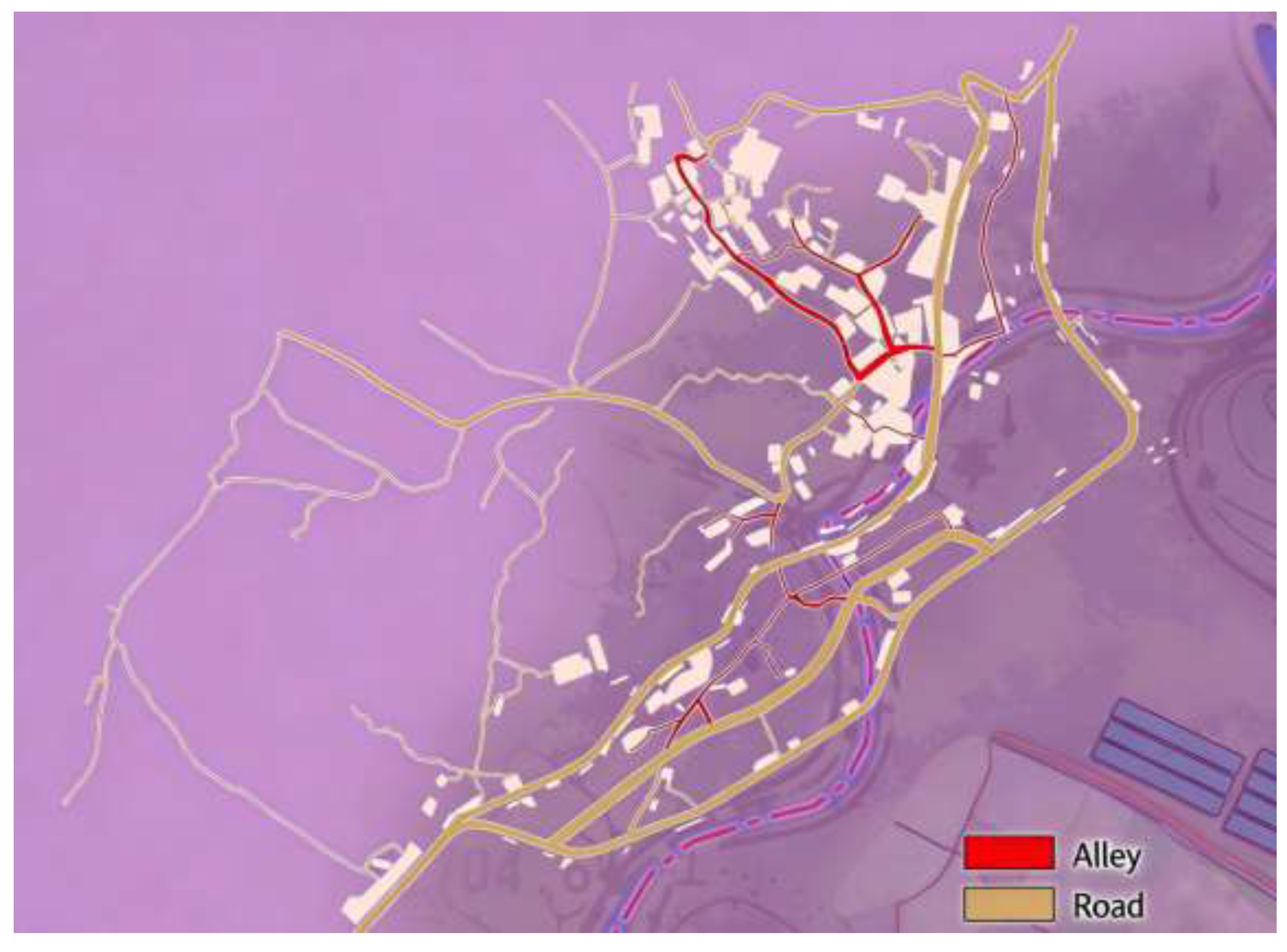
Figure 5.
Analysis Diagram of Traditional Architectural Layout.
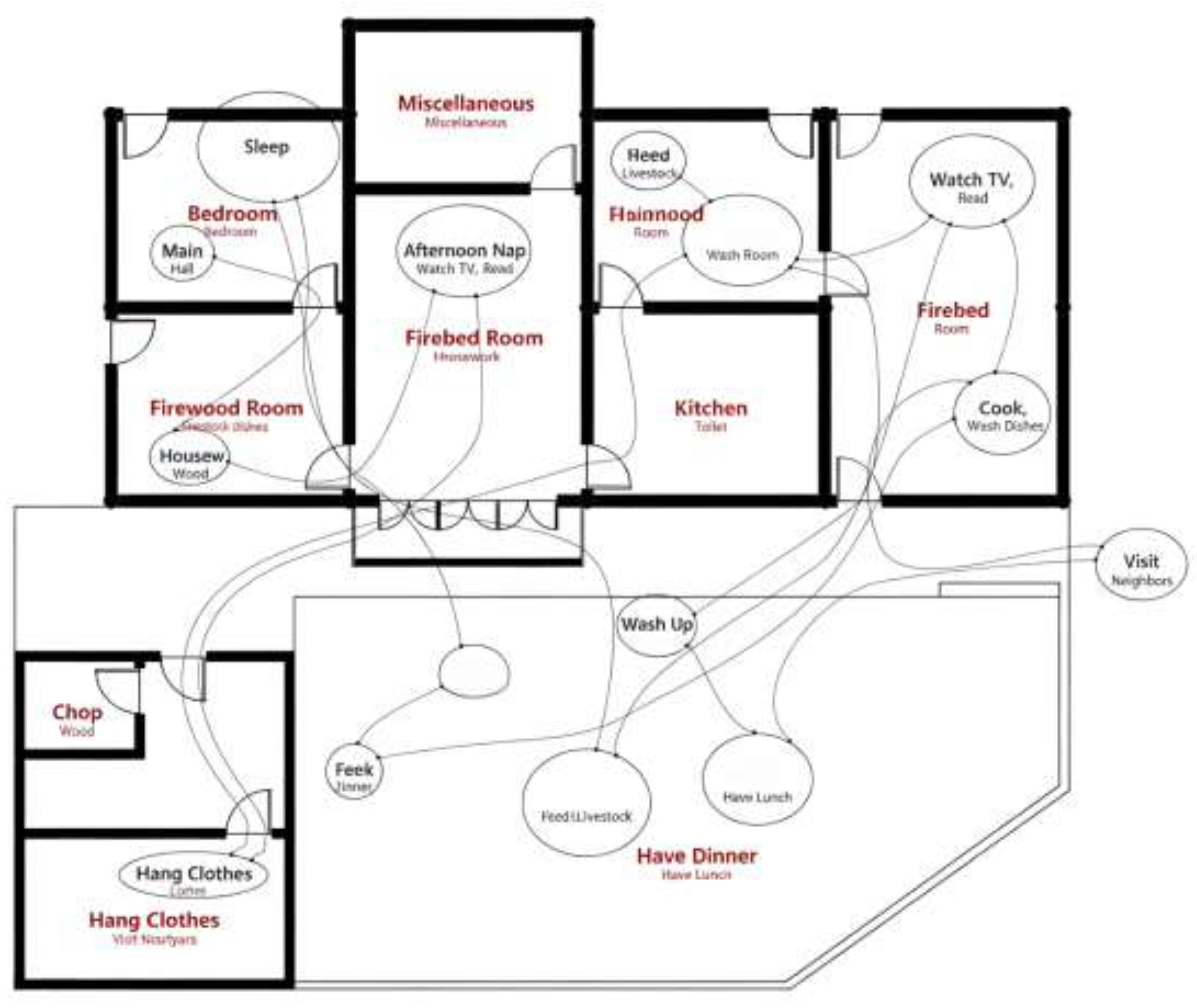
Figure 6.
Land Use Unit.
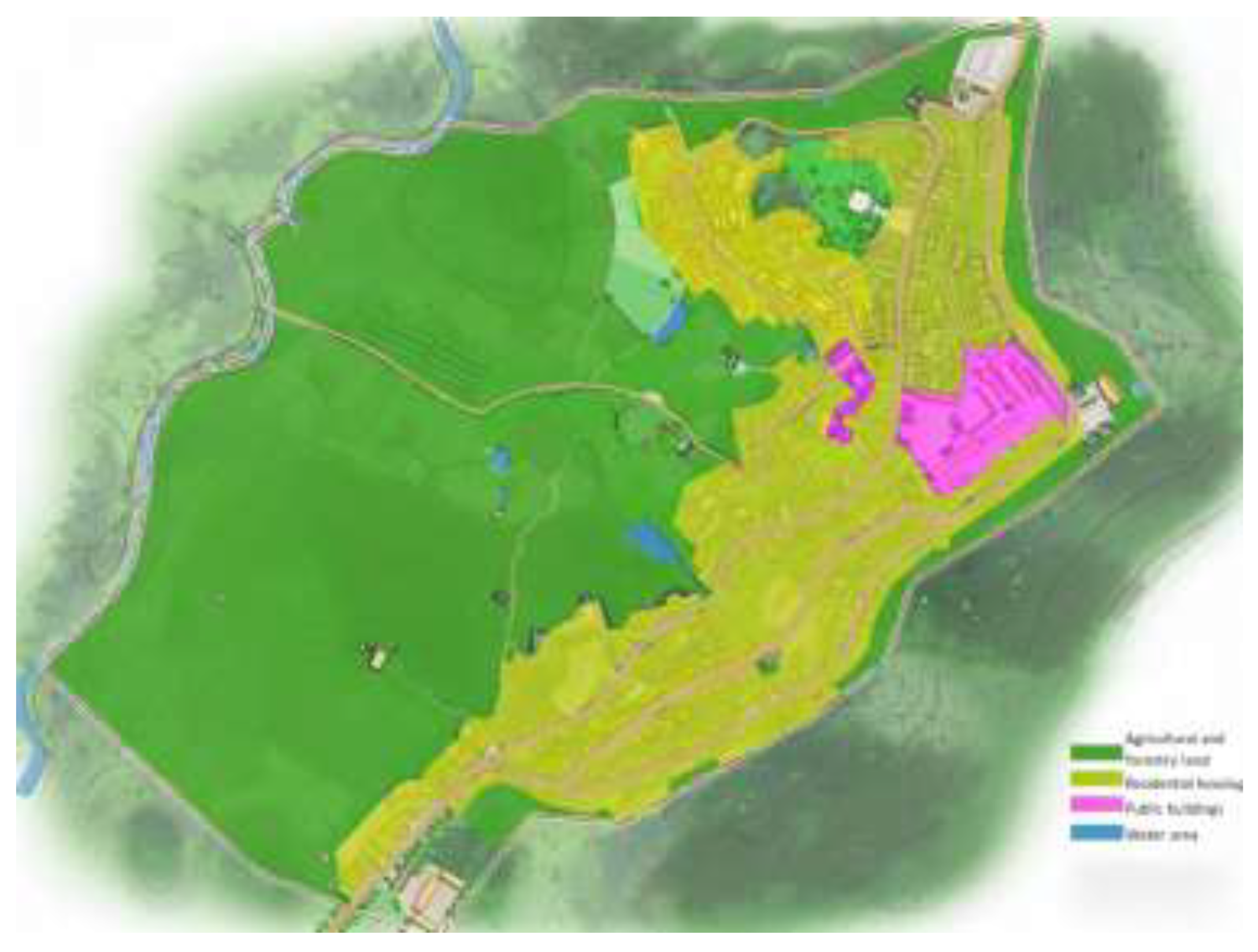
Figure 7.
Road System Unit.
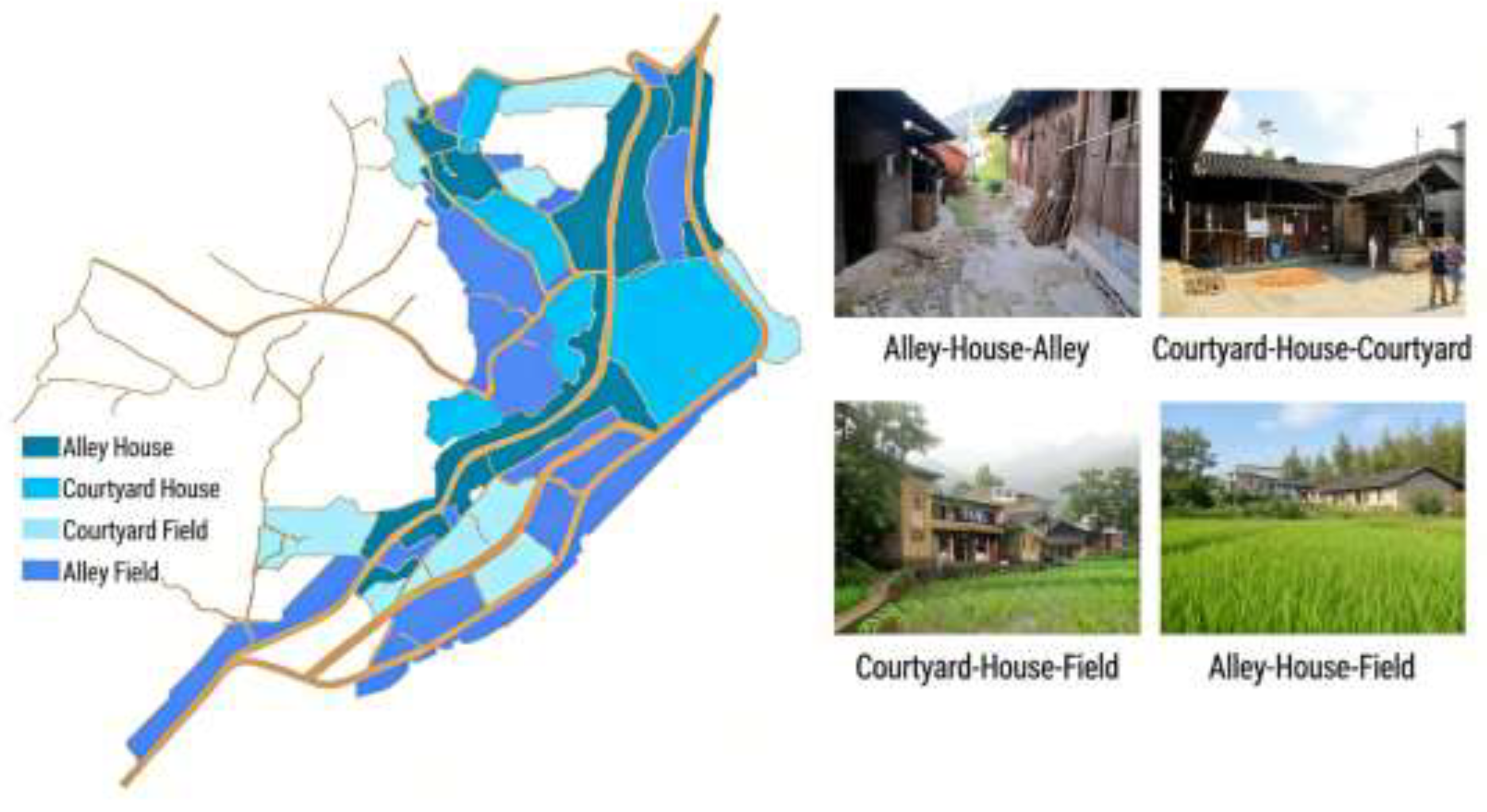
Figure 8.
Plot Combination Unit.
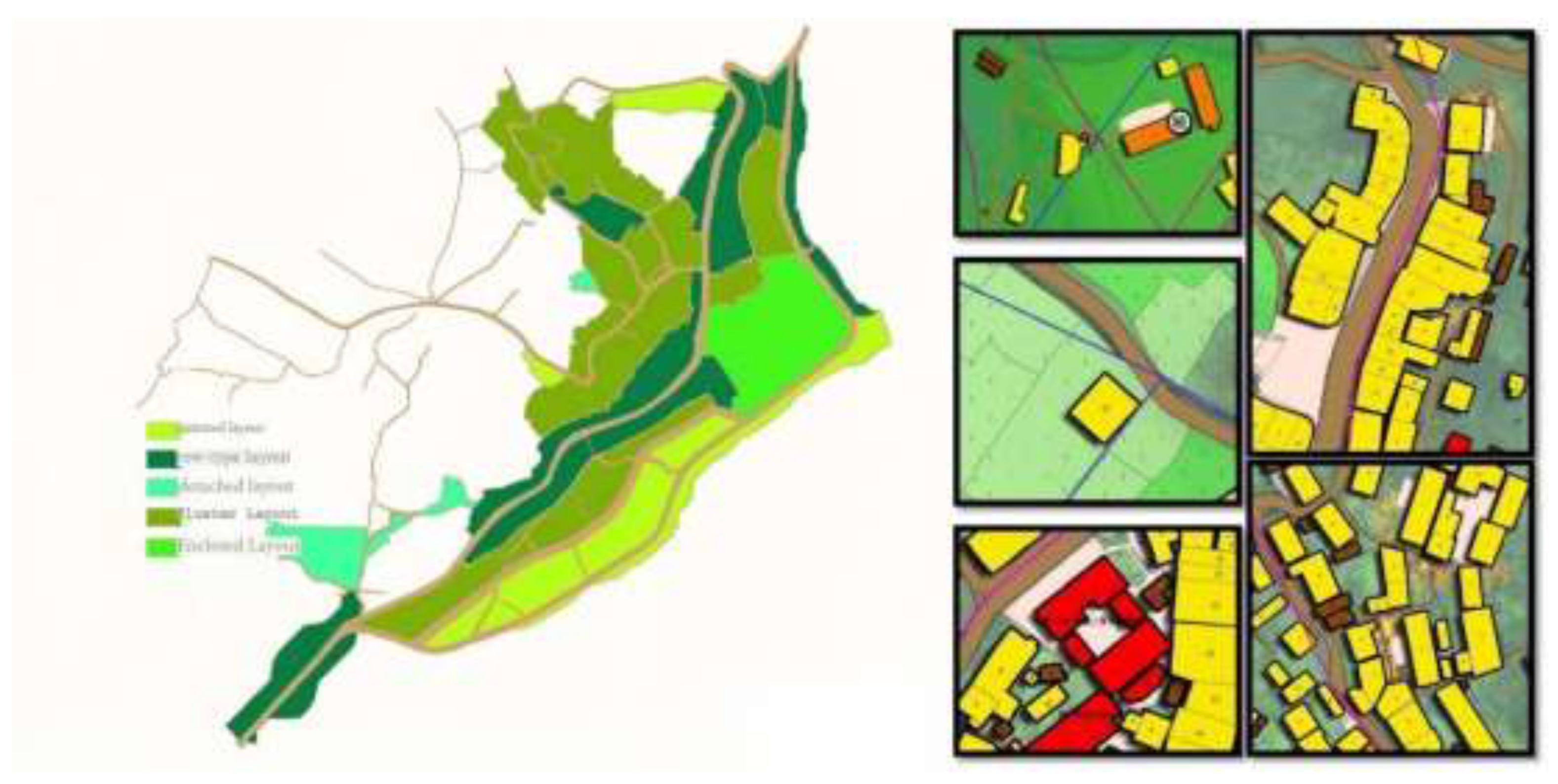
Figure 9.
Building Type Unit.
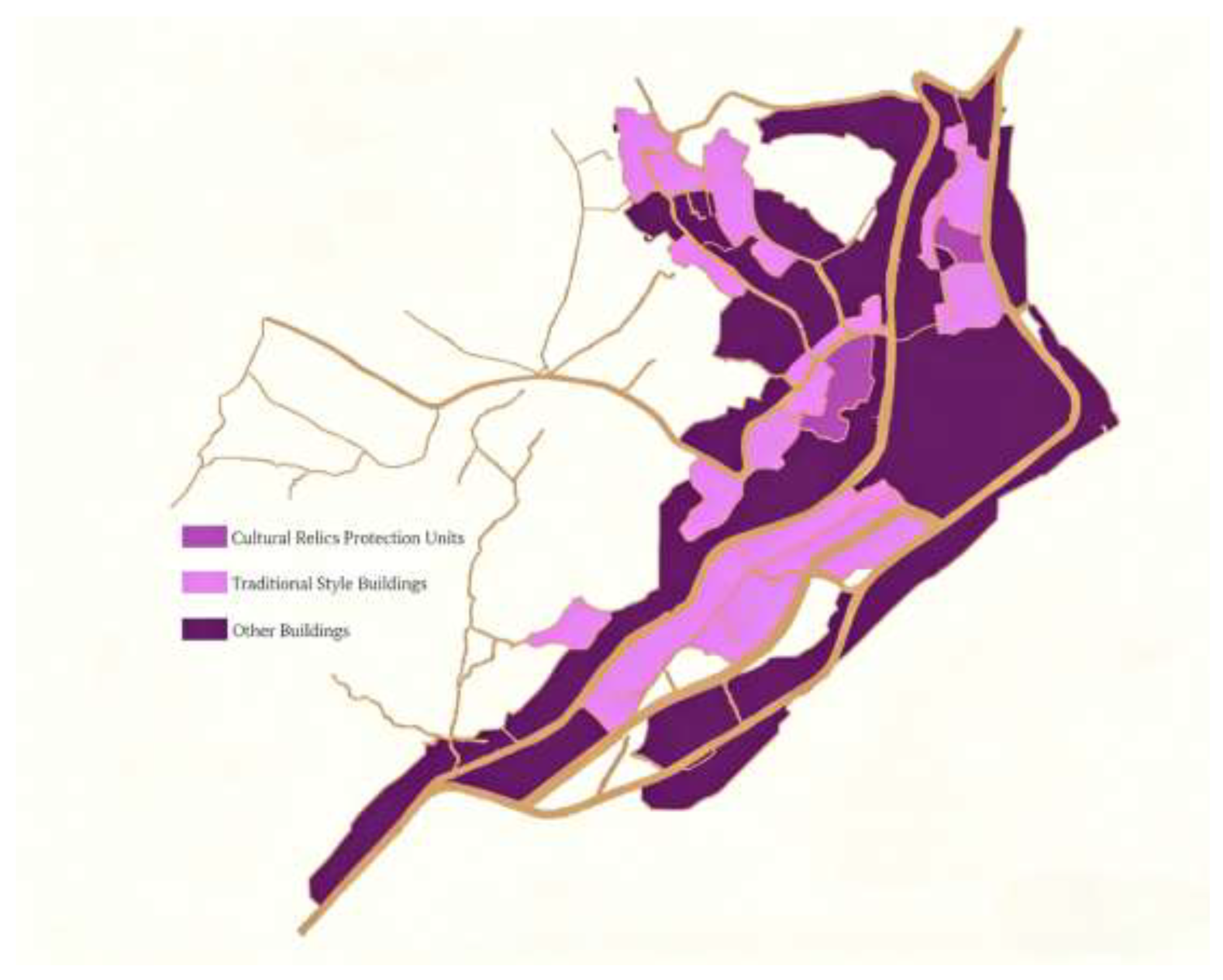
Figure 10.
Building Classification Unit.
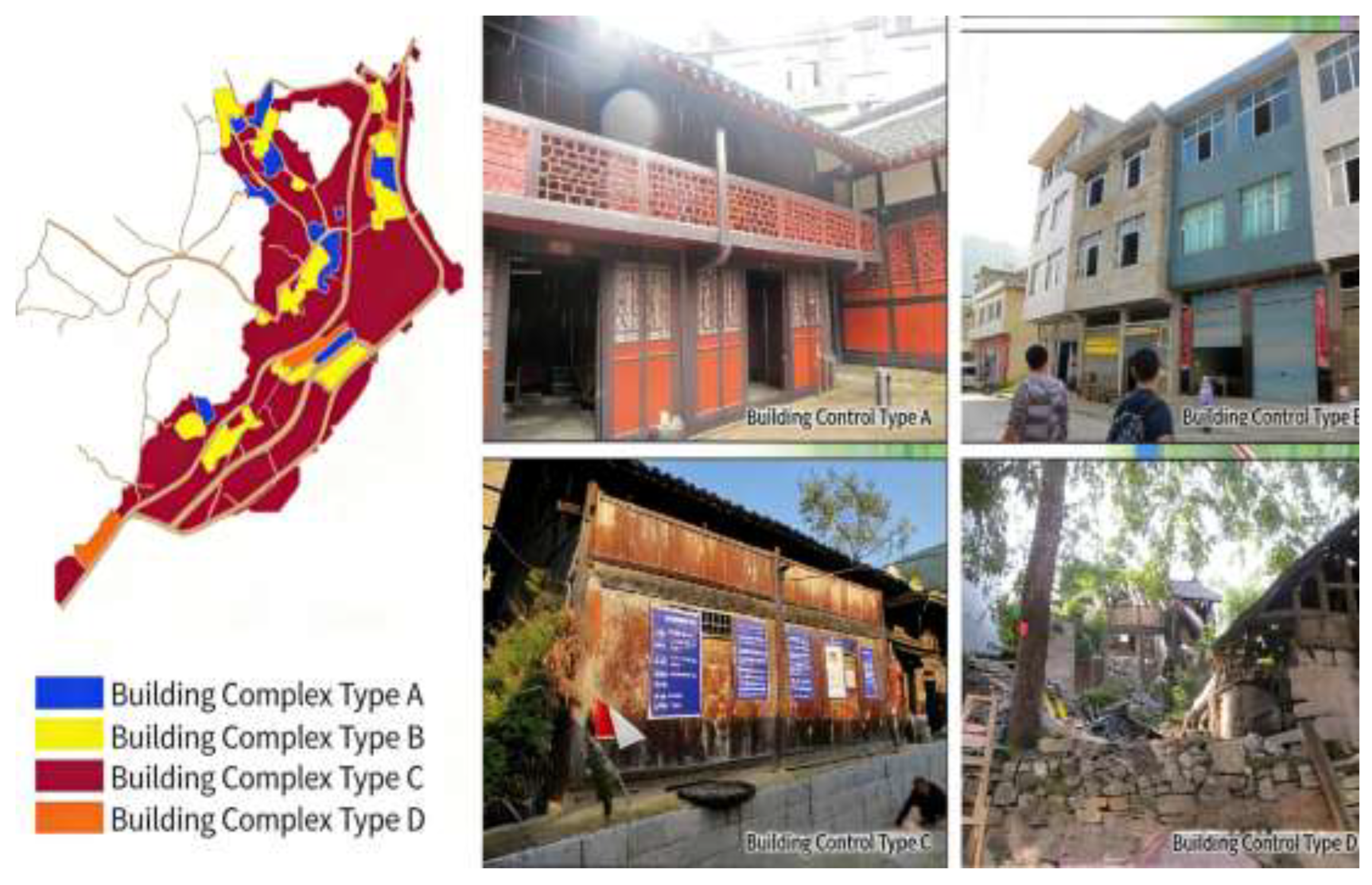
Figure 11.
Morphological Zoning Map.
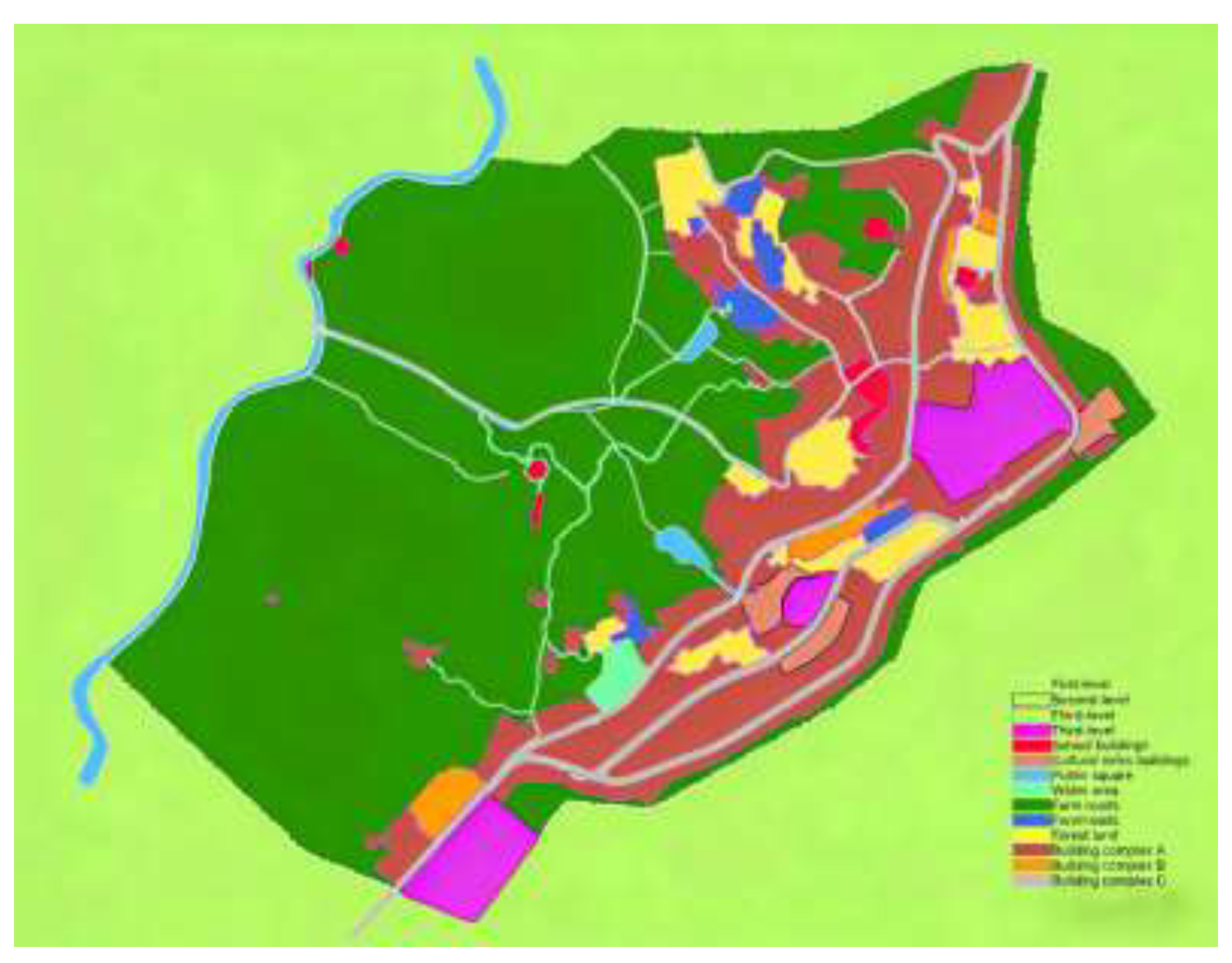
Figure 12.
Spatial Unit Classification Map.
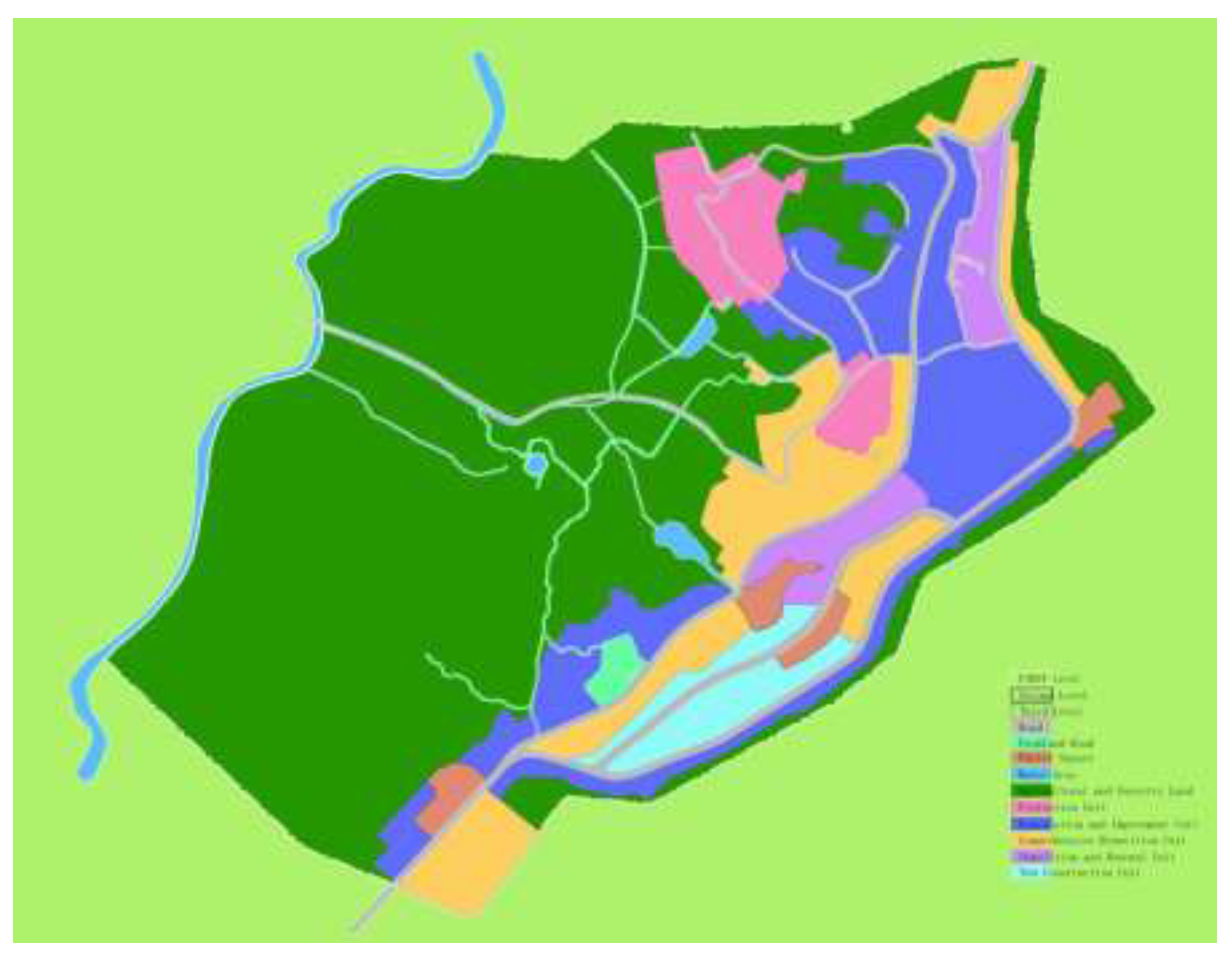
Disclaimer/Publisher’s Note: The statements, opinions and data contained in all publications are solely those of the individual author(s) and contributor(s) and not of MDPI and/or the editor(s). MDPI and/or the editor(s) disclaim responsibility for any injury to people or property resulting from any ideas, methods, instructions or products referred to in the content. |
© 2026 by the authors. Licensee MDPI, Basel, Switzerland. This article is an open access article distributed under the terms and conditions of the Creative Commons Attribution (CC BY) license (http://creativecommons.org/licenses/by/4.0/).
Copyright: This open access article is published under a Creative Commons CC BY 4.0 license, which permit the free download, distribution, and reuse, provided that the author and preprint are cited in any reuse.


