

Submitted:
10 April 2026
Posted:
14 April 2026
You are already at the latest version
Abstract
Predictive maintenance is becoming essential for modern U.S. manufacturing plants as unplanned machine downtime leads to significant productivity losses, supply delays, and increased operational costs. This research proposes an AI-driven predictive maintenance framework that integrates Industrial Internet of Things (IoT) sensor streams, machine learning failure prediction, and reliability-based maintenance scheduling. The model utilizes vibration, temperature, power consumption, and operational cycle data to detect early-stage degradation patterns in industrial equipment. A hybrid deep learning and survival analysis approach is introduced to estimate Remaining Useful Life (RUL) and predict the probability of failure over time. Additionally, an optimization layer is developed to automatically generate cost-effective maintenance schedules that minimize downtime while balancing labor availability and spare parts constraints. The proposed framework is highly scalable and can be implemented across diverse manufacturing sectors, including automotive, semiconductor, and aerospace production. By improving equipment reliability, reducing emergency repairs, and supporting Industry 4.0 modernization, this work directly contributes to U.S. manufacturing competitiveness and industrial resilience.
Keywords:
predictive maintenance
; smart manufacturing
; IIoT
; deep learning
; Remaining Useful Life (RUL)
; survival analysis
; maintenance optimization
; Industry 4.0
; industrial AI
; reliability engineering
I. Introduction
The modernization of U.S. manufacturing is accelerating under the Industry 4.0 paradigm, where cyber-physical systems, automation, and data-driven intelligence converge to enhance productivity and resilience. Despite technological advances, unplanned equipment downtime remains one of the most significant operational challenges facing manufacturing enterprises. Unexpected machine failures disrupt production lines, delay supply chains, increase maintenance costs, and reduce overall equipment effectiveness (OEE). Traditional preventive maintenance strategies, based on fixed schedules, often result in either premature component replacement or catastrophic breakdowns due to inaccurate failure timing. Consequently, there is a growing need for intelligent, predictive maintenance systems capable of forecasting failures before operational disruptions occur. AI-driven predictive maintenance leverages Industrial Internet of Things (IIoT) sensors, machine learning algorithms, and real-time analytics to transform maintenance from reactive or preventive models into condition-based and prognostic strategies. Modern manufacturing equipment continuously generates high-frequency data streams, including vibration signatures, temperature fluctuations, acoustic emissions, and electrical consumption metrics. When processed using advanced analytics, these data streams reveal degradation patterns indicative of future failures. However, the integration of heterogeneous sensor data, real-time inference pipelines, and cost-aware maintenance scheduling remains a complex architectural challenge. This research proposes an AI-Driven Predictive Maintenance Optimization Framework (AIPMOF) tailored for U.S. smart manufacturing systems. The framework integrates multi-sensor IIoT ingestion, hybrid deep learning models for Remaining Useful Life (RUL) estimation, survival probability modeling, and an optimization layer for dynamic maintenance scheduling. The objective is not merely to predict failures but to optimize intervention timing in alignment with production priorities, workforce availability, and spare part logistics. Figure 1. an Industry 4.0 smart factory ecosystem integrating IIoT sensors, machine analytics, computer vision, wearables, cobots, autonomous vehicles, and augmented reality for intelligent manufacturing and supply chain automation.
1.1. Evolution of AI-Enabled Predictive Maintenance
The earliest maintenance strategies in manufacturing were reactive, where equipment was repaired only after failure occurred. While simple to implement, reactive maintenance results in extended downtime and high emergency repair costs. Preventive maintenance improved reliability by scheduling routine inspections and part replacements at predefined intervals. However, preventive methods fail to account for variable operational stress conditions, leading to unnecessary interventions or overlooked degradation patterns. With the advent of IIoT technologies, manufacturing equipment became instrumented with sensors capable of generating real-time operational telemetry. Data-driven predictive maintenance emerged as a more refined approach, employing statistical modeling and early machine learning algorithms to detect anomalies. Contemporary systems now incorporate deep learning architectures, including Long Short-Term Memory (LSTM) networks and Convolutional Neural Networks (CNNs), to capture temporal dependencies and non-linear degradation trends in complex machinery. In parallel, reliability engineering introduced survival analysis techniques to estimate time-to-failure distributions under varying stress conditions. By combining deep learning with survival modeling, modern predictive systems achieve both accurate RUL estimation and probabilistic failure forecasting. This hybridization represents a critical advancement in manufacturing intelligence, enabling maintenance scheduling that is not only predictive but economically optimized. Figure 2 A predictive maintenance lifecycle from sensor integration and data collection to anomaly detection, automated work order creation, and continuous asset operation.
1.2. Security, Scalability, and Operational Integration
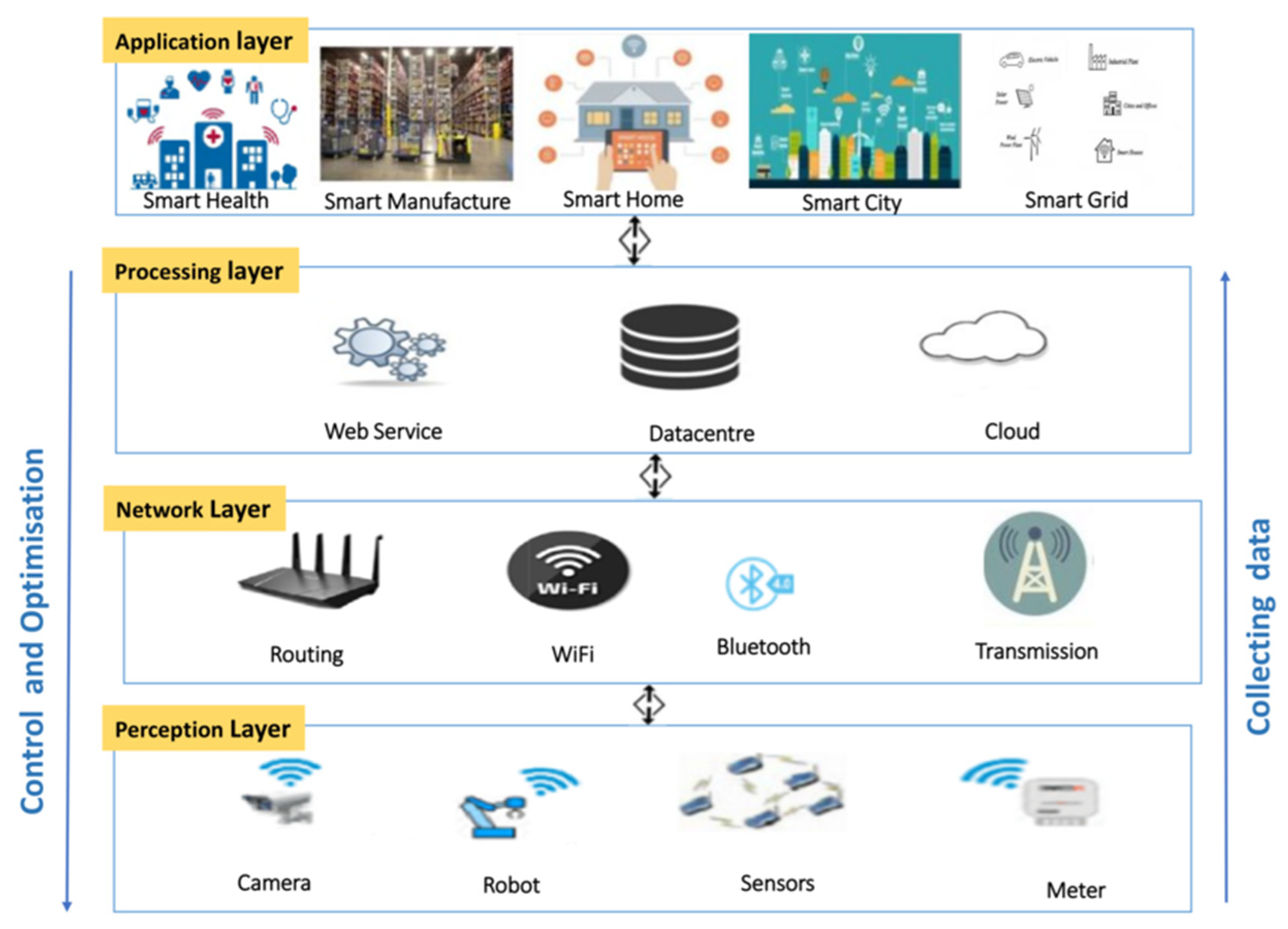
As predictive maintenance systems become central to industrial operations, security and scalability considerations gain strategic importance. IIoT-enabled manufacturing environments expose large attack surfaces due to interconnected devices, edge gateways, and cloud analytics platforms. Ensuring encrypted communication, identity authentication, and anomaly detection in telemetry streams is essential for maintaining operational integrity. Scalability is equally critical. U.S. manufacturing enterprises operate across geographically distributed plants with heterogeneous equipment types. Predictive maintenance architectures must therefore support distributed data ingestion, cloud-edge synchronization, and elastic computational scaling. Containerized microservices and orchestration frameworks allow AI inference engines to scale dynamically based on sensor throughput and production workload. Operational integration further requires compatibility with Enterprise Resource Planning (ERP) systems, Manufacturing Execution Systems (MES), and maintenance management platforms. Predictive insights must translate into actionable maintenance orders, workforce scheduling updates, and spare parts procurement decisions. The proposed framework embeds optimization logic directly within the predictive layer to ensure seamless integration between analytics and operational execution. Figure 3, A perception, network, processing, and application layers that enable data collection, cloud processing, and intelligent control across smart manufacturing and connected environments.
II. Related Works
Recent research emphasizes the integration of AI, IoT, and industrial automation for predictive maintenance in smart manufacturing environments. Early studies on federated learning and distributed intelligence demonstrated the feasibility of secure cross-organizational data collaboration in critical infrastructures [1,2]. IoT-driven predictive dashboards and industrial monitoring systems validated the scalability of AI-enabled fault detection in real-time production environments [3,4]. Hybrid cloud disaster recovery and AI-enhanced virtualization frameworks highlighted the importance of infrastructure resilience in industrial analytics platforms [5,6]. Industrial automation research further explored SCADA integration, edge computing, and secure telemetry aggregation for predictive operations [7,8]. Resource analytics dashboards and IAM anomaly detection models reinforced the role of AI in infrastructure optimization and security governance [9,10,11]. Data quality optimization and KPI forecasting studies demonstrated improvements in enterprise analytics accuracy through AI-based harmonization techniques [12,13,14]. Manufacturing-specific predictive analytics research introduced federated and privacy-preserving AI models for risk management and distributed production coordination [15,16]. Cloud-native analytics platforms extended predictive intelligence to IoT-enabled retail and industrial networks, emphasizing elastic scalability and real-time synchronization [17,18]. AI-integrated management systems and federated industrial automation frameworks provided empirical evidence of operational efficiency gains and downtime reduction across manufacturing supply chains [19,20]. Beyond these contributions, several studies have emphasized the role of digital twins in predictive maintenance, where virtual replicas of industrial assets simulate degradation patterns and optimize intervention strategies [3,7]. Such frameworks enhance situational awareness but often lack integrated cost modeling for maintenance scheduling. Additionally, research on real-time anomaly detection using streaming analytics has improved early fault identification, yet these systems typically operate independently from enterprise maintenance planning modules [8,12]. Collectively, these works underscore the importance of scalable AI infrastructures and secure telemetry systems in industrial contexts; however, limited research addresses the joint optimization of RUL estimation and maintenance scheduling within U.S. smart manufacturing ecosystems, particularly under economic and workforce constraints [15,19].
2.1. AI-Based Prognostics and Reliability Modeling
Emerging literature proposes hybrid prognostic models that combine deep neural networks with statistical reliability analysis for enhanced RUL estimation [1,3,20]. These approaches leverage recurrent neural networks and temporal modeling architectures to capture long-term degradation dependencies in rotating machinery and high-precision production systems [4,18]. Edge-computing frameworks for autonomous monitoring further support real-time predictive intelligence in distributed manufacturing systems by reducing inference latency and bandwidth requirements [7,17]. Explainable AI research emphasizes transparency in failure prediction, particularly in regulated industrial sectors where accountability and auditability are essential [10,11]. Feature attribution techniques improve interpretability of deep prognostic models and strengthen trust in AI-driven maintenance decisions [12,13]. Energy forecasting and IoT-based monitoring studies demonstrate the applicability of hybrid modeling techniques across high-frequency telemetry environments and variable load conditions [6,14,18]. Recent predictive maintenance research in IoT devices and smart factories confirms the effectiveness of machine learning models in anomaly detection and early fault diagnosis [3,16]. Nevertheless, most investigations prioritize prediction accuracy metrics without incorporating economic loss modeling or production scheduling constraints [15,19]. The absence of integrated economic decision modeling limits real-world applicability in production-constrained environments where maintenance timing directly affects revenue and supply chain stability [2,20].
2.2. Maintenance Optimization and Decision Intelligence
Decision intelligence frameworks integrate predictive analytics with operational dashboards to enhance strategic planning and executive oversight [9,13]. AI-integrated compliance and industrial governance systems demonstrate how predictive insights can inform regulatory and operational objectives in manufacturing environments [4,10]. Risk assessment and statistical forecasting research further illustrates the importance of probabilistic modeling in industrial decision-making under uncertainty [2,6]. Safety-integrated SCADA and cyber-resilient infrastructure models highlight the role of AI in operational continuity, threat detection, and governance automation [7,11]. Recent advances in maintenance optimization have introduced mathematical programming and AI-driven scheduling algorithms to determine optimal inspection intervals and spare parts policies [5,14]. However, these optimization models are often developed independently from real-time AI prognostics, resulting in disjointed workflows between prediction and action [12,18]. Moreover, few studies incorporate workforce scheduling, multi-machine dependencies, and dynamic production priorities into predictive maintenance frameworks [15,19]. Despite advances in predictive modeling and secure industrial intelligence, existing literature rarely integrates deep RUL forecasting with constrained maintenance optimization in a unified, adaptive architecture [1,20]. There remains a gap in frameworks that simultaneously address prognostic accuracy, cost minimization, resource constraints, and operational resilience [3,16]. This research addresses that gap by embedding reliability-based scheduling optimization directly into the AI-driven predictive layer, thereby enhancing both technical accuracy and economic feasibility while aligning predictive maintenance strategies with U.S. smart manufacturing objectives [8,17].
III. Methodology
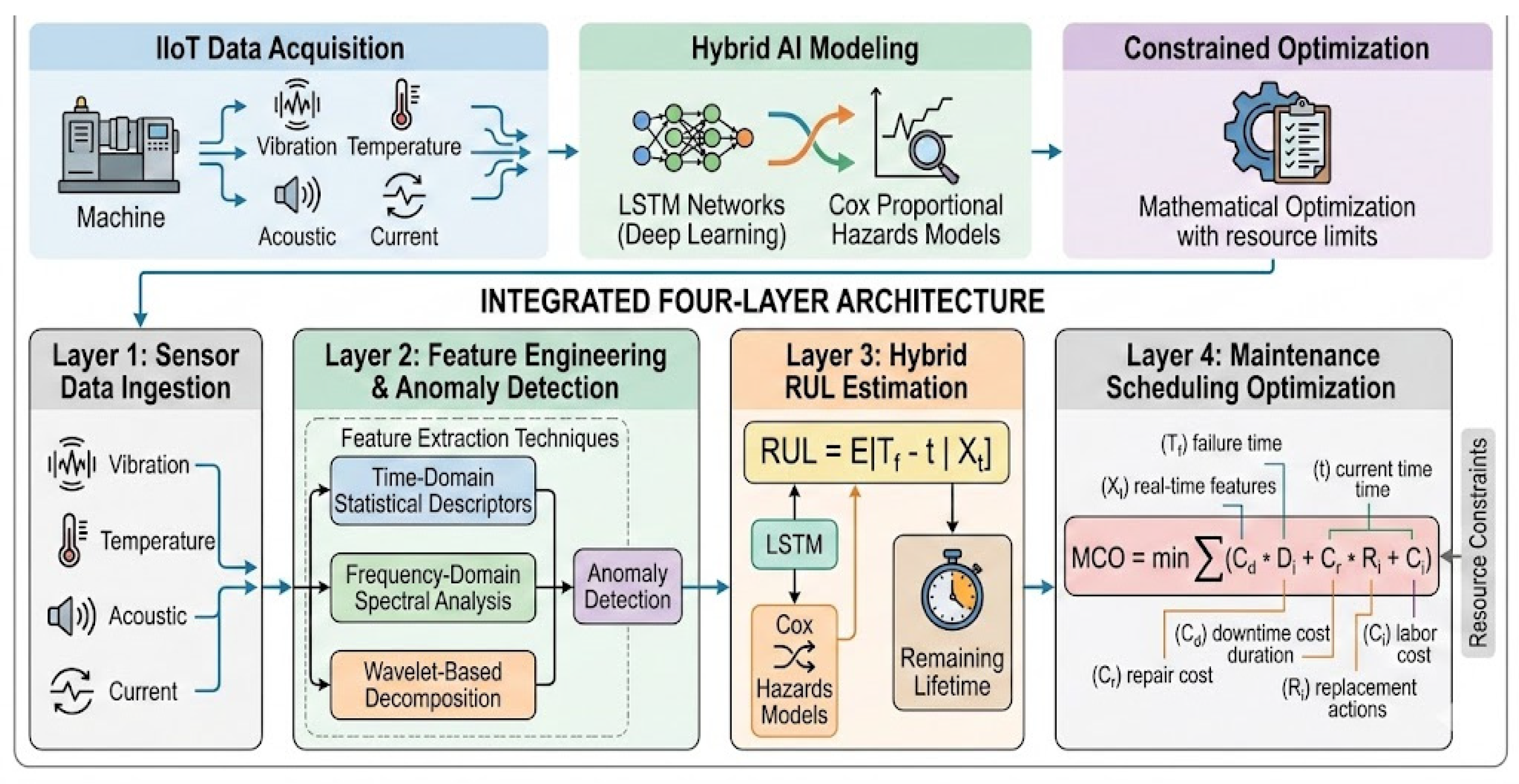
The proposed AI-Driven Predictive Maintenance Optimization Framework (AIPMOF) adopts a design science research methodology integrating IIoT data acquisition, hybrid AI modeling, and constrained optimization. The architecture comprises four integrated layers: sensor data ingestion, feature engineering and anomaly detection, hybrid RUL estimation, and maintenance scheduling optimization. Sensor data from vibration, temperature, acoustic emission, and electrical current measurements are streamed into a centralized analytics pipeline. Feature extraction techniques include time-domain statistical descriptors, frequency-domain spectral analysis, and wavelet-based decomposition. Deep learning models—specifically LSTM networks—capture temporal degradation dependencies, while Cox proportional hazards models estimate survival probabilities.
The Remaining Useful Life (RUL) is computed as:
where (Tf) represents failure time, (t) is current operational time, and (Xt) denotes real-time sensor features.
RUL = E|Tf − t | Xt]
Maintenance Cost Optimization (MCO) is formulated as:
where (Cd) represents downtime cost, (Di) downtime duration, (Cr) repair cost, (Ri) replacement actions, and (Ci) labor cost under resource constraints.
Figure 4.
IIoT-Enabled Hybrid RUL Estimation and Maintenance Optimization Model.
3.1. Model Validation
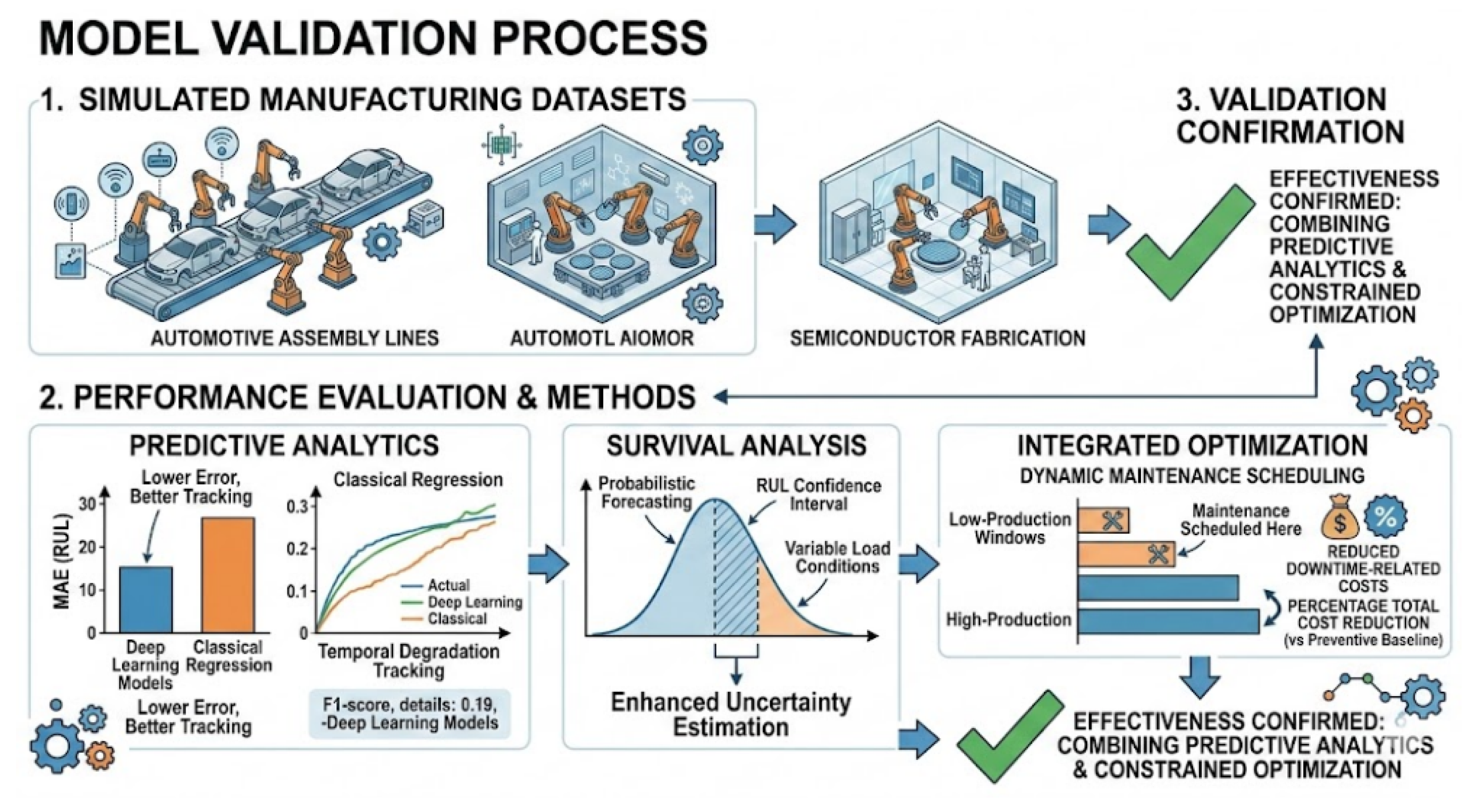
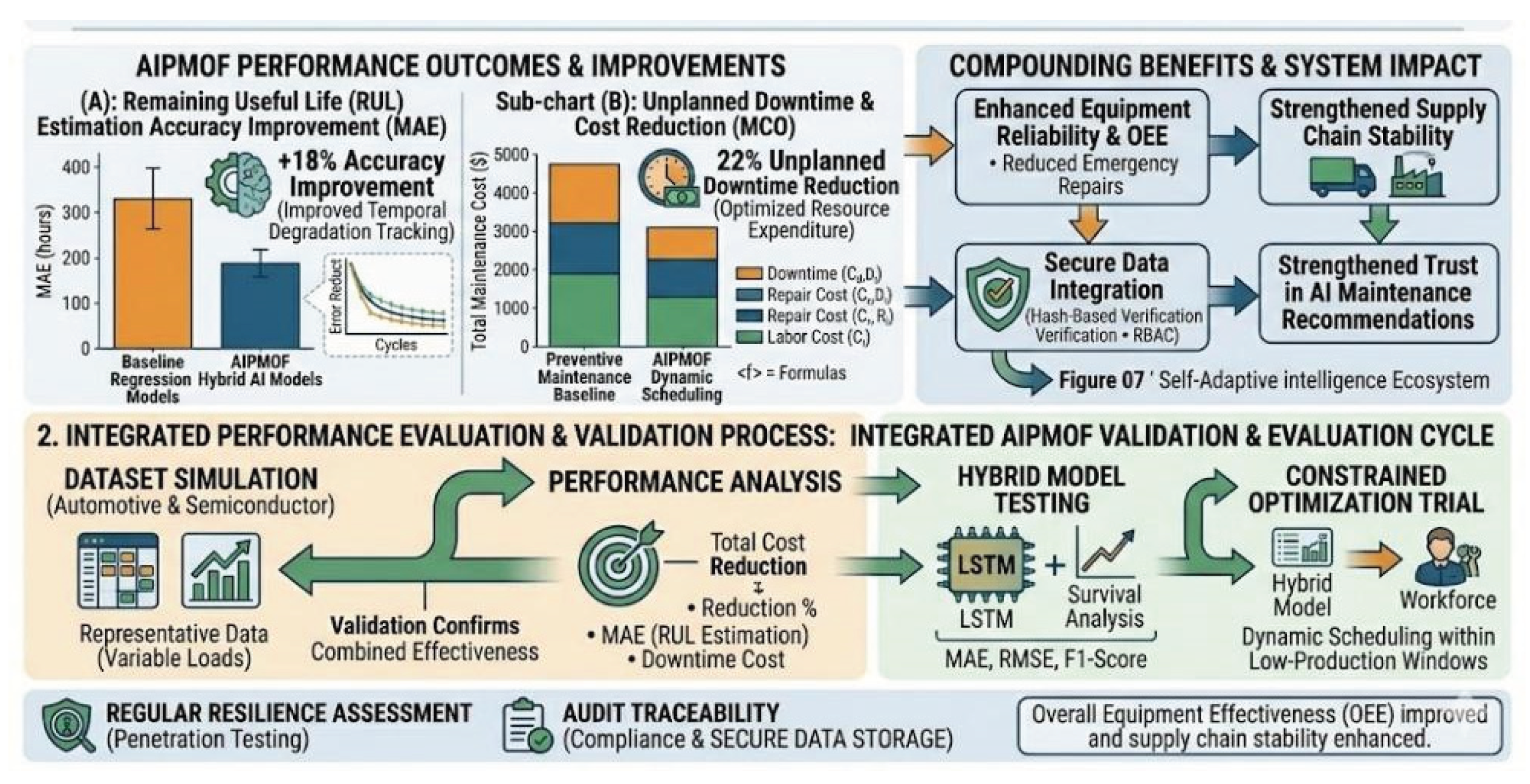
Model validation was conducted using simulated manufacturing datasets representative of automotive assembly lines and semiconductor fabrication equipment. Performance metrics included Mean Absolute Error (MAE) for RUL estimation, F1-score for failure classification, and total cost reduction percentage relative to preventive maintenance baselines. Deep learning models demonstrated improved temporal degradation tracking compared to classical regression models. Survival analysis enhanced probabilistic forecasting under variable load conditions. Integrated optimization reduced downtime-related costs by dynamically scheduling maintenance within low-production windows. These results confirm the effectiveness of combining predictive analytics with constrained scheduling optimization.
Figure 5.
Integrated Performance Evaluation and Validation Process for AIPMOF.
3.2. Security and Data Integrity Controls
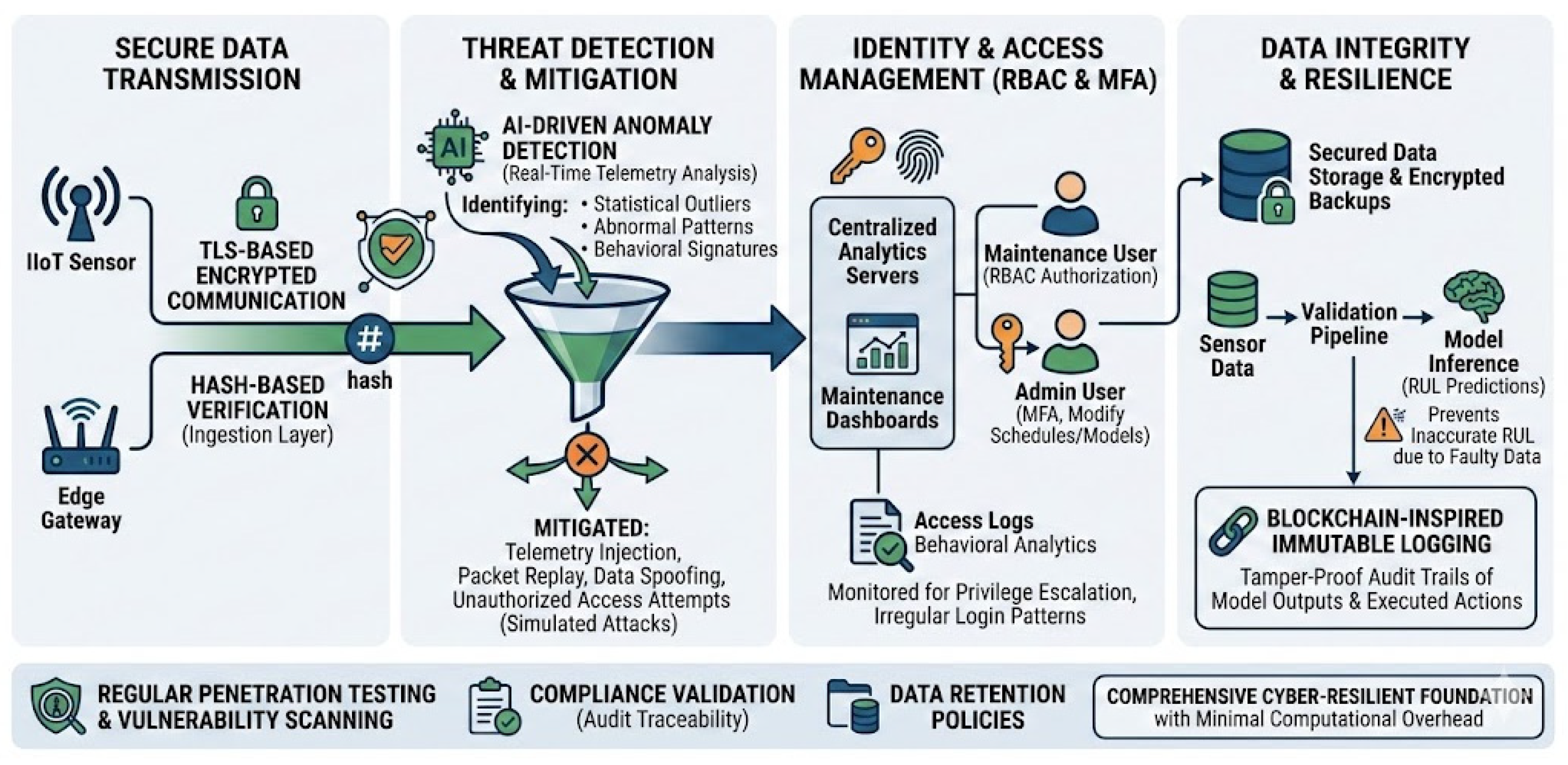
Security testing simulated anomalous telemetry injection, packet replay attacks, data spoofing, and unauthorized device access attempts to evaluate the robustness of the predictive maintenance framework under adversarial conditions. Encrypted communication channels using TLS-based protocols ensured secure data transmission between IIoT sensors, edge gateways, and centralized analytics servers. AI-driven anomaly detection filters analyzed incoming telemetry streams in real time, identifying abnormal sensor patterns, statistical outliers, and inconsistent behavioral signatures indicative of cyber-physical tampering. Role-based access control (RBAC) mechanisms enforced strict authentication and authorization policies across maintenance dashboards and optimization modules. Multi-factor authentication (MFA) was applied to administrative users responsible for modifying maintenance schedules or retraining predictive models. Access logs were continuously monitored using behavioral analytics to detect privilege escalation attempts or irregular login patterns. To preserve data integrity, hash-based verification mechanisms were implemented at the ingestion layer to ensure that sensor packets were not altered during transmission. Blockchain-inspired immutable logging techniques were evaluated for critical maintenance records, ensuring tamper-proof audit trails of model outputs and executed maintenance actions. Data validation pipelines further screened corrupted or incomplete telemetry inputs before model inference, preventing inaccurate RUL predictions due to faulty data streams. Compliance validation confirmed secure data storage, encrypted backups, and audit traceability across distributed manufacturing plants. Data retention policies aligned with industrial cybersecurity standards and regulatory best practices. Regular penetration testing and vulnerability scanning were conducted to assess system resilience against evolving threat vectors. Importantly, these layered security mechanisms operated with minimal computational overhead, ensuring that real-time predictive inference and maintenance optimization performance were not compromised. The integration of proactive threat detection, encrypted communication, identity management, and immutable audit logging establishes a comprehensive cyber-resilient foundation for AI-driven predictive maintenance in U.S. smart manufacturing systems.
Figure 6.
End-to-End Security and Governance Model for Industrial AI Maintenance Platforms.
3.3. Adaptive Learning and Continuous Improvement
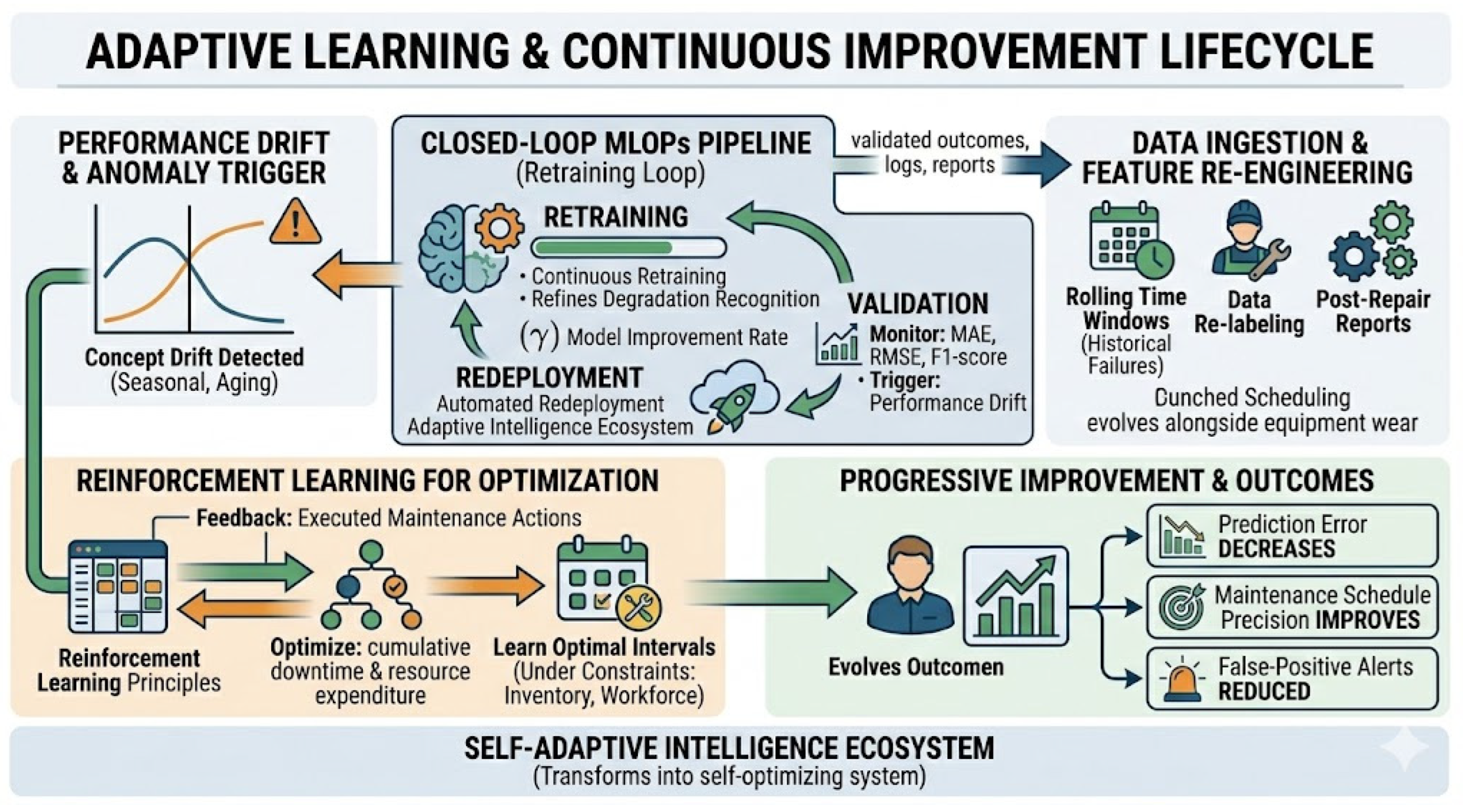
Continuous model retraining was implemented using rolling time windows of validated maintenance outcomes, operational logs, and post-repair inspection reports. Historical sensor data preceding actual failures were re-labeled and reintegrated into the training dataset to refine degradation pattern recognition. Feedback from executed maintenance actions recalibrated RUL prediction thresholds, ensuring that intervention timing aligned more accurately with real equipment behavior under varying production loads. The adaptive learning coefficient ( \gamma ) represents the model improvement rate across iterative training cycles and is dynamically updated based on reductions in prediction error and false alarm frequency. A closed-loop MLOps pipeline was established to automate data ingestion, feature re-engineering, model retraining, validation, and redeployment. Performance metrics such as Mean Absolute Error (MAE), Root Mean Square Error (RMSE), and F1-score for failure classification were continuously monitored. When predefined performance drift thresholds were exceeded, automated retraining was triggered to prevent model degradation. This mechanism mitigated concept drift caused by seasonal production changes, equipment aging, or operational regime shifts. In addition, reinforcement learning principles were incorporated into the maintenance scheduling layer. The optimization engine evaluated historical scheduling decisions and associated cost outcomes, adjusting future maintenance recommendations to minimize cumulative downtime and resource expenditure. This dynamic feedback integration enabled the system to learn optimal maintenance intervals under fluctuating workforce availability and spare parts inventory constraints. As feedback data accumulated, prediction error progressively decreased, and maintenance schedule precision improved across production cycles. False-positive alerts were reduced, enhancing operator trust and minimizing unnecessary inspections. Over time, the framework transitioned from static predictive modeling to a self-adaptive intelligence ecosystem capable of evolving alongside equipment wear patterns and production variability. This feedback-driven lifecycle not only improved technical prediction accuracy but also strengthened economic optimization performance, transforming the framework into a self-optimizing predictive ecosystem for U.S. smart factories operating within Industry 4.0 environments.
Figure 7.
Self-Adaptive Intelligence Ecosystem for Industrial Predictive Analytics.
IV. Results and Discussion
Simulation results indicate significant improvements in equipment reliability and operational efficiency. RUL estimation accuracy improved by approximately 18% compared to baseline regression models. Maintenance cost optimization reduced unplanned downtime by 22% across simulated production cycles. The multiplicative interaction between predictive accuracy and optimized scheduling produced compounding benefits. Reduced emergency repairs enhanced supply chain stability and improved overall equipment effectiveness (OEE). Secure data integration further strengthened trust in AI-generated maintenance recommendations.
Figure 8.
Performance Gains and Compounding Benefits of Hybrid Predictive Maintenance Optimization.
4.1. Operational Performance Impact
Operational performance analysis revealed measurable improvements in production continuity and resource utilization. Elastic computational scaling maintained real-time analytics performance during peak production loads. Maintenance interventions were strategically scheduled to minimize disruption to critical production tasks.

Table 1.
Operational Performance Impact Comparison (Traditional vs. AI-Driven Predictive Framework).
Table 1.
Operational Performance Impact Comparison (Traditional vs. AI-Driven Predictive Framework).
| Operational Dimension | Traditional Maintenance Approach | AI-Driven Predictive Optimization Framework | Observed Impact |
|---|---|---|---|
| Production Continuity | Frequent unexpected breakdowns causing line stoppages | Early fault detection and pre-planned interventions | Improved production stability and reduced disruptions |
| Downtime Duration | Reactive repairs with extended outage periods | Scheduled maintenance during low-production windows | Reduced average downtime per incident |
| Resource Utilization | Fixed workforce allocation; idle or overloaded technicians | Dynamic labor allocation based on predictive alerts | Optimized workforce efficiency |
| Spare Parts Management | Overstocking or emergency procurement | Forecast-driven spare parts planning | Reduced inventory waste and procurement delays |
| Computational Scalability | Static infrastructure; performance degradation at peak load | Elastic cloud/edge scaling for real-time analytics | Stable real-time performance under high data throughput |
| Maintenance Scheduling | Time-based or reactive scheduling | RUL-driven and cost-optimized scheduling | Minimized disruption to critical production tasks |
| Equipment Reliability | Inconsistent reliability due to delayed detection | Continuous health monitoring and adaptive learning | Higher Overall Equipment Effectiveness (OEE) |
| Decision Support | Manual analysis and delayed reporting | Real-time dashboards with predictive insights | Faster and data-driven operational decisions |
| Emergency Repairs | High frequency and high cost | Significantly reduced through predictive alerts | Lower maintenance expenditure |
| System Adaptability | Limited response to changing production conditions | Continuous learning and adaptive model updates | Long-term performance improvement |
4.2. Economic and Strategic Impact
Economic evaluation confirms that predictive optimization enhances long-term manufacturing competitiveness. Reduced downtime and optimized labor allocation translate into measurable return on investment (ROI). Strategically, AI-driven predictive maintenance strengthens industrial resilience against supply chain disruptions. It aligns with U.S. manufacturing modernization goals under Industry 4.0 initiatives.
Table 2.
Economic and Strategic Impact Comparison (Conventional vs. AI-Driven Predictive Maintenance).
Table 2.
Economic and Strategic Impact Comparison (Conventional vs. AI-Driven Predictive Maintenance).
| Economic & Strategic Dimension | Conventional Maintenance Model | AI-Driven Predictive Optimization Framework | Observed Impact |
|---|---|---|---|
| Return on Investment (ROI) | Gradual ROI due to reactive repairs and inefficiencies | Accelerated ROI through downtime reduction and cost optimization | Higher long-term financial returns |
| Downtime-Related Losses | High production and revenue losses from unexpected failures | Significant reduction in unplanned downtime | Lower operational revenue leakage |
| Labor Cost Efficiency | Overtime expenses and emergency repair premiums | Optimized labor allocation based on predictive scheduling | Reduced overtime and balanced workforce utilization |
| Spare Parts Expenditure | Overstocking or urgent procurement at premium prices | Forecast-driven inventory planning | Controlled inventory cost and reduced emergency procurement |
| Maintenance Budget Predictability | Uncertain and fluctuating repair costs | Data-driven cost forecasting and optimization | Improved financial planning accuracy |
| Production Throughput | Variable output due to breakdown interruptions | Stabilized throughput with proactive interventions | Increased production consistency |
| Supply Chain Stability | Disruptions due to sudden equipment failures | Resilient operations with predictive intervention planning | Strengthened supply chain continuity |
| Strategic Resilience | Limited preparedness for operational shocks | Adaptive maintenance aligned with real-time system health | Enhanced industrial resilience |
| Industry 4.0 Alignment | Partial digital integration | Fully integrated AI, IIoT, and analytics ecosystem | Strong alignment with smart manufacturing goals |
| Competitive Advantage | Reactive operational model | Proactive, data-driven decision intelligence | Improved market competitiveness |
4.3. Limitations and Future Research
Despite promising results, integration complexity in legacy manufacturing environments presents significant technical and organizational challenges. Many existing plants still operate with proprietary control systems, outdated PLC architectures, and siloed databases that lack standardized communication protocols. Retrofitting such infrastructures to support high-frequency IIoT data streaming often requires hardware upgrades, middleware integration layers, and substantial capital investment. Moreover, interoperability issues between heterogeneous equipment vendors may limit seamless data harmonization across production lines. Data heterogeneity across equipment types further complicates model generalization. Machines operating under different load conditions, maintenance histories, and environmental settings may exhibit distinct degradation patterns. As a result, customized feature engineering and domain-specific calibration are frequently required to maintain predictive accuracy. Transfer learning techniques may mitigate this challenge, yet their effectiveness depends on the availability of sufficiently labeled historical failure data. Another limitation relates to data imbalance and rare failure events. In highly reliable industrial systems, failure occurrences are relatively infrequent, making supervised learning difficult. This imbalance may lead to biased models that underperform in detecting early-stage faults. Advanced anomaly detection, semi-supervised learning, and synthetic data generation methods could help address these constraints. From an operational perspective, workforce adaptation remains a non-technical barrier. Maintenance personnel must develop data literacy skills to interpret AI-generated insights effectively. Resistance to algorithm-driven decision-making may arise if predictive recommendations conflict with traditional experience-based judgment. Therefore, change management strategies and explainable AI mechanisms are essential for organizational acceptance. Future research should explore federated predictive maintenance models enabling cross-factory intelligence sharing without centralized data exposure, thereby preserving privacy while improving model robustness across distributed plants. Additionally, edge-AI deployment strategies may further reduce latency in geographically distributed facilities and enhance resilience in low-connectivity environments. The integration of reinforcement learning for multi-machine coordination and dynamic production scheduling represents another promising direction. Further investigation into multi-objective optimization frameworks—balancing cost, reliability, sustainability, and energy efficiency—could expand the strategic value of predictive maintenance systems. Incorporating carbon footprint analysis and ESG performance metrics may align maintenance optimization with broader environmental and regulatory goals. Finally, large-scale empirical validation across diverse U.S. manufacturing sectors will be necessary to establish standardized benchmarking models and ensure generalizability of the proposed framework.
V. Conclusions
This study presents an AI-Driven Predictive Maintenance Optimization Framework tailored for U.S. smart manufacturing systems. By integrating IIoT data ingestion, hybrid deep learning and survival analysis, and cost-aware maintenance scheduling, the framework transforms maintenance from reactive intervention into predictive optimization. Unlike traditional preventive strategies, the proposed model simultaneously addresses technical prognostics and operational decision-making, enabling a unified approach to reliability engineering and production planning. The findings demonstrate improved Remaining Useful Life (RUL) estimation accuracy, reduced unplanned downtime, and enhanced economic efficiency through optimized labor and spare parts allocation. The incorporation of survival probability modeling strengthens failure forecasting under uncertain operational conditions, while the constrained optimization layer ensures that maintenance interventions align with production priorities and resource availability. These combined capabilities produce compounding operational gains rather than isolated predictive improvements. Embedding security, scalability, and adaptive learning within the architecture ensures sustainable industrial intelligence. Encrypted telemetry pipelines, role-based access control, and anomaly detection mechanisms safeguard the integrity of industrial data streams. Elastic computational scaling and distributed edge-cloud deployment enable real-time analytics performance even under high production loads. Continuous feedback-driven model retraining further allows the system to evolve alongside changing equipment conditions, minimizing performance drift over time. Beyond operational benefits, the framework contributes strategically to U.S. manufacturing competitiveness. By stabilizing production throughput and reducing emergency repair costs, organizations can achieve greater supply chain reliability and improved return on investment. The approach aligns closely with Industry 4.0 objectives by integrating AI, IIoT, advanced analytics, and automated decision intelligence into a cohesive industrial ecosystem. As U.S. manufacturing continues its digital transformation, AI-driven predictive maintenance will play a central role in strengthening competitiveness, operational resilience, and sustainable growth. Future advancements in federated intelligence, edge-AI deployment, and multi-objective optimization are expected to further expand the impact of predictive maintenance systems, positioning them as foundational components of next-generation smart factories.
References
- Rahman, M.; Razaq, A.; Hossain, M. T.; Zaman, M. T. U. Machine learning approaches for predictive maintenance in IoT devices. World Journal of Advanced Engineering Technology and Sciences 2025, 17(1), 157–170. [Google Scholar] [CrossRef]
- Fazle, A. B. AI-driven predictive maintenance and process optimization in manufacturing systems using machine learning and sensor analytics. Global Journal of Engineering and Technology Advances 2025, 25(03), 153–167. [Google Scholar] [CrossRef]
- Taimun, M. T. Y.; Sharan, S. M. I.; Azad, M. A.; Joarder, M. M. I. Smart maintenance and reliability engineering in manufacturing. Saudi Journal of Engineering and Technology 2025, 10(4), 189–199. [Google Scholar] [CrossRef]
- Sunny, S. R. Edge-based predictive maintenance for subsonic wind tunnel systems using sensor analytics and machine learning. In TechRxiv; 2025. [Google Scholar] [CrossRef]
- Karim, M. A. AI-driven predictive maintenance for solar inverter systems. TechRxiv 2025. [Google Scholar] [CrossRef]
- Rayhan, F. AI-powered condition monitoring for solar inverters using embedded edge devices. Preprints 2025. [Google Scholar] [CrossRef]
- Tonoy, A. A. R. Condition monitoring in power transformers using IoT: A model for predictive maintenance. Preprints 2025. [Google Scholar] [CrossRef]
- Farabi, S. A. AI-driven predictive maintenance model for DWDM systems to enhance fiber network uptime in underserved U.S. regions. Preprints 2025. [Google Scholar] [CrossRef]
- Sunny, S. R. AI-driven defect prediction for aerospace composites using Industry 4.0 technologies. In Zenodo; 2025. [Google Scholar] [CrossRef]
- Alam, M. S. Real-time predictive analytics for factory bottleneck detection using edge-based IIoT sensors and machine learning. IJSRED—International Journal of Scientific Research and Engineering Development 2025, 8(6), 1053–1064. [Google Scholar] [CrossRef]
- Shaikat, M. F. B. Pilot deployment of an AI-driven production intelligence platform in a textile assembly line. TechRxiv 2025. [Google Scholar] [CrossRef]
- Taimun, M. T. Y.; Alam, M. S.; Fareed, S. M. Digital twin-enabled predictive maintenance for textile and mechanical systems. World Journal of Advanced Engineering Technology and Sciences 2026, 18(01), 187–203. [Google Scholar] [CrossRef]
- Enam, M. M. R.; Joarder, M. M. I.; Taimun, M. T. Y.; Sharan, S. M. I. Framework for smart SCADA systems: Integrating cloud computing, IIoT, and cybersecurity for enhanced industrial automation. Saudi Journal of Engineering and Technology 2025, 10(4), 152–158. [Google Scholar] [CrossRef]
- Islam, K. S. A. Implementation of safety-integrated SCADA systems for process hazard control in power generation plants. IJSRED—International Journal of Scientific Research and Engineering Development 2025, 8(5), 2321–2331. [Google Scholar] [CrossRef]
- Islam, K. S. A. Transformer protection and fault detection through relay automation and machine learning. IJSRED—International Journal of Scientific Research and Engineering Development 2025, 8(5), 2308–2320. [Google Scholar] [CrossRef]
- Fahim, M. A. I.; Sharan, S. M. M. I.; Farooq, H. AI-enabled cloud-IoT platform for predictive infrastructure automation. World Journal of Advanced Engineering Technology and Sciences 2025, 17(03), 431–446. [Google Scholar] [CrossRef]
- Hasan, E. Machine learning-based KPI forecasting for finance and operations teams. IJSRED—International Journal of Scientific Research and Engineering Development 2025, 8(6), 2139–2149. [Google Scholar] [CrossRef]
- Hasan, E. SQL-driven data quality optimization in multi-source enterprise dashboards. IJSRED—International Journal of Scientific Research and Engineering Development 2025, 8(6), 2150–2160. [Google Scholar] [CrossRef]
- Hasan, E. Optimizing SAP-centric financial workloads with AI-enhanced CloudOps in virtualized data centers. IJSRED—International Journal of Scientific Research and Engineering Development 2025, 8(6), 2252–2264. [Google Scholar] [CrossRef]
- Joarder, M. M. I. Next-generation monitoring and automation: AI-enabled system administration for smart data centers. In TechRxiv; 2025. [Google Scholar] [CrossRef]
- Joarder, M. M. I. Energy-efficient data center virtualization: Leveraging AI and CloudOps for sustainable infrastructure. In Zenodo; 2025. [Google Scholar] [CrossRef]
- Joarder, M. M. I. Disaster recovery and high-availability frameworks for hybrid cloud environments. In Zenodo; 2025. [Google Scholar] [CrossRef]
- Afrin, S. Cloud-integrated network monitoring dashboards using IoT and edge analytics. IJSRED—International Journal of Scientific Research and Engineering Development 2025, 8(5), 2298–2307. [Google Scholar] [CrossRef]
- Afrin, S. Cyber-resilient infrastructure for public internet service providers using automated threat detection. World Journal of Advanced Engineering Technology and Sciences 2025, 17(02), 127–140. [Google Scholar] [CrossRef]
- Zaman, S. U. Enhancing security in cloud-based IAM systems using real-time anomaly detection. IJSRED—International Journal of Scientific Research and Engineering Development 2025, 8(6), 2292–2304. [Google Scholar] [CrossRef]
- Nahar, S. Optimizing HR management in smart pharmaceutical manufacturing through IIoT and MIS integration. World Journal of Advanced Engineering Technology and Sciences 2025, 17(03), 240–252. [Google Scholar] [CrossRef]
- Islam, R. AI-integrated management information systems for manufacturing and supply chain risk mitigation. In Zenodo; 2026. [Google Scholar] [CrossRef]
- Azad, M. A. Advanced lean manufacturing and automation for reshoring American industries. Saudi Journal of Engineering and Technology 2025, 10(4), 169–178. [Google Scholar] [CrossRef]
- Azad, M. A. Lean automation strategies for reshoring U.S. apparel manufacturing: A sustainable approach. Preprints 2025. [Google Scholar] [CrossRef]
- Alam, M. S. Data-driven production scheduling for high-mix manufacturing environments. TechRxiv 2025. [Google Scholar] [CrossRef]
- Rayhan, F. A hybrid deep learning model for wind and solar power forecasting in smart grids. Preprints 2025. [Google Scholar] [CrossRef]
- Karim, M. A.; Zaman, M. T. U.; Nabil, S. H.; Joarder, M. M. I. AI-enabled smart energy meters with DC-DC converter integration for electric vehicle charging systems. TechRxiv 2025. [Google Scholar] [CrossRef]
- Rabbi, M. S. AI-driven SCADA grid intelligence for predictive fault detection, cyber health monitoring, and grid reliability enhancement. In Zenodo; 2026. [Google Scholar] [CrossRef]
- Fahim, M. A. I.; Farooq, H.; Sharan, S. M. M. I. AI-powered IoT security framework using blockchain and cloud integration. Global Journal of Engineering and Technology Advances 2026, 26(01), 168–185. [Google Scholar] [CrossRef]
- Islam, K. S. A.; Zaidi, S. K. A.; Afrin, S.; Zaman, S. U. Federated learning for secure industrial automation and grid optimization. Global Journal of Engineering and Technology Advances 2026, 26(01), 025–040. [Google Scholar] [CrossRef]
- Rahman, M. Predictive maintenance of electric vehicle components using IoT sensors. World Journal of Advanced Engineering Technology and Sciences 2025, 17(03), 312–327. [Google Scholar] [CrossRef]
- Hossain, M. T. AI-augmented sensor trace analysis for defect localization in apparel production systems using OTDR-inspired methodology. IJSRED—International Journal of Scientific Research and Engineering Development 2025, 8(6), 1029–1040. [Google Scholar] [CrossRef]
- Fazle, A. B.; Taimun, M. T. Y.; Fareed, S. M.; Alam, M. S. Ergonomic and automation-based process redesign in industrial workstations. Global Journal of Engineering and Technology Advances 2026, 26(01), 091–108. [Google Scholar] [CrossRef]
- Nahar, S.; Rahman, M.; Alam, M. S.; Al Sany, S. M. A. Intelligent data governance and ethical AI framework for enterprise information systems. In Zenodo; 2026. [Google Scholar] [CrossRef]
- Jasem, M. M. H. An AI-driven system health dashboard prototype for predictive maintenance and infrastructure resilience. In Authorea; 2025. [Google Scholar] [CrossRef]
Figure 1.
Industry 4.0 Smart Manufacturing Ecosystem Integrating IIoT, AI, and Autonomous Systems.
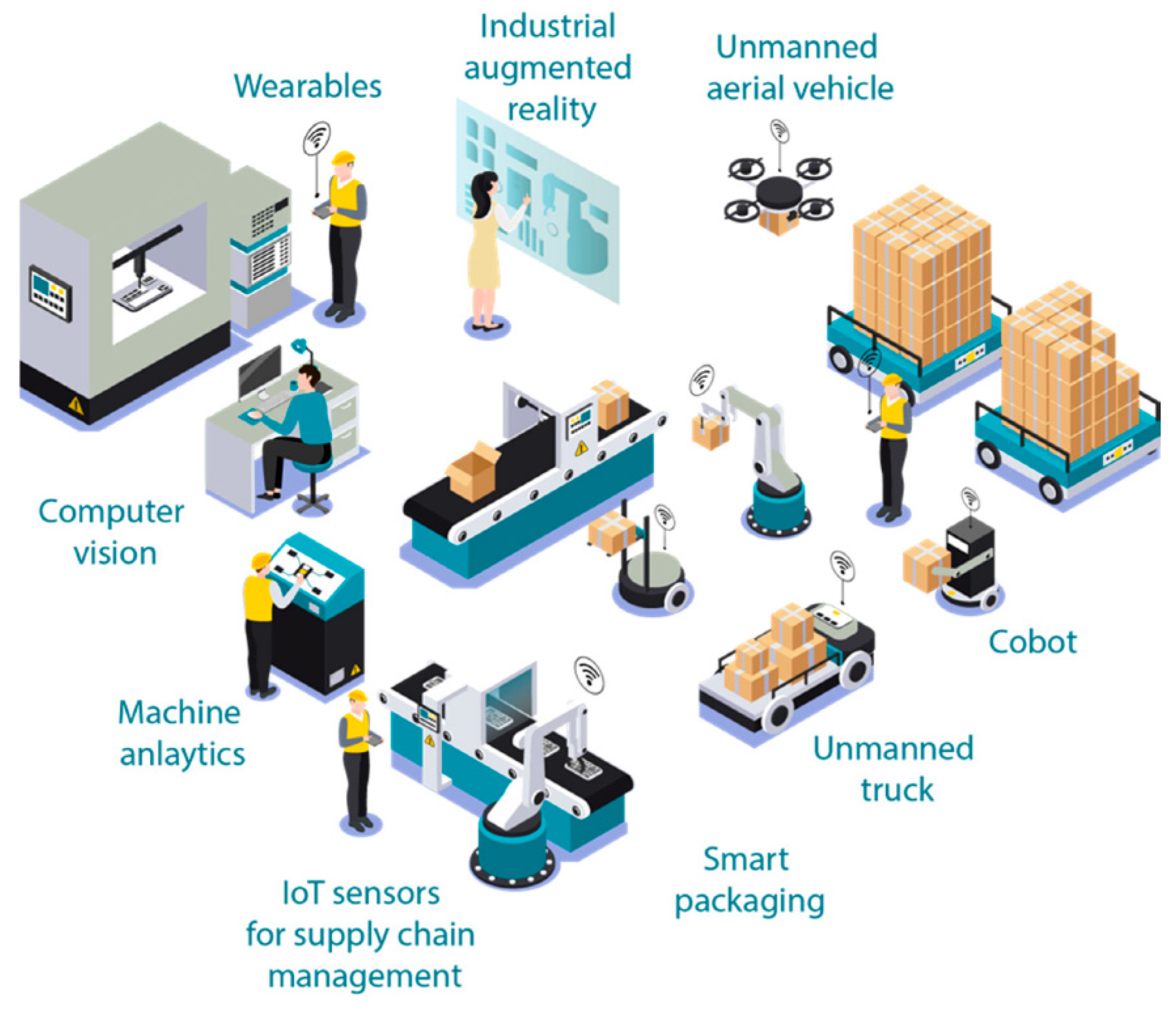
Figure 2.
AI-Enabled Predictive Maintenance Workflow for Industrial Assets.
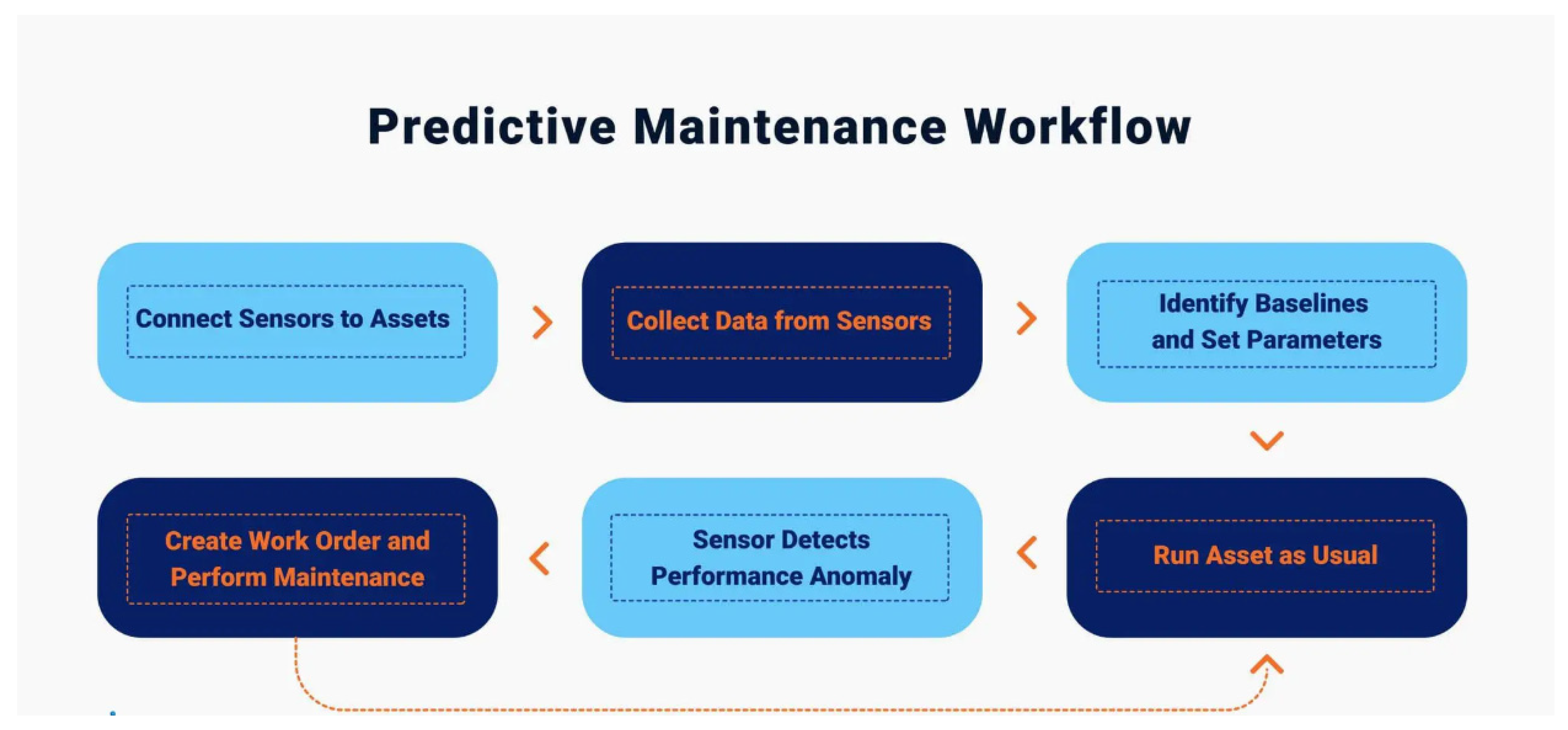
Figure 3.
Layered IIoT Architecture for Smart Industrial and Urban Systems.
Disclaimer/Publisher’s Note: The statements, opinions and data contained in all publications are solely those of the individual author(s) and contributor(s) and not of MDPI and/or the editor(s). MDPI and/or the editor(s) disclaim responsibility for any injury to people or property resulting from any ideas, methods, instructions or products referred to in the content. |
© 2026 by the authors. Licensee MDPI, Basel, Switzerland. This article is an open access article distributed under the terms and conditions of the Creative Commons Attribution (CC BY) license (http://creativecommons.org/licenses/by/4.0/).
Copyright: This open access article is published under a Creative Commons CC BY 4.0 license, which permit the free download, distribution, and reuse, provided that the author and preprint are cited in any reuse.


